SDG 11.2.6
SDG 11.2.6 Record and preserve cultural heritage
NCUE actively promotes the documentation and preservation of local intangible cultural heritage, encompassing indigenous cultural preservation, local art initiatives, and cultural experience activities for international students. Through education, art, and hands-on participation, the university contributes to the transmission of traditional knowledge and culture, while strengthening community cultural resilience and sustainable development. The following four aspects illustrate NCUE's concrete practices in cultural heritage preservation:
1. Indigenous Cultural Transmission and Documentation
(1) NCUE established the Indigenous Student Resource Center in 2017 to bring resources together, promote campus-wide Indigenous education, and support cultural education and transmission among ethnic groups. To broaden faculty and students’ understanding of the diversity of indigenous cultures, the Center organized a series of themed activities in 2025 (Table 1).
Academic and cultural lectures included “Tracing Indigenous History in Museums: Objects, Historical Sites and Public Participation,” “Multiple Roles on the Path of Indigenous Language: Learner, Worker and Transmitter,” and “If I’m Not in the Field, I’m on My Way to the Field: the Past, Present and Future of Anthropological Fieldwork.” Hands-on workshops on traditional crafts covered Bunun textiles and plant dyeing, Amis necklace making, Paiwan wreath making, and Atayal horn-hook weaving.
The Center also ran off-site teaching activities and field visits to the Dili, Shuanglong and Ita Thao communities in Nantou County and the Walu community in Miaoli County. In December, it took Indigenous students to the Shung Ye Museum of Formosan Aborigines, the NTU Museum of Anthropology and the National Human Rights Museum. These immersive and field-based activities deepened students’ understanding of Indigenous history, culture and human rights, while supporting the protection and sustainable transmission of diverse cultures.
| No. | Activity | Number of Participants |
|---|---|---|
| 1 | Lecture: "Tracing Indigenous History in Museums: Objects, Historical Sites, and Public Participation" | 80 |
| 2 | Lecture: "Multiple Roles on the Path of Indigenous Language: Learner, Worker, and Transmitter" | 57 |
| 3 | Lecture: "If I'm Not in the Field, I'm on My Way to the Field—The Past, Present, and Future of Anthropological Fieldwork" | 40 |
| 4 | Bunun Textiles and Plant Dyeing Workshop | 27 |
| 5 | Amis Necklace Workshop | 20 |
| 6 | Paiwan Wreath Workshop | 18 |
| 7 | Atayal Horn-Hook Weaving Workshop | 30 |
| 8 | Dili and Shuanglong Tribal Visit | 30 |
| 9 | Ita Thao Tribal Visit | 25 |
| 10 | Faculty and Staff Visit to Walu Community | 30 |
| 11 | Visit to the Shung Ye Museum of Formosan Aborigines, NTU Museum of Anthropology, and National Human Rights Museum | 20 |
(2) Descriptions of 2025 Indigenous Cultural Activities:
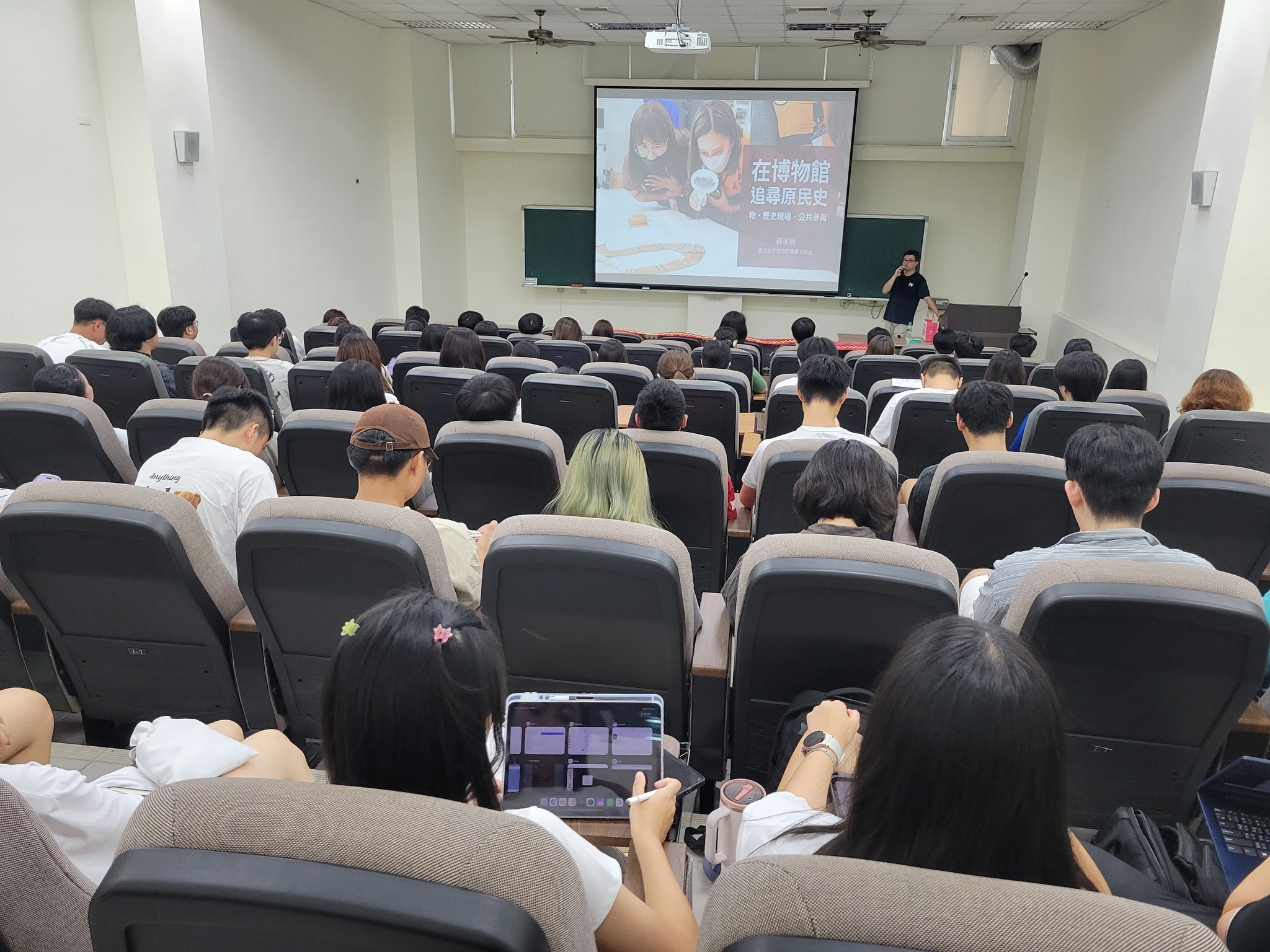
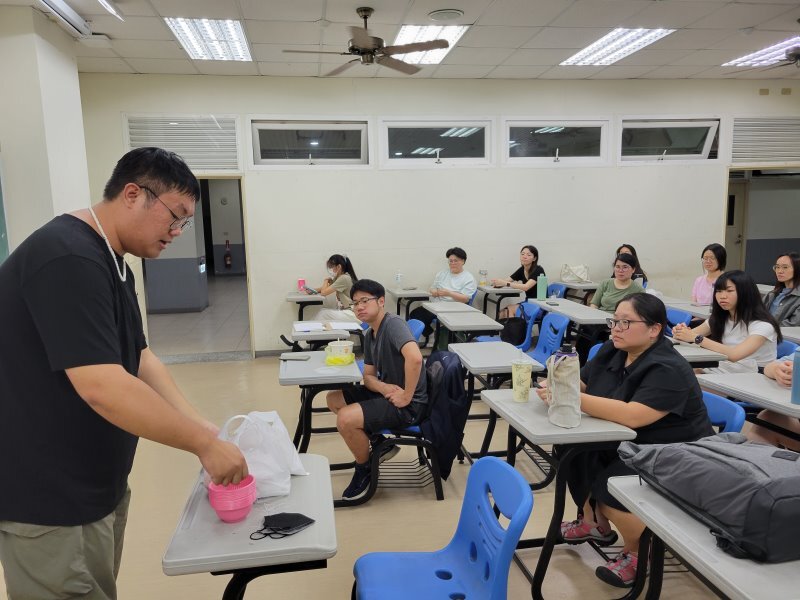
(a) The lecture "Tracing Indigenous History in Museums: Objects, Historical Sites, and Public Participation" featured Su Feng-nan, Assistant Curator at the National Palace Museum. Through discussion of artifact collections, historical archives and exhibition examples, the lecture explored the preservation and interpretation of indigenous history, guiding faculty and students to reflect on cultural memory, the role of museums and the importance of public participation. (Figure 1)
(b) The lecture "Multiple Roles on the Path of Indigenous Language: Learner, Worker, and Transmitter" featured Chiang Kai-wen (Walis Huwac), convener of the Seediq Wikipedia community, who shared his journey of learning, promoting and transmitting the Seediq language. The talk explored practical experiences of using indigenous language in education, digital platforms and cultural transmission, encouraging students to recognize the importance of indigenous language revitalization and reflect on the younger generation’s roles and responsibilities in cultural preservation, knowledge transmission and development of their communities. (Figure 2)
(c) The lecture "If I'm Not in the Field, I'm on My Way to the Field: The Past, Present, and Future of Anthropological Fieldwork" featured Chi-jui Hu of NCUE's Graduate Institute of History, who shared his extensive practical fieldwork experience. He guided faculty and students to understand how cross-boundary dialogue and grounded practice can help interpret diverse cultures. The lecture also encouraged reflection on the how historical memory and cultural transmission can be sustained and renewed amid social change. (Figure 3)
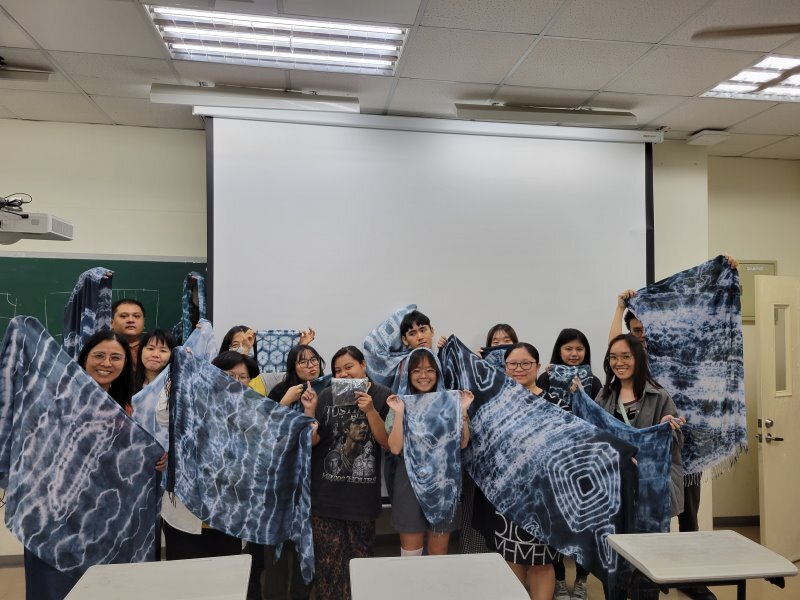
(d) Bunun Textiles and Plant Dyeing Workshop: This activity focused on traditional Bunun textiles and plant-dyeing craftsmanship, allowing participants to observe how tribal members extract natural colors from mountain plants and incorporate tribal myths and stories into dyed textiles. Through hands-on practice and dialogue in the field, participants witnessed the sustainability and innovation of indigenous culture in contemporary society. (Figure 4)
(e) Amis Necklace Workshop: This workshop focused on traditional Amis necklaces. Artisans helped faculty and students understand how colors and beadwork symbolize social status and blessings, and guided them in weaving their own accessories, passing on indigenous aesthetics through hands-on practice. (Figure 5)
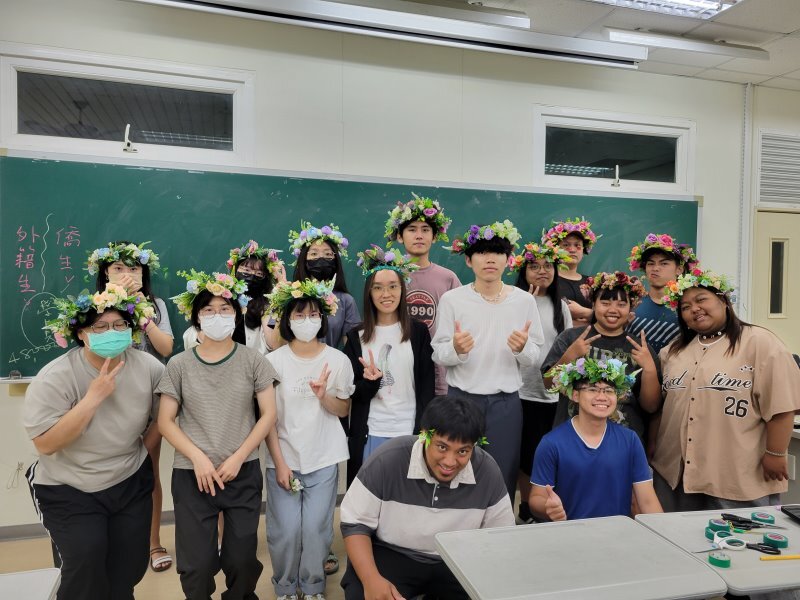
(f) Paiwan Wreath Workshop: This activity guided faculty and students to understand the cultural significance of Paiwan wreaths in rituals and social hierarchy. Craft artisans instructed participants to weave their own wreaths carrying blessings using seasonal plants and fresh flowers, allowing them to experience an aesthetic of coexistence with the land through hands-on practice. (Figure 6)
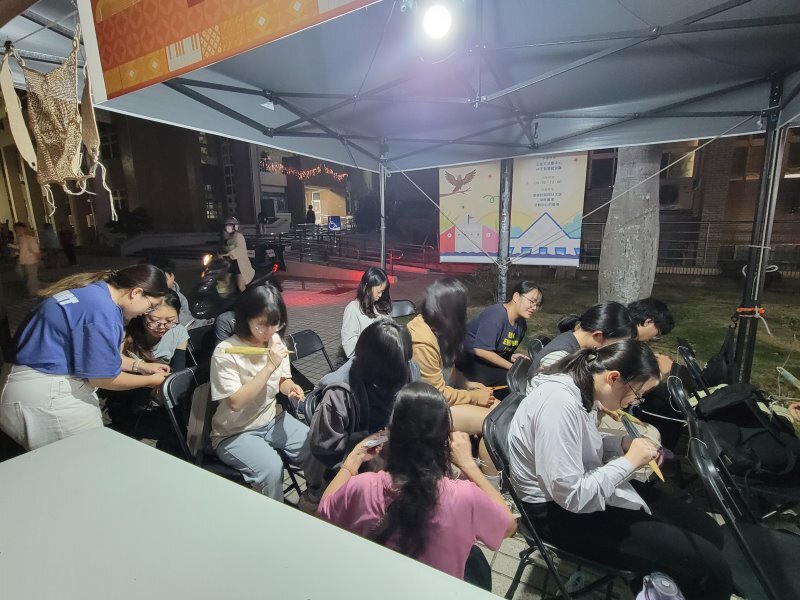
(g) Atayal Horn-Hook Weaving Workshop: This activity focused on the distinctive Atayal horn-hook weaving technique. Craft artisans led participants from the basics, using horn hooks and thread, through repeated layering and pulling of the thread, allowing participants to personally experience the survival wisdom of early mountain life and the aesthetics of Atayal weaving. (Figure 7)
(h) Visit to the Dili and Shuanglong communities: the group visited Bunun communities in Xinyi Township. Guided tours and conversation with elders covered Bunun seasonal rituals, the Pasibutbut eight-part polyphonic chant, and how these communities combine ecotourism with sustainable local industry (Figure 8).
(i) Visit to the Ita Thao community: The group visited Ita Thao, the traditional Thao settlement at Sun Moon Lake. Walking through the old settlement, participants learned about Thao ancestral beliefs, the deer-chasing legend and the community’s seasonal rituals. The activity explored how local young people negotiate the tensions between cultural revitalization and tourism, while creating opportunities for their community to express its own voice and pass on its culture amid social change (Figure 9).
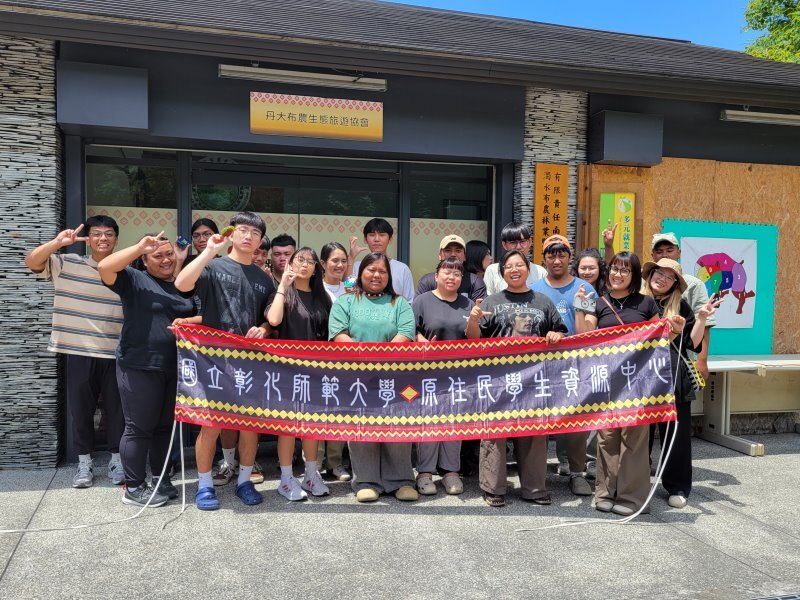
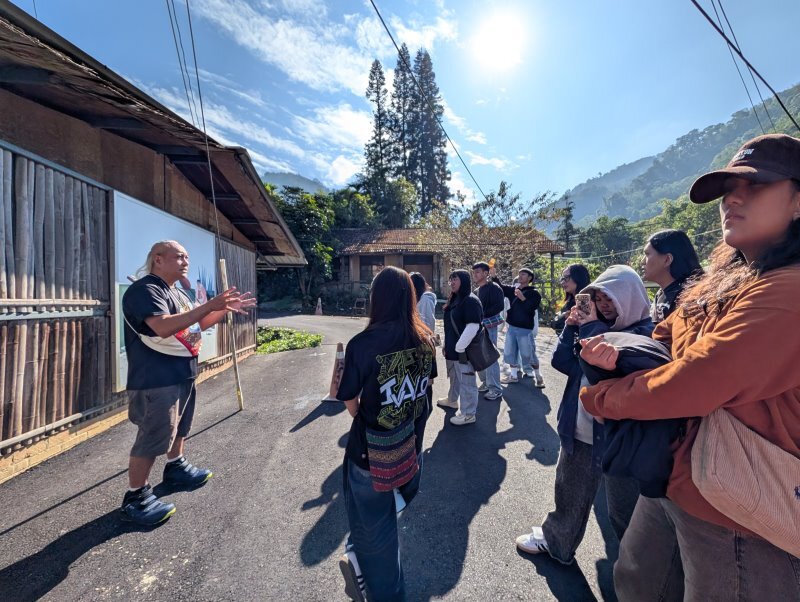
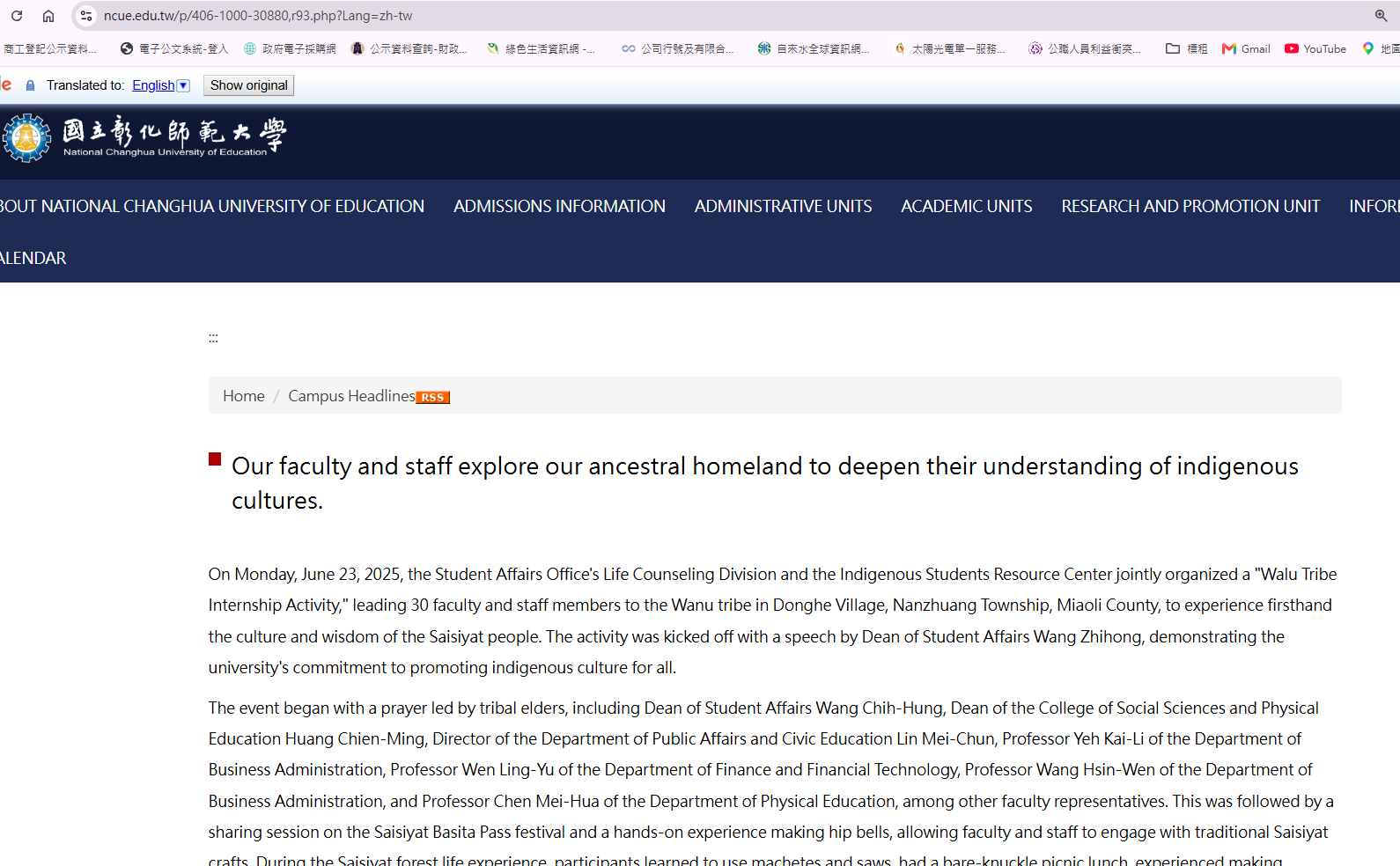
(j) Faculty and staff visit to the Walu community: NCUE faculty and staff travelled to the Walu community in Miaoli and visited the Walu Industry and Culture Hall, where they learned about local Indigenous history and interactions among ethnic groups. On-site learning and field dialogue conversation strengthened their cross-cultural understanding and generated practical, innovative ideas for multicultural education and an ethnically inclusive campus environment (Figure 10). The Campus Headlines report webpage is shown in Figure 11. URL: https://www.ncue.edu.tw/p/406-1000-30880,r93.php?Lang=zh-tw
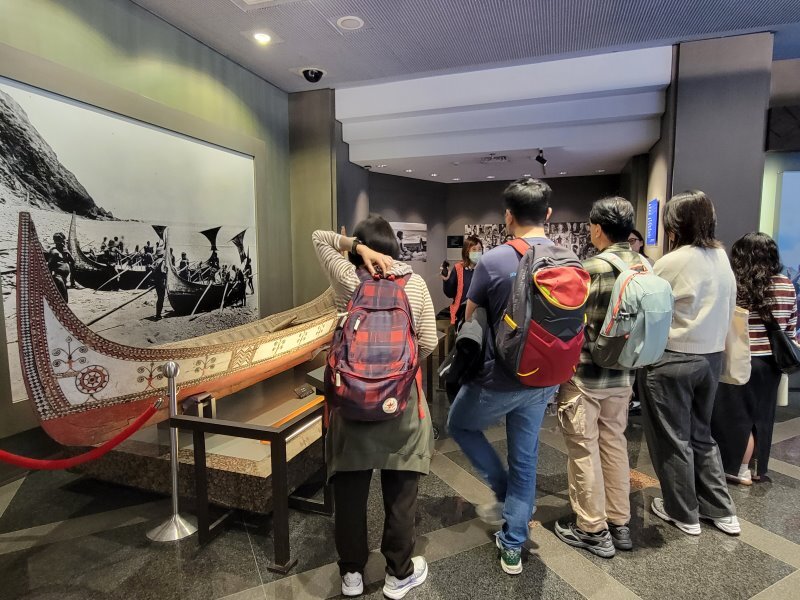
(k) Visit to the Shung Ye Museum of Formosan Aborigines, the NTU Museum of Anthropology, and the National Human Rights Museum: This visit linked three institutions covering Indigenous culture, anthropology and human rights history. The collections of the first two museums supported close study of the material culture and social structures of Taiwan’s Indigenous peoples. Historical accounts related to transitional justice at the National Human Rights Museum prompted reflection on how different ethnic groups construct memories amid historical change, deepening dialogue between contemporary scholarships and grounded practice (Figure 12).
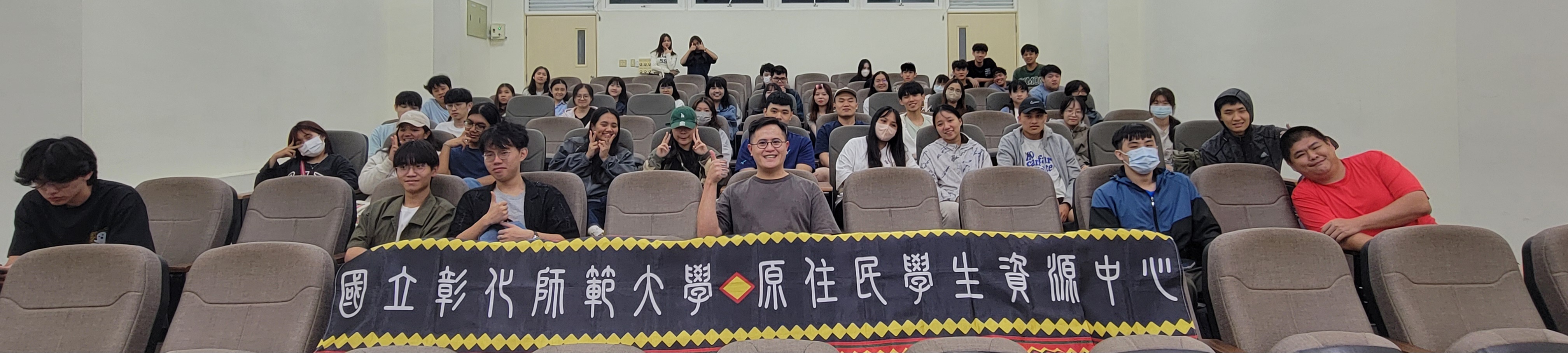
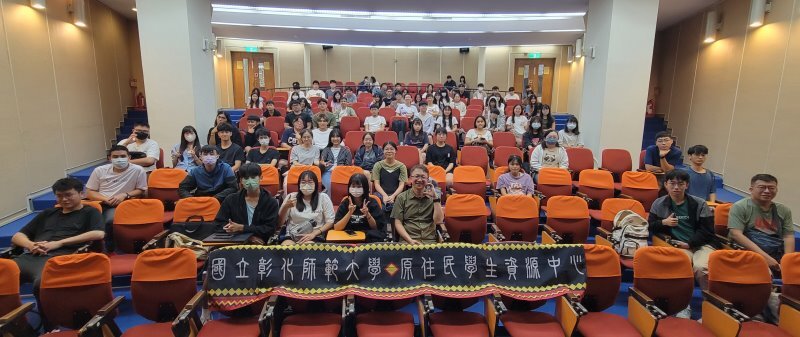
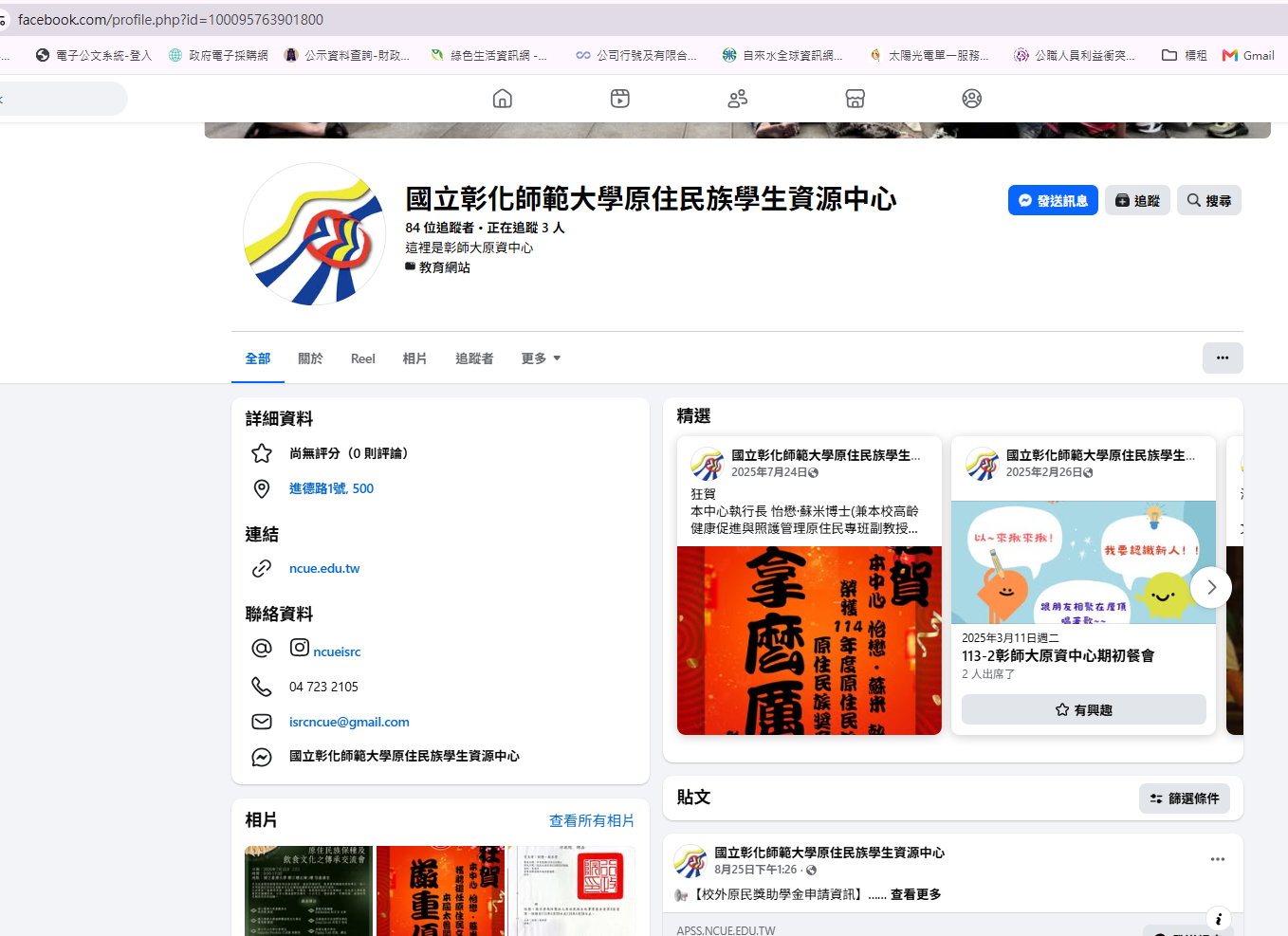
(l) More event photographs are available on the Indigenous Student Resource Center's Facebook page (Figure 13). (https://www.facebook.com/profile.php?id=100095763901800)

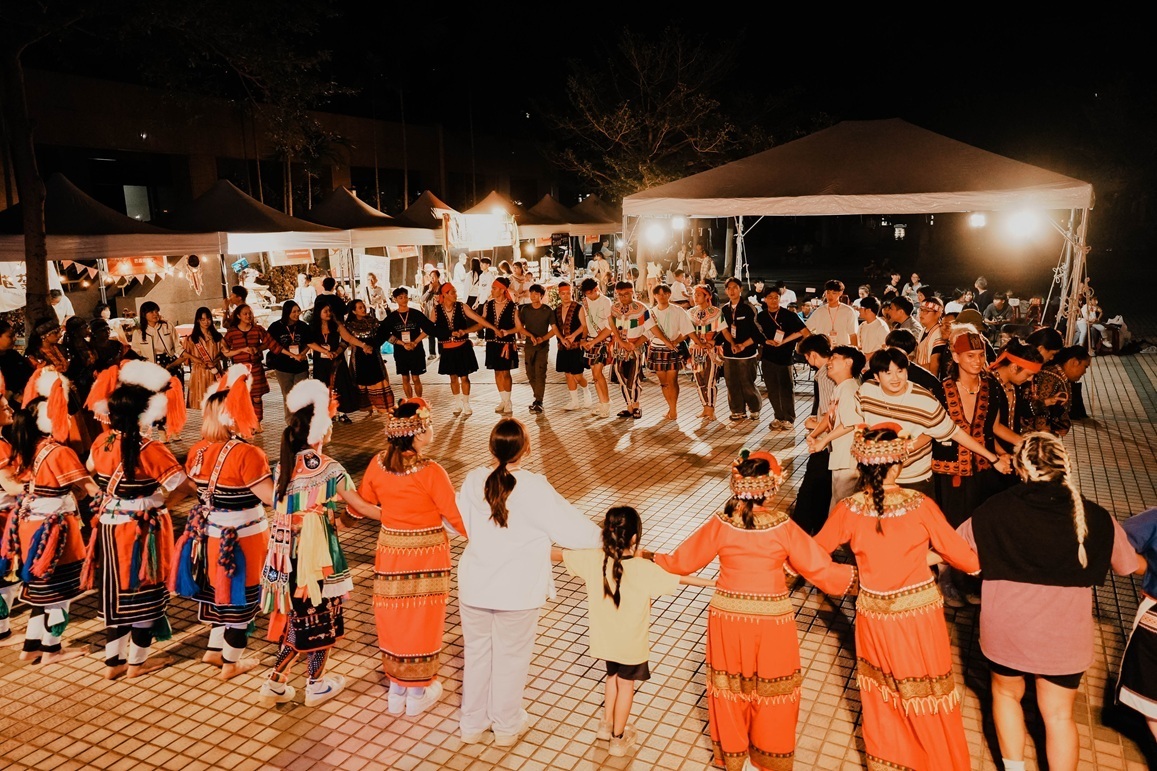
(3) To promote campus-wide Indigenous education, the Indigenous Student Resource Center of NCUE’s Office of Student Affairs held the “Indigenous Market Music Festival,” combining an Indigenous market with music and dance performances (Figure 14), as the opening night of the University’s 54th anniversary celebrations. The event showcased the richness of indigenous cultures and fostered a diverse and inclusive campus atmosphere. The market featured 18 Indigenous food and cultural-creative stalls and three hands-on workshops covering Indigenous food culture, traditional crafts, everyday knowledge and cultural knowledge. Together with the performances, these activities gave faculty, students and local residents a fuller understanding of Indigenous culture and supported the preservation and transmission of intangible cultural heritage and cross-cultural exchange.
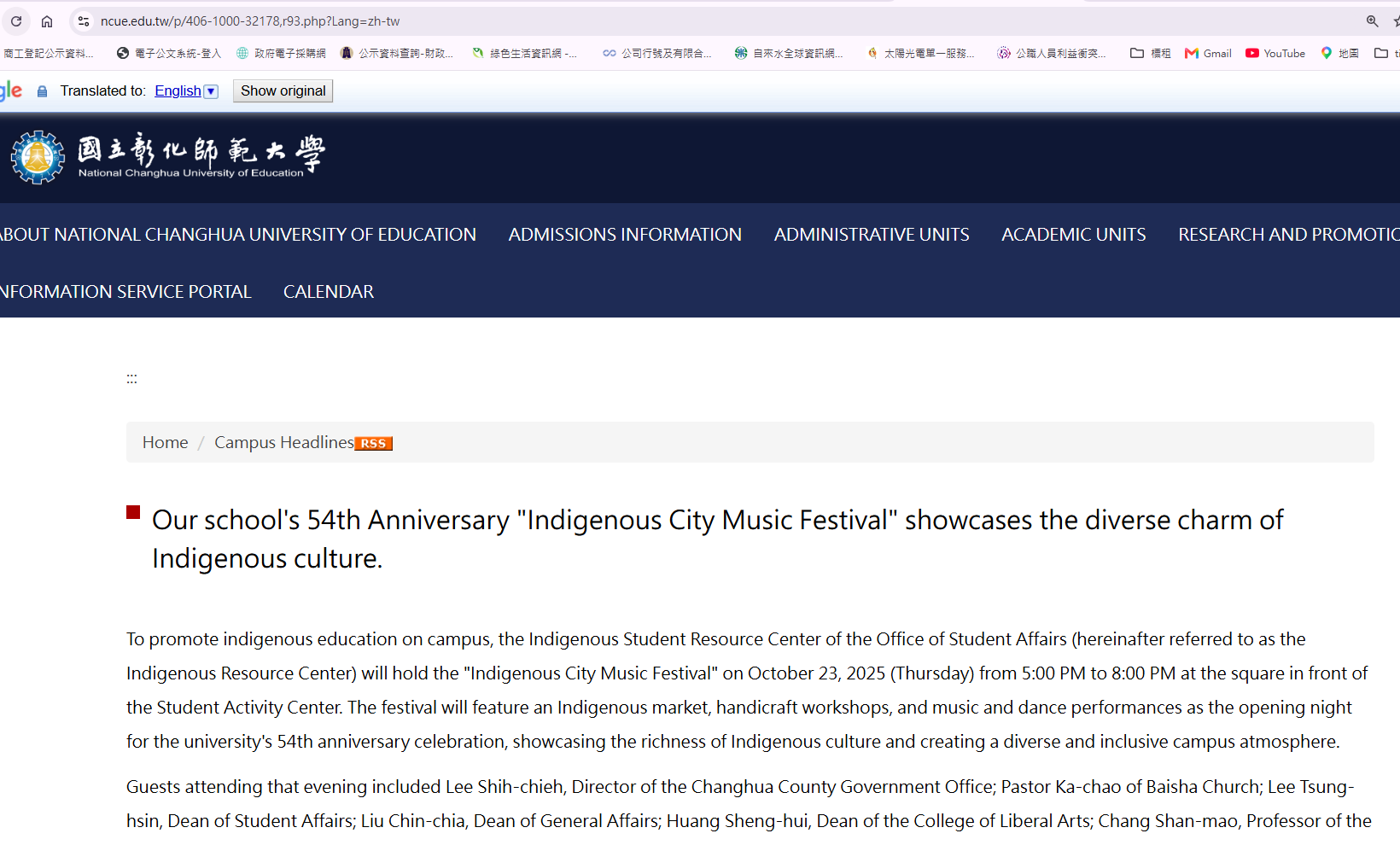
The Campus Headlines report webpage is shown in Figure 15. URL: https://www.ncue.edu.tw/p/406-1000-32178,r93.php?Lang=zh-tw
2. Transmission of traditional arts and local language and culture
NCUE's College of Extension Education has long promoted community lifelong learning and cultural transmission. Through the teaching of traditional arts and Taiwanese Hokkien, the university integrates traditional craftsmanship, cultural knowledge, and local language into lifelong education, promoting the preservation, learning, and intergenerational transmission of cultural heritage.
(1) Classes Offered at the Evergreen University:
To document and safeguard intangible cultural heritage, NCUE has organized the Changhua County Evergreen University since 1995. In its commitment to transmitting traditional Chinese arts, the university offers courses such as calligraphy and Chinese ink and color painting every year, leading community seniors in an in-depth study of traditional brush techniques and aesthetics. This not only promotes lifelong learning for older adults, but also, through hands-on education, preserves and transmits the craftsmanship and knowledge of traditional calligraphy and painting. In 2025, 6 related courses were offered (as shown in Table 2), with a total of 208 students completing them.
| No. | Course Name | Start Date | Completion Date | Class Hours | Number of Students |
|---|---|---|---|---|---|
| 1 | 2025 First-Half Evergreen University: Ink and Brush Arts | 2025/03/03 | 2025/06/23 | 40 | 32 |
| 2 | Evergreen University, first half of 2025: Calligraphy 123 | 2025/03/03 | 2025/06/23 | 40 | 40 |
| 3 | 2025 First-Half Evergreen University: Chinese Ink Color Painting Class | 2025/03/04 | 2025/06/24 | 40 | 35 |
| 4 | 2025 Second-Half Evergreen University: Ink and Brush Arts | 2025/09/01 | 2025/12/29 | 40 | 26 |
| 5 | 2025 Second-Half Evergreen University: Calligraphy 123 | 2025/09/01 | 2025/12/29 | 40 | 40 |
| 6 | 2025 Second-Half Evergreen University: Chinese Ink Color Painting Class | 2025/09/02 | 2025/12/16 | 40 | 35 |
(2) Preservation of Taiwanese Hokkien Language and Culture:
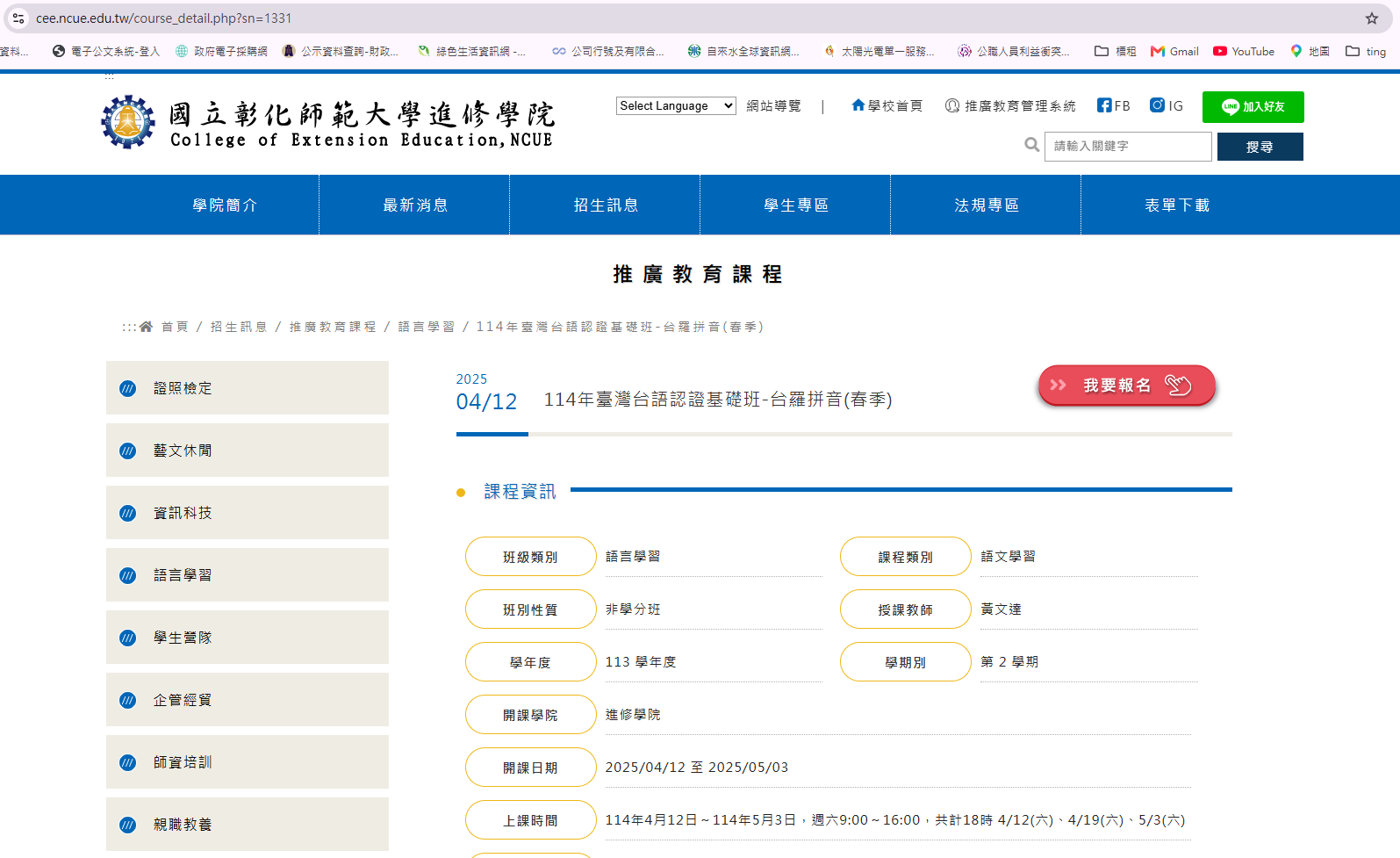
In 2025, NCUE offered two sessions of the "Taiwanese Language Proficiency Certification Basic Course: Tai-lo Romanization" through its education program. Each session comprised 18 hours of instruction, with 44 course completions in total. Professional instructors systematically taught initials, finals, tone sandhi rules and accent analysis, incorporating the use of Taiwanese dictionaries and Chinese-character input methods for Taiwanese. The course also covered standard written forms through Taiwanese news and songs, helping train teachers who support local-language instruction and prepare learners for language certification. Through practical language instruction, NCUE strengthened learners’ listening, speaking, reading, and writing abilities, supporting the active preservation and intergenerational transmission of Taiwanese Hokkien. The Course information webpage is shown in Figure 16. (https://cee.ncue.edu.tw/course_detail.php?sn=1331)
3. Documentation and digital preservation of local cultural knowledge
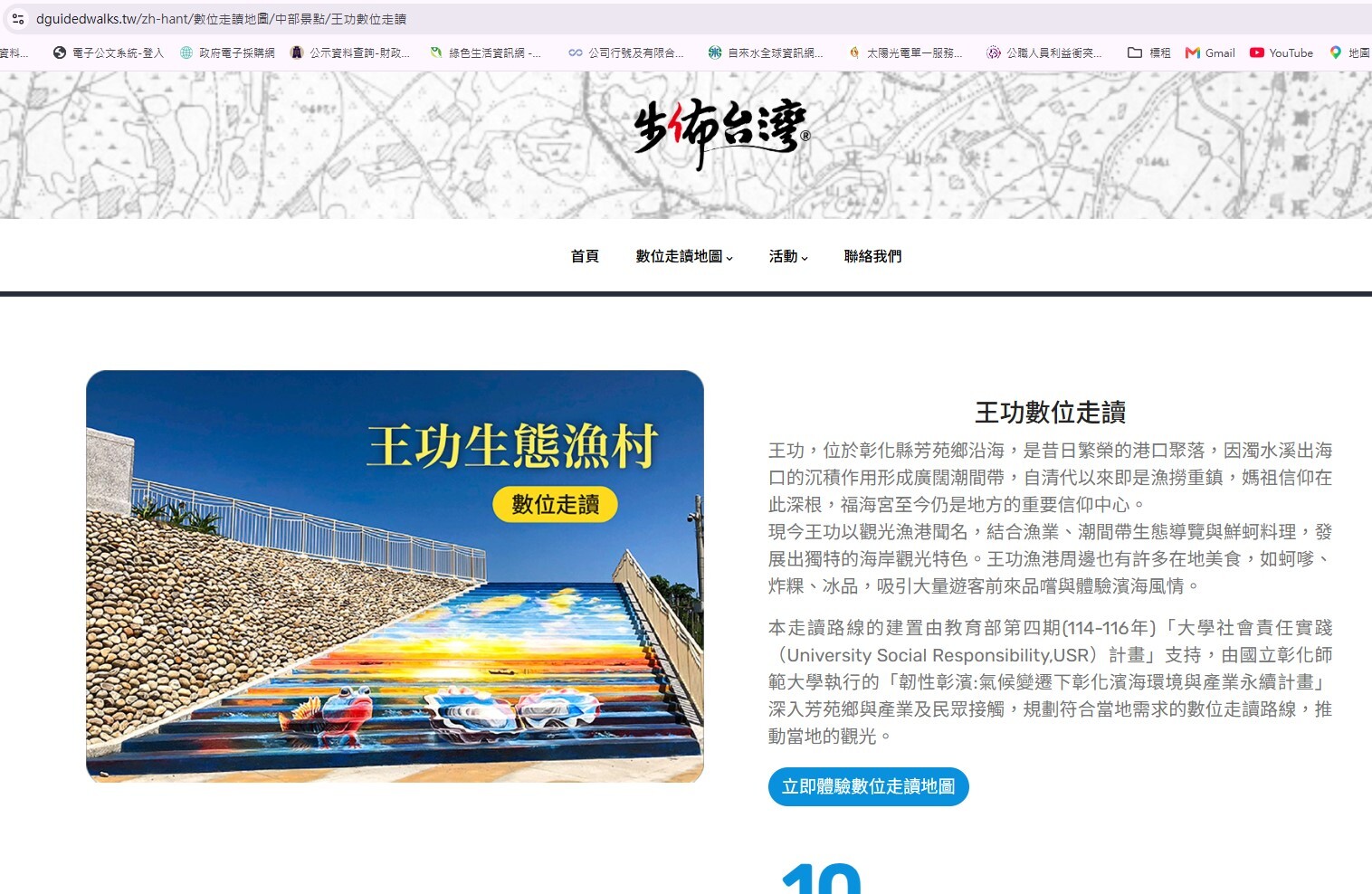
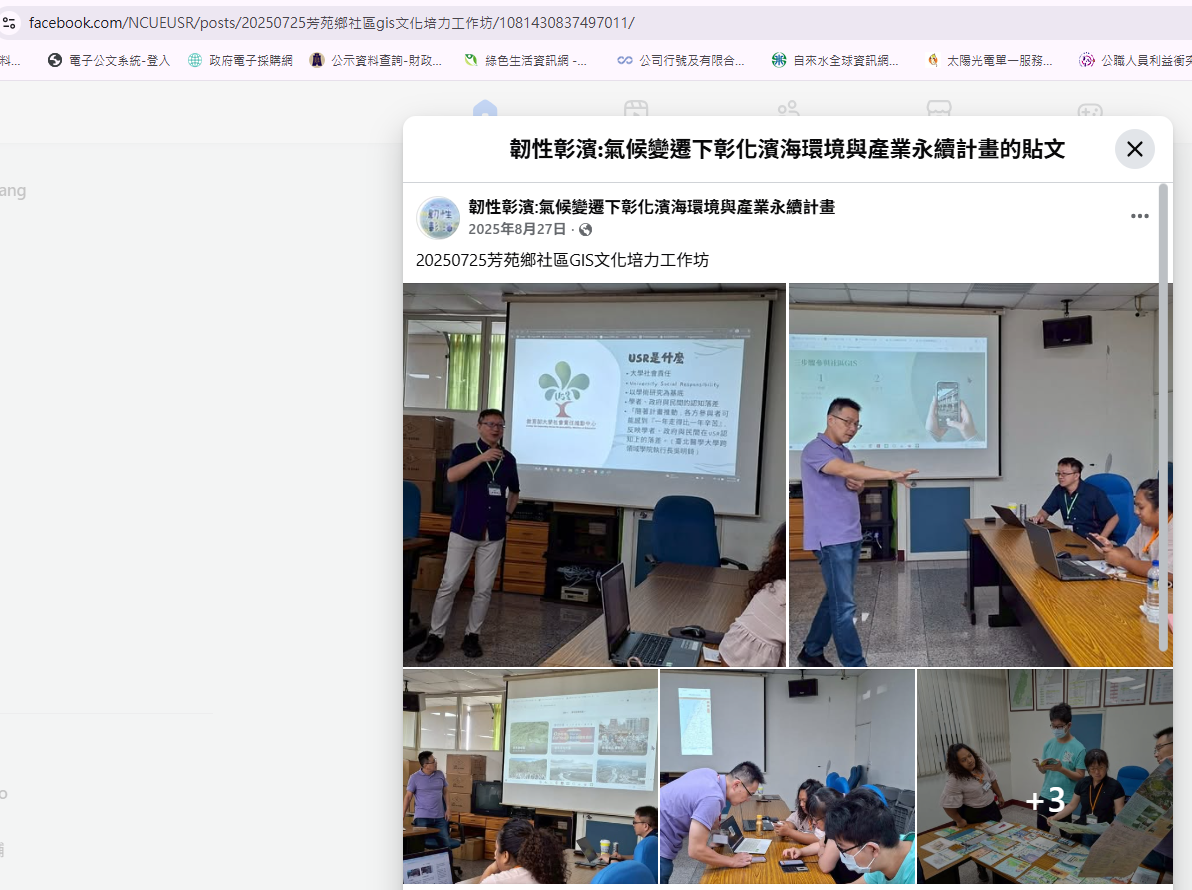
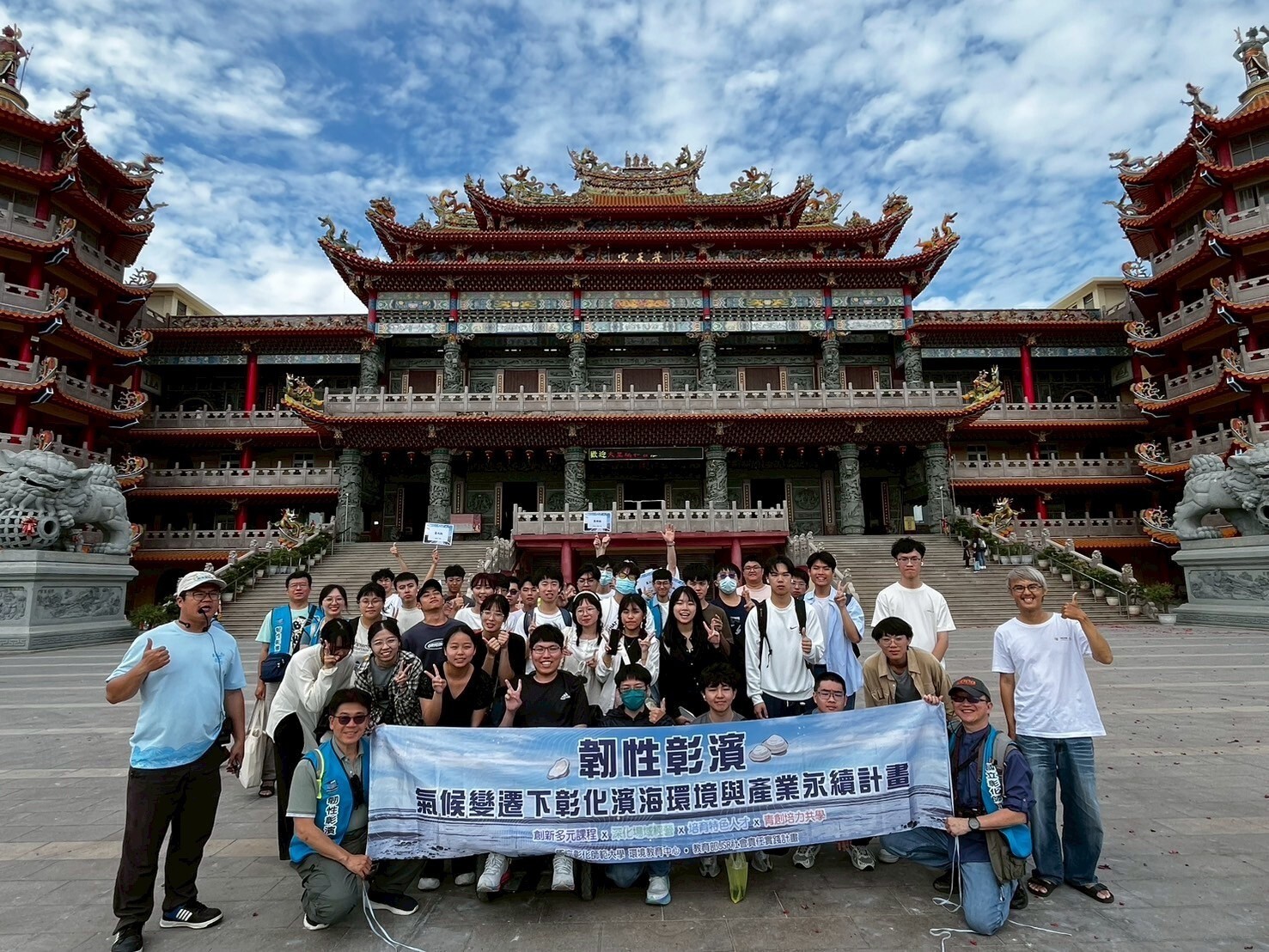
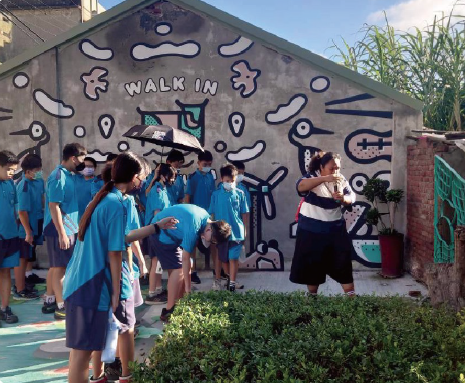
NCUE’s University Social Responsibility (USR) Project “Resilient Changbin: Climate Change and the Sustainability of Changhua’s Coastal Environment and Industries” documents and preserves the local culture, history, traditions and community knowledge of Changhua’s coastal area through digital walking tours, GIS story maps and local history courses. In 2025, two routes were planned: the Fangyuan town center digital walking tour and the Wanggong digital walking tour. Information on ten sites was compiled for the Wanggong route, and a themed webpage was created on the Bubu Taiwan site (Figure 17). data on a further seven sites has been compiled for Fangyuan Town Centre. The project held six sessions of the Fangyuan Community GIS Cultural Empowerment Workshop (Figure 18): morning and afternoon sessions on July 25, followed by sessions on August 1, 8 and 15, and September 5. Ten people participated. The workshops produced six Fangyuan story maps and established the Fangyuan Township Life and Culture Map Platform, which stores local stories and site information for future use by the community and the Fangyuan Township Office. Courses including “Changhua Studies,” “Special Topics in Taiwanese Folk Religion,” “Creative Guided Tours in Local History and Culture” and “Inquiry and Practice in the Social Studies Domain” prepared students to take part in documenting local cultural, leading guided tours and digitally preserving local knowledge. These activities transformation local knowledge into digital cultural resources that can be passed on over time (Figures 19–20).
4. Preservation of Historic District Cultural Memory and Artistic Interpretation
This project takes the Xiaoxi Lane historic district in Changhua as its primary field of practice, transforming local historical context, architectural features, and community memory into cultural content that can be understood, viewed, and continuously transmitted through cultural walking tours, field surveys, artistic creation, spatial reuse, and documentation of outcomes.
Xiaoxi Lane retains the architectural character of the Japanese colonial period. Through on-site surveys and cultural walking tours, the project guides students to understand the cultural context and revitalization of the old city’s historic lanes, combining historical context with contemporary creative practice through artistic intervention.
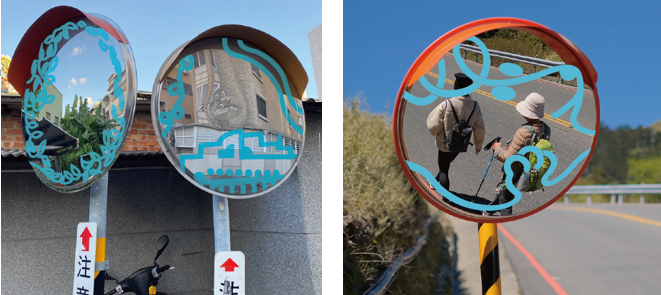
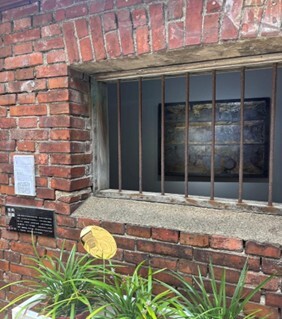
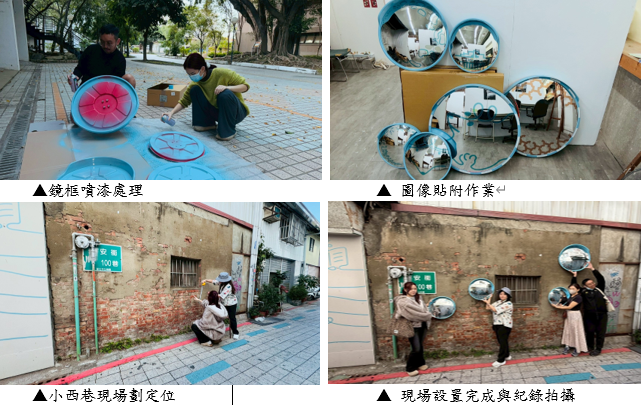
In terms of creative outcomes, "Reflections of Xiaoxi" incorporates the distinctive scenery of Xiaoxi Lane and community memory into a piece of public art (Figure 21). "1949-1" uses household objects, elders' memories and personal life experiences as creative material, transforming fading everyday memories into artistic documentation (Figure 22). The creative process, on-site positioning, completed works and the Street Corner Gallery exhibition were also documented (Figure 23), recording the project’s achievements in preserving local culture and interpreting it through art.
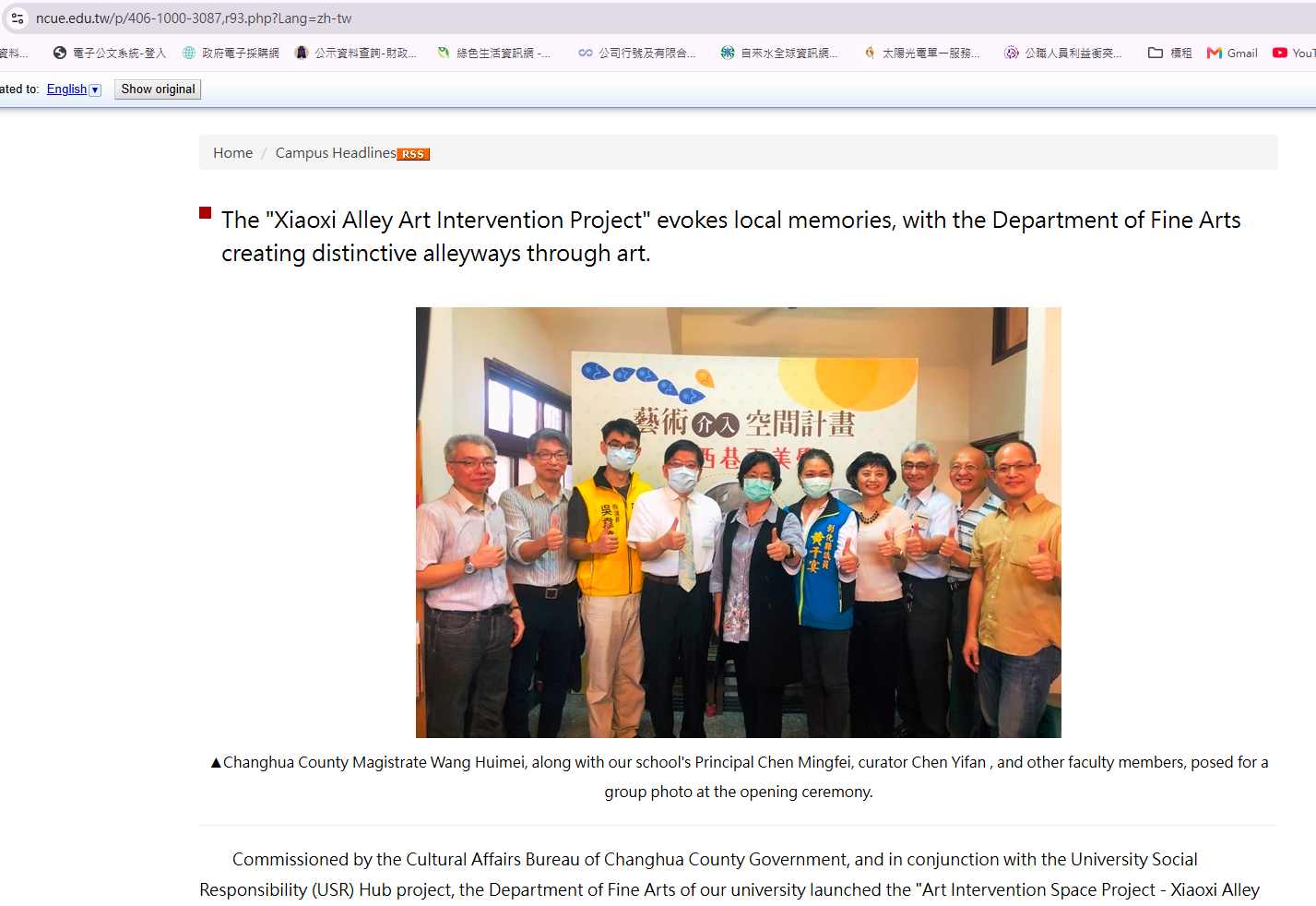
The Campus Headlines report webpage is shown in Figure 24. (URL: https://www.ncue.edu.tw/p/406-1000-3087,r93.php?Lang=zh-tw)
5. Local ecological culture and knowledge transmission
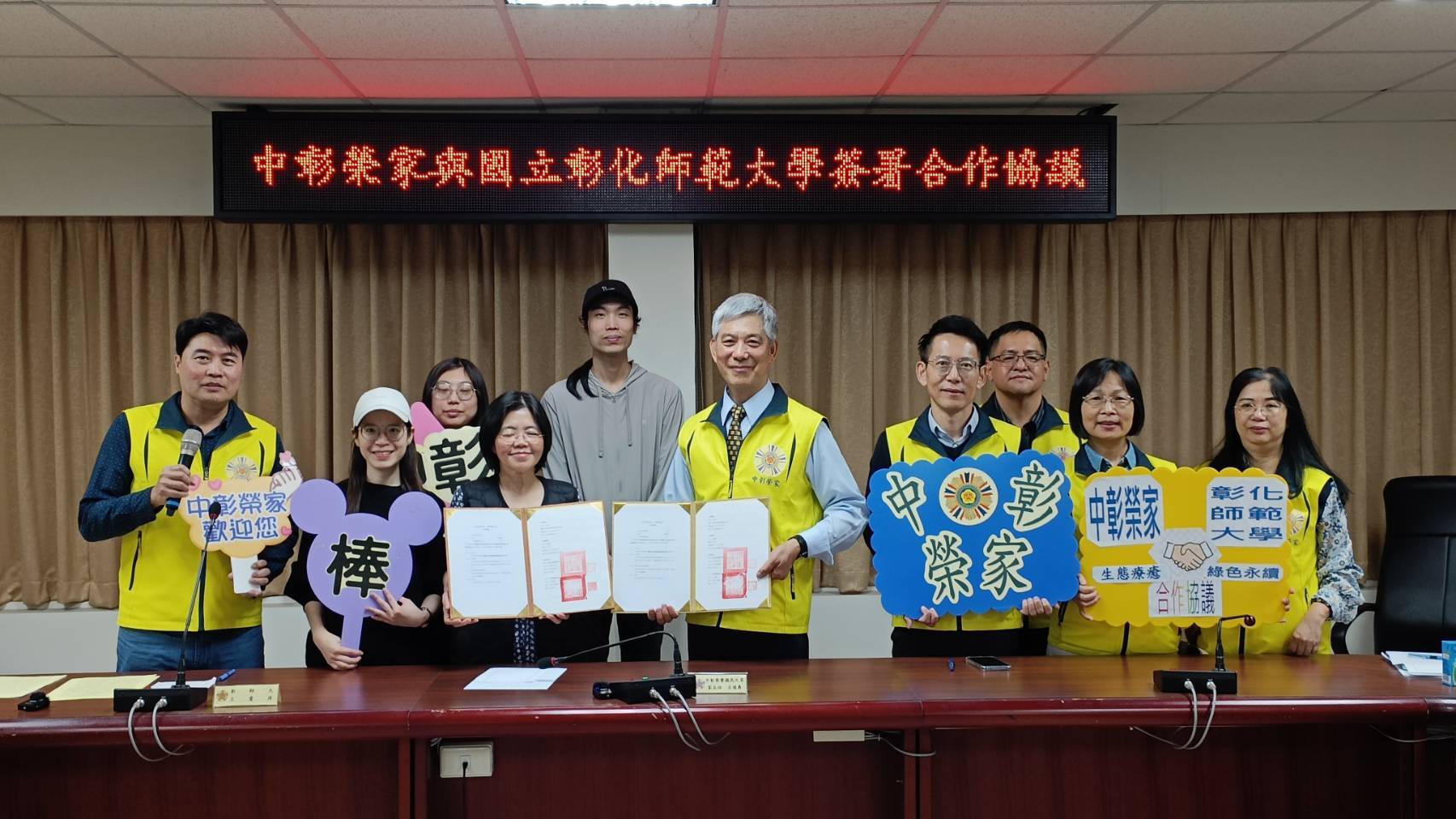
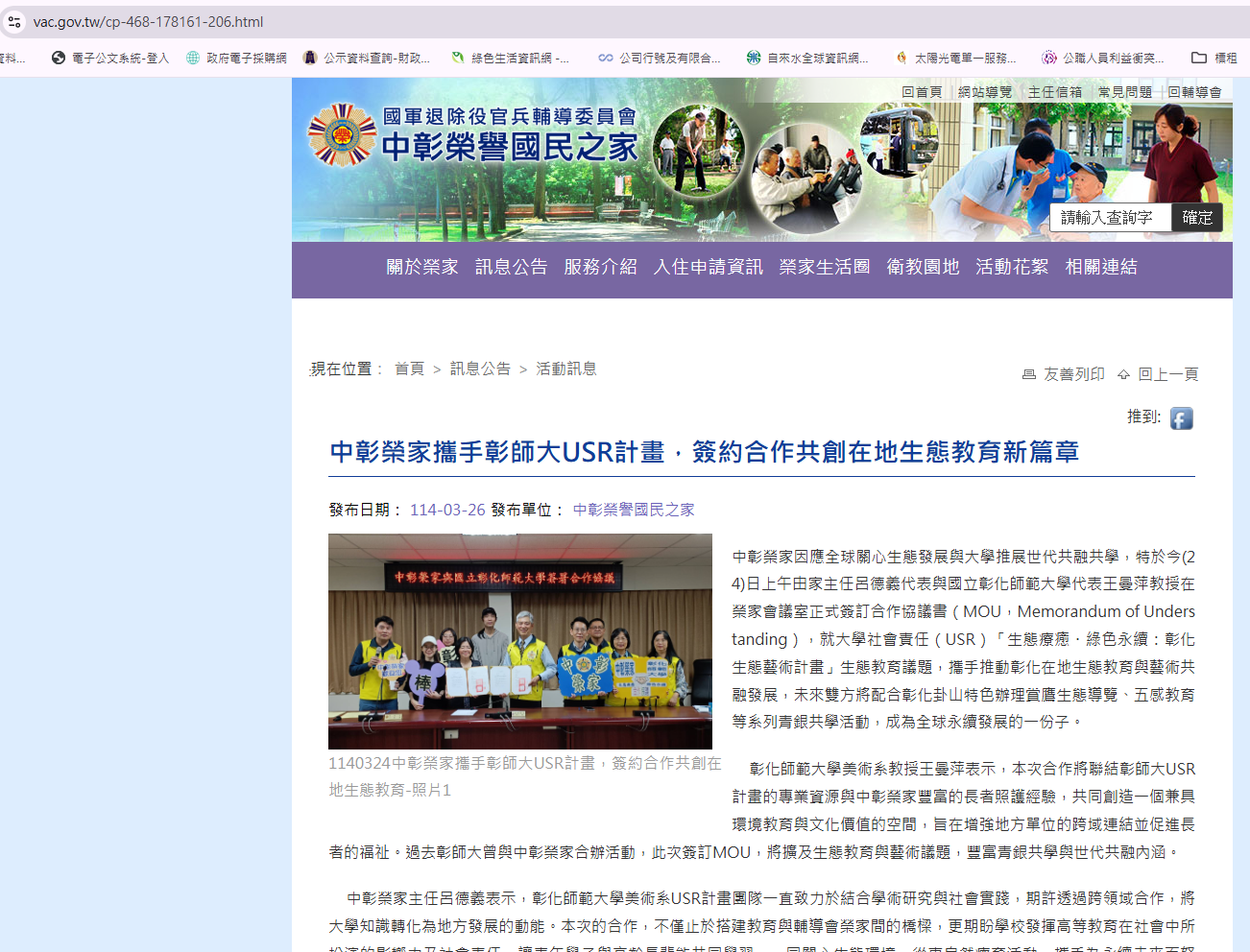
Under the USR Project “Ecological Healing and Green Sustainability: Changhua Ecological Art Project,” NCUE signed a Memorandum of Understanding with the Zhongzhang Veterans Home (Figure 25) to promote local ecological education and inclusive arts activities in Changhua. Combining the University’s expertise with local venues, the two parties plan raptor-watching tours, education through the five-senses, and intergenerational learning activities. These activities support the transmission of local ecological knowledge, intergenerational exchange and environmental education, strengthen local communities’ commitments to nature conservation and sustainable development, and put into practice the University’s commitment to serving local communities and promoting their shared well-being. The Zhongzhang Veterans Home’s report webpage is shown in Figure 26. (URL: https://www.vac.gov.tw/cp-468-178161-206.html)
6. Art Initiatives in Public Spaces
(1) Since 2019, NCUE has been collaborating with the Changhua County Cultural Affairs Bureau to promote "Art Initiatives in Public Space Projects," including "Nanguo Dormitory Complex Art Initiative," "Xiaoxi Alley Aesthetics," "Hexing Youth Innovation Base," and "Zhongxing Village Art Initiative," among other distinctive spatial aesthetic projects. The projects have received widespread acclaim.
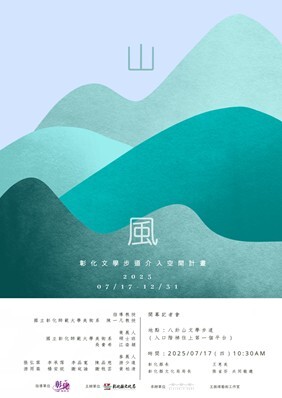
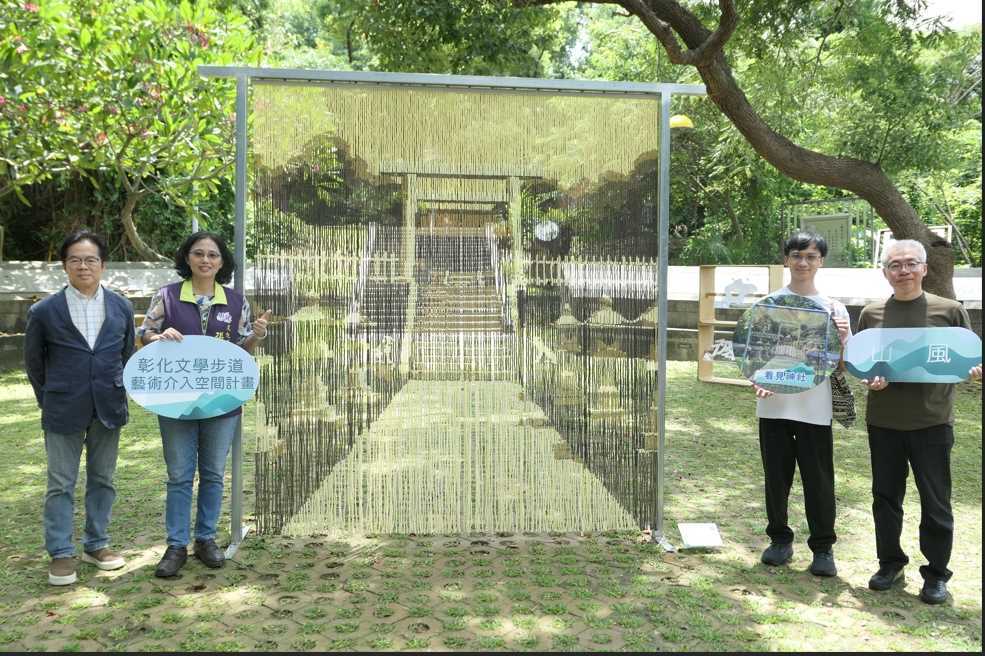
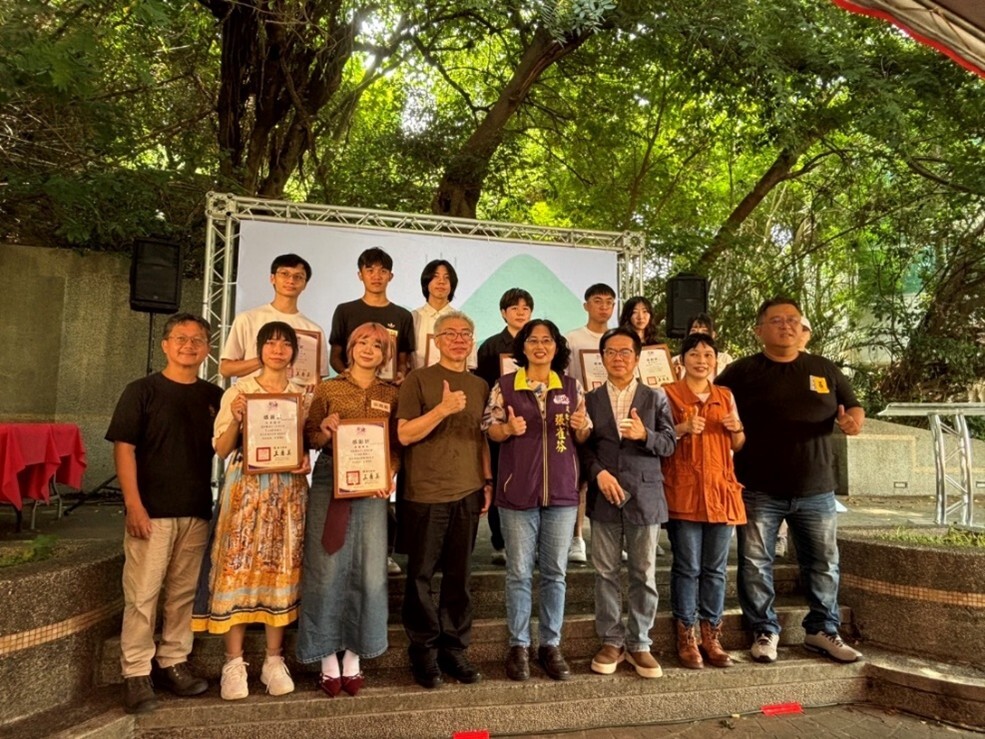
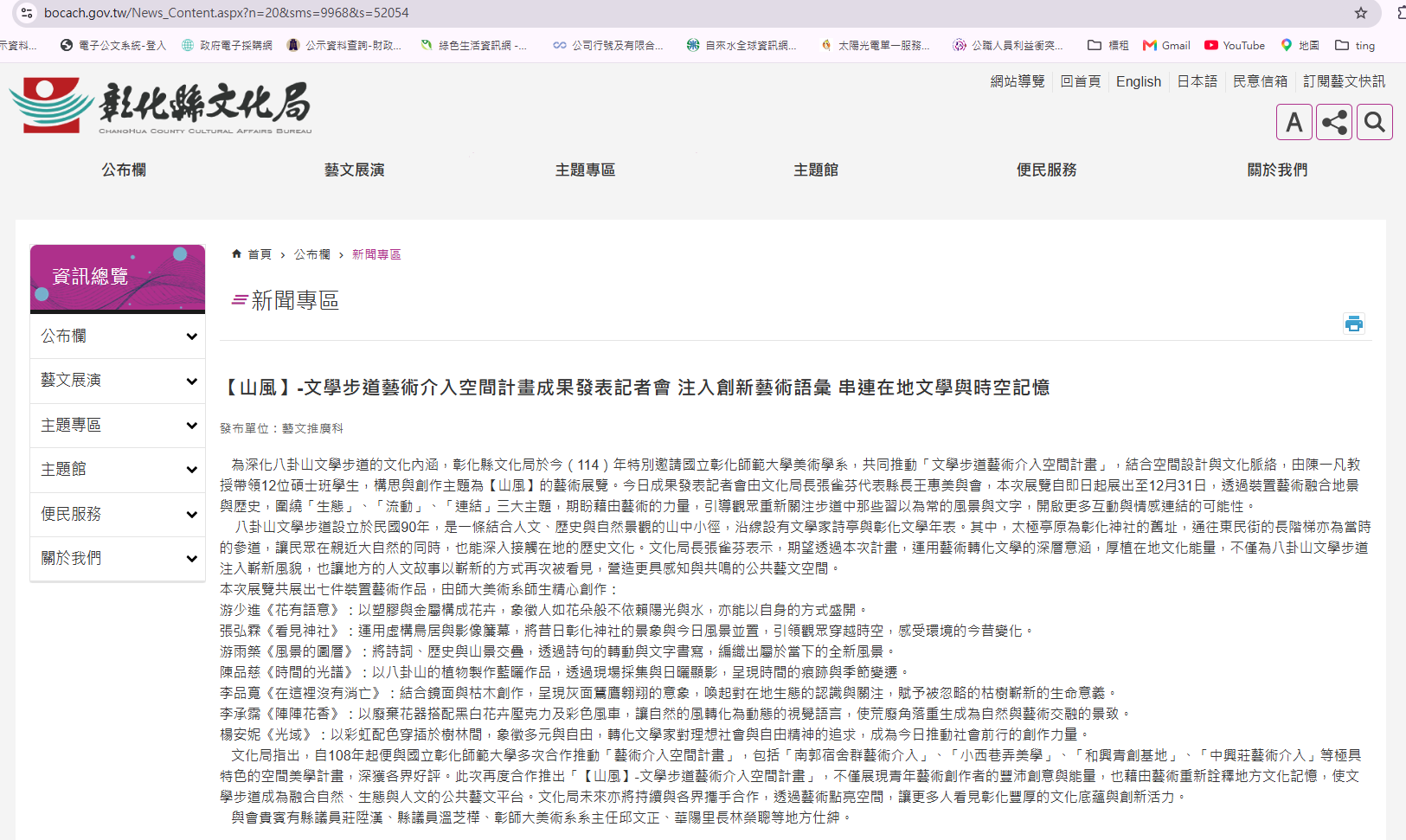
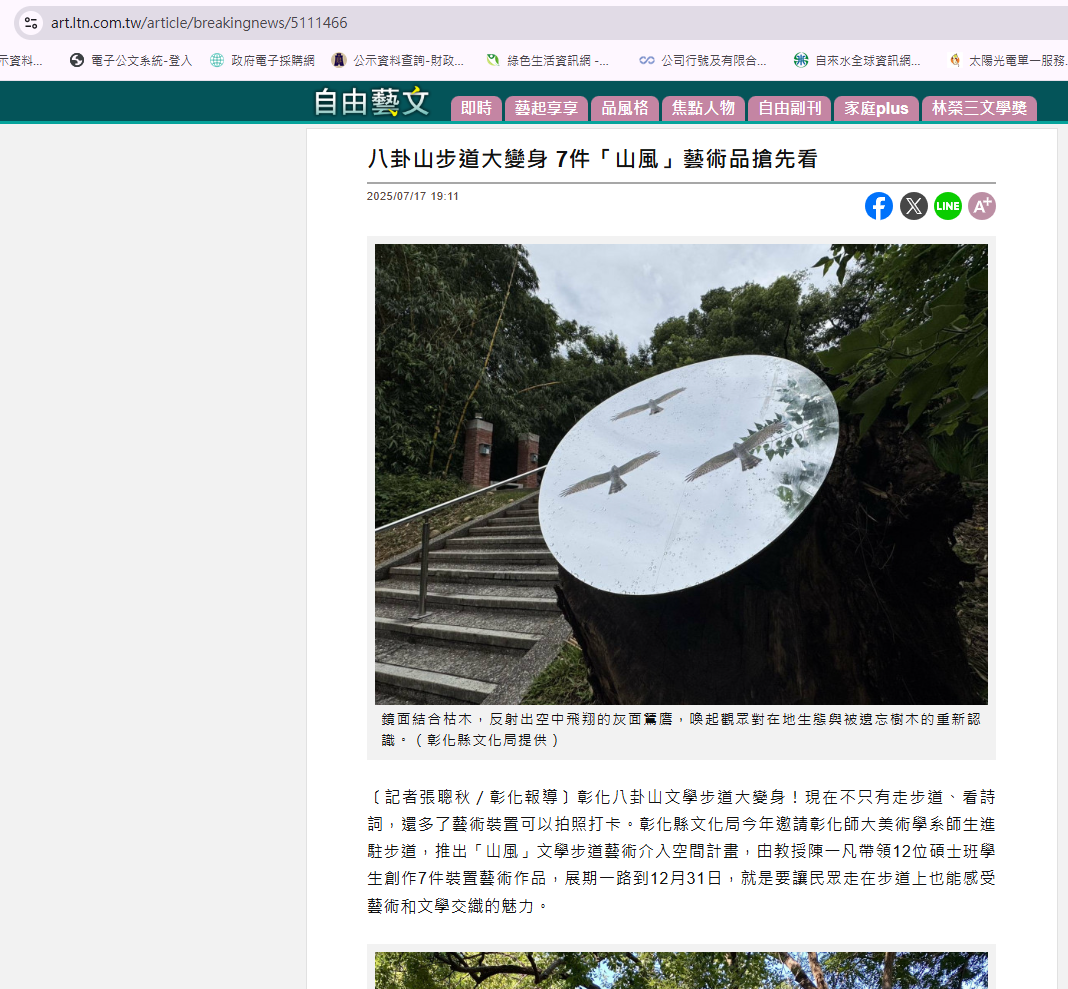
(2) In 2025, a new collaboration was launched, titled "Mountain Wind: Literary Trail Art Intervention Project." The Bagua Mountain Literary Trail is a mountain path that combines culture, history, and natural scenery. Along the trail, visitors can pavilions dedicated to writers and a timeline of Changhua literary history. Through seven art installations that integrate landscape, history, and literature, the project highlights three major themes: ecology, flow, and connection. The artworks create new value to public arts and cultural spaces while inviting the public to revisit local cultures memories in nature (Figures27-29).
News coverage and related media webpage are shown in Figures 30–31.
7. International Students' Local Cultural Experience
(1) 2025 Lukang Dragon Boat Festival series: International Dragon Boat Championship
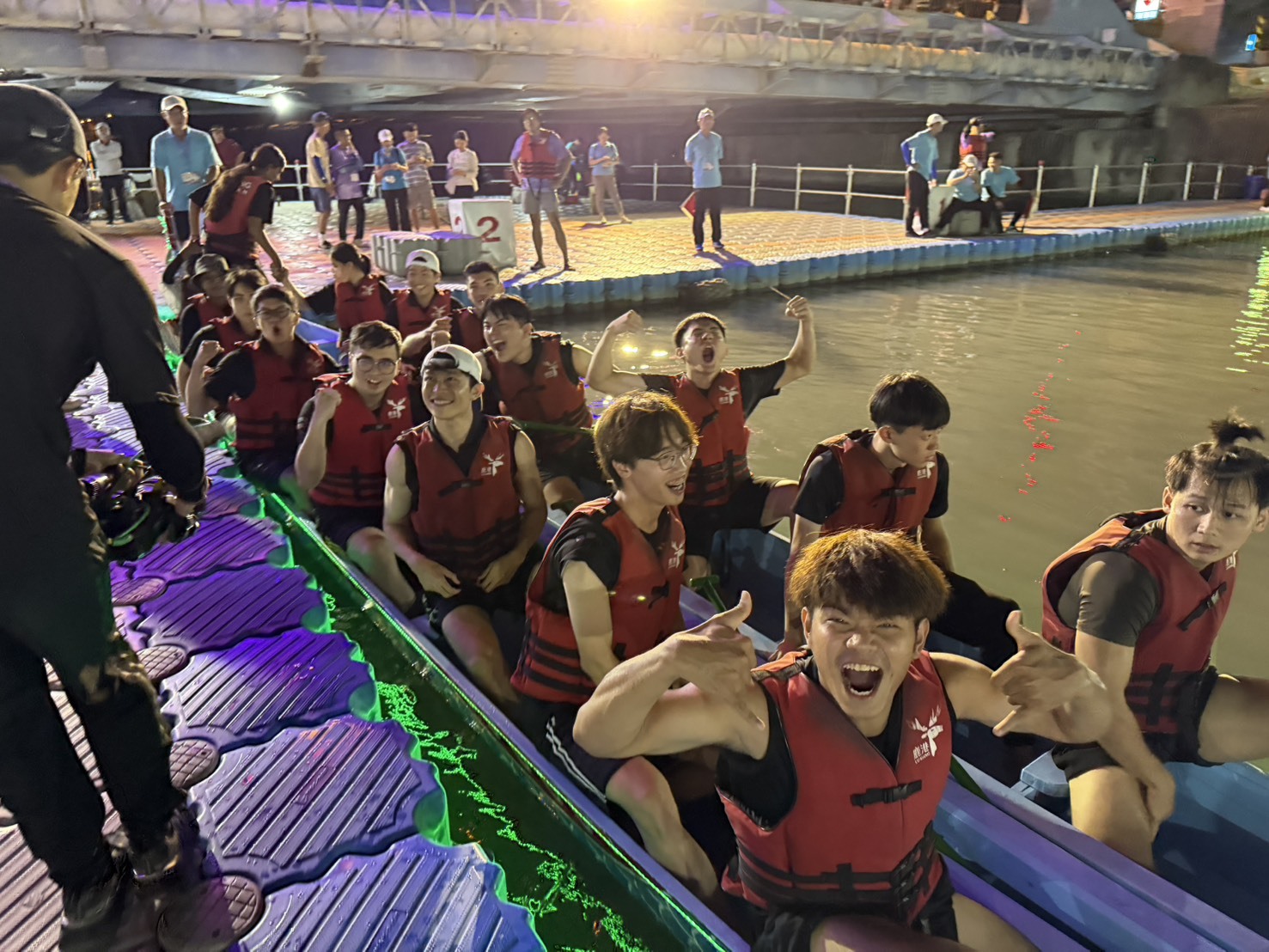
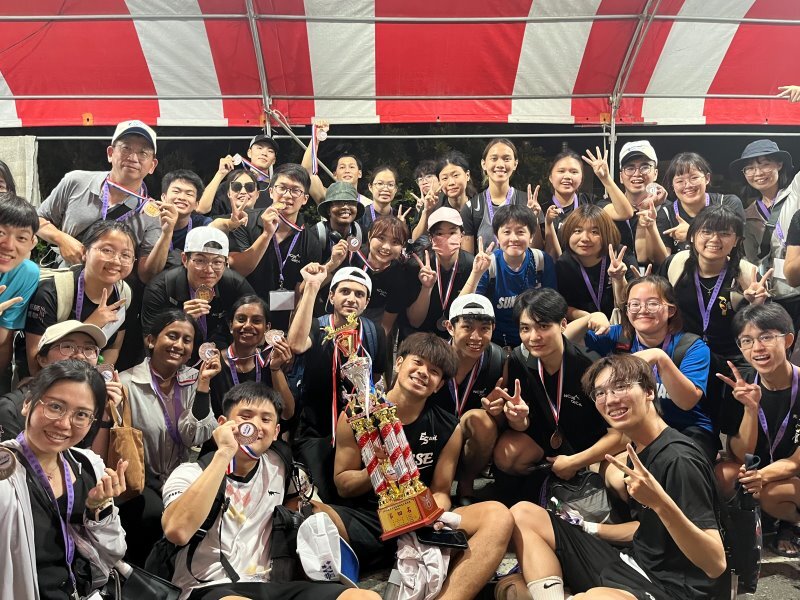
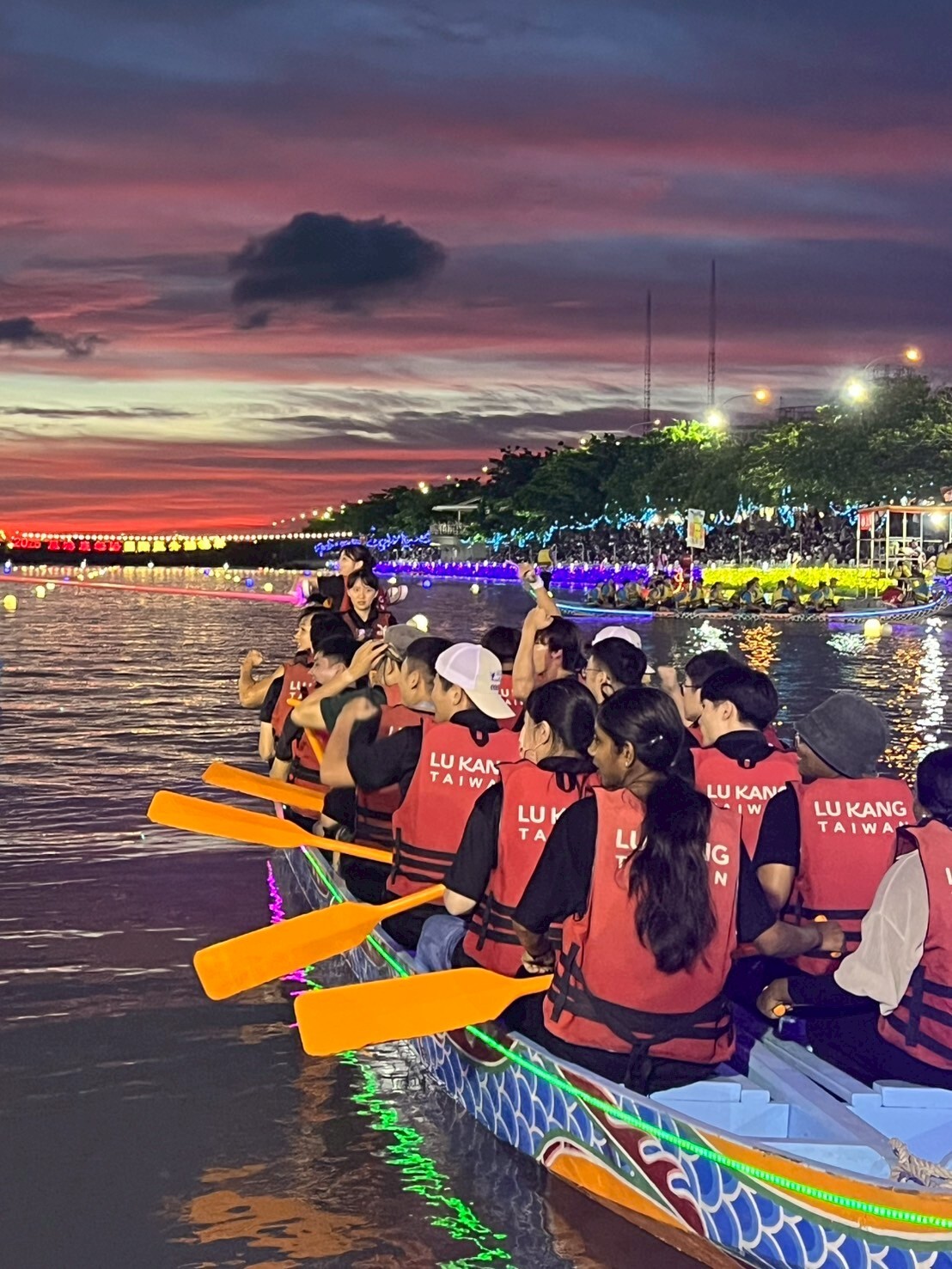
(a) NCUE’s overseas Chinese and international students took part in the 2025 Lukang Dragon Boat Festival International Dragon Boat Championship, organized by the Changhua County Government. Two teams were formed from students from Malaysia, Hong Kong and Macau, India, Indonesia, Türkiye, South Africa and Taiwan. Intensive practice sessions were held beforehand to build coordination and teamwork. On race day, the students competed with demonstrations and demonstrated strong team spirit. One team finished fourth in the international division, reflecting the results of their training and cooperation. Besides racing, students experienced the festival atmosphere and the scenery along the Fulu River in Lukang, and learned about the history of the Dragon Boat Festival and Lukang’s cultural character (Figures 32–34).
(b) The championship broadened overseas Chinese and international students’ understanding of and identification with Taiwan’s Dragon Boat Festival traditions and of local culture. It also encouraged exchange and cooperation among students from different countries and regions, deepening cross-cultural interaction and team cohesion. Taking part in a major local festival allowed students to experience Taiwan’s traditional folk culture and the spirit of dragon boat racing, supported local cultural tourism, and demonstrated the values of cultural transmission, inclusion and sustainable development. These experiences further strengthened the students’ connection with Taiwanese society.
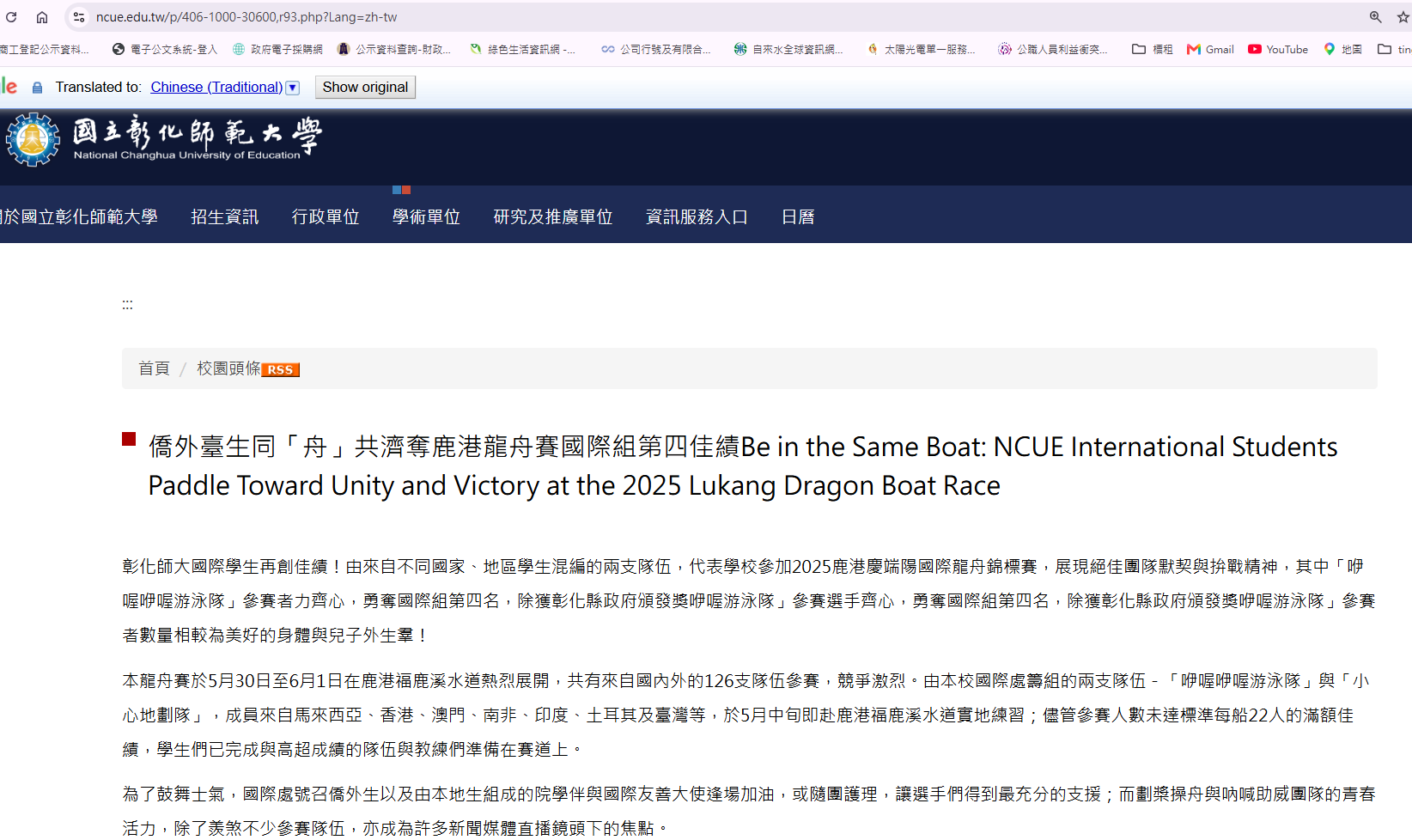
(c) The Campus Headlines report webpage is shown in Figure 35. (URL: https://www.ncue.edu.tw/p/406-1000-30600,r93.php?Lang=zh-tw)
(2) Joint Outing for Overseas Chinese and International Students in the 2025 Academic Year: Having Fun Together
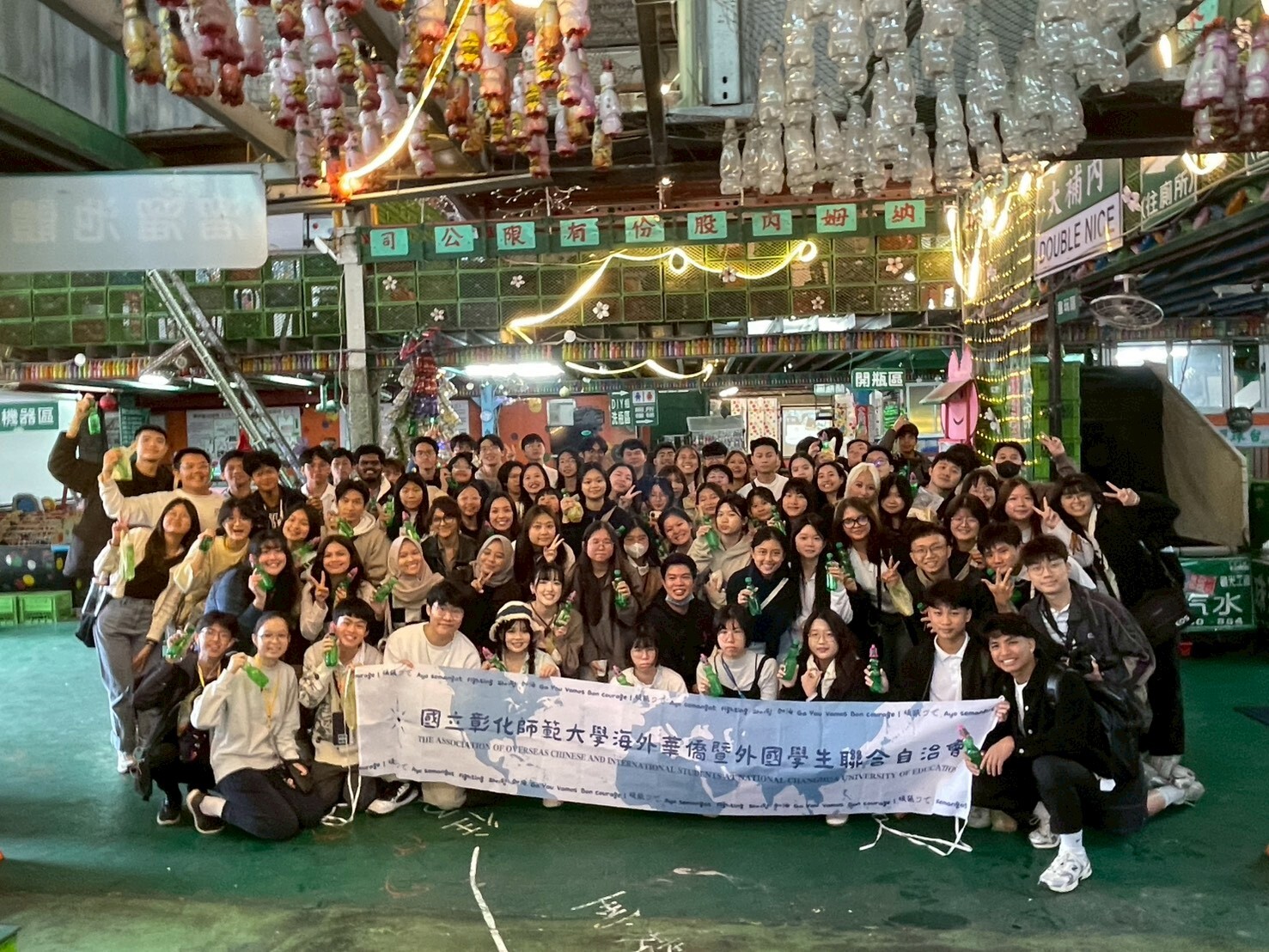
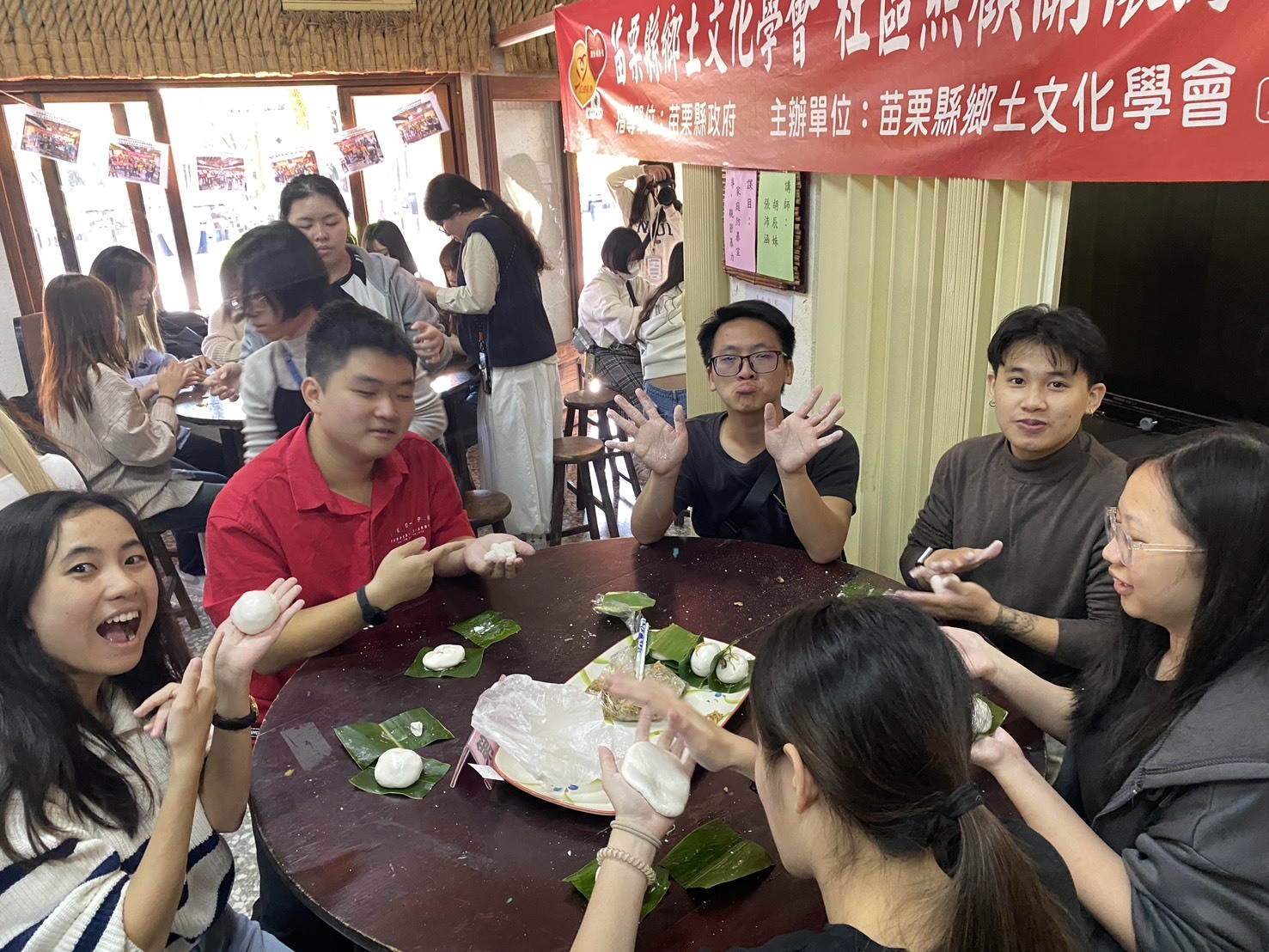
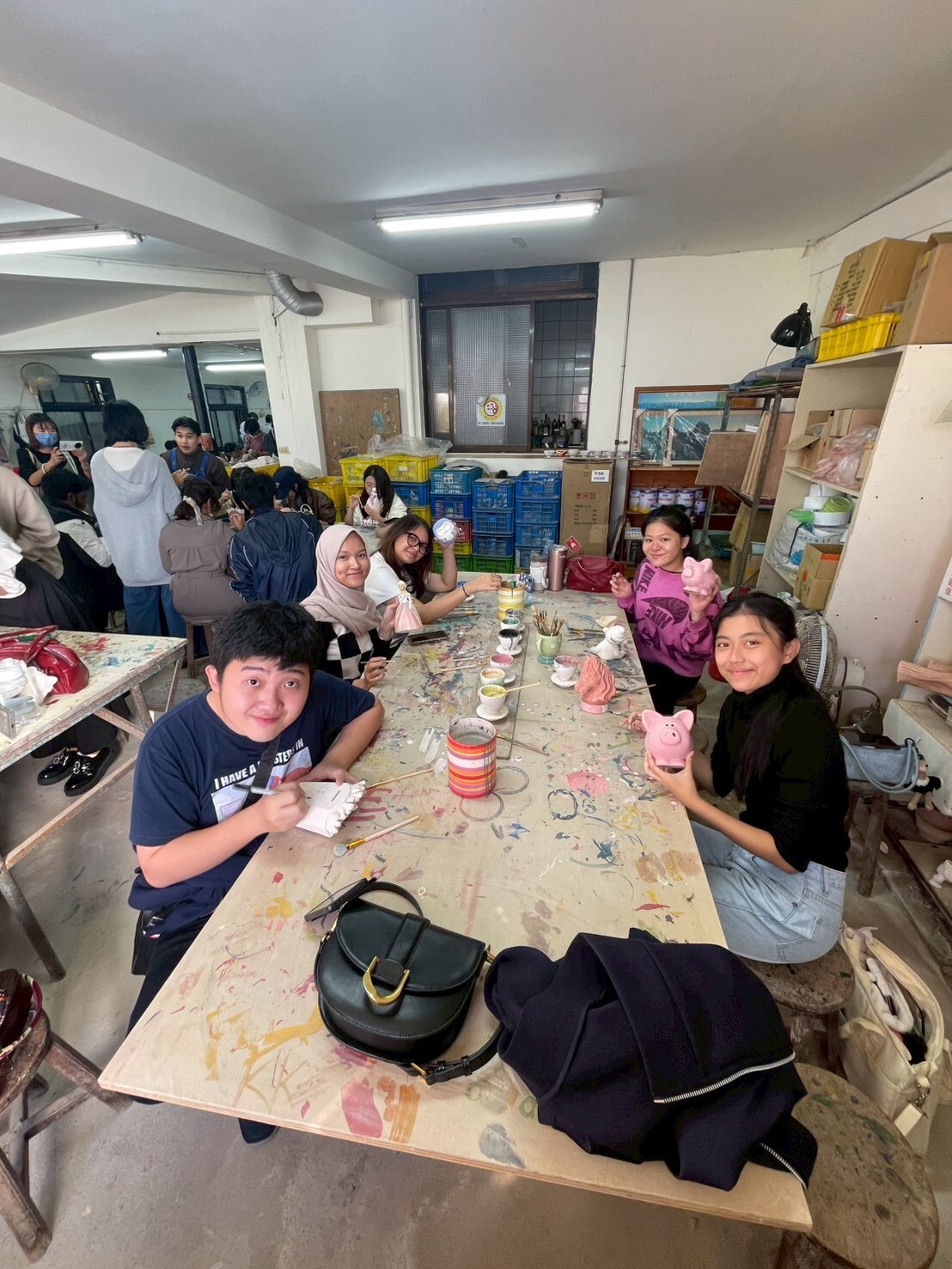
(a) NCUE took overseas Chinese and international students to Miaoli for cultural exploration, visiting local tourist factories and a cultural park to learn about Taiwan’s local industries and traditions. Students first visited a marble soda tourist factory (Figure 36), where a guided tour explained the history and production of marble soda. They bottled their own soda and tasted freshly made popcorn. They then visited the Wugu Cultural Village to experience Hakka traditions, making Hakka lei cha (pounded tea) and vegetable buns (Figure 37) and painting their own ceramics (Figure 38). Through the trip, students actively participated in the hands-on activities, showing enthusiasm for learning and cultural exchange.
(b) The trip broadened these students’ knowledge of Miaoli’s local culture, Hakka crafts and Taiwan’s distinctive industries, and gave them hands-on experience of Taiwan’s cultural diversity. Shared activities also built friendships among students of different nationalities and supported their adjustment to life in Taiwan and their sense of cultural connections. The trip demonstrated the value of cultural transmission, local exploration and international exchange, further strengthening the students’ ties with local Taiwanese society.
(3) National University System of Taiwan Cultural Experience Activities
(a) In 2025, NCUE organized two National University System of Taiwan cultural experience trips to broaden international students’ understanding of local Taiwanese culture and to support the sustainable development and cultural preservation of local communities, in line with UN SDG 11, Sustainable Cities and Communities.
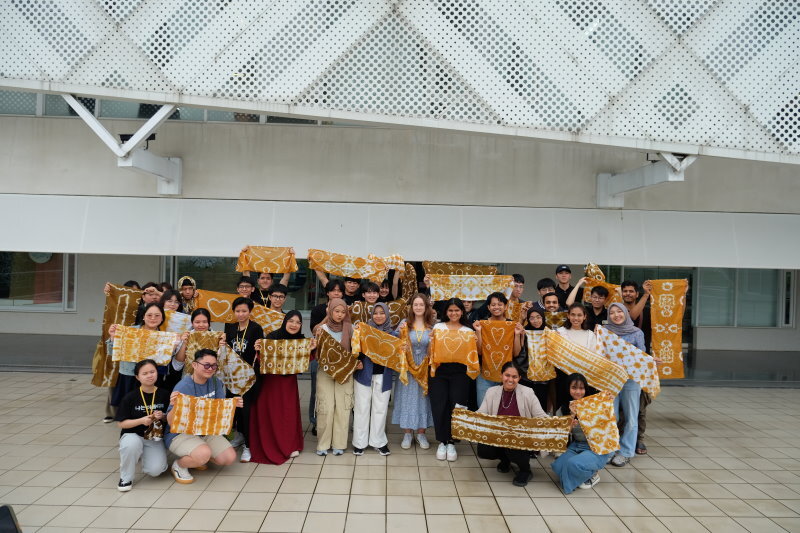
(b) Students travelled in Nantou and Taichung for a series of cultural experiences linking traditional craft transmission with the sustainable transformation of local industry. To learn about cultural heritage preservation, faculty and students visited the National Taiwan Craft Research and Development Institute in Nantou for hands-on indigo dyeing and porcelain plate painting (Figure 39). These activities deepened their appreciation of traditional crafts and the preservation and transmission of local cultural heritage.
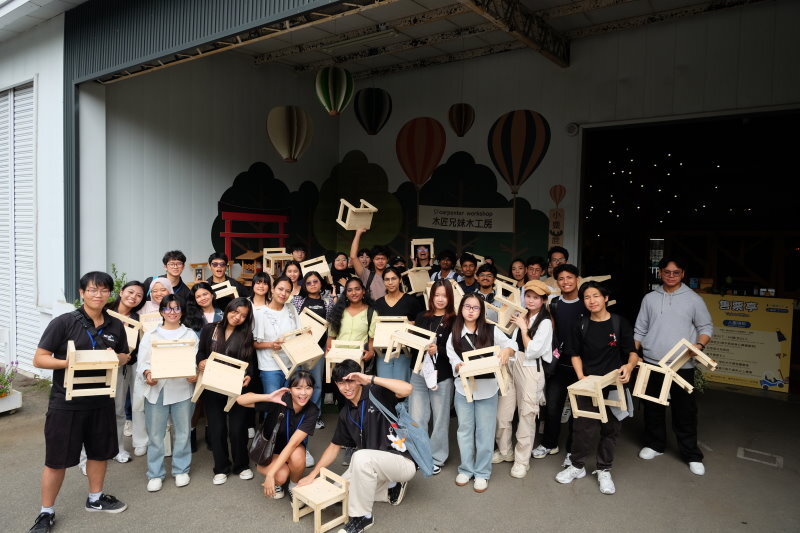
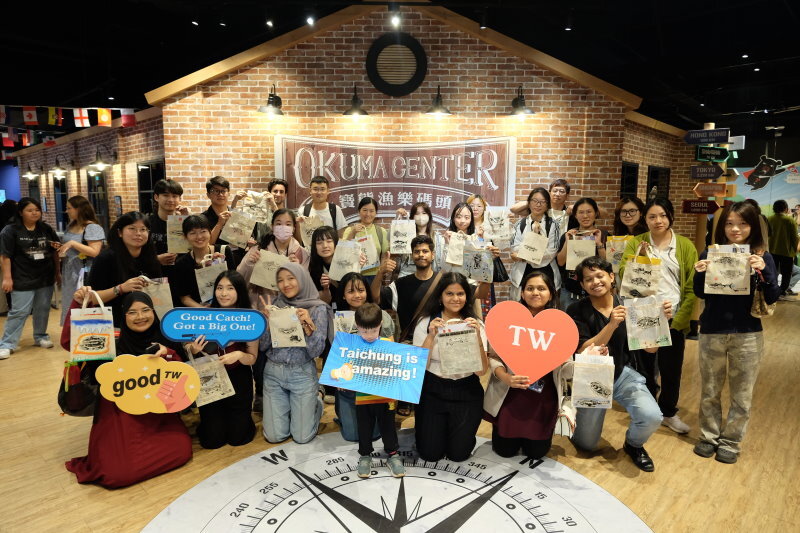
(c) To learn about industrial revitalization and environmental education, students visited the Carpenter Wood Workshop in Houli, Taichung, to make wooden chairs (Figure 40) and see how a traditional timber business has incorporated cultural and creative ideas to become a sustainable local lifestyle. They also visited the OKUMA CENTER, a fishing culture experience center in Tanzi (Figure 41), where an interactive tour covered marine conservation and sustainable operation in the modern leisure industry.
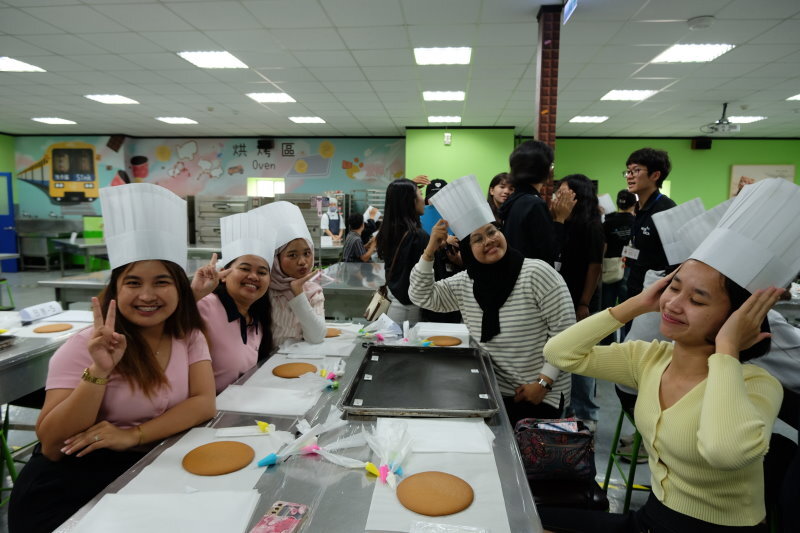
(d) The itinerary also included the Isabelle Bakery tourist factory in Daya, where faculty and students decorated cookies with icing, turning local pastry traditions into a creative activity (Figure 42).
(e) These cross-disciplinary local experiences deepened international students’ understanding of Taiwanese culture, supported the development of local industry and strengthened community cultural resilience, contributing to the creation of sustainable cities and communities.
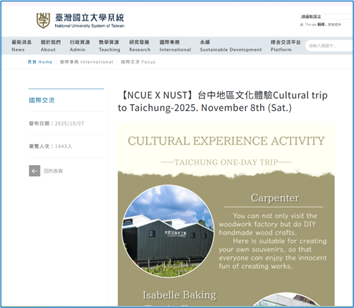
(f) The webpage providing information on the National University System of Taiwan cultural experience activities is shown in Figure 43.
8. Supporting the Development of Local Cultural Industries
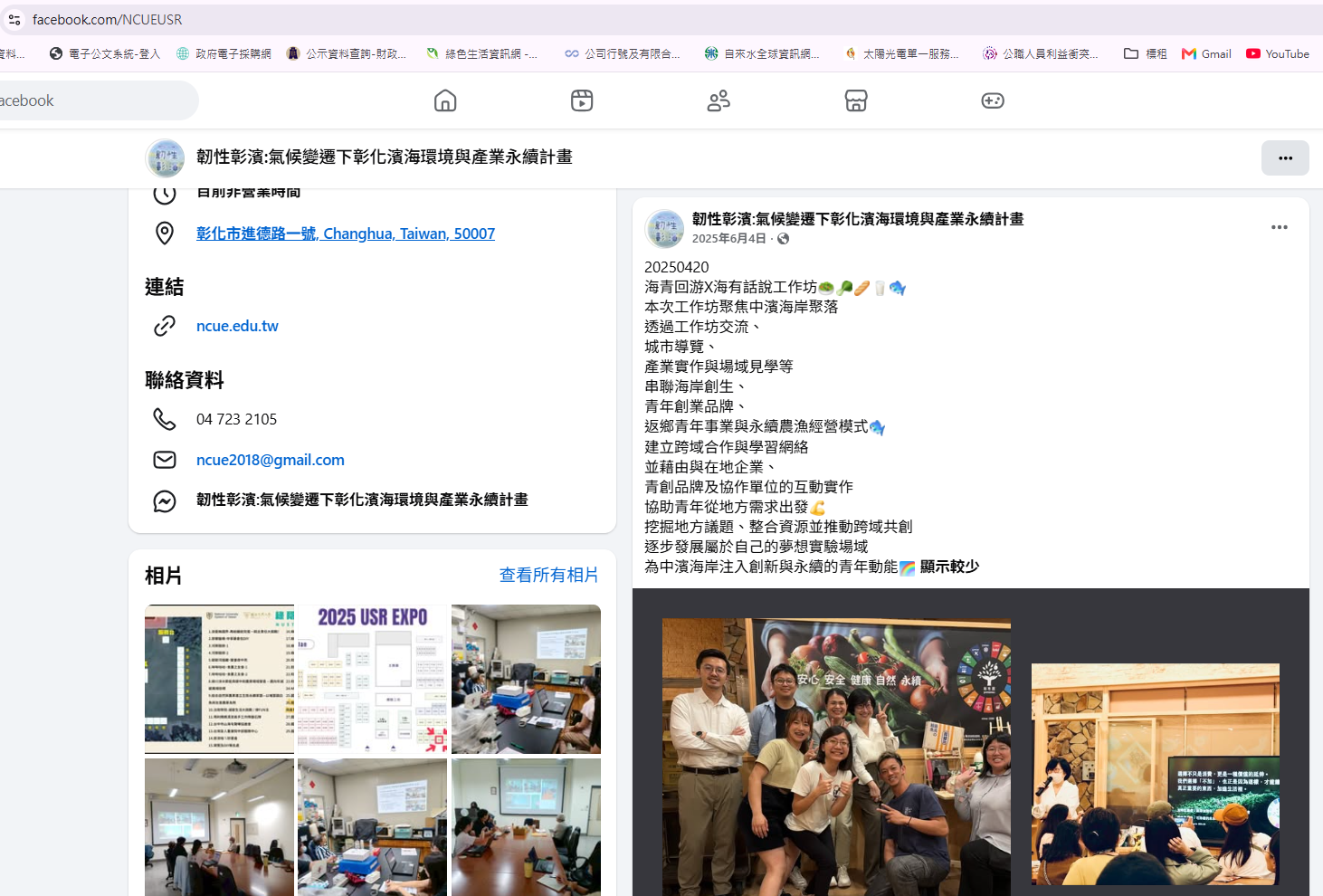
NCUE’s USR Project “Resilient Changbin: Climate Change and the Sustainability of Changhua’s Coastal Environment and Industries” works with local partners on cultural preservation and industrial regeneration in the Changbin coastal settlements. In 2025 the project ran the “Ocean Youth Return × The Sea Speaks” workshop, centered on these settlements. Through workshop exchanges, settlement tours, hands-on industry activities and site visits, young people learned about local history, traditional industries, coastal settlement culture, and farming and fishing practice. They also documented local cultural heritage. The project connected returning young people, local businesses and youth entrepreneurial brands in a network for cross-sector cooperation and learning. It helped young people respond to local needs, integrate local resources and identify issues affecting their communities, promoting cultural transmission, local revitalization and sustainable development. These efforts brought new momentum to youth participation and cultural preservation along Changhua’s coast.
The information webpage is shown in Figure 44.