SDG 14.2.1
SDG 14.2.1 Fresh-water ecosystems (community outreach)
Although Taiwan is surrounded by the sea, due to its climate and geographical conditions, the available freshwater resources are insufficient, making water the most significant constraint on Taiwan’s social and economic development. In recent years, countries all over the world have become aware of the importance of sustainable development as well as the conservation of biodiversity and ecosystems, and water resources play a pivotal role among these issues. Environmental Education Center and Center for General Education of NCUE are responsible for the planning and execution of educational programs related to the freshwater ecosystem. We provide free education for communities throughout Taiwan, NCUE students, and current junior and high school teachers by applying for programs funded by the government. The subjects cover freshwater ecosystems, freshwater organisms, observation of freshwater indicator species, freshwater quality factors, freshwater ecosystem quality factors, water quality testing of campus and communities, aquaculture water supply, including irrigation, industrial water, energy water, and agriculture and fisheries, tourism and recreation, and how individuals and companies could effort in preventing water pollution as well as conserving the water environment. These programs aim to improve the knowledge and awareness on the water environment and the freshwater systems for NCUE students, current junior and high school teachers, and communities throughout Taiwan.
1. Environmental Education Center at NCUE
The programs promoted by Environmental Education Center include “Environmental Educator 24-hour, 33-hour, and 100-hour Certification Course” and “Resilient Changbin: Climate Change and the Sustainability of Changhua's Coastal Environment and Industries”.
Environmental Educator 24-hour, 33-hour, and 100-hour Certification Course
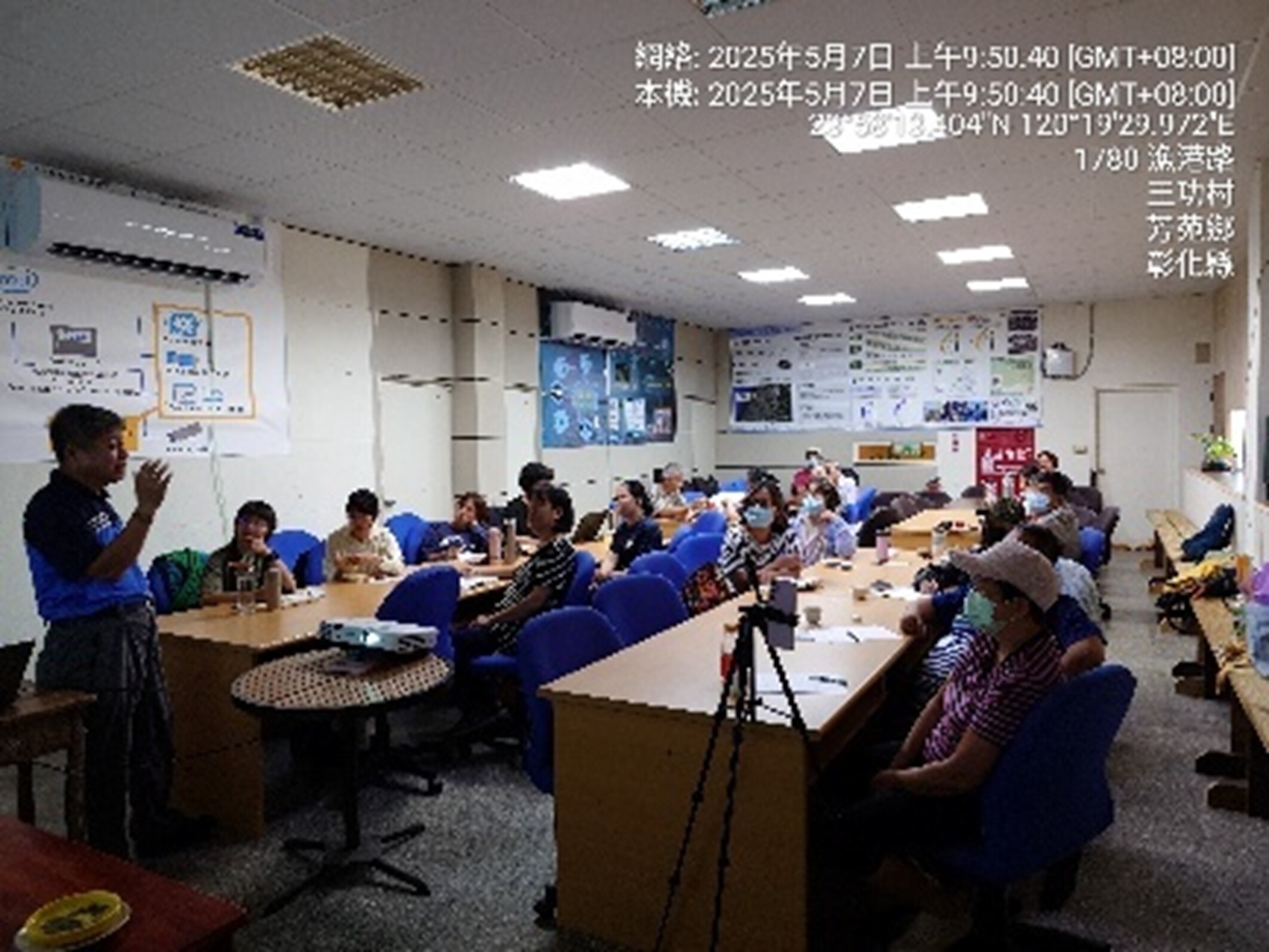
In conjunction with the project “Resilient Changbin: Climate Change and the Sustainability of Changhua's Coastal Environment and Industries”, the Environmental Education Center had cultivated environmental education professionals and provided relevant educational courses for communities throughout Taiwan from July to October in 2025. The course information is presented in Table 1, and the activities are shown in Figures 1–4.
| Course Name | Time | Number of students |
|---|---|---|
| Environmental Educator 24-hour Certification Course in NCUE | July 2025 | 28 |
| Environmental Educator 33-hour Certification Course | July-August 2025 | 13 |
| Environmental Educator 100-hour Certification Course | July-October 2025 | 7 |
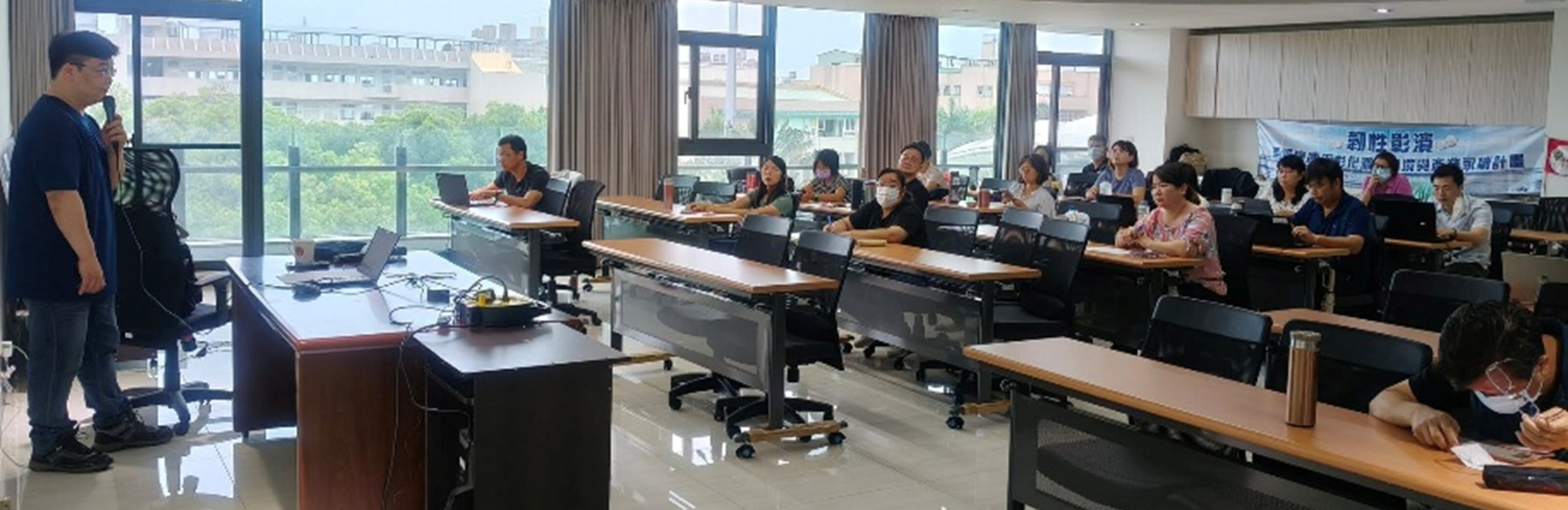
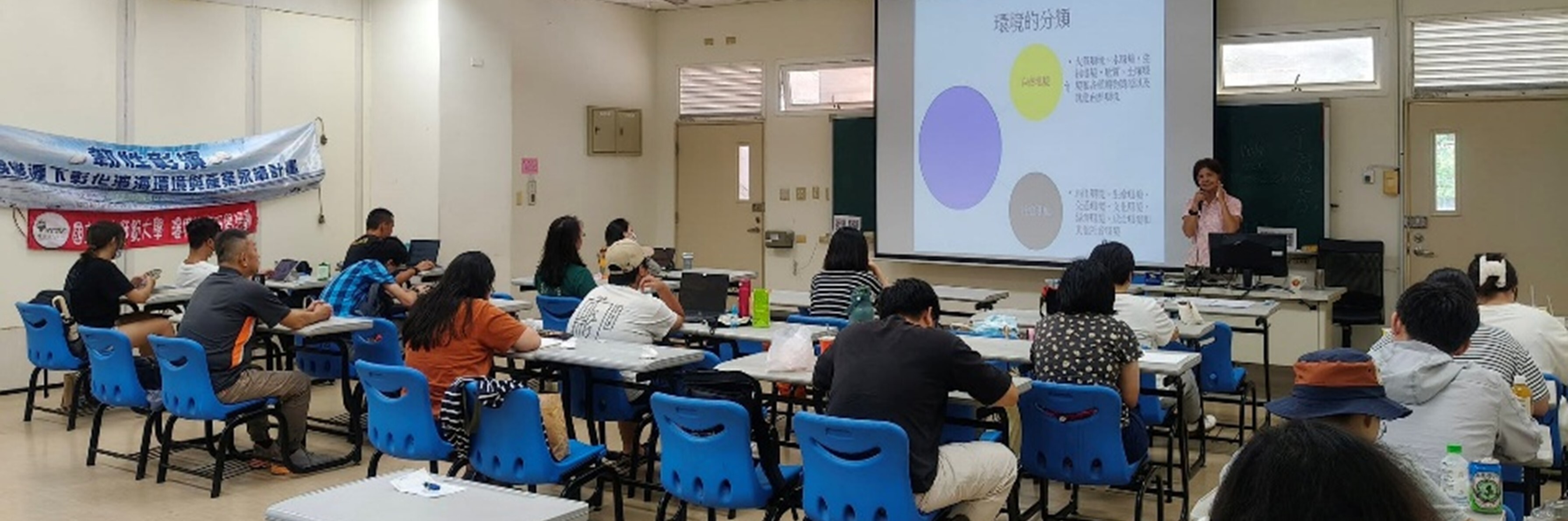
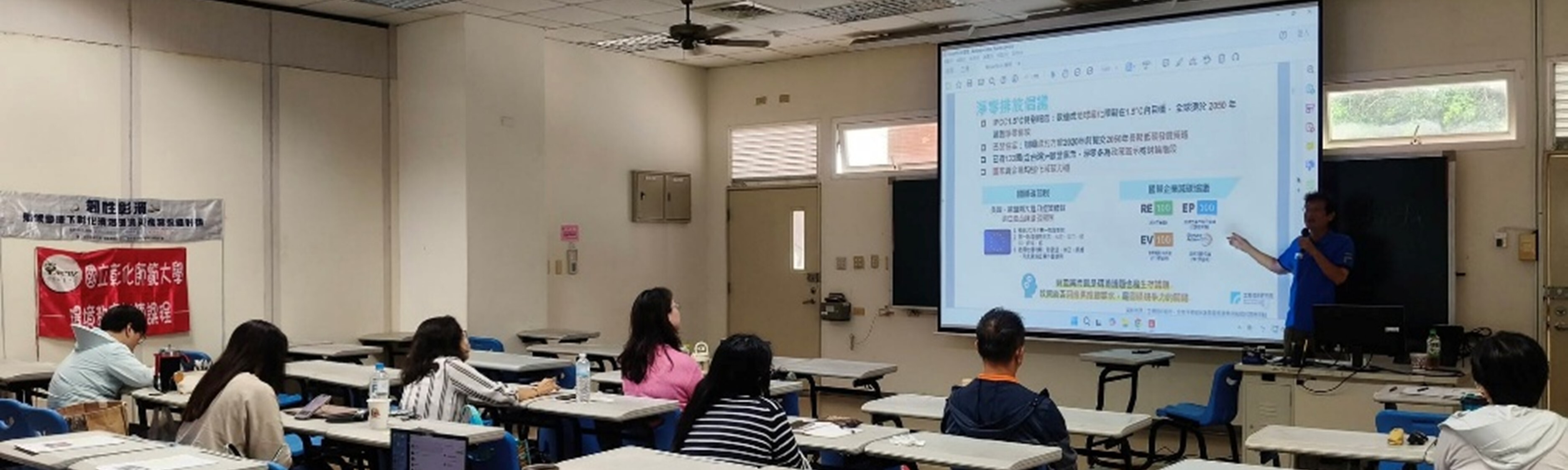
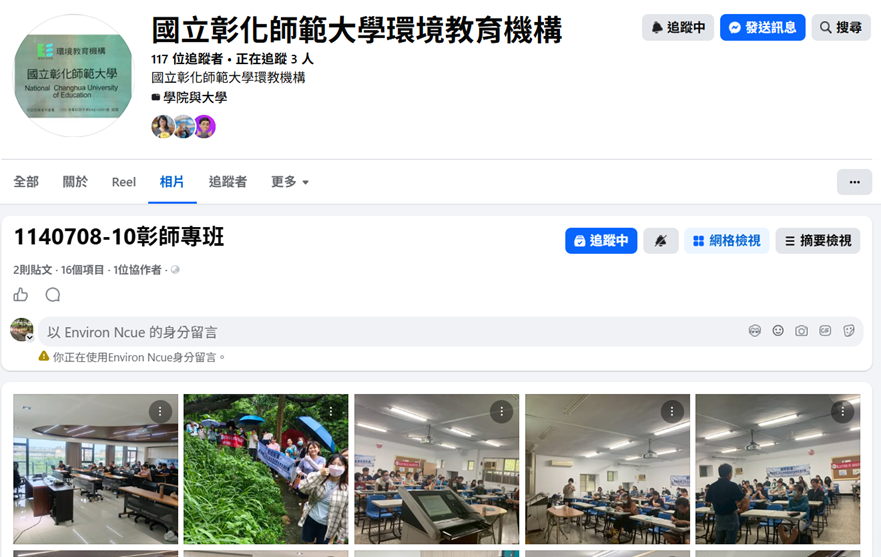
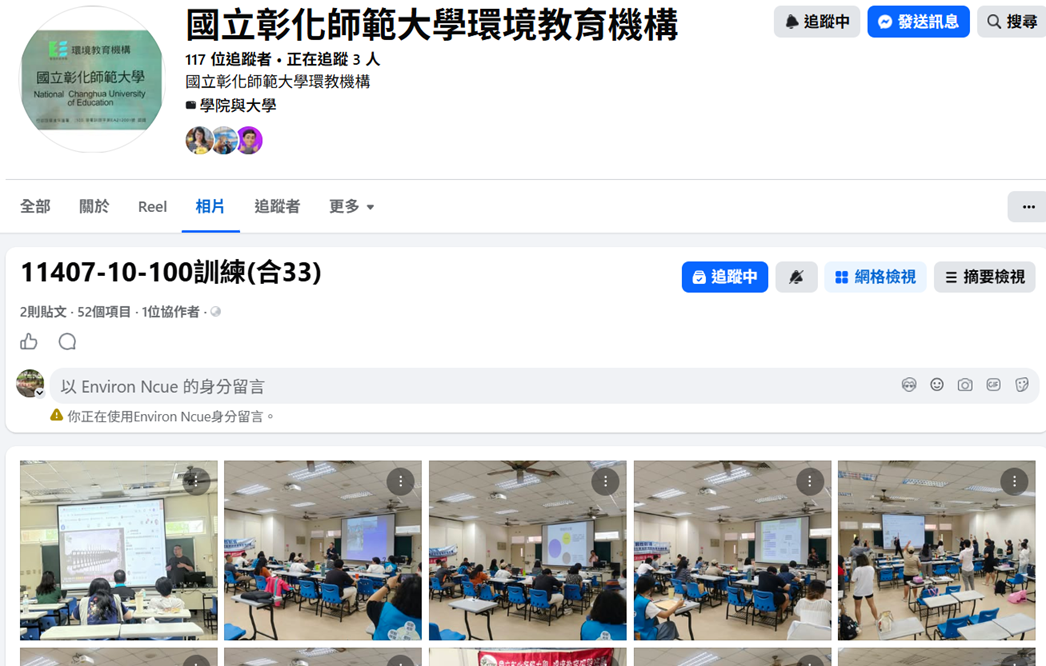
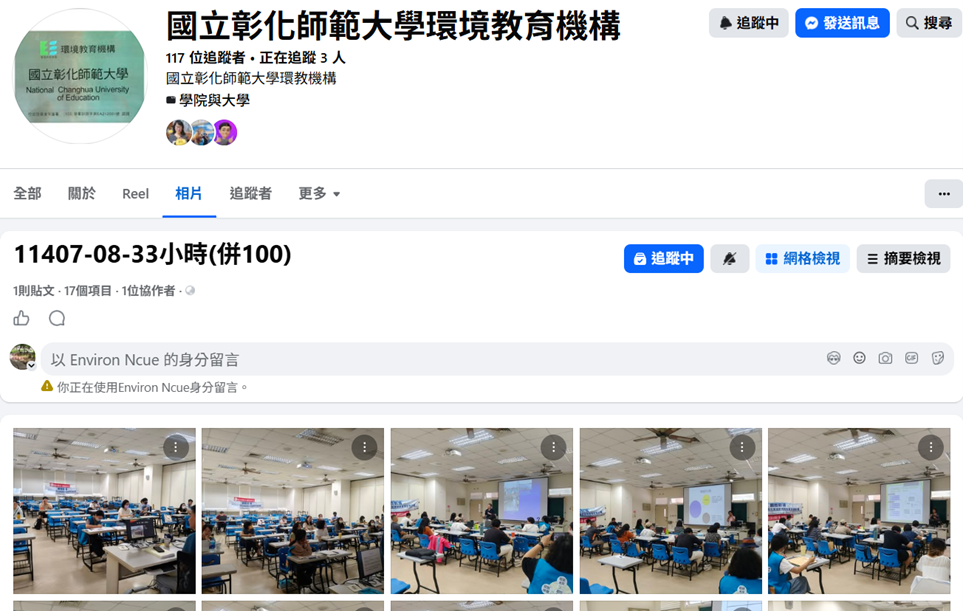
(2) Links to Course Video Resources:
https://www.facebook.com/media/set/?set=a.1389646196282072&type=3
https://www.facebook.com/media/set/?set=a.1390985429481482&type=3
https://www.facebook.com/media/set/?set=a.1391078049472220&type=3
2. Center for General Education
TheCenter for General Education offered a related general education course named “Water Resources and Human Civilization” in 2025.The information is shown in Figure 5.
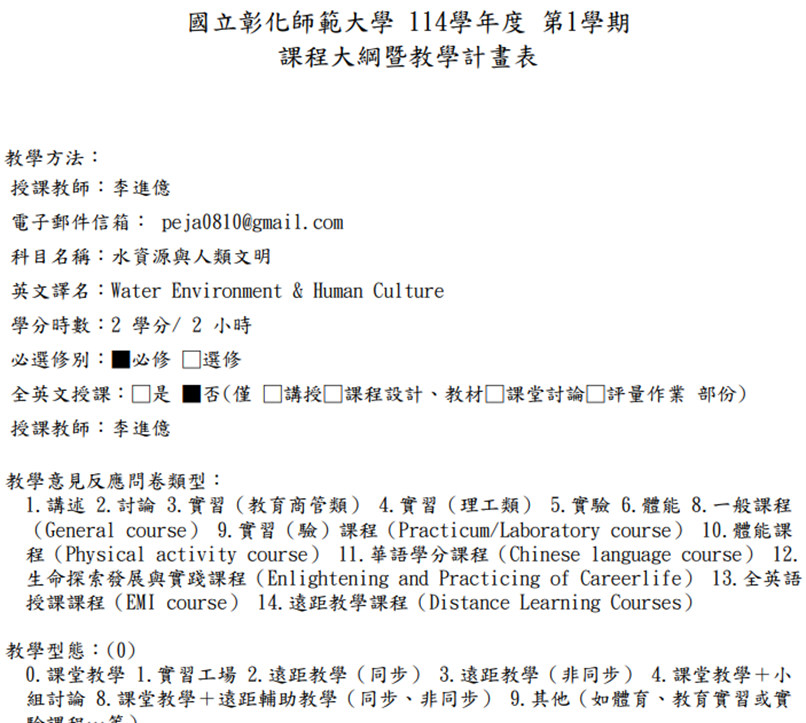
Reference Information: Course Syllabus and Teaching Plan
https://webapss.ncue.edu.tw/DEANV2/UploadDEAN/SUBJECT/1141/00214_0CCGE0175120.pdf
3. Department of Biology
2025 Local Marine Stewardship and Conservation Project: Changhua Coastal Meretrix Lusoria Habitat Survey, Conservation, and Restoration Project.
Under the Ministry of Education Fourth-Phase USR Project, "Resilient Changbin: Climate Change and the Sustainability of Changhua's Coastal Environment and Industries," NCUE Center for General Education worked with Caohu Junior High School, Hanbao Elementary School, Fangyuan Elementary School, and Houliao Elementary School to promote marine education, intertidal observation, clam identification, water-quality monitoring, blue carbon, environmentally friendly aquaculture, and argi-food as well as fisheries-food education. Being dedicated to marine education, Caohu Junior High School integrates marine issues into alternative curriculums, special education, and aesthetic creation. The school not only received the Ministry of Education’s Marine Education Contribution Award in 2021 and 2025, but also won the Excellence Award in the junior-high category of the Marine Education Innovative Teaching Quality Team Selection.
In collaboration with the Changhua Marine Food Research Production Cooperative and local communities, NCUE conducted clam-habitat surveys, sediment improvement, and Marine Citizen Scientists training at Xinbao Wetland. In 2025, we had completed four clam-habitat surveys and conducted an investigative volunteer training accumulated a total of 50 participant-times; on top of that, we had also held five Junior Marine Citizen Scientist activities reached 146 participants and three outdoor ecological survey and field-operation activities reached 73 participants. The activities included water-quality and dissolved-oxygen testing, sediment analysis, bivalve identification, benthic-fauna surveys, intertidal biodiversity observation, and an oyster-shell sediment-improvement trial. Through a “Hands Together” way, Caohu Junior High School students led Hanbao Elementary School pupils in intertidal surveys, building a cooperation model that brings together the University, junior high schools, elementary schools, and communities, which helps to preserve the wetland with local industries. Photographs of the program activities are shown in Figure 6.