SDG 4.2.1
SDG 4.2.1 Proportion of graduates with relevant qualification for teaching
Number of graduates
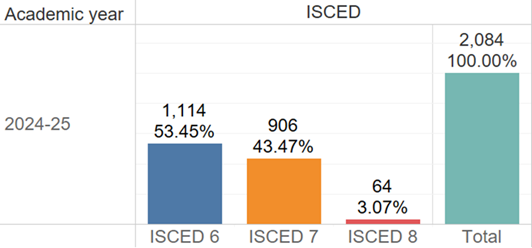
In 2025, our university had a total of 2,084 graduates (Figure 1). The breakdown is as follows:
- ISCED 6 bachelor’s degree: 1,114 graduates.
- ISCED 7 master’s degree: 906 graduates.
- ISCED 8 PhD degree: 64 graduates.
Number of graduates who gained a qualification that entitled them to teach at primary school level
In Taiwan's educational system, NCUE is charged with the core mission of preparing teachers for secondary education. In 2025, a total of 225 graduates obtained teacher certification.
- ISCED 6 bachelor’s degree: 193 people
- ISCED 7 master’s degree: 32 people
- ISCED 8 PhD degree: 0 people
Supplementary notes and course content:
In response to the Ministry of Education's emrollment quota controls and professional specialization mechanisms for teacher education, NCUE trained a total of 225 qualified secondary school teachers in 2025. Through rigorous professional education courses and field teaching practicum, the university continues to cultivate high-quality talent for Taiwan’s secondary education system continously . Only students who qualify as pre-service teachers are eligible to enrol in the pre-service teacher education program. The program comprises three components: general courses, professional education courses and subject-specialisation courses. Upon completing all required course, students are eligible to receive a “Certificate of Completion of Pre-service Teacher Education.” Students have to pass the Teacher’s Qualification Examination and receive a passing grade in the teaching practicum to obtain a teacher certificate, which formally qualifies them to teach.
Among NCUE's 2025 graduates, 589 were pre-service teachers. Of these, 396 (67.2%) completed the required pre-service teacher education courses, 262 (44.5%) passed the Teacher’s Qualification Examination, and 225 (38.2%) obtained a teacher certificate.
To enhance the professional knowledge and teaching competence of NCUE's pre-service teachers, NCUE offers professional education courses and organizes a range of supplementary activities, including lectures, workshops, reading groups for pre-service teachers, co-teaching sessions with industry practitioners, collaborative lesson preparation, classroom observation, and post-lesson discussion. Thesye initiatives are outlined below:
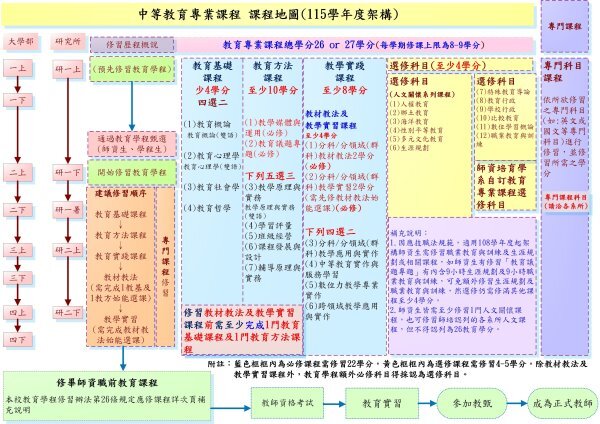
(1) Professional education courses: Pre-service teachers in secondary education must complete at least 26 credits of professional education courses. The curriculum map is shown in Figure 2, which is available on the official website (https://practiceweb.ncue.edu.tw/p/412-1007-675.php?Lang=zh-tw). It covers four components: foundational education courses, educational methods courses, educational practice courses and elective courses.
- (a) Foundational education courses: Students should complete at least 2 courses / 4 credits. The courses include Introduction to Education / Introduction to Education (Bilingual), Educational Psychology / Educational Psychology (CLIL+), Sociology of Education, and Educational Philosophy.
- (b) Educational methods courses: Students should complete at least 5 courses / 10 credits. The courses include Instructional Media and Application, Special Topics on Educational Issues, Principles and Practice of Teaching / Principles and Practice (Bilingual), Assessment in Learining, Classroom Management, Curriculum Development and Design, and Principles and Practice of Guidance.
- (c) Educational practice courses: Students should complete at least 8 credits. Subject-specific / domain-specific (cluster) Materials and Methods and Subject-specific / domain-specific (cluster) Teaching Practicum are required courses, and the remaining courses on offer include subject-specific / domain-specific (cluster) Teaching Applications and Practice, Practice and Service Learning in Secondary Education, Digital Competence in Teaching Professional Practice, and Cross-disciplinary Teaching Application and Implementation.
- (d) Elective courses: Students should complete at least 2 courses / 4 credits. The courses include Introduction to Special Education, Remedial Teaching, Adaptive Instruction, Reading Education, Adolescent Psychology, Educational Administration, Techniques of Behavior Modification, School Administration, Science Education, Teaching Practicum in Secondary Education, Computer and Instruction, New Immigrant Families and Education, Scientific Inquiry and Practice, Comparative Education, Introduction on Taiwanese Aboriginal, Ethnographic Ethnographic Fieldwork, Indigenous Education, Multicultural Curriculum and Teaching, Indigenous Languages, Vocational Education and Training, Block-based Coding, Life Education, Human Rights Education, Homeland Education, Marine Education, Education for Gender Equity, Multicultural Education, and Career Planning.
- (2) Lectures and workshops: In response to the rapid development of artificial intelligence, NCUE held 23 AI-related digital teaching capacity-building workshops and lectures in 2025, helping pre-service teachers develop AI-assisted teaching skills through mobile devices, the Taiwan Adaptive Learning Platform, generative AI, and digital platforms. To broaden pre-service teachers' cross-disciplinary perspectives, NCUE also held training activities on major issues, including "Workshop on Media and Information Literacy", "Discussing Gender Equity from the Perspective of Bodily Autonomy", "Integrating AI into Human Rights Education", and "Cross-subject Assessment Design for Gender Equity Education: From Concept to Practice". These activities moved from introducing each issue to examining practical classroom cases, allowing pre-service teachers to understand and get broad exposure to these topics.
- (3) Co-teaching with industry practitioners: Through co-teaching with industry practitioners in teaching practive courses, teachers integrate educational theory with practical cases and authentic teaching experience, helping pre-service teachers understand the actual needs of the classroom. This gives concrete effect to the practical aims of the educational practice courses and raises teaching quality as well as learning outcomes. In 2025, NCUE held 83 lectures relating to co-teaching with industry practitioners, with 2,082 attendances in total.
- (4) Collaborative lesson preparation, classroom observation, and post-lesson discussion: NCUE works with secondary schools to develop educational practice courses for improving pre-service teachers' learning through classroom observation and discussion. This also helps strengthen the students’ compilation of learning portfolios, thereby advancing their professional growth. In 2025, NCUE held 115 such activities with 21 partner schools.
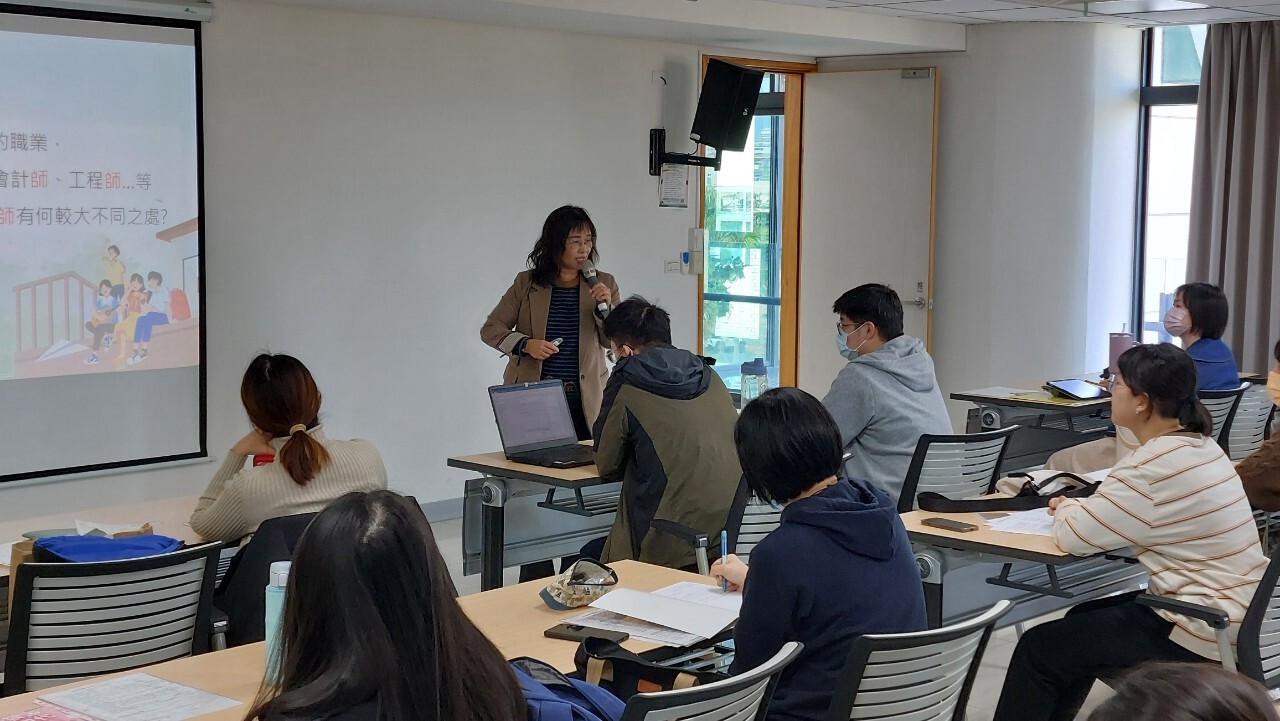
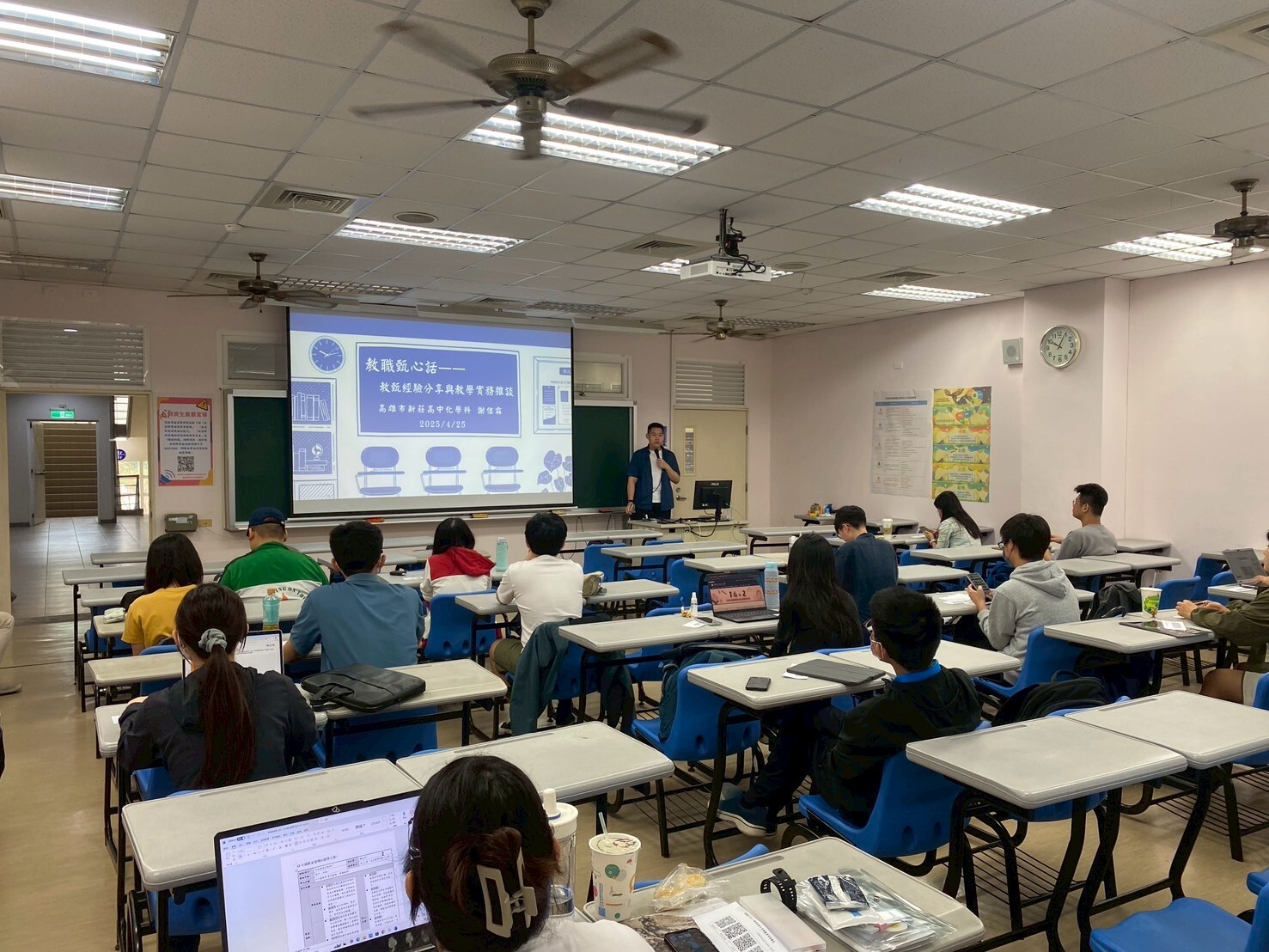
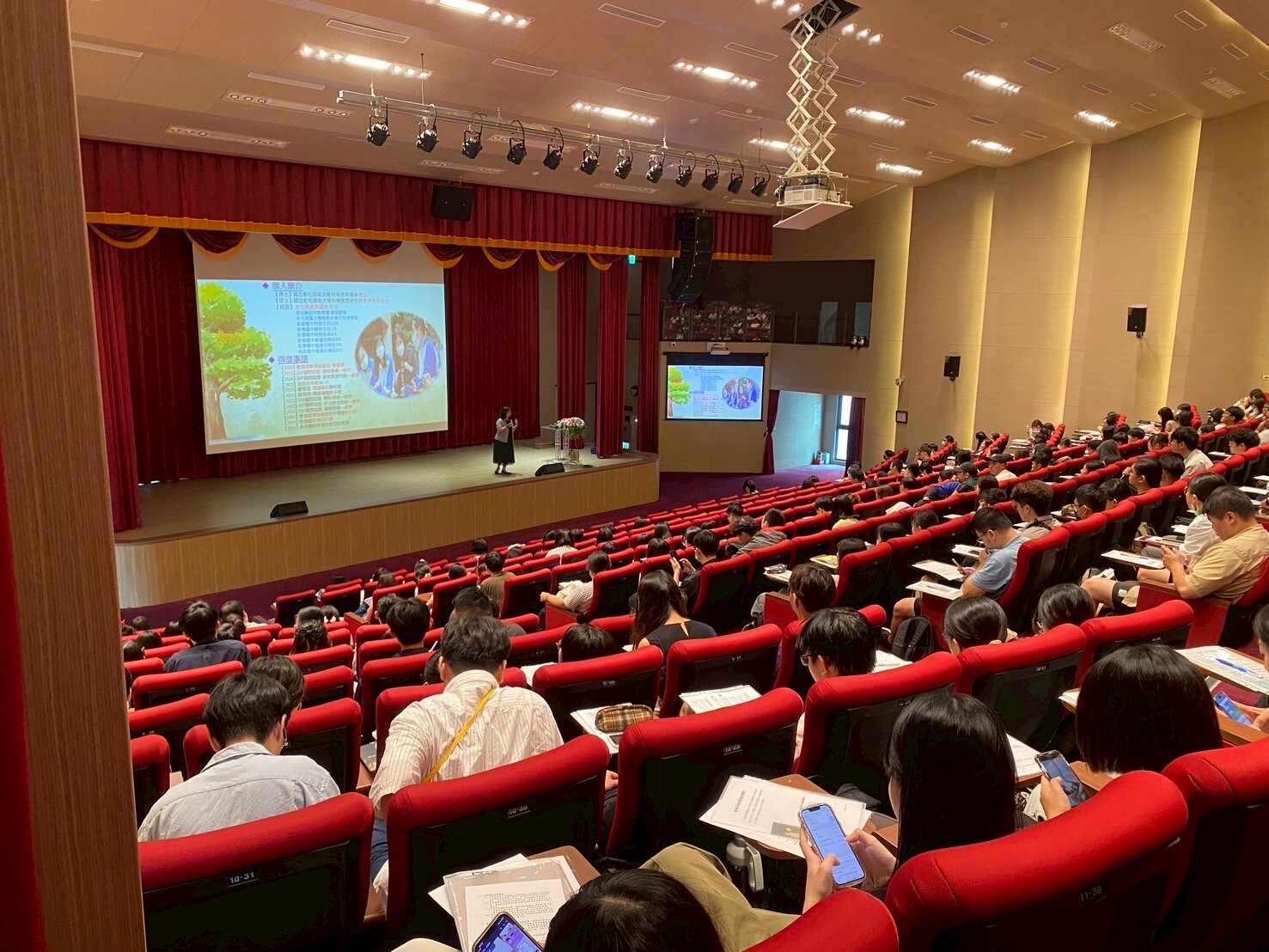
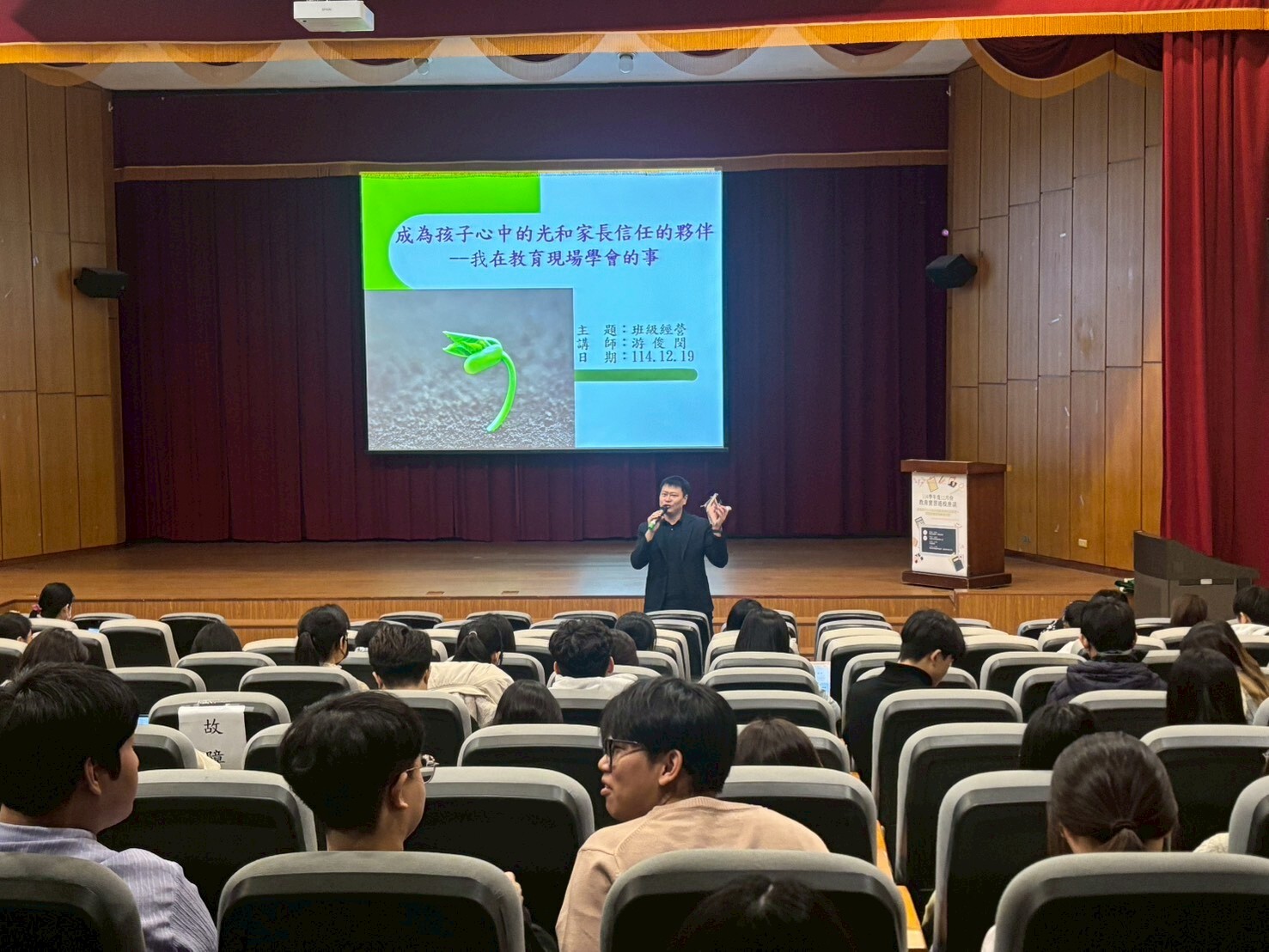
- (5) Teaching practicum sharing session : To strengthen the effectiveness and quality of the teaching practicum, NCUE held sharing session for interns. Besides familiarising interns with practicum procedures and points, the sharing includes keynote talks covering important topics such as classroom management, student guidance and education policy, deepening interns' understanding of the school setting and professional competence. In 2025, NCUE held 8 sharing sessions with 831 attendances in total (Figures 3-6).