SDG 4.3.1
SDG 4.3.1 Public resources (lifelong learning)
NCUE is an university for secondary education in Taiwan and has provided free training courses for in-service teachers all over the place. The university also offers a wide range of both physical and online educational resources to people who are not studying at NCUE. In addition, NCUE opens its campus, library, athletics field, sport courts and other spaces and facilities for public access.
1. Free courses and training (Free courses leading to a certificate or award)
NCUE holds free courses and training sessions on both a regular and an ad hoc basis, and issues certificates or letters of completion to participants. These courses and training sessions include professional training for mathematics teachers, training for teachers in science education, English teaching resources and courses, Science Fun Day, induction training for beginning teachers, and a variety of public lectures.
(1) Induction training for beginning teachers:
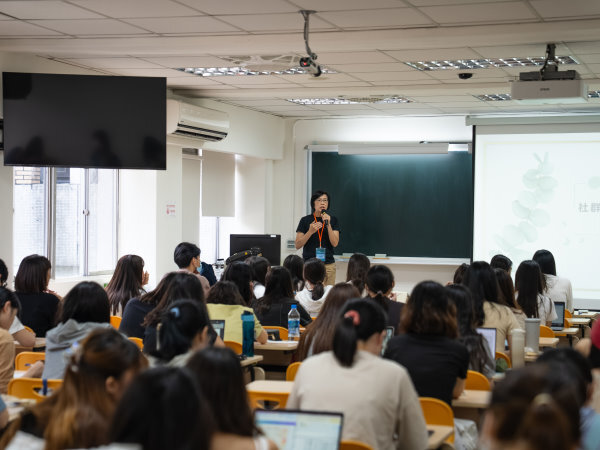
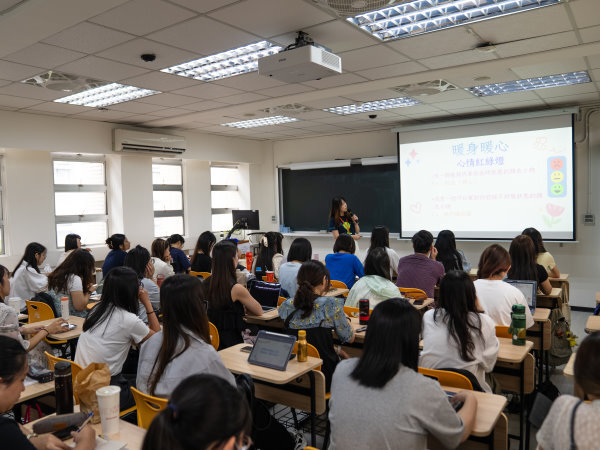
Since 2017, NCUE has held the Induction Program on Professional Commitment and Teaching Practice for beginning teachers each year. The program aims to help beginning teachers in public schools at the secondary level or below strengthen their classroom management and develop innovative teaching skills, enabling them to adapt more effectively to their professional roles. In 2025, the program adopted a format of one day of synchronous online study plus two days of in-person training. The activities are held from August 4 to 15 in northern, central and southern Taiwan respectively. Participants by educational level were 387 from preschools, 1,812 from elementary schools, 813 from junior high schools, and 387 from senior high schools, giving a total of 3,399 (Figures 1-2).
(2) National Program for Inquiry-Based Curriculum Design and Implementation Skills of Science Teachers in Elementary and Junior High Schools:
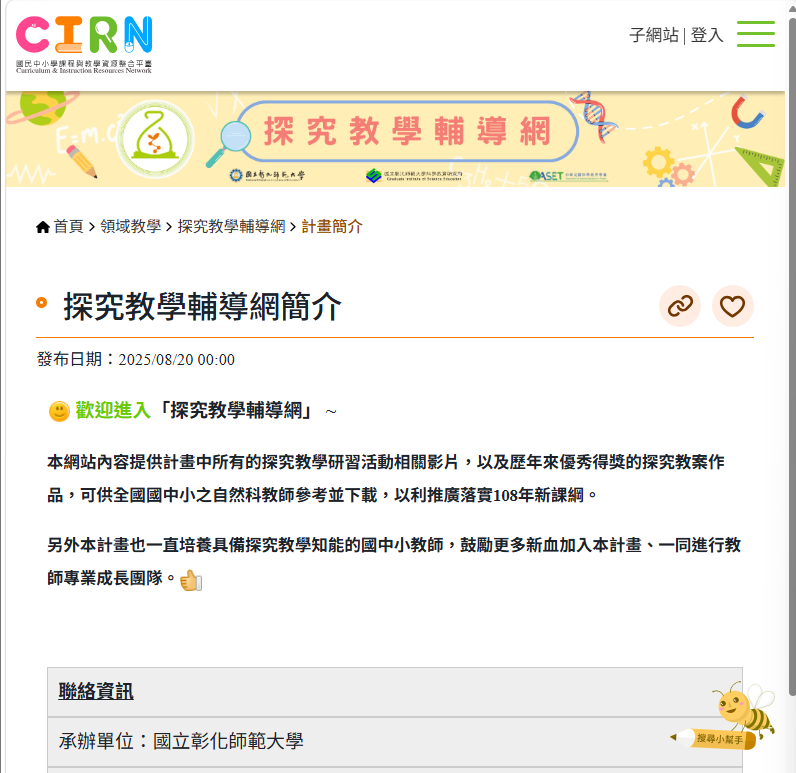
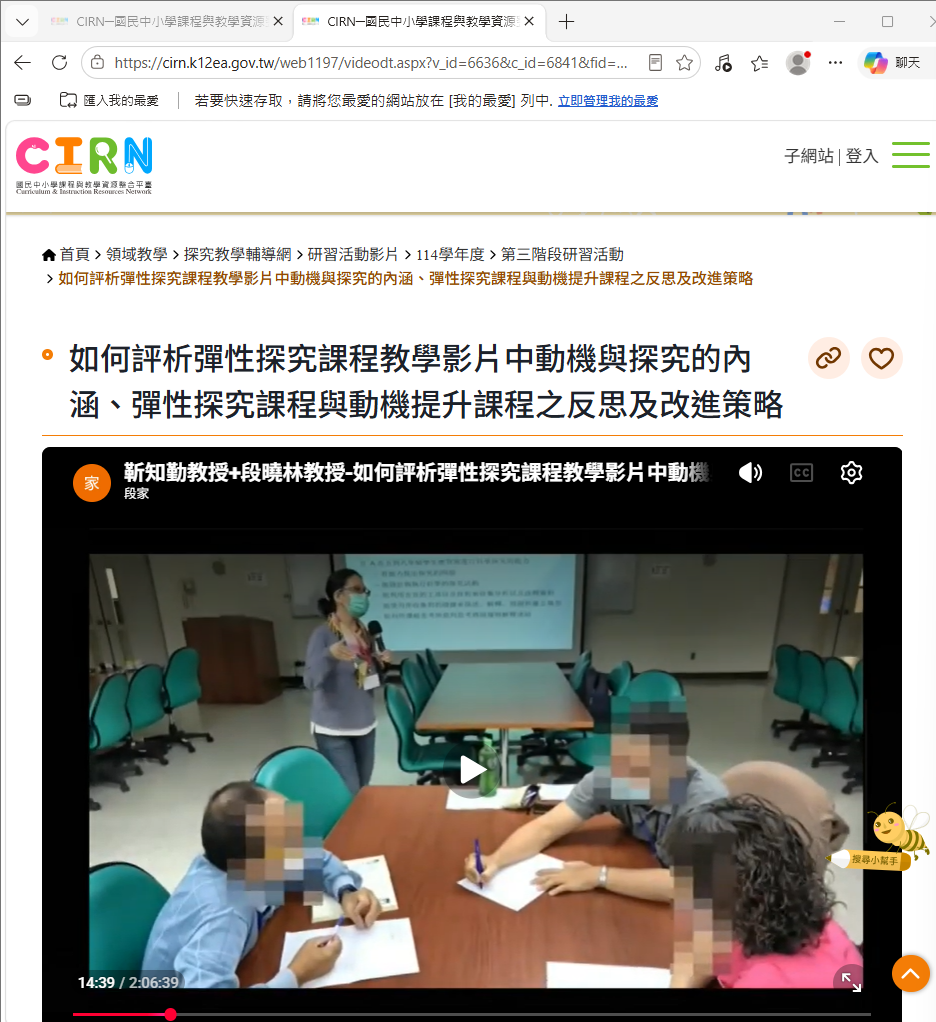
In support of the national 12-Year Basic Education policy, NCUE offers several free courses each year on scientific "inquiry and practice" to help science teachers in elementary and junior high schools nationwide strengthen their skills in designing and implementing inquiry-based curriculums, thereby enhancing public scientific literacy. In 2025, NCUE held 16 free courses across Taiwan, 329 teachers in total had attended the activities and received a certification documenting the training hours completed. The training sessions were also recorded and posted on the project website so that teachers unable to attend in person could still access the material (Figures 3-4).
Project website: https://cirn.k12ea.gov.tw/web1197/
(3) English teaching resources:
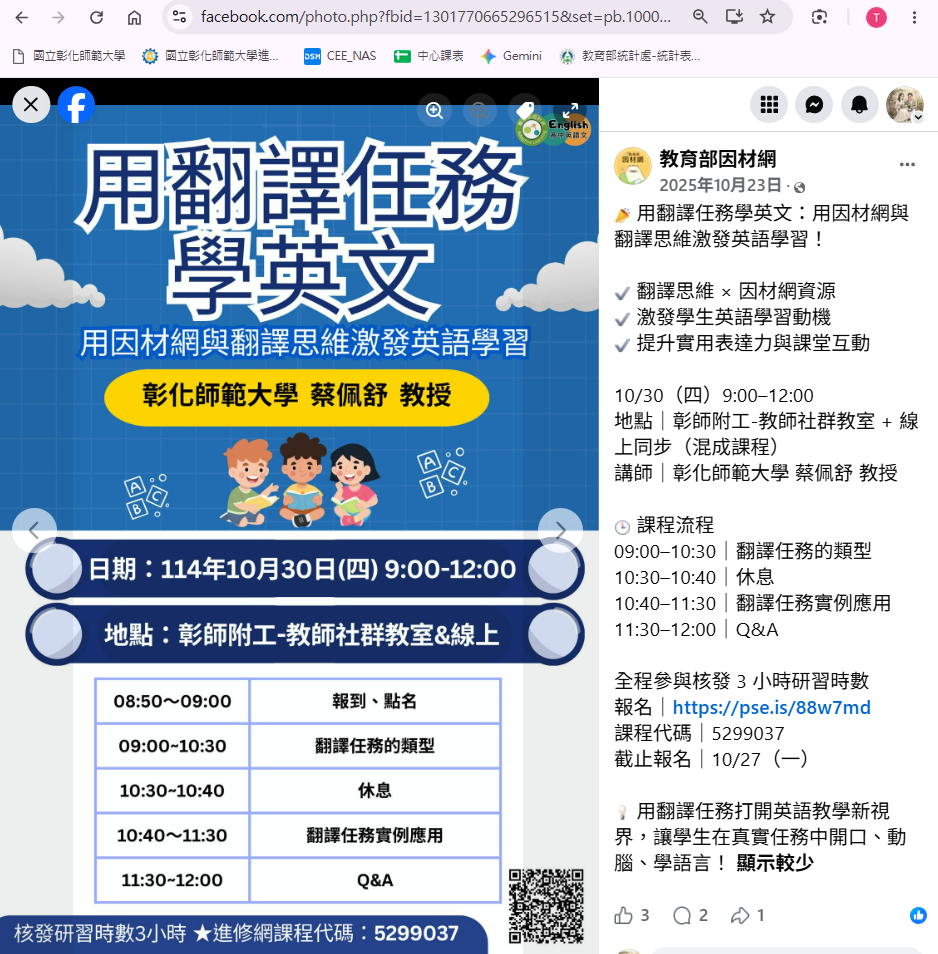
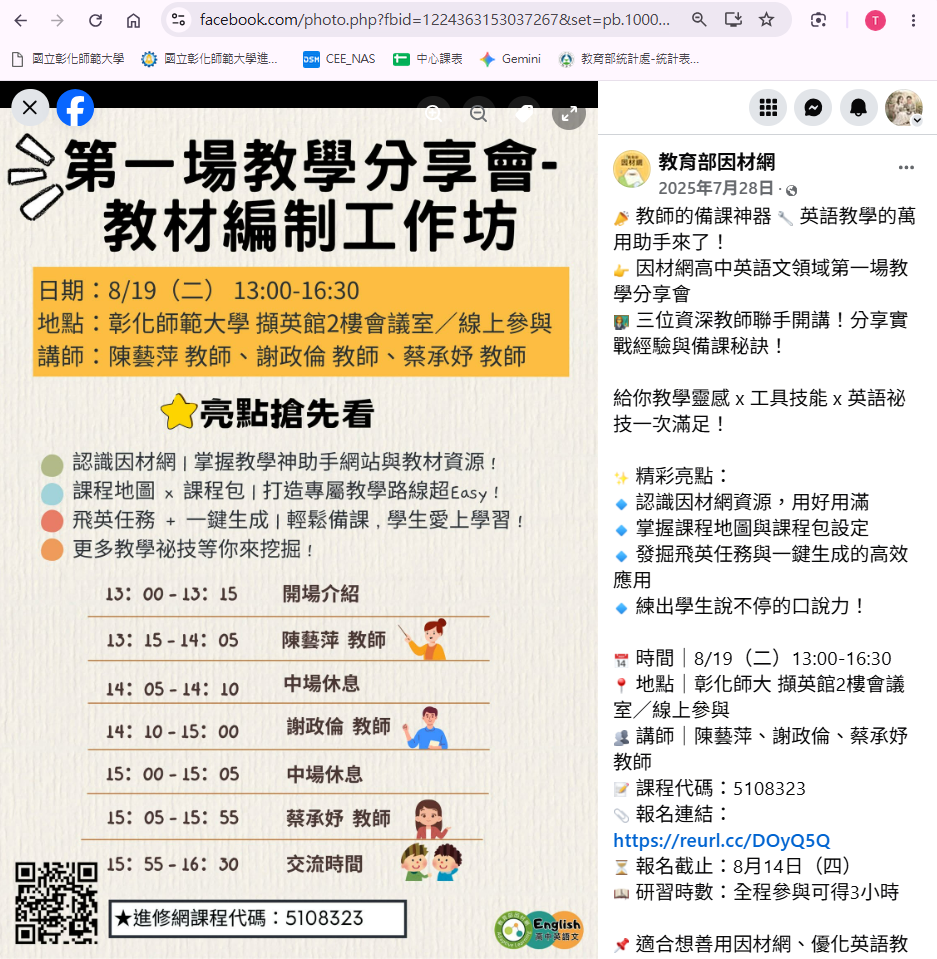
In support of the Bilingual Education Policy, NCUE has developed English-language audiovisual digital teaching materials, including a large number of teaching videos for use in class. To help in-service teachers in senior high vocational high schools use these digital materials and integrate them into senior high school English courses, NCUE held 8 free training courses in 2025, serving a total of 132 teachers and issuing certificates documenting the training hours completed. Figures 5 and 6 show the advertisement of training courses on Facebook.
(4) Scientific Research Talent Development Program for Selected Senior High School Students:
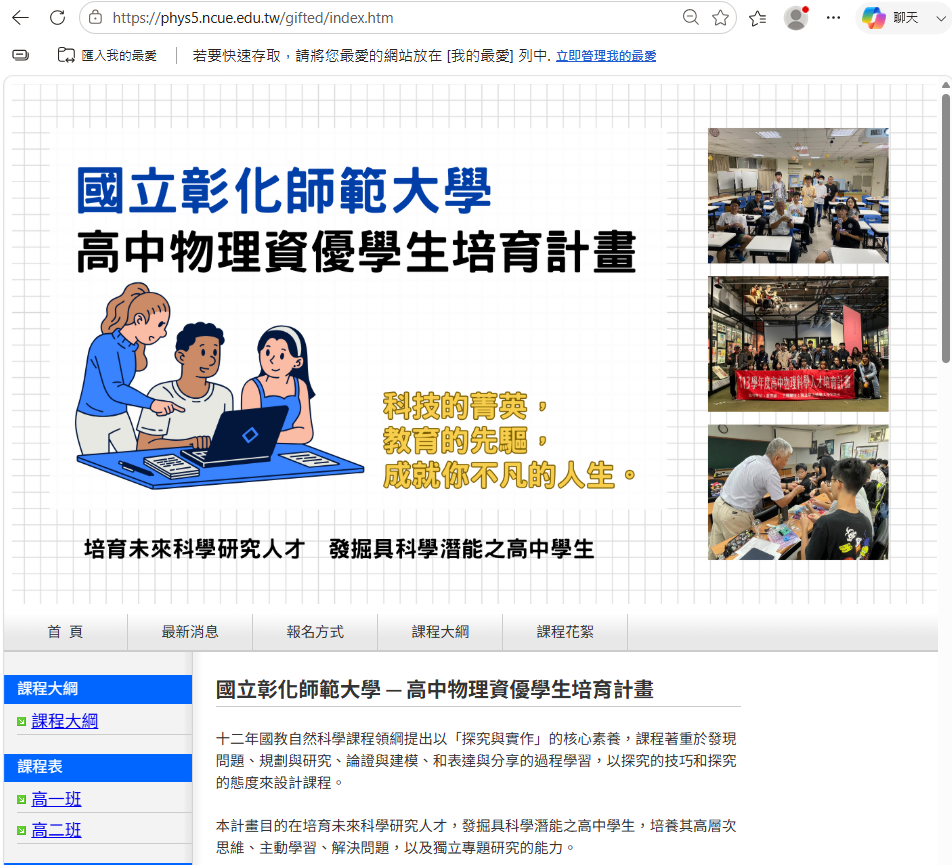
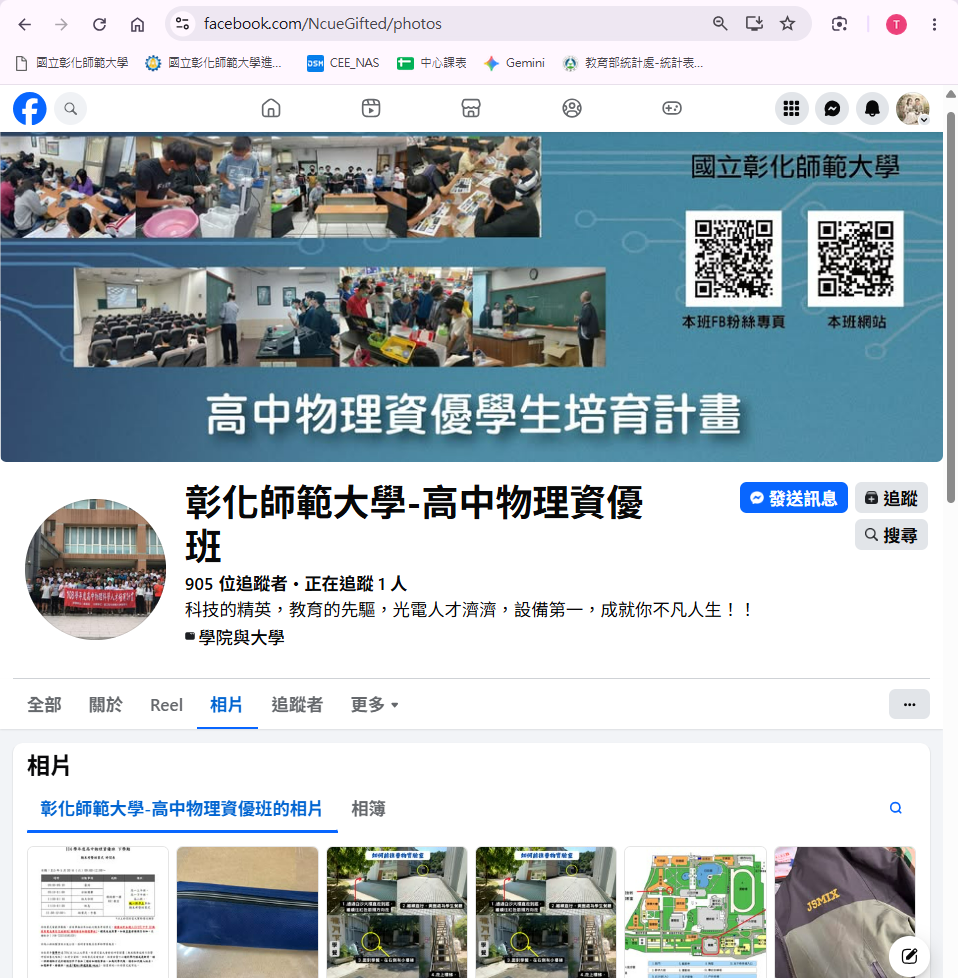
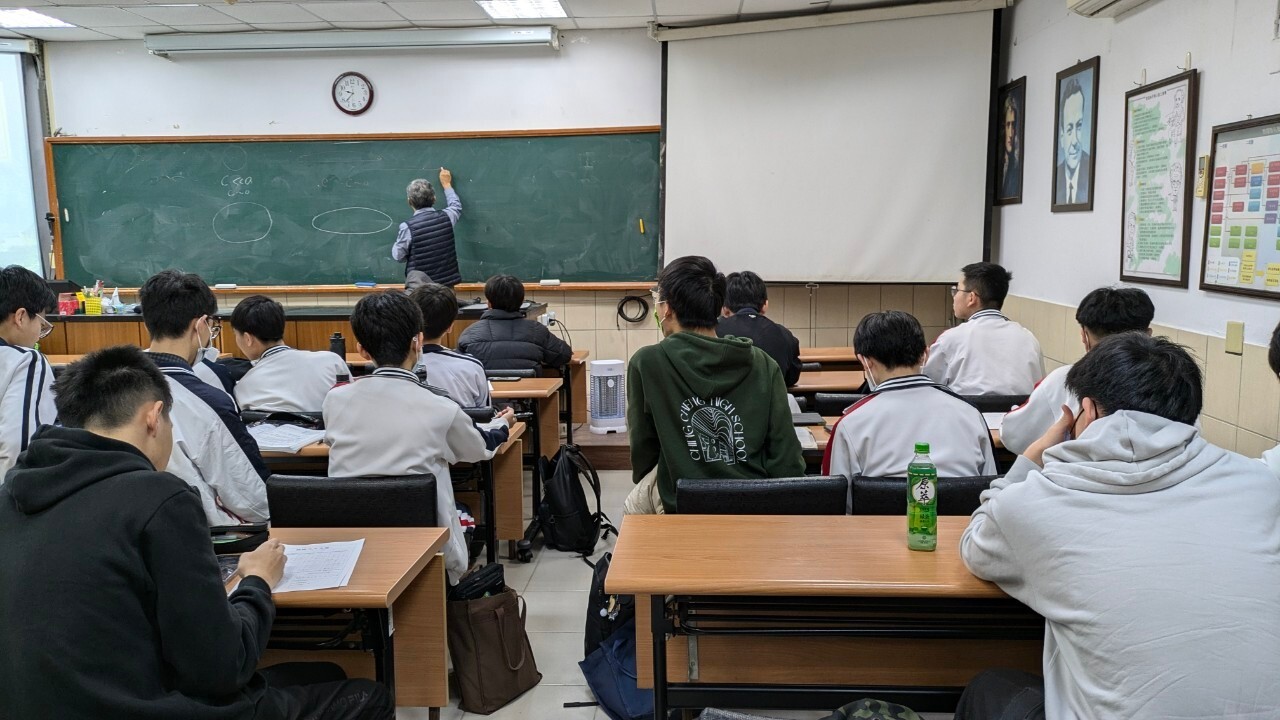
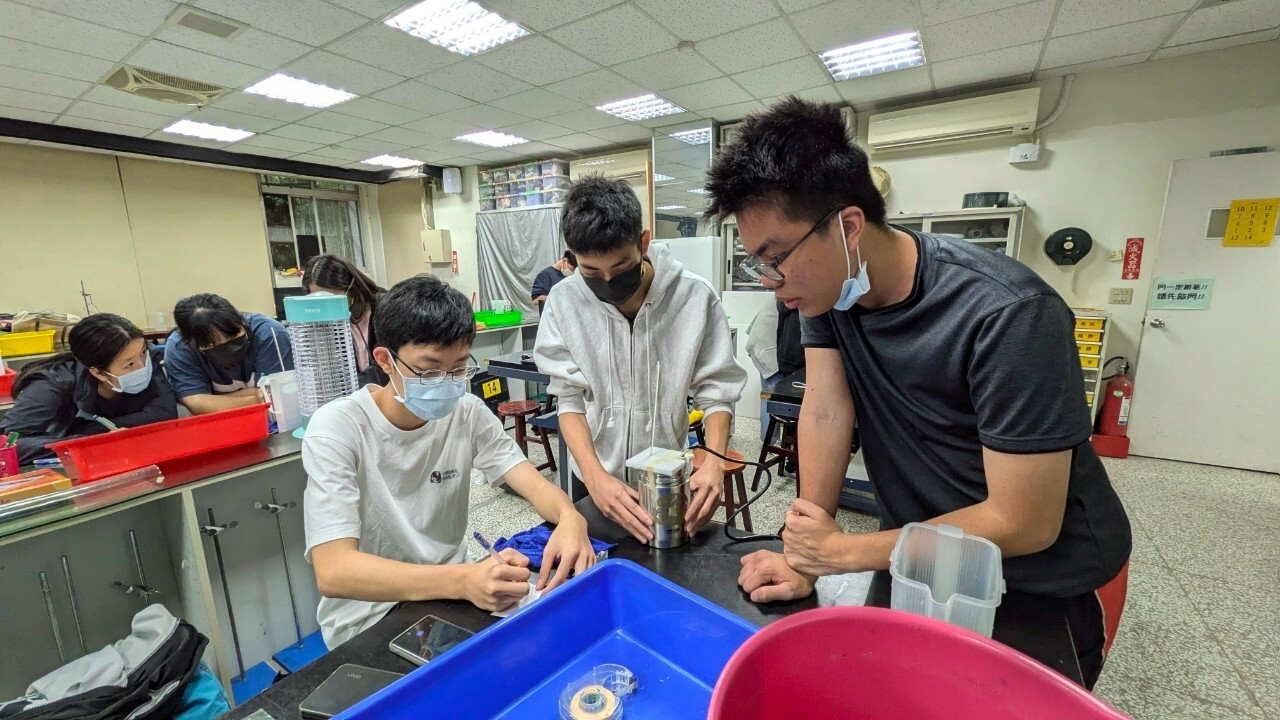
NCUE's Department of Physics has implemented the Scientific Research Talent Development Program for Selected Senior High School Students program for more than a decade. It provides a full one-year curriculum spanning Grades 10 and 11. The Grade 10 curriculum focuses on strengthening foundational knowledge of physics, deepening conceptual understanding and building the basic skills needed to undertake physics research projects, while the Grade 11 curriculum emphasises laboratory training and the development of a research mindset, cultivating students' capacity for independent inquiry. The program also arranges visits to science-related sites so that students can broaden their learning experience across a variety of settings. In 2025, the two classes from Grades 10 and 11 had 49 participants in total. Figures 7 and 8 show the program's official website and Facebook page respectively, and Figures 9 to 12 show photographs of the training courses.
- Project website: http://phys5.ncue.edu.tw/gifted/index.htm
- Facebook page: https://www.facebook.com/NcueGifted
(5) Professional training for mathematics teachers:
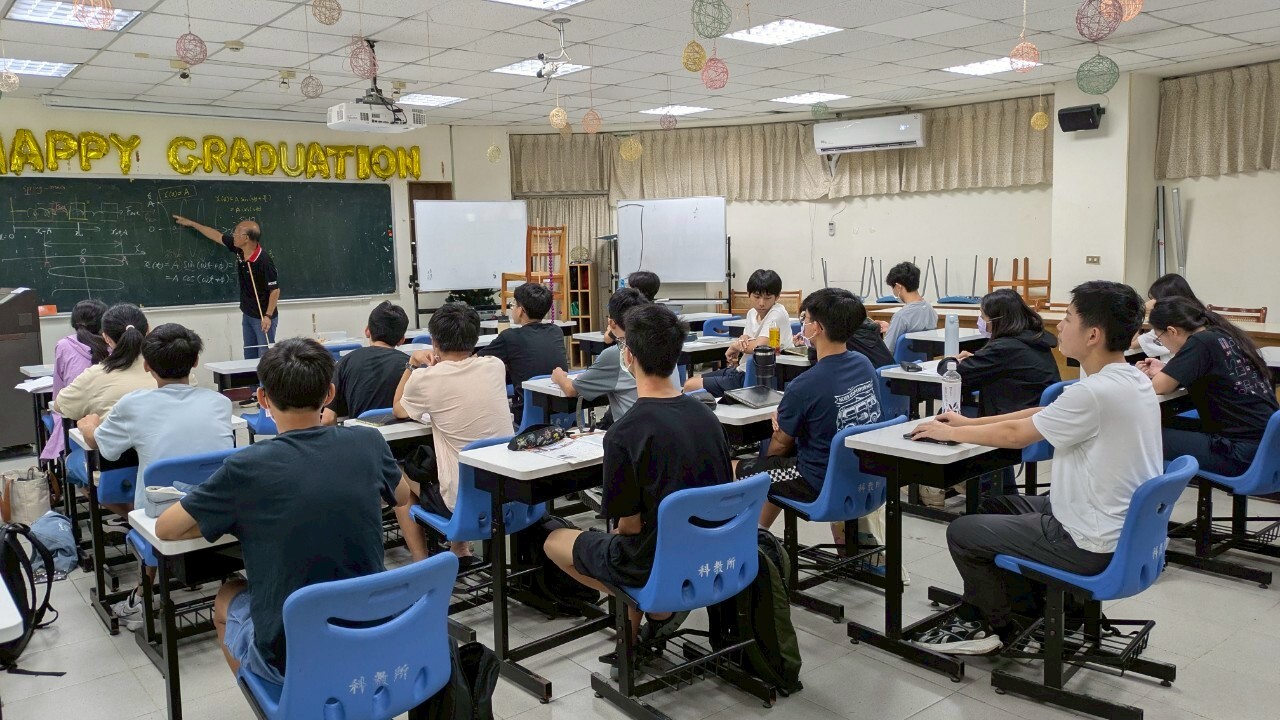
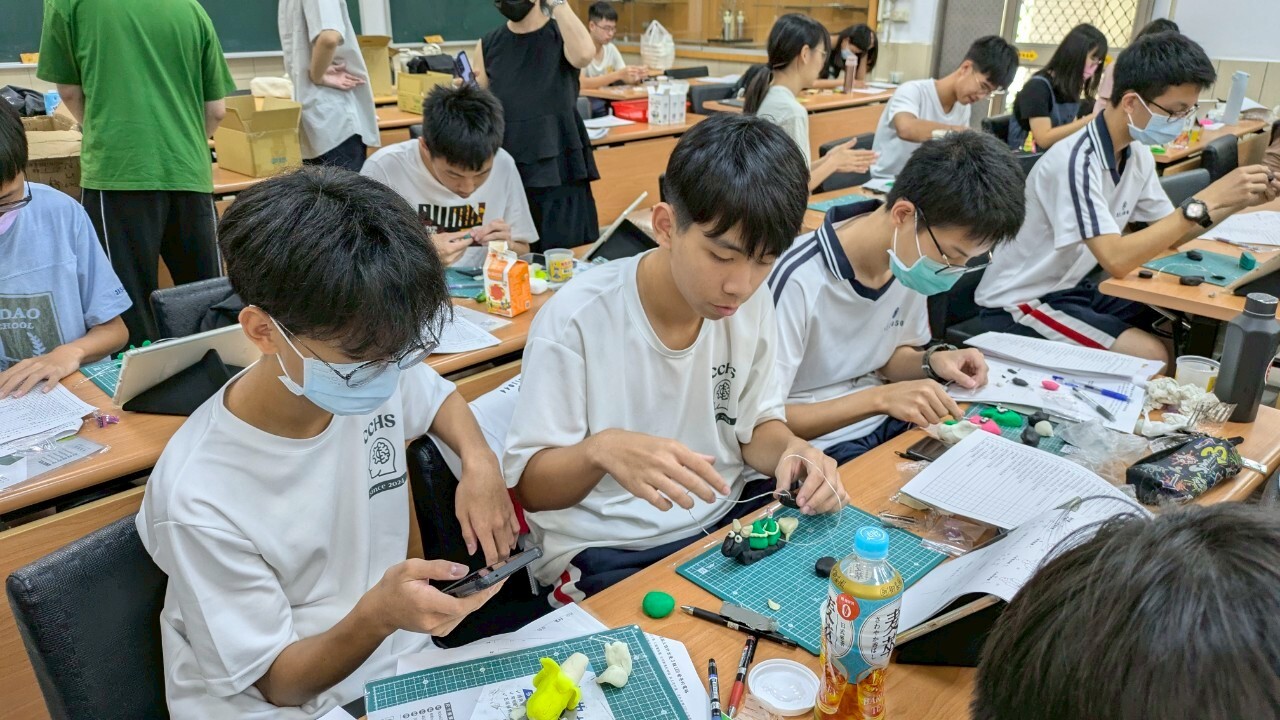
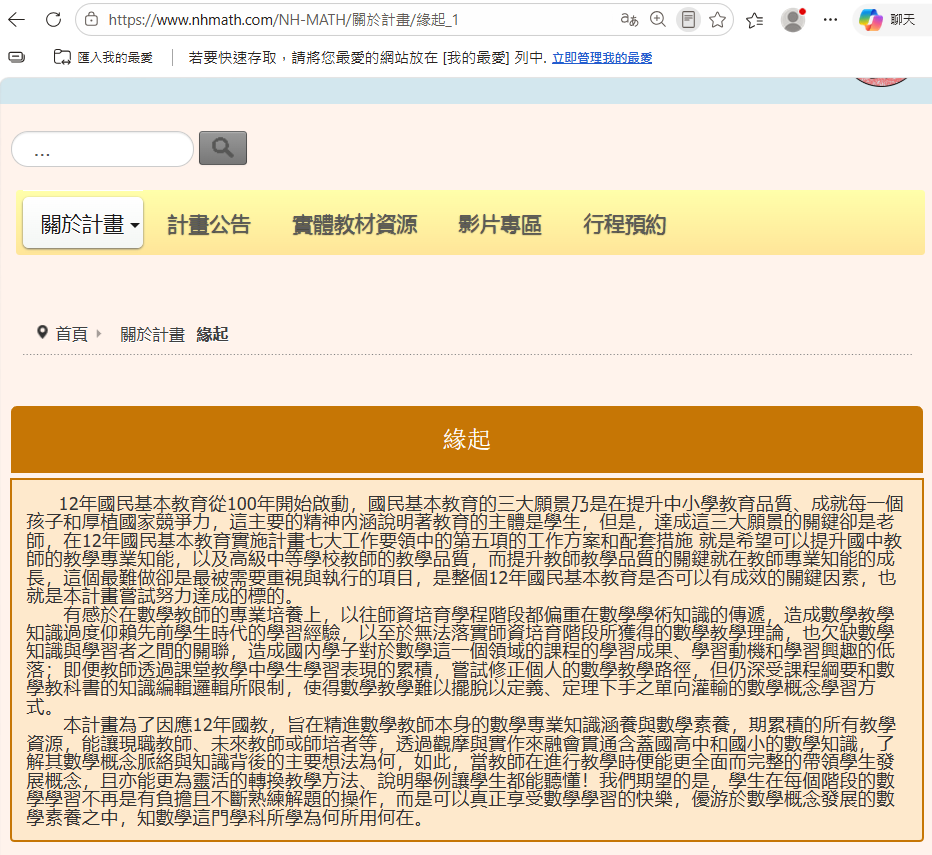
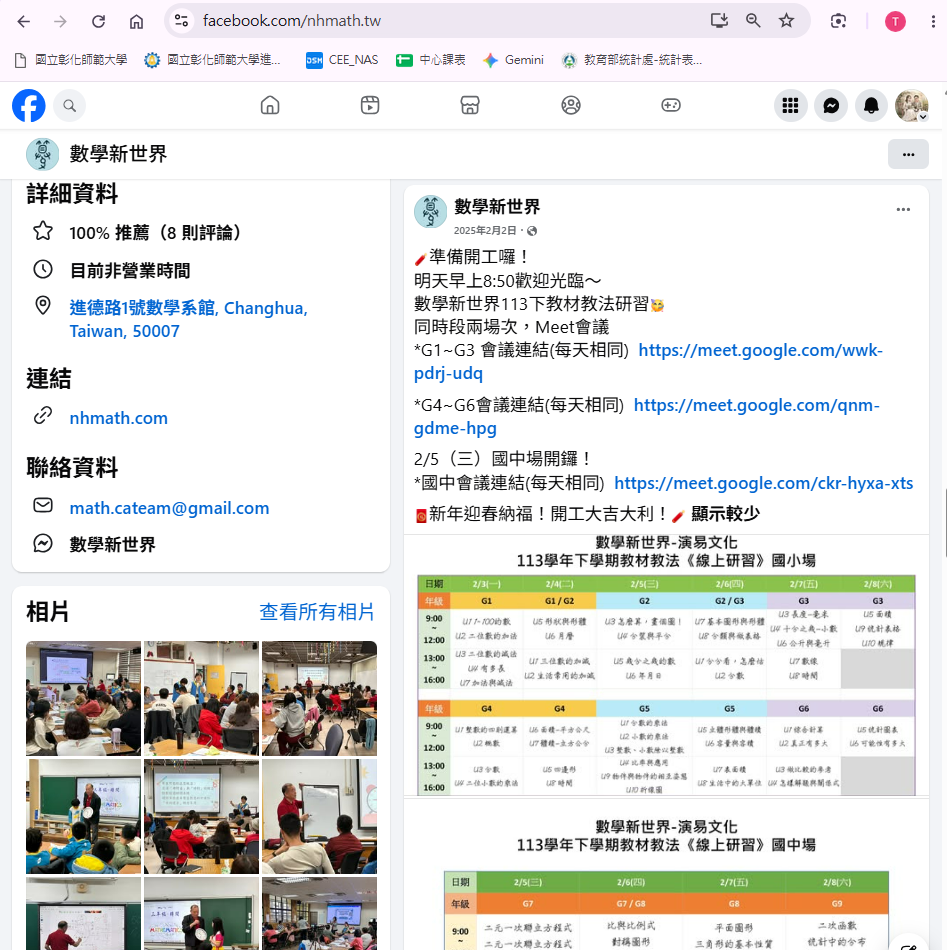
Since 2015, NCUE has run the New Horizon of Mathematics project, holding dozens of free training sessions for seed teachers each year and issuing certificates for the training hours completed. The courses allow teachers to assimilate mathematical knowledge, helping them understand teaching context and the central concepts behind that knowledge through observation and hands-on practice. By doing so, elementary, junior high and senior high school teachers can guide their students through conceptual development more comprehensively and switch between teaching methods more flexibly. To enable teachers across Taiwan to participate in training regardless of their location, NCUE held 16 online training sessions on mathematics teaching materials and methods in 2025. A total of 1,123 elementary and secondary school teachers attended the sessions and received certificates documenting the training hours completed. Figure 13 shows the project website and Figure 14 shows evidence of training information announced on the project's Facebook page.
- Project website: http://www.nhmath.com/NH-MATH/
- Facebook: https://www.facebook.com/nhmath.tw
- Photographs: https://www.facebook.com/nhmath.tw/photos
- Demonstration teaching videos: https://www.youtube.com/@NewHorizonofMathematics/videos
(6) Science Fun Day:
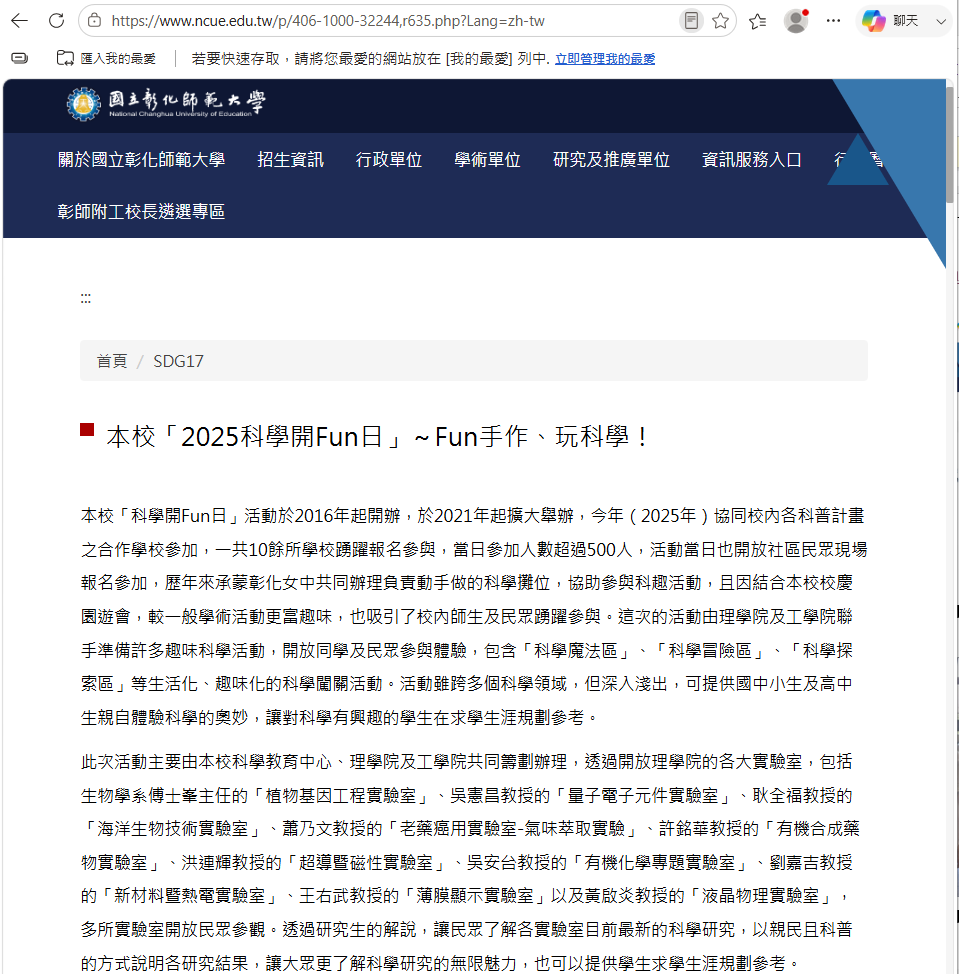
To raise public scientific literacy, cultivate a scientific outlook in everyday life, and provide high-quality opportunities to learn science for students in remote areas of Changhua County, since 2016, NCUE has set aside one day each year for Science Fun Day. The event features a wide range of engaging hands-on science challenge stations at which participants carry out DIY science experiments and experience the wonder of science. The activities allow the public to bring logical thinking and a scientific outlook into their daily lives, besides, the entire event is free of charge.
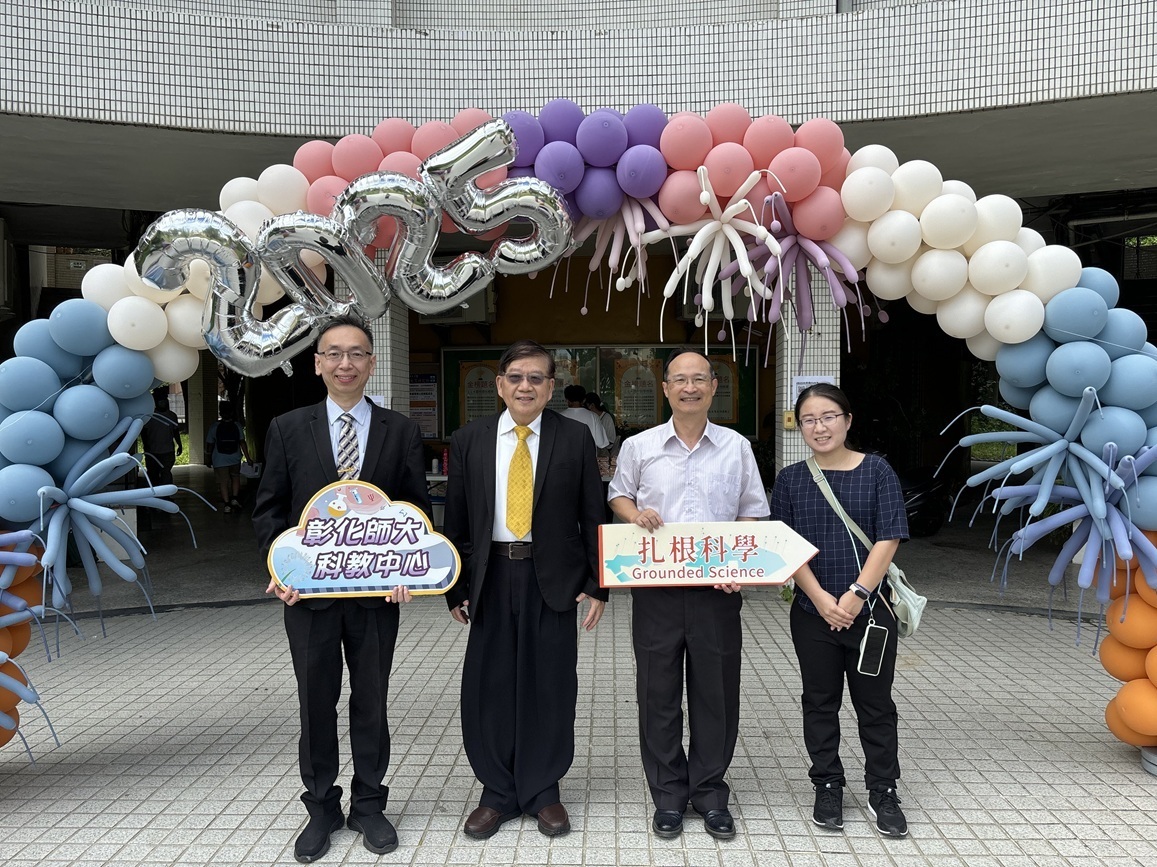
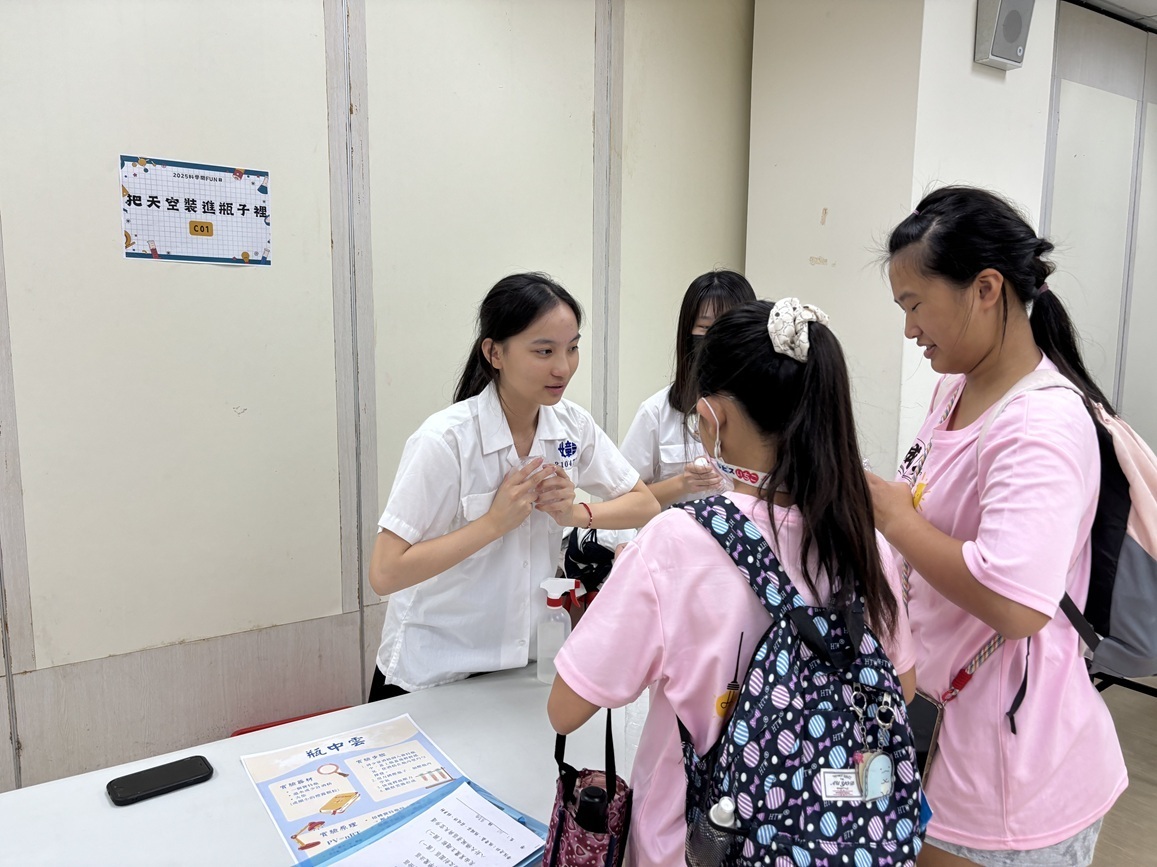
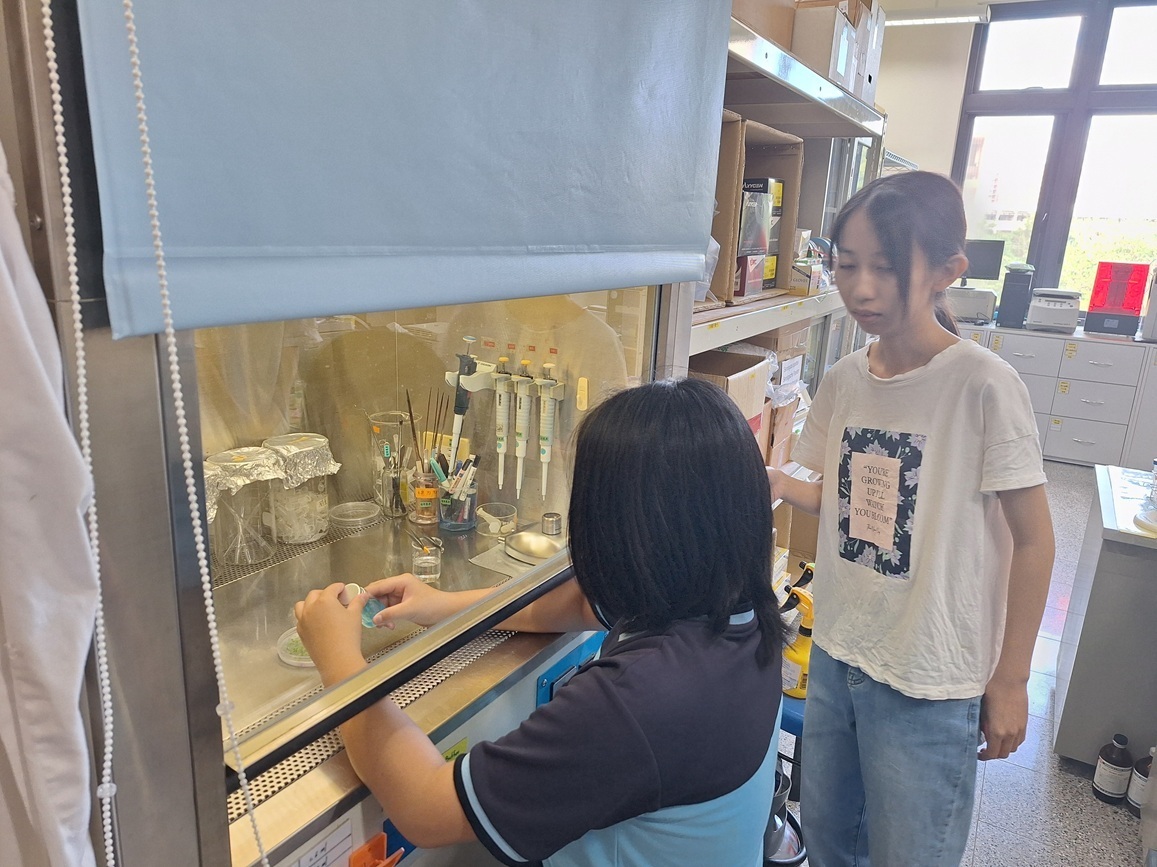
The 2025 Science Fun Day was held on 24 October. It featured a "Science Magic Zone", a "Science Adventure Zone", and a "Science Exploration Zone". The event also opened the major laboratories of the College of Science to visitors, with graduate students providing guidance. Besides, there were also fun and interactive science games connecting scientific concepts to everyday life, enabling the public as well as elementary and secondary school students to carry out activities themselves and experience the wonders of the various fields of science. More than ten partner junior high and senior high schools took part in the 2025 event, attracting over 500 participants. It is worth noting that, in addition to being entirely free, NCUE also specifically subsidised coach travel costs for remote-area schools, providing a stage on which remote-area students could demonstrate their learning. Science Fun Day allows the public and students to learn and enjoy science easily, and those who complete the required number of challenge stations could receive a certificate of participation and a surprise pack as a reward (Figures 15-18).
(7) Resources for students with special educational needs
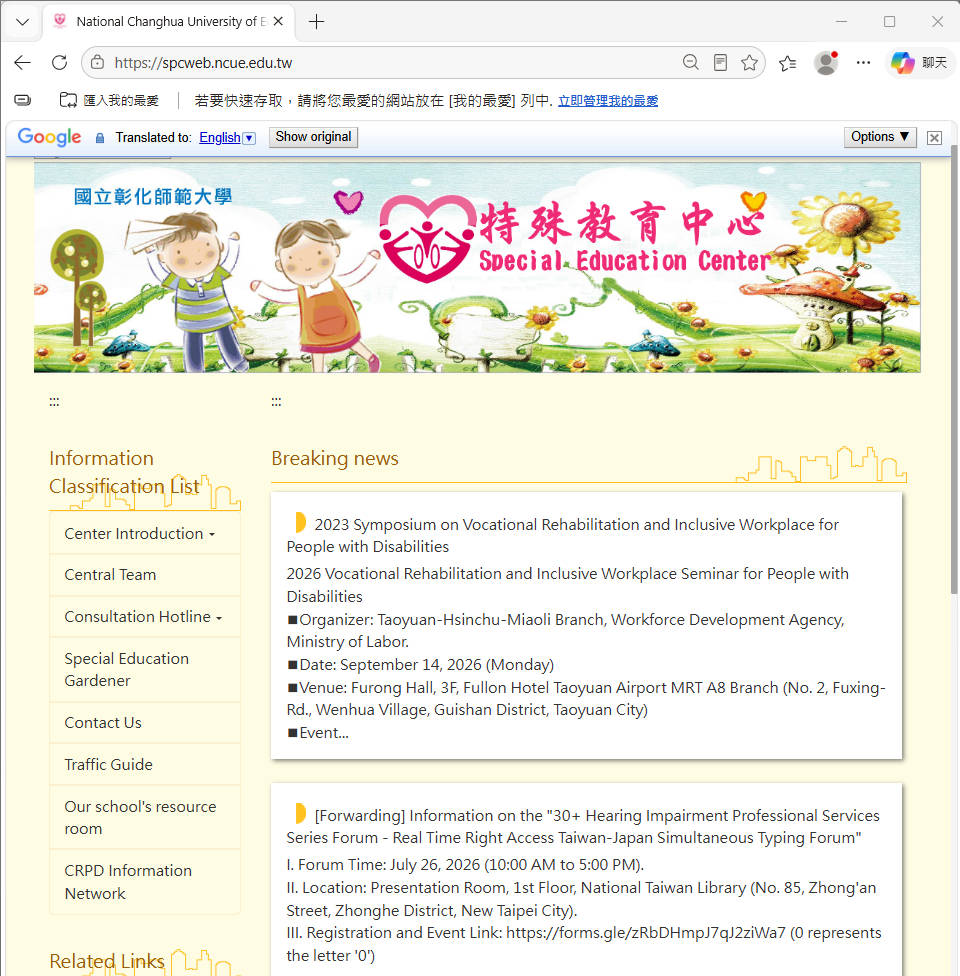
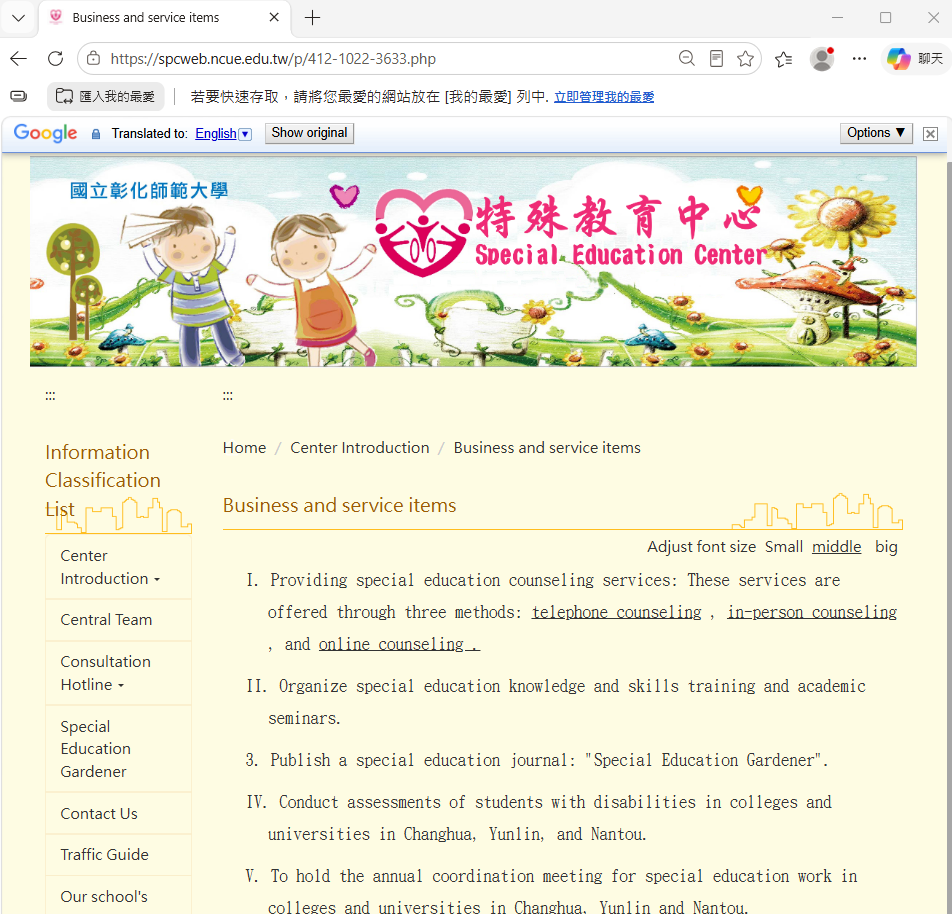
Internally, NCUE's Special Education Center supports NCUE students with disabilities with learning assistance, daily living assistance, adjustment to school life, and transition services; externally, the university provides special education consultation services to schools within guidance area, community members, and students, helping to resolve practical problems in teaching, parenting, and student guidance. It also conducts school visits within its guidance area to review how the schools implement special education work. Besides, NCUE publishes periodicals of special education to improve the competence of special education teachers and related personnel. NCUE also organises transition liaison meetings for students with disabilities in higher education in order to understand the current situation, constraints, and resource needs of each institution's transition guidance activities. Figures 19 and 20 present the website of Special Education Center. In 2025, the Center provided 62 attendances of special education consultation services, conducted 4 school visits, published 2 issues of the Special Education Gardener journal, held 1 special education work review meeting for the guidance area, organized 1 transition liaison meeting for students with disabilities in higher education institutions, held 7 introductory special education training sessions plus 4 advanced training sessions and 11 special education courses, holding 22 professional special education activities in total.
Website of the NCUE Special Education Center: https://spcweb.ncue.edu.tw/
(8) Free Mandarin Peer Tutor Training Program:
NCUE's Language Center is committed to promoting open education and holds free language lectures open to the public on an ad hoc basis to raise language literacy. The lectures cover topics of teaching Mandarin as a foreign language, German, Japanese culture, and English proficiency tests. Language Center continues to promote language knowledge on social media, providing learning resources and cultural guidance through posts and interaction.
In addition, NCUE has conducted Mandarin Peer Tutor Training Program free of charge to train students interested in teaching Mandarin. The courses are open to auditors from outside the university, allowing them to access resources for teaching Mandarin. In 2025, the university held two cohorts of Mandarin Peer Tutor Training Program, totaling 30 hours with 43 participants.
(9) Free lectures on teaching Mandarin:
NCUE holds online and physical lectures of teaching Mandarin for free on an ad hoc basis, which help improve competence of in-service Mandarin language teachers. The lectures are open to interested students and or the public. In 2025, NCUE held three free Mandarin language lectures with at least 66 attendances. One session featured a professor from the National University of Singapore who drew on her own experience of teaching Mandarin in Singapore to explain how the Mandarin teaching can flourish across differences of culture and history, making it an informative activity.
| Date | Topic | Speaker | Attendances |
|---|---|---|---|
| 2025.05.05 | Is it feasible to teach Mandarin through English? My experience at the National University of Singapore | Prof. Chiung-Yao Lin, National University of Singapore | 46 |
| 2025.09.12 | From English to Mandarin: the concentric development of international languages and future trends | Prof. Sung-Lin Chen, Department of Chinese, National Cheng Kung University | 20 |
| 2025.10.31 | A blueprint for language practice by AI-enabled teachers: from a prompt to instructional design capability | Ms. Ning-Chun Yuan, Head of Instruction, Chinese Language Center, Tamkang University | Not recorded |
(10) Public lectures:
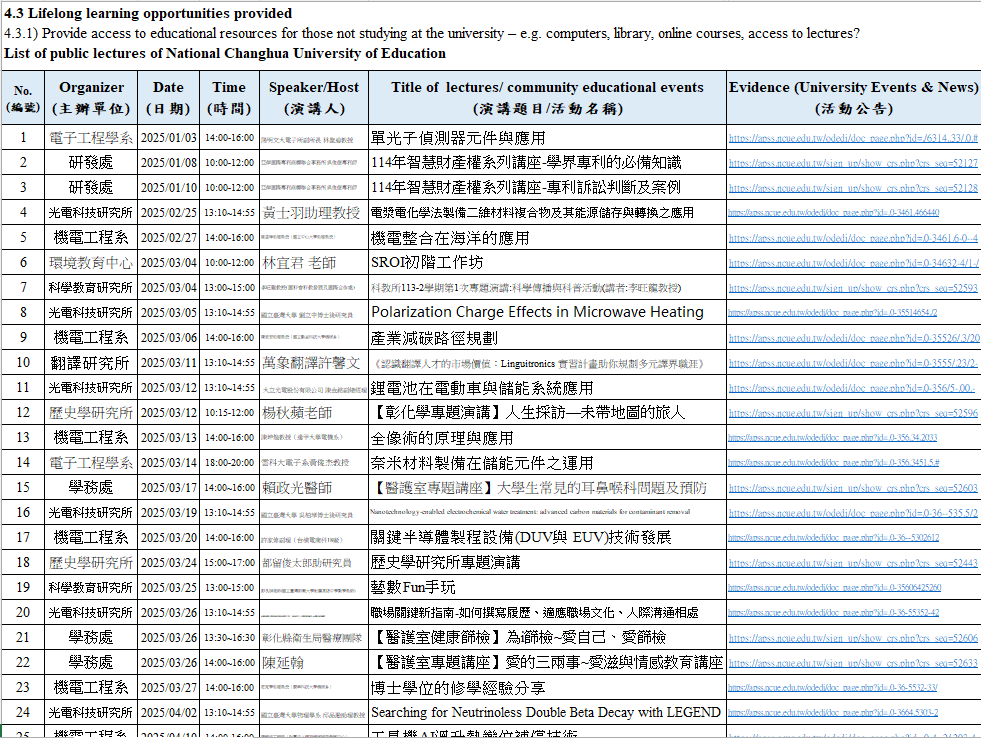
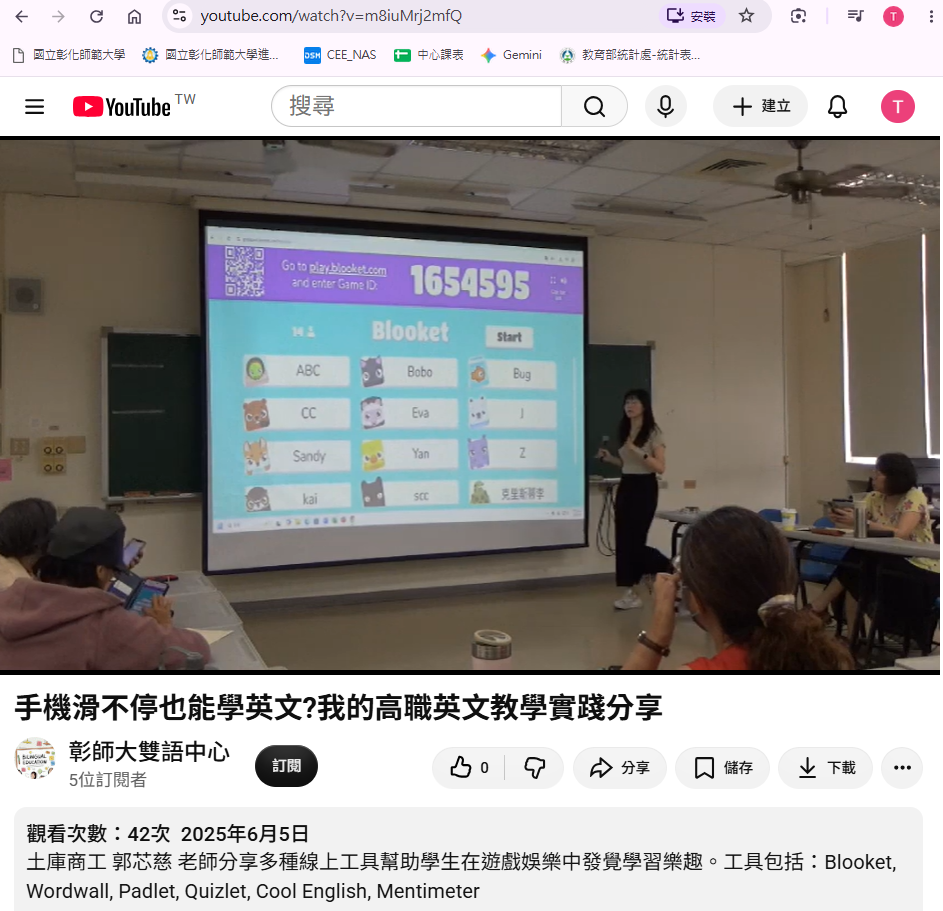
Each academic year, NCUE holds numerous public lectures and events that are open for registration to anyone interested. In 2025, NCUE held at least 113 keynote lectures open to people from outside the university. NCUE has compiled a list of the public lecture sessions held in 2025. Figure 21 shows an information on some of these sessions, and Figure 22 presents the photograph of the public lecture. The lecture has also been uploaded to YouTube for viewers to watch.
2. Free use of Campus Spaces and the Facilities
NCUE allows the public not only to enter its campus freely but also to use its spaces and facilities at no cost. These include the library, athletics field, sport courts, art exhibition spaces, and restrooms. NCUE places great importance on providing an accessible campus environment. All buildings and facilities on campus are inspected and improved in accordance with accessibility regulations, and the university also builds accessible elevators, accessible restrooms, accessible ramps, and accessible wayfinding facilities for people with disabilities to use easily.
(1) Free use of Campus Spaces:
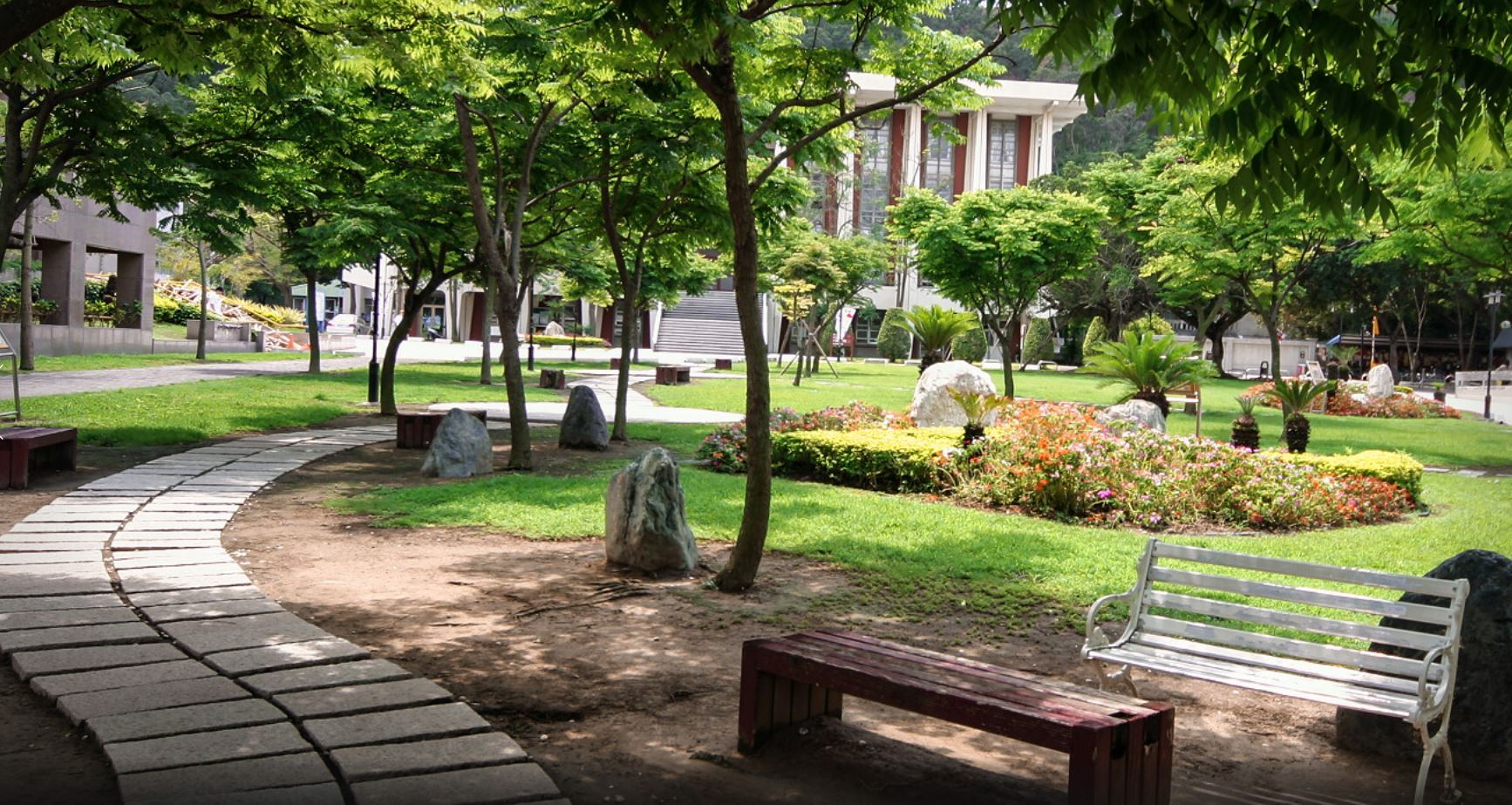
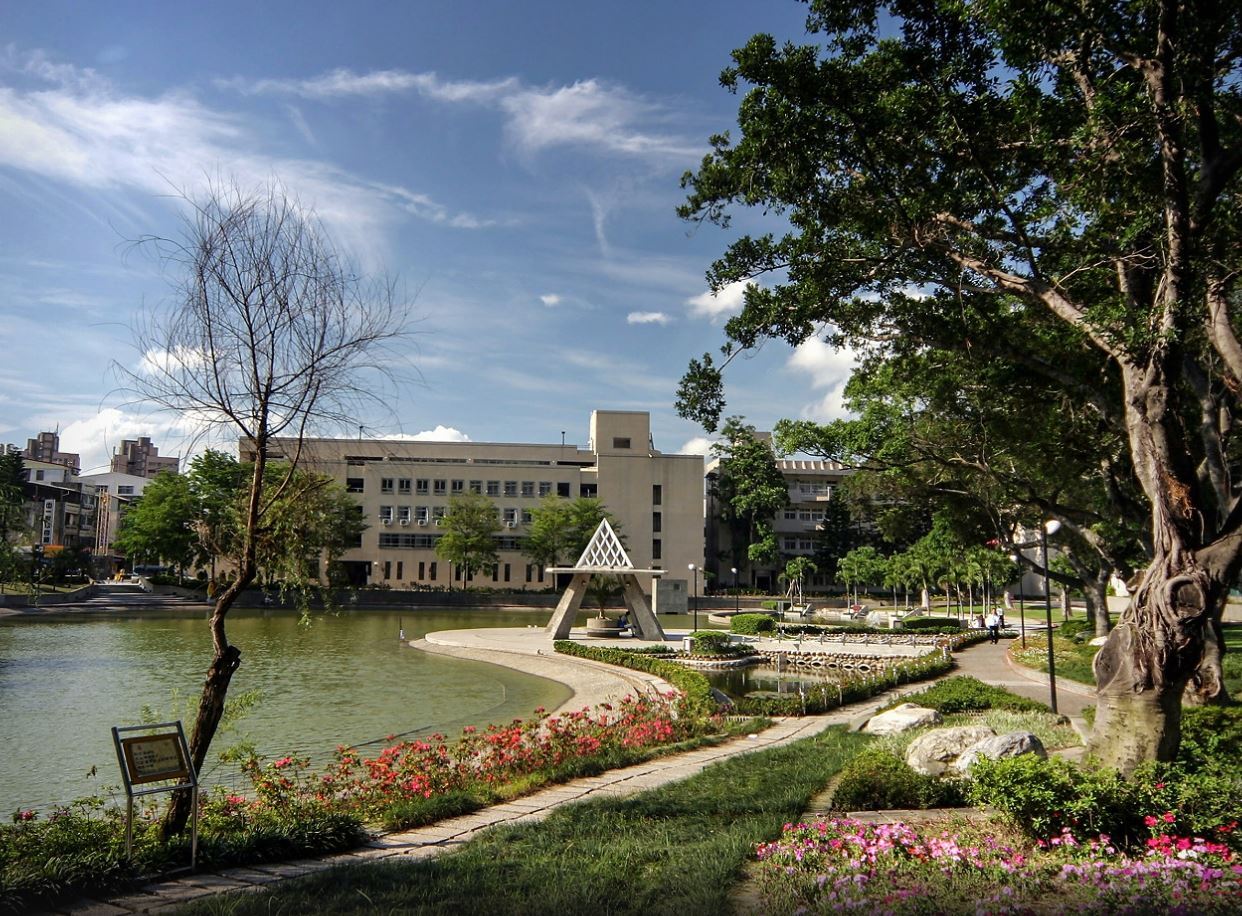
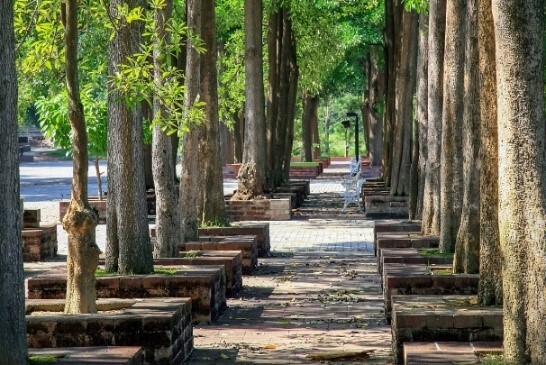
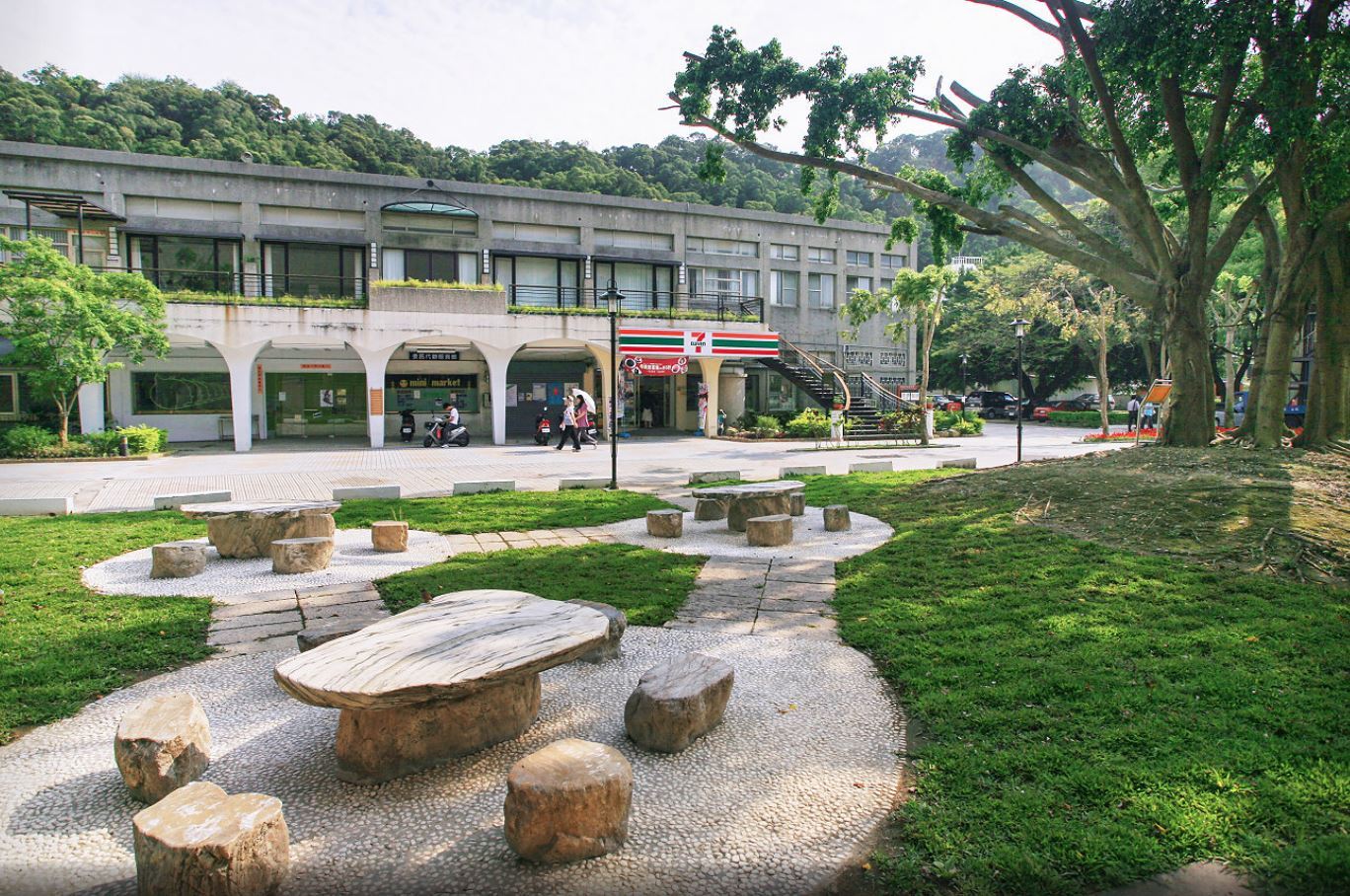
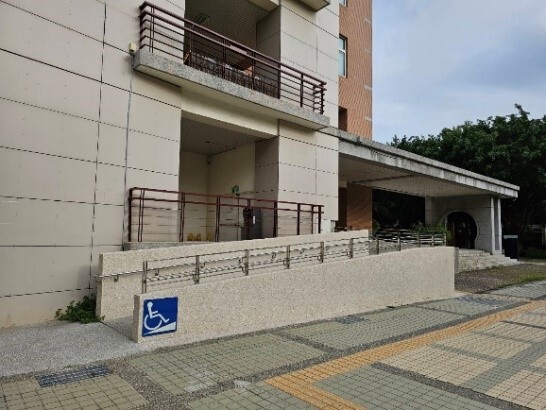
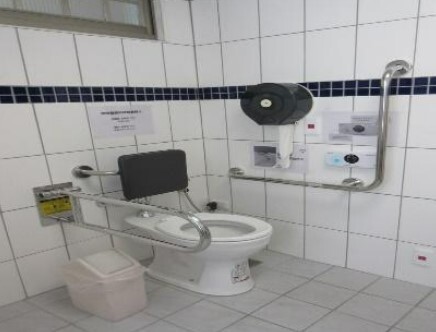
NCUE's two campuses have 43.5 hectares of green space in total, which is open to the public for walking and recreation. The university provides walking paths between the flower beds and along Baisha Lake, as well as facilities such as drinking fountains and restrooms for the victors (Figures 23-26). It is worth noting that NCUE places great importance on providing an accessible campus environment. All 23 of the main campus buildings are equipped with accessible elevators and accessible restrooms, reaching 100% of installation rate. All buildings and facilities on campus are inspected and improved in accordance with accessibility regulations, and the university also builds accessible elevators, accessible restrooms, accessible ramps, and accessible wayfinding facilities for people with disabilities to use easily. (Figures 27-28).
(2) Free use of the Athletics Field and Sport Courts:
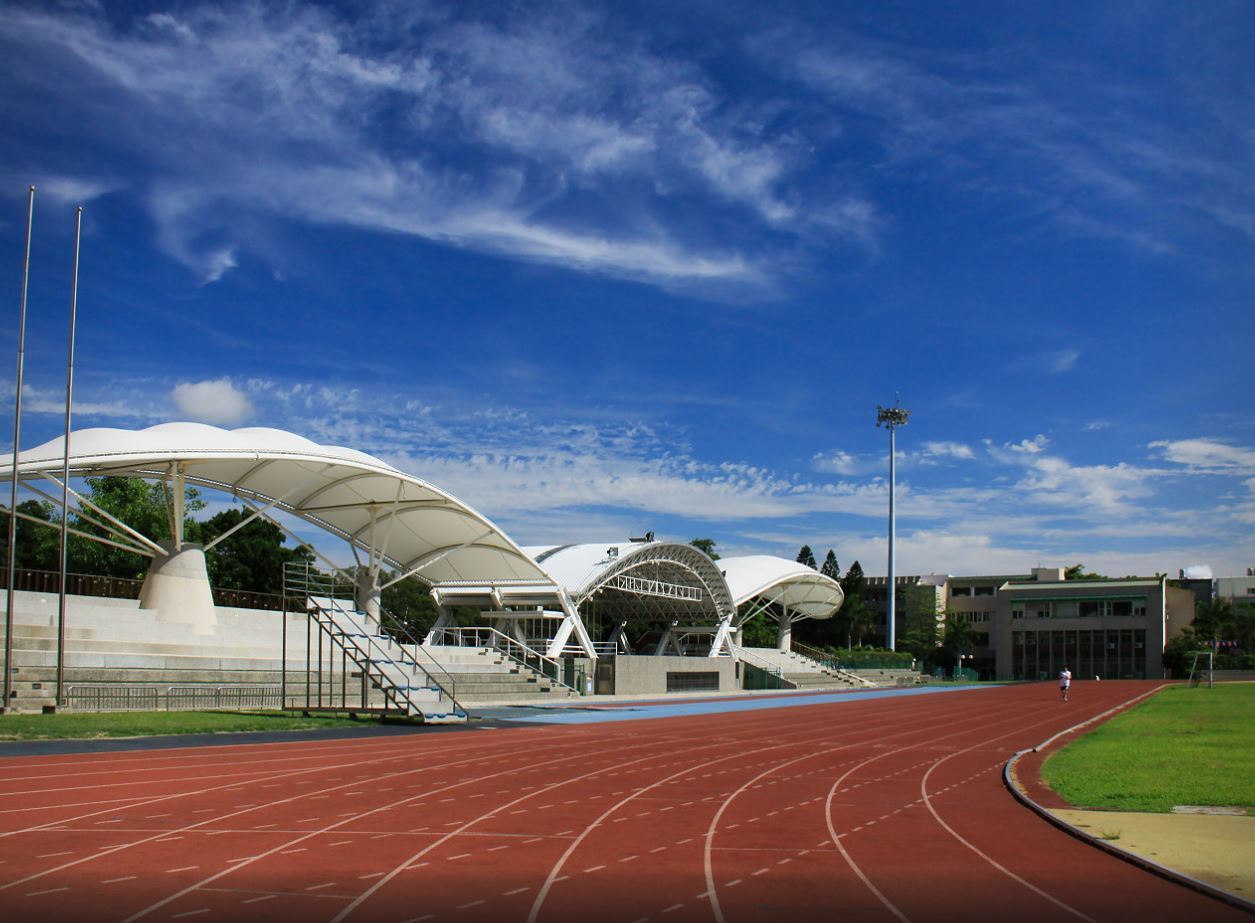
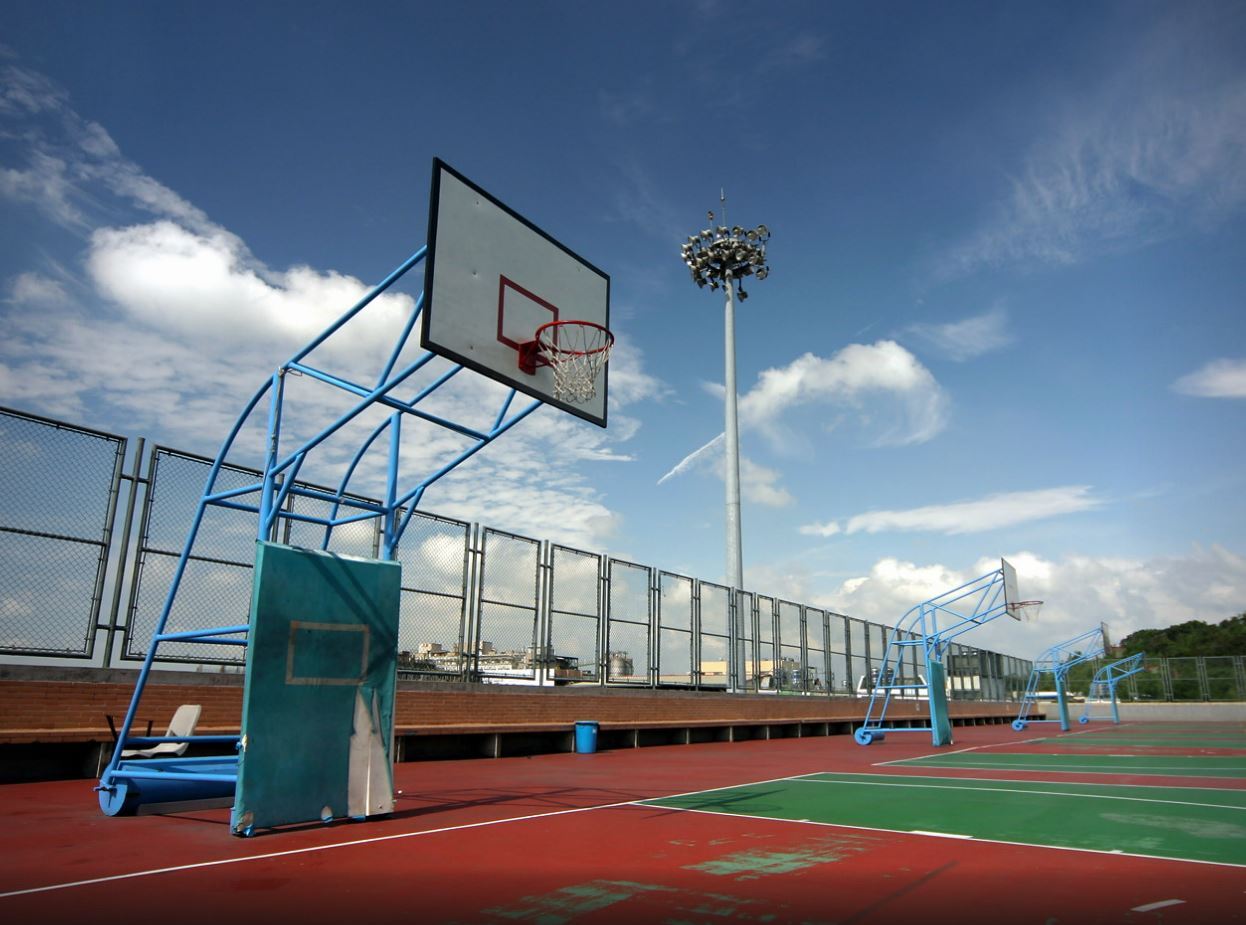
NCUE's sports venues and facilities are open to the public free of charge. These include the athletics field as well as the volleyball, basketball, and football courts on the Shida Campus, promoting sport together with the local community (Figures 29-30).
(3) Free use of NCUE Library:
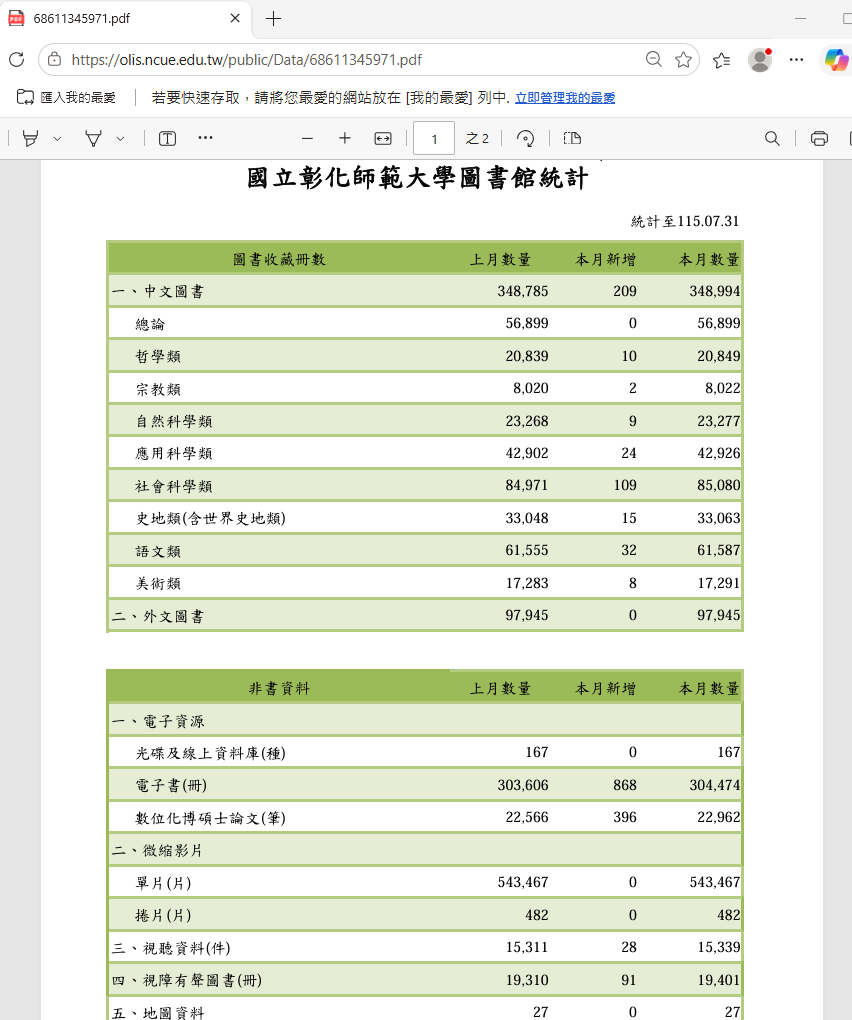
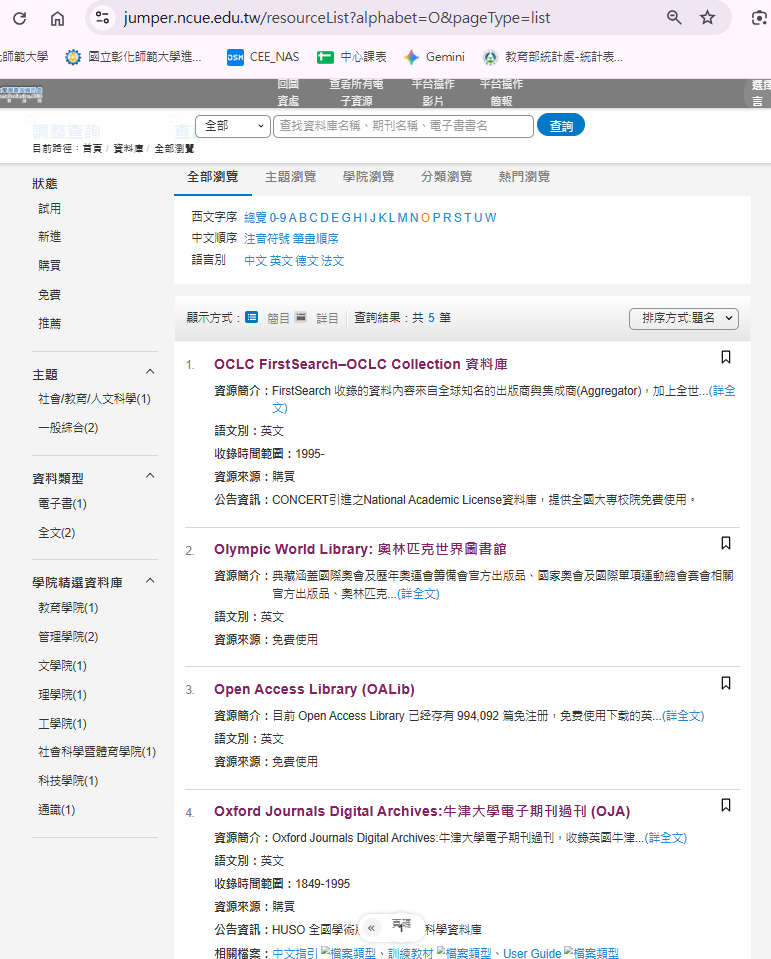
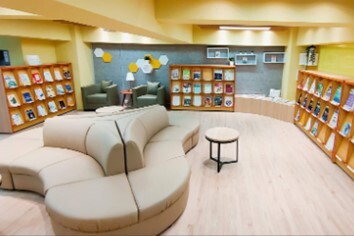
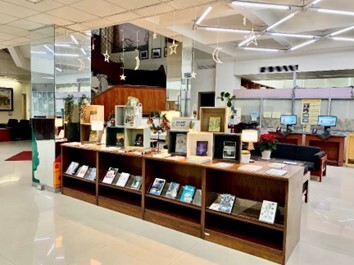
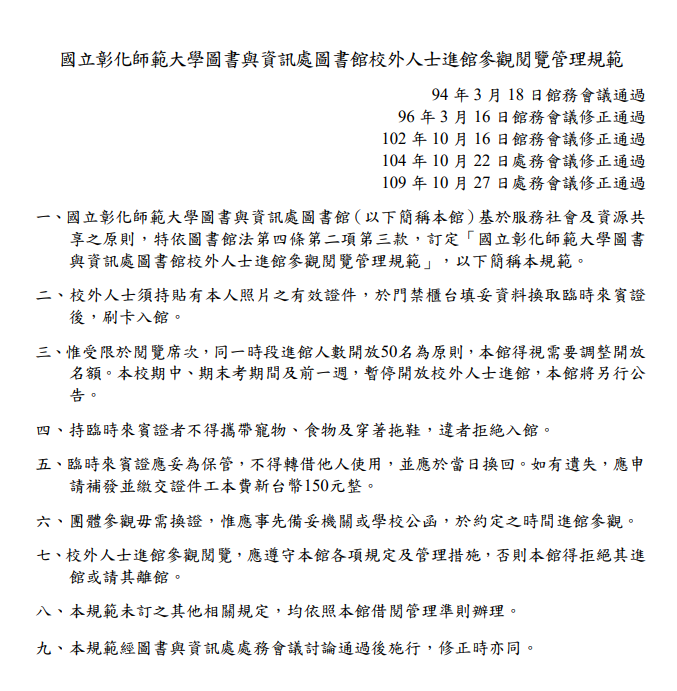
NCUE's extensive library resources are open to individuals from outside the university in accordance of the Guidelines for the Management of Visiting and Reading for Outsiders (https://olis.ncue.edu.tw/public/data/011916282971.pdf). The visitors may present valid identification to obtain a temporary visitor pass free of charge so that they may use the library's extensive collection and services. These include more than 446,000 Chinese and English volumes, electronic databases, e-books, journals, newspapers, and audiovisual materials. Figure 31 shows NCUE Library's collection statistics, Figure 32 shows the browsing page of digital resources, Figures 33 and 34 show NCUE's comfortable reading spaces and computer areas, and Figure 35 shows the Guidelines for the Management of Visiting and Reading for Outsiders.
For details of NCUE Library's collection resources, see: https://olis.ncue.edu.tw/np.asp?ctNode=1037&mp=1
(4) Free Use of Materials for Visually Impaired:
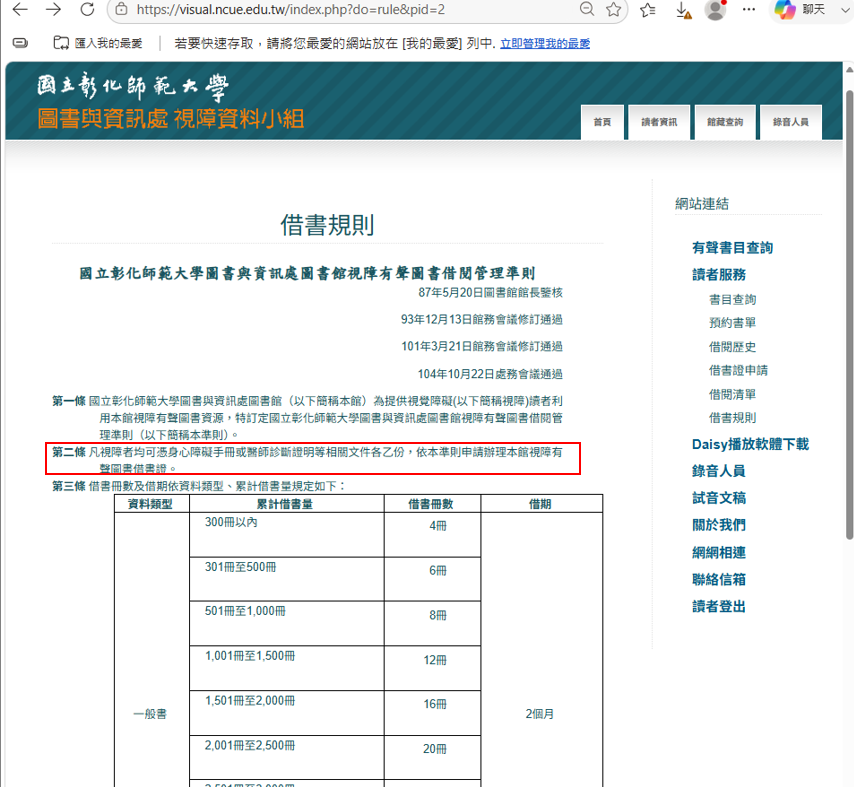
To put information equity into practice and remove learning barriers for particular groups, NCUE established the Audio Book Center in 1989 to record audiobooks for people with visual impairments. From 1991, the service was extended to visually impaired readers nationwide. Anyone who needs to read via braille books, large-print books, or audiobooks may become a member of the center free of charge (see the provision of Article 2 in Figure 36) and use the following resources for life:
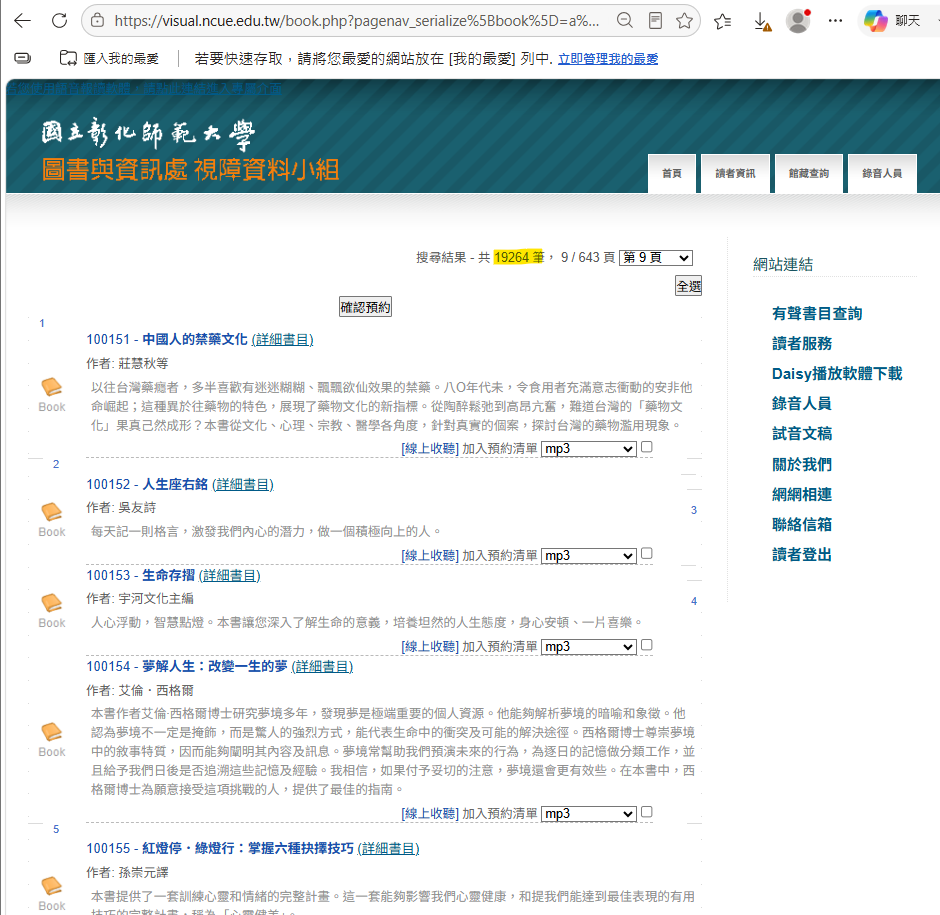
- (a) Free borrowing of audiobooks: The center provides a vast collection of audiobooks together, covering higher education, elementary and secondary school textbooks, as well as leisure reading, which helps lower the threshold to knowledge for disadvantaged groups. Besides, a 24-hour online listening service is also provided so that users can learn at anytime. As of August in 2026, there were 192,264 audiobook holdings available for loan (Figure 37).
- (b) Commissioned recording of customised books: NCUE proactively records and dispatches dedicated audio textbooks for disadvantaged students free of charge, and also accepts individual commissions to record books, ensuring that every person with a disability enjoys an equal opportunity for lifelong learning.
- (c) Reference enquiry and personalised services: NCUE provides online reference enquiry services, monthly announcements of new books, and regular provision of catalogues and audiobook news.
Website of the NCUE Visually Impaired Materials Section: https://visual.ncue.edu.tw/index.php?do=rule&pid=2
(5) Free use of Exhibition Spaces:
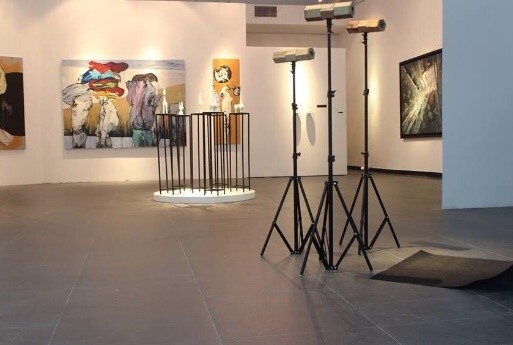
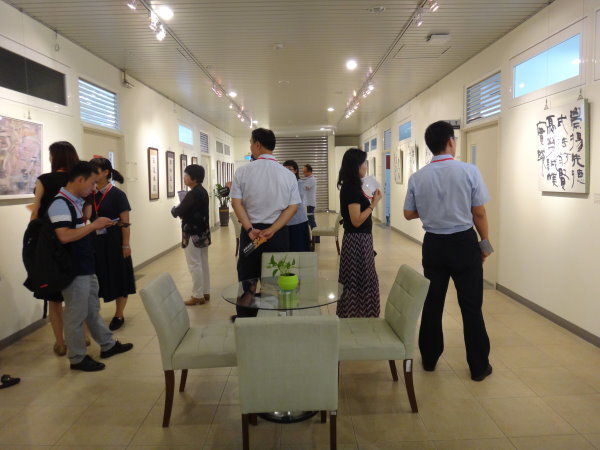
NCUE has exhibition spaces including Yi-Hui Hall (the Baisha Art Center), the Art Corridor of the College of Extension Education, and the University History Gallery, which host a variety of exhibitions on a regular and ad hoc basis each year. The exhibitions are open to the public free of charge (Figures 38 and 39).
3. Free Online Resources
NCUE provides a wealth of free online resources, including New Horizon of Mathematics, which offers mathematics learning resources for elementary and secondary school mathematics, and the CIRN elementary and secondary mathematics and science education website, which provides free teaching materials, lesson plans and recordings of training sessions. NCUE has also built a dynamic web page of faculty research outputs, and graduate students' master's and doctoral theses are uploaded to a database for permanent preservation and free use. NCUE further operates the national Educational Internship Information platform, which provides resources relating to the practical education training free of charge to interns, internship institutions, and mentor teachers.
(1) New Horizon of Mathematics Learning Resources for Elementary and Secondary School Mathematics:
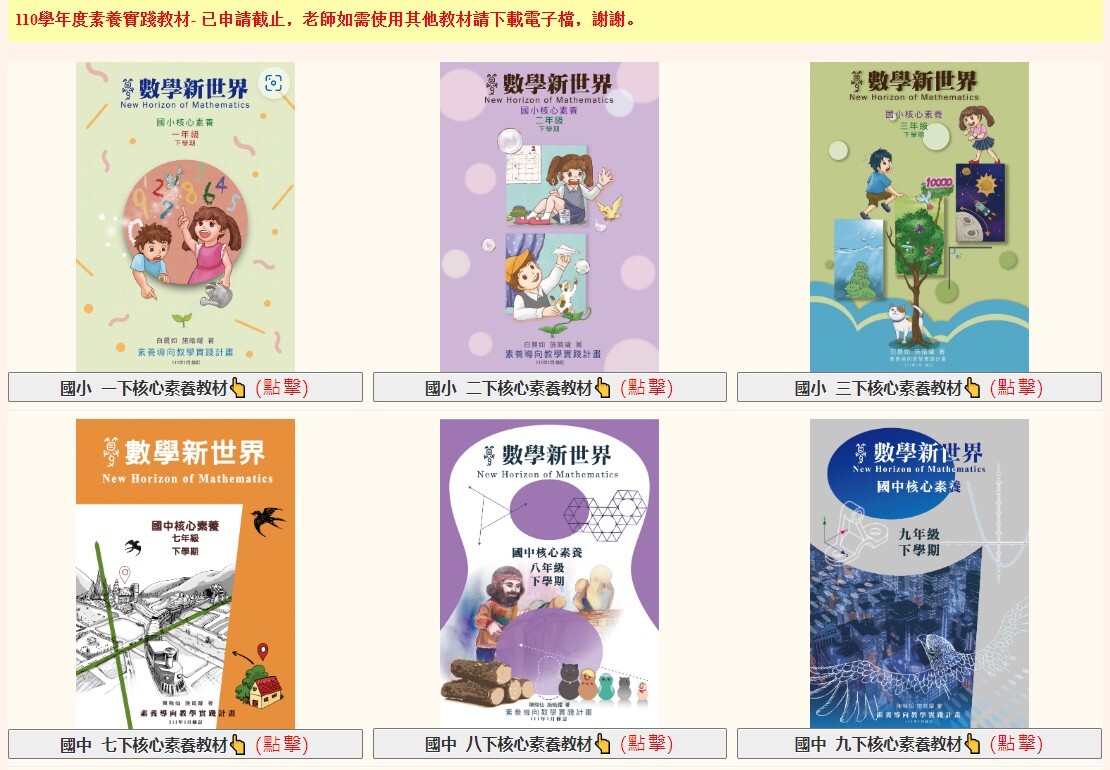
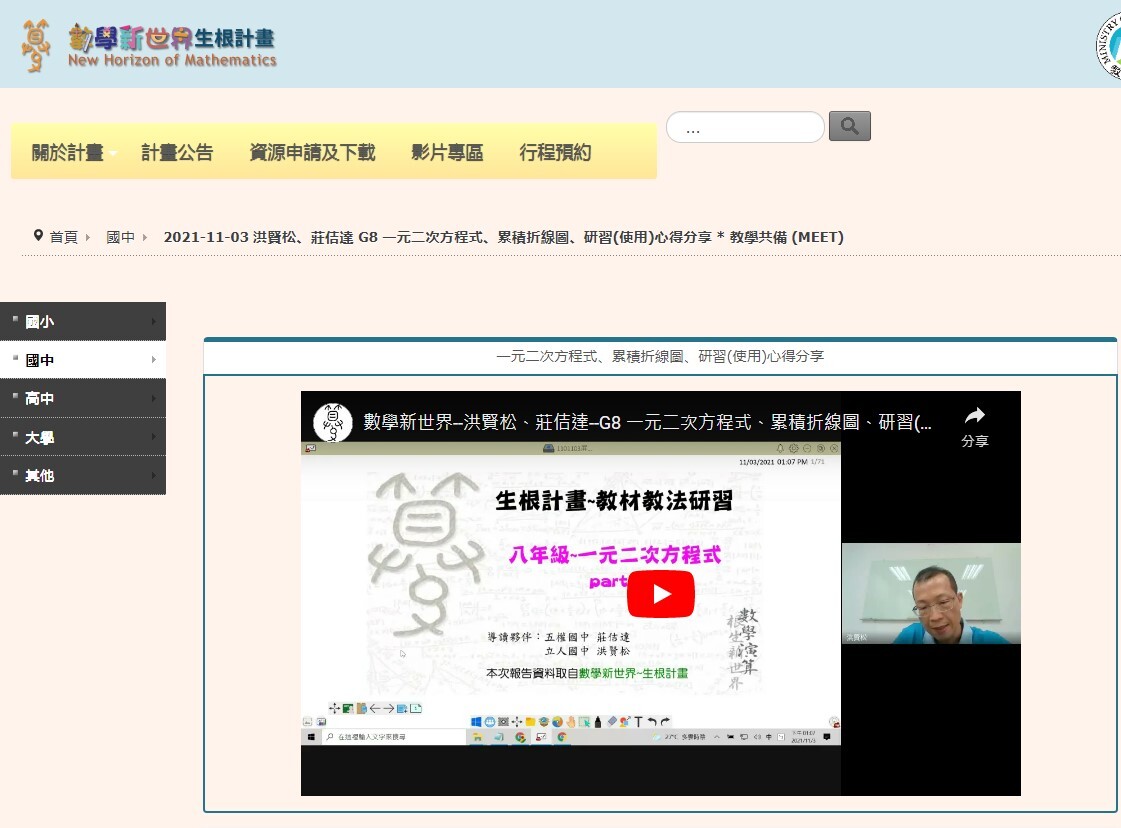
Since 2015, NCUE has promoted the New Horizon of Mathematics Seed Teacher Project. Besides holding training for seed teachers and going into schools to teach elementary and junior high school students directly, the project also focuses on building a complete set of teaching resources for the mathematics learning area at elementary and junior high school level. These include more than 500 teaching videos by mathematics experts, purpose-developed worksheets for teaching units, collaborative lesson preparation handbooks for teachers, and core competency materials for student learning. All resources are posted on the project website, where every user, regardless of status, may download and use them free of charge (Figures 40-41).
- Project website: http://www.nhmath.com/NH-MATH/
- Teaching and learning materials download area: https://www.nhmath.com/NH-MATH/resources
- Video area: https://www.nhmath.com/NH-MATH/video
(2) Science Lesson Plans and Resources for Elementary and Secondary School Teachers:
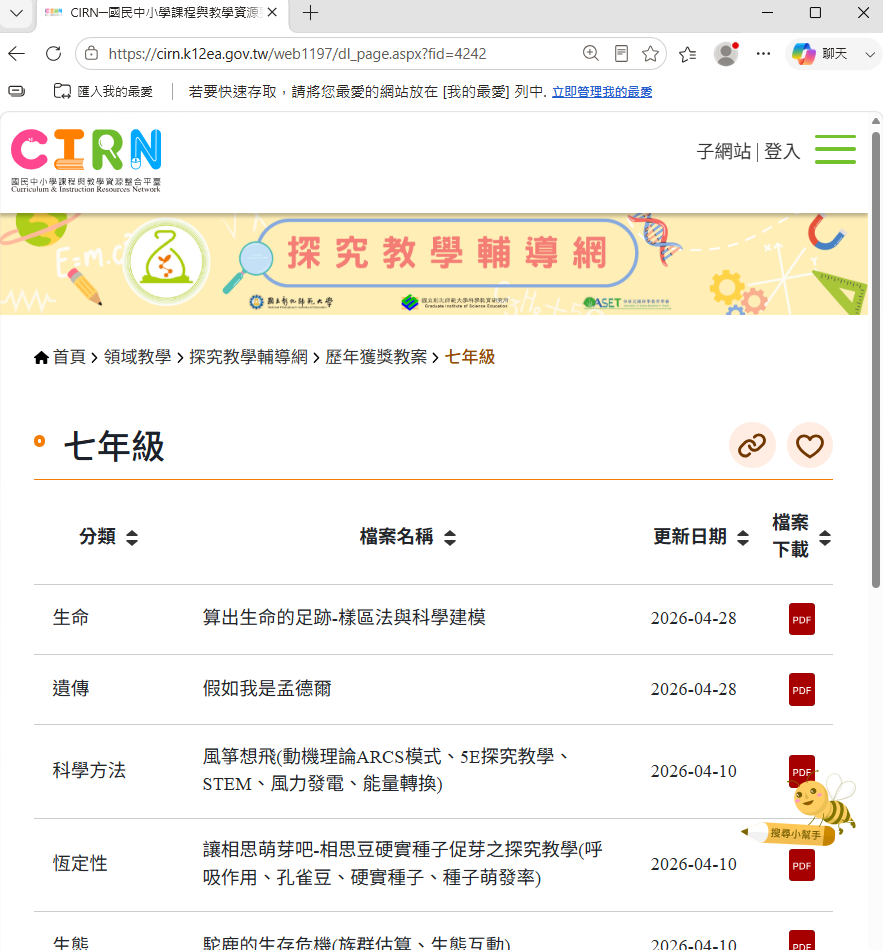
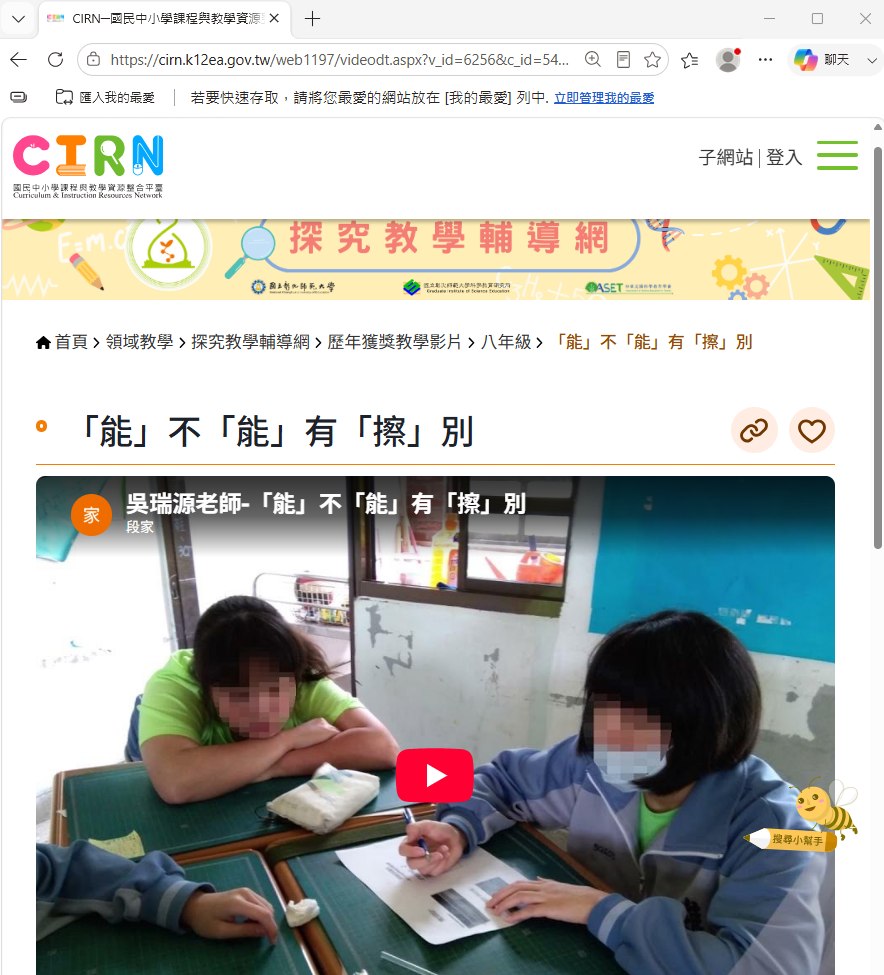
NCUE's Graduate Institute of Science Education conducts the National Program for Enhancing Inquiry-Based Curriculum Design and Implementation Skills of Science Teachers in Elementary and Junior High Schools, which trains seed teachers and coaches in inquiry-based instruction, forms professional growth teams for the teachers, and builds community networks in order to promote inquiry-based curricula in schools nationwide and thereby strengthen elementary and secondary students' inquiry skills. Seed teachers and coaches in the program develop lesson plans as well as attend competitions of lesson plans and teaching competence, and professors specializing in inquiry then review these materials, including lesson plans and teaching videos, and select the outstanding ones to be posted on the CIRN website. Teachers nationwide can access to these materials free of charge (Figures 42-43). https://cirn.k12ea.gov.tw/web1197/index.aspx
(3) Dynamic Web Page of Faculty Research Outputs
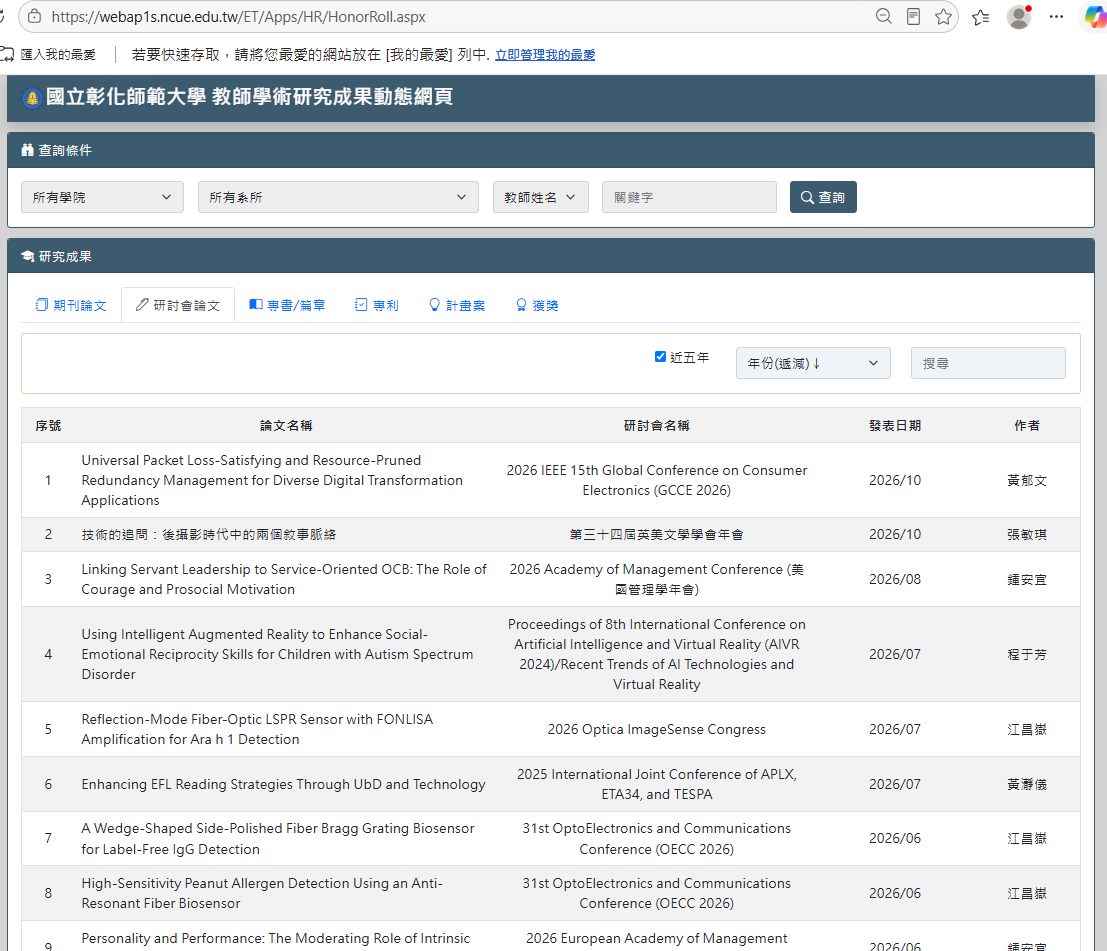
NCUE has built a dynamic web page of faculty research outputs (Figure 44), showing the faculty research outputs of all seven colleges. These include journal articles, conference papers, monographs and book chapters, patents, funded projects, and other academic work, which are made available to everyone on an Open Access basis. This improves the environment for scholarly communication among universities in Taiwan, connects NCUE with the world in the mutual sharing of academic resources, and raises the visibility of the university's research outputs.
(4) Master's and Doctoral Thesis Research Outcomes
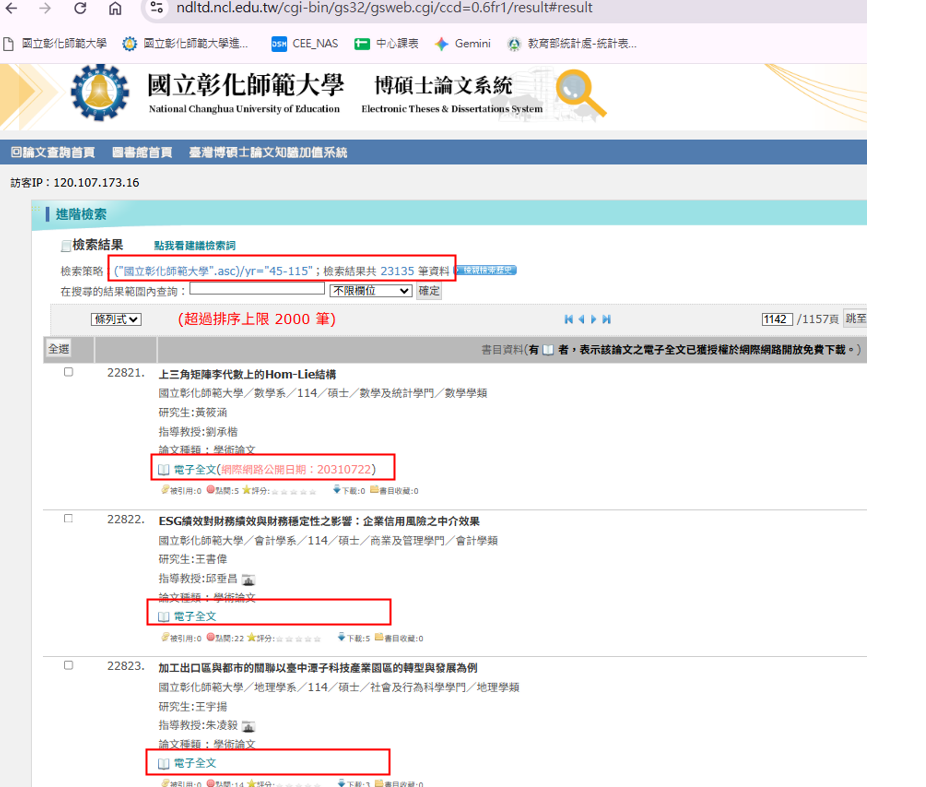
Bibliographic records for all NCUE doctoral and master's theses are uploaded to the National Central Library's thesis and dissertation search system. In addition to the print copies held by NCUE Library, one print copy is also sent to the National Central Library for permanent preservation and circulation. As of August in 2025, the users can access to 23,135 bibliographic records and 11,244 full-text electronic files (Figure 45) at no cost, promoting the sharing of academic resources.
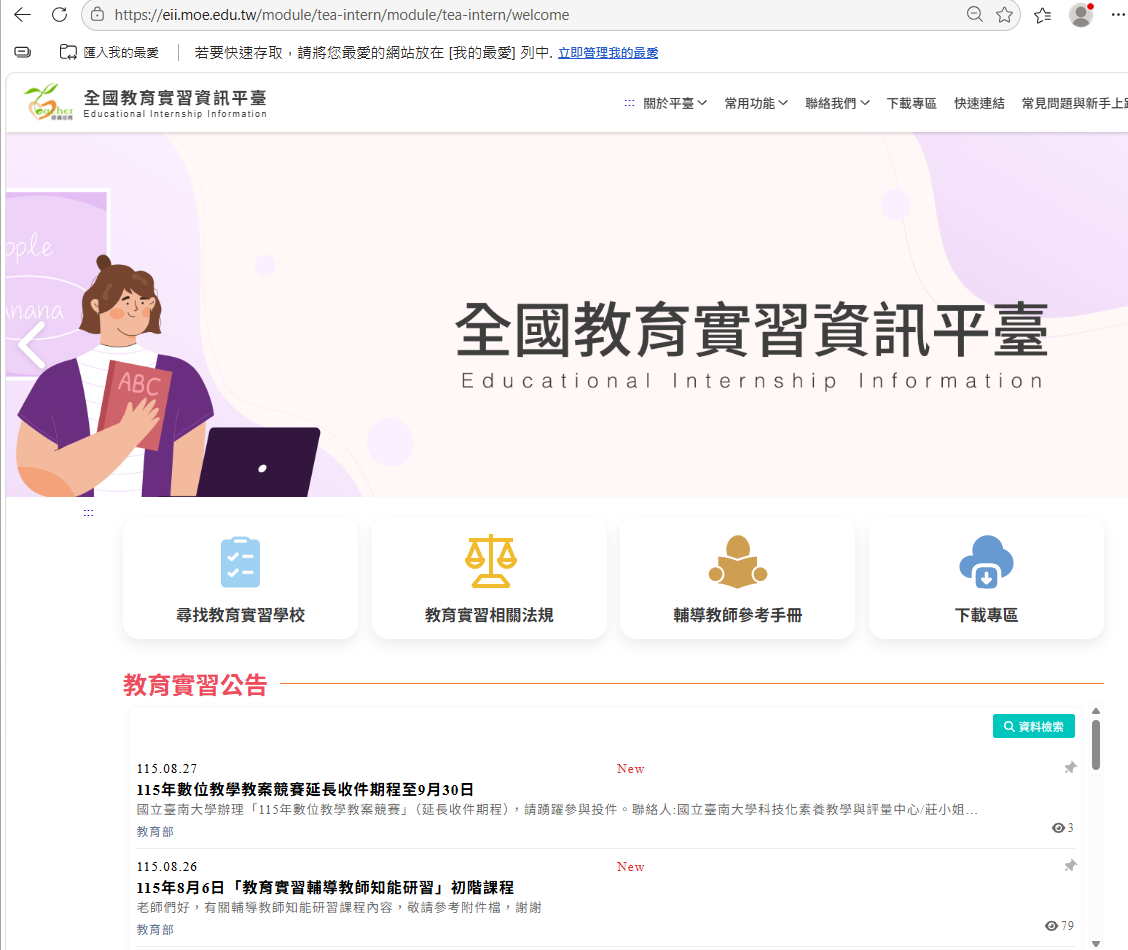
(5) Educational Internship Information:
In 2013, NCUE launched the Educational Internship Information platform, which is redesigned in 2025(Figure 46; URL: https://eii.moe.edu.tw/module/tea-intern/module/tea-intern/welcome), to strengthen the relationship between university supervisors, school mentor teachers, and student interns; as well as to enhance cooperation and communication among universities of education, internship institutions, and local educational authorities. The platform provides the following services:
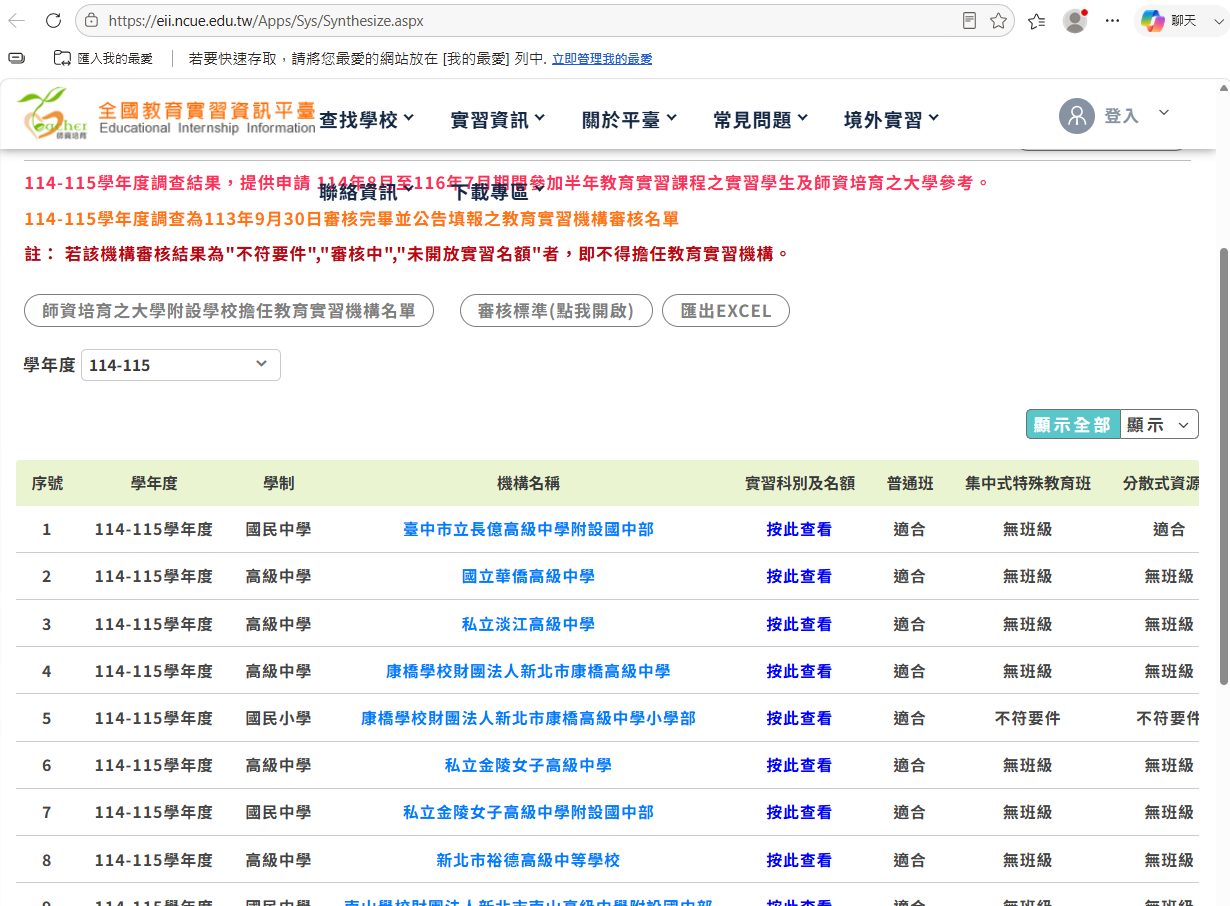
- (a) Internship matching: Internship institutions submit expression-of-interest returns, which are reviewed by the competent education authority (Figure 47).
- (b) Exchange of internship information: The platform makes announcements of internship-related regulations, training activities, and internship opportunities. There are also dedicated webpages providing information on overseas educational observation and internship for students, including "Overseas School Educational Internship Prefecture" and "Outcomes Videos of Overseas Educational Observation and Internship Course." These opportunities help students broaden their cross-cultural experience and develop their global competence.
- (c) Three-way interaction and grading: The platform provides a communication channel for university supervising teachers, school mentor teachers and student interns, allowing the teachers to set internship assignments, discuss individual internship issues, award internship grades, and record interns' leave status.
- (d) Statistical analysis of educational internships: Working with National Pre-service and In-service Teacher Integrated Database, the platform administers questionnaire surveys of student teachers, helping universities of education understand the current situation of their students. The result is provided to the Ministry of Education as a reference for policy formulation.