
SDG 7.2.1
SDG 7.2.1 Energy-efficient renovation and building
NCUE has established comprehensive policies and regulations governing the building renovations, new constructions, equipment installation, and the energy-saving and carbon-reduction practices for all campus and facility users (e.g., NCUE Energy Conservation and Carbon Reduction Implementation Guidelines and NCUE Power Consumption Management on Campus Guidelines). Details are as follows:
1. Renovation and Construction Project Specifications
1. NCUE requires all building renovation and new construction projects to comply with government regulations on environmental protection, energy conservation, and water conservation, including the following details:
(1) All new buildings obtain Green Building Label certification as required by law.
(2) In line with the latest environmental regulations, NCUE purchases only Tier 1 inverter air conditioners with CSPF (efficiency > 5.1 kWh/kWh) and implements automated shutdown timers.
(3) LED energy-saving lamps (efficiency > 100 lm/W) are to be installed when constructing new buildings and during the refurbishment of old buildings.
(4) NCUE installs only energy-saving amorphous-core power transformers, whose core loss is 80% lower than that of conventional iron-core transformers.
(5) NCUE selects IE3 or higher high-efficiency motors and equips high-power or frequently used motors with soft starters or variable-frequency drives.
(6) Lighting in public areas has been upgraded with motion-sensor controls or timers.
(7) Alongside the construction of a megawatt-scale energy storage system, NCUE performs peak-shaving and valley-filling power dispatch, which helps stabilize the national power grid and improves the efficiency and stability of the campus power supply.
(8) The heating systems, such as boilers or heat pumps, have their water temperature reduced from 50°C to 45°C during summer to avoid unnecessary energy waste.
(9) To reduce electricity consumption by water dispensers, only the ground floor water dispensers in each building (excluding dormitory areas) are set to provide cold water.
(10) Accessible elevators are equipped with power regenerative devices to optimize energy efficiency.
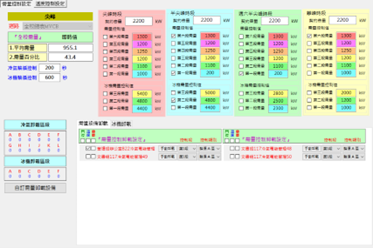
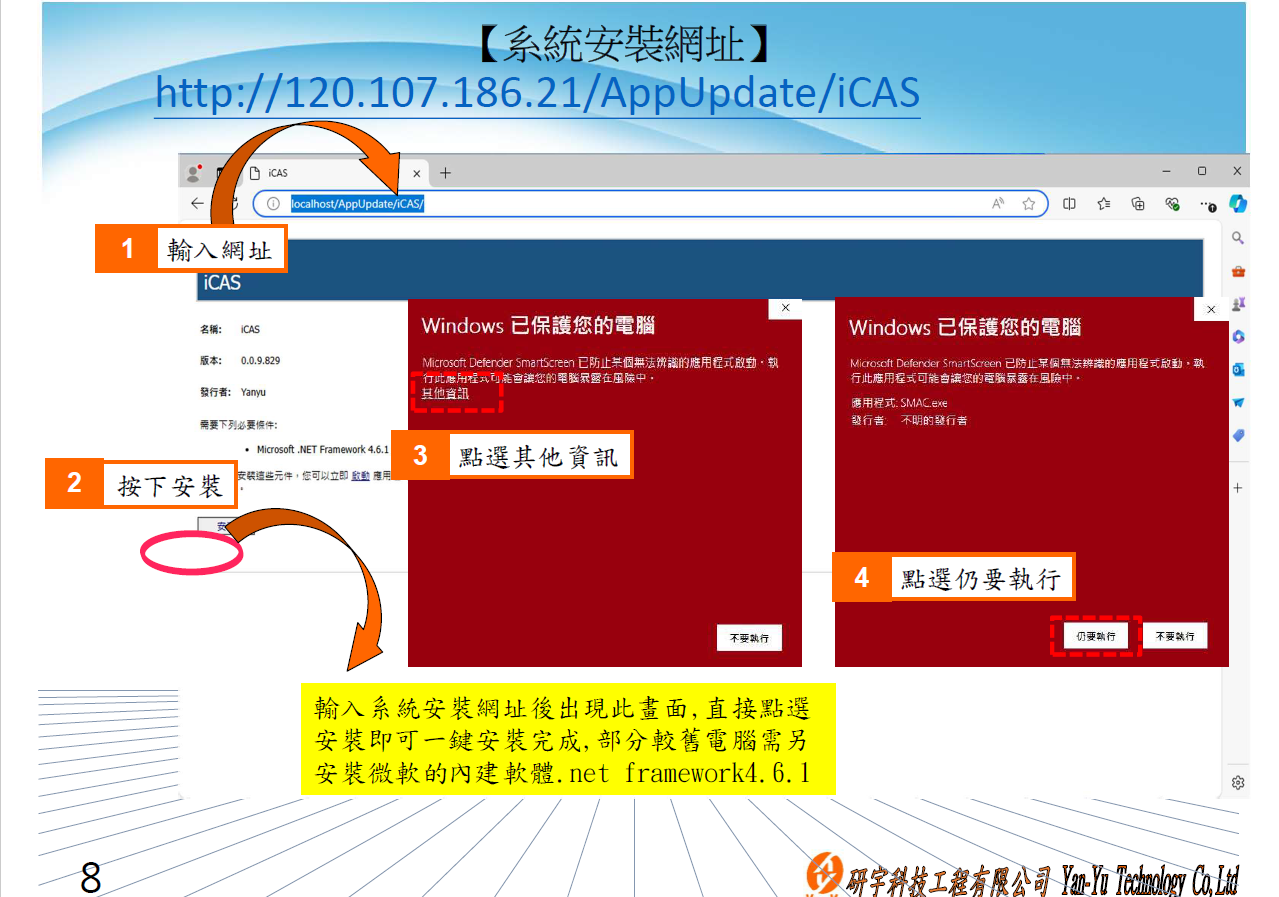
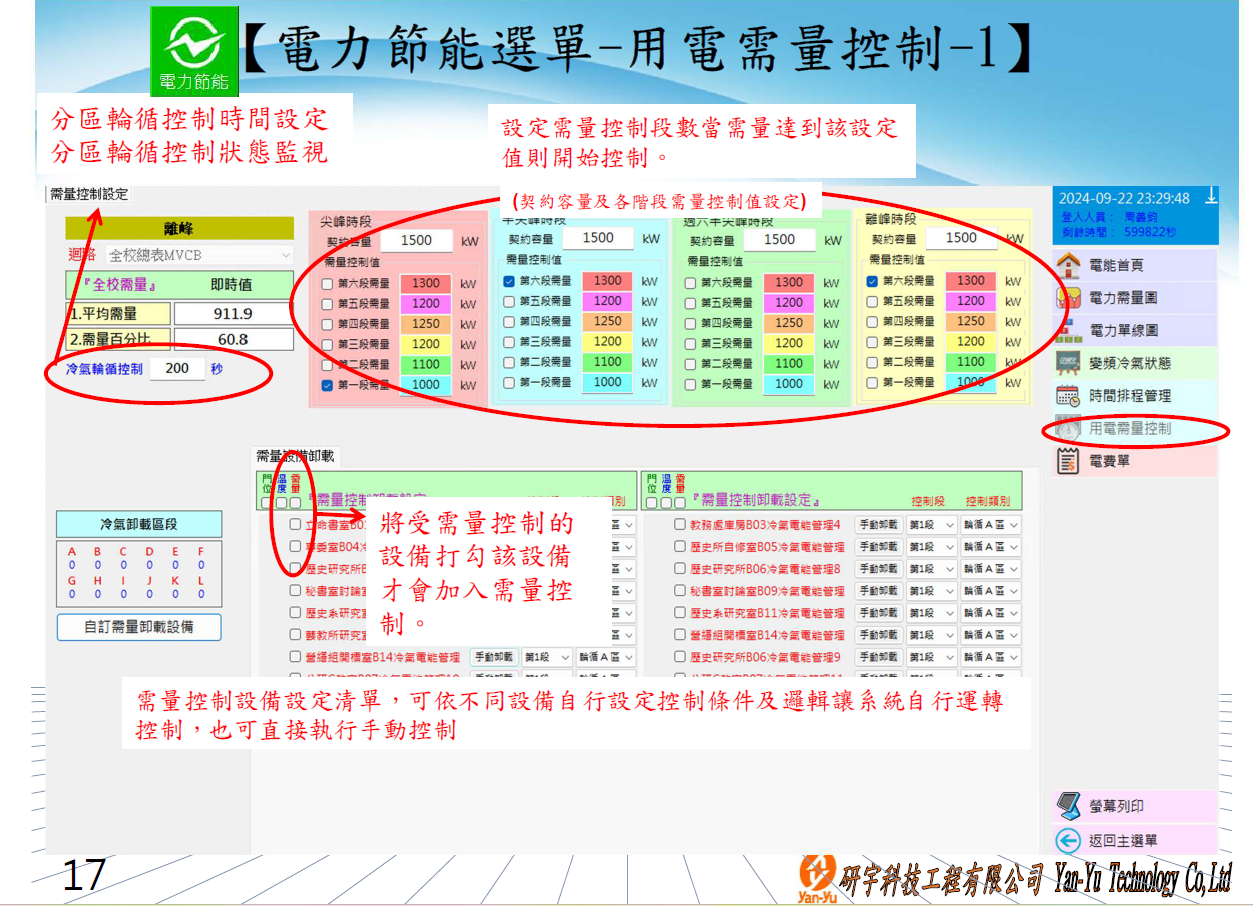
(11) To implement an effective energy management system, improve energy savings, and reduce energy costs, NCUE has implemented temperature monitoring, load-shedding, and shutdown control functions across all air conditioning systems in the Baisha Building (as shown in Figure 1). The system integrates demand control to regulate peak electricity use and keep peak loads within the contracted capacity, with plans to extend the system to all campus buildings. Figures 2–3 show the installation and operation interfaces of the Baisha Building's air conditioning energy-saving system.
(12) NCUE installed smart meters throughout the campus and added an energy management system (EMS), completing campus-wide deployment by the end of 2025 to strengthen energy management. The system tracks the power supply zones and high-consumption loads of each building, visualizes electricity use, and issues alerts when demand exceeds the contracted capacity. NCUE expects the system to raise energy efficiency by more than 10%.
(13) In April 2026, NCUE replaced the 100RT chiller and the air handling units on B1 to 4F of the Main Library, which will improve equipment performance and electricity use every year.
(14) By September 2026, NCUE will downsize the transformers at the Main Library, the outdoor courts, Student Dorm 3, and Student Dorm 7 and replace them with amorphous-core transformers to save energy, cut carbon emissions, and lower electricity costs.
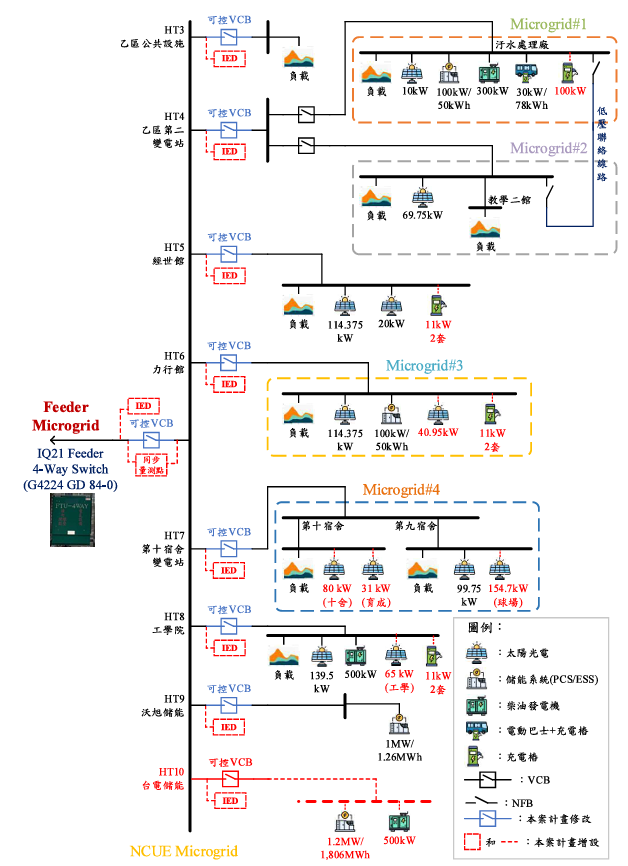
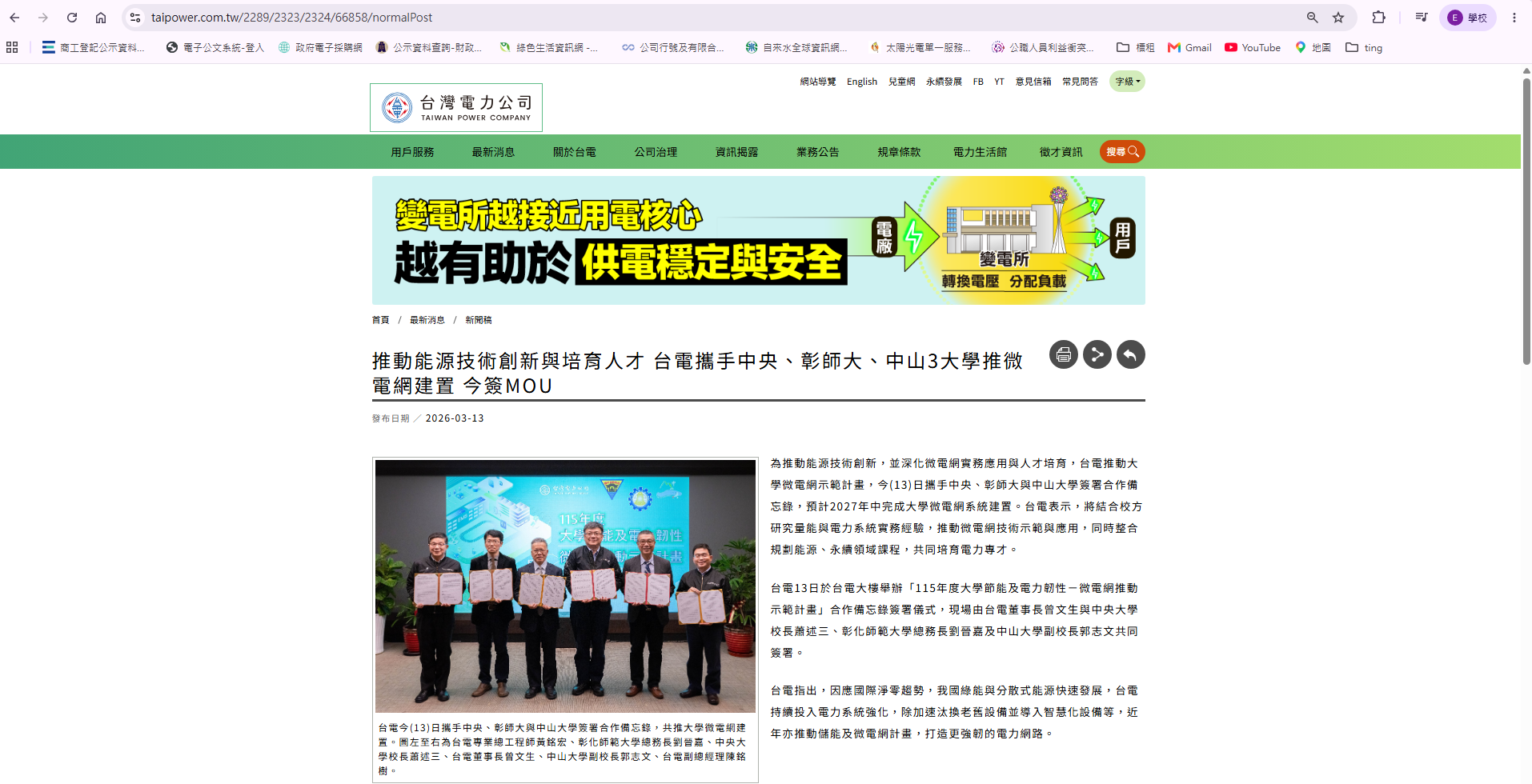
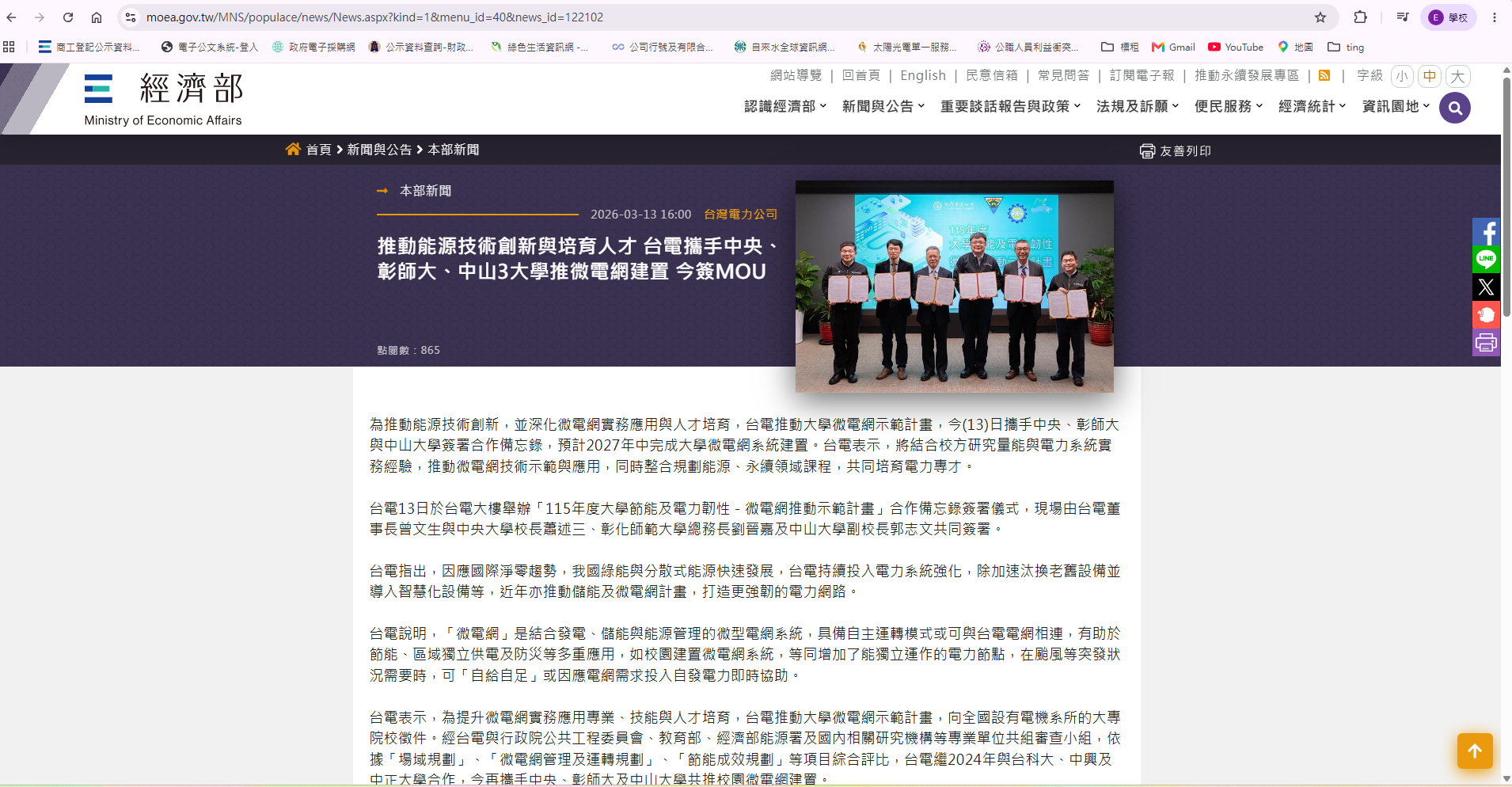
(15) In 2026, Taiwan Power Company (Taipower) and NCUE signed the "University Energy Conservation and Power Resilience Project," under which Taipower is subsidizing NT$100 million in construction funding for NCUE. The funding is primarily allocated to building a smart microgrid at the Shida Campus, which includes the addition of a 1.8MWh energy storage battery, 378.25kWp of solar power, six vehicle slow-charging stations and one fast-charging station, as well as the replacement of aging transformers, the installation of soundproof diesel generators, and the implementation of a hierarchical energy management system — the "Campus Microgrid Smart Energy Management System (NCUE MG EMS)" (as shown in Figure 4). This will strengthen the campus's islanding power resilience to at least four hours during power outages, and achieve energy conservation, carbon reduction, and electricity cost optimization goals through peak shaving and valley filling. NCUE is also one of the key demonstration sites of Taipower's University Microgrid Demonstration Project. To advance energy technology innovation, the practical application of microgrids, and talent development, Taipower selected demonstration schools from universities with electrical engineering departments nationwide. Only six universities have been selected in this initial phase to serve as test sites for verifying and developing energy technologies. Figures 5–6 show the related news coverage.
Links to news coverage:
(a) https://www.moea.gov.tw/MNS/populace/news/News.aspx?kind=1&menu_id=40&news_id=122102
(b) https://www.taipower.com.tw/2289/2323/2324/66858/normalPost
(c) https://ec.ltn.com.tw/article/breakingnews/5369269
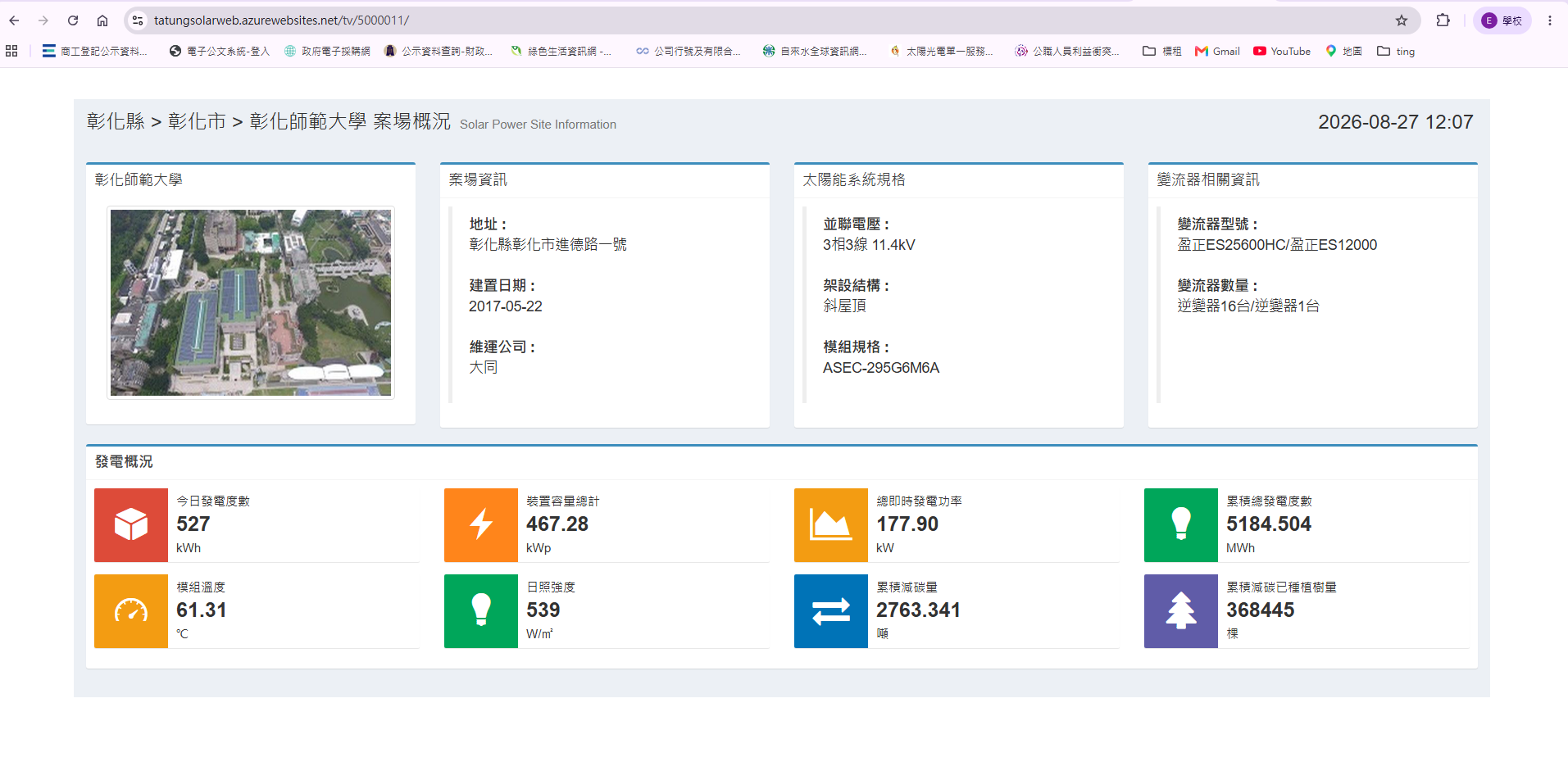
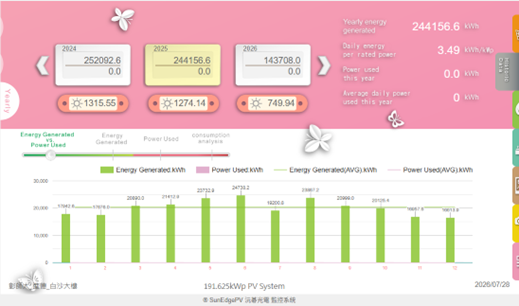
(16) By 2023, NCUE had installed 3,129.875 kWp of solar photovoltaic (PV) capacity across its campuses (see the installation schedule in Table 1) in support of the government's clean energy and zero-carbon-emission policies. A real-time monitoring system lets NCUE check the power generation data, historical statistics, and operating status of the PV systems on each campus, so that it can manage and track solar power performance effectively.
(a) NCUE’s Gymnasium Real-time Solar Power Monitoring System interface is shown in Figure 7, at the following URL: https://tatungsolarweb.azurewebsites.net/tv/5000011/
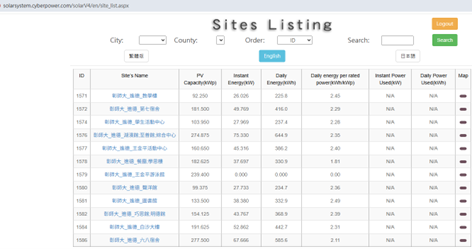
(b) Figures 8–9 show the online solar power monitoring interfaces for other campus buildings, available at: http://solarsystem.cyberpower.com/solarV4/id_login.aspx
| Campus | Year | Newly Added Capacity (kWp) | Accumulated Capacity (kWp) | Estimated Annual Power Generation (kWh) |
|---|---|---|---|---|
| Jinde Campus | Before 2020 | 467 | 467 | 583,750 |
| 2021~2022 | 2091.375 | 2558.375 | 3,197,968 | |
| 2026~2030 | 230 | 2788.375 | 3,485,469 | |
| Shida Campus | Before 2020 | 0 | 0 | 0 |
| 2021~2022 | 571.5 | 571.5 | 714,375 | |
| 2026~2030 | 738 | 1309.5 | 1,636,875 |
2. Comprehensive Campus Energy Policies and Standards
2. NCUE has formulated a comprehensive set of policies that have been implemented on campus for many years. Their purpose is to save energy and improve the energy efficiency standards of old buildings, while mandating that all refurbished and new buildings meet the energy efficiency standards:
(1) NCUE's Energy Conservation and Carbon Reduction Implementation Guidelines
The Guidelines require NCUE to establish an energy conservation task force chaired by the Vice President or a higher-ranking officer. The task force meets every year to review, plan, and set energy-saving measures for the year, and it sets rules for all campus units on the use and management of electricity, lighting, air conditioning, water, and paper, as well as on everyday environmental protection and carbon reduction, so that energy conservation becomes part of daily operations (as shown in Figure 10).