SDG 7.2.4
SDG 7.2.4 Plan to reduce energy consumption
1. Each year, NCUE selects old, energy-intensive, and inefficient electrical equipment for replacement based on the needs of each building, meeting its target of cutting electricity use by 1% per year. NCUE has carried out electricity-saving policies every year since 2007 and, by 2025, had reduced its annual electricity consumption by more than 15% in total. Table 1 shows NCUE's plans for 2019–2025.
| Year | Measures |
|---|---|
| 2025 |
(1) Replaced the 100RT chiller and ancillary equipment at the Main Library on the Jinde Campus, with expected annual electricity savings of 426,580 kWh. (2) Downsized and replaced the transformers at the Main Library, the outdoor sports courts, Student Dorm 3, and Student Dorm 7, raising the load factor of each transformer to over 50%, with expected annual electricity savings: 28,000 kWh. (3) Installed smart meters across campus and added an energy management system (EMS), completing campus-wide deployment in 2025 to strengthen energy management. (4) Replacement over 300 T5 light fixtures with LED fixtures across all campus buildings, expected to save 17,444 kWh of power annually. (5) Routinely replace over 200 air conditioning units, expecting to save 431,964 kWh annually. |
| 2024 |
(1) Replaced more than 350 T5 fluorescent lamps with LED lights across all campus buildings, saving 21,021 kWh of electricity annually. (2) Routinely replaced more than 236 air conditioning units, saving 526,668 kWh of electricity annually. (3) A total of 147 air conditioning units in NCUE's Baisha Building have been upgraded with temperature monitoring, load shedding, and shutdown control functions. These functions work in coordination with demand control mechanisms to regulate peak electricity usage and avoid exceeding the contracted peak load. The Baisha Building’s air conditioning energy-saving control system has also been integrated with an intelligent energy management system with load shedding control and shutdown scheduling functions, achieving annual electricity savings of 93,786 kWh. (4) To reduce electricity consumption by water dispensers, only water dispensers on the first floor in each building are set to provide cold water. (5) The temperature settings for heating systems used in campus dormitory areas have been adjusted by reducing the hot water temperature of boiler or heat pump heating systems to 45°C during the summer period from June to October, reducing school energy consumption and achieving annual cost savings of NT$53,416. |
| 2023 |
(1) Planned the phased, zone-by-zone installation of an air conditioning peak load-shedding system across campus; once completed, the system is expected to save over 100,000 kWh of electricity annually. (2) Planned Phase 2 of the solar PV installation project, which is expected to add 510.04 kWp at the Jinde Campus and 473.14 kWp at the Shida Campus. |
| 2022 |
(1) Planned the phased, zone-by-zone installation of an air conditioning peak load-shedding system across campus; once completed, the system is expected to save over 100,000 kWh of electricity annually. (2) Replaced T5 lights with LED lights in all campus buildings, involving at least 500 units; expected annual electricity savings: over 50,000 kWh. (3) Routinely replaced more than 70 air conditioning units; expected annual electricity savings: 100,000 kWh. |
| 2021 |
(1) Replaced the 300RT chiller and ancillary equipment at the Gymnasium, Jinde Campus; expected annual electricity savings: 227,603 kWh. (2) Replace the T5 lights of all buildings with LED lights, which involves at least 500 replacements and is expected to save more than 50,000 kWh of power annually. (3) Routinely replace over 50 air conditioning units, expecting to save 75,000 kWh annually. |
| 2020 |
(1) Replaced the chiller and ancillary equipment in the Library and Information Building, Jinde Campus, saving 327,603 kWh of electricity annually. (2) Replace the T5 lights in the classrooms on the first floor of the gymnasium with LED lights, to save 25,028 kWh of power annually. (3) Replace 64 air-conditioning units, saving approximately 1,500 x 64 = 96,000 kWh of power annually. |
| 2019 |
(1) Replaced the T5 lights on the first and second floors of the Main Library with LED lights, saving 27,430 kWh of electricity annually. (2) Replaced 65 air conditioning units, saving approximately 97,500 kWh. (3) Set sleep schedules for the equipment in the swimming pool's machine room, cutting electricity use during closed hours by up to 40,000 kWh per year. |
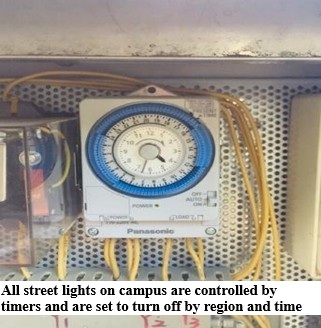
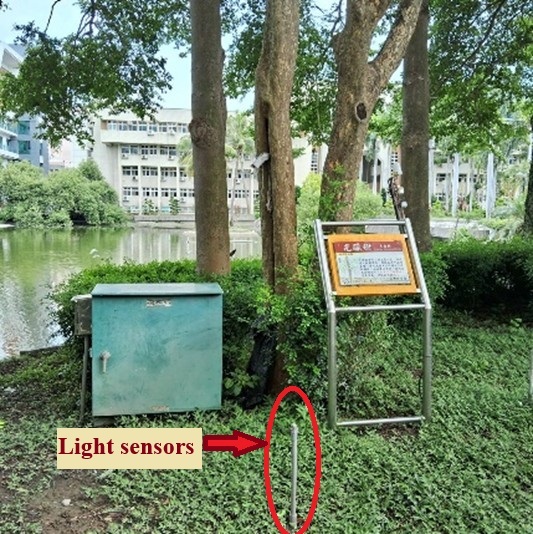
2. Electrical equipment is managed through automatic activation using timers or sensors to conserve energy, as shown in Figures 1-2.
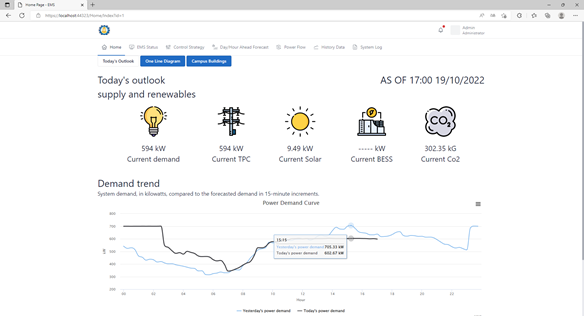
3. NCUE has built an energy management system (Figure 3) and smart meters (Figure 4) on the Shida Campus. The system integrates PV and energy storage for scheduling and dispatch, reducing peak loads through peak shaving and valley filling; in 2025, the maximum peak load reduction reached about 36%. Peak shaving and valley filling also reduce losses in high-voltage lines and improve transmission efficiency. NCUE uses PV to supply most of its peak load and uses energy storage to lower peak demand, improving overall energy efficiency.
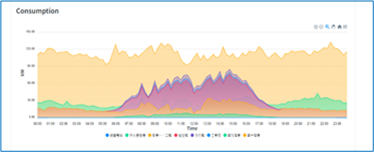
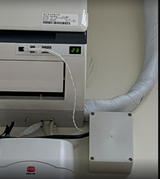
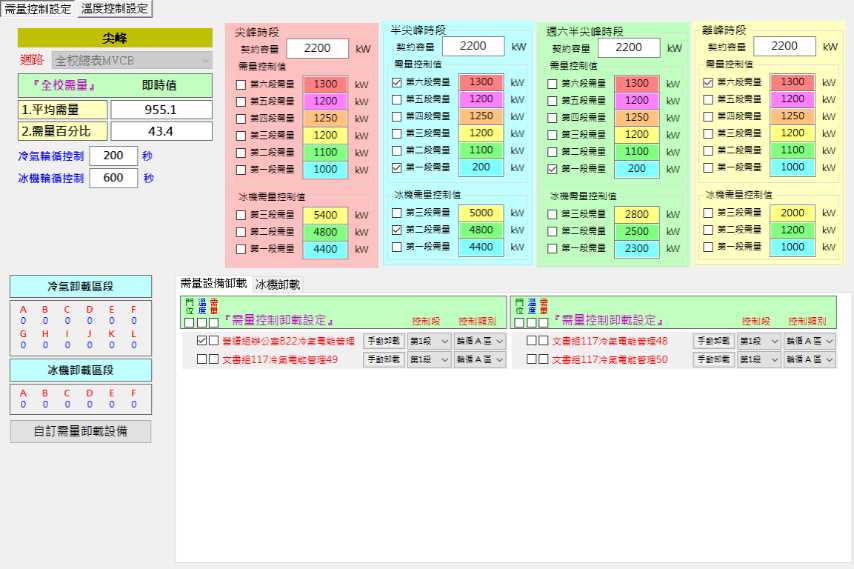
4. Air conditioning accounts for a large share of NCUE's electricity use in summer, so monitoring air conditioners helps save energy. NCUE has installed a building energy management system in the Baisha Building on the Jinde Campus that remotely controls air conditioning modes, temperature settings, and on/off status for load shedding and energy-saving control (Figures 5–6).
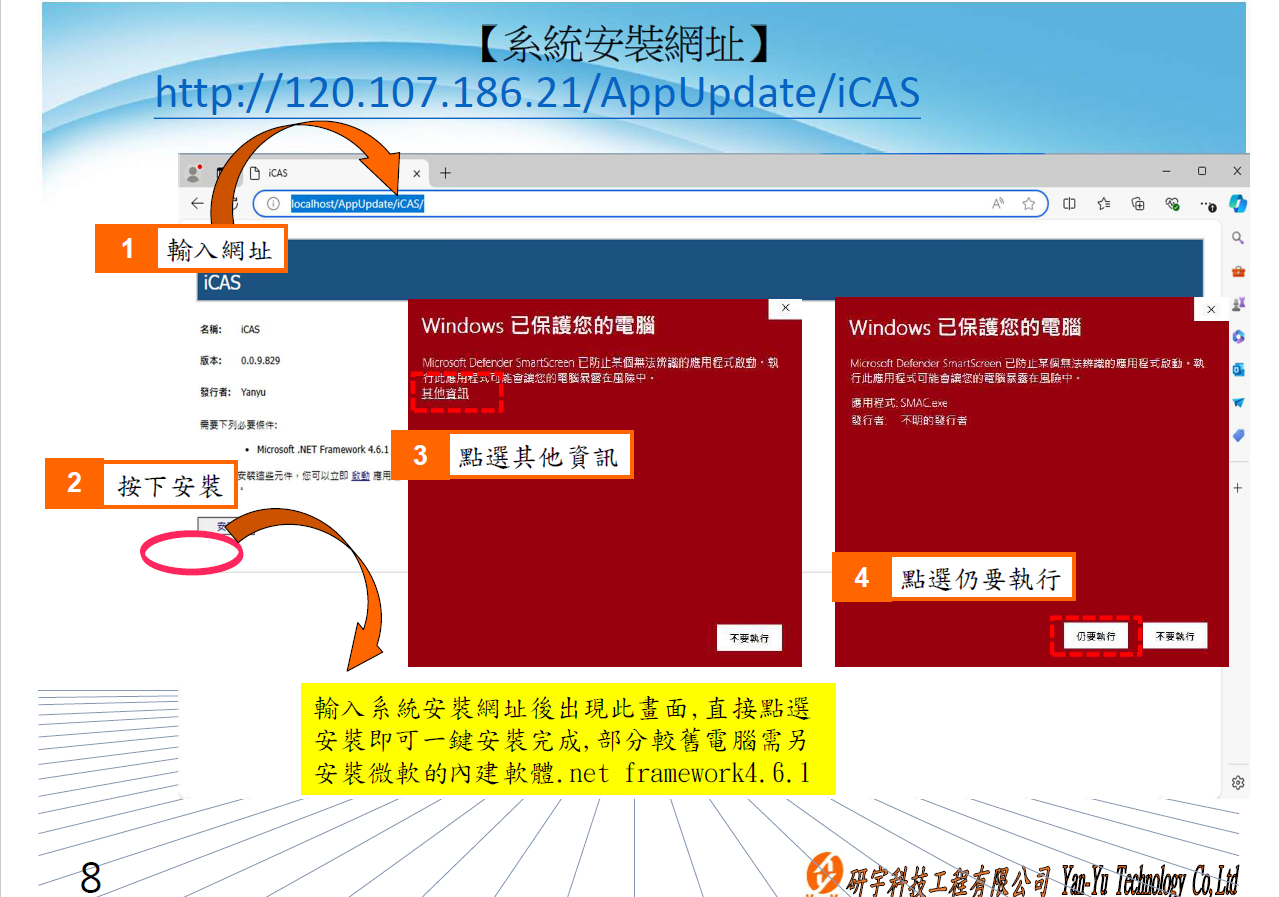
Link to the monitoring system: http://120.107.186.21/AppUpdate/iCAS (app installation required)
Figure 7 shows the installation and operation interface of the Baisha Building's air conditioning energy-saving system.
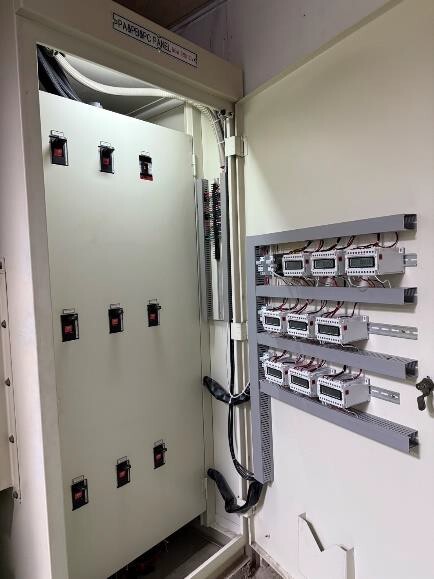
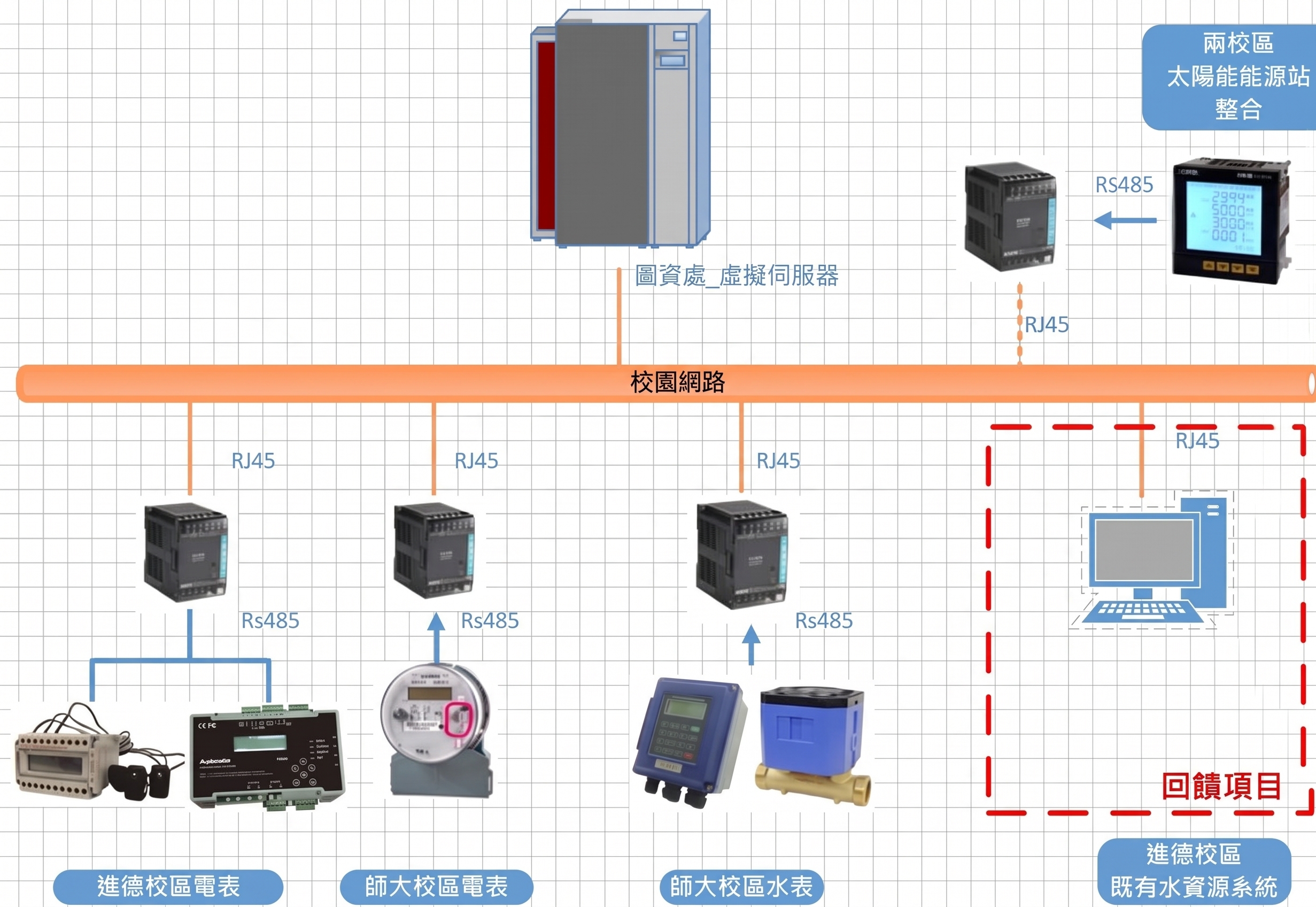
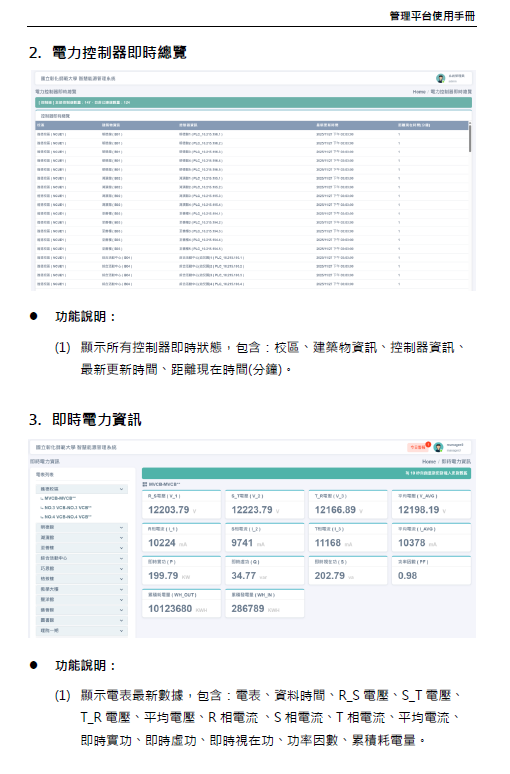
5. In 2025, NCUE completed the campus-wide installation of smart meters, ultrasonic water meters, and an integrated Energy Management System (EMS) (as shown in Figures 8-10), improving the efficiency of campus energy and water resource usage and implementing energy conservation and carbon reduction. This project covers 27 sites on the Jinde Campus and 10 sites on the Shida Campus, with a total of 812 smart meter circuits installed (596 circuits on Jinde Campus and 216 circuits on Shida Campus), along with 24 newly installed ultrasonic water meters (1 for groundwater discharge on Jinde Campus and 23 on Shida Campus), as well as 137 data collectors and 117 current transformers. The smart electricity and water meters collect data in real time every minute (or at intervals of less than 10 seconds), including current, voltage, active power, reactive power, apparent power, power factor, and cumulative electricity consumption, as well as instantaneous flow and cumulative water consumption.
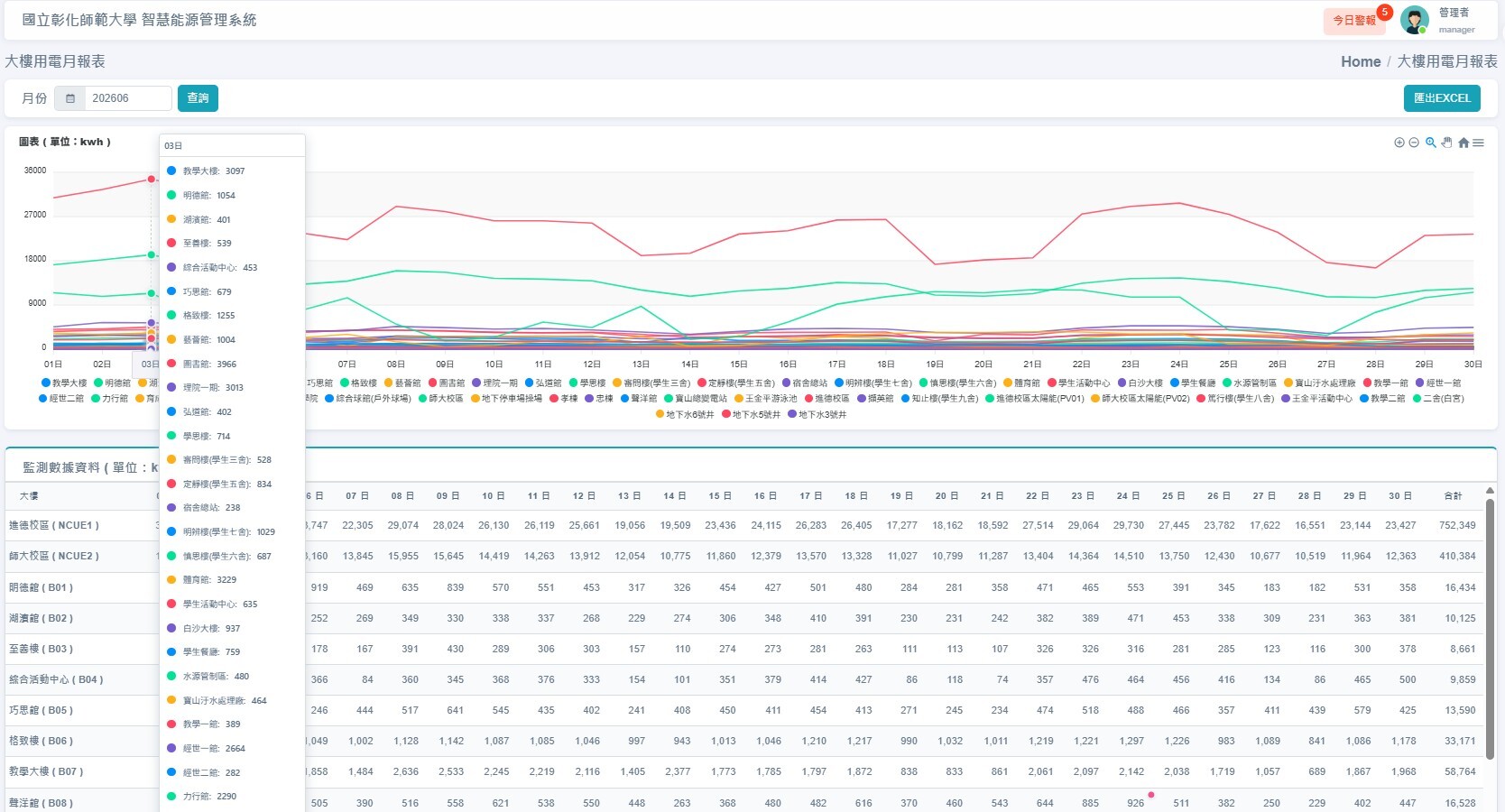
At the same time, this project has established a campus-wide smart Energy Management System (EMS), which features core functions including real-time overview of electricity and water usage, energy management reports, and intelligent alerts for over-contract usage and water leaks. The system architecture adopts a hierarchical design (comprising cloud, fog, and edge layers, with on-premises O&M and a cloud web interface), providing real-time power flow and water usage monitoring, downloadable daily/weekly/monthly/annual electricity and water usage reports (supporting JSON/Excel/PDF formats), a daily alert overview (covering meter disconnections, voltage anomalies, and water leakage alerts), and management of spaces and facility buildings. It also incorporates tiered permission management via single sign-on (SSO), system operation logs, and data collector malfunction alerts. In addition, the system supports the allocation and management of electricity circuits by building and floor, unit-based electricity usage statistics (automatically apportioning shared electricity costs among departments based on floor area and proportion), evaluation of Taipower's optimal electricity rate plans, and integration—via API—with the existing 17 solar power generation sites and energy storage equipment across both campuses, enabling analysis of the benefits of renewable energy adoption and carbon reduction.
Through the installation of smart meters and the Energy Management System (EMS), NCUE expects to improve energy usage efficiency by more than 10%, thereby implementing energy conservation and carbon reduction.
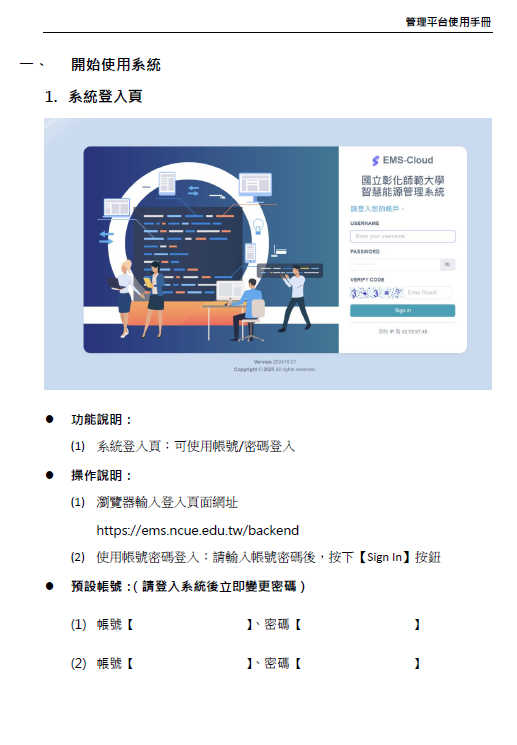
Figures 11-12 show the interface of NCUE’s campus-wide Energy Management System (EMS). Website: https://ems.ncue.edu.tw/backend