
SDG 4.4.1
SDG 4.4.1 Proportion of first-generation students
Number of students starting a degree
Answer:
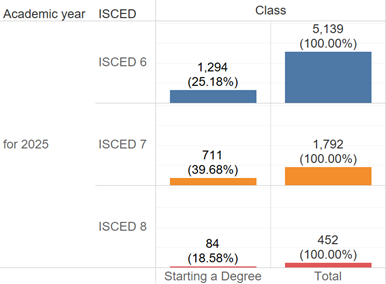
In 2025, the Full-Time Equivalent (FTE) number of students starting their degrees was as follows:
1. Bachelor's degree programs: 1,294students
2. Master's degree programs: 711students
3. Doctoral degree programs: 84 students.
Please refer to Figure 1 for details.
Number of first-generation students starting a degree
Answer:
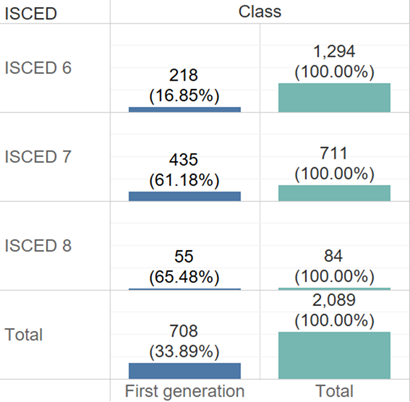
Among full-time students in 2025, 708 first-generation students started a degree, representing 33.89% of the total of 2,089 students (Table 1, Figure 2).
| Program Level | Number of First-Generation Students | Total First-Year Students | Percentage |
|---|---|---|---|
| ISCED6 | 218 | 1294 | 16.85% |
| ISCED7 | 435 | 711 | 61.18% |
| ISCED8 | 55 | 84 | 65.48% |
| Total | 708 | 2089 | 33.89% |
Supplementary notes:
A comprehensive support system for first-generation students starting a degree
NCUE is well-versed in the importance of higher education in promoting social mobility and eliminating inequality of opportunity. NCUE treats first-generation students as a core group within its framework for a diverse and inclusive campus, and actively tracks the composition of this group through a regular census mechanism so that support can be targeted precisely.
1. Analysis of diversity and inclusion in the student population
Among the full-time equivalent (FTE) students starting a degree in 2025, the total number of newly enrolled students across the university was 2,089, comprising 1,294 in bachelor's programmes, 711 in master's programmes, and 84 in doctoral programmes (Figure 1). A precise census through the academic affairs administration system found that 708 of these were first-generation students starting a degree, which accounts for 33.89% of all students admitted that year (Figure 2). The significant data demonstrates that NCUE is actively discharging the social responsibility of a national university by opening a route to transformation and advancement for large numbers of students from families with no experience of university education.
2. "Soaring in Learning, Realising Dreams": a comprehensive and inclusive support system
First-generation students readily face multiple challenges, including academic adjustment, barriers to information, and financial pressure, after enrolment because of the lack of cultural capital and inherited resources of higher education in their families. In line with the Higher Education Sprout Project, NCUE has built institutionalised support mechanisms that provide disadvantaged students with pre-admission safeguards, whole-of-programme support after admission, and digital equity, giving effect to the core principle of "learning instead of part-time work" and comprehensively removing systemic barriers.
(1) Institutionalised safeguards and early intervention before admission
To eliminate inequality form the very beginning, NCUE has actively built diverse channels of support that raise the admission chances of disadvantaged and first-generation students from the point of recruitment onwards for lightening their hidden financial burden:
(a) Guaranteed university admission places: The university application route provides places giving priority admission to economically disadvantaged students. NCUE has additionally established an Admission Track for Socioeconomically and Culturally Disadvantaged Students, which breaks the conventional single-score framework and attaches weight to students' learning motivation and process of striving to improve in the face of adversity. Besides, the selection is made entirely by review of written materials. In the 2025-26 academic year, 2 and 20 students were admitted respectively.
(b) Zero-cost admission and examination arrangements: To prevent students from losing the chance to transform their circumstances because of geographical or financial constraints, NCUE fully waives entrance and selective examination fees for economically disadvantaged students and proactively subsidises their travel and accommodation costs for attending examinations. In the 2025-26 academic year, NCUE provided nearly NT$29,000 in such subsidies.
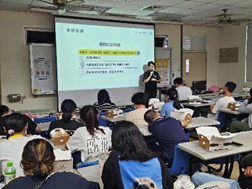
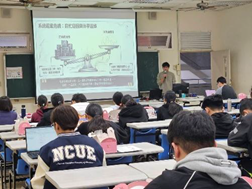
(c) Proactive contact on the first mile: NCUE holds briefings on Soaring Eagles Project and Freshman Financial Aid (Figures 3 and 4), ensuring students connect seamlessly with the university's support network once they enter.
(2) A four-dimensional support network after admission (academic, psychological, financial, and digital equity).
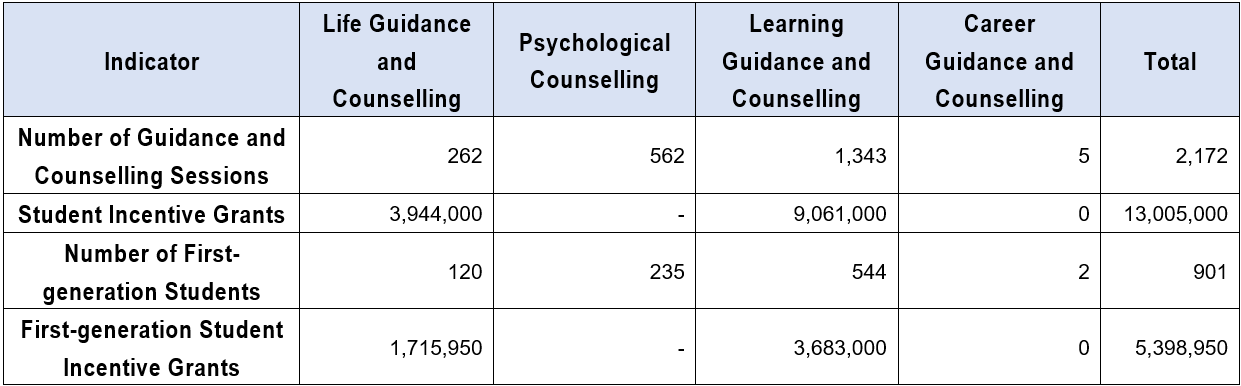
NCUE fulfills its commitment on establishing comprehensive support measures throughout students’ academic journey, promoting student life guidance and support, professional psychological counselling and care, self-directed learning support guidance, and career development guidance to strengthen competencies. In 2025, the Soaring Eagles Project supported a total of 2,172 economically disadvantaged students.
Targeted resources allocation has had a significant impact on first-generation college students, with 901 instances of support in total and NT$5,398,950 in funding awarded, which accounts for 29.06% of all award funding. The outcomes are shown in Table 5 below:
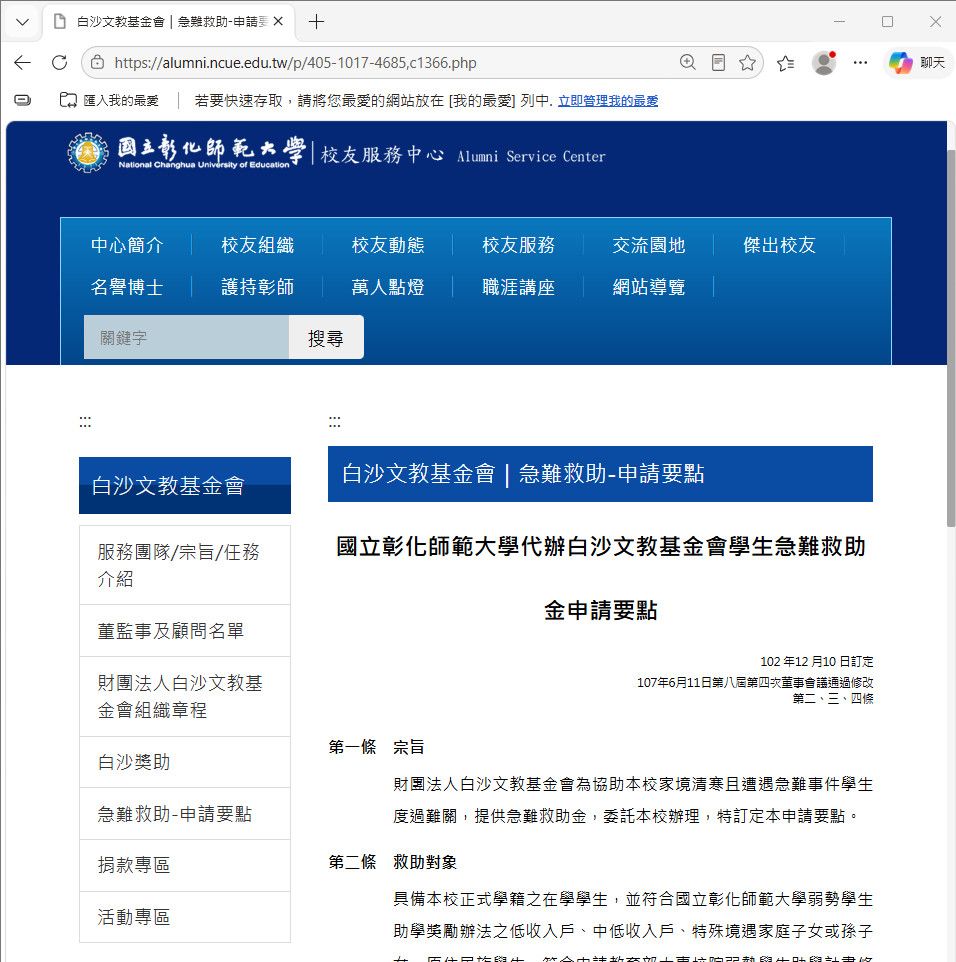
(a) Life support and an emergency relief network: NCUE helps ensure students’ financial and living stability through measures such as tuition and fee reductions, guaranteed dormitory placement, and campus meal vouchers. For students from low-income families who face emergencies, including those whose families have had no university graduate for three generations, the university established a dedicated Student Emergency Relief Fund (as shown in Figure 6), offering immediate assistance of up to NT$100,000. The accompanying rules and application procedures are published on the university's official website.
(b) Targeted psychological counselling and the building of peer communities: To help first-generation students address the problems of campus adjustment and cultural challenges, NCUE's Student Psychological Counseling and Guidance Center has built a targeted guidance mechanism with case management and follow-up, providing individual and group counselling.
(c) Supporting excellence and zero-cost digital equity: To eliminate entirely the digital divide and the hidden learning costs that stem from family background, NCUE invests approximately NT$29 million a year in enriching its library and electronic resources. The physical collection of NCUE now stands at 440,000 volumes, and the university has actively joined five major consortia such as Taiwan Academic E-Book & Database Consortium (TAEBDC), acquiring more than 30 of the world's leading electronic databases, including Elsevier ScienceDirect, Springer, Wiley, and IEEE. Together with the university's computer classrooms and laboratories, these create a high-quality research and learning environment of digital equality for first-generation students.
3. Targeted career development and social mobility for eliminating inequality of class
To ensure that first-generation students can overcome the shortage of resources of family connections and break down the information asymmetry in the workplace when they graduate, NCUE extends its guidance to the end of the career and actively promotes the transition into employment:
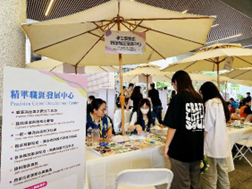
(1) Establishment of a dedicated cross-office body: In February, 2025, NCUE formally established the Precision Career Development Center as a dedicated university-level unit. It integrates resource platforms across administrative offices and works closely with academic departments to provide students with diverse and precisely targeted career orientation guidance.
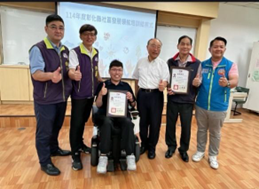
(2) Corporate mentoring and the deployment of professional consultation: NCUE has actively applied to the Central Region Branch of the Workforce Development Agency, Ministry of Labor, under the Subsidy Programme for Employment Services in Partnership with Higher Education Institutions, bringing in industry specialists to provide in-depth one-to-one career consultation. In 2025, the service was used 30 times, of which 5 were precisely targeted at first-generation students (Figure 7 shows Community Development Leadership Training, and Figure 8 shows on-site consultation at the job fair). Through objective and professional assessment, the service helps students clarify their own worth and understand market trends so that they achieve high-quality professional employment, genuinely breaking the hereditary reproduction of economic class.
4. Exporting social impact: first-generation students as practitioners of educational equity
As one of Taiwan's oldest and leading normal universities, NCUE's most distinctive contribution lies in transforming first-generation students from recipients of resources into agents of educational equity in remote areas. NCUE actively encourages and funds students to go out beyond the campus for giving back what they have learned to schoolchildren in more underserved areas, deepening their own sense of worth and achievement in the course of serving society:
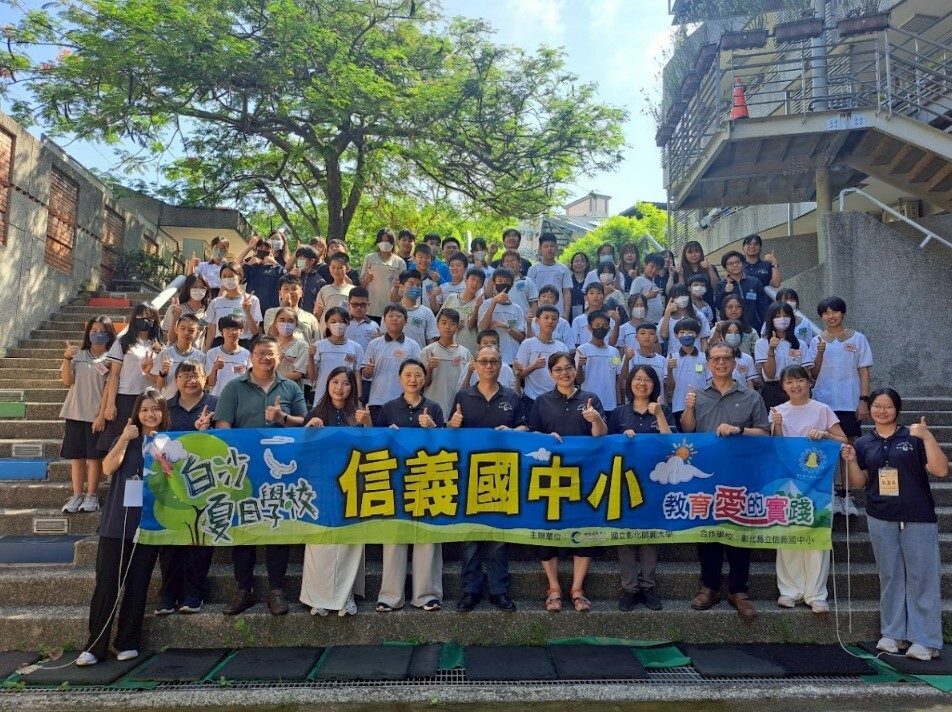
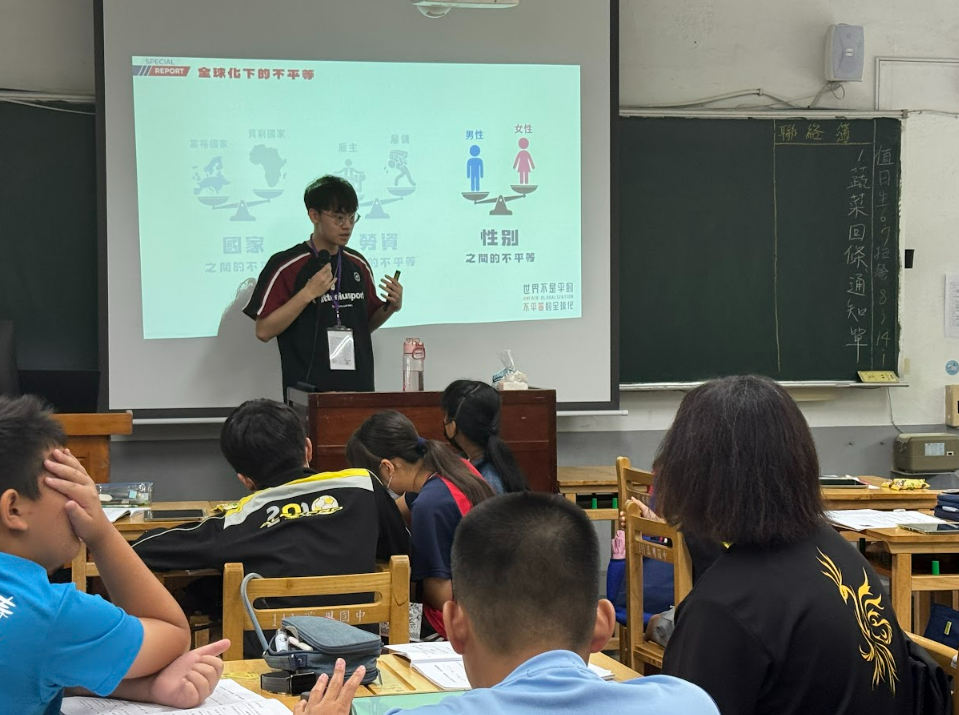
(1) Baisha Summer School (transition education in practice): Since 2011, NCUE has held the Baisha Summer School during the summer vacation each year. NCUE's pre-service teachers form the administrative and teaching team of Baisha Summer School on their own initiative, taking on the varied roles found in a real school, including principal, academic affairs, student affairs, general affairs, and class teachers. In the program, they help new students of elementary and junior high school adapt to school life through creative and enthusiastic transition curriculum. In the summer of 2025, 55 pre-service teachers went into 3 secondary schools in Changhua County, where they guided 115 students who had just entered Grade 7 to experience the pleasure of learning and be prepared for new lives at junior high school. (Figures 9-10).
Baisha Summer School x Xinyi Junior High and Elementary School Facebook page: https://www.facebook.com/HsinYiSummerSchool/
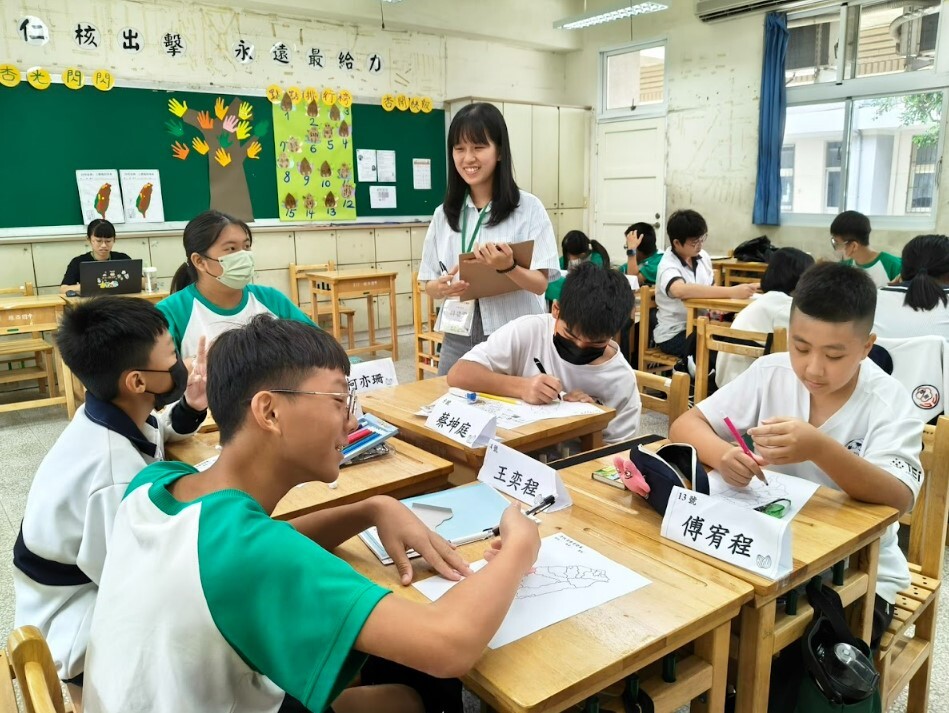
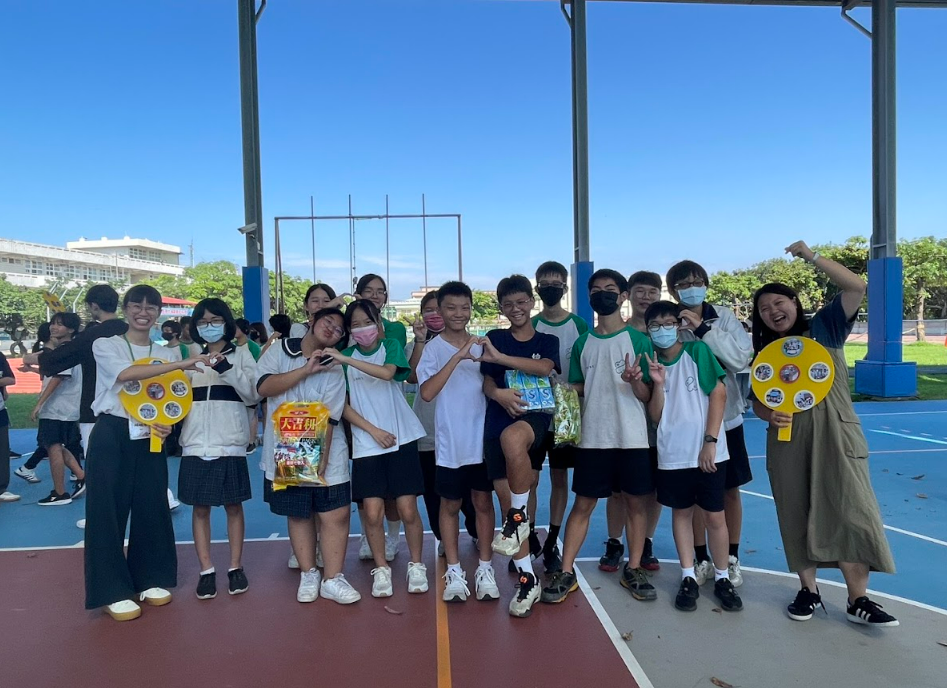
(2) Schweitzer education service programme (care for the disadvantaged): Since 2006, NCUE has continued to promote the Schweitzer-inspiring Educational Service Program, encouraging pre-service teachers to carry on Schweitzer's spirit of caring for the disadvantaged and serving with professionalism by providing academic tutoring, character development, and related learning activities for schools in remote areas. In the summer of 2025, 25 pre-service teachers went to Xianxi Junior High School in Changhua County, where they served 28 students moving from Grade 7 to Grade 8. (Figures 11-13).
NCUE News: https://www.ncue.edu.tw/p/406-1000-23663,r93.php?Lang=zh-tw
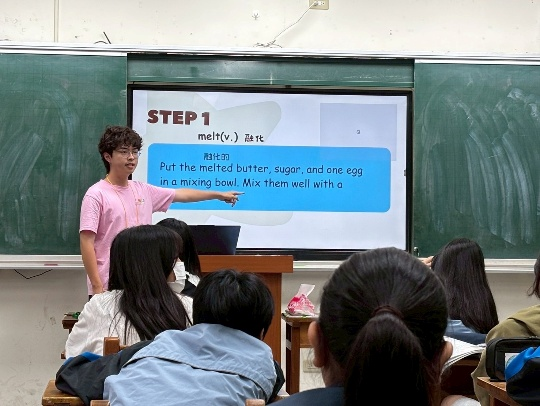
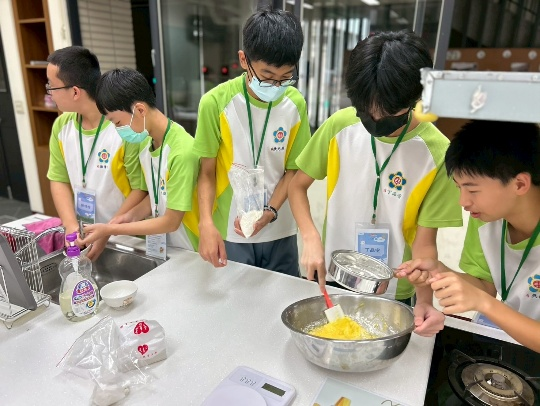
(3) USR - "NCUE x Common Good Education: deepening 12-Year Basic Education in remote areas" (integration of regional resources): NCUE has conducted this project since 2020 with the aims of fulfilling university social responsibility and developing pre-service teachers' professional teaching expertise and practical teaching skills. The project focuses on strengthening the integration of regional resources so that disadvantaged students in remote areas gain better learning opportunities and educational resources. In 2025, NCUE worked with 8 schools in Changhua County, Yunlin County, Taichung City, and Tainan City to hold summer camps, which incorporated local school-based curricula and distinctive interdisciplinary courses. One example was the bilingual home economics course "Little Cooking Masters" at the junior high division of National Tianzhong Senior High School. Through immersive English activities and hands-on cooking, the course helped students build confidence in everyday settings and improve their spoken English. A total of 69 pre-service teacher volunteers took part, serving 247 junior high school students. (Figures 14-15)
Through these three major projects, NCUE has not only successfully helped remote areas realize educational equity but has also enabled first-generation students to experience their own power as agents of social equality, creating a sustainable and positive impact in which the university, its students, and society all benefit.