SDG 4.3.4
SDG 4.3.4 Education outreach activities beyond campus
NCUE is one of Taiwan's three normal universities for secondary education. It has long supported the professional development of teachers in schools across townships and in outlying areas, actively extending its resources beyond the campus. NCUE not only sends professional faculty out to local schools and communities for holding growth workshops, but also encourages its students to design various educational activities or form service teams on their own initiative, and hold science education experiment camps and community service activities for local schools as well as elementary and junior high schools in remote areas. This helps return NCUE's learning resources to elementary and secondary schools and organizations in the region. Details are provided below, together with relevant links, photographs and participant numbers as supporting evidence.
1. Regular activities
NCUE regularly holds education outreach activities beyond campus. These include professional training in science education for elementary and secondary school teachers, the Baisha Summer School, the Pre-service Teachers’ Educational Service Project Embodying the Spirit of Albert Schweitzer, the USR project "NCUE x Common Good Education: deepening 12-Year Basic Education in remote areas", the TOEIC Listening and Reading class for The Affiliated Industrial Vocational High School of NCUE, and professional training for mathematics teachers. Through these, NCUE extends its teaching staff and learning resources beyond the campus, supporting learning and growth in local schools and remote areas.
(1) Professional training in science education for elementary and secondary school teachers:
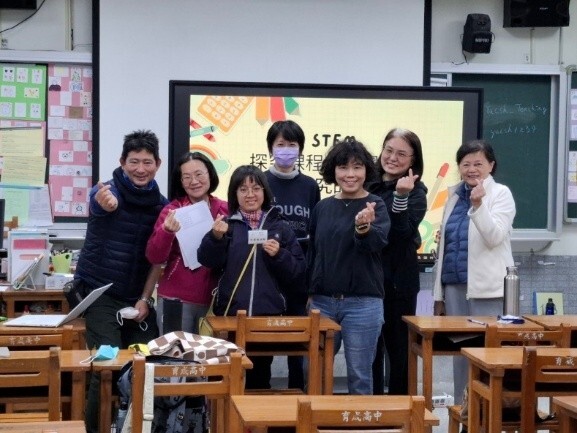
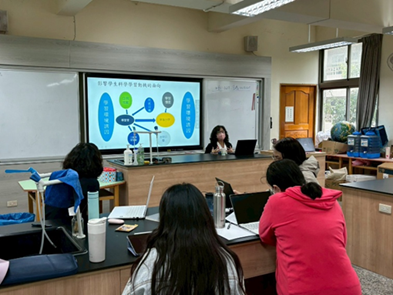
Professor Hsiao-Lin Tuan in NCUE's Graduate Institute of Science Education runs a K-12 Education Administration project. It enhances elementary and junior high school science teachers’ professional expertise and skills in designing inquiry-based and interdisciplinary (STEM) curricula. In line with the Ministry of Education's aims and the needs of elementary and secondary school science teachers in the design, implementation, and reflective review of inquiry-based instruction, NCUE not only holds training on its own campus each year but also travels to northern Taiwan for delivering training for local junior high school teachers, which helps teachers outside central Taiwan acquire new knowledge in science education. This develops excellent seed teachers in inquiry-based instruction and also strengthens students' inquiry skills. In 2025, NCUE held two sessions, including an introduction to inquiry under the new curriculum guidelines, and a session on implementing STEM inquiry curricula. The sessions are held at Taipei Municipal Yucheng Senior High School and Taipei Municipal Fanghe Junior High School respectively, amounting to 36 training hours with 60 attendances in total (Figures 1-2).
(2) Science Education Steering Committee:
NCUE conducts the Science Education Steering Committee project for K-12 Schools, which aims to help the 14 existing science education centers achieve the goals in science (mathematics) education. The tasks include helping each science education center advance the short-term objectives for science education, providing guidance to the centers in implementing their annual work plans, promoting mutual support and cooperation among the centers according to their missions, and linking their work with projects commissioned by the Ministry of Education.
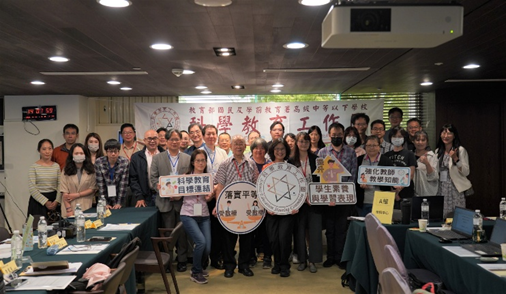
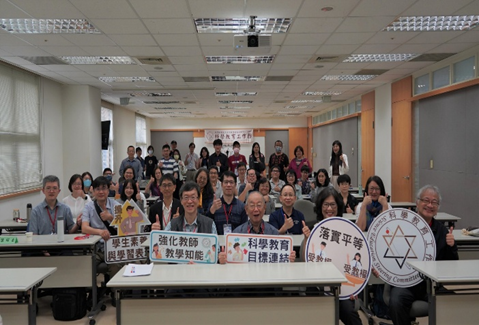
On April 11, 2025, the 2025 Symposium on Advancing the Short-Term Objectives for Science Education was held in Taichung City, bringing together the principal plan authors from the 14 science education centers and members of the Science Education Working Circle for in-depth exchange on how the short-term objectives for science education could be built into their plans, together with consultation and guidance. The event comprised 4 training hours with 43 attendances.
On April 12, 2025, the 2025 Forum on Advancing the Short-Term Objectives for Science Education was held in Taichung City, inviting specialists from the College Entrance Examination Center, science education specialists and scholars from across Taiwan, representatives of social education institutions such as the National Museum of Natural Science, teacher representatives from central and local science education advisory groups, elementary and secondary school science teachers, graduate students, members of the Science Education Working Circle, and representatives of the Ministry of Education. The forum deepened the 14 centres' understanding of the short-term objectives for science education and gave participants a clearer sense of how to build competency-based principles into curriculum, teaching and entrance assessment. The event comprised 6 training hours with 80 attendances (Figures 3-4).
(3) Baisha Summer School Program:
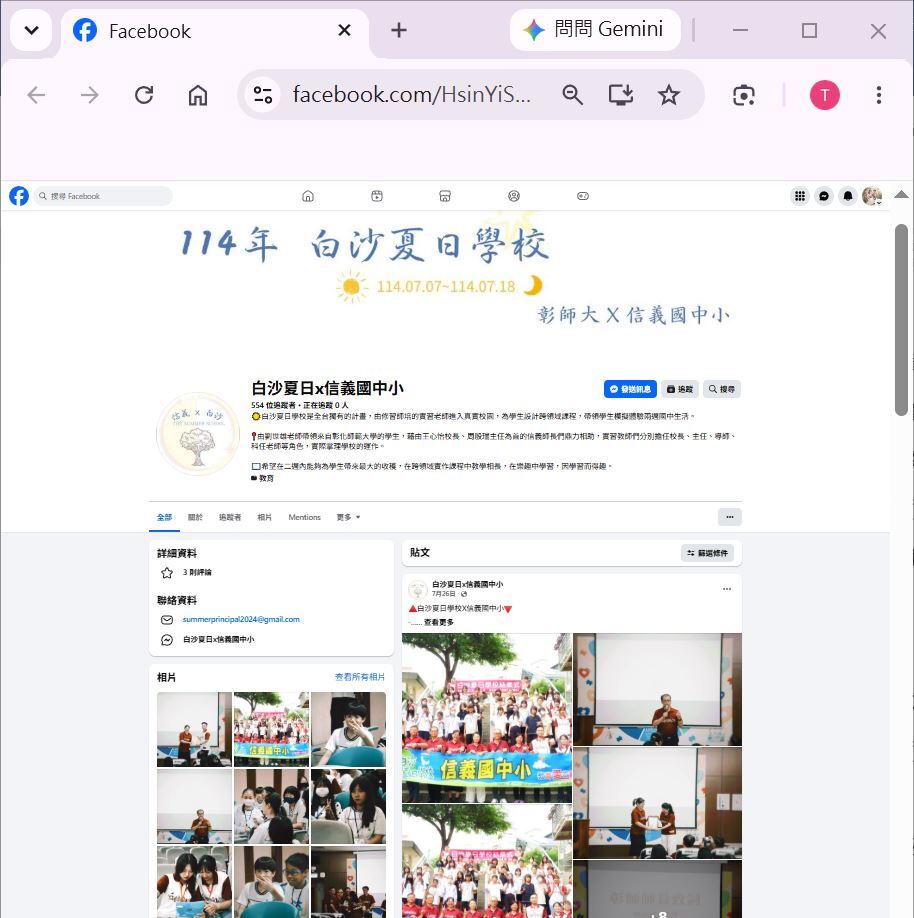
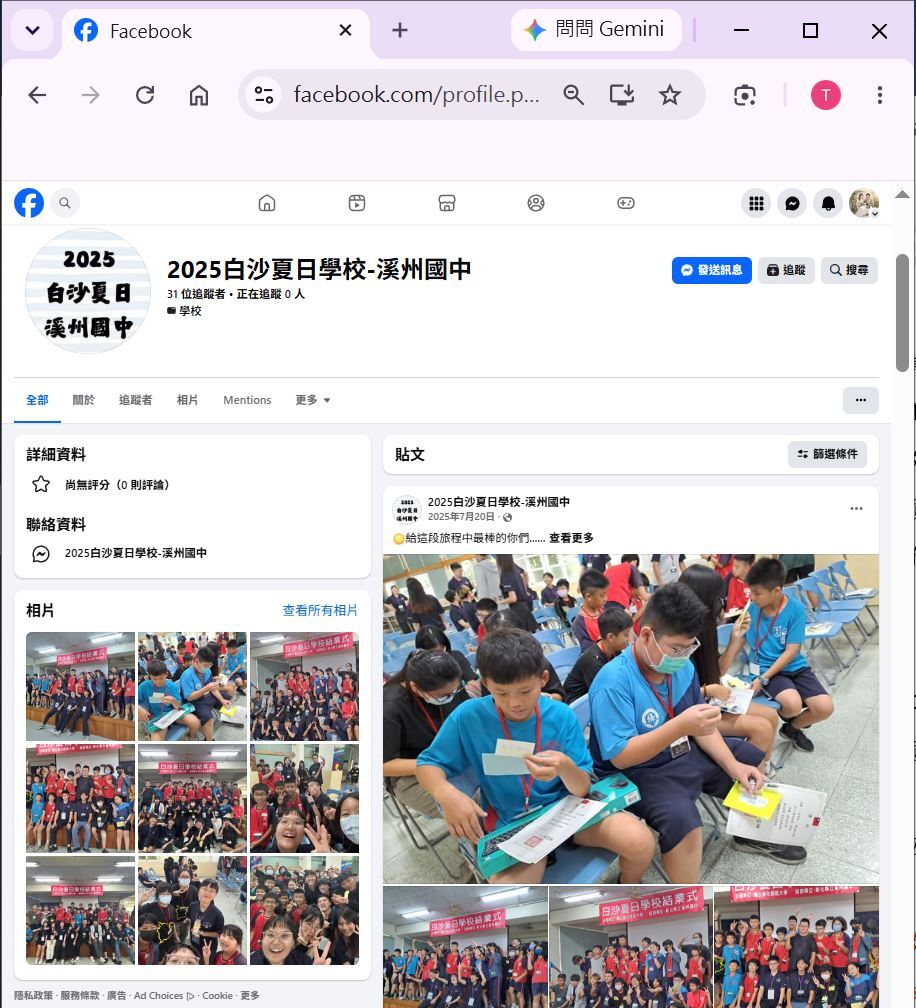
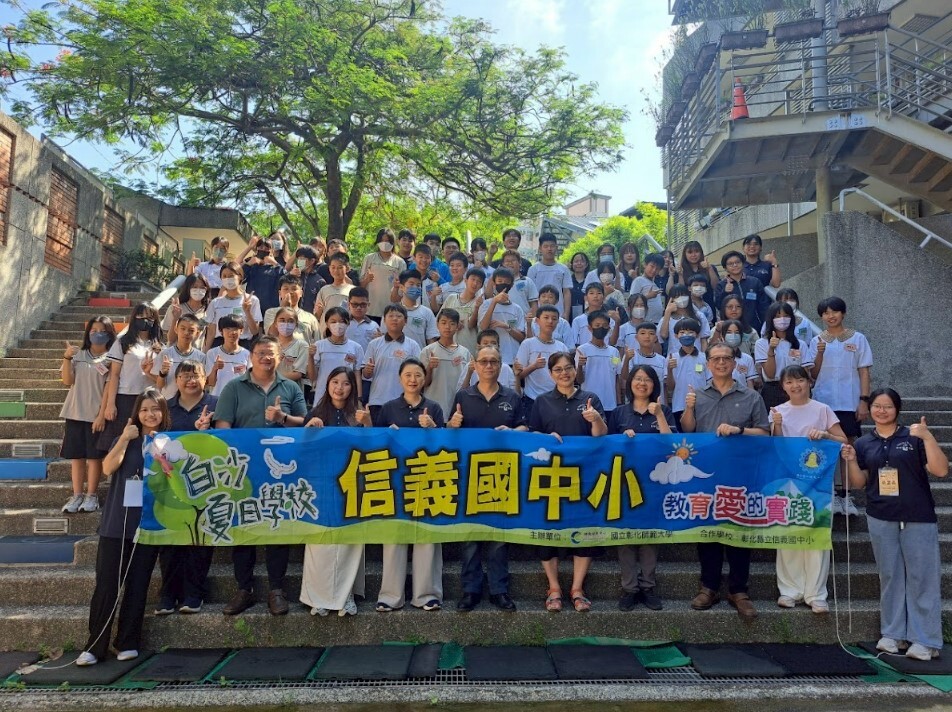
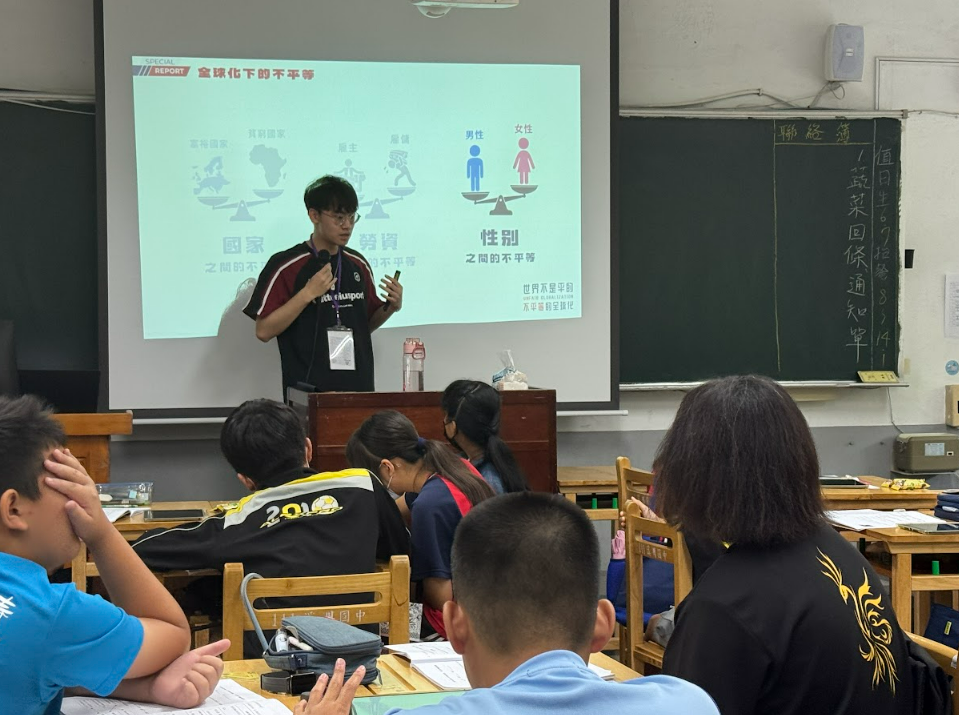
Since 2011, NCUE has held the Baisha Summer School during the summer vacation each year. NCUE's pre-service teachers form the administrative and teaching team of Baisha Summer School on their own initiative, taking on the varied roles found in a real school, including principal, academic affairs, student affairs, general affairs, and class teachers. In the program, they help new students of elementary and junior high school adapt to school life through creative and enthusiastic transition curriculum. In the summer of 2025, 55 pre-service teachers went into 3 secondary schools in Changhua County, where they guided 115 students who had just entered Grade 7 to experience the pleasure of learning and be prepared for lives at junior high school. Figures 5 and 6 are the Facebook pages of the Baisha Summer School and its partner schools; Figures 7 and 8 show the photographs of the activities.
Baisha Summer School x Xinyi Junior High and Elementary School Facebook page: https://www.facebook.com/HsinYiSummerSchool/
(4) Schweitzer-inspiring Educational Service Program:
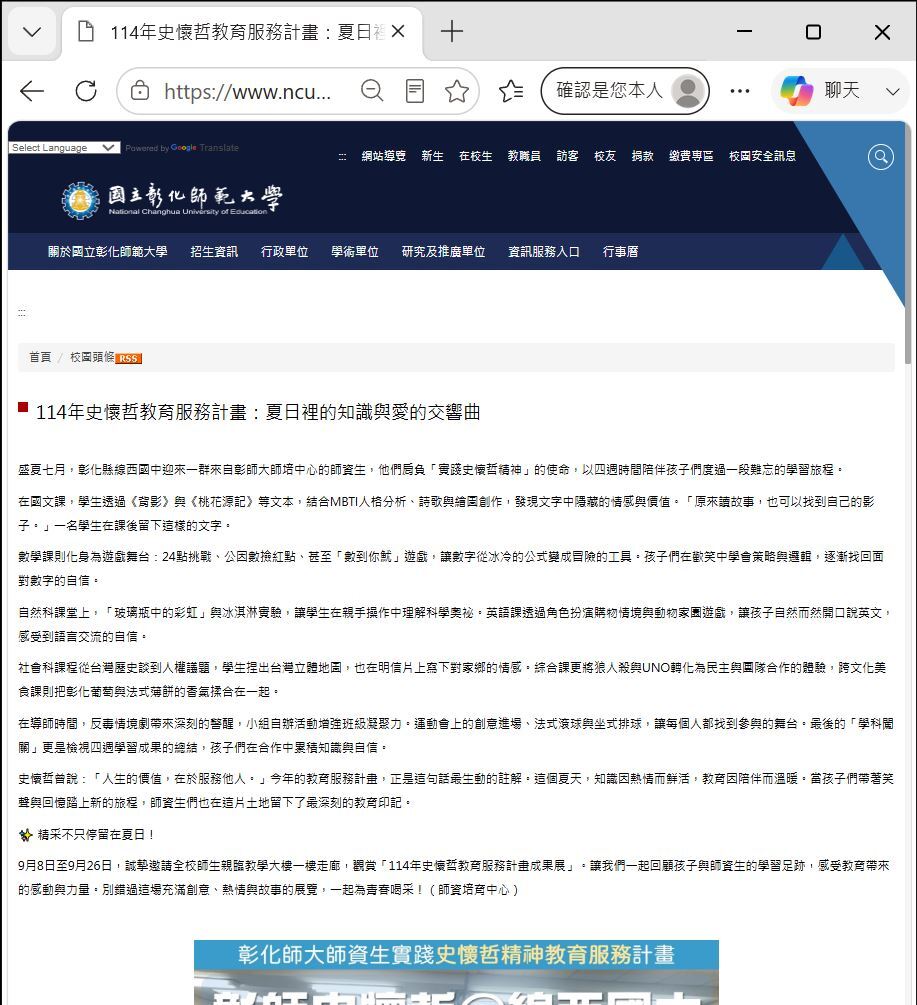
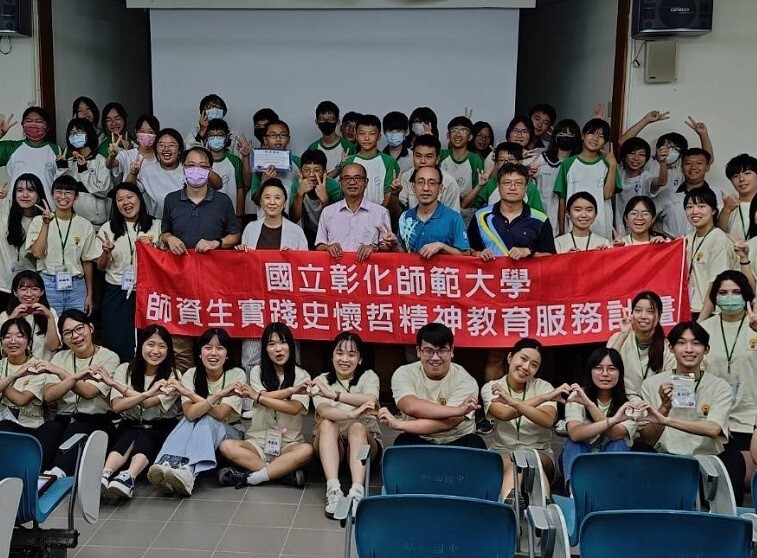
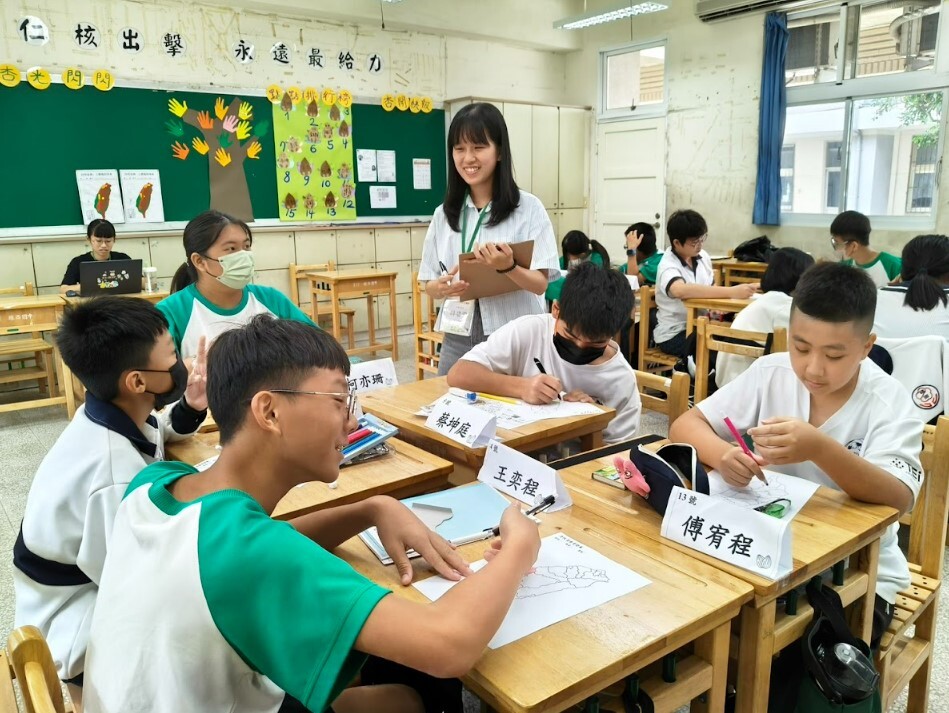
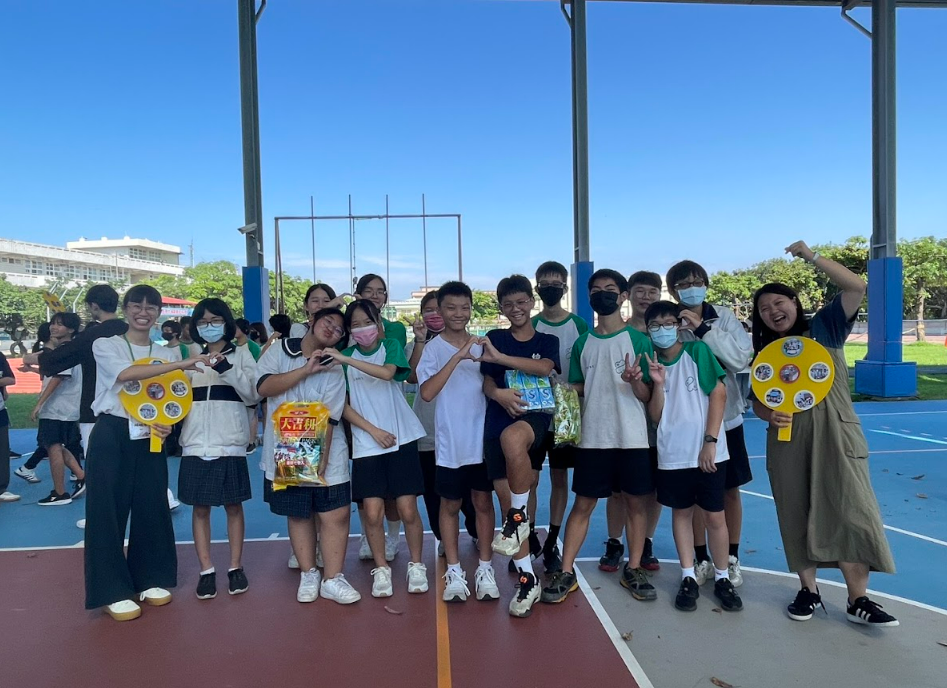
Since 2006, NCUE has continued to promote the Schweitzer-inspiring Educational Service Program, encouraging pre-service teachers to carry on Schweitzer's spirit of caring for the disadvantaged and serving with professionalism by providing academic tutoring, character development, and related learning activities for schools in remote areas. In the summer of 2025, 25 pre-service teachers went to Xianxi Junior High School in Changhua County, where they served 28 students moving from Grade 7 to Grade 8. Figure 9 shows the NCUE News item on the activity and Figures 10 to 12 demonstrate photographs from it.
NCUE News: https://www.ncue.edu.tw/p/406-1000-31558,r93.php?Lang=zh-tw
(5) USR - "NCUE x Common Good Education: deepening 12-Year Basic Education in remote areas":
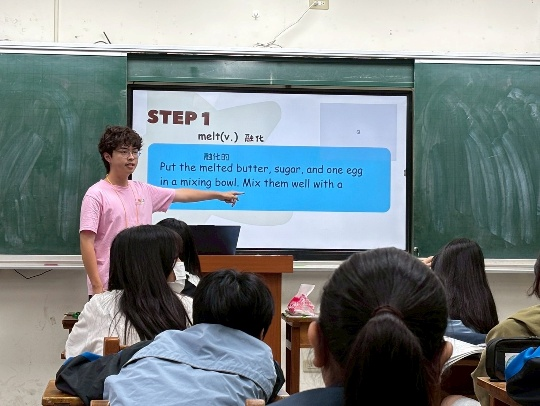
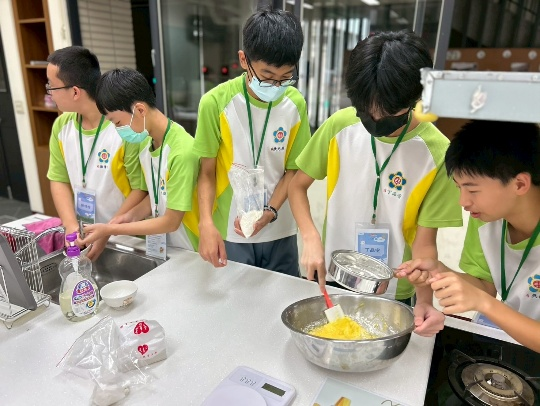
NCUE has conducted this project since 2020 with the aims of fulfilling university social responsibility and developing pre-service teachers' professional teaching expertise and practical teaching skills. The project focuses on strengthening the integration of regional resources so that disadvantaged students in remote areas gain better learning opportunities and educational resources. In 2025, NCUE worked with 8 schools in Changhua County, Yunlin County, Taichung City, and Tainan City to hold summer camps, which incorporated local school-based curricula and distinctive interdisciplinary courses. One example was the bilingual home economics course "Little Cooking Masters" at the junior high division of National Tianzhong Senior High School. Through immersive English activities and hands-on cooking, the course helped students build confidence in everyday settings and improve their spoken English. A total of 69 pre-service teacher volunteers took part, serving 247 junior high school students (Figures 13-14).
(6) TOEIC Listening and Reading class for The Affiliated Industrial Vocational High School of NCUE:
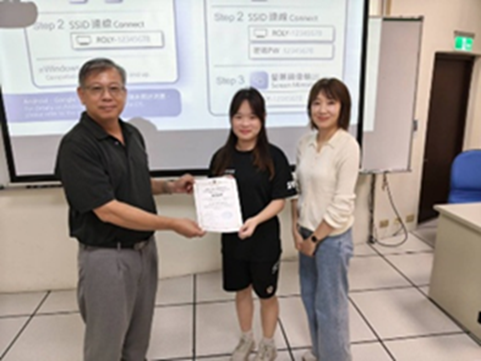
To meet the workplace capacity-building needs of people both within and beyond the university, NCUE's Language Center offers a wide range of foreign language and customised project courses. Since 2020 it has worked with The Affiliated Industrial Vocational High School of NCUE to run a dedicated TOEIC Listening and Reading course, with two classes each semester, giving the school's students diverse learning opportunities and strengthening their English. In 2025, NCUE ran 2 classes, with 69 students completing the courses, helping students improve their English listening and reading skills (Figure 15).
(7) Professional practice communities and professional development training for elementary and secondary school science teachers:
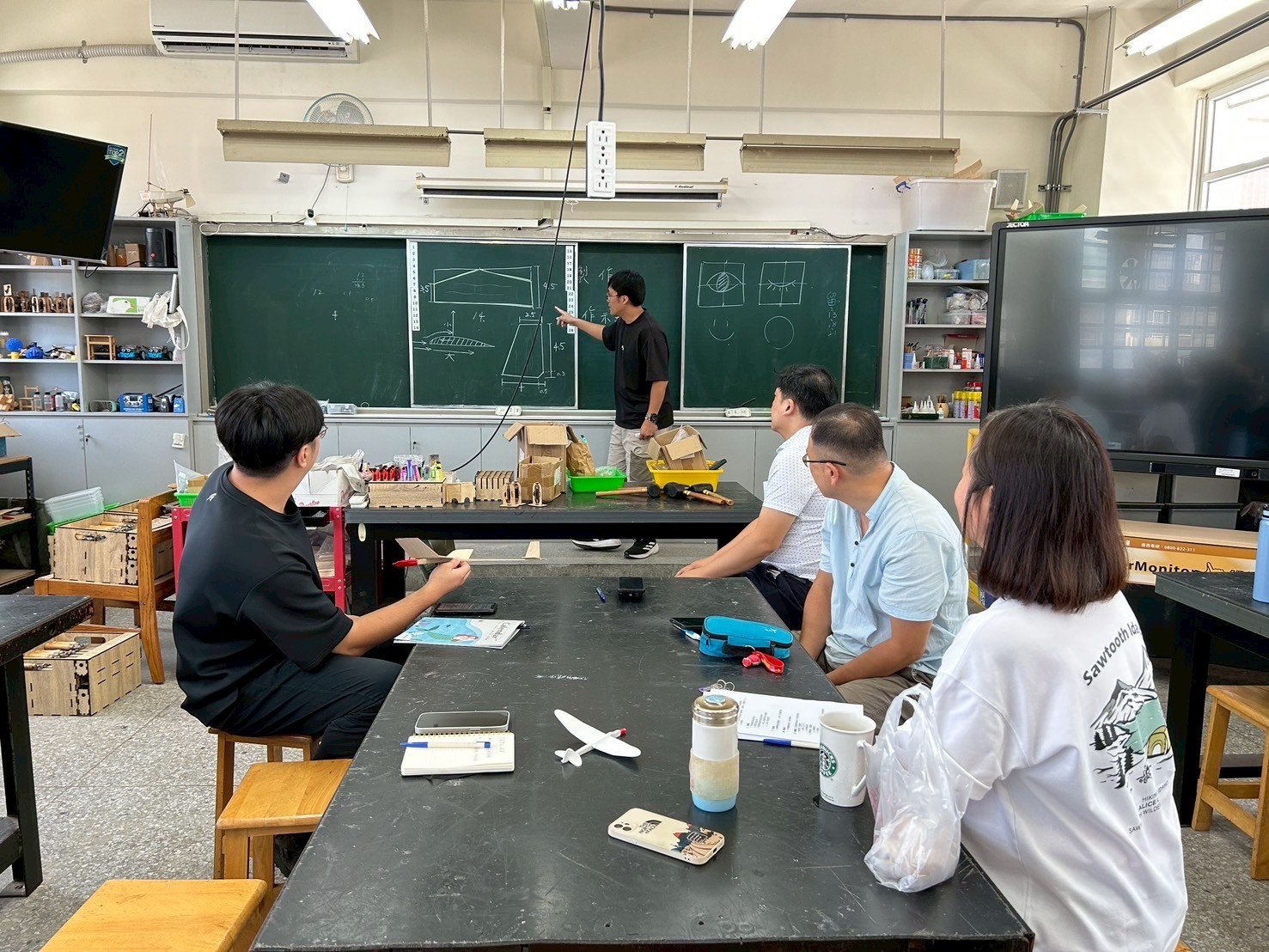
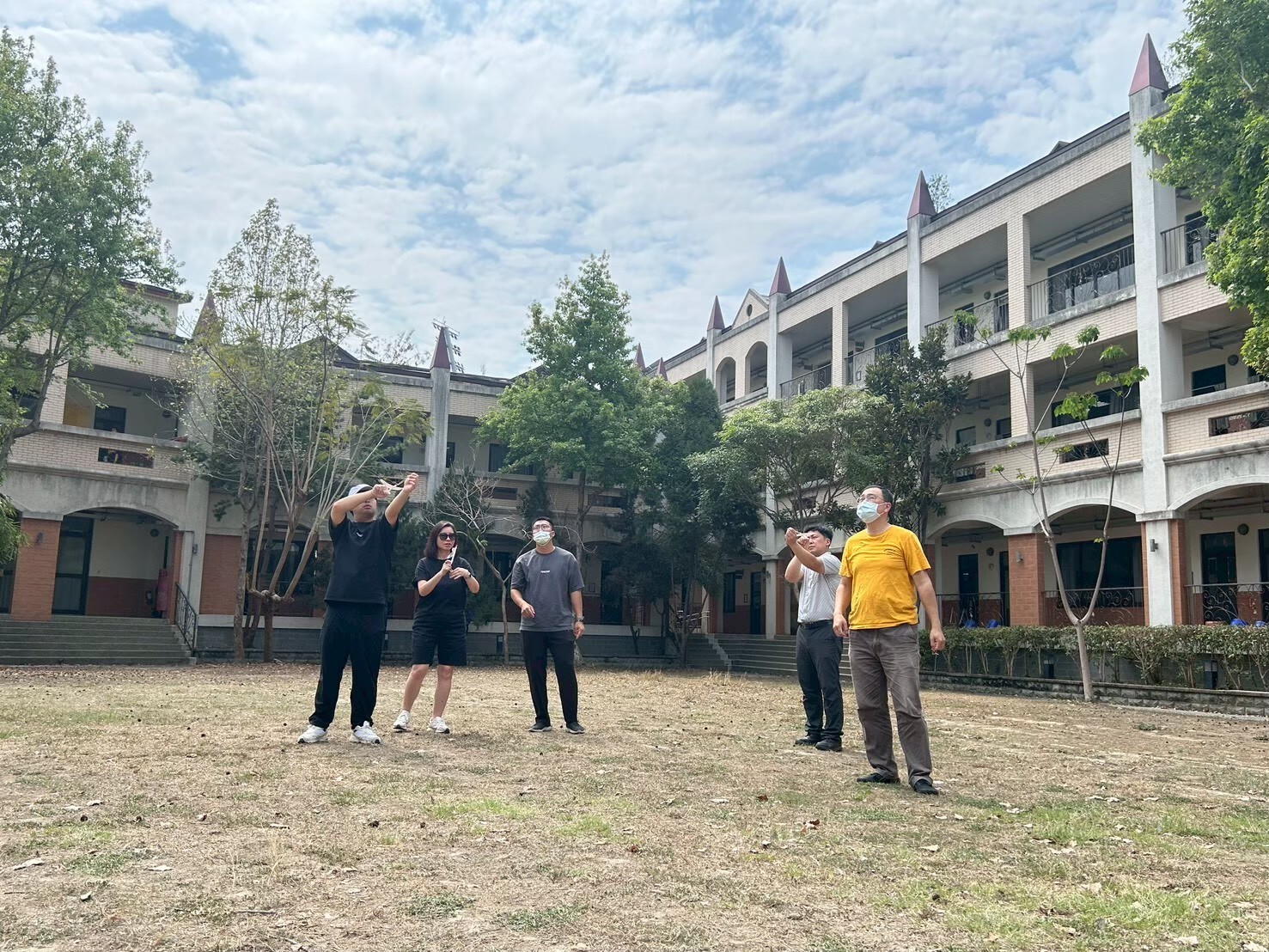
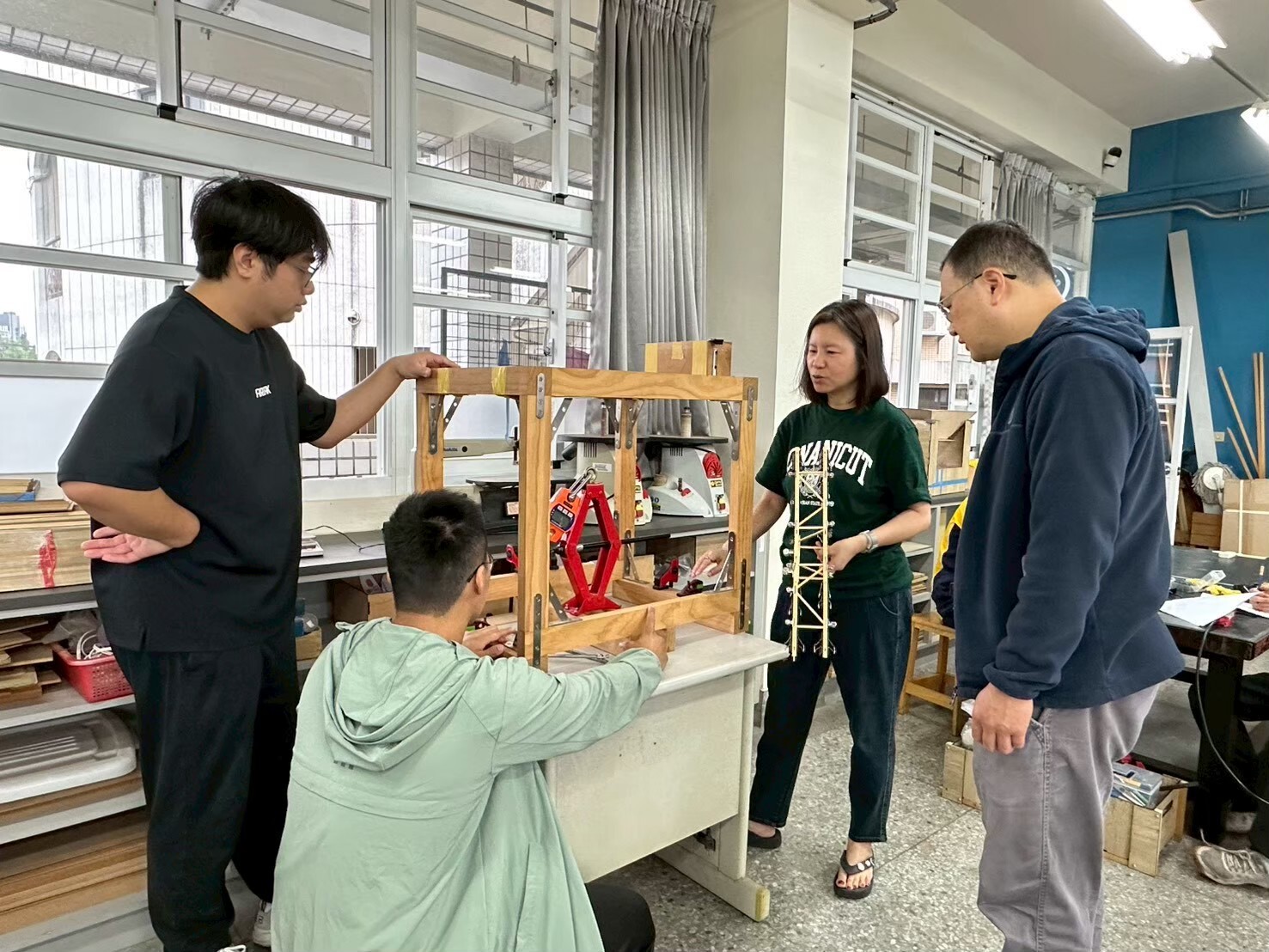
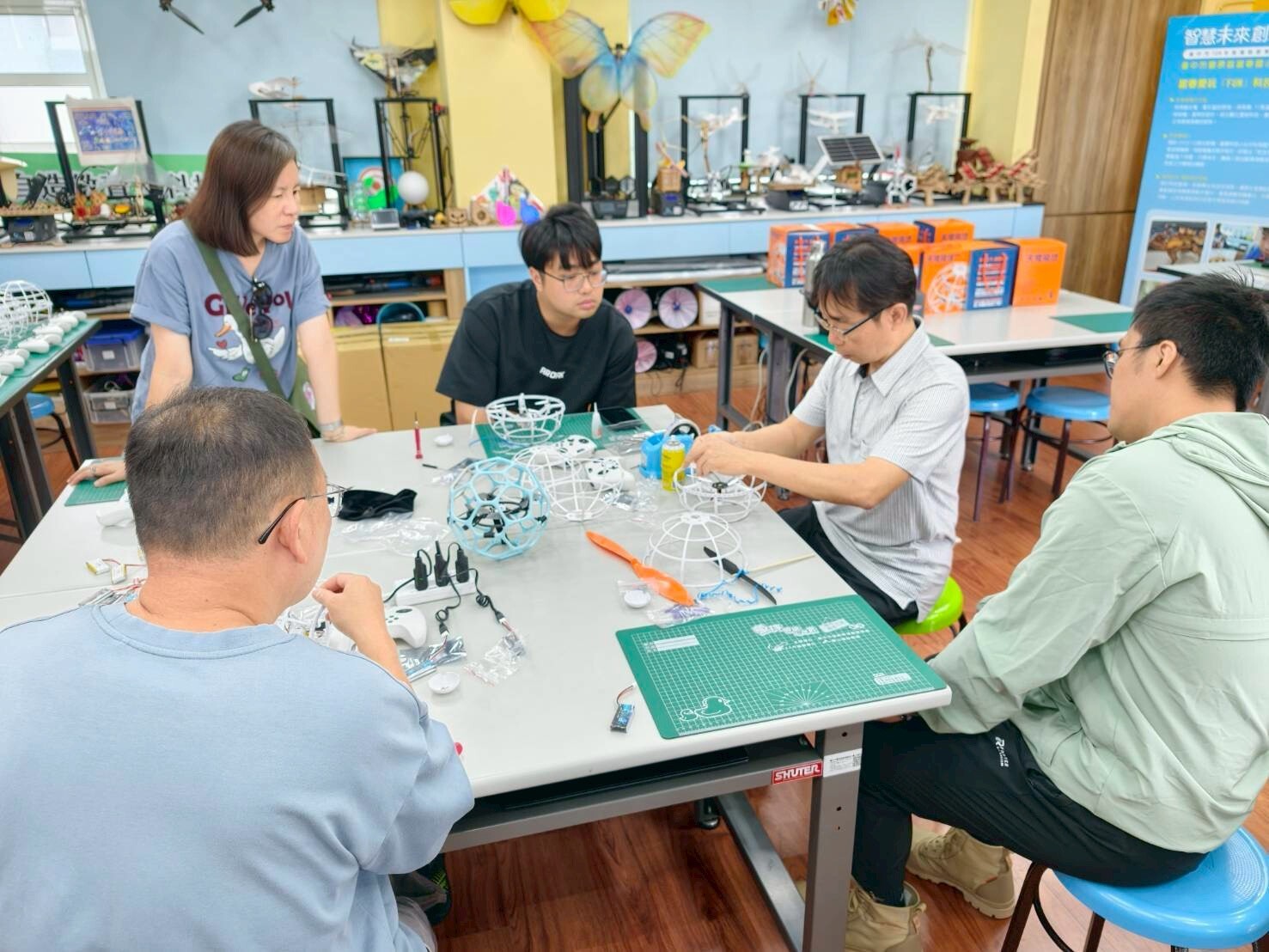
Professor Meichun Lydia Wen of NCUE's Graduate Institute of Science Education runs a National Science and Technology Council project for supporting in-service teachers. She established two professional practice communities, developed interdisciplinary courses, and led secondary school teachers go through 14 lesson preparation and capacity-building sessions at community meetings. In addition, under a Ministry of Education science education project, it held 1 professional growth and capacity-building workshop for in-service teachers, on the theme of a hands-on teaching workshop for the elastic-powered aircraft course (Figures 16-19).
2. Ad Hoc Activities
NCUE holds a variety of education outreach activities beyond campus on an ad hoc basis. These include faculty undertaking national projects and travelling to local schools or to elementary and junior high schools in remote areas to run professional training for teachers or science experiments for students. NCUE's student societies also plan service-oriented educational learning activities of various kinds and run camps in elementary and junior high schools in the region frequently. In addition, NCUE fulfills its university social responsibility by attending to environmental and local issues and delivering training relating to green energy and environmental education in various locations.
In the field of the arts, in addition to holding a range of off-campus exhibitions on an ad hoc basis, NCUE also worked with the local government in 2024, using the Railway Hospital, a Changhua County-designated historic site, as the venue for an immersive expressive arts experience exhibition combining technological applications, giving older adults access to digital creative work. Meanwhile, the university also promotes artistic creation of local villages, helping preserve precious cultural and historical memories.
(1) Science education materials design and teaching practice:
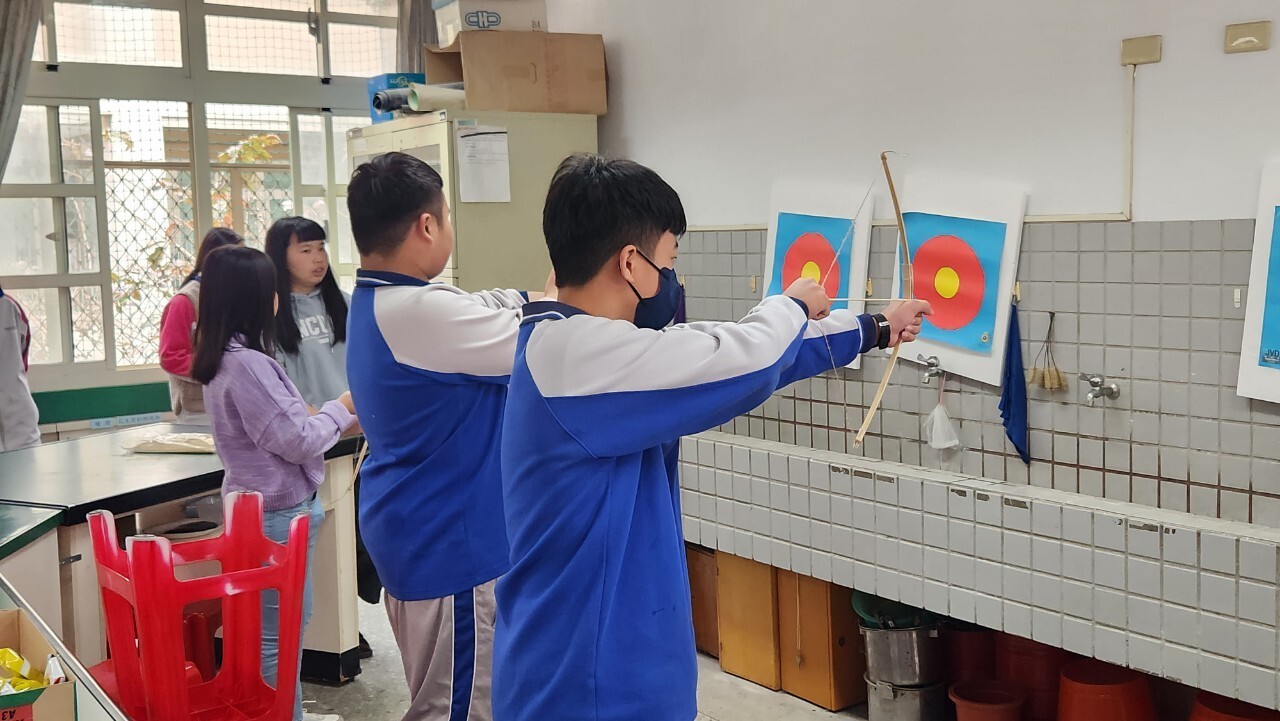
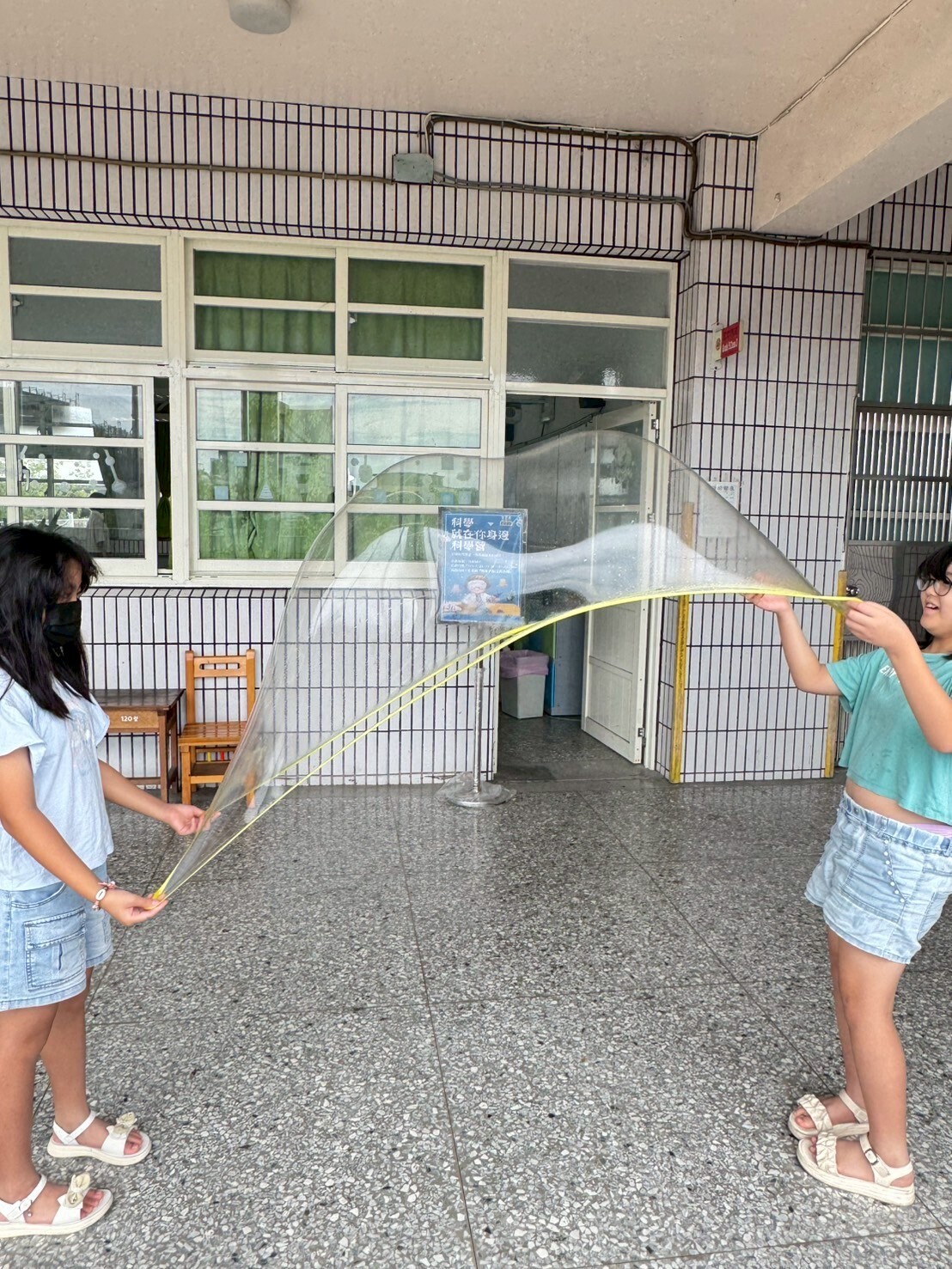
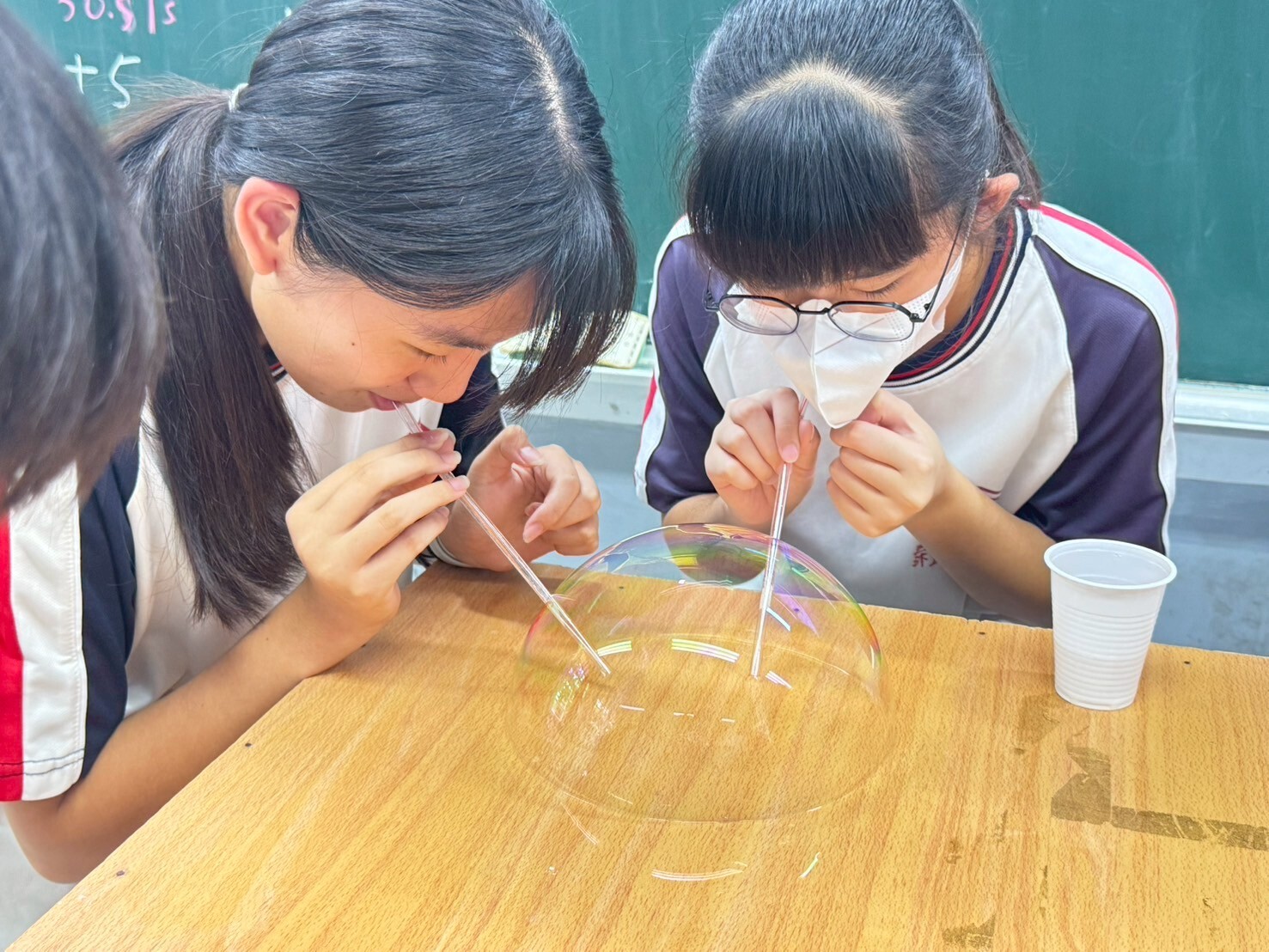
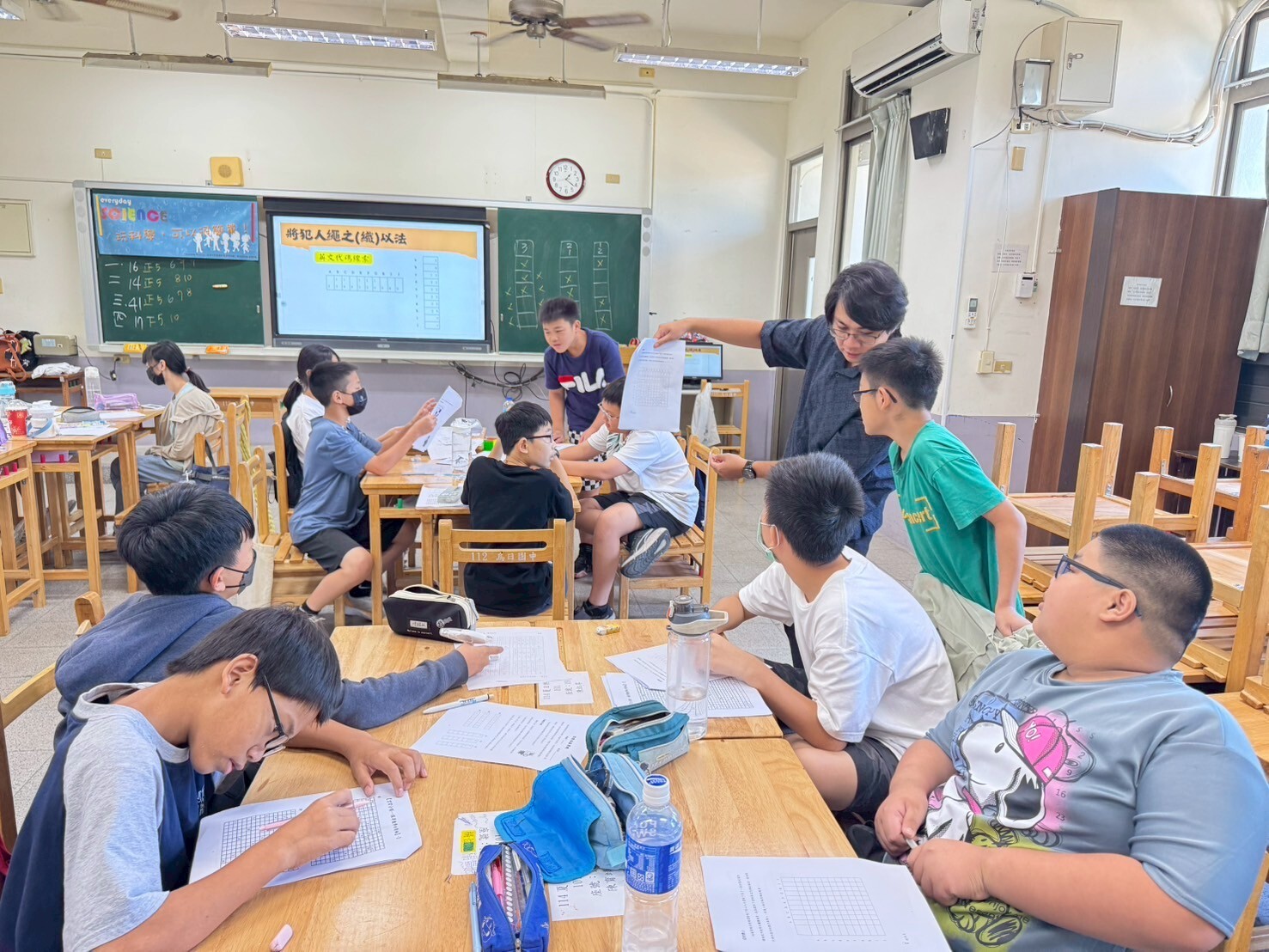
Professor Meichun Lydia Wen of the Graduate Institute of Science Education runs a Ministry of Education project developing teaching materials aligned with the spirit of inquiry and practice in the 108 Curriculum Guidelines. The units include Colour Stacking, Mini Bow Launcher, Troops from the Sky, Acid-Base Cannon, Tang Bohu Points to Qiuxiang, The Secret of Spherification, Impressions of a Paper Boat, Powering a Circuit with One Dollar, Biomimetic Flight, Space Division and Morse Code, and Sherlock of the Weave, each taught over 3 to 4 lessons. The materials were delivered in 5 junior high schools in the Taichung and Changhua areas, with 370 students registering to take part. The courses produced concrete gains in students' inquiry and hands-on skills, supported their engagement in learning, and improved their learning of scientific knowledge (Figures 20-23).
(2) Mathematics and science inquiry curriculum design and teaching practice:
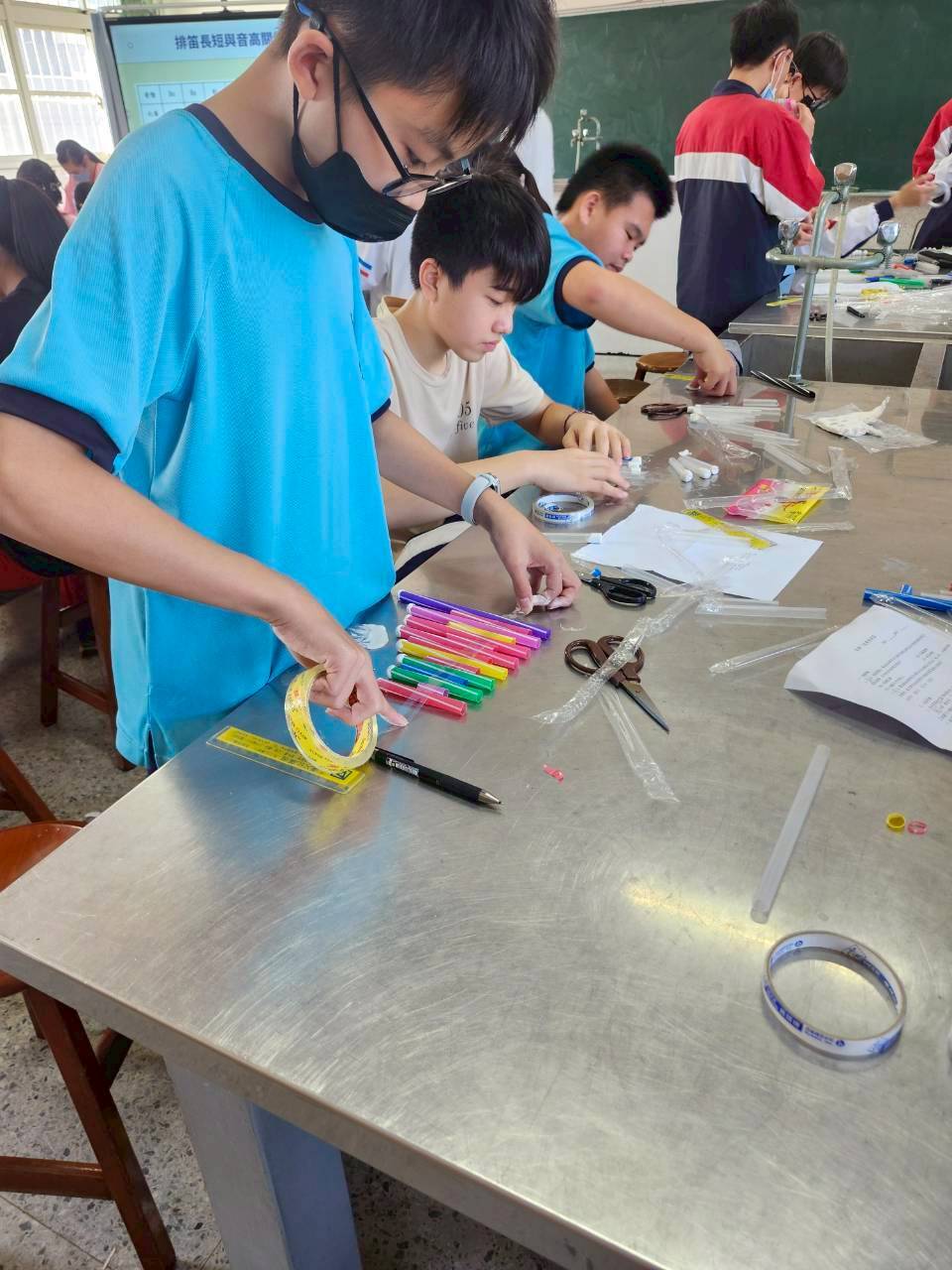
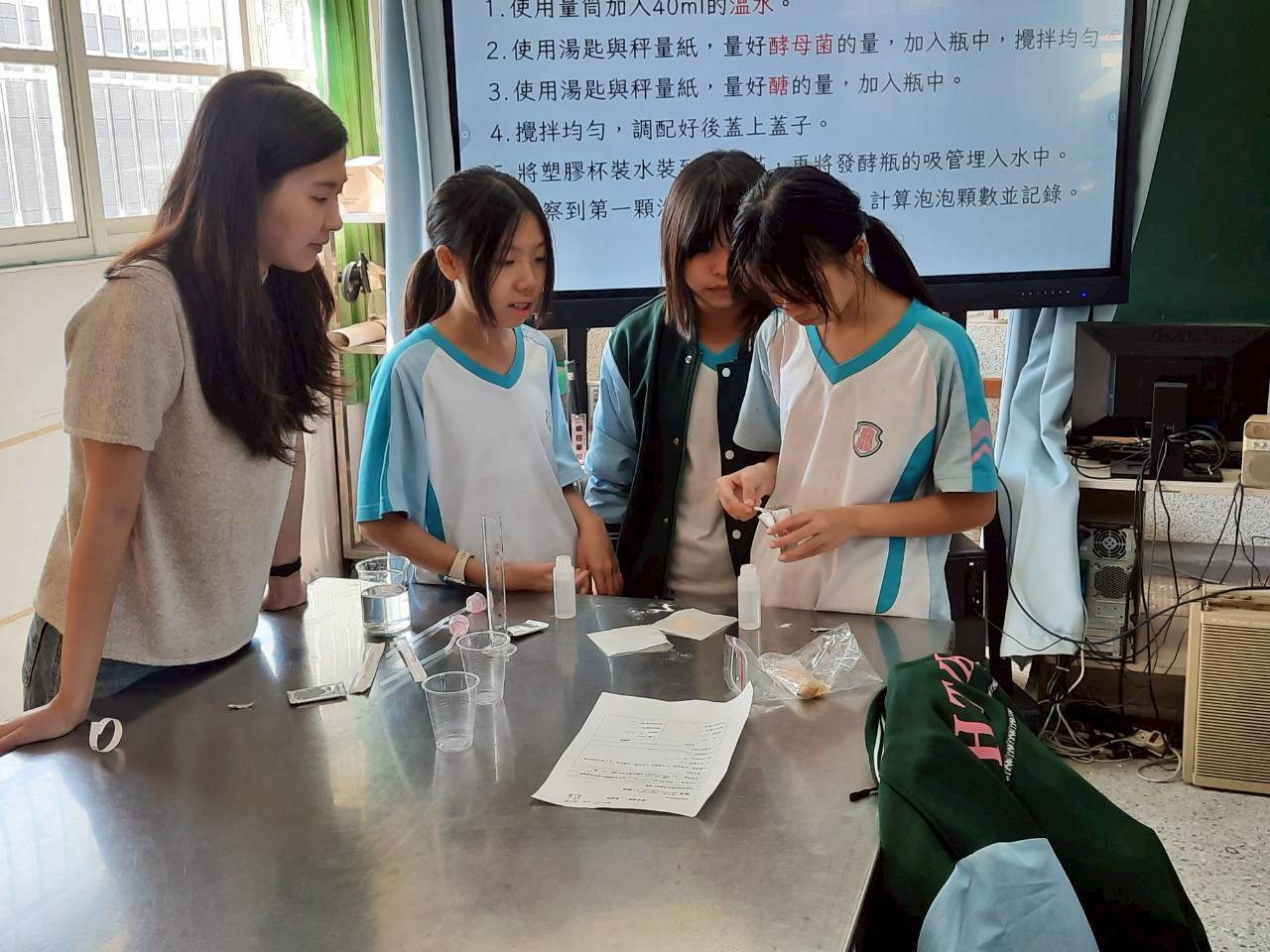
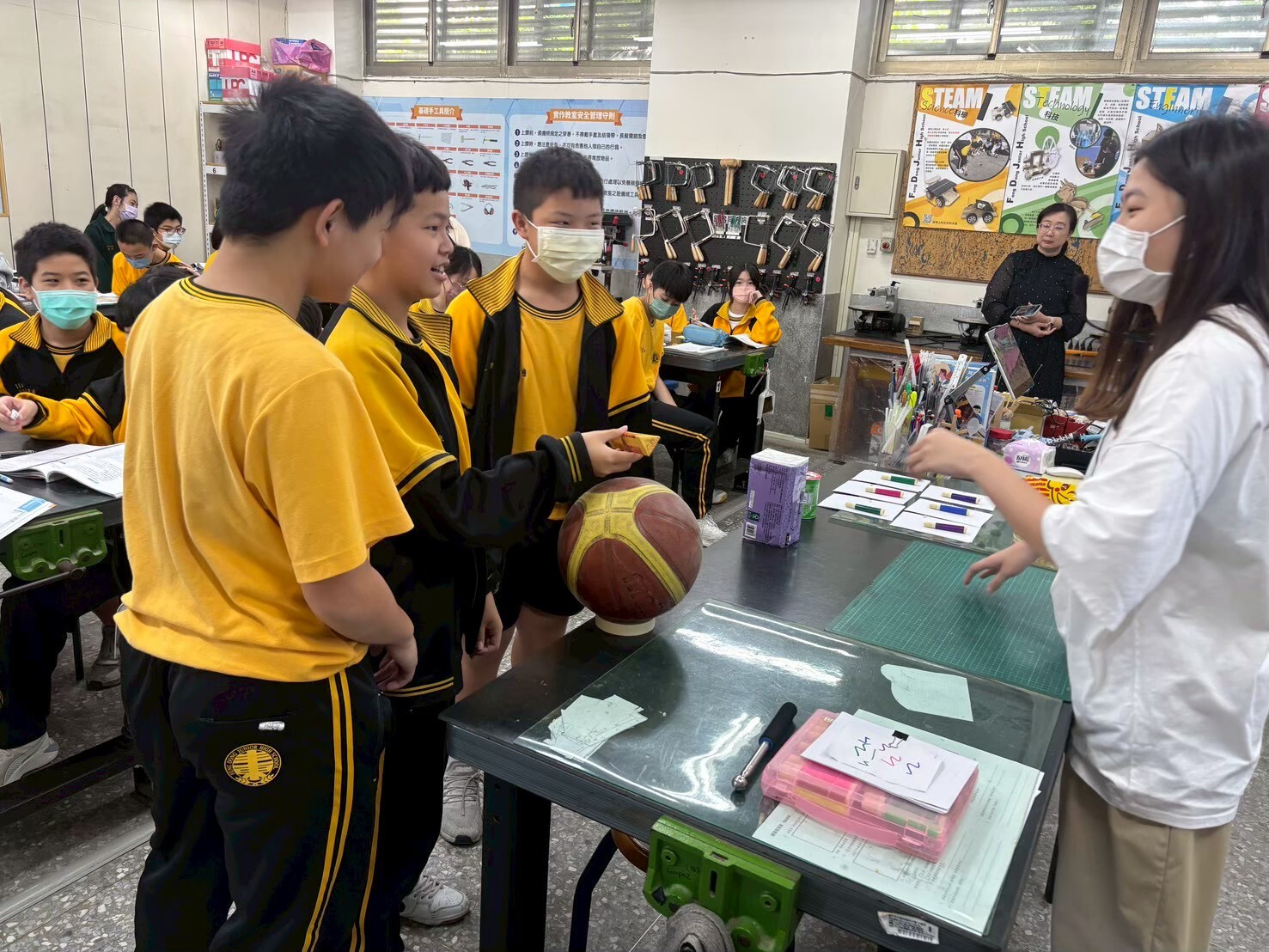
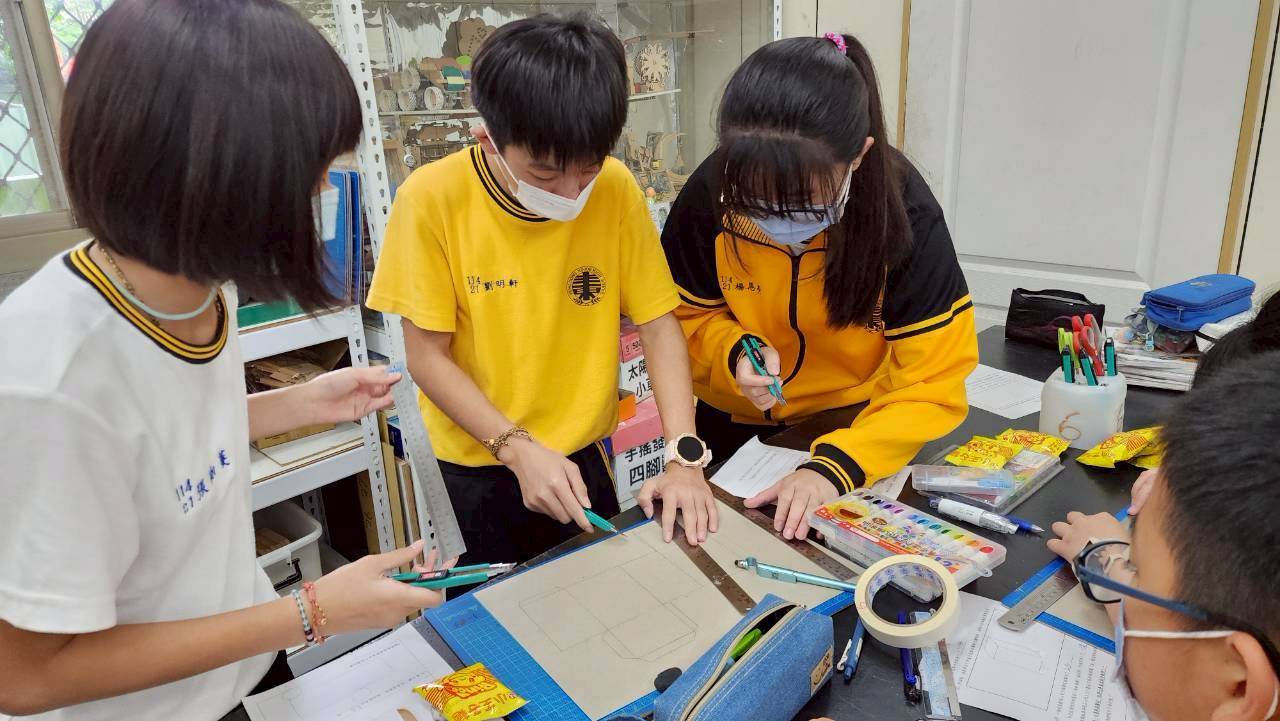
Professor Meichun Lydia Wen of the Graduate Institute of Science Education runs a Ministry of Education project and designs mathematics and science inquiry courses. These include The Packaging Pavilion, Dancing Sound, Which Dual-Energy Car Runs Faster, and Who Is Stealing the Ferment, each taught over 2 to 3 lessons. The courses were delivered in 3 elementary schools in the Taichung and Changhua areas, with 165 students taking part. The courses have a significant effect on students' inquiry and hands-on skills, improving their learning engagement and efficiency in mathematics and science (Figures 24-27).
(3) Project on curriculum design and professional development for elementary and junior high school natural science teachers in inquiry, motivation-integrated inquiry and interdisciplinary (STEM) inquiry
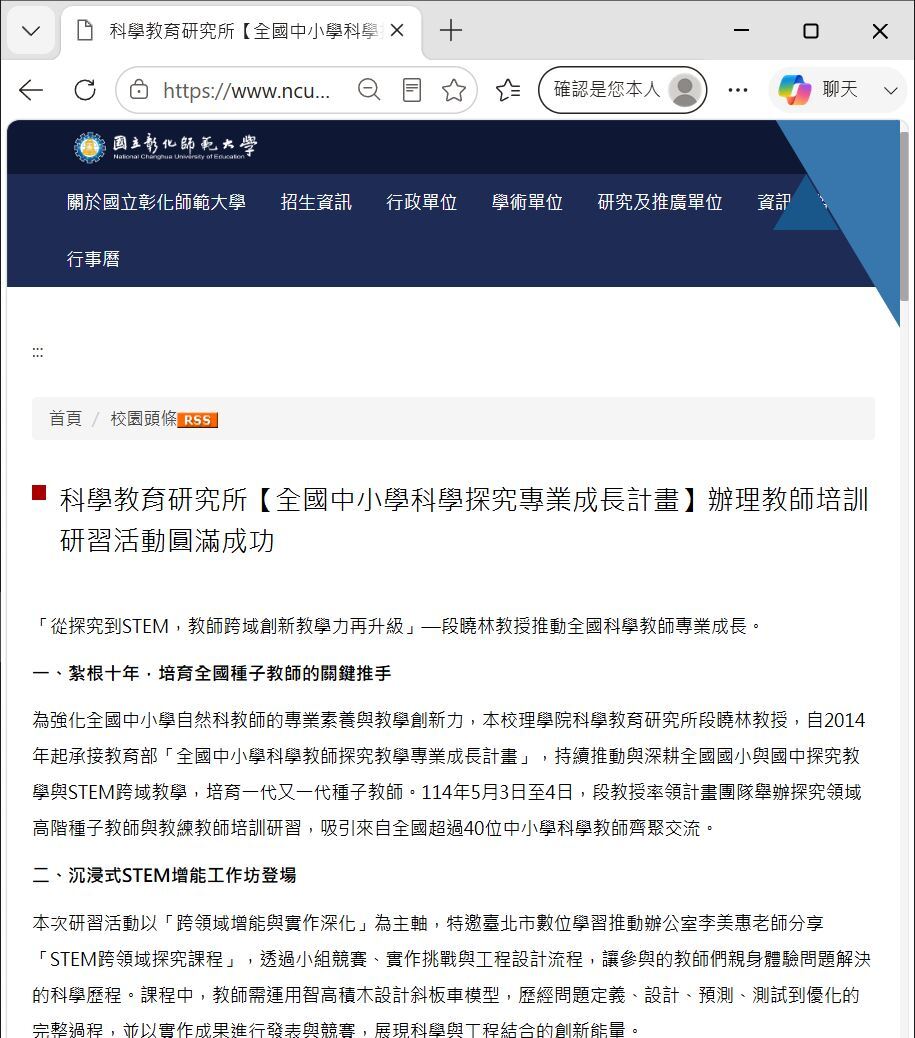
(a) Professor Hsiao-Lin Tuan of NCUE's Graduate Institute of Science Education runs a national project on professional growth in inquiry-based instruction for elementary and secondary school science teachers. On May 4, 2025, the project held in-person activities at Huisun Forest Station, including training for advanced seed teachers and coach teachers, and mid-term consultation meeting. These covered STEM interdisciplinary inquiry curricula and the challenges and innovations of inquiry projects. In total, 28 coach teachers and 3 advanced teachers attended the activities. All participants gained valuable insights and wrote highly positive reflections on their experience. Figure 28 shows the NCUE News item on the events and Figure 29 demonstrates the related photographs.
NCUE News: https://www.ncue.edu.tw/p/406-1000-30360,r93.php?Lang=zh-tw
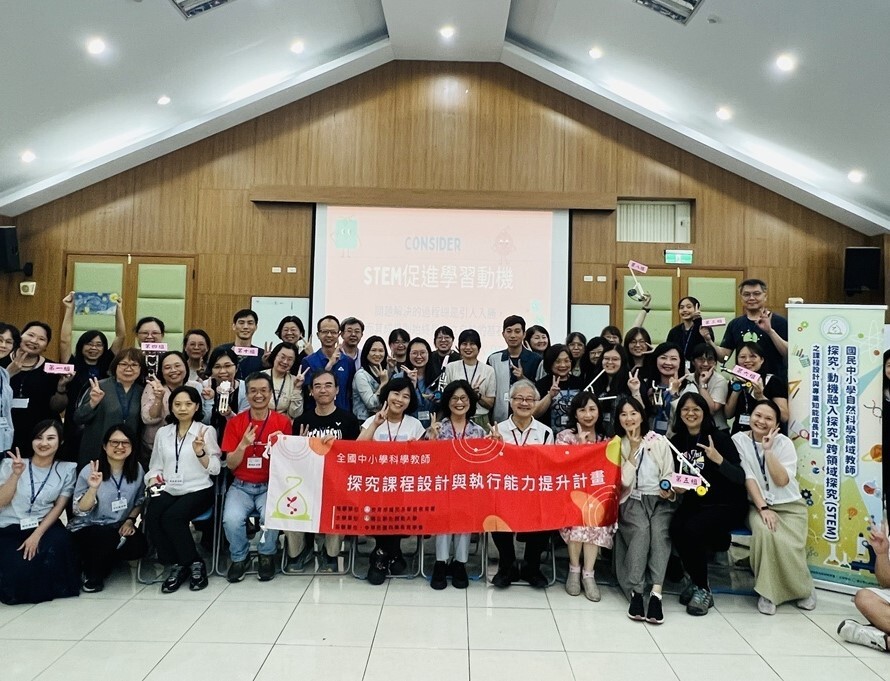
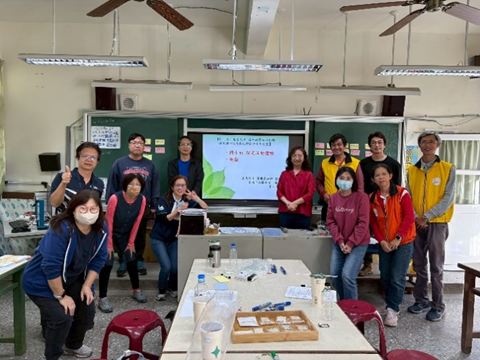
(b) Participants in the project have shown growing interest in forming their own study groups based on their needs in inquiry-based instruction. Therefore, alongside the training model of stage 3, the project offers additional self-organised group activities, inviting teachers who have reached advanced and coach level through the project to be instructors to help meet the project's goal of developing teachers. Participants held a self-organised group on December 31, 2025, with 13 attendances in total (Figure 30).
(4) Changhua Christian Hospital: training in workplace adaptability and staff competence
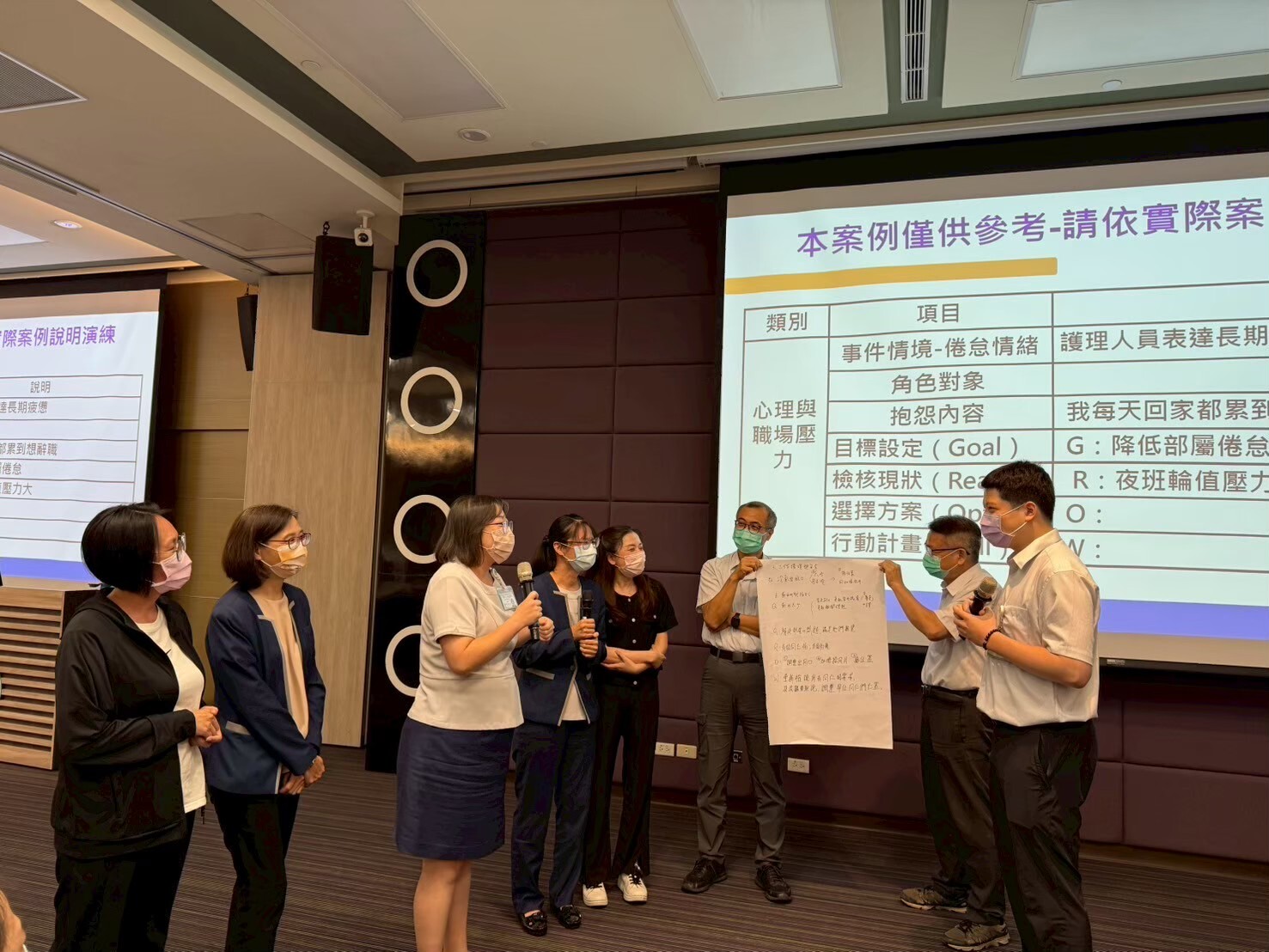
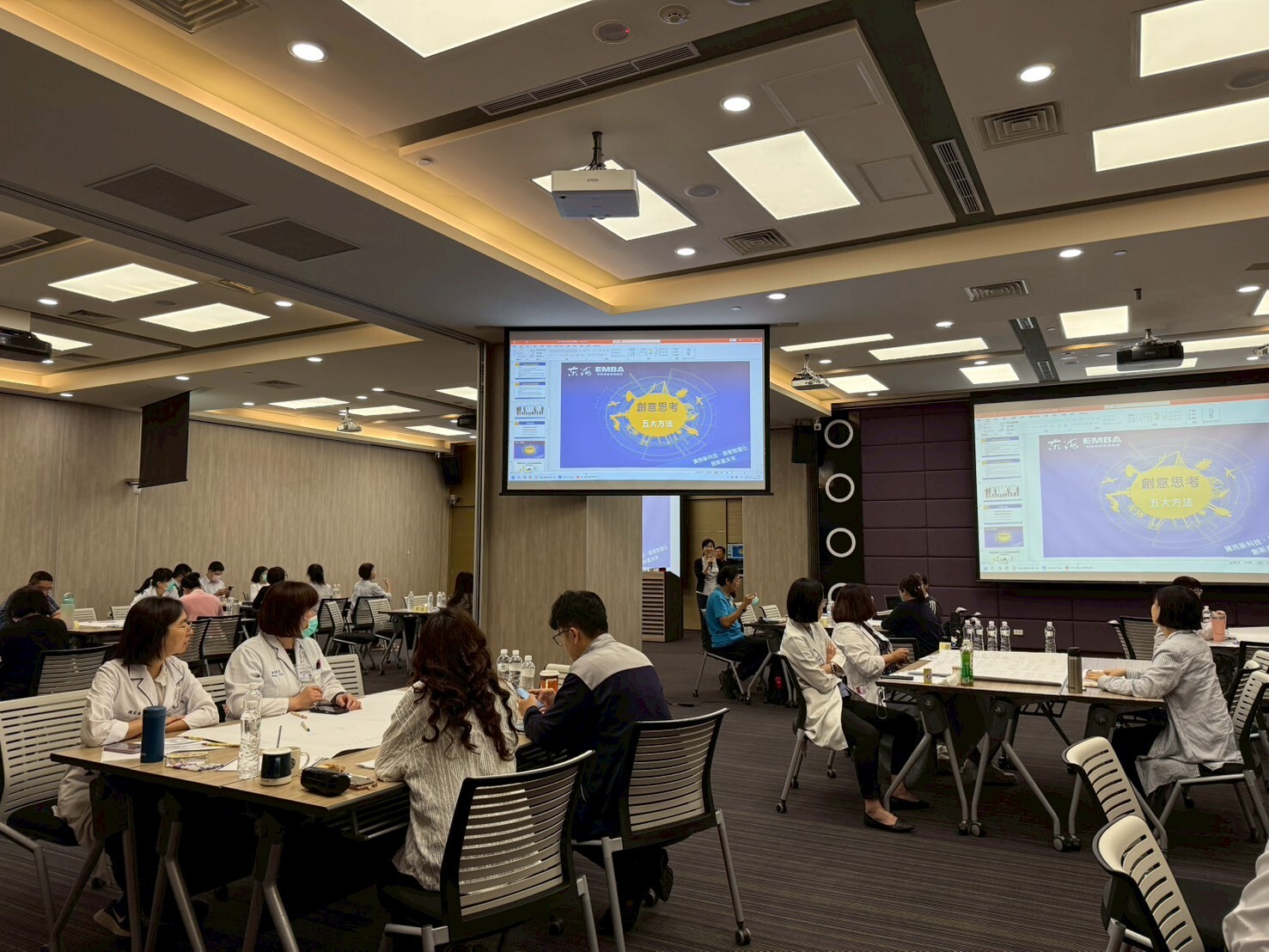
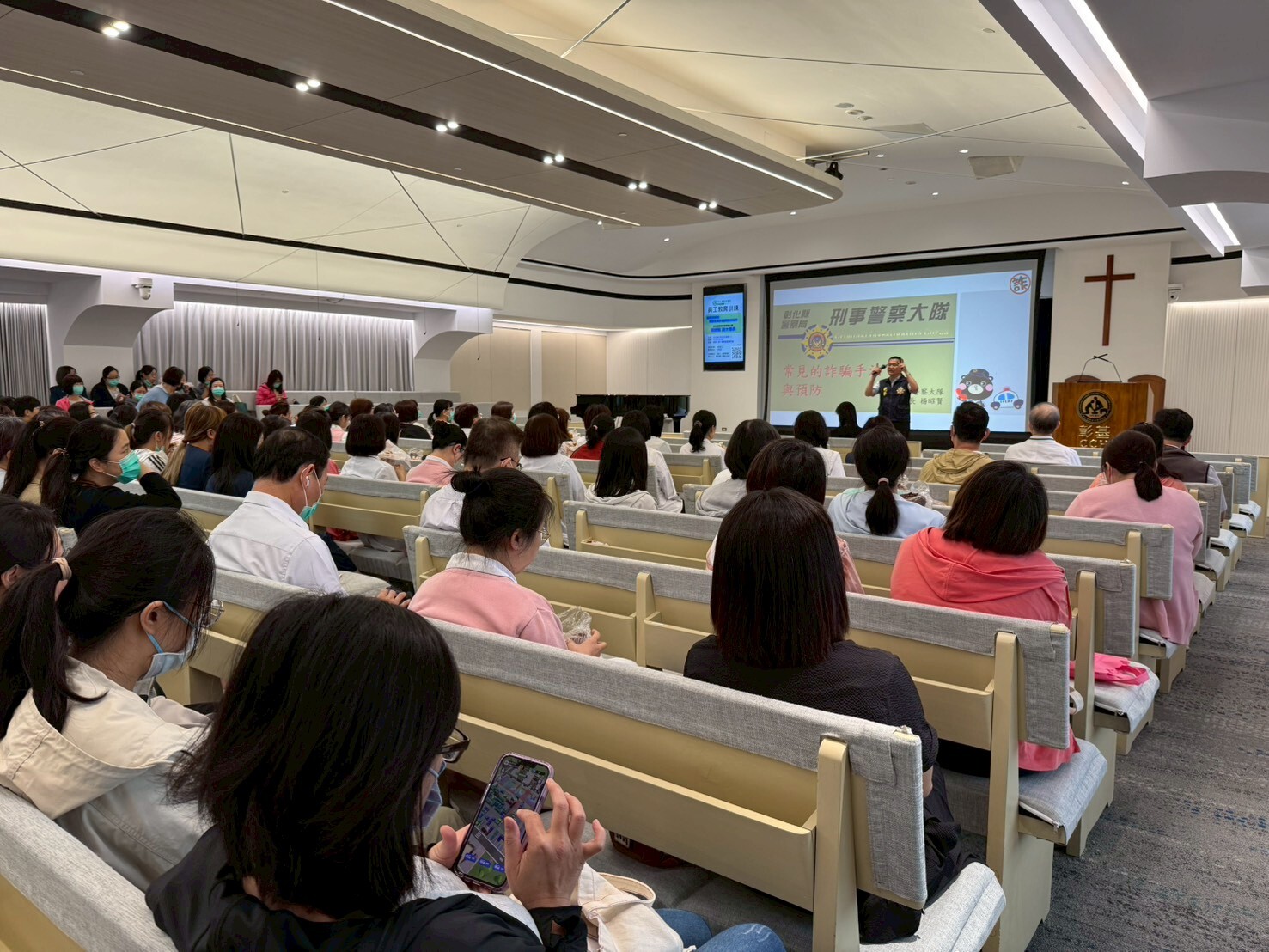
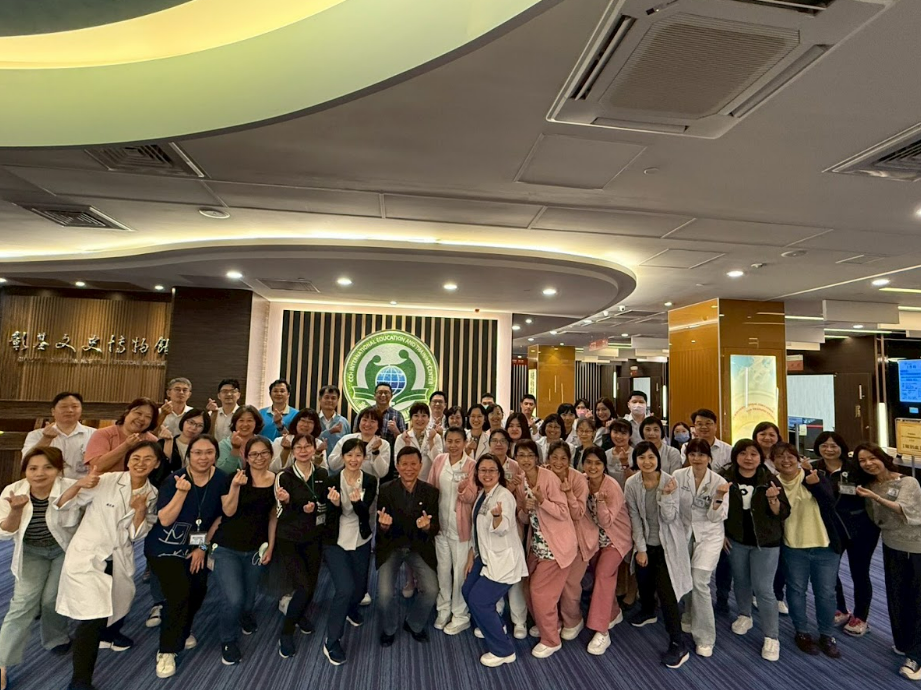
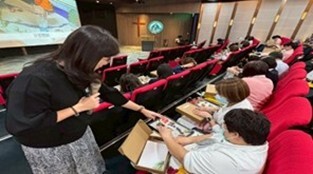
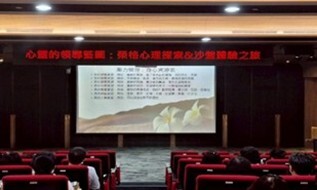
To support the professional growth of staff at local Changhua hospital, since 2025, NCUE has worked with Changhua Christian Hospital to deliver a series of courses on workplace adaptability and management skills, comprising 4 workshops and 13 lectures. To make the courses more accessible to hospital managers and staff, NCUE faculty members conducted all courses on-site at the hospital. In 2025 a total of 796 staff took part in the training, with 1,619 attendances completing courses (Figures 31-34). In addition, on December 19, the university held a course on employee assistance and counselling services, "A blueprint for leading the mind: Jungian psychological types and a sandplay experience", with 100 participants (Figures 35-36).
(5) Sustainable Changhua project:
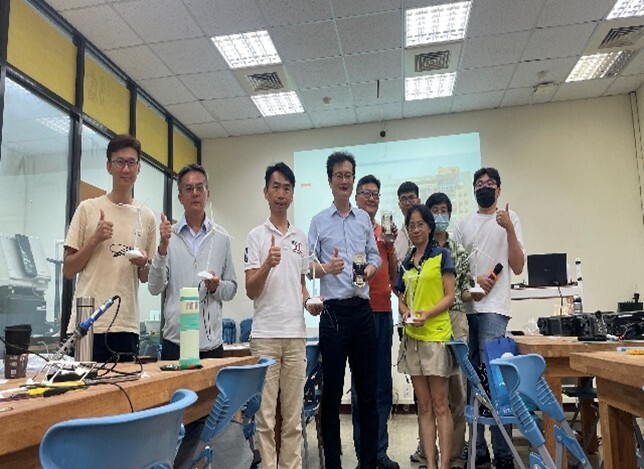
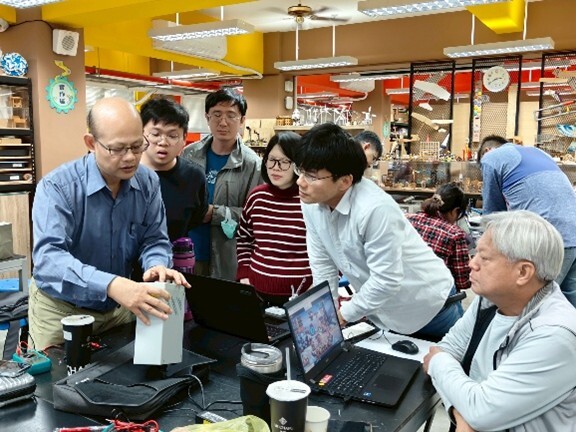
Through NCUE's energy education projects and its implementation of the Ministry of Education's fourth-phase (2025-2027) University Social Responsibility (USR) Project: "Sustainable Changhua: Green Energy Perspective in Education, Technology, and Economy”, NCUE brings together elementary and junior high school teachers in Changhua County with its own faculty and students to jointly develop green energy technology courses, teaching materials and teaching aids reflecting local characteristics. NCUE also helped Capacity-building workshops for teachers to help them integrate the resulting materials and aids into their teaching. Through teacher training and professional growth activities, NCUE extended the courses to technology topics at elementary school, helping elementary and secondary schools, businesses, and disadvantaged groups in the Changhua area with the green energy transition. During 2025, NCUE held 10 training sessions for elementary and junior high school teachers, with approximately 142 attendances by teachers from outside NCUE. Through Professional teacher training, teachers are able to integrate the material into their classroom teaching, delivering quality education and raising the standard of instruction (Figures 37-38).
(6) Eco-Homestead and Sustainable Communities Project:
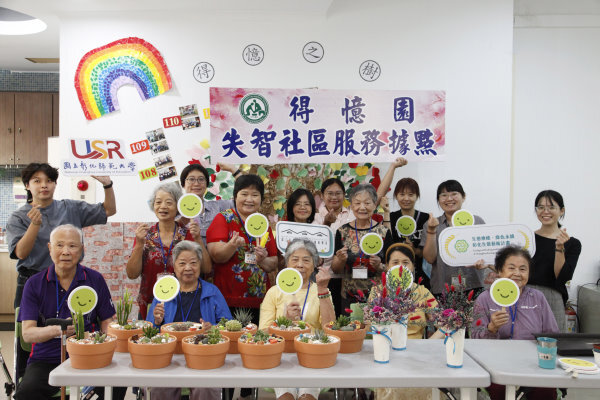
This project extends art, horticulture and ecological education to 8 off-campus sites, including the Changhua Active Aging Learning Center, Changhua Christian Hospital and its Dementia Center, the Chung-Chang Veterans Home, Xiangshan Community, Huabei and Guangfu Communities, and Yongfu Church. It ran 38 related activities for older adults, healthcare staff, parents and children, and community residents, with a total of more than 885 attendances. The activities include horticultural therapy, eagle-watching and health promotion. In addition, the project trained 50 students enrolled in the Credit Program in Art Therapy and Companionship to engage in hands-on practice in the community. It also formed a 10-student audiovisual team that conducted in-depth fieldwork and produced 35 documentary videos. Through field-based service and audiovisual dissemination, the project promotes shared learning between the university and its locality and spreads the ideas of ecological education, health promotion, and care for the land (Figures 39-40).
(7) Off-campus service by student societies:
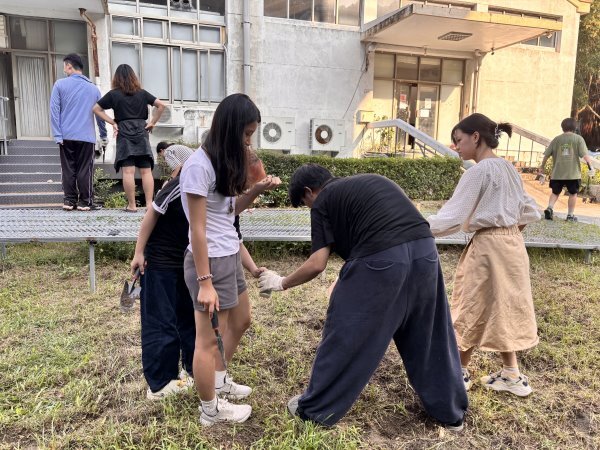
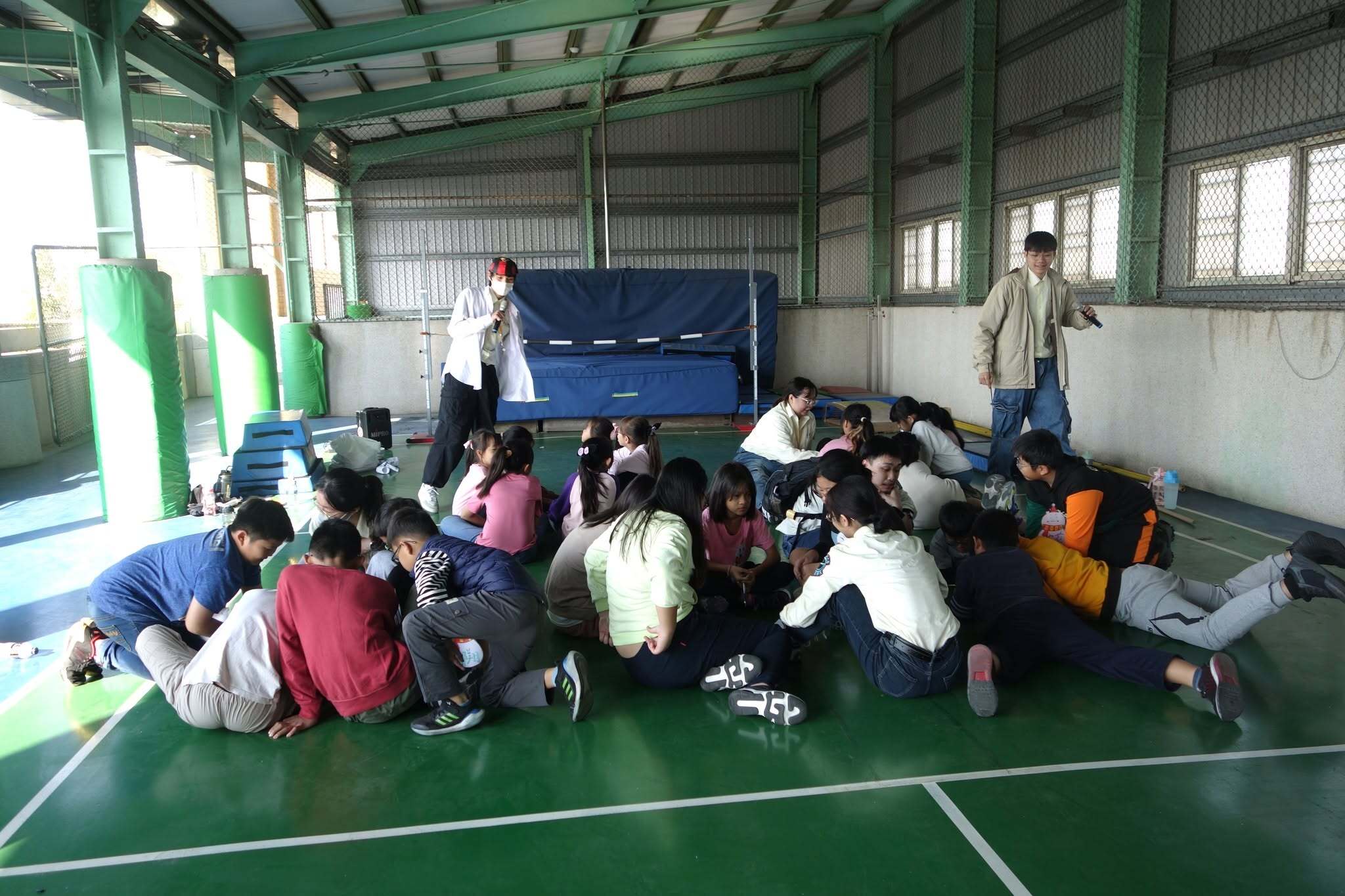
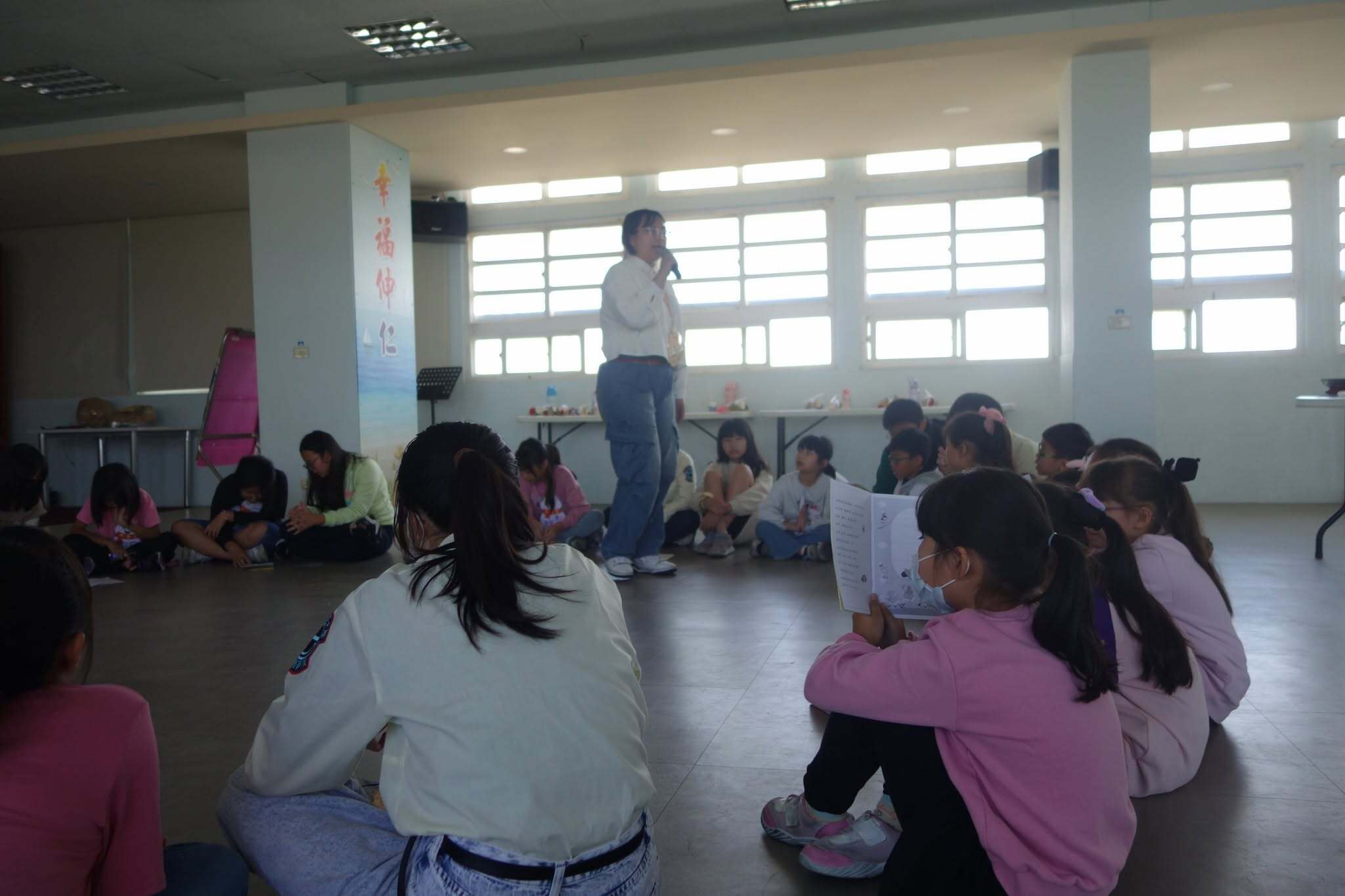
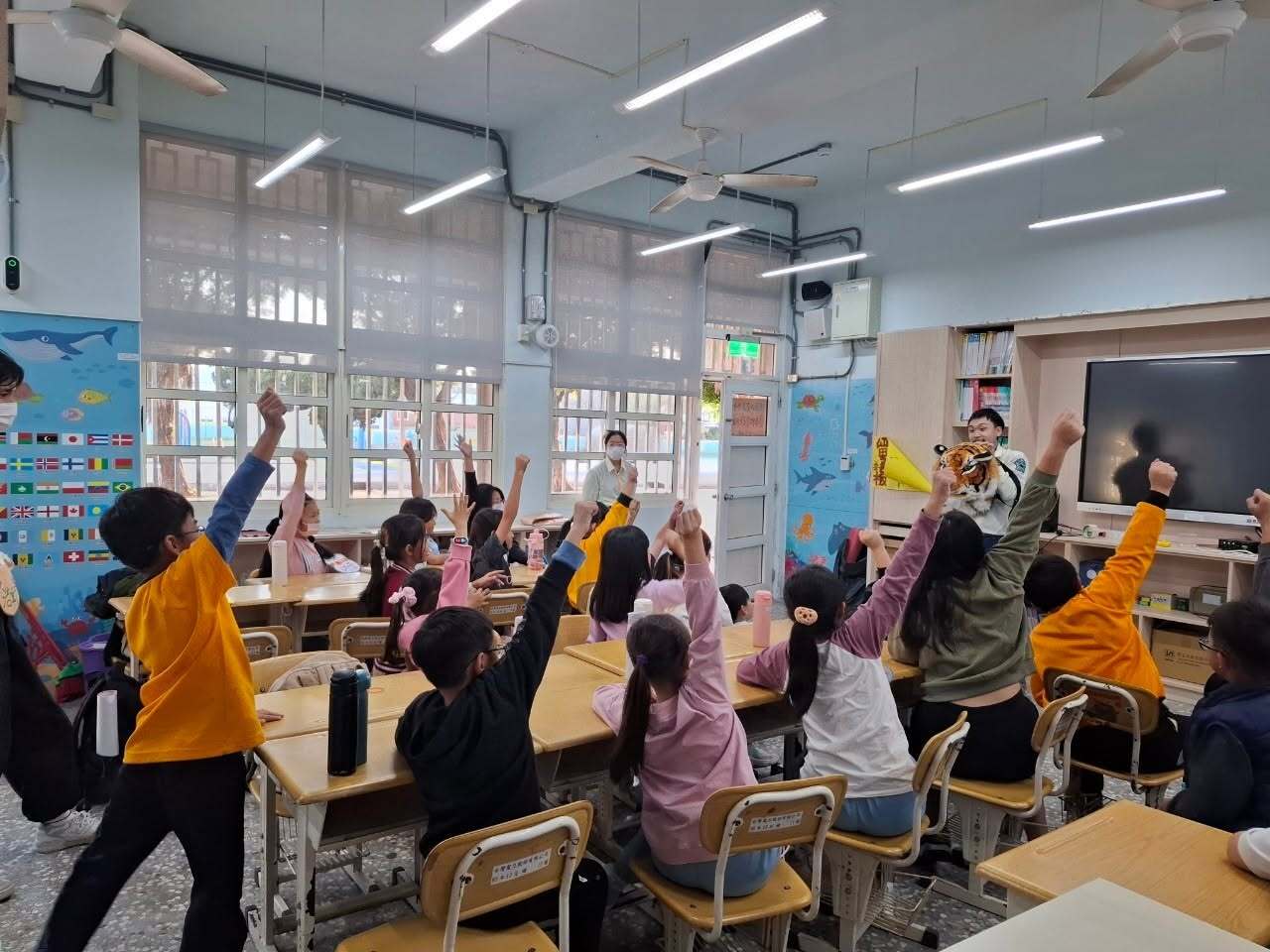
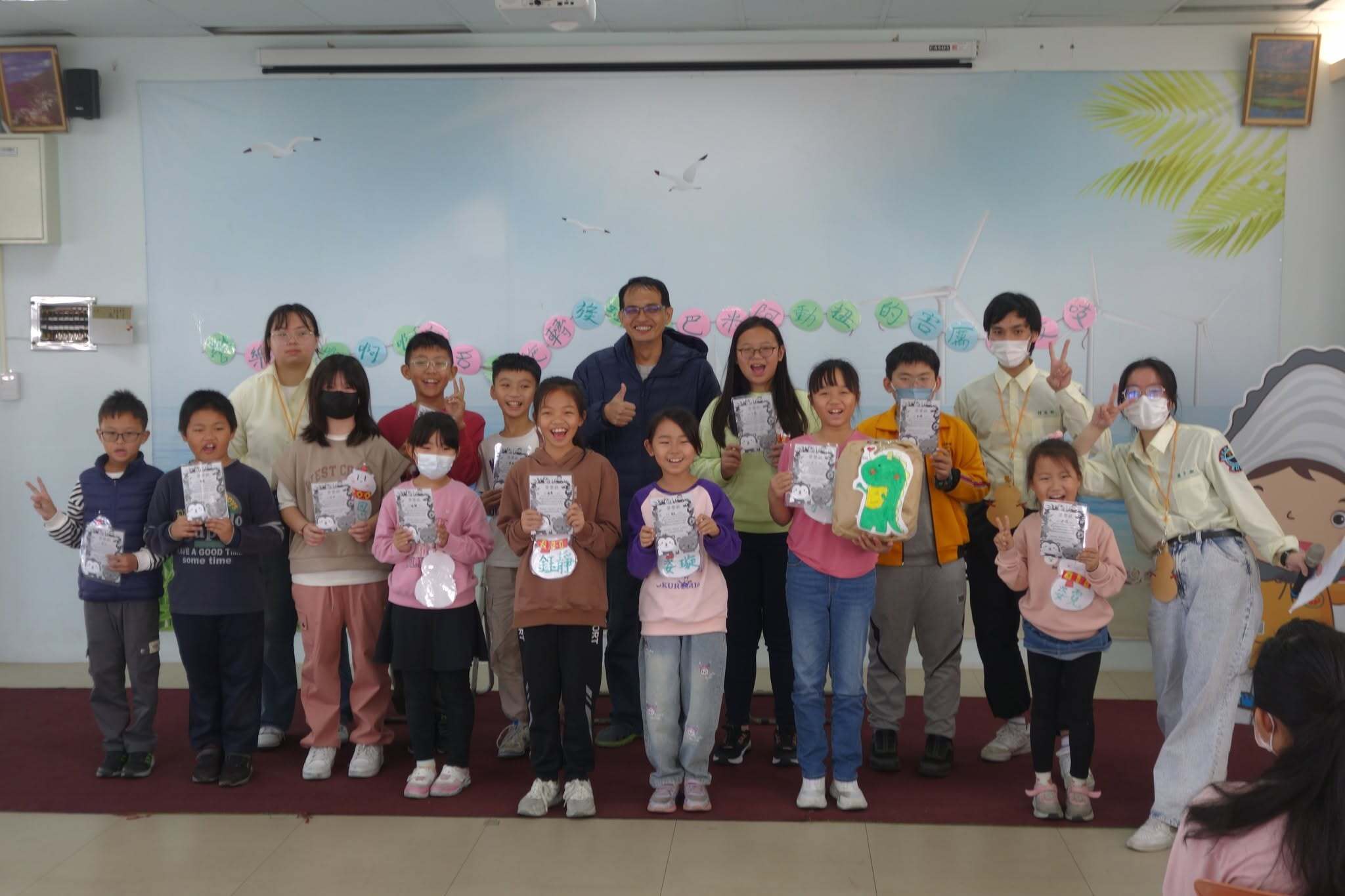
NCUE encourages student societies and departmental student associations to plan educational service-learning activities of many kinds and to go into junior high and elementary schools in central Taiwan to lead society activities, or into communities and Indigenous villages to carry out community service, so that students learn by doing and put the spirit of education into practice. NCUE's service societies include the Rural Service Club, the Mountain Service Club and the Fishing Village Service Club, all of which travel each year to elementary and junior high schools or to Indigenous villages to run camps, society education and service activities. In 2025 NCUE's student societies engaged with neighboring and remote-area schools in central Taiwan and ran numerous workshops, courses and camps. As well as extending educational resources to remote areas, this helped students build experience and capability in community service (Figures 41-44).
Student societies - Rural Service Club Facebook page: https://www.facebook.com/farmlovehome
Student societies - Mountain Service Club Facebook page: https://www.facebook.com/ncuemountain
(8) Anti-drug outreach in elementary and junior high schools:
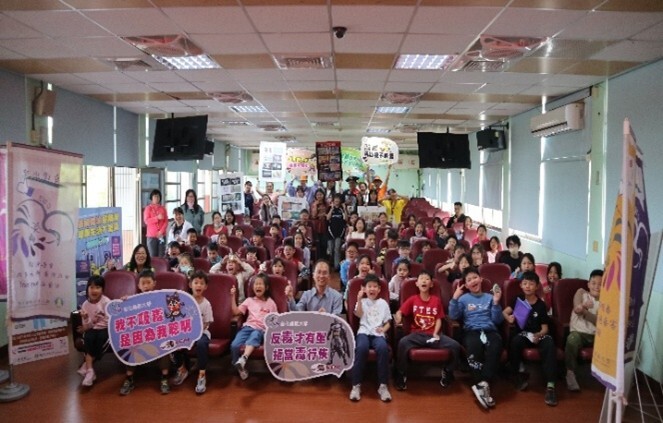
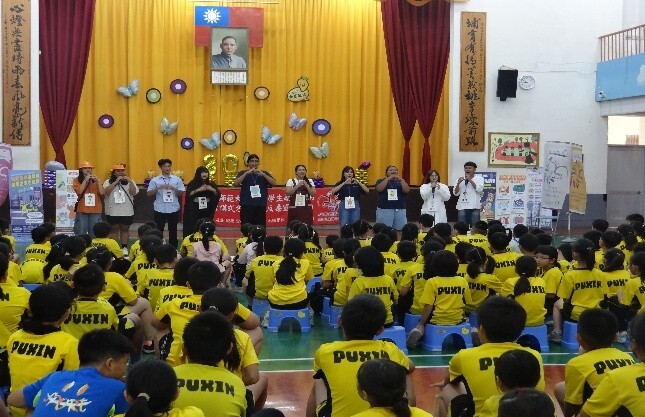
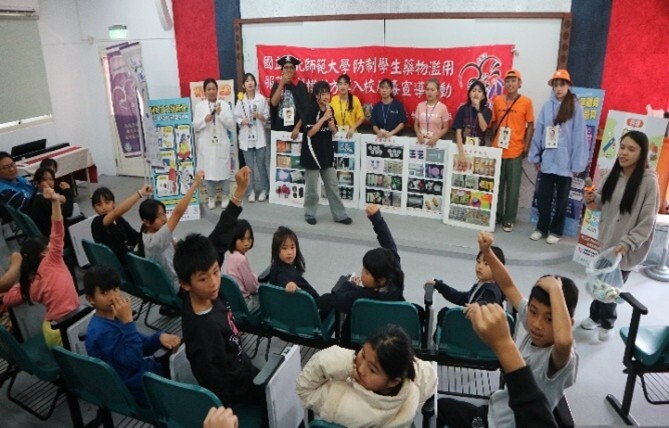
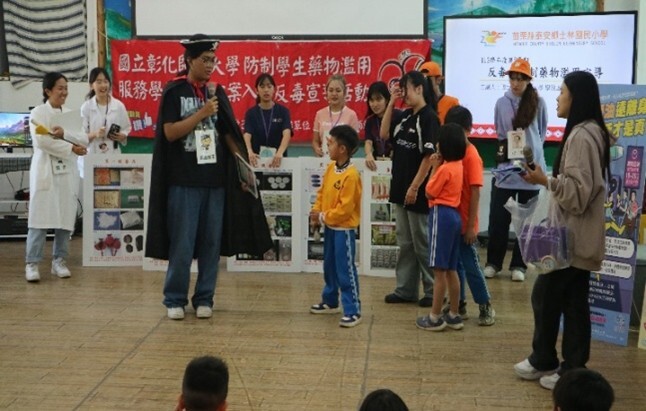
To root anti-drug education in the younger age groups, since 2013, NCUE has applied for funding under the Ministry of Education's Service-Learning Programme for Substance Abuse Prevention in Higher Education Institutions, under which its student societies deliver more than ten anti-drug education sessions each year in elementary and junior high schools. Through a play featuring costumes, props, and an engaging storyline, the students demonstrated the harmful effects of drug use on human body, highlighting how people may suffer these consequences after experimenting with drugs out of momentary curiosity. They explain how new psychoactive substances are disguised as sweets, coffee and milk tea sachets, or snacks to tempt people into trying them, and demonstrate ways to refuse drugs. A prize quiz rounds off each session, so that elementary and junior high school students come to understand the harm drugs cause and master the skills of refusal in a straightforward and accessible way, learning to say no to drugs (Figures 45-48).
NCUE News: https://www.ncue.edu.tw/p/406-1000-25559,r93.php?Lang=zh-tw
(9) Off-campus art exhibitions:
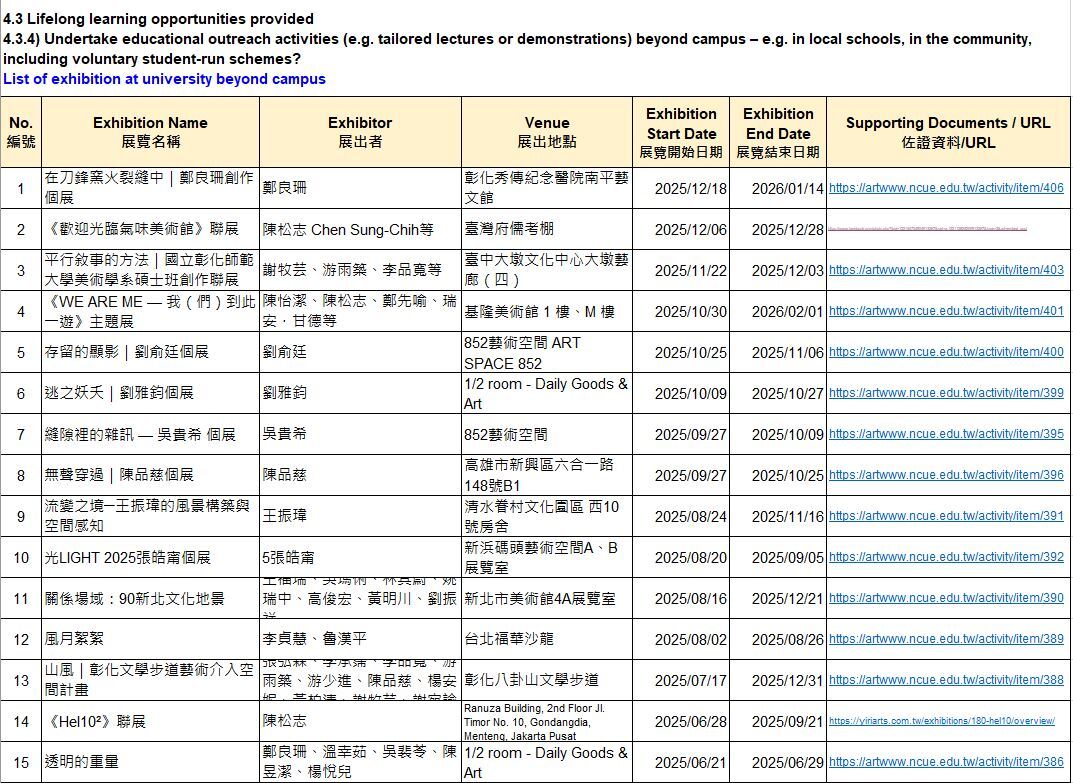
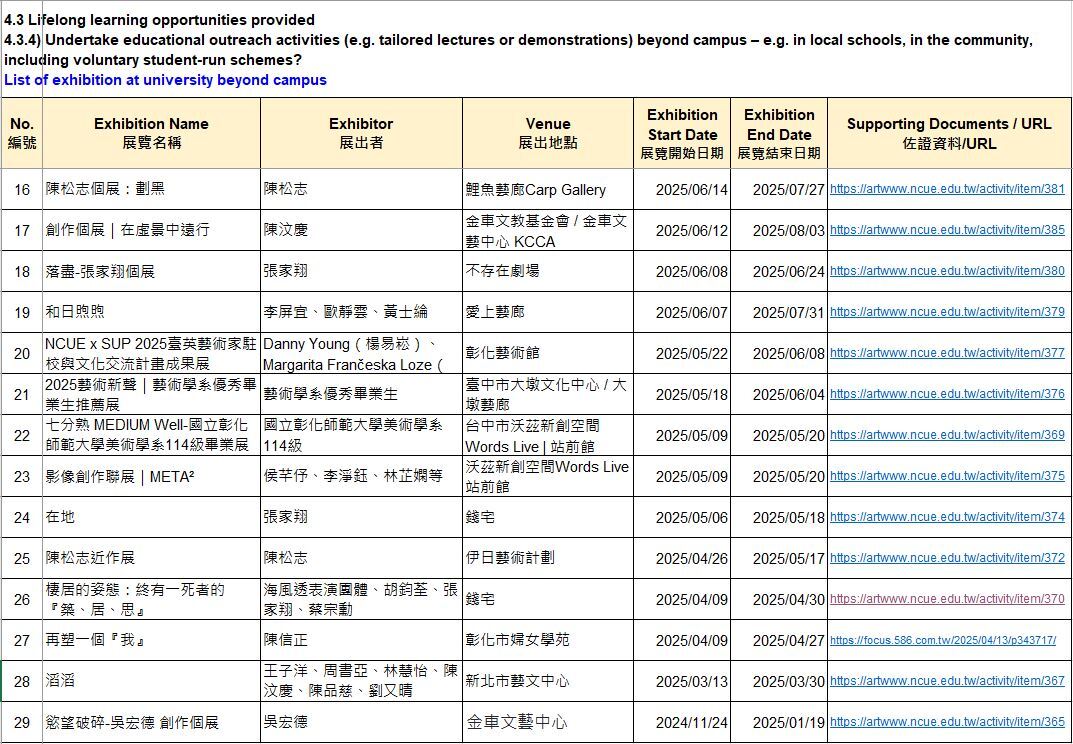
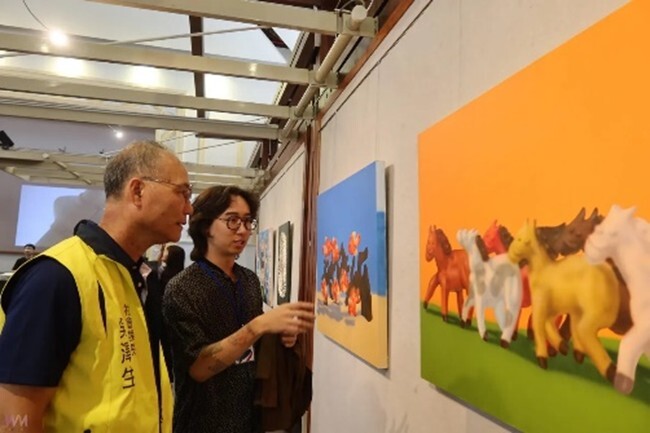
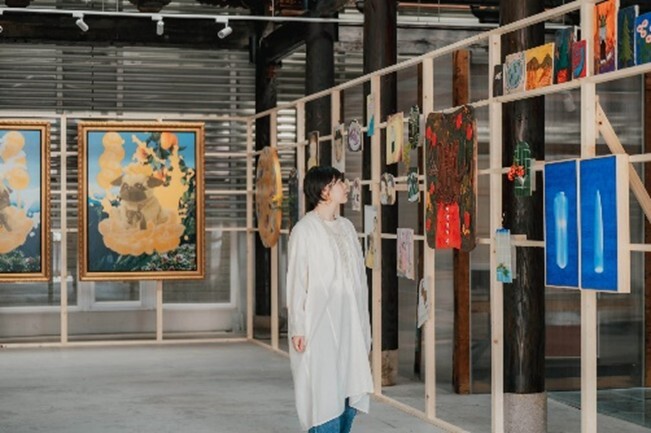
Besides holding exhibitions on campus, faculty and students of NCUE's Department of Fine Arts also curate exhibitions off campus on an ad hoc basis, taking their creative work out to wider audiences. In 2025, they held 29 exhibitions off campus, giving the communities an opportunity to view their professional work (Figures 49-52).
NCUE Department of Fine Arts Activity List: https://artwww.ncue.edu.tw/activity/list/2
Watch Media News Report: https://www.watchmedia01.com/archives/408101