SDG 4.3.5
SDG 4.3.5 Lifelong learning access policy
NCUE organizes a wide range of activities and courses that are open to all, regardless of race, religion, disability, immigration status, or gender. In addition, to ensure students in relatively disadvantaged circumstances, including those who are economically disadvantaged, Indigenous students, new immigrant students, and students of all genders, have a fair opportunity to study with peace of mind, NCUE has adopted a number of regulations and policies to protect students' rights.
1. Gender equity:
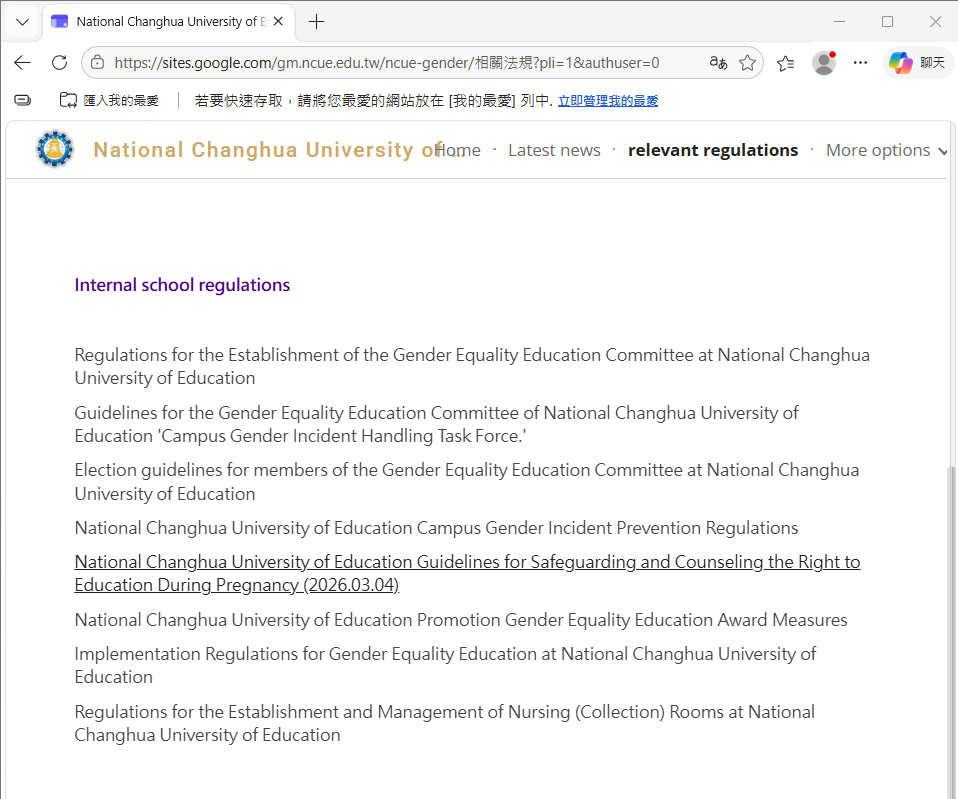
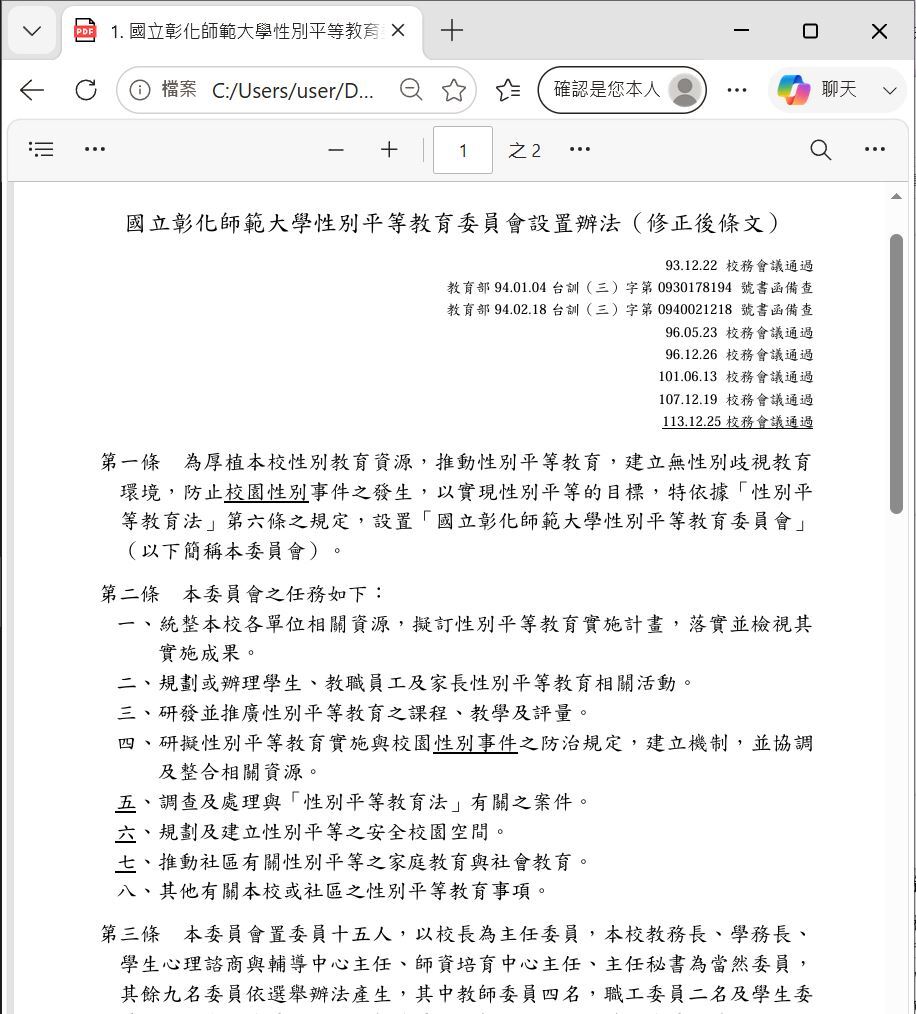
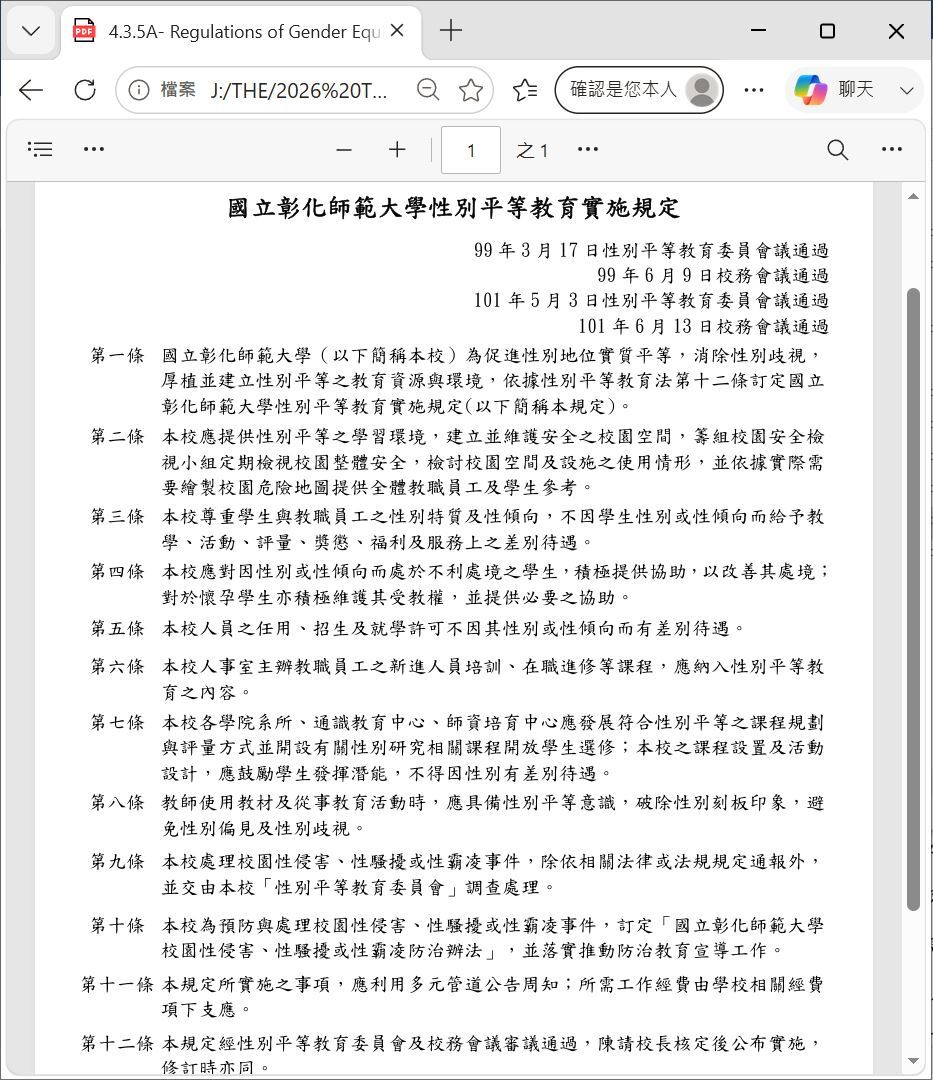
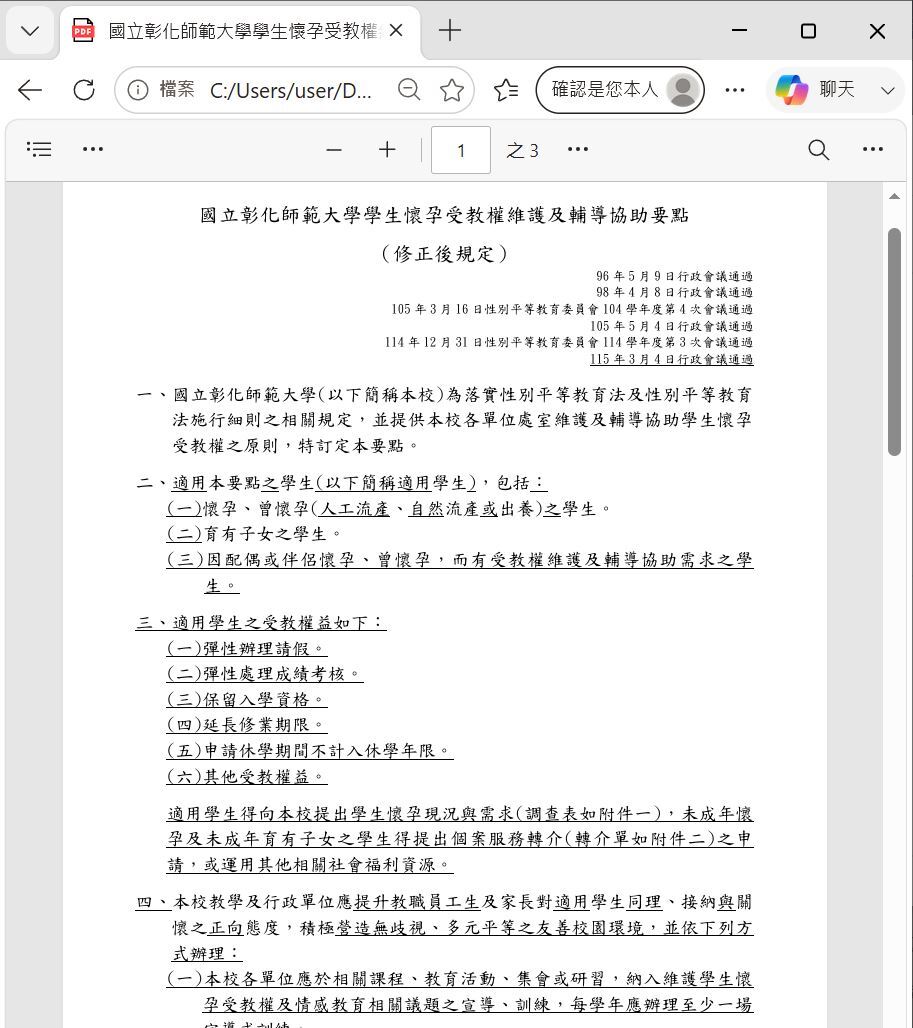
NCUE formulated the NCUE Regulations for the Implementation of Gender Equity Education and the Regulations for the Establishment of the Gender Equity Education Committee at NCUE in 2000 and 2004 respectively, actively building an educational environment free of gender discrimination. The university actively provides support to students who are disadvantage because of their gender or sexual orientation, helping them improve their situation. In addition, NCUE protects the rights of pregnant students and provides support when needed. NCUE also offers elective courses relating to gender equity, which helps build a gender-equal learning environment together with the faculty and students. To put gender equity into practice and protect the educational rights of pregnant students, in 2026, NCUE revised the NCUE Guidelines for Protecting the Educational Rights of Pregnant Students and Providing Counselling Support. This helps extend the protection to female spouses, providing flexible leave, flexible assessment of academic performance, and extension of the period of study to protect the rights of students and their spouses. Figure 1 presents the internal regulations section of the official website of NCUE's Gender Equity Education Committee, showing the several regulations NCUE has adopted to uphold gender equity. Figure 2 shows the Regulations for the Establishment of the Gender Equity Education Committee at NCUE (extract). Figure 3 shows the NCUE Regulations for the Implementation of Gender Equity Education. Figure 4 shows the Regulations for the Establishment of the Gender Equity Education Committee as further revised in 2026 (extract).
https://sites.google.com/gm.ncue.edu.tw/ncue-gender/%E7%9B%B8%E9%97%9C%E6%B3%95%E8%A6%8F
2. Tuition and fee reductions for students with disabilities, students from low-income households, Indigenous students, and students from families in special circumstances:
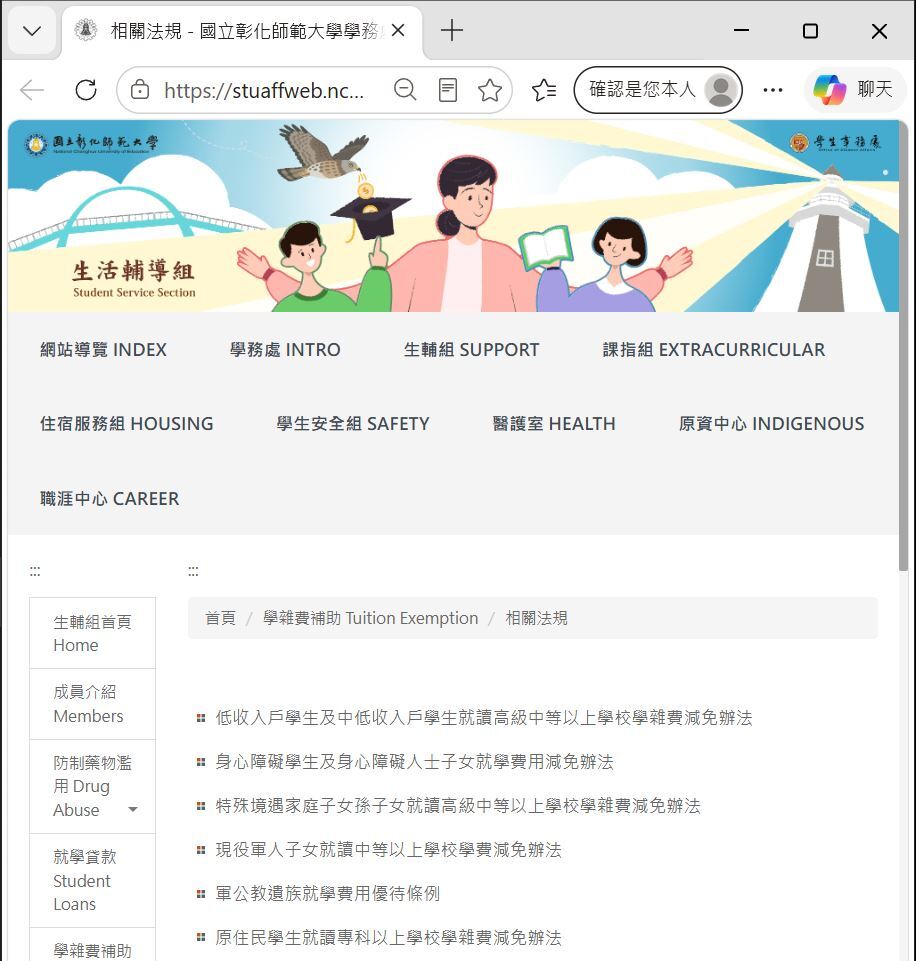
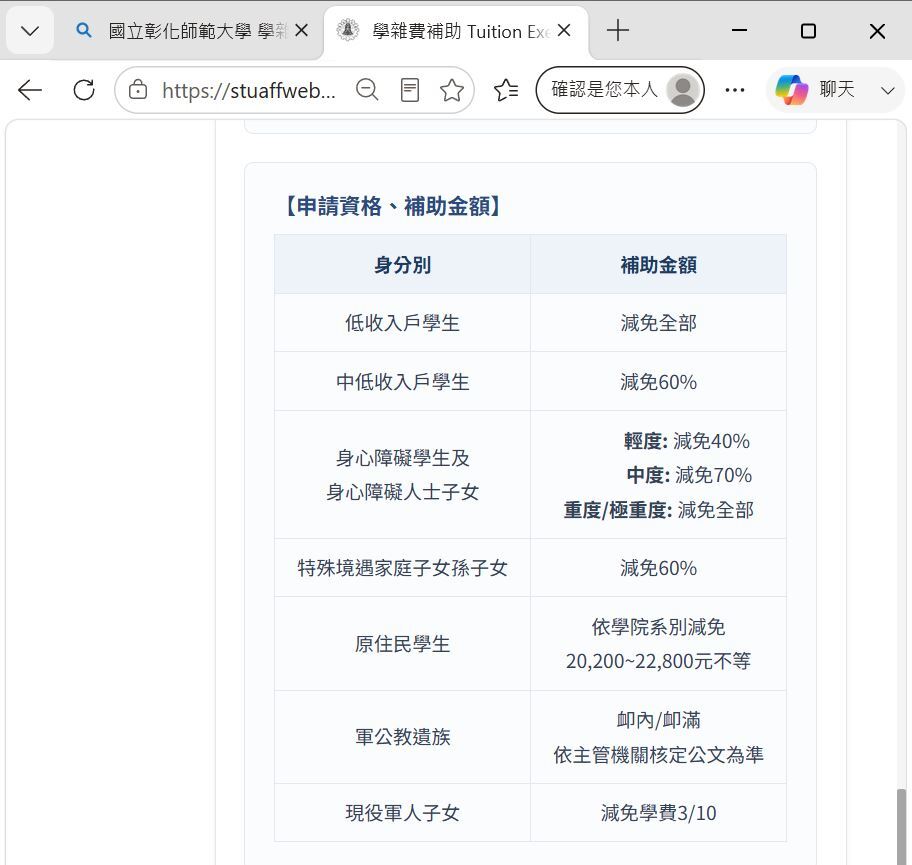
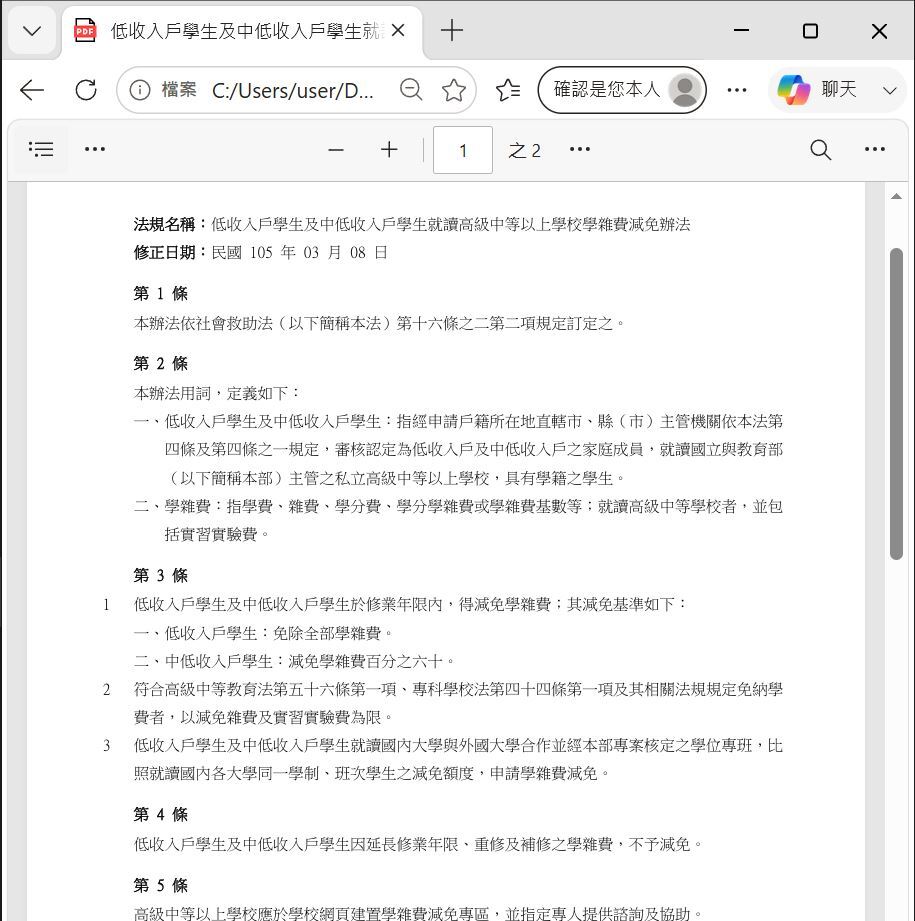
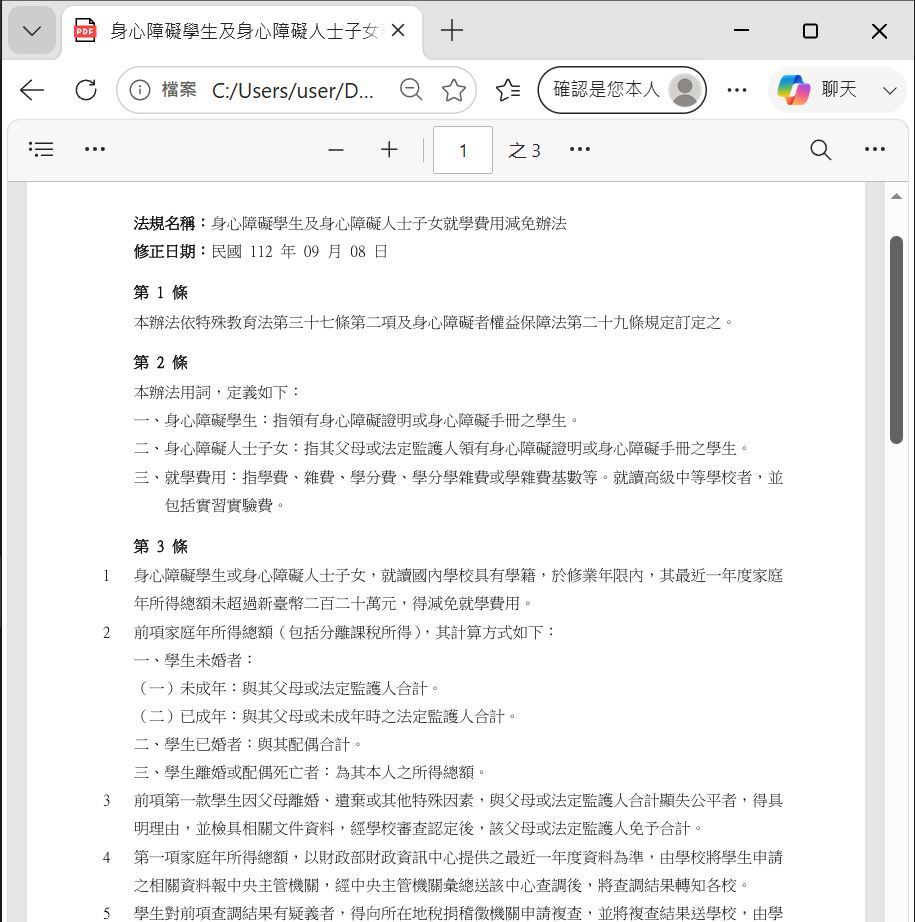
To ensure students pursue their studies without difficulty and with a lighter financial burden, NCUE applies the Ministry of Education's Regulations on Tuition and Fee Reductions for Students from Low-Income and Lower-Middle-Income Households Attending Senior Secondary Schools and Above, Regulations on the Reduction of School Fees for Students with Disabilities and Children of Persons with Disabilities, Regulations on Tuition and Fee Reductions for Indigenous Students Attending Junior Colleges and Above, Regulations on Tuition and Fee Reductions for Children and Grandchildren of Families in Special Circumstances Attending Senior Secondary Schools and Above, the Act on Preferential School Fee Treatment for Surviving Family Members of Military Personnel, Civil Servants and Teachers, and the Regulations on Tuition Reductions for Children of Active-Duty Military Personnel Attending Secondary Schools and Above. Any student who falls into one of these categories, including low-income household, lower-middle-income household, student with a disability, child of a person with a disability, Indigenous student, child or grandchild of a family in special circumstances, surviving family member of military personnel, civil servants or teachers, or child of active-duty military personnel, may apply for a partial or full reduction in tuition and fees. This ensures students study with peace of mind. Figure 5 shows NCUE's web page compiling the regulations on tuition subsidies and reductions, where students can click through to the rules applying to their own category to read the details. Figure 6 summarises the categories and the amounts of the reductions. Figures 7 and 8 are extracts from the relevant regulations.
3. Indigenous students:
(1) Indigenous Student Resource Center and Support Services:
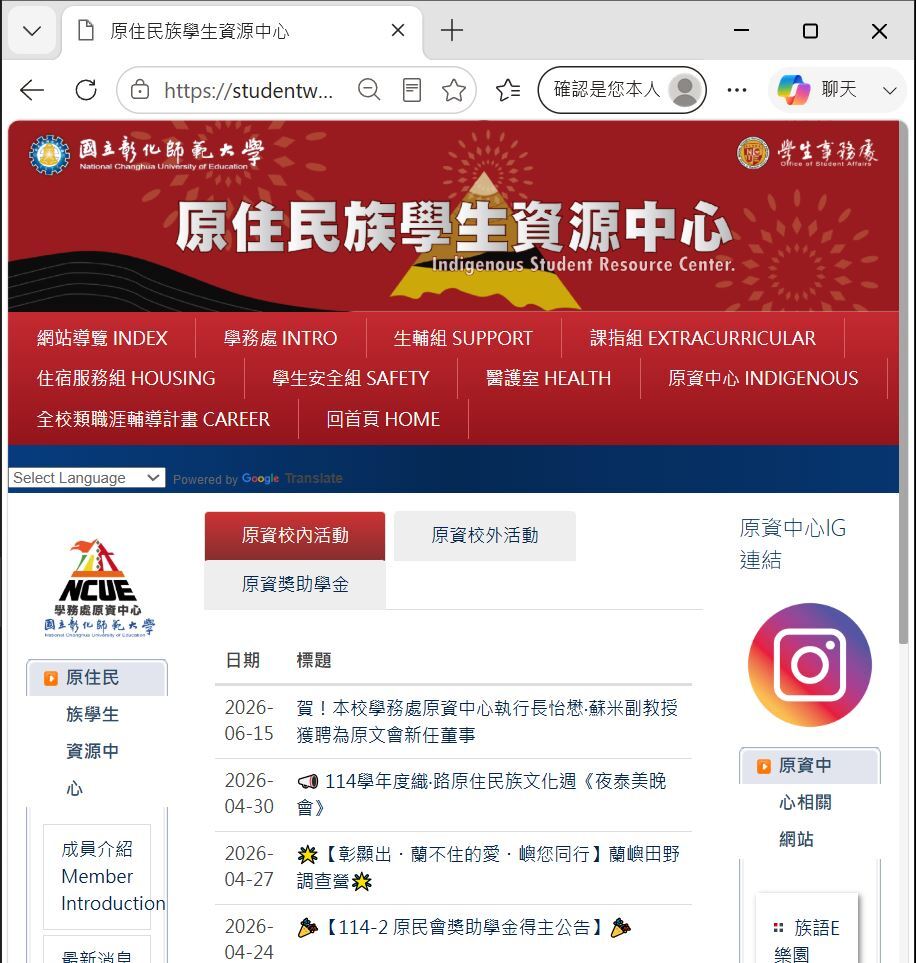
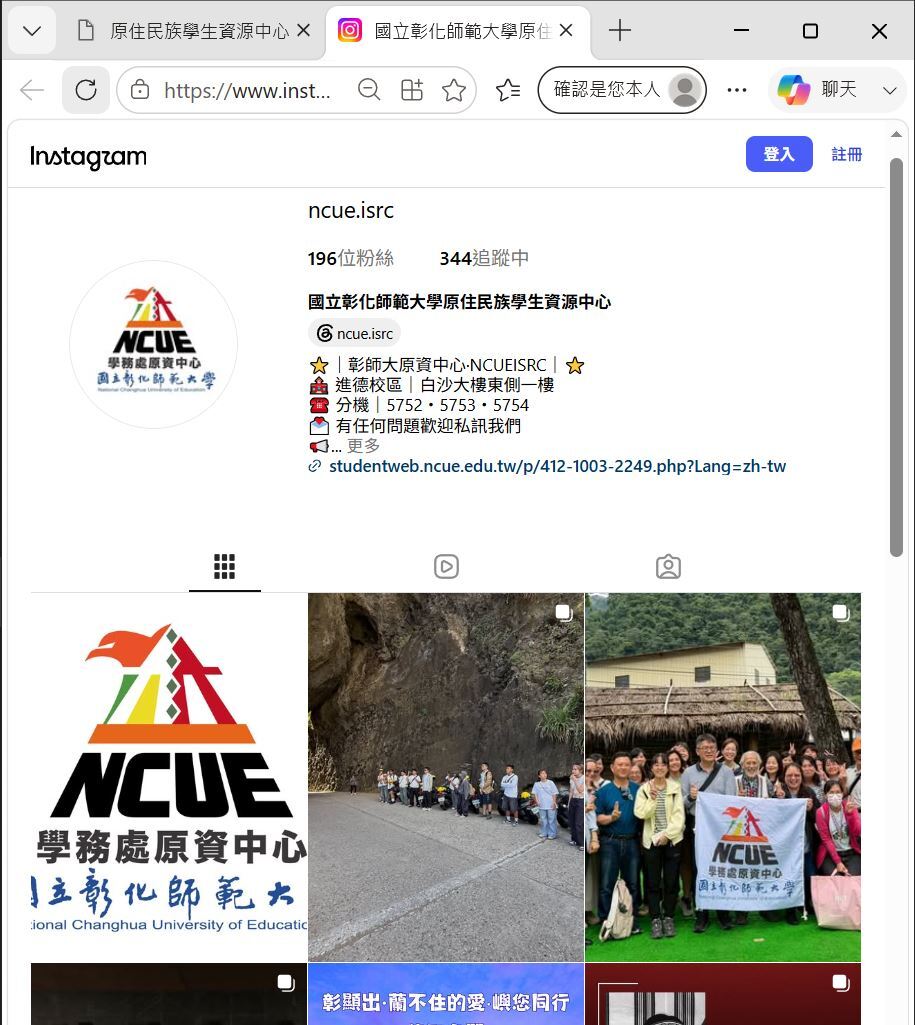
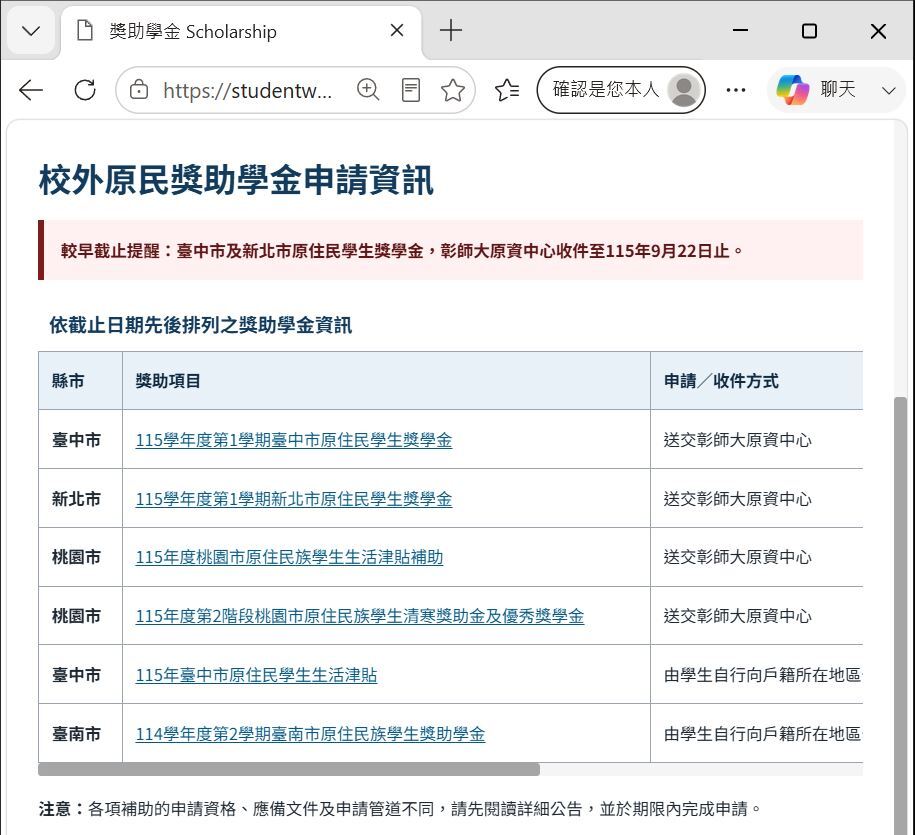
In 2017, NCUE established an Indigenous Student Resource Center for providing indigenous student with services in daily life, academic work, cultural enrichment and development, supporting them in developing multiple intelligence and talents of their communities. Each academic year NCUE offers nearly hundred supernumerary slots for Indigenous students to ease their financial burden through reducing tuition and fee. In addition, NCUE provides comprehensive learning mechanisms and guidance to reduce rates of suspension and withdrawal among Indigenous students, ensuring equal opportunity in education. Apart from providing services to indigenous students, the Indigenous Student Resource Center offers courses on Indigenous culture each year, which are also open to other NCUE students, to preserve and promoting Indigenous culture. Figures 9 and 10 show the Indigenous Student Resource Center's website and Instagram account respectively. Figure 11 shows activities relating to Indigenous culture in order to give effect to cultural equity. Figure 12 shows information on the various scholarships for Indigenous students, for which NCUE also assists students to apply.
Official website of the Indigenous Student Resource Center: https://studentweb.ncue.edu.tw/p/412-1003-2249.php?Lang=zh-tw

(2) Bachelor's Degree Program for Indigenous People:
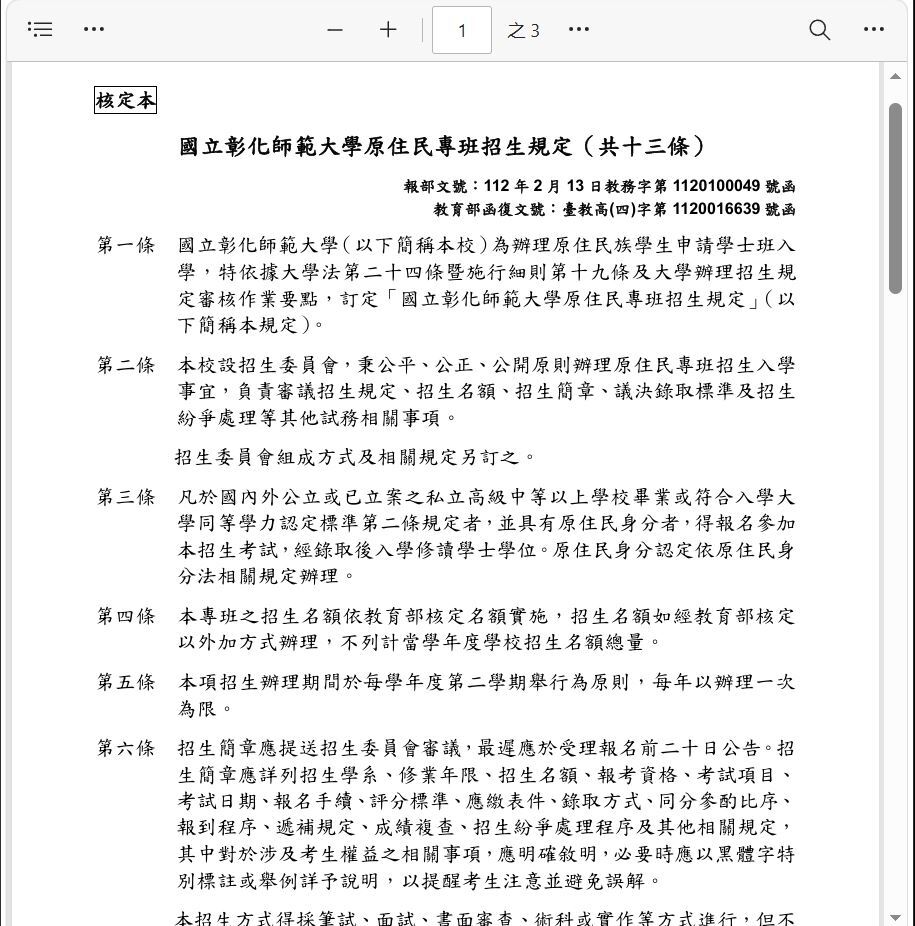
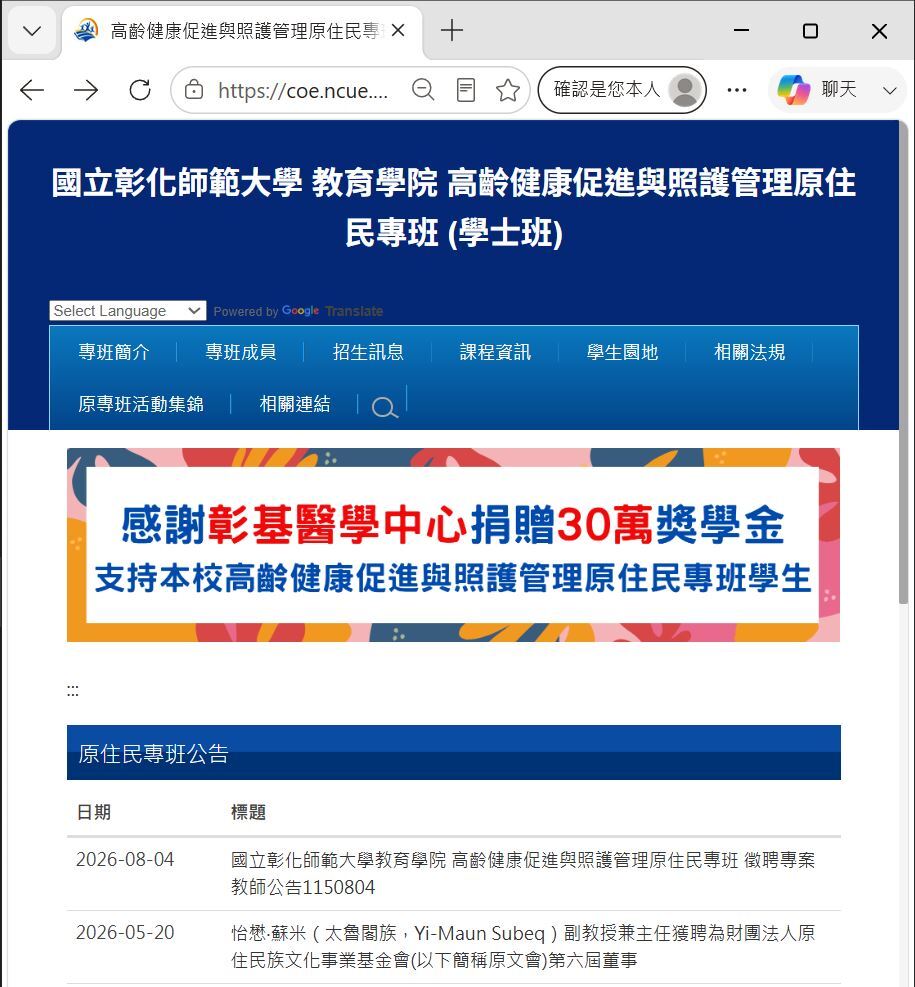
In March 2023, NCUE formulated the NCUE Admission Regulations for the Indigenous Peoples Programme and established the Bachelor's Degree Program for Indigenous People in Seniors Health Promotion and Care Management, which trains indigenous personnel in health promotion and care for older adults in order to address the long-standing imbalance between supply and demand in long-term care for Indigenous peoples. In its first year, the program successfully enrolled 28 indigenous students. From 2023, the enrollment was increased to 35, with no application fee. The program features interdisciplinary courses and professional practice activities, guiding students towards professional certification and providing dedicated activity space as well as outstanding teaching staff to help students learn about Indigenous culture in depth. The program also ensures students’ right be fully taken care of through making use of their feedback. Figure 13 shows the Admission Regulations for the Indigenous Peoples Programme (extract) and Figure 14 presents the programme's official website.
Regulations document: https://acadaff.ncue.edu.tw/var/file/2/1002/img/827/168864090.pdf
Website of the Indigenous Peoples Programme: https://coe.ncue.edu.tw/p/412-1033-1648.php?Lang=zh-tw
4. Economically or culturally disadvantaged students:
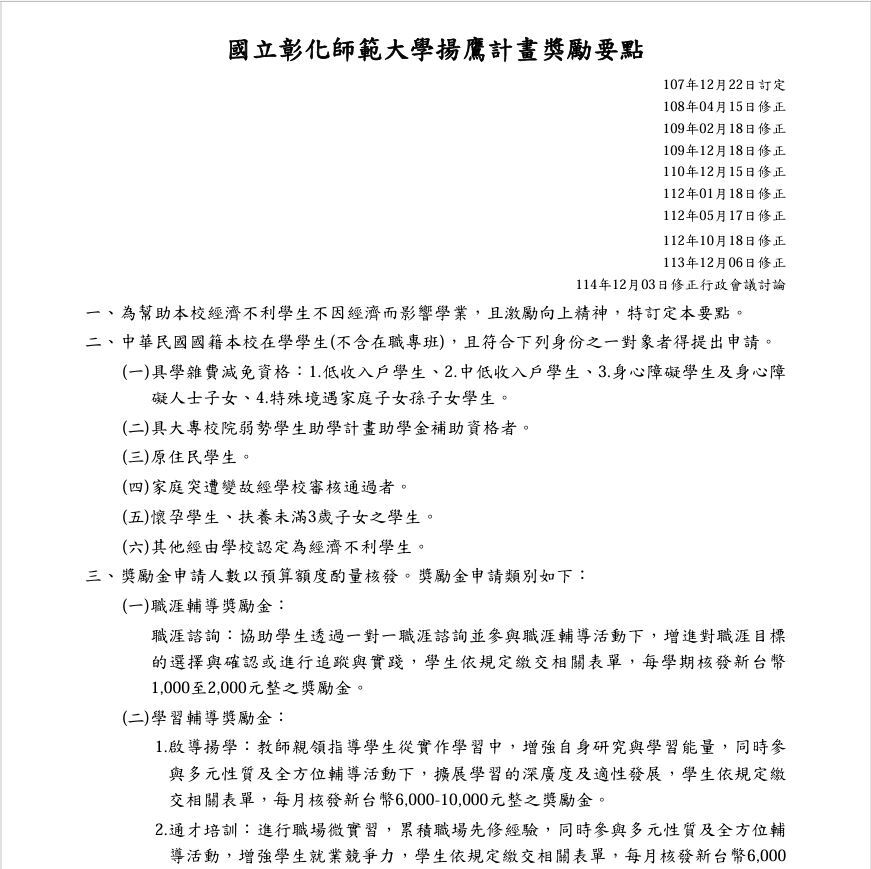
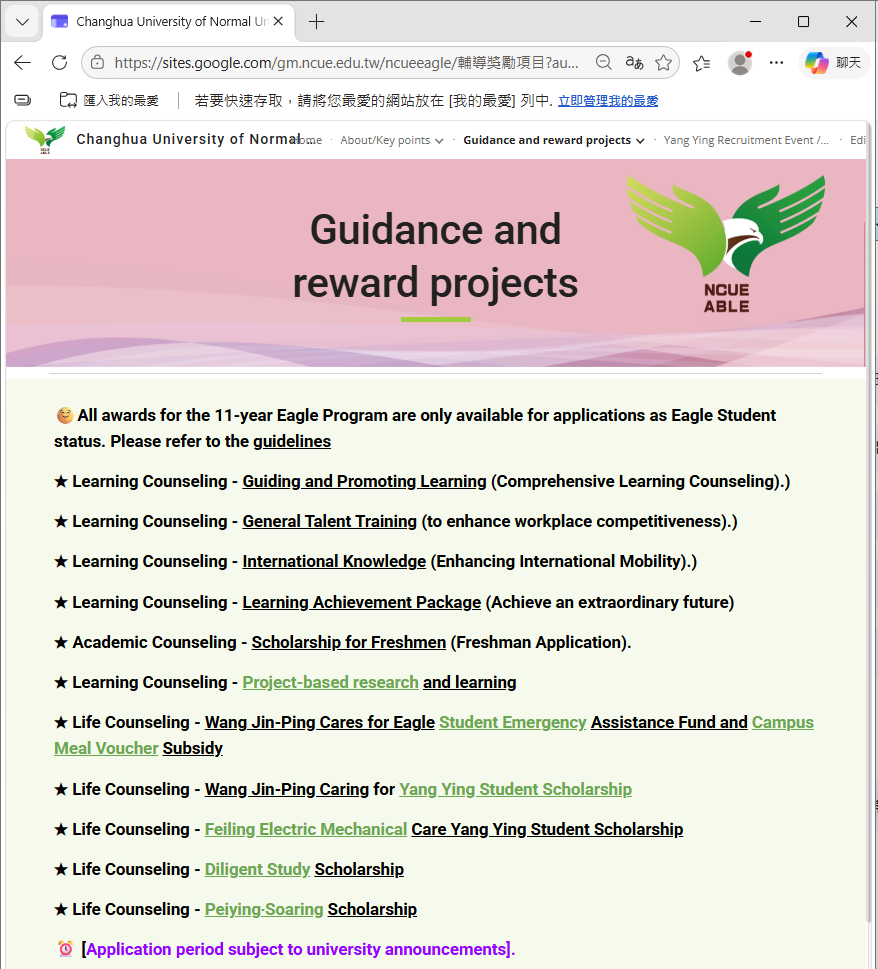
Each academic year, economically or culturally disadvantaged students make up about 10% of NCUE's total student body. In 2018, NCUE adopted the NCUE Guidelines for The Soaring Eagles Project (https://aps.ncue.edu.tw/odedi/attch/M30/15/1501270082.pdf) and continued to revise them. The university revised the guideline most recently on December 3, 2025 (Figure 15). These Guidelines are designed to ensure economically disadvantaged students at NCUE pursue their studies without being hindered by financial circumstances, providing tuition and fee reductions, study fund subsidies, and related learning support to safeguard admission opportunities for disadvantaged students in every category. In addition to actively providing educational opportunities for disadvantaged students, NCUE has established comprehensive support measures to guide and support students throughout their academic journey. These measures help students study with peace of mind and complete their degrees, while upholding the core values of equal educational opportunity and promoting upward social mobility. Figure 16 shows the web page listing the guidance and award schemes available to economically or culturally disadvantaged students, illustrating the wide range of awards NCUE provides in both academic support and support for daily life. Statistics on NCUE's economically or culturally disadvantaged students and the outcomes of these awards are as follows:
(1) Number of economically disadvantaged students:
NCUE's economically disadvantaged students, comprising students from low-income and lower-middle-income households, students with disabilities and children of persons with disabilities, children and grandchildren of families in special circumstances, those eligible for grants under the Financial Aid Programme for Disadvantaged Students in Higher Education, Indigenous students, and students whose families have suffered a sudden change of circumstances as approved by the university, numbered 703 in 2019, 713 in 2020, 719 in 2021, 731 in 2022, 749 in 2023, 792 in 2024 and 811 in 2025. The average is about 745 per year, with the number of students receiving support rising year on year.
(2) Sustainable funding support:
To help disadvantaged students study with peace of mind, NCUE has actively raised study funds and made rolling revisions to its support measures in order to improve its mechanisms for assisting disadvantaged students. Since 2018, NCUE has invested more than NT$89.59 million.
(3) Learning instead of part-time work mechanism:
To help students study free of worry, a guidance mechanism of "learning instead of part-time work" enables economically disadvantaged students to attend to both their studies and their living needs. From the first mile on admission to the last mile before graduation, NCUE follows through on comprehensive support across the student learning journey, so that students achieve the aim of "Soaring in Learning, Realising Dreams". This support covers guidance on studying and living with peace of mind, professional psychological counselling and care, guidance on improving self-directed learning, and career guidance to strengthen competencies. To date more than 11,914 student attendances have benefited. (https://sites.google.com/gm.ncue.edu.tw/ncueeagle).
5. Admission and entrance examination subsidies for economically disadvantaged students:
(1) Priority admission and dedicated quotas:
Since 2018, NCUE has added a "priority admission" mechanism to the university application route, lowering the admission threshold and improving admission opportunities for economically disadvantaged students. Since 2019, the university has also established an Admission Track for Socioeconomically and Culturally Disadvantaged Students, under which some departments set aside a number of places within their admission quota for these tracks. Selection is entirely by review of written materials, lowering the threshold on the General Scholastic Ability Test. Students' learning motivation, record of striving, and growth in their studies are considered as the main criteria, so as to improve the chances of economically disadvantaged students studying at NCUE.
(2) Examination cost subsidies:
To ease the burden of application on economically disadvantaged students, NCUE held its own entrance examinations for economically disadvantaged students from low-income or lower-middle-income households. In addition to waiving the application fee, the university subsidises the travel and accommodation costs of attending the entrance examination, lightening the financial burden on students. The amount subsidised in 2025 was NT$29,386.
6. New immigrant students:
Before naturalising as citizens of Taiwan, new immigrant students who meet the requirements for overseas Chinese or international applicants may enter university through the overseas Chinese or international student admission routes. However, they must apply as domestic students and compete on the same terms as local student after naturalisation, which makes entrance examinations harder for them. Therefore, from January in 2021, NCUE formulated the NCUE Admission Regulations for New Immigrant Students and conducted an independent entrance exam for new immigrants since then to ensure new immigrant students have a fair opportunity to compete and be admitted.
Regulations document: https://acadaff.ncue.edu.tw/var/file/2/1002/img/827/624446750.pdf