
SDG 17.2.1 Relationships with regional NGOs and government for SDG policy
Chapter 1. Introduction
As the sole national university in Changhua County, NCUE comprises seven colleges. It works with government agencies and non-governmental organizations to support policies related to the United Nations Sustainable Development Goals (SDGs). NCUE uses three main forms of engagement and summarizes their SDG alignment below.
1. Administrative Governance: NCUE integrates the SDGs into institutional governance and development by participating in major government policy programmes (20 representative cases).
2. Academic Research: Faculty members conduct research projects aligned with the SDGs (16 representative projects).
3. Professional Advice: Faculty members serve on government and non-governmental committees and provide advice on sustainability-related policies (16 representative appointments).
4. SDG Alignment Statistics: Table 1 summarizes the alignment of the 52 representative cases with the 17 SDGs.
| United Nations Sustainable Development Goals | Number of Case Alignments | |
|---|---|---|
| SDG1 | No Poverty | 4 |
| SDG2 | Zero Hunger | 3 |
| SDG3 | Good Health and Well-Being | 14 |
| SDG4 | Quality Education | 32 |
| SDG5 | Gender Equality | 8 |
| SDG6 | Clean Water and Sanitation | 4 |
| SDG7 | Affordable and Clean Energy | 8 |
| SDG8 | Decent Work and Economic Growth | 12 |
| SDG9 | Industry, Innovation and Infrastructure | 12 |
| SDG10 | Reduced Inequalities | 17 |
| SDG11 | Sustainable Cities and Communities | 7 |
| SDG12 | Responsible Consumption and Production | 10 |
| SDG13 | Climate Action | 7 |
| SDG14 | Life Below Water | 4 |
| SDG15 | Life on Land | 3 |
| SDG16 | Peace, Justice and Strong Institutions | 6 |
| SDG17 | Partnerships for the Goals | 26 |
| Total | 177 | |
Chapter 2. Advancing Sustainable Development Goals Through Key Government Policy Initiatives
1. Phase III Educational Big Data Micro-Learning Programme: The programme develops students' ability to collect, organize, analyze, and interpret complex data while selecting suitable tools for practical education problems. Courses combine real-world scenarios, problem-based learning, hands-on practice, case discussions, and interdisciplinary projects. Learning outcomes are reviewed through presentations, course feedback, and practical assessments. Overall, the program translates big data expertise into practical problem-solving capabilities in educational settings, enhancing graduate career competitiveness and establishing a collaborative network bridging academia, industry, and educational practice. (Figures 1 and 2)
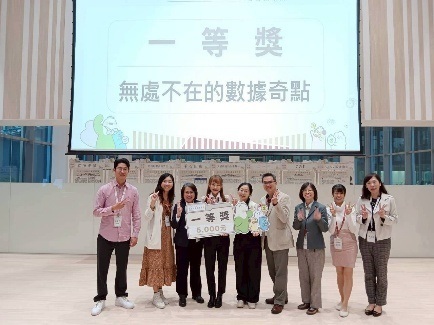
17.2.1 - Figure 1: NCUE received first prize for implementing the Educational Big Data Micro-Learning Programme.
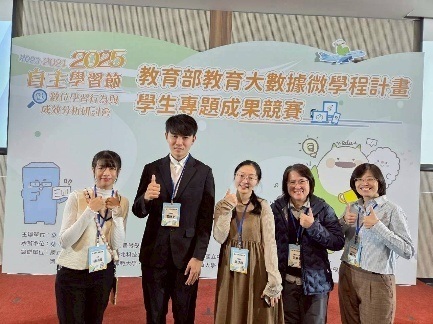
17.2.1 - Figure 2: Students in the Educational Big Data Micro-Learning Programme participated in the student project competition.
2. 2025 Higher Education Sprout Project - Main Project: Internationalization Chapter: NCUE integrates international administrative staff, international student learning support, overseas faculty services, and post-graduation employment guidance to establish a comprehensive support system spanning admission, learning, campus life, and career development. The initiative establishes a single-window service for international students, strengthens Chinese language courses, and provides curriculum and academic administration support. Cross-cultural service quality is enhanced through Chinese-language teacher support systems and staff training. In 2025, NCUE conducted 2 training workshops, offered 13 non-credit Chinese courses, subsidized 38 students taking Chinese courses and language proficiency tests. Concurrently, NCUE incentivized 39 faculty members offering 47 English-Medium Instruction (EMI) courses across 55 classes for international students. To foster multi-cultural understanding and global literacy, the university organized 6 full-day cultural experience excursions, guiding international students through local educational, cultural, and industrial sites. Additionally, 34 international faculty mentors were appointed to deliver tailored advisory support, and 121 peer buddies were recruited to help incoming international students adapt to campus life and academic challenges.
3. MOE Overseas Study and Professional Internship Programs: Through the MOE Overseas Internship Program and New Southbound MOE Overseas Internship Program, NCUE sent 10 students to Canada, Japan, and Virginia Commonwealth University in the United States, and 18 students to partner schools and universities in Malaysia and Indonesia. Faculty members and overseas partners jointly planned the internships, which covered gamified learning-map design, corporate practice, rehabilitation counselling, curriculum adaptation, digital innovation, Chinese-language teaching, and educational practice. (Figures 3 and 4)
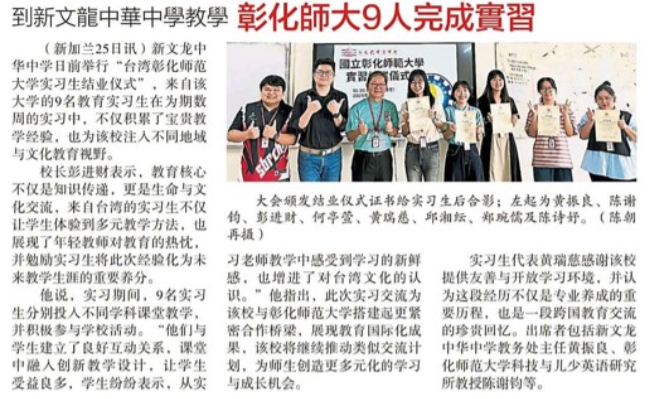
17.2.1 - Figure 3: A Malaysian news report featured the NCUE faculty-led internship team at Chung Hwa High School, Rengit.
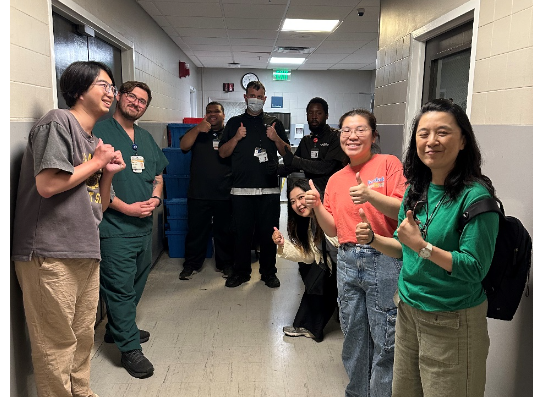
17.2.1 - Figure 4: An NCUE faculty member visited three students at their overseas internship site.
4. Pilot Program of Program of Career Counseling and Retention in Taiwan for International Students: NCUE established a support process covering study preparation, career planning, internships, employment regulations, and procedures for remaining in Taiwan. In 2025, NCUE held 13 career lectures for overseas Chinese and international students, five company information sessions, and four company visits tailored for overseas Chinese and international students. Through the joint commitment of administrative units, academic departments, and industrial partners, this initiative enhanced international talents' academic adaptation, professional development, and post-graduation employment opportunities in Taiwan, thereby deepening NCUE's internationalization governance and global talent cultivation outcomes. (Figures 5 and 6)
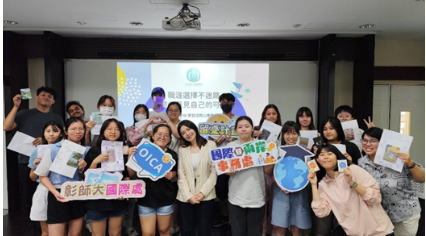
17.2.1 - Figure 5: Career lecture for overseas Chinese and international students.
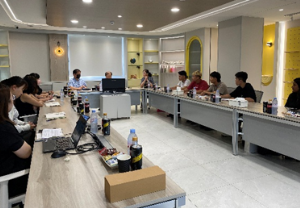
17.2.1 - Figure 6: Company visit supporting international students seeking employment in Taiwan.
5. 2025 Taiwan Experience Education Program (TEEP): Commissioned by the Ministry of Education, this program aims to attract outstanding international youth to Taiwan for short-term study, research internships, and industrial practice, enabling high-potential foreign students to gain in-depth familiarity with Taiwan’s higher education, research excellence, and industrial strengths. Participating NCUE faculty and research teams design specialized research topics, laboratory immersion, industrial visits, cultural activities, and academic exchanges tailored to their fields, combining students' existing expertise with NCUE’s research capabilities. NCUE also provided administrative, accommodation, and cross-cultural adjustment support. Teams collected participation records, learning outcomes, and feedback to improve subsequent activities and services. The programme encourages participants to return to Taiwan for degree study, research, or employment. In 2025, its budget was NT$7,890,000 and 16 faculty members participated. Across the two most recent academic years, 187 students from nine countries, including Indonesia, Vietnam, Russia, and Thailand, studied at NCUE.
6. Semiconductor Industry Practice Talent Programme: To address regional industrial needs and bolster high-tech workforce development, NCUE and Siliconware Precision Industries Co., Ltd. jointly launched a programme combining semiconductor fundamentals, process technology, equipment operation, quality management, problem analysis, and corporate practice. The company offered 30 30 internship positions and dispatched 14 experienced senior industry mentors to deliver hands-on instruction. Students who successfully complete the training and performance assessments are offered direct employment opportunities with the company, seamlessly bridging campus learning with high-tech industry careers. (Figure 7)
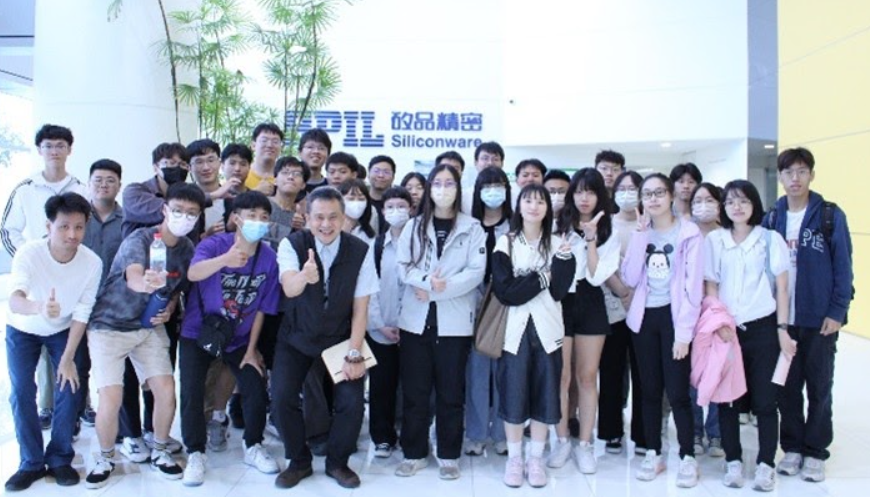
17.2.1 - Figure 7: NCUE visited Siliconware Precision Industries Co., Ltd.
7. 2025 Smart Technology and Cross-disciplinary Innovation Project for Industrial Parks: NCUE supported manufacturers in the Fuxing, Pitou, and Tianzhong industrial parks in adopting smart manufacturing, production-data monitoring, energy management, and carbon-reduction practices. The team conducted site assessments, proposed phased improvements, and connected participating firms with government resources. (Figures 8 and 9)
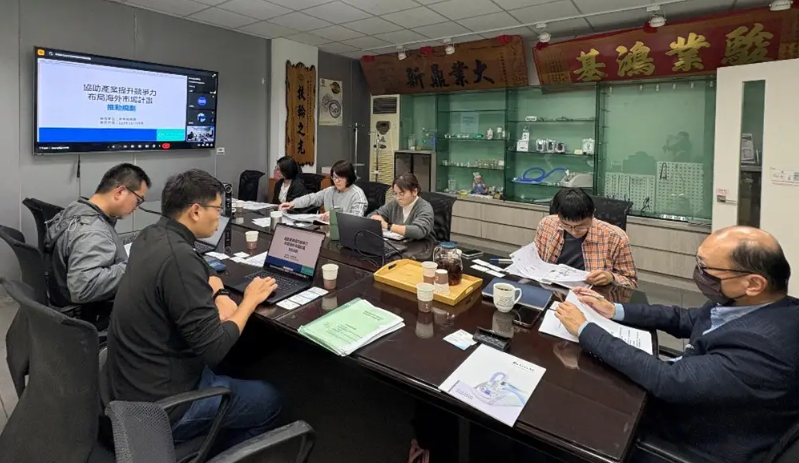
17.2.1 - Figure 8: Conducting On-Site Needs Diagnostics for Participating Enterprises
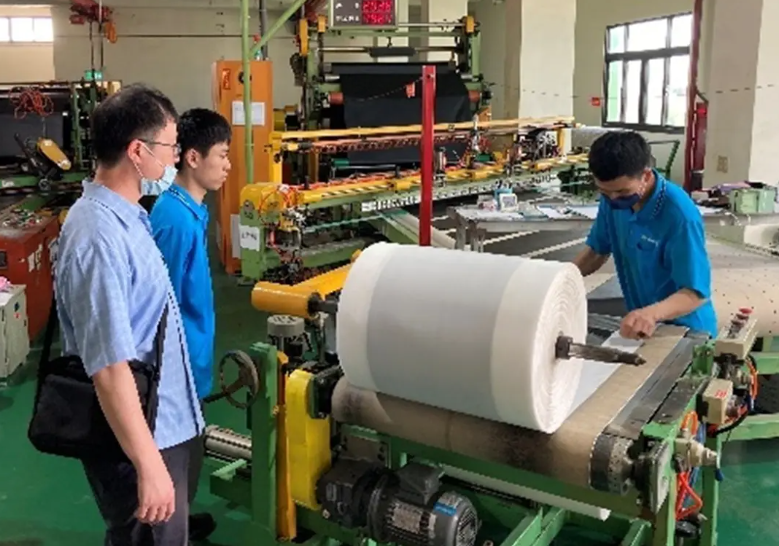
17.2.1 - Figure 9: Visiting Facility Sites and Evaluating Equipment to Assess Technical Needs
8. Central Taiwan Inter-University Research Commercialization Platform: Led by National Chung Hsing University, the university alliance integrates NCUE and nine other universities. NCUE President Ming-Fei Chen served as co-principal investigator, leading an 11-member interdisciplinary faculty team focused on NCUE’s core strengths: smart manufacturing, industrial IoT (IIoT) and cloud data, smart materials, power electronics, and green energy. The platform accelerates technology commercialization by actively exploring campus R&D achievements, assessing market demand, formulating patent portfolio strategies, organizing industry-academia matchmaking events, and driving technology transfers.
A notable success involved matching NCUE faculty with local rubber processing manufacturers to develop a green bicycle tire prototype—utilizing precipitated silica (white carbon black) and eco-friendly recycled carbon black as raw formula materials and replacing traditional petroleum-based processing oils with sustainable soybean oil. This innovation received the Changhua County SBIR grant for two consecutive years and was exhibited at the 2025 Taipei Cycle Show. Through cross-university resource integration and collaborative R&D, the platform elevates technology readiness levels (TRL) and commercialization opportunities, empowering local enterprises in material innovation and low-carbon transformation while maximizing the real-world industrial impact of Central Taiwan’s scientific research.
9. MOE Study Abroad Programs: "Xuehai Feiyang" Program (MOE Overseas Study Grants for Outstanding Students)" and "Xuehai Xizhu" Program (MOE Overseas Study Grants for Economically Disadvantaged Students)": Under MOE’s "Xuehai Feiyang" and "Xuehai Xizhu" schemes, NCUE selects and sponsors students to undertake study abroad or academic exchanges, fostering global perspectives, professional competence, and cross-cultural communication skills. The "Xuehai Feiyang" program encourages high-potential students to complete coursework and academic activities at overseas universities. The "Xuehai Xizhu" program specifically prioritizes academically outstanding students from economically disadvantaged backgrounds, effectively removing financial barriers to international education and promoting educational equity.
NCUE provides comprehensive support through information sessions, application counseling, sister-university matching, pre-departure orientation, and credit transfer mechanisms to ensure seamless learning continuity. Studying overseas exposes students to diverse pedagogical approaches and global cultures, enhancing foreign language proficiency, critical thinking, problem-solving capabilities, and international mobility, while paving the way for dual-degree pathways and advanced studies. Upon returning, participants share their international experiences to inspire peers, while the program simultaneously deepens NCUE's strategic partnerships with overseas sister institutions and expands academic network connections (Figures 10–13).
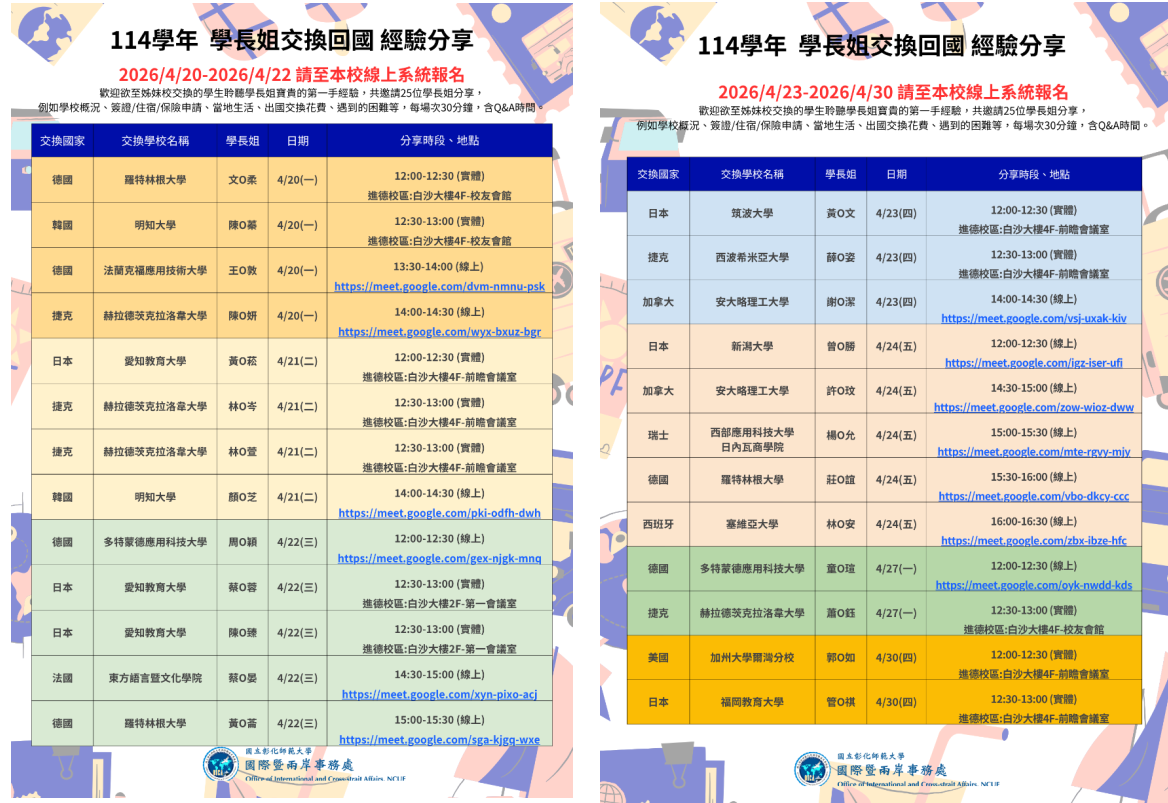
17.2.1 - Figure 10: NCUE held experience-sharing sessions for students returning from overseas exchanges.
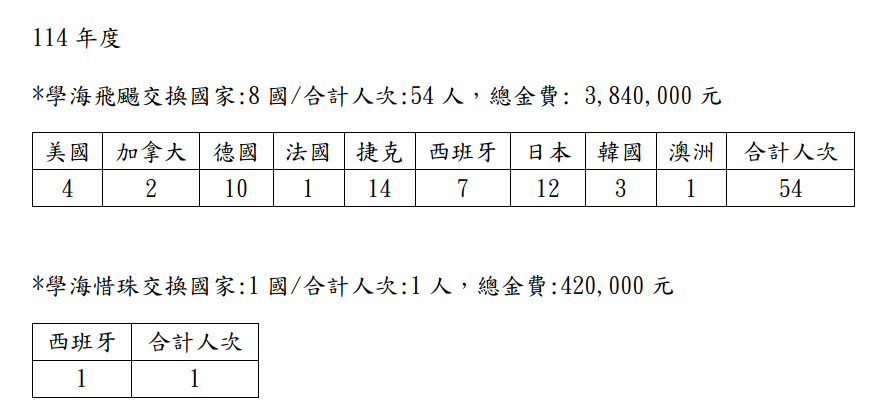
17.2.1 - Figure 11: Destinations and participant numbers for NCUE exchange students in the 2025–2026 academic year.
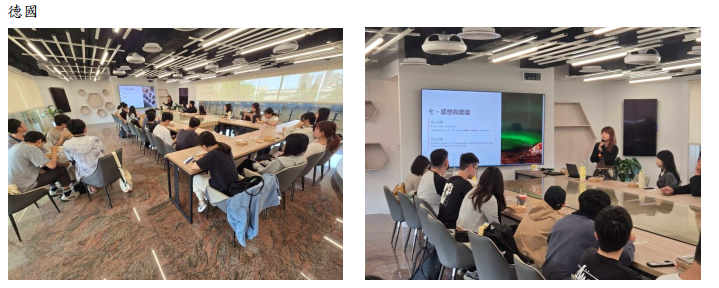
17.2.1 - Figure 12: Student experience-sharing session after an exchange in Germany.
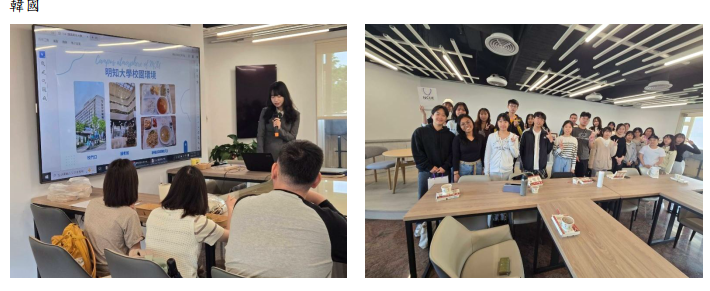
17.2.1 - Figure 13: Student experience-sharing session after an exchange in South Korea.
10. 2025 Local Industry Innovation and Value-added Integration Project: Addressing labor shortages, quality inspection challenges, production efficiency, energy optimization, and carbon reduction needs among metal products manufacturers in central Taiwan, NCUE integrated its interdisciplinary R&D capabilities to provide technical diagnostics and advisory services. The project team first audited enterprise equipment, manufacturing processes, and data readiness to establish measurable improvement targets. Based on specific operational needs, the team guided the implementation of advanced technologies—including AI-powered computer vision inspection, process parameter analytics, industrial IoT (IIoT) connectivity, predictive quality analytics, energy monitoring, and smart scheduling.
The deployment prioritized integration with existing equipment and operational feasibility for site personnel, minimizing transformation risks for enterprises through small-scale pilot verification, data analytics, and on-site optimizations. Additionally, the project empowered manufacturers to build internal data collection and analytical capabilities, transforming improvement experiences into sustainable operational workflows while connecting firms to government funding grants, academic resources, and supply-chain partners. By advancing AI applications alongside green manufacturing, this initiative enhances product quality and production stability, reduces material and energy waste, and accelerates the regional metal industry's transition toward digitalization, decarbonization, and high-value manufacturing—ultimately bolstering its market competitiveness and long-term sustainability (Figures 14–15).
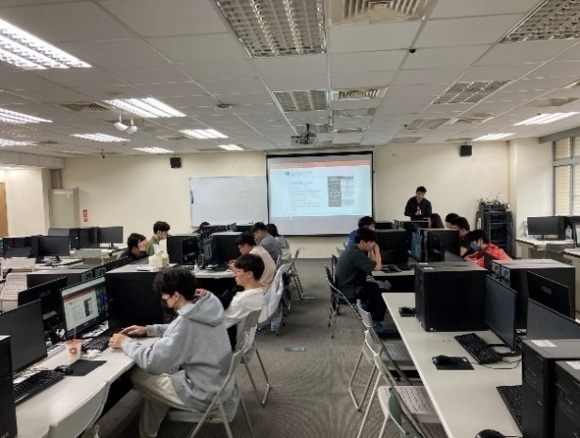
17.2.1 - Figure 14: Implementation meeting for the Local Industry Innovation and Value-added Integration Project.
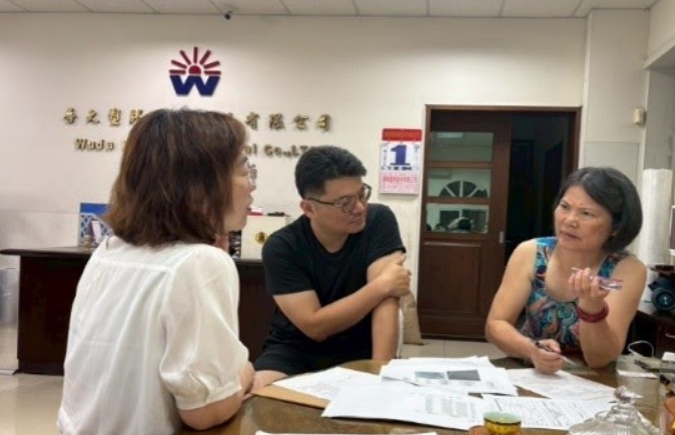
17.2.1 - Figure 15: Visiting Facility Sites and Evaluating Equipment to Assess Technical Needs
11. 2025 Cross-Regional Low-Carbon Transition Project for Industrial Parks: This initiative empowers small and medium-sized enterprises (SMEs) across industrial parks to establish robust carbon management and energy-efficiency capabilities. The NCUE project team first assists manufacturers in conducting comprehensive greenhouse gas (GHG) inventories to clarify current energy usage and carbon emission baselines, identifying critical emission hotspots across manufacturing processes, equipment, and operational activities. Based on enterprise scale, industry characteristics, and available resources, the team helps companies formulate concrete carbon reduction targets and evaluates solutions spanning equipment upgrades, process optimization, energy management systems, and renewable energy integration.
Furthermore, the program designs tailored short-, medium-, and long-term decarbonization pathways—clearly specifying implementation methods, priorities, required resources, and anticipated benefits—while delivering deep energy-saving diagnostics to drive immediate, actionable improvements. Beyond technical assistance, the team connects enterprises to government grant programs and external professional expertise, conducting training sessions to build internal capacities in carbon accounting, target management, and progress tracking. Through sustained advisory support and performance reviews, participating firms continuously reduce energy costs and emissions, build self-sustaining management mechanisms, and enhance supply chain resilience and low-carbon market competitiveness (Figures 16 and 17).
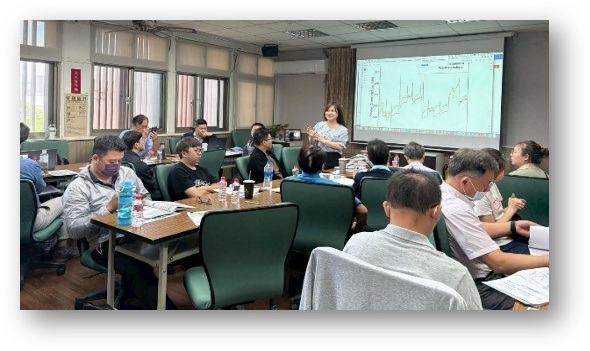
17.2.1 - Figure 16: Implementation of the Cross-regional Low-carbon Transition Project for Industrial Parks.
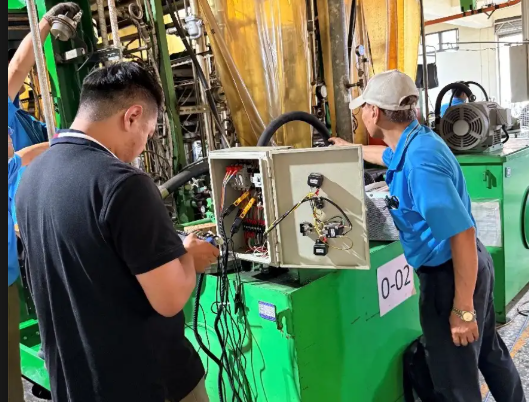
17.2.1 - Figure 17: Visiting Facility Sites and Evaluating Equipment to Assess Technical Needs
12. 2025 Smart Technology, Value-added Innovation, and Cross-disciplinary Project for Industrial Parks: The project focused on smart machinery, smart manufacturing, green transition, and workforce development. It supported machine connectivity, automated inspection, production scheduling, energy diagnosis, green processes, and carbon-reduction technologies. NCUE also linked its smart mechatronics and international programmes with industry demand for engineering and research personnel. (Figures 18 and 19)
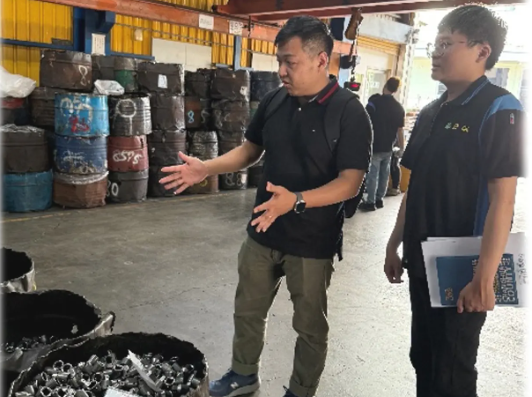
17.2.1 - Figure 18: Implementation of the Smart Technology, Value-added Innovation, and Cross-disciplinary Project for Industrial Parks.
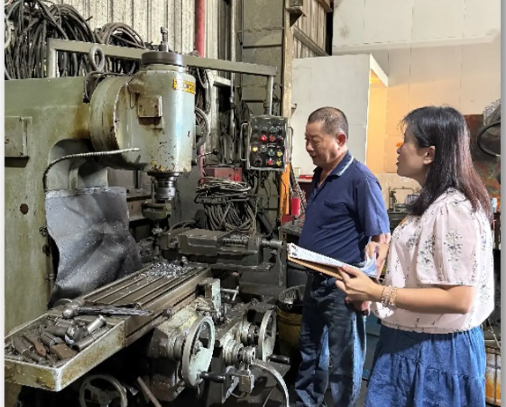
17.2.1 - Figure 19: Visiting Facility Sites and Evaluating Equipment to Assess Technical Needs
13. 2024 Changhua County SBIR Project - Automatic Ignition-coil Testing System: Addressing challenges in traditional manual testing—such as time consumption, human recording errors, and inconsistent inspection standards—NCUE developed a specialized automated testing apparatus for local automobile parts manufacturers. The system utilizes a digitally controlled switched-mode power converter to generate a variable voltage supply adjustable via a signal processor, simulating battery operating voltages from 8V to 14V. Power electronic switches and internal software timers regulate wait times to replicate diverse ignition control environments.
For voltage measurement, a peak-detection circuit captures instantaneous spark breakdown voltages and transmits digital readings to the signal processor via an ADC interface—eliminating manual oscilloscope readings and handwritten logging. An I2C-connected SD card interface stores measurement parameters, allowing rapid configuration switching across different product models. By automating testing, data acquisition, analysis, and logging, the system minimizes human error, shortens inspection cycles, reduces labor costs, and enhances data consistency and traceability—empowering local manufacturers in quality management and production efficiency. (Figures 20 and 21)
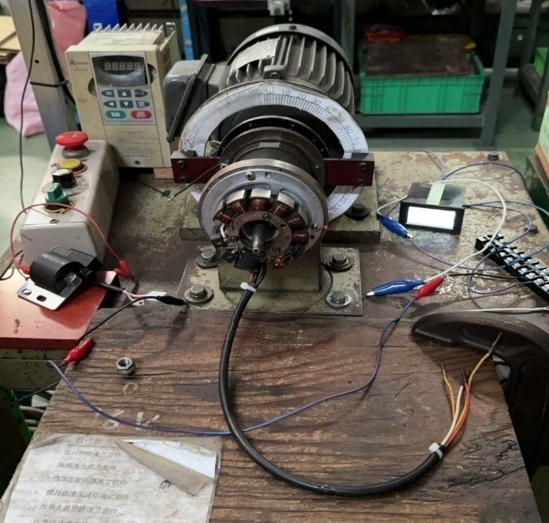
17.2.1 - Figure 20: Implementation of the Changhua County SBIR Automatic Ignition-coil Testing System Project.
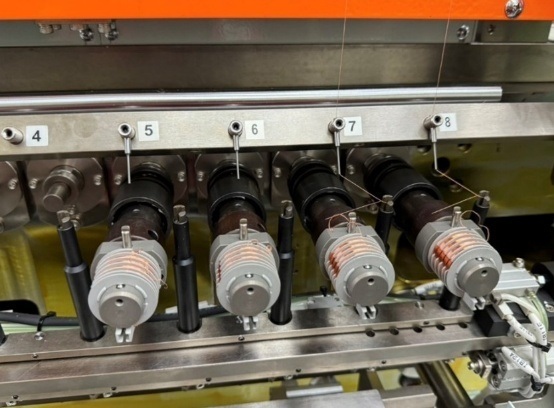
17.2.1 - Figure 21: Development of dedicated testing equipment.
14. Academic Years 2024-2025 to 2025-2026 University Admissions Professionalization Project: Aligning with the Ministry of Education’s adaptive selection and multi-channel admissions policies, NCUE systematically transitioned its Application Admissions review process from heavy reliance on standardized academic test scores toward holistic evaluations encompassing high school learning portfolios, course deliverables, and diverse extracurricular achievements. Coordinated across admissions, academic affairs, department faculty, and Institutional Research (IR) units, the project established transparent evaluation rubrics, key review criteria, and applicant preparation guidelines aligned with each department's talent cultivation goals.
To enhance evaluation consistency, fairness, and professional rigor, NCUE conducted case study workshops, seed instructor training, and reviewer orientation sessions while strengthening exchanges with senior high schools to gather teacher and student feedback. Furthermore, the project leveraged Institutional Research (IR) data analytics to evaluate applicant enrollment records, post-admission academic performance, and review rubric effectiveness—providing evidence-based feedback to dynamically adjust admissions strategies and evaluation rubrics. (Figures 22 and 23)
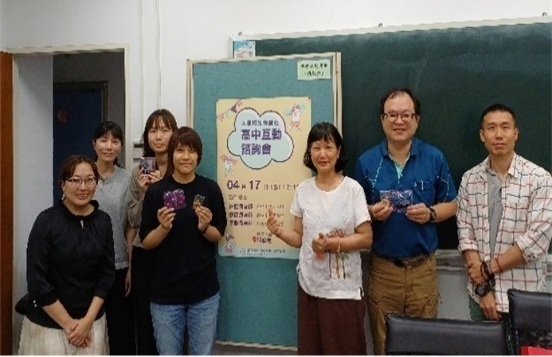
17.2.1 - Figure 22: Consultation meeting with senior-high schools under NCUE Admissions Professionalization Project 1.
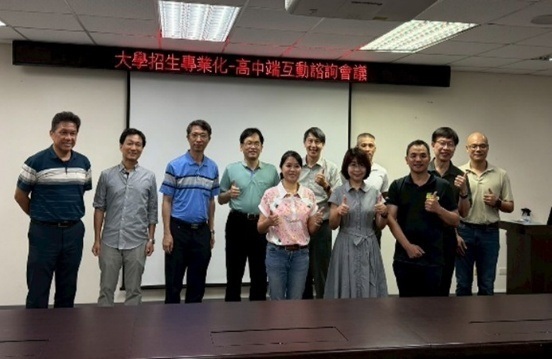
17.2.1 - Figure 23: Consultation meeting with senior-high schools under NCUE Admissions Professionalization Project 2.
15. 2024 Ministry of Education Energy-efficiency Improvement Project: To elevate campus energy and water resource management efficiency, NCUE deployed smart electricity meters, ultrasonic water meters, and an integrated Energy Management System (EMS) across both the Jinde and Baoshan (Shida) Campuses. The installation encompasses 37 key campus locations, 812 smart electricity meter circuits, 24 ultrasonic water meters, 137 data collectors, and 117 current transformers, enabling real-time, high-frequency telemetry of electrical current, voltage, active power, power factor, cumulative electricity consumption, flow rates, and water volume.
The centralized EMS platform provides real-time monitoring dashboards, daily, weekly, monthly and annual performance reports, contract demand overage and water leakage alerts, equipment disconnection notifications, and spatial, building and floor permission controls. It calculates unit energy intensity based on floor area and usage ratios, evaluates optimal utility tariff plans with Taiwan Power Company, and integrates data from 17 solar photovoltaic and energy storage systems across both campuses via API interfaces. Through real-time monitoring, anomaly alerts, and data analytics, NCUE accurately tracks energy flows, upgrades high-consumption equipment, reduces leakage and overage risks, and quantifies renewable energy generation and carbon reduction metrics to guide future campus sustainability policies. (Figures 24 and 25)
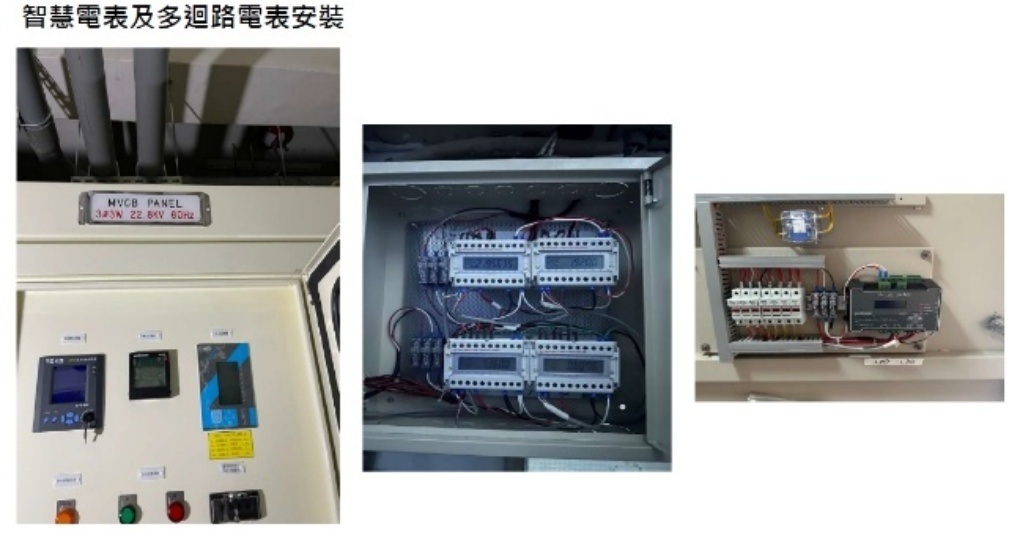
17.2.1 - Figure 24: Installation of Wi-Power smart meters and multi-circuit meters.
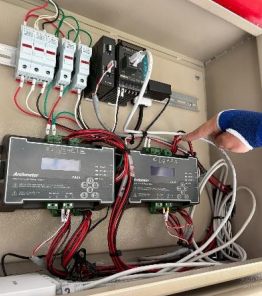
17.2.1 - Figure 25: Example of a completed smart-meter installation.
16. Ministry of Education Teaching and Research Equipment Improvement Project: Supported by Ministry of Education funding, NCUE upgraded crucial campus infrastructure, including air conditioning, information networks, telecommunications, laboratory exhaust and fume extraction systems, power capacity expansions, and specialized teaching and research equipment. These enhancements ensure that laboratories and specialized academic spaces maintain stable, safe, and sustainable operational conditions.
The university systematically evaluated equipment specifications, spatial layouts, energy efficiency, and long-term maintenance requirements, prioritizing procurement schedules based on instructional needs and research capabilities. Strict acceptance testing and inventory management protocols were applied to guarantee equipment performance. Through strategic institutional policy support and resource integration, this program strengthens NCUE’s foundational infrastructure, safeguarding environmental safety and bolstering science and engineering talent cultivation. (Figures 26 and 27)
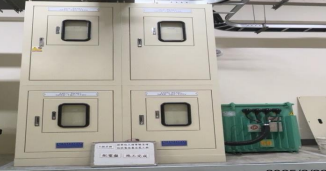
17.2.1 - Figure 26: Implementation of a Ministry of Education project to improve building electrical equipment.
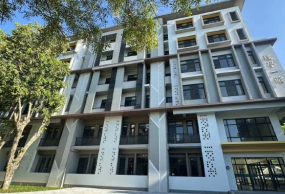
17.2.1 - Figure 27: Installation of air-conditioning, information-network, and smoke-extraction equipment under a Ministry of Education project.
17. Shida Campus Microgrid Project with Taiwan Power Company: NCUE signed a MoU with Taiwan Power Company to implement the "Shida Campus Microgrid Turnkey Project." The design features a 1,200 kW / 1,806 kWh containerized energy storage system (ESS), a 500 kW sound-attenuated diesel generator, one dual-connector 100 kW EV fast-charging station, and six 11 kW AC charging stations, alongside switchboard operations, wiring optimizations, and aging transformer replacements.
At the system's core is the Campus Microgrid Smart Energy Management System (EMS). During normal operations, it supports grid-connected co-generation. During maintenance, it executes planned islanding and seamless transfer transitions to guarantee uninterrupted power for teaching and precision research instruments. In the event of a sudden blackout, the system intelligently sheds non-essential loads in stages based on ESS status and net load, prioritizing critical infrastructure such as student dormitories and emergency response facilities. The design ensures autonomous power supply to critical loads for over 4 hours during grid outages, significantly bolstering campus energy resilience, disaster response, and microgrid research applications. (Figure 28)
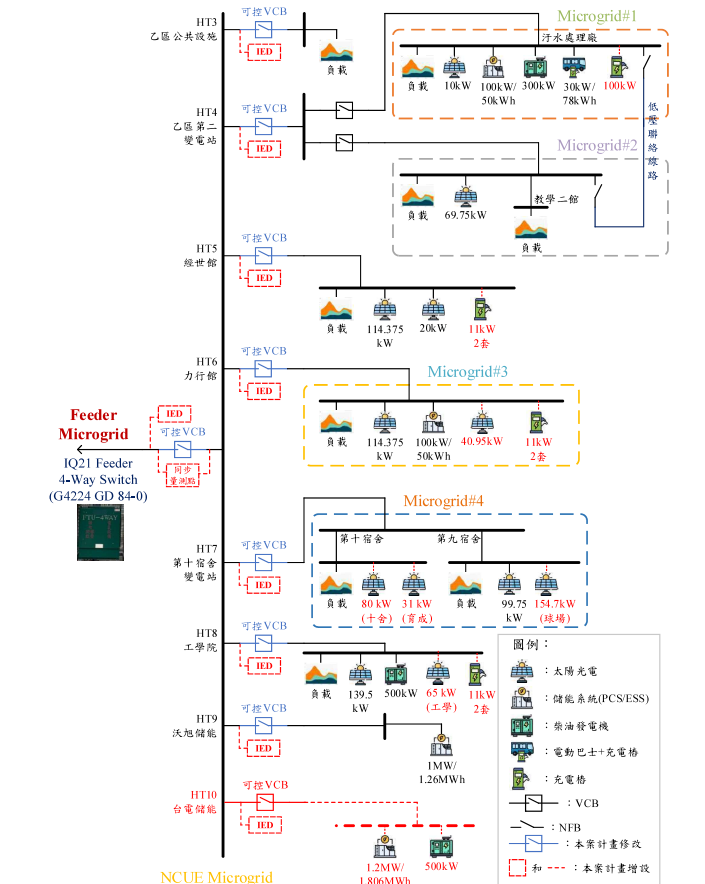
17.2.1 - Figure 28: Project plan for the NCUE Energy Conservation and Power Resilience Development Project.
18. 2025 Teacher Quality and Distinctive Development Project: Aligning with national teacher education policies, NCUE cultivates high-quality educators possessing professional expertise, practical innovation, and social responsibility. The project establishes a "Tripartite Partnership Framework" uniting university professors, secondary school teachers, and student teacher interns. Through joint lesson preparation, classroom observation, post-lesson debriefs, practicum guidance, and professional dialogues, the program fosters dynamic knowledge exchange between teacher preparation institutions and frontline schools.
Sustained collaboration among the Ministry of Education, teacher education universities, and regional partner schools translates strategic policy goals into concrete training and mentoring actions, elevating instructional quality, supporting teacher well-being, and advancing regional educational sustainability. (Figures 29 and 30)
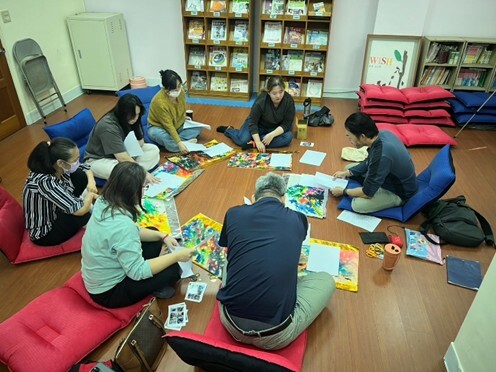
17.2.1 - Figure 29: Mindfulness and art-based stress-relief workshop.
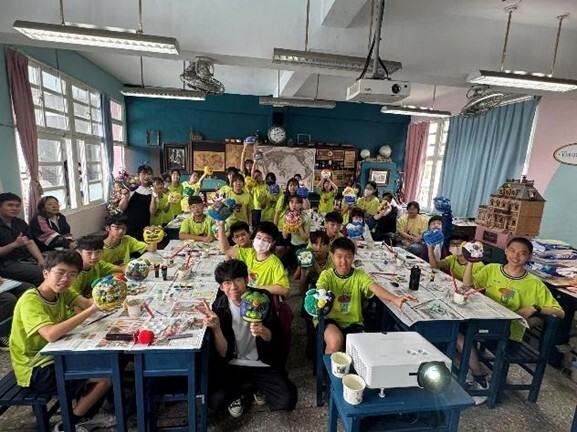
17.2.1 - Figure 30: Teacher candidates conducted collaborative lesson preparation, observation, and post-lesson discussion at a secondary school.
19. 2025 Induction and Professional Development Programme for Beginning Teachers: Assisting the Ministry of Education in establishing a comprehensive support network for beginning teachers, this project accompanies first-year educators in adapting to school environments, developing their educational vocation, and elevating instructional competence. The program encompasses three primary dimensions: "Induction Mentoring & Workshops," "Heritage Mentor Training Mechanism," and "Teacher Re-entry Dialogue & Response." Curricula cover classroom management, curriculum instruction, parent-teacher communication, student counseling, administrative collaboration, Social-Emotional Learning (SEL), and career adjustment.
In 2025, regional workshops were conducted across Northern, Central, and Southern Taiwan, serving a total of 3,399 beginning teachers (387 kindergarten, 1,812 elementary school, 813 junior high school, and 387 senior high school teachers). Through regional seminars, case studies, experience sharing, and heritage mentor support, novice teachers receive immediate, contextualized assistance. Concurrently, feedback channels gather post-induction challenges to inform future course enhancements, providing systematic support that mitigates transition stress for new educators. (Figures 31 and 32)
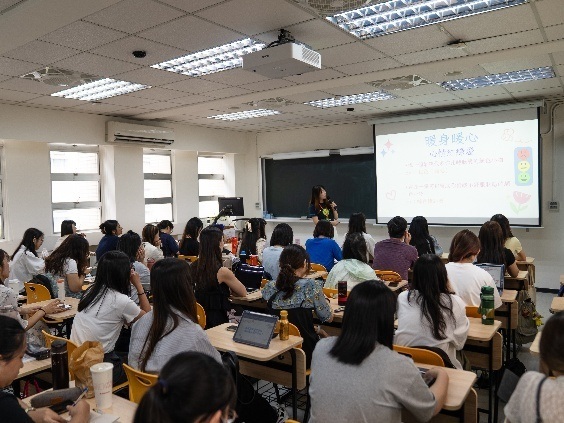
17.2.1 - Figure 31: Character Strength: a class on social-emotional learning and character practice.
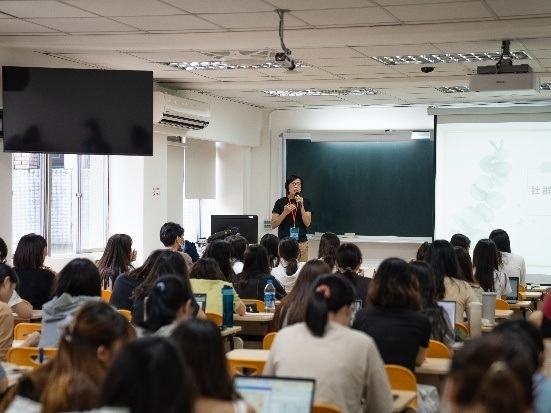
17.2.1 - Figure 32: Community Strength: a class on professional learning and interpersonal relationships.
20. 2025 Outstanding Educational Practicum Awards Programme: Commissioned by the Ministry of Education since 2006, NCUE has administered the national selection and commendation program to institutionalize quality standards in educational practicums and encourage professional innovation among universities, practicum schools, mentor teachers, and student interns. Recognizing individual, team, and collaborative achievements, the awards emphasize mechanisms like the "Educational Practicum Collaboration Alliance Award" to reinforce the tripartite partnership between university professors, secondary school educators, and interns—bridging teacher education theory with classroom practice.
Marking its 20th anniversary in 2025, the program published commemorative outcome compilations, documentary videos, and cross-generational dialogues featuring 15 teachers and students to document two decades of educational practicum evolution. In 2025, the program reviewed 131 submissions and selected 76 awarded exemplars, disseminating best practices to teacher preparation institutions and practicum schools nationwide. Through public honors, knowledge dissemination, and dynamic exchanges, the project enhances societal recognition of the teaching profession, feeds back into curriculum and policy refinement, and reinforces the quality of national teacher education. (Figures 33 and 34)
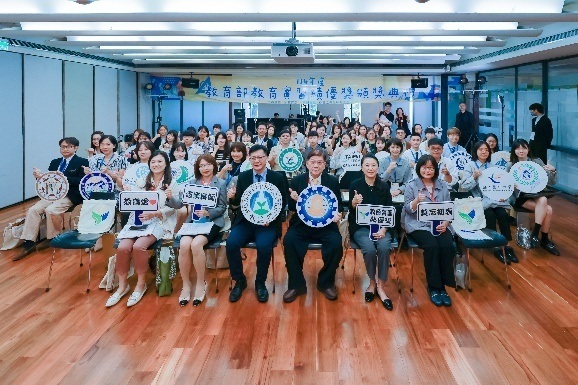
17.2.1 - Figure 33: NCUE organized the Ministry of Education Outstanding Educational Practicum Awards Ceremony.
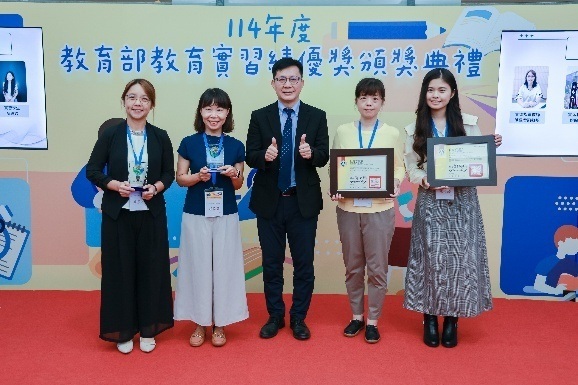
17.2.1 - Figure 34: The Ministry of Education Political Deputy Minister with the Fu Jen Catholic University recipients of the Collaborative Partnership Award.
Chapter 3. Faculty Execution of Research Projects Related to SDGs (16 Representative Projects)
1. Prof. Chun-Hsien Huang (Department of Electrical Engineering) served as the Principal Investigator for the Ministry of Education (MOE) Teaching Practice Research Program – "Integrating Scaffolding Theory with Problem- and Project-Based Learning to Enhance Student Learning Efficacy": The project uses NCUE's Dynamic Reconfigurable System-on-Chip Development course for third- and fourth-year electrical engineering students. The teaching team plans to combine scaffolding theory, development tools, and experimental platforms to create laboratory materials that connect theory with hands-on practice. Problem- and project-based learning activities aim to develop students' independent thinking and inquiry skills and prepare them for technical work in industry. (Figures 35 and 36)
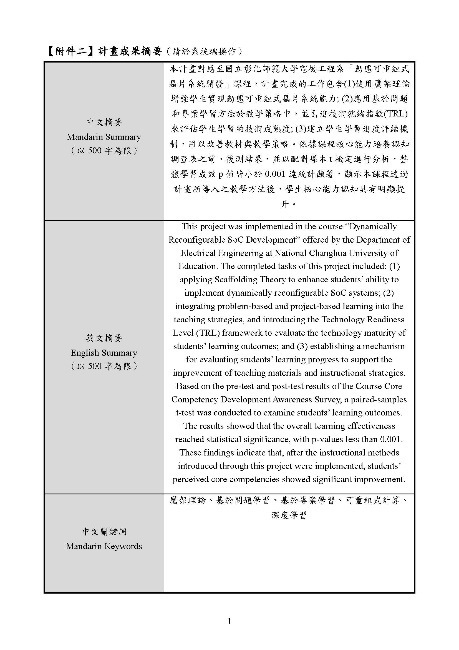
17.2.1 – Figure 35: 2025 MOE Teaching Practice Research Program Outcome Report
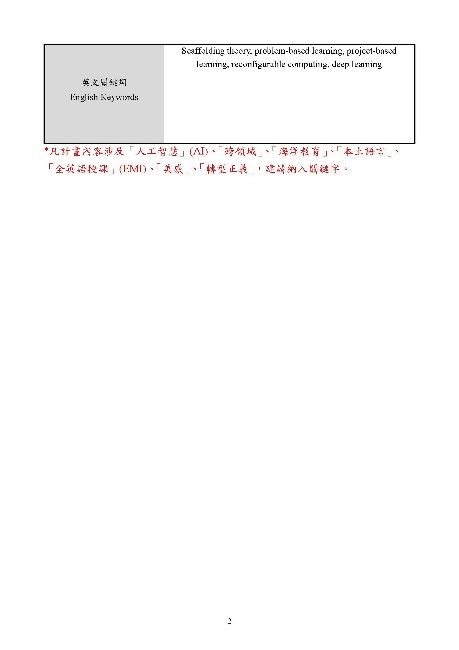
17.2.1 – Figure 36: 2025 MOE Teaching Practice Research Program Outcome Report
2. Prof. Chun-Hsien Huang (Department of Electrical Engineering) served as the Principal Investigator for the NSTC Project – "A Reusable and Adaptive Edge AI System for Crop Pest and Disease Severity Classification and Prediction": This project proposes a reusable, adaptive edge AI system for classifying and predicting crop pest and disease severity. It combines edge AI, system-on-chip design, and robotics, using dragon fruit as the target crop. The system processes data in the field to support immediate, targeted pesticide spraying without sending the data to a backend for computation. The agricultural robot uses an Ultra96-V2 control board. Because of its limited programmable logic resources and the requirements of the multimodal model, the team uses an NVIDIA Jetson Nano GPU for accelerated computation and TensorRT to optimize prediction inference. (Figures 37 and 38)
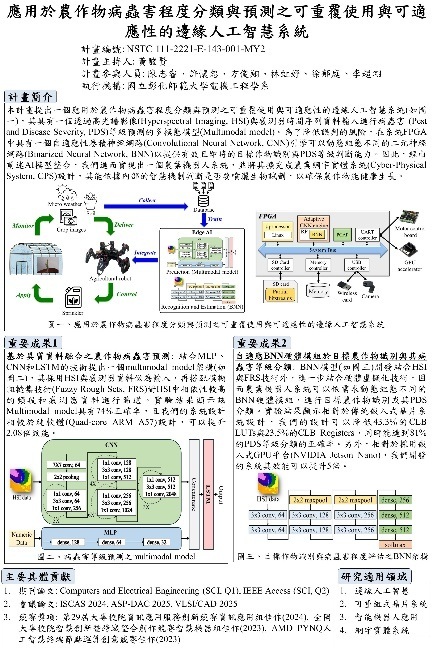
17.2.1 – Figure 37: NSTC Computer Science and Engineering Discipline Result Poster
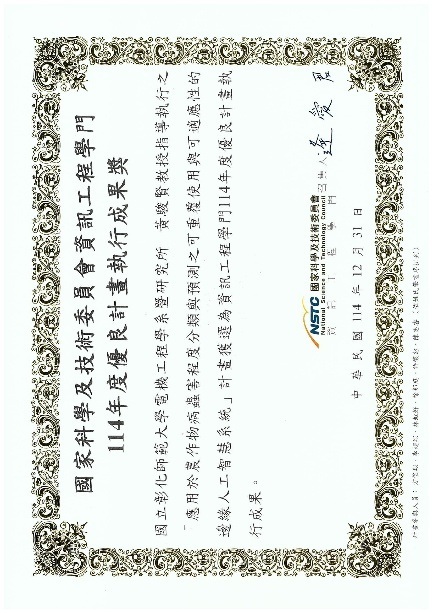
17.2.1 – Figure 38: Certificate of Outstanding Project Execution Outcome Award, NSTC Computer Science Discipline (2025)
3. Prof. Yu Lin Juan (Department of Electrical Engineering) served as the Principal Investigator for the Ministry of Economic Affairs (MOEA) Project – "2025 Local Industry Academic-Research Innovation and Value-Added Integration Project": From March to November 2025, seven academic experts provided technical advice and solutions to 10 companies in Taichung and Changhua. The project focused on applications of energy conservation, energy storage, and wireless power transfer. It combined academic research with industry experience and encouraged supply-chain collaboration to improve energy efficiency, upgrade product technologies, and support green manufacturing. (Figures 39 and 40)
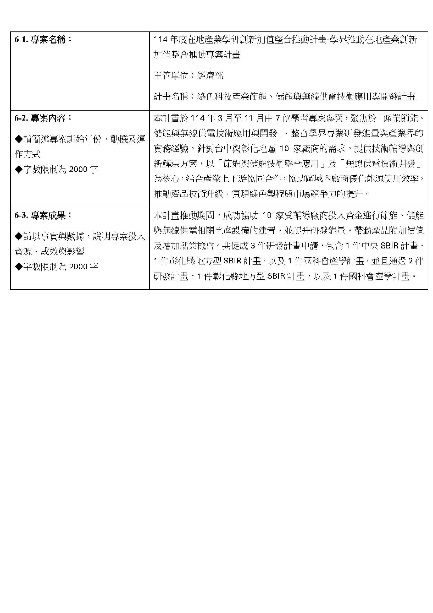
17.2.1 – Figure 39: Project Details Overview
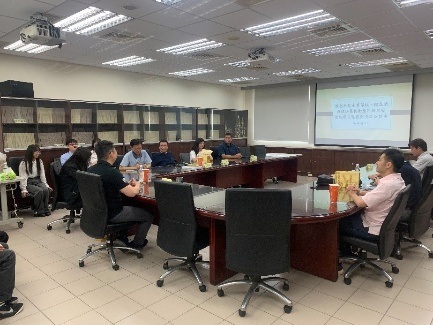
17.2.1 – Figure 40: Technical Presentation and Industry Networking Forum on Green Technology Application and Development of Energy Conservation, Energy Storage, and Wireless Power Transfer (July 23, 2025)
4. Prof. Ping-Cheng Hsieh (Department of Mechatronics Engineering) served as the Principal Investigator for the Industrial Development Administration (MOEA) Project – "Industry-Academia Cooperation Plan for Smart Sensing and Decision Control Talent Cultivation": The project addressed industry partners' needs for workpiece transfer in hot forging and quality inspection in machining. The research team developed an automated optical inspection system for part identification and dimensional measurement, and a smart workpiece transfer application for transfer, alignment, and robotic bin-picking. These applications aim to shorten inspection time, improve product consistency, and reduce human error.
These practical implementations significantly reduce inspection lead times compared to traditional manual approaches. AI-driven recognition and automated dimensional measurement enable high-throughput product inspection in shorter cycles, maximizing efficiency, ensuring every component adheres to high quality standards, minimizing human inspection errors, and elevating product consistency and reliability.
5. Prof. Tzu-Ying Lee (Graduate Institute of Translation and Interpretation) served as the Principal Investigator for the NSTC Project – "How Interpreters' Business Skills Affect Their Career Development": Fewer than 30% of translation and interpretation graduates become freelancers, despite freelancing being a common career aspiration. Salary considerations, barriers to entering the interpreting market, and the effects of AI may influence this choice. This study uses qualitative interviews with interpreting instructors, novice interpreters, and experienced interpreters in northern, central, and southern Taiwan to identify the business skills needed to enter and remain in the profession. It examines freelance assignment workflows, business communication, and self-marketing alongside interpreting competence.
6. Prof. Pei-Shu Tsai (Graduate Institute of Translation and Interpretation) served as the Principal Investigator for the MOE Project – "English Translation of Web Pages, News, and Regulations for K-12 Education Administration": The project translates website news and announcements for the K-12 Education Administration, Ministry of Education, into English. By providing accurate, culturally adapted, and standardized English communications, the initiative ensures global accessibility to Taiwan’s primary, secondary, and preschool educational policies and administrative updates.
7. Prof. Yi-Wen Chen (Department of Sports) served as the Principal Investigator for the MOE Project – "Cultivating and Training Critical Thinking in Literature Reading Using Generative AI": This study explores the effectiveness of Generative AI (ChatGPT) on students' literature reading ability and critical thinking. Integrating lectures with Problem-Based Learning (PBL) and questioning techniques, ChatGPT was used to facilitate pre-class reading, discussions, and literature critique. A single-group pretest-posttest design assessed changes in literature comprehension (via custom questionnaires) and critical thinking dispositions (via evaluation scales), using Wilcoxon signed-rank tests and Spearman rank correlation analysis.
8. Prof. Yi-Wen Chen (Department of Sports) served as the Principal Investigator for the NSTC Project – "Effects of Dual-Task Induced Cognitive Fatigue on the Risk of Ankle Injuries": This project investigates whether cognitive fatigue induced by dual tasks impairs balance and increases the risk of ankle sprains. It aims to provide a basis for research on cognitive training and dual-task training in injury prevention, and to encourage further study of the relationship between cognition and balance. Monitoring changes in blood flow in the prefrontal cortex may help clarify the physiological mechanisms of cognitive fatigue. The findings are expected to help professionals in sports training, injury prevention, and rehabilitation incorporate cognitive fatigue into ankle-sprain risk assessments and develop training, prevention, and treatment strategies.
9. Prof. Yi-Wen Chen (Department of Sports) served as the Principal Investigator for the MOE Project – "Applying Design Thinking to Cultivate and Enhance Students' Knowledge Translation Abilities in Sports Science": This project uses design thinking to help students communicate sports science research in language and formats that their intended audiences can understand. Students work in groups to practice translating journal articles into accessible information. They then apply these skills to their master's thesis proposals and design communications for specific audiences. The instructor assesses knowledge translation through a purpose-designed questionnaire, assignments, and oral presentations, and assesses science communication through oral presentations and peer ratings.
10. Prof. Dun-Chun Huang (Graduate Institute of Human Resource Management) served as the Principal Investigator for the NSTC Project – "How Individual-Team Conscientiousness Discrepancy Affects Individual Work Engagement": This study used social influence and conformity theories to examine whether differences in conscientiousness between individuals and their team members have a curvilinear relationship with work engagement, including possible mediating and moderating mechanisms. None of the five hypotheses received statistical support. However, individual conscientiousness, perceived social loafing, and need for affiliation each had significant main effects on work engagement in the expected directions. The possibility that the direction of individual–team differences affect work engagement remains a topic for further investigation. (Figures 41 and 42)
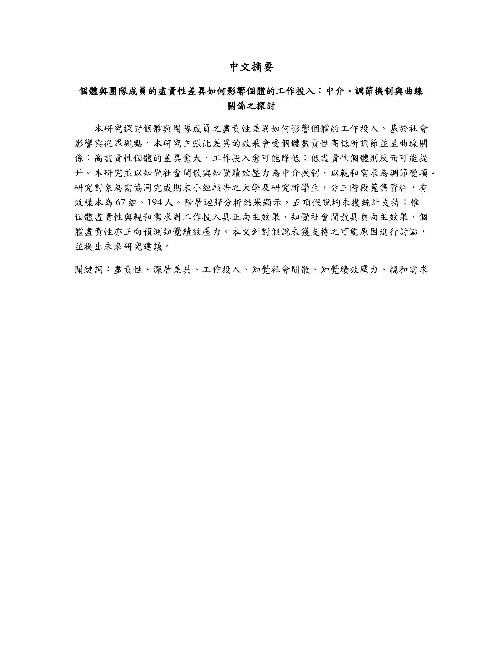
17.2.1 Figure 41: Chinese Abstract of the Final Project Report
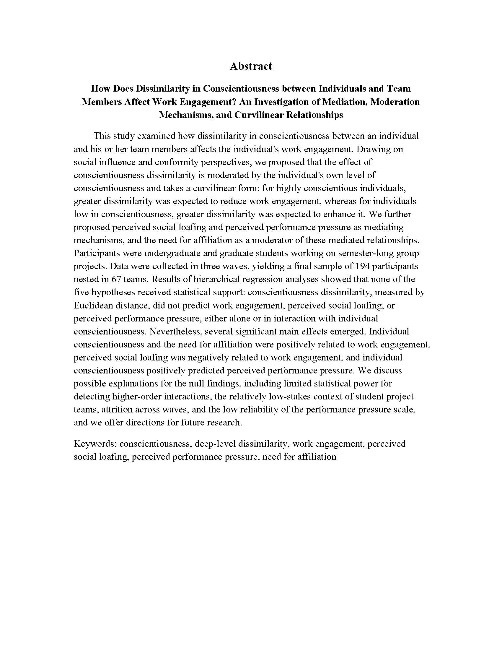
17.2.1 Figure 42: English Abstract of the Final Project Report
11. Prof. Hsin-Te Wu (Department of Electrical and Mechanical Technology) served as the Principal Investigator for the NSTC Project – "Application and Learning Processes of Integrating Augmented Reality and AI Virtual Robots into Interdisciplinary STEM AI Learning": This project addresses difficulties students face in understanding abstract AI models and developing AI applications. Students with limited knowledge of AI models and programming may rely on imitation without understanding the underlying logic. Teachers also need time to explain abstract models and resolve practical problems. The project uses structured teaching materials and hands-on learning to help students understand AI models and development processes, with the aim of improving learning motivation, practical skills, and teaching effectiveness.
12. Prof. Chien-Hui Lin (Department of Special Education) served as the Principal Investigator for the MOE Project – "2025 Pilot Advanced Training Program for Professional Investigators of Campus Gender Incidents": This programme supports the Ministry of Education in providing advanced training for investigators of campus gender-related incidents. It focuses on interviewing students receiving special education and investigating incidents involving the learning environment, resources, curricula, teaching materials, and instruction. The principal and co-principal investigators will analyze training outcomes and participant feedback and prepare recommendations for revising the pilot courses before the project ends. These recommendations will inform subsequent course planning, teaching materials, and investigator training. (Figures 43, 44, 45 and 46)
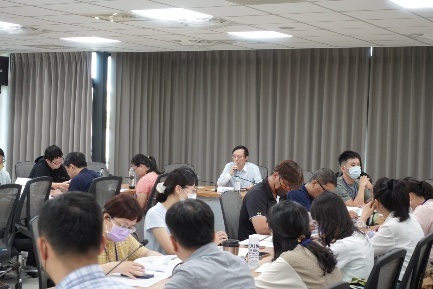
17.2.1 – Figure 43: 2025 Advanced Training for Campus Gender Event Investigation Professionals
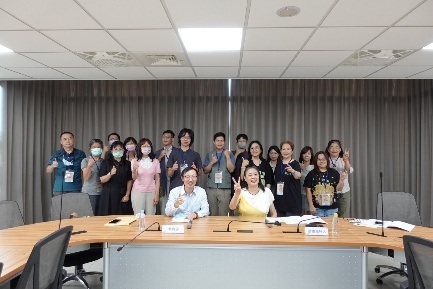
17.2.1 – Figure 44: Group Photo of Participants at the 2025 Advanced Training for Campus Gender Event Investigation Professionals
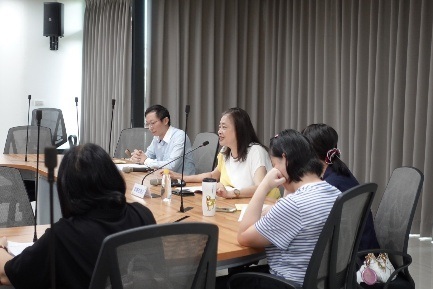
17.2.1 – Figure 45: Host Explaining Training Content at the 2025 Advanced Training for Campus Gender Event Investigation Professionals
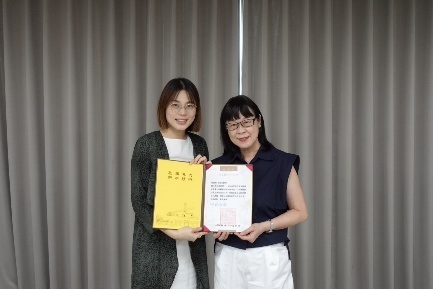
17.2.1 – Figure 46: Ministry of Education Section Chief Presenting Certificate of Appreciation to Lecturer
13. Prof. Shu-Hua Lin (Department of Guidance and Counseling) served as the Principal Investigator for the MOE Project – "Fostering System Collaboration Capabilities via Problem-Based Learning: A Case Study of School Counseling and Systemic Collaboration Courses": This mixed-methods study used problem-based learning with 45 third-year students taking School Counseling and Systemic Collaboration. Students worked in groups. Scale results showed significant improvements in collaboration knowledge, beliefs, attitudes, and strategies. Analysis of group projects, individual reflections, and end-of-term focus-group interviews showed that students understood relevant rules and procedures, could use support resources, and demonstrated problem assessment and conceptualization skills. They also showed openness, flexibility, communication skills, and the ability to consider others' perspectives. The study offers reflections and recommendations for future problem-based teaching. (Figures 47 and 48)
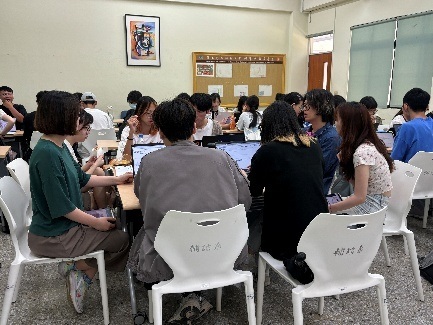
17.2.1 – Figure 47: PBL Teaching
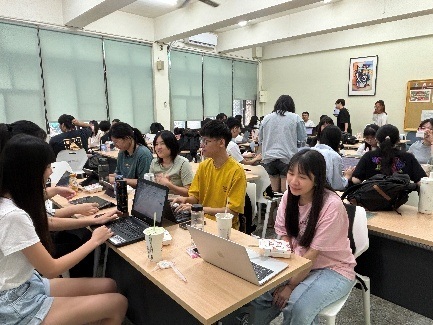
17.2.1 – Figure 48: PBL Teaching
14. Prof. Shu-Hua Lin (Department of Guidance and Counseling) served as the Principal Investigator for – "Constructing an Advocacy Competency Model for School Counselors and Integrating Training into Pre-Service Teacher Curricula": The first year of this research examined school counsellors' advocacy experiences and developed a model of advocacy knowledge and skills. The current phase uses that model to design advocacy components within existing pre-service teacher education courses, assess students' learning experiences and the effects of training, and examine whether the findings support the model. Integrating advocacy into existing courses offers a way to teach these professional values and skills when adding a separate course is difficult. (Figures 49 and 50)
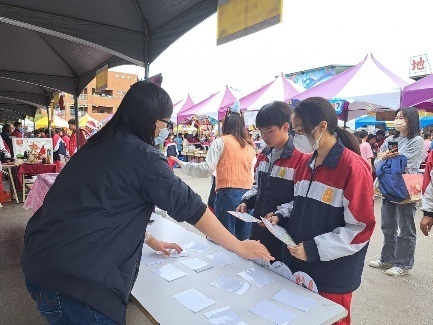
17.2.1 – Figure 49:Advocacy
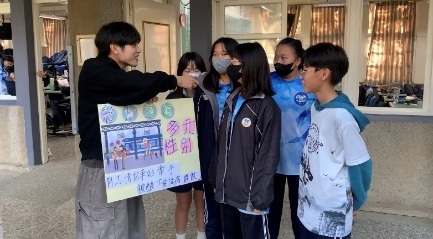
17.2.1 – Figure 50:Teaching Activities
15. Prof. Ie-Bin Lian (Graduate Institute of Statistics and Information Science) served as the Principal Investigator for the MOE "High School Mathematics Talent Cultivation Program": In the 2025–2026 academic year, the programme enrolled 50 students in Grades 10 and 11. It combined theory and practical activities to develop mathematical concepts, logical reasoning, and inquiry skills. Real-life examples and hands-on problem-solving activities aimed to deepen students' interest in mathematics and connect academic study with applications. Overall, the project demonstrates strong implementation progress and high student engagement, successfully fostering high school students' passion for mathematics and clarifying their pathways toward future academic study and research in the discipline. (Figures 51 and 52)
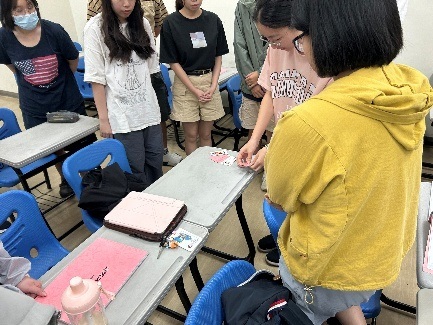
17.2.1 – Figure 51: High School Mathematics Talent Cultivation Program-1
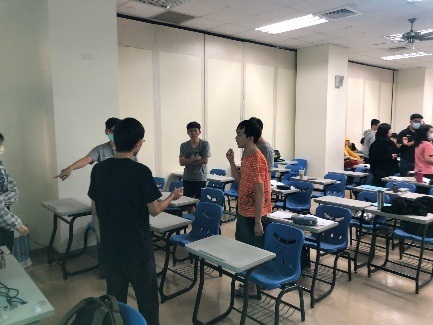
17.2.1 – Figure 52: High School Mathematics Talent Cultivation Program-2
16. Prof. Pei-Fen Wu (Department of Information Management) served as the Principal Investigator for the NSTC Project – "Applying XR to Promote Senior Technology Experience: Exploring the Effects of Expressive Art Creation on Creativity and Well-Being": This project develops digital expressive arts courses for older adults using XR technologies. Through digital arts education, it aims to support artistic expression, creativity in later life, and engagement with technology, with expected psychological benefits. (Figures 53, 54, 55 and 56)
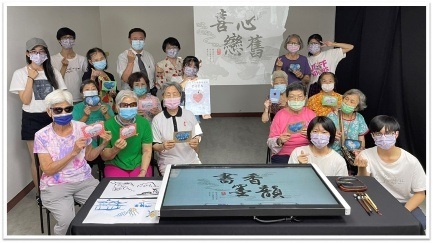
17.2.1 – Figure 53: Group Photo of Event Participants
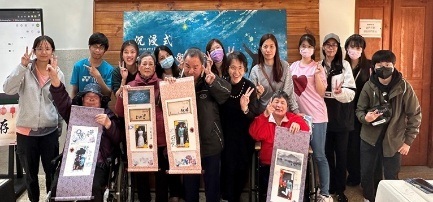
17.2.1 – Figure 54: Group Photo of Event Participants
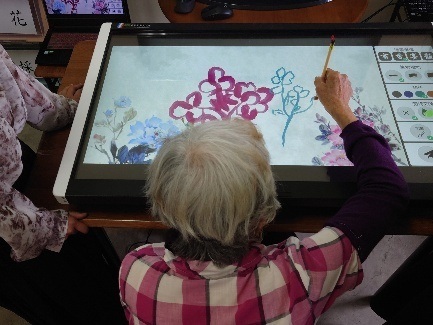
17.2.1 – Figure 55: Participants Engaging in the Event
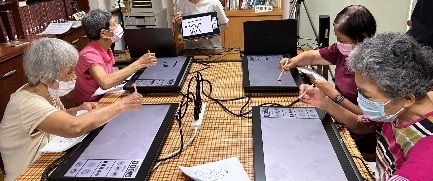
17.2.1 – Figure 56: Participants Engaging in the Event
Chapter 4. Faculty Serving as Committee Members in Relevant Organizations to Promote Sustainable Development Policies (16 Representative Cases)
Faculty members from NCUE's seven colleges serve on government advisory and review committees and participate in policy deliberations. They provide recommendations in their areas of expertise to support government policies related to the SDGs.
1. Prof. Dun-Chun Huang (Graduate Institute of Human Resource Management) served on the selection committee for the 2025 Model Worker Selection organized by the Central Taiwan Science Park Bureau, National Science and Technology Council (NSTC). (Figure 57)
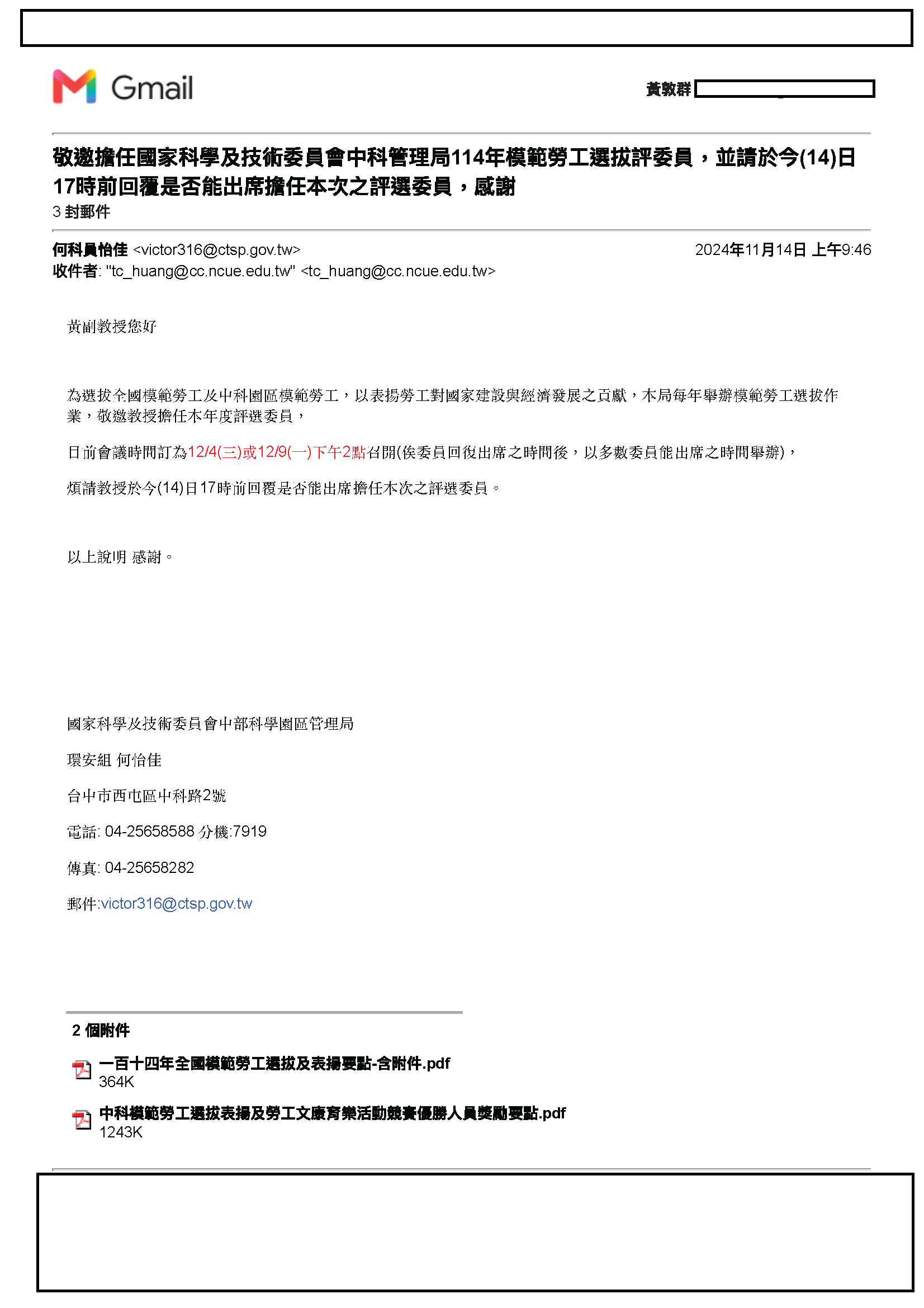
17.2.1- Figure 57: Invitation to Serve as a Selection Committee Member for the 2025 Model Worker Awards of the Central Taiwan Science Park Bureau, National Science and Technology Council
2. Prof. Dun-Chun Huang (Graduate Institute of Human Resource Management) served as an Evaluation Committee Member for the Taiwan Social Sciences Citation Index (TSSCI) Management I Division at the Humanities and Social Sciences Research Center, NSTC. (Figure 58)
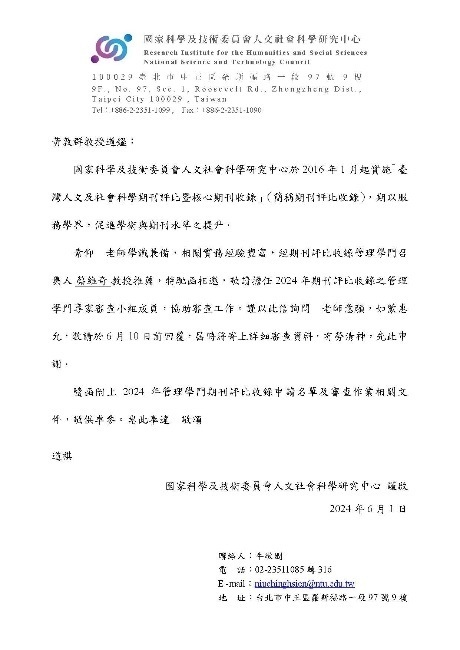
17.2.1 Figure 58: Invitation Letter for Prof. Dun-Chun Huang
3. Prof. Dun-Chun Huang (Graduate Institute of Human Resource Management) served as a Proposal Reviewer for NSTC Special Research Projects and College Student Research Projects.
4. Prof. Hua Feng (Department of Special Education) served as a Consultant for the Vocational Rehabilitation Resource Center of the New Taipei City Labor Affairs Bureau, conducting regular visits and advising on rehabilitation frameworks.
5. Prof. Hua Feng (Department of Special Education) served as an Advisory Committee Member for the Emotional and Behavioral Support Services Center for Special Education Students under K-12 Education Administration, MOE. (Figure 59)
Roster of Advisory Personnel, Emotional and Behavioral Support Center for Special Education Students, K-12 Education Administration: https://sencir.spc.ntnu.edu.tw/goweb/include/index.php?Page=5-F-3-1-3
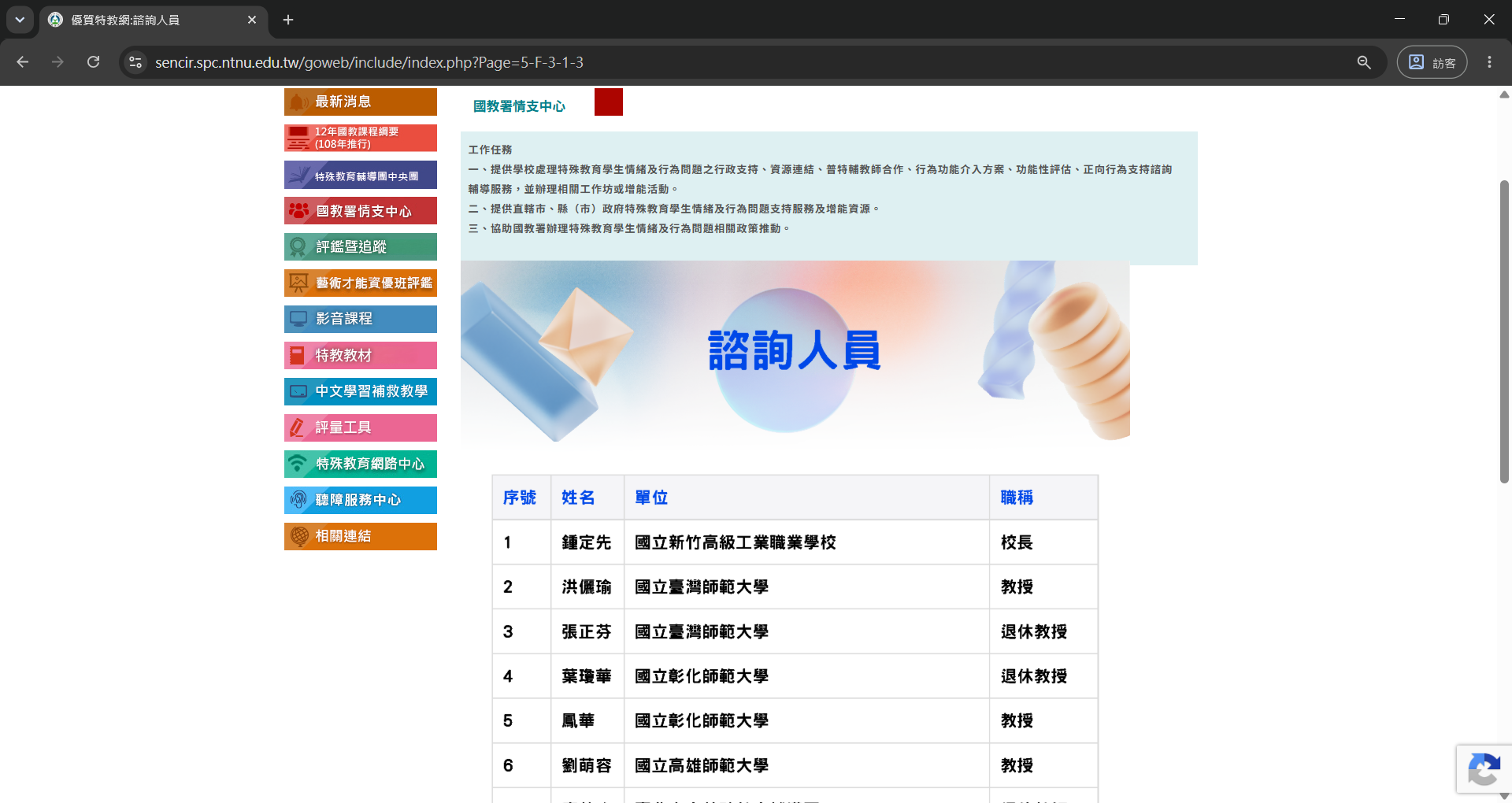
17.2.1 – Figure 59: Advisory personnel for the K-12 Education Administration’s emotional and behavioral support center. See the linked roster.
6. Prof. Tsuei-Yuan Lai (Department of Special Education) served as a Special Education Advisory Committee Member for the Taichung City Government, assisting in policy planning and development.
7. Prof. Tsuei-Yuan Lai (Department of Special Education) served on special education advisory committees and identification and placement committees for the Changhua, Yunlin, Miaoli, Chiayi, and Nantou County governments, assisting with the planning and oversight of special education evaluation and guidance services.
8. Prof. Shu-Chun Lin (Department of Guidance and Counseling) served as an Evaluation Committee Member for the MOE Evaluation of Student Guidance and Counseling Operations in Higher Education Institutions.
9. Prof. Shu-Chun Lin (Department of Guidance and Counseling) served on the working group of the Ministry of Education's Central Region Coordination and Consultation Center for College Student Counseling, helping review funding applications for training activities. (Figure 60)
Website of the Central Region College and University Student Counseling Work Coordination and Advisory Center, Ministry of Education: https://consultcenter.com.tw/about/9/
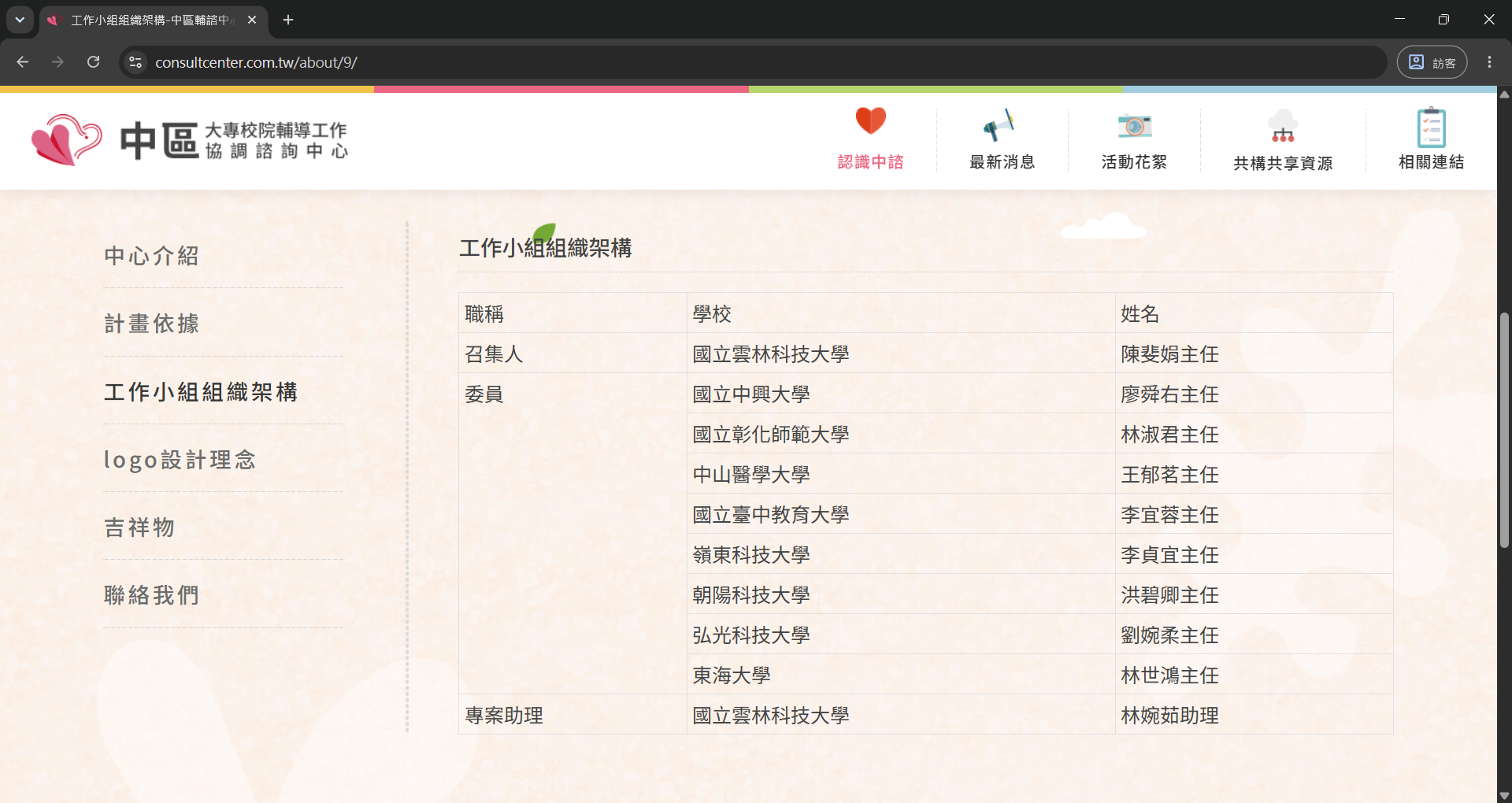
17.2.1 – Figure 60: Working group of the Ministry of Education’s Central Region Coordination and Consultation Center for College Student Counseling. See the linked website.
10. Prof. Yi-Ling Yeh (Department of Guidance and Counseling) served on the parole review committee of Taichung Detention Center (Taichung Branch Prison), Agency of Corrections, Ministry of Justice. Parole permits conditional early release under supervision when prisoners meet statutory requirements, including demonstrated rehabilitation and completion of the required portion of their sentence.
11. Prof. Yi-Ling Yeh (Department of Guidance and Counseling) served on the complaints committee of Taichung Detention Center, Agency of Corrections, Ministry of Justice, handling disputes concerning daily life, treatment, and rights.
12. Prof. Yi-Ling Yeh (Department of Guidance and Counseling) served on the sexual harassment investigation team of the Changhua Police Precinct, Changhua County Police Bureau. The team's work includes assigning case teams, interviewing the parties and other relevant persons, and preparing investigation reports.
13. Prof. Yi-Ling Yeh (Department of Guidance and Counseling) served on the sexual harassment investigation team of the 3rd Highway Police Brigade, National Highway Police Bureau. The team handles workplace and other sexual harassment cases by assigning case teams, interviewing the parties and other relevant persons, and preparing investigation reports.
14. Prof. Yi-Ling Yeh (Department of Guidance and Counseling) served as an external inspection committee member for the Agency of Corrections, Ministry of Justice. External inspection aims to improve transparency in correctional institutions and protect the rights of people in custody through independent member selection, annual inspection planning, and the handling of complaints. (Figure 61)
Roster of Committee Members of the 3rd External Inspection Panels for Correctional Institutions (2024/10/16–2026/05/27): https://drive.google.com/open?id=1Mt3EpU2BpR16BY9ktANUHBylrHKXSvUL
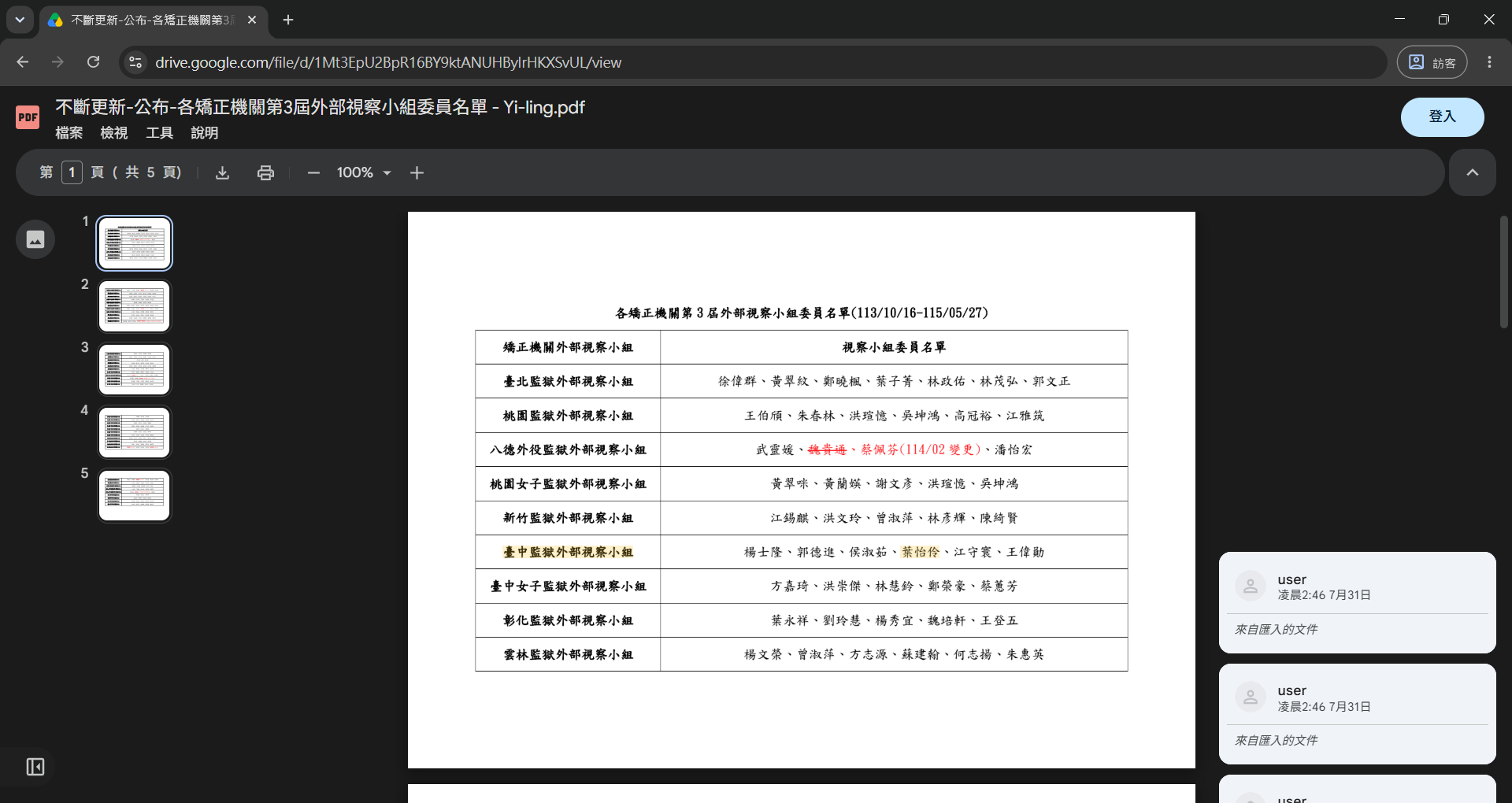
17.2.1 – Figure 61: Members of the third external inspection panels for correctional institutions. See the linked roster.
15. Prof. Ie-Bin Lian (Graduate Institute of Statistics and Information Science) served on the Institutional Review Board for Biomedical Science Research, Academia Sinica, reviewing the ethics of biomedical research. (Figures 62 and 63)
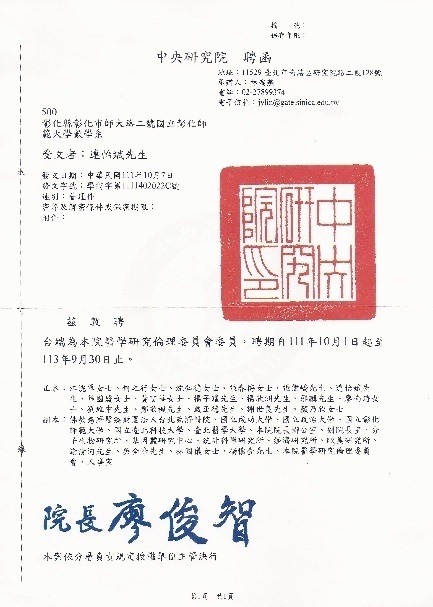
17.2.1 – Figure 62: Appointment Letter from Academia Sinica IRB
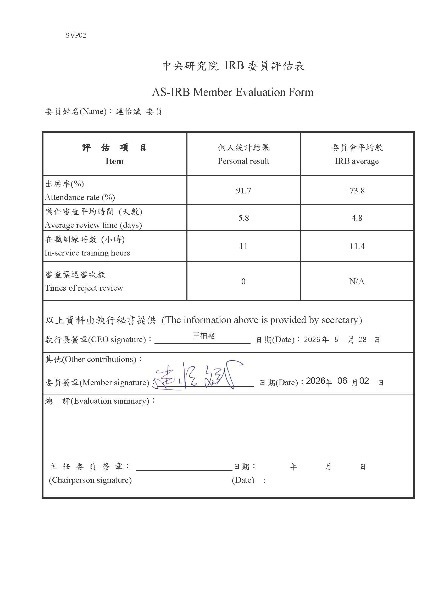
17.2.1 – Figure 63: IRB Committee Member Evaluation Form
16. Prof. Yu-Chun Lin (Department of Accounting) served on the natural gas pricing review committee of the Energy Administration, Ministry of Economic Affairs. Her work included reviewing methods for calculating prices charged by natural gas producers or importers, including authorized adjustment limits and assisting with the review of rules for calculating gas prices and basic charges, including charges for household, commercial, and service-sector customers. (Figure 64)
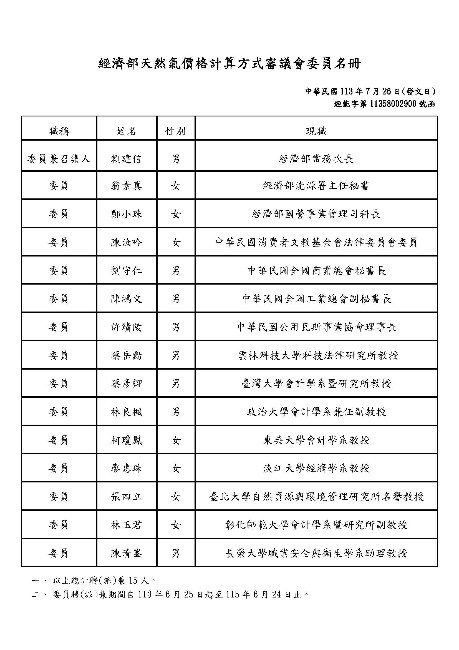
17.2.1 Figure 64: Member Roster of the Natural Gas Price Calculation Review Committee, Ministry of Economic Affairs