
SDG 17.2.3 International collaboration data gathering for SDG
NCUE organizes and participates in international conferences and invites overseas scholars for academic exchanges. These activities build international partnerships and support the exchange of SDG-related data and research findings. The following are ten examples:
1. The 7th Baisha International Conference on Historical Geography
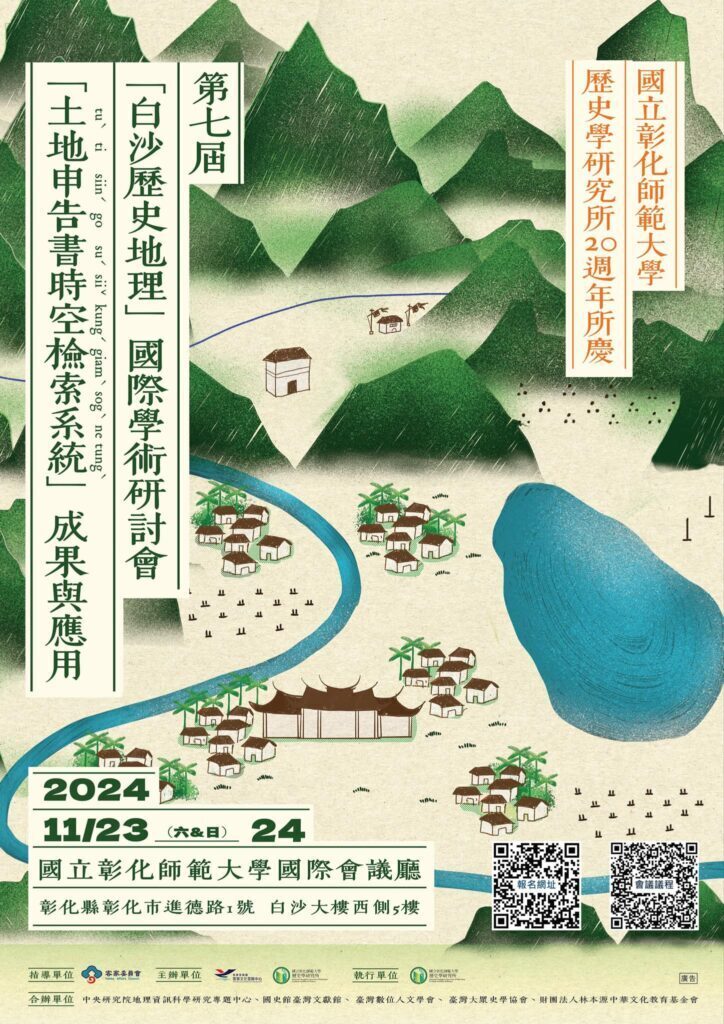
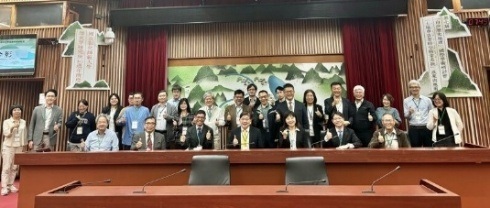
On November 23 and 24, 2024, the Graduate Institute of History held the 7th Baisha International Conference on Historical Geography. Thirteen papers were presented on topics including Results and Applications of the Spatio-Temporal Search System for Land Declaration Documents, medical and biographical writing from the perspective of public history, mountain development and surveys and ethnic migration, and commercial and agricultural development and family networks in central Taiwan. The conference shared the results of the land declaration document retrieval database project. By providing convenient and accurate data retrieval, the project helps interpret the historical memories connecting people and land. (Figures 1 and 2)
Campus News: https://www.ncue.edu.tw/p/406-1000-28724,r93.php?Lang=zh-tw
SDG Relevance: SDG 4 Quality Education; SDG 17 Partnerships for the Goals.
2. International Conference on Embodied Imagination® and Its Interdisciplinary Applications
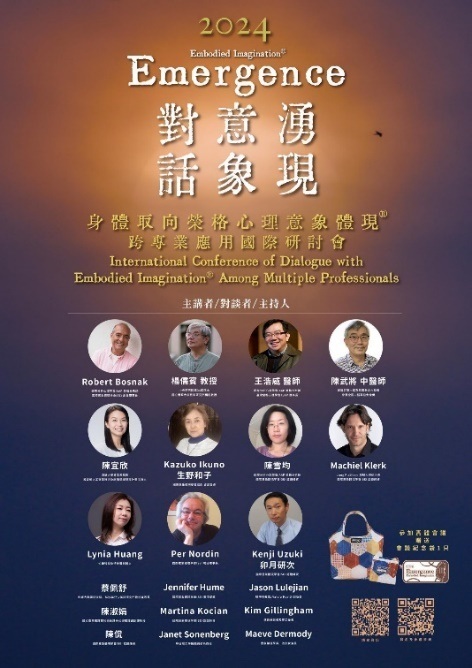
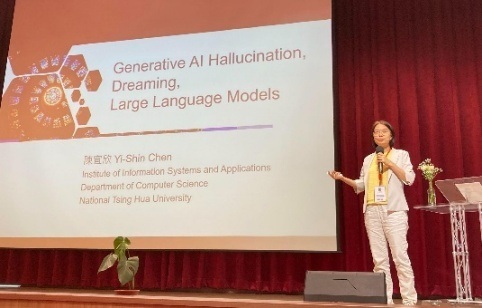
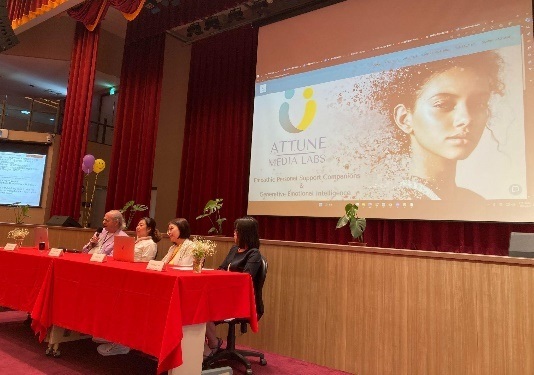
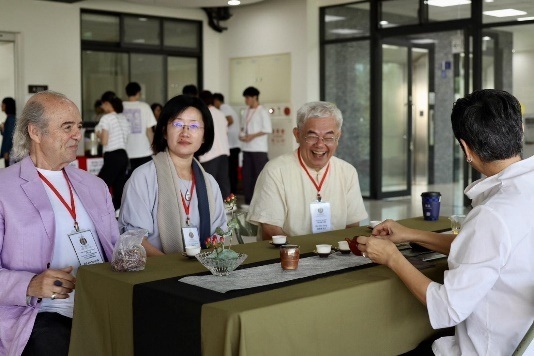
From July 31 to August 4, 2024, the Community Counseling and Human Development Service Center organized the “International Conference of Dialogue with Embodied Imagination® Among Multiple Professionals.” The conference emphasized embodied imagination, interdisciplinary dialogue, and hands-on experience. Through in-depth dialogue, participants examined interdisciplinary applications of embodied imagination in artificial intelligence, psychotherapy, the arts, medicine, and related fields. (Figures 3, 4, 5 and 6)
Campus News: https://www.ncue.edu.tw/p/406-1000-27757,r93.php?Lang=zh-tw
SDG Relevance: SDG 4 Quality Education; SDG 17 Partnerships for the Goals.
3. The 9th EAI International Conference on Smart Grid and Internet of Things (EAI SGIoT 2025)
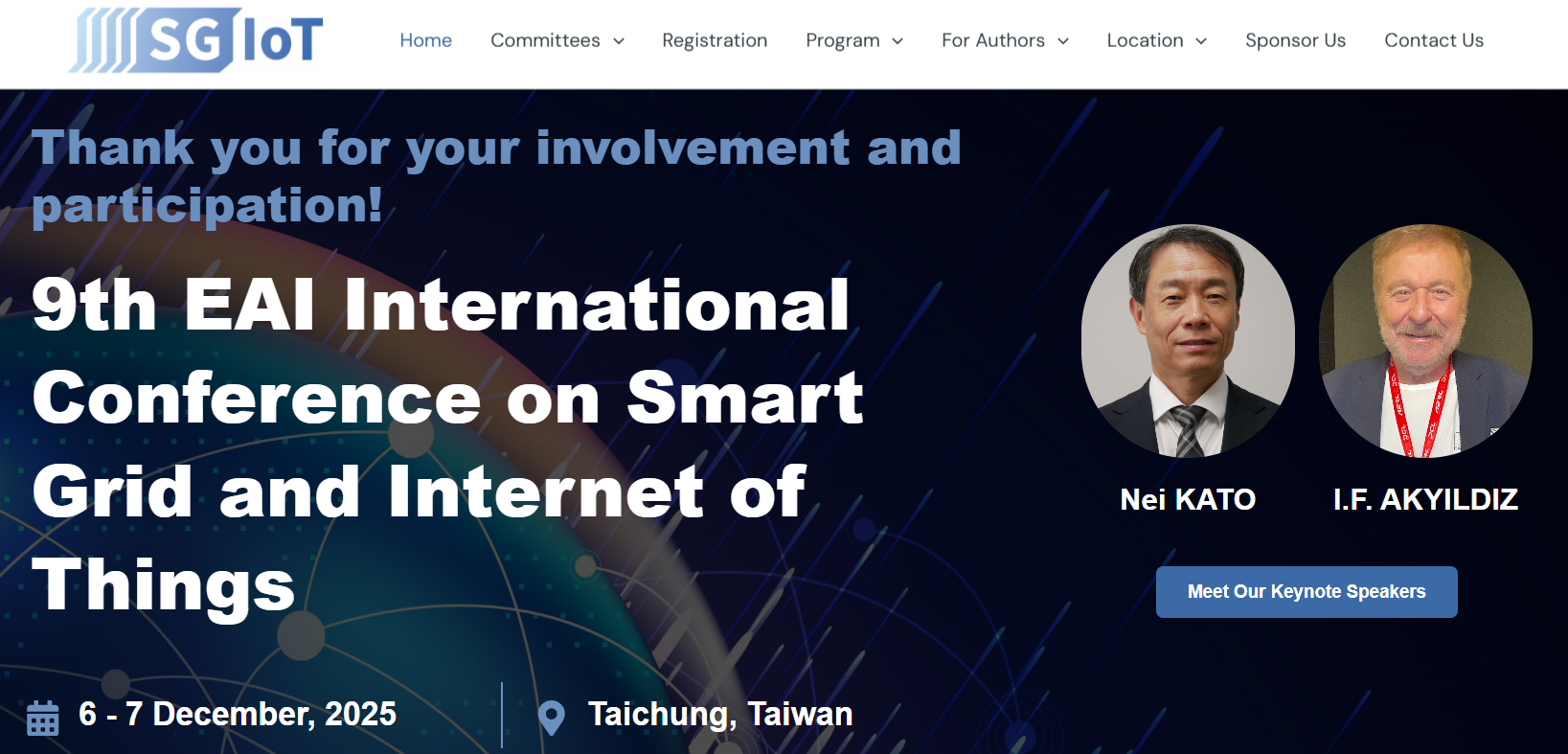
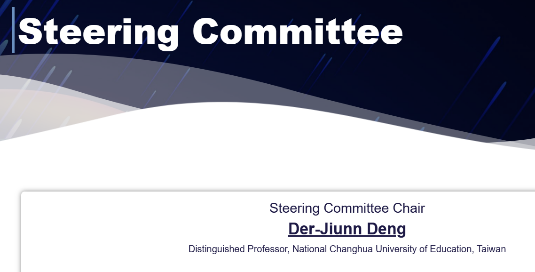
Professor Der-Jiunn Deng of the Department of Computer Science and Information Engineering organized the 9th EAI International Conference on Smart Grid and Internet of Things. The conference enabled exchanges with international experts on key smart-grid and Internet-of-Things issues, supported national goals for emerging-technology industries, and included Professor Deng’s service on the Steering Committee. (Figures 7 and 8)
Conference Website: https://sgiot.eai-conferences.org/2025/
SDG Relevance: SDG 9 Industry, Innovation and Infrastructure; SDG 17 Partnerships for the Goals.
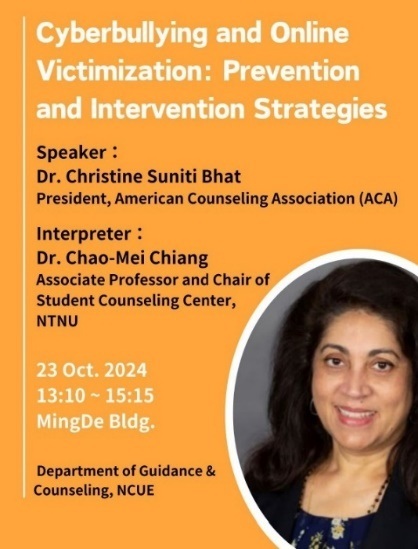
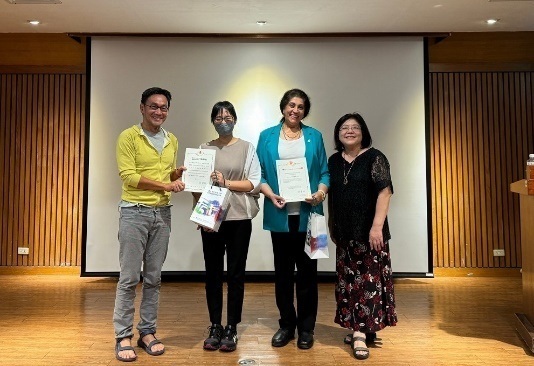
4. Lecture on Cybercrime and Mental Health by ACA President Christine Suniti Bhat
Christine Suniti Bhat, President of the American Counseling Association, visited NCUE to deliver a lecture on cybercrime and mental health. She emphasized the impact of online victimization on younger generations, including cyberbullying and sexting. She urged counseling professionals to better understand online platforms and social networking sites, to teach young people how to use social media safely, and to respond to victims with empathy so that they understand they are not at fault and can reduce feelings of shame. The lecture helped faculty members and students better understand the harms of cyberbullying and the non-consensual circulation of private images, as well as the importance of prevention and active intervention. (Figures 9 and 10)
Campus News: https://www.ncue.edu.tw/p/406-1000-28618,r93.php?Lang=zh-tw
SDG Relevance: SDG 3 Good Health and Well-Being; SDG 5 Gender Equality; SDG 16 Peace, Justice and Strong Institutions.
5. International Conference on Expressive Arts Therapy
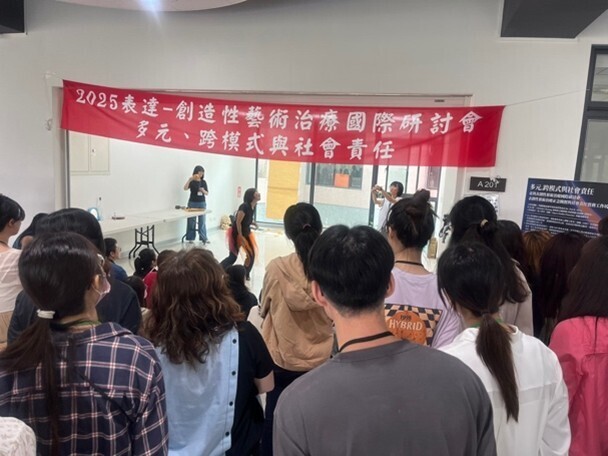
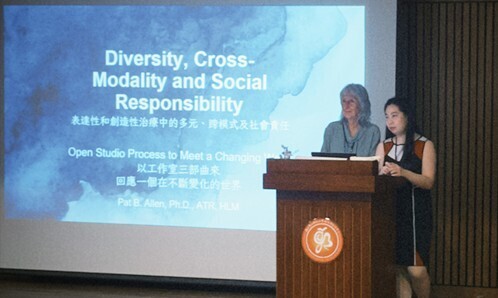
NCUE, in collaboration with the Taiwan Association of Expressive Arts Therapy (TAIAT), co-hosted the "Diversity, Cross-Modality and Social Responsibility" International Conference on Expressive and Creative Arts Therapy from April 18 to 20, 2025. Designed to foster exchanges between Taiwan and the global expressive and creative arts therapy community and establish NCUE as a major hub for academic research and clinical practice, the conference convened experts, scholars, and practitioners across related disciplines.
The event featured 80-to-100-minute hybrid (online and in-person) topical forums categorized by service settings and application orientations. By building a reciprocal platform for international exchange, the conference promotes diverse academic growth and global alignment for expressive and creative arts therapy within NCUE’s Department of Guidance and Counseling. (Figures 11 and 12)
Campus News: https://www.ncue.edu.tw/p/406-1000-30235,r93.php?Lang=zh-tw
SDG Relevance: SDG 3 Good Health and Well-Being; SDG 10 Reduced Inequalities; SDG 16 Peace, Justice and Strong Institutions.
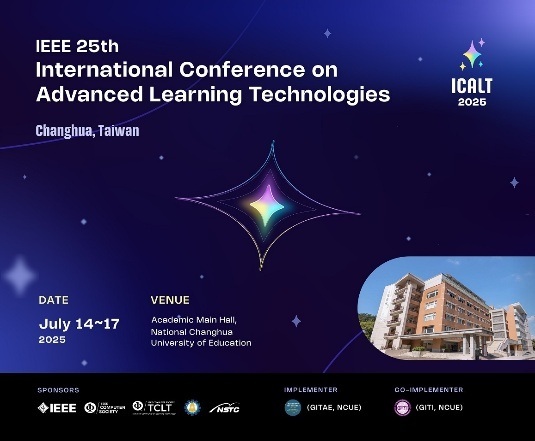
6. ICALT 2025: International Experts Explore the Future of Educational Technology
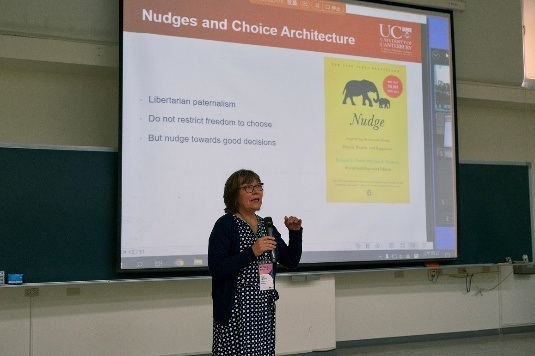
NCUE hosted ICALT 2025 from 14 to 17 July 2025, bringing together more than 100 international scholars and experts to discuss AI, big data, virtual reality, and intelligent learning environments. Alongside keynote speeches, the Women in Engineering Panel examined gender inequality and career challenges faced by women in technology and academia. At the Emerging Technologies in Education Panel, researchers from the Institute for Research Excellence in Learning Sciences at National Taiwan Normal University discussed the effects of AI on education systems and applications in scientific inquiry, cognition, and immersive learning. (Figures 13 and 14)
Campus News: https://www.ncue.edu.tw/p/406-1000-31093,r93.php?Lang=zh-tw
SDG Relevance: SDG 5 Gender Equality; SDG 17 Partnerships for the Goals.
7. The 34th International Conference on Poetics
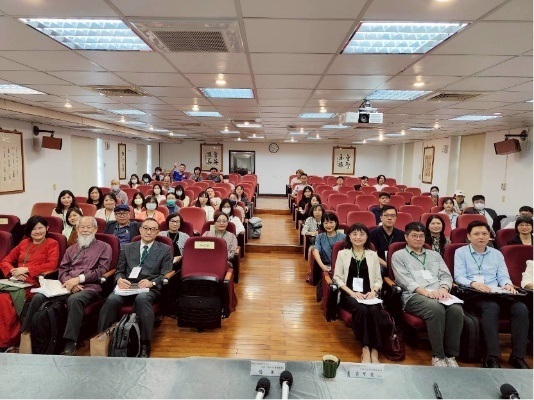
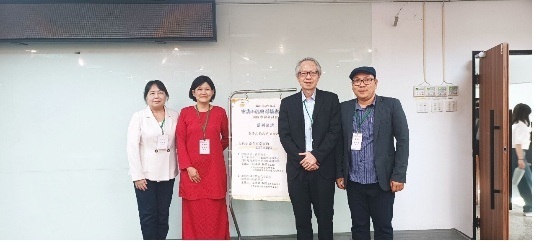
On 7 November 2025, NCUE's Department of Chinese hosted the "34th International Academic Conference on Poetics," gathering domestic and international scholars, experts, and researchers. Marking the 34th international conference organized by the department since its establishment in 1991, the event brought together academic energy from Japan, Vietnam, Malaysia, South Korea, Mainland China, and Taiwan to foster cross-disciplinary dialogues. Centering on classical fiction, the conference facilitated cross-temporal and cross-regional discussions to re-examine textual connotations.
The conference highlighted how reading and circulation establish literary canons while driving reflection, adaptation, and narrative revision across literary lineages. Authors' conscious awareness of themes, characterizations, and plot structures transforms into creative momentum for rewriting and adaptation. By applying modern research tools to re-examine classic inquiries, participants offered new interpretations and renewed the contemporary value of classical fiction. (Figures 15 and 16)
Campus News: https://www.ncue.edu.tw/p/406-1000-32391,r93.php?Lang=zh-tw
SDG Relevance: SDG 17 Partnerships for the Goals.
8. The 41st International Conference on Science Education
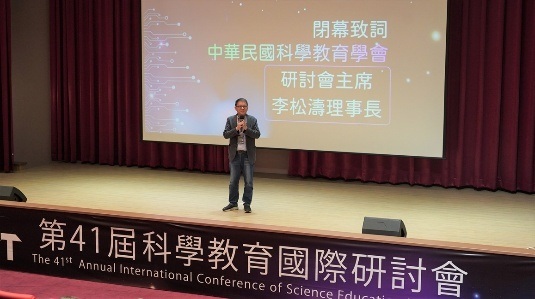
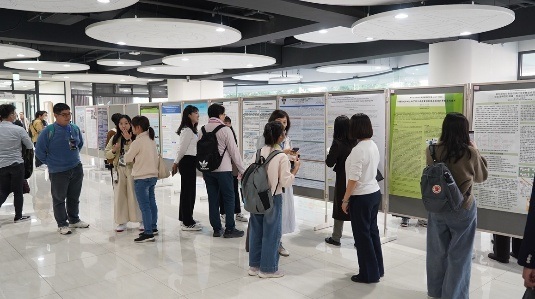
NCUE hosted the 41st Annual International Conference of Science Education in Taiwan from 11 to 13 December 2025. The conference focused on innovative STEM education and science teacher preparation and received recognition from the East-Asian Association for Science Education (EASE). Nearly 300 researchers, teacher educators, and primary and secondary school teachers from Taiwan and abroad attended. Chinese- and English-language sessions included keynote speeches, workshops, oral presentations, interactive poster sessions, and forums. Topics covered STEM/STEAM education, critical thinking, competency-based teaching and assessment, AI, and digital learning. The organizers aimed to use the discussions to inform education policy and support the continued development of science education in Taiwan. (Figures 17 and 18)
Campus News: https://www.ncue.edu.tw/p/406-1000-32639,r93.php?Lang=zh-tw
SDG Relevance: SDG 4 Quality Education.
9. Chinese-Language Study Camp with Diponegoro University, Indonesia
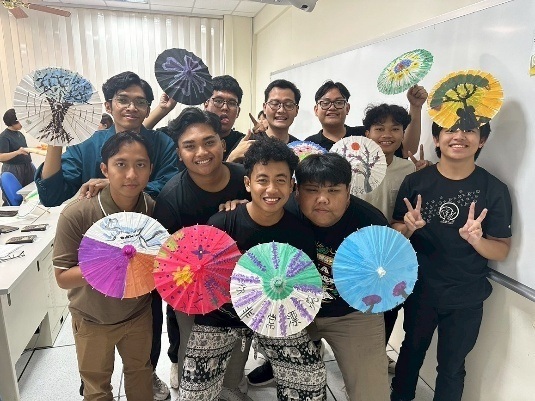
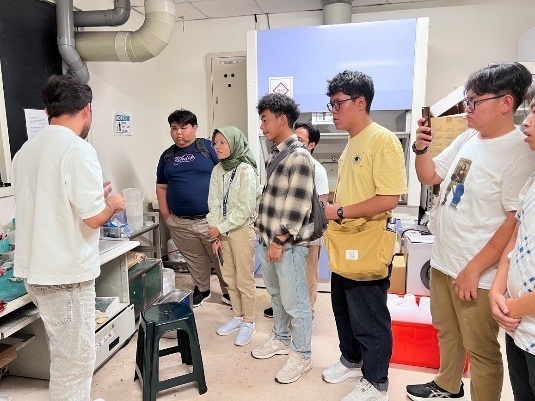
The Language Center of NCUE's Office of International and Cross-strait Affairs partnered with Diponegoro University (UNDIP) in Indonesia to host a Chinese-language study camp, offering Indonesian students an immersive language and cultural experience. The curriculum integrated practical Mandarin instruction with local heritage across three core modules: "Everyday Mandarin and Changhua Market Culture," "Personal Descriptions and Temple Culture," and "Directions and Interpersonal Communication."
Participants engaged in hands-on traditional craft activities—including paper umbrella painting, spring roll making, and gold leaf foiling—complemented by a cultural excursion to historic Lukang. To demonstrate their learning outcomes, students presented final reflections in Mandarin through songs, dramatic performances, and video documentaries capturing their stay in Taiwan, showcasing their enthusiasm and creative mastery of the language (Figures 19–20).
Campus News: https://www.ncue.edu.tw/p/406-1000-31560,r93.php?Lang=zh-tw
SDG Relevance: SDG 4 Quality Education.
10. Chinese-Language Teacher Training and Teaching Practicum with Indonesian Partners
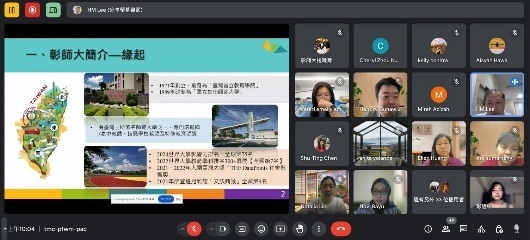
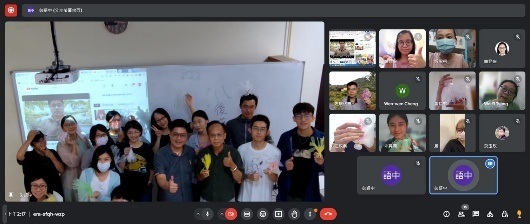
In August 2024, NCUE's Language Center cooperated with the Taiwan Education Center in Jakarta and the Taipei Economic and Trade Office in Indonesia to offer an online Chinese-language teacher-training program. Professional instructors from NCUE and other institutions were invited to teach, with the goal of strengthening the Chinese-language teaching capabilities of local Indonesian teachers. NCUE's Global Chinese AI Program (Assistant Instructor) sends NCUE students to Indonesian schools to serve as Chinese-language teaching assistants for six to twelve months, where they teach local students and gain practical teaching experience. To support participating students, the Language Center offers Chinese-language teacher-training courses during the summer, providing professional preparation and helping students apply diverse instructional strategies in actual classrooms. (Figures 21 and 22)
Campus News: https://www.ncue.edu.tw/p/406-1000-28149,r93.php?Lang=zh-tw
SDG Relevance: SDG 4 Quality Education; SDG 17 Partnerships for the Goals.