
SDG 17.2.4 Collaboration for SDG best practice
NCUE actively organizes transnational exchange activities related to the SDGs, with administrative units and faculty members participating in international cooperation to promote sustainable development goals. The following lists 17 transnational exchange activities:
1. NCUE's Office of International and Cross-strait Affairs strengthens cooperation with ASEAN and South Asian partners. It organized recruitment visits to Indonesia and Vietnam and developed exchanges with Thailand, India, and other countries. Activities include science and engineering visits, cultural courses, and language and cultural programmes for Southeast Asian students. These exchanges aim to share teaching resources and support academic, cultural, and economic cooperation. (Figures 1, 2, 3 and 4)
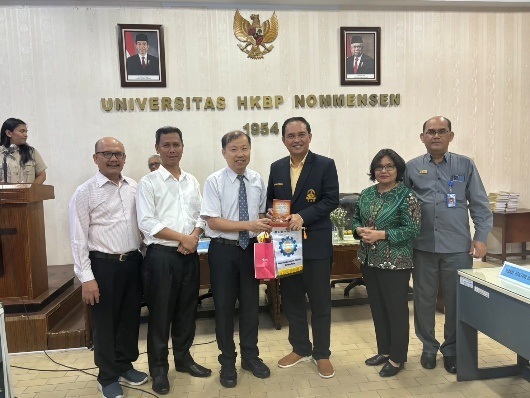
17.2.4-Figure 1: Visit to sister school HKBP Nommensen University
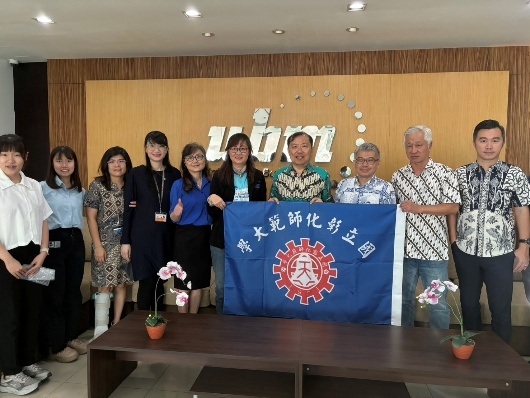
17.2.4-Figure 2: Visit to Universitas Bunda Mulia (UBM), Indonesia
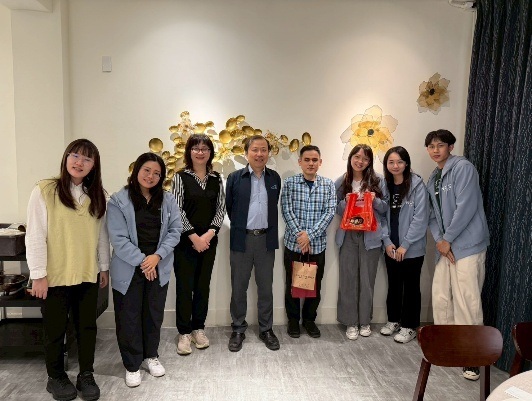
17.2.4-Figure 3: Exchange visit by faculty from Thaksin University, Thailand
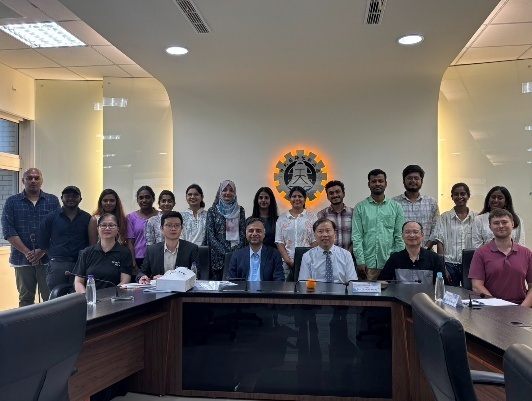
17.2.4-Figure 4: Exchange visit by the India Taipei Association
2. A delegation from Universitas Gadjah Mada (UGM), Indonesia, visited NCUE in November 2025 to discuss dual degrees and academic cooperation. Members included the deans of Mathematics and Natural Sciences and Biology, the head of Environmental Geography, and the Language Center director. They met NCUE's College of Science and College of Engineering deans and relevant department heads to discuss student exchanges and cooperation. Both sides agreed to develop dual-degree programmes, completed an initial course comparison, and agreed on related arrangements. The cooperation aims to expand study opportunities for Indonesian students and strengthen academic ties. (Figures 5 and 6)
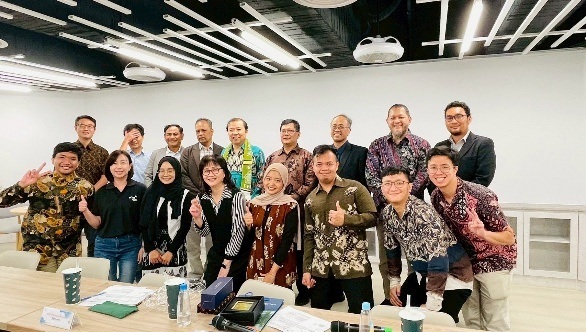
17.2.4-Figure 5: Delegation from Universitas Gadjah Mada, Indonesia visits NCUE
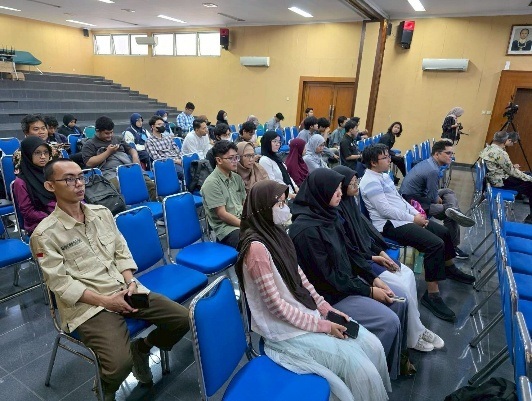
17.2.4-Figure 6: NCUE held an information session on dual degree and other cooperation programs for UGM faculty and students
3. MoU Signed with Japanese Enterprise Yamato Juken Co., Ltd. to Offer Overseas Internship Opportunities: In November 2024, NCUE signed a Memorandum of Understanding (MoU) with Japan’s Yamato Juken Co., Ltd. to provide students with overseas internship opportunities. The collaboration allows students to acquire advanced construction techniques and architectural philosophies from the company, while offering the firm fresh perspectives and creative insights stemming from the interns' distinct cultural backgrounds.
By linking academic theory with industry practice, this international industry-academia partnership fosters mutual benefits, enhances student innovation, and lays a foundation for expanded future cooperation to connect NCUE seamlessly with global standards. In July 2025, NCUE officially dispatched three students to Yamato Juken for their overseas internships, actively translating the international partnership into concrete practical training (Figure 7).
Campus News: https://www.ncue.edu.tw/p/406-1000-28757,r93.php?Lang=zh-tw
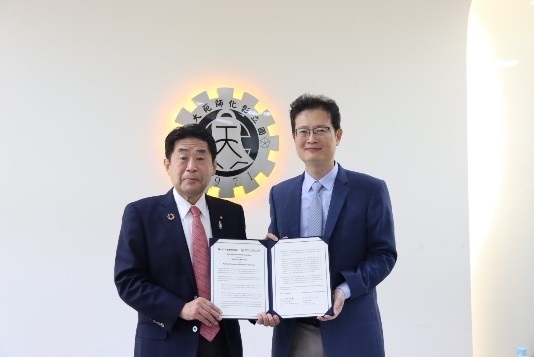
17.2.4-Figure 7: NCUE's Vice President signs an MoU with the Chairman of Yamato Juken, Japan
4. College of Technology Deepens Collaboration with Thailand’s KMUTT to Drive Overseas Student Internships: NCUE’s College of Technology has strengthened its partnership with its sister institution, King Mongkut’s University of Technology Thonburi (KMUTT) in Thailand, to advance overseas student internship opportunities. Renowned for its emphasis on research and innovation, KMUTT collaborates with local and international industries through application-driven integration programs to cultivate practical talent. Building on a shared consensus, KMUTT will offer valuable overseas internship positions for NCUE students.
In parallel, NCUE continues to encourage its faculty to recruit outstanding KMUTT students into research teams through the Taiwan Experience Education Program (TEEP). This dual initiative not only deepens the bilateral partnership between the two universities but also expands global learning channels and practical international experience for students on both sides, yielding concrete collaborative outcomes (Figure 8).
Campus News: https://www.ncue.edu.tw/p/406-1000-28683,r93.php?Lang=zh-tw
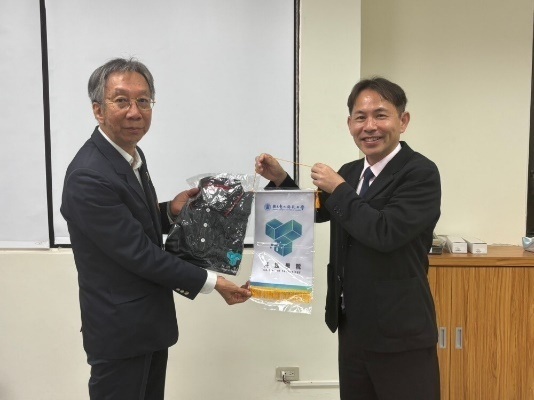
17.2.4-Figure 8: The Dean of NCUE's College of Technology and the President of KMUTT exchange gifts
5. NCUE Signed International Art Exchange Agreement with British Non-Profit Arts Organization SUP: On October 21, 2024, NCUE’s Office of International and Cross-Strait Affairs and Department of Fine Arts signed an international exchange agreement for the Something Useful Project (SUP) with a British non-profit arts organization. Under this collaboration, two British artists were invited to NCUE starting in March 2025 for artist-in-residence programs and academic exchanges.
Furthermore, in autumn 2025, two NCUE faculty members and two Fine Arts students were invited to visit the University of Salford in the United Kingdom for academic exchanges. Through sustainable management and long-term partnership in these international exchange activities, the initiative aims to foster mutual learning and deep interaction between faculty and students of both institutions (Figures 9–10).
Campus News: https://www.ncue.edu.tw/p/406-1000-28437,r93.php?Lang=zh-tw
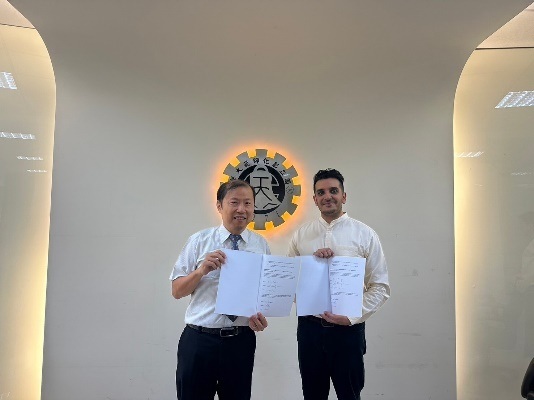
17.2.4-Figure 9: Both parties exchange contracts
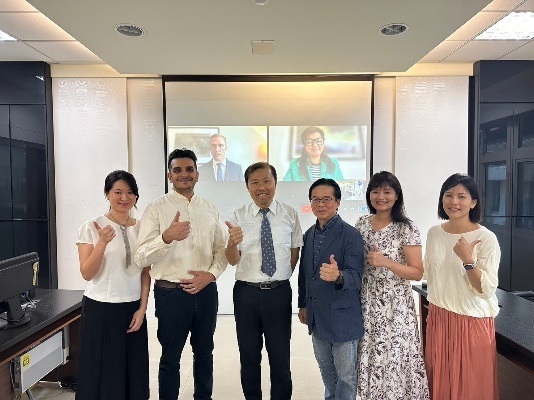
17.2.4-Figure 10: Group photo of participating faculty and guests
6. NCUE signed a memorandum of understanding and a student exchange agreement with the Indian Institute of Technology Gandhinagar (IITGN): At the signing meeting, NCUE's head of international affairs introduced industry partnerships, employment guidance for international students in Taiwan, and TEEP. The agreement aims to combine the institutions' academic and industry resources. Director Moona said that IITGN was developing academic and industry cooperation with Taiwan and had worked with Taiwan's Ministry of Education to offer Mandarin courses. (Figure 11)
Campus News: https://www.ncue.edu.tw/p/406-1000-29047,r93.php?Lang=zh-tw
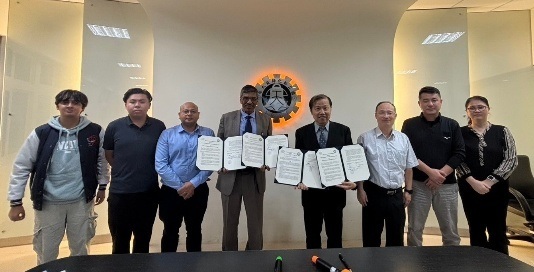
17.2.4-Figure 11: Signing of the MoU and student exchange agreement.
7. NCUE implemented the New Southbound Policy in Sports – School Sports Exchange and Counseling Project on behalf of the Sports Administration, Ministry of Education: It supported overseas visits by school sports teams and invited teams from New Southbound countries to Taiwan. The project promotes exchanges in physical education, training, teacher development, and international participation. In 2025, it approved 193 subsidized projects and recorded 4,333 participant attendances. Category 1, two-way exchanges between school sports teams, accounted for 150 projects (78%). The projects covered 33 sports, including 41 basketball projects (21%), and eight countries, with Thailand accounting for 75 projects (about 39%). (Figures 12, 13, 14 and 15)
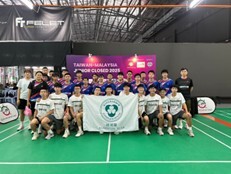
17.2.4-Figure 12: New Taipei Senior High School Badminton Team's project to compete in Malaysia
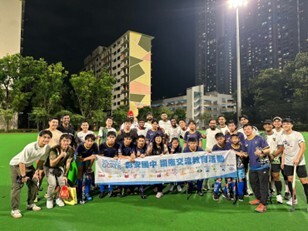
17.2.4-Figure 13: Chang An Junior High School Hockey Team's off-site training and exchange project in Singapore and Malaysia.
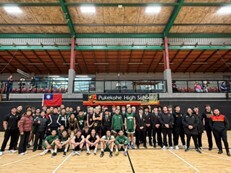
17.2.4-Figure 14: High School Sports Federation's project for high school basketball off-site training and exchange in Australia
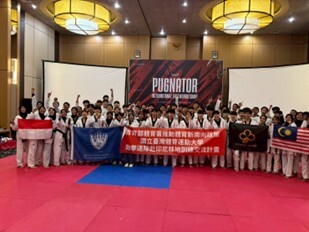
17.2.4-Figure 15: National Taiwan University of Sport Taekwondo Team's off-site training and exchange project in Indonesia
8. NCUE organized the 2025 New Southbound Countries International Collegiate Badminton Invitational. University teams from Malaysia, Thailand, and the Philippines joined National Taiwan University of Sport, National Chiayi University, and NCUE for nine invitational and exhibition matches over two days. The three Taiwanese universities had placed in the top five of the open division at the National Intercollegiate Athletic Games. The event provided opportunities for international competition and exchange. (Figure 16)
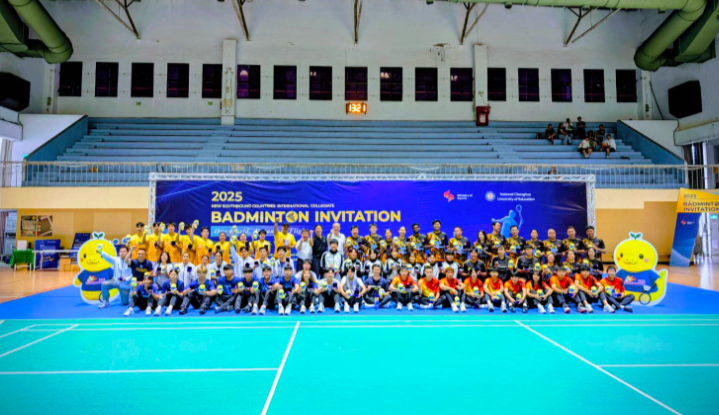
17.2.4-Figure 16: Group photo of athletes.
9. NCUE Driven Taiwan-UK Artist-in-Residence and Cultural Exchange Project: NCUE’s Department of Fine Arts partnered with the British arts and cultural organization Something Useful Project (SUP) to curate the "NCUE x SUP 2025 Taiwan-UK Artist-in-Residence and Cultural Exchange Project." The initiative facilitated deep, inspiring engagements with faculty, students, and the local Changhua community through on- and off-campus events, including workshops, lectures, art education forums, and exhibitions.
The residency’s culminating exhibition, "Round Table: Encounter and Co-construction—Taiwan-UK Artist-in-Residence and Cultural Exchange Project," opened at the Changhua Art Museum on May 22, 2025. Centered on practical utility and sustainability, the project goes beyond short-term outputs to strengthen students' creative capabilities and catalyze long-term growth in Changhua’s artistic ecosystem. By integrating the artist-in-residence framework with academic research, youth artistic practice, ecological awareness, and local heritage, NCUE continues to drive impactful international dialogues and cultivate an inclusive, inspiring platform for cultural exchange (Figures 17–18).
Campus News: https://www.ncue.edu.tw/p/406-1000-30882,r93.php?Lang=zh-tw
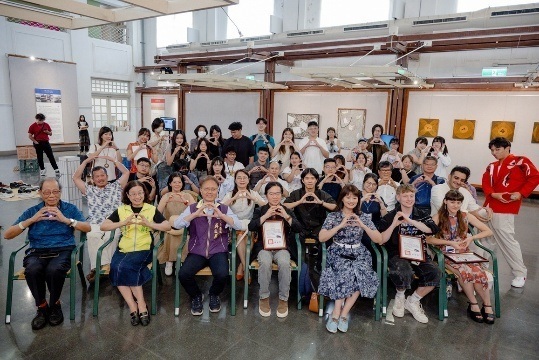
17.2.4-Figure 17: Opening ceremony group photo
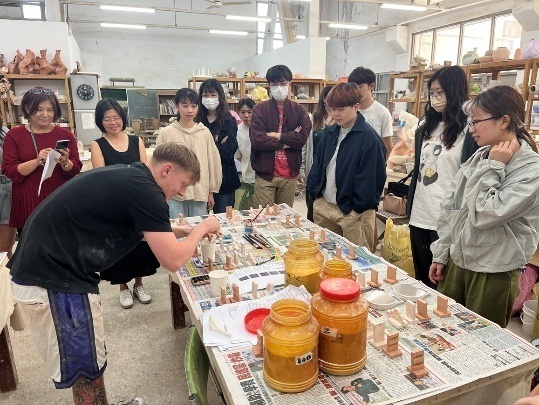
17.2.4-Figure 18: Photos of the on-campus ceramics workshop.
10. Teachers and Students from the Junior High School Attached to Chuo University, Japan, Visited NCUE for Historical GIS Academic Exchange: In October 2025, NCUE’s Graduate Institute of History hosted teachers and students from the Junior High School attached to Chuo University, Japan, for an academic exchange on historical GIS. As the first academic unit among history departments in Taiwan to offer basic and advanced historical GIS courses, the institute equips students with digital skills for spatio-temporal analysis and historical mapping through its dedicated "Historical Mapping Laboratory" computer facility. Centered on "digital humanities," the institute actively integrates Geographic Information System (GIS) technology into historical geography research and teaching.
During the exchange, faculty members demonstrated how historical GIS is incorporated into instruction, research, and community practice. The visit included a tour of the Historical Mapping Laboratory, featuring live demonstrations of large-format scanner operations and practical applications of QGIS software. This engagement strengthened the foundation for academic collaboration between NCUE’s Graduate Institute of History and the Japanese academic community while highlighting NCUE’s institutional momentum in digital humanities and global outreach (Figures 19–20).
Campus News: https://www.ncue.edu.tw/p/406-1000-32347,r93.php?Lang=zh-tw
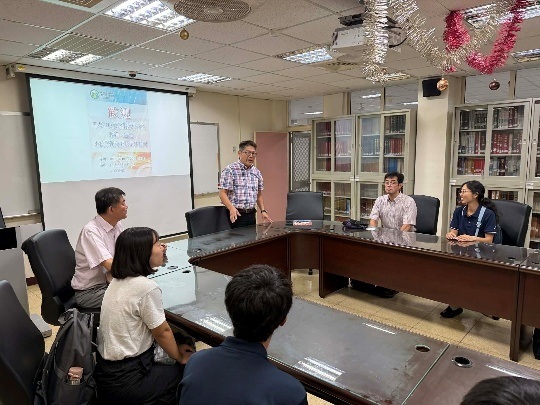
17.2.4-Figure 19: Professor sharing how Historical GIS technology is integrated into teaching
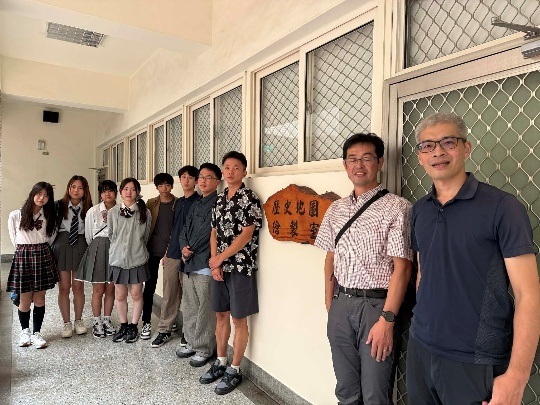
17.2.4-Figure 20: Visiting teachers and students at the institute's map drawing room
11. Director General Manharsinh Laxmanbhai Yadav of the India Taipei Association Visited NCUE to Deepen Taiwan-India Higher Education and Industry Collaboration: Mr. Manharsinh Laxmanbhai Yadav, Director General of the India Taipei Association, visited NCUE to deepen higher education and industry-academia cooperation between Taiwan and India. During the visit, NCUE’s Dean of International Affairs highlighted the university’s successful transition into a comprehensive institution with thriving science and engineering programs, specialized international master’s degree offerings, and strong industry linkages that support international students through internships and post-graduation employment in Taiwan.
Having established sister-university partnerships with nearly ten Indian institutions, NCUE aims to leverage this executive visit to further expand academic exchanges, enhancing student global mobility and academic vision. Director General Yadav praised India’s strong foundational education in STEM and recognized Taiwan’s global leadership in semiconductors, AI, and materials science, taking pride in Indian students enjoying a high-quality academic environment in Taiwan comparable to Europe and the United States. He encouraged Indian students to overcome shyness, actively master Chinese, engage with local peers, and serve as vital bridges for future Taiwan-India exchanges upon returning home (Figures 21–22).
Campus News: https://www.ncue.edu.tw/p/406-1000-31197,r93.php?Lang=zh-tw
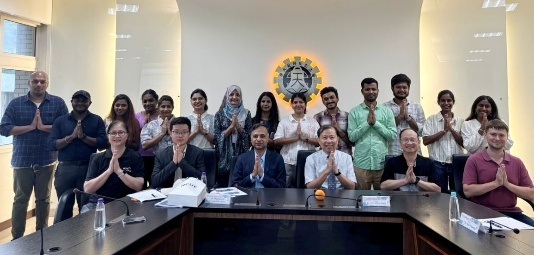
17.2.4-Figure 21: Visit by Director General Yadav
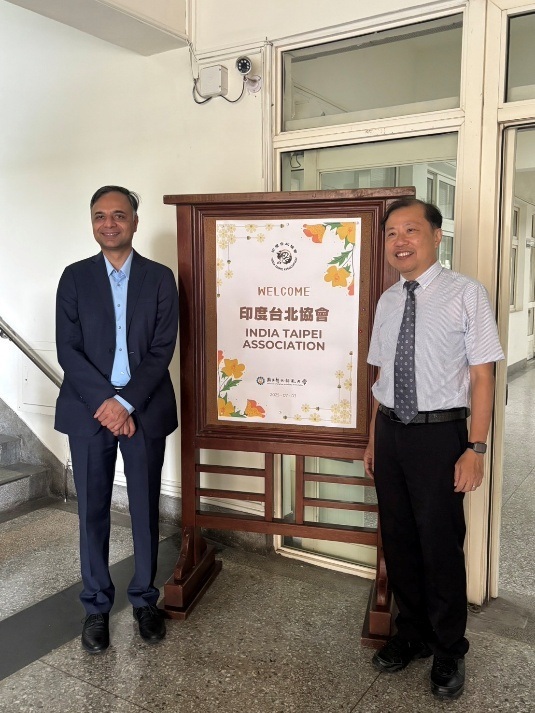
17.2.4-Figure 22: Group photo with Director General Yadav
12. NCUE establishes a sister-school relationship with Universiti Teknologi MARA (UiTM) Penang Branch, Malaysia, and expands industry-academia cooperation: Dr. Haji Ahmad Rashidy Razali, Rector of UiTM Penang Branch, recently led a delegation to visit NCUE. Besides signing the sister-school agreement, both sides had in-depth exchanges on cooperation topics including the TEEP internship program, industry-academia linkages, and graduates staying in Taiwan for employment. A visit to Siliconware Precision Industries Co., Ltd. (SPIL) was also arranged to explore industry-academia cooperation opportunities and provide Malaysian teachers and students with advanced studies, industrial practice experiences, and transnational job opportunities. (Figures 23 and 24)
Campus News: https://www.ncue.edu.tw/p/406-1000-31311,r93.php?Lang=zh-tw
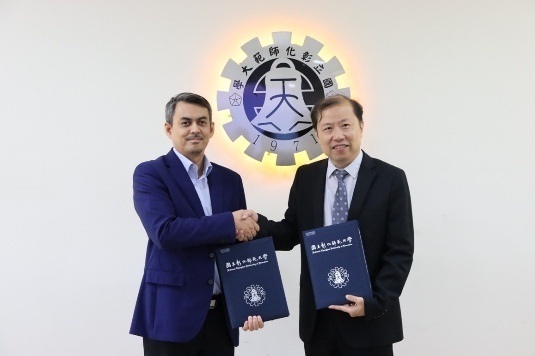
17.2.4-Figure 23: Signing the MoU
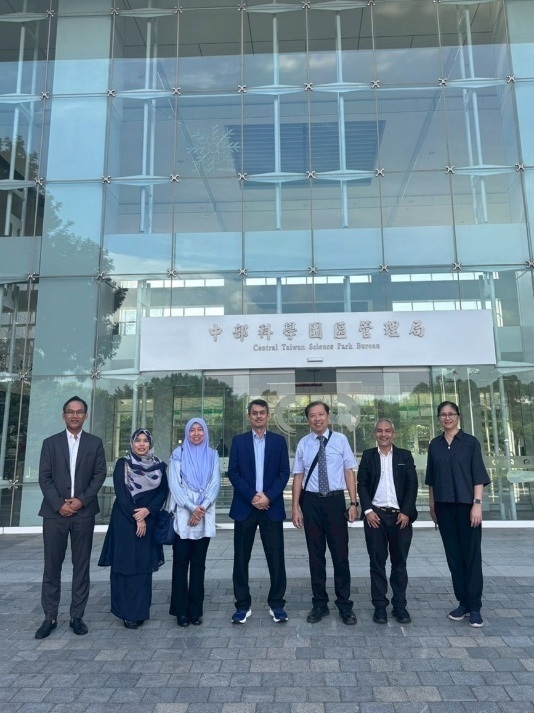
17.2.4-Figure 24: Visit to SPIL in the Central Taiwan Science Park.
13. Malaysian Artists Created Life Education Murals at NCUE to Promote Transnational Artistic Exchange: Distinguished NCUE alumnus Yoon-Sooi Chong, acclaimed as the "Pride of Overseas Chinese" in Malaysia, alongside eight artists from the Malaysian Artists Association, painted four vibrant murals themed around "life education." The artworks were created on the fifth floor of the Hu-Bin Building on Jinde Campus and along an approximately 30-meter connecting walkway between Shida Campus and Student Dormitory 10, infusing the campus with warmth and artistic energy. Seizing this opportunity, NCUE planned a Memorandum of Understanding (MoU) with the association to sustain artist exchanges and facilitate Malaysian students studying at NCUE.
Demonstrating exceptional professionalism and synergy, the artists completed all four murals within four days of arriving in Taiwan. Centered on nature, the magnificent and colorful murals have become captivating campus landmarks. Furthermore, international students from Indonesia, India, and Pakistan joined Taiwanese peer buddies in creating the Shida Campus mural, embodying the borderless spirit of art (Figures 25–26).
Campus News: https://www.ncue.edu.tw/p/406-1000-31714,r93.php?Lang=zh-tw
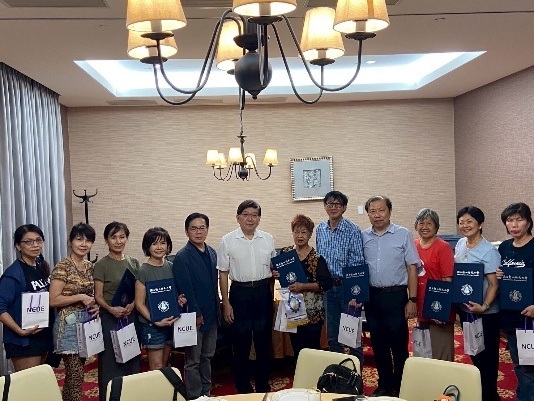
17.2.4-Figure 25: NCUE President Ming-Fei Chen specially presents certificates of appreciation
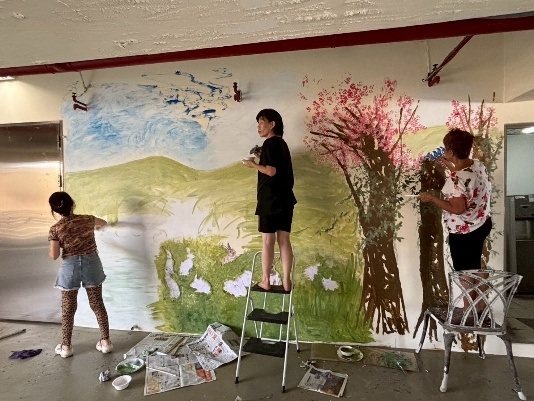
17.2.4-Figure 26: Artists painting together
14. NCUE Delegation Conducted Academic Visits to Over Ten Indonesian Universities and Research Institutions: In August 2025, Dean Chi-Yen Huang of the College of Science and Dean of International Affairs Hon-Man Lee led an NCUE delegation on an academic visit to Indonesia, covering over ten universities and research institutions across Jakarta as well as Central and West Java. Dean Huang observed that Indonesian higher education exhibits immense potential and diversity, with national universities operating on a grand scale, private religious institutions demonstrating rigorous governance, and emerging universities showing impressive innovation and research momentum alongside high English proficiency among faculty and students.
The delegation engaged with host institutions that expressed strong interest in collaborating with Taiwan across student exchanges, teacher education, joint research projects, and doctoral candidate training. The visit consolidated existing sister-university ties while opening new pathways for academic exchange, establishing a solid foundation to elevate NCUE’s institutional visibility and academic impact in Southeast Asia while attracting top Indonesian talent (Figures 27–28).
Campus News: https://www.ncue.edu.tw/p/406-1000-31757,r93.php?Lang=zh-tw
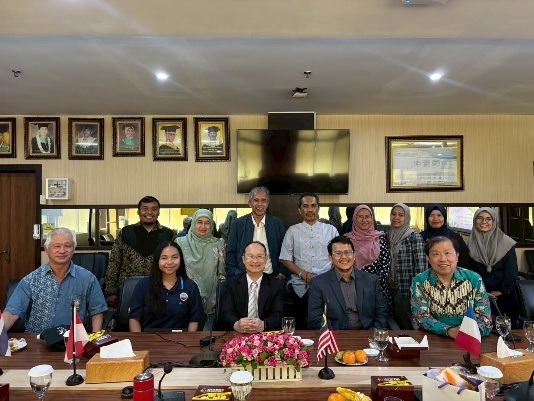
17.2.4-Figure 27: Visits to more than ten universities and research institutions in Indonesia.
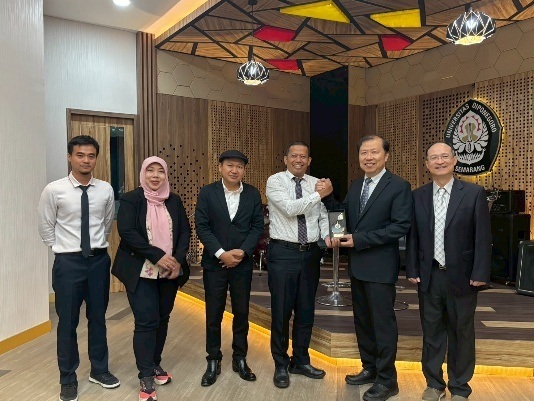
17.2.4-Figure 28: Discussing future cooperation plans
15. NCUE implements the 2025 MOE Overseas Internship Program, selecting students for overseas internships:
(1) Associate Professor Chih-Hung Wang (Graduate Institute of Education): "Chung Hwa High School, Rengit (Malaysia) Curriculum Transformation and Multicultural Teaching Practice," sent 4 students to Malaysia for a one-month internship. (Figure 30)
(2) Professor Min-Hsing Wang (Graduate Institute of Rehabilitation Counseling): "NCUE and US Sister School Cooperation Internship Program in Rehabilitation Counseling," sent 3 students to Virginia Commonwealth University in the US for a two-month internship.
(3) Assistant Professor Hsieh-Jun Chen (Graduate Institute of Technology and Adolescent English) led "Digital Innovation and Inquiry Learning: Canada MEGA World Gamified Learning Map Design and Cross-Cultural Practice", sending four students to Smart Informatics Ltd. in Canada for two-month internships.
(4) Assistant Professor Andre Goderich (Department of English): "Japanese Enterprise Internship Program," sent 3 students to Yamato Juken Co., Ltd. for a one-month internship (Figure 29)
(5) Assistant Professor Hsieh-Jun Chen: "Digital Innovation • Cultural Co-creation - Chung Hwa High School, Rengit Summer Internship Program," sent 5 students to Malaysia for a one-month internship. (Figure 30)
(6) Associate Professor Hsiao-Ching Yang (Department of Chinese) led "Recommendation of Mandarin Teaching Assistants for Internships in Indonesian Schools", sending two students to Universitas Komputer Indonesia for one month each and two to Universitas Bunda Mulia for six months and one year, respectively.
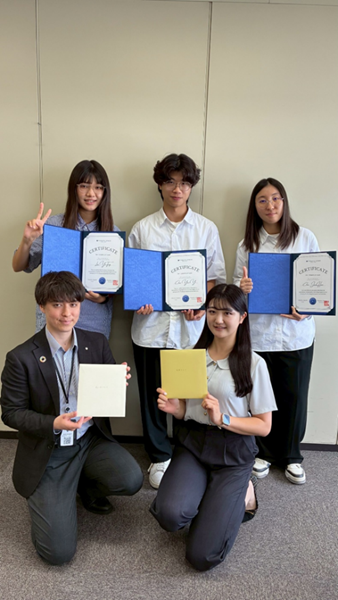
17.2.4-Figure 29: Three NCUE students received Yamato Juken internship certificates
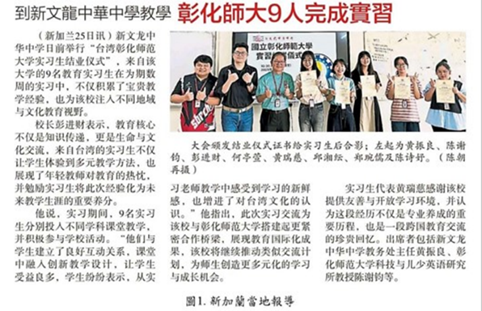
17.2.4-Figure 30: Teachers Chih-Hung Wang and Hsieh-Jun Chen leading the Chung Hwa High School, Rengit internship team featured in local Malaysian news
16. NCUE selects and sends 4 students to partner schools in Indonesia for Mandarin teaching internships: The partner schools include Universitas Bunda Mulia (UBM) and Universitas Komputer Indonesia (UNIKOM). The internship locations are in Jakarta and Bandung, with durations ranging from September 2025 to June 2026, arranged for 1 to 10 months based on each school's curriculum needs. Through this project, students participate in overseas Mandarin course teaching, classroom activity design, and cultural exchange activities, accumulating valuable practical teaching experience and enhancing their cross-cultural communication skills. The Ministry of Education provided NT$300,000, and NCUE contributed NT$72,000, for total funding of NT$372,000. (Figures 31 and 32)
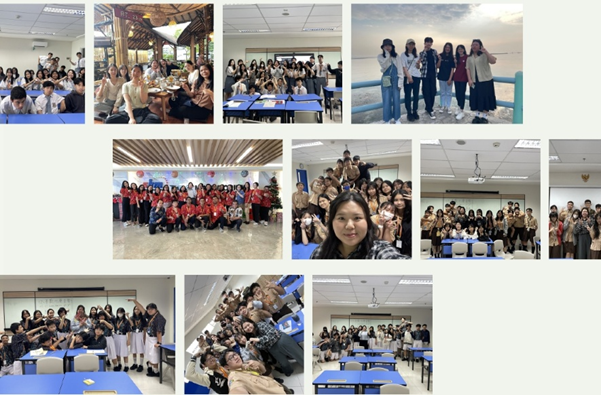
17.2.4-Figure 31: 2025.09-2025.12 NCUE students' Mandarin teaching internship at Universitas Bunda Mulia, Indonesia.
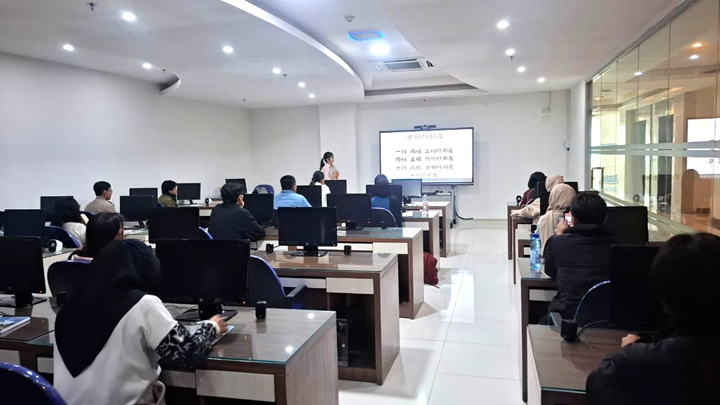
17.2.4-Figure 32: 2025.09 NCUE students' Mandarin teaching internship at Universitas Komputer Indonesia.
17. NCUE Taekwondo Team Conducted Overseas Training and International Exchange in Australia: From September 16 to 27, 2024, the NCUE Taekwondo Team traveled to Australia for a 12-day overseas sports training and international exchange program at the One Taekwondo Australia Training Center. Supervised by Professor Tai-Yuan Su and led by Coach Yu-Jen Huang, the 12-member delegation of faculty and students engaged in substantive collaboration with the center’s Korean Director, Mr. Yong-Hee Hur, and his coaching staff, concretely realizing sports diplomacy and global partnerships.
Upon returning to Taiwan, the coaching staff integrated Australia's systematic scientific training methodologies and versatile tactics into NCUE’s daily training programs. Through knowledge sharing and technical exchange, the initiative has advanced opportunities for sustainable sports development between both nations (Figures 33–34).
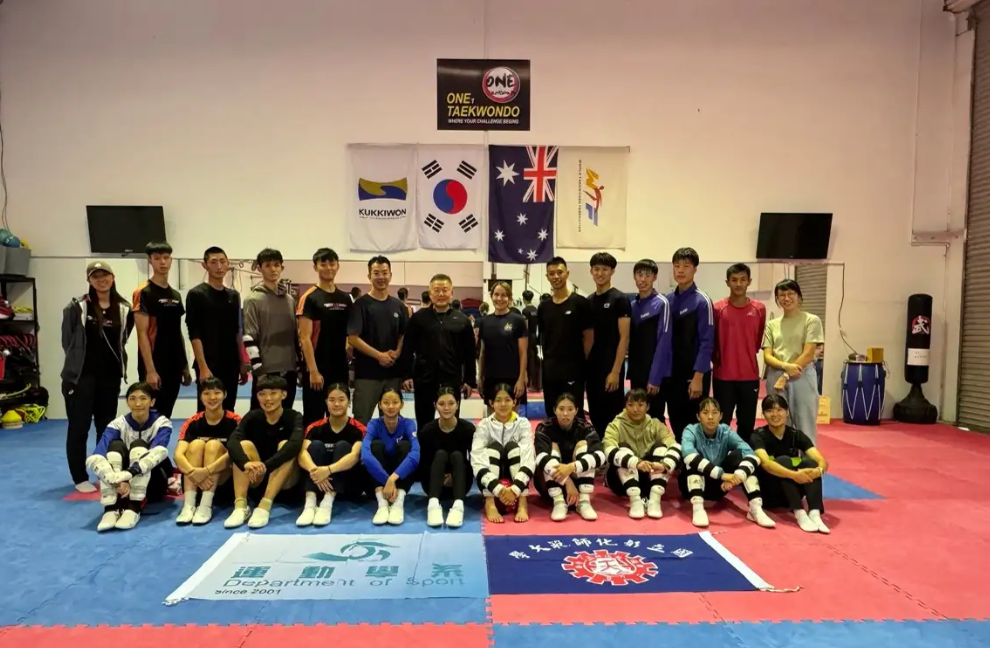
17.2.4-Figure 33: Taekwondo team's off-site training and exchange in Australia
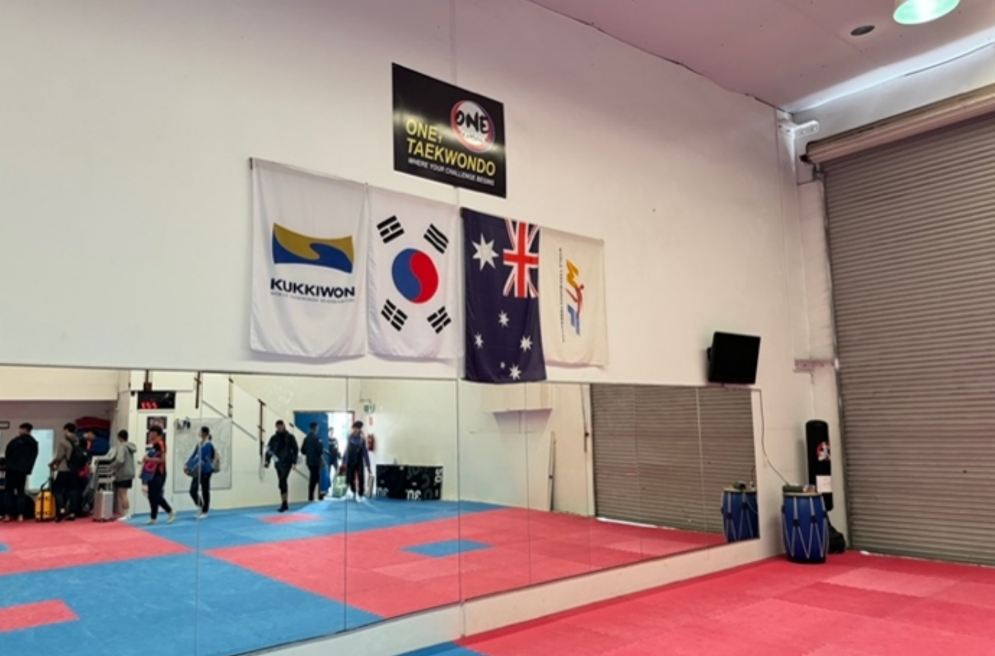
17.2.4-Figure 34: Taekwondo team's off-site training and exchange in Australia.