
SDG 17.4.3 Education for SDGs in the wider community
NCUE provides educational outreach activities for the wider community. The following section presents 11 examples:
1. NCUE and Changhua Christian Hospital jointly promote the cultivation of long-term care talents: Changhua Christian Hospital and NCUE signed an MOU for the Long-Term Care Student Cultivation Program. The partnership supports Indigenous students’ education and prepares care professionals to return to their communities, helping address gaps between local care needs and available services as Taiwan’s population ages.
NCUE established a programme to prepare Indigenous students for work in long-term care. Internships at Changhua Christian Hospital allow students to apply their learning and prepare to meet care needs in their home communities and wider society. (Figures 1 and 2)
Campus News: https://www.ncue.edu.tw/p/406-1000-27203,r93.php?Lang=zh-tw
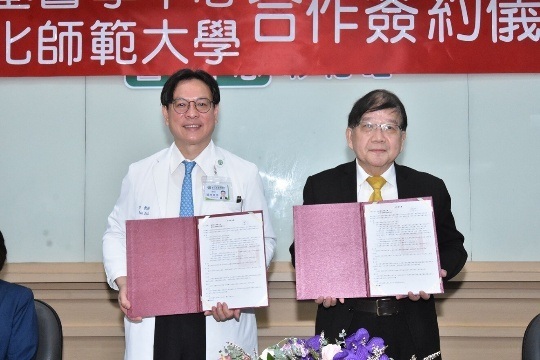
17.4.3-Figure 1: Superintendent Mu-Kuan Chen of Changhua Christian Hospital and NCUE President Ming-Fei Chen signing the MoU for the "Long-Term Care Student Cultivation Program."
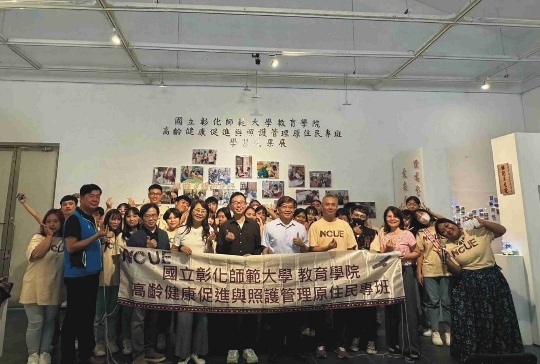
17.4.3-Figure 2: Establishment of the special program for long-term health care.
2. NCUE's College of Science and Science Education Center jointly organized the 2025 Science Fun Day: NCUE invited more than ten partner schools to Science Fun Day, which attracted more than 500 participants and accepted on-site registration from community residents. Hands-on booths in the Science Magic, Science Adventure, and Science Exploration zones introduced several scientific fields through accessible activities. Primary and secondary school students explored science in everyday life and possible study and career directions. The event aimed to broaden public access to science and support educational opportunities for children in rural Changhua County. (Figures 3 and 4)
Campus News: https://www.ncue.edu.tw/p/406-1000-32244,r93.php?Lang=zh-tw
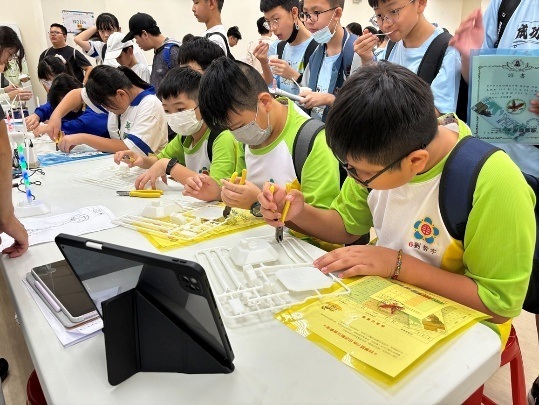
17.4.3-Figure 3: Science Fun Booths.
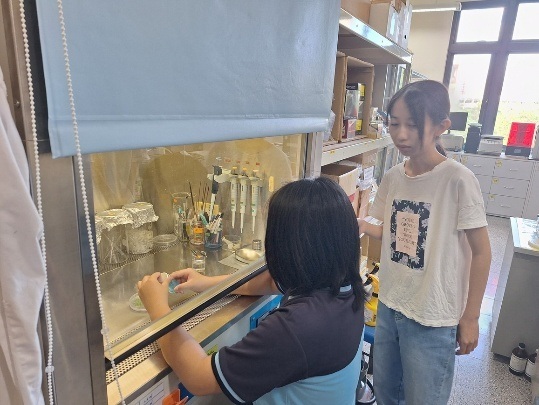
17.4.3-Figure 4: Visit to the "Plant Genetic Engineering Laboratory" of the Department of Biology, College of Science.
3. NCUE organized a study tour to the Walo Tribe to deepen understanding of indigenous cultures: The Student Service Section of NCUE's Office of Student Affairs and the Indigenous Student Resource Center organized a visit to the Walo community on 23 June 2025. Faculty and staff learned about Saisiyat culture, including the Pasta'ay ceremony, and made traditional hip bells. Forest activities included using machetes and saws, outdoor cooking without utensils, making bamboo skewers, lighting fires with wood, and tasting local food. The visit aimed to develop understanding of Saisiyat relationships with nature and encourage respect for Indigenous cultures. (Figures 5 and 6)
Campus News: https://www.ncue.edu.tw/p/406-1000-30880,r93.php?Lang=zh-tw
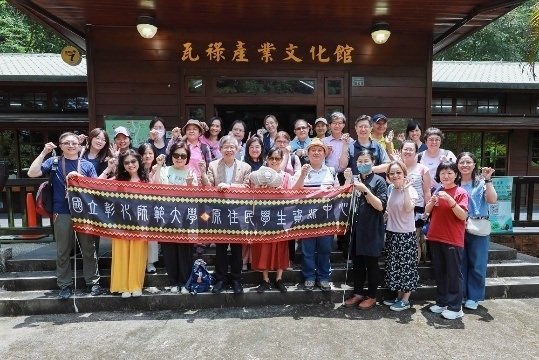
17.4.3-Figure 5: Group photo of the tribe study tour
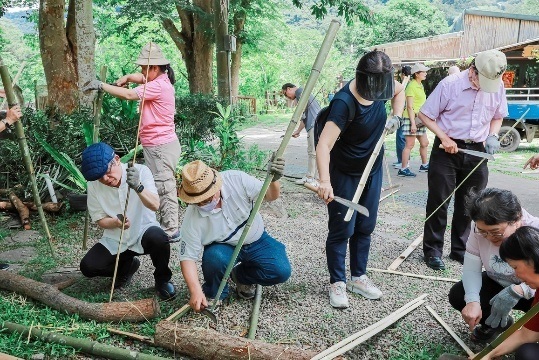
17.4.3-Figure 6: Bamboo whittling experience
4. NCUE's Community Counseling and Human Development Service Center organized professional workshops and psychological counseling services: The center sets appropriate consultation goals and uses focused conversations to provide support. Its workshops and counselling services aim to strengthen practitioners' resilience and improve community members' mental health knowledge and well-being. (Figures 7 and 8)
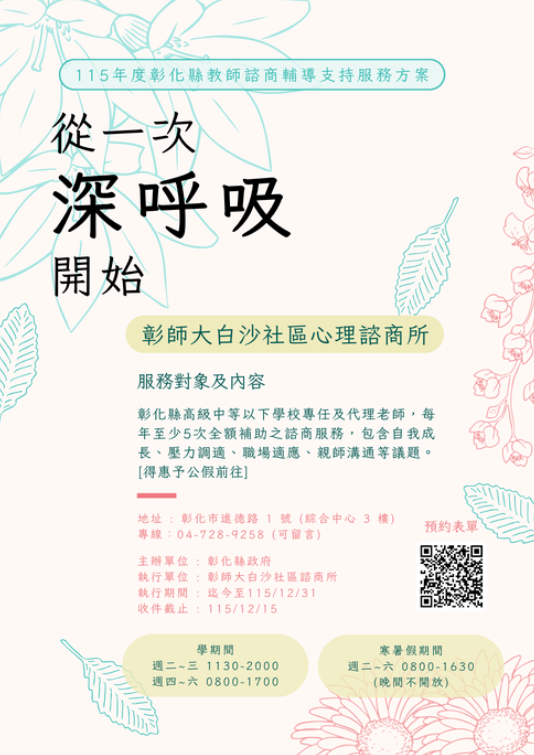
17.4.3-Figure 7: Counseling and support services for teachers
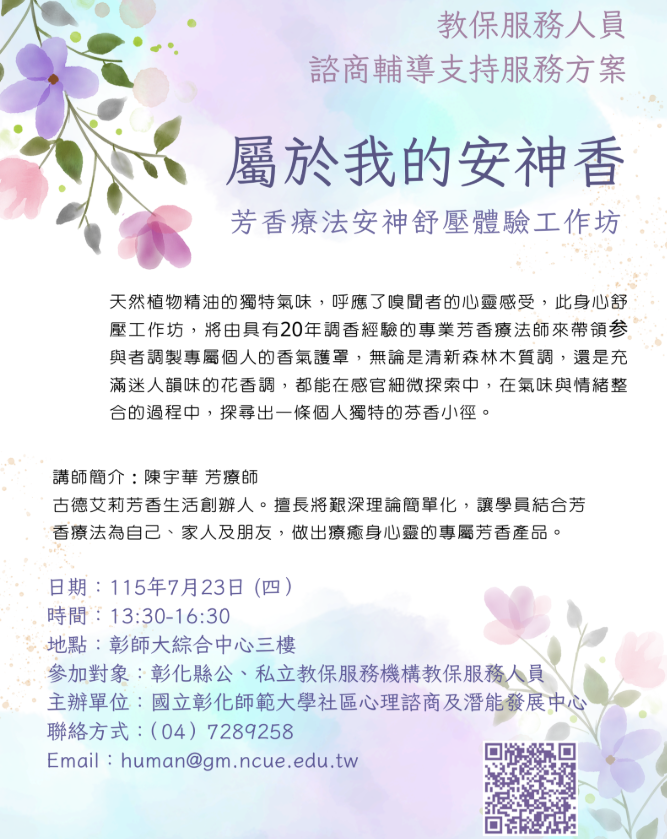
17.4.3-Figure 8: Educate personnel counseling and support services
5. NCUE executed the Ministry of Education's "University Social Responsibility Practice Project for Teacher Education": NCUE has run Baisha Summer School since 2011 as an extension of teacher education and community outreach. In summer 2025, 55 pre-service teachers worked in three secondary schools in Changhua County. By taking on simulated administrative and teaching roles, they helped 115 new students adjust to school life while applying their university learning in practice. Experienced alumni shared teaching practices with participants. The project also planned transition support for rural students with limited access to educational and cultural resources, aiming to improve access to learning. (Figures 9 and 10)
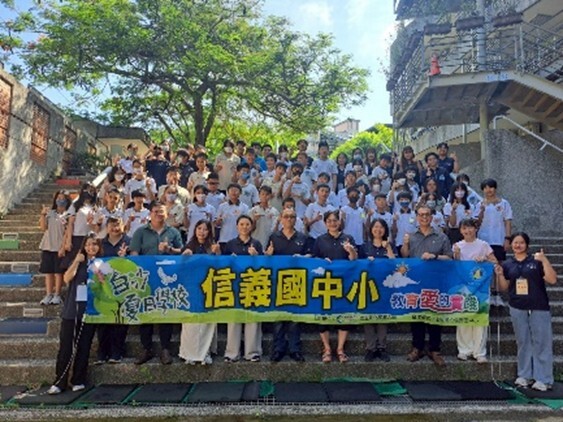
17.4.3-Figure 9: Baisha Summer School - Hsin-Yi Public Junior High and Elementary School of Changhua County Course Expo
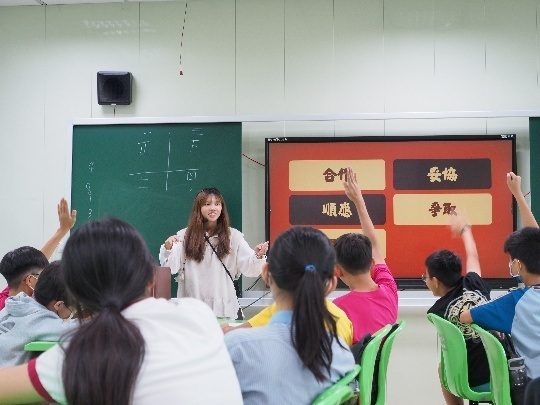
17.4.3-Figure 10: Class at Dacun Junior High School
6. NCUE promotes the Schweitzer-inspired Educational Service Program, going deep into rural areas to provide academic tutoring and character education: In summer 2025, NCUE sent 25 pre-service teachers to Hsienhsi Junior High School in Changhua. They used games and cooperative learning to provide academic support and character education. They adapted lesson plans, including human rights and expression activities, to different learning needs. Sports and drama activities supported class relationships and gave pre-service teachers opportunities to practice differentiated teaching while working with local schools and organizations. (Figures 11 and 12)
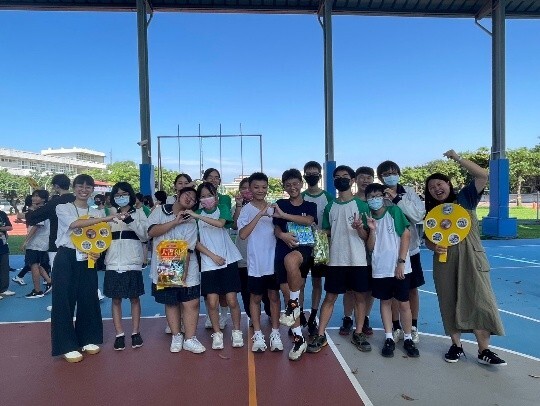
17.4.3-Figure 11: Schweitzer science challenges
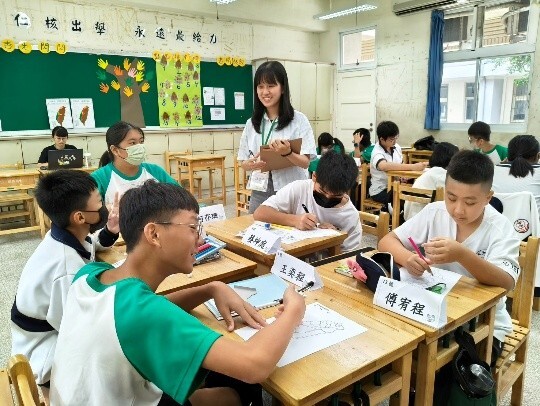
17.4.3-Figure 12: Class at Hsienhsi Junior High School
7. NCUE promoted the "Baisha x Common Good" rural educational service and research promotion project: Since 2020, NCUE has deepened its commitment to University Social Responsibility (USR) by delivering specialized educational outreach activities to broader communities. In 2025, the "Baisha × Common Good" project further reinforced regional resource integration by establishing in-depth partnerships with eight schools across Changhua, Yunlin, Taichung, and Tainan, precisely directing high-quality educational resources to rural areas. The initiative extended its outreach to alumni, local residents, and under-resourced groups, ensuring equitable learning opportunities and inclusive access for disadvantaged populations.
Through interdisciplinary specialized courses combining hands-on practice with language learning, the project empowered 247 students to build self-confidence while promoting community cultural exchange and skill sharing. Driven by 69 pre-service teacher volunteers, the project demonstrated strong educational responsibility and localized action. Through close collaboration with government entities, schools, and social organizations, this initiative not only enhanced the practical competencies of student teachers but also served as a vital force for regional sustainable development and educational equity (Figures 13–14).
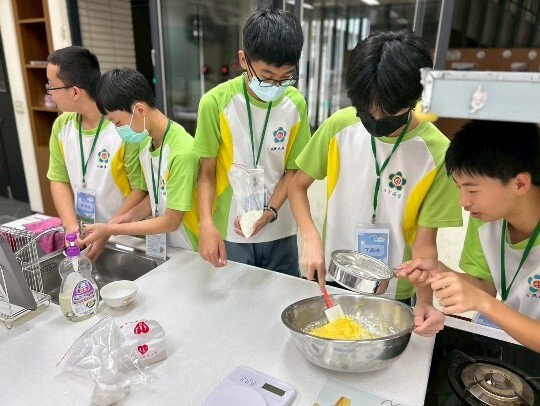
17.4.3-Figure 13: "Baisha x Common Good" rural educational service - rural educational activities
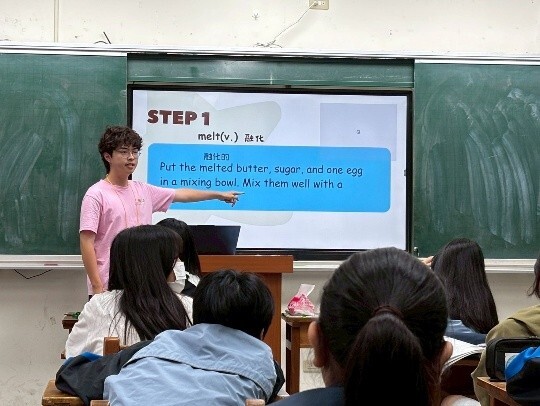
17.4.3-Figure 14: "Baisha x Common Good" rural educational service - English activities
8. NCUE organized the 2025 Yangwang Cup National Science HomeRun Practical Competition: The competition offered NT$700,000 in prizes, including NT$100,000 for the overall winner, and attracted nearly 800 secondary school teachers and students from 18 counties and cities. Students used simple control boards to develop projects combining electronics and engineering structures. They identified questions, examined data, tested their ideas, and presented results through accessible explanations and demonstrations. The competition aimed to develop scientific inquiry, practical skills, and the ability to combine tools, materials, and resources. (Figures 15 and 16)
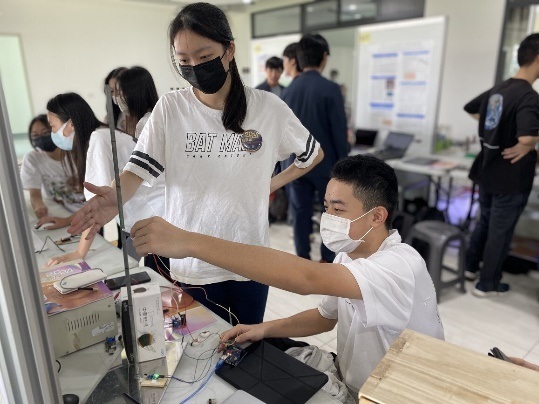
17.4.3-Figure 15: Evaluation Venue
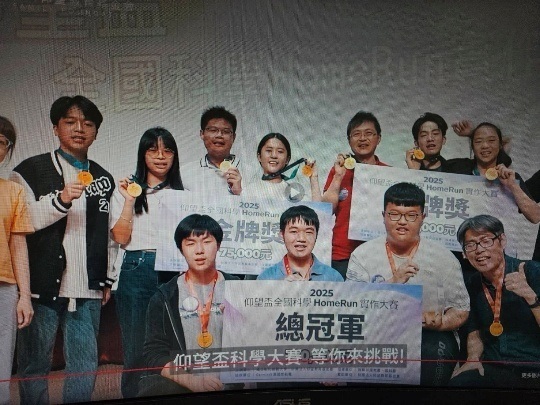
17.4.3-Figure 16: 2025 Grand champion
9. NCUE promotes the "Resilient Changbin" project to enhance environmental sustainability and social resilience in Changhua's coastal settlements: Changhua's coastal communities face extreme heat, intense rainfall, water pollution, and pathogen growth that threaten shellfish aquaculture. Other challenges include an ageing workforce, limited tourism and digital interpretation resources, and shortages of environmental educators and carbon-inventory specialists. Young entrepreneurs returning to the area also lack coordinated advisory and support services. The Resilient Changbin project responds to these environmental and social challenges through courses and local workforce development, aiming to support sustainable industries and resilient coastal communities. (Figure 17)
Link: https://www.facebook.com/NCUEUSR
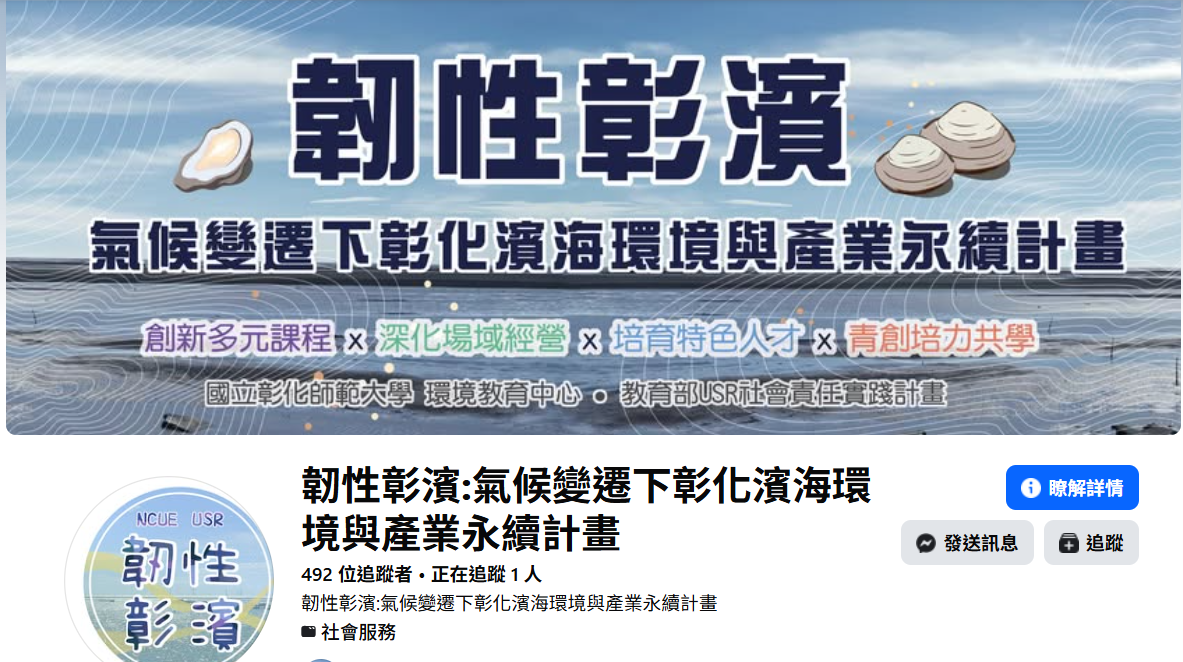
17.4.3-Figure 17: Official website screenshot
10. The College of Extension Education of NCUE continued to offer diverse lifelong learning courses to the public in 2025:
(1) Language Learning Courses: NCUE offered English, Japanese, Korean, French, German, Spanish, Thai, Vietnamese, and Indonesian courses for community residents. In 2025, NCUE offered 18 second-language classes totaling 552 instructional hours, with 279 course completions achieved.
(2) Mandarin Quarterly Program: NCUE is a Ministry of Education-approved institution for recruiting international learners for Mandarin study. It offers in-person and online courses. In 2025, the spring, summer, autumn, and winter sessions, together with online group and individual classes, recorded 280 completions.
(3) Community Senior Citizen University: NCUE has offered the Changhua County Senior Citizen University programme since 1995 for registered county residents aged 55 and over. In 2025, it held two 16-week terms with 28 classes in subjects including Japanese, English, calligraphy, Chinese painting, art, and smartphone use. The programme recorded 893 course completions. (Figure 19)
(4) Professional Development for Secondary School Teachers: NCUE offers additional specialization and professional development courses for practicing teachers. In 2025, 49 courses covered Southern Min, information technology, living technology, bilingual teaching, Scouting education, and special education. They provided 2,322 training hours and recorded 1,200 attendances.
(5) Training Program for Principals and Directors of Primary and Secondary Schools on School Management Competencies: NCUE began offering one four-month training cohort each year in 2025 as part of its university social responsibility work. To date, 98 school leaders have completed the programme.
(6) Changhua County Business Talent Cultivation: Since 2016, NCUE has worked with the Changhua County Government and business organizations to provide annual training for second-generation business successors and women leaders of small and medium-sized enterprises. Topics include management, business innovation, digital marketing, communication, and negotiation. A total of 463 participants has completed the programme.
(7) Professional Development Courses for Working Adults: NCUE plans vocational courses around community and local industry needs. In 2025, it offered 128 classes comprising 3,838 training hours, empowering 2,263 participants to upgrade their knowledge, skills, and career capabilities.
(8) Community Extension Education Courses: NCUE offers courses in business management, information technology, marketing, and crafts in response to community learning interests. In 2025, 58 classes provided 1,157 teaching hours and recorded 811 enrolments. (Figure 18)
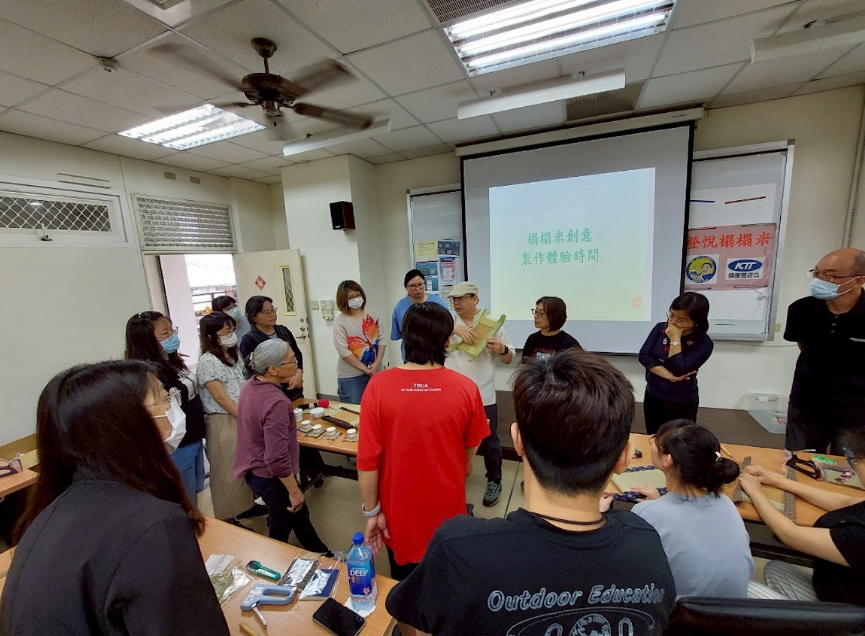
17.4.3-Figure 18: Community Extension Education Course _ Tatami Art Course
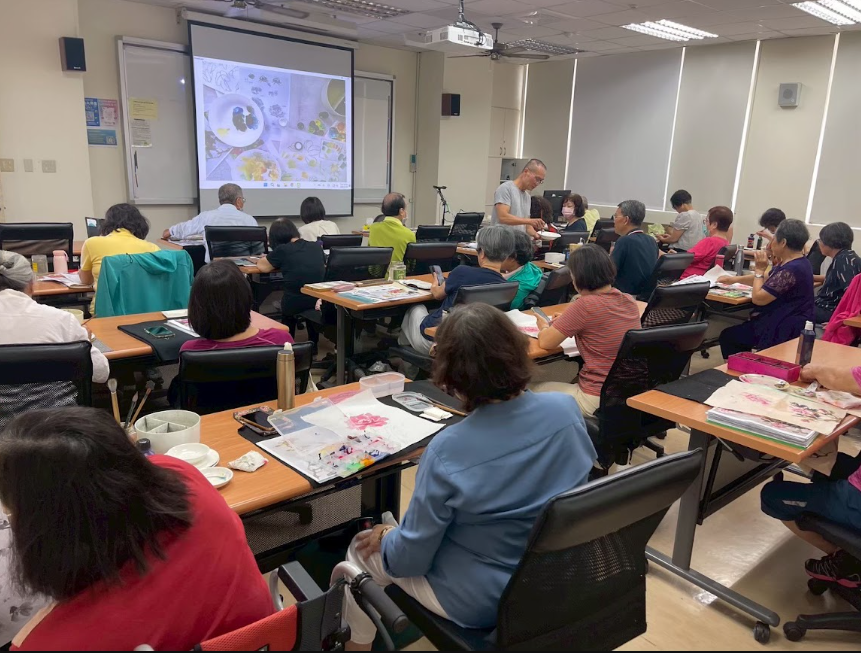
17.4.3-Figure 19: Senior Citizen University _ Color Ink Chinese Painting
11. The Special Education Center undertook commissioned and subsidized projects from the Ministry of Education:
(1) Through a consultation hotline, the center helps community members, students, teachers across all educational stages, and relevant counseling personnel resolve issues related to teaching, parenting, and student counseling practices. It also conducts on-site school visits in the counseling district to understand the implementation of special education work in schools. In 2025, the center completed 62 special education counseling services, conducted 4 on-site visitations, published 2 issues of the Special Education Gardener journal, and held 1 special education work review meeting for the counseling district and 1 transition coordination meeting for students with disabilities in higher education.
(2) In 2025, the center held 22 professional development activities for special education teachers, administrators, and counselling staff in its service area: seven required introductory workshops, four required advanced workshops, and 11 other special education courses. (Figures 20 and 21)
(3) The center supports college and university counsellors working with students with emotional and behavioral disorders or autism. A team of experienced counsellors, psychiatrists, and special education professors provides advice according to individual needs. In 2025, the program organized six special education professional development workshops, five professional exchange community sessions, and one advocacy event dedicated to EBD and ASD awareness (Figures 22 and 23)
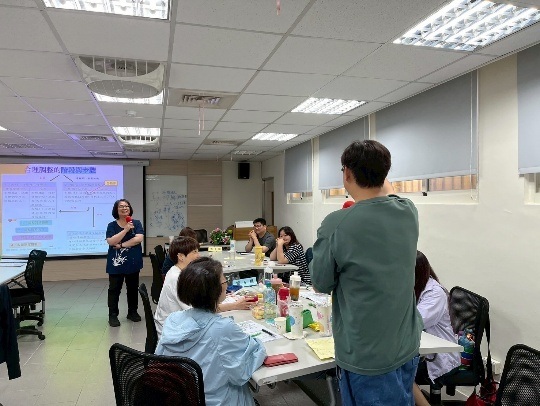
17.4.3-Figure 20: Job Redesign and Labor Rights for Persons with Disabilities — Introduction to the Concept of Promoting Workplace Rights
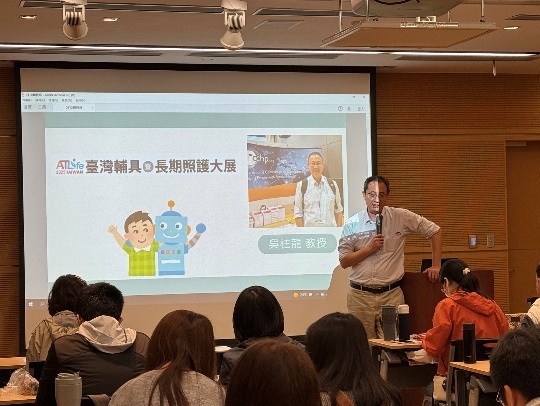
17.4.3-Figure 21: Assistive Technology Needs Assessment and Introduction and Application of the 2025 Assistive Technology Exhibition
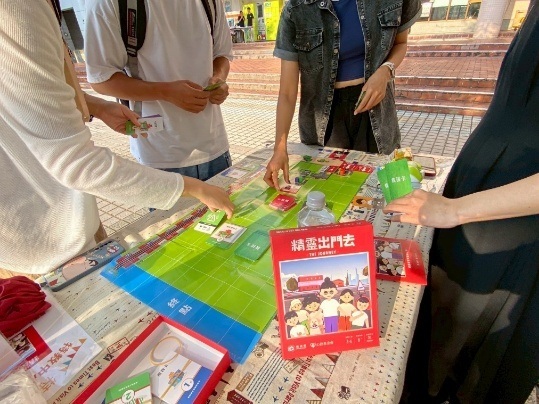
17.4.3-Figure 22: Advocacy event for emotional and behavioral disorders and autism
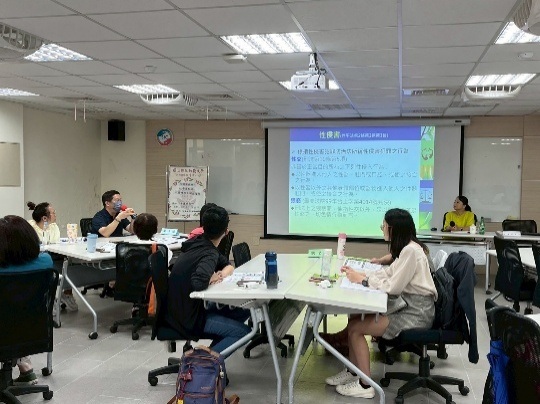
17.4.3-Figure 23: Gender equality education for students with emotional and behavioral disorders and autism