SDG 14.3.1
SDG 14.3.1 Conservation and sustainable utilization of the oceans (events)
NCUE has several projects promoting the conservation and sustainability of oceans, lakes, rivers, and marine resources. These include the Environmental Education Center’s “Resilient Changbin: Climate Change and the Sustainability of Changhua's Coastal Environment and Industries” project and two courses offered by Center for General Education named “Water Resources and Human Culture” and “Introduction to Marine Life Sciences;” another example is “Changhua Coastal Meretrix lusoria Habitat Survey, Conservation, and Restoration Outreach Program” conducted by Department of Biology.
The relevant information are summarized in Table 1, followed by brief introductions.
| Project activities | Funding Agency |
|---|---|
| Resilient Changbin: Climate Change and the Sustainability of Changhua's Coastal Environment and Industries | Ministry of Education |
| “Water Resources and Human Civilization”; “Introduction to Marine Life Sciences” | - |
| Changhua Coastal Hard Clam Habitat Survey, Conservation, and Restoration Promotion | Changhua Marine Food Research Production Cooperative |
1. Resilient Changbin: Climate Change and the Sustainability of Changhua's Coastal Environment and Industries
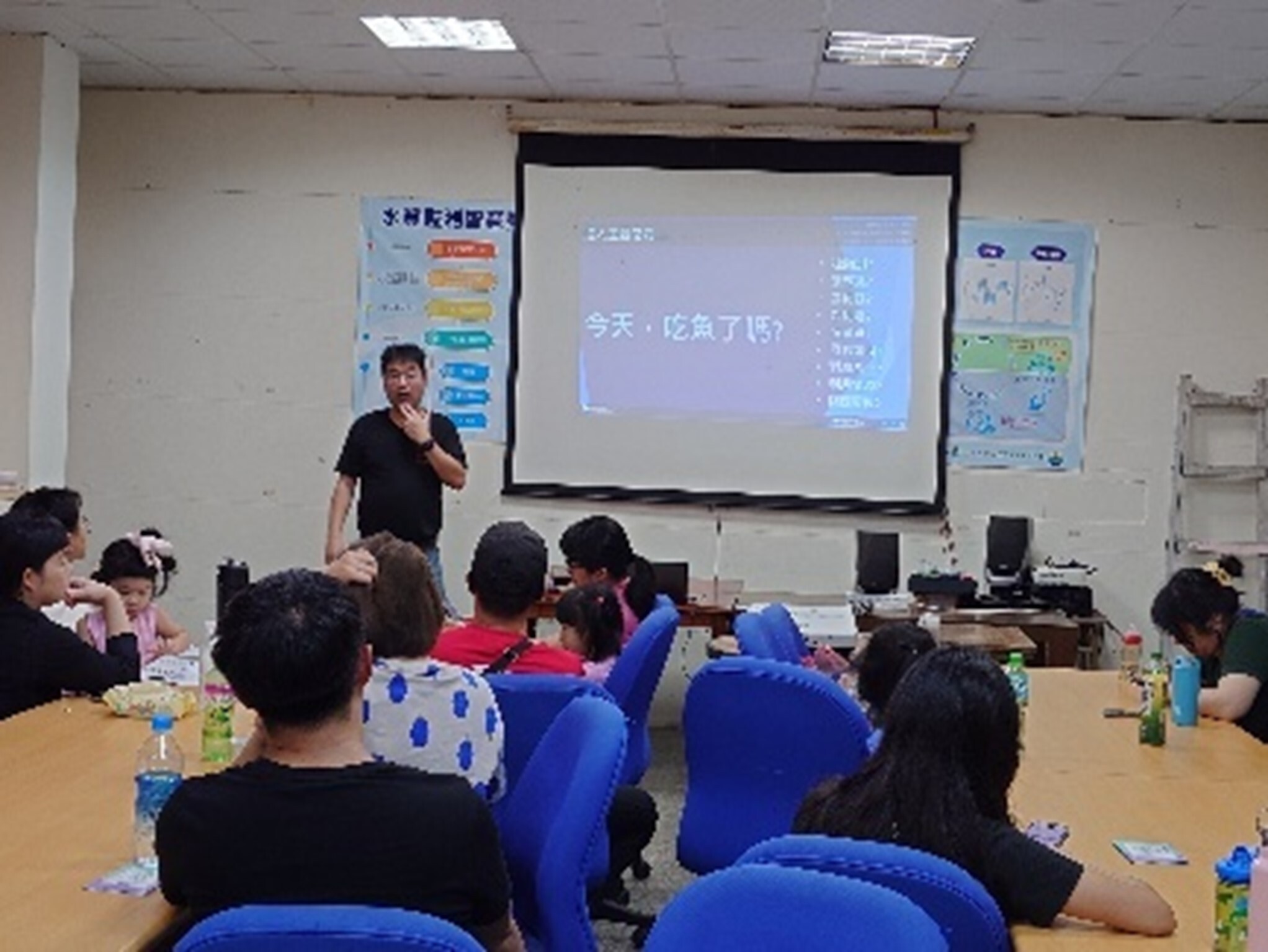
The project offers the courses “Coastal Biological Resources” and “Sustainable Development and Practices of Coastal Biological Resources.” Combining theoretical instruction with hands-on practice, the courses cover topics including coastal biodiversity, environmentally friendly aquaculture technologies, water and sediment quality assessment, fisheating culture, and the promotion of low-carbon aquaculture. The project also collaborates with local communities to promote marine conservation and sustainable fisheries. The project has deeply engaged in coastal ecological conservation, putting focus on marine and wetland sustainability. We established a water quality monitoring team to assist aquaculture farmers with water quality management, increasing the clam survival rate to more than 70%. The project also promoted the reuse of discarded shells to improve sediment grain size and oxygen permeability in intertidal habitats. As a result, the number of benthic species increased from 14 to 37, while biological carbon sequestration reached 3.86 times that of the control group, significantly enhancing biodiversity and the carbon sequestration benefits of the ecosystem. In addition, we trained 91 intertidal citizen scientists to participate in environmental monitoring and ecological conservation efforts. Relevant information is shown in Figures 1–2.
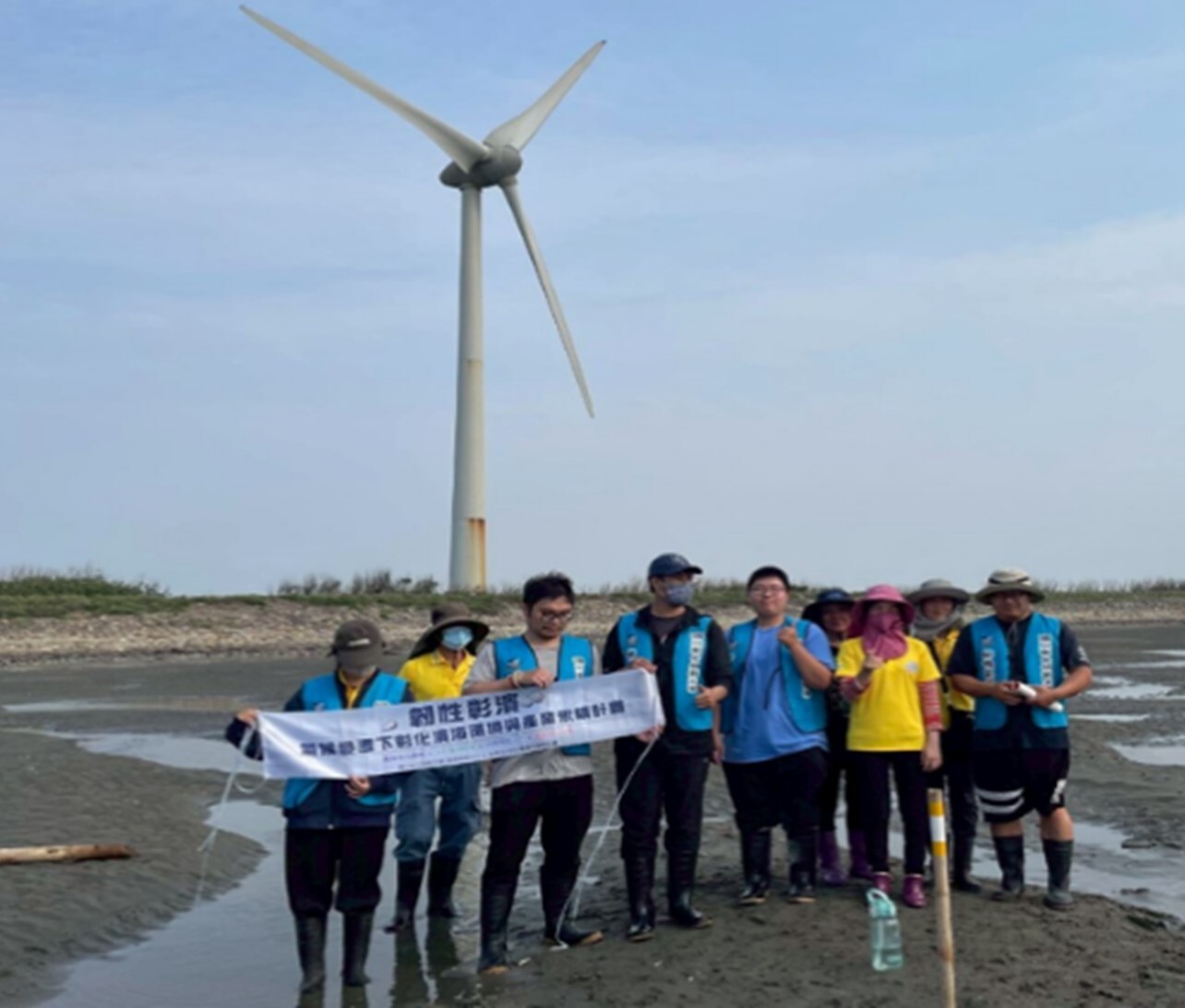
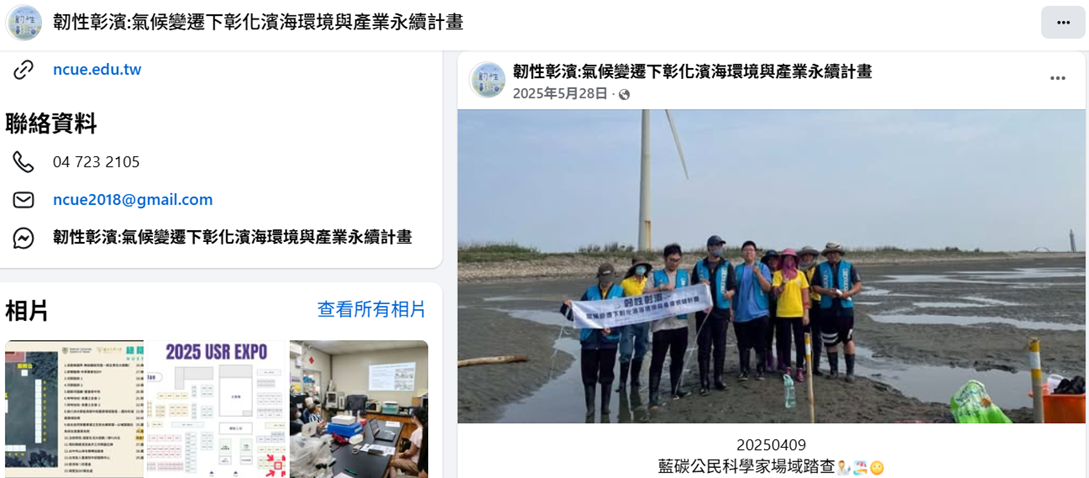
Link to Facebook page for project activities: https://www.facebook.com/NCUEUSR/
2. General Education Center
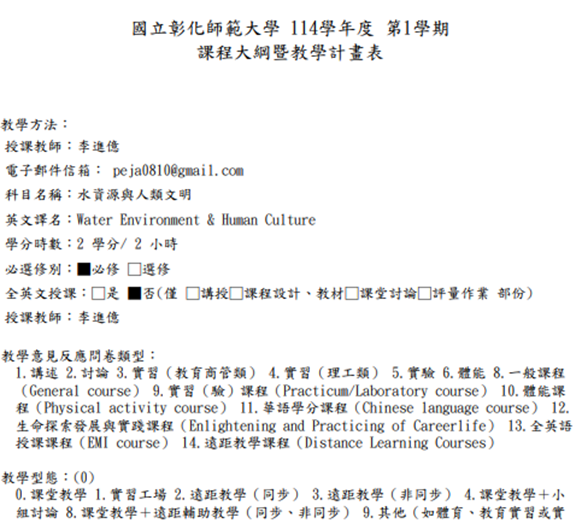
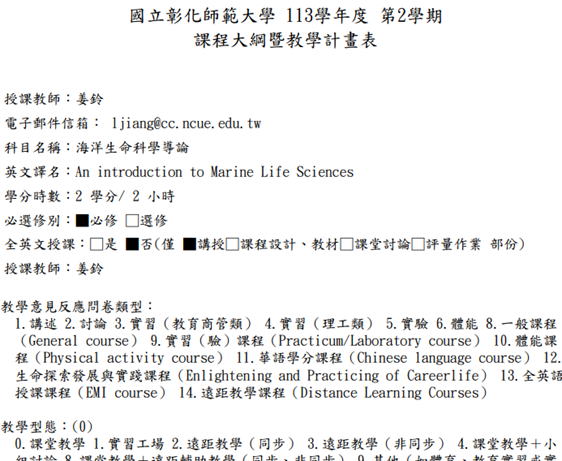
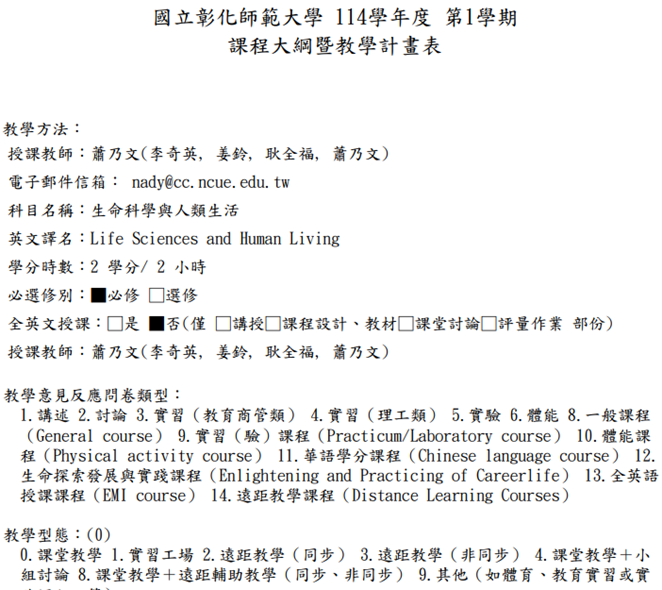
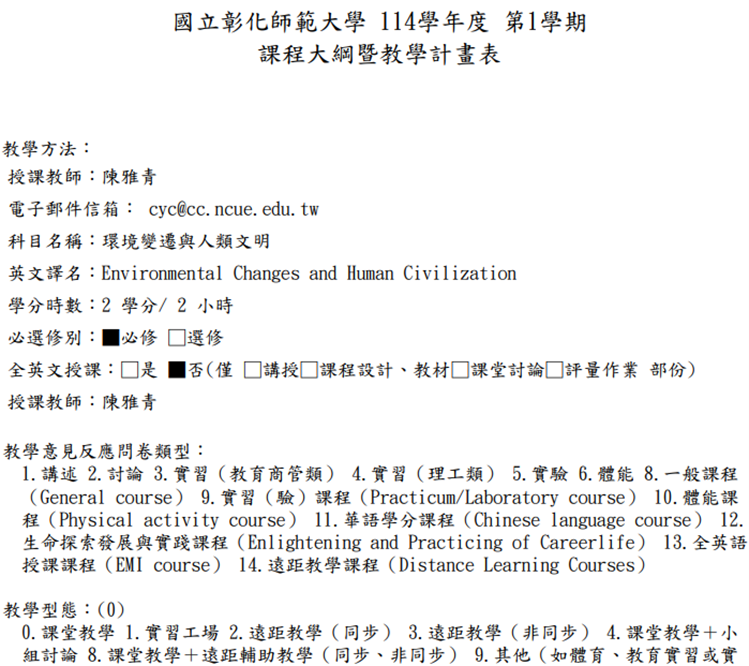
The General Education Center offered relevant general education courses in 2025, which are “Water Resources and Human Culture,” “Introduction to Marine Life Sciences,” “Life Sciences and Human Living,” and “Environmental Changes and Human Civilization.” Syllabi are shown in Figure 3.
Relevant Links:
(1) Water Resources and Human Civilization:https://webapss.ncue.edu.tw/DEANV2/UploadDEAN/SUBJECT/1141/00214_0CCGE0175120.pdf
(2) Introduction to Marine Life Sciences:https://webapss.ncue.edu.tw/DEANV2/UploadDEAN/SUBJECT/1132/00252_0CCGE0169820.pdf
(3) Life Sciences and Human Life:https://webapss.ncue.edu.tw/DEANV2/UploadDEAN/SUBJECT/1141/00220_0CCGE0049220.pdf
(4) Environmental Change and Human Civilization:https://webapss.ncue.edu.tw/DEANV2/UploadDEAN/SUBJECT/1141/00234_0CCGE0180020.pdf
3. Department of Biology
2025 Local Marine Stewardship and Conservation Project: Changhua Coastal Meretrix lusoria Habitat Survey, Conservation, and Restoration Project.
Under the Ministry of Education Fourth-Phase USR Project, "Resilient Changbin: Climate Change and the Sustainability of Changhua's Coastal Environment and Industries," NCUE Center for General Education worked with Caohu Junior High School, Hanbao Elementary School, Fangyuan Elementary School, and Houliao Elementary School to promote marine education, intertidal observation, clam identification, water-quality monitoring, blue carbon, environmentally friendly aquaculture, and argi-food as well as fisheries-food education. Being dedicated to marine education, Caohu Junior High School integrates marine issues into alternative curriculums, special education, and aesthetic creation. The school not only received the Ministry of Education’s Marine Education Contribution Award in 2021 and 2025, but also won the Excellence Award in the junior-high category of the Marine Education Innovative Teaching Quality Team Selection.
In collaboration with the Changhua Marine Food Research Production Cooperative and local communities, NCUE conducted clam-habitat surveys, sediment improvement, and Marine Citizen Scientist training at Xinbao Wetland. In 2025, we had completed four clam-habitat surveys and conducted an investigative volunteer training accumulated a total of 50 participant-times; on top of that, we had also held five Junior Marine Citizen Scientist activities reached 146 participants and three outdoor ecological survey and field-operation activities reached 73 participants. The activities included water-quality and dissolved-oxygen testing, sediment analysis, bivalve identification, benthic-fauna surveys, intertidal biodiversity observation, and an oyster-shell sediment-improvement trial. Through a “Hands Together” way, Caohu Junior High School students led Hanbao Elementary School pupils in intertidal surveys, building a cooperation model that brings together the University, junior high schools, elementary schools, and communities, which helps to preserve the wetland with local industries. Photographs of activities are shown in Figure 4 below.