SDG 16.3.4
SDG 16.3.4 Neutral platform to discuss issues
Faculty members in various academic units and colleges at NCUE not only conduct academic research and publish their findings in different professional fields, but also create a neutral platform and safe space by organizing symposiums, outreach activities and opening courses. Besides publicizing and promoting relevant academic and professional achievements, they invite different political stakeholders to gather at symposiums and activities to discuss various issues frankly and safely. NCUE held 22 such events in 2024, with the number increasing to 32 in 2025. The details are as follows:
1. Office of Student Affairs Class-Advisor Meeting and Professional Development Seminar
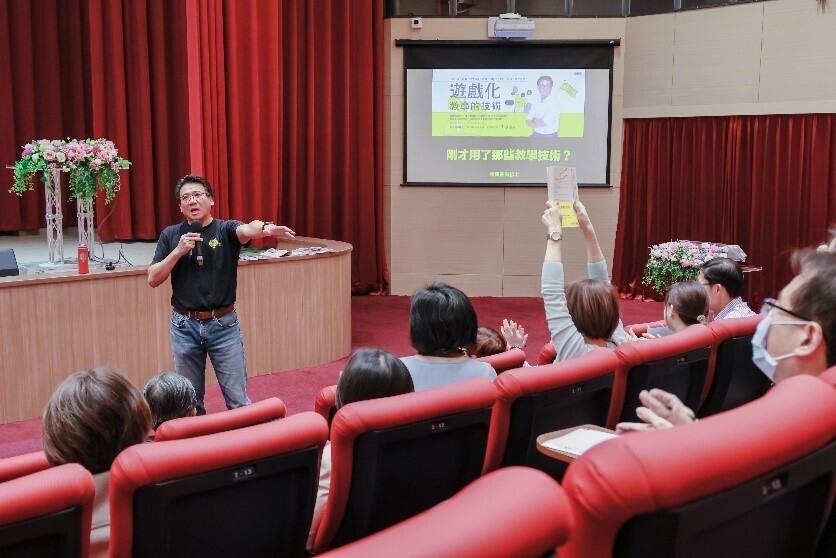
On April 14, 2025, the Office of Student Affairs held the Class-Advisor Meeting and Professional Development Seminar for the second semester of the 2024 academic year. Dr. Wang Yung-fu, founder of F Academy and a leading authority on presentation training in Taiwan, gave a keynote lecture titled "Turning the Classroom Around: A Teaching Method That Changes a Life". For the first time, principals of elementary, junior high and senior high schools in Changhua County were invited to attend, bringing together educational expertise in support of the county's goals. Dr. Wang’s humorous teaching style and extensive practical experience encouraged active interaction through the lecture. Drawing on behavioral, cognitive and constructivist learning theories, he used hands-on exercises and case studies to guide participants in reflecting on their teaching methods and presentation strategies, connecting theory with educational practice. Participants reported gaining valuable insights and inspiration. Dr. Wang has provided professional presentation training and in-house instructor training for more than 200 listed companies and is the author of several best-selling books on presentation and teaching techniques. The lecture strengthened participating teachers' presentation skills and teaching influence and promoted professional communication and interaction in educational settings (Figure 1).
Campus news: https://www.ncue.edu.tw/p/406-1000-29997,r93.php?Lang=zh-tw
2. Workshop on Promoting Short-Term Goals in Science Education
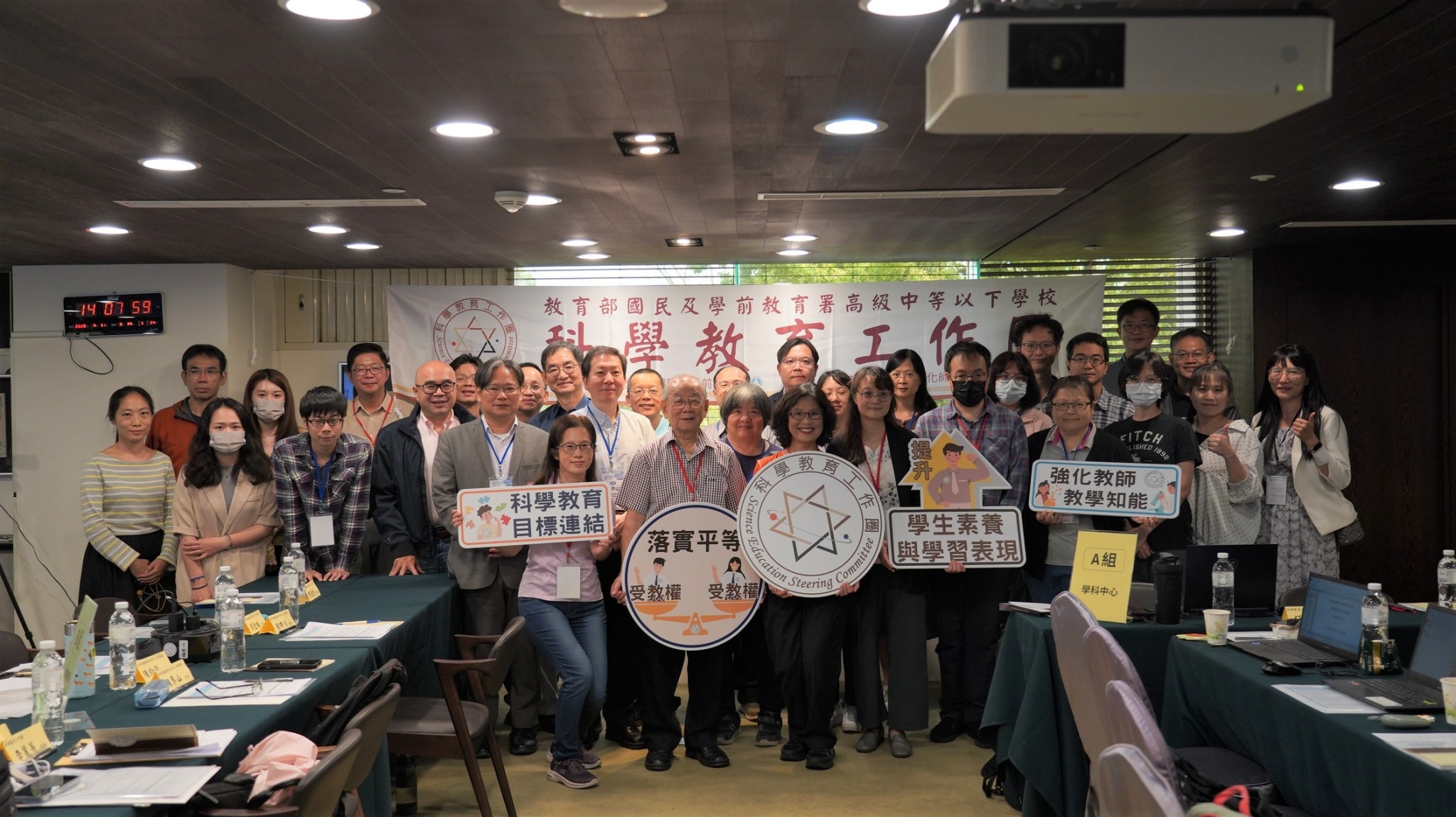
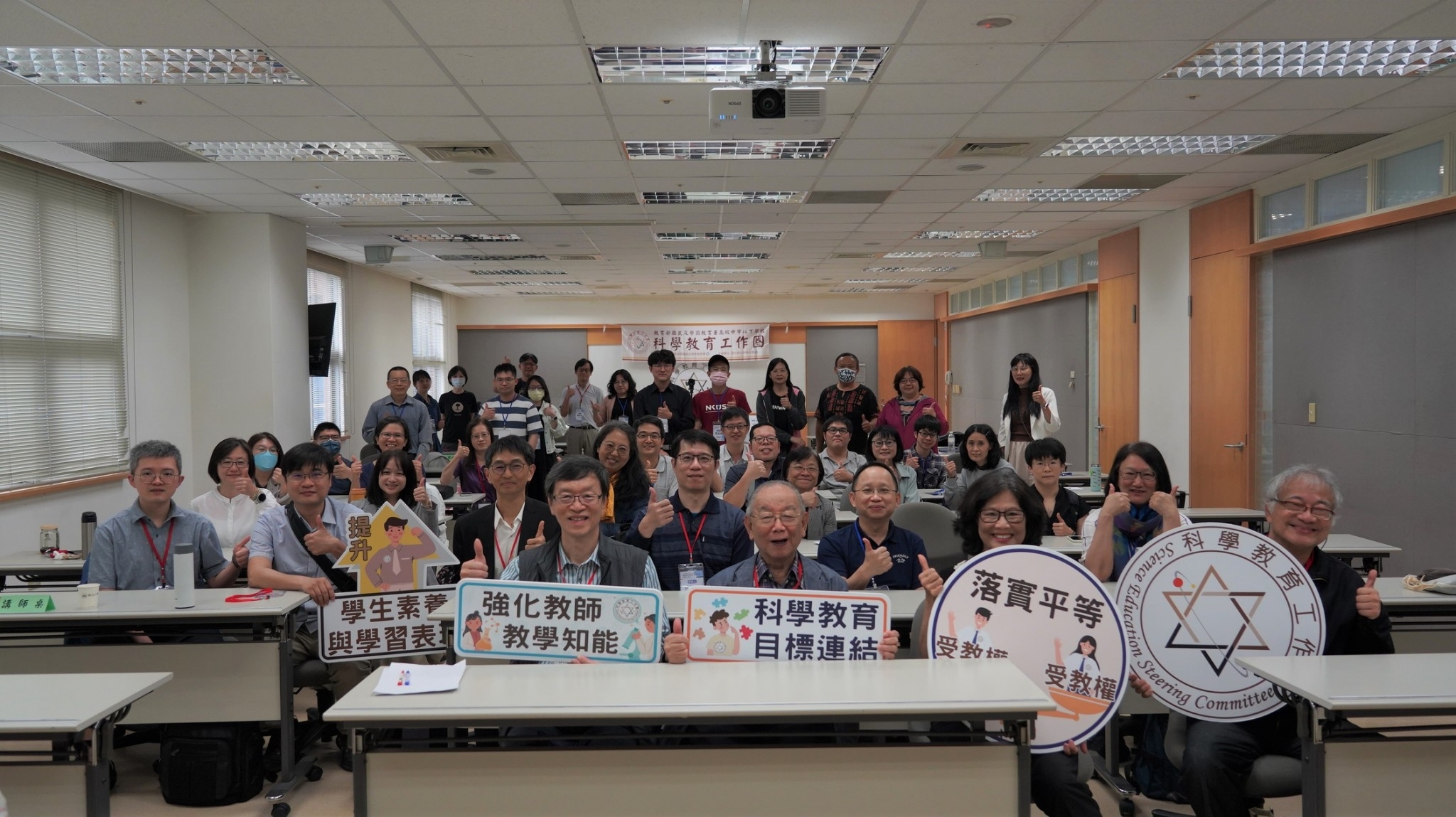
On April 11 and 12, 2025, the Graduate Institute of Science Education in the College of Science, held the 2025 Workshop on Promoting Short-Term Goals in Science Education in Taichung City. The workshop was organized by the Science Education Steering Committee led by Professor Hsiao-Lin Tuan. It aimed to promote the short-term goals for science education and incorporate them into the projects of science education centers across Taiwan. The event consisted of a symposium and a forum. On the first day, the symposium brought together the principal project writers from fourteen science education centers and members of the steering committee to discuss in depth how their projects could incorporate these goals and to provide advice and guidance. On the second day, the forum brought together experts from the College Entrance Examination Center, science education scholars from across Taiwan, representatives of the National Museum of Natural Science and other social education institutions, teachers from central and local science education advisory group, elementary and secondary school science teachers and graduate students, steering committee members and representatives of the Ministry of Education. The forum examined the development of competency-based test items and how changes in international approaches to scientific literacy could inform future science education research, improve students' scientific literacy and advance the short-term goals. The two-day workshop deepened the fourteen centers' understanding of the goals and gave participants a clearer direction for integrating competency-based approaches into curricula, teaching and entrance assessment (Figures 2 and 3).
Campus news: https://www.ncue.edu.tw/p/406-1000-30020,r93.php?Lang=zh-tw
3. International Conference on Expressive Arts Therapy
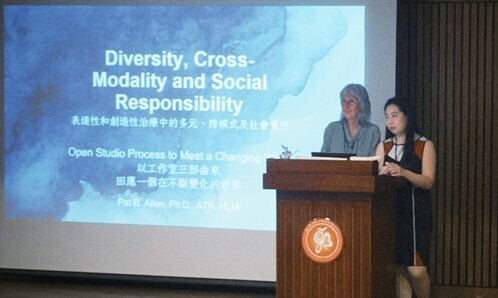
From April 18 to 20, 2025, the College of Education and the Department of Guidance and Counseling, together with the Taiwan Expressive Arts Therapy Association, held the international conference on expressive arts therapy titled "Diversity, Cross-Modality and Social Responsibility". Scholars and practitioners took part in online and in-person thematic forums lasting 80 to 100 minutes each, organized by service setting and approach. Topics included the application and development of expressive arts therapy in schools, communities, medical settings and private practice, as well as the use of creative media in group counseling and other small groups. Other topics included expressive arts therapy in career guidance, the use of mindfulness and natural materials, the use of picture cards, and the application of psychodrama to gender issues. Participants also discussed cross-border expressive arts therapists’ experience in multicultural settings, the implications of neuroscience for expressive arts therapy, therapists’ social advocacy and social responsibility, music therapy for children and adolescents with special needs, and the localization of dance movement therapy. Following the forums on April 18 and 19, Dr. Pat Allen of the United States led a full-day workshop on April 20, 2025. The workshop offered an experiential process of mindful attention integrating participants’ internal and external experiences across disciplines and responding to diverse social issues (Figure 4).
Campus news: https://www.ncue.edu.tw/p/406-1000-30235,r93.php?Lang=zh-tw
4. Advanced Training for Teacher Trainers in Inquiry Teaching
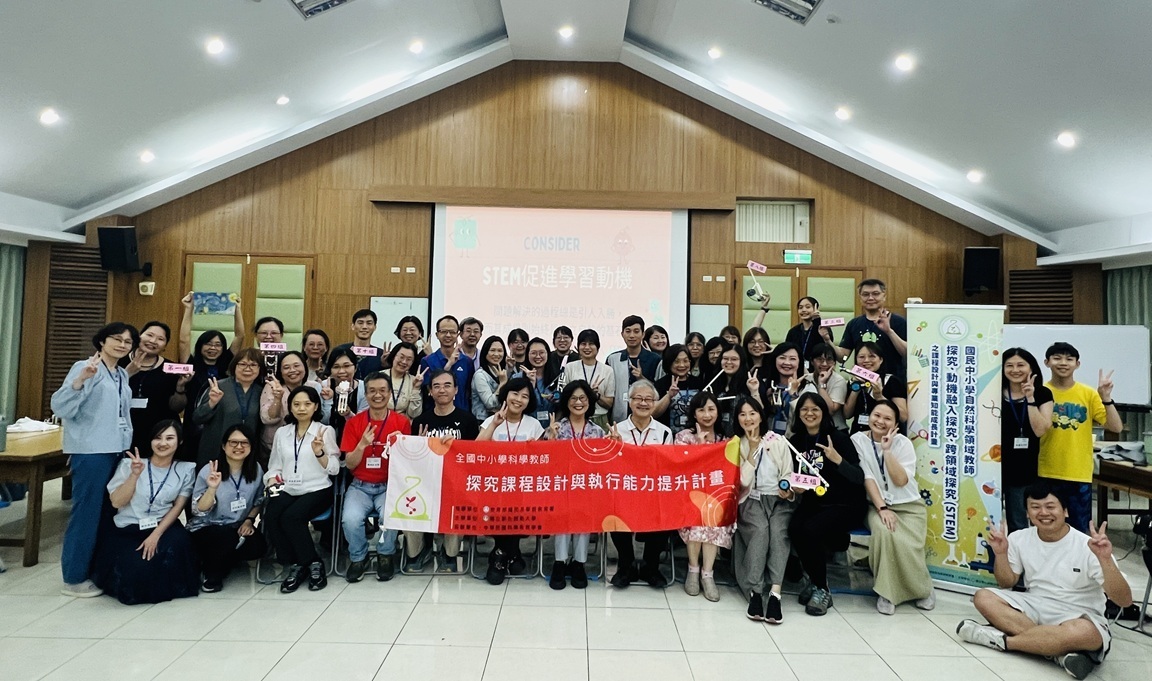
On May 3 and 4, 2025, the Graduate Institute of Science Education held advanced training for teacher trainers and instructional coaches in inquiry training under the National Professional Development Program for Inquiry Teaching among Elementary and Junior High Schools Science Teachers. The event attracted more than 40 science teachers from across Taiwan. Professor Hsiao-Lin Tuan has led the Ministry of Education program since 2014, promoting inquiry teaching and interdisciplinary STEM teaching in elementary and junior high schools and training successive cohorts of teachers who can train others. The training focused on interdisciplinary capacity building and deeper hands-on practice. Teacher Li Mei-hui of the Taipei City Digital Learning Promotion Office presented on interdisciplinary STEM inquiry course. Through group competition, hands-on challenges and the engineering design process, participants experienced the scientific process of problem solving. Using Gigo buildings blocks, they designed a model car for a ramp and worked through problem definition, design, prediction, testing and optimization before presenting their results and competing with other groups. Professor Tuan also introduced her new book on competency-based instructional design from inquiry to STEM, which presents design strategies and practical lesson plans to help teachers implement both learning by doing and doing while under the new curriculum guidelines (Figure 5).
Campus news: https://www.ncue.edu.tw/p/406-1000-30360,r93.php?Lang=zh-tw
5. Innovation Dialogue among Technology, Art and Inquiry
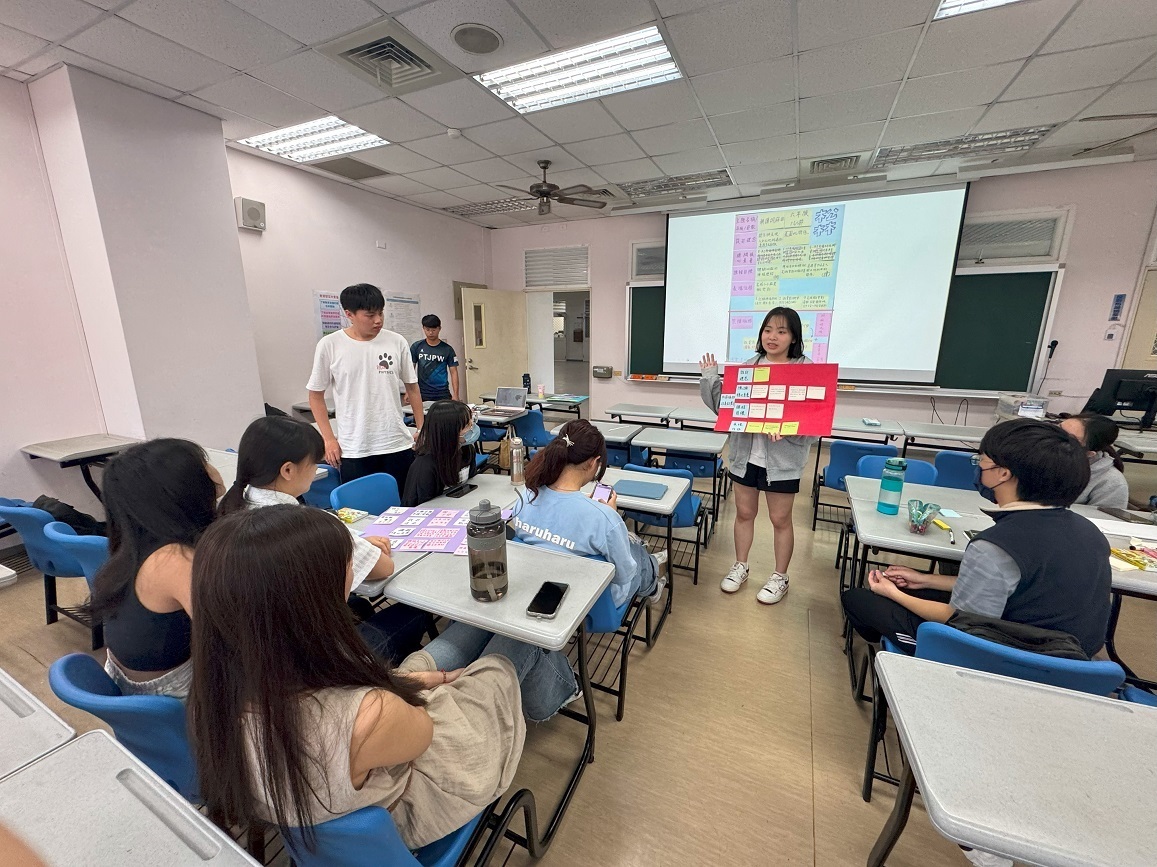
In 2025, the University Social Responsibility and Innovative Teaching Development Center of the Office of Academic Affairs, the Center for Teacher Education and the College of Science jointly held “An Innovation Dialogue among Technology, Art and Inquiry: Interdisciplinary Lesson Plan for Pre-Service Teachers”. NCUE promotes the course "Cross-Disciplinary Teaching Application and Practice", using practice-based course design and university competitions to encourage pre-service teachers to apply their subject knowledge in real classrooms and strengthen their practical teaching abilities and capacity for innovative teaching. In the teaching practice component of the course that semester, teams of pre-service teachers from the College of Science and the College of Education presented interdisciplinary lesson plans combining AI, natural science and art. These included "pH Showdown: The AI Judge Arrives", "The Secret of Leaves, The Art of Lnes" and "The Fascinating Bernoulli Principle". The lesson plans combined information technology with sensory experience and emphasized students’ scientific inquiry, problem solving skills and artistic creativity. Teachers Tsai Hsin-chan and Huang Shih-han of Lujiang International Elementary and Secondary School in Changhua County participated as external experts, sharing their practical experience of interdisciplinary teaching in junior high schools. They stressed that real classroom teaching must balance subject depth with student engagement. Pre-service teachers should identify key teaching points in the materials and use student feedback to turn their ideas into workable instructional designs. The two teachers also guided trial teaching and offered advice on speech rate and pacing, connection between theory and practice, and interaction design, supporting the pre-service teachers’ development (Figure 6).
Campus news: https://www.ncue.edu.tw/p/406-1000-30484,r93.php?Lang=zh-tw
6. Keynote Lecture for Advisor Professional Development Program
On June 17, 2025, the Office of Student Affairs held a keynote lecture for its advisor professional development program. Mei-chun Lin, Dean of Student Affairs of National Taiwan Normal University (NTNU), spoke on "Companionship and Support: Guides in University Life". Drawing on NTNU's transformation of its student affairs system, she described changes to its student counseling model and the student affairs organization, the abolition of traditional expulsion and conduct grading systems, new orientation camps that strengthen students’ attachment to the the university, gender-friendly dormitories, support for student affairs research, and efforts to build a friendly campus culture. She explained how NTNU pioneered a dedicated advisor system in 2014 and integrated resources from its student affairs units into a comprehensive support system grounded in counseling expertise. A lively discussion followed, during which administrators and faculty members explore practical implementation, institutional change and related strategies. The event deepened understanding of and reflected on NCUE’s advisor system and supported the development of its own innovative approach based on NTNU’s experience. The aim is to create a campus environment that guides, accompanies and supports students' holistic development while strengthening their sense of belonging and connection to the university (Figure 7).
Campus news: https://www.ncue.edu.tw/p/406-1000-30685,r93.php?Lang=zh-tw

7. Workshop for Consensus Building on Short-Term Goals in Science Education
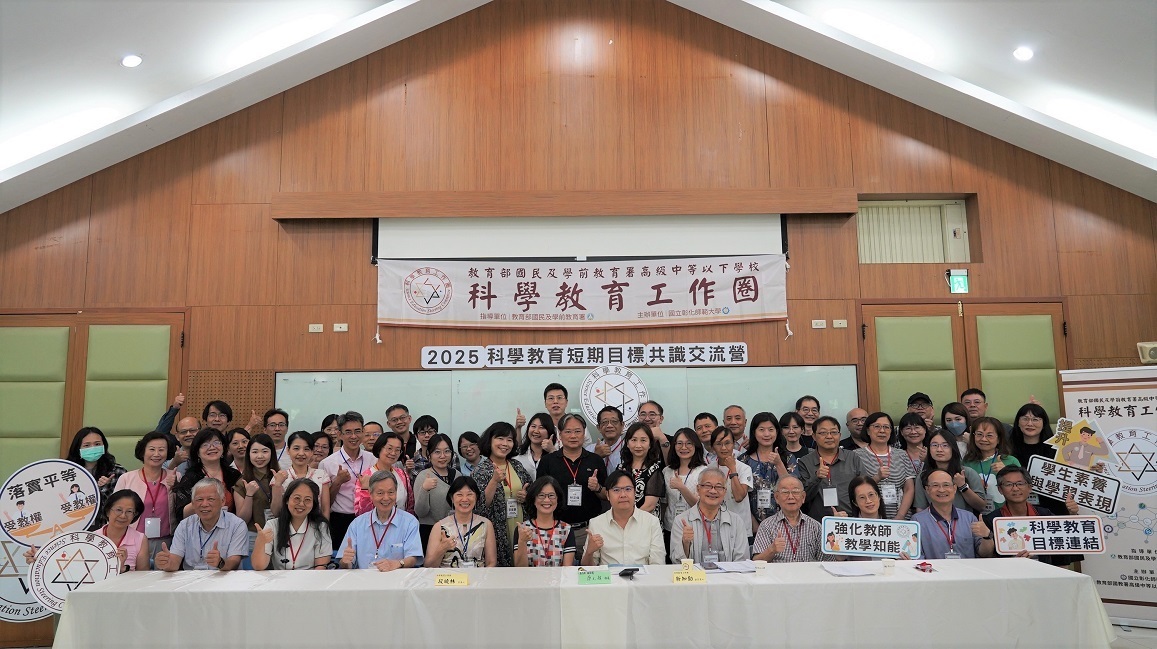
On June 26 and 27, 2025, the Graduate Institute of Science Education held the Science Education Steering Committee's 2025 Workshop for Consensus Building and Exchange on Short-Term Goals in Science Education. The workshop built consensus among fourteen science education centers and science education projects commissioned or funded by the K-12 Education Administration. It focused on implementation strategies for the 18 short-term goals, particularly four goals that relatively few centers had selected for their projects. Goal 8 involves integrating inquiry and hands-on teaching resources for elementary and secondary schools, including personnel, teaching materials and digital resources, to support their comprehensive implementation. Goal 12 involves incorporating assessments of inquiry and hands-on activities into examinations at all stages of elementary and secondary education. Goal 16 involves providing resources such as online training, itinerant teacher programs and the Schweitzer-inspired Educational Service Program in rural or culturally disadvantaged areas to address shortage of specialist mathematics and science teachers. Goal 18 involves providing resources that support high-achieving primary and secondary school students in learning science and mathematics and increasing their motivation to pursue these fields. Through two days and one night of dialogue and exchange, the centers reflected more deeply on the goals, shared their experience, coordinated strategies and strengthened cooperation. By integrating strategies and resources, the workshop aimed to translate the goals into practical support for classroom teaching and lay a foundation for scientific literacy among the public (Figure 8).
Campus news: https://www.ncue.edu.tw/p/406-1000-31004,r93.php?Lang=zh-tw
8. Special Education Conference on Innovative Teaching and Digital Learning
On June 21, 2025, the Department of Special Education held the 2025 Special Education Conference and Paper Presentation on the theme "When Special Education Meets Artificial Intelligence: Innovative Teaching and Digital Learning", focusing on innovate applications of AI in special education. Professor Wen-chi Wu of the Graduate Institute of Teacher Professional Development, National Chung Hsing University, gave the keynote lecture, "Education x Artificial Intelligence: Innovative Application and Practice from Theory to the Classroom". The session was chaired by retired NCUE professor Chin-tu Hsiao. Professor Wu examined strategies and potential risks associated with using generative AI in education and shared practical approaches, such as combining AI-generated dialogue with oral language training to improve students' language abilities, logical thinking and learning motivation. Two teaching assistants, Yueh-ting Liao and Yi-ting Wu, demonstrated four digital tools suitable for special education classrooms: NotebookLM for AI-assisted note-taking, NVDA for screen reading, Speechify for text-to-speech conversion and Speech notes for speech-to-text conversion. Participants tried the tools themselves to build their familiarity with and confidence in digital teaching applications. Two parallel afternoon paper sessions covered AI applications, inclusive education, parenting interventions and character education for students with disabilities and gifted senior high school students. A closing panel was chaired by Director Ya-hui Yang, with Professor Pao-hsiang Chi, Associate Professor Yu-hsia Lin and Associate Professor Shih-yi Chan serving as discussants. They discussed how AI could address the diverse challenges of special education, encouraging further interest in the future development of AI-supported special education. The conference demonstrated the diverse possibilities of integrating AI into education and offered practical guidance for the digital transformation of special education (Figure 9).
Campus news: https://www.ncue.edu.tw/p/406-1000-31011,r93.php?Lang=zh-tw
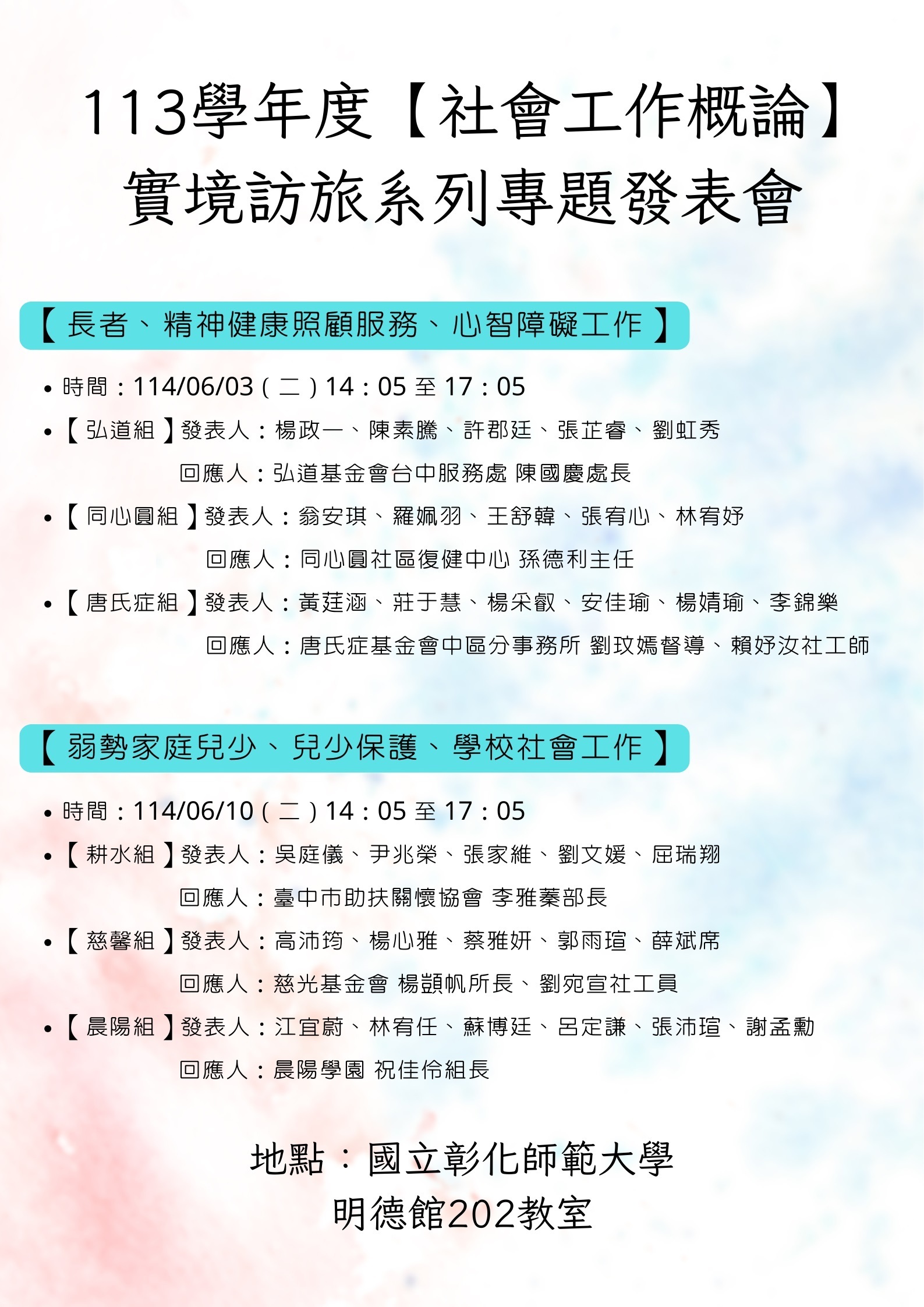
9. Field-Visit Presentations for the Course "Introduction to Social Work"
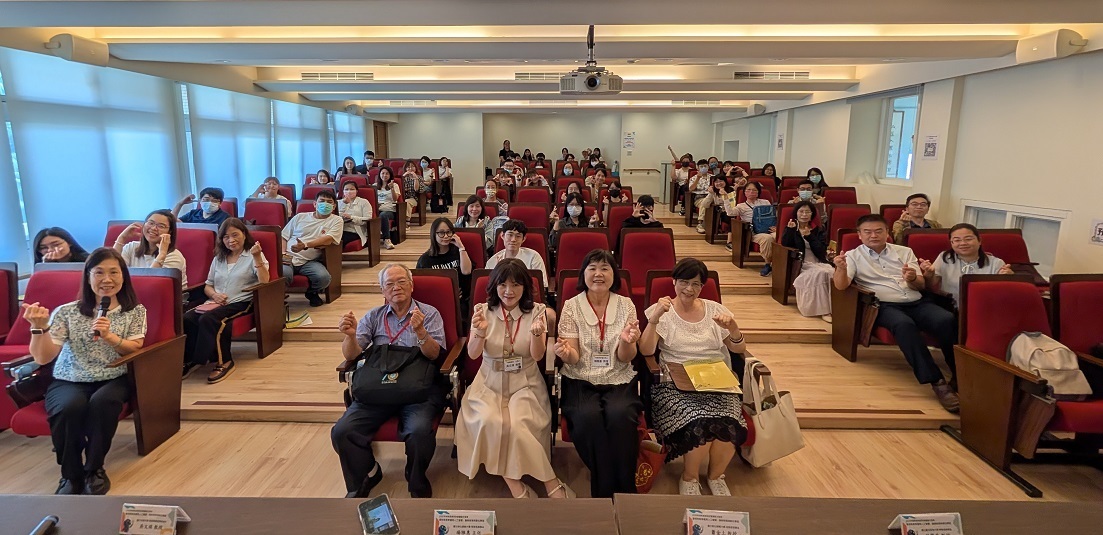
On June 3 and 10, 2025, the College of Education and the Department of Guidance and Counseling held a series of presentations on field visits conducted for the course "Introduction to Social Work", taught by Associate Professor Chien-ju Pai. The presentations showcased students’ fina course outcomes. During the semester, first-year students worked in groups to visit six social welfare nonprofit organizations in central Taiwan and conduct in-depth interviews. Through interactions with professionals and service users, they deepened their understanding of professional social work. The participating organizations included the Taichung Service Office of the Hondao Senior Citizen's Welfare Foundation, which provides social work services for older people, and the Wufeng service station in Taichung of the Down Syndrome Foundation R.O.C., which provides social work services for people with intellectual disabilities. Other organizations included Tongxinyuan Community Rehabilitation Center, which provides community rehabilitation for people with chronic mental illness, and GengShui Xiaozi of the Taichung Zhufu Care Association, which provides community services for children and young people from disadvantaged families. Students also visited the Tsukuang Foundation, which provides child protection and placement services, and Shiny School which provides alternative education for students who have dropped out of school. In the final presentations, students reported on each organization's structure and philosophy, service users and working methods, summaries of interviews with experienced practitioners, and relevant social work theories and background knowledge. The presentations focused on social work with older people, mental health care, services for people with intellectual disabilities, children and young people from disadvantaged families, child protection, and school social work, demonstrating students’ understanding and integration of these professional fields. Eight discussants were invited to provide professional feedback on the group presentations. Practitioner mentors drew on postmodern social work perspectives, developments in different fields and practical experience to offer suggestions and directions for reflection, deepening students' understanding of professional roles, relationships with services users and practice methods. Through the two presentation sessions and exchange, first-year students reflected on how to use feedback from teachers, practitioner mentors, teaching assistants and peers to strengthen their foundational professional competencies and prepare for future professional learning (Figure 10).
Campus news: https://www.ncue.edu.tw/p/406-1000-31053,r93.php?Lang=zh-tw
10. Gender Equity Education Promotion Center Symposiums and Workshops
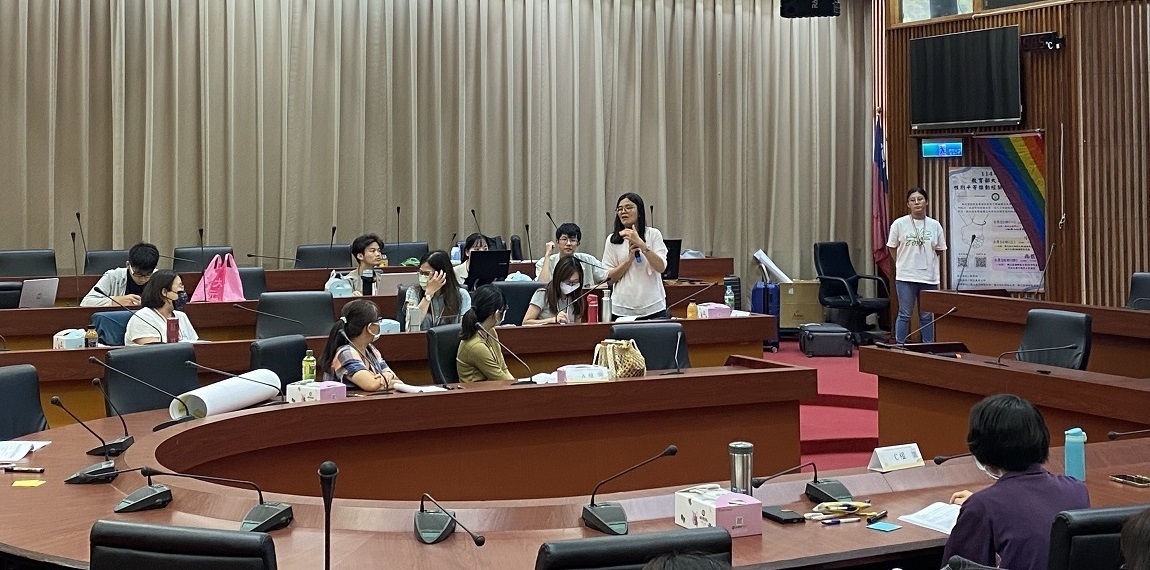
Since 2024, NCUE has operated the Central District College & University Gender Equity Education Promotion Center under commission from the Ministry of Education. The center helps the Ministry strengthen the gender equity education committees at universities and colleges in central Taiwan, improve coordination among their gender equity education organizations and raise gender equity awareness among their staff. On June 24, 2025, the center held the central region session of the Ministry of Education's symposium on improving gender budgeting at national universities and sharing experience. NCUE shared its gender budgeting practices, innovations and successful cases. staff responsible for gender equity and accounting at national higher education institutions in central Taiwan examined gender budgeting practices and policy implementation. The event aimed to promote dialogue and experience sharing between academia and policymakers and establish a stronger foundation for future gender budgeting work. On June 26, 2025, the center held the first meeting of its working group, which reviewed planned activities for the second half of 2025 and the implementation of gender equity education initiatives at institutions in the region. On June 27, 2025, the center and National Taiwan University of Sport jointly held the second capacity-building event, titled "Gender Equality Regulations and Practice in Dialogue: A Workshop for Staff to Share Experience". It covered the handling of campus gender-related incidents, legal concepts, cooperation across units and psychological support to strengthen the effectiveness of gender equity education committees. The event included two keynote lectures and group workshops organized according to participants' experience and practical needs. It strengthened connections and experience sharing among committee staff, provided practical professional development and psychological support, and received positive feedback from participants, laying a foundation for further development of gender equity education (Figure 11).
Campus news: https://www.ncue.edu.tw/p/406-1000-31097,r93.php?Lang=zh-tw
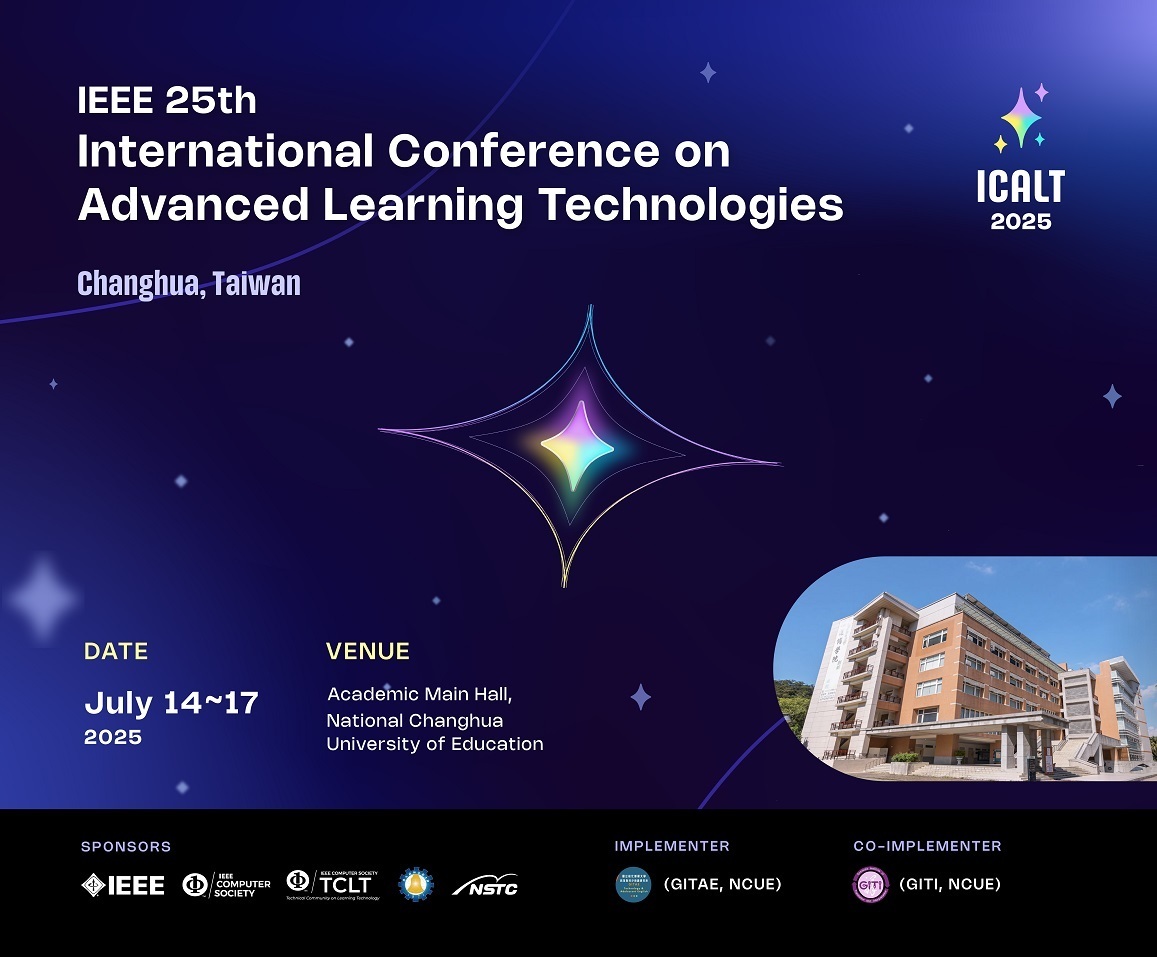
11. ICALT 2025 IEEE International Conference on Advanced Learning Technologies
From July 14 to 17, 2025, the Graduate Institute of Technology and Adolescent English and the Graduate Institute of Translation and Interpretation jointly hosted ICALT 2025, the 25th IEEE International Conference on Advanced Learning Technologies. ICALT is one of the leading international conferences in learning technology and drew more than a hundred scholars from around the world to discuss how artificial intelligence, big data, virtual reality and smart learning environments are shaping future learning. The conference was held in hybrid format with 14 themes and a doctoral forum, covering technology-enhanced language learning, open education, learning analytics, AI-based teaching systems, learning support for people with disabilities and augmented reality in teaching. Alongside the keynote lectures, interdisciplinary panels included a “Women in Engineering Panel” on gender inequality and career challenges facing women in technology and academia An “Emerging Technologies in Education Panel” featured the research team from the Institute for Research Excellence in Learning Sciences (IRELS) at National Taiwan Normal University, which discussed how emerging technology are reshaping education. Topics ranged from the board effect of AI on education systems to practical applications in scientific inquiry, cognitive processes and immersive learning. Following rigorous review by the international program committee, 115 papers were accepted and presented in conference sessions, providing opportunities for discussion and exchange. Topics included AI-supported personalized learning, mobile learning, big data and learning analytics, and immersive VR teaching, promoting the dissemination of research findings and innovative approaches to future learning challenges. Hosting the conference reflects NCUE's long-standing work in educational technology and strengthens its visibility and influence in global educational innovation and academic exchange (Figure 12).
Campus news: https://www.ncue.edu.tw/p/406-1000-31093,r93.php?Lang=zh-tw
12. Visit by the Director General of the India Taipei Association
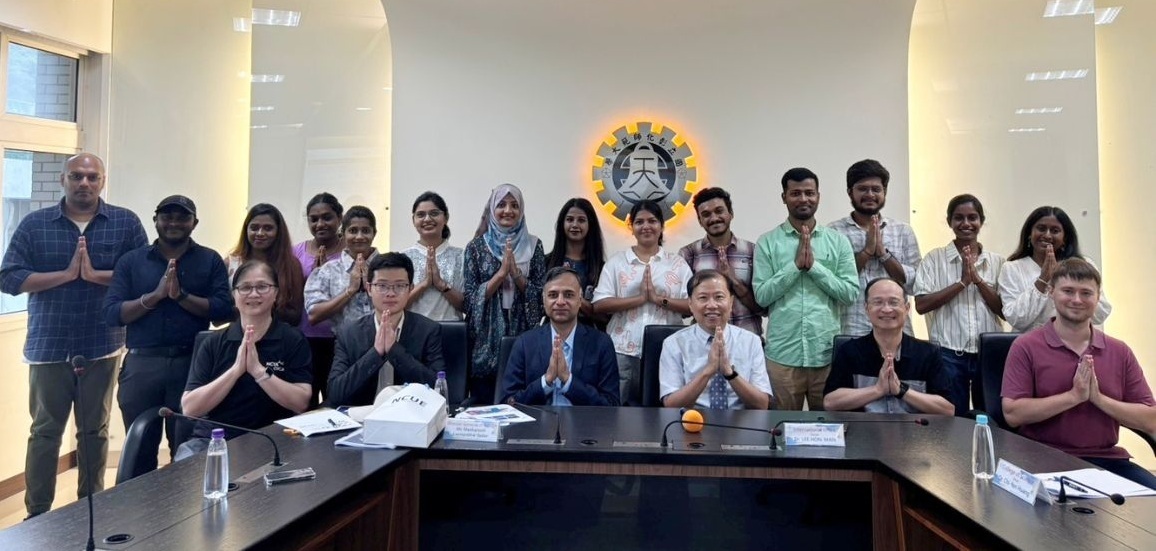
Director General Manharsinh Laxmanbhai Yadav of the India Taipei Association (ITA) visited National Changhua University of Education (NCUE) on July 3, 2025, where he engaged in in-depth discussions with university faculty and interacted warmly with Indian students currently studying at the university. The students’ strong foundations in science and engineering and their eagerness to learn were highly praised by NCUE faculty and students. Director General Yadav expressed his satisfaction that these students could study in Taiwan, which has international competitive high-tech industries and research and development capabilities. Both sides expressed strong support for promoting educational and cultural exchanges between India and Taiwan. ITA serves as India’s representative office in Taiwan. Director General Yadav is an experienced Indian diplomat who previously served with India’s Permanent Mission to the United Nations in Geneva and held postings at Indian embassies in Washington, D.C., and Europe. NCUE has developed into a comprehensive university with strong science and engineering programs, offering international master’s degrees and supporting industry connection, internships and employment in Taiwan for international students. At the time of the visit, NCUE collaborated with nearly 20 companies in the high-tech and manufacturing sectors, including listed companies with factories in India. Indian students who choose to pursue careers in Taiwan may therefore also have opportunities to return to India and contribute their expertise. NCUE had also established partnerships with nearly 10 Indian universities, with academic exchanges continuing to grow. Director General Yadav’s visit was expected to expand cooperation and strengthen NCUE students’ international mobility and academic perspectives. During the meeting, Director General Yadav asked Indian students about their reasons for choosing NCUE and their experiences. He noted that India’s emphasis on basic education giving students string foundations in science and engineering and recognized Taiwan’s international strengths in semiconductors, artificial intelligence, and materials science. He expressed pride that students could benefit from an academic environment comparable to those in the U.S. and Europe. He encouraged students to overcome shyness, learn Mandarin, interact actively with local students, learn from others’ strengths and broaden their perspectives. He also encouraged them to return to India with what they had learned and become important bridges between India–Taiwan. As many Indian students were still unfamiliar with Taiwan, both sides hoped to attract more students through internships, industry-academia cooperation and language support. Cultural activities such as Indian food fairs and celebrations of Indian festivals would also enrich the international atmosphere on campus and enhance local students’ international mobility.
13. Workshop on Generative AI for Teaching Enhancement and Research Support
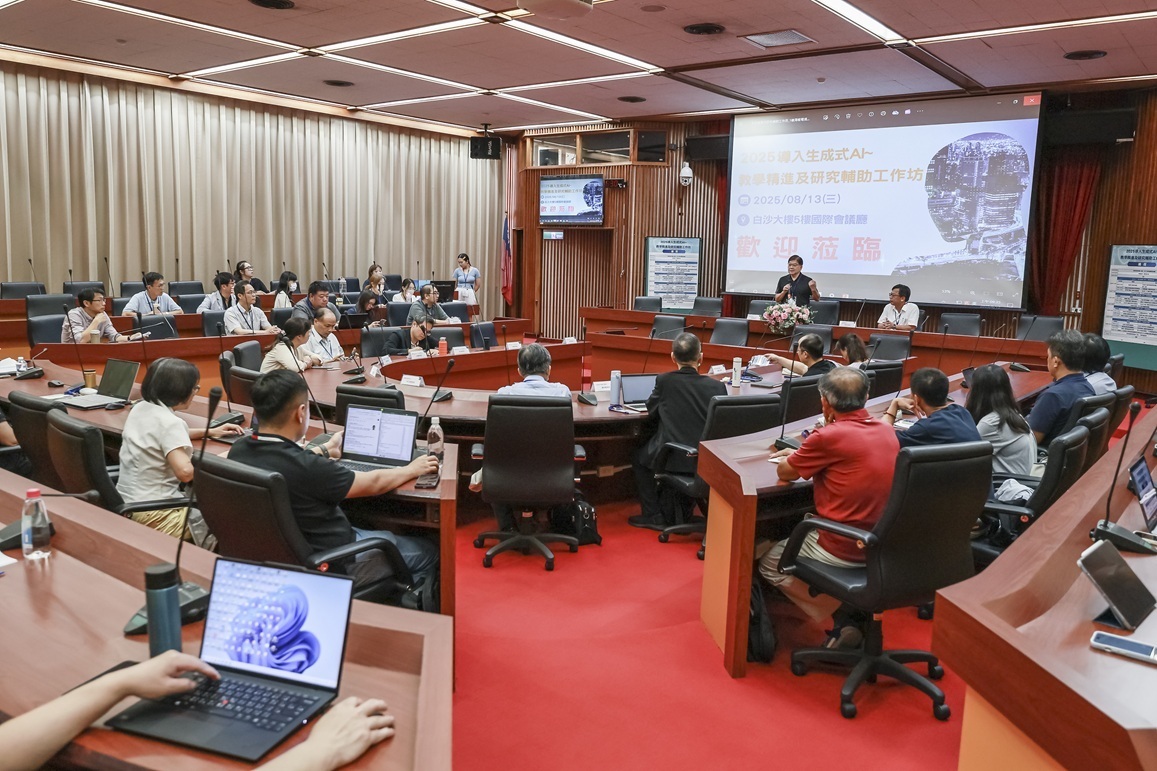
On August 13, 2025, the University Social Responsibility and Innovative Teaching Development Center of the Office of Academic Affairs held the 2025 workshop on introducing generative AI for teaching enhancement and research support. About 100 faculty members from NCUE's colleges and member universities of the Taiwan National University System took part. 13 speakers shared practical experience and explored the potential applications and future development of generative AI in teaching and research. Four thematic sessions focused on science and engineering, as well as the humanities, social sciences and management. The sessions were chaired by Vice President Yu-min Tseng, Dean of Academic Affairs Yang-Wei Lin, Dean of Library and Information Services Chao-Chin Wu and Chief Secretary Meichun Lydia Wen. 13 faculty members from NCUE’s seven colleges served as speakers, demonstrating interdisciplinary cooperation across university units. Topics included AI-assisted course design and assessment, medical imaging, vehicle technology teaching, interdisciplinary finance courses, language and multimodal learning, new media art, and law and ethics, showcasing innovative applications of generative AI in different fields. The workshop forms part of Aspect A, teaching innovation and enhancement, of the Higher Education Sprout Project. Through practical training and experience sharing, it aimed to strengthen teachers' AI literacy, improve teaching effectiveness and research quality, and foster an AI-oriented learning culture on campus. Advanced workshops AI applications in specific field are also planned, together with faculty communities, to establish sustainable mechanisms for collaboration (Figure 14).
Campus news: https://www.ncue.edu.tw/p/406-1000-31244,r93.php?Lang=zh-tw
14. Conference on Educational Trends and School Management
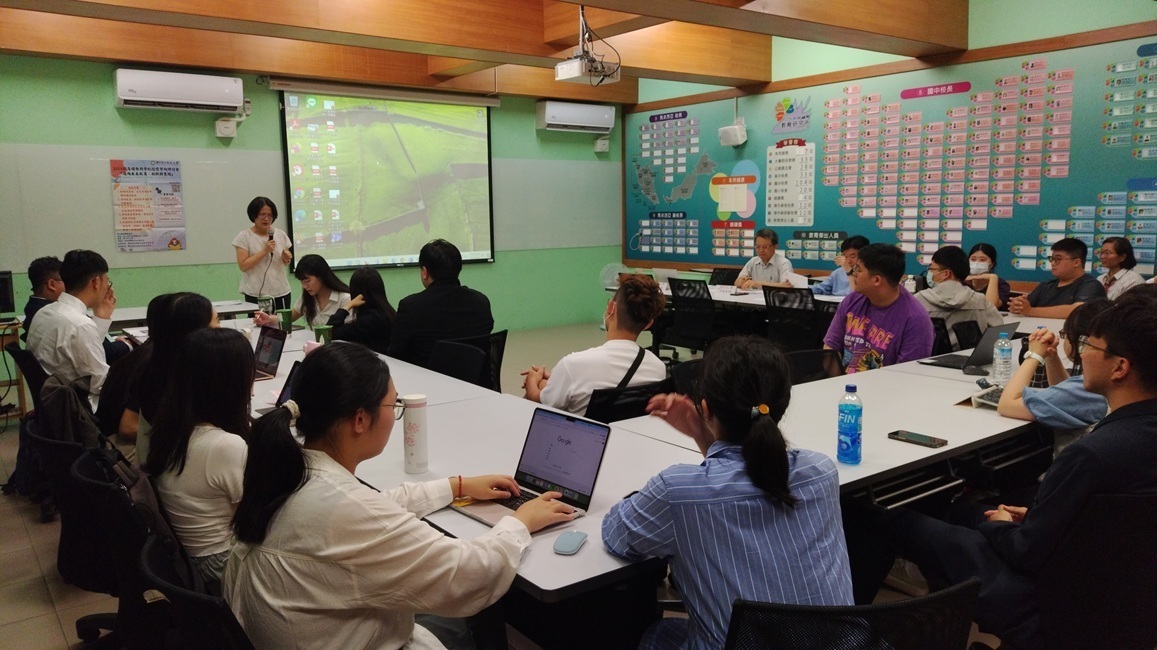
On May 23, 2025, the College of Education and the Graduate Institute of Education held the conference "Educational Trends and School Management" on the theme "Toward Future Education: Innovation and Practice". Education specialists and practitioners discussed the new curriculum guidelines, bilingual education, digital learning and school management, attracting faculty members, students and education professionals from within and outside the university. The conference had five sub-themes combining theoretical depth with practical application. Under "Implementing the New Curriculum Guidelines: Competency-Based Teaching and Assessment", speakers showed how to design activities and assessment tools around core competencies and presented practical examples and strategies for teacher professional development. Under "Bilingual Education: Innovative Teaching Models and Assessment Strategies", they examined immersive and thematic bilingual teaching, assessment methods for different age groups, and the challenges and successes of bilingual education. "Digital Learning and Educational Technology" covered virtual reality and AI applications in classroom and the development of smart learning environments to support students’ self-directed learning. "School Management and Reform" examined leadership models, the importance of teamwork, and practical examples of resource integration and improved effectiveness. The conference also covered special education, the SDGs, career development education and education policy. It promoted the exchange of education ideas and practical experience and provided valuable insights of future educational innovation and practice (Figure 15).
Campus news: https://www.ncue.edu.tw/p/406-1000-31309,r93.php?Lang=zh-tw
15. Baisha Summer School for Pre-Service Teachers
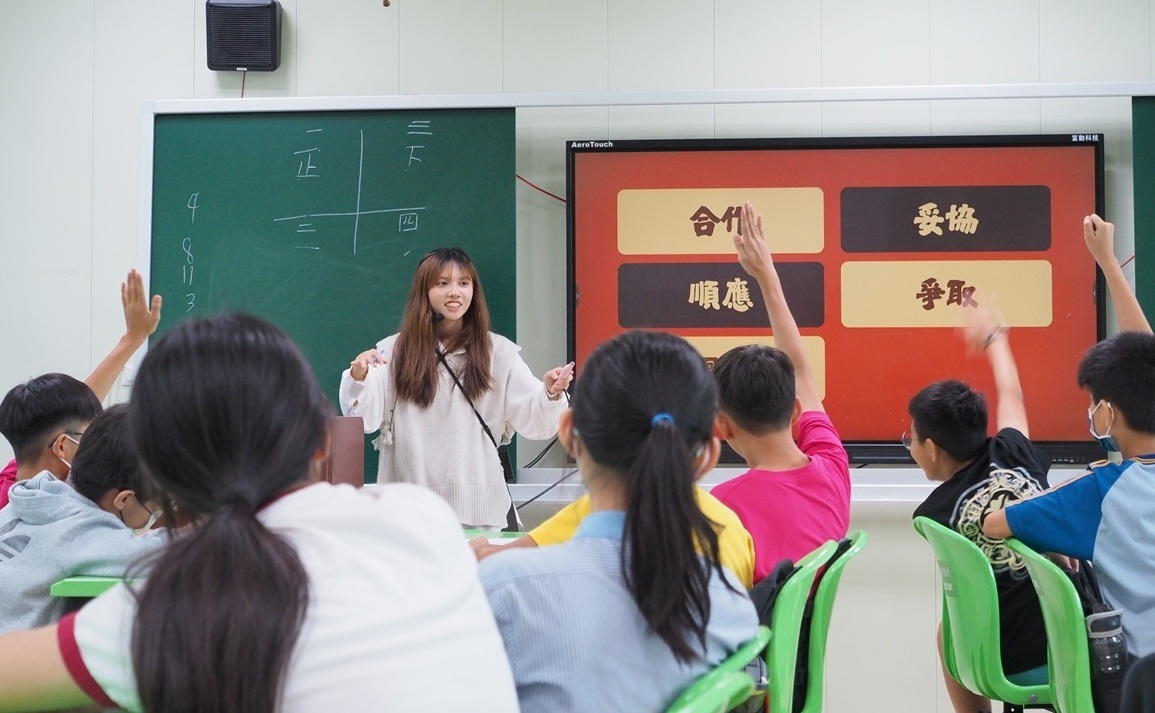
From July 7 to 18, 2025, the Center for Teacher Education ran the Baisha Summer School at Sijhou Junior High School, Dacun Junior High School and Hsin-Yi Public Junior High and Elementary School. Fifty-five pre-service teachers took on roles of principals, administrators, subject teachers and class advisors, forming school management and teaching teams and experiencing the operation of miniature school. Through local connections and teaching innovation, the three schools developed programs around the themes "Local Roots, Global Thinking", "Good living in Dacun: Reading AI, Unlocking Healthy Emotions" and "The light of Hsin-Yi, the Character of Changhua: Illuminating the Locality". They provided summer transition courses and activities tailored to 115 students moving from elementary to junior high school, helping them learn through inquiry and enjoyable activities and adjust to junior high school life. The pre-service teachers held daily teaching reflection and peer feedback sessions and continually adjusted their strategies through action and reflection. This improved their teaching effectiveness, built practical experience and strengthen their professional teaching knowledge and skills. They also took part in school administration and gaining administrative experience for their future educational work. The program emphasized long-term partnerships with participating schools. NCUE professors held regular curriculum review meetings with school principals and teachers to discuss course objectives, implementation, assessment strategies and overall planning. These discussions were closely integrated with the Baisha Summer School program to ensure that teaching practice addressed partner schools’ needs and supported mutual learning. The program strengthened pre-service teachers’ teaching and administrative abilities, educational beliefs and sense of social responsibility. Through interdisciplinary design, practical teaching, reflection and administrative experience, NCUE helped prepare future teachers with practical experience and enthusiasm while bringing innovation and vitality to partner schools (Figure 16).
Campus news: https://www.ncue.edu.tw/p/406-1000-31310,r93.php?Lang=zh-tw
16. Schweitzer-inspiring Educational Service Program
In July 2025, the Center for Teacher Education ran the 2025 Schweitzer-inspiring Educational Service Program, encouraging pre-service teachers to follow Albert Schweitzer's example of professional dedication and care for the disadvantaged people through service learning. Over four weeks, they accompanied students at Hsiensi Junior High School in Changhua County on a memorable learning journey. In Chinese classes, students explored texts such as "The Back View" and "Peach Blossom Spring" through MBTI personality analysis, poetry and drawing, discovering the emotions and values expressed in literature. Mathematics classes became a stage for games, including 24-point challenges, a common-factor game involving exchanges for red markers, and counting games. These activities helped students develop strategic and logical thinking and regain confidence with numbers. In science, experiments such as creating a rainbow in a glass bottle and making ice cream allowed students to explore scientific principles through hands-on activities. English classes used shopping role-plays and an animal-homes game to encourage students to speak naturally and gain confidence in communication. Social studies covered Taiwanese history and human rights, with students constructing a three-dimensional map of Taiwan and writing postcards expressing their feelings about their home town. Integrative activities turned Werewolf and UNO into opportunities to experiences of democracy and teamwork, while a cross-cultural cooking class combined Changhua grapes with French crepes. Class advisor periods included a drama on drug prevention, and activities organized by student groups strengthened class cohesion. The sports day featured creative entrances, petanque and sitting volleyball, giving everyone opportunities to participate. A final subject-based challenge reviewed what students had learned over the four weeks helped them build knowledge and confidence through cooperation. The students completed the program with new knowledge and memories, while the pre-service teachers gained valuable teaching experience and left a lasting educational impact on the community (Figure 17).
Campus news: https://www.ncue.edu.tw/p/406-1000-31558,r93.php?Lang=zh-tw
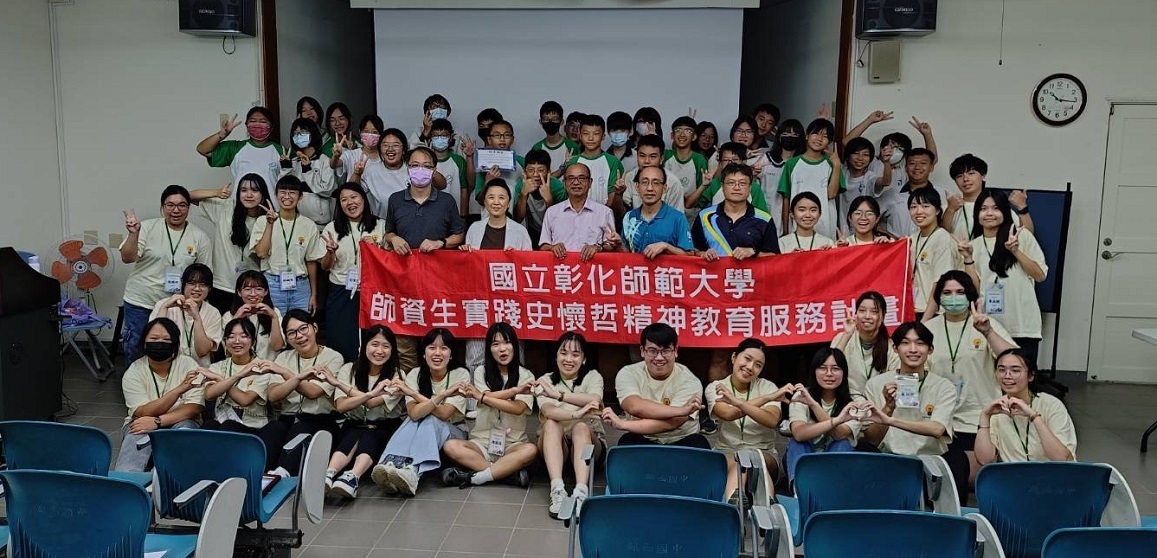
17. Conference on Guidance and Counseling in the Age of AI and Big Data
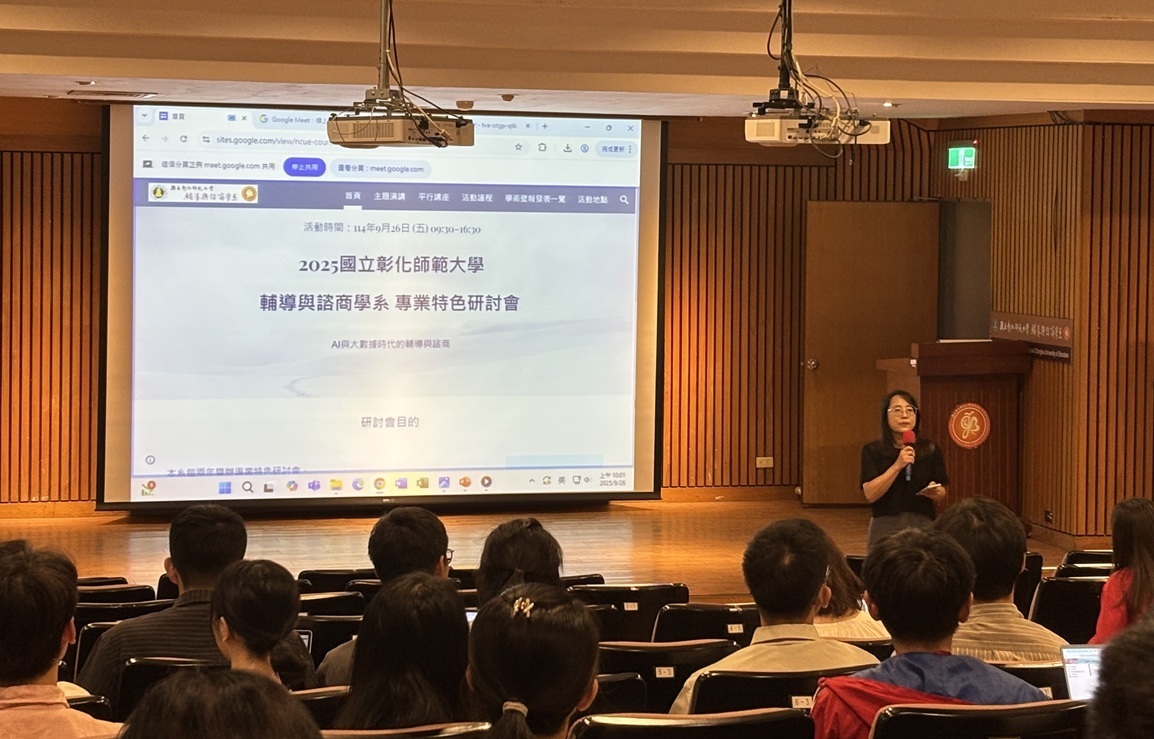
On September 26, 2025, the Department of Guidance and Counseling and the College of Education held the conference "Guidance and Counseling in the Age of AI and Big Data". Scholars and practitioners examined the applications and challenges of artificial intelligence and big data in the guidance and counseling through keynote lectures and parallel sessions. The keynotes lectures examined the statistical logic and research methods behind AI models, the teaching applications and potential of AI in counselor education, and the possibilities and challenges of AI to support guidance decisions and institutional research. The parallel sessions focused on integrating AI and big data with psychology, approaching the subject through psychological theory, technology ethics, research and practice. They explored the opportunities and issues associated with using AI and big data in the helping professions. Faculty and students of the department presented 28 posters on recent research, including AI applications in counselor skills training, dream analysis and career exploration, as well as the use of large databases to study subjective well-being, depression-related stigma and internet addiction. The conference highlighted the opportunities and challenges that AI and big data bring to guidance and counseling and demonstrated the department’s continued commitment to these emerging issues (Figure 18).
Campus news: https://www.ncue.edu.tw/p/406-1000-31756,r93.php?Lang=zh-tw
18. Session on Integrity and Ethics
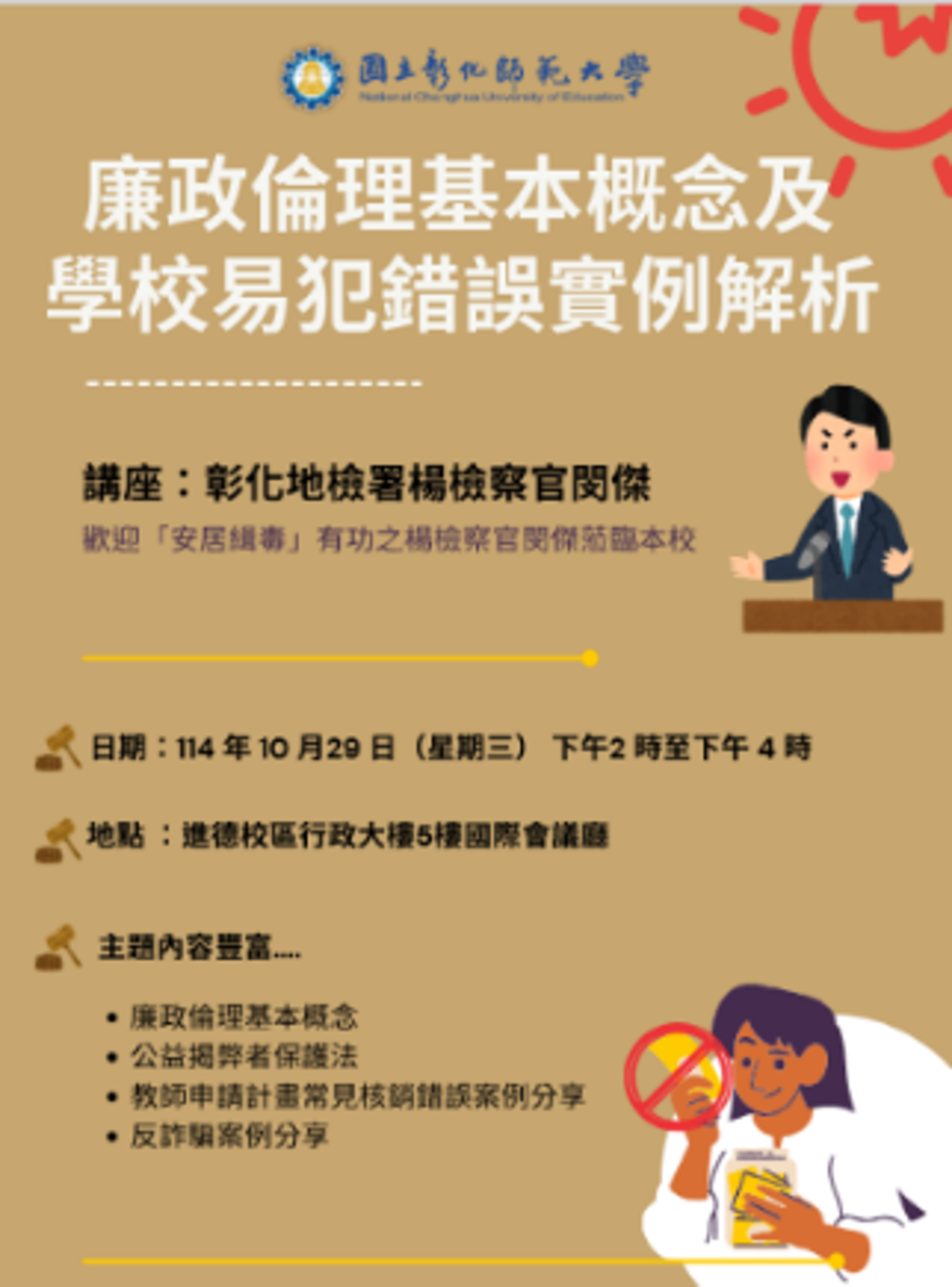
On October 29, 2025, the Personnel Office held a session on integrity and ethics and an analysis of common mistakes made in schools (Figure 19). Prosecutor Yang Min-chieh of the Changhua District Prosecutors Office was invited to speak on the following topics:
(a) Basic concepts of integrity and ethics, including an introduction to the Public Interest Whistleblower Protection Act
(b) Analysis of common mistakes in schools, including common errors on expense reimbursement for faculty research project and examples of fraud prevention.
19. Deepening Understanding between Ethnic Groups and Cultural Equity, and Building an Inclusive Campus
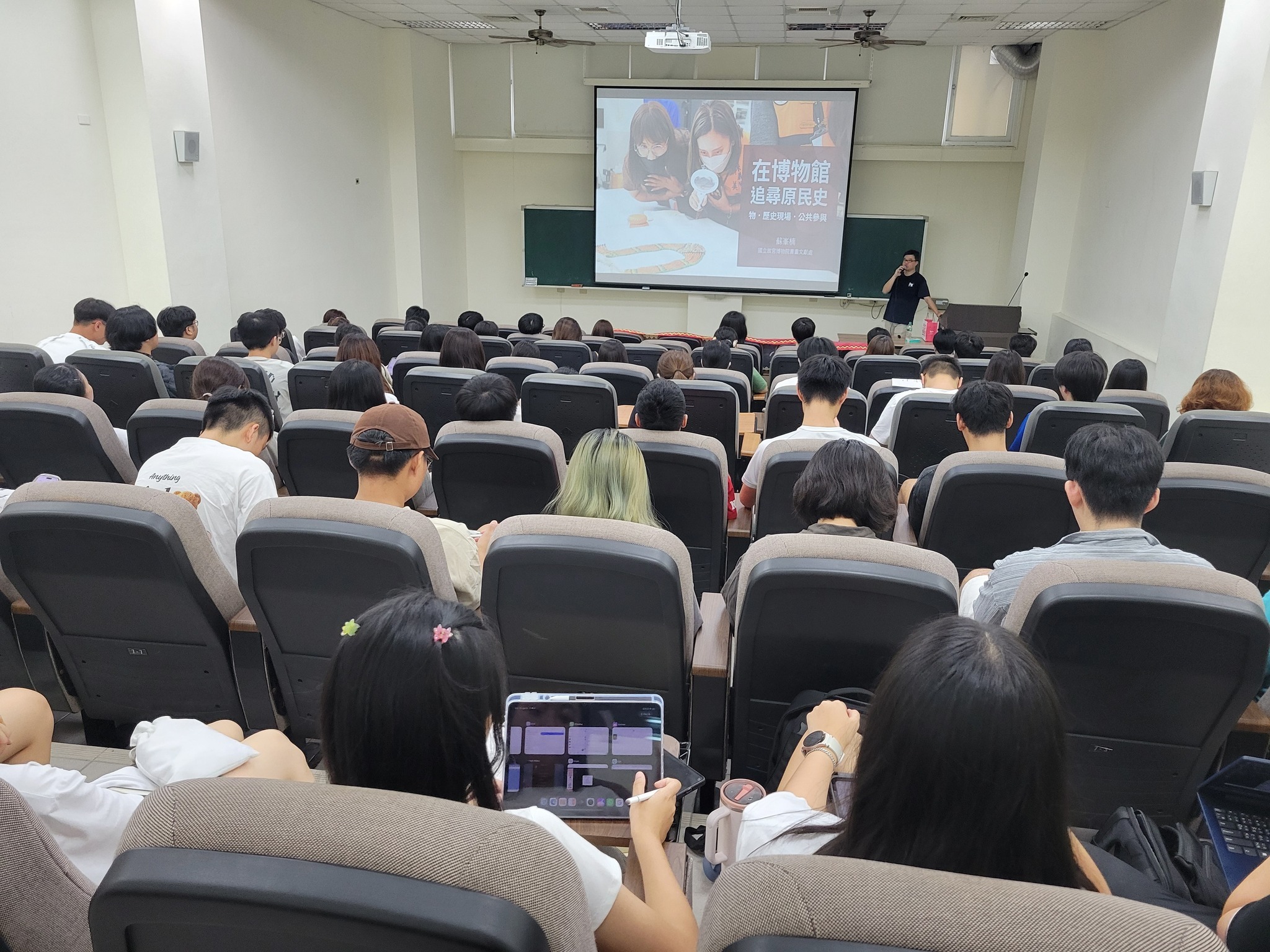
(1) On September 26, 2025, the Indigenous Student Resource Center of the Office of Student Affairs held the lecture "Tracing Indigenous History in Museum: Objects, Historical Sites and Public participation". Su Feng-nan, Assistant Research Fellow in the Department of Painting, Calligraphy, Rare Books and Historical Documents at the National Palace Museum, was invited to speak. The event was free and open to all faculty members, staff and students, encouraging people from different backgrounds to learn about indigenous history and culture from diverse perspectives. Taking museum collections, artifact research and historical sites as its starting point, the lecture examined how museums preserve, display and interpret indigenous cultural heritage and their roles in public education, cultural governance and social communication. It also drew on recent public discussions about the recognition and identify of Pingpu groups, prompting participants to consider how museums respond to concerns about historical memory, cultural identity and ethnic rights. Participants reflected on cultural institutions’ responsibilities in promoting historical justice and dialogue between different ethnic groups. By examining artifacts and historical narratives from different periods, the lecture encouraged reflection on indigenous agency in cultural representation and the importance of public participation in interpreting history and preserving cultural heritage. It fostered civic awareness that values cultural diversity, understands historical contexts and recognizes the importance of social equity. Through intercultural exchange and public dialogue, the event deepened participants’ understanding of cultural equity, inclusive societies and historical justice, supporting the inclusive, just and participatory society envisioned by SDG 16, “Peace, Justice and Strong Institutions” (Figure 20).
Registration information: https://apss.ncue.edu.tw/sign_up/show_crs.php?crs_seq=53914
(2) On October 31, 2025, the Indigenous Student Resource Center of the Office of Student Affairs held the lecture "Multiple Roles in Indigenous Language Revitalization: Learners, Practitioners and Those Who Pass It On", given by Walis Huwac (Kai-wen Chiang) of the Seediq people. Mr Chiang is from Alang Buarung in Renai Township, Nantou County. He has worked on indigenous language revitalization since his university years, serves as the convener of the Seediq Wikipedia group, and has long participated in language teaching and interpreting at events organized by the Council of Indigenous Peoples. Drawing on his roles as a learner, practitioner and someone who passes the language on to others, he shared practical approaches to preserving and transmitting minority languages and cultures. The event was free and open to all faculty members, staff and students, providing equal learning opportunities without financial barriers and promoting exchange between ethnic groups. Through practical experience of language revitalization, the lecture introduced indigenous language rights, cultural rights and the value of multiculturalism. It deepened participants’ understanding of language equity and the right of access to culture and encouraged young indigenous people to participate in passing on their language. The event also promoted understanding, respect and equal dialogue between groups, fostered awareness of discrimination and respect for cultural diversity, and supported an inclusive campus that values historical justice. These aims to reflect the inclusive, fair and representative society envisioned by SDG 16, “Peace, Justice and Strong Institutions” (Figure 21).
Registration information: https://apss.ncue.edu.tw/sign_up/show_crs.php?crs_seq=54180
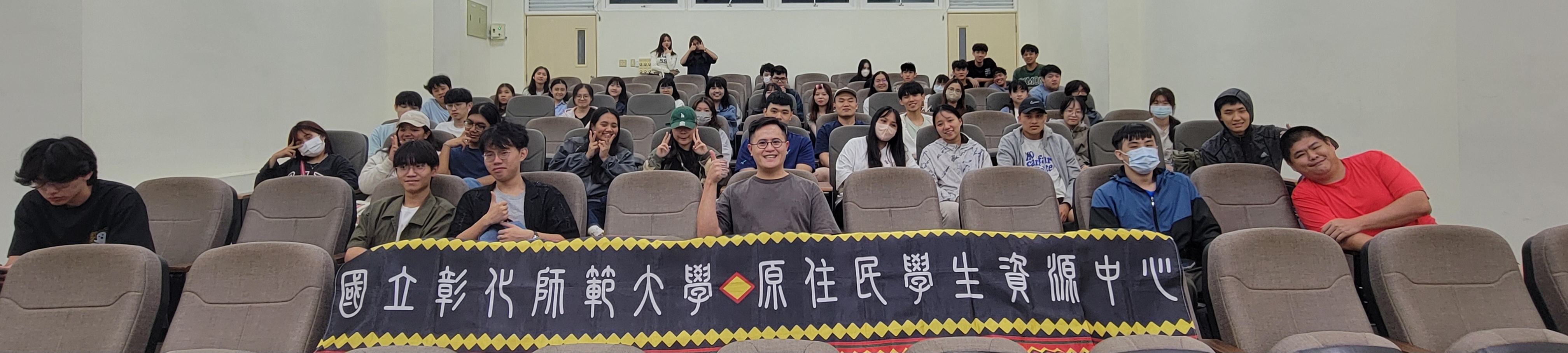
20. Workshop: Finding Calm and Connection
From October 13 to November 3, 2025, the Office of Student Affairs held the workshop "Finding Calm and Connection", led by Chiu Yi-lan. The workshop invited students to make time for three sessions during a busy semester, set aside their daily concerns and engage in self-exploration and awareness. Through creative media and dialogue with themself and others, participants developed interpersonal awareness, found balance through their experience, and learned to care for themselves and find a sense of calm (Figure 22).
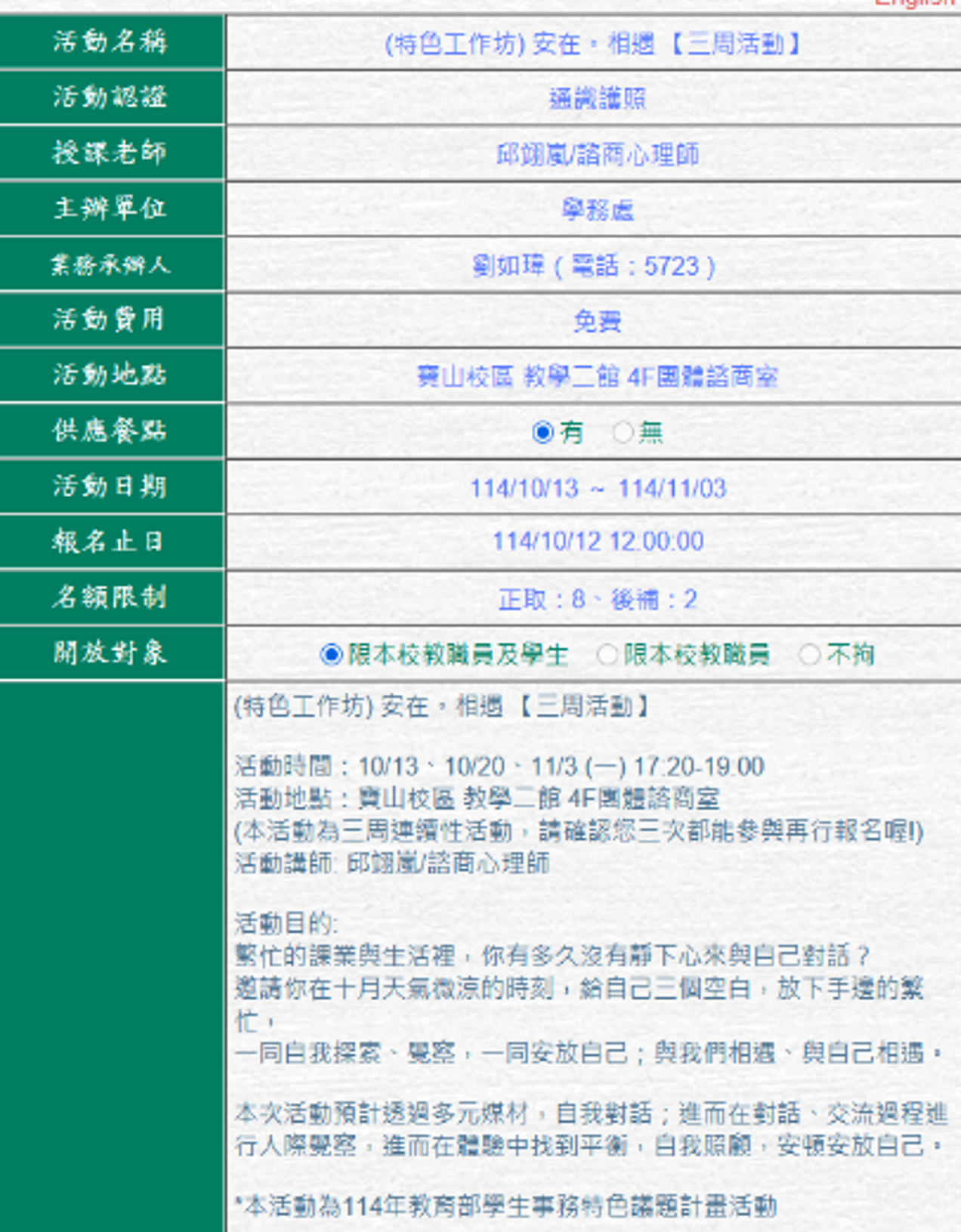
21. Baisha Gender Film Festival Screening and Discussion
On October 31, 2025, the Secretariat held a screening of "Caught in the Net" as part of the Baisha Gender Film Festival, followed by a post-screening discussion. In the documentary, three adult women pose as 12-year-old girls and interact with users on dating platforms, revealing how the sexual exploitation of children begins and develops. After the screening, gender equity education specialist Wan-szu Chiang led a discussion on gender power relations and the current state of child sexual exploitation. Participants were invited to recognize gender-based hostility in society, examine digital gender-based violence and the sexual exploitation of children and young people and young people, and reflect on exploitation and oppression. The event supported the United Nations’ International Day for the Elimination of Violence against Women on November 25 and the White Ribbon campaign (Figure 23).

22. Suicide Prevention Lecture
On November 5, 2025, the Office of Student Affairs held the suicide prevention lecture "Some Things You Don't Have to Carry Alone", with An-chi Hsieh as the speaker. Coursework, internships, part-time jobs, international relationships and romantic relationships can all bring pressure. Students experiencing emotional difficulties may believe they must cope alone or that no one understands them. The lecture addressed the difficult experiences people may hesitate to discuss, explained how to recognize signs of stress and emotional distress, and explored safe ways to seek help. It encouraged students to care for themselves and accept support from others when needed (Figure 24).
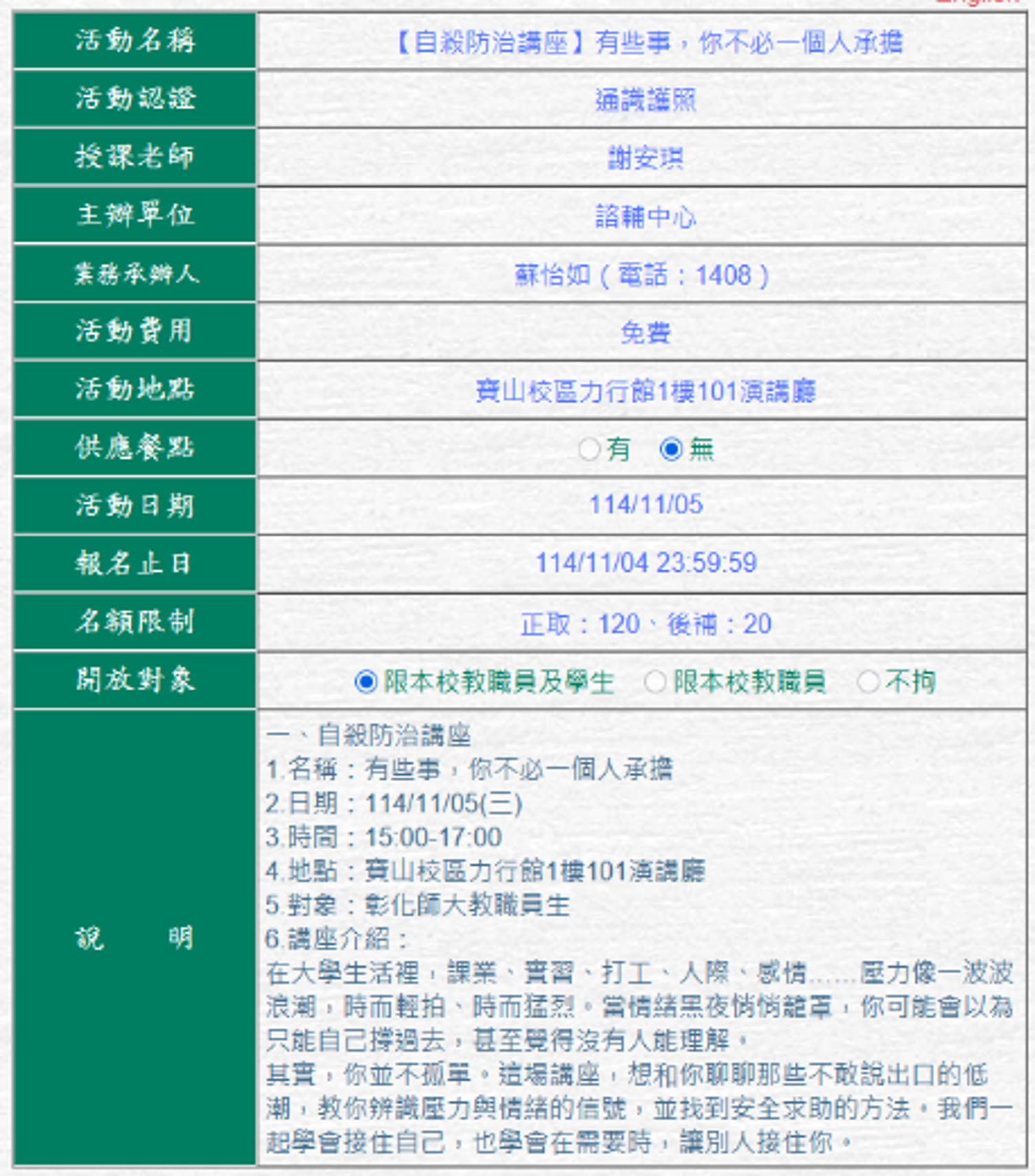
23. Communication Workshop
On November 5, 2025, the Office of Student Affairs held the workshop " The Right Wavelength Opens Hearts", with Cheng Ching as the speaker. In a multicultural age, communication involves more than exchanging words. It also requires tuning in to one another. Cheng Ching, a Golden Bell Award-winning radio presenter, drew on her years of broadcasting experience and personal life experiences to discuss listening to others and expressing oneself across different perspectives and cultures. The workshop encouraged participations to recognize how mutual understanding can open hearts and how effective communication can invite a warmer response from others (Figure 25).
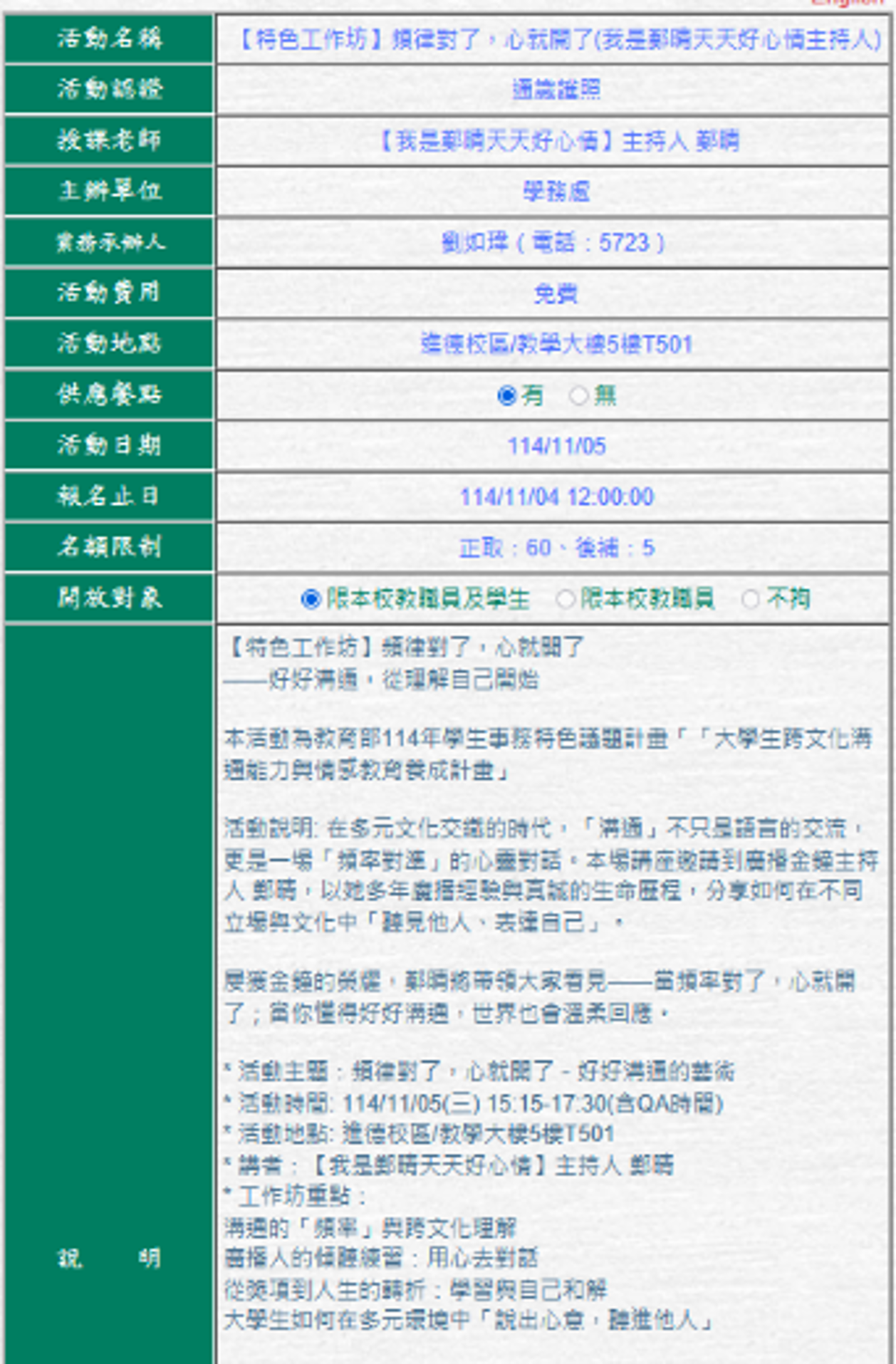
24. Online Lecture and Workshop on Art Therapy
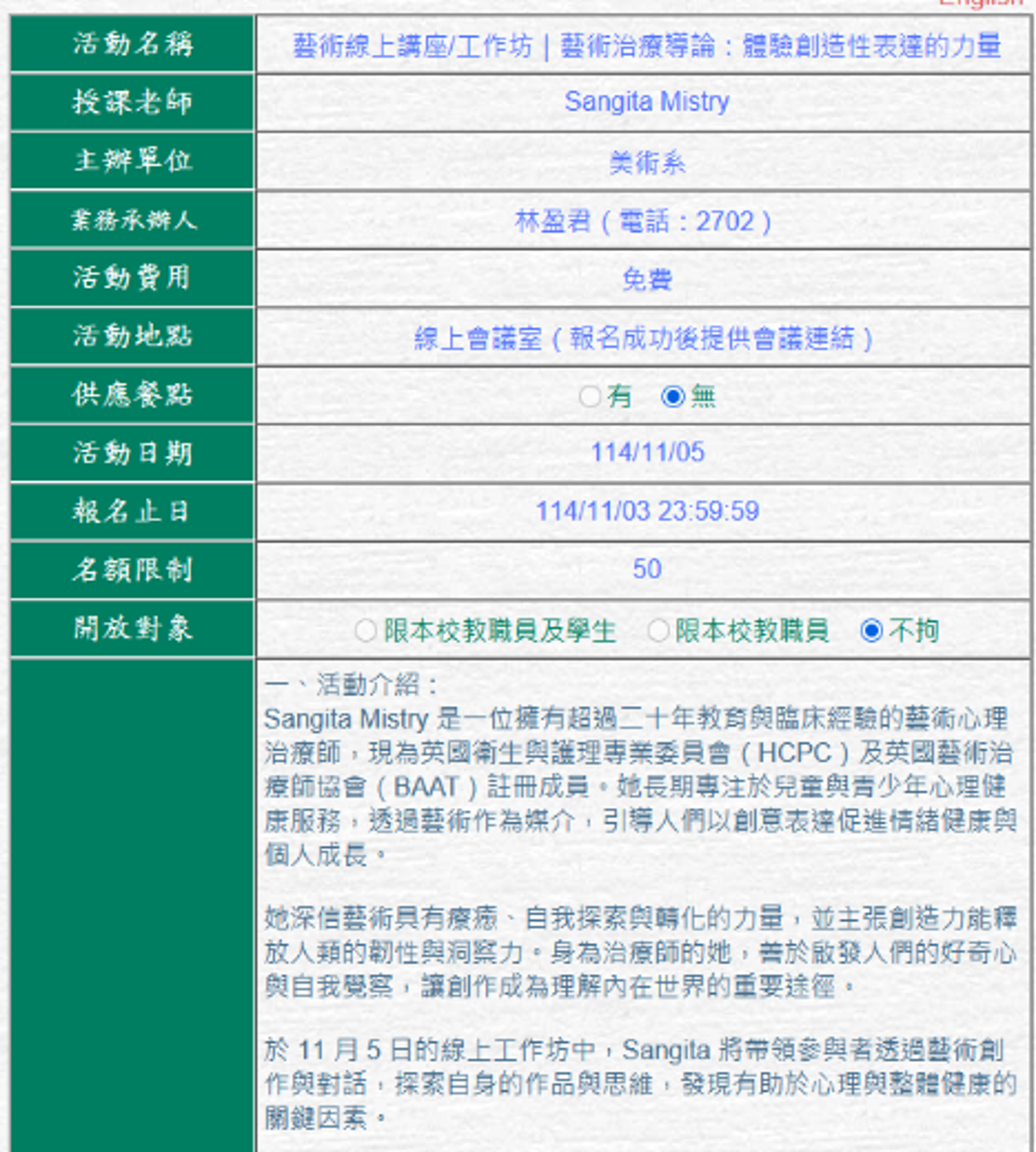
On November 5, 2025, the Department of Fine Arts held the online lecture and workshop "Introduction to Art Therapy: Experiencing the Power of Creative Expression", led by Sangita Mistry. Ms. Mistry is an art psychotherapist with more than twenty years of teaching and clinical experience. She is registered with the Health and Care Professions Council (HCPC) and is a member of the British Association of Art Therapists (BAAT) in the United Kingdom. She has long worked in child and adolescent mental health, using art as a medium through which creative expression supports emotional health and personal growth. She believes in art’s potential for healing, self-exploration and transformation and in creativity’s capacity to foster resilience and insight. Her work encourages curiosity and self-awareness, using creative expression as a way to understand one’s inner world. In the workshop, she guided participants through art-making and dialogue to explore their own work and thinking and identify factors that support psychological and overall well-being (Figure 26).
25. Career Exploration Lecture
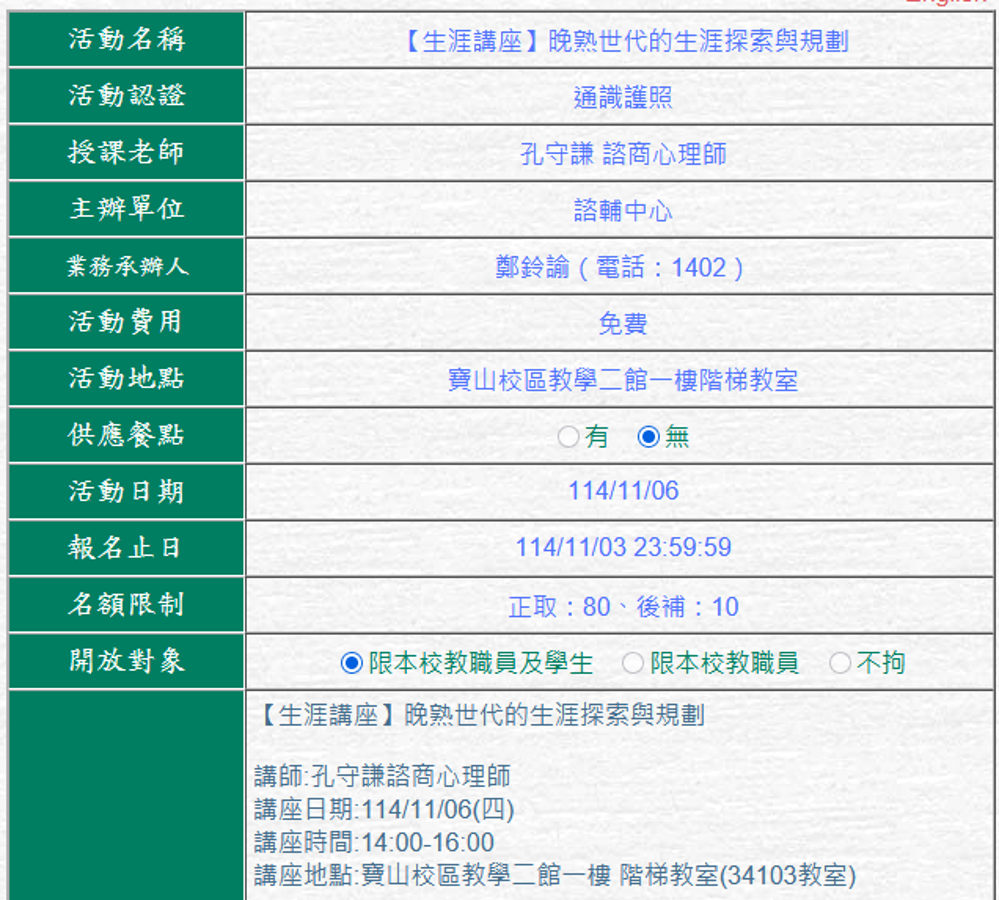
On November 6, 2025, the Student Psychological Counseling and Guidance Center held the career lecture "Career exploration and Planning for a Late-Blooming Generation", given by counseling psychologist Shou-chien Kung (Figure 27).
26. Career Timeline Lecture
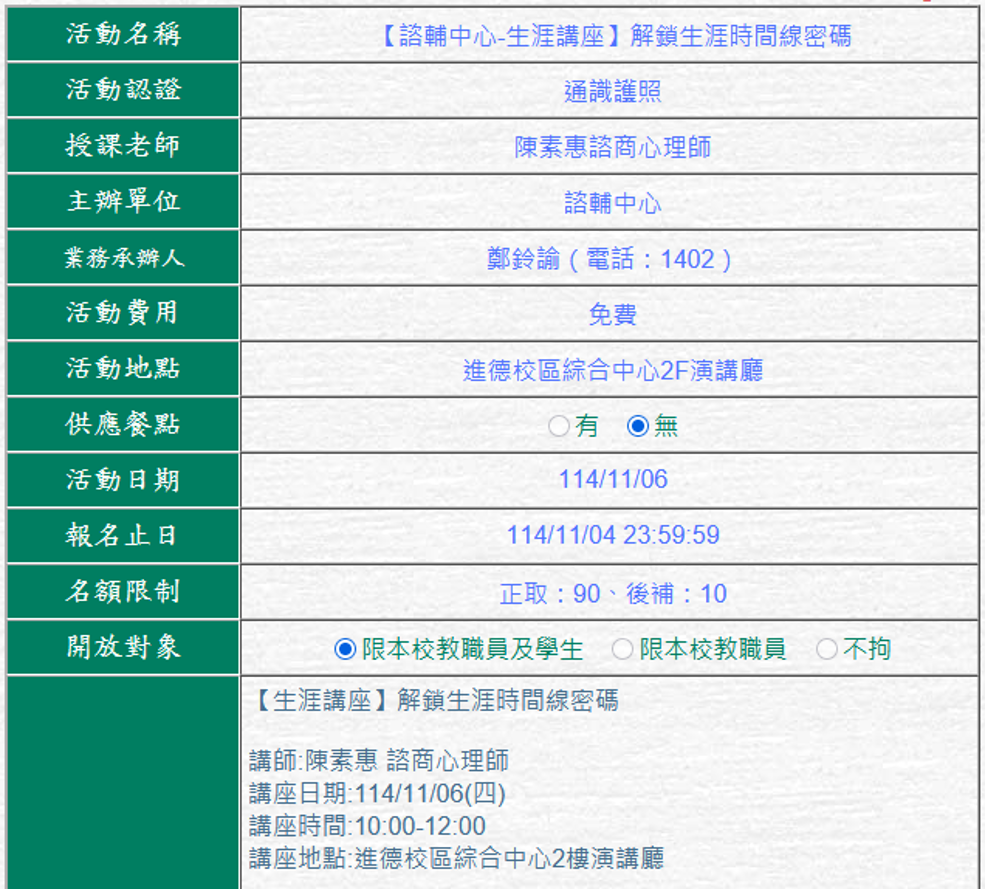
On November 6, 2025, the Student Psychological Counseling and Guidance Center held the career lecture "Unlocking the Code of Your Career Timeline", given by counseling psychologist Su-hui Chen (Figure 28).
27. Emotions Workshop "Emotions in Color"
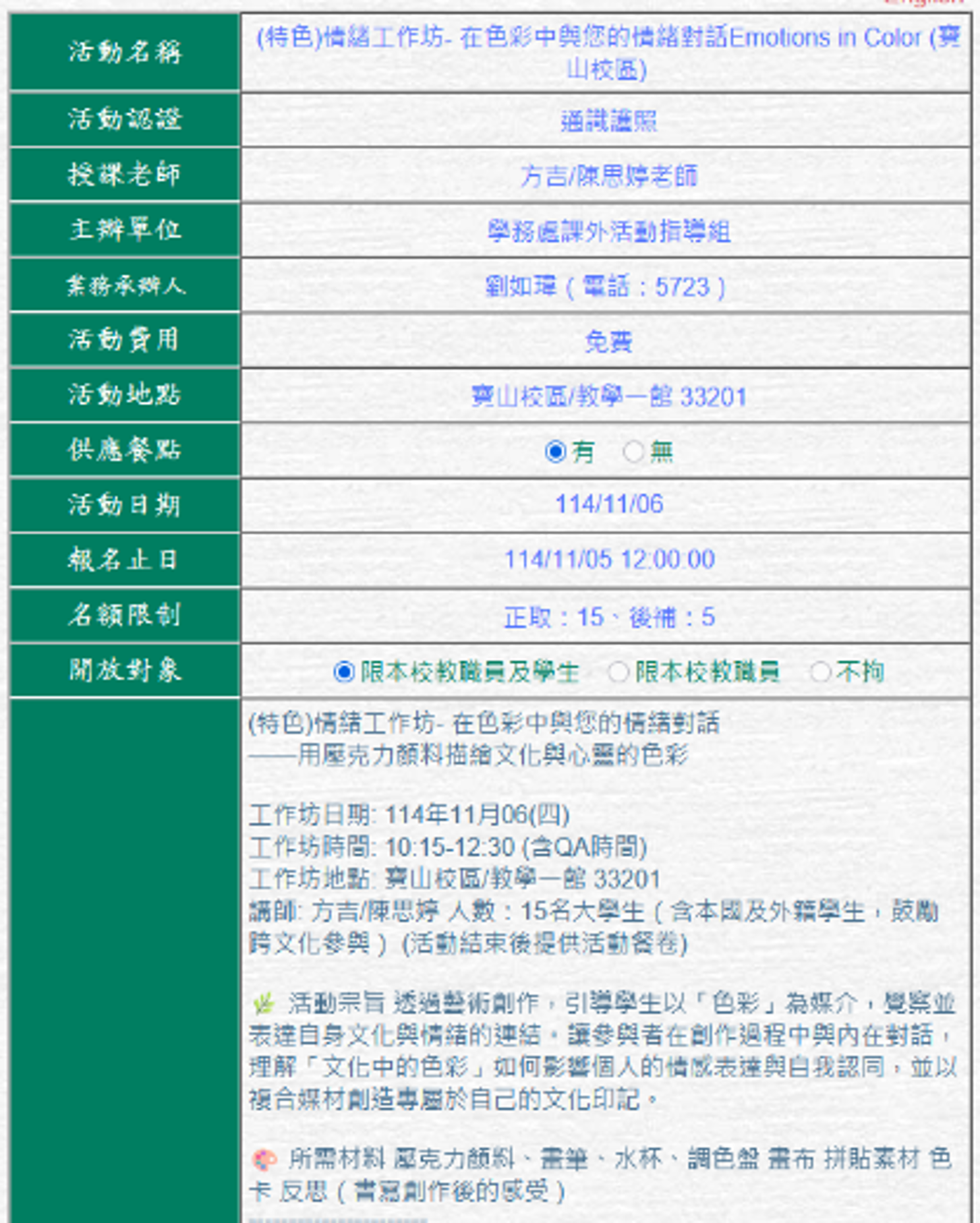
On November 6, 2025, the Office of Student Affairs held the emotions workshop "Emotions in Color" on the Shida Campus, with Chi Fang and Szu-ting Chen as speakers. Through art-making, students used color as a medium to recognize and express the connections between their culture and emotions. Participants engaged in dialogue with their inner selves during the creative process and explored how colors in different cultural contexts influence emotional expression and self-identity. They also used mixed media to create personal expression of their cultural identity (Figure 29).
28. Baisha Lecture on Education Policy
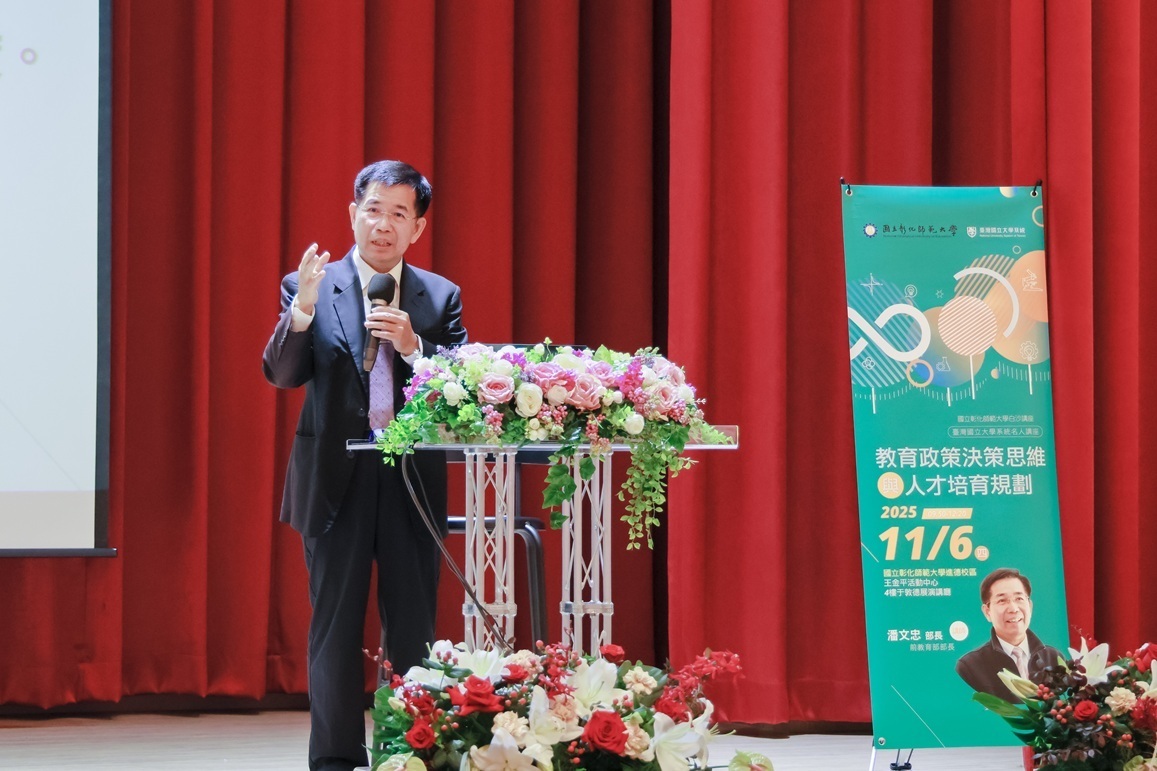
On November 6, 2025, the Center for General Education held a Baisha Lecture given by Wen-chung Pan, former Minister of Education, titled "Thinking Behind Education Policy Decisions and the Planning of Talent Development". Drawing on his years of practical experience in education administration, he shared insights into the future development of education in Taiwan. He first described the nature of education and the challenges facing education policy. Digital technology and AI are accelerating changes in the educational environment, while social media enables information to spread rapidly. The views of the legislature, elected representatives and interest groups also shape policy formation and implementation, making educational decision-making increasingly complex. He argued that education policy should be grounded in teaching according to students’ aptitude, supporting individual development and promoting educational equity. Those who promote education should return to its fundamental purpose, uphold its core values, build consensus, resolve differences and respect diverse views. Listening, understanding, support and trust are essential to developing shared education policies and ideals. Four hundred NCUE faculty members and students attended, together with alumni and principals and directors from senior high, junior high and elementary schools in Changhua County. The lecture also formed part of the distinguished speaker series of the National University System of Taiwan and was streamed via Webex to faculty members and students at member universities (Figure 30).
Campus news: https://www.ncue.edu.tw/p/406-1000-32227,r93.php?Lang=zh-tw
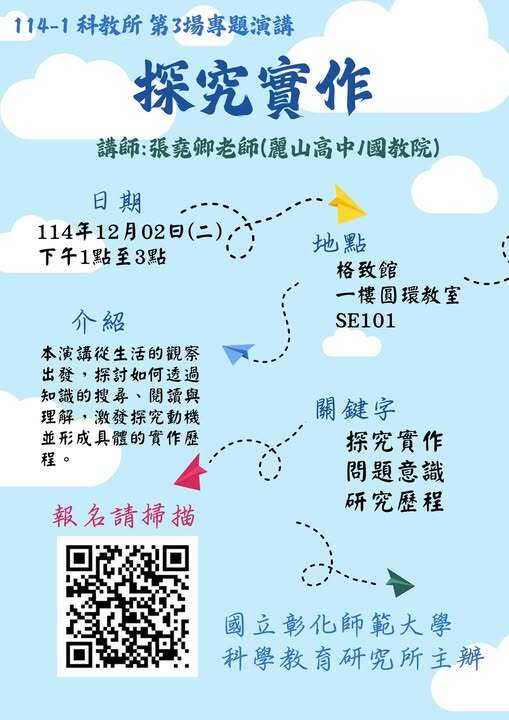
29. Keynote Lecture on Inquiry and Practice
On December 2, 2025, the Graduate Institute of Science Education held a keynote lecture on inquiry and practice, given by Yao-ching Chang. Starting from observation of everyday life, the lecture examined how searching for, reading and understanding information can stimulate inquiry and lead to concrete practice investigations. Drawing on his experience and knowledge, the speaker outlined workable steps for conducting investigations, continually collecting data from real-world settings and analyzing the data within a theoretical framework to develop a complete empirical research process. Using three published studies as examples, he explained the observation skills, ability to identify research problems and ability to make use of the surrounding environment that researchers need. He also described how research hypotheses are gradually developed and findings are verified. He concluded by sharing the enjoyment of inquiry and practice and encouraging graduate students to pursue their ideals and put them into practice, achieving personal growth and academic goals through continued inquiry (Figure 31).
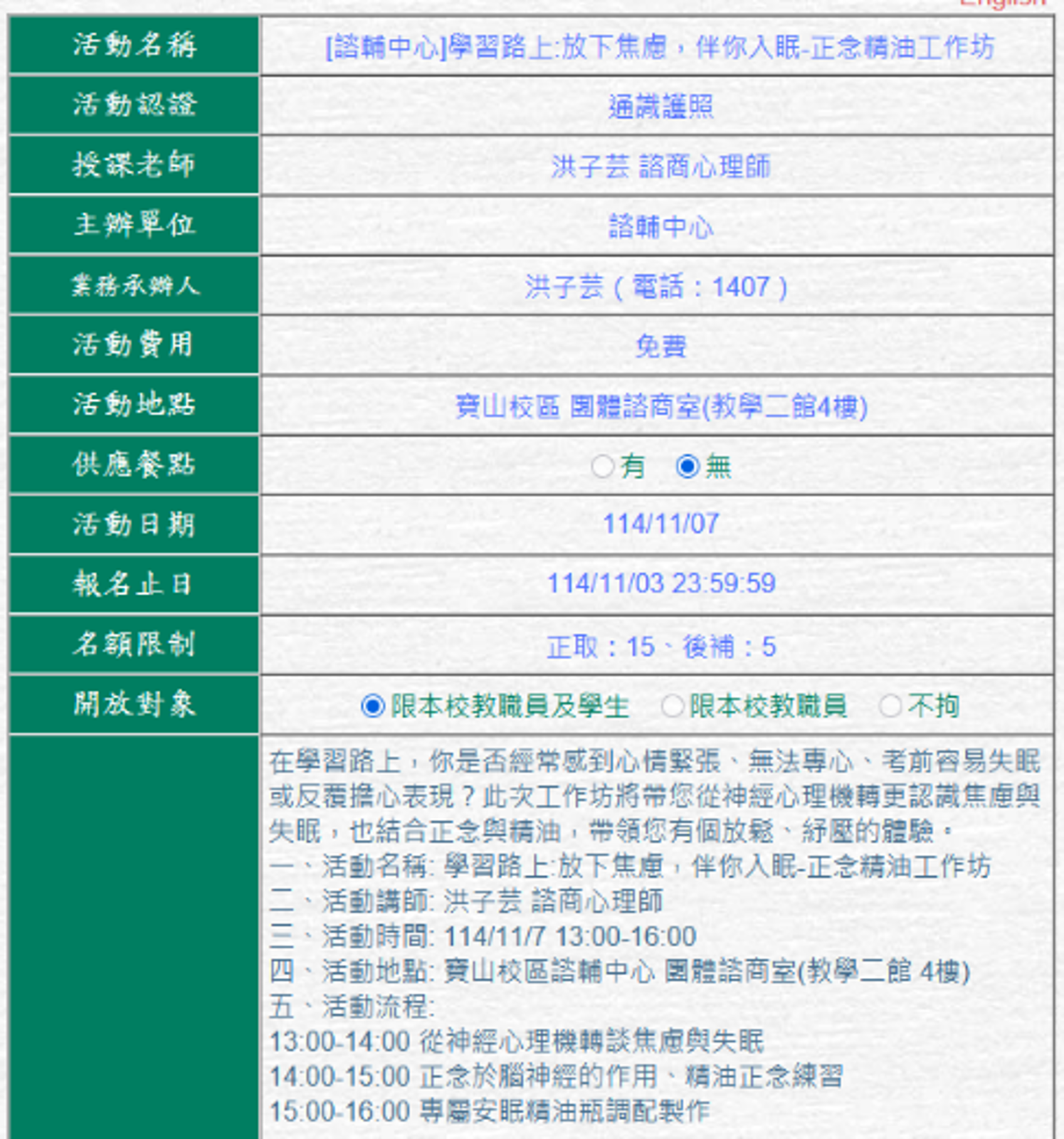
30. Workshop: Easing Anxiety and Supporting Sleep
On November 7, 2025, the Student Psychological Counseling and Guidance Center held the workshop "On the path of Learning: Easing Anxiety and Supporting Sleep through Mindfulness and Essential Oils". The workshop explored the neuropsychological mechanisms of anxiety and insomnia and combined mindfulness with essential oils to offer a relaxing, stress-relieving experience. Topics included the neuropsychology of anxiety and insomnia, the effects of mindfulness on the brain, mindfulness practice with essential oils, and making a personalized essential oil blend for sleep (Figure 32).
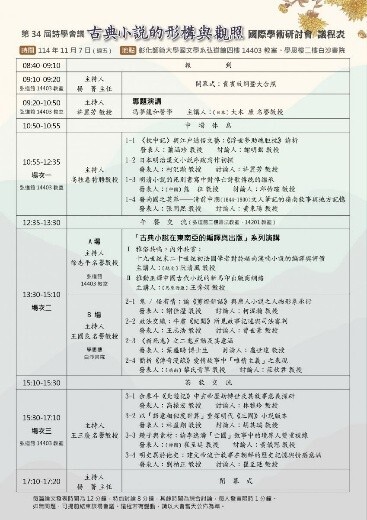
31. 34th Poetics Conference: Formation and Perspective on Classical Fiction
On November 7, 2025, the Department of Chinese held the 34th Poetics Conference, an international conference titled "The Formation and Perspective on Classical Fiction", Professor Emeritus Ohki Yasushi was invited to give a keynote lectures part if a lecture series on the translation and publication of classical fiction in Southeast Asia (Figure 33).
Website: https://chinese.ncue.edu.tw/app/news.php?Sn=345
32. Lecture on Maintaining Appropriate Boundaries between Teachers and Students
On December 2, 2025 the Office of Student Affairs held the keynote lecture "Maintaining Appropriate Boundaries between Teachers and Students: An Analysis of Student Appeal Cases", Dr. Chih-tang Ko, Dean of Student Affairs at Takming University of Science and Technology. In an accessible and humorous style, he explained the legal and institutional framework for student appeals and analyzed relevant cases, helping faculty members understand how students’ circumstances have changed over time and promoting campus harmony (Figure 34).