
SDG 16.3.3
SDG 16.3.3 Participation in government research
NCUE comprises seven colleges: Liberal of Arts, Science, Engineering, Education, Management, Technology, and Social Sciences and Physical Education. All colleges actively participate in government policy research projects to develop key policies or assist government departments in formulating policies and implementing strategies.
In 2024, NCUE carried out projects funded by the National Science and Technology Council (NSTC), excluding industry-academia collaboration projects, with a combined budget of NT$145,769,277. NSTC industry-academia collaboration projects had a combined budget of NT$5,911,060, and non-NSTC projects had a combined budget of NT$437,504,874. NCUE also undertook 117 industry-academia collaboration projects with a combined budget of NT$63,898,403. In 2025, NCUE carried out 145 NSTC-funded projects, excluding industry-academia collaboration projects, with a combined budget of NT$166,106,019, 9 NSTC industry-academia collaboration projects with a combined budget of NT$9,264,920, 240 non-NSTC projects with a combined budget of NT$346,650,962, and 108 non-NSTC industry-academia collaboration projects with a combined budget of NT$72,104,645. The amounts by project type for 2024 and 2025 are shown in Figure 1. Furthermore, NCUE has established incentive measures for faculty members with outstanding research achievements and project performance, including Distinguished Professorships, Outstanding Teacher Awards, Awards for Outstanding Talent, and Industry-Academia Collaboration Excellence Awards, to encourage independent research and collaboration with industry partners.
In 2023, 16 NCUE faculty members carried out 16 research projects for government departments. In 2024 these figures increased to 26 faculty members and 28 projects. In 2025, 33 faculty members carried out 33 projects. The details are as follows:
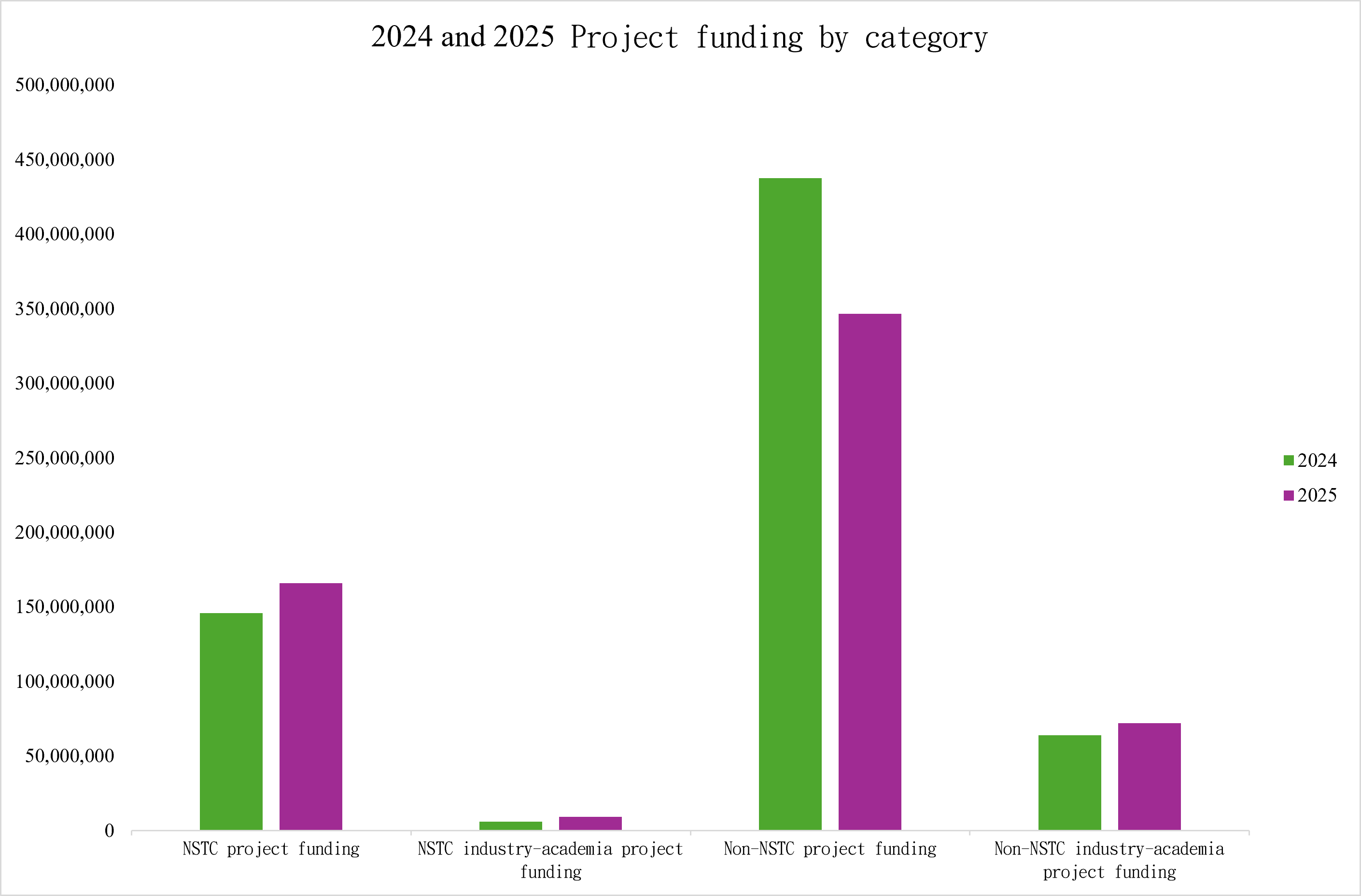
Figure 1. Projects Budgets by Type for 2024 and 2025
Four faculty members carried out four government research projects focused on “Reduced Inequalities” policies:
(1) Associate Professor Chi-Tai Shen of the Graduate Institute of Human Resource Management is carrying out an NSTC project from August 1, 2025, to July 31, 2026, titled "Supervisors' Negative Age Stereotypes and Cross-Age Knowledge Exchange by Middle-Aged and Older Subordinates: The Dual Mediating Effects of Incivility and Perceived Supervisor Age Discrimination". Taiwan becomes a super-aged society in 2025, and the proportion of older workers in the workplace is increasing year by year. Middle-aged and older employees possess distinctive knowledge, skills, experience and networks, so organizations will face challenges in managing and retaining them. However, little research has examined how supervisors’ negative age stereotypes affect these employees' cross-age knowledge exchange, and theoretical explanations of the underlying process remain insufficient. Drawing on the perpetrator predation perspective, the study examines how supervisors' negative age stereotypes lead them to target middle-aged and older employees and treat them with incivility. It then examines how these employees perceive age discrimination by their supervisors and consequently reduces their cross-age knowledge exchange. The project is expected to help fill gaps in existing theory and provide further empirical evidence in the field (Figure 2).

Figure 2. Supervisors' Negative Age Stereotypes and Cross-Age Knowledge Exchange by Middle-Aged and Older Subordinates: The Dual Mediating Effects of Incivility and Perceived Supervisor Age Discrimination
(2) Assistant Professor Yi-Hsien Wang of the Graduate Institute of Human Resource Management is carrying out an NSTC project from August 1, 2025, to July 31, 2026, titled "'Tough Love' or 'Targeting Me'? Subordinates' Attributions of Abusive Supervision". The project’s objectives are as follows:
(a) Refine theoretical models of abusive supervision and tough love, particularly by exploring the interaction between the illusion of transparency and a mentor mindset.
(b) Offer practical advice on organizational management to help supervisors convey their behavioral intentions effectively, avoid unnecessary negative labeling, and building a positive organizational culture.
(c) Support the development of more diverse and inclusive leadership approaches, thereby improving subordinates' psychological safety and performance (Figure 3).

Figure 3. 'Tough Love' or 'Targeting Me'? Subordinates' Attributions of Abusive Supervision
(3) Associate Professor Yu-Fang Cheng of the Department of Industrial Education and Technology is carrying out an NSTC project from August 1, 2025, to July 31, 2028, titled "The Effectiveness of a Neural Network Construction System for Intelligent Robots in Supporting Precise Non-Verbal Learning by People with Autism and Social Cognitive Impairment". The project spans three year. In the first year, if focuses on designing teaching materials covering body language, emotional cognition and behavioral expression as part of social reciprocity skills. It also involves designing scales, developing the structure and functions of the NNBSC for IR-VBIPToS system, and creating a prototype emotion recognition module. Expert validation, interviews and questionnaires will be used to refine, adjust and optimize the prototype. In the second year, the system will be optimized and additional intelligent modules will be developed. Its suitability and effectiveness for this target group will be examined, particularly the robot's ability to display and recognize body language and children's ability to recognize and imitate facial expressions. Single-subject experiments will track changes in each participant's target behaviors and acceptance of the system. In the third year, a pre-experimental teaching study involving multiple participants will be conducted. An intelligent assistance module will be developed to provide precise instruction, and the system’s the overall performance will be evaluated. Personalized recommendations for instruction in target behaviors will be used to examine individual children's emotional expression, body language and imitation abilities, as well as whether they can achieve self-directed learning outcomes (Figure 4).

Figure 4. The Effectiveness of a Neural Network Construction System for Intelligent Robots in Supporting Precise Non-Verbal Learning by People with Autism and Social Cognitive Impairment
(4) Professor Pei-Wen Lu of the Department of Geography is carrying out an NSTC project from August 1, 2023, to July 31, 2026, titled "Climate-Resilient Development and Disaster Prevention and Adaptation Governance: A Participatory Approach to a Just Transition." This project centers on a participatory approach to a just transition to develop methods for pursuing climate-resilient development within the scope of disaster prevention and adaptation governance. In academic research, it aims to conduct a systematic analysis of just transition, establishing practical methods for integrating just transition into climate decision-making services through international research exchanges and Taiwan-based case studies. In terms of national development, it seeks to gaps in adaptation governance through interdisciplinary alliances between sub-projects and explore nature-based solutions (NBS) to enhance climate resilience, and respond to the climate emergency (Figure 5).

Figure 5. Climate-Resilient Development and Disaster Prevention and Adaptation Governance: A Participatory Approach to a Just Transition
Eight faculty members assisted the government in carrying out eight research projects focused on "Good Health and Well-being" policies:
(1) Associate Professor Subeq Yi-Maun of the College of Education is carrying out an NSTC project from August 1, 2024, to July 31, 2026, titled "The Effect of Historical Trauma and Microaggression on Health Inequality among Indigenous Peoples in Central Taiwan: The Case of Ideal Body Size and Gut Health". The project’s expected contributions are as follows:
(a) Academic impact: The study takes a cross-disciplinary approach to expand understanding of the links between historical trauma, microaggressions and health, particularly issues rarely addressed in research on indigenous health in Taiwan.
(b) Social impact: By emphasizing microaggressions as a root of health inequality, the study encourages wider discussion of the connection between historical trauma and contemporary health problems, promoting social justice and health equity.
(c) Economical impact: The study is expected to help reduce medical costs associated with overweight and related chronic disease among indigenous people, improve the overall health of indigenous people, and ease their economic burden (Figure 6).

Figure 6. The Effect of Historical Trauma and Microaggression on Health Inequality among Indigenous Peoples in Central Taiwan: The Case of Ideal Body Size and Gut Health
(2) Assistant Professor Chih-Chieh Chu of the Department of Business Administration is carrying out an NSTC project from August 1, 2025, to July 31, 2027, titled "Memory and Reality of Power: The Nomological Network of Early-Life Power, the Construction of an Experimental Manipulation Tool and the Effect of Ego Depletion". The study builds a nomological network for early-life power (ELP), develops and validates an experimental manipulation tool of ELP, and examines whether ego depletion mediates the effect on job performance of the interaction between ELP and current sense of power. In the first year, drawing on the approach-inhibition theory of power and Inglehart's sociological work, it establishes the nomological network and develops and validates the manipulation tool. In the second year it integrates ego depletion theory into the research framework developed in the first year, treating a mismatch between ELP and current sense of power as a source of ego depletion that affects individual job performance. The project is expected to other different perspectives to academia and industry by extending the explanatory scope of ELP and strengthening internal validity through experimental manipulation. It also explains, through the mediating mechanism of ego depletion, why ELP and current sense of power affect job performance. The findings are expected to benefit organizations and society and provide empirical evidence with theoretical value and significance (Figure 7).

Figure 7. Memory and Reality of Power: The Nomological Network of Early-Life Power, the Construction of an Experimental Manipulation and the Effect of Ego Depletion
(3) Professor Yu-Chun Lin of the Department of Accounting is carrying out an NSTC project from August 1, 2025, to July 31, 2026, titled "Do Companies with Better ESG Performance Have Fewer Occupational Injuries? The Effect of Board Diversity".
(a) According to statistics from the Occupational Safety and Health Administration, Ministry of Labor, deaths from major occupational accidents in 2022 reached a five-year high, and the number and frequency of disabling injuries remained high over the preceding three years. In November 2024, the Ministry of Labor announced a proposed amendment to the Occupational Safety and Health Act that would increase the maximum fines and criminal penalties, including prison terms. This highlights the importance of workplace safety.
(b) The study examines the interaction between corporate ESG performance, board diversity and workplace safety to address a gap in the literature. Its findings are expected to provide valuable insights into how corporate governance and sustainability practices can jointly promote safer workplaces (Figure 8).

Figure 8. Do Companies with Better ESG Performance Have Fewer Occupational Injuries? The Effect of Board Diversity
(4) Associate Professor Jen-De Chen of the Department of Sports is carrying out an NSTC project from August 1, 2025, to July 31, 2026, titled "Gatekeepers of University Student Athletes' Mental Health: Coaches' Support for Athletes in Psychological Distress - A Mixed-Methods Study of Mental Health Literacy, Help-Seeking Attitudes and Experiences of Providing Assistance". The project’s objectives are as follows:
(a) Examine the current level of mental health literacy among university sports coaches in Taiwan and differences across demographic groups.
(b) Identify factors influencing these coaches’ mental health literacy.
(c) Examine these coaches' attitudes toward seeking professional mental health assistance and differences across demographic groups.
(d) Identify factors influencing these attitudes, especially mental health literacy and other demographic and personal experience variables.
(e) Examine these coaches' experiences of supporting or assisting athletes with mental health difficulties, particularly their needs, concerns, barriers and experiences of overcoming these barriers.
(f) Identify the mental health knowledge and skills that university sports coaches need to inform the content of mental health education interventions and provide a basis for future training and professional development (Figure 9).

Figure 9. Gatekeepers of University Student Athletes' Mental Health: Coaches' Support for Athletes in Psychological Distress - A Mixed-Methods Study of Mental Health Literacy, Help-Seeking Attitudes and Experiences of Providing Assistance
(5) Assistant Professor Yu-Shuo Chen of the Department of Mathematics is carrying out an NSTC project from August 1, 2025, to July 31, 2026, titled "Parameter Calibration in Tumor Growth Models". The project first checks whether simulation results produced by artificial intelligence match the mathematical properties of the solutions to the governing equations. If the simulations prove reliable, the work will combine them with biomedical imaging to build tumor growth models for an individual patient or for patients with the same type, contributing to biomedicine (Figure 10).
(6) Assistant Professor Chiao-Min Chen of the Department of Mathematics is carrying out an NSTC project from August 1, 2025, to July 31, 2026, titled "An Intelligent Decision Support and Analysis System for Multimodal Pathology Images Based on Semantic Representation Construction and Knowledge Alignment Strategy Optimization". The project develops a multimodal intelligent pathology analysis system using multi-task expert modules and integrating large language models and vision-language models to help clinicians obtain explanations linking images and text. It is expected to produce three deep learning models and one multimodal feature integration system, as well as two SCI journal papers and two international conference papers. The deep learning network can serve as a general foundation model for the medical industry. When connected to clinical systems through a cloud platform, it can streamline routine diagnosis of post-operative specimen in Taiwan and provide a scalable intelligent healthcare solution for remote pathology interpretation across multi-centers, supporting precision medicine and improving the quality and efficiency of care (Figure 11).

Figure 10. Parameter Calibration in Tumor Growth Models

Figure 11. A Multimodal Pathology Image Intelligent Decision Support System Based on Semantic Representation Construction and Knowledge Alignment Strategy Optimization
(7) Associate Professor Pei-Fen Wu of the Department of Information Management is carrying out a National Science and Technology Council project from August 1, 2024, to July 31, 2026, titled "Enhancing older Adults’ Gerontechnology Experience through XR Applications: Exploring the Impact of Expressive Arts Creation on Creativity and Well-being." This research aims to strengthen older adults’ artistic empowerment through XR-based expressive arts creation activities that integrate digital and artistic elements, further promoting their psychological health. To achieve this goal, the study will explore older adults’ motivation to learn through the use of XR technology in art education to understand its potential effects on teaching. Through arts creation activities, the research seeks to awaken older adults’ latent creativity and gain in-depth understanding of whether arts creation positively affects their psychological well-being. Overall, this study hopes to help older adults enhance their creativity and well-being through digital arts experiences, thereby cultivating positive emotions. The anticipated research outcomes will provide new theoretical foundations and empirical experiences for combining gerontechnology and arts creation, serving as a reference for gerontechnology and arts education while promoting practical solutions to address issues associated with aging (Figure 12).
(8) Assistant Professor Chun-I Chou of the Graduate Institute of Human Resource Management is executing a National Science and Technology Council project from August 1, 2024, to July 31, 2026, titled "Establishing the Dynamic Process of Forgiveness in the Workplace: An Integrated Perspective of Emotion Regulation and Self-Determination." Study 1 attempts to combine self-determination theory and emotion regulation theory, responding to and extend Brady et al.'s (2023) account as a dynamic process of forgiveness. It proposes a model of forgiveness based on motivation for emotion regulation, emphasizing the role of personal motivation in the emotion regulation process. Emotion identification, emotion regulation tendencies and emotion regulation strategies are all influenced by individuals' degree of self-determination, resulting in different forgiveness states. Combining motivational and emotional aspects can therefore provide a more comprehensive understanding of the dynamic process of forgiveness and how different processes affect physical and mental health outcomes and work outcomes. Given the dynamic nature of forgiveness and the important role of self-determination, Study 2 will continue build on Study 1's theoretical model. It will use self-guided mindfulness training with minimal interference to enhance self-determination in emotion regulation, thereby improving integrative emotion regulation (Figure 13).

Figure 12. Enhancing older Adults’ Gerontechnology Experience through XR Applications: Exploring the Impact of Expressive Arts Creation on Creativity and Well-being

Figure 13. Establishing the Dynamic Process of Forgiveness in the Workplace: An Integrated Perspective on Emotion Regulation and Self-Determination
Seventeen faculty members assisted the government in carrying out seventeen research projects focused on "Quality Education" policies:
(1) Professor Shih-Hsiung Liu of the Center for Teacher Education is carrying out an NSTC project from August 1, 2025, to July 31, 2028 titled "The Effect on Student Performance of Junior High School Teachers' Adjustments to Teaching and Assessment in Response to the Washback of Large-Scale Achievement Tests". Teachers can use results from large-scale tests and classroom assessment to identify which learning content lower-achieving students find difficult and use these findings to improve their classroom teaching. They can use high achievers' performance to review their teaching strategies and assessment design and adjust their teaching methods to narrow learning gaps. First, however, it is necessary to understand how teachers interpret assessment results, their subsequent teaching activities and the effects on student learning. Negative washback is known to offer limited benefits for improving student achievement, so effective practices for improving learning outcomes need to be developed. Based on washback theory, teachers can develop teaching objectives and activities based on core competencies, conduct assessments, and use washback from classroom assessment to improve their teaching. Repeating this cycle can improve students’ performance in large-scale achievement tests. This three-year study examines the washback of student assessment on junior high school teachers and develops and validates an effective washback cycle for improving teaching (Figure 14).
(2) Professor Pi-Ju Wu of the Graduate Institute of Education is carrying out an NSTC project from August 1, 2025, to July 31, 2026 titled "Teacher Efficacy: Reconceptualization and Theoretical Grounded". The study aims to reconceptualize teacher efficacy and develop a theory grounded in the current context of primary and secondary schools. Theoretically, it deepens basic research on teacher efficacy. Practically, its finding will offer a more appropriate understanding of teacher efficacy that education authorities and schools can use when planning professional development activities, with implications for teacher education curricula and teaching practices. Methodologically, because the study handles a large volume of structured data, it will use AI tools to support the research. It will also examine related issues, including whether and how AI changes the nature of qualitative research, what new research ethics challenges AI tools bring, and whether and how AI changes the paradigm of qualitative data analysis (Figure 15).

Figure 14. The Effect on Student Performance of Junior High School Teachers' Adjustments to Teaching and Assessment under the Washback of Large-Scale Achievement Tests

Figure 15. Teacher Efficacy: Reconceptualization and Theoretical Grounded
(3) Professor Cen-Shawn Wu of the Department of Physics is carrying out an NSTC project from August 1, 2025, to July 31, 2026, titled "Science Popularization Activities: Inquiry and Hands-On Activities in Natural Science and Mathematics for Students with Visual and Hearing Impairments". Building on years of work, the project opens new routes into hands-on science and mathematics learning for students with visual and hearing impairments and offers a model for inclusive education in Taiwan. Experts in pure science, special education and science education work with a range of institutions to plan and implement the project. Undergraduates with backgrounds in pure science and science education will be recruited as facilitators to help develop a future teaching workforce with expertise in both areas. The team will also work with international organizations to exchange knowledge and share experiences, strengthen the project’s impact. Students with visual and hearing impairments will benefit directly through improved learning ability, more positive attitude towards life and new career possibilities. The project also increases public understanding and acceptance of students with disabilities, improves their employment prospects and strengthens support for educational equity for disadvantaged groups. By bringing together experts from different fields, the project seeks to improve the quality of education for disadvantaged groups, contribute to more comprehensive and inclusive social development, and enhance Taiwan’s international image in providing education for these groups (Figure 16).

Figure 16. Science Popularization Activities: Inquiry and Hands-On Activities in Natural Science and Mathematics for Students with Visual and Hearing Impairments
(4) Professor Chin-Wen Liao of the Department of Electrical and Mechanical Technology is carrying out an NSTC project from August 1, 2025, to July 31, 2026, titled "The Effects of integrating Virtual and Physical Integration and Generative AI into a Situated 6E Teaching Model for Basic Electricity Practicals on Students' Learning Motivation, Learning Outcomes and System Usability". The study uses virtual reality and generative AI together with real household appliances for demonstration teaching within a situated 6E model. Students explore and learn how to inspect and repair common household appliances in a simulated setting, then return to the classroom where the 6E model to consolidate their knowledge. Generative AI helps them clarify what they have learned, identify gaps in their understanding. Based on its diagnostic assessment, it produces a report with learning recommendation to help students understand their mastery of the material and improve their learning outcomes and motivation. The project follows the curriculum guidelines for the Electrical and Electronics Cluster and responds to the vision of 12-year basic education. It helps students develop the knowledge, skills and attitudes needed to solve present and future problems and builds teachers' and students' capacity to use emerging technology. The expected benefits are as follows:
(a) Improve learning outcomes in the inspection and repair of common household appliances as part of basic electricity practicals.
(b) Increase learning motivation in their inspection and repair of common household appliances as part of basic electricity practicals.
(c) Evaluate the ease of use of virtual reality in teaching.
(d) Develop teachers’ and students’ ability to use emerging technology systematically.
(e) Narrow the gap between what is learned and what is used (Figure 17).

Figure 17. The Effect on Students' Learning Motivation, Learning Outcomes and System Usability of Integrating Virtual-Physical Integration and Generative AI into a Situated 6E Teaching Model for Basic Electricity Practicals
(5) Professor Su-Ching Lin of the Graduate Institute of Education is carrying out an NSTC project from August 1, 2025, to July 31, 2027, titled "Exploring the Link between Teacher Professional Development Programs and Student Learning: Applying Developmental Evaluation, the Five-Level Model and Theory-Driven Evaluation". The project moves beyond conventional professional development by using lesson study (LS) to prompt professional dialogue among teachers from different types of school, connect theory more closely to practice and build a culture of teaching and inquiry so that professional development becomes a force for school reform. It combines the strengths of developmental evaluation (DE) and the five-level model (FLM) to evaluate professional development programs, document their development, generate innovative ideas and assess teachers' reactions, learning, application, organizational support, and effects on student learning. The 5E inquiry learning model is used to develop students' 5C competencies to meet the demands of future society. The project also moves beyond conventional program evaluation by applying theory-driven evaluation (TDE) to analyze how programs work, uncover the “black box” of their operation, verify causal mechanisms and explains the reasons for their success or failure and their outcomes. It broadens the theoretical scope of program evaluation and offers a pioneering approach to evaluation practice (Figure 18).
(6) Professor Jang-Long Lin of the Department of Physics is carrying out an NSTC project from August 1, 2025, to July 31, 2026, titled "Subproject 3: Developing Carbon Capture Teaching Modules and Competency-Based Assessment of Net-Zero Carbon Emissions Literacy through a Scientific Inquiry Model". Global warming threatens ecosystems, economies and society, so reaching net zero carbon emissions is urgent. The project runs workshops using a scientific inquiry model to develop carbon capture teaching modules and tools for assessing net-zero carbon emissions literacy through multiple assessment methods. These workshops train junior and senior high schools who can train others, togethers with master's and doctoral students. The project also develops the teaching modules and assessment tools themselves. The aim is to improve junior and senior high school students' and the public's understanding of carbon capture technology, stimulate their interest and help them understanding its relationship to daily life, laying a foundation for public scientific literacy in environmental sustainability. Preparing a competitive next generation for the emerging industrial revolution in environmental sustainability requires educational reform. Public scientific literacy in environmental sustainability must therefore continue to improve in line with advances in carbon capture technology (Figure 19).

Figure 18. Exploring the Link between Teacher Professional Development Programs and Student Learning: Applying Developmental Evaluation, the Five-Level Model and Theory-Driven Evaluation

Figure 19. Sub-project 3: Developing Carbon Capture Teaching Modules and Competency-Based Net-Zero Assessment through a Scientific Inquiry Model
(7) Professor Hsiao-Lin Tuan of the Graduate Institute of Science Education is carrying out an NSTC project from August 1, 2025, to July 31, 2026, titled "The Effect of Inquiry Teaching Professional Development Programs on Elementary and Junior High School Teachers' Inquiry Teaching Competence: A Long-Term Study". Because national circumstances differ, in-service professional development programs for inquiry teaching and general professional development programs in Taiwan differ from those abroad. Using mixed methods, the study examines how participation in different stages of an inquiry teaching professional development program affects the inquiry teaching performance of elementary and junior high school teachers with different backgrounds and levels of teaching experience. This includes their beliefs, inquiry teaching efficacy and teaching performance. It also examines how these teachers’ inquiry teaching performance affects students' perceptions of inquiry. The quantitative and qualitative findings will identify the essential components of in-service inquiry teaching professional development programs that help teachers develop inquiry teaching competence and, in return, influence students’ awareness of their inquiry abilities. The findings can help relevant agencies and projects implement effective development programs for science teacher and inform international theorues of science teacher professional development (Figure 20).
(8) Associate Professor Meichun Lydia Wen of the Department of Physics is carrying out an NSTC project from August 1, 2025, to July 31, 2028, titled "A Design Study of Professional Development and Collaboration in STEM Teacher Communities of Practice". Working through NCUE's Science HomeRun team, the project develops science education in Changhua County. It brings together personnel and resources from NCUE, county and city governments, natural sciences advisory groups, and elementary and junior high schools in Changhua County. Particular attention is given to improving the scientific literacy of children in rural areas so that science education reaches every township rather than only urban schools. The activities develop students' inquiry and hands-on ability, spark creativity and build their capacity to solve problems together. Science activities planned for rural students give them opportunities to learn science, increase their interest and confidence, and narrow the urban-rural gap in science education (Figure 21).

Figure 20. The Effect of Inquiry Teaching Professional Development Programs on Elementary and Junior High School Teachers' Inquiry Teaching Competence: A Long-Term Study

Figure 21. A Design Study of Professional Development and Collaboration in STEM Teacher Communities of Practice
(9) Professor Lance Horng of the Graduate Institute of Science Education is carrying out an NSTC project from July 1, 2025, to June 31, 2028, titled "Science Popularization Activities: Raising Science Literacy in Rural Areas and Promoting Public Understanding of Science". The project designs and implements a STEM teacher community of practice (STEM CoP) that combines online and offline collaboration to support professional development, strengthen teachers' STEM teaching efficacy and help students build core competencies. Using design research, it examines collaboration, reflective feedback, knowledge innovation and teaching practice within the community. Drawing on knowledge building and knowledge integration theories, it constructs a blended learning environment that empowers teachers. Design thinking is applied to backward curriculum design so that teachers can develop effective STEM courses linking curriculum design, teaching practice and student learning outcomes. The project starts from the problems, difficulties or situations each community faces and uses action research to promote STEM curriculum development and improve teaching efficacy. Participating teachers are expected to receive systematic professional development that strengthens their professional identity, STEM teaching efficacy, expertise in curriculum development and ability to design assessments. Participating students are expected to gain integrated knowledge and skills that differ from those acquired through single-subject teaching and prepare them for the interdisciplinary integration required of citizens. The study is also expected to provide successful examples of STEM teacher professional development for others to draw on. With the implementation of the new curriculum guidelines and growing attention to STEM education, the study is expected to make the following contributions to STEM teacher professional development in Taiwan.
(a) With the development of students’ core STEM competencies as its ultimate goal, the study focuses on designing, establishing and optimizing a teacher professional development model. It will fill a gap in the literature on applying theories such as knowledge building theory to teaching practice.
(b) By analyzing teachers’ interactions and their effectiveness in online knowledge forums, offline meetings and activities, the study will propose a STEM CoP professional development model to inform future research and practical applications.
(c) The courses and assessments designed by participating teachers can be shared and promoted across schools, supporting resource sharing and broader exchanges.
(d) Implementing the courses will help develop students’ core STEM competencies and contribute to talent development (Figure 22).

Figure 22. Science Popularization Activities: Raising Science Literacy in Rural Areas and Promoting Public Understanding of Science
(10) Professor Yu-Der Wen of the Department of Biology is carrying out an NSTC project from August 1, 2025, to July 31, 2026, titled "Subproject 2: Developing and Promoting Teaching Modules on Biological Carbon Reduction through Inquiry and Hands-On Strategies". Reducing methane emissions is an important measure for combating global warming. The teaching modules developed by this project on biological methane reduction and conversion can be used in secondary school science inquiry teaching to improve students' understanding of the scientific concepts underlying methane emission reduction (Figure 23).
(11) Assistant Professor Sung-Pei Chien of the Graduate Institute of Science Education is carrying out an NSTC project from August 1, 2025, to July 31, 2026, titled "An Explanatory Study Comparing In-Service and Pre-Service Teachers' Beliefs about Integrating AI into Self-Regulated Learning, Their Disposition toward AI-Integrated Self-Regulated Learning Courses, Their Course Design and the Relationships among the Three". This series of explanatory studies considers both UNESCO's AI competency framework for teachers and the AI-SRL beliefs held by different groups of teachers. The findings should help academics and teacher education institutions in Taiwan recognize, within a common framework, the different core beliefs of the two groups and the different mechanisms through which their beliefs and pedagogical content knowledge develop. This understanding will inform the design of teacher education curricula and professional development materials that address their needs and perspective while remaining consistent with national education policy. This will help in-service teachers pursue professional development in line with policy and help pre-service teachers prepare for future AI-integrated teaching environments and practices, thereby broadening the project’s expected impact (Figure 24).

Figure 23. Sub-project 2: Developing and Promoting Teaching Modules on Biological Carbon Reduction through Inquiry and Hands-On Strategies

Figure 24. An Explanatory Study Comparing In-Service and Pre-Service Teachers' Beliefs about Integrating AI into Self-Regulated Learning, Their Disposition toward AI-Integrated Self-Regulated Learning Courses, Their Course Design and the Relationships among the Three
(12) Professor Cheng-Hsiung Weng of the Department of Information Management is carrying out an NSTC project from August 1, 2025, to July 31, 2026, titled "A New Framework Integrating Feature Selection and Deep Learning for Predicting Learning Performance". The project proposes a research framework that combines classification and prediction techniques for educational data. It simultaneously classifies learning outcomes as poor or good and predicts academic scores, an approach not used in previous related research. Combining feature selection with data standardization is another innovative aspect of the study. In educational settings, where large volumes of data are generated quickly, this framework allows changes in learner behavior to be detected in real time and differences in learning performance to be predicted. These findings can inform appropriate teaching support and teaching effectiveness (Figure 25).
(13) Associate Professor Yao-Chung Cheng of the Center for Teacher Education is carrying out an NSTC project from August 1, 2025, to July 31, 2026, titled "Antecedents and Consequences of Higher Education Students' Use of Generative Artificial Intelligence (GAI) as a Learning Tool: A Mixed-Methods Study Integrating and Extending SOBC and UTAUT2". Students in higher education now use generative AI widely for learning, but current research offers only a limited overall understanding of their psychological motivations and the behavioral consequences of this use. The study proposes an innovative model that systematically integrates and extends SOBC and UTAUT2 and uses mixed methods to examine this issue in depth. It adopts a sequential explanatory mixed-methods design combining quantitative and qualitative work. The study will fill a gap in the literature on the relationship between students' motivations for using GAI for learning and the behavioral consequences. It will provide a theoretical and empirical basis for future research and promote deeper academic investigation of educational technology integration. Combining the qualitative and quantitative findings will also provide a more comprehensive perspective for understanding and explaining the relevant phenomena, promoting interdisciplinary dialogue between AI development and education. Finally, the findings will inform strategic and policy recommendations for higher education institutions and policymakers to support innovation and reform in AI education in higher education (Figure 26).

Figure 25. A New Framework Integrating Feature Selection and Deep Learning for Predicting Learning Performance

Figure 26. Antecedents and Consequences of Higher Education Students' Use of Generative Artificial Intelligence (GAI) as a Learning Tool: A Mixed-Methods Study Integrating and Extending SOBC and UTAUT2
(14) Associate Professor Chang-Hua Chen of the Graduate Institute of Science Education is carrying out an NSTC project from August 1, 2025, to July 31, 2026, titled "Using Generative Artificial Intelligence to Promote Self-Regulated Learning in Mathematics: Tool Development, Teacher Professional Growth and Assessment of Learning Outcomes". The project develops and applies generative AI in junior high school mathematics to strengthen students' self-regulated learning and algebraic thinking while building teachers' professional competence in an AI environment. Alongside critical thinking and problem-solving abilities, it emphasizes AI literacy students need to use AI properly. At the societal level, it can narrow educational gaps and improve digital literacy among the public. Academically, the project uses mixed methods and classroom teaching research to build empirical evidence, offering practical strategies and theoretical contributions for integrating generative AI into mathematics education (Figure 27).
(15) Associate Professor Yu-Chung Wei of the Graduate Institute of Science Education is carrying out an NSTC project from August 1, 2025, to July 31, 2026, titled "Integrating Research in Statistics and Explainable Artificial Intelligence with Educational Innovation". The project combines statistics with AI to design two courses centered on explainable AI, giving students a firmer grasp of both theory and practice and developing their critical thinking and interdisciplinary abilities. Systematic course design enables students to learn model explanation techniques and strengthens their capability in data analysis and practical application. Academically the project is expected to advance research on explainable AI and strengthen its theoretical foundations. Socially and economically, it aims to improve technological transparency and application efficiency, make the technology easier to deploy and train more specialists for industry, preventing innovation and growth (Figure 28).

Figure 27. Using Generative Artificial Intelligence to Promote Self-Regulated Learning in Mathematics: Tool Development, Teacher Professional Growth and Assessment of Learning Outcomes

Figure 28. Integrating Research in Statistics and Explainable Artificial Intelligence with Educational Innovation
(16) Professor Chiungjung Huang of the Graduate Institute of Education is carrying out an NSTC project from August 1, 2025, to July 31, 2026, titled "A Meta-Analysis of Longitudinal Studies on the Relationship between Antisocial Behavior and Academic Achievement". Longitudinal studies have examined the relationship between students' antisocial behavior and academic achievement, but the strength of that relationship varies. No study has yet synthesized these longitudinal findings or estimated the average relationship. Using meta-analysis, the project synthesizes the findings to estimate the average relationship and uses moderator variables to explain inconsistencies in the empirical results. Because it examines causes of low academic achievement, the findings can inform programs designed to improve students’ academic achievement (Figure 29).
(17) Professor Hsin-Yi Kung of the Graduate Institute of Education is carrying out an NSTC project from August 1, 2025, to July 31, 2028, titled "Emotion Analysis in Mathematics: A Study of Growth Trajectories of Mathematics Achievement Emotions and Classroom Transmission between Teachers and Students through Control-Value Theory and Situated Expectancy-Value Theory". Socially, the project focuses on junior high school students' mathematics achievement emotions and their growth trajectories, as well as classroom processes through which emotions are transmitted between teachers and students. This will help improve understanding of junior high school mathematics teaching practice. In education research, few studies have used a three-dimensional taxonomy to examine mathematics achievement emotions across situations and over time. Little attention has also been paid to using experience sampling and emotion analysis to investigate the classroom processes of emotional transmission between teachers and students. The project aims to use these constructs as a framework for developing a comprehensive understanding of students’ mathematics achievements emotions. Academically, the three years of the project are closely connected, combining the diversity of scale development of multiple situations, the dynamic nature of model construction, and the practical orientation of classroom observation and emotion analysis. Together, refine the understanding of mathematics achievement emotions and strengthen the project’s academic contribution (Figure 30).

Figure 29. A Meta-Analysis of Longitudinal Studies on the Relationship between Antisocial Behavior and Academic Achievement

Figure 30. Emotion Analysis in Mathematics: A Study of Growth Trajectories of Mathematics Achievement Emotions and Classroom Transmission between Teachers and Students through Control-Value Theory and Situated Expectancy-Value Theory
Four faculty members assisted the government in carrying out four research projects focused on "Affordable and Clean Energy" policies:
(1) Professor Yu-ling Song of the Department of Geography is carrying out an NSTC project from August 1, 2025, to July 31, 2026, titled "Multiple Spaces and Places under the Energy Transition: The Power Topography and Just Transition of Solar Photovoltaic Development on the Changhua Coast (Sub-project 4) (1/3)". The project examines just transition in the coastal society of Changhua in western Taiwan as solar photovoltaics, a focus of green energy development, expands. Energy justice and environmental justice intersect in complex ways. International and domestic power relations and policies shape local land use and change the relationship between people and their environment. Young people returning to fish farming hold different hopes for the industry's revival than the older generation. Older farmers leasing state-owned land either defend or abandon the value of that land, shifting power relations. Together, these factors contribute to the complexity of just transition. Over three years, the project studies Changhua County, which has the highest share of wind and solar power, taking coastal Fangyuan and Dacheng townships as its study area. The work is organized by type of solar installation and the justice issues involved: ground-mounted solar and regional development, fish-pond solar and generational difference, and farmland solar and class. The core questions are how solar photovoltaics, as key infrastructure for the green transition, reshape power relations associated with regional development, generations and classes through the operation of power across spatial scales, and what justice issues arise. By examining the rapid development of solar photovoltaics in Fangyuan and Dacheng, the study explores the complexity of just transition at the intersection of generations, classes, places and the environment. It adds local empirical grounding to discussions of just transition and argues that policy discussion must consider a range of justice issues and power topologies. This will help clarify the challenges of implementing just transition locally and support the realization of its goals (Figure 31).
(2) Assistant Professor Kuan-Chu Chen of the Department of Electrical Engineering is carrying out an NSTC project from August 1, 2025, to July 31, 2026, titled "Development of an Intelligent Battery Management System for Electric Vehicles Based on a Deep Learning Capacity Estimation Algorithm". As governments promote net-zero carbon emissions policies, green transport and green energy have become an important part of green energy development. With the rise of electric vehicles, intelligent battery modules have drawn increasing attention. Most electric vehicles use lithium batteries as their main energy source. Technology for estimating battery capacity is urgently needed to maximize battery performance. The project develops techniques for estimating the remaining capacity of intelligent lithium-ion battery modules, including a deep learning capacity estimation algorithm and the design of a modular battery management system (Figure 32).

Figure 31. Multiple Spaces and Places under the Energy Transition: The Power Topography and Just Transition of Solar Photovoltaic Development on the Changhua Coast (Sub-project 4) (1/3)

Figure 32. Development of an Intelligent Battery Management System for Electric Vehicles Based on a Deep Learning Capacity Estimation Algorithm
(3) Assistant Professor Feng-Yi Tsao of the Department of Chemistry is carrying out an NSTC project from August 1, 2024, to July 31, 2027, titled "Design and Synthesis of Functional Conjugated Polymers for Thin-Film Photocatalytic Hydrogen Production". The project synthesizes various donor-acceptor conjugated polymers and hydrophilic conjugated polyelectrolyte materials. It uses thin-film processing to prepare organic conjugated polymer thin-film photocatalysts for photocatalytic hydrogen production. The project advances technology for organic photocatalytic hydrogen production in Taiwan and responds to global green energy and carbon reduction policies can also be integrated with technologies from other optoelectronic fields to broaden the applications of photocatalytic hydrogen production (Figure 33).
(4) Professor Wei-Tzer Huang of the Department of Electrical and Mechanical Technology is carrying out an NSTC project from August 1, 2024, to July 31, 2026, titled "Applying Machine Learning and Swarm Optimization Algorithms to Energy Management in Zero-Energy Building Microgrids". In response to rising electricity consumption by buildings and COP28 goal of achieving global net-zero by 2050, developing zero-energy building microgrids operation has become necessary. The project develops an algorithm for the optimal combination of renewable energy and energy storage system needed for a zero-energy building. It also applies machine learning and swarm optimization algorithms to forecasting and scheduling in building energy management systems. This can achieve an electricity balance over a given period, with energy saving and reduced CO2 emissions as its objectives, and provide a reference for industry, government and academia. Zero-energy building microgrid operation takes account of on-site renewables energy, energy storage systems and load control. It can achieve energy autonomy, energy savings and carbon reduction while also helping regulate power in the public distribution grid. This supports energy autonomy for high-voltage users, increases the proportion of renewable energy used on site and improves the stability of regional electricity supply (Figure 34).

Figure 33. Design and Synthesis of Functional Conjugated Polymers for Thin-Film Photocatalytic Hydrogen Production

Figure 34. Applying Machine Learning and Swarm Optimization Algorithms to Energy Management in Zero-Energy Building Microgrids
NCUE is implementing the University Social Responsibility (USR) program administered by the Ministry of Education.
(1) Projects:
NCUE’s projects under the fourth phase (2025-2027) of the University Social Responsibility (USR) program include: “NCUE x Common Good: Rural Education Service and Research Promotion Project”, “Resilient Changbin: Climate Change and the Sustainability of Changhua's Coastal Environment and Industries”, “Ecological Healing and Green Sustainability: Changhua Ecological Art Project” and “Sustainable Changhua: Green Energy Perspective in Education, Technology, and Economy”.
(2) Results:
NCUE’s USR projects have distinctive characteristics. The university continues to promote faculty and student participation, strengthen support system, encourage faculty members to develop proposals for USR-related teaching practice research projects, and support students in taking practical projects that address local problems. By integrating the concepts of corporate social responsibility (CSR) and environmental, social and governance (ESG), the projects put the United Nations’ Sustainable Development (SDGs) into practice. These efforts will engage faculty members and students in addressing local issues create the benefits for both sustainable development and the circular economy.
(a) NCUE x Common Good: Rural Education Service and Research Promotion Project (Figures 35 and 36)
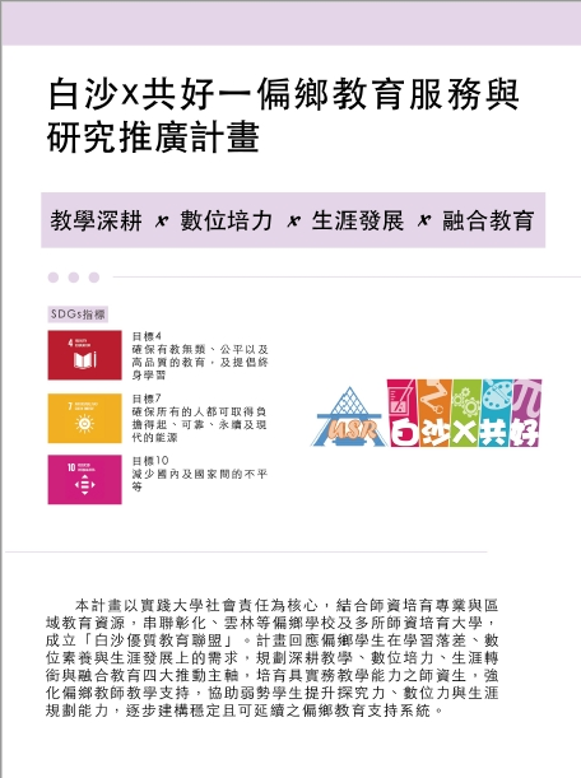
Figure 35. NCUE x Common Good: Rural Education Service and Research Promotion Project. Summer camp at a rural junior high school

Figure 36. NCUE x Common Good: Rural Education Service and Research Promotion Project. Summer camp at a rural junior high school
(b) Ecological Healing and Green Sustainability: Changhua Ecological Art Project (Figures 37 and 38)
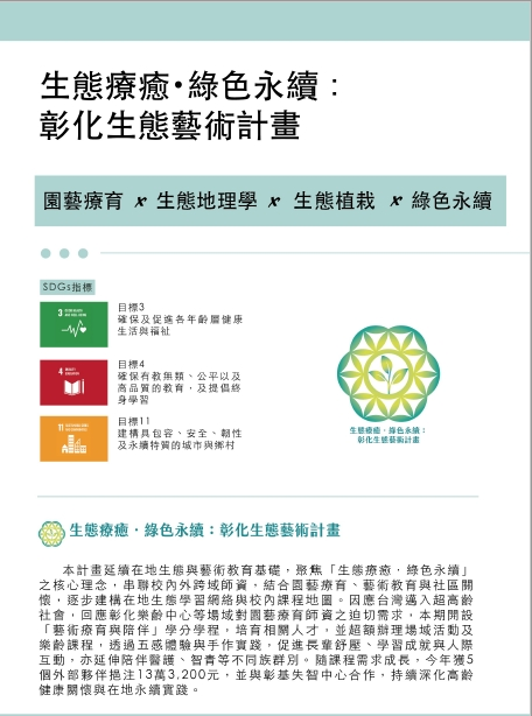
Figure 37. Ecological Healing and Green Sustainability: Changhua Ecological Art Project. Ecological healing course for the community

Figure 38. Ecological Healing and Green Sustainability: Changhua Ecological Art Project. Ecological healing course for the community
(c) Sustainable Changhua: Green Energy Perspective in Education, Technology, and Economy (Figures 39 and 40)
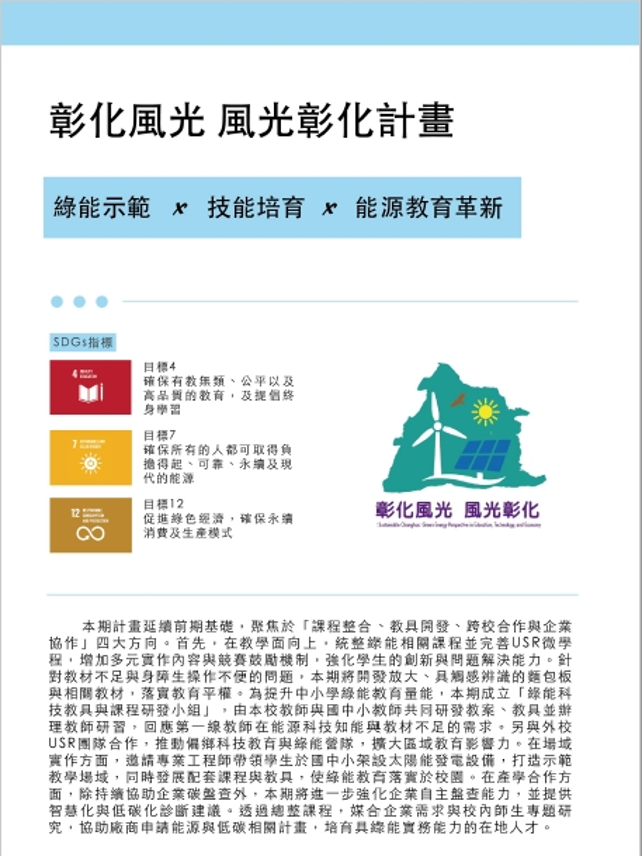
Figure 39. Sustainable Changhua: Green Energy Perspective in Education, Technology, and Economy. Green energy course at a elementary school

Figure 40. Sustainable Changhua: Green Energy Perspective in Education, Technology, and Economy. Green energy course at a elementary school
(d) Resilient Changbin: Climate Change and the Sustainability of Changhua's Coastal Environment and Industries (Figures 41 and 42)
Figure 41. Resilient Changbin: Climate Change and the Sustainability of Changhua's Coastal Environment and Industries. Training fitness instructors to strengthen community capacity to health promote health among older people
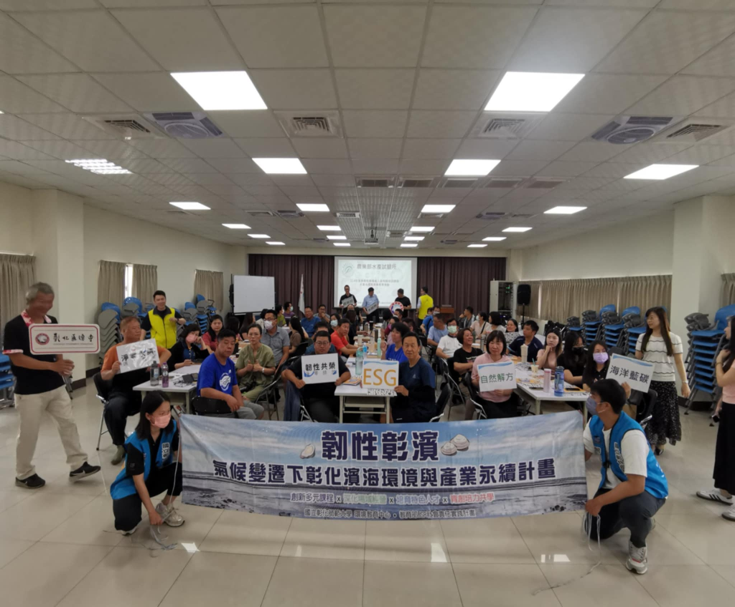
Figure 42. Resilient Changbin: Climate Change and the Sustainability of Changhua's Coastal Environment and Industries. Training fitness instructors to strengthen community capacity to promote health among older people