SDG 16.2.5
SDG 16.2.5 University principles on corruption and bribery
1. Government Ethics and Property Declaration Training
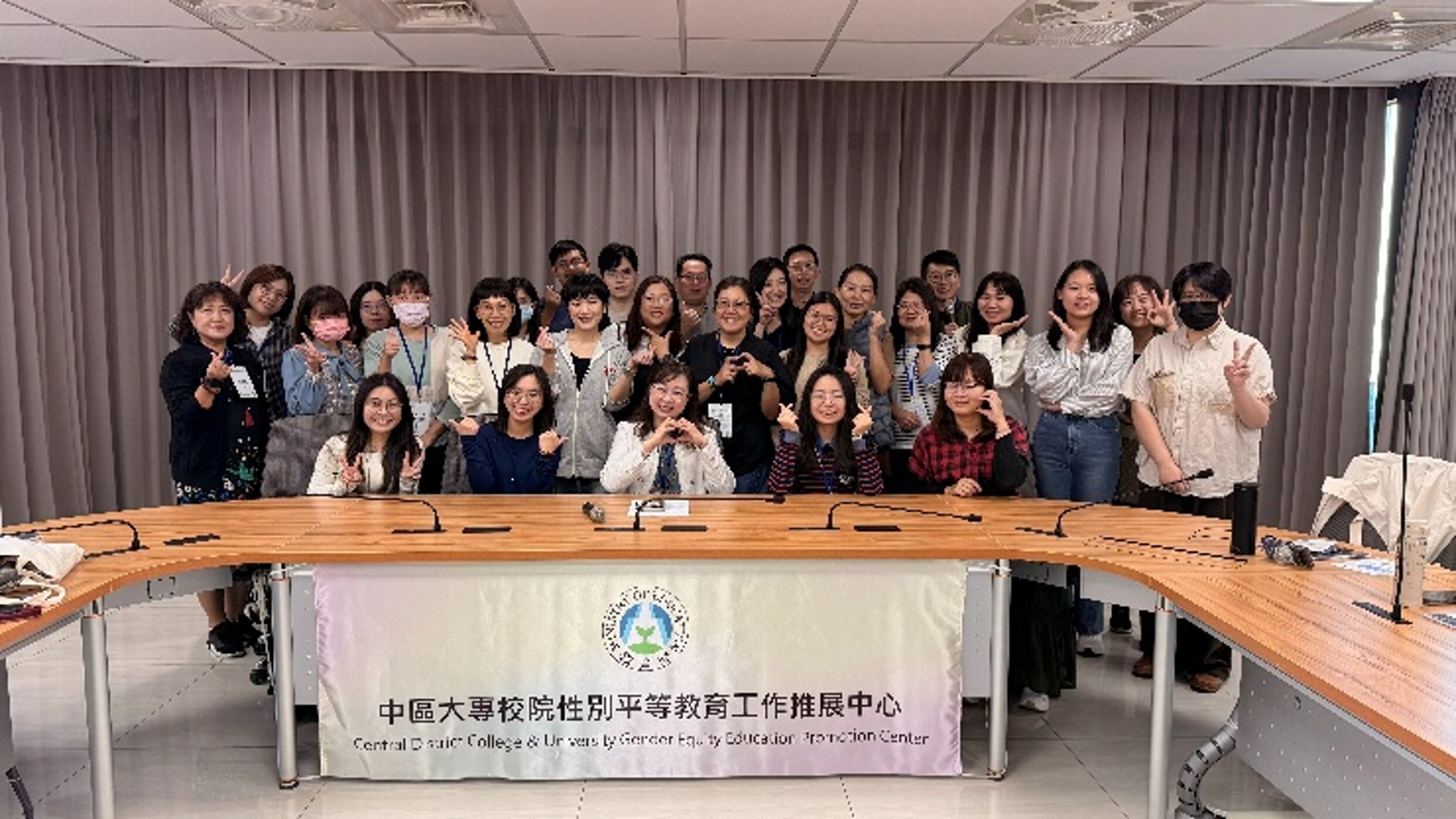
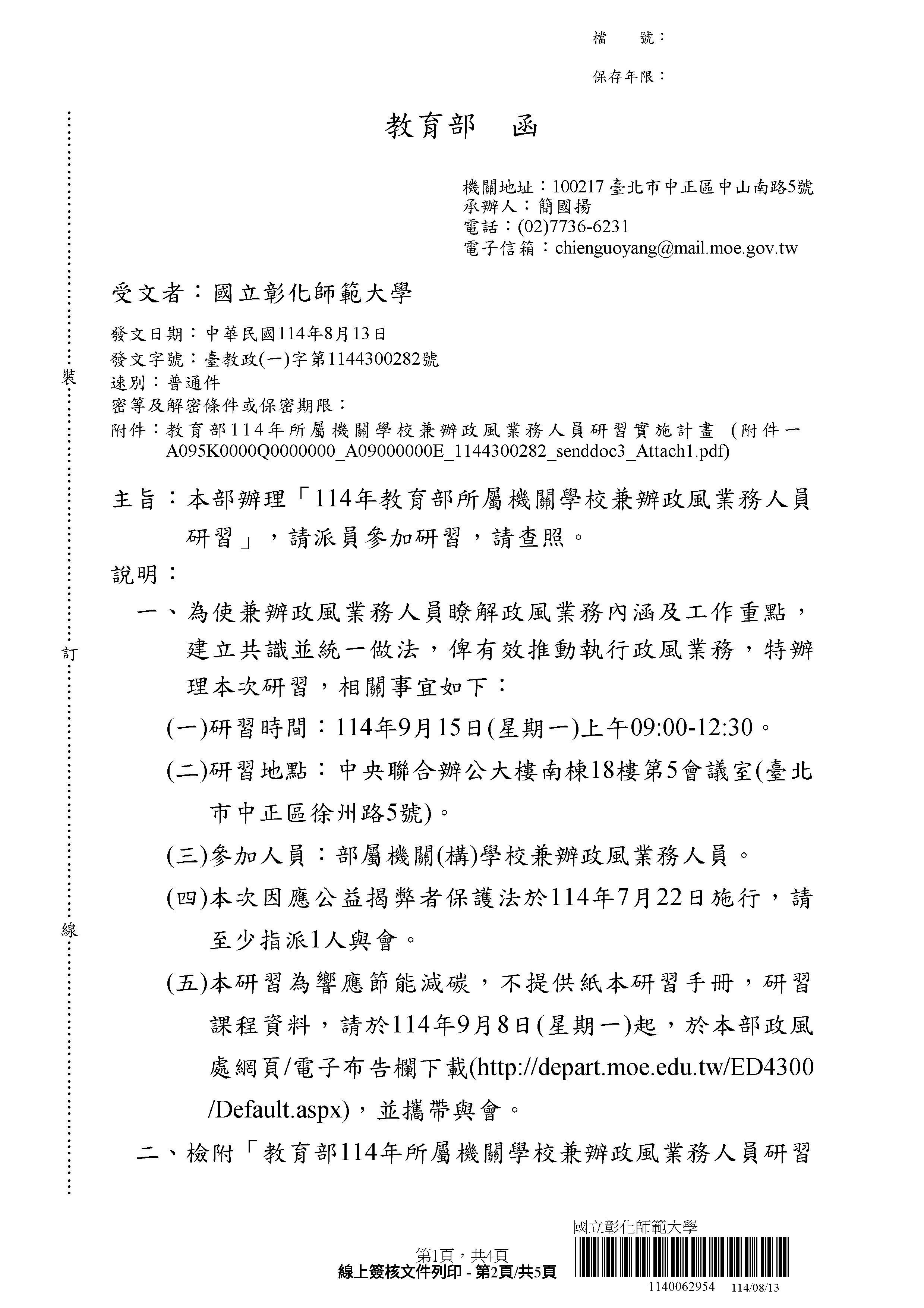
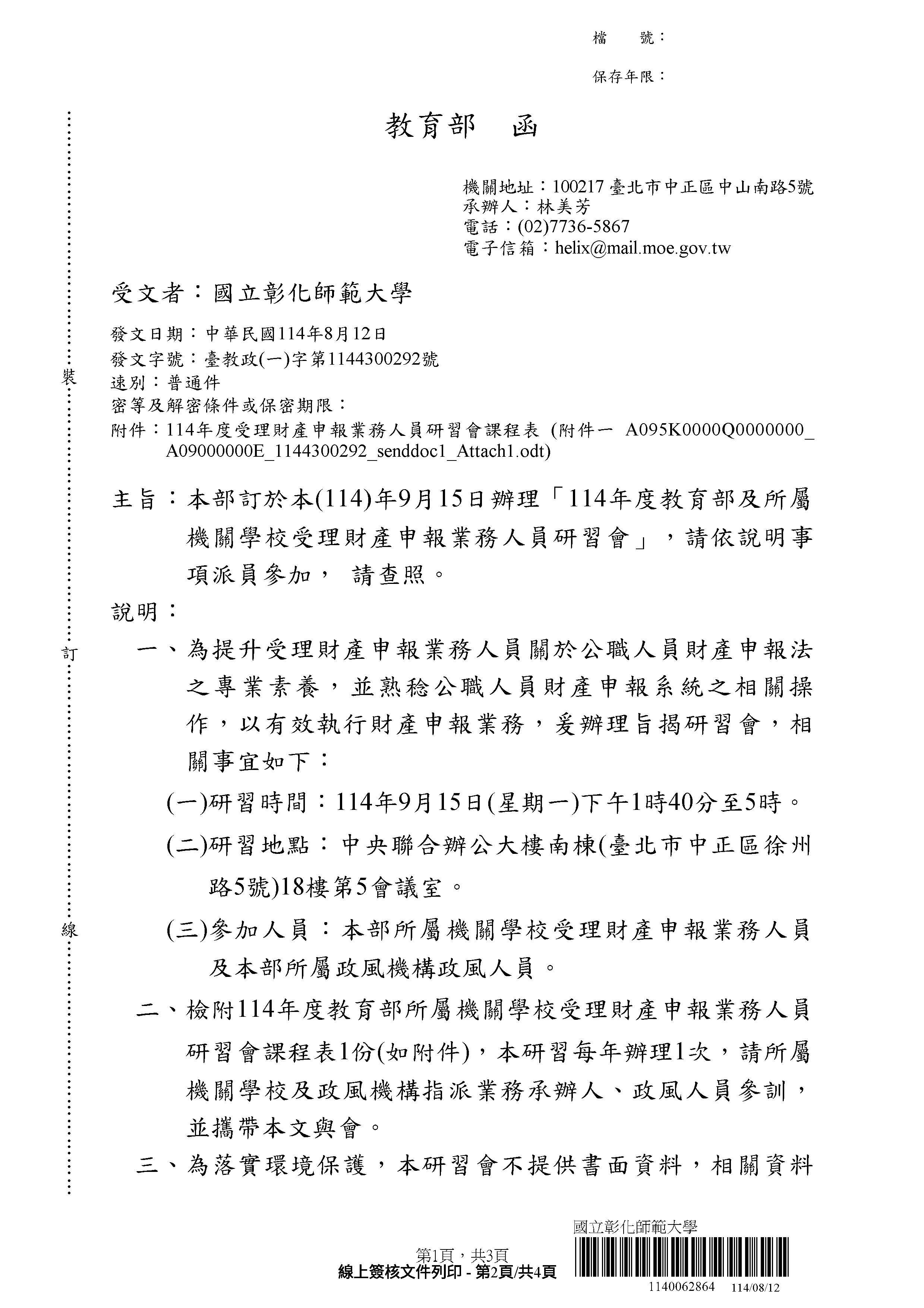
NCUE’s Personnel Office has assigned a staff member to handle government ethics matters, including property declaration by public servants. This staff member attends training at the Ministry of Education from time to time. (Figure 1 and Figure 2)
2. Anti-Corruption Publicity and Regulatory Compliance
All NCUE faculty members and staff shall abide by the Criminal Code of the Republic of China, Anti-Corruption Act, Government Procurement Act, Act on Property-Declaration by Public Servants, Act on Recusal of Public Servants Due to Conflicts of Interest, and Integrity and Ethics Directions for Civil Servants. To implement policies promoting integrity and efficiency and support government efforts to publicize relevant policies and regulations, NCUE established an “Anti-corruption Publicity Area” on the university website. This section provides information in four main aeras: small-value procurement, conflict of interest recusal, property declaration, and integrity and ethics rules. Its content includes government regulations, frequently asked questions and practical cases, etc. (website: https://personnelweb.ncue.edu.tw/p/412-1001-3228.php?Lang=zh-tw). The university actively guides personnel required to make property declarations, implements the annual property declaration system by public servants, and upholds the integrity of public servants, with the goal of creating a corruption-free, open, efficient, and high-quality school. Through information disclosures and administrative transparency measures, the university provides channels for the public to monitor government administration, demonstrating the integrity of the public servants and improving the efficiency of administrative operations.
3. Promotion of ICERD Principles
NCUE completed setting up a website dedicated to the promotion plan for the International Convention on the Elimination of All Forms of Racial Discrimination (ICERD). The website shows interpretations of ICERD articles, relevant legal regulations, and educational and promotional materials. The university is committed to strictly adhering to these principles. The relevant website can be accessed at: https://personnelweb.ncue.edu.tw/p/412-1001-3360.php?Lang=zh-tw
4. Healthy Workplace Environment and Harassment Prevention
To establish a healthy and friendly workplace environment and implement Article 19 of the Civil Service Protection Act, Article 3 of the Regulations Governing Safety and Health Protection of Civil Servants in the Performance of Duties, the Gender Equality in Employment Act, and workplace bullying and sexual harassment prevention mechanisms established by various institutions and schools, NCUE will strictly comply with the aforementioned regulations when handling cases, follow standard operating procedures, set appropriate case processing schedules, and ensure that deadlines are met. All units are requested to timely care and support for colleagues, emphasize school harmony and mutual respect, and prevent workplace bullying or sexual harassment incidents from occurring.
In addition to the above, NCUE has established the "Key Points for the Handling of Complaints by NCUE's Faculty and Staff regarding Workplace Bullying," "Guidelines for Prevention and Handling of Sexual Harassment and Gender Discrimination in the Workplace at National Changhua University of Education," and "Guidelines for Prevention and Handling of Sexual Harassment at National Changhua University of Education." All units are requested to refer to these provisions to jointly create a healthy and friendly workplace environment at NCUE. NCUE grievance and protection website: https://personnelweb.ncue.edu.tw/p/412-1001-3005.php?Lang=zh-tw; NCUE gender equality and sexual harassment prevention website: https://personnelweb.ncue.edu.tw/p/412-1001-2512.php?Lang=zh-tw
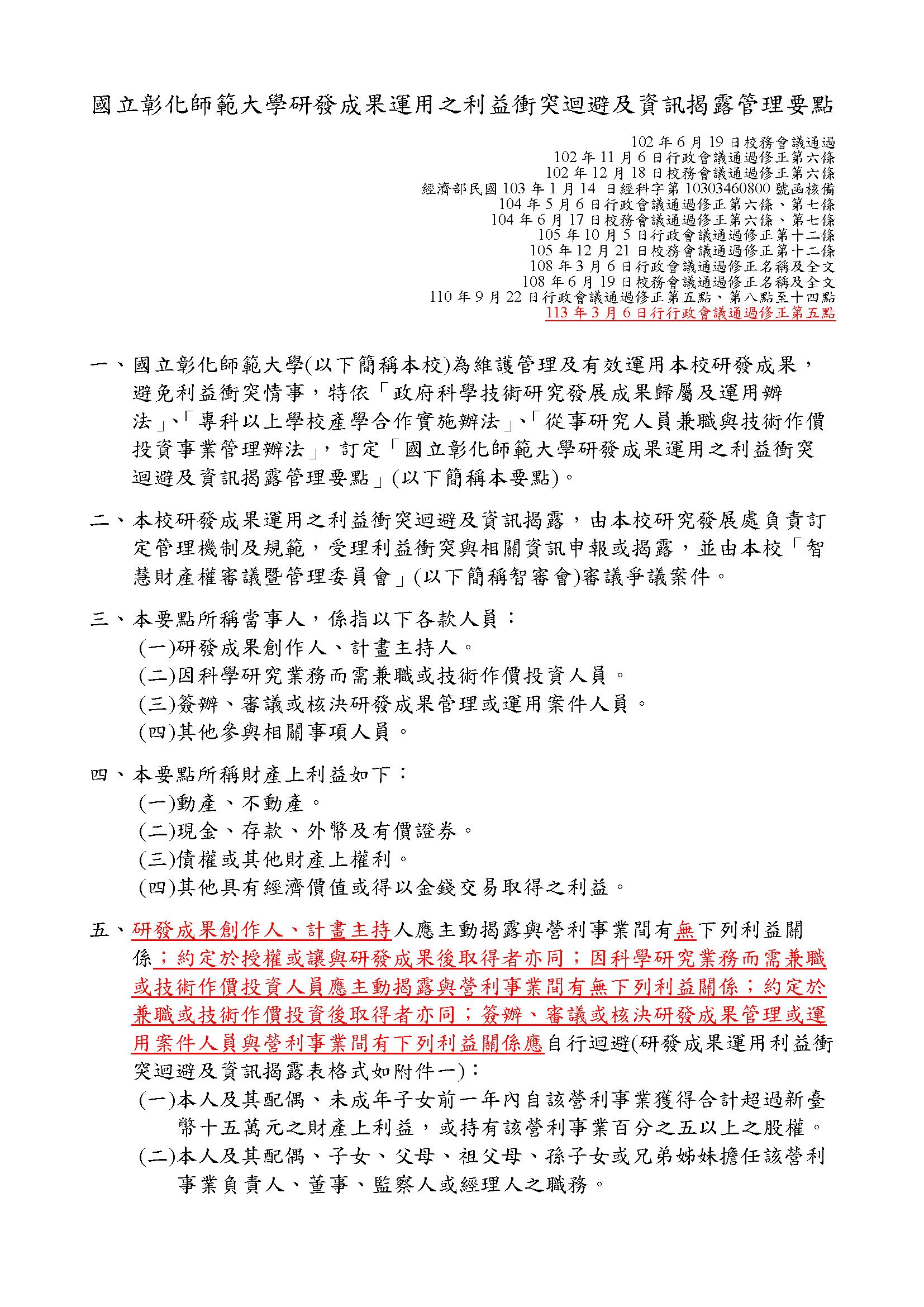
5. Management and Conflict of Interest Avoidance for R&D Results
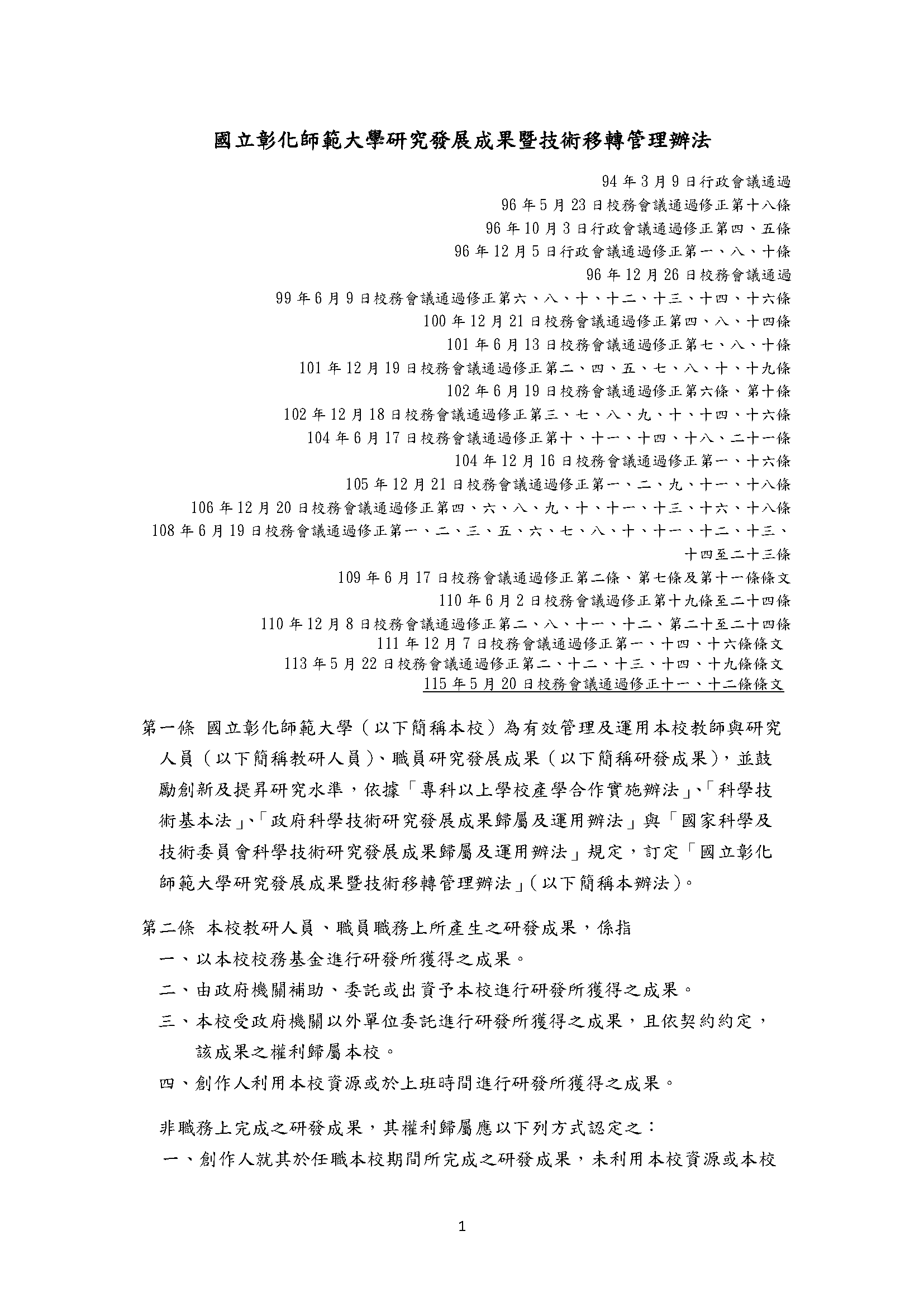
To effectively manage and use the R&D results of faculty members, staff, and researchers, NCUE has formulated such regulations as the Management Measures on the R&D Results and Technology Transfer of the National Changhua University of Education (Figure 3) and the Guidelines for Avoidance of Conflicts of Interest and Information Disclosure Concerning the Use of the R&D Results of the National Changhua University of Education (Figure 4). Regulating the management and use of R&D results produced by NCUE personnel in the course of their duties strengthens NCUE's research and development culture and increases the income of the University Endowment Fund.
6. Regulations for Research Integrity and Academic Ethics
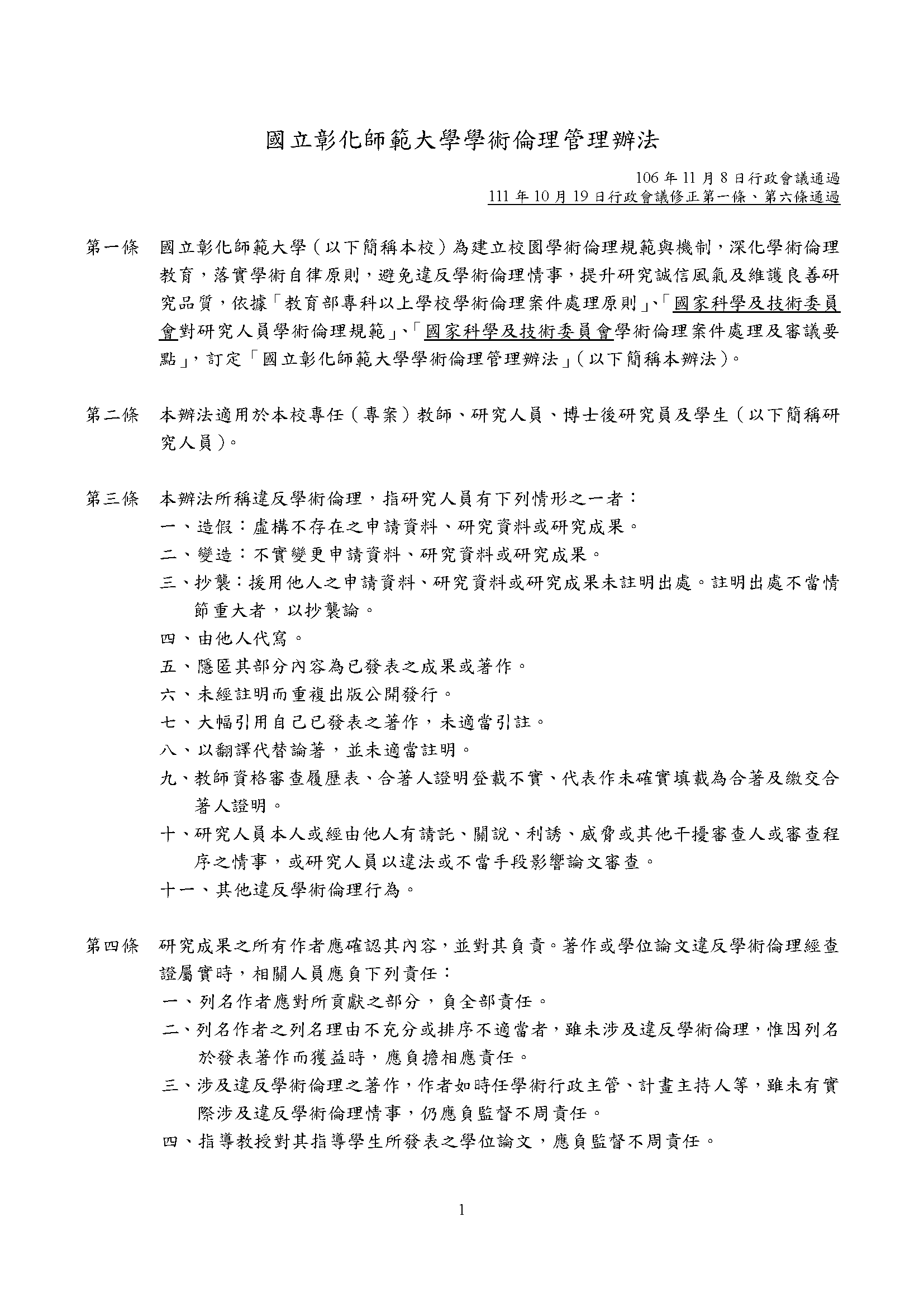
To enhance the culture of research integrity and maintain high-quality research standards, as well as to prevent faculty, researchers, and students from violating academic ethics, NCUE has established the following regulations:
(1) "National Changhua University of Education Academic Ethics Management Regulations" (Figure 5).
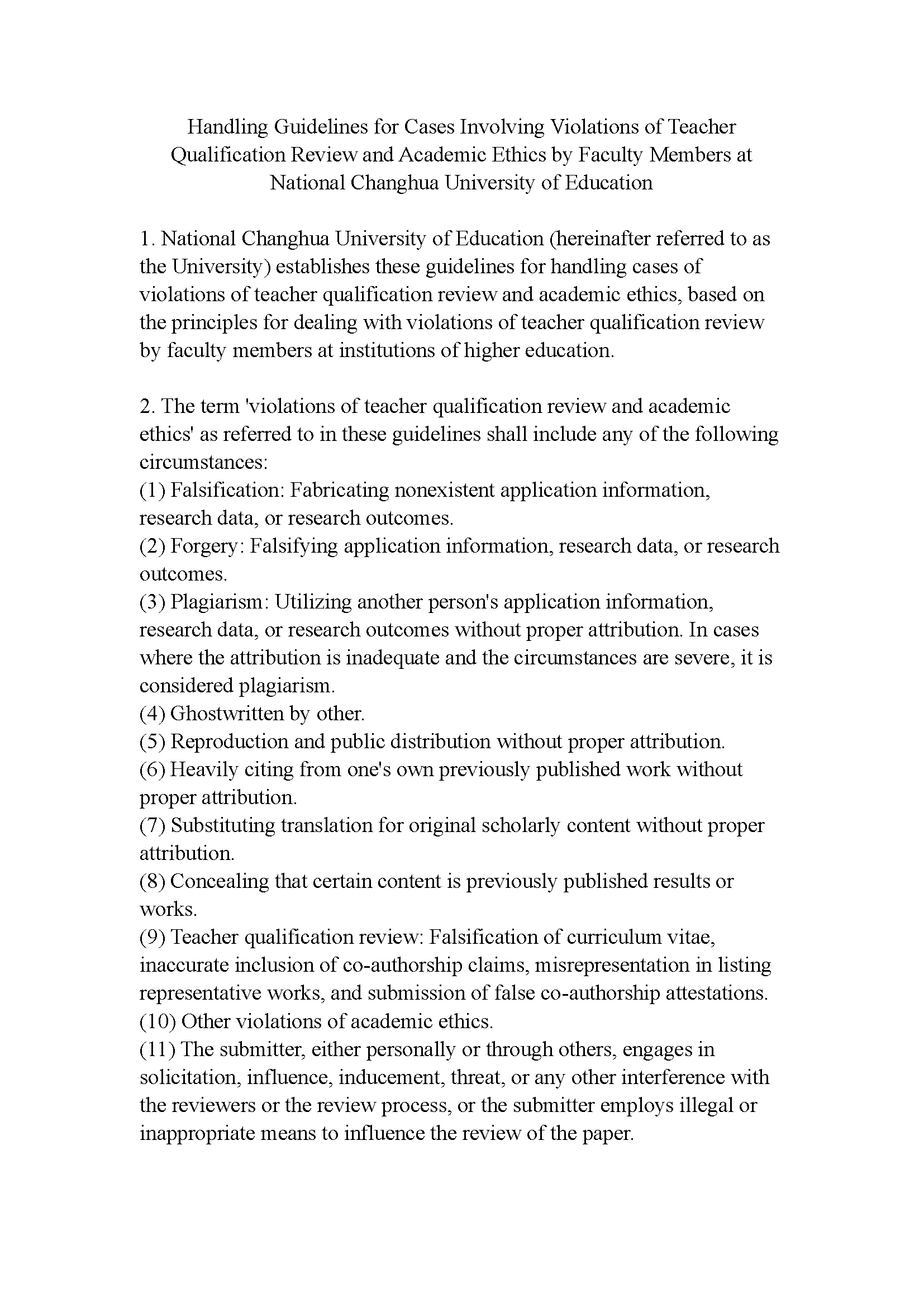
(2) "Handling Guidelines for Cases Involving Violations of Teacher Qualification Review and Academic Ethics by Faculty Members at National Changhua University of Education" (Figure 6).
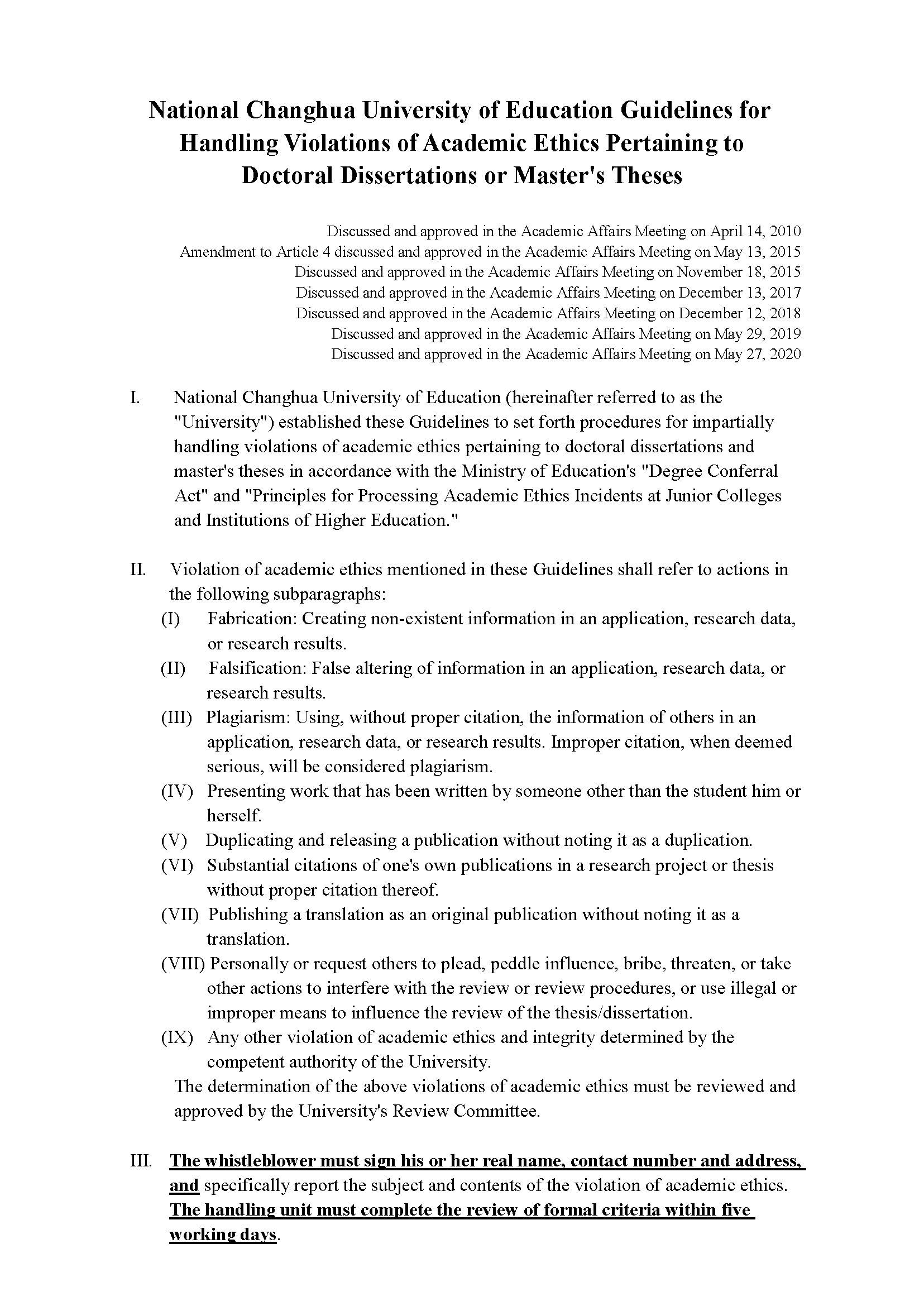
(3) "National Changhua University of Education Guidelines for Handling Violations of Academic Ethics Pertaining to Doctoral Dissertations or Master's Theses" (Figure 7).
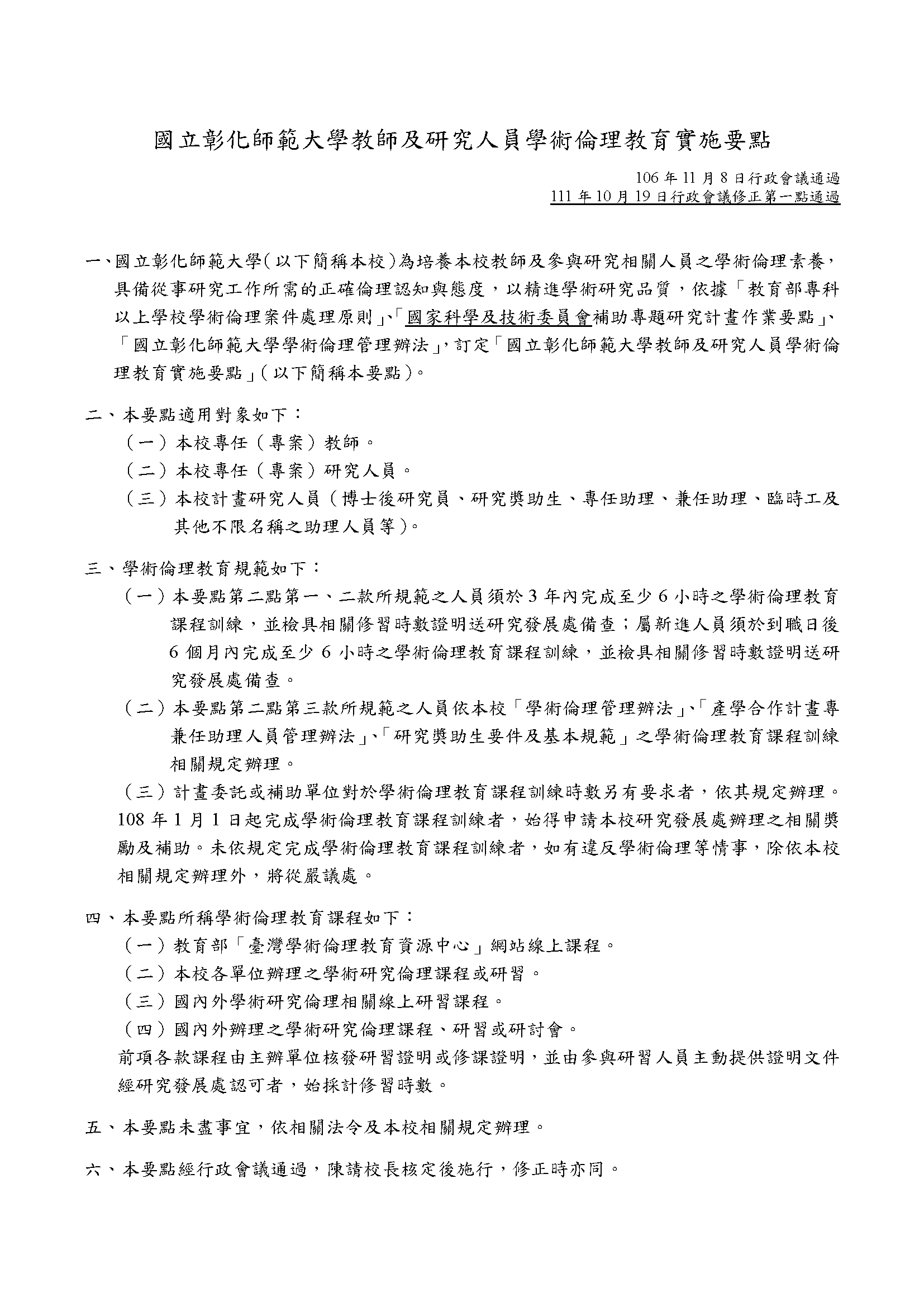
(4) Furthermore, NCUE has formulated the “National Changhua University of Education Implementation Guidelines for Academic Ethics Education for Faculty and Researchers” (Figure 8) to strengthen academic ethics education. Training sessions on academic research ethics are conducted from time to time to help faculty and students become familiar with relevant regulations.
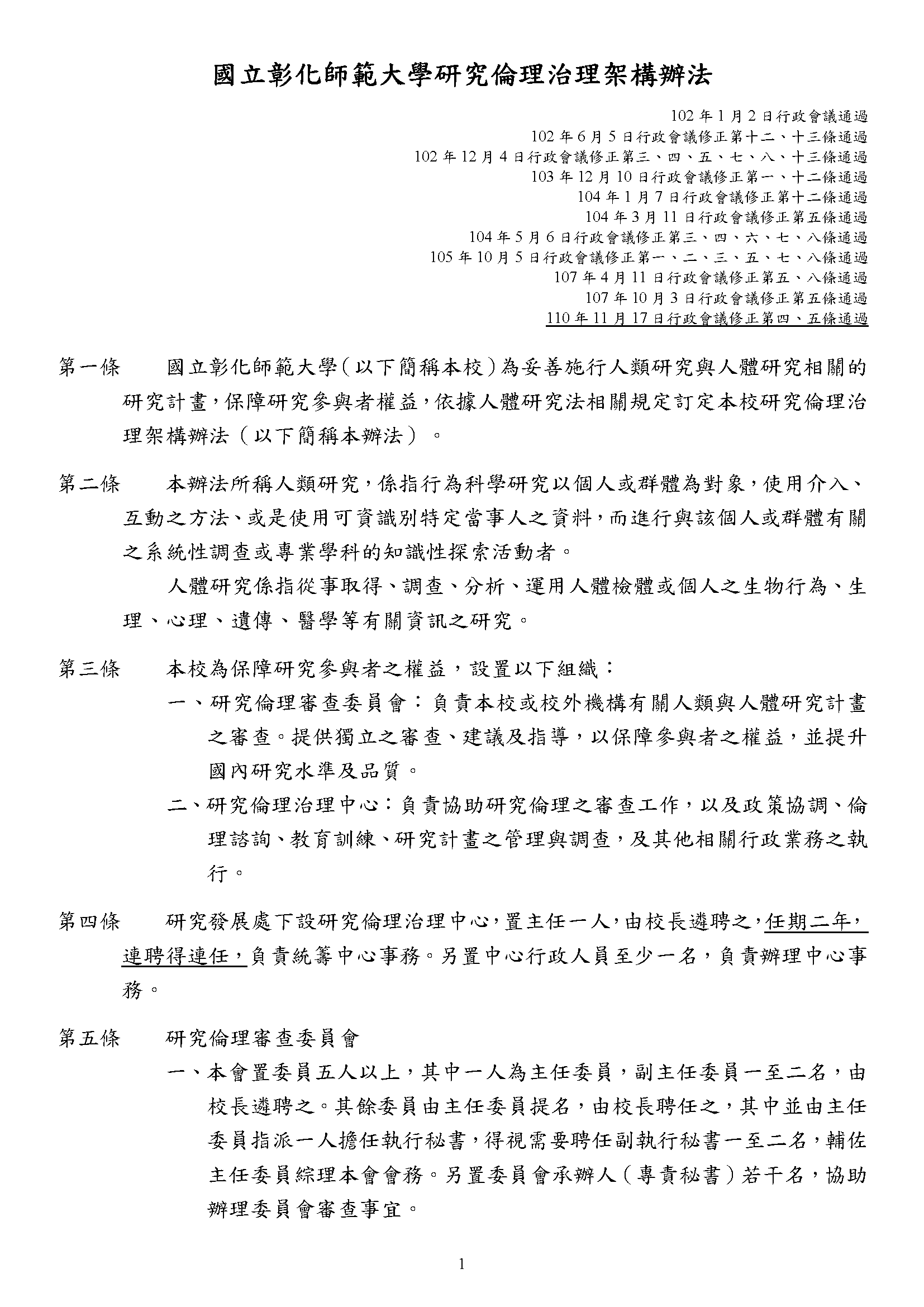
7. Research Ethics Committee and Governance Framework
NCUE has established the “National Changhua University of Education Research Ethics Committee” following approval from the Ministry of Education and formulated the Research Ethics Governance Framework Regulations (Figure 9). These measures help ensure that research projects conducted by faculty and students comply with research ethics standards and protect the rights and interests of research participants. National Changhua University of Education Research Ethics Committee and Research Ethics Governance Center Website: https://sites.google.com/gm.ncue.edu.tw/rec/
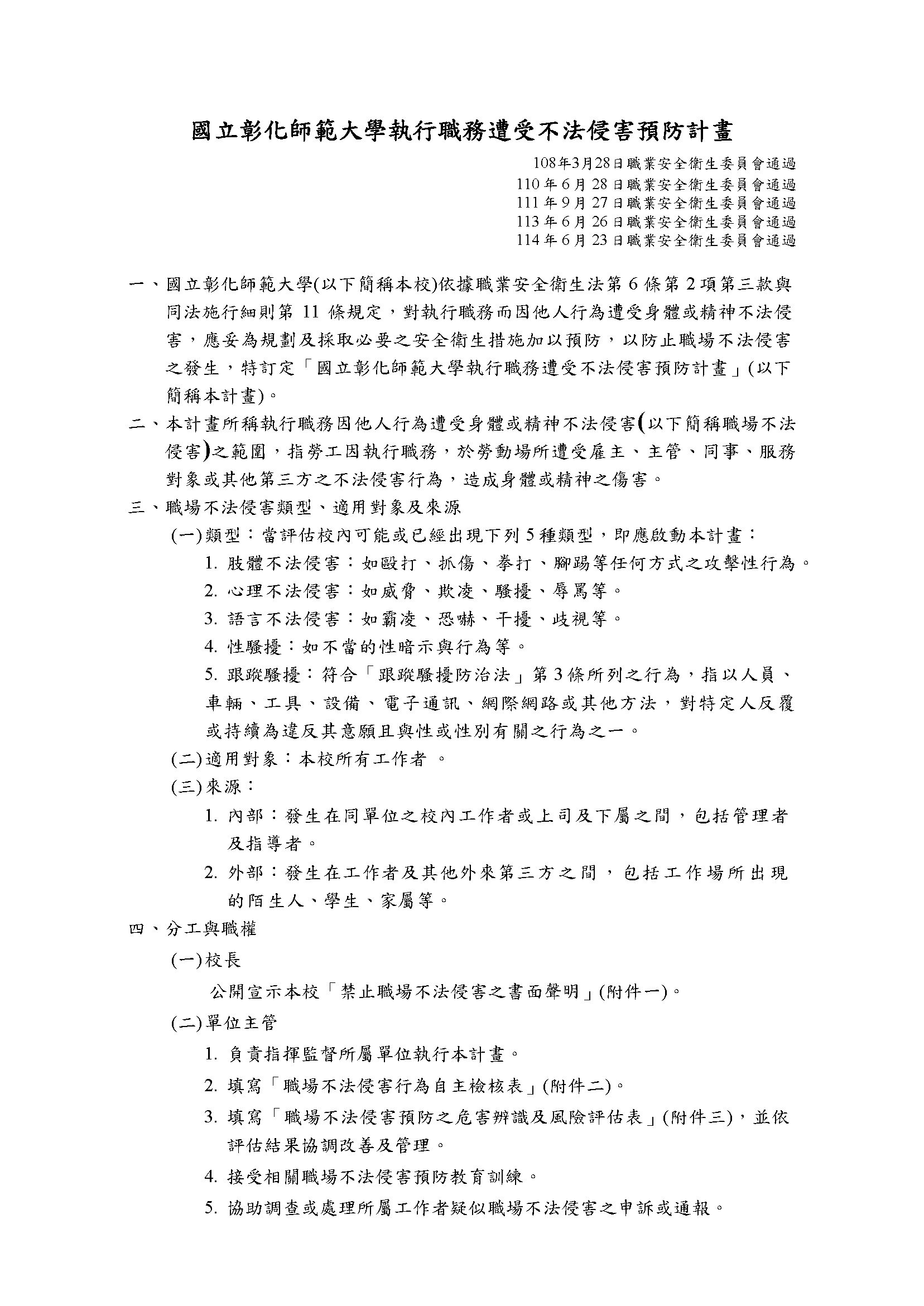
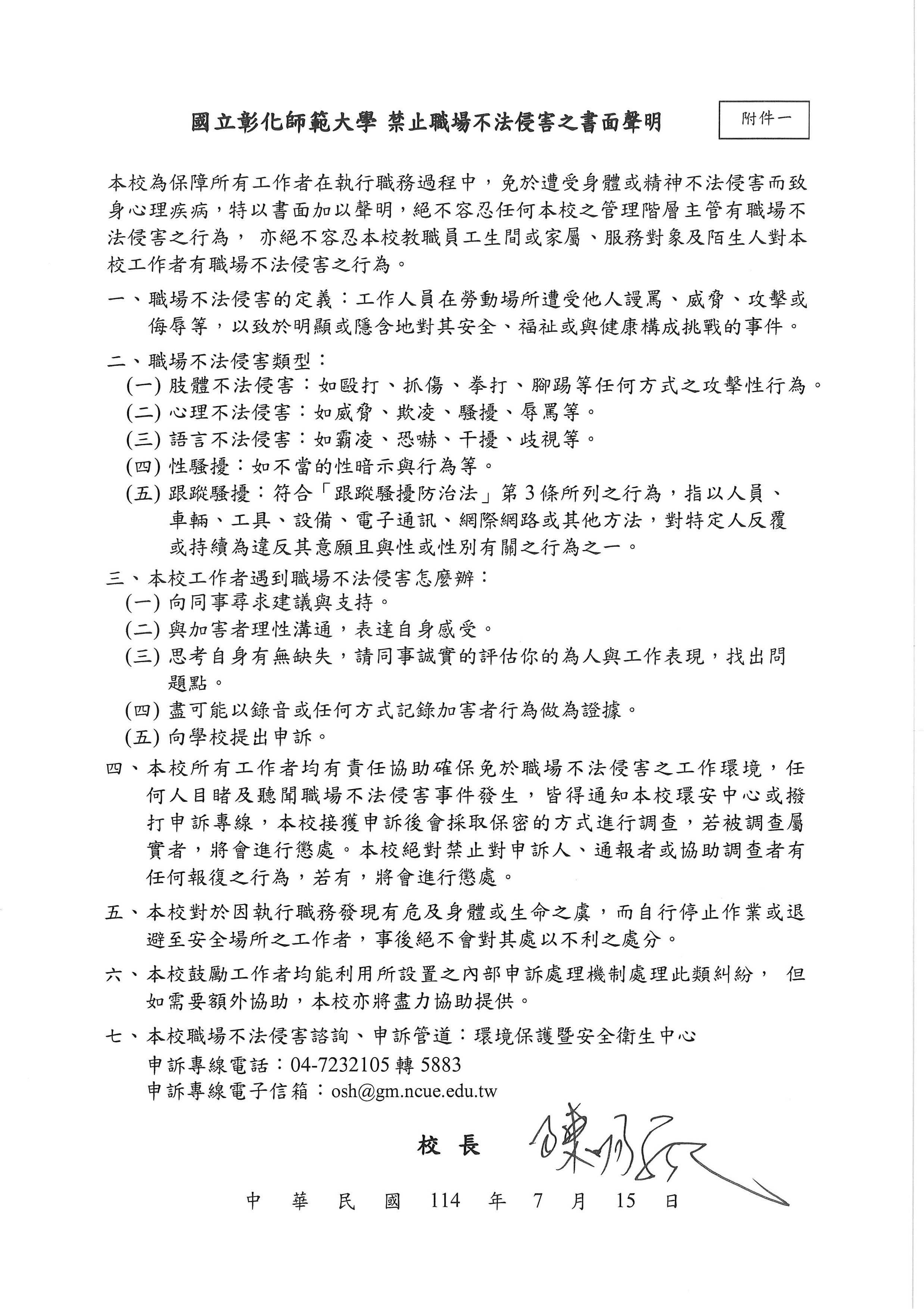
8. Prevention of Unlawful Infringement in the Execution of Duties
To ensure workplace safety for faculty and staff, NCUE has formulated the Prevention Plan for Unlawful infringement in the Execution of Duties in accordance with Article 6, Paragraph 2, Subparagraph 3 of the Occupational Safety and Health Act and Article 11 of its Enforcement Rules. This plan aims to prevent unlawful physical and mental harm caused by others while personnel are performing their duties by implementing necessary safety and health measures (Figure 10). The President has also publicly issued a Written Statement Prohibiting Unlawful Infringement in the Workplace (Figure 11).
9. Administrative Neutrality and Integrity Ethics Training Course
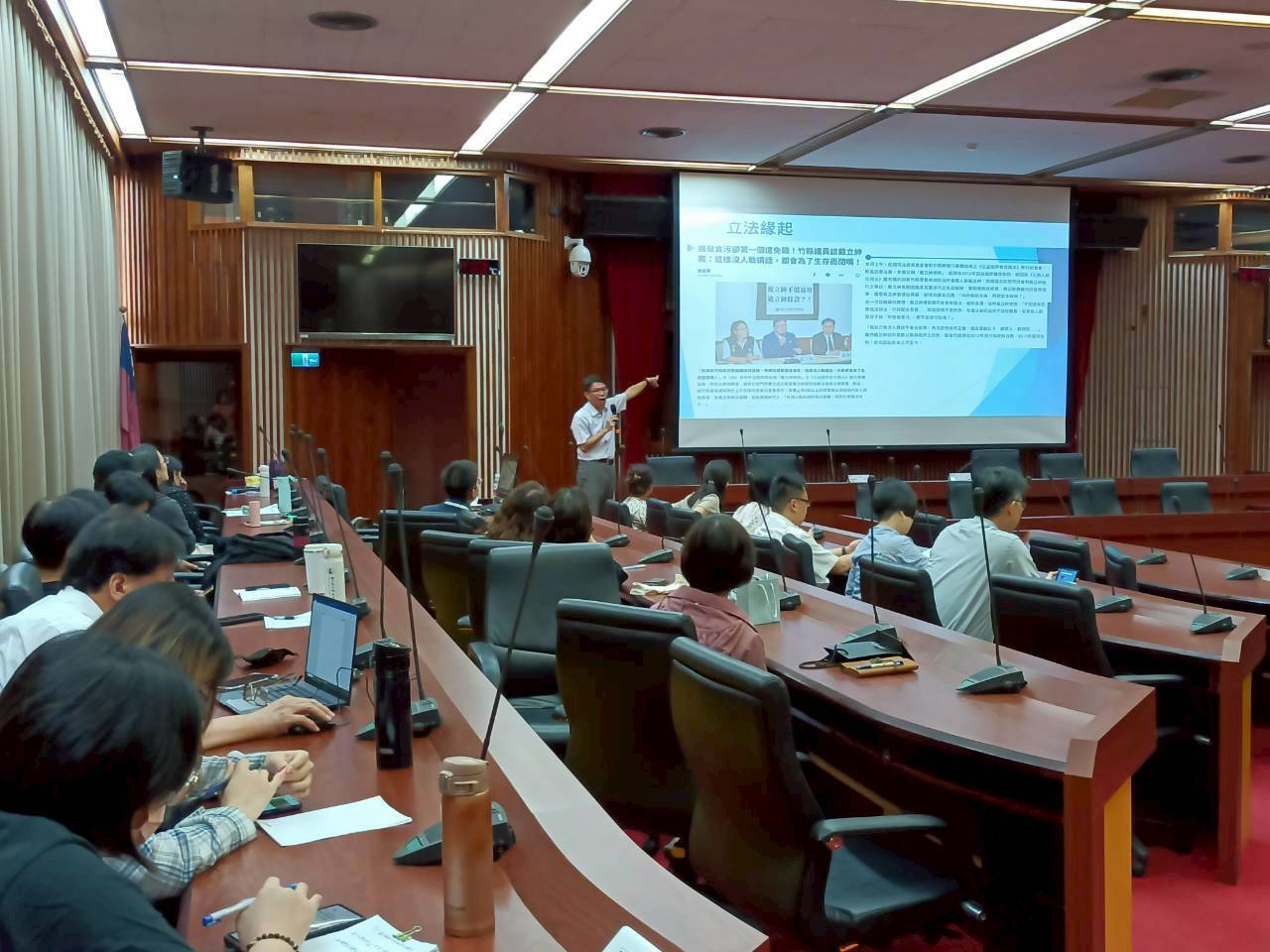
In response to the national administrative neutrality policy and to strengthen civil servants' awareness of integrity and ethics, the Personnel Office held the 2025 Faculty and Staff Training Course - Integrity and Ethics Seminar on 29 October 2025. The seminar focused on integrity-related laws and disciplinary rules and on the Public Interest Whistleblower Protection Act, and Prosecutor Min-chieh Yang, then of the Changhua District Prosecutors Office, was invited to speak at NCUE. The aim was to help colleagues deepen their understanding of relevant regulations and internalize them as standards for daily official duties. A total of 80 participants attended. The core objective of this course was to enhance civil servants' awareness of administrative neutrality to ensure that central and local governments operate in accordance with the law, enforce law-impartially, and strictly comply with relevant political activity regulations. Besides the integrity and ethics matters that faculty members holding administrative posts need to observe, the seminar covered the Public Interest Whistleblower Protection Act, common mistakes in teachers' project applications and how to guard against fraud. NCUE conducts administrative neutrality training to help civil servants develop an understanding of administrative neutrality and enhance their ability to handle matters relating to it. This seminar was not only part of the annual training curriculum but also a concrete action to jointly maintain a clean and honest civil service environment. Through in-depth case analysis and regulatory explanations, we hope to assist colleagues in adhering to the principles of objectivity, fairness and professionalism when performing their duties, establishing a more trustworthy civil service culture for the university and society (Figure 12).
10. Research Ethics Education and Training Sessions
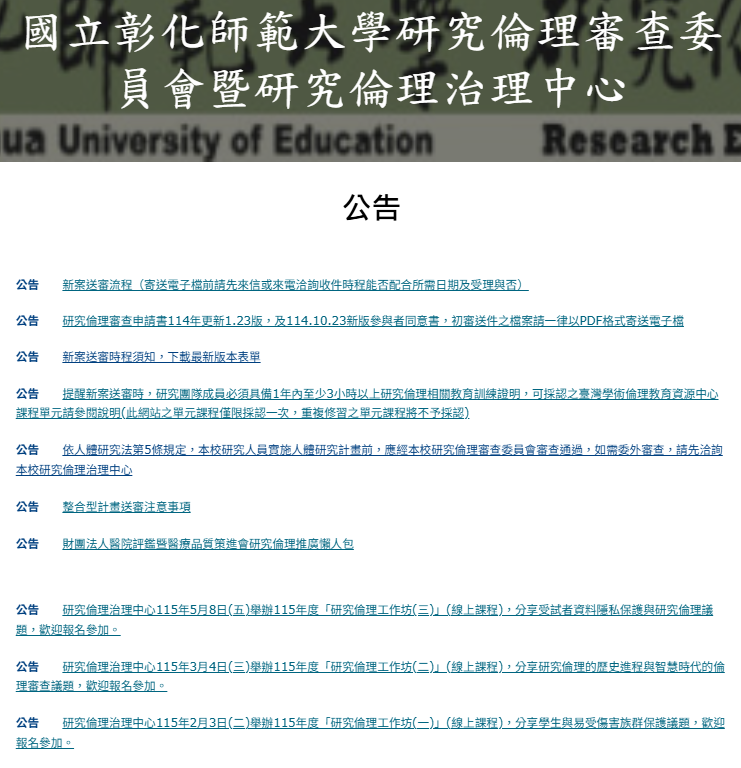
NCUE's Research Ethics Governance Center organized a series of research ethics education and training sessions as follows (Figure 13):
(1) On Wednesday 15 January 2025, the center held Research Ethics Workshop (I) online. Associate Research Fellow Chih-Hsing Ho of the Institute of European and American Studies, Academia Sinica, introduced the Personal Data Protection Act, the points to note when collecting and processing personal data, privacy-related data and data relating to individual’s likeness, and the corresponding protection and management measures. She also discussed personal data protection and the removal of links between deta and individuals in the context of big data and artificial intelligence.
(2) On Friday 21 March 2025, the center held Research Ethics Workshop (II) online. Associate Research Fellow Hen-Hsen Huang of the Institute of Information Science, Academia Sinica, introduced the development of artificial intelligence and the ethical and social issues raised by its use in medicine, transport, business, daily life and education, and discussed how the risks of artificial intelligence should be governed and regulated to balance technological development with the protection of human rights and interests.
(3) On Monday 12 May 2025, the center held Research Ethics Workshop (III) online. Professor Bo-Wei Chen of the Graduate Institute of Gender Education, National Kaohsiung Normal University, examined the ethics of involving disabled people in research, starting from their own agency and needs and from the idea of active support, and explained why and how their participation should be supported. The session echoed the disability movement's principle of "nothing about us without us" and the aim of building an equal partnership between researchers and disabled people.
(4) On Tuesday 16 December 2025, the center held Research Ethics Workshop (IV) online. Lien Chun, a board member of the Taiwan Association of Institutions Review Boards, discussed the challenges relating to ethical and informed consent facing social science research in the digital age, and the types of conflict of interest that arise in research on human subjects and the principles for handling them.
11. Gender Equality Capacity-Building and Training Courses
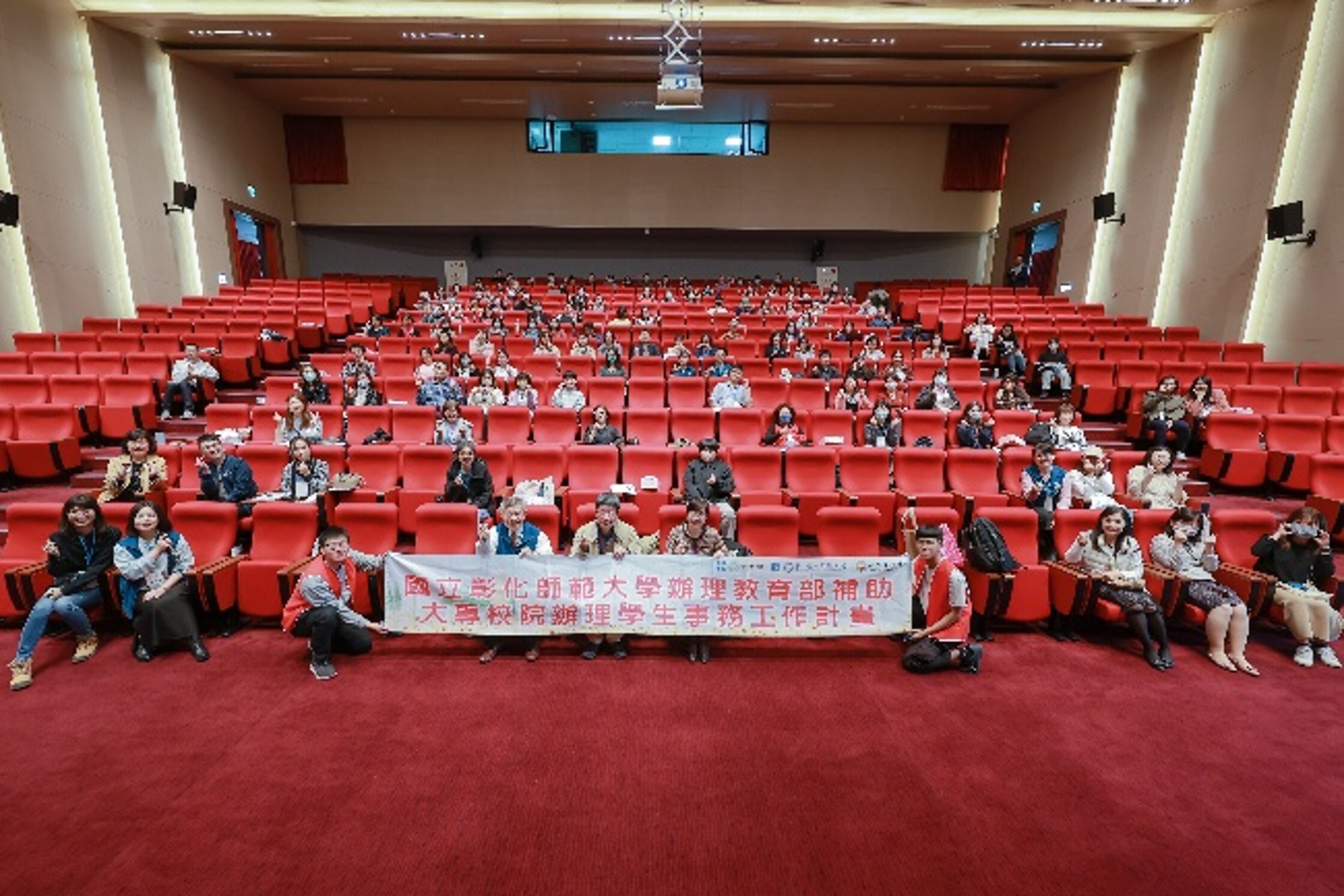
NCUE attaches great importance to gender equality issues and organizes various gender equality training courses. Course information is as follows:
(1) On 14 March 2025, the Secretariat held a gender equality capacity-building event, "The Law on Campus Club Operations and Practical Perspectives on Gender Equality Cases" (Figure 14).
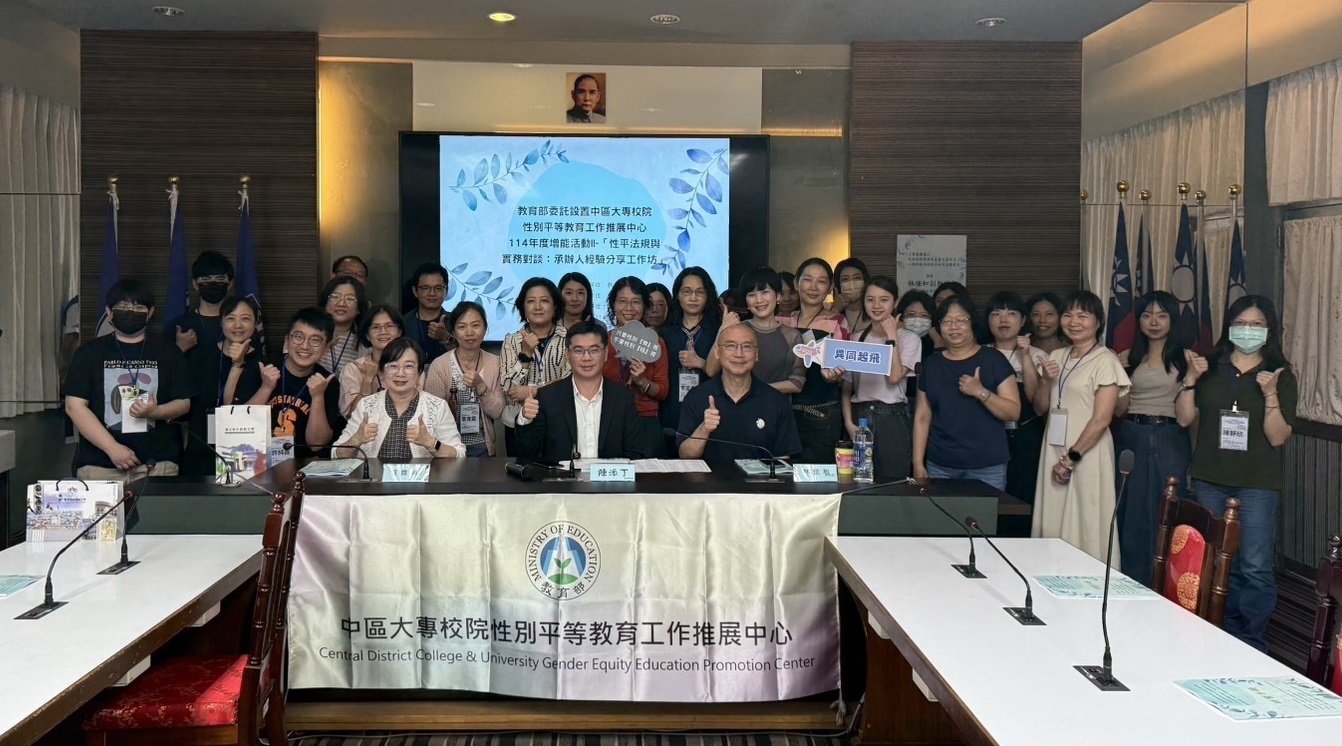
(2) On 27 June 2025, the Secretariat held a gender equality capacity-building event, "Gender Equality Regulations and Practice in Dialogue: A Workshop for Case Handlers to Share Experience" (Figure 15).
(3) On 30 October 2025, NCUE held a gender equality capacity-building event, "Professional Competence in Gender Equality and Emotional Resilience: Sharing Practical Experience and Zentangle Stress Relief" (Figure 16).
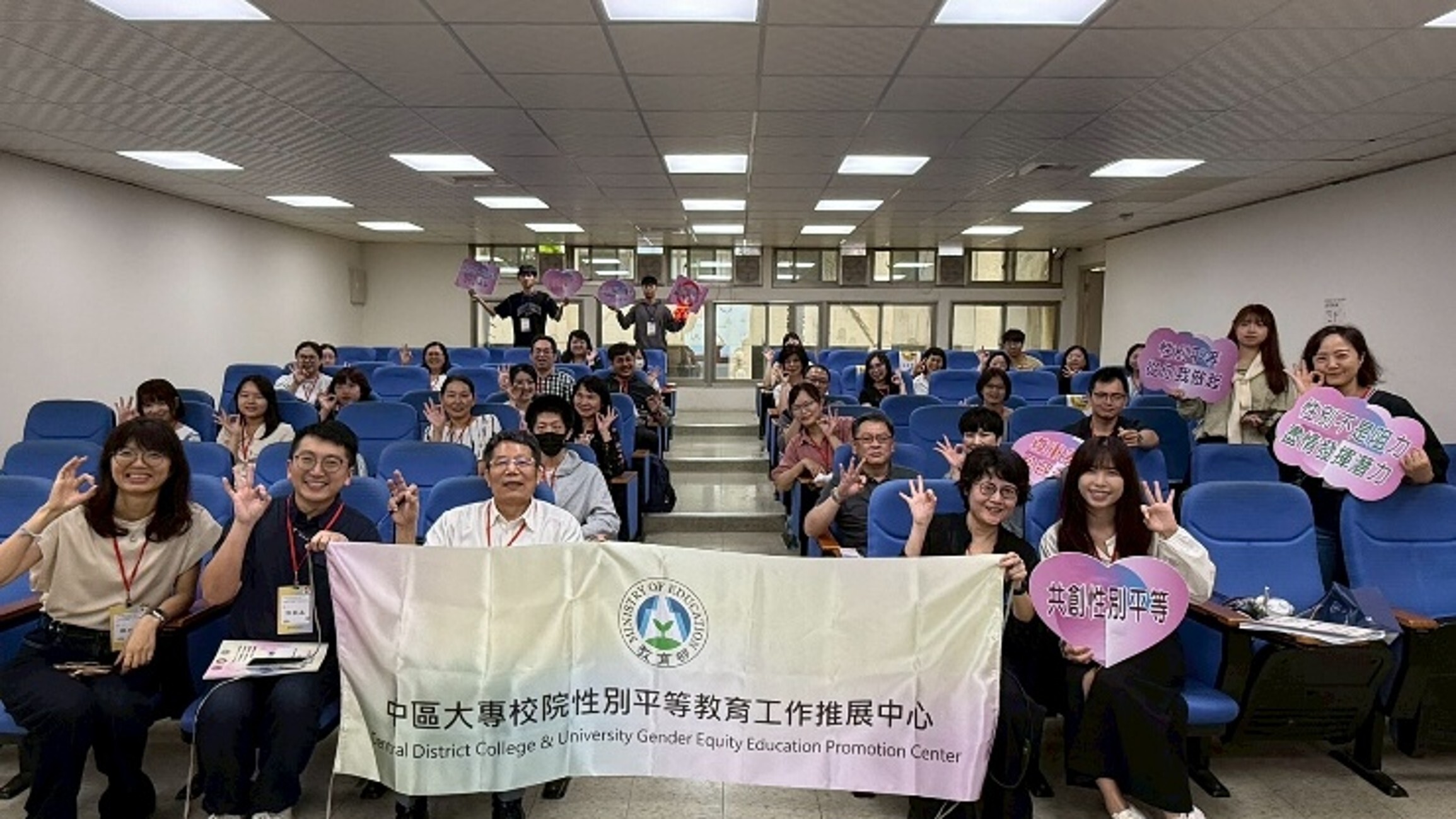
(4) On 10 December 2025, NCUE held a gender equality capacity-building event, "From Campus to Community: Strategies for Preparing for Document Review and Promoting a Gender-Friendly Culture" (Figure 17).