SDG 15.4.1
SDG 15.4.1 Water discharge guidelines and standards
Both campuses of NCUE have established water quality and drainage standards in accordance with national regulations.
1. National Regulations and Reporting
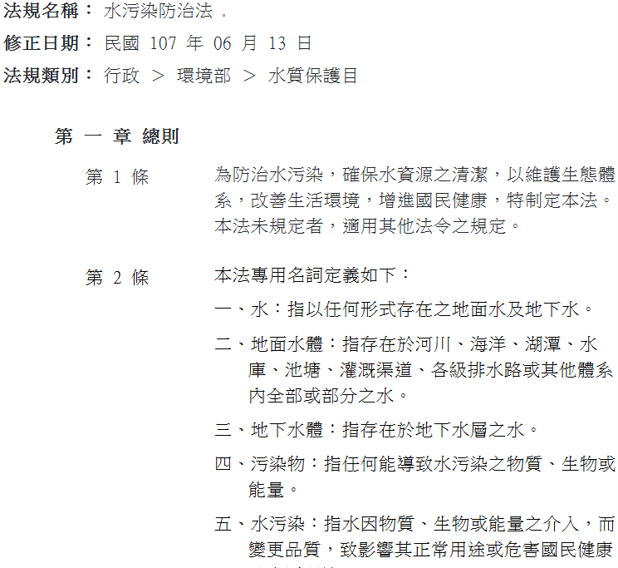
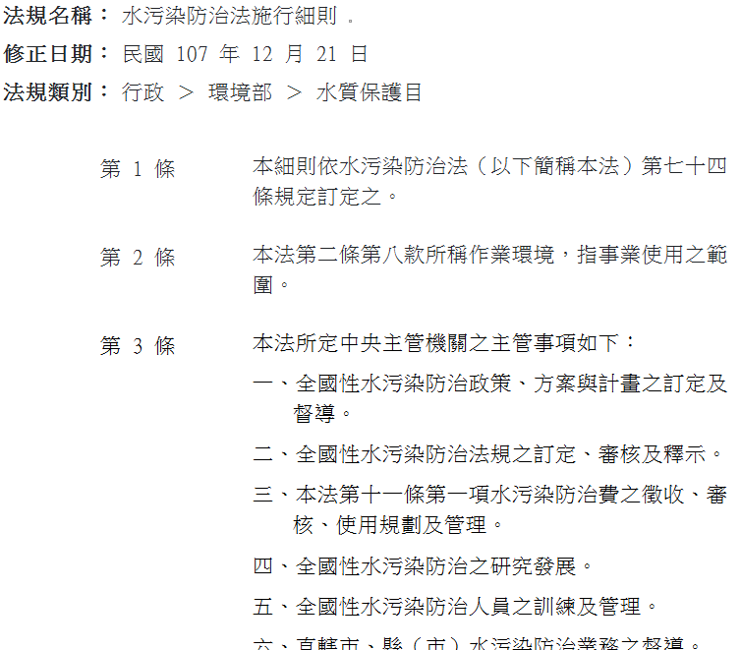
All wastewater generated on campus is centrally collected and treated at the university's wastewater treatment plant before being discharged through the officially registered and regulated outfall. This process is conducted in accordance with the "Water Pollution Control Act" (regulation link: https://law.moj.gov.tw/LawClass/LawAll.aspx?media=print&pcode=O0040001) and the "Enforcement Rules of the Water Pollution Control Act" (regulation link: https://law.moj.gov.tw/LawClass/LawAll.aspx?media=print&pcode=O0040002) (see Figure 1 for the relevant regulation links). In compliance with these regulations, water quality testing and periodic reporting of both the raw wastewater and effluent from the university's wastewater treatment plant are conducted as follows: the data for January to June of the current year is reported in July, and the data for July to December of the previous year is reported in January of the following year.
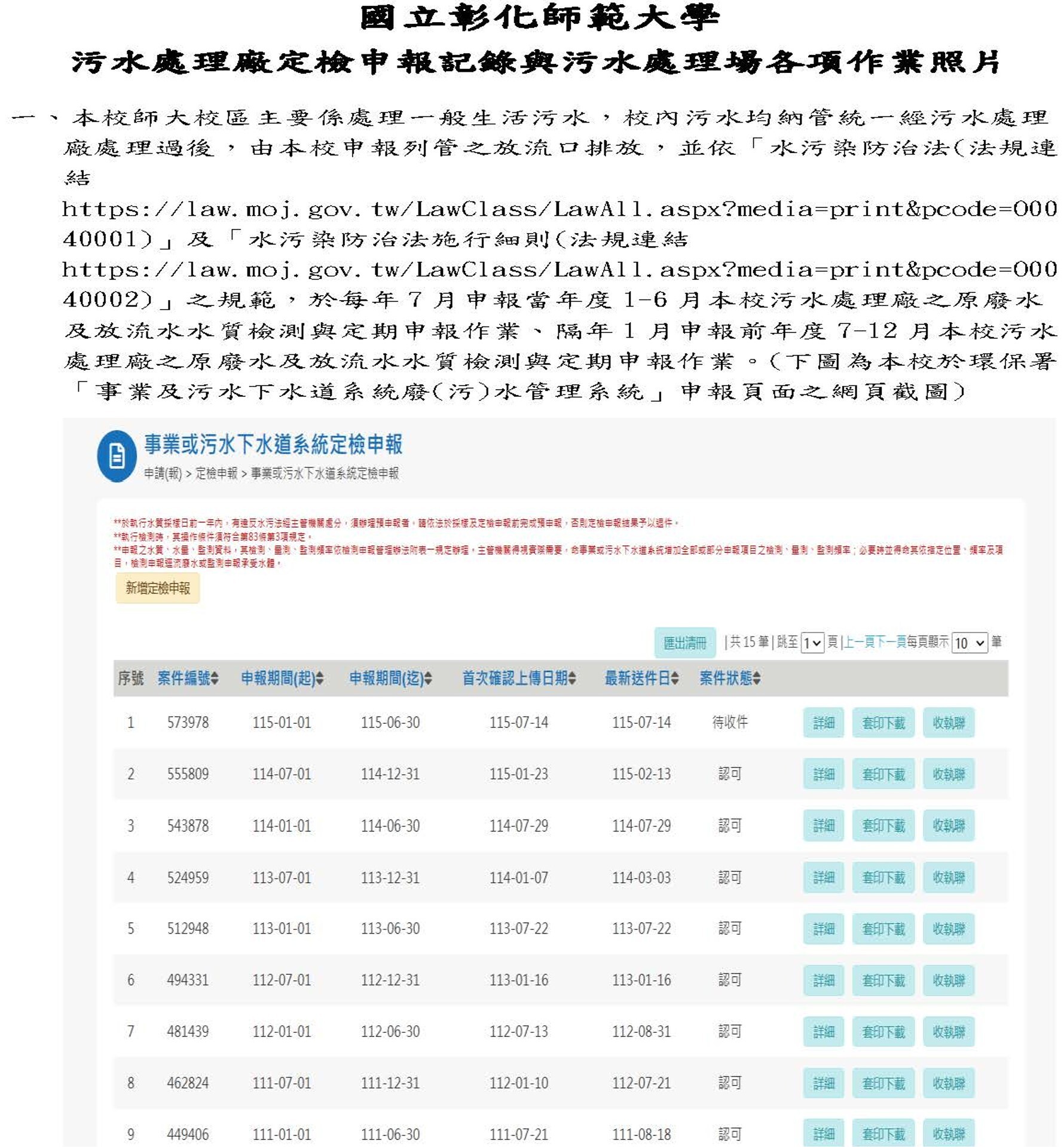
2. Wastewater Management System Reporting
A screenshot of NCUE’s reporting page in the Ministry of Environment’s Wastewater Management System for Enterprises and Sewerage Systems is shown in Figure 2.
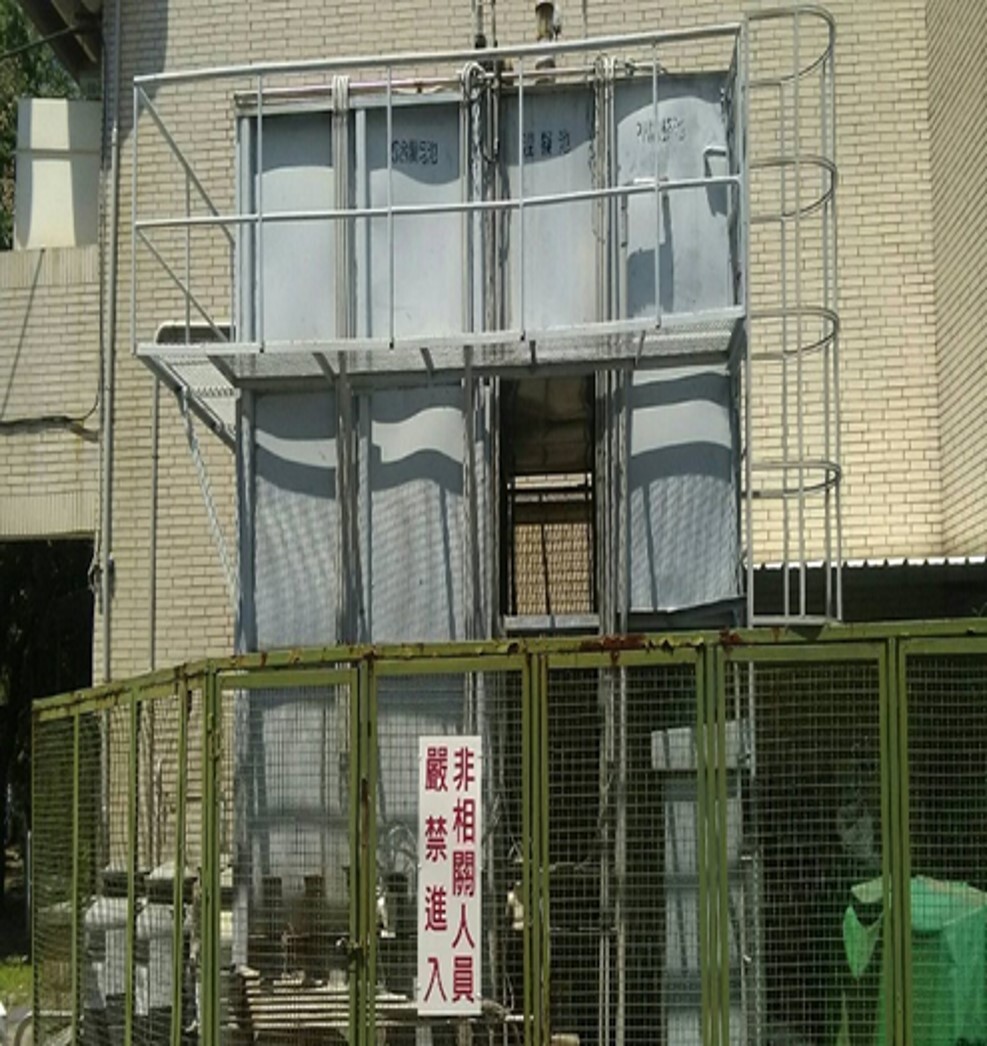
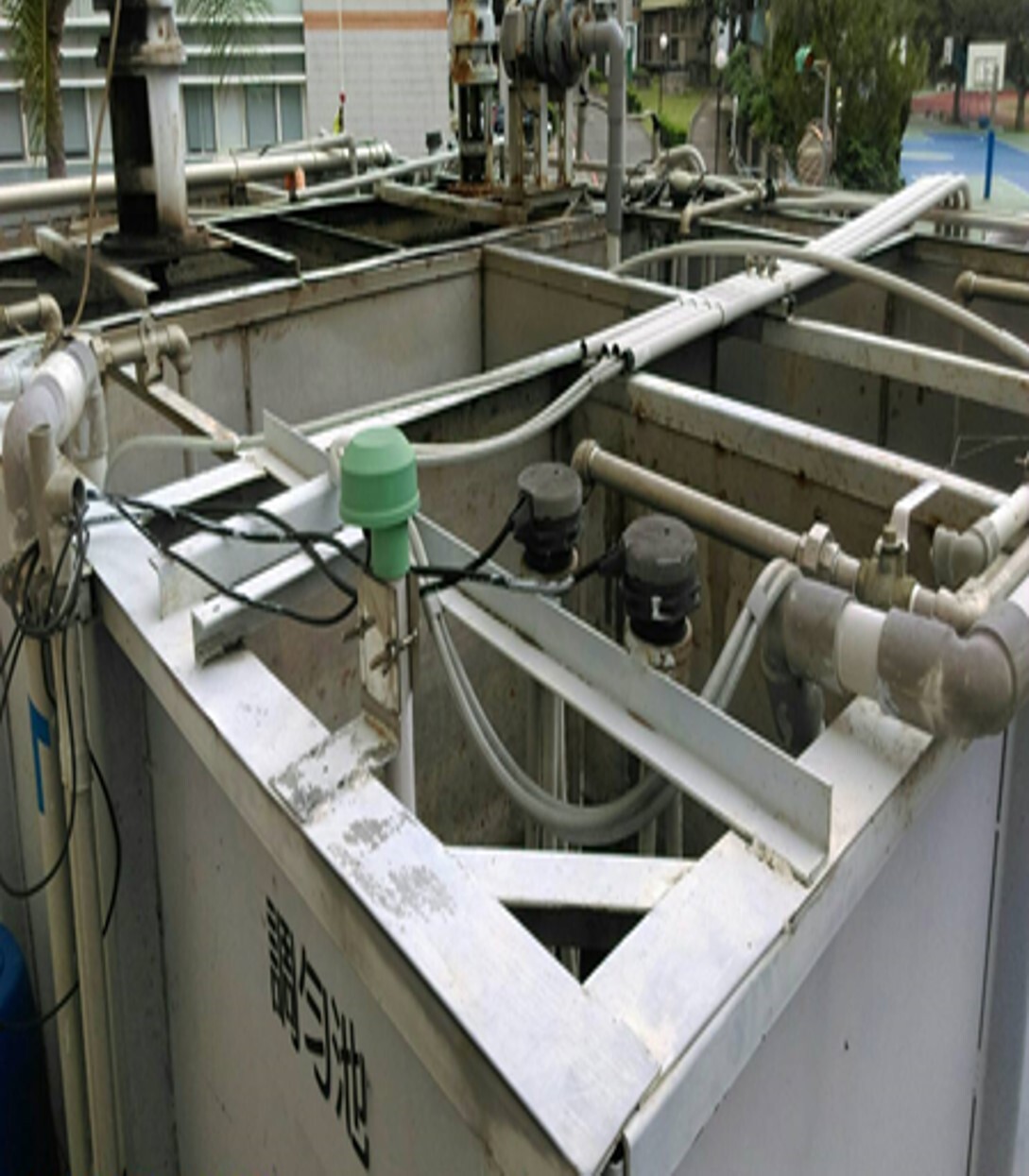
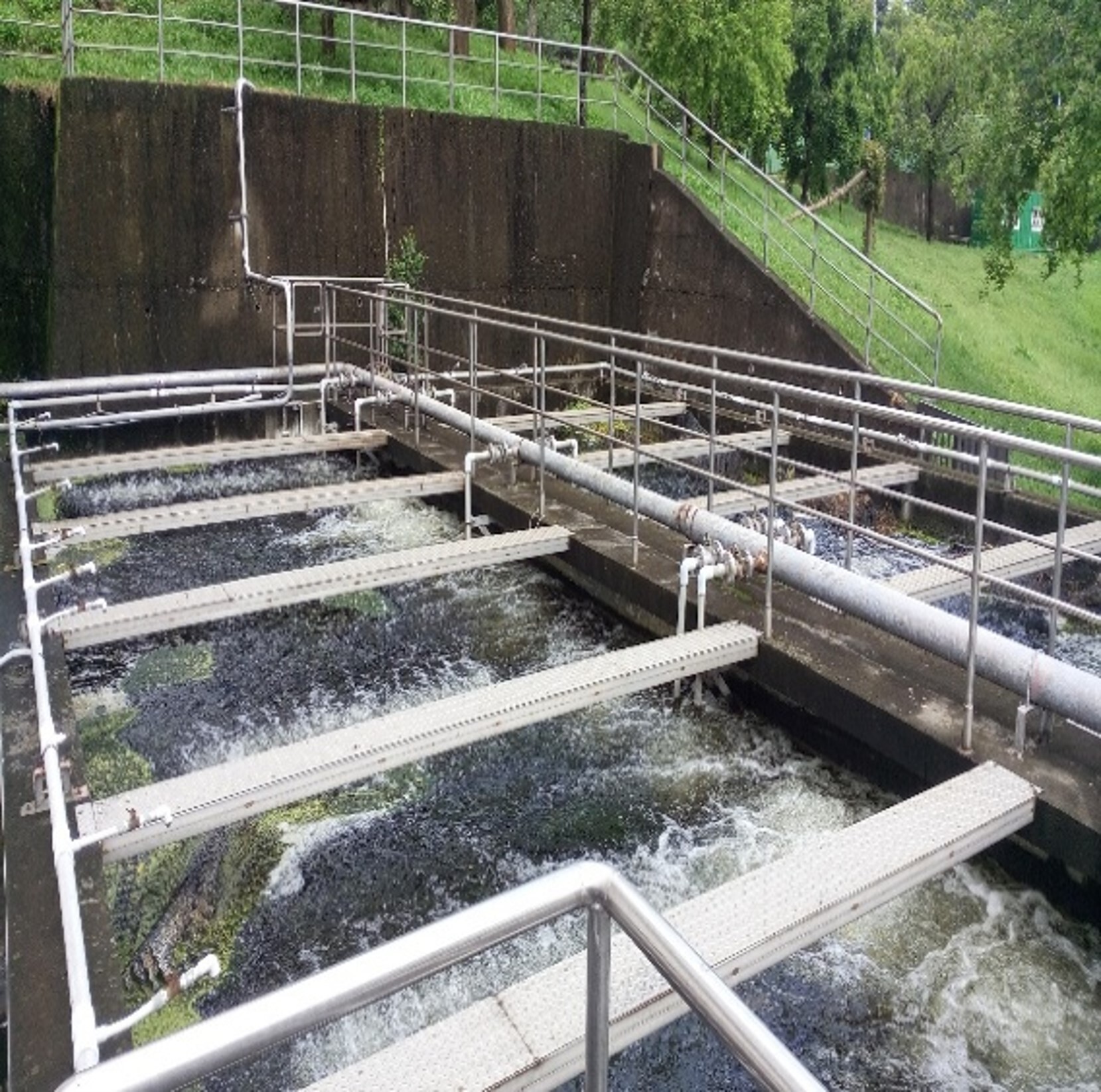
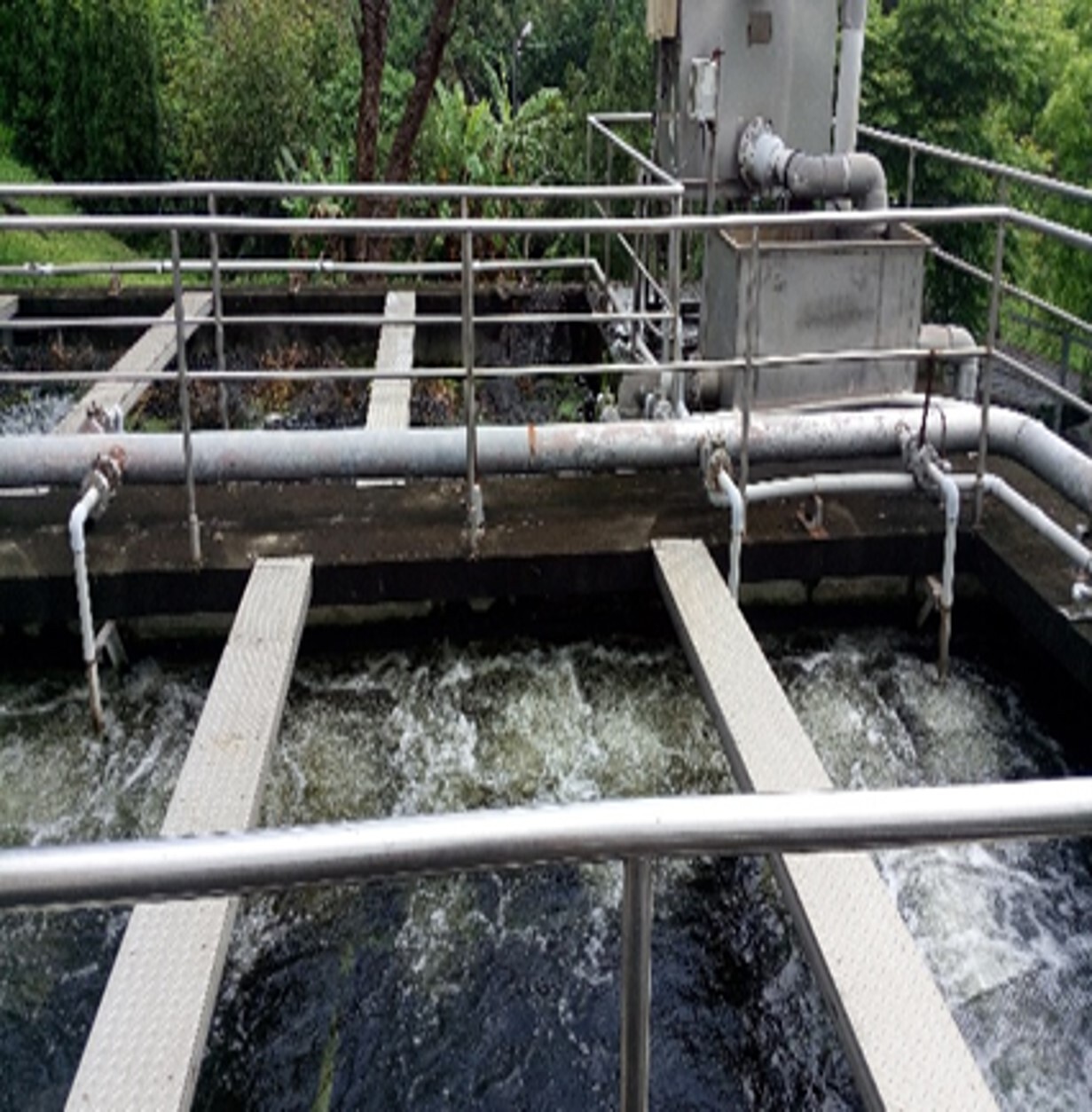
3. Wastewater Treatment Plant Facilities
Figure 3-6 Photograph of a Wastewater Treatment Plant.
4. Effluent Flow Meter Calibration
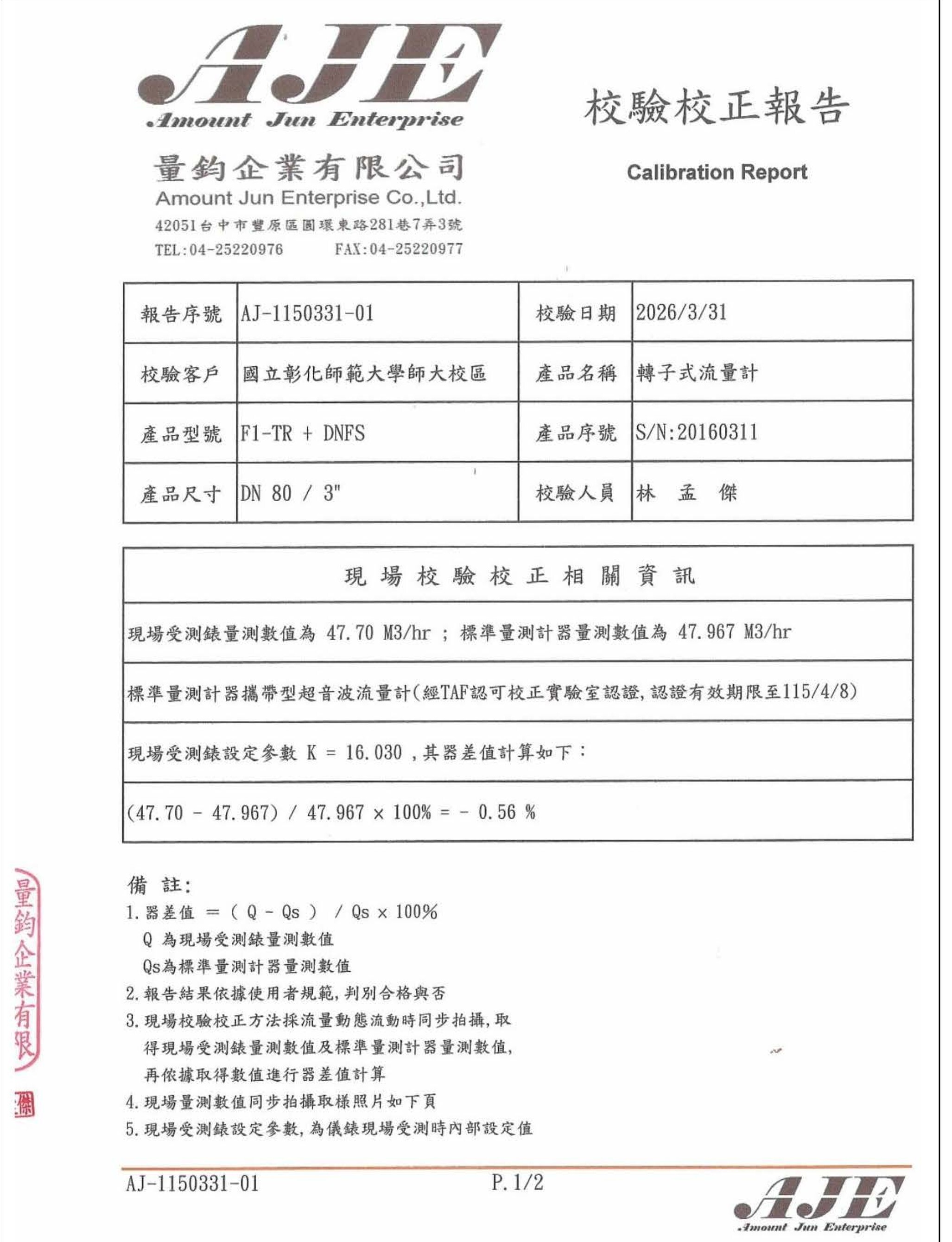
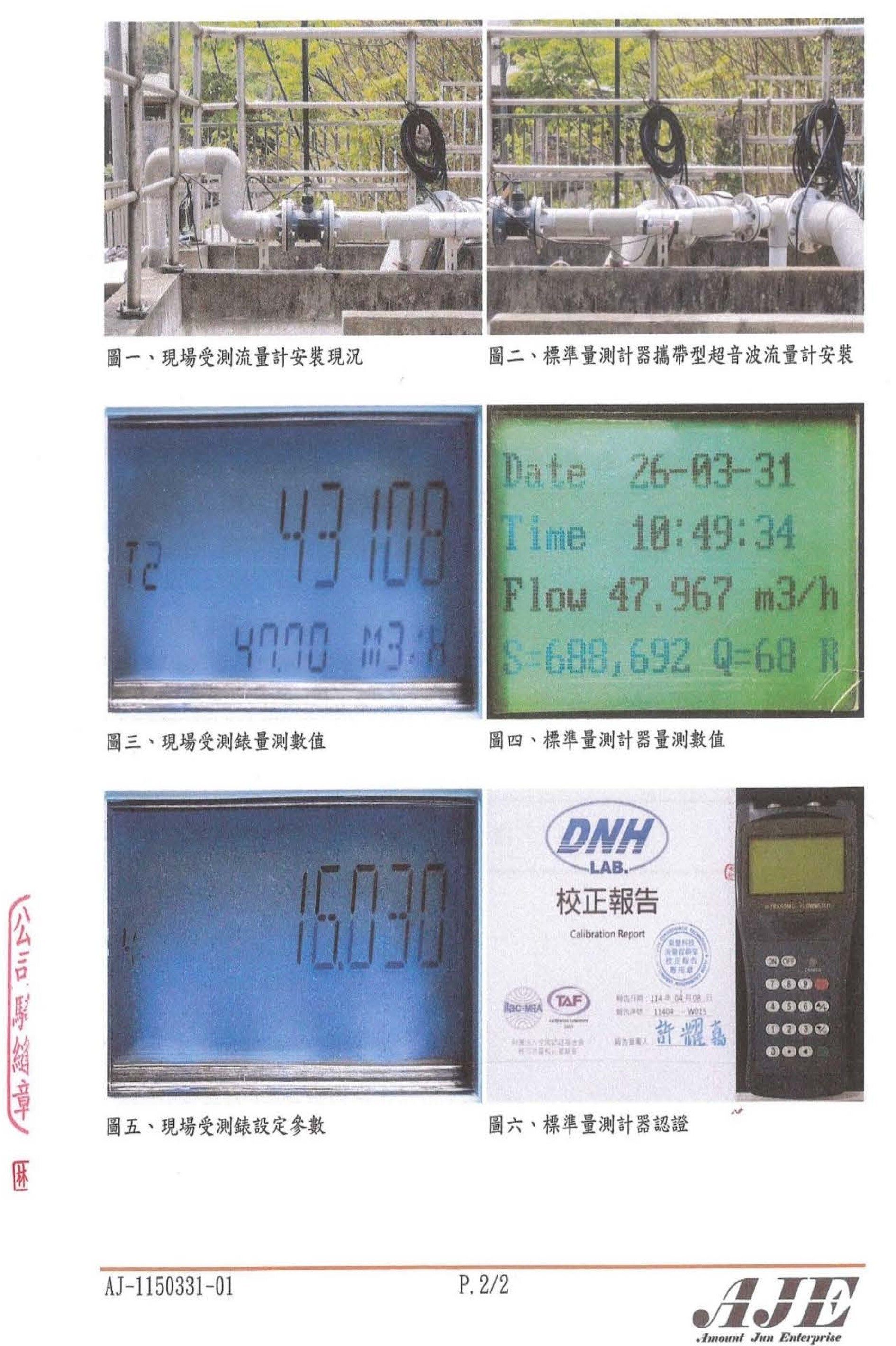
In accordance with the Water Pollution Control Act, the University conducts an annual calibration of the effluent flow meter at its wastewater treatment plant. Figures 7-8 present the flow meter calibration and verification reports issued by an inspection agency accredited by the Ministry of Environment for the University’s wastewater treatment plant effluent.
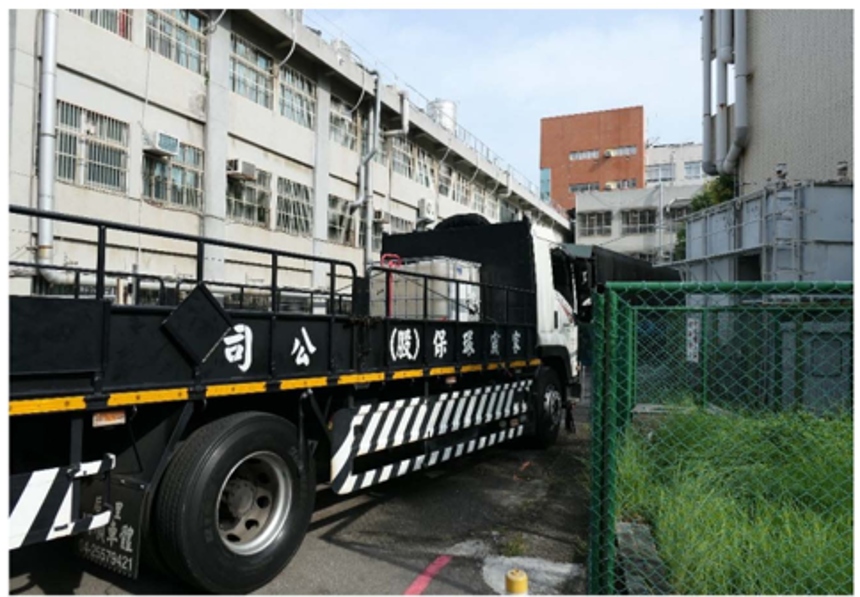
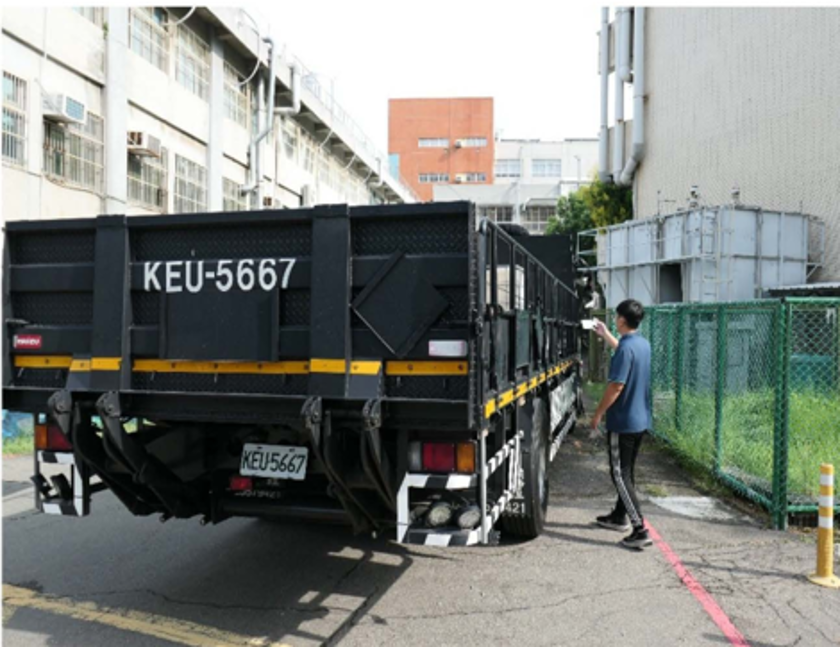
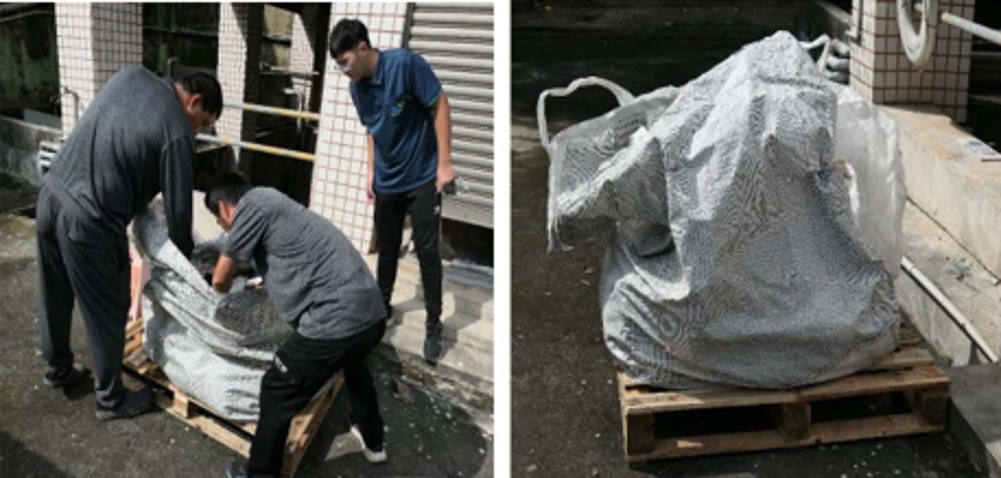
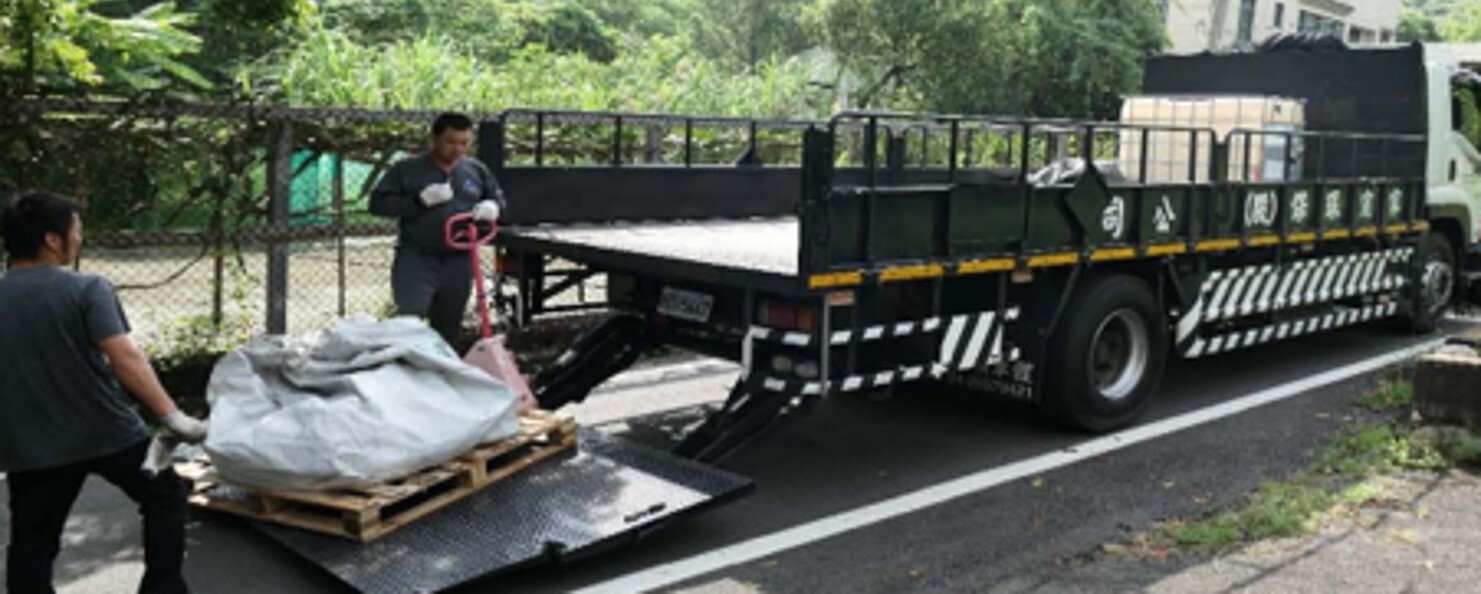
5. Sludge Removal and Treatment Operations
In accordance with the Water Pollution Control Act and Waste Disposal Act, sludge removal and treatment operations are conducted biennially (every two years), as illustrated in Figures 9-10.
6. Independent Water Supply and Wastewater Systems and Drinking Water Quality Management
The university’s wastewater pipelines and water supply pipelines are installed as separate systems. In accordance with the pipeline installation principles of the Taiwan Water Corporation, the wastewater pipelines are positioned below the water supply pipelines, effectively minimizing the risk of contamination to the water supply system.
Drinking water for faculty, staff, and students is provided through publicly accessible drinking water dispensers installed throughout the university. There are 178 drinking water dispensers at the Jinde Campus and 70 at the Shida Campus, for a total of 248 drinking water dispensers.
In accordance with the Regulations Governing the Use and Maintenance of Fixed Equipment for Continuous Drinking Water Supply, the university conducts regular water quality testing of its drinking water dispensers. Each quarter, an external contractor is commissioned to randomly test one-fourth of the university’s total drinking water dispensers, distributed across the two campuses and their respective buildings. Approximately 60 dispensers are tested each quarter, with no dispenser being tested more than once during the same year. The testing parameter is the total coliform count.
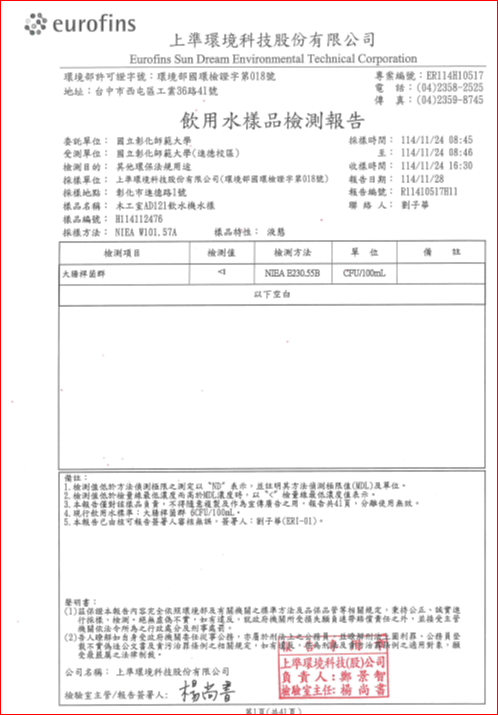
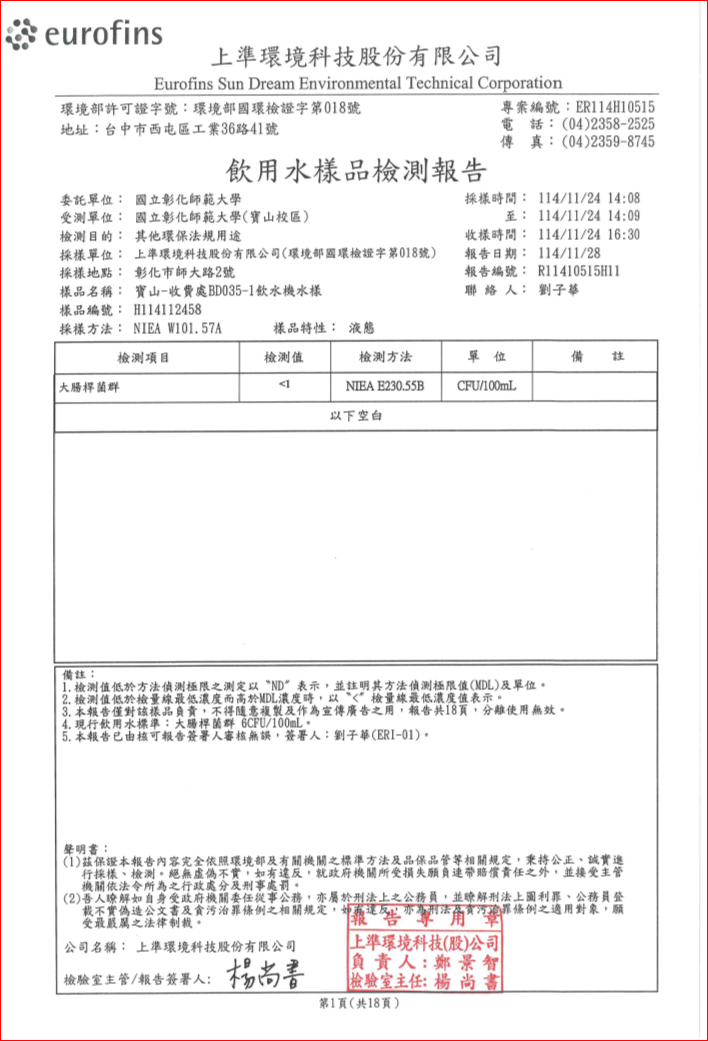
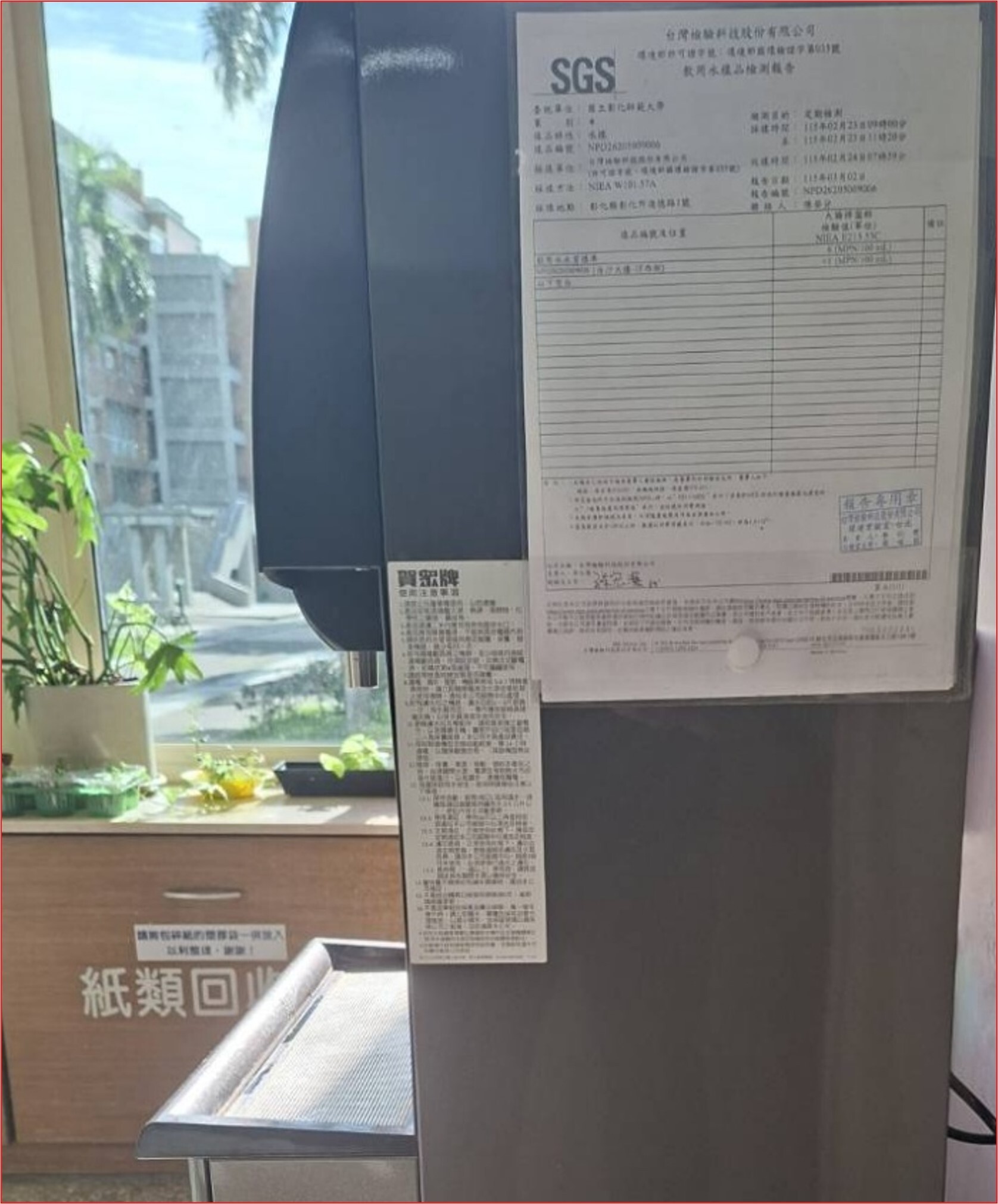
According to the Drinking Water Quality Standards promulgated by the Ministry of Environment, Executive Yuan, the maximum allowable limit for total coliforms is 6 CFU per 100 mL. All drinking water dispensers sampled by the university met the applicable drinking water quality standards, resulting in a 100% compliance rate. Selected drinking water quality testing reports from 2025 are presented in Figures11-12. The reports are also posted next to the respective drinking water dispensers for users to review, ensuring transparent access to water quality information and safe use, as shown in Figure 13.