SDG 15.2.3
SDG 15.2.3 Maintain and extend current ecosystems’ biodiversity
The University has implemented several projects and activities, including the “Environmental Educator 24-hour, 33-hour and 100-hour Certification Course” offered by the Environmental Education Center and relevant general education courses offered by the Center for General Education. Department of Biology: "Changhua Coastal Meretrix lusoria Habitat Survey, Conservation, and Restoration Outreach Program" These projects and activities are briefly summarized in Table 1 below, followed by individual introductions.
| Project activities | Funding Agency |
|---|---|
| Environmental Educator 24-,33- and 100-hour Certification Class | - |
| Plants and Human Civilization | - |
| Changhua Coastal Meretrix lusoria Habitat Survey, Conservation, and Restoration Outreach Program | Changhua Marine Food Research Production Cooperative |
1. Environmental Educator 24-hour, 33-hour and 100-hour Certification Course
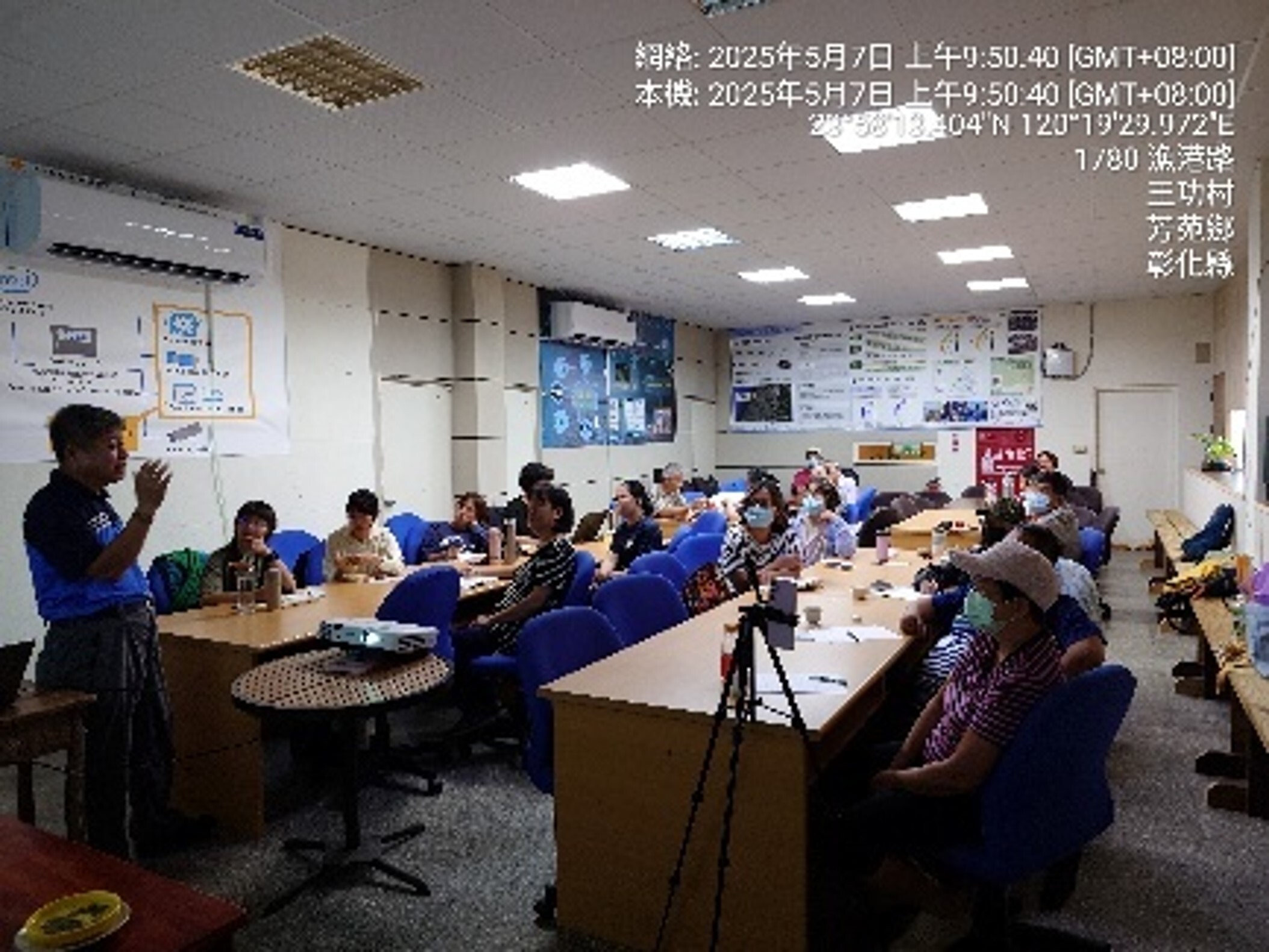
The Environmental Education Center (EEC) nurtures relevant environmental education talents. In conjunction with the project “Resilient Changbin: Climate Change and the Sustainability of Changhua's Coastal Environment and Industries” project, EEC provided relevant education courses for the local and nationwide communities from July to October 2025, with the details shown in Table 1 and the activities shown in Figure 1-4:
| Educational activities | Time | Number of students |
|---|---|---|
| Environmental Educator 24-hour Certification -NCUE Class | July 2025 | 28 |
| Environmental Educator 33-hour Certification Class | July-August 2025 | 13 |
| Environmental Educator 100-hour Certification Class | July-October 2025 | 7 |
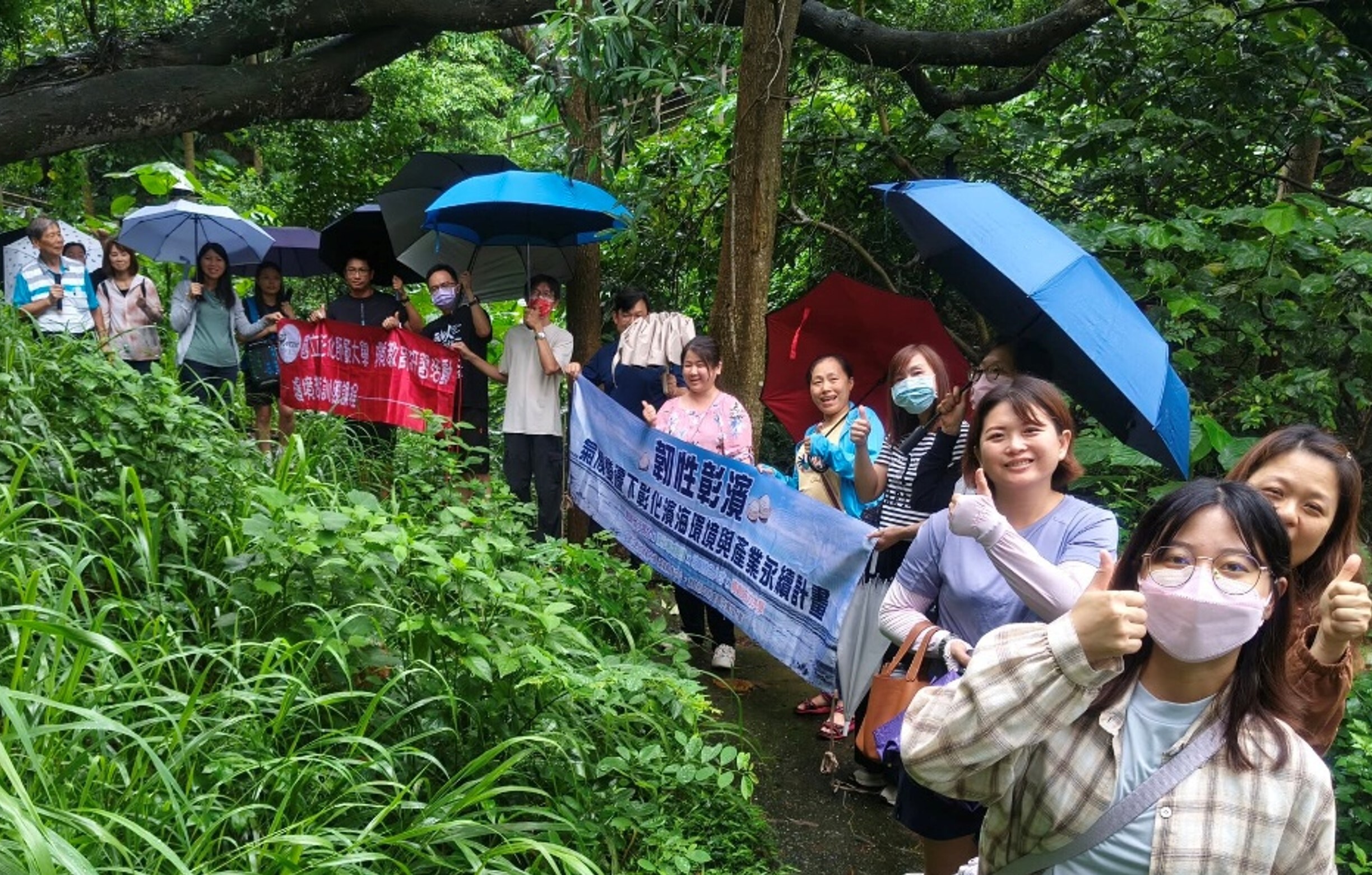
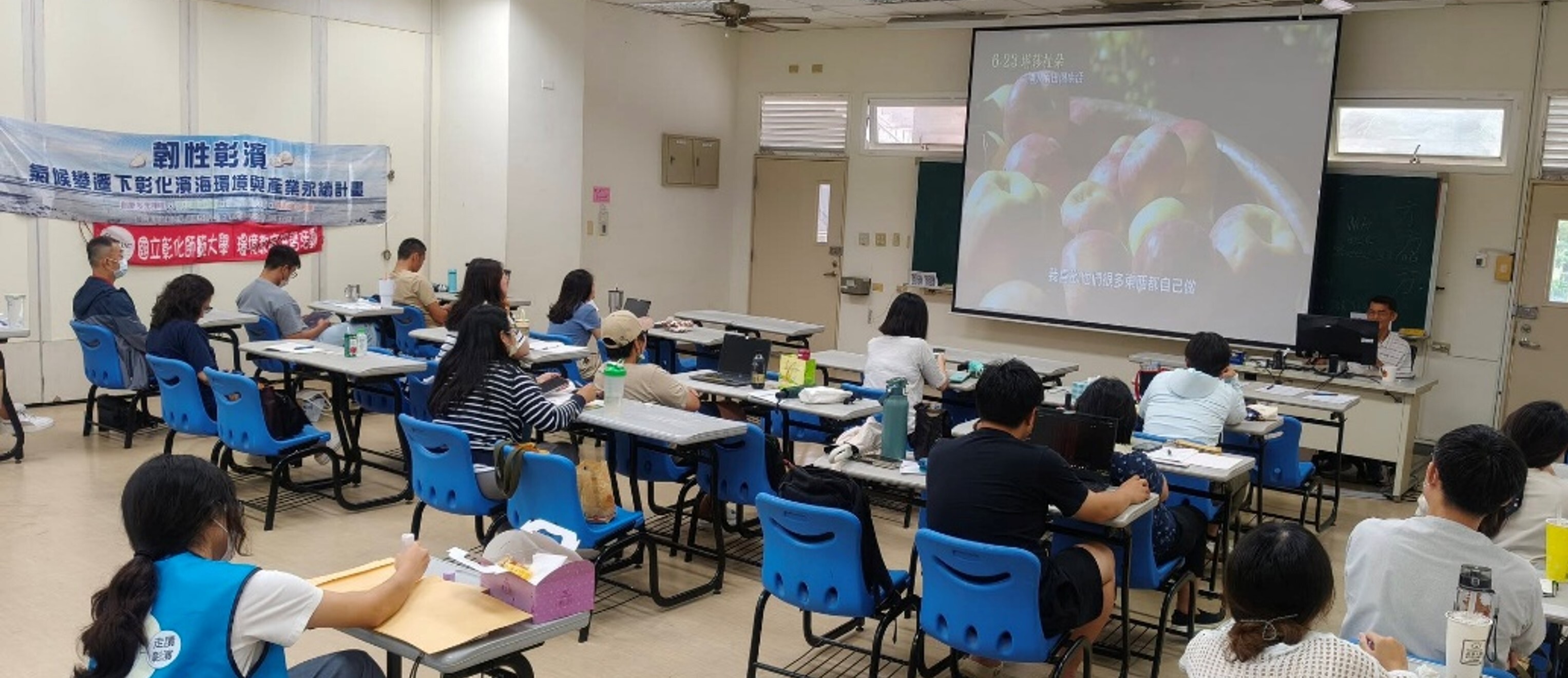
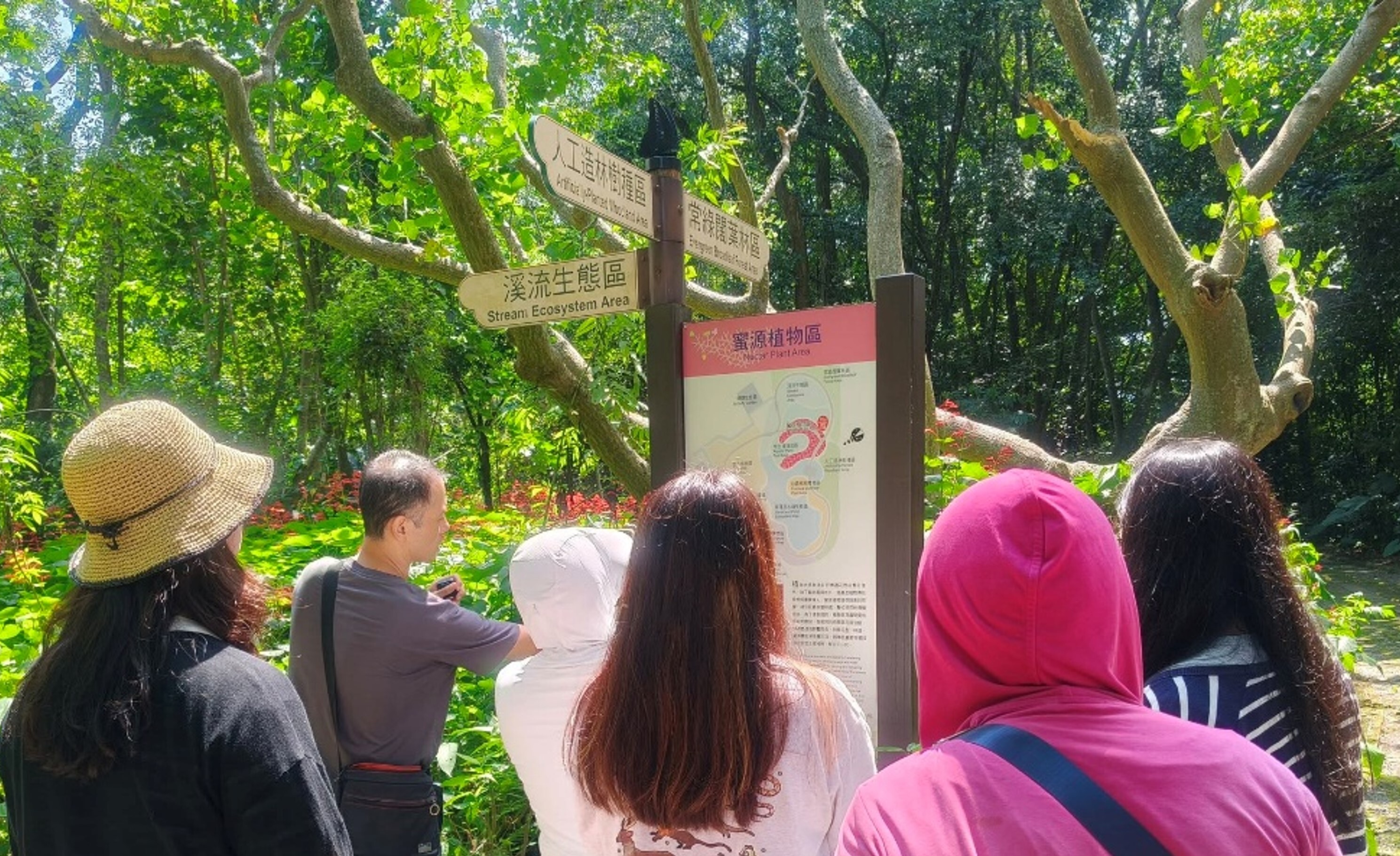
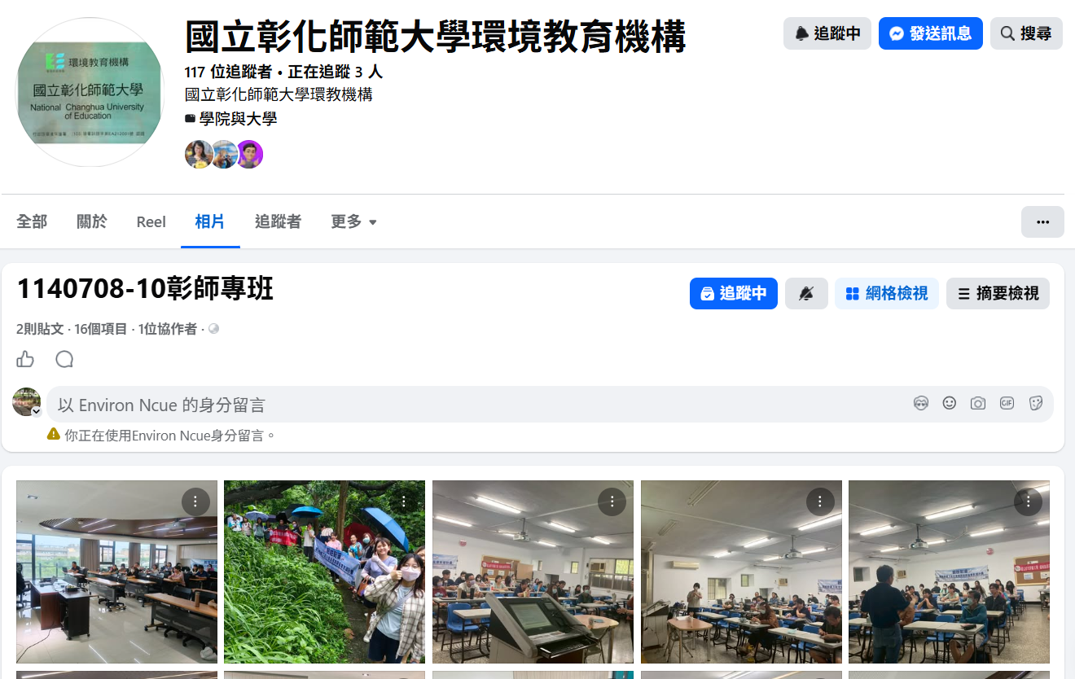
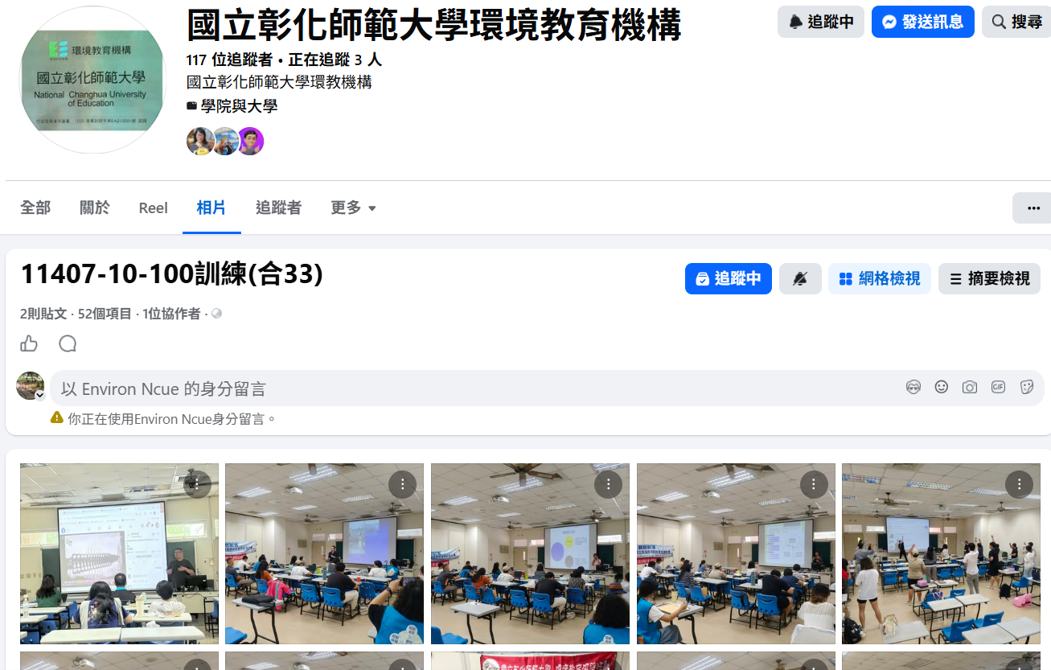
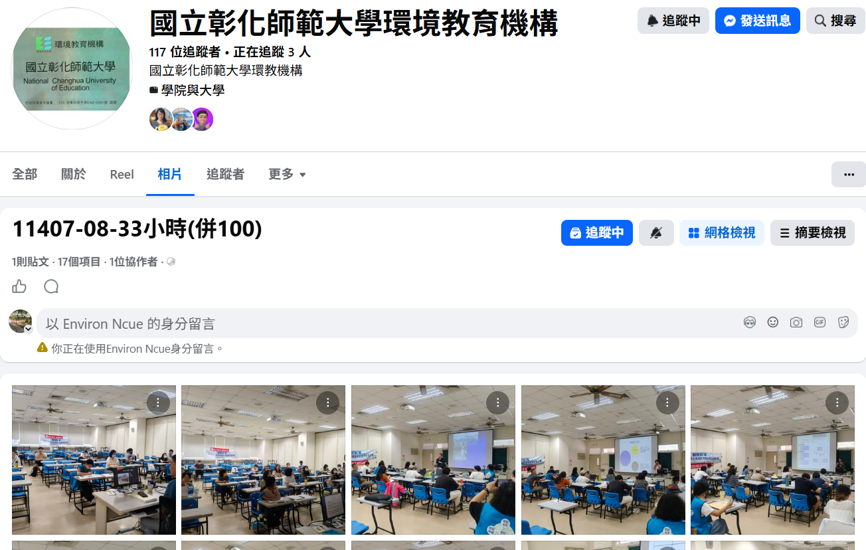
Course Photo and Media Links
https://www.facebook.com/media/set/?set=a.1389646196282072&type=3
https://www.facebook.com/media/set/?set=a.1390985429481482&type=3
https://www.facebook.com/media/set/?set=a.1391078049472220&type=3
2. General Education Center
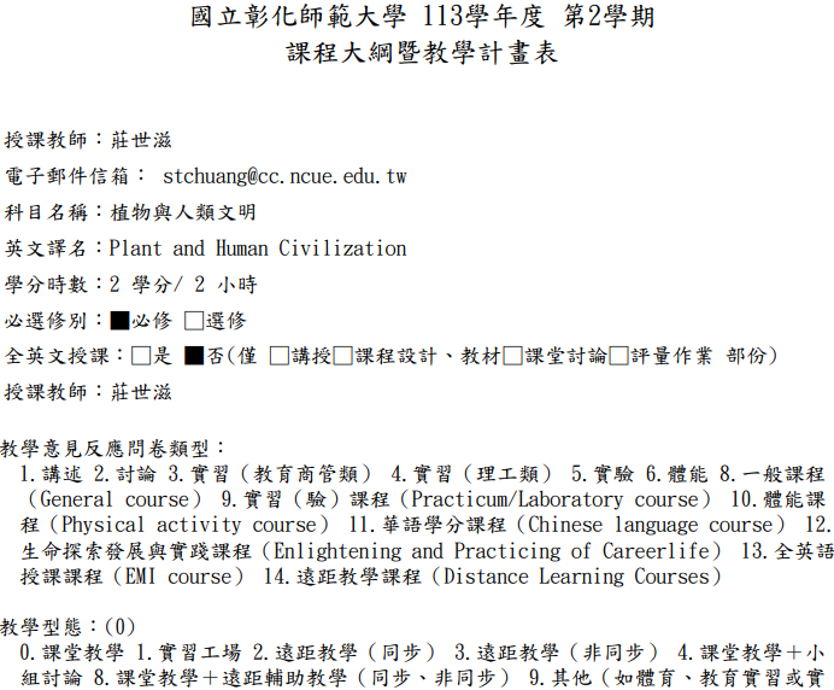
In 2025, the General Education Center offered the following relevant general education course, relevant data is shown in Figure 5. “Plants and Human Civilization” — 1 class.
https://webapss.ncue.edu.tw/DEANV2/UploadDEAN/SUBJECT/1132/00243_0CCGE0179120.pdf
3. Department of Biology
2025 Marine Conservation Local Stewardship Project—Changhua Coastal Meretrix lusoria Habitat Survey, Conservation, and Restoration Outreach Program.
Under the Ministry of Education Fourth-Phase USR Project, “Resilient Changbin: Climate Change and the Sustainability of Changhua's Coastal Environment and Industries,” NCUE worked with Caohu Junior High School, Hanbao Elementary School, Fangyuan Elementary School, and Houliao Elementary School to promote marine education, intertidal observation, clam identification, water-quality monitoring, blue carbon, environmentally friendly aquaculture, and fisheries-related food education. Caohu Junior High School received the Ministry of Education’s Marine Education Promotion Award in 2021 and 2025, and the Excellence Award in the junior-high category of the Marine Education Innovative Teaching Quality Team Selection.
In collaboration with the Changhua Marine Food Research Production Cooperative and local communities, the University conducted clam-habitat surveys, sediment improvement, and marine citizen-science training at Xinbao Wetland. In 2025, four clam-habitat surveys and volunteer-training activities reached 50 attendances; five Little Marine Citizen Scientist activities reached 146 attendances; and three outdoor ecological survey and field-operation activities reached 73 attendances. Activities included water-quality and dissolved-oxygen testing, sediment analysis, bivalve identification, benthic-fauna surveys, intertidal biodiversity observation, and an oyster-shell sediment-improvement trial. Through a “big hand leading a small hand” model, Caohu Junior High School students led Hanbao Elementary School pupils in intertidal surveys, linking the University, schools, communities, and local industry, relevant photographs are shown in Figure 6.