SDG 15.3.1
SDG 15.3.1 Sustainable use, conservation and restoration of land (policy)
NCUE has implemented at least two projects and activities, including the “24-, 33-, and 100-Hour Environmental Education Personnel Certification Courses” offered by the Environmental Education Center and the “Changhua County Landscape Conservation Promotion Program” implemented by the Department of Geography. These projects and activities are briefly summarized in Table 1 below, followed by individual introductions.
| Project/Activity | Funding Agency |
|---|---|
| Environmental Educator 24-hour, 33-hour and 100-hour Certification Course | - |
| Changhua County Landscape Conservation Promotion Project | Changhua County Government |
1. 24-, 33-,100 Hour Courses for Environmental Education Personnel Certification
The Environmental Education Center (EEC) nurtures relevant environmental education talents. In conjunction with the project “Resilient Changbin: Climate Change and the Sustainability of Changhua's Coastal Environment and Industries” project, EEC provided relevant education courses for the local and nationwide communities from July to October 2025, with the details shown in Table 1 and the activities shown in Figure 1-4:
| Educational activities | Time | Number of students |
|---|---|---|
| Environmental Educator 24-hour Certification -NCUE Class | July 2025 | 28 |
| Environmental Educator 33-hour Certification Class | July-August 2025 | 13 |
| Environmental Educator 100-hour Certification Class | July-October 2025 | 7 |
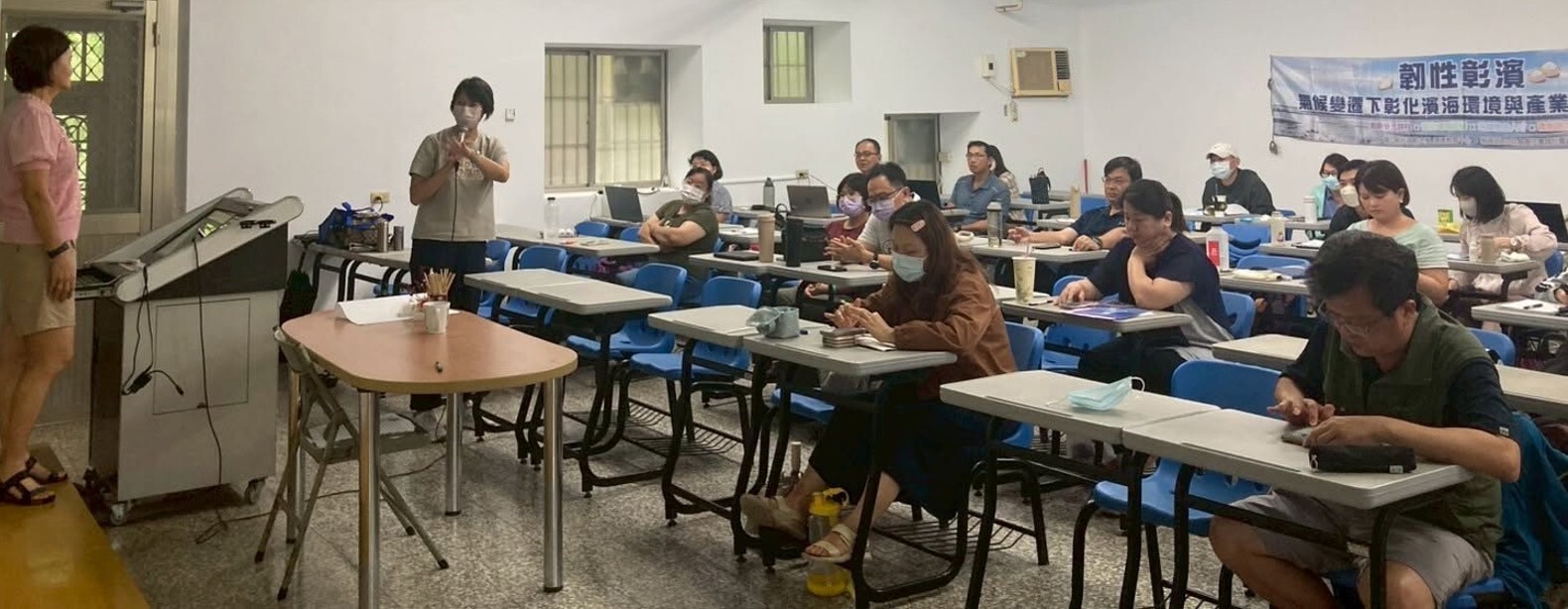
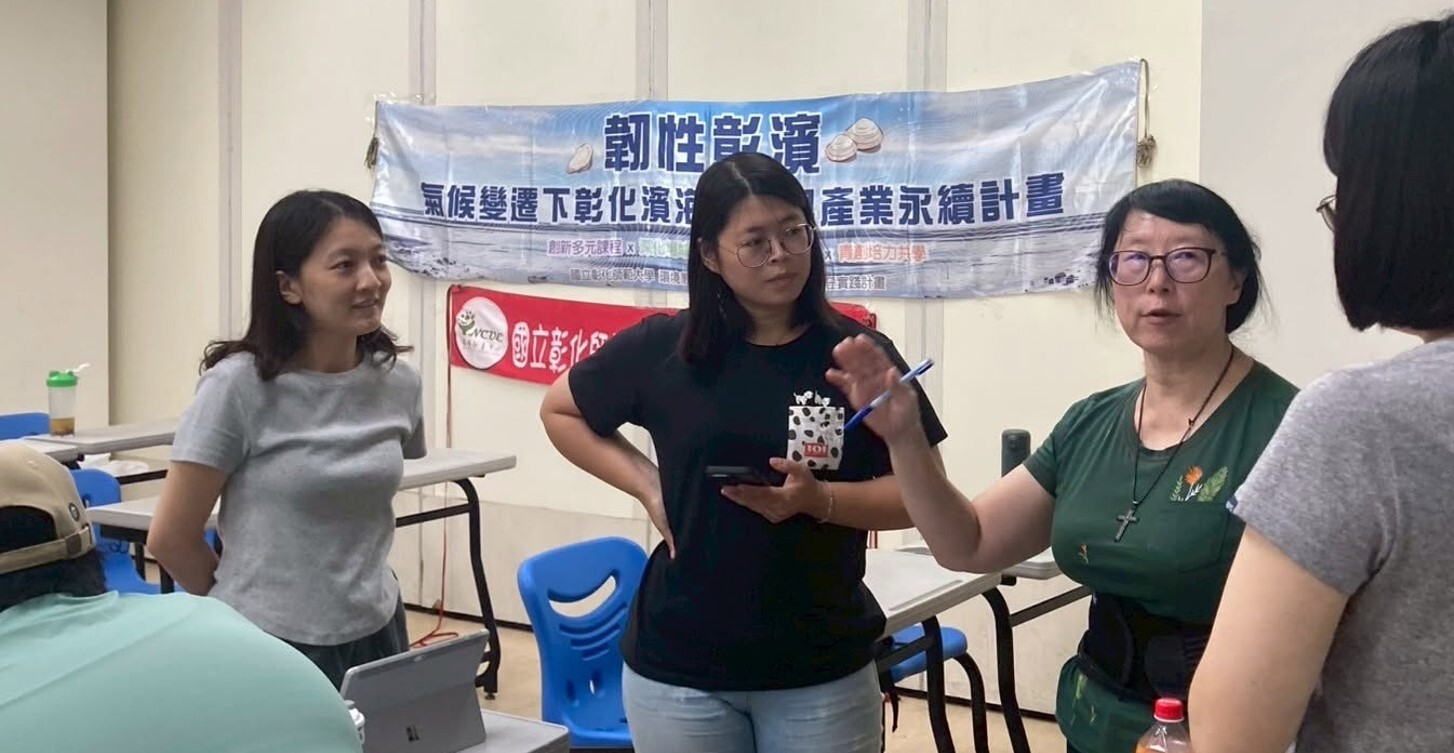
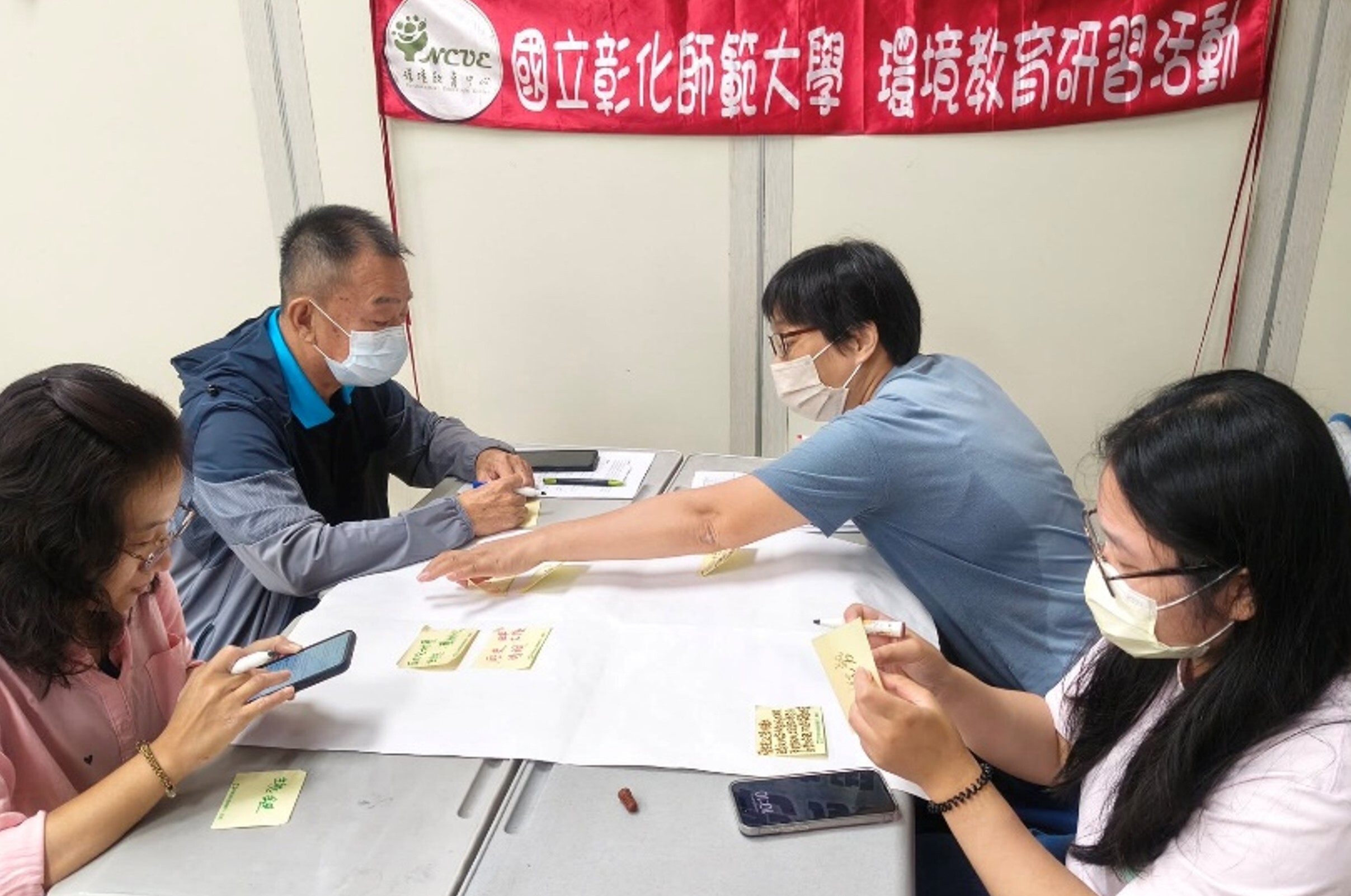
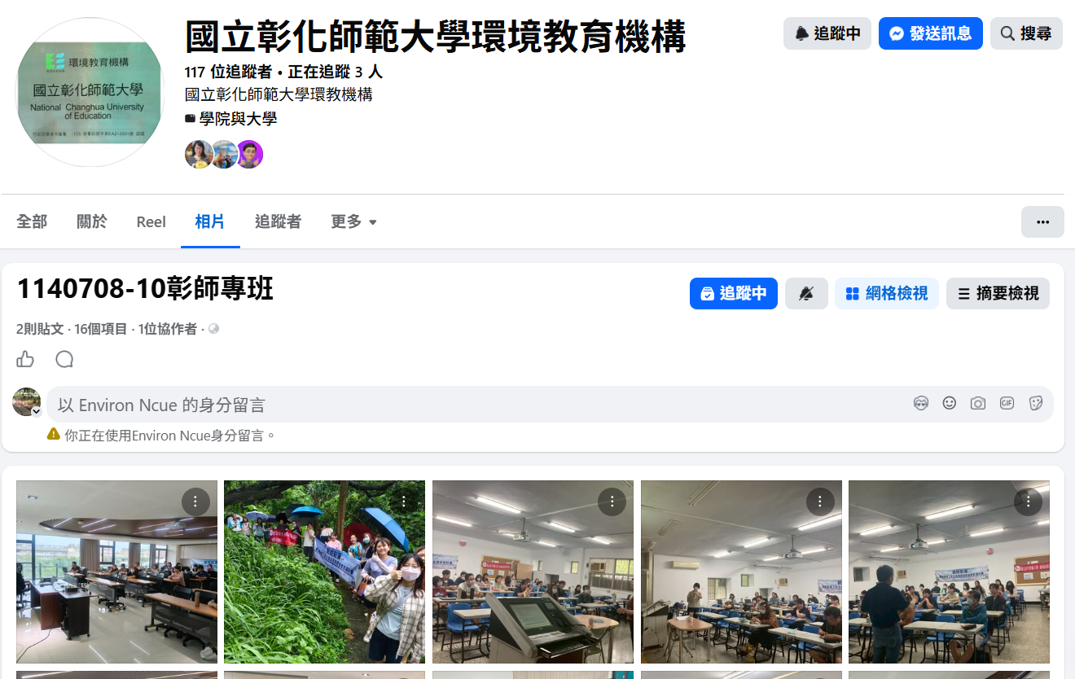
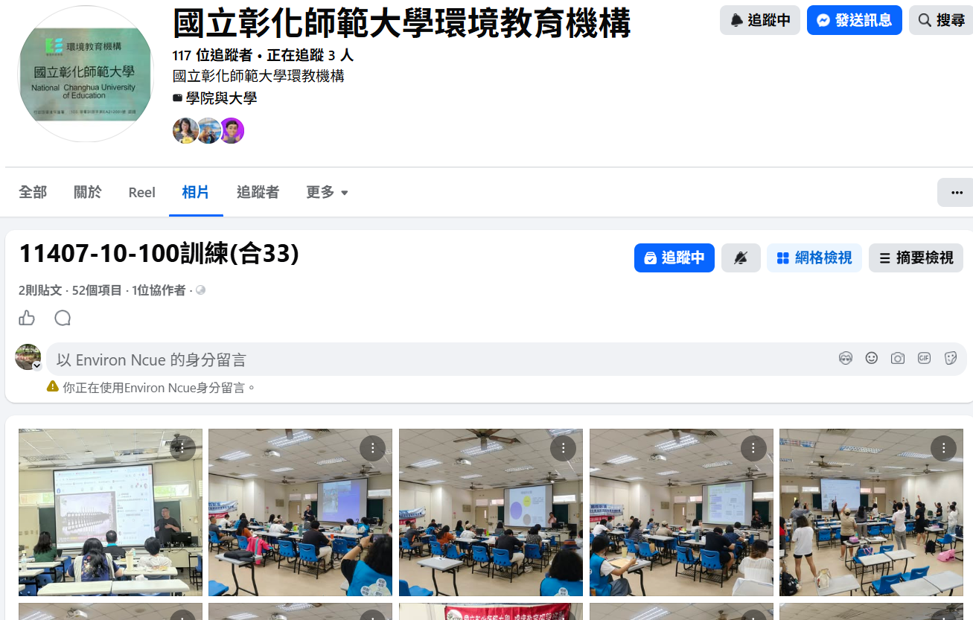
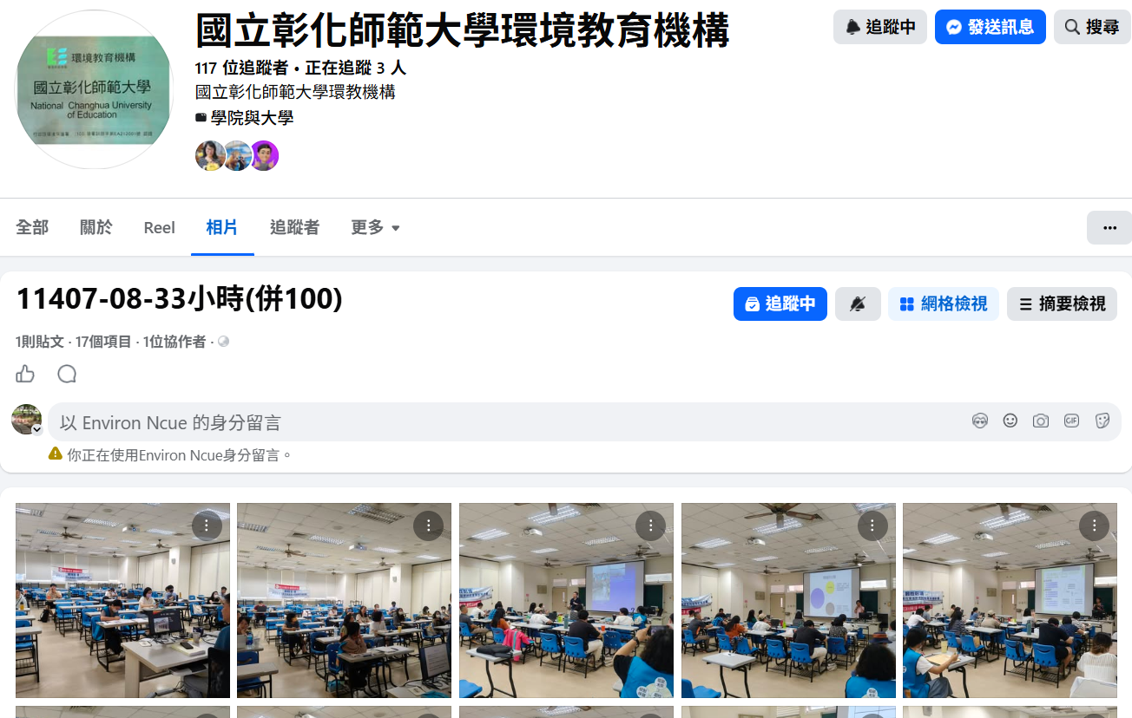
Course Photo and Media Links
https://www.facebook.com/media/set/?set=a.1389646196282072&type=3
https://www.facebook.com/media/set/?set=a.1390985429481482&type=3
https://www.facebook.com/media/set/?set=a.1391078049472220&type=3
2. Changhua County Landscape Conservation Promotion Program
This project is funded by the Changhua County Government and implemented by the University under the guidance of the Forestry and Nature Conservation Agency. Using a year-by-year and area-by-area approach, the project inventories potential sites in the Baguashan area that possess value as natural landscapes and natural monuments, while also organizing public outreach and educational activities on landscape conservation.
In 2025, the survey focused on the southern section of Baguashan, covering Shetou Township, Tianzhong Township, and Ershui Township. Through literature review and field surveys, the project completed the inventory and documentation of 10 potential landscape sites, including the Longzaitou Mountain badlands, the badlands at the southern foothills of Baguashan, the Songbaikeng gravel layer, the Toutiaokeng collapse cliffs and debris-flow gullies, four alluvial fans including Shibawan Keng, and the blade-like ridgelines of Tianzhong and Puzhong. Landscape inventory record forms were also established to provide competent authorities with references for development review, environmental education, and conservation management. Among the 350 landscape sites registered nationwide, only two are currently located in Changhua County.
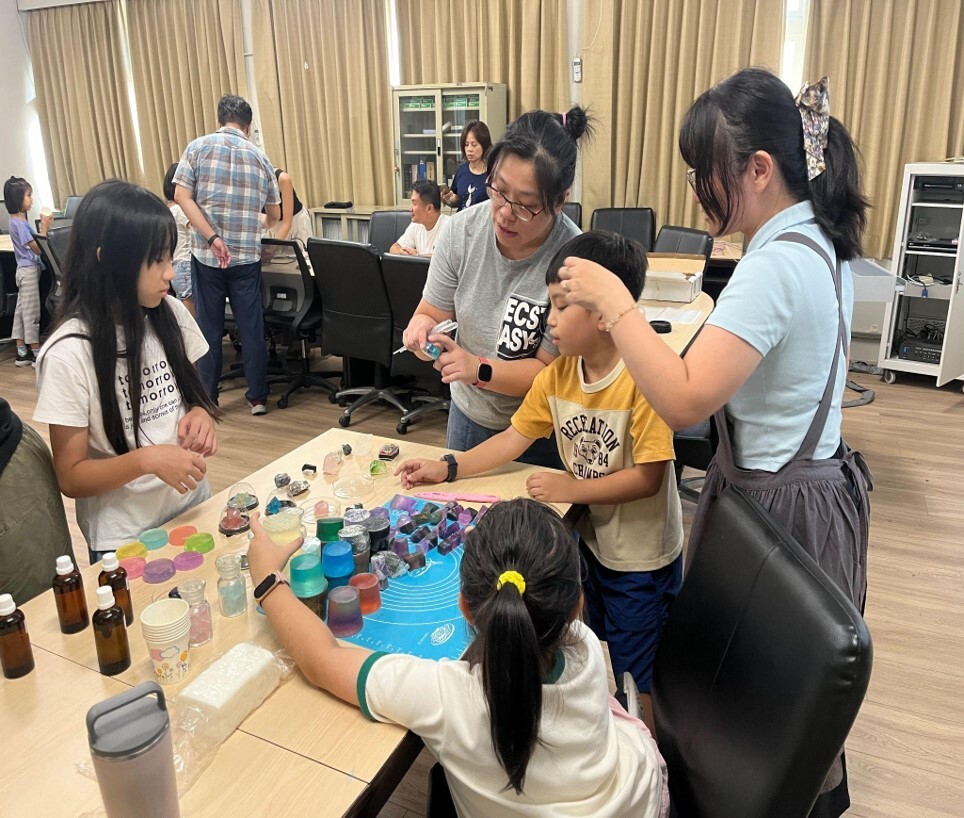
In terms of public outreach, four activities were organized, attracting a total of 47 participants, all held at Shengyang Hall of NCUE. On October 18, 2025, two sessions of the “Realistic Mineral and Rock Soap-Making Workshop” were held, with 10 participants in the morning session and 18 in the afternoon session, for a total of 28 participants. The project leader introduced the results of the Baguashan landscape inventory and international experiences in landscape art and conservation. A landscape artist then guided participants in using soap bases and mica powder to create realistic representations of mineral crystal forms.
On October 24, two sessions of “Landscape Planter Making and Stories of Baguashan” were held, with a total of 19 participants. The activities began with an indoor lecture on the geological formation and evolution of Baguashan. Participants were then led to the Baguashan trail behind the campus to observe cross-bedding, rain pits, imbricate structures, and marine ripple-mark structures in the field. Finally, transparent containers were layered with red soil, gravel, and sand to simulate a red-soil-and-gravel geological profile, and plants were added to the model. Through these hands-on activities, geological knowledge and awareness of conservation were integrated into everyday life. Relevant photographs are shown in Figure 5.