
SDG 13.4.2
SDG 13.4.2 Achieve by date
1. In addition to the existing 467 kWp solar power generation system, NCUE expects to install an additional photovoltaic solar power system with a total capacity of 4097.875kWp by the end of 2030 (2788.375kWp for Jinde Campus and 1309.5kWp for Shida Campus), so that the total annual solar power generation reaches over 5,122,344 kWh(18,440GJ).
2. Building on its record of reducing electricity use by nearly 18% over the past 15 years, NCUE plans to invest more than NT$5 million each year over the next ten years, with a target of reducing total electricity consumption of existing facilities by 1% per year (more than 150,000 kWh per year). By 2029, total annual electricity consumption of existing equipment is expected to be at least 1.3 million kWh lower than in 2022.
3. At Shida Campus, total installed solar capacity will reach 1,309.5 kWp by the end of 2025 and peak electricity demand will fall to 785 kW, achieving carbon neutrality during peak hours.
4. At Jinde Campus, total installed solar capacity will reach 2,788.375 kWp in 2025 and peak electricity demand will fall to 2,200 kW, achieving carbon neutrality during peak hours.
5. NCUE has installed 2,558.375 kWp and 571.5 kWp of PV capacity at Jinde Campus and Shida Campus, respectively. Based on an average of 3.5 sunshine hours per day in Changhua, Taiwan, total generation is (2,558.375 + 571.5) × 365 × 3.5 = 3,998,415 kWh. Using the Ministry of Economic Affairs' 2025 electricity emission factor of 0.467 kg CO2/kWh, this reduces carbon emissions by about 3,998,415 × 0.467 = 1,867,260 kg. During winter and summer breaks, peak electricity demand can fall below solar generation. With a combined storage capacity of 1,410 kWh, NCUE's energy storage systems can store all surplus solar power and shift it to nighttime use. NCUE can therefore use renewable energy to achieve carbon neutrality during the day and use large-scale energy storage to raise its degree of carbon neutrality at night and increase renewable energy utilization (Table 1).
| Campus | Year | Installed Solar Capacity (kWp) | Peak Electricity Demand (kW) | Proportion of Solar Power to Total Power Consumption |
|---|---|---|---|---|
| Jinde | Before 2020 | 467 | 3000 | 15.57% |
| 2021-2022 | 2558.375 | 2600 | 98.18% | |
| 2026~2030 | 2788.375 | 2200 | >100% | |
| Shida | Before 2020 | 0 | 1000 | 0% |
| 2021-2022 | 571.5 | 900 | 63.5% | |
| 2026~2030 | 1309.5 | 785 | >100% |
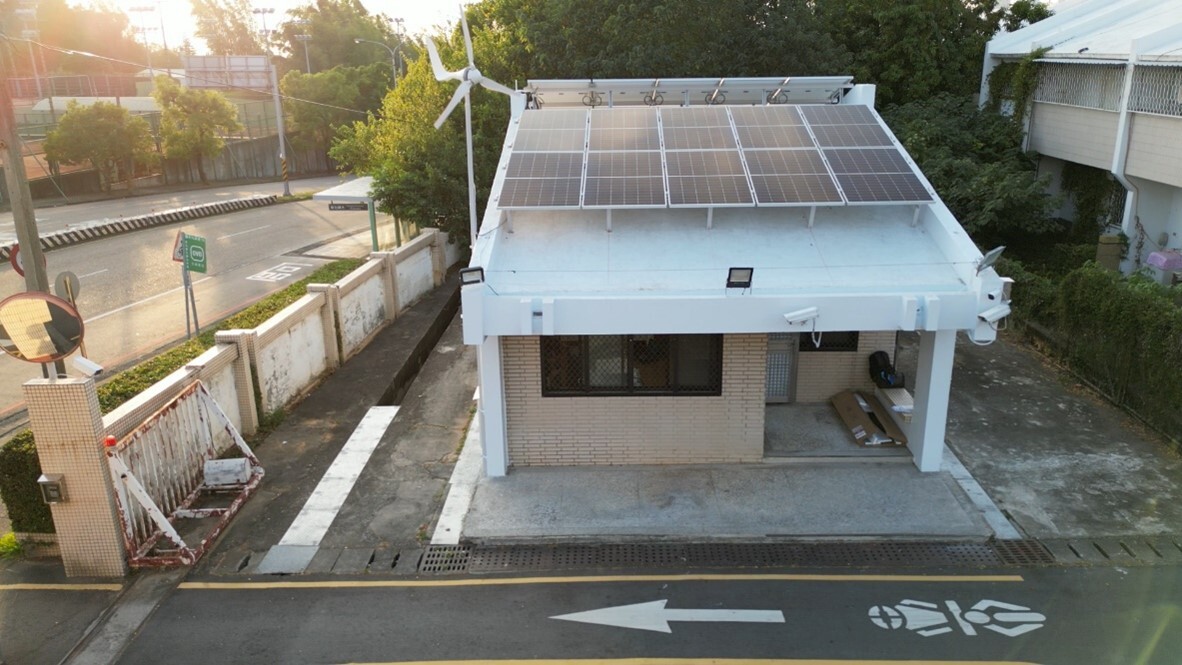
6. In early 2024, NCUE completed a Net Zero Energy House demonstration site (Figure 1). The building combines rooftop PV, a small wind turbine, and an indoor energy storage system and runs on 100% renewable energy. NCUE uses the site to promote the policy goal of net-zero carbon emissions.
7. Digital Smart Monitoring System:
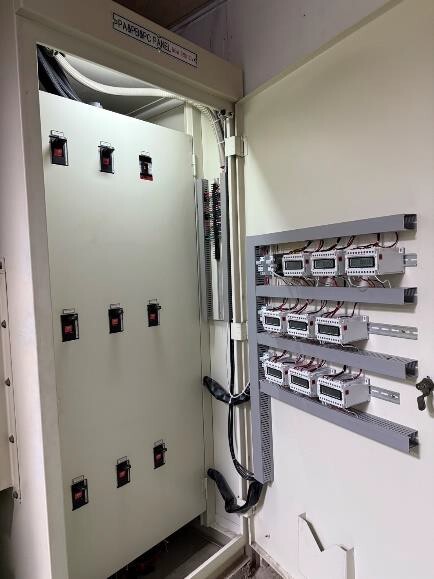
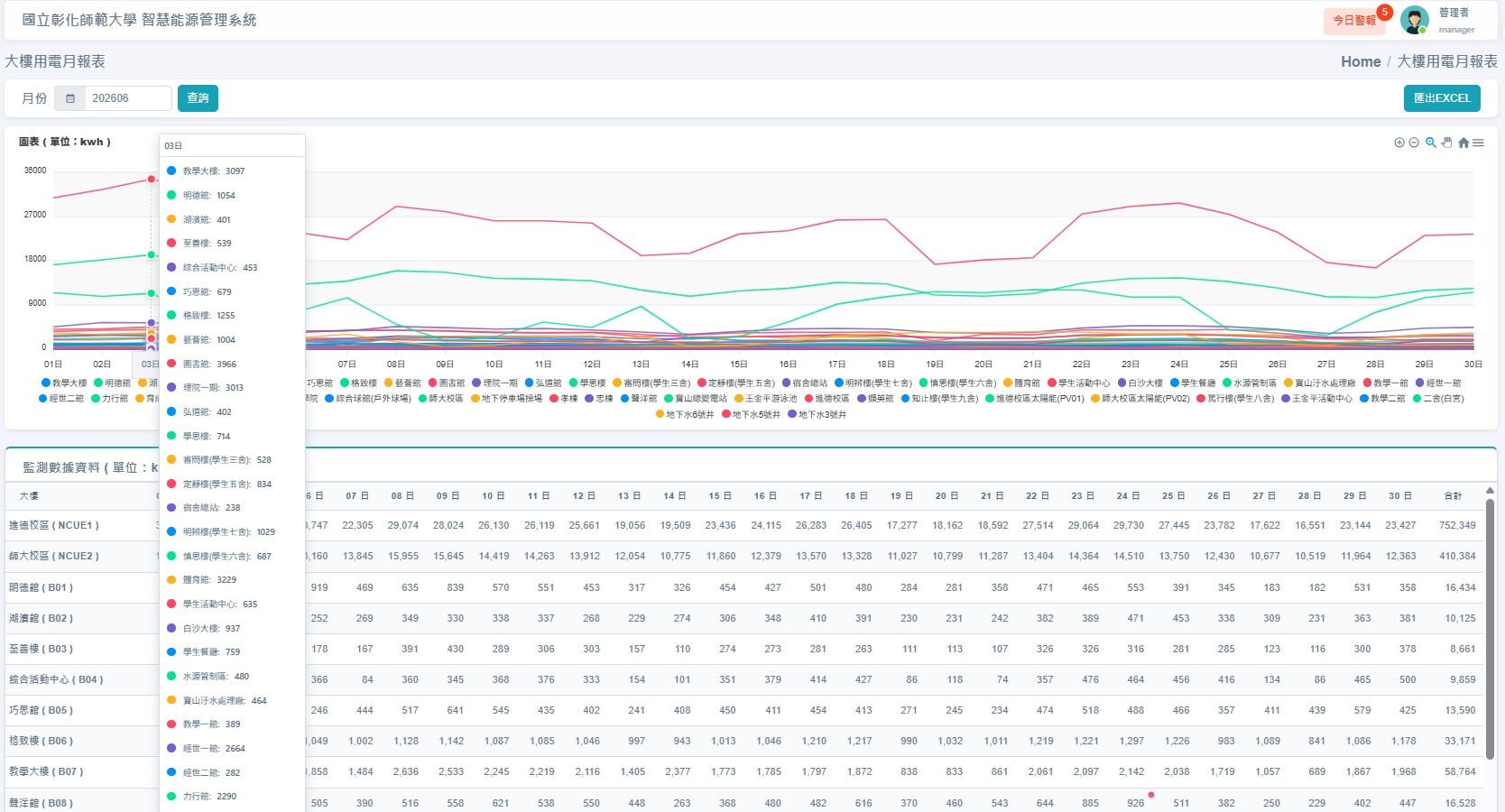
By the end of 2025, NCUE completed a campus-wide installation of smart electricity meters, ultrasonic water meters, and an integrated Energy Management System (EMS) to improve energy and water efficiency and advance energy conservation and carbon reduction. The project installed smart meters on 812 circuits (596 at Jinde Campus and 216 at Shida Campus) across 27 sites at Jinde Campus and 10 sites at Shida Campus, 24 new ultrasonic water meters (1 on the groundwater outlet at Jinde Campus and 23 at Shida Campus), 137 data loggers, and 117 current transformers. The meters collect data every minute (or at intervals of less than 10 seconds), including current, voltage, active power, reactive power, apparent power, power factor, and cumulative electricity use, as well as real-time water flow and cumulative water use.
The campus-wide EMS provides real-time overviews of electricity and water use, energy management reports, and smart alerts for exceeding contracted capacity and for water leaks. Its layered architecture (cloud, fog, and edge layers, with on-site operation and maintenance and a cloud web interface) supports real-time monitoring of power flow and water use; daily, weekly, monthly, and annual reports in JSON, Excel, and PDF; a daily alert overview (meter disconnections, abnormal voltage, and leak duration); and space and building management. It also includes role-based access control with single sign-on (SSO), system operation logs, and data logger fault alerts. The system allocates electricity circuits to buildings and floors, calculates electricity use by unit (automatically apportioning shared electricity costs to departments by floor area and ratio), evaluates optimal Taipower tariff plans, and integrates data from 17 existing solar power sites and energy storage equipment on both campuses through an API to analyze the benefits of renewable energy and carbon reduction.
With the smart meters and EMS, NCUE expects to improve energy efficiency by more than 10%.
8. Completion of Phase One of Campus Natural Carbon Sinks by 2025
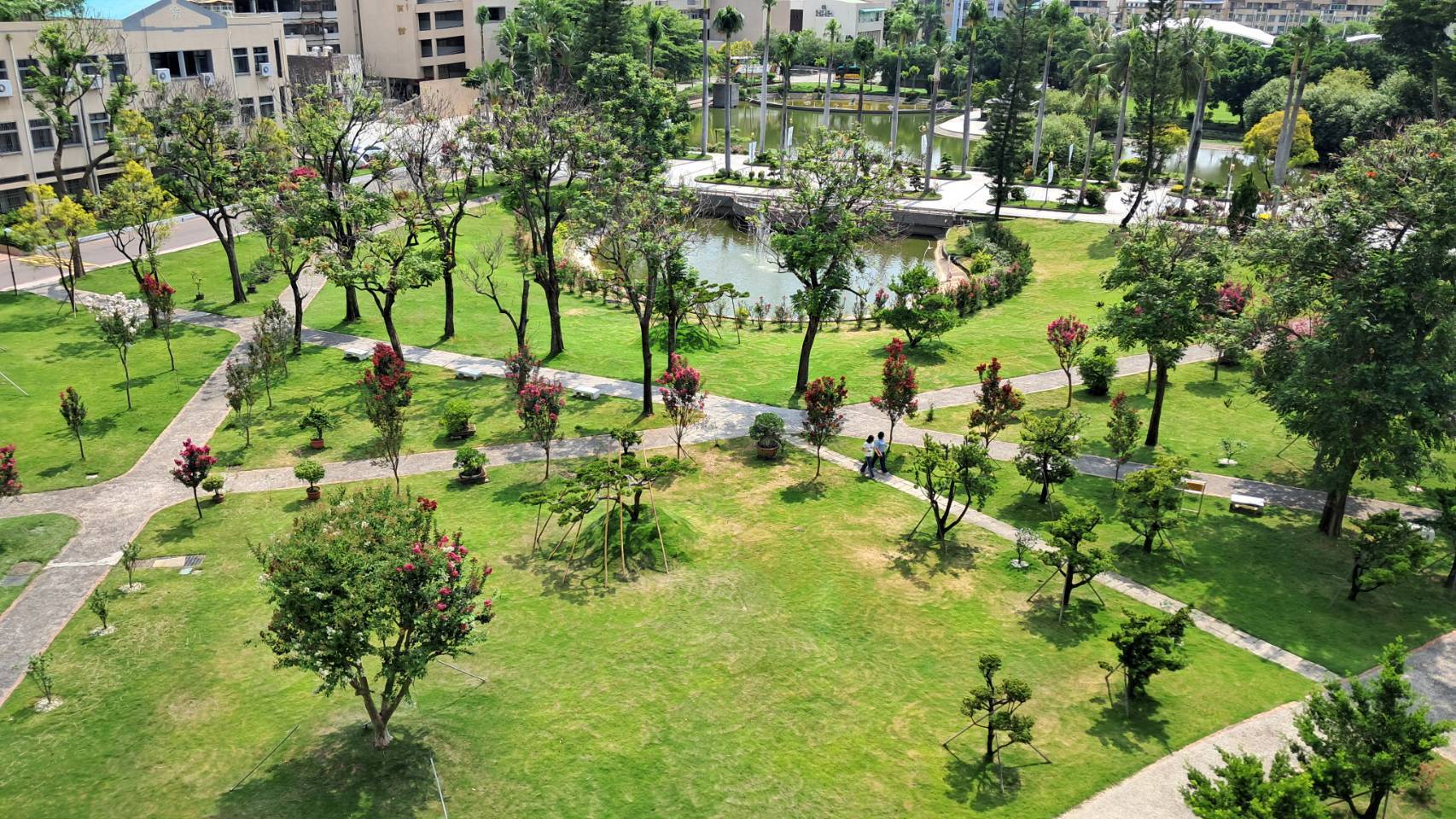
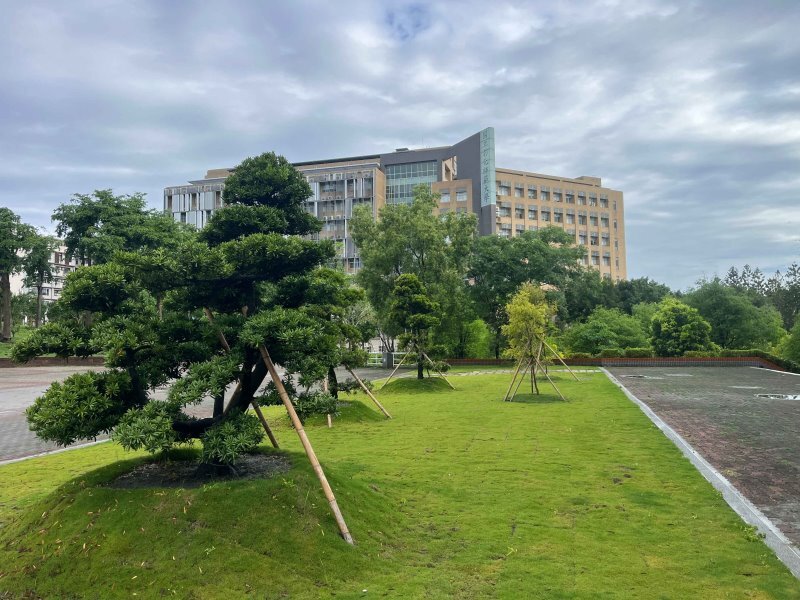
In addition to renewable energy and energy conservation measures, NCUE treats tree planting and greening as a key strategy for increasing natural carbon sinks. Since 2023, NCUE has improved landscaping on both campuses and had planted 6,486 seedlings by 2025 (Figures 4–5). In 2023–2024, NCUE also completed the Ministry of Education's Campus Green Hedge Project, planting hedges of native Taiwanese species to increase green cover, biodiversity, and carbon sequestration. Combined with environmental education courses, these efforts deepen faculty and students' understanding of climate adaptation and natural carbon sinks and help build a sustainable campus that supports carbon reduction, adaptation, and environmental education.
9. In 2026, Taipower signed the University Energy Conservation and Power Resilience Project agreement with NCUE, providing NT$100 million to build the Shida Campus Microgrid under a turnkey contract.
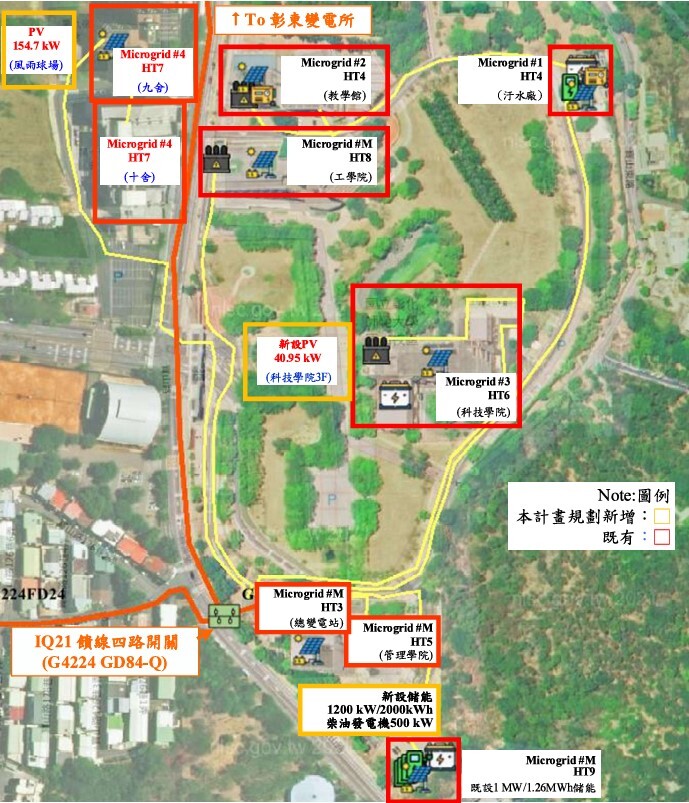
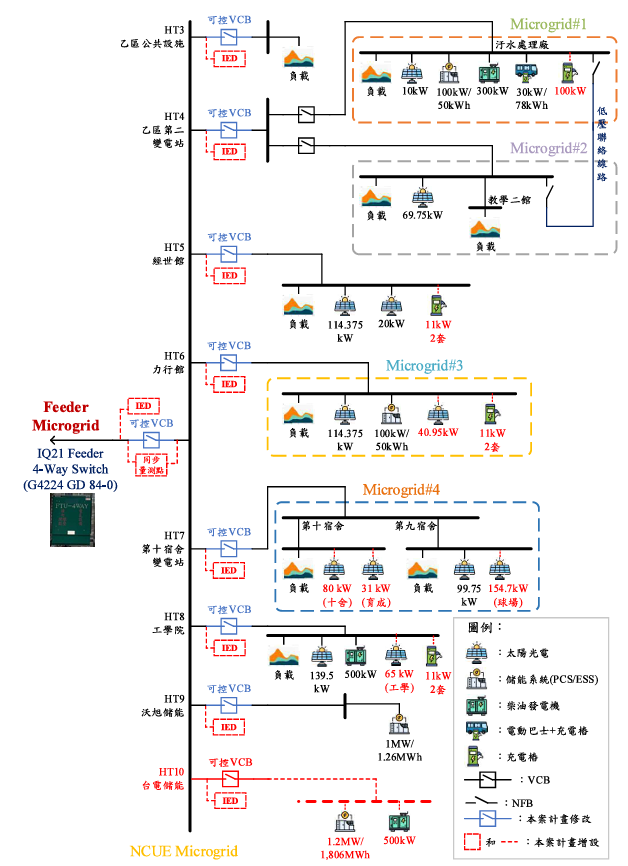
NCUE plans to install a 1,200 kW / 1,806 kWh containerized energy storage system in the designated area of the College of Engineering at Shida Campus, together with a 500 kW soundproof diesel generator, one 100 kW dual-connector charger, and six 11 kW chargers. The project also upgrades existing power facilities, including VCB switchgear panel modification, distribution room rewiring, and replacement of aging transformers. The system is controlled by the NCUE Microgrid Energy Management System (NCUE MG EMS), which normally operates in grid-connected mode. During planned islanding for equipment maintenance, the system switches seamlessly from grid-connected to islanded operation so that power to teaching facilities and precision instruments is not interrupted. During unplanned islanding, such as a sudden outage, the system disconnects VCB-M, and the EMS sheds load in two automatic stages based on the storage system's state of charge (SoC) and net load, keeping critical disaster-response loads powered for at least 4 hours (Figures 6–7).
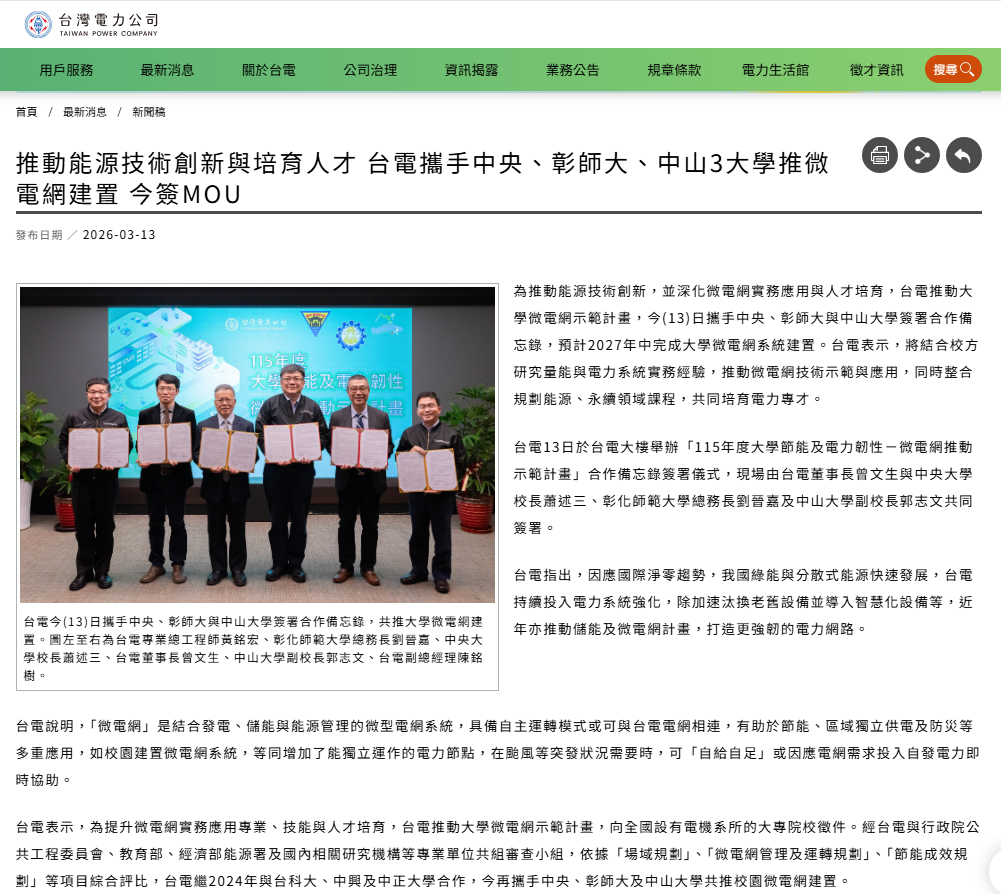
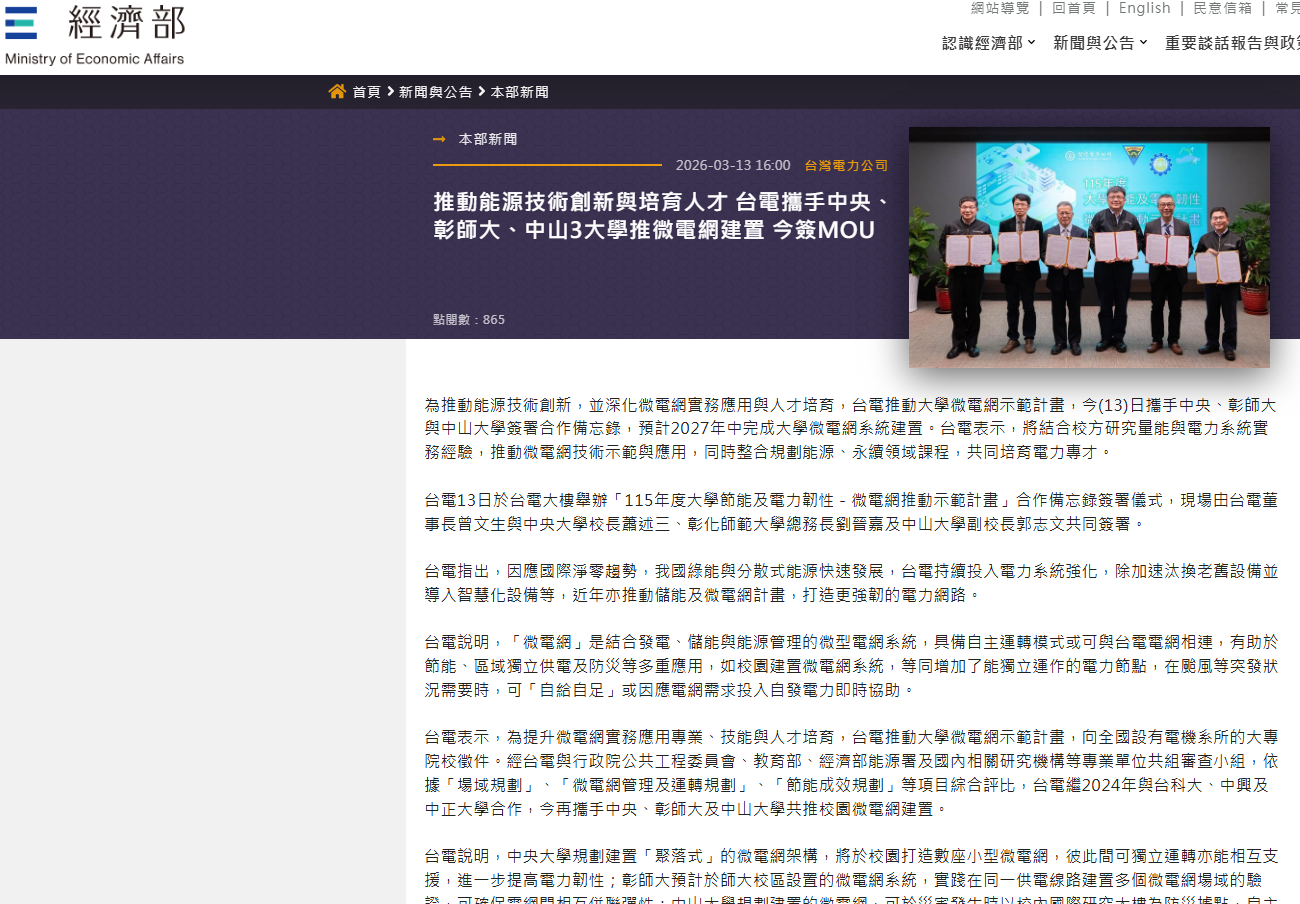
The project is also one of the demonstration sites of Taipower's University Microgrid Demonstration Program. To advance energy technology innovation, microgrid applications, and talent development, Taipower selected demonstration schools from universities with electrical engineering departments; 6 universities nationwide have been selected in the initial phase as test sites for energy technology validation and innovation. Related news reports are shown in Figures 8–9.
Related news links:
(1)https://www.moea.gov.tw/MNS/populace/news/News.aspx?kind=1&menu_id=40&news_id=122102[cite: 62, 95]
(2)https://www.taipower.com.tw/2289/2323/2324/66858/normalPost[cite: 62, 95]
(3)https://ec.ltn.com.tw/article/breakingnews/5369269[cite: 62, 95]
10. Achieving Campus-wide Carbon Neutrality by 2045
(1) Through the integration of photovoltaic expansion, energy-saving measures, and energy storage management, NCUE will progressively increase the proportion of renewable energy in total campus electricity consumption, expecting to achieve preliminary carbon neutrality by 2045 and establish a sustainable campus energy structure.
(2) Building upon the 2045 carbon neutrality foundation, NCUE will continue to deepen renewable energy applications, intelligent energy management, and equipment upgrades, advancing toward comprehensive net-zero emissions by 2050, aligning with global sustainable development goals.