SDG 13.3.1
SDG 13.3.1 Local education programmes on climate
1. Climate Change Education and Projects Overview
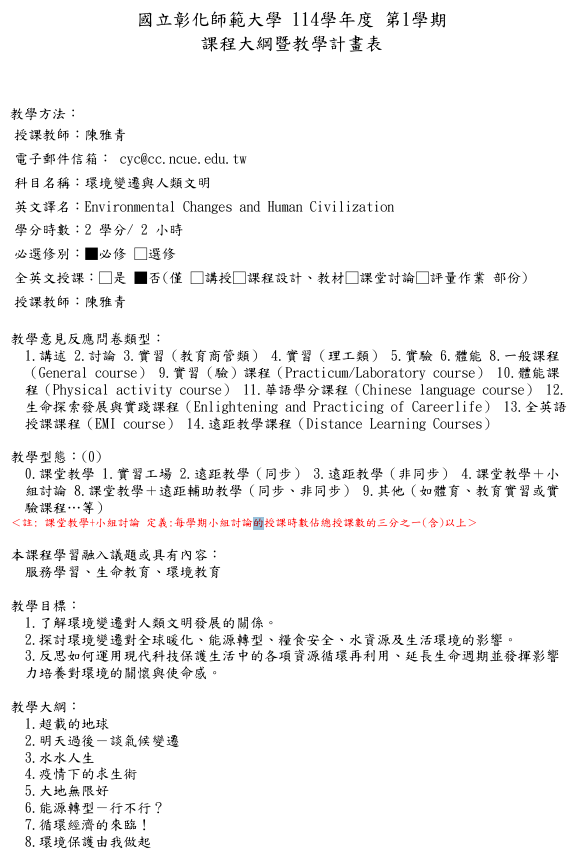
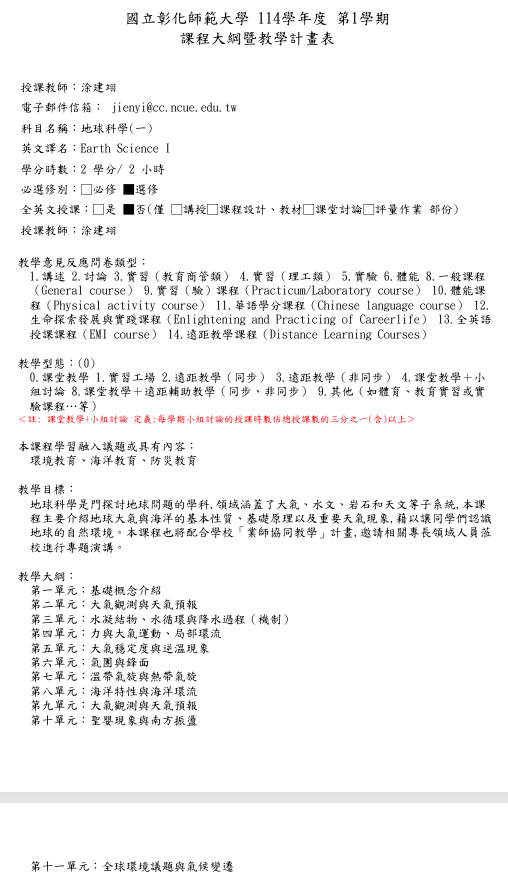
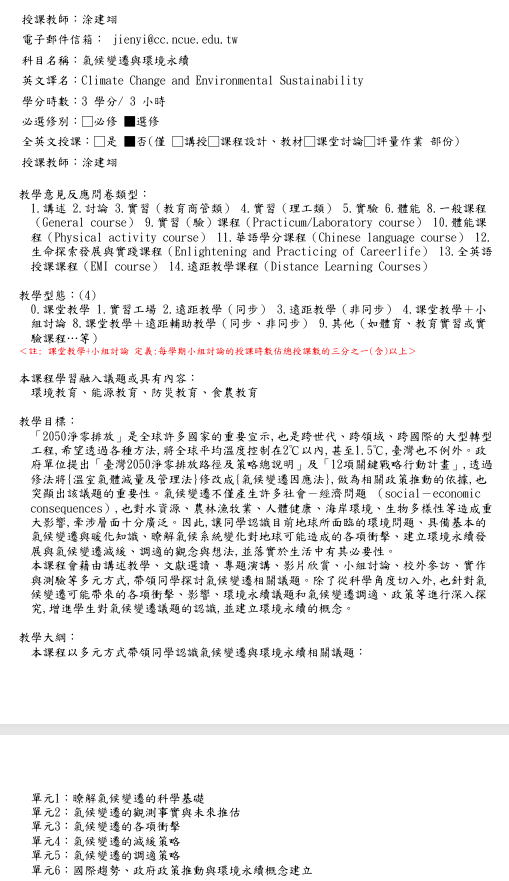
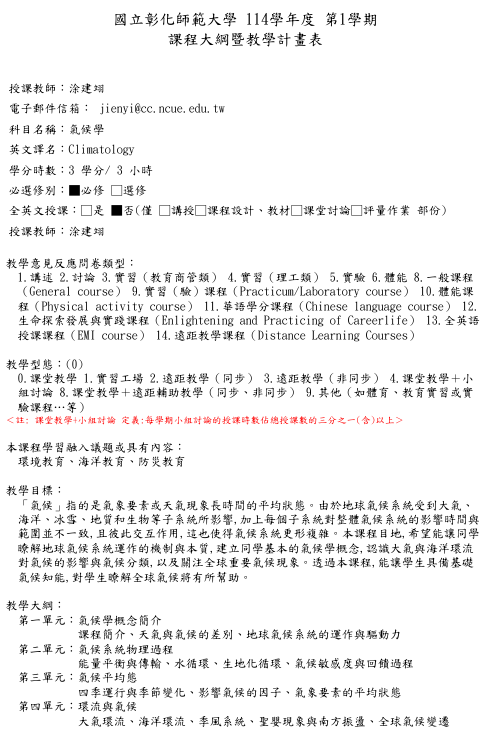
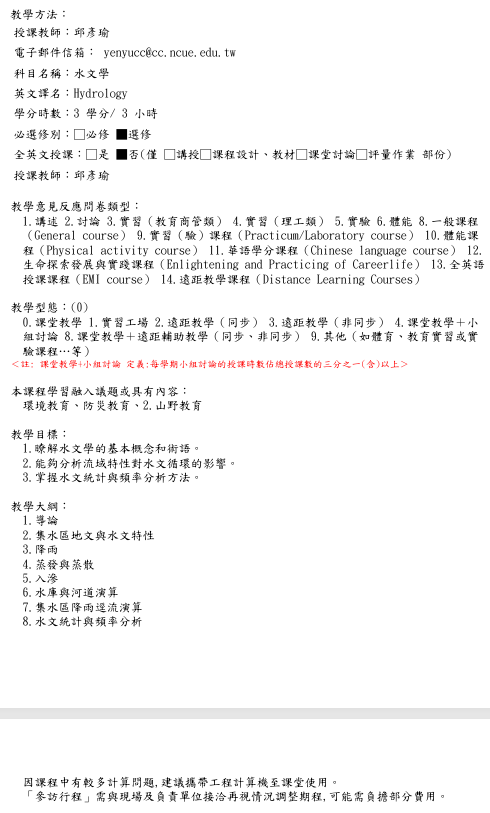
NCUE actively promotes local education on climate change. In 2025, through projects of the Ministry of Education, the National Science and Technology Council, and the University Social Responsibility (USR) Project, NCUE provided local education programmes and activities on climate change risks, impacts, mitigation, adaptation, impact reduction, and early warning. These programmes covered curriculum design, field participation, community engagement, interdisciplinary research, and local action. The related projects are listed in Table 1. NCUE also offers general education and specialized courses that examine the impacts of climate change on the environment, including "Environmental Change and Human Civilization," "Earth Science I" (College of Science), and "Climate Change and Environmental Sustainability," "Climatology," and "Hydrology" (Department of Geography) (Figures 1–5).
| No. | Project Name |
|---|---|
| 1 | From Theory to Practice - Discussing Climate Change and Sustainability |
| 2 | Climate Resilient Development and Adaptive Governance: Framing Just Transition into a Participatory Policymaking Approach |
| 3 | Resilient Changbin: Climate Change and the Sustainability of Changhua's Coastal Environment and Industries |
| 4 | Ecological Healing and Green Sustainability: Changhua Ecological Art Project |
| 5 | Blue Ocean Changhua Offshore Wind Power Project |
2. From Theory to Practice - Discussing Climate Change and Sustainability
This project promoted climate change-related content in 2025 through the established "Climate Change and Environmental Sustainability" course. The course content included important topics and concepts such as "extreme climate," "carbon inventory," "carbon footprint," "circular economy," "net-zero emissions," "carbon neutrality," "carbon management," "greenhouse gas reduction and removal (carbon sinks)," "nature-based solutions," and "climate change adaptation and disaster prevention." Through classroom lectures, off-campus visits, special lectures, and practical activities (activity content is shown in Table 2, and related photos in Figures 6-8), students were guided to understand and practice climate action.
| Date | Activity Type | Course Content | Number of Participants |
|---|---|---|---|
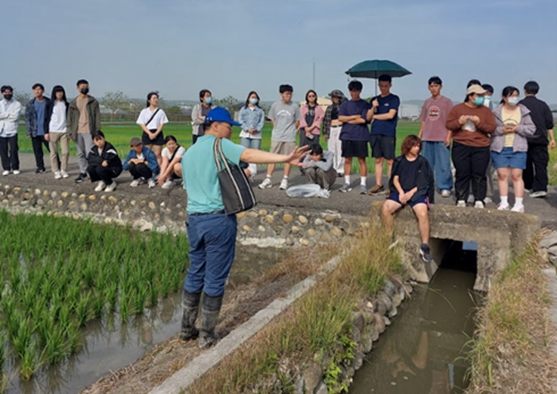
| 2025/4/14 | Field Visit | Content: Visit to the Taichung District Agricultural Research and Extension Station (Figure 6) Outcomes: On site, students learned about local food production under climate change (breeding, cultivation, management, and strategies), smart rice production, low-carbon rice production and the carbon footprint of rice, and agricultural strategies for reducing emissions and increasing carbon sinks. |
41 |
| 2025/4/21 | Practical Exercise (I) | Content: Greenhouse gas inventory: experience sharing and hands-on practice Outcomes: An industry expert introduced carbon inventory methods and guided students in estimating the carbon emissions of a selected site, deepening their understanding of carbon emission issues. |
41 |
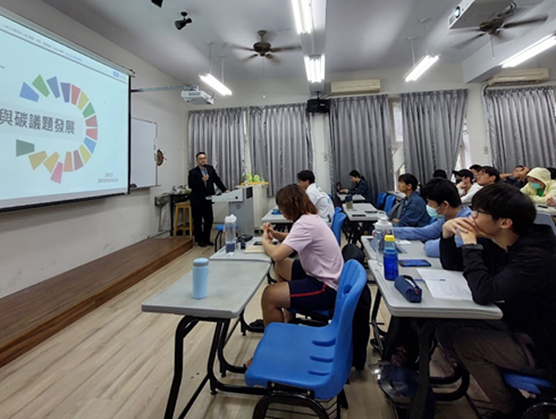
| 2025/4/28 | Special Lecture (I) | Content: Developments in net-zero and carbon issues (Figure 7) Outcomes: An expert lecture introduced students to current global economic issues related to carbon. |
41 |
| 2025/5/12 | Practical Exercise (II) | Content: Essential thinking for product carbon footprints: life cycle assessment (Figure 8) Outcomes: An industry expert guided students in estimating the carbon footprints and emissions of products, showing how carbon footprints differ across products and why local production matters. |
41 |
| 2025/5/19 | Special Lecture (II) | Content: Climate change risk assessment and adaptation: from disaster prevention and relief to climate change adaptation Outcomes: An expert lecture explained the risks posed by climate change and how to conduct disaster risk assessments. |
41 |
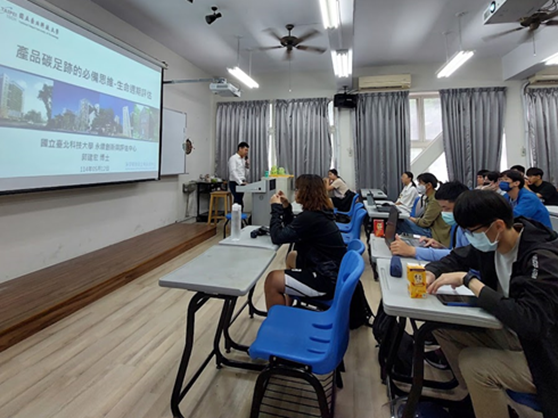
3. Climate-Resilient Development and Adaptive Governance: Framing Just Transition into a Participatory Policymaking Approach
This study uses a participatory approach to advance just transition strategies for climate resilience, with the goal of strengthening disaster adaptation governance.
(1) In spring 2025, the research team held the "Climate Actors" workshop in Huwei Township, Yunlin County, applying image analysis to examine urban development, industrial transition, and heat risk and to agree on directions for action. The team built a context-awareness system and completed spatiotemporal analyses of heat risk in Yunlin, Changhua, and Taichung, providing a data foundation for local climate justice. The team also compared literature and policies on just transition to identify features unique to Taiwan.
(2) On offshore wind power, the study found that current compensation mechanisms do not ensure fair participation. Through regular collaboration and international exchange, the research team established a partnership with Dartmouth College in the United States to support long-term research on renewable energy. The research is expected to produce a methodology for incorporating justice principles into climate decision-making and to propose equitable policy recommendations for disaster prevention and adaptation.
(3) The activities are listed in Table 3, and photos are shown in Figures 9–10.
| Item | Activity Name | Participants |
|---|---|---|
| 1 | Climate Resilience Development and Disaster Prevention Adaptation Governance: A Participatory Approach with Just Transition | Tzu-Ping Lin, Distinguished Professor, Department of Architecture, National Cheng Kung University (NCKU) Yang-Ting, Shen, Associate Professor, Department of Architecture, NCKU Pei-Wen, Lu, Associate Professor, Department of Geography, NCUE Sheng-Yu Yang, Assistant, Department of Geography, NCUE Yu-Fei, Lin, Assistant, Department of Geography, NCUE Yi-Zhen, Wu, Assistant, Department of Architecture, NCKU Yo-Hao, Chen, Assistant, Department of Architecture, NCKU Zhen-Huan, Chen, Assistant, Department of Landscape Architecture, CYCU Zhi-Tao, Peng, Doctoral Student, Department of Landscape Architecture, CYCU |
| 2 | Taiwan Just Transition Strategy Analysis | Chung-En Liu, Associate Professor, Department of Sociology, National Taiwan University (NTU) Shun-Nan, Jiang, Postdoctoral Researcher, Department of Sociology, NTU Yi-Zhen, Huang, Postdoctoral Researcher, Department of Sociology, NTU Shan-Pei, Su, Full-time Assistant, NYCU Hua-Mei, Qiu, Associate Professor, Department of Sociology, NSYSU Yun-Zhi, Su, Researcher, Department of Sociology, NSYSU Dong-You, Shi, Researcher, Department of Sociology, NSYSU Wei-Cheng, Chen, Master's Student, Graduate Institute of Building and Planning, NTU Yu-Xin, Xu, Full-time Researcher, Center for Innovative Democracy, NCCU |
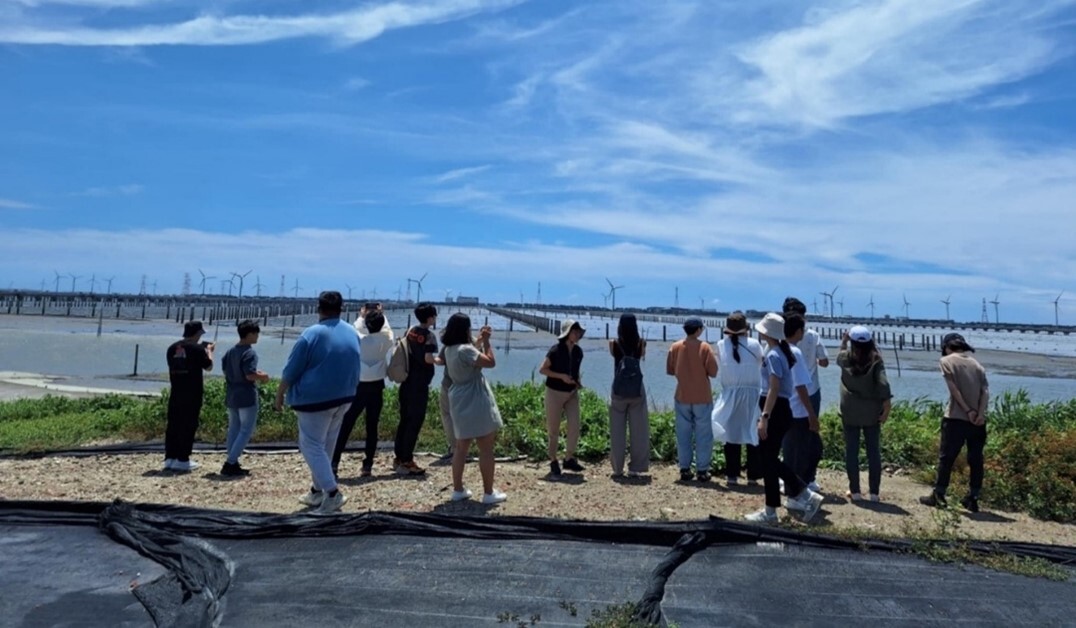

4. Ministry of Education Project: Resilient Changbin: Climate Change and the Sustainability of Changhua's Coastal Environment and Industries
(1) Through the Resilient Changbin project, NCUE uses Changhua's coastal area as a field site for local education on climate change risks, environmental impacts, mitigation, and adaptation. The project draws on expertise in biology, ecology, aquaculture, geography, environmental education, and information technology. It offers 18 interdisciplinary courses and runs 24-, 33-, and 100-hour environmental educator certification courses on climate change as well as carbon inventory courses, integrating climate topics into teaching and local practice. The project also formed a Water Quality Testing Team to help aquaculture farmers monitor changes in water quality, trained 91 intertidal citizen scientists to monitor intertidal zones and wetlands, and held 4 marine camps and 29 educational activities on blue carbon, marine conservation, wetlands, water quality, net-zero emissions, and carbon footprints, with about 800 participants. These efforts turn climate change, ecological conservation, and local industry issues into environmental education that communities can take part in, developing local climate action leaders and strengthening local climate adaptation and environmental resilience.
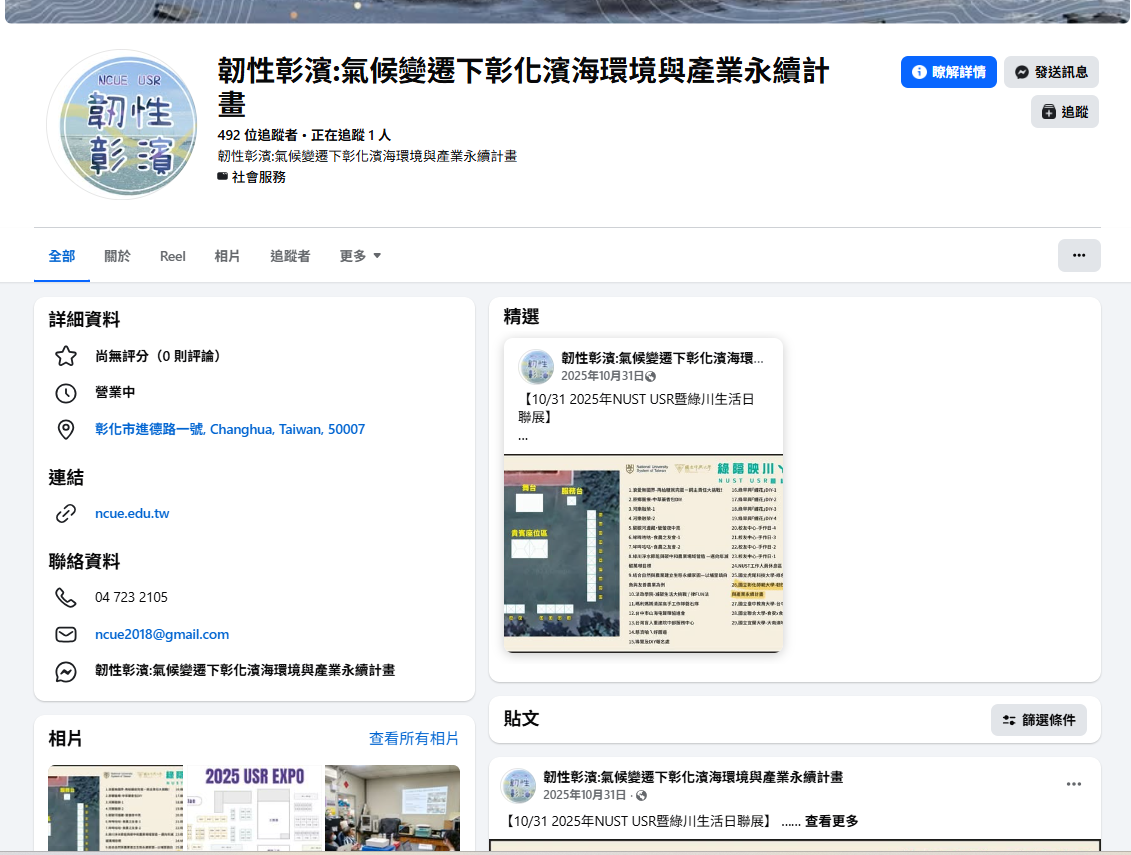
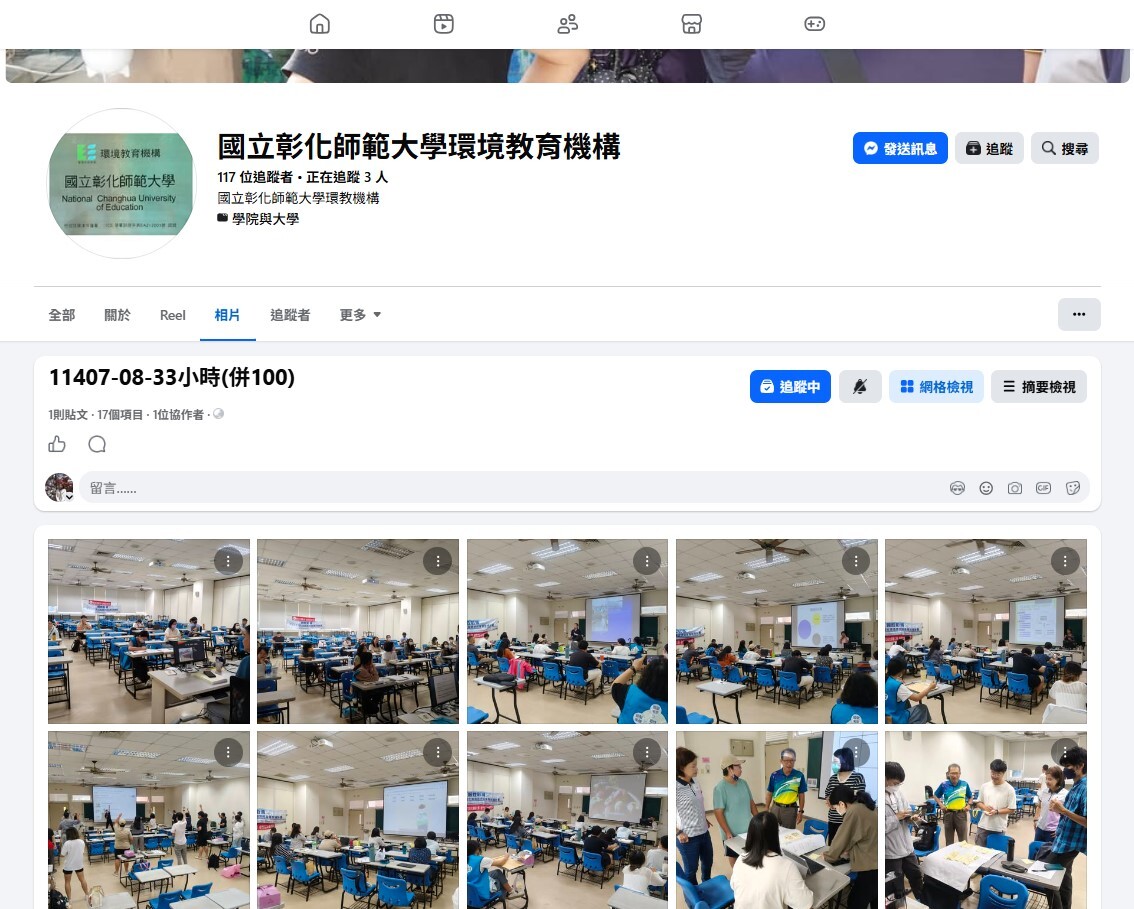
Project activity webpage is shown in Figure 11. (https://www.facebook.com/NCUEUSR/)
(2) NCUE's Environmental Education Center Offers “Environmental Educator 24-, 33- and 100-Hour Certification Courses”
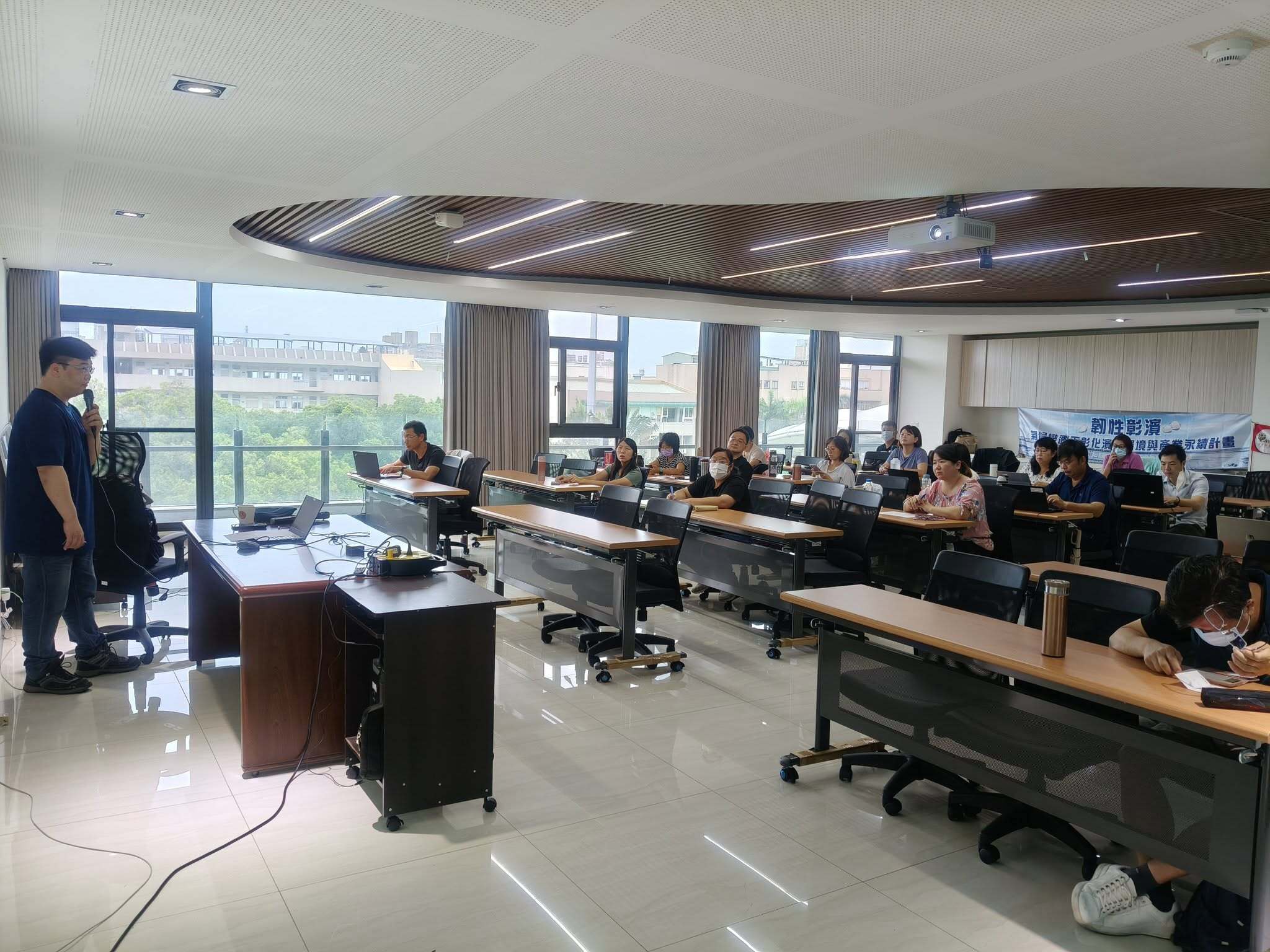
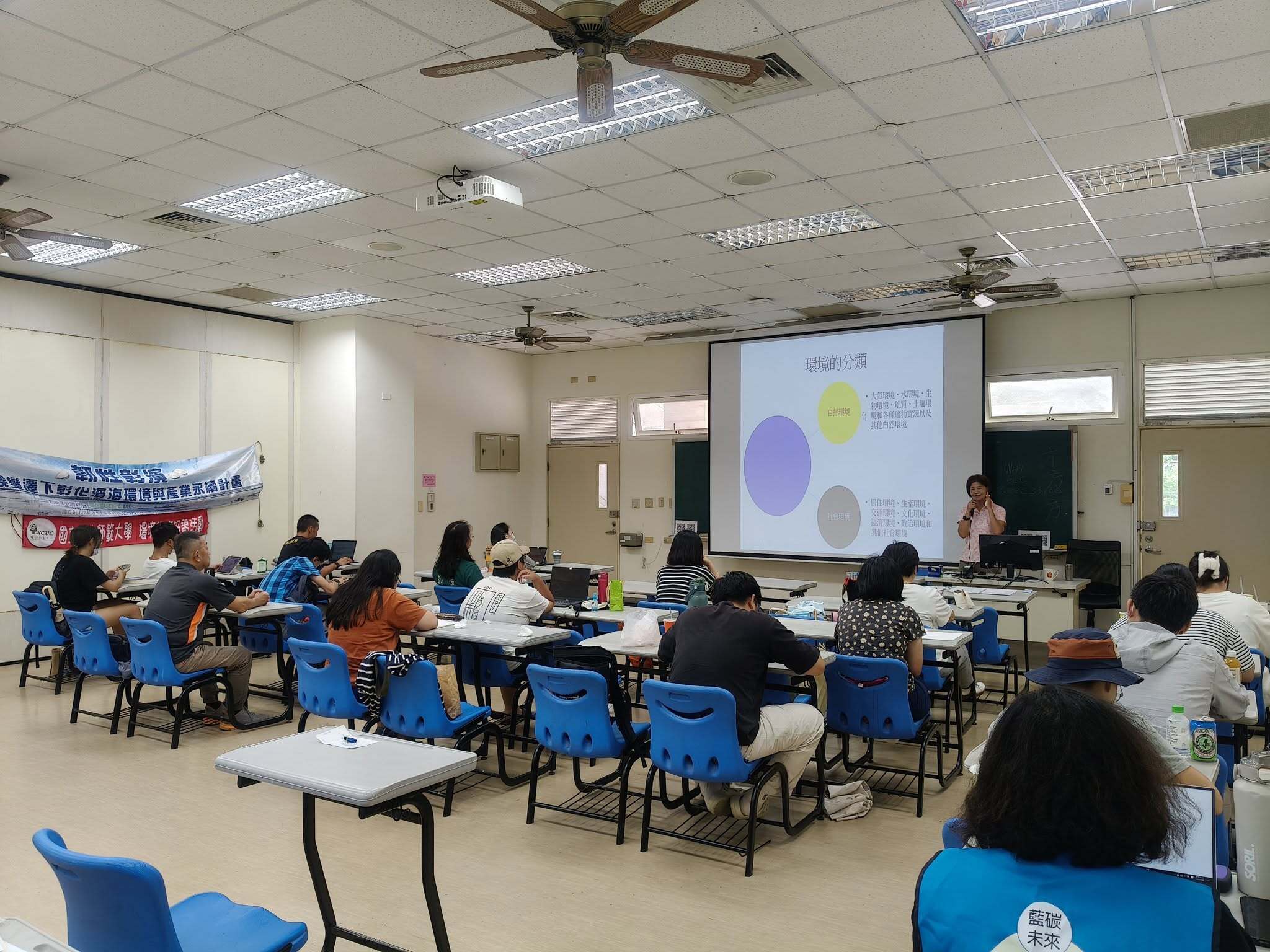
The Environmental Education Center trains environmental education professionals. In conjunction with the Resilient Changbin project, the Center provided courses for local and national communities from July to October 2025 (Table 4; photos in Figures 12–14):
Course image information links:
(a) https://www.facebook.com/media/set/?set=a.1389646196282072&type=3
(b) https://www.facebook.com/media/set/?set=a.1390985429481482&type=3
(c) https://www.facebook.com/media/set/?set=a.1391078049472220&type=3
| Course Activity | Date | Number of Participants |
|---|---|---|
| Specialized Program for Environmental Educator 24-hour Certification at NCUE | July 2025 | 28 |
| Environmental Educator 33-hour Certification Course | July-August 2025 | 13 |
| Environmental Educator 100-hour Certification Course | July-October 2025 | 7 |
5. Department of Fine Arts USR Project: Ecological Healing and Green Sustainability: Changhua Ecological Art Project
In response to the ecological crisis caused by global warming, NCUE's Department of Fine Arts launched the 2025–2027 USR project "Ecological Healing and Green Sustainability: Changhua Ecological Art Project." With local care as its main theme, the project supports UN SDG 13 (Climate Action). In 2025, the project held the free activities listed in Table 5 and described below:
| No. | Type | Activities |
|---|---|---|
| 1 | Eco-Tours | On campus: "Riding the Wind: An Eco-Tour of Purple Crow Butterflies and Grey-faced Buzzards"; off campus: "Forest Breathing Together," a parent-child ecological activity with Changhua Christian Hospital; and others |
| 2 | Ecological Workshops & Lectures | On campus: "Let the Wildflowers Bloom: Cosmos Sowing Action" and the outdoor "Planting, Covering, Planting" performance workshop at Longquan Creek; off campus: "Spirits in the Wind: Grey-faced Buzzard Ecological Observation" at Zhongzhang Veterans Home; and others |
| 3 | Art Therapy Workshops | On campus: horticultural therapy workshops in the "Art and Alternative Therapies" course; off campus: workshop series at the Changhua Active Aging Learning Center, Changhua Christian Hospital, and others |
| 4 | Ecological Art Exhibitions | "A Travel Guide for Grey-faced Buzzards: Encounters in Four Seasons," an NCUE × Providence University joint exhibition; "Tomorrow's Realm: Ecological Imaginations of Symbiosis and Regeneration" ecological art exhibition; and others |
| 5 | Ecological Capacity Building for Local Volunteers | "Changhua Environment and Climate Change Seminar" and "Siangshan Community Ecological Survey Workshop," co-organized with the Siangshan Community; and others |
(1) Eco-Tours On and Off Campus:
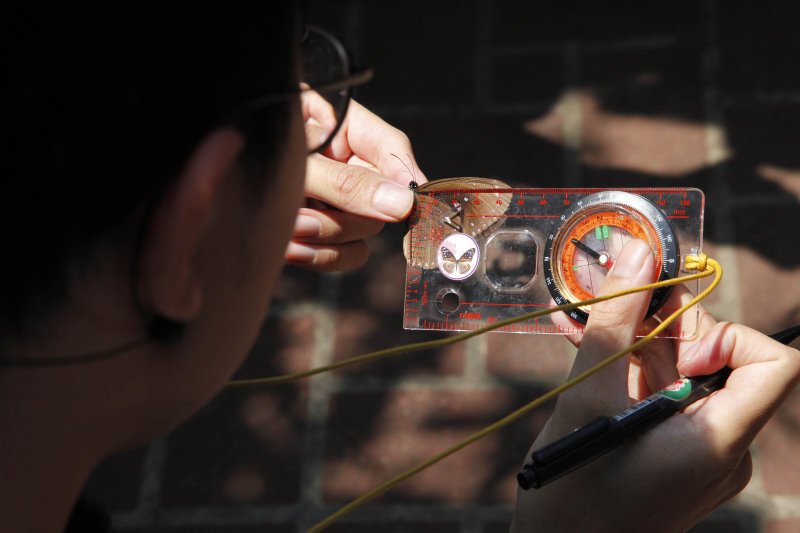
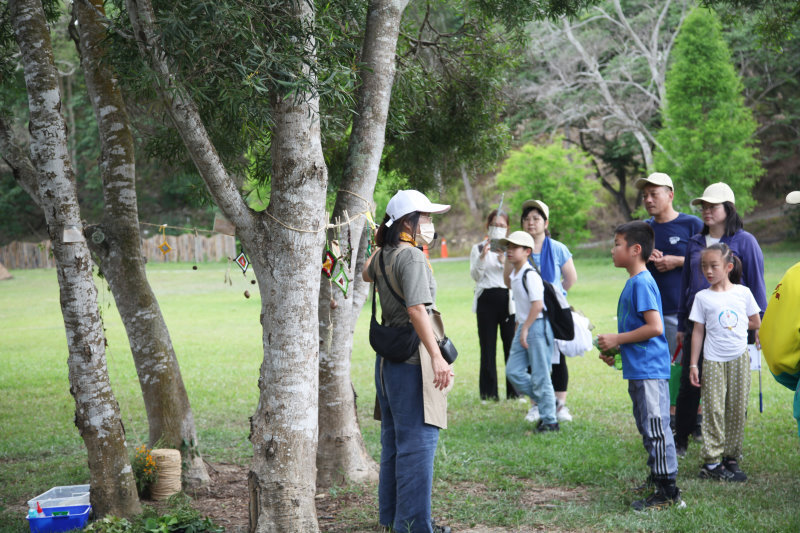
NCUE held several eco-tours on and off campus to help faculty, students, and local residents understand how climate change affects ecosystems. On campus, "Riding the Wind: An Eco-Tour of Purple Crow Butterflies and Grey-faced Buzzards" used representative migratory species of central Taiwan and the campus environment to explain how climate change affects species migration, habitats, and biodiversity (Figure 15). Off campus, NCUE and Changhua Christian Hospital co-organized "Forest Breathing Together," a parent-child activity that combined forest therapy, nature observation, and environmental education to help hospital staff and their families see the importance of forest ecosystems and climate adaptation in daily life. These activities raised public awareness of environmental sustainability, natural ecosystems, and climate action, and built participants' capacity to care for local ecosystems and live sustainably (Figure 16).
(2) Ecological Workshops and Lectures On and Off Campus:
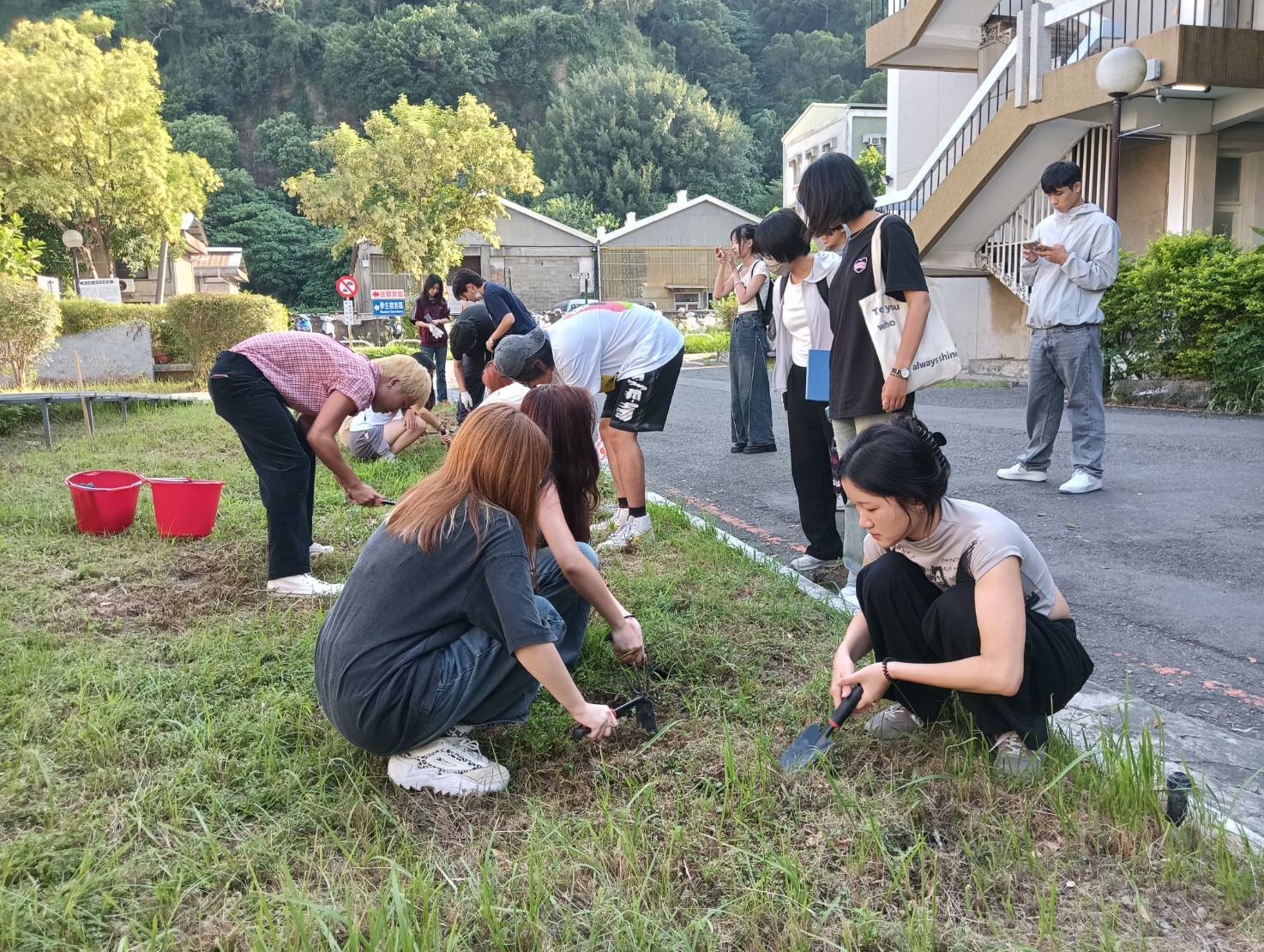
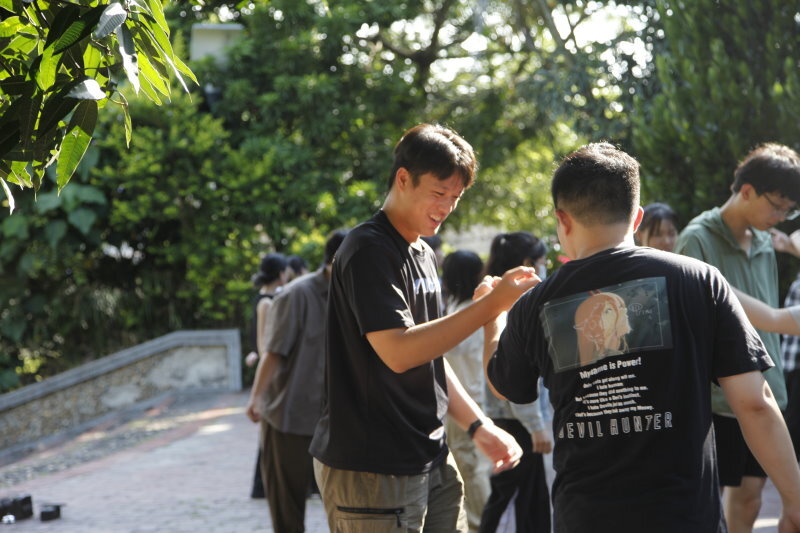
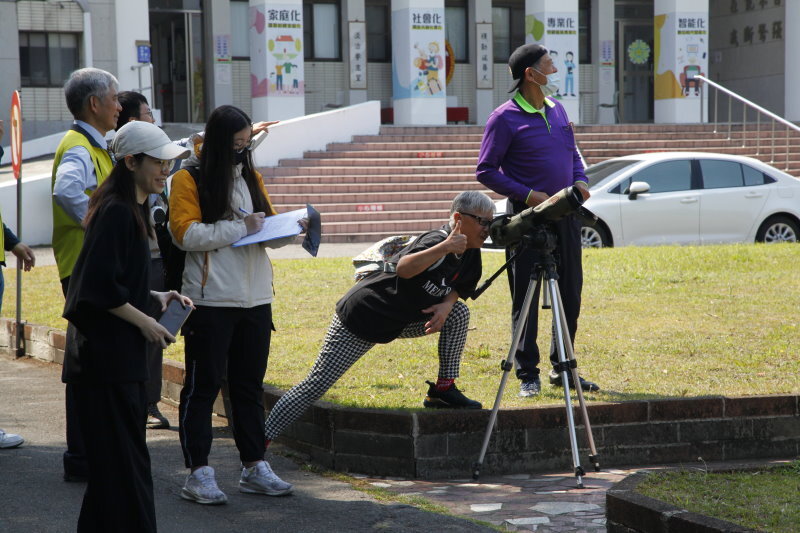
To raise awareness of climate change and ecological restoration among faculty, students, and community residents, NCUE organized a series of ecological workshops and lectures. On campus, the wild garden restoration project "Let the Wildflowers Bloom: Cosmos Sowing Action" had participants sow plants suited to local conditions, experience the interdependence of people and nature, and commit to continued environmental action (Figure 17). The outdoor "Planting, Covering, Planting" performance workshop at Longquan Creek combined performing arts with the creek environment, bringing students closer to nature and raising their interest in ecological and climate issues (Figure 18). Off campus, "Spirits in the Wind: Grey-faced Buzzard Ecological Observation" at Zhongzhang Veterans Home explained the links among bird migration, ecological conservation, and climate change. NCUE and the Veterans Home co-organized 3 raptor-watching and horticultural therapy workshops with 106 senior participant visits, encouraging older adults to engage with the local natural environment and strengthening community awareness of ecological conservation and capacity for sustainable action (Figure 19).
(3) Horticultural Therapy Workshops On and Off Campus:
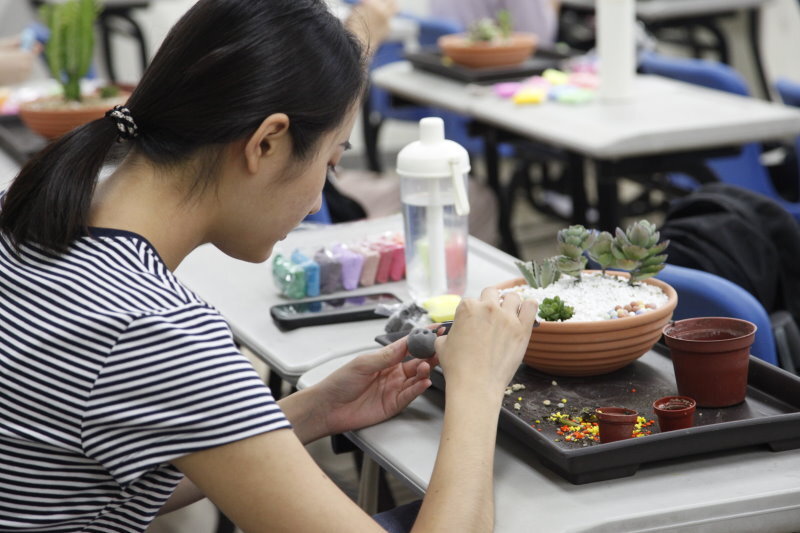
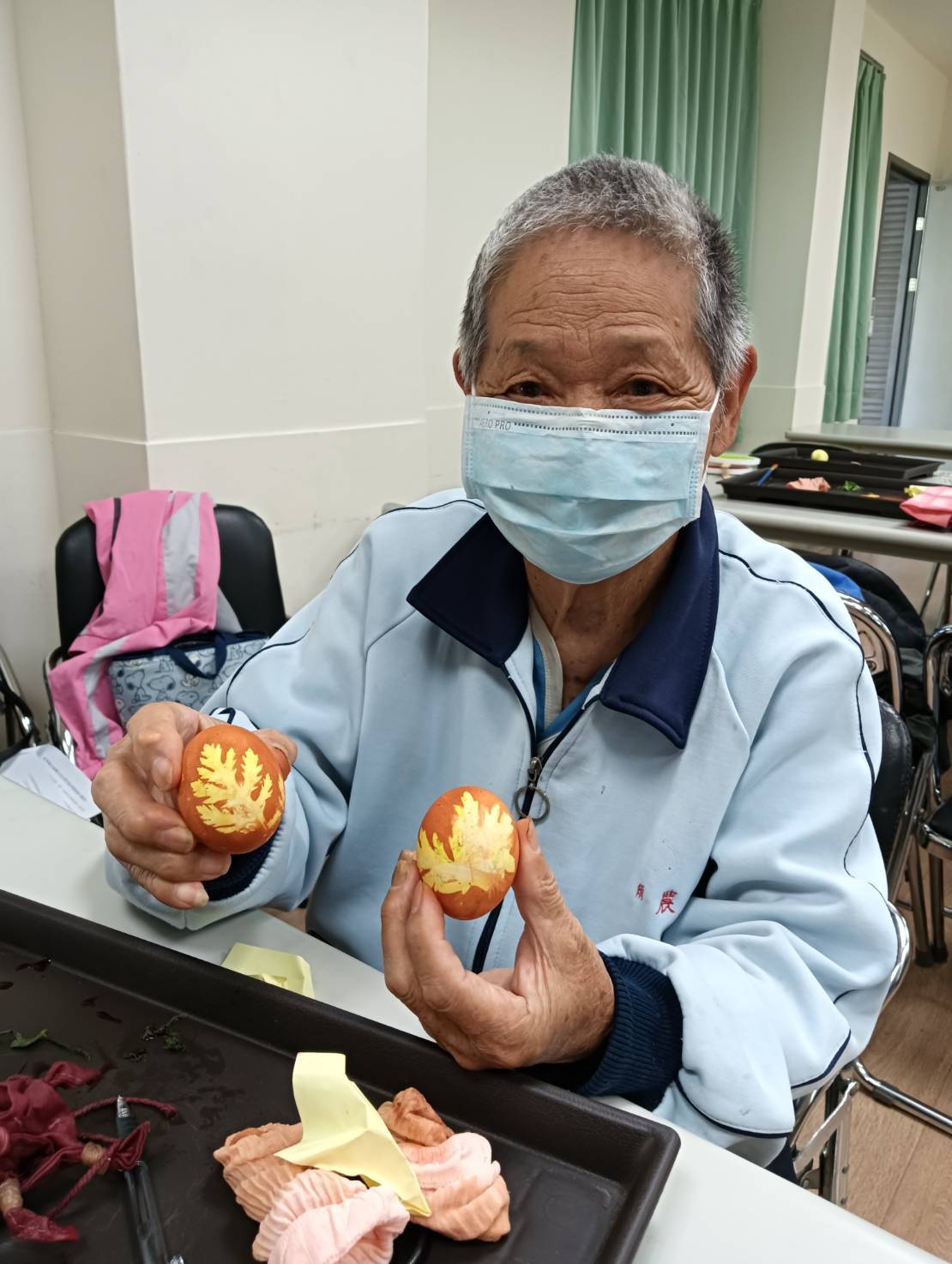
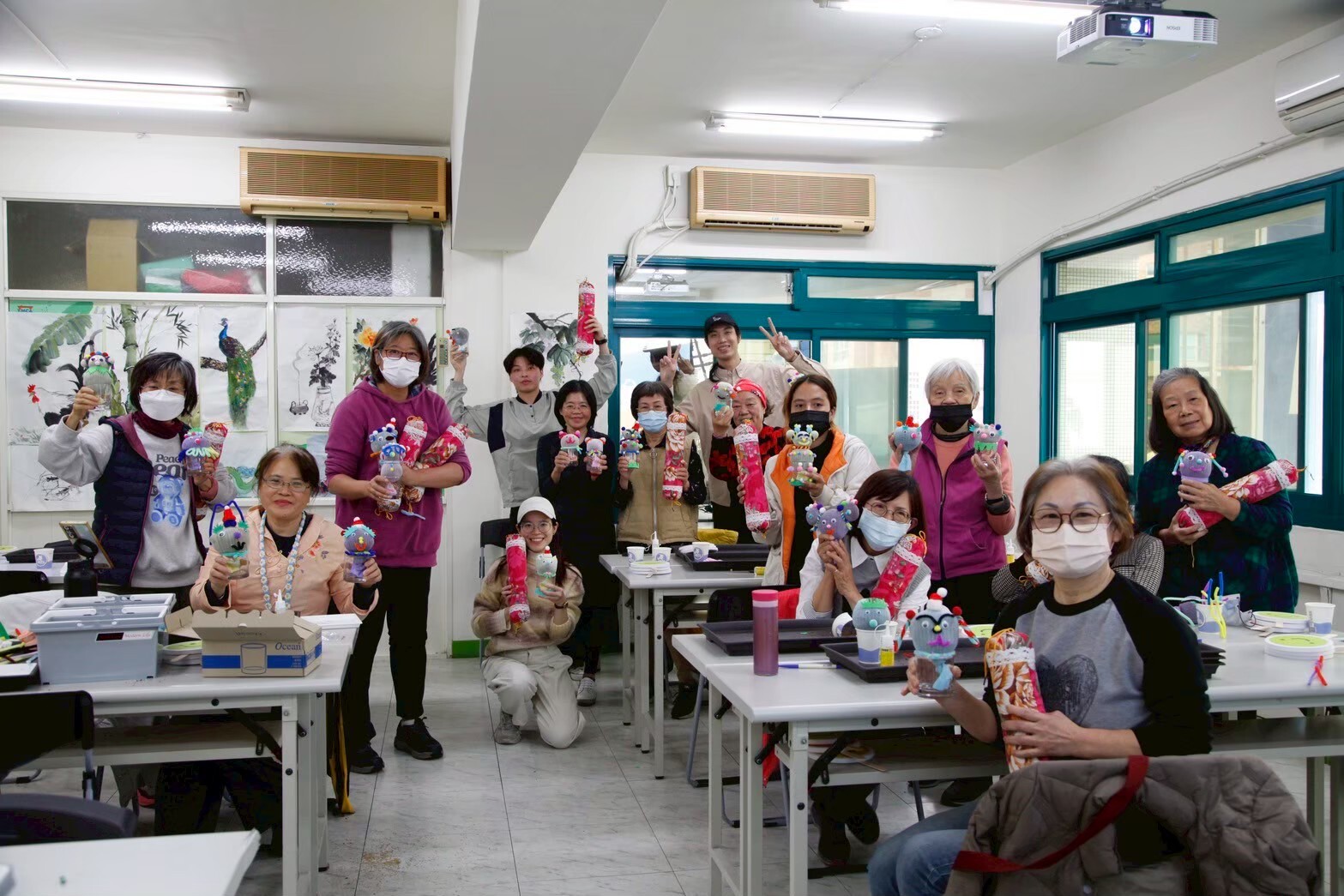
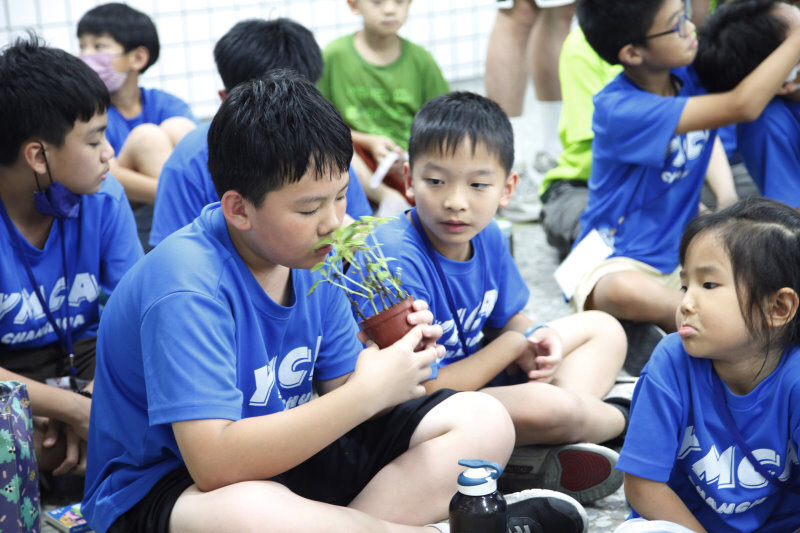
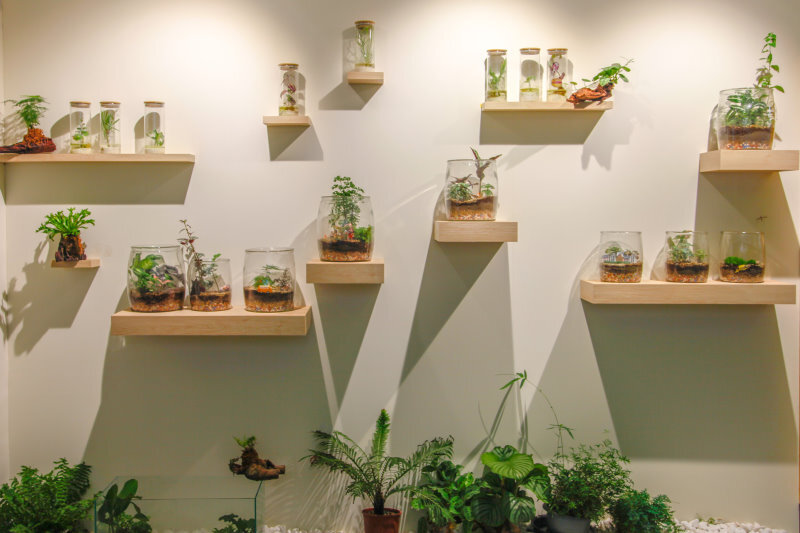
NCUE promoted green living and climate adaptation through a series of horticultural therapy workshops. On campus, the "Art and Alternative Therapies" course incorporated horticultural therapy (Figure 20): students created works with plants and natural materials through five-senses activities and learned how plants help cool the environment and support physical and mental health. Off campus, NCUE and the Changhua Active Aging Learning Center held 14 horticultural therapy workshops with 187 seniors and 94 elementary school and university students. With Changhua Christian Hospital and its Dementia Center, NCUE held 12 horticultural therapy workshops and health promotion activities, serving 218 participant visits (Figures 21–22). Through plant care, green creative work, and five-senses activities, participants developed environmentally friendly and sustainable living habits. NCUE also held "Green Partners of Our Beautiful Earth: The Wonderful Magic of Plants" at a YMCA summer camp (Figure 23). Reaching participants from elementary school children to older adults, these hands-on planting and gardening activities supported the physical and mental wellbeing of children, young people, and seniors, and increased public awareness of and action on climate change, urban greening, and environmental sustainability.
(4) Ecological Art Exhibitions:
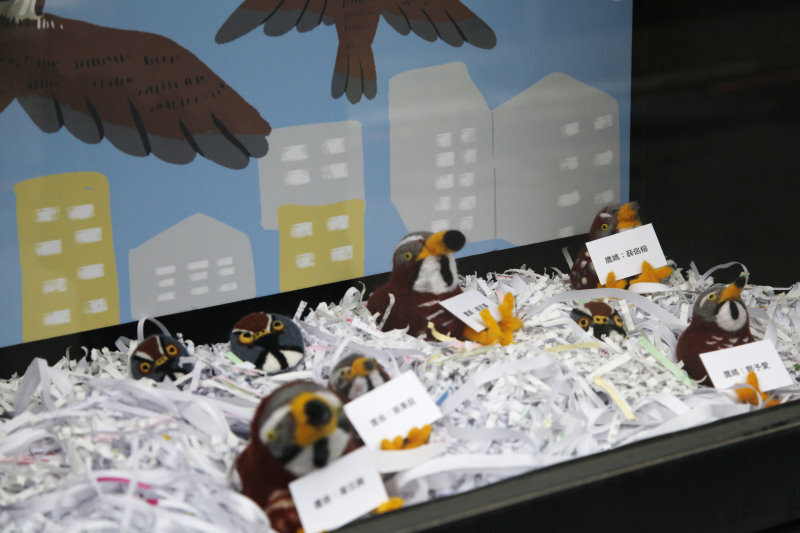
NCUE uses ecological art exhibitions to turn climate change issues into public education. The NCUE × Providence University joint exhibition "A Travel Guide for Grey-faced Buzzards: Encounters in Four Seasons" (Figure 24) used buzzard migration, habitats, and seasonal change to show how climate change affects species migration and ecosystems. "Tomorrow's Realm: Ecological Imaginations of Symbiosis and Regeneration" combined ecology and art to explore environmental sustainability and the relationship between people and nature (Figure 25), prompting visitors to reflect on global warming, biodiversity, and sustainable development. These exhibitions raised public awareness of climate change and fostered interdisciplinary dialogue and education on environmental sustainability.
(5) Ecological Capacity Building for Local Volunteers:
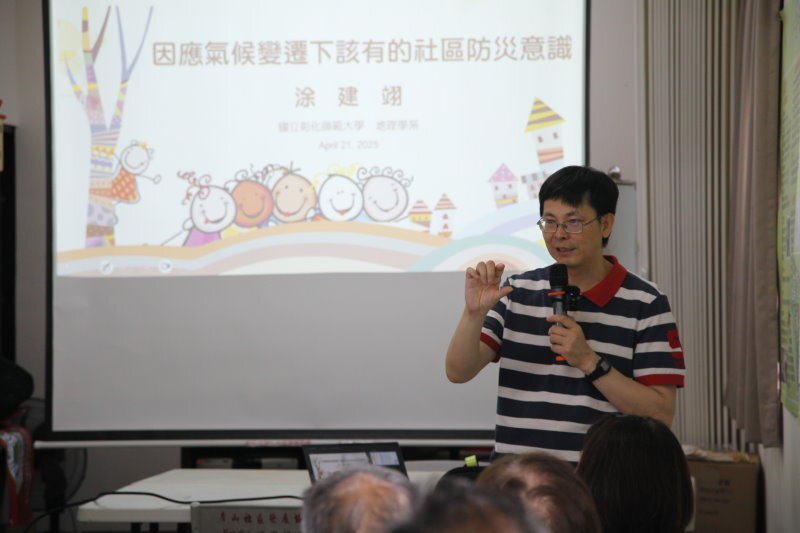
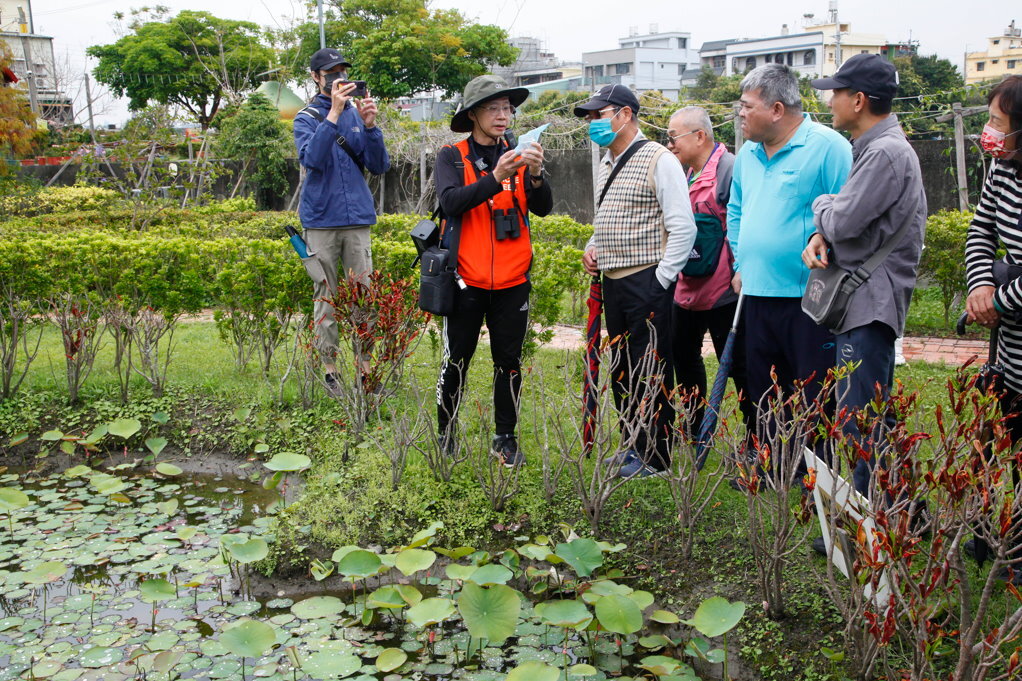
NCUE and the Siangshan Community Development Association co-organized 9free training sessions, including the "Changhua Environment and Climate Change Seminar" and the "Siangshan Community Ecological Survey Workshop" (Table 6), training 23 local volunteers. Through local ecological surveys, nature observation, and environmental education, volunteers learned how climate change affects local ecosystems, species distribution, and living environments (Figures 26–27). The courses combined community field surveys, ecological interpretation, and on-site observation to build volunteers' skills in eco-guiding and sustainability education, strengthen community-led action on conservation and climate adaptation, and engage residents in ecological conservation and sustainable governance.
| No. | Course Name | Date | Number of Participants |
|---|---|---|---|
| 1 | Forest Breathing Together: Outdoor Ecological Tour Workshop at Eastern Park, Siangshan Area, Bagua Mountain | 2025/5/3 | 88 |
| 2 | Changhua Environment and Climate Change Seminar | 2025/4/21 | 19 |
| 3 | Siangshan Community Ecological Field Survey Workshop | 2025/3/31 | 23 |
| 4 | Eastern Park Ecological Guiding Capacity Building Training | 2025/4/14 | 49 |
| 5 | Green Time: My Little Homeland (Siangshan Sessions 1 & 2) - Active Aging Horticultural Therapy Series Workshop | 2025/5/5 | 35 |
| 6 | Siangshan Nature Classroom: Understanding Local Ecology in Daily Life | 2025/8/4 | 25 |
| 7 | Nature Lovers of Siangshan! Local Ecological Interpretation Training | 2025/8/11 | 25 |
| 8 | Tracing Leaves, Seeking Fragrance: Natural Whispers Among Three Parks | 2025/8/18 | 26 |
| 9 | Siangshan Green Step Learning: Observation, Interpretation, and Assessment | 2025/8/25 | 24 |
6. Blue Ocean Changhua Offshore Wind Power Project Collaboration
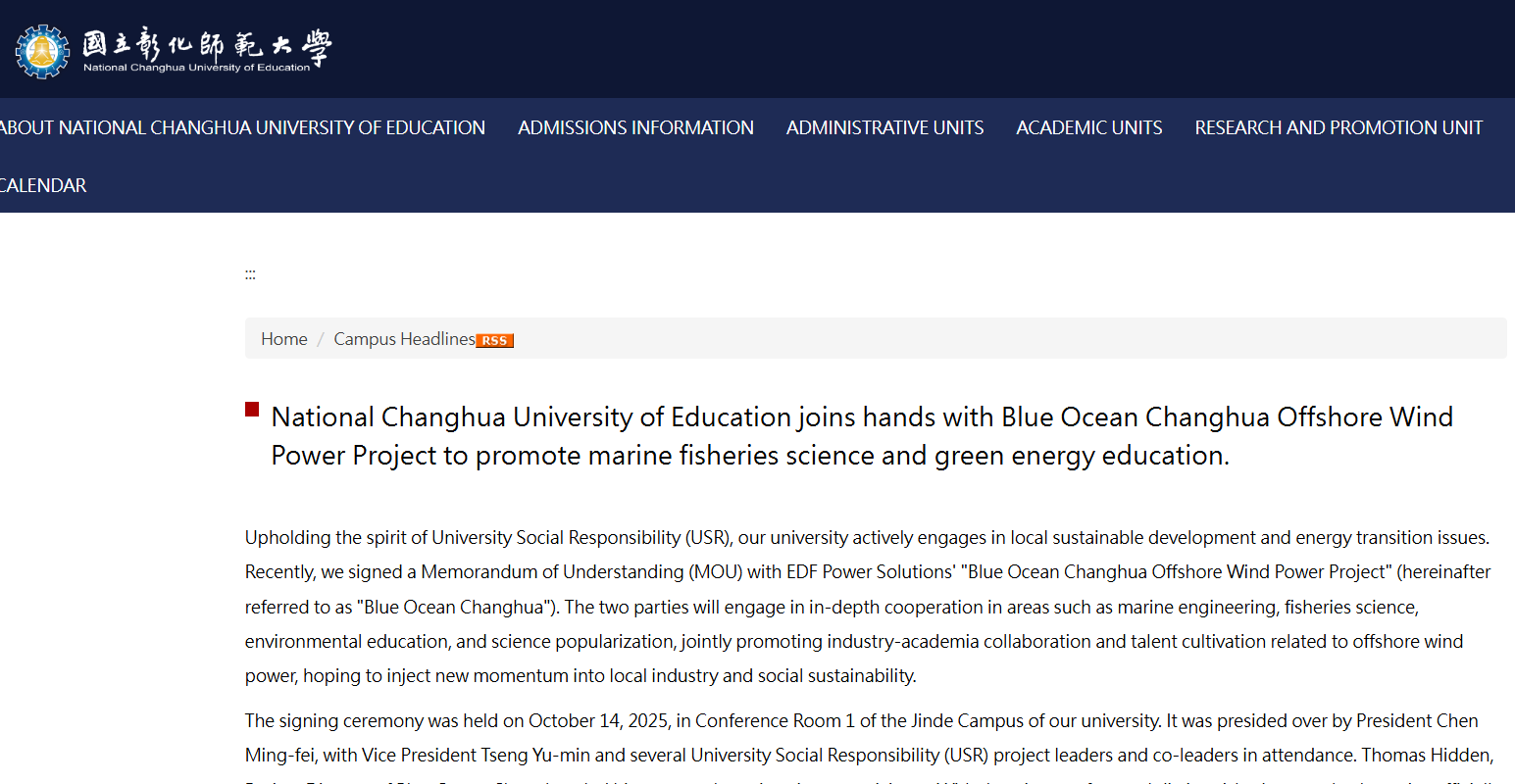
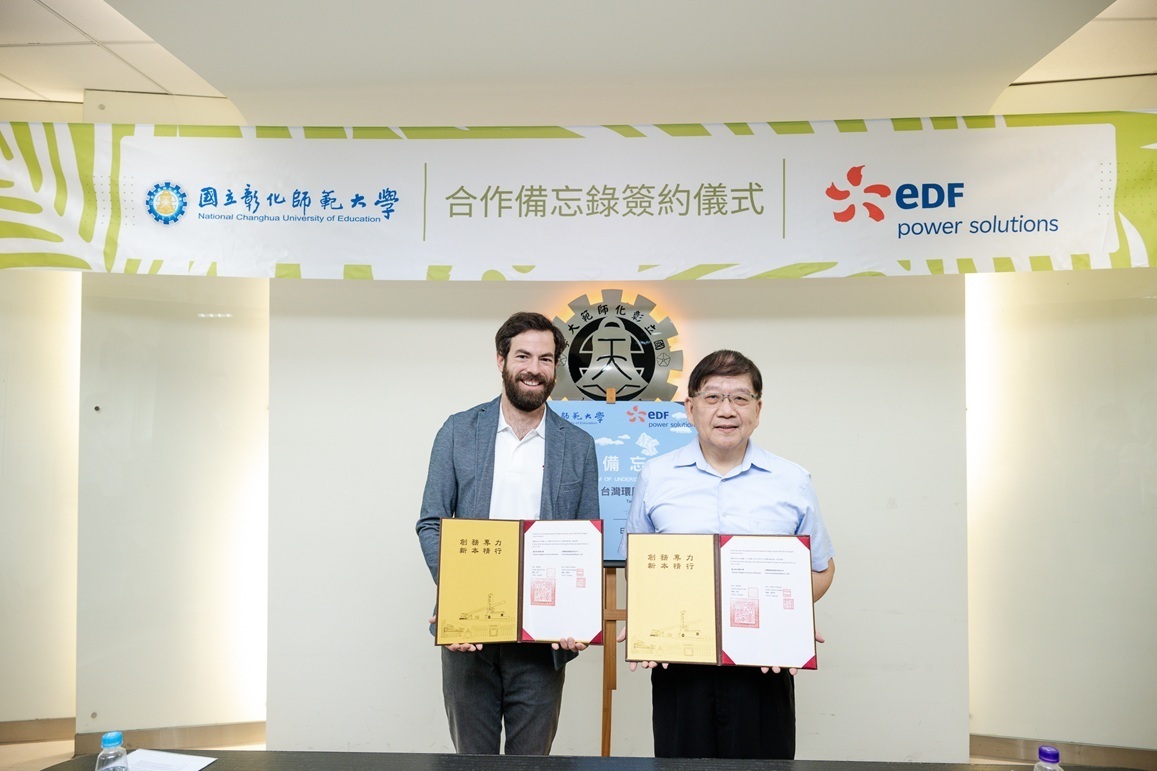
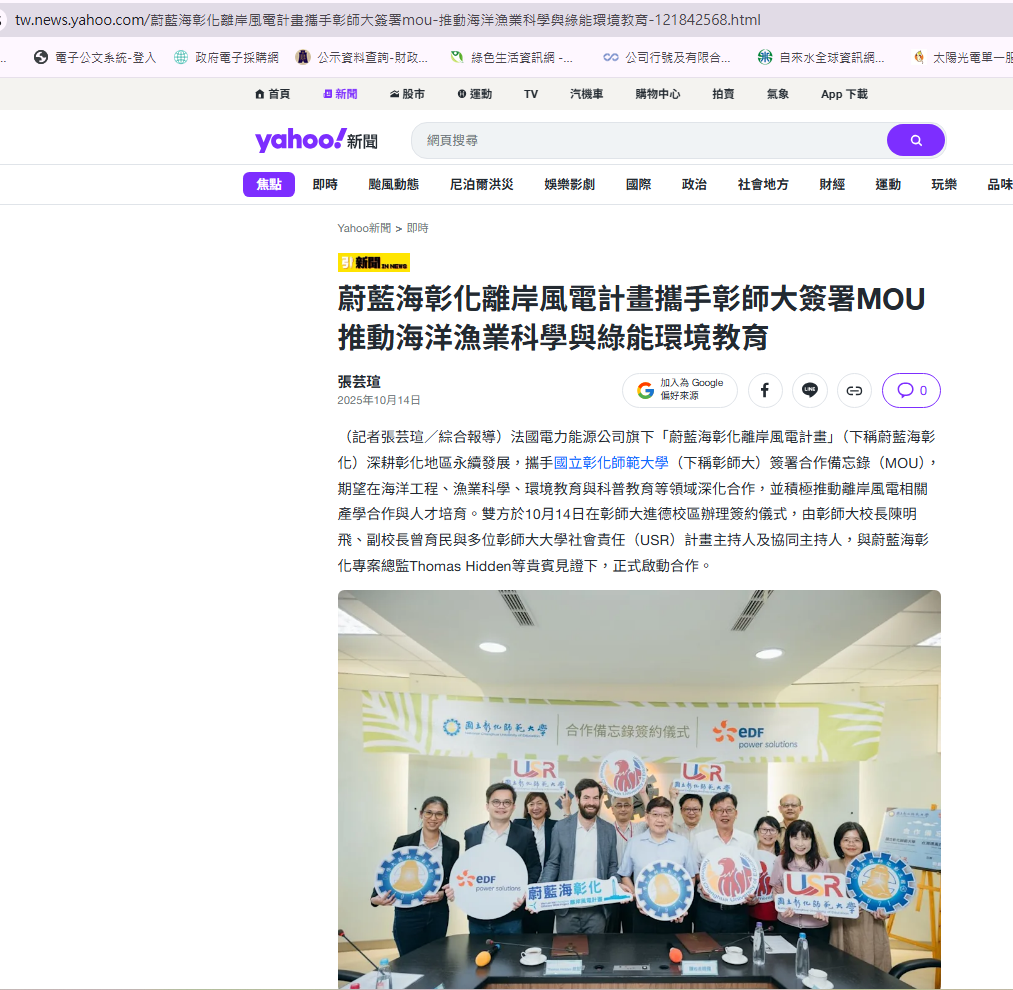
In the spirit of University Social Responsibility (USR), NCUE signed a memorandum of understanding (MOU) with the Blue Ocean Changhua Offshore Wind Power Project of EDF Power Solutions to cooperate on marine engineering, fisheries science, environmental education, and green energy education (Figures 28–30). Both parties take part in the NCUE-led Changhua County Green Energy Science Popularization Project, which combines university expertise with industry experience. Through science outreach, environmental education, and community engagement, the project introduces local residents to renewable energy, energy transition, and sustainable development; raises community awareness of climate change, green energy, and environmental sustainability; supports education in rural areas; and encourages local participation in climate action and sustainable development.
The Campus Headlines report web page is shown in Figure 28. URL: https://www.ncue.edu.tw/p/406-1000-31776,r93.php?Lang=zh-tw
7. Hydrology Course and Water Resource Adaptation
In 2025, NCUE's Department of Geography offered a course entitled "Hydrology", incorporating off-campus field trips to provide climate change and water resource adaptation. The course aimed to deepen students' understanding of climate risk, water resource management, and disaster risk prevention and adaptation.
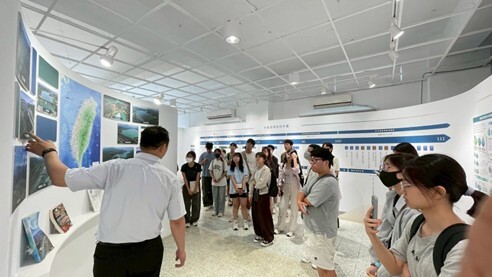
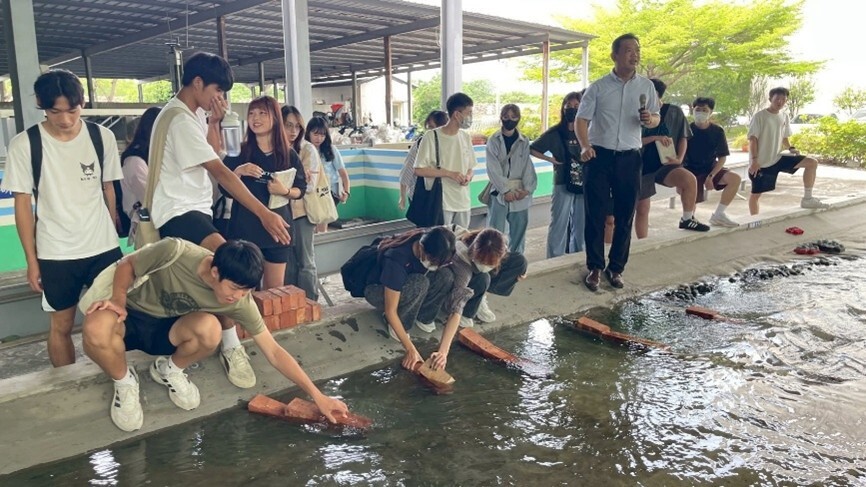
The course visited the Fuma Canal in Changhua and the Water Resources Planning Branch, Water Resources Agency, Ministry of Economic Affairs. Through cases on river channel evolution, hydraulic models, flow velocity measurement, hydrological monitoring, and watershed governance (Figures 31–32), students examined climate change impacts such as extreme rainfall, riverbed scouring, sedimentation, and flood risk, and learned about flood control engineering, water resource allocation, and disaster adaptation strategies. At the Water Resources Planning Museum, students also traced the history of the Wu River basin, from water resource development to integrated watershed management. These learning activities helped students understand the importance of water resource management, environmental sustainability, and local resilience in the context of climate change, while developing their competencies in climate adaptation and sustainable development.
8. Field Study: Energy Transition and Tidal Flat Change on the Changhua Coast
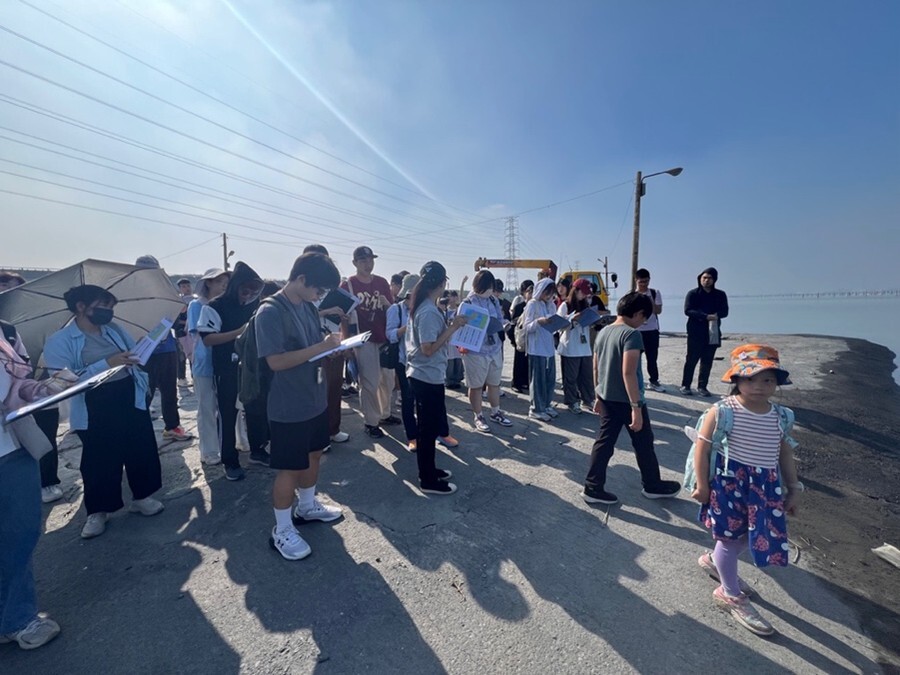
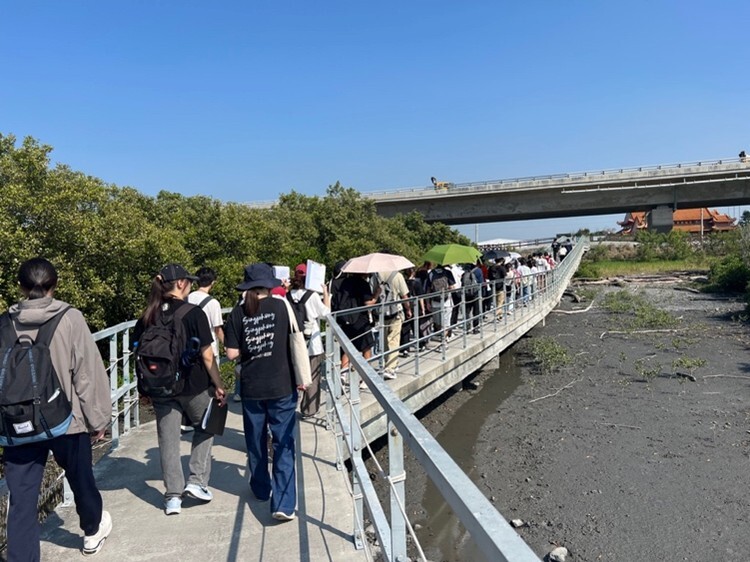
On October 18, 2025, NCUE's Department of Geography held a joint field study for three courses, "Human Geography," "Physical Geography," and "Cartography." The field study was led by 3 faculty members Yu-ling Song, Yi-Chin Chen, and Pei-Wen Lu, and involved 63 faculty members and students. The group visited the Lunwei East District of the Changhua Coastal Industrial Park, the Lukang historic district, the Fangyuan settlement, the Sea-Sky Trail, and the intertidal zone. Through on-site observation, map reading, topographic profile drawing, and worksheets, the field study integrated climate change mitigation, impacts, and adaptation into local environmental education.
In the morning, on the intertidal zone of the Lunwei East District, instructors explained Taiwan's changing energy mix and the spatial governance of renewable energy (Figure 33). Using a floating PV site as an example, students compared national land use survey maps, non-urban land use zoning maps, and orthophotos to assess whether large-scale PV installations in the intertidal zone are spatially appropriate, and shared their views on energy use in these waters. The exercise showed how energy transition works as a climate mitigation strategy at the local scale and what issues it raises.
In the afternoon, at the Fangyuan Sea-Sky Trail and tidal flats (Figure 34), instructors explained the current state of offshore wind power and its national and local impacts. Students observed tidal channel landforms and the groin effect of the Sea Cow Trail, drew topographic profiles to determine the direction of longshore drift, and analyzed how one meter of tidal flat deposition or erosion would affect local oyster farming. They also examined how mangrove expansion affects coastal currents, tidal flat topography, and crab and bird habitats. These activities strengthened students' ability to identify coastal environmental change and climate risk, analyze impacts on local industries, and understand environmental adaptation.
Students completed worksheets and landscape sketches, turning field observations into an understanding of energy transition, climate mitigation, coastal environmental change, and local adaptation.
9. Hydrological Science and Disaster Adaptation Youth Camp
NCUE's Department of Geography and Taichung Municipal Fengdong Junior High School co-organized the "Taichung City Gifted Junior High School Student Camp" for the 2025–2026 academic year, themed "The Story of Water and Settlements: Exploring Human–Land Relationships through Hydrological Science." The camp combined classroom instruction and fieldwork to promote climate change and disaster adaptation education.
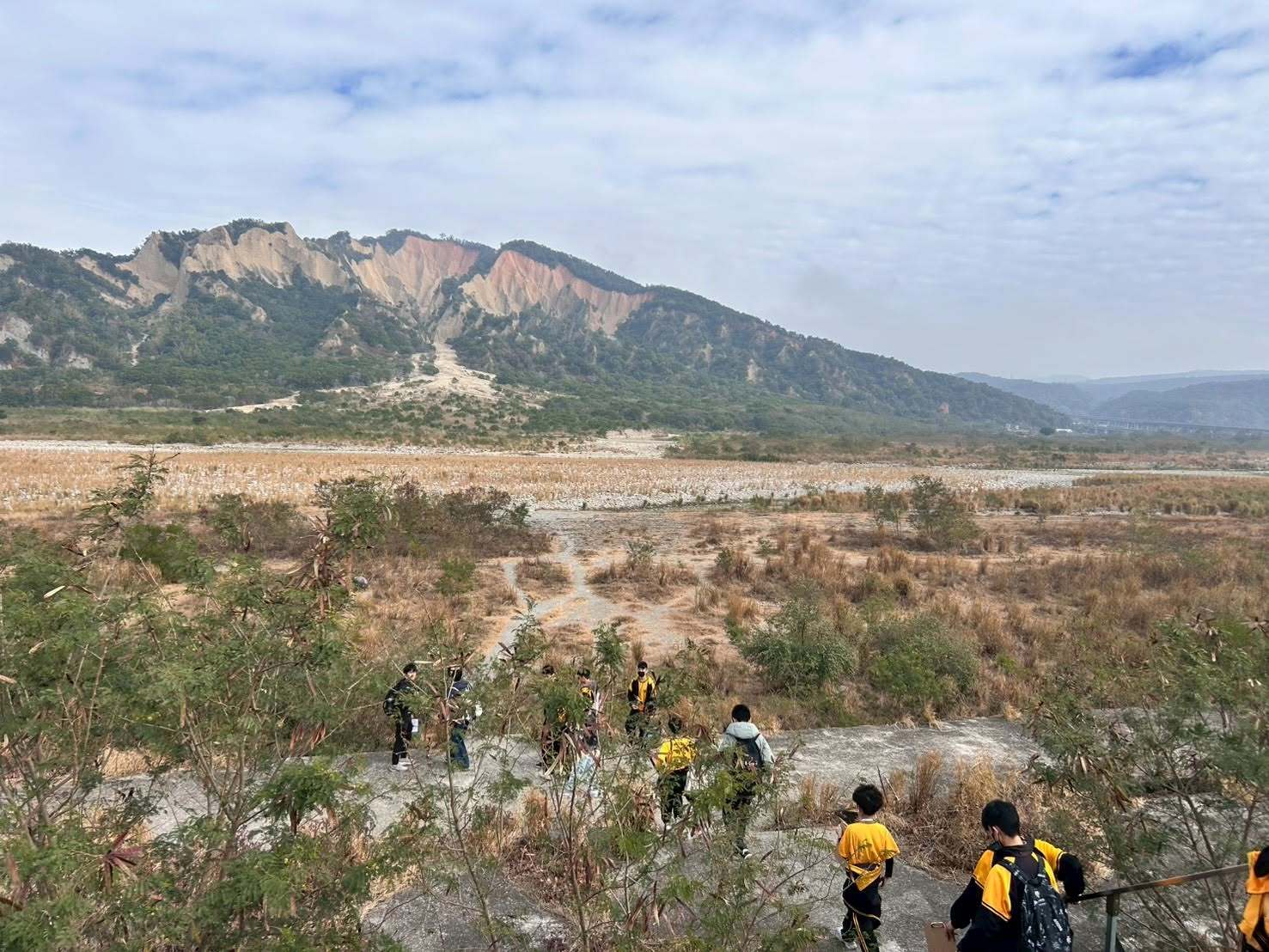
Using the Houli and Taian settlements, the Da-an River basin, the Tucheng embankment, and Shigang Dam as case studies (Figure 35), the camp guided students to examine how river terraces, floodplains, irrigation canals, and water facilities relate to settlement development. By observing river landforms, debris flow terrain, channel patterns, and embankment functions on site, students learned how floods, erosion, and extreme rainfall affect natural environments and human settlements, and how flood control engineering and water resource management support climate change adaptation. The Shigang Dam case also showed how earthquakes and environmental change affect the safety of water facilities and regional development, helping students develop concepts of disaster risk identification, environmental resilience, and sustainable development and better understand climate change impacts and adaptation strategies.