
SDG 13.3.5
SDG 13.3.5 Environmental education collaborate with NGO
NCUE works with several non-governmental organizations (NGOs) on environmental education and climate adaptation projects covering ecological art, sustainable fisheries and wetlands, climate resilience governance, and invasive species control. In 2025, five collaborative projects were under way (Table 1), supporting the environmental sustainability of local communities and industries and strengthening local adaptation to climate change.
| No. | Programme |
|---|---|
| 1 | Ecological Healing and Green Sustainability: Changhua Ecological Art Project |
| 2 | Resilient Changbin: Climate Change and the Sustainability of Changhua's Coastal Environment and Industries |
| 3 | Changhua Coastal Meretrix lusoria Habitat Survey and Conservation Education Promotion Program |
| 4 | Climate Resilient Development and Adaptive Governance: Framing Just Transition into a Participatory Policymaking Approach |
| 5 | Taoyuan International Airport Corporation Program / Commissioned Planning and Design for Invasive Red Fire Ant Control Operations |
1. Ecological Healing and Green Sustainability: Changhua Ecological Art Project
In response to the ecological crisis caused by global warming, NCUE's Department of Fine Arts launched the 2025–2027 USR project "Ecological Healing and Green Sustainability: Changhua Ecological Art Project." With local care as its main theme, the project supports UN SDG 13 (Climate Action) and held the free activities listed in Table 2.
| No. | Activity | Number of Participants |
|---|---|---|
| 1 | Active Aging Horticultural Therapy Series Workshops | 234 |
| 2 | Green Partners of Our Beautiful Earth: The Wonderful Magic of Plants Workshop | 101 |
| 3 | Art and Alternative Therapies / Green Happiness Corner: Horticultural Therapy Workshop | 65 |
| 4 | Changhua Christian Hospital Active Aging Horticultural Therapy Series Workshops | 90 |
| 5 | Forest Breathing Together: Outdoor Ecological Tour Workshop at Eastern Park, Siangshan Area, Bagua Mountain | 90 |
| 6 | Changhua Christian Hospital Grandparents-Grandchildren Festival - Air Plant DIY Handcraft Workshop | 25 |
| 7 | Horticultural Therapy Workshop - Slow Green Time: A Beautiful Garden of Blessings | 22 |
| 8 | Horticultural Therapy Workshop - Light of Sprouts: Planting Seeds of Hope | 23 |
| 9 | Horticultural Therapy Workshop - Language of Flowers: Sending Messages of Gratitude | 24 |
| 10 | Horticultural Therapy Workshop - Spring Breathing: Herbal Tea and Meridian Relaxation | 35 |
| 11 | Horticultural Therapy Workshop - Early Summer Greenery: Mugwort-Scented Dreams | 34 |
| 12 | Treasure Map in Picture Books Workshop | 56 |
| 13 | Horticultural Therapy Research / Green Happiness Corner: Horticultural Therapy Guangfu Community Workshop | 60 |
| 14 | Horticultural Therapy Research / Green Happiness Corner: Horticultural Therapy Huabei Community Workshop | 67 |
| 15 | Horticultural Therapy Workshop - Black Bean and Red Date Tea with a Calming Meridian Massage Mallet | 40 |
| 16 | Inter-University Ecological Art Exhibition / "A Travel Guide for Grey-faced Buzzards: Encounters in Four Seasons" | 292 |
| 17 | Ideal Habitat - Grassland Art Season | 150 |
(1) Inter-University Ecological Art Exhibition with the Department of Ecology and Humanities, Providence University: "A Travel Guide for Grey-faced Buzzards: Encounters in Four Seasons"
(a) On March 18, 2025, the exhibition opened with a guided tour and exchange activities for faculty, student exhibitors, and curators from both universities.
(b) From March 17 to March 28, 2025, the exhibition received about 292 visits (Figures 1–2).
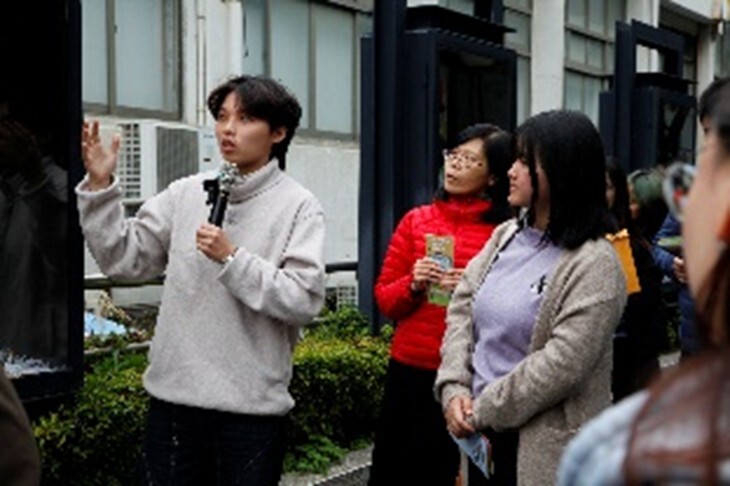
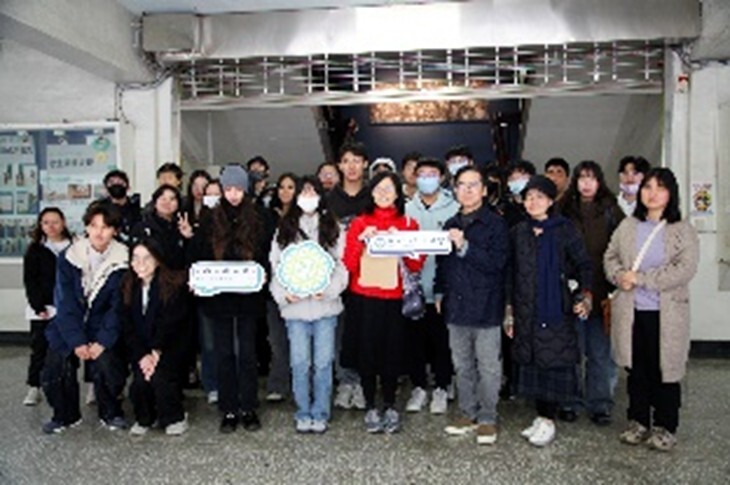
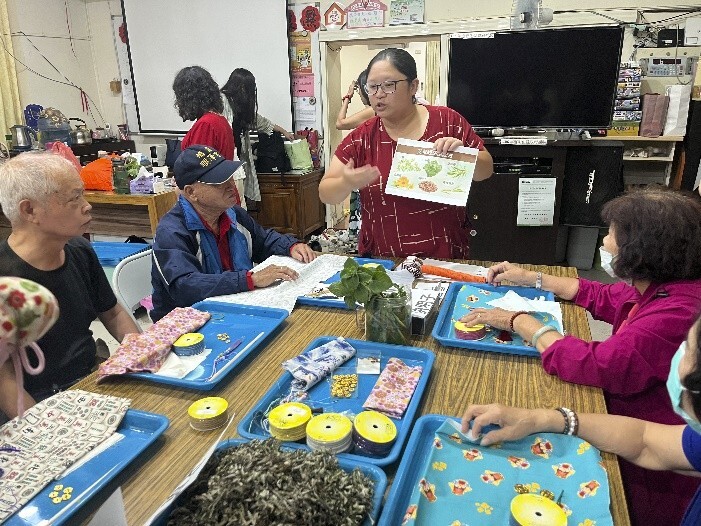
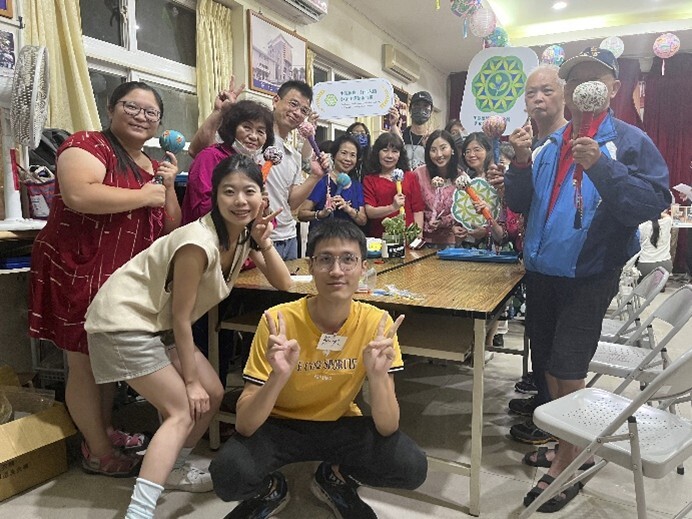
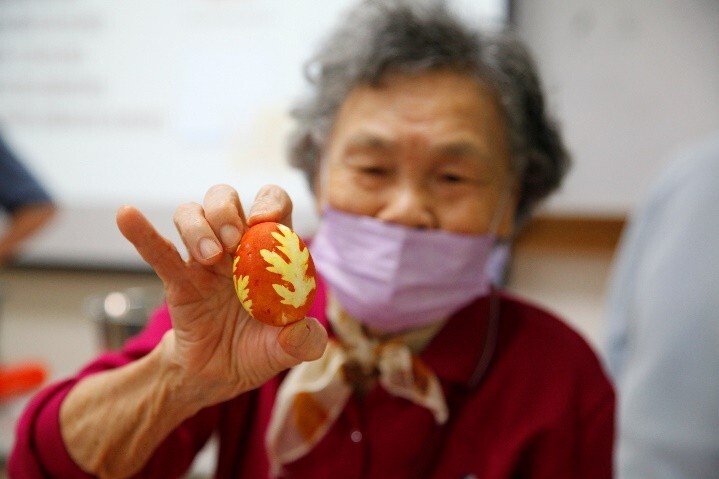
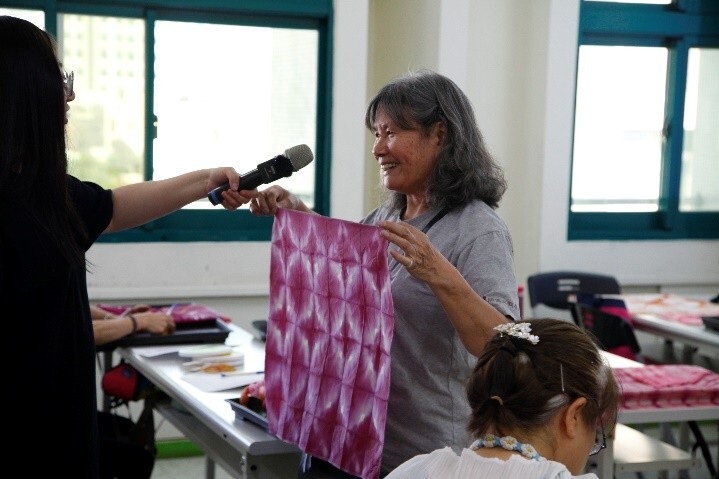
(2) The project uses urban greening to support ecological healing and provides gardening courses for older adults. NCUE held 26 horticultural therapy workshops with 966 participants in total in partnership with the Changhua Active Aging Learning Center, the Health Promotion Section of Changhua Christian Hospital, the Changhua Christian Hospital Dementia Center, Zhongzhang Veterans Home, Guangfu Community, Huabei Community, Changhua Yongfu Church, and Hsin Hsi Wang Day Activity Centre (Figures 3–6).
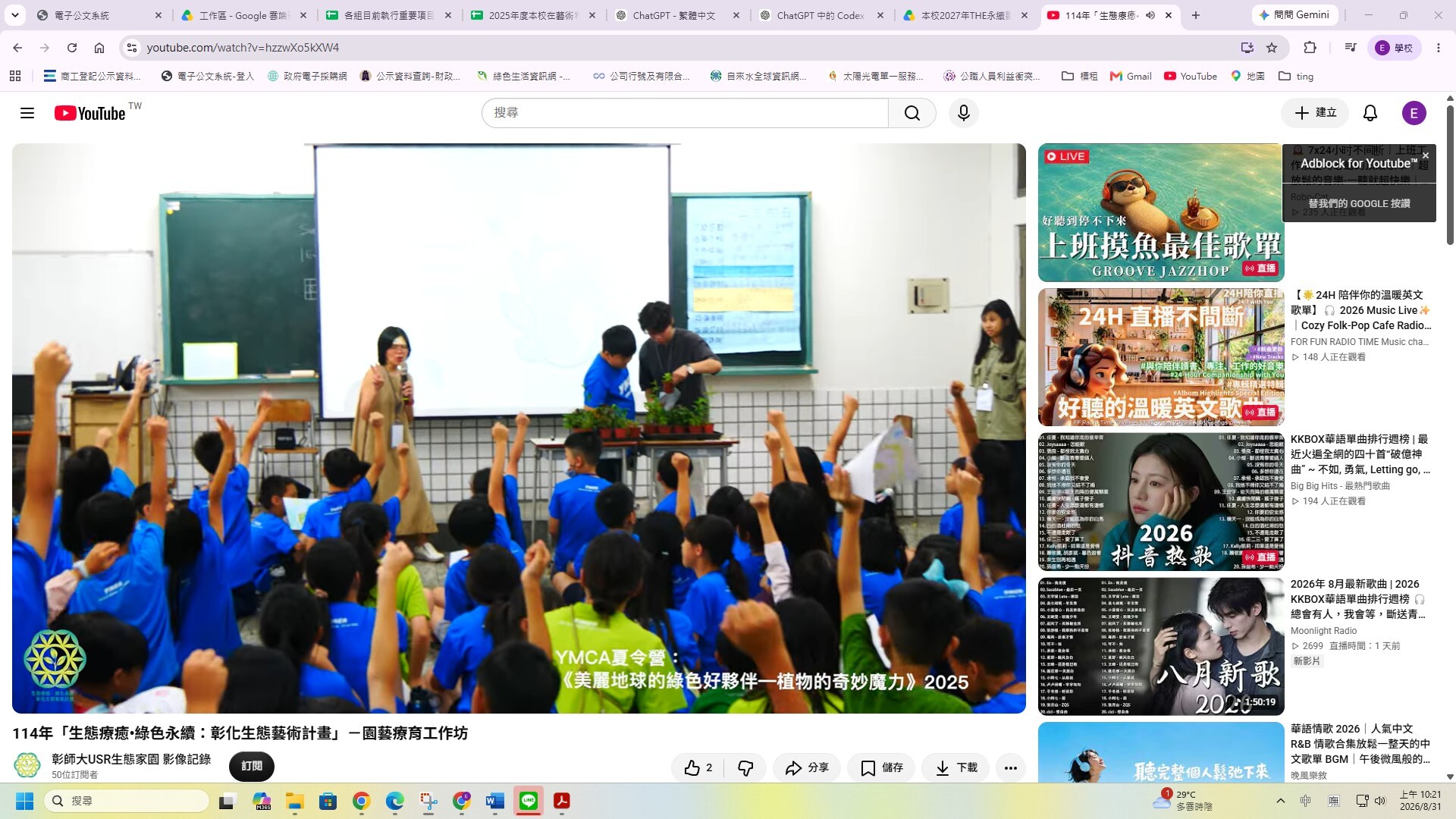
Horticultural therapy workshop video (Figure 7): https://www.youtube.com/watch?v=hzzwXo5kXW4
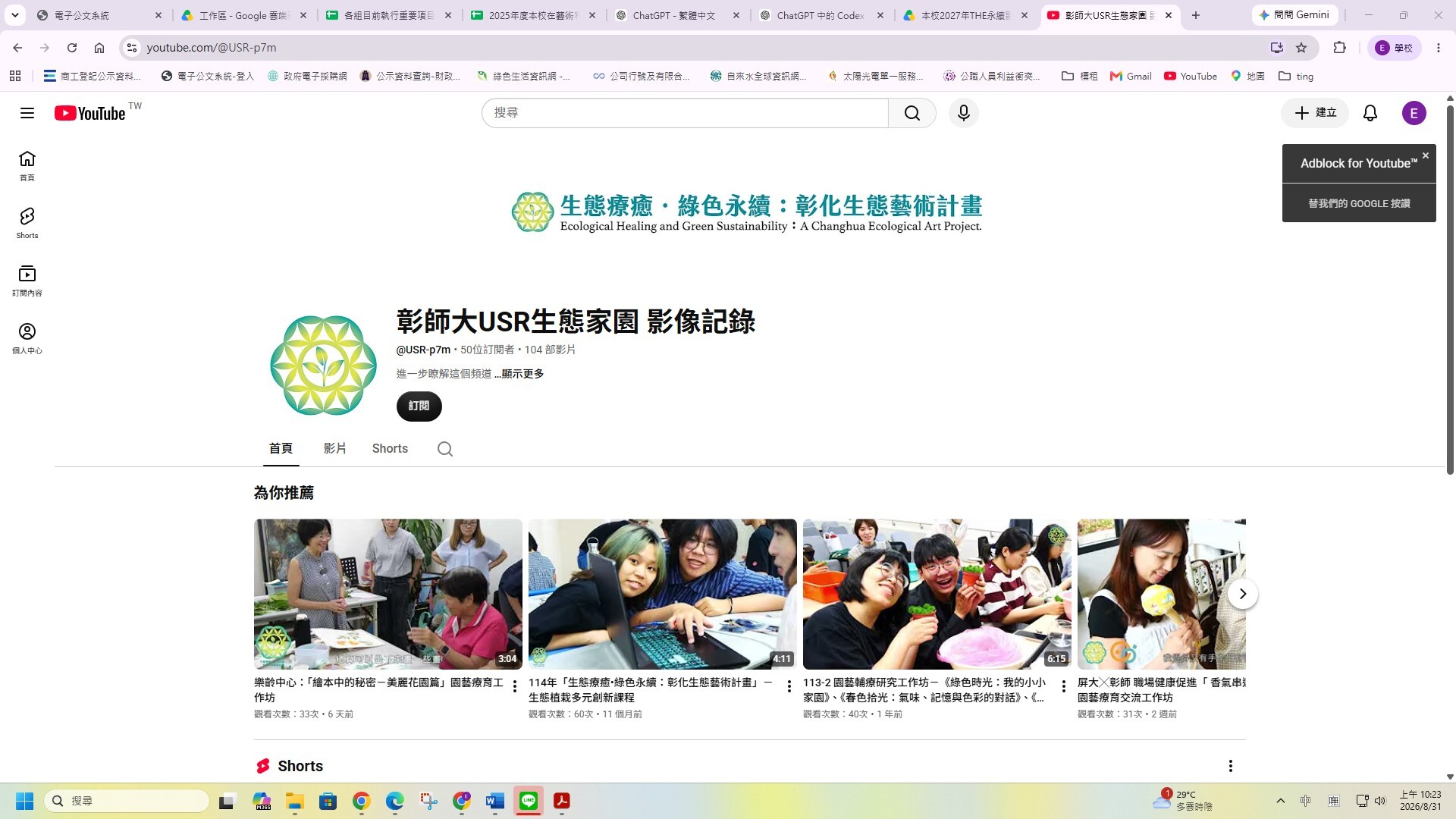
Project activity video archive (Figure 8): https://www.youtube.com/@USR-p7m
2. Resilient Changbin: Climate Change and the Sustainability of Changhua's Coastal Environment and Industries
NCUE works with environmental NGOs such as the Ecological Society of Taiwan to bring ecological surveys, wetland environments, and blue carbon into local climate and environmental education and practice. In 2025, experts from the Ecological Society of Taiwan, the Changhua Marine Food Research Base, and the Changhua County Tour Guide and Interpretation Association led workshops on drone-based environmental surveys and on wetland and waterbird ecology (Table 3 and Figure 9). Combining blue carbon, wetland conservation, and environmental surveys, these workshops built students' and local participants' understanding of coastal environmental change and their practical skills in climate adaptation.
Project Activity Facebook Fan Page Link: https://www.facebook.com/photo?fbid=998215875818508&set=pcb.998216019151827&locale=zh_TW
| Date | Activity Name | Number of Participants |
|---|---|---|
| 2025.03.18 | Drone Environmental Survey Workshop | 50 |
| 2025.04.02 | Key Codes of Wetland and Waterbird Ecology Workshop | 50 |
| 2025.04.15 | Green Energy and Western Taiwan Coastal Resources Workshop | 25 |
| 2025.05.20 | Eco-friendly Aquaculture Fishpond Workshop | 25 |
| 2025.10.25 | Coastal Resources and Sea Cow Culture Field Trip | 18 |
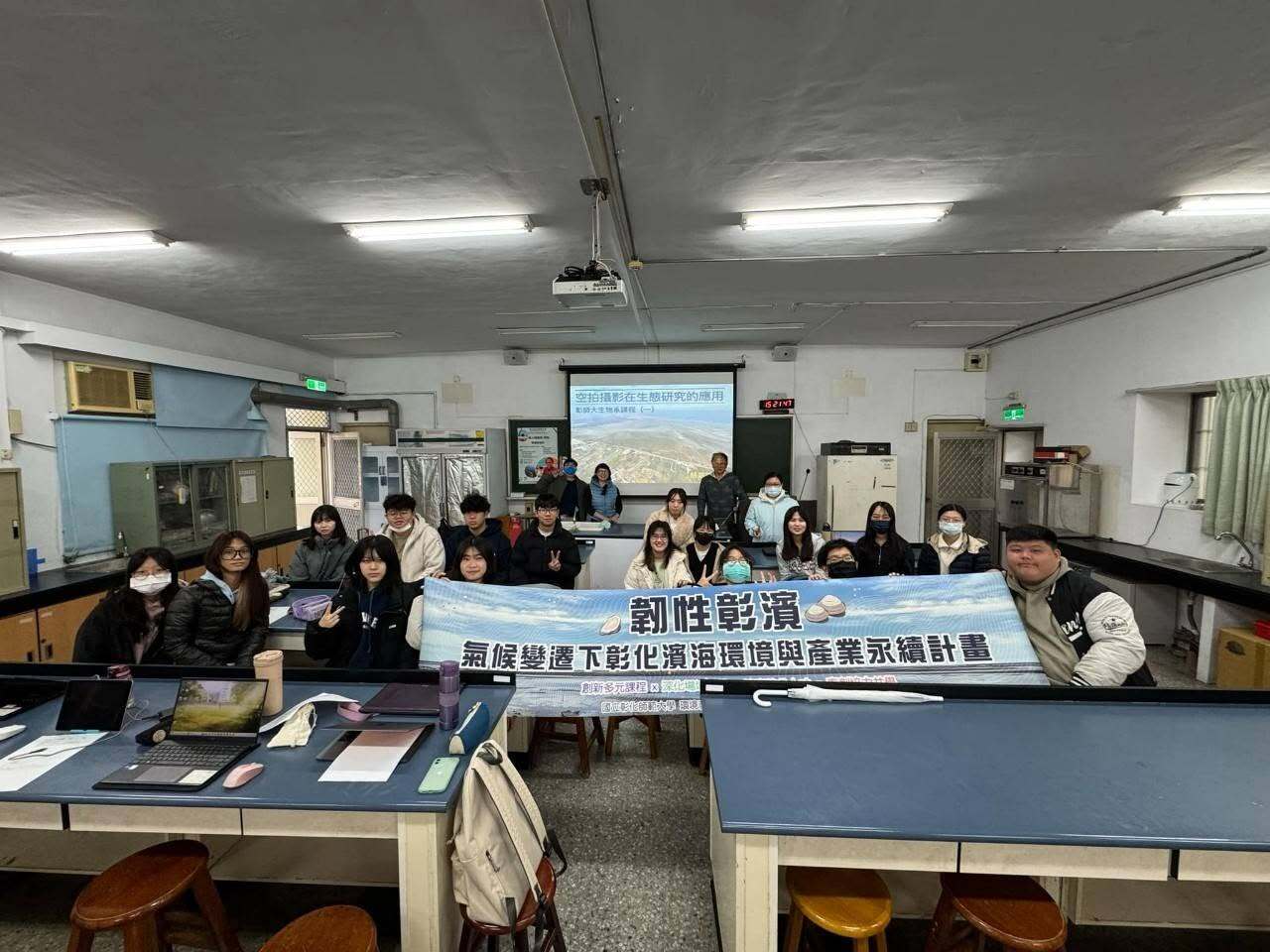
3. Changhua Coastal Meretrix lusoria Habitat Survey and Conservation Education Promotion Program
(1) Under the Ministry of Education's fourth-phase University Social Responsibility (USR) Project "Resilient Changbin: Climate Change and the Sustainability of Changhua's Coastal Environment and Industries," NCUE combined the 2025 Changhua Coastal Meretrix lusoria Habitat Survey and Conservation and Restoration Promotion Program to deliver local climate change education through university courses, intertidal surveys, aquaculture environment management, marine education, and citizen science activities. The education focuses on coastal risks such as extreme heat, heavy rainfall, drought, salinity changes, and deteriorating aquaculture water quality, and helps students and communities understand their impacts on aquaculture, biodiversity, blue carbon, and the resilience of local industries.
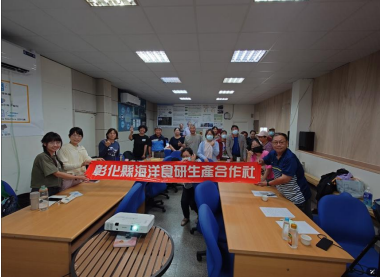
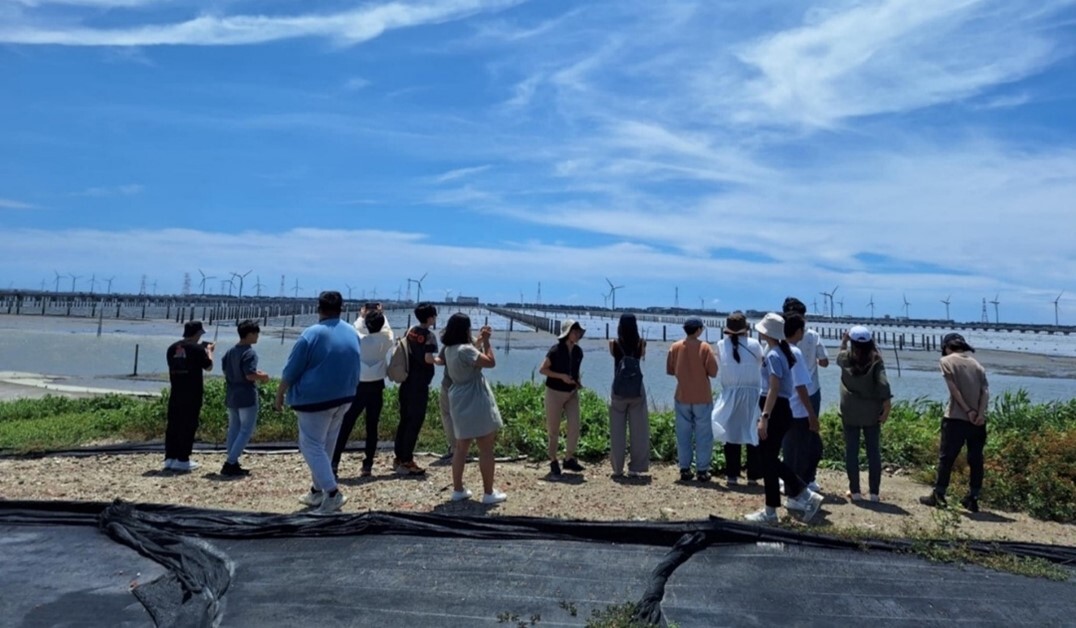
(2) NCUE worked with the Changhua County Marine Food Research Production Cooperative and local groups on hard clam habitat surveys, substrate improvement, and marine citizen scientist training at Xinbao Wetland, Fangyuan Township (Figure 10). In 2025, the project conducted 4 hard clam habitat surveys with 50 survey volunteer training visits, 5 Junior Marine Citizen Scientist activities (146 participant visits), and 3 outdoor ecological survey and field practice sessions (73 participant visits). Activities included water quality and dissolved oxygen testing, sediment grain size analysis, identification of hard clams and other bivalves, benthic surveys, intertidal biodiversity observation, and substrate improvement trials using crushed waste oyster shells. The survey results are used to track habitat health and to understand how extreme weather and changing environmental conditions affect aquaculture and intertidal ecosystems, and they inform courses, volunteer training, and community conservation actions.
(3) Through collaboration among the university, junior high schools, elementary schools, communities, and the aquaculture industry, and a "big hands leading small hands" marine education model, students not only learned climate change concepts but also participated in on-site observation, data recording, environmental interpretation, and action plan discussions, forming a continuous learning model from climate risk awareness, mitigation, and adaptation education to local monitoring and early warning.
4. Climate Resilient Development and Adaptive Governance: Framing Just Transition into a Participatory Policymaking Approach
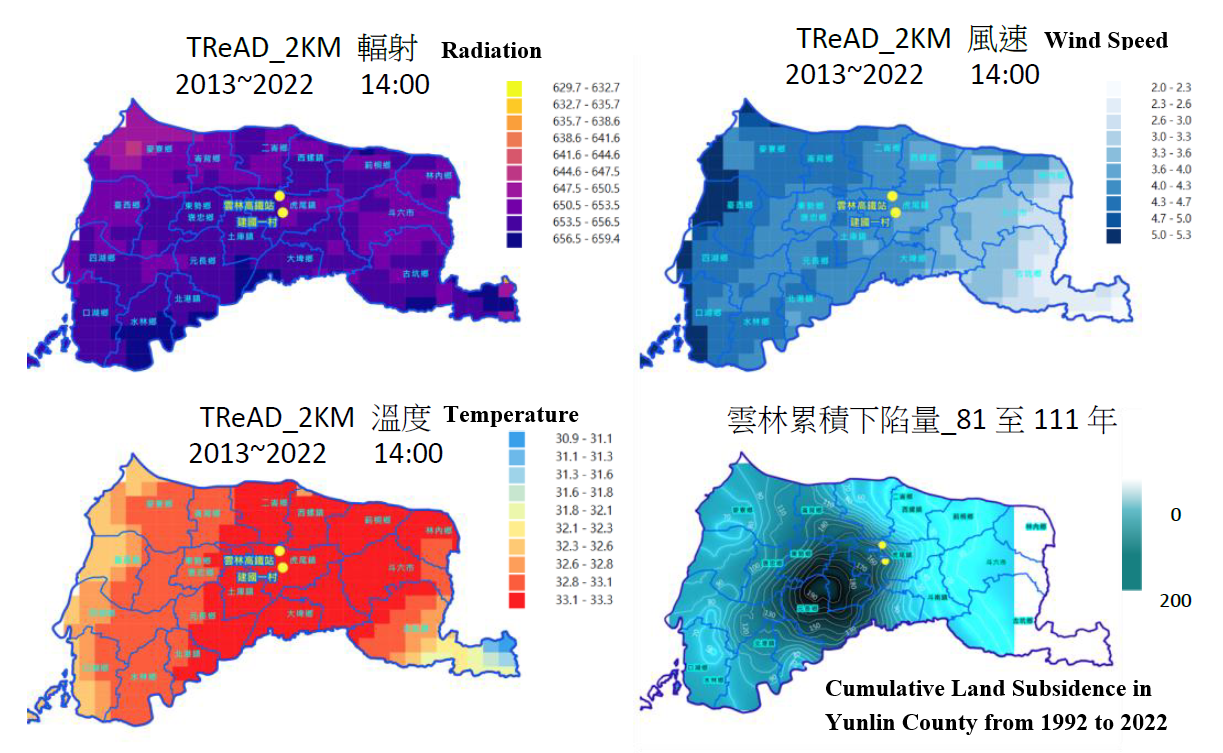
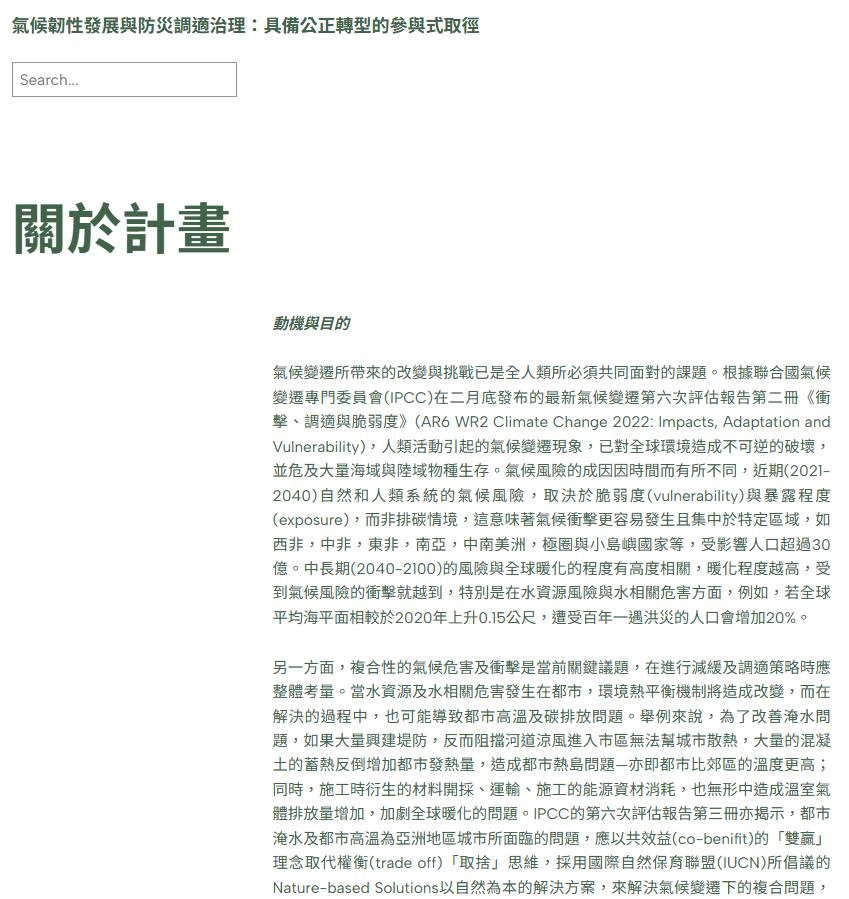
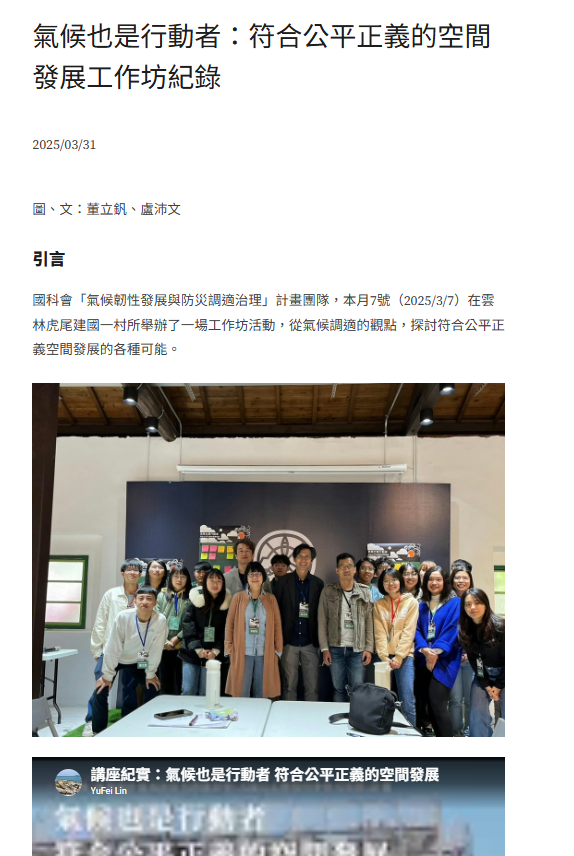
(1) This study uses a participatory approach to advance just transition strategies for climate resilience, with the goal of strengthening disaster adaptation governance. In spring 2025, the research team held the "Climate Actors" workshop in Huwei, Yunlin, applying image analysis to examine urban development, industrial transition, and heat risk and to agree on directions for action. The team built a context-awareness system and completed spatiotemporal analyses of heat risk in Yunlin, Changhua, and Taichung, providing a data foundation for local climate justice, and compared literature and policies on just transition to identify features unique to Taiwan. On offshore wind power, the study found that current compensation mechanisms do not ensure fair participation. Through regular collaboration and international exchange, the team established a partnership with Dartmouth College in the United States to support long-term research on renewable energy. The research is expected to produce a methodology for incorporating justice principles into climate decision-making and to propose equitable policy recommendations for disaster prevention and adaptation (Figures 11–14).
(2) Related Webpage Links:
(a) https://justransition.wordpress.com/team/
(b) https://eyesonplace.net/2025/03/31/27656/
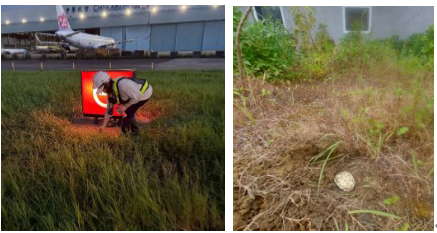
5. Taoyuan International Airport Corporation Program / Commissioned Planning and Design for Invasive Red Fire Ant Control Operations
Taoyuan International Airport Corporation Program / Commissioned Planning and Design for Invasive Red Fire Ant Control Operations (Figure 15).
Through collaboration with a range of NGOs, NCUE combines environmental education and climate adaptation work across sectors. These partnerships increase local community participation in climate action and, through data monitoring, support for environmentally friendly industries, and international cooperation, build a sustainable development model that links education, scientific research, and practice to strengthen society's resilience to climate change.