
SDG 10.3.1
SDG 10.3.1 Proportion of international students from developing countries
Number of students
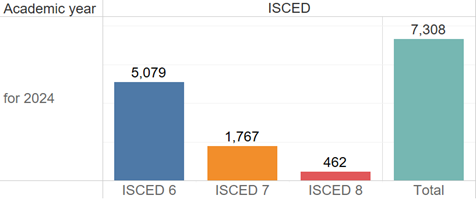
Figure 1 shows the number of FTE students at NCUE. The total number of FTE students in 2025 was 7,383, including 5,139 Bachelor’s students, 1,792 Master’s students, and 452 Doctoral students.
Number of international students from developing countries
1. Number of international students from developing countries
In 2025, there were a total of 476 students from developing countries at NCUE (including those from Hong Kong and Macau), accounting for 6.31% of the total student population. The distribution of students among different academic programs is as shown in Table 1. Table 2 provides an analysis of the countries of international students at NCUE, with students coming from countries such as Malaysia, Indonesia, India, etc.
| Program | Students from developing countries | Number of students | Percentage |
|---|---|---|---|
| Bachelor’s program | 324 (including 55 TEEP students, 13 exchange students from China, and 3 exchange students from other countries) | 5,216 | 6.21% |
| Master’s program | 70 (including 11 TEEP students, 4 exchange students from China, and 1 exchange students from other countries) | 1,809 | 3.87% |
| Doctoral program | 22 (including 4 TEEP students) | 458 | 4.8% |
| Mandarin Preparatory Class in the IFP | 60 | 60 | 100% |
| Total | 476 (including 70 TEEP students, 17 exchange students from China, 4 exchange students from other countries, and 60 Mandarin preparatory students in the IFP) | 7,543 | 6.31% |
※Note: TEEP is an abbreviation of Taiwan Experience Education Program.
| Country | Year 2025 |
|---|---|
| Malaysia | 133 |
| China | 89 (including 47 students from Hong Kong, 25 students from Macao, and 17 exchange students) |
| Vietnam | 68 (including 34 IFP Mandarin preparatory students in and 4 TEEP students) |
| India | 35 (including 25 TEEP students and 1 exchange students) |
| Indonesia | 106 (including 9 IFP Mandarin preparatory students, 27 TEEP students and 3 exchange students) |
| Mongolia | 1 (IFP Mandarin preparatory students) |
| South Africa | 2 |
| Philippines | 18 (including 16 IFP Mandarin preparatory students and 2 TEEP students) |
| Pakistan | 14 (including 3 TEEP students) |
| Thailand | 9 (including 8 TEEP students) |
| Bangladesh | 1 (TEEP) |
| Total | 476 (including 72 students from Hong Kong and Macao, 17 exchange students from China, 4 exchange students from other countries, and 70 TEEP students) |
Record date set by Ministry of Education: Oct. 15, 2025
Comprehensive Support System for International Students from Developing Countries
NCUE regards "educational equity" as a core value in the governance of a globalized campus. In order to substantively bridge the gap in transnational educational resources and promote upward mobility among global youth, NCUE is dedicated to creating unobstructed pathways to higher education for students from low-income, lower-middle-income, or high-potential developing countries and regions as defined by the United Nations and Taiwan's Ministry of Education, thereby breaking down transnational educational inequality caused by disparities in students' countries of origin.
1. Demographic Analysis of the Diverse Student Body from Developing Countries
In 2025, NCUE provided comprehensive support to a total of 476 international students from developing countries and regions (including degree-seeking international students, students under the Ministry of Education's New Southbound Youth Development Program, students from China, Hong Kong, and Macau, and short-term international exchange students), accounting for 6.31% of the university's total FTE student number (7,383). In addition to its longstanding engagement with Southeast Asia, NCUE has actively expanded its outreach to South and Central Asia and African partner countries, extending the diversity of its student sources and ensuring a campus environment with a high degree of cultural diversity and inclusiveness. Through precision-targeted efforts across academic levels and diverse student sources, NCUE ensures that students who have traveled far to study here enjoy equal admission opportunities at the bachelor's, master's, and doctoral levels alike.
2. Expansion of International Pathways and Local Employment Empowerment
To substantively narrow the resource gap faced by international students, NCUE's Office of International Affairs works closely with all colleges, proactively engaging in educational outreach across Southeast and South Asia, and designing forward-looking, innovative academic programs to safeguard equitable access to education and employment for disadvantaged international students:
(1) Inclusive Education through the International Foundation Program
To eliminate the inequality in access to education caused by language barriers, NCUE has implemented a "1+4" academic pathway. During the first-year Chinese-language preparatory period, tuition and miscellaneous fees are fully waived, with students only responsible for basic dormitory fees; upon passing the TOCFL Level A2 test and transitioning into the undergraduate Department of Electronic Engineering, students continue to receive substantive economic support in the form of waived tuition and miscellaneous fees as well as accommodation costs during their first year. In the 2025 academic year, the International Foundation Program enrolled a total of 60 students from Indonesia, Vietnam, and the Philippines. Beginning in the 2025 academic year, NCUE has formally expanded the range of degree programs available for transition, adding five bachelor's programs—Electrical Engineering, Mechatronics Engineering, Electrical and Mechanical Engineering Technology, and Computer Science and Information Engineering—alongside the original Electronic Engineering program, substantially enriching students' academic pathways and future career development.
(2) "New Model Program" for Industry-Academia Collaboration to Precisely Eliminate Class Reproduction
(a) In 2025, NCUE was awarded NT$3 million in funding from the Ministry of Education under the Program for Staying and Working in Taiwan. This program primarily targets university graduates from Malaysia, Indonesia, Thailand, India, Vietnam, and the Philippines. The College of Engineering offers the "International Master's Program in Engineering," and the College of Science offers the "International Master's Program in Materials and Biotechnology and Science Education," both of which admitted Indonesian students into the International Master's Program in Engineering beginning in Fall 2025. The program's development goal is to deepen industry-academia collaboration and cultivate high-quality talent in artificial intelligence applications, with graduates expected to remain employed in Taiwan or work at overseas operations of Taiwanese enterprises.
(b) Partner enterprises of NCUE participate in curriculum design and provide living stipends of at least NT$10,000 per month for up to 24 months, along with paid internship opportunities. Upon graduation, students are given priority for employment by partner enterprises; if such employment does not materialize, NCUE provides career placement assistance.
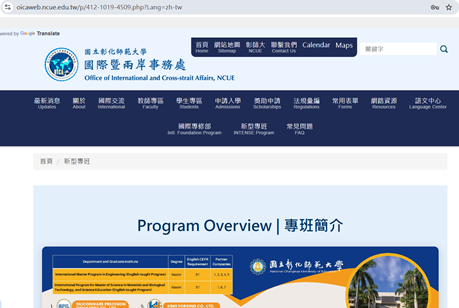
(c)NCUE has partnered with 11 well-known benchmark enterprises (including Siliconware Precision Industries, Yuli Electric, Kokusai Electric, E-Lead Electronic, Sanjing Corporation, and Everest Textile, among others), as in Figure 2, all 11 companies participate 100% in curriculum design for the program and provide 100% priority hiring opportunities for students.
(3) Deepening Regional Recruitment through the Ministry of Education's TEEP Program
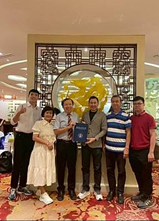
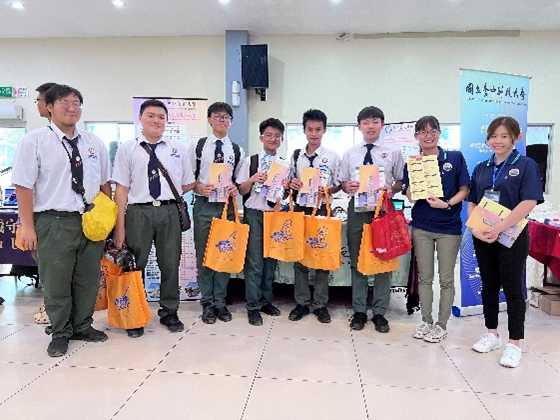
Through the TEEP scholarship program, NCUE provides internship opportunities for students from South and Southeast Asian countries, encouraging them to apply for admission upon completion of their internships. In addition, in 2025 NCUE participated in Taiwan Higher Education Fairs held in Indonesia and Malaysia and visited approximately 15 high schools in Indonesia and Malaysia (including East and Peninsular Malaysia) to promote the university. By offering incentives such as tuition and accommodation fee reductions and NCUE's high-quality teaching, NCUE sought to attract local students to apply for admission. These efforts also reflect the university’s proactive approach to expanding its educational outreach across Southeast and South Asia (Figures 3-4).
3. Comprehensive Financial Assistance for Transnational Talent and a Global, Inclusive Support Network
(1) Diversified Financial Assistance and Precision Resource Allocation
In 2025, NCUE integrated central government funding, self-raised university resources, and support from private organizations to build a multi-layered financial support system, substantively alleviating the constraints on international students' studies caused by transnational mobility and economic background. The distribution of financial assistance is shown in Table 3 below:
| Item | Services | Number of students served and the amount |
|---|---|---|
| Tuition and miscellaneous fee reduction for overseas Chinese students | Those who received the aid could have their tuition and miscellaneous fees reduced by 1/3 in the fall and spring semesters. | 41 students / NT$310,665 |
| Key Points of NCUE’s Implementation of Rewards for Foreign Students | Those who received the rewards could be exempted from tuition, miscellaneous, and accommodation fees for one academic year. | 88 students / NT$5,370,640 |
| Installment arrangements for tuition and miscellaneous fees | Economically-disadvantaged overseas Chinese students and foreign students with proof could pay their tuition and miscellaneous fee in up to three installments. | 22 students / NT$794,756 |
| Scholarships for outstanding students (Office of Student Affairs) | Including the Scholarship for Distinct Academic Performance, Scholarship for Outstanding Talent, and Scholarship for Service and Dedication | 9 students / NT$52,000 |
| Work-study student subsidies | The served students include students with disabilities, indigenous students, students eligible for the aid plan for disadvantaged students in colleges and universities (students from low-income households as well as low-to medium-income households, families in hardship, and children of persons with disabilities), students whose families were facing financial difficulties due to unexpected events, as well as economically-disadvantaged overseas Chinese students and foreign students. | 10 students / NT$210,000 |
| Graduate scholarships | Awarded to those with outstanding performance in academic research. | 10 students / NT$600,000 |
| Taiwan Experience Education Program (TEEP) | The scholarship, including accommodation, airfare, living expenses, insurance, etc., was granted for up to 6 months. | 74 students / NT$ 7,890,000 |
| Professionalization Program for Career Counseling for International Students Staying in Taiwan After Graduation | The Program enhances employability for students from developing countries through language courses, career counseling, and internships, supporting their development in Taiwan. | NT$3,000,000. |
(2) Establishment of the "Cross-national Dual-Mentor System" and Peer Support Network
To ensure that international students enjoy equal psychological security on campus, NCUE has moved beyond the traditional single-mentor framework by implementing a dual-mentor system combining a "regular class mentor" with a "departmental international mentor," providing international students with academic adaptation support, guidance in adjusting to life and culture in Taiwan, and in-depth psychological counseling. In addition, the Office of International Affairs regularly trains "local student buddies" to provide timely peer support with coursework, accelerating the reduction of cross-cultural barriers.
(3) Advancing the Professionalization Program for Career Counseling of International Students in Taiwan
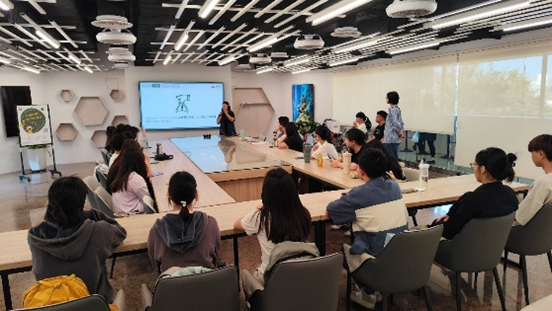
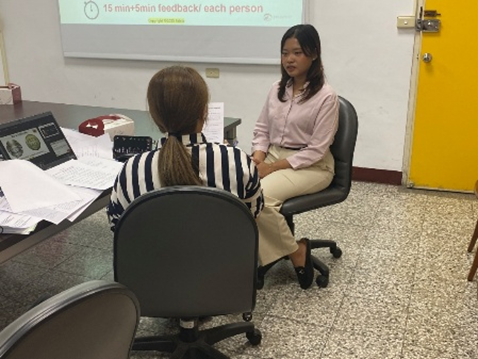
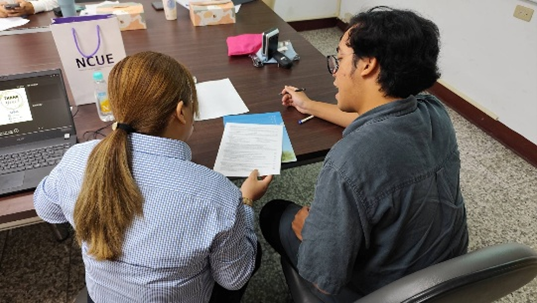
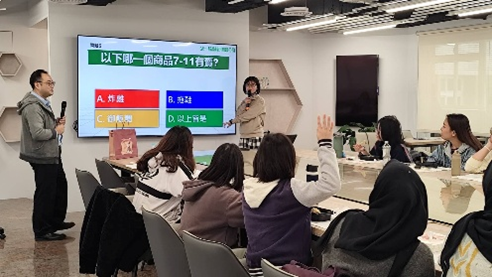
Since 2024, this program has been coordinated by NCUE's Office of International Affairs, which has established two bilingual career counsellors dedicated to the program. Drawing on resources from the Ministry of Labor and NCUE's Office of Student Affairs, the program carries out: 1. one-on-one consultation services regarding employment in Taiwan; 2. corporate site visits for international students; 3. on-campus recruitment events and briefings by enterprises; 4. establishment of industry-academia collaboration mechanisms with enterprises, along with employment guidance, tracking, and care services for participating students; and 5. career lectures, resume review sessions, mock interviews, and workshops on employment regulations. To date, the program has held 8 career development lectures, 8 resume review sessions, 6 mock interviews, 7 corporate site visits, 10 corporate briefings sessions, and 1 international student job fair (Figures 5-8), with nearly 600 cumulative participants and over 100 one-on-one career counseling sessions provided. According to graduate follow-up data, 30 international graduates have remained in Taiwan for employment, while 16 have continued their studies in Taiwan. Most of the students benefiting from the program come from lower- and lower-middle-income countries in Southeast and South Asia. (Job fair news coverage: https://www.ncue.edu.tw/p/406-1000-30684,r93.php?Lang=zh-tw)[cite: 62, 95]
4. Transnational Academic Connections and Multicultural Integration on Campus
NCUE views internationalization as a process of mutual empowerment. Beyond recruiting students, NCUE builds equitable bridges of communication between local communities and the international community through intensive transnational academic dialogue and campus cultural celebrations.
(1) Deepening Partnerships and Academic Co-prosperity with Developing Countries
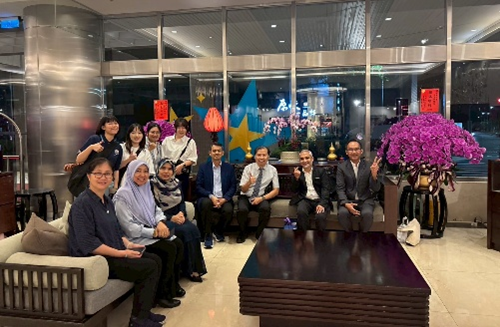
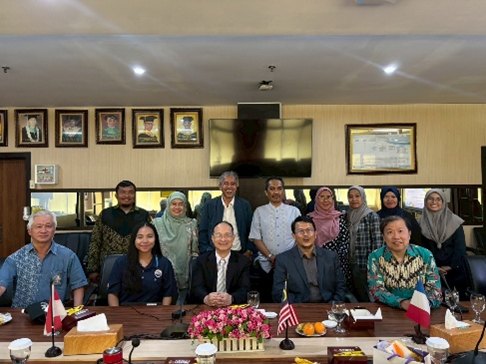
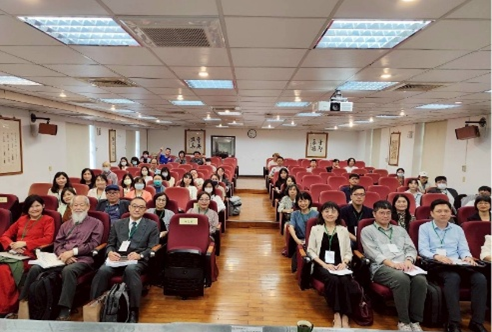
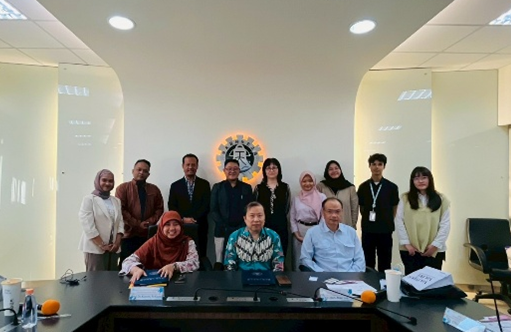
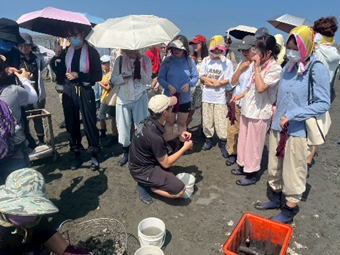
NCUE has more than 260 sister institutions worldwide, approximately two-thirds of which are located in developing countries (including China). Through various programs in teacher training, internships, institutional development, guest lecturing, and academic conferences, NCUE engages in online and in-person exchanges with its overseas sister institutions, enhancing international participation among faculty and students, and contributing its academic and educational expertise to partner institutions. These exchange activities span countries including India, Indonesia, Thailand, the Philippines, and Malaysia. Table 4 below lists NCUE's academic and learning-oriented exchange activities with institutions in developing countries in 2025, with examples of these activities shown in Figures 9-13.
| Date | Subjects | Number of Participants |
|---|---|---|
| 2025/01/08 | Faculty from Universitas Bunda Mulia (UBM), Indonesia, participated in an online academic exchange with NCUE. | 1 |
| 2025/02/23-03/02 | NCUE’s International Office Affairs visited two universities in Malaysia, Universiti Teknologi MARA (UiTM) and Tunku Abdul Rahman University of Management and Technology (TAR UMT). | 1 |
| 2025/04/15 | Faculty and students from Universitas Negeri Semarang (UNNES), Indonesia, participated in an online academic exchange with NCUE. | 36 |
| 2025/05/23 | Faculty from Universitas Kristen Satya Wacana (UKSW), Indonesia, participated in an online academic exchange with NCUE. | 4 |
| 2025/06/03 | Faculty from Indonesia International Institute for Life Sciences (i3L) participated in an online academic exchange with NCUE. | 5 |
| 2025/06/05 | Faculty from Universitas Siliwangi (UNSIL), Indonesia, participated in an online academic exchange with NCUE. | 4 |
| 2025/06/23 | Faculty from Eastern Visayas State University (EVSU), the Philippines, participated in an online academic exchange with NCUE. | 2 |
| 2025/06/26-08/05 | NCUE Faculty and Students Conduct Multicultural Teaching Activities at S.B.R. Chong Hwa High School in Malaysia | 5 |
| 2025/07/03 | Director General from the India Taipei Association visited NCUE for an academic exchange | 2 |
| 2025/07/06-07/16 | NCUE students participated in the 3rd National Workshop for Future Teachers among Hong Kong, Macao, and Taiwan University Students hosted by East China Normal University in China | 1 |
| 2025/07/07-08/23 | NCUE faculty and students participated in the Digital Innovation, Cultural Co-Creation — Summer Internship Program at S.B.R. Chong Hwa High School in Malaysia | 6 |
| 2025/07/20-12/30 | NCUE conducted the Chinese Language Teaching Assistant Internship Program at Schools in Indonesia | 5 |
| 2025/07/22 | Faculty from Widya Pratama Pekalongan, Indonesia, participated in an online academic exchange with NCUE. | 7 |
| 2025/07/22 | Faculty from the Universitas Islam Negeri (UIN) Ciputat Jakarta, Indonesia, participated in an online academic exchange with NCUE. | 7 |
| 2025/08/06 | Faculty from Universiti Teknologi MARA (UiTM), Malaysia, visited NCUE for an academic exchange | 6 |
| 2025/08/18-08/25 | NCUE’s International Office visited eleven universities in Indonesia, including Universitas Diponegoro (UNDIP), Universitas Negeri Semarang (UNNES), Satya Wacana Christian University, Widya Pratama Pekalongan, Siliwangi University, International Women University (IWU) , Universitas Komputer Indonesia (UNIKOM), SMAK KALAM KUDUS BANDUNG, Nusa Putra University, Syarif Hidayatullah State Islamic University (UIN) Jakarta, and i3L University (i3L). | 4 |
| 2025/08/24-09/01 | NCUE students participated in "The 7th Charming Gansu & Ethnic Customs" Summer Camp hosted by Northwest Normal University | 5 |
| 2025/08/27 | Faculty from İnönü University (INONU) in Turkey participated in an online academic exchange with NCUE. | 7 |
| 2025/09/08-09/09 | Fifteen universities from Indonesia visited NCUE for an academic exchange (Bhinneka Nusantara University, Bina Insani University, Gadjah Mada University (UGM), Gunadarma University, IPB University, ITB Ichsan Boalemo, ITN Malang, Widya Mandira Catholic University, STMIK Lombok, Satya Wacana Christian University, UIN Syarif Hidayatullah Jakarta, UNIKOM, Universitas Bakrie, USTI, and Wiraraja Universitas) | 19 |
| 2025/09/10 | Invest India participated in an online academic exchange with NCUE. | 2 |
| 2025/09/15-09/19 | Nine faculty members from the Malaysian Artists Society visited NCUE for academic exchange and mural painting. | 9 |
| 2025/09/15 | Faculty and students from Siliwangi University, Indonesia, participated in an online academic exchange with NCUE. | 22 |
| 2025/09/16 | Faculty and students from Gadjah Mada University (UGM), Indonesia, participated in an online academic exchange with NCUE. | 2 |
| 2025/09/18-10/01 | Eighteen students and two faculty members from Northwest Normal University in China participated in the Educational Exchange Camp hosted by NCUE. | 20 |
| 2025/09/23 | Teachers and students from Theresiana Vocational School, Indonesia, visited NCUE for an academic exchange | Approximate 50 |
| 2025/10/02-10/08 | NCUE’s International Office visited Methodist-2 Medan (Methodist China School) and four universities (Universitas Muhammadiyah Sumatera Utara, Universitas Mikroskil, Universitas Sumatera Utara, and Universitas Prima Indonesia) in Indonesia. | 3 |
| 2025/10/13 | IIT-Ropa, India, participated in an online academic exchange with NCUE. | 1 |
| 2025/10/23 | Faculty from Delhi Technological University (DTU), India, participated in an online academic exchange with NCUE. | 2 |
| 2025/10/29 | The United Chinese School Committees Association / Dong Zong, Malaysia, participated in an online academic exchange with NCUE. | 6 |
| 2025/10/31 | Faculty from Universitas Sumatera Utara (USU), Indonesia, participated in an online academic exchange with NCUE. | 4 |
| 2025/11/04-11/05 | Vice President from University Gadjah Mada (UGM), Indonesia, lead a delegation to visit NCUE for an academic exchange. | 6 |
| 2025/11/06 | Strategic Development Director at Chennai Institute of Technology, India, visited NCUE for an academic exchange. | 1 |
| 2025/11/06 | NCUE participated in Indonesian Computer, Electronics, and Instrumentation Support Society (IndoCEISS). | 30 |
| 2025/11/06 | Faculty from Wiraraja University (Unija), Indonesia, participated in an online academic exchange with NCUE. | 9 |
| 2025/11/07 | NCUE Department of Chinese Hosted the 34th Poetry Studies Conference: International Conference on “The Formation and Interpretation of Classical Chinese Fiction” | 60 (Approx.) |
| 2025/11/17 | Faculty and students from Universitas Islam Negeri (UIN) Syarif Hidayatullah Jakarta, Indonesia, participated in an online academic exchange with NCUE. | 9 |
| 2025/12/05 | Thaksin University in Thailand visited NCUE for an academic exchange. | 1 |
| 2025/12/11 | Faculty and students from Universitas AMIKOM Yogyakarta, Indonesia, visited NCUE for an academic exchange. | 5 |
| 2025/12/22 | Faculty and students from Universitas Gadjah Mada (UGM), Indonesia, participated in an online academic exchange with NCUE. | 97 |
| 2025/12/23 | Faculty from Universitas Gadjah Mada (UGM), Indonesia, participated in an online academic exchange with NCUE. | 21 |
(2) Building a Borderless, Inclusive Campus: On-campus Multicultural Activity Series
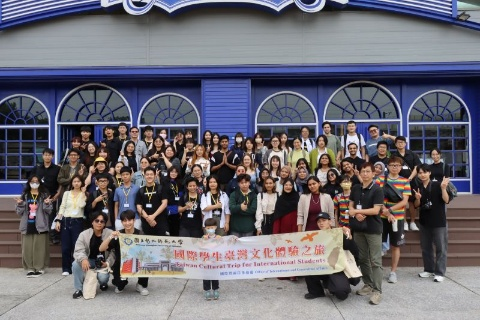
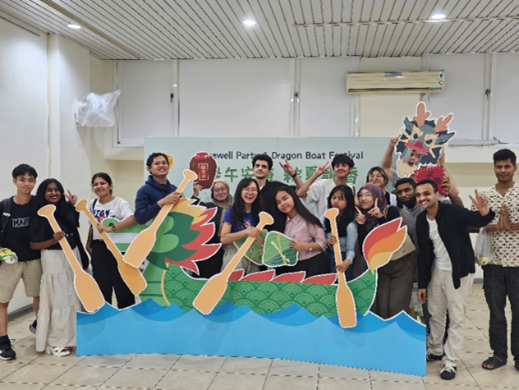
To promote in-depth dialogue between international students and local Taiwanese society, NCUE regularly holds large-scale multicultural celebrations and social engagement activities each year. The on-campus cultural integration activities held in 2025 are listed in Table 5 below (activity highlights shown in Figures 14-15):
(a) "Lecture Series on Global Education" and Cultural Experience Workshops: NCUE invites representatives from foreign institutions in Taiwan, professionals, or international friends to share content on various cultural topics and to lead hands-on activities, enhancing students' understanding of diverse cultures.
(b)"International Week" and "OCISA Week": Organized in collaboration with overseas Chinese and international student associations, these weeks feature a series of cultural lectures, workshops, exhibitions, stage plays, and fairs, promoting cultural exchange between international and local students.
(c)Community Exploration and Local Field-based Learning: NCUE organizes multiple "cultural experience tours," leading international students on educational and cultural visits to explore Taiwanese cultural sites and local communities, gaining in-depth exposure to local crafts and ethnic cultures, and promoting mutual multicultural understanding.
(d) "Chinese Culture International Summer Camp": NCUE invites overseas students to participate in a series of courses involving the Chinese language, local culture, and crafts, and leads them on visits to neighboring towns to gain first-hand experience of local Taiwanese culture.
| Date | Event | Number of participants (Approx.) |
|---|---|---|
| 02/27 | Spring Festival event - Lunar New Near Gathering | 100 |
| 03/26-04/02 | OCISA and Taiwanese Student Cultural Exchange Week: International Student Snack Shop and stage play "Ever-Present" | 300 |
| 04/26 | Central Taiwan Cultural Tour for international students | 76 |
| 05/22 | Exchange student farewell event & Dragon Boat Festival Celebration for international students | 84 |
| 06/07 | OCISA Graduation Gala: Stage play & farewell event | 280 |
| 06/21 | OCISA Graduation Farewell Party | 80 |
| 08/03-08/16 | 2025 Taiwanese Cultural Camp for Diponegoro University | 22 |
| 09/12 | Exchange Student Experience-sharing Session | 90 |
| 09/20-21 | Freshman and New Student Orientation and welcome events | 150 |
| 10/04 | Mid-autumn Party Welcome and Banquet for international students | 150 |
| 10/25 | Campus Fair - food and cultural booths by international students | 30 |
| 11/08 | Central Taiwan Cultural Tour for international students | 95 |
| 11/13 | Temple University & dual-degree study sessions | 25 |
| 11/14 | Lecture Series on Global Education: “Between Boundaries–From the Startup Nation to Taiwan” | 40 |
| 11/26 | Lecture Series on Global Education: “The Past and Present of Southeast Asian Ethnic Enclaves” | 55 |
| 12/06 | International Student Educational Visit | 130 |
| 12/12 | Exchange Student Farewell Party & Winter Solstice Gathering; Christmas Cultural Celebration for international Students | 100 |
| 12/27 | Christmas Banquet | 100 |
(3) Creating a Diverse and Inclusive Campus: Opening a Second Muslim Prayer Room
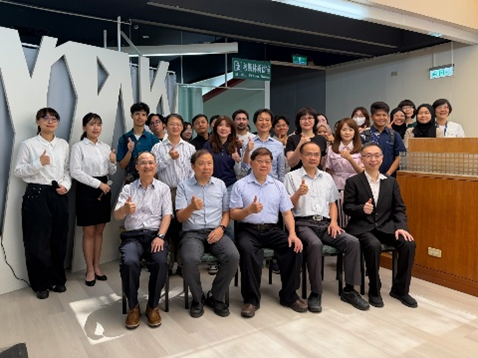
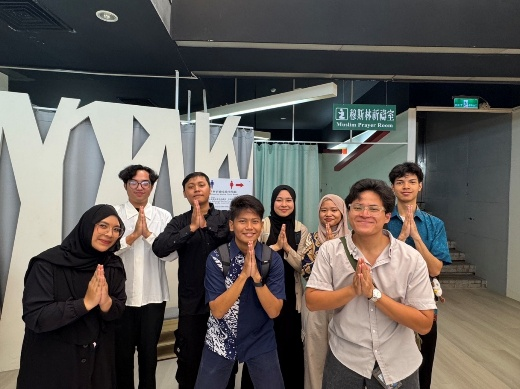
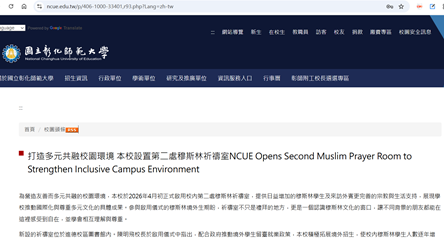
Following the establishment of its first prayer room in the I-House (International House) on the Jinde Campus in October 2023, NCUE opened its second on-campus Muslim prayer room in the Jinde Campus Library in April 2026, providing enhanced religious and daily living support for the university's growing number of Muslim international students and visiting international guests (activity highlights shown in Figures 16-18). The prayer room features separate areas for men and women, a Qibla (direction of Mecca) indicator, and a reading area, reflecting the university's respect for cultural diversity. Representatives of Indonesian students expressed hope that this space would serve as a window for cross-cultural exchange, fostering understanding and respect among faculty and students from different backgrounds and jointly building a friendly and inclusive international campus.
5. Institutionalized Knowledge Dissemination: Offering Multicultural Courses to Deepen Ethnic Understanding
In addition to a wealth of practical activities, NCUE further leverages its academic influence within the formal education system, weaving the core values of "inclusion and reduced inequality" into regular classroom instruction. According to statistics compiled by the Curriculum Division of the Office of Academic Affairs, in the 2025 academic year, various departments and institutes, the Center for Teacher Education, and the Center for General Education at NCUE regularly offered a total of 86 required and elective academic courses related to "multiculturalism and ethnic equality." NCUE provides abundant and interdisciplinary educational resources, aiming to fundamentally cultivate the next generation of societal leaders equipped with anti-discrimination literacy, cultural empathy, and global citizenship awareness.