

SDG 10.5.1
SDG 10.5.1 Proportion of employees with disabilities
Number of employees
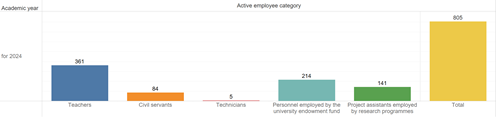
There were 804 active employees in 2025, and the statistics of different personnel categories are shown in Figure 1.
Number of employees with disability
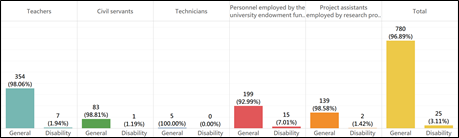
The number of employees with disabilities was 25 in 2025, and the proportion of employees with disabilities was 25/804=3.11%. The employment statistics for different personnel are shown in Table 1. NCUE is committed to providing care for individuals with disabilities, and our employment ratio for such individuals exceeds the legal requirement of 3% set forth in Article 38 of the People with Disabilities Rights Protection Act, reaching 3.11%. The statistical breakdown of employment ratios for various personnel categories is illustrated in Figure 2.
| Active employee category | Mild to moderate disability | Severe disability | Number of people |
|---|---|---|---|
| Teachers | 3 | 3 | 357 |
| Civil servants | 0 | 1 | 83 |
| Technicians | 0 | 0 | 5 |
| Personnel employed by the university endowment fund | 13 | 2 | 213 |
| Project assistants employed by research programs | 0 | 3 | 146 |
| Total | 16 | 9 | 804 |
Ensuring Dignified Labor for Employees with Disabilities: Implementing a Universally Designed Workplace and Comprehensive Institutionalized Support
NCUE firmly believes that "dignified labor" and "diversity and inclusion" are core cornerstones for advancing the university's sustainable development. NCUE has formally signed the National Changhua University of Education Commitment of Sustainability, institutionalizing the principles of anti-discrimination and equal pay for equal work. NCUE strictly complies with the Employment Service Act, the Gender Equity Education Act, and the People with Disabilities Rights Protection Act, publicly committing that all of the university's internal regulations and labor conditions will never give rise to discrimination or inequality based on race, belief, disability, gender, age, or social class, ensuring equal pay for all faculty and staff and creating a safe, dignified, and comprehensively inclusive equitable workplace.
1. Workforce Diversity: Safeguarding the Diverse Employment Rights of Persons with Disabilities
NCUE actively works to eliminate the invisible barriers faced by persons with disabilities in the labor market, establishing proactive recruitment and retention mechanisms. In accordance with the statutory standard set by Article 38 of Taiwan's People with Disabilities Rights Protection Act (requiring an employment ratio of no less than 3% of the total workforce), NCUE upholds an even higher standard of governance in advancing social justice:
(1) Diverse employment outcomes: In 2025, NCUE's total number of full-time employees was 804, of whom 25 were substantively employed persons with disabilities.
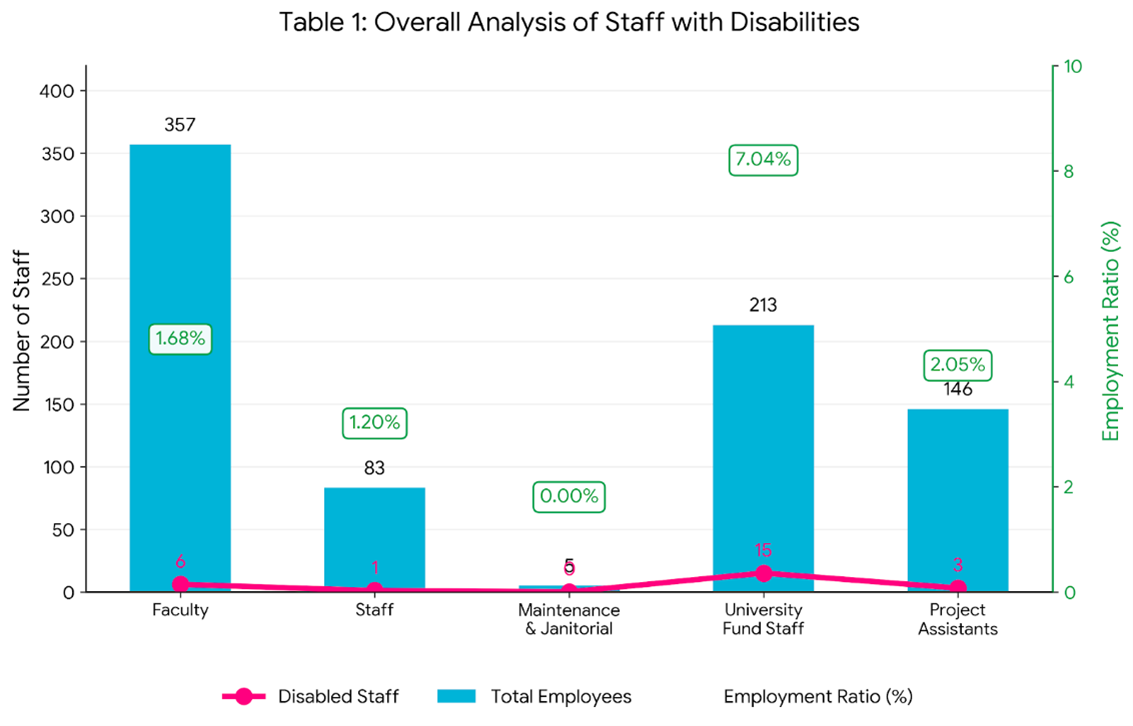
(2) Above-quota employment performance: NCUE's employment ratio for persons with disabilities reached 3.11% (the recruitment proportions across different personnel types are shown in Figure 3), consistently exceeding the national regulatory standard, effectively promoting employment equity and social mobility for talent from diverse backgrounds.
2. Proactive and Precision Support: Introducing "Job Accommodation" to Transform the Workplace into a Barrier-free Environment
In 2025, NCUE actively assisted hearing-impaired and visually impaired faculty members in securing professional support through the "Job Accommodation for People with Disabilities" program from the Changhua County Government, successfully obtaining a total subsidy of NT$295,342 (as shown in Table 2). This dedicated funding was substantively translated into high-density, on-site workplace support services, precisely eliminating physical barriers in professional teaching and administrative work:
| Job Accommodation Support Item Substantive Service Volume | Equipment |
|---|---|
| Speech-to-Text Support | 120 hours total (subsidized at NT$500/hour, totaling NT$60,000) |
| Workplace Assistance | 218 hours total (subsidized at NT$183/hour, totaling NT$39,894) |
| Accessible Transportation Subsidy | NT$6,000 total |
| Visual Assistance | 456 hours total (subsidized at NT$183/hour, totaling NT$83,448) |
| Assistive Technology Equipment | (Desktop Video Magnifier) Subsidy totaling NT$106,000 |
3. 100% Physical Accessibility: A Universally Designed Campus Environment
NCUE has deeply embedded the concept of "universal design" into the overall planning of both of its campuses. Cumulative expenditure on accessibility facility improvements over the years has reached NT$158,867,700, ensuring that all physical spaces and public buildings comply with accessibility regulations, with both the Jinde Campus and the Shida Campus achieving 100% spatial accessibility.
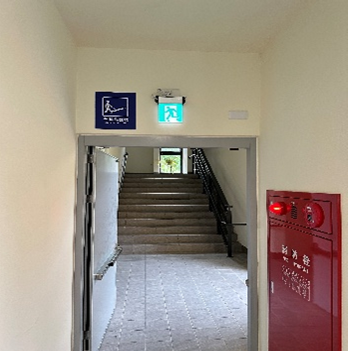
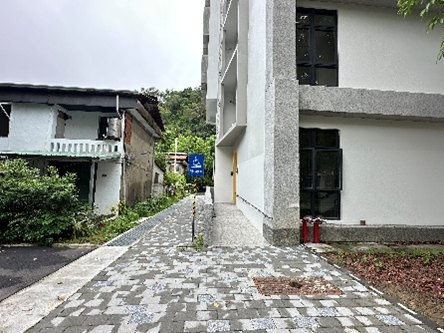
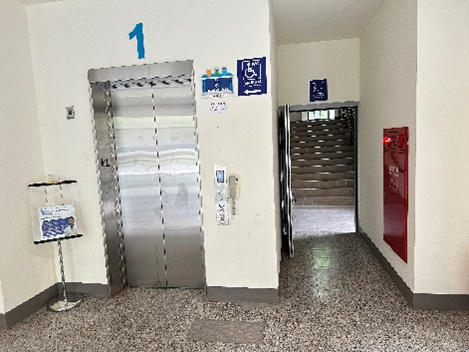
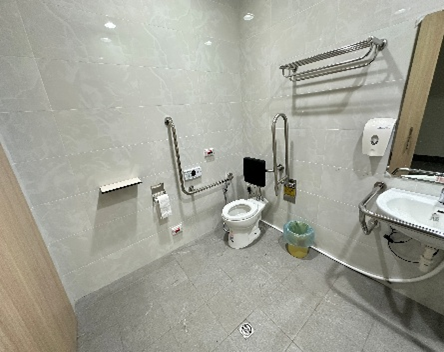
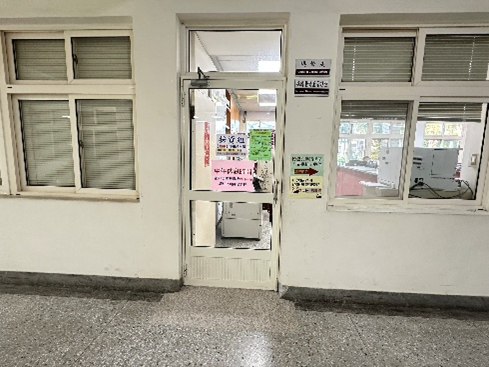
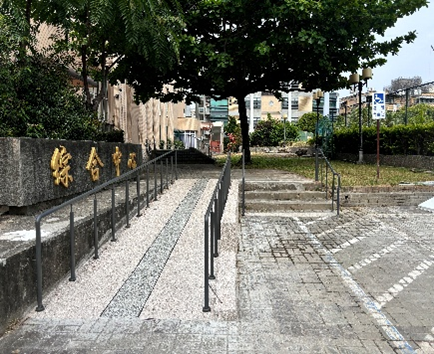
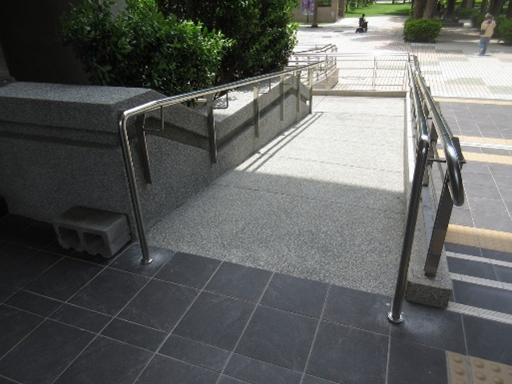
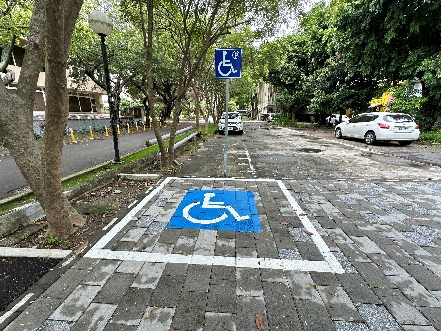
NCUE's 23 major teaching and administrative buildings have achieved a 100% installation and compliance rate for core vertical mobility elevators and sanitary facilities. The details of physical facility provision are shown in Table 3, and the condition of accessible facilities is shown in Figures 4-11:
| Accessible Facility | Quantity | Installation Rate |
|---|---|---|
| Accessible elevator | 23 | 100% |
| Accessible toilet | 61 | 100% |
| Renovated accessible ramp | 19 | 100% |
| Accessible stairway handrail | 36 | 100% |
| Guide facility | 26 | 100% |
4. Comprehensive Staff Housing Care Policy
To comprehensively reduce the compounded inequality arising from economic and physical disadvantage, NCUE has established a "Priority Accommodation Policy for Faculty and Staff with Disabilities," incorporating housing justice into the core of its faculty and staff benefits system:
(1) Dedicated accessible suites: On the first floors of the Zhong and Xiao Buildings of NCUE's public staff dormitories (single-room units) on the Jinde Campus, dedicated suites featuring "one bedroom, one accessible bathroom" have been specially reserved and equipped, ensuring that faculty and staff with mobility impairments enjoy a dignified, convenient, and independent living space.
(2) Comprehensive reduction of financial burden: The rent for these dormitory units is only about 20-30% of local rental market rates. Through substantive financial subsidies and preferential pricing, NCUE has built a strong economic safety net, thoroughly preventing employees with disabilities from experiencing class-based deprivation due to discrimination in the rental market or high rental costs.
5. Inclusive Campus Health Support and a "Reasonable Accommodation" Medical Network — Cross-referenced with Other Indicators
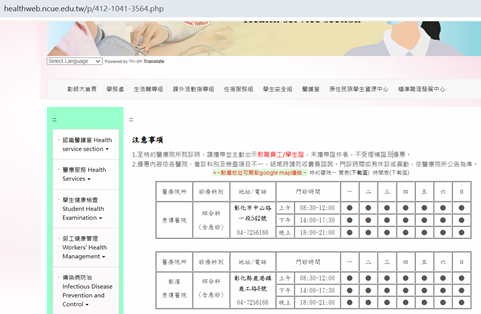
NCUE employs 3 full-time nurses, 7 full-time psychologists, and 12 part-time psychologists, providing faculty and students with free health consultations, medical care, individual and group counseling resources, and health management services. In addition, NCUE has engaged physicians from Changhua Christian Hospital, a medical center, specializing in family medicine, occupational medicine, psychiatry, and traditional Chinese medicine, to hold on-campus clinics, offering physical and mental health consultations, on-site health guidance, and physical therapy. NCUE also maintains partnerships with 26 local medical clinics for medical referrals (as shown in Figure 12), providing preferential medical services and options for all faculty and students.
6. Proactive Employee Assistance Program (EAP): A "Psychological and Physical Health" Support Network — Cross-referenced with Other Indicators
NCUE is committed to fostering a warm, caring, and high-quality work culture, helping faculty and staff effectively navigate challenges in their personal lives, workplace, and mental wellbeing, in order to enhance overall work effectiveness and wellbeing. Each year, NCUE rolls out revisions to its "Employee Assistance Program (EAP)" implementation plan based on the results of a faculty and staff needs survey.
(1) Professional psychological counseling services: Integrating the professional resources of NCUE's Community Psychological Counseling and Potential Development Center, qualified psychologists provide professional, diverse, and individualized counseling services. Each faculty or staff member is entitled to up to 12 fully free counseling sessions per year, with all costs covered by the university. The counseling process and personal information are kept strictly confidential throughout, and staff may contact the counseling center directly to make appointments without requiring referral from their department. In 2025, this program assisted a total of 16 staff members, providing a cumulative 108 person-sessions of counseling, effectively serving as a grassroots psychological safety net.
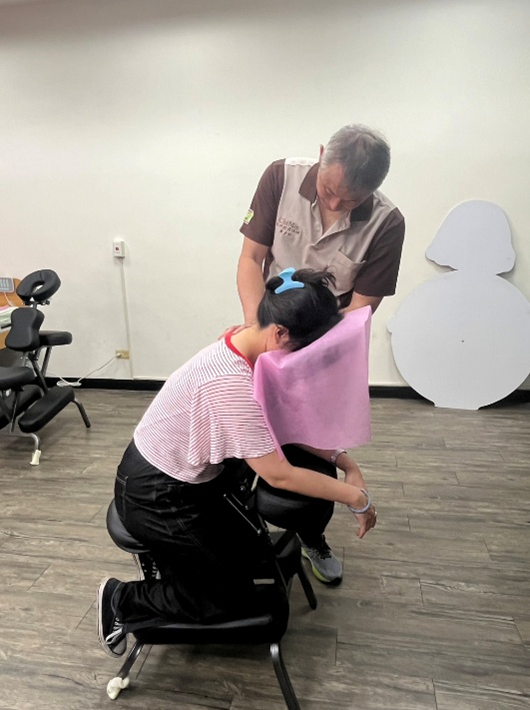
(2) Massage relief services for the visually impaired: To help staff relieve physical fatigue and shoulder/neck stiffness accumulated from prolonged work, NCUE's Office of Human Resources has specially organized an "EAP Shoulder and Neck Massage Service," (as shown in Figure 13-14) engaging professional visually impaired massage therapists to provide free shoulder and neck massage relief services at the university's Student Activity Center, combining social welfare with workplace health promotion. Through appropriate physical relaxation, this service helps faculty and staff relieve work-related stress and restore energy, further fostering a warm, healthy, and efficient friendly workplace environment.

7. Institutionalizing Justice: Legal Support and Human Rights Protection Mechanisms for Disadvantaged Faculty and Staff
NCUE collaborates with a professional legal consulting firm (Giant Law Firm) (as shown in Figure 15) to provide regular free legal consultation services, assisting with issues related to labor rights, workplace discrimination, and gender equality, ensuring that their rights are fully protected and further promoting a fair and just workplace environment.