SDG 6.5.1
SDG 6.5.1 Water management educational opportunities
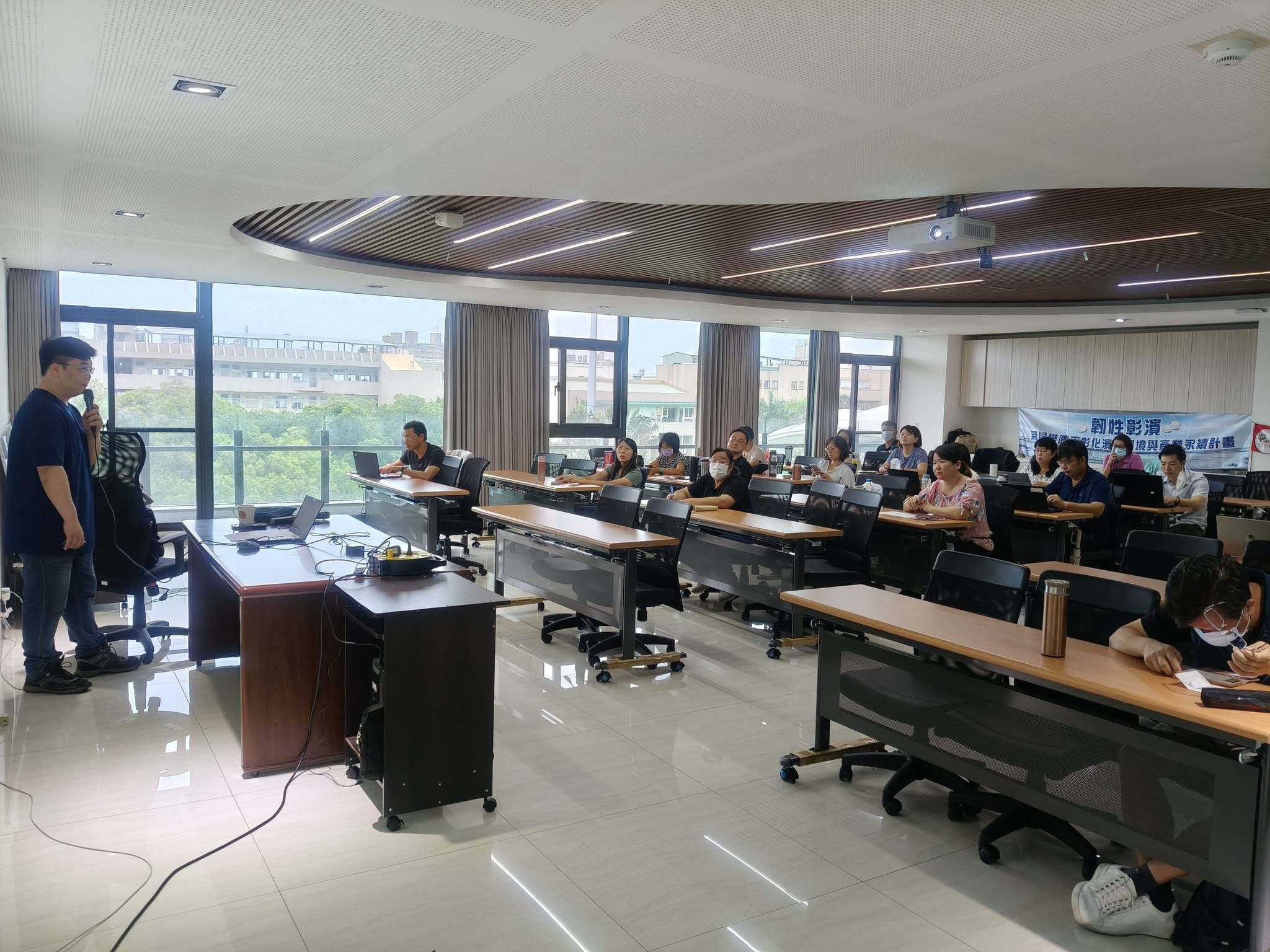
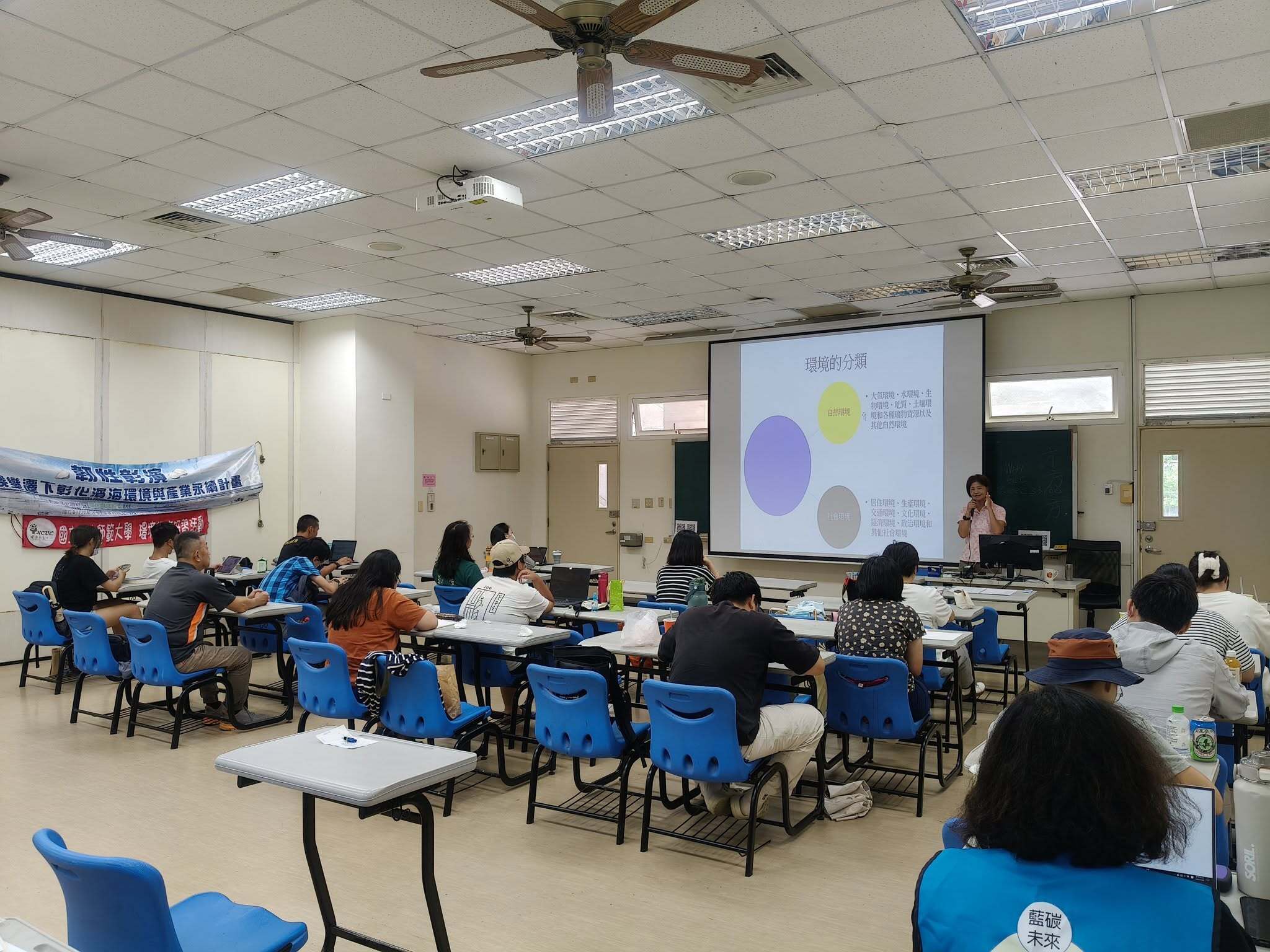
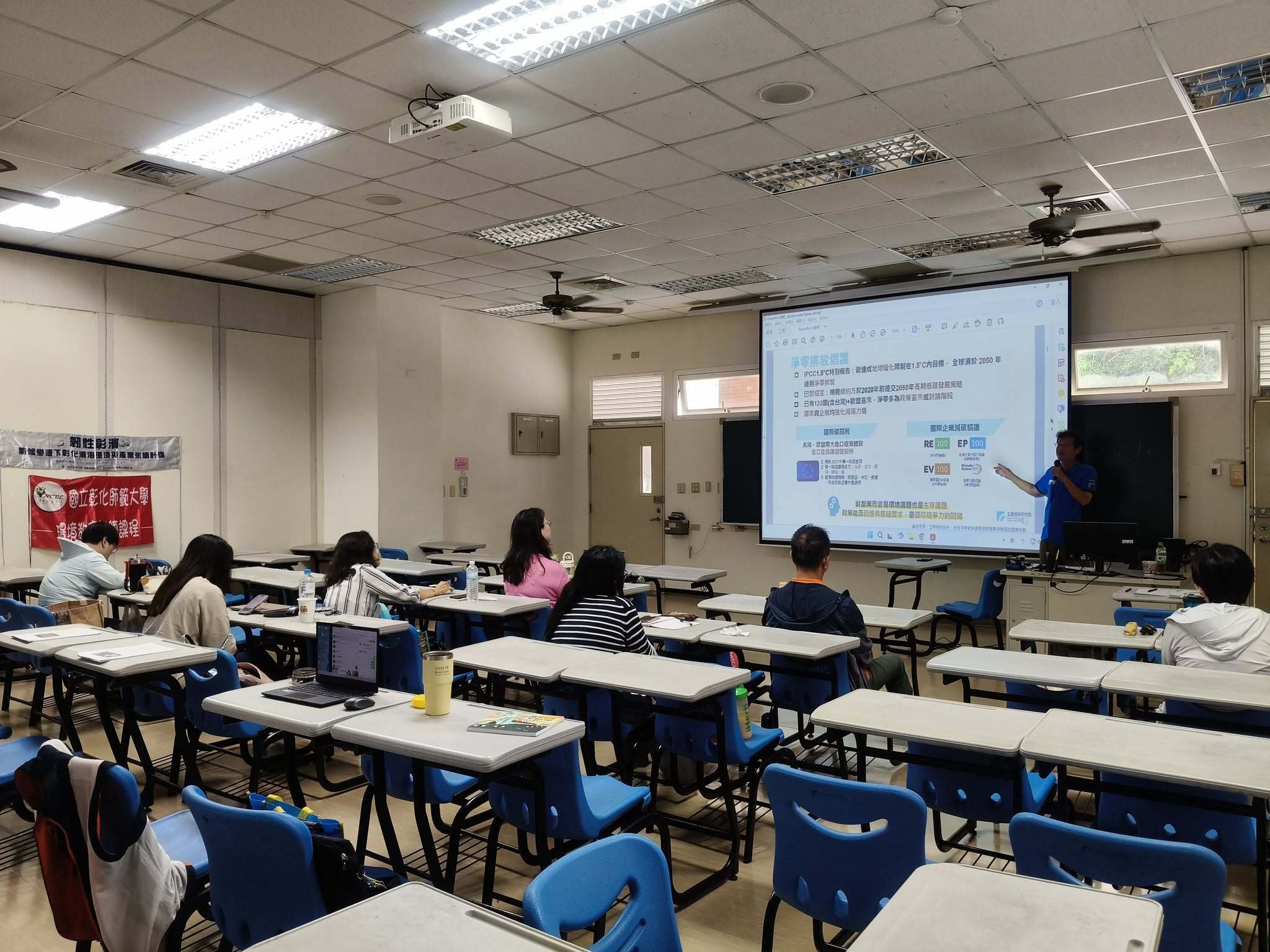
1. To support the sustainable development of the local community’s environment, NCUE helps local residents understand the Sustainable Development Goals and effective strategies for achieving them, while sharing professional knowledge of sound water management. Through the community environmental education led by its Environmental Education Center, NCUE raises local residents’ environmental awareness. From July to October 2025, NCUE offered related courses to local and national communities, including the 24-, 33-, and 100-hour core courses for Environmental Educator certification, to train local seed teachers in environmental education and work together on local environmental issues. The courses are open not only to NCUE faculty and students but also to community members. They can gain knowledge of water resource management and water quality protection. Table 1 lists the courses, and Figures 1–3 show photos.
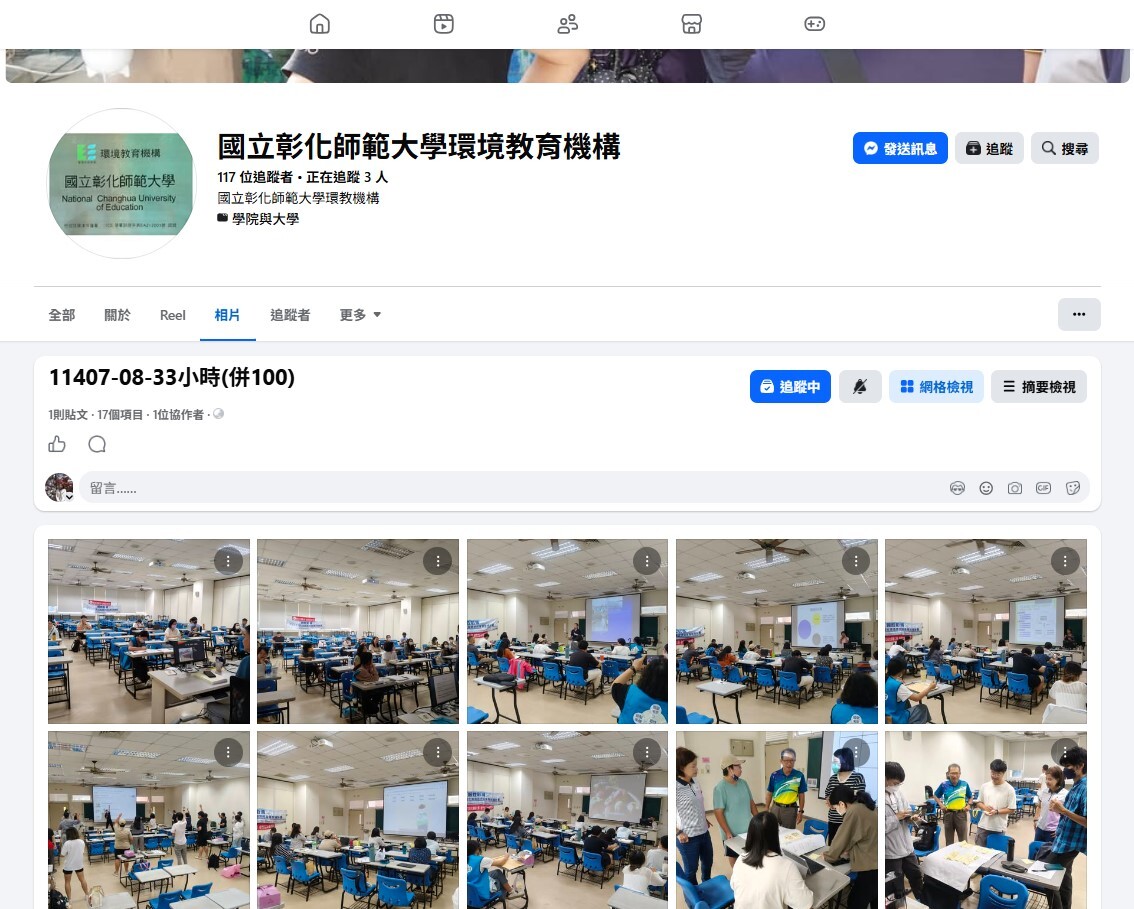
Course image information (Figure 4) links:
(1) https://www.facebook.com/media/set/?set=a.1389646196282072&type=3
(2) https://www.facebook.com/media/set/?set=a.1390985429481482&type=3
(3) https://www.facebook.com/media/set/?set=a.1391078049472220&type=3
| Course Activity | Date | Number of Participants |
|---|---|---|
| Specialized Program for 24-hour Environmental Education Certification Courses at NCUE | July 2025 | 28 |
| 33-hour Environmental Education Certification Course | July-August 2025 | 13 |
| 100-hour Environmental Education Certification Course | July-October 2025 | 7 |
2. Resilient Changbin: Sustainability of Changhua’s Coastal Environment and Industries under Climate Change; Changhua Coastal Manila Clams Habitat Survey and Conservation Education Promotional Program
(1) Through the University Social Responsibility (USR) Project “Resilient Changbin: Sustainability of Changhua’s Coastal Environment and Industries under Climate Change,” NCUE extends water resource management and water environment education to coastal communities and the aquaculture industry in Changhua, giving local residents, students, and aquaculture workers opportunities to take part in water quality management and environmental monitoring. In 2025, the project held workshops on blue carbon water quality, intertidal water quality, water quality education for children, water quality testing, and vibrio testing of aquatic products. By promoting eco-friendly aquaculture and probiotic techniques, the project also deepened local understanding of aquaculture water quality and water environment management. The probiotic research team has screened 4 bacterial strains for gene sequence analysis to further assess how probiotics break down harmful substances in water and improve shellfish health.As a result, NCUE is turning water quality science into water environment management skills that local people can apply. In the same year, NCUE carried out the industry–academia collaboration project “Changhua Coastal Manila Clams Habitat Survey and Conservation Education Promotional Program” and held a series of marine citizen scientist courses at Xinbao Wetland and Wanggong Harbor. Table 2 summarizes the related free activities and thematic courses.
| NO. | Course/Activity Topic | Number of Sessions | Number of Participants |
|---|---|---|---|
| 1 | Manila Clam Habitat Survey and Survey Volunteer Training | 4 | 50 |
| 2 | Junior Marine Citizen Scientist Series Activities | 5 | 146 |
| 3 | Outdoor Ecological Survey and On-site Practice | 3 | 73 |
| 4 | Environmental Knowledge and Literacy-related Workshops, Seminars, and Training | 13 | 315 |
| 5 | Blue Carbon: Manila Clam Citizen Scientist Activity | 1 | 20 |
| 6 | Blue Carbon: Water Quality Workshop | 1 | 19 |
| 7 | Drone Environmental Survey Workshop | 1 | 25 |
| 8 | Cao-Hu Junior High School Blue Carbon Citizen Scientist Workshop | 1 | 19 |
| 9 | Blue Carbon: Intertidal Zone Survey Workshop | 1 | 25 |
| 10 | Fangyuan Elementary School Blue Carbon Marine Environmental Education Workshop | 1 | 24 |
| 11 | Cao-Hu Junior High School Junior Citizen Scientist Workshop (2025/4/19) | 1 | 26 |
| 12 | Cao-Hu Junior High School Junior Citizen Scientist Workshop (2025/4/26) | 1 | 30 |
| 13 | Blue Carbon Intertidal Zone Water Quality Workshop | 1 | 25 |
| 14 | Marine Blue Carbon Conservation Workshop | 1 | 25 |
| 15 | Local Water Quality Testing Workshop | 1 | 30 |
| 16 | Blue Carbon: Heisha Miao Cultural Field Trip Workshop | 1 | 30 |
| 17 | Fangyuan Elementary School Blue Carbon Marine Conservation Workshop | 1 | 24 |
| 18 | Net-Zero Carbon Emissions and Carbon Footprint Workshop | 1 | 68 |
| 19 | Marine Blue Carbon Workshop | 1 | 68 |
| 20 | Blue Carbon and Seafood Education Workshop | 1 | 28 |
(2) Changhua Coastal Manila Clams Habitat Survey and Conservation and Restoration Promotional Program
The 2025 courses used the marine environment and local industries as real-world problem settings and organized water resource issues into four levels: understanding the system, identifying risks, conducting hands-on testing, and proposing management and conservation actions. Beyond introducing water resource concepts, the courses required students to connect water quality and ecological data to aquaculture management.
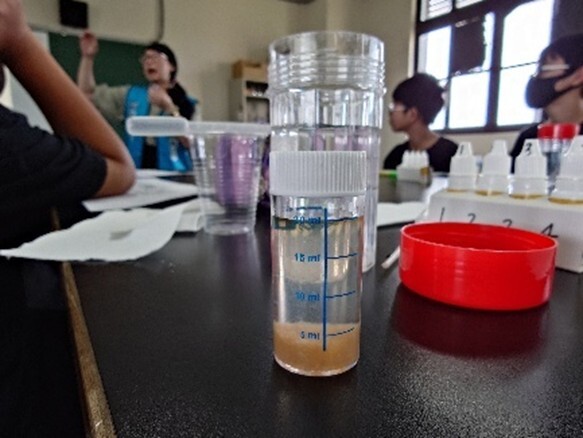
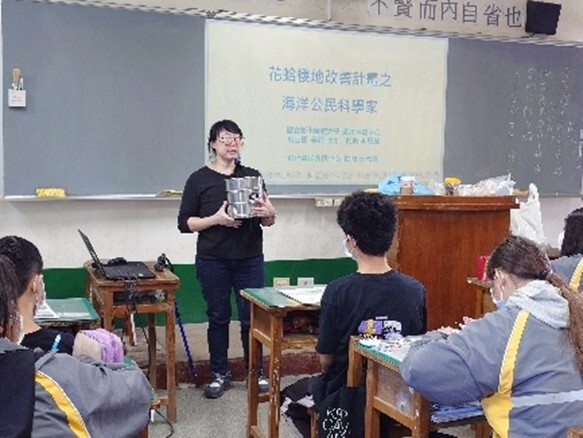
In 2025, NCUE held activities on water quality testing, blue carbon water quality, intertidal water quality, water quality education for children, and marine environmental education, while carrying out Manila clam habitat surveys, marine citizen science, and outdoor ecological surveys at Xinbao Wetland and Wanggong Harbor (Figures 5–6). These included 4 sessions of Manila Clam Habitat Survey and Survey Volunteer Training (50 participants), 5 Junior Marine Citizen Scientist Series activities (146 participants), and 3 sessions of Outdoor Ecological Survey and On-site Practice (73 participants).
NCUE also builds hands-on surveys of water quality, dissolved oxygen, sediment, benthic organisms, and shellfish into related courses, training students to identify water environment risks and propose management and conservation actions. Working with local schools, communities, and the aquaculture industry, NCUE turns water resource science into water environment management practices in which local people can take part. In these ways, NCUE extends its work from campus education to local communities and industries and continues to promote water quality improvement, water resource management, local participation, and a sustainable water environment.
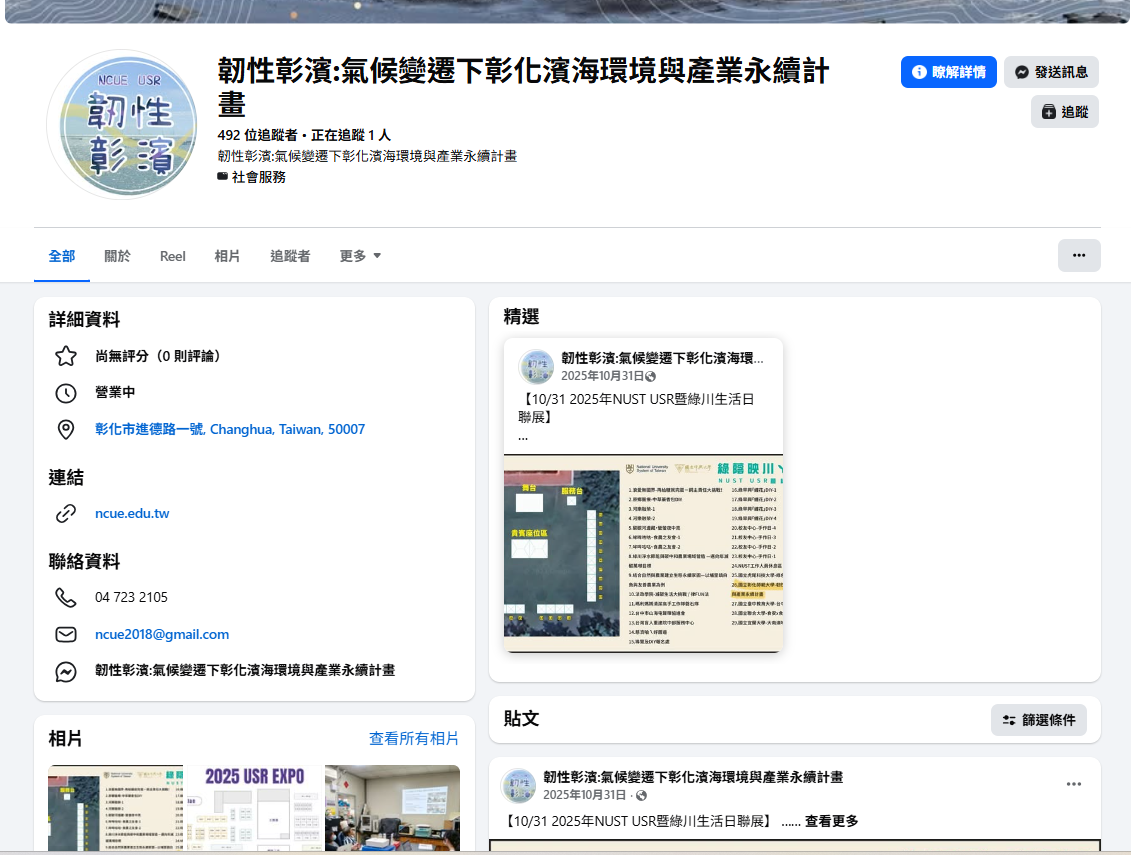
(3) " Resilient Changbin: Sustainability of Changhua’s Coastal Environment and Industries under Climate Change” Project Webpage (Figure 7): https://www.facebook.com/NCUEUSR/
3. Field Survey Guidance for Taichung Municipal Taichung Girls' Senior High School – Environmental Education on Terrain, Soil and Water Environment in Taichung and Miaoli
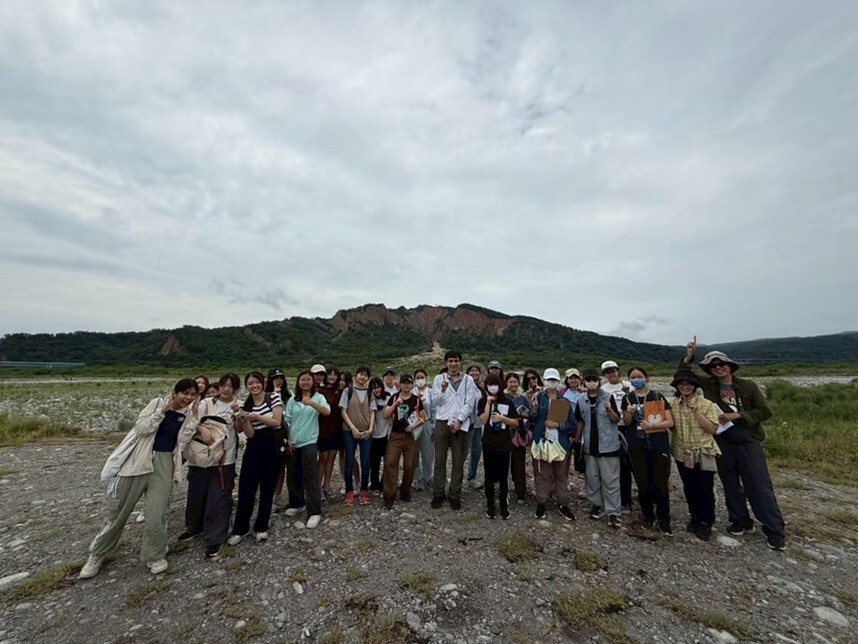
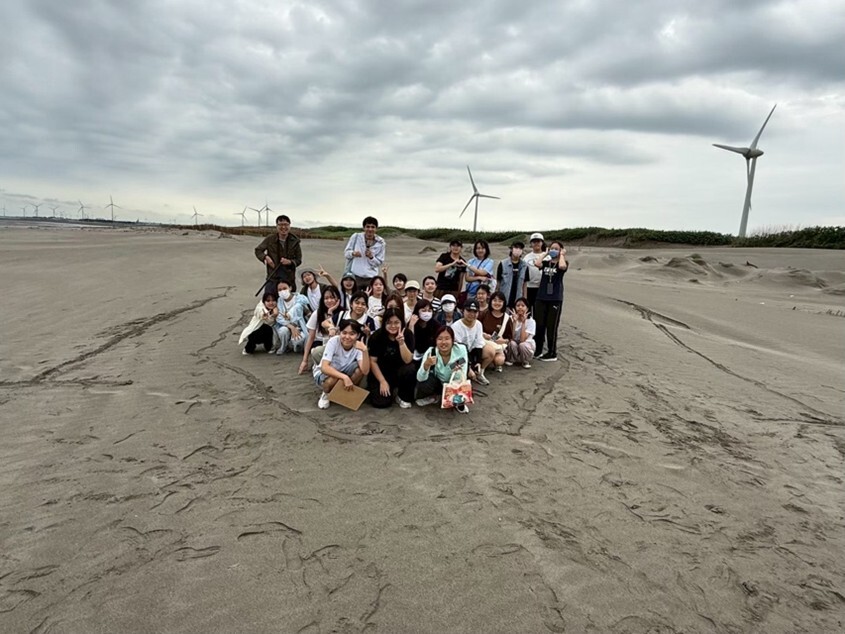
On May 24, 2025, NCUE’s Department of Geography helped Taichung Municipal Taichung Girls' Senior High School run a field survey. Chairman Yi-Chin Chen of the department helped plan the route, wrote the field survey handbook, and guided the entire trip for a total of 30 teachers and students. The route covered the Taichung Basin, Shigang Dam, the Da’an River Canyon in Zhuolan, the Old Mountain Line settlement in Tai’an (Miaoli), Huoyan Mountain in Sanyi, Tiezhen Mountain in Dajia, and the Da’an Sand Dunes. At the Tai’an settlement, students interpreted the layout of the Houli Canal aqueduct and canal routes on site and drew the canal and railway routes on a topographic map. The drawings showed how irrigation facilities in the foothills shaped settlement locations, agricultural land use, and population change and how water resource management relates to local development. At the Zhuolan Canyon, Chen explained how riverbed uplift and downstream sweep erosion caused by the 1999 Chi-Chi Earthquake affected the river channel and embankments. At Huoyan Mountain in Sanyi, students learned about gully development in conglomerate badlands, the history of landslides burying roads, and the tunnel engineering built in response (Figure 8). At the Da’an Sand Dunes, students observed dune terrain, tidal flats, and coastal wind turbines (Figure 9). Through these field observations, the high school students learned the scientific basis of soil and water resource management and environmental disaster risk.