
SDG 6.3.5
SDG 6.3.5 Water-conscious planting
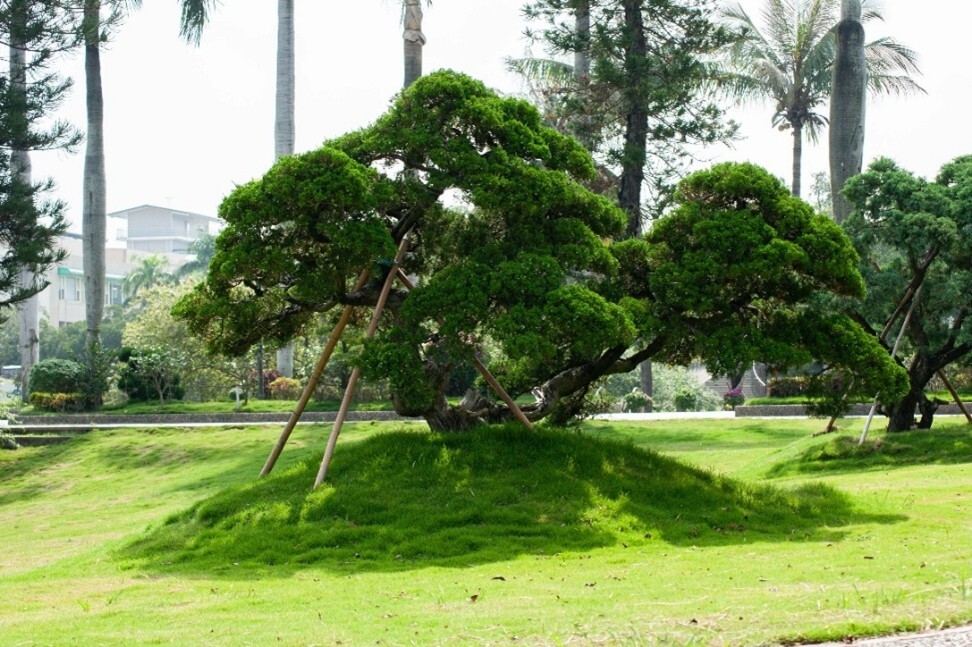
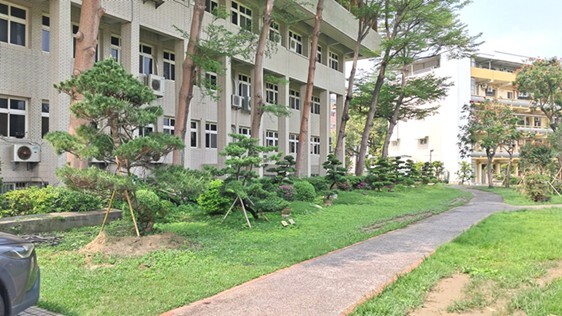
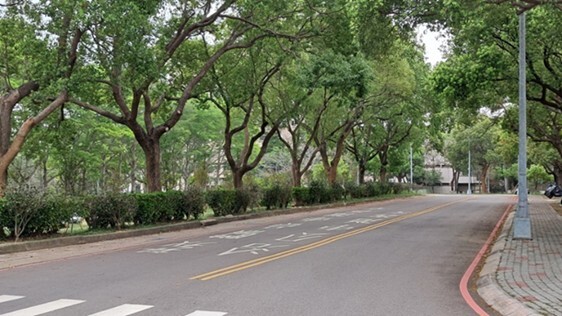
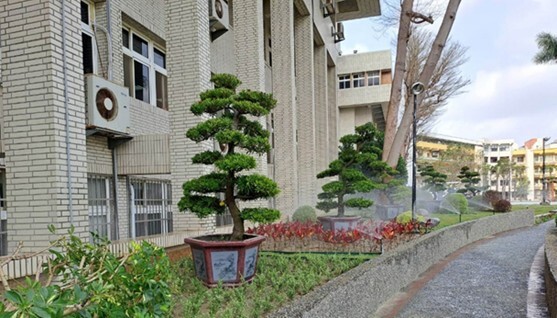
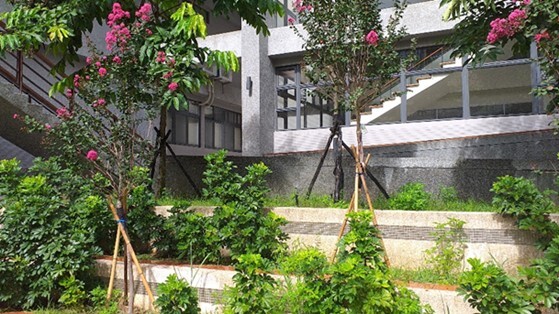
1. NCUE’s Campus Construction Review Committee discusses all campus construction, planting, and plant removal in its meetings before any work proceeds. To conserve water and support ecological sustainability, NCUE’s landscape design uses extensive grass vegetation to reduce evaporation and water loss and mainly selects drought-tolerant species, including camphor trees (Cinnamomum camphora), Buddhist pines (Podocarpus macrophyllus), chinaberry trees (Melia azedarach), dragon junipers (Juniperus chinensis ‘Kaizuka’), sweet osmanthus (Osmanthus fragrans), Lanyu podocarpus (Podocarpus costalis), crape myrtles (Lagerstroemia indica), dwarf ixora (Paeonia jishanensis), garden croton (Codiaeum variegatum), golden dewdrops (Duranta erecta), orange jasmine (Murraya paniculata), azaleas (Rhododendron spp.), Chinese perfume plants (Aglaia odorata), and creeping figs (Ficus pumila), as shown in Figures 1 and 2. These plants reduce irrigation demand while providing the campus green aesthetic and sustainable use of water resources .
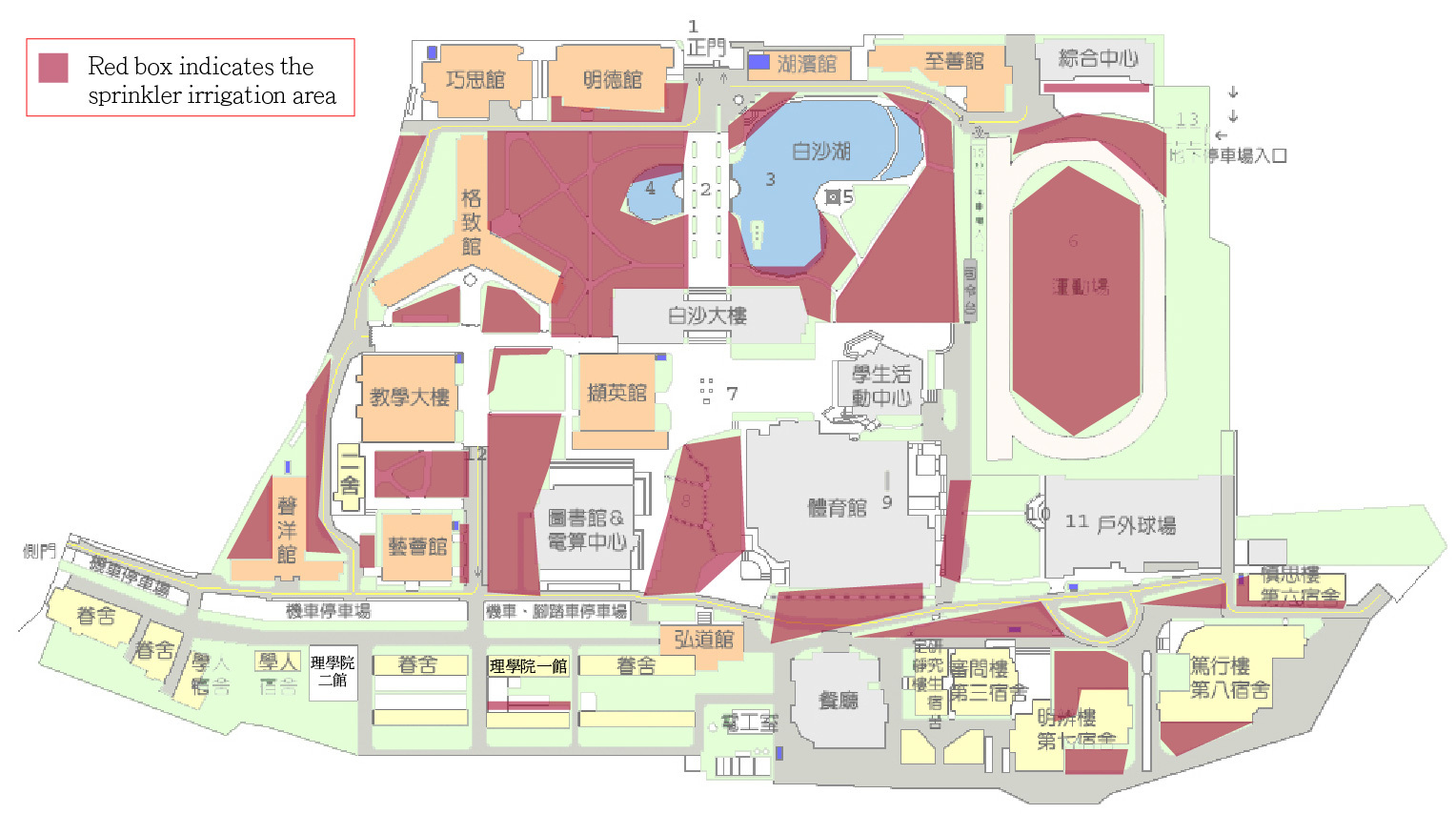
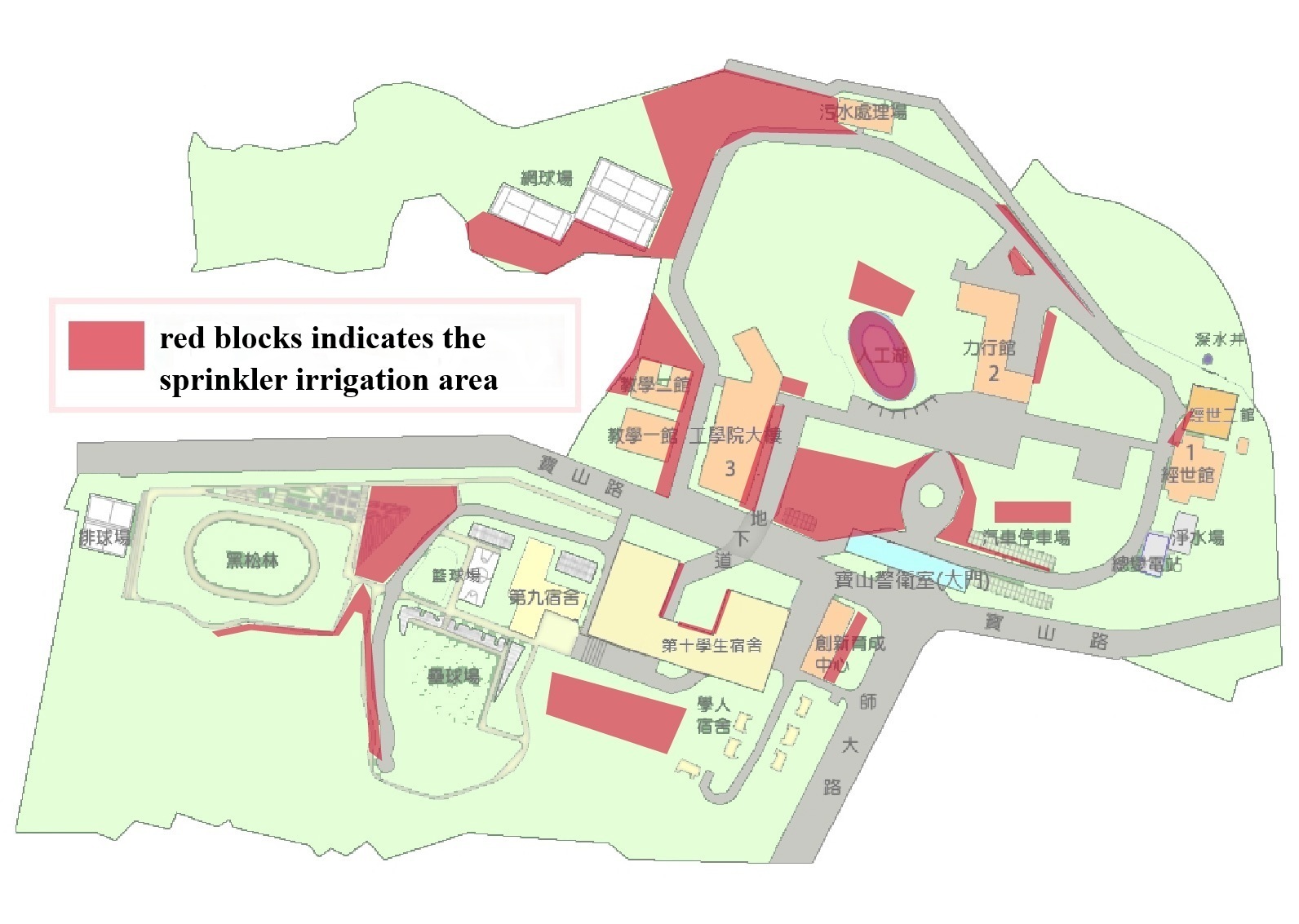
2. NCUE has also installed sprinkler irrigation systems on both campuses (see Figures 4–7). The systems follow the principle of “fewest sprinkler heads, largest coverage,” and daily irrigation time is controlled to supply only the amount of water that landscape plants need to effectively reduces irrigation water use.
3. Supported by a US$500,000 donation from alumnus Chairman Jui-fen Shiao, NCUE has been improving the landscaping and plantings on Jinde and Shida Campuses since 2023. A variety of drought-tolerant and ornamental plants has been added, including American crape myrtles, Buddhist pines, Chinese junipers (Juniperus chinensis), black pines (Pinus thunbergii), Taiwan white pines (Pinus morrisonicola), small-flowered crape myrtles (Lagerstroemia indica), jacarandas (Jacaranda mimosifolia), pink shower trees (Cassia bakeriana), bald cypresses (Taxodium distichum), golden bottlebrush (Melaleuca bracteata), silver junipers (Juniperus chinensis 'Pfitzeriana Glauca'), cherry trees (Prunus subg. Cerasus), camellias (Camellia japonica), bougainvilleas (Bougainvillea spectabilis), and Muto fragrant osmanthus (Osmanthus fragrans 'Mutou Perfumed'). To date, NCUE has planted 6,486 saplings (1,985 on Jinde Campus and 4,501 on Shida Campus), increasing campus green coverage and ecological resilience.
4. By giving priority to drought-tolerant plants, using scientifically designed irrigation systems, and continuing to improve its plantings, NCUE has raised the quality of campus greenery while minimizing water use, meeting its goals of water conservation, sustainability, and landscape enhancement.