SDG 6.3.4
SDG 6.3.4 Water-conscious building standards
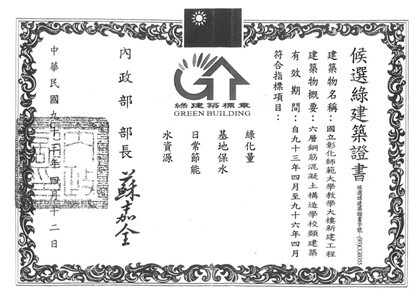
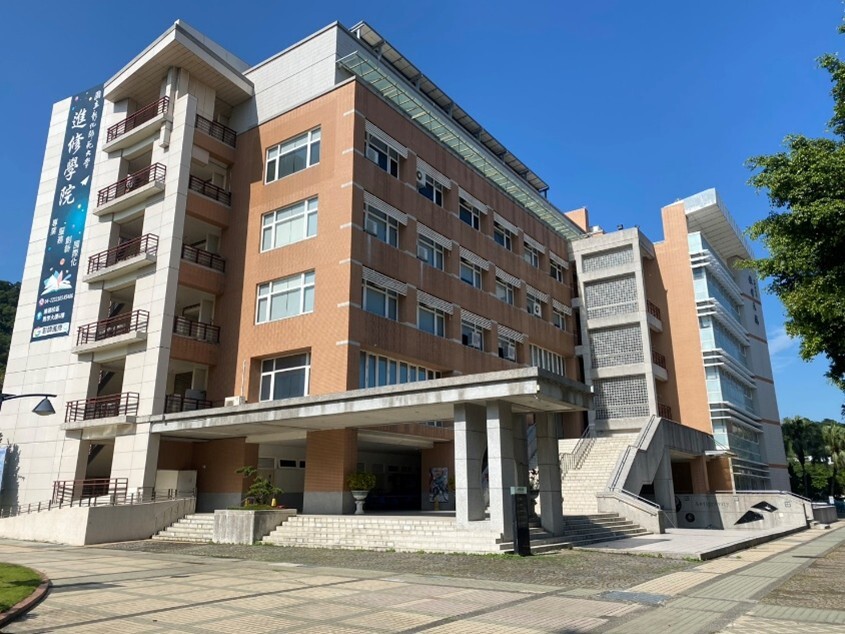
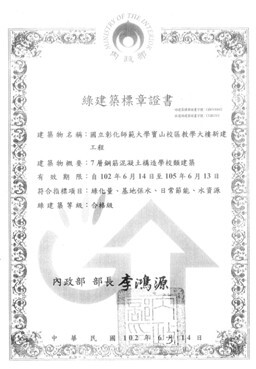
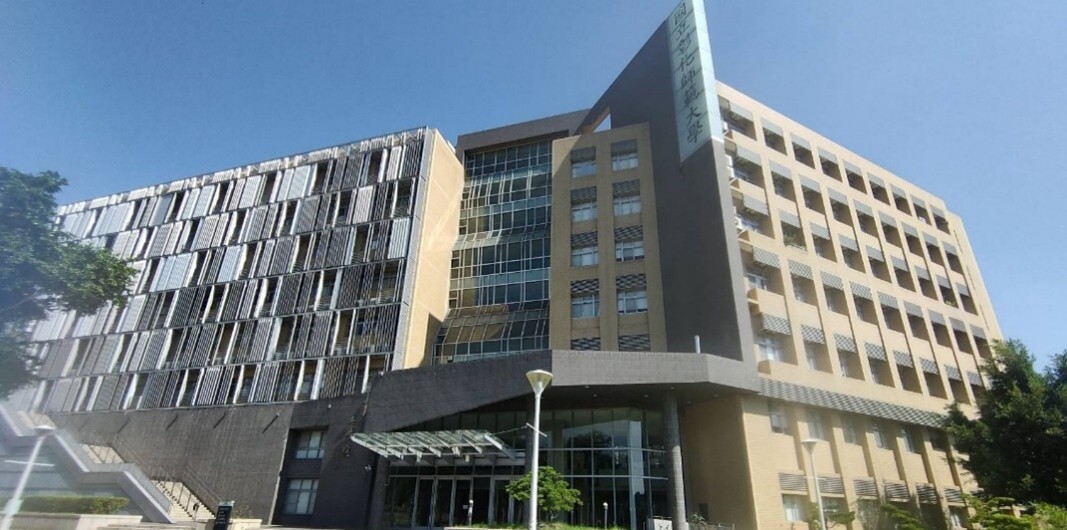
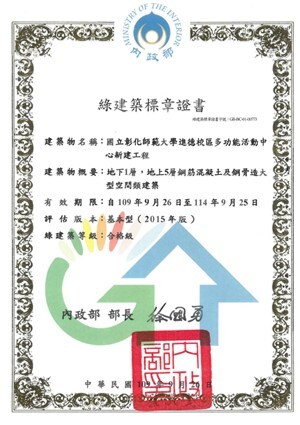
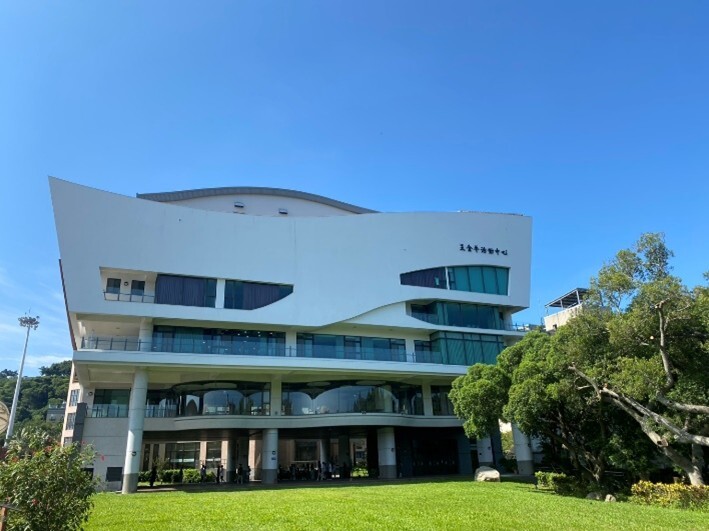
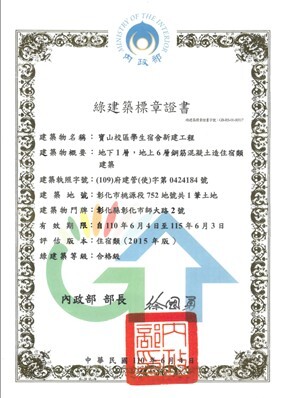
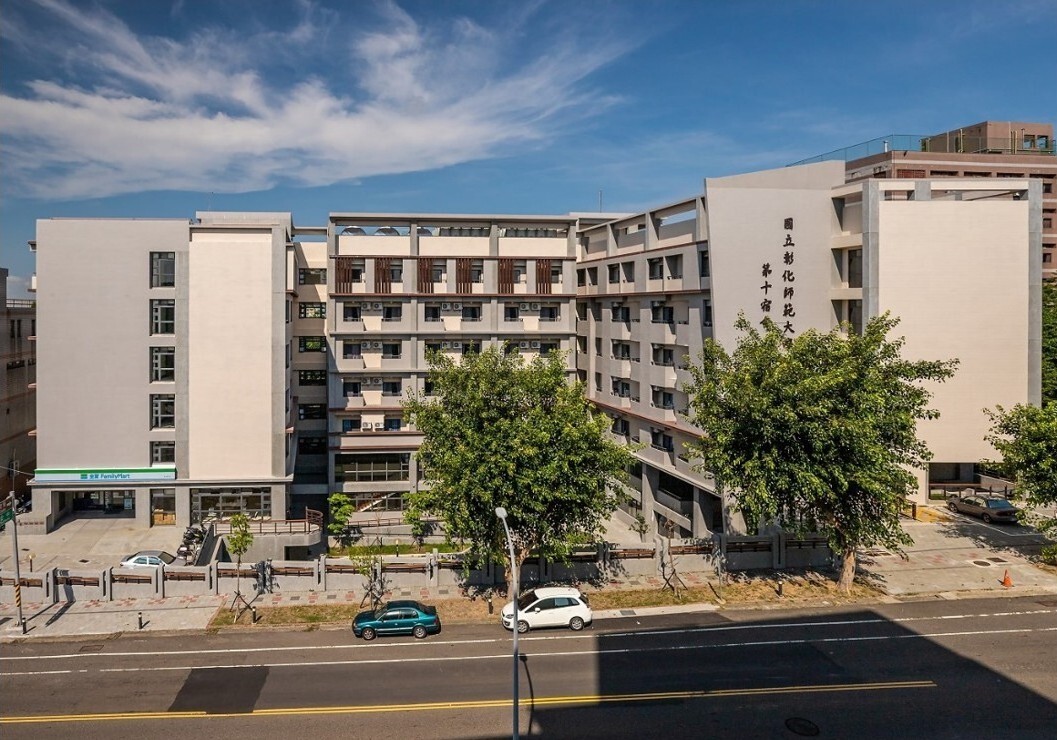
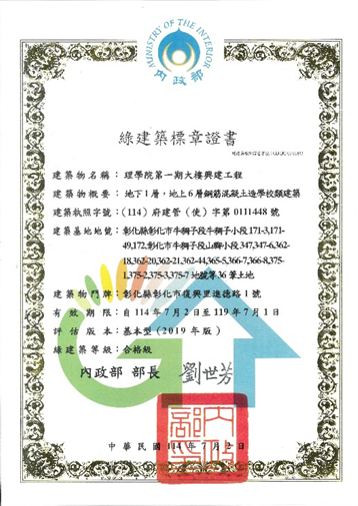
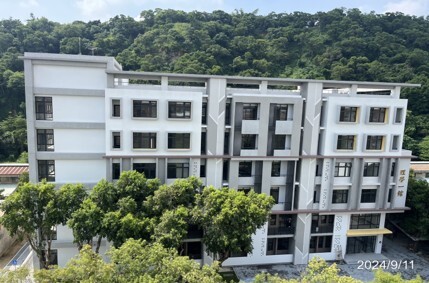
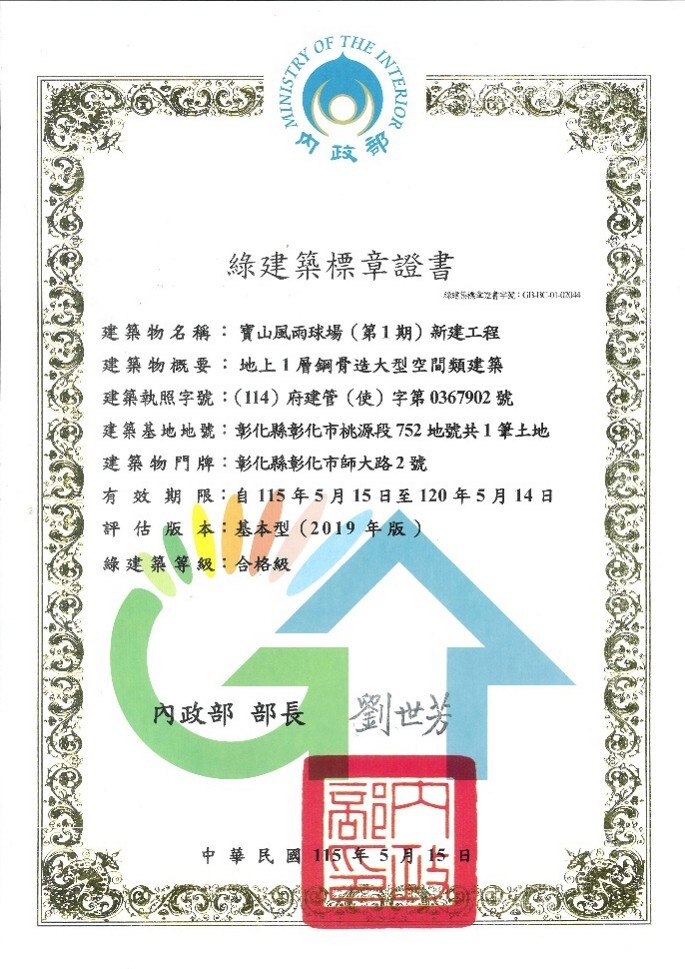
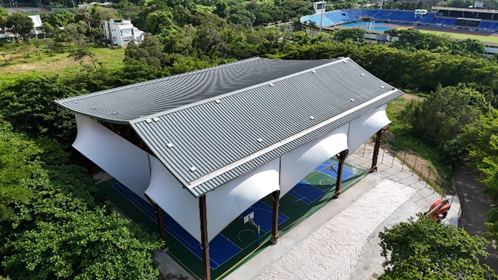
1. Under Taiwan’s Building Act and related standards, every new NCUE building that costs more than NT$50 million must obtain a Green Building Label at the Certified level or higher. Under Taiwan’s current Green Building Label system, a building must meet the two mandatory indicators, “Daily Energy Saving” and “Water Resources,” and any two of the other seven indicators to obtain a Green Building Label or a Green Building Candidate Certificate. Since 2003, NCUE has completed 6 new buildings, all of which comply with the regulations and have obtained Green Building Labeling . Table 1 lists the green buildings and their certificates, and Figures 1–12 show each building and its certificate. Science Building II, now under construction, is applying for a Green Building Label.
| No. | Information on Green Building | Green Building Certification number | |
|---|---|---|---|
| 1 | Building Name | Academic Main Hall (Teaching Building), Jinde Campus | Candidate Green Building Certificate No. (93) CGB355 (Figure 1) |
| Official Opening | Around 2006 | ||
| 2 | Building Name | College of Engineering Building, Shida Campus | Green Building Certificate No. GB0100602 (Figure 3) |
| Official Opening | Around 2012 | ||
| 3 | Building Name | Wang Jin-Ping Activity Center, Jinde Campus | Green Building Certificate No. GB-BC-01-00773 (Figure 5) |
| Official Opening | Around 2019 | ||
| 4 | Building Name | Student Dorm 10, Shida Campus | Green Building Certificate No. GB-RS-01-00317 (Figure 7) |
| Official Opening | Around 2021 | ||
| 5 | Building Name | College of Science Building I (phase 1),Jinde Campus | Green Building Certificate No. GB-BC-01-01843 (Figure 9) |
| Official Opening | Completed in 2025 | ||
| 6 | Building Name | Xuanli Sports Court (Phase 1), Shida Campus |
Green Building Certificate No. GB- BC-01-02044 (Figure 11) |
| Official Opening | Completed in 2025 | ||
| 7 | Building Name | College of Science Building II (phase 2),Jinde Campus | Green Building Certificate: application in progress |
| Official Opening | Under construction | ||
2. The Water Resources indicator, one of the nine indicators of the Green Building Label, includes the measures below, all of which NCUE has fully implemented in its new buildings. In existing buildings, NCUE replaces fixtures with water-saving models to conserve water.
(1) Water-saving fixtures includes new water-saving faucets, water-saving toilets, dual-flush toilets, water-saving shower fixtures, and automatic sensor flushing systems.
(2) Installation of rainwater-storage and rainwater-supply system: rainwater is intercepted and stored by making use of the natural terrain or artificial methods, before being subjected to simple purification treatments and reused as miscellaneous domestic water. The reutilization of rainwater serves as an alternative supplementary water source for domestic water, a water storage source for firefighting, and a way to help reduce peak loads during urban floods.
(3) All the above projects have been implemented in NCUE’s new buildings.
3. Smart Water Meter Installation and Enhanced Water Management
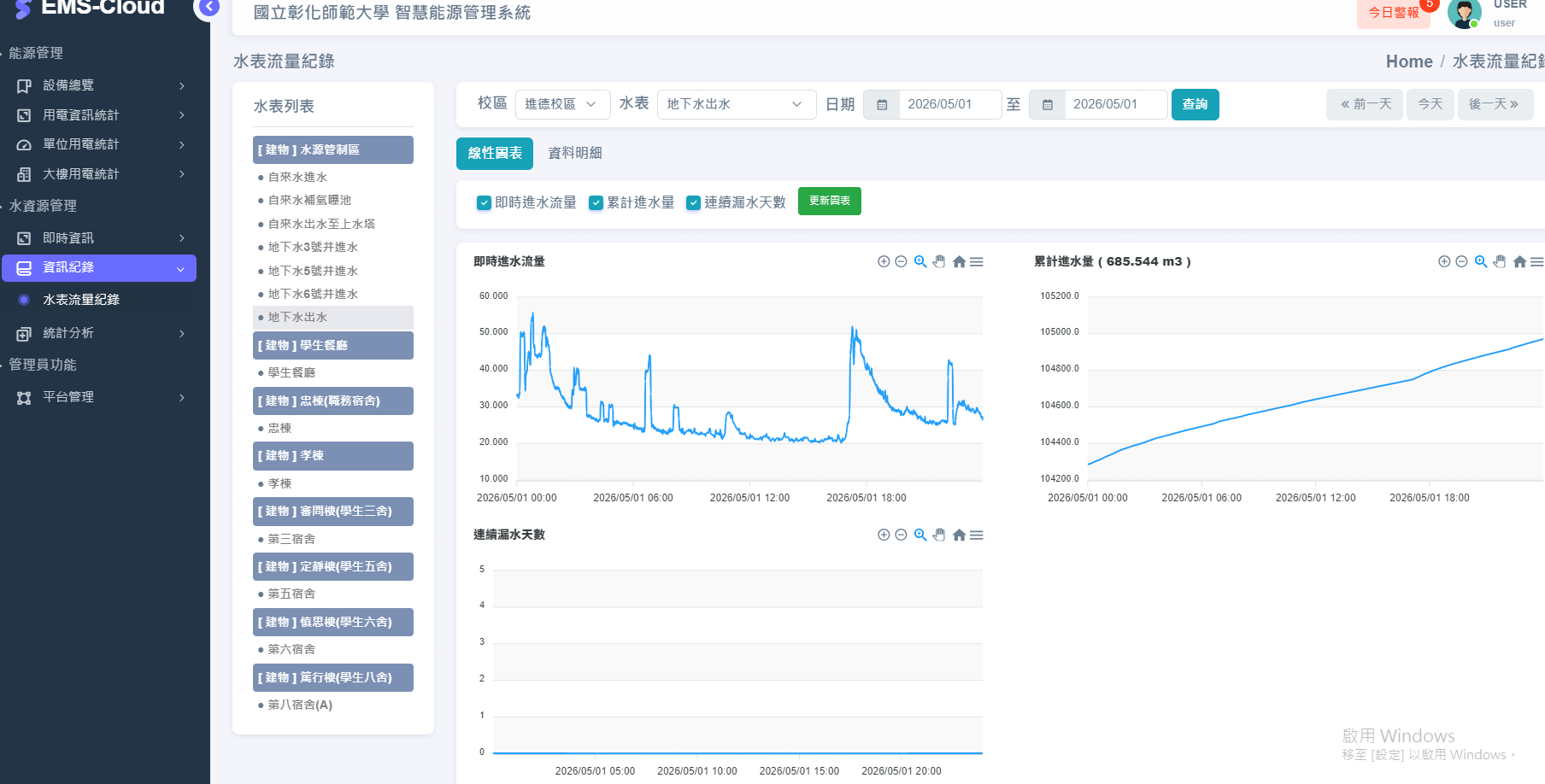
By the end of 2025, NCUE had installed 7 ultrasonic smart water meters on Jinde Campus (15 meters in total) and 23 new ultrasonic smart water meters on Shida Campus. Also, every building on Shida Campus has its own groundwater and tap water meters to monitor its water use. NCUE analyzes the consumption and event data that the smart meters transmit wirelessly to assess water use, and the management system automatically plots flow trend charts that can be used to detect abnormal usage. Real-time data from the smart meters allow NCUE to manage campus water use effectively and monitor water resources. With smart meters installed across its campuses, NCUE consolidates all types of water resource data as a basis for water balancing, allocation, leak detection, and management.
Figure 13 shows the interface of NCUE’s campus-wide Energy Management System (EMS). Website: https://ems.ncue.edu.tw/backend