SDG 3.3.5
SDG 3.3.5 Mental health support for students
Campus mental health support and promotion
NCUE treats mental health as a core component of whole-person education and a sustainable campus. The Student Psychological Counseling and Guidance Center (hereinafter referred to as the Counseling Center) coordinates mental health services across the university, combining counseling, guidance and medical resources on and off campus to provide all students with free, confidential and individualized support. Students are normally offered four to six counseling sessions per semester, with flexible assessments and follow-up support provided according to individual needs. There is no limit on the number of applications.
To address students' needs for resilience, stress management and emotional support, NCUE runs preventive mental health work covering health promotion, early identification, counselling, intensive support and medical referral. For students temporarily unable to attend classes because of psychological, psychiatric or emotional difficulties, the university has included mental health adjustment leave in its student leave regulations. The leave gives students space to rest and adjust with less pressure, and is combined with timely support to limit the effect of psychological difficulties on study and daily life.
Under the Ministry of Education's Health Promoting University Program, NCUE also embeds mental health, sleep health, prevention of drug dependence and related health literacy in its campus health promotion work. Health education, counselling, pastoral support and medical referral build students' resilience and self-care, forming a campus mental health system with prevention, early identification, support, referral and continuing follow-up.
1. Three-tier prevention in campus counseling and guidance
The Counseling Center adheres to the principles of precision guidance and system-wide cooperation, implementing a three-tier prevention in campus mental health. Services range from university-wide health promotion to early intervention and crisis response, according to students' stage of study and level of need.
(1) Tier 1: developmental guidance (university-wide mental health promotion and adjustment support)
Open to all students, tier one covers mental health education, self-exploration, emotional regulation, interpersonal relationships, career development and stress management, building mental health literacy, resilience and self-regulation.
- (a) Class guidance for new students and precision counseling: drawing on NCUE's precision counselling prediction research, self-exploration activities help first-year students adjust to university. In the second semester of 2024–25 and the first semester of 2025–26 the center ran eight sessions with 242 attendances.
-
(b) Cross-cultural guidance for international and overseas Chinese students: the Counseling Center works with the Office of International and Cross-strait Affairs on activities addressing cultural adjustment and emotional difficulties. In the 2024–2025 academic year, it ran four sessions with 105 attendances and a satisfaction score of 4.76 out of 5. The sessions were: (Figures 1–4)
- “Caring for You: A Conversation with the Body Through Singing Bowls” (19 participants, satisfaction 4.92), helping international students notice physical tension and relieve stress.
- “I Like You: Being Brave in Intimate Relationships” relationship education talk (37 participants, satisfaction 4.76), on healthy approaches to relationships.
- “NCUE Adapting” orientation program for new international students (34 participants, satisfaction 4.48), introducing campus life and psychological resources.
- “I See You: Settling Emotions” fabric-dyeing bag workshop (15 participants, satisfaction 4.86), combining craft and emotional regulation.
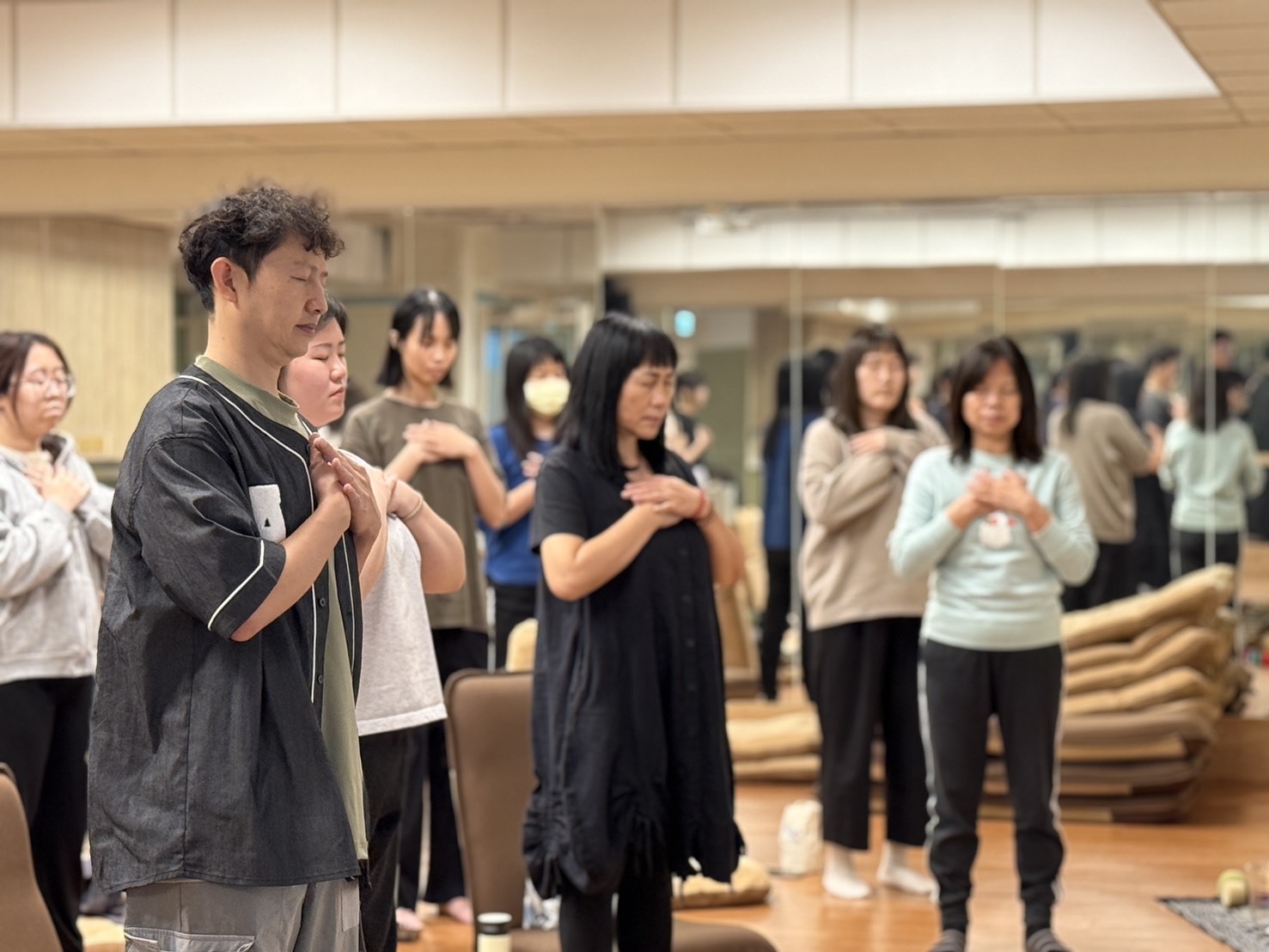
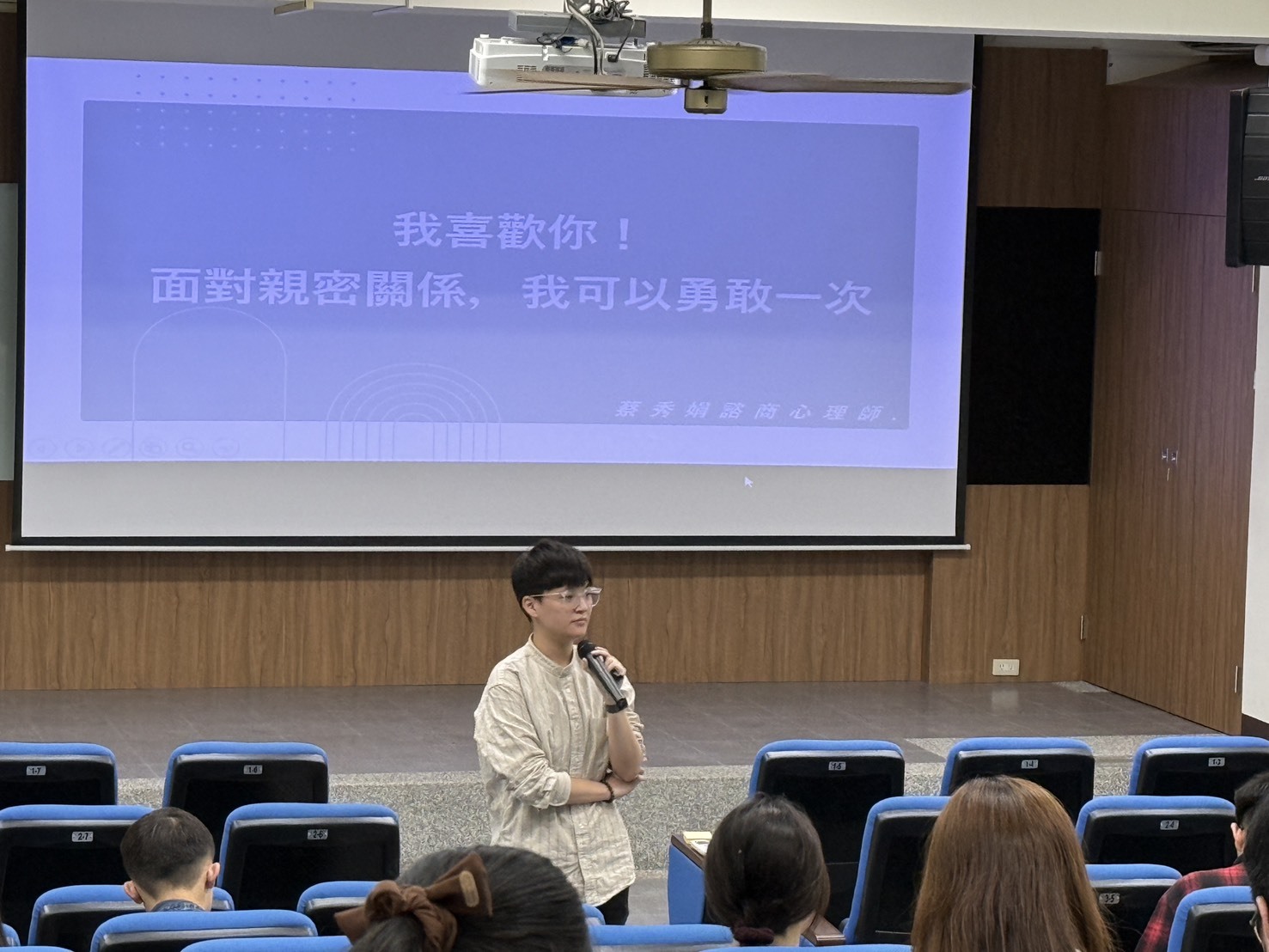

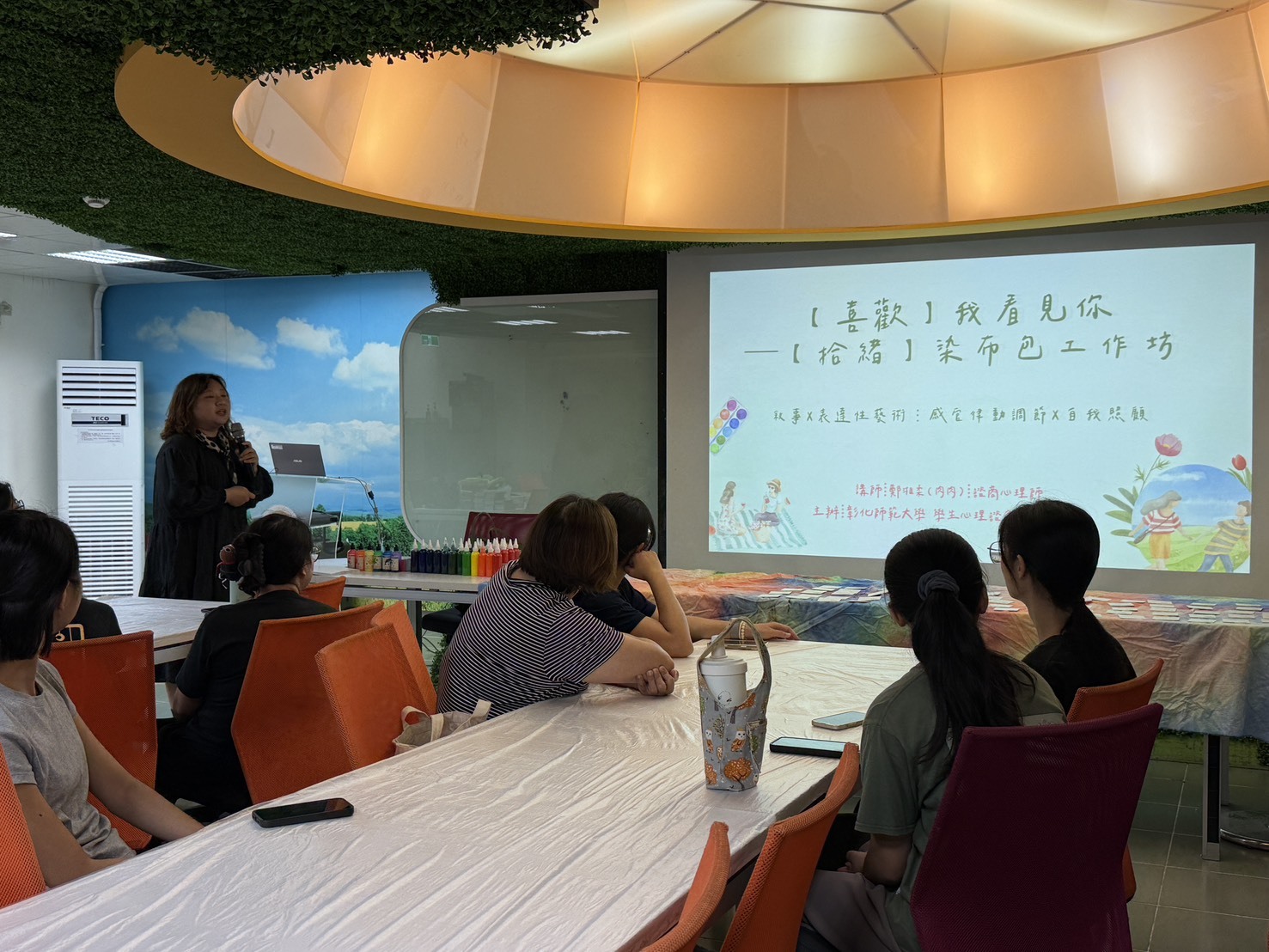
Figures 1–4. Mental health and adjustment support activities for international students
-
(c) Career guidance and job-search resilience lecture series: covering career exploration, career planning and recognition of job-search risks. Four career guidance lectures were held in 2024 with a mean satisfaction score of 4.58: (Figures 5–8)
- March: “Can I Just Slack Off? Career Planning and Job-Search Traps” (Jinde Campus, satisfaction 4.46).
- May: “How New Graduates Can Navigate the Workplace and Play to Their Strengths” (Shida Campus, satisfaction 4.57).
- November: “Career Exploration and Planning for a Late-Blooming Generation” (Shida Campus, satisfaction 4.56).
- November: “Unlocking the Career Timeline” (Jinde Campus, satisfaction 4.75).
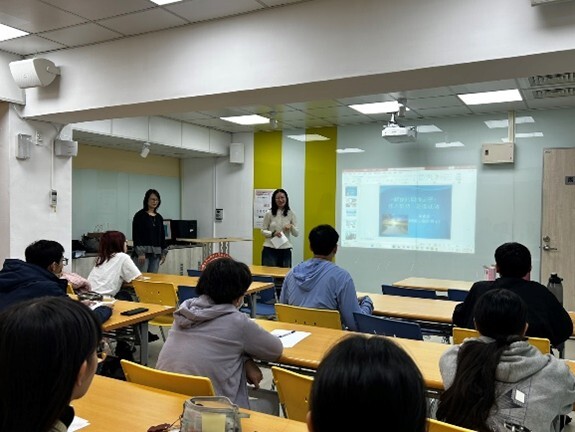
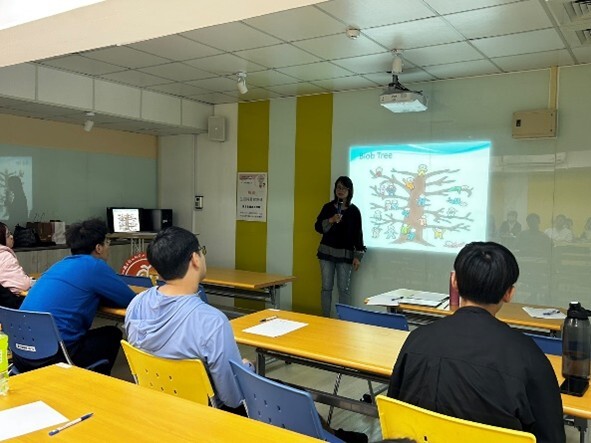
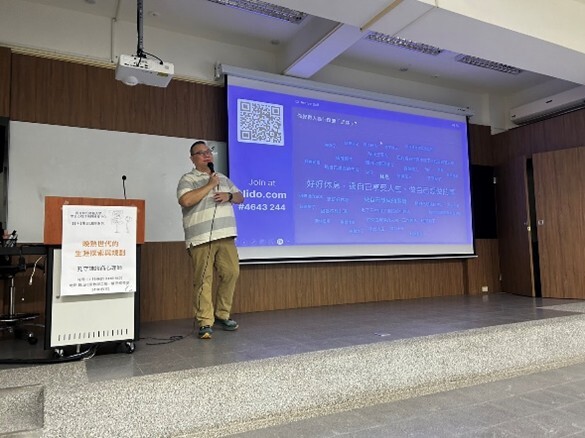
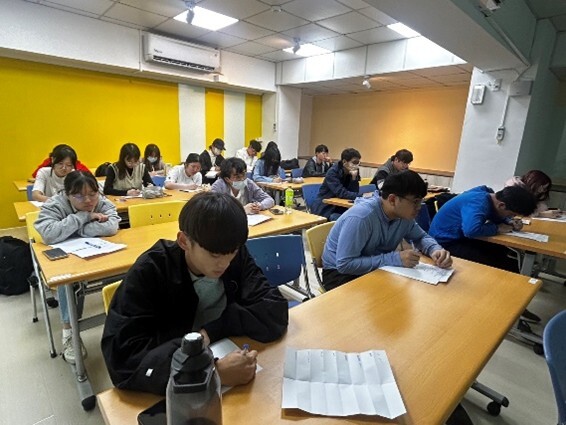
Figures 5–8. Career guidance lectures
- (d) Learning support and stress-relief workshops: A variety of workshops were conducted on topics such as academic anxiety, perfectionism, sleep, and emotional regulation, helping students become more aware of their own states and learn coping strategies. In the second semester of 2024–25 the center ran “Flawless Bloom: Embracing Your Perfectionism”, a dried-flower vase workshop (two sessions, 32 participants each, satisfaction 4.54 and 4.67). In the first semester of 2025–26 it ran “Letting Go of Anxiety, Sleeping Well”, a mindfulness and essential oils workshop (15 participants, satisfaction 4.97), and “Not Unable to Learn, Just Stuck: Emotional Energy and Study Efficiency” (22 participants, satisfaction 4.65). (Figures 9–12)
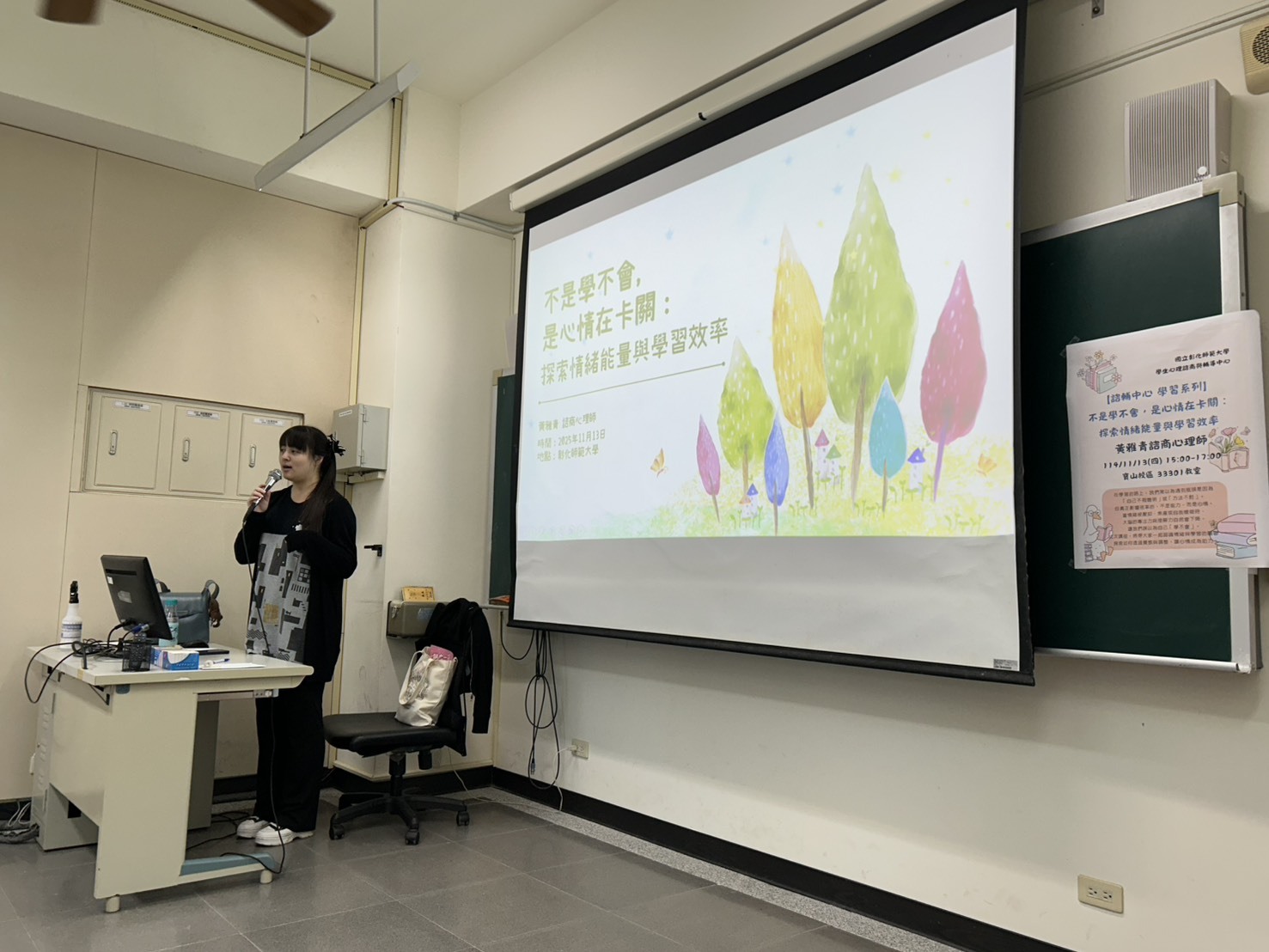
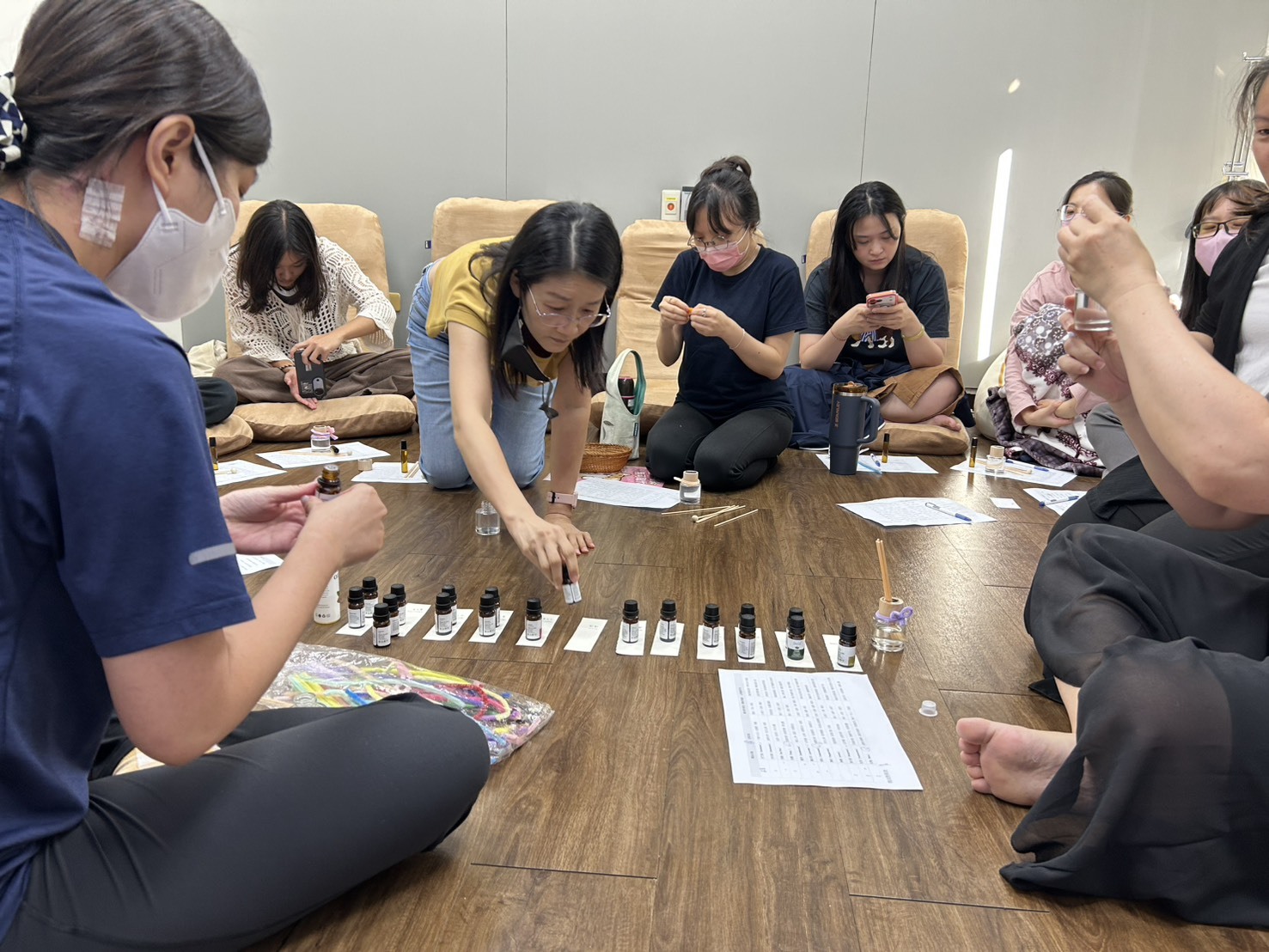
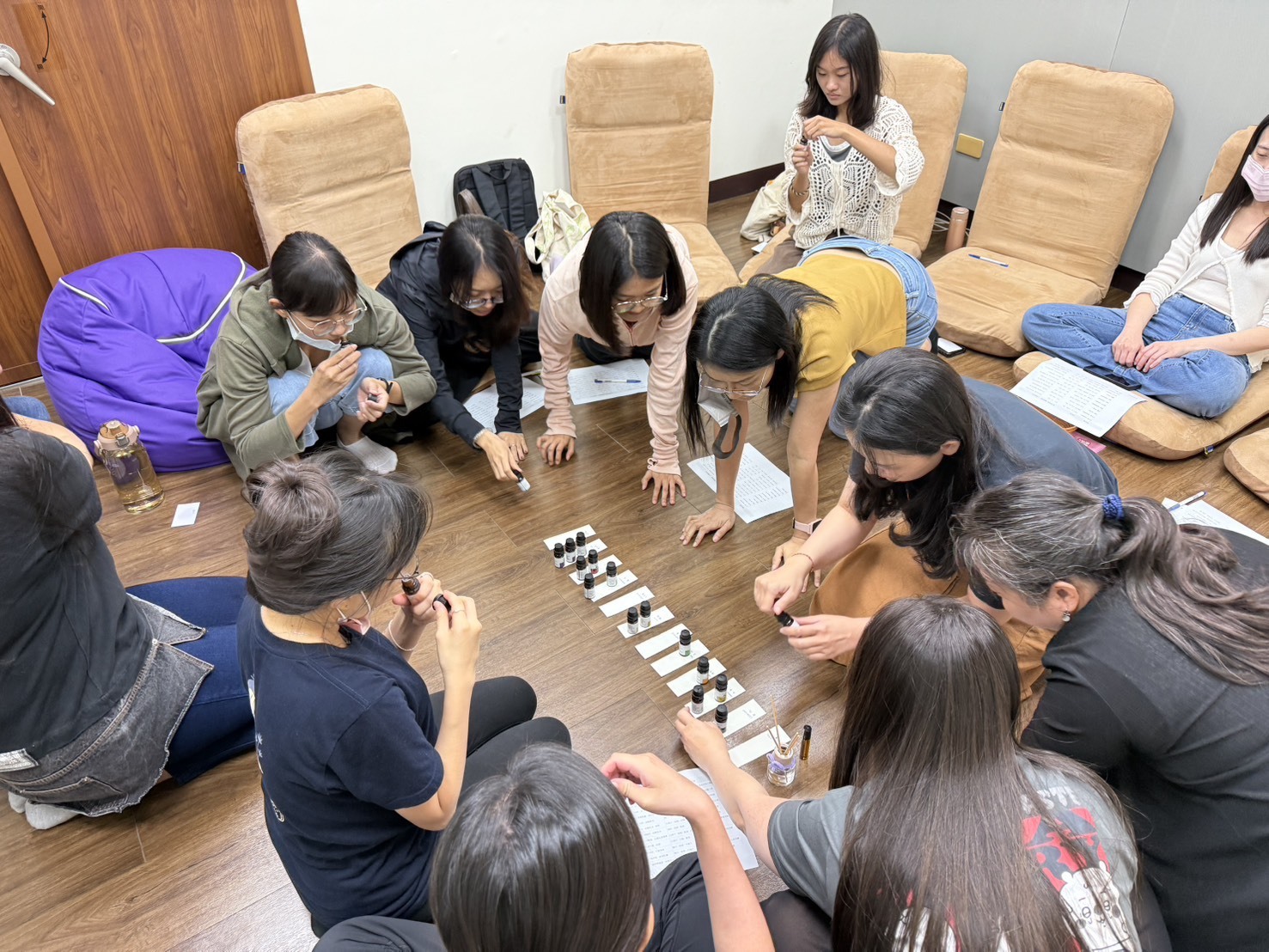
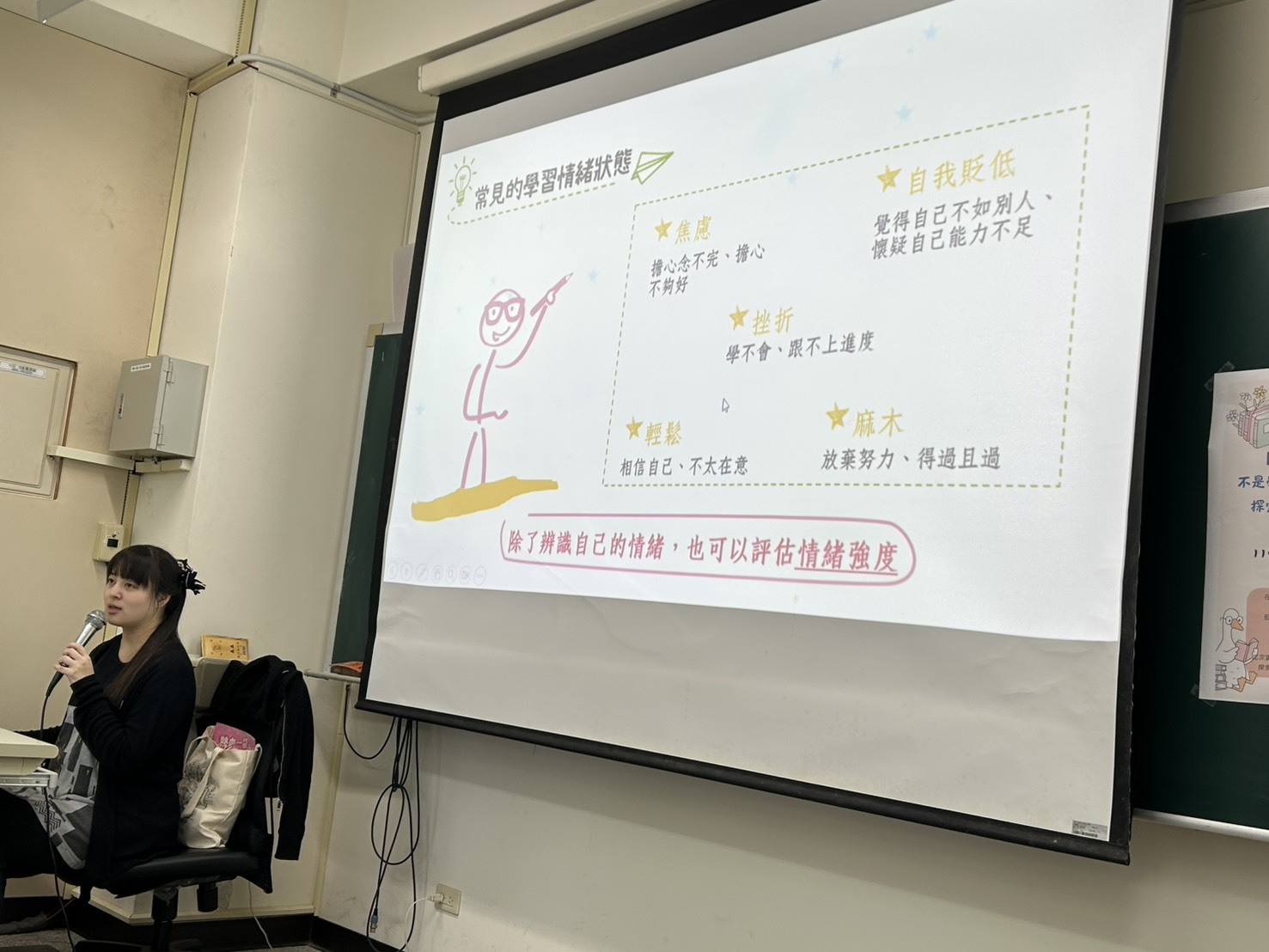
Figures 9–12. Learning support lectures
- (e) Counseling groups: trainee counseling psychologists run regular groups on interpersonal relationships, intimate relationships, family relationships and emotional regulation, giving students a setting for self-exploration, emotional expression and relationship learning. Between 2024 and 2025, the center ran six groups with 39 students and 270 attendances, and an overall satisfaction score of 4.78. Group topics were “Becoming Your Own Lighthouse: Finding Yourself in Open Water”, “The Things Left Unsaid: Relationships Through Psychodrama”, “Loving Without Hindering: Exploring Relationships”, “Mirroring Relationships: Exploring Interpersonal Connection”, “Home Was Always There: Exploring Family Relationships” and “Stretching the Emotions: A Journey to Well-being”.
(2) Tier 2: intervention guidance (early identification, proactive outreach and individualized support). Tutor outreach, mental health adjustment leave, early academic warning and individual counselling are used to identify students' mental health and adjustment needs early and to provide support and referral.
- (a) Individual counselling sessions (FTE and service statistics): the Counseling Center employs full-time and part-time counselling psychologists who provide free and confidential individual counselling, marital and family counselling, play therapy, group counselling, psychological testing and parenting counselling. In the 2024–2025 academic year (1 August 2024 to 31 July 2025), 391 students applied in the first semester with 2,184 sessions delivered, and 361 applied in the second semester with 2,380 sessions delivered, giving a total of 4,564 sessions for the year. The overall satisfaction score from individual session feedback questionnaires was 4.59 out of 5.
- (b) Mental health adjustment leaves and proactive referral: mental health adjustment leave is part of the student leave system and connects to the three-tier guidance framework. Under the guidelines for the leave, when a student takes two or more consecutive days or three days in total, the leave system triggers an outreach process and notifies the tutor, who makes an initial assessment of the student's emotional state, daily adjustment and study. Where the tutor judges that the student has deeper difficulties or needs professional help, the case is referred to the Counseling Center, where a counselling psychologist provides individual counselling, intensive support and medical referrals where required. This forms a support chain of leave, tutor outreach, professional counselling and continuing follow-up.
- (c) Case management for students requiring intensive support: NCUE operates a case management system that brings together tutors, campus safety officers, college and departmental counselling psychologists and the Office of International and Cross-Strait Affairs. For students at higher psychological risk or with serious adjustment difficulties, a case management psychologist intervenes early and provides support, resource coordination and medical referral. Case numbers have risen over the past three years: 329 cases in the 2023–2024 academic year, and 333 cases between August 2024 and July 2025, comprising 69 new cases, 271 continuing cases and 62 cases closed during the year.
- (d) Proactive outreach to students flagged by early academic warning: working with the early academic warning system of the Office of Academic Affairs, the Counseling Center contacts students who are falling behind or at higher risk by telephone, letter and interview at the start, middle and end of each semester. In the first semester of 2025–2026 the center followed up 40 students across 113 contacts.
(3) Tier 3: intervention and treatment guidance (crisis response, psychiatric consultation, transition guidance, follow-up counseling for high-risk students, and handling of reportable cases). For students at higher psychological risk, with psychiatric needs or in crisis, the center provides crisis response, psychiatric consultation, transition guidance and follow-up, drawing on professional resources on and off campus.
- (a) Psychiatric and clinical consultation: for students with severe depression, psychiatric conditions or thoughts of self-harm, the center provides psychiatric consultation, referral and follow-up. In the first semester of 2024 it delivered 8 psychiatric consultations, received 16 transition guidance cases and transferred out 6, and provided 125 follow-up contacts for students requiring intensive support.
- (b) AI and research-informed outreach: using the prediction model from NCUE's precision counselling research, the center contacts students proactively by telephone and email according to their level of risk and need. During the year it contacted 59 students requiring the highest level of support by telephone and 66 by email.
2. Results of integrated mental health support
Through the three-tier framework NCUE integrates mental health promotion, early identification, proactive outreach, professional counselling, case management for students requiring intensive support, crisis response and medical referral, forming a continuous system from prevention to treatment and from campus to medical services.
Mental health adjustment leave provides institutional support for students to manage their own recovery, and its outreach mechanism connects to tutor support, counselling at the Counseling Center and case management, so that students with difficulties receive help when they need it. Through health promotion activities and these services NCUE continues to build students' mental health literacy and resilience and to improve access to mental health services.
3. In 2024–2025 and 2025–2026 academic years, with funding from the Ministry of Education's Health Promoting University Program, NCUE made student mental health and stress relief its main health promotion theme and ran the following activities:
-
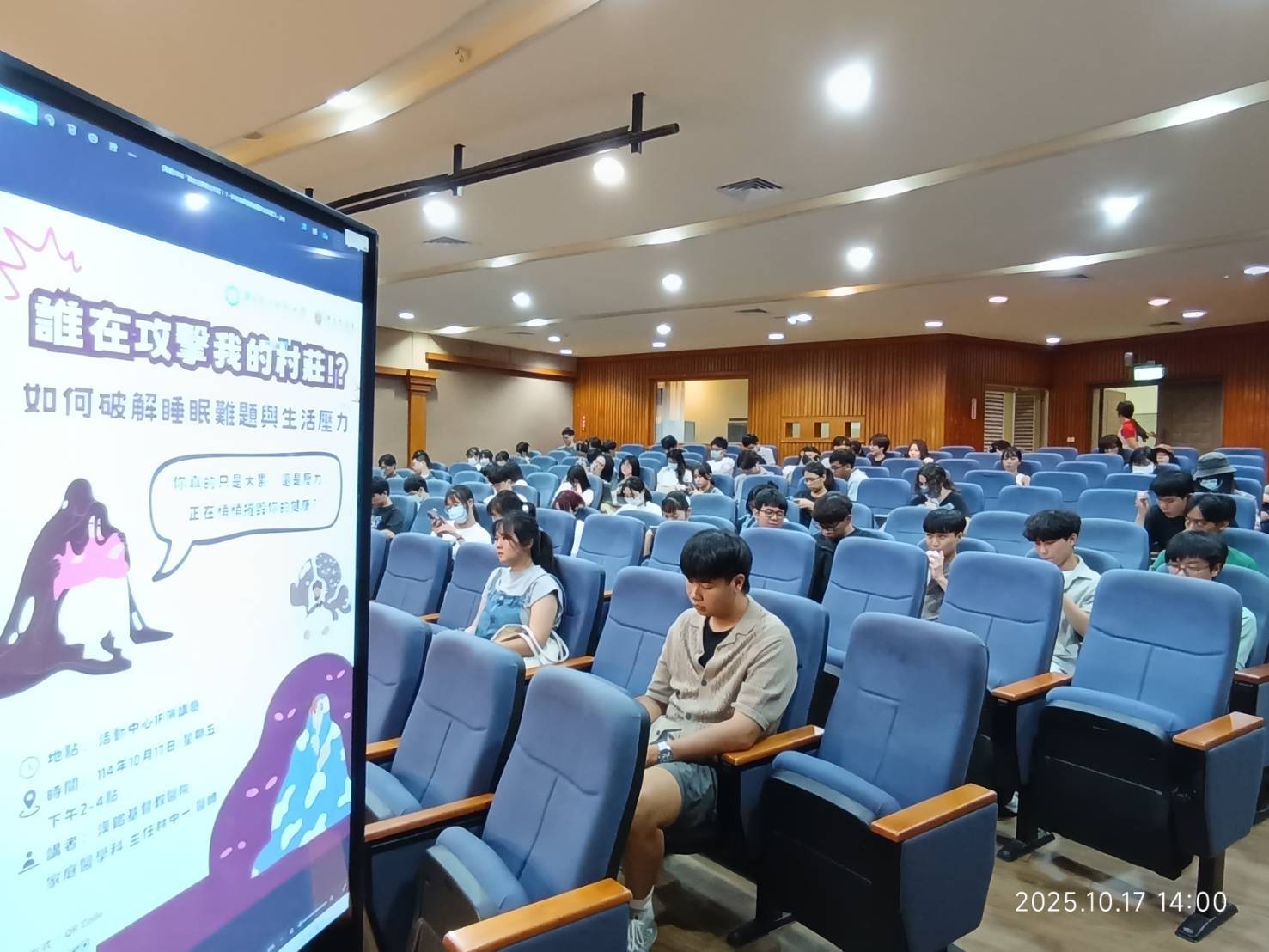
(1) “Who Is Attacking My Village? Solving Sleep Problems and Everyday Stress” lecture, 17 October 2025
The Health Center invited Dr Lin Chung-i, attending physician in the Department of Family Medicine at Changhua Christian Hospital, to speak. The lecture covered the physiology of stress, sleep disorders and the effects of anxiety on the autonomic nervous system and the brain, and set out clinical advice on routines and routes to medical help. The physician also held individual consultations with students on sleep and stress. 107 students attended. (Figure 13) -
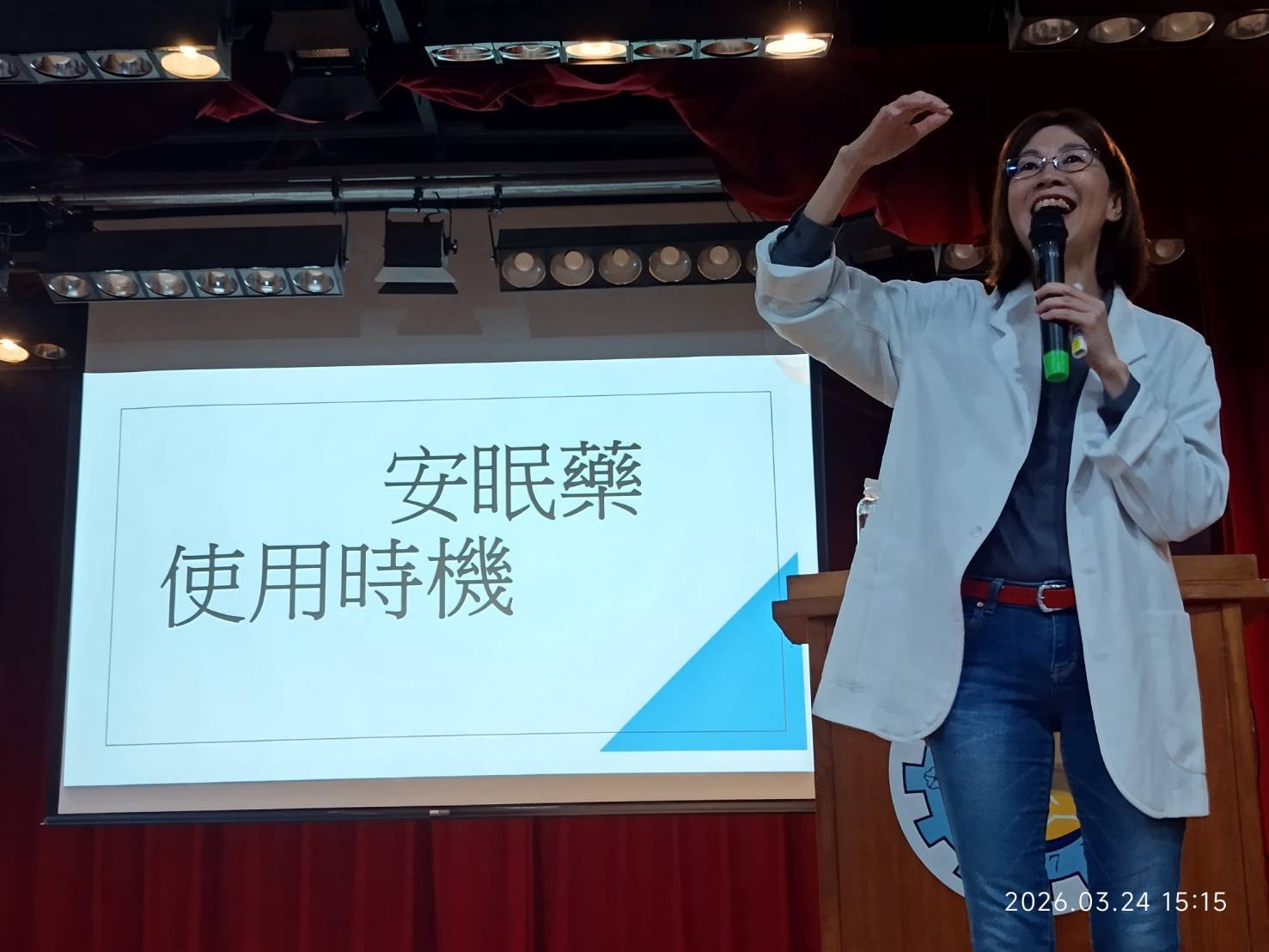
(2) “What You Should Know About Medicines” lecture on safe medication and well-being, 24 March 2026
To address substance abuse, new psychoactive substances such as etomidate vape cartridges, and stress-related drug dependence among young people, NCUE invited pharmacist Pan Shu-min, who has extensive clinical and community experience, to speak. Starting from situations students commonly encounter, the lecture covered sedative and hypnotic medicines such as flunitrazepam and zolpidem, weight-loss medicines, emergency contraception and painkillers, correct timing of doses in relation to meals, medicine disposal, and common side effects. 125 people attended; 96% said the session helped them understand safe medication use and 92% said they would take an interest in their peers' medication safety. (Figure 14) -
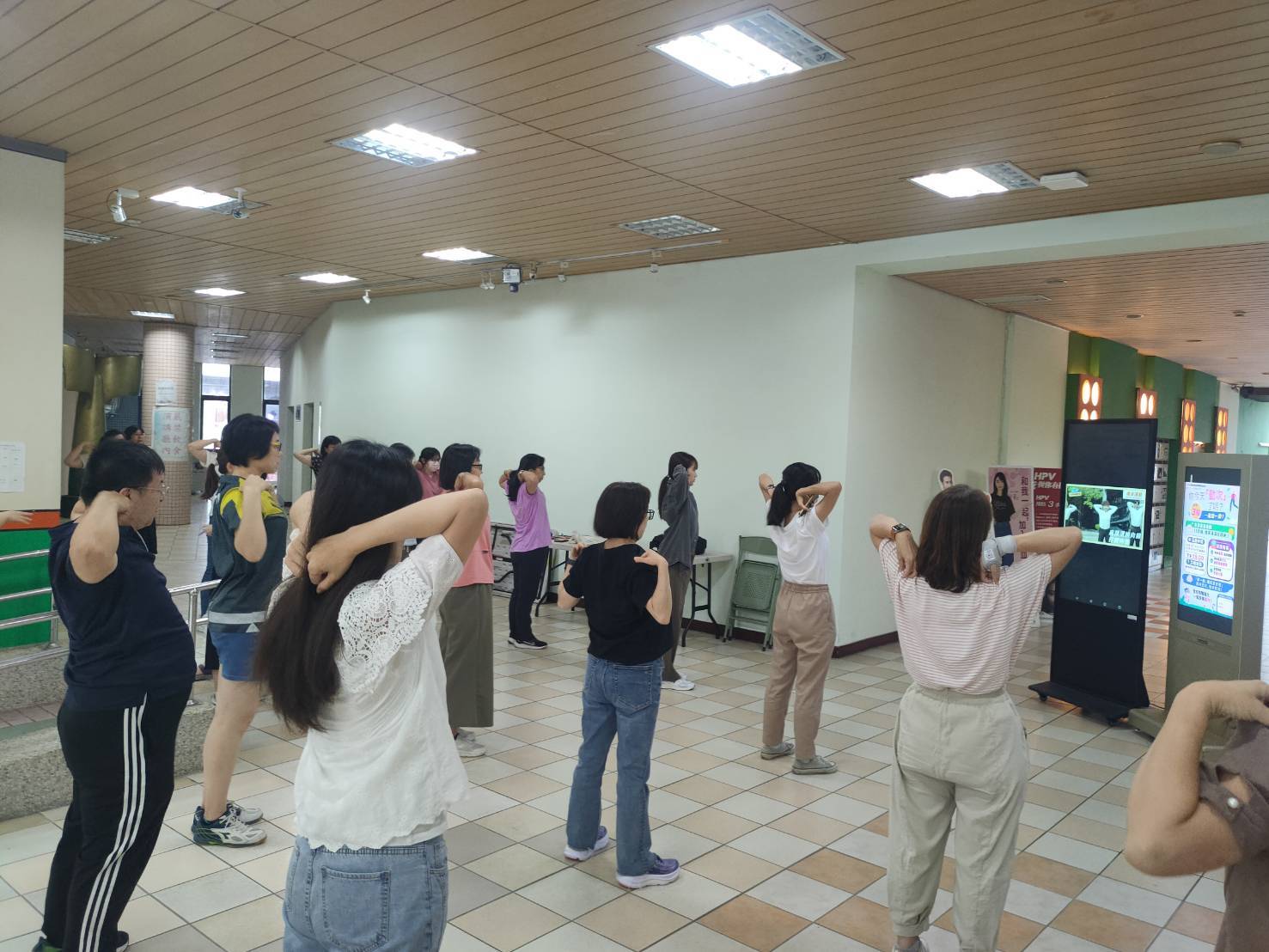
(3) “Healthy Living: Happy Moves” campus stretching and stress-relief sessions, every Thursday from April to June 2026, seven sessions in total
To address fatigue, low concentration and tension caused by long periods of sitting and heavy study loads, NCUE ran seven “15 minutes of afternoon stretching and light exercise” sessions in the Student Activity Center plaza. The sessions combined movement and meditative stretching to increase oxygen supply to the brain, support dopamine release and reduce anxiety. There were 102 attendances. (Figure 15)
4. Mental health integration into general education and professional supervision and training
To keep psychological support sustainable and professional, NCUE strengthens counseling knowledge and skills in two key areas: embedding mental health in general education courses and providing clinical supervision for counseling staff.
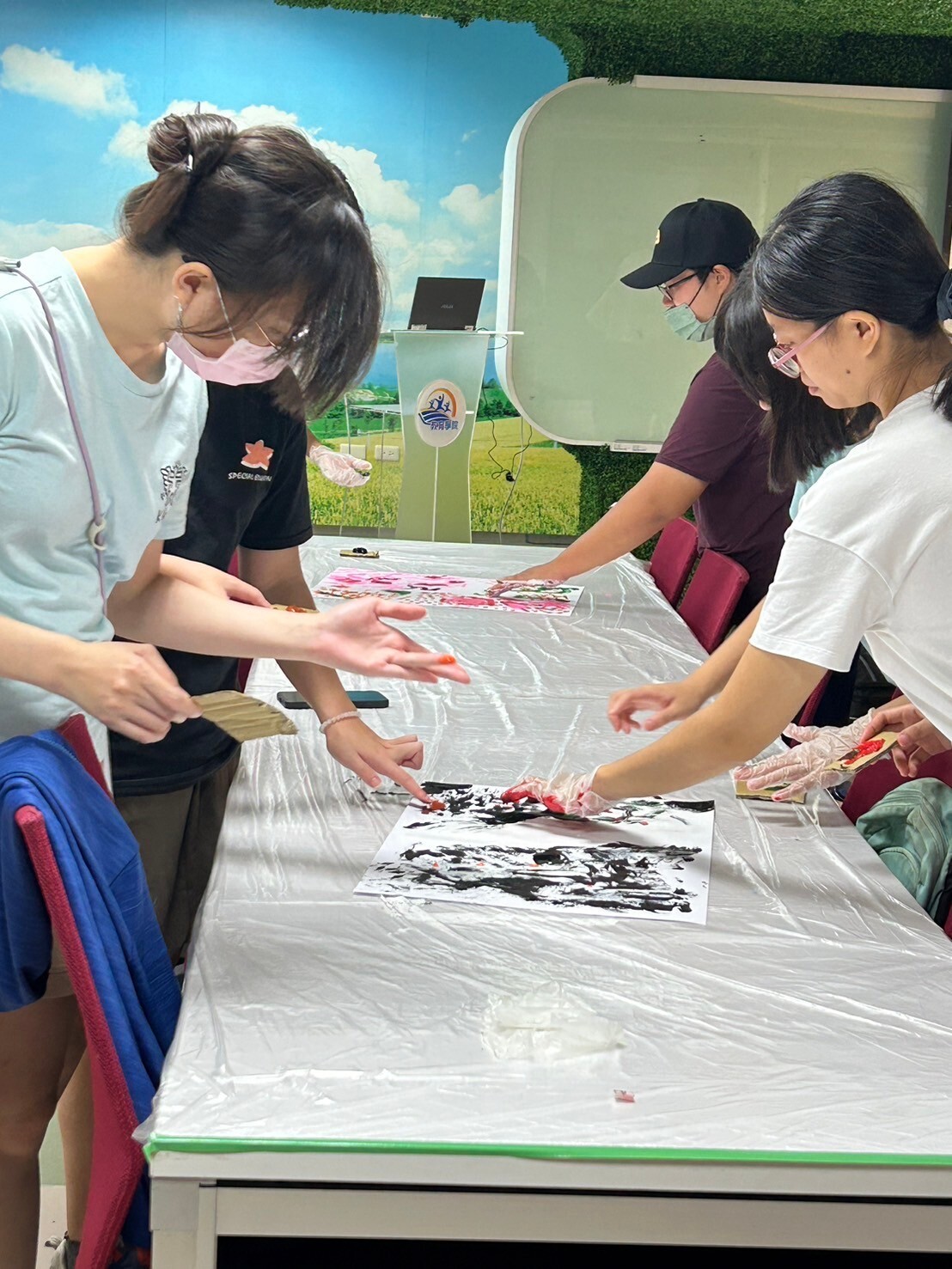
(1) Life education and guidance skills in general education courses: aimed mainly at first-year students and co-taught by life education lead teachers in each department and counselling psychologists from the Counseling Center. Psychologists visit each class twice per semester for life education and mental health screening, and introduce students to self-exploration and routes to help in a crisis. Fourteen classes ran in the second semester of 2024–2025 and sixteen in the first semester of 2025–2026. (Figures 16–17)
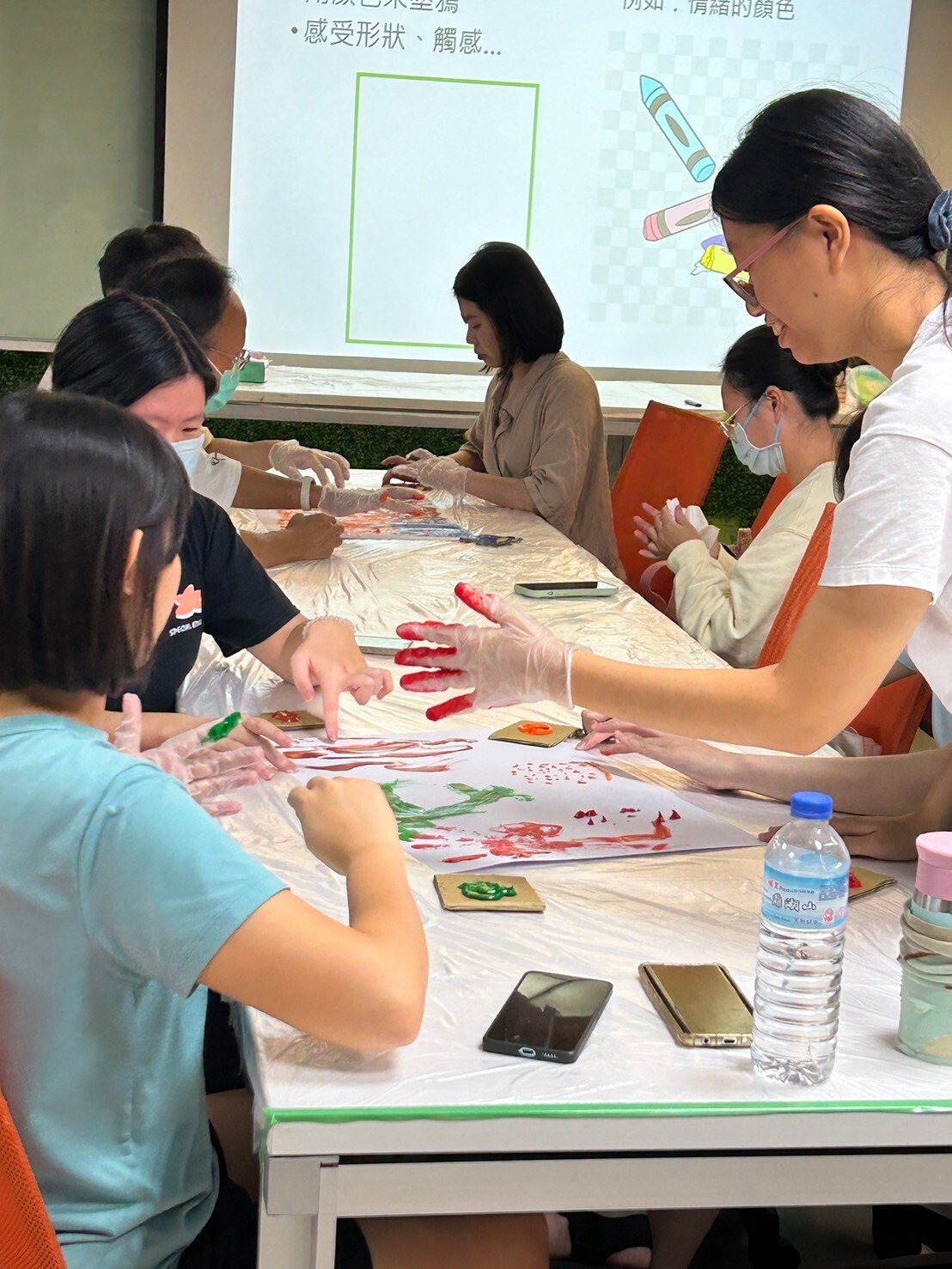
(2) Group and individual clinical supervision for counseling staff: to maintain the quality of clinical sessions delivered by full-time, part-time and trainee counselling psychologists, the center operates a structured supervision and training system:
- (a) Group supervision: three group clinical supervision sessions were held in the 2025–2026 academic year, with 40 attendances and a mean satisfaction score of 4.9 out of 5.
- (b) Individual supervision: counseling staff engage senior clinical and counseling supervisors matched to their own theoretical orientation, such as cognitive behavioral, psychoanalytic, Gestalt or interpersonal process, for in-depth case discussion. This protects the privacy and rights of students in counselling and supports the quality of sessions. The overall satisfaction score for individual counselling services in the 2024–2025 academic year was 4.59.
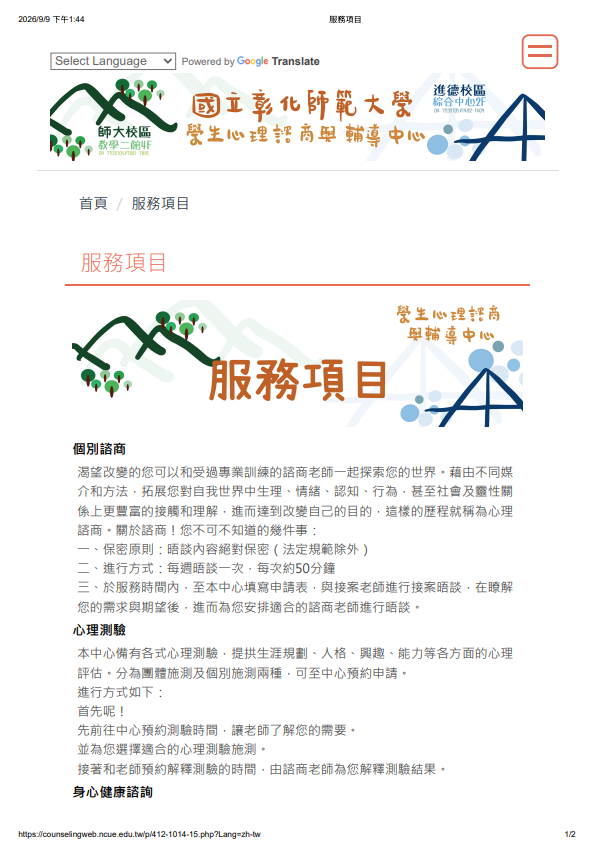
Related links: NCUE Student Counseling Center website (Figure 18): https://counselingweb.ncue.edu.tw/p/412-1014-15.php?Lang=zh-tw