SDG 3.3.2
SDG 3.3.2 Health outreach programmes
Guided by the principles of University Social Responsibility (USR) and the Health Promoting University, NCUE extends health services beyond the campus into the surrounding community. University-level sustainability policy, health promotion projects and cross-unit collaboration combine teaching, research, professional services and community practice in a long-term health outreach model.
The outreach program rests on six strategies:
- Improving community residents' access to health services.
- Building health literacy and disease prevention capacity.
- Supporting disadvantaged groups and promoting health equity.
- Integrating teaching, research and community practice to strengthen students' capacity for public service.
- Promoting healthy ageing and active ageing.
- Building community health resilience.
Health outreach and health service activities and results
1. Social work program internship presentation, "Micro-Light Becomes Torch: A Program Designer's Notebook", Department of Guidance and Counseling
The Department of Guidance and Counseling in the College of Education has long-standing partnerships with social welfare and health institutions in Changhua. During the 2024–25 academic year, students taking the Social Work Program Internship course worked for a full year on needs assessment, program design, health promotion delivery and evaluation under the supervision of Professor Wang Yi-Han, Associate Professor Yeh Yi-Ling and Associate Professor Pai Chien-Ju. On 5 June 2026, the department held the Class of 2026 presentation "Micro-Light Becomes Torch: A Program Designer's Notebook", at which 17 fourth-year students reported on 160 hours of front-line community outreach across three areas of health:
- (1) Community mental health (internship at the Changhua County Lifeline Association): students engaged directly with the community to design mental health development groups for children and adolescents in vulnerable families. Through community-based mental health awareness campaigns and connections to relevant resources, the initiative effectively enhanced these young people's mental health literacy and community support.
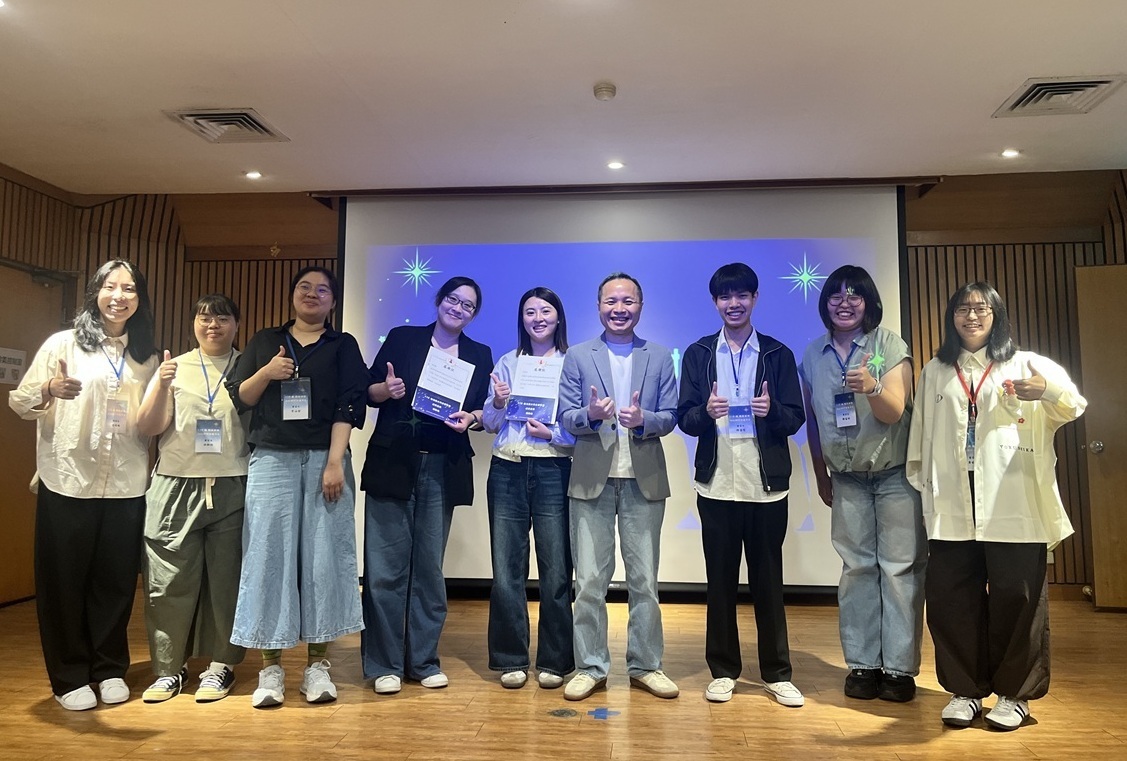
- (2) Social work with children, young people and vulnerable families (internship at the Changhua branch of the Taiwan Fund for Children and Families): the team worked on foster family recruitment and social marketing, using social media, online and physical exhibitions and interactive materials to improve public understanding of child protection and family health. (Figure 1)
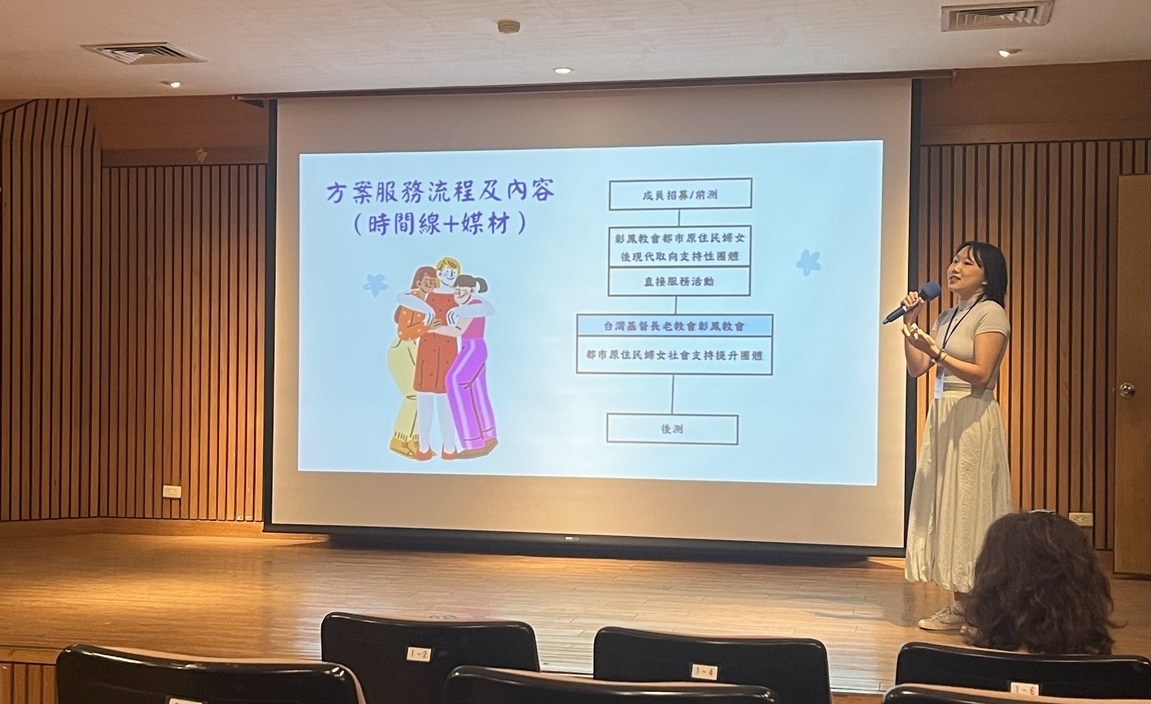
- (3) Urban indigenous women (in partnership with Dreamhouse of Changhua and Cevung Church): the team ran support groups for urban indigenous women, using life-story work and the production of small books to support their mental health, social participation and emotional well-being, contributing to health equity. (Figure 2)
Related links:
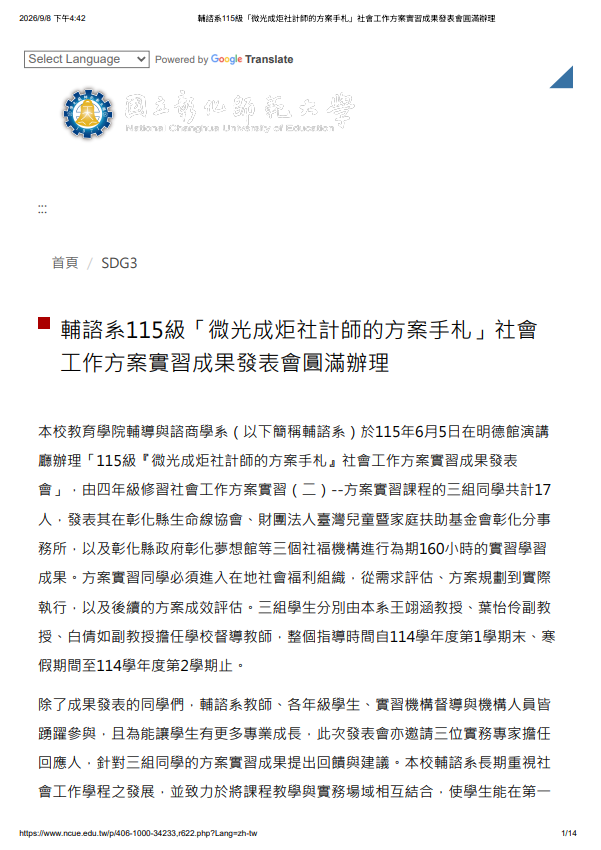
(1) “Micro-Light Becomes Torch: A Program Designer's Notebook” social work placement presentation (Figure 3): https://www.ncue.edu.tw/p/406-1000-34233,r622.php?Lang=zh-tw
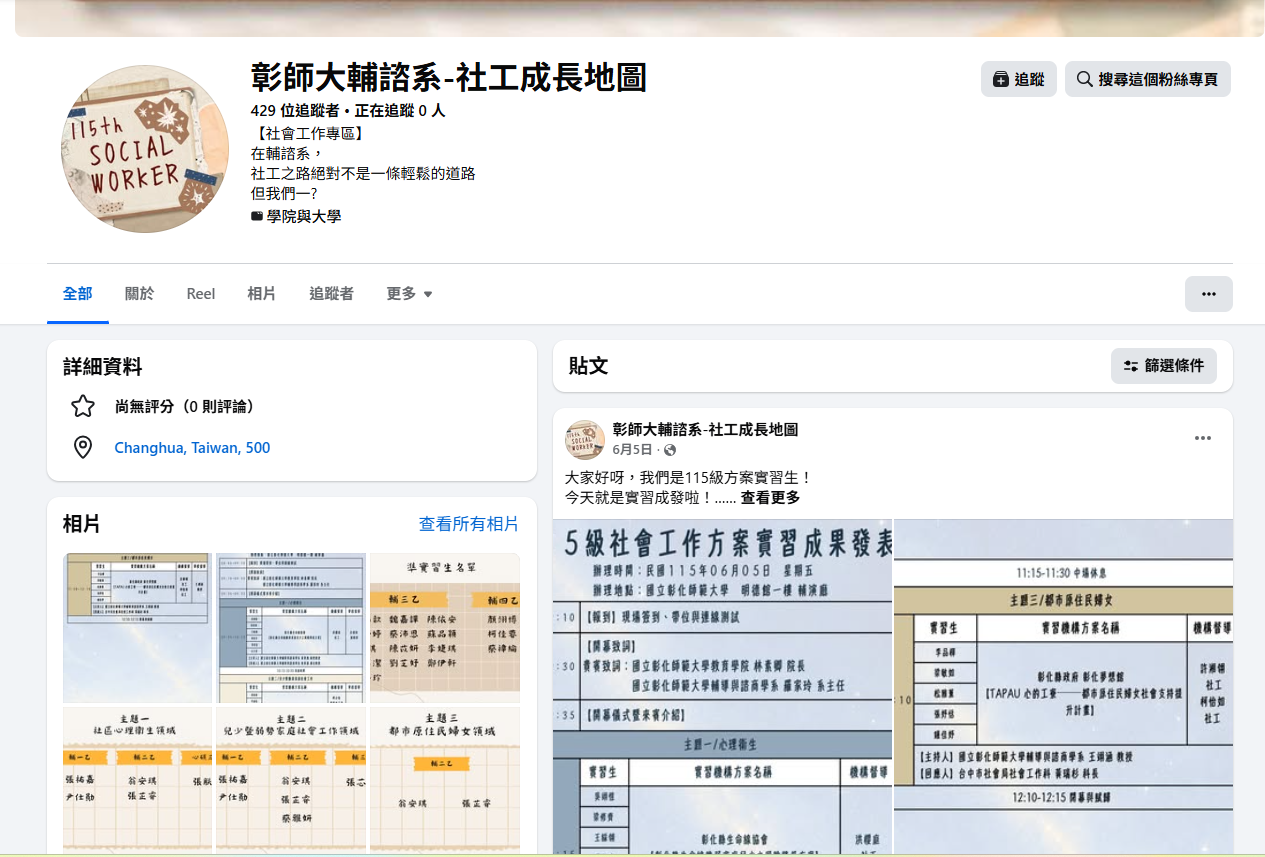
(2) NCUE Department of Guidance and Counseling – Social Work Growth Map Facebook page (Figure 4): https://www.facebook.com/ncuegcsocialwork?locale=zh_TW
2. “Field Visits” project presentations for the Introduction to Social Work course, College of Education and Department of Guidance and Counseling
To introduce public health and health care concepts early in students' studies, the College of Education and the Department of Guidance and Counseling offered the course Introduction to Social Work in the 2024–2025 academic year, with Associate Professor Pai Chien-Ju leading the “Field Visits” exercise and in-depth interviews in the second semester of 2024 academic year (see Figure 5). Student groups visited seven social welfare organizations and non-profit organizations (NPOs) in central Taiwan working directly in health and well-being, community rehabilitation and specialist long-term care. Through interviews with experienced staff and service users, the students gathered and communicated knowledge on health and well-being, early intervention and mental health care. The seven partner organizations and presentation topics were:
- (1) Shiny School, Changhua Ailing Social Welfare Association: school social work and support for marginalized children and young people.
- (2) Taichung City Assistance and Care Association (Geng Shui Xiao Zi): community support services and nutrition guidance for children and young people.
- (3) Tsu-Kuang Foundation: child protection and welfare services, and trauma-informed education.
- (4) Hondao Senior Citizen's Welfare Foundation: social work with older people and active ageing outreach.
- (5) Down Syndrome Foundation R.O.C.: social work practice in disability and early intervention.
- (6) Tongxinyuan Community Rehabilitation Center: evidence-based mental health and community rehabilitation services.
- (7) Taiwan GDi Association: social support for gender and vulnerable groups, and advocacy on HIV/AIDS and health rights.
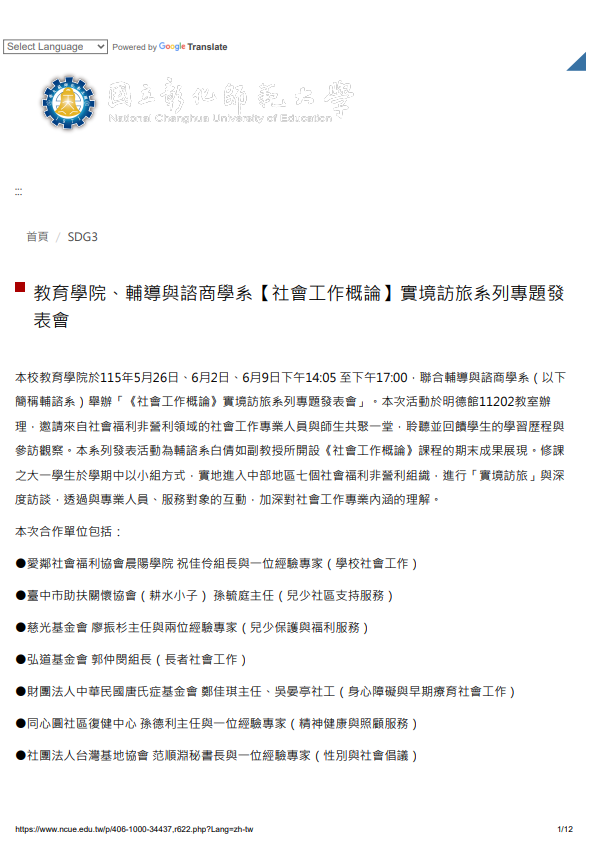
Supervisors and practitioners from these organizations were invited to give feedback and took part in discussion, building first-year students' public health knowledge and raising awareness of community health policy and mental health care.
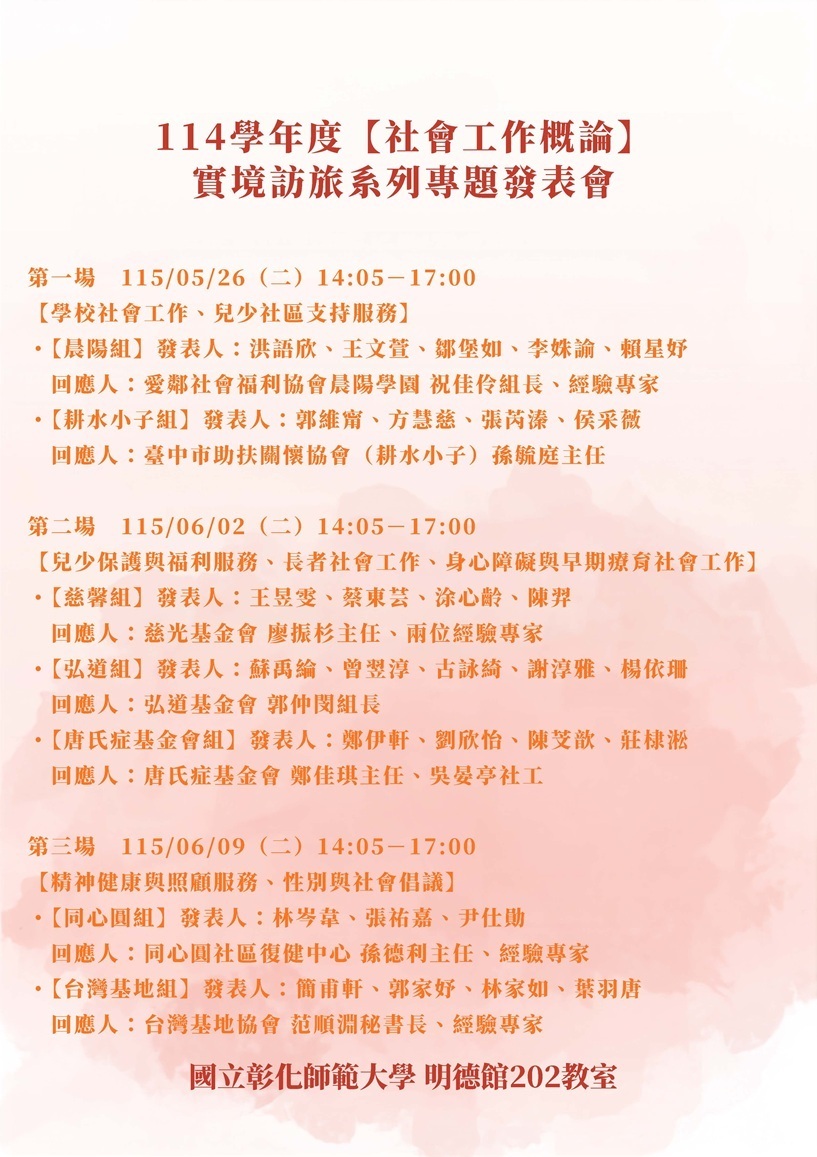
Related links (Figure 6): https://www.ncue.edu.tw/p/406-1000-34437,r622.php?Lang=zh-tw
3. Ying-Yu NCUE Cultural Health Station: comprehensive preventive medicine and care for urban indigenous elders
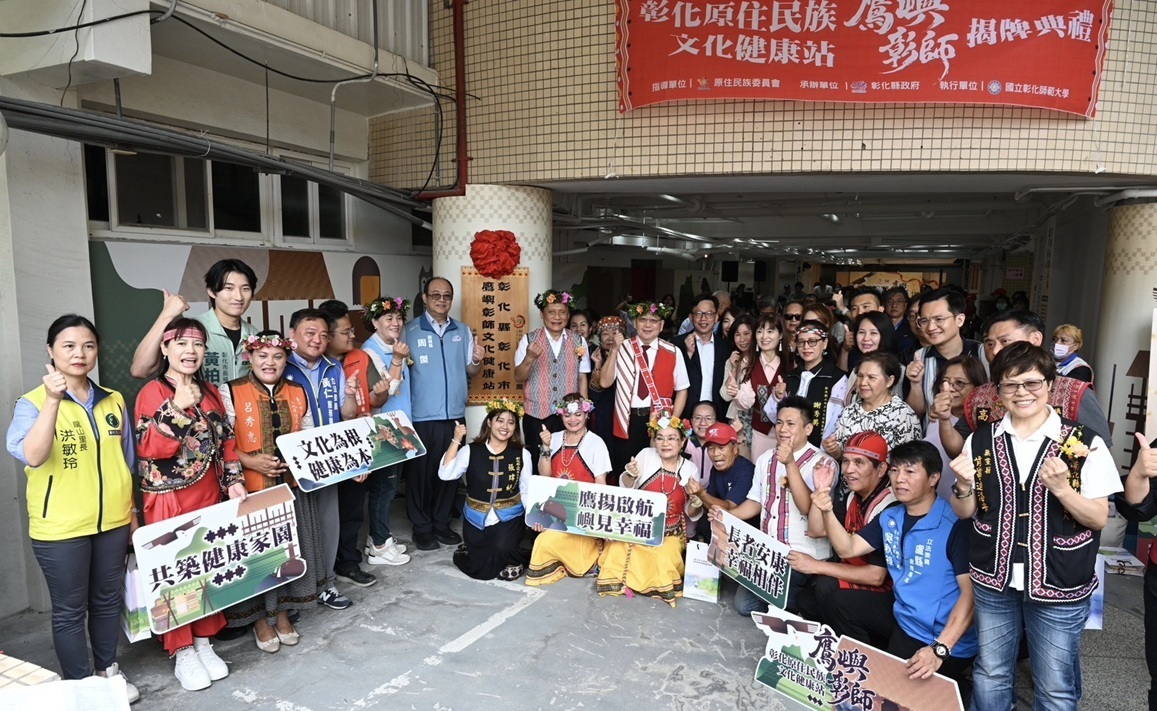
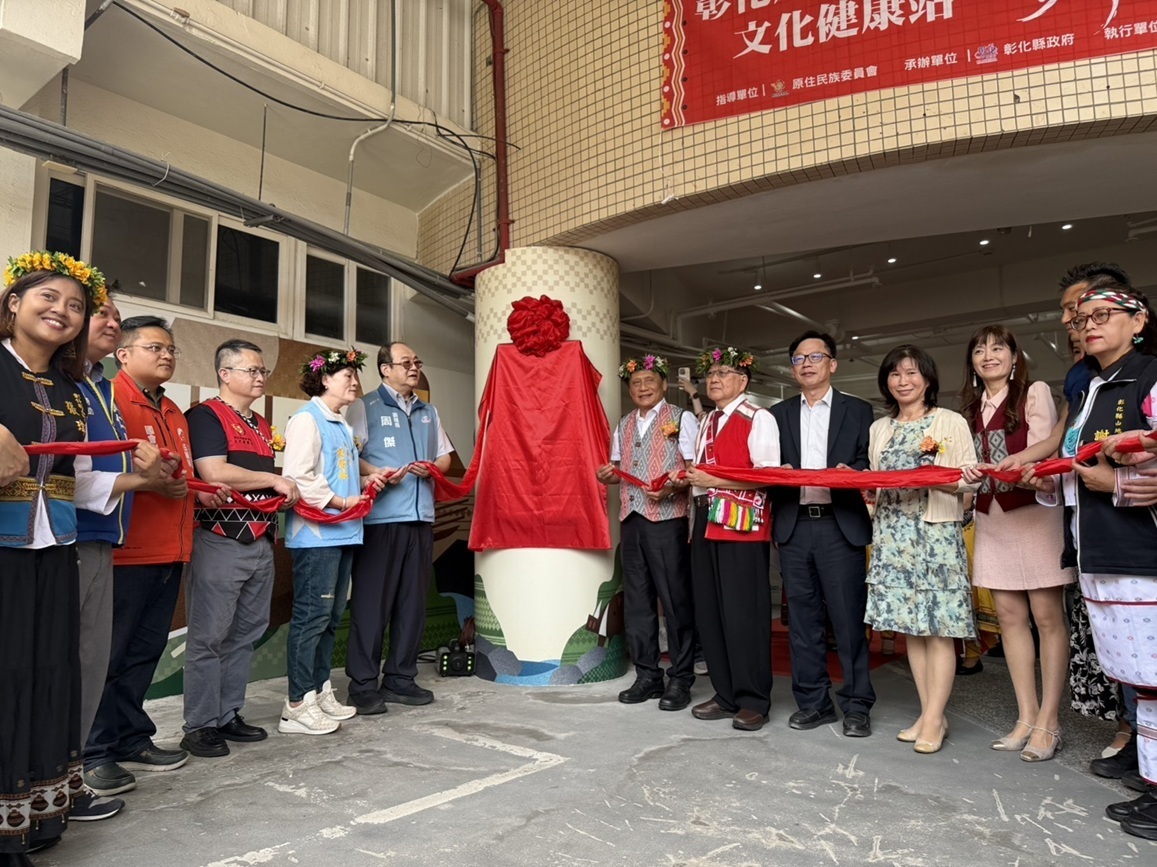
Working with the Council of Indigenous Peoples and the Changhua County Government, NCUE built and now operates the Ying-Yu NCUE Cultural Health Station on the ground floor of Hu-Bin Building. It is the first cultural health station located on a national university campus in Taiwan.
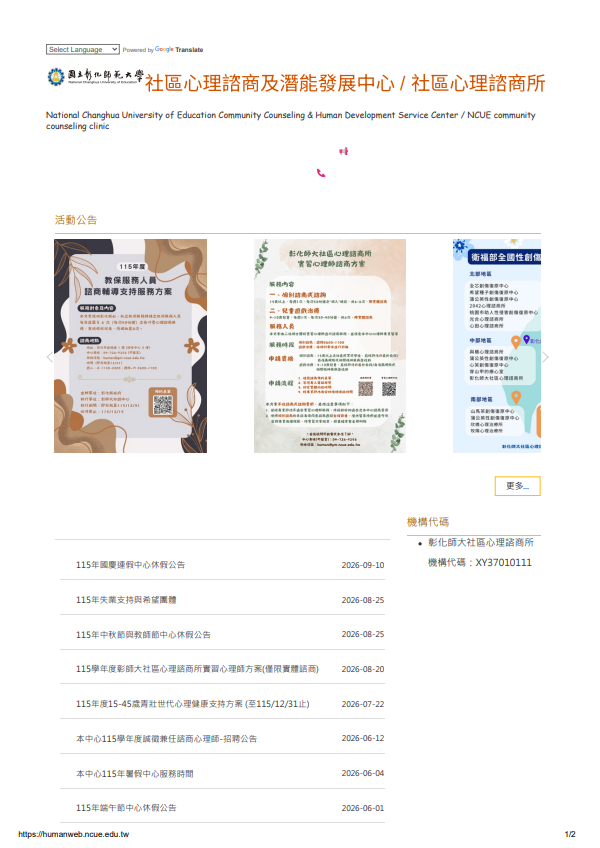
In the 2024–2025 academic year, the station provided local and urban indigenous elders with regular health monitoring, including blood pressure, blood glucose and body temperature, fall prevention and functional fitness assessment, and health promotion activities that prevent or delay functional decline, together with balanced communal meals. The station draws on the academic resources of NCUE's Bachelor's Degree Program for Indigenous People in Seniors Health Promotion and Care Management, giving indigenous students on the program front-line long-term care internships on campus. It supports intergenerational learning, active ageing, and healthy ageing for indigenous residents in both rural and urban areas, in a setting designed to be culturally safe. (Figures 7–8)
4. Counseling and multi-level psychological support for the community from the Community Counseling and Human Development Service Center
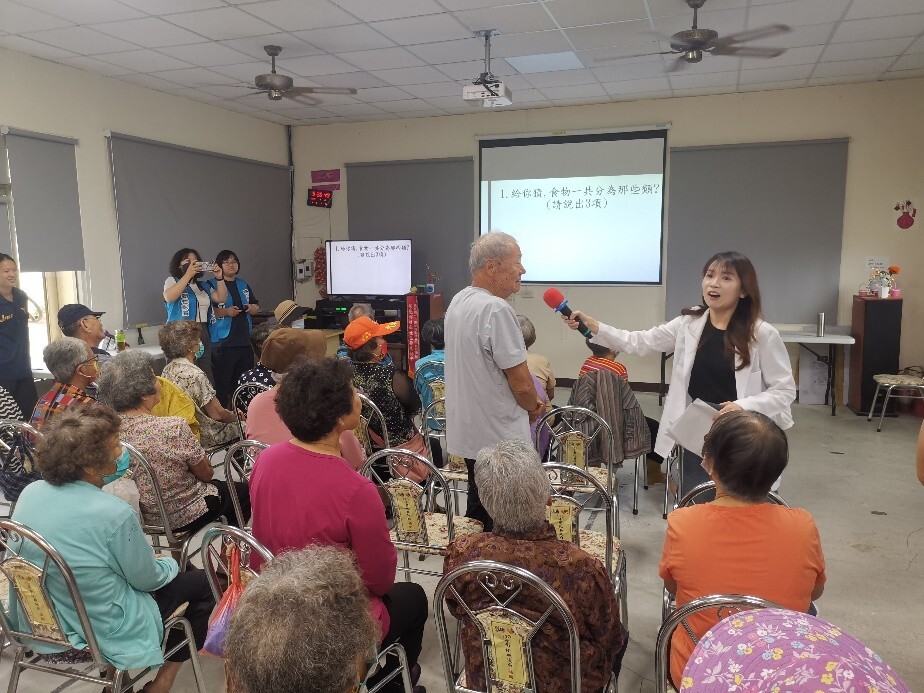
- (1) Taiwan's first online counseling service for the public: the NCUE Community Counseling Clinic, which has been serving the community for 30 years, is authorized by the local public health bureau to provide counselling services via telecommunications.
- (2) Free psychological support and secondary prevention for faculty and staff: the Community Counseling and Human Development Service Center provides staff with free mental health support and runs the staff mental health service program jointly with the Personnel Office, forming the secondary prevention layer of staff mental health provision. Free counselling, groups and talks build staff knowledge of mental health. In 2025 the center recorded 4,855 individual counselling and community service sessions across the colleges.
- (3) Main services and outreach: the center’s services include: (a) providing professional psychological counseling services to members of the local community; (b) providing practical training and continuing professional development for counseling professionals; (c) providing supervision for interns and counseling professionals; and (d) supporting employee mental health promotion in local businesses.
- (4) Collaboration with local medical institutions: the center works with Changhua Christian Hospital, a medical center, to provide counseling for staff and to run guidance groups for managers, helping managers at all levels develop self-awareness and self-care and respond to the demands of their roles, supporting a healthy workplace.
Related links:
NCUE Community Counseling and Human Development Service Center / Community Counseling Clinic (Figure 9): https://humanweb.ncue.edu.tw/
5. Industry–academia collaboration to train local and rural care professionals and improve the quality of care for older people
- (1) The Bachelor's Degree Program for Indigenous People in Seniors Health Promotion and Care Management trains professionals in health management and care for older people.
-
(2) The program has a cooperative education agreement with a local medical center that provides hospital internships. The curriculum covers three areas — required professional courses, elective professional courses, and indigenous culture and language:
- (a) Required professional courses: modules in elderly health promotion, care services, management, and related subjects.
- (b) Elective professional courses: modules in business management, palliative care, health promotion and home care supervision.
- (c) Indigenous culture and language module.
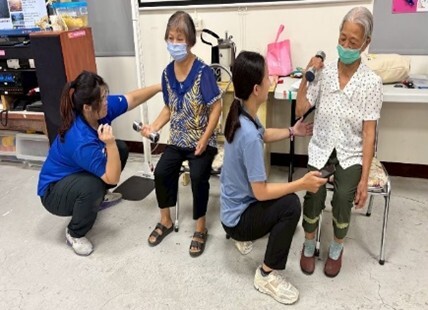
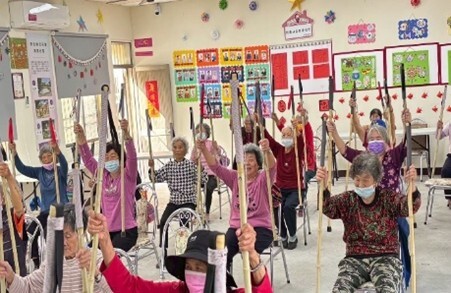
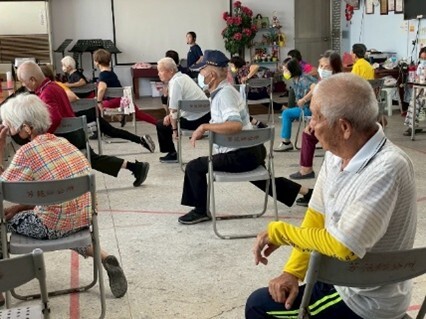
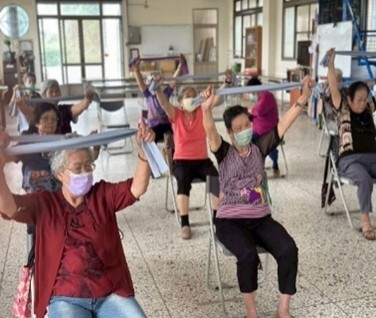
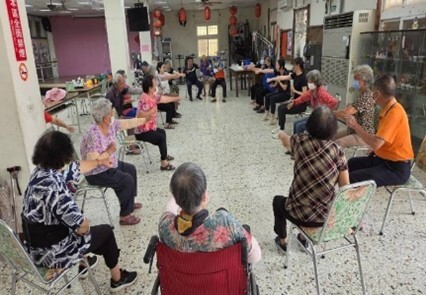
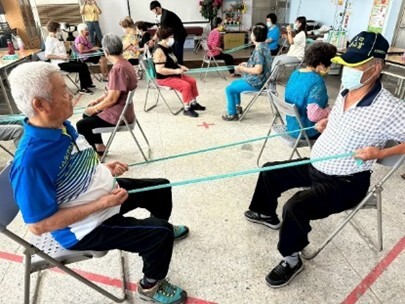
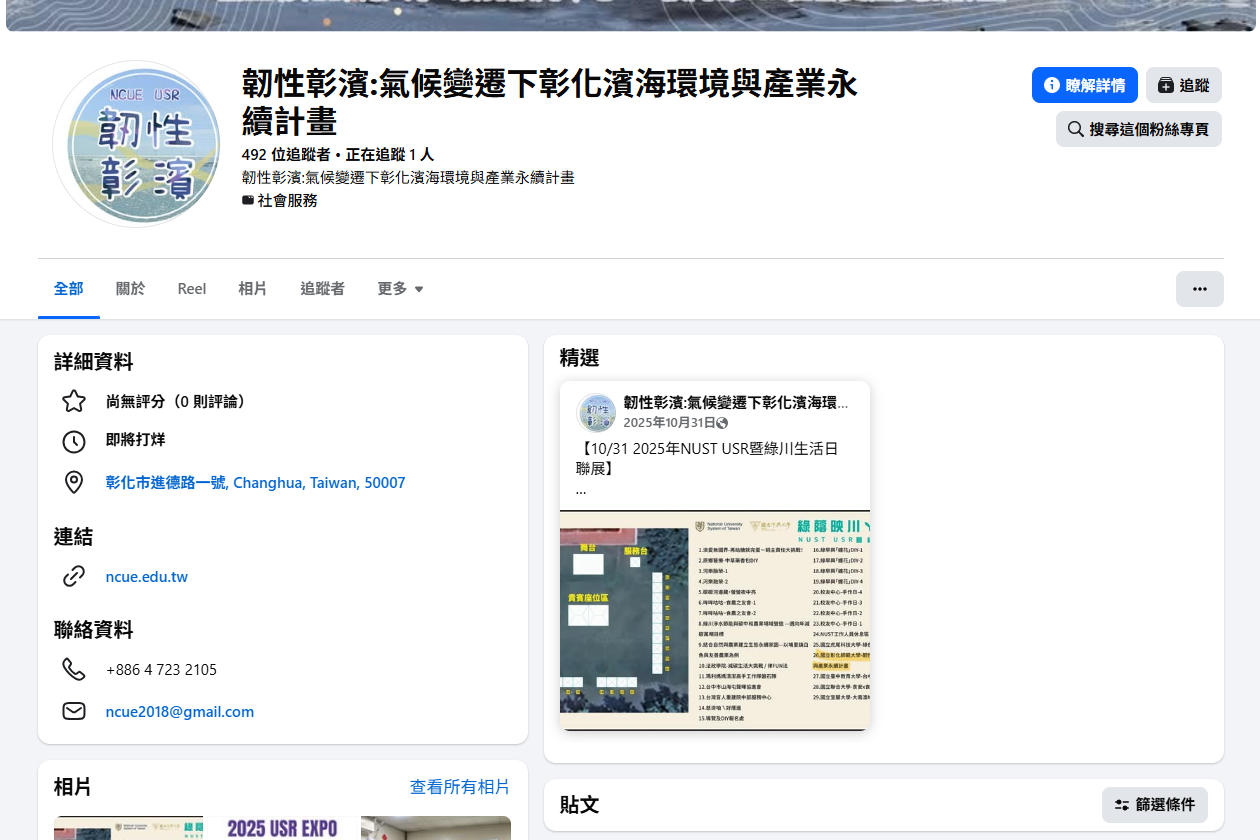
6. University social responsibility (USR) project: the Resilient Changbin strategic alliance memorandum of understanding. The project covers community exercise guidance, health screening, nutrition education and seafood literacy education, drawing on local resources to target residents' health risks. Health screening combined with exercise guidance supports the well-being of residents in rural areas, while the learning and training opportunities involved deliver on the university's social responsibility. (Figures 10–15)
During the 2024–2025 academic year, NCUE staff and students worked with local volunteers on health risks among residents of rural and coastal communities. The team made regular visits to the Dingbu, Lunjiao and Boai communities in Fangyuan Township, where medical resources are limited, providing health screening and fitness assessment for residents and older people, guidance on exercise prescription for older adults, and nutrition and seafood literacy education. The service improved residents' exercise and dietary behavior and narrowed the gap in health resources between coastal rural areas and urban areas.
Related links:
Resilient Changbin: sustainability of the Changhua coastal environment and industry under climate change (Figure 16): https://www.facebook.com/NCUEUSR
7. Industry–academia collaboration and professional training in the Bachelor's Degree Program for Indigenous People in Seniors Health Promotion and Care Management
The program trains professionals in health management and care for older people. It works with government health agencies and local medical institutions to train indigenous specialists in care for older people and to address the imbalance between supply and demand for long-term care among indigenous communities and urban indigenous residents:
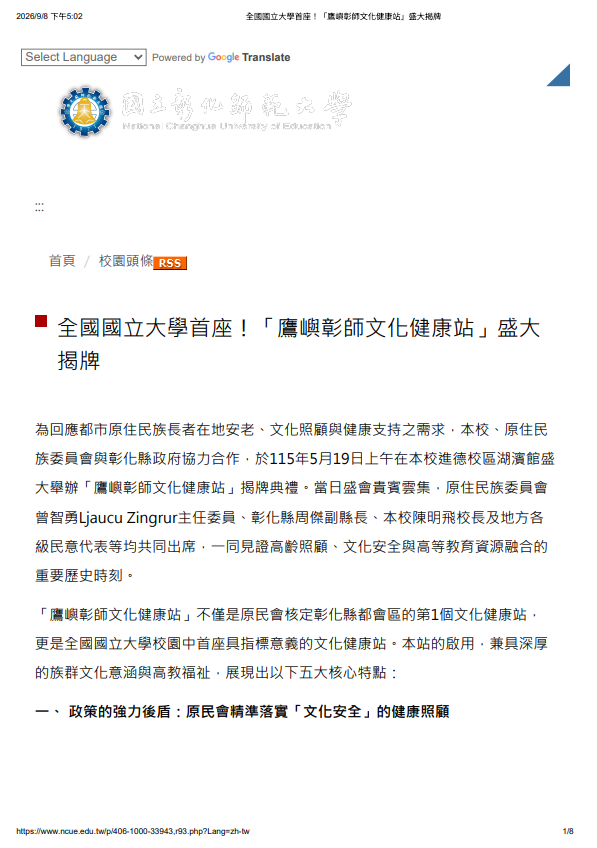
- (1) Establishing the Ying-Yu NCUE Cultural Health Station. With support from the Council of Indigenous Peoples and resources from the Changhua County Public Health Bureau and Social Affairs Department, NCUE established the first campus cultural health station at a national university in Taiwan. It provides urban indigenous elders with regular health checks, fitness assessment and activities that prevent or delay functional decline and serves as a placement site and a setting for intergenerational learning. (Figure 17)
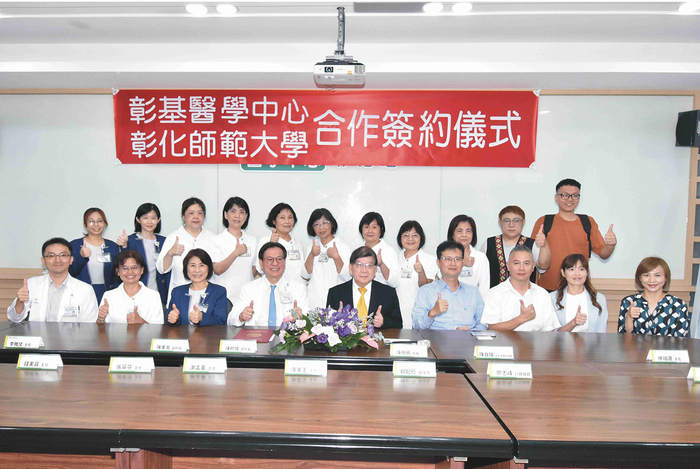
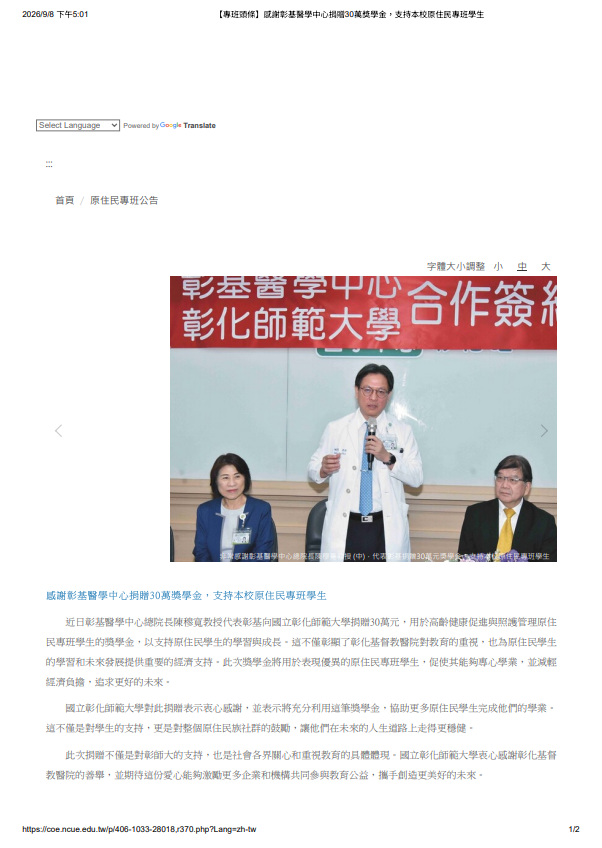
- (2) Partnership with Changhua Christian Hospital, a medical center. The two institutions signed a memorandum of understanding on a long-term care student training scheme under which the hospital provides clinical and long-term care internships. The hospital also donated NT$150,000 in admission awards for high-achieving students and NT$300,000 in scholarships for students with strong academic and conduct records. (Figure 18)
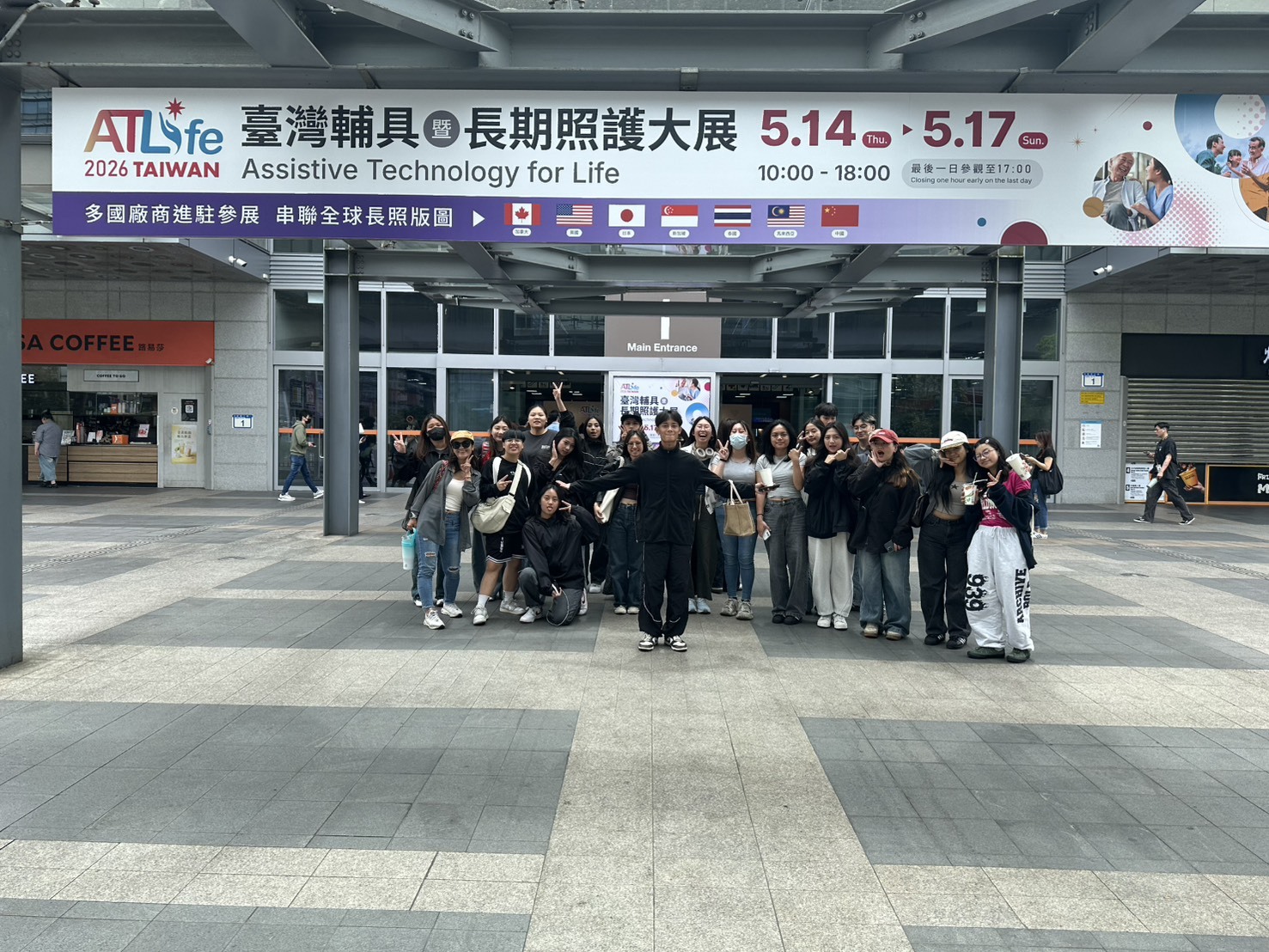
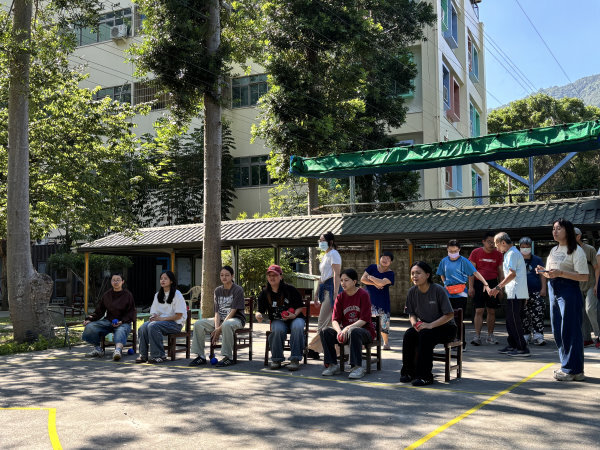
- (3) Assistive technology and long-term care exhibitions. Students visited the Assistive Technology for Life (ATLife) and cultural health stations in other areas to learn about current assistive technology and clinical care practice. (Figure 19)
- (4) Field study at indigenous community and local long-term care institutions. Alongside their professional courses, students carried out field study and visits in indigenous communities, cultural health stations and local long-term care institutions to develop their understanding of the health needs of indigenous elders and of care practice. (Figure 20)
Related links:
(1) Signing of the long-term care student training scheme memorandum of understanding (Figure 21): https://coe.ncue.edu.tw/p/406-1033-28018,r370.php?Lang=zh-tw
(2) Opening of the Ying-Yu NCUE Cultural Health Station, the first of its kind at a national university in Taiwan (Figure 22): https://www.ncue.edu.tw/p/406-1000-33943,r93.php?Lang=zh-tw
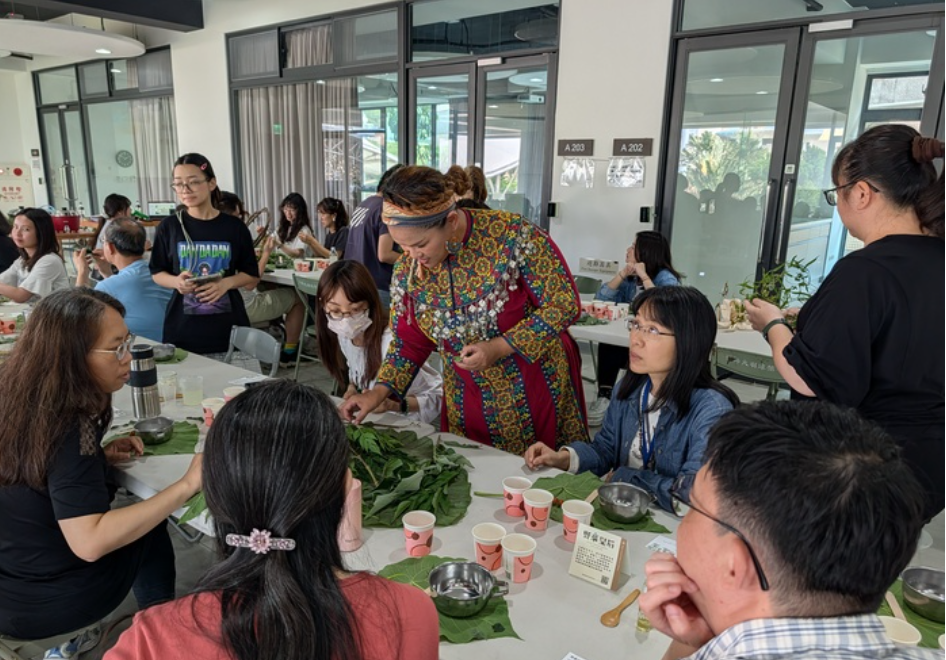
(3) Program activity highlights (Figure 23): https://coe.ncue.edu.tw/p/412-1033-4430.php?Lang=zh-tw
8. Student service clubs: health and drug prevention education in rural schools
NCUE encourages students to serve the wider community and to exercise their responsibilities as citizens. Student service clubs take health education, sexual safety and disease prevention into schools in rural areas:
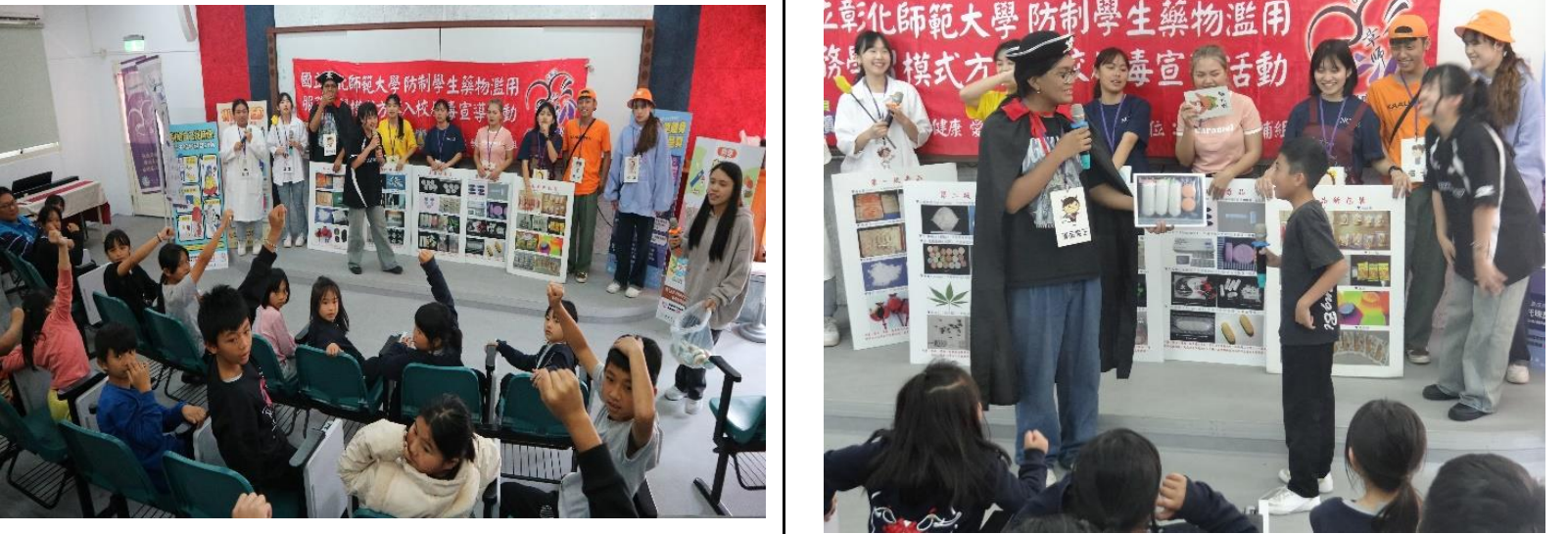
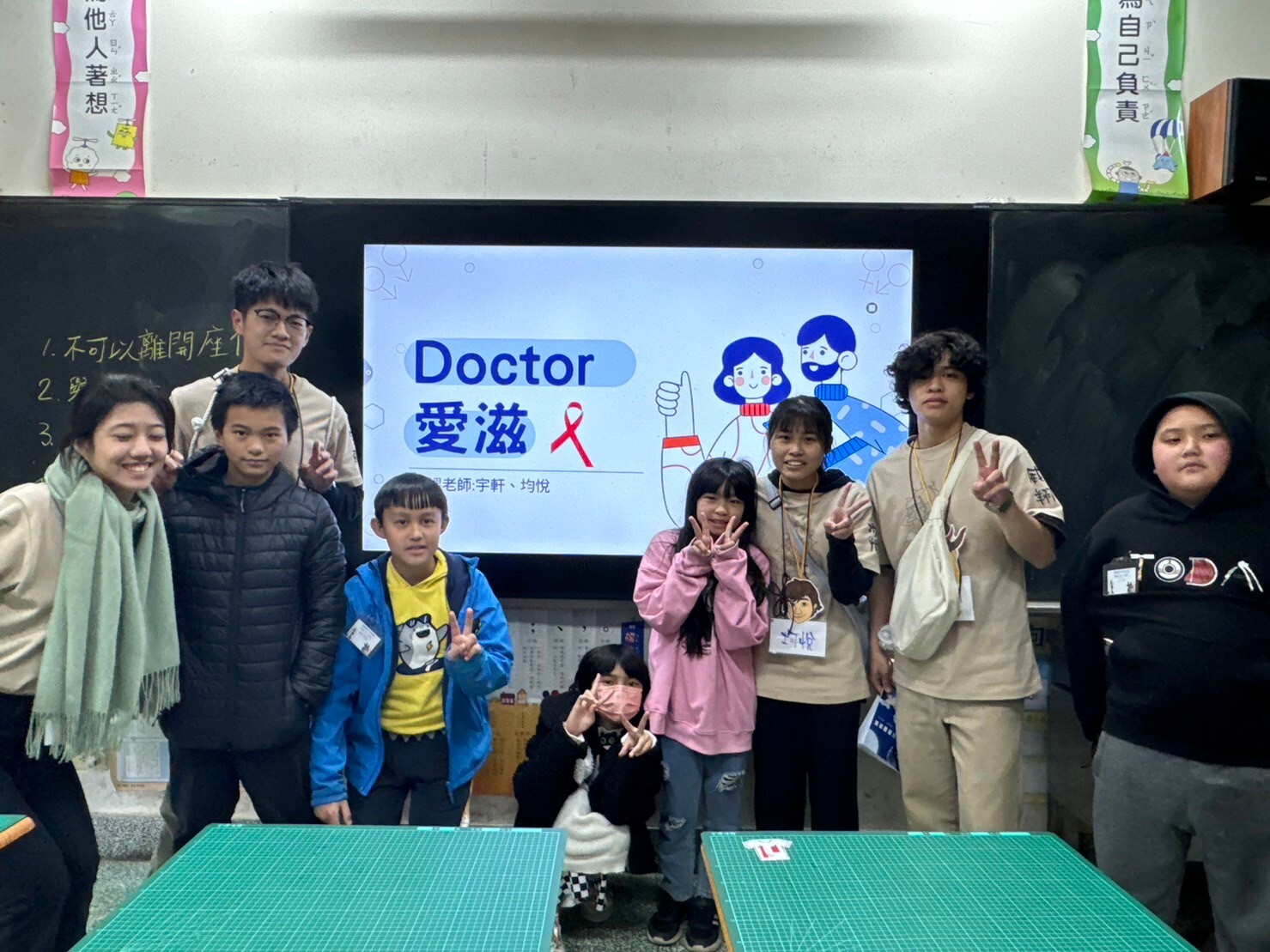
- (1) Health education in rural primary and junior high schools. During the summer vacation, the Rural Service Club ran the "Sexual Health Outreach to Primary Schools" program, delivering drug prevention and comprehensive sexuality education sessions. During the winter vacation, the Mountain Service Team ran the "All About HIV" series, including the sessions "The Taste of Love and HIV" and "Doctor HIV", using quizzes to build pupils' understanding of communicable disease prevention, personal safety and self-protection. (Figure 24)
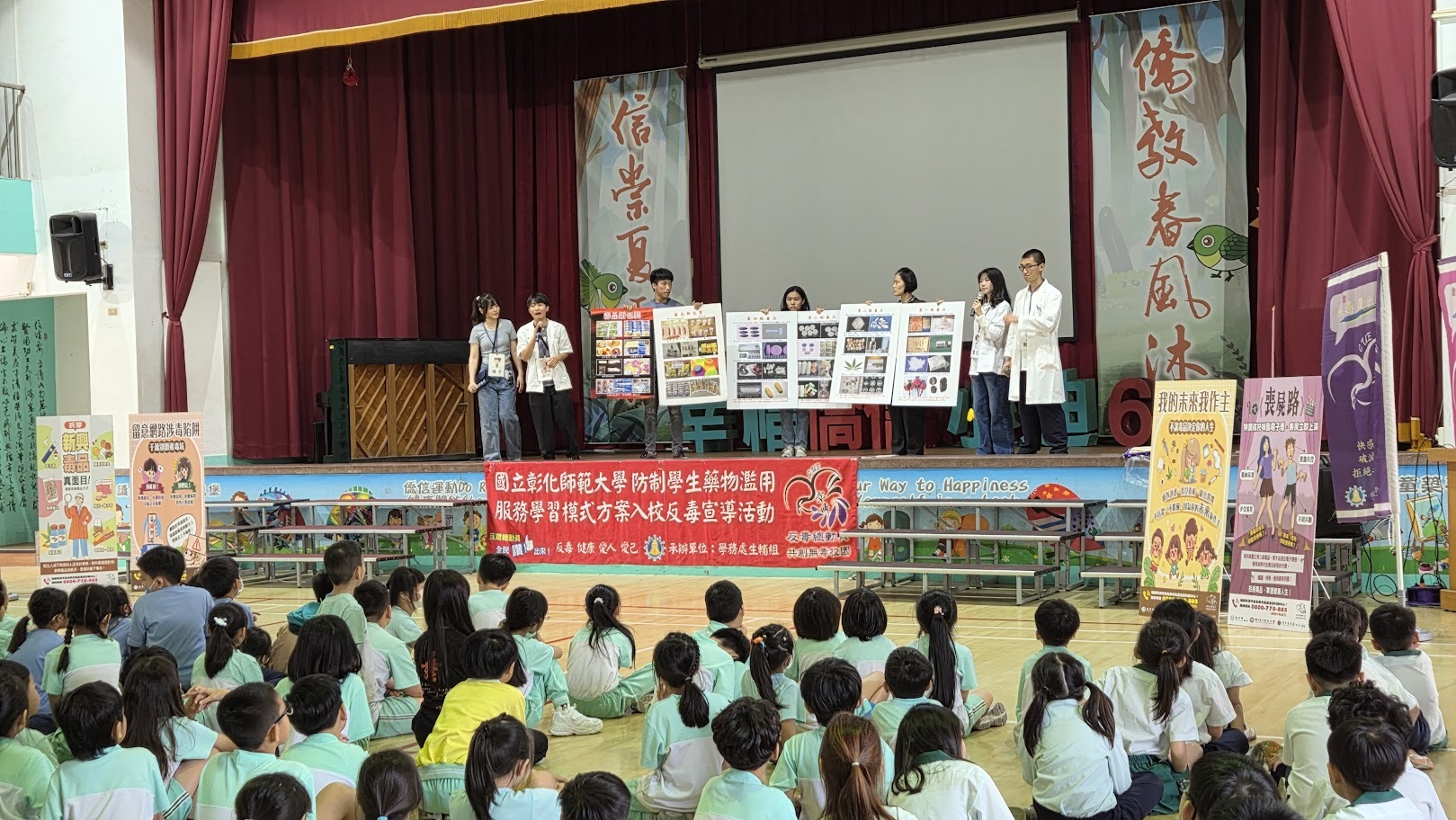
- (2) Drug prevention drama in schools. NCUE clubs work with the Ministry of Education on the Service-Learning Program for Substance Abuse Prevention in Higher Education. The English Department Student Association, the Yuandongli Club and the Cool Electric Dance Club use interactive drama in primary schools and bilingual sessions in junior high schools, formats that appeal to younger pupils, and visit schools in northern Changhua and parts of rural Nantou and Taichung. As of the reporting year, the clubs had completed 124 school visits, reaching 29,582 pupil attendances. (Figure 25)
Related links:
NCUE student substance abuse prevention activity highlights (Figure 26): https://stuaffweb.ncue.edu.tw/p/412-1039-4579.php?Lang=zh-tw