SDG 2.3.1
SDG 2.3.1 Student food insecurity and hunger
Under the three-tier campus food safety and hygiene management system, NCUE receives an annual on-site advisory visit from the Ministry of Education. NCUE's Food Management Committee coordinates work across units, and a dedicated professional registered nurse inspects the catering premises every week to safeguard food safety for students and staff. NCUE treats campus food safety and student hunger as priorities: the cafeterias operate food-safety and risk-management mechanisms, and a satisfaction feedback channel allows questions about food to be answered immediately. The University has recorded no food-poisoning incidents to date. (Table 1)
| Year | Number of catering hygiene inspections | Number of food-poisoning incidents |
|---|---|---|
| 2020 | 32 | 0 |
| 2021 | 26 | 0 |
| 2022 | 34 | 0 |
| 2023 | 52 | 0 |
| 2024 | 68 | 0 |
| 2025 | 79 | 0 |
1. Food safety management measures for the campus cafeterias (see the Guidelines for the Organization of NCUE's Food Management Committee, Figure 1):
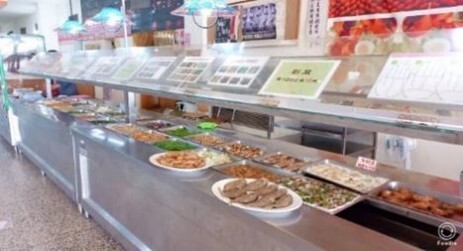
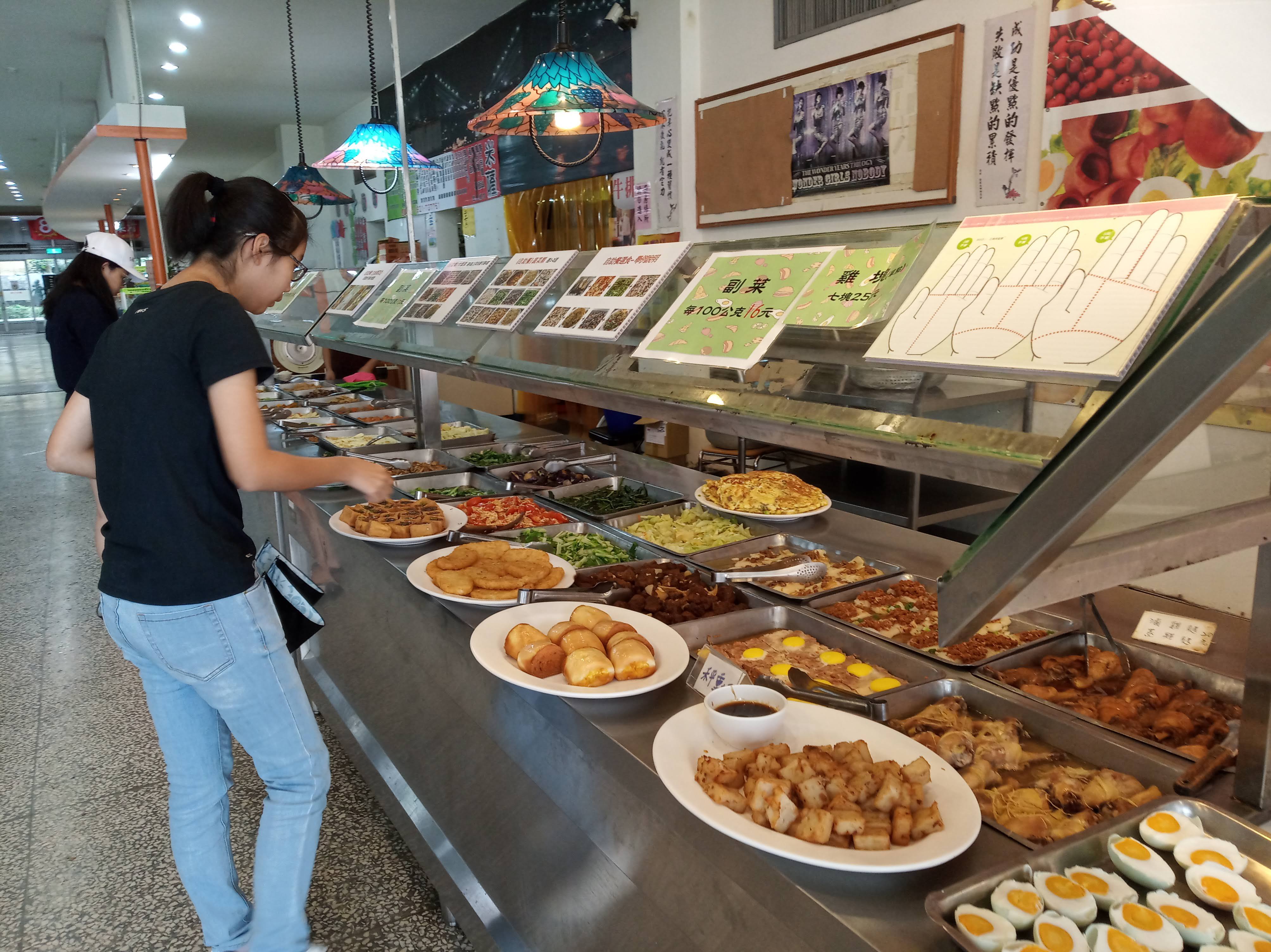
(1) NCUE has cafeterias at both the Jinde and Shida campuses. All ingredients are registered on the Ministry of Education's Campus Food Ingredients Registration Platform as required, and the cafeterias use local seasonal ingredients to give students and staff safe, hygienic and varied dining options (Figure 2).
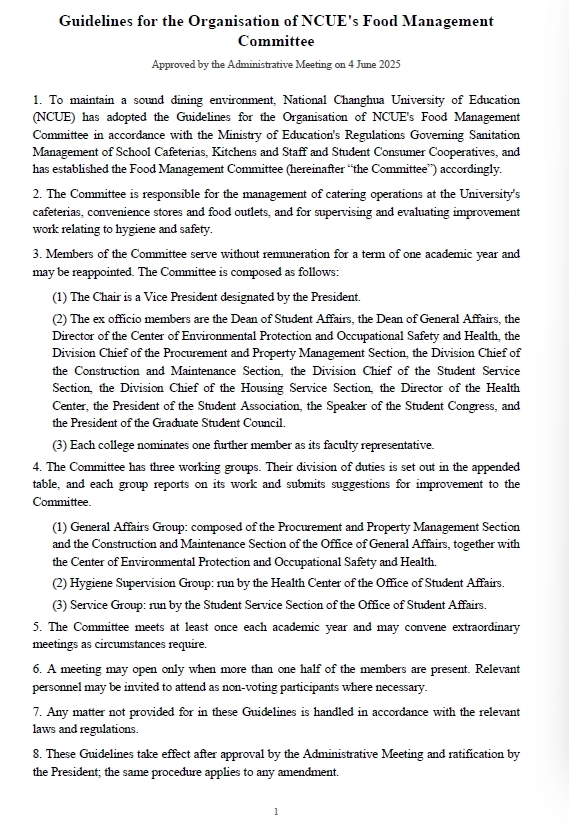
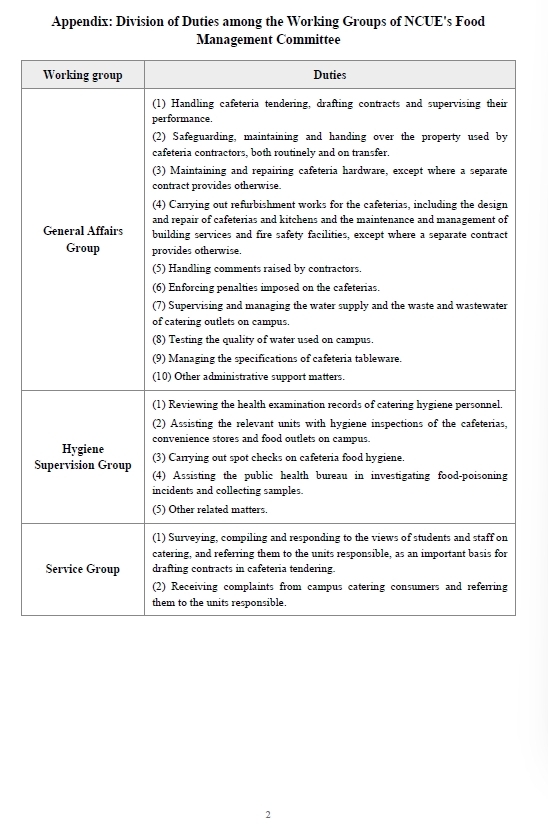
(2) Zero Food Safety Incident: To protect the food safety of students and staff, NCUE has progressively introduced food-safety education and management measures since 2014:
- (a) Education and training for catering staff: NCUE provides the latest hygiene and safety regulations and food-safety information that all staff must strictly follow.
- (b) Establishment of food safety SOP forms and various checklists: To make all sanitation procedures controllable and manageable. When food safety issues happen, key problem points can be immediately identified for prompt review and resolution.
- (c) Campus ingredient registration: NCUE controls food safety at source, inspects ingredients item by item, manages supply-source control, and uploads ingredient source data to the Ministry of Education's Campus Food Ingredients Registration Platform.
-
(d) Internal and external third-party bodies help NCUE supervise and improve food safety and hygiene at the campus cafeterias:
- i. Nursing staff visit the campus cafeterias every week to carry out on-site hygiene inspections.
- ii. The Changhua County Public Health Bureau carries out a food safety and hygiene inspection of the campus cafeterias each semester.
- iii. Each year the Ministry of Education, together with the agriculture and health authorities, conducts spot checks on NCUE's catering safety and hygiene management in order to maintain standards and raise quality.
2. NCUE has adopted the following specific measures to improve safe and healthy eating for students and faculty:
- (1) Taking account of the health of students and faculty and of local food culture, the cafeteria menus include healthy plant-based and vegetarian options and a fruit-and-vegetable bar, offering a varied diet to improve nutritional balance.
- (2) To promote safe and healthy eating among students and faculty, NCUE builds dietary knowledge into the dining environment: pairing suggestions are posted at the serving counters; nutrition and health notices appear on posters and screens in the cafeterias; and dietitian-led healthy-eating sessions and a fruit-and-vegetable game at the campus fair convey dietary health knowledge (Figure 3).