SDG 2.2.2
SDG 2.2.2 Campus food waste
Total food waste
1.The two campus cafeterias produced 5.2 metric tons (5,200 kg) of food waste in 2025, an average of 2.44 g per student or staff member per day. In 2024 the same 5.2 metric tons (5,200 kg) averaged 2.46 g per person, so the figure fell by 0.02 g (Table 1).
| Year | Annual food waste | Average daily food waste per person | Reduction in daily food waste per person vs. the previous year |
|---|---|---|---|
| 2025 | 5.2 metric tons | 2.44 grams | 0.02 grams |
| 2024 | 5.2 metric tons | 2.46 grams | 0.14 grams |
| 2023 | 5.5 metric tons | 2.60 grams | 0.15 grams |
| 2022 | 5.72 metric tons | 2.75 grams | 0.41 grams |
| 2021 | 6.5 metric tons | 3.16 grams | - |
Note: the calculation formulae, taking 2025 as an example:
- (1) Daily average food waste = annual food waste ÷ working days per year (5 working days per week × 52 weeks = 260 days): 5.2 metric tons ÷ 260 days = 0.020 metric tons (20,000 g).
- (2) Average food waste per person = daily food waste ÷ total campus population (7,383 students + 804 employees = 8,187 people): 20,000 g ÷ 8,187 people = 2.44 g.
2. Following the United Nations principle of valuing food and avoiding waste, NCUE promotes the guideline “take only what you can eat, serve appropriate portions and avoid excess” to students and staff. It encourages the campus cafeterias to use produce from local smallholders, which yields fresh meals, reduces the carbon footprint of ingredient transport and cuts both ingredient waste and food waste (Figure 1).
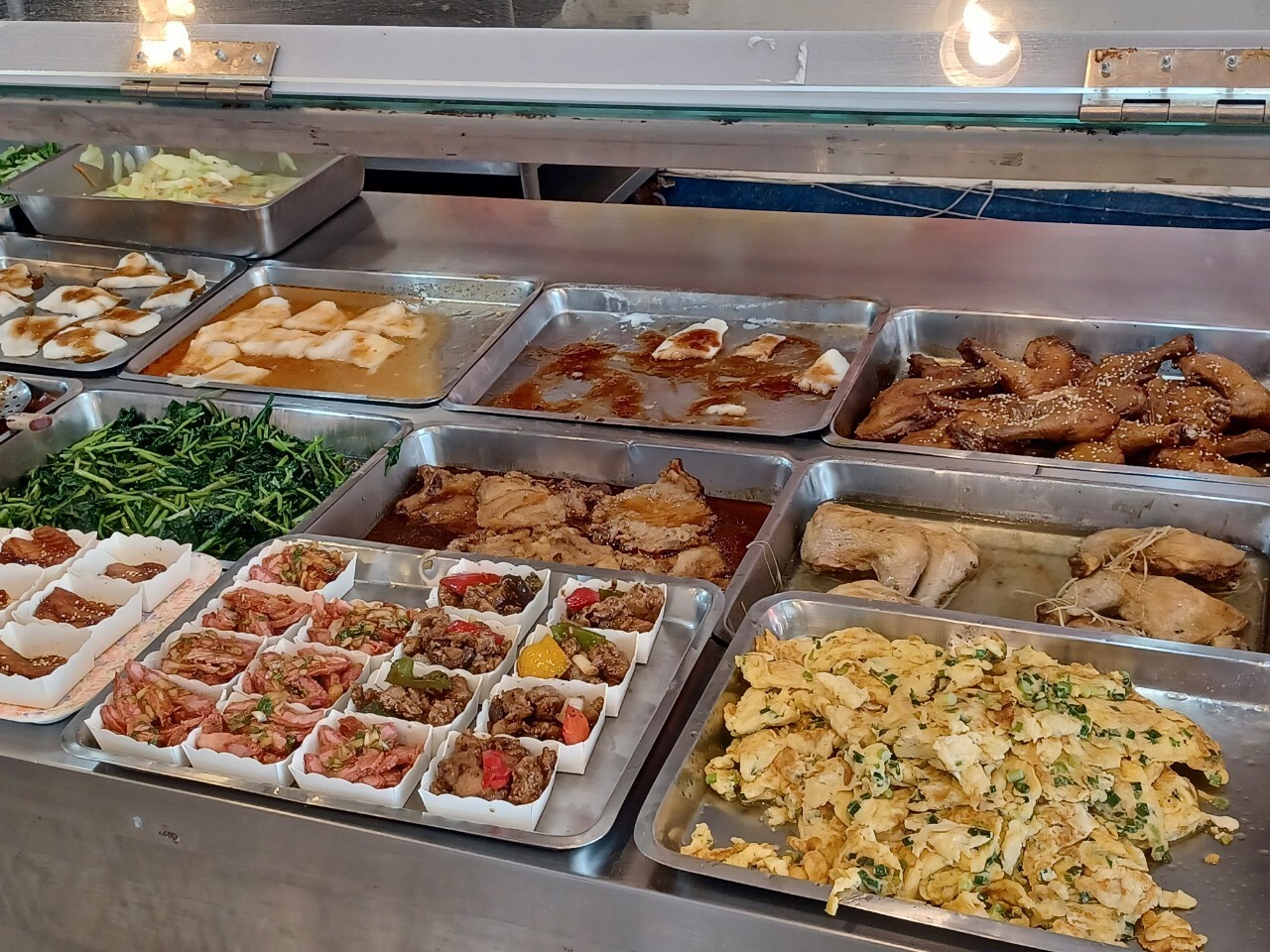
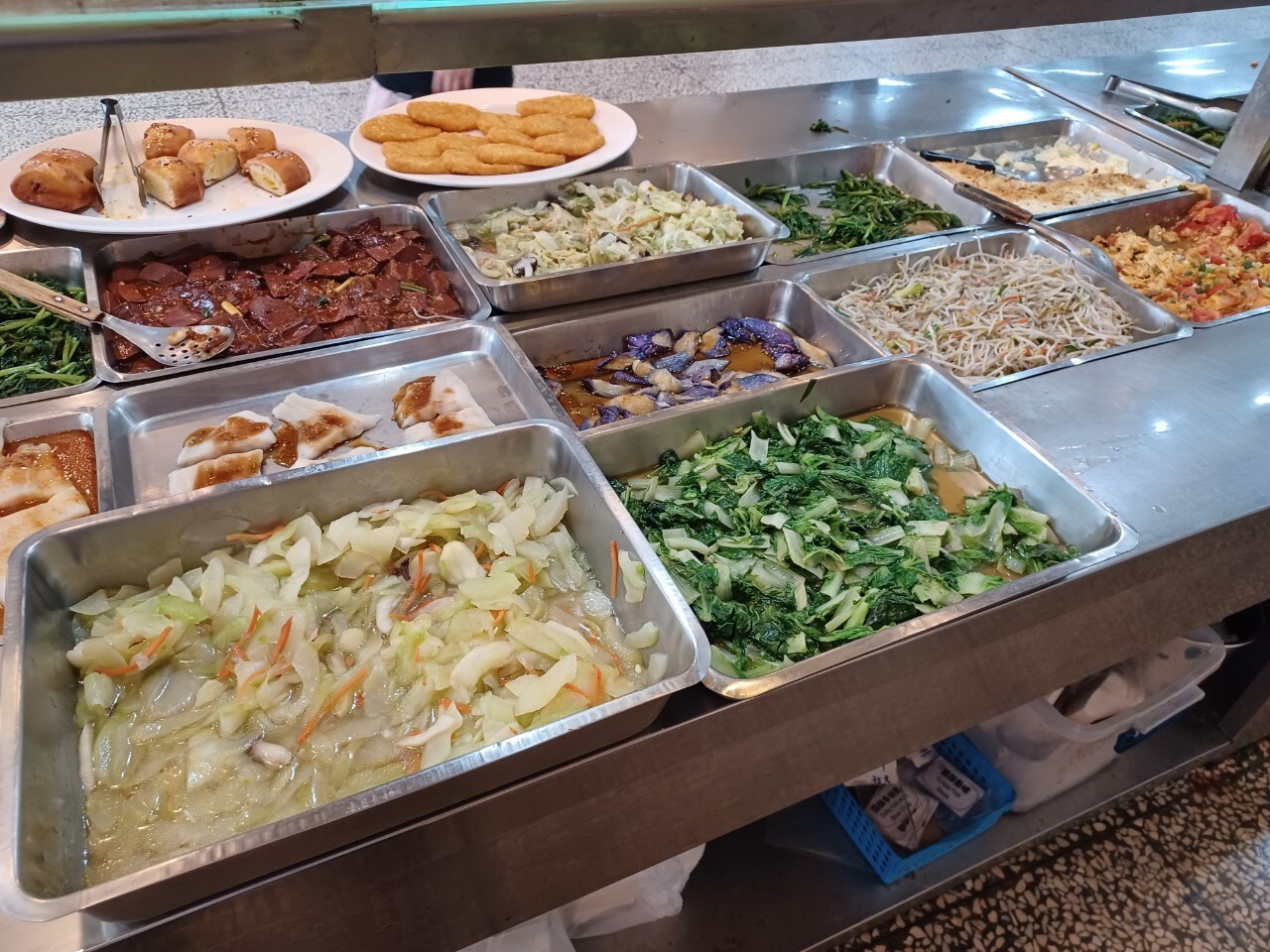
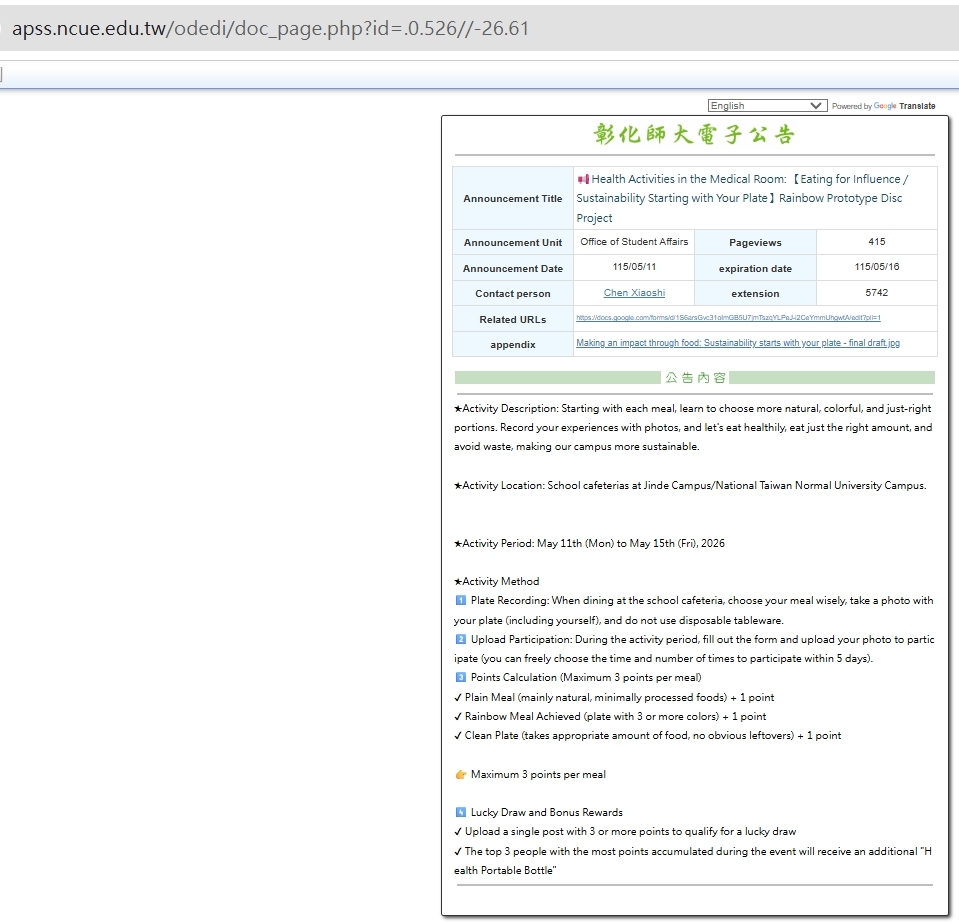
3. NCUE runs the “Eat for Impact / Sustainability Starts on the Plate” Rainbow Whole-Food Clean-Plate Programme. It encourages students and staff to choose natural, colorful, appropriately portioned whole foods at everyday meals. Through photo records of their food choices, they put into practice the principles of eating healthily, eating just enough and wasting nothing, and making the campus more sustainable. For the event webpages, see Figures 2 and 3.

Campus population
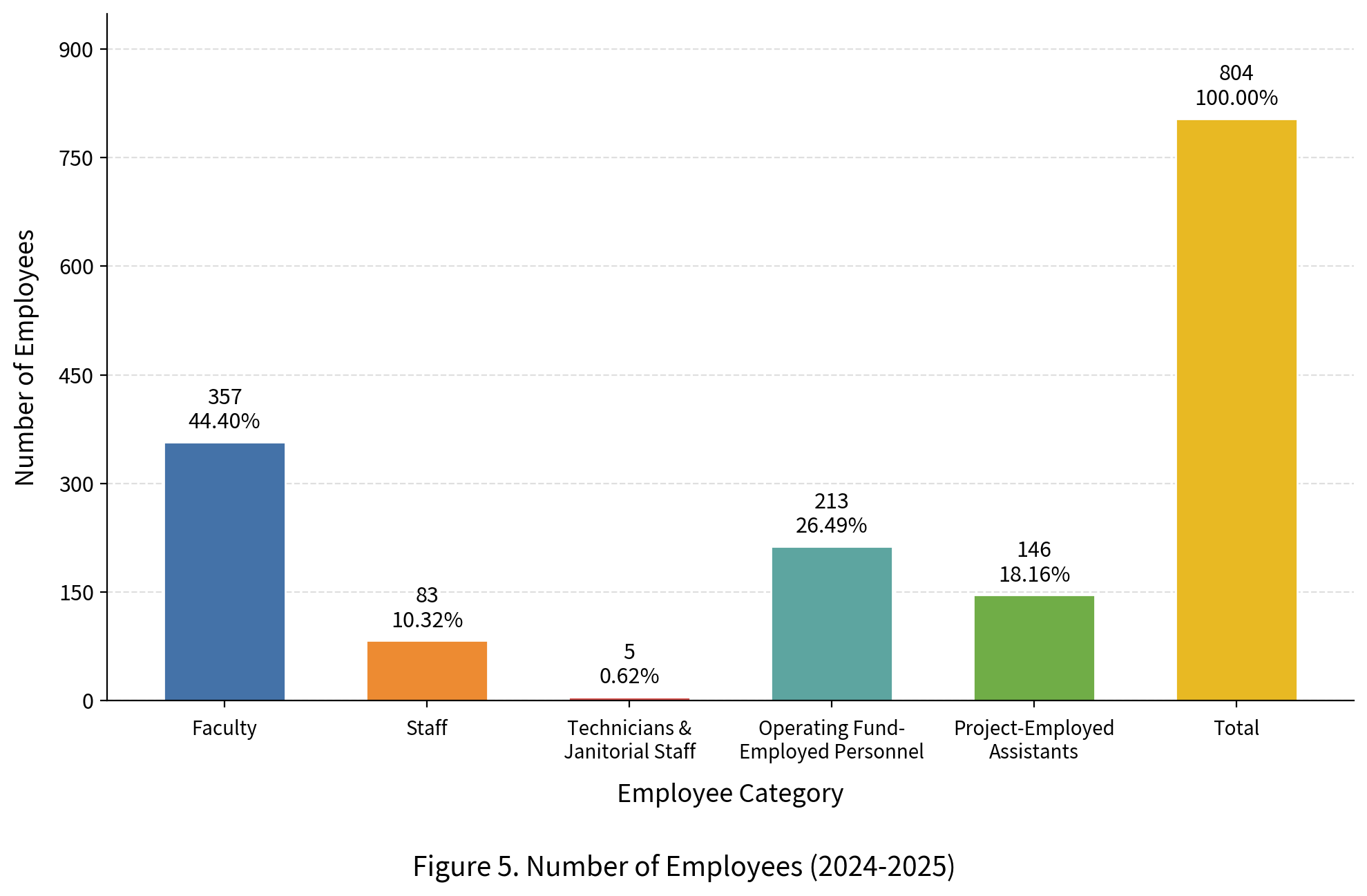
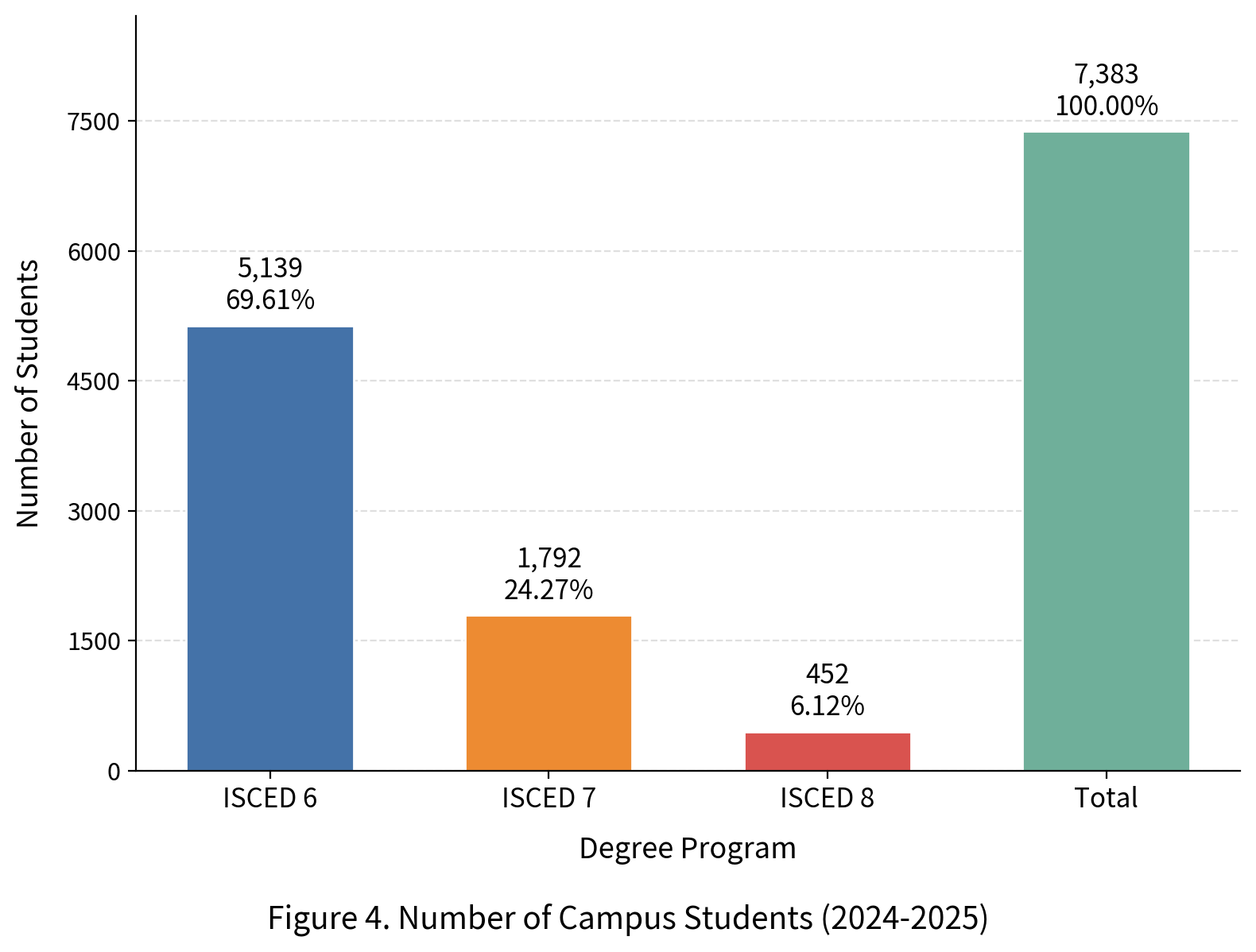
The campus population is 8,187: 7,383 students in daytime bachelor's, master's and doctoral programmes and 804 employees.
1. A total of 7,383 students: 5,139 in bachelor’s programs; 1,792 in master's programs; 452 in doctoral programs. (Figure 4)
2. A total of 804 employees: 357 teachers, 83 administrative staff, 5 technicians and janitors, 213 staff funded by the university endowment fund and 146 project assistants employed under research projects (Figure 5)