
|
|
|
|
|
|
|
|
|
|
|
|
|
|
|
|
|
SDG 12.4.1 Publication of a sustainability report
1. NCUE’s THE Report by Year.
2021:
https://sdg.ncue.edu.tw/var/file/32/1032/img/257/110.11.5-Generel_Report-V.1-final-111.1.18.pdf(PDF)
2022:
https://sdg.ncue.edu.tw/var/file/32/1032/img/257/2022-allsdgs-reports.pdf(PDF)
2023:
https://sdg.ncue.edu.tw/var/file/32/1032/img/1021/ReportALL.pdf(PDF)
2024:
https://sdg.ncue.edu.tw/var/file/32/1032/img/1134/2024SDG_ALL.pdf(PDF)
2. On 29 September 2020, in the presence of members of the Occupational Safety and Health Committee, the President of NCUE signed the "Environment, Occupational Safety and Health Policy of National Changhua University of Education", as shown in Figure 1. It specifies the following: to build a sustainable and green university. All faculty, staff, and students at NCUE fully comply with the relevant laws and regulations, participate in educational programs, maintain campus security, prevent accidents, cherish the environmental resources, act on energy conservation and carbon reduction, and commit to pollution prevention and continuous improvement. As a member of the global village, everyone should fulfill their responsibilities to build an ecological campus free of accidents and pollution, as shown in Figure 2.
Please refer to annex 12.4.1A(PDF)–Environment, Occupational Safety, and Health Policy, as well as the website of the Center of Environment, Occupational Safety and Health for posting laws, regulations, and rules applying to faculty and staff:
https://saftyweb.ncue.edu.tw/var/file/10/1010/img/1030/249454384.pdf(PDF)
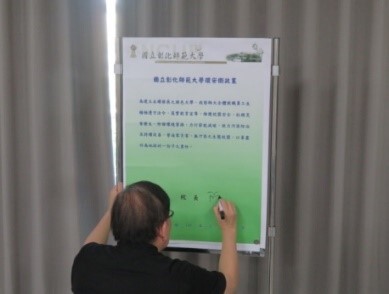
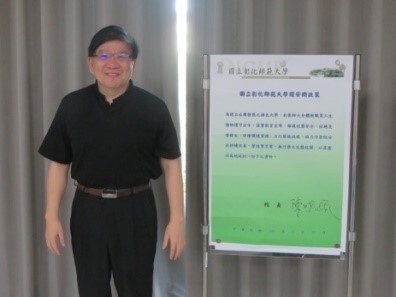
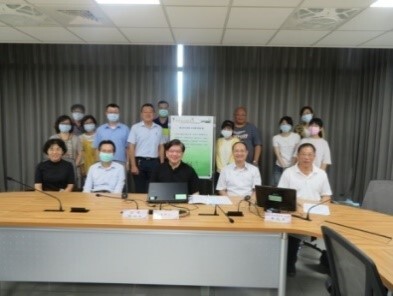
Figure 1. NCUE’s President signing the ‘Protection and Occupational Safety and Health Policy of National Changhua University of Education’
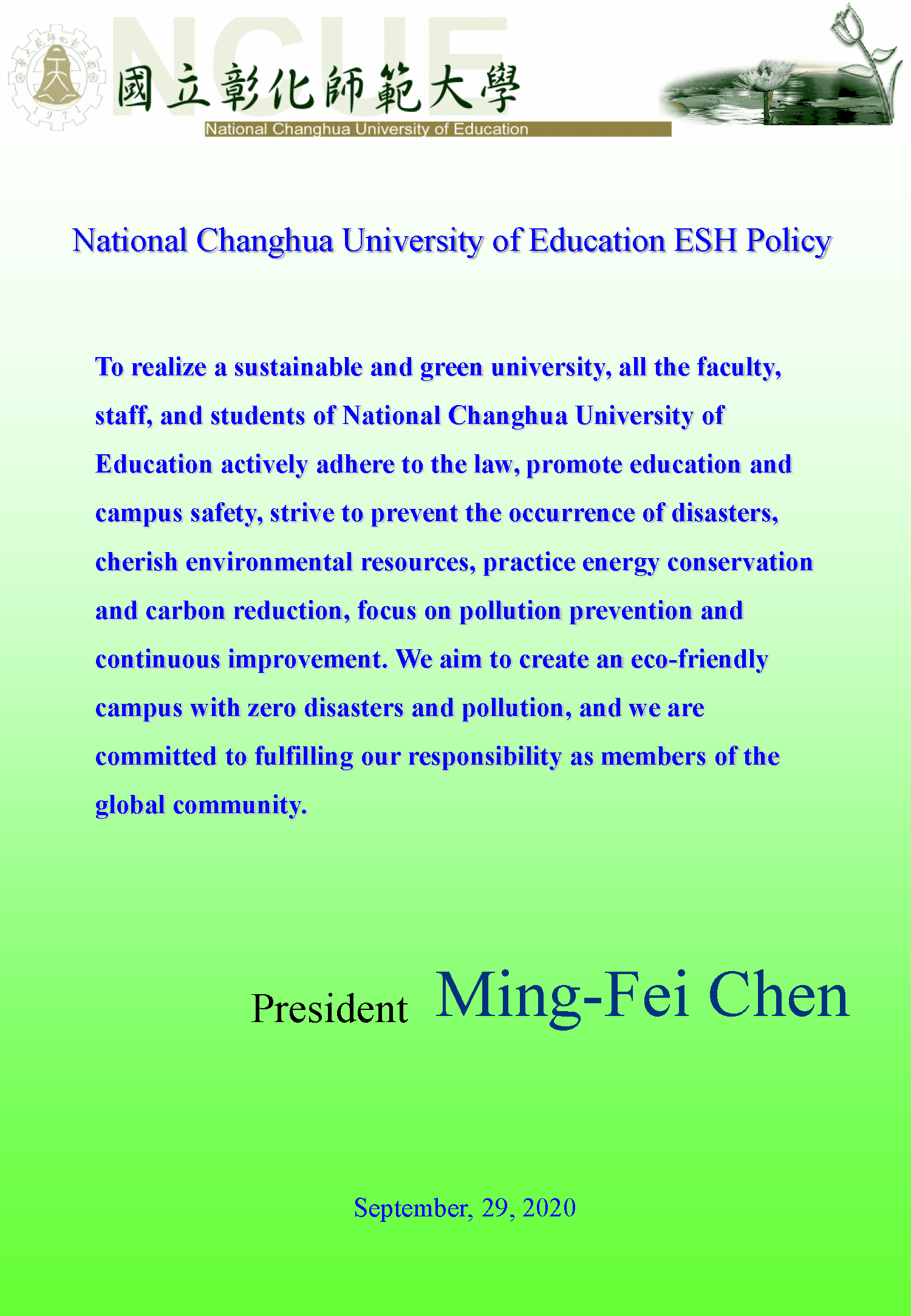
Figure 2. Environment, Occupational Safety and Health Policy of National Changhua University of Education
3. Solar Photovoltaic Power Generation Rooftops
In response to relevant national policies, NCUE completed the addition of solar photovoltaic panels on the roof of each building of NCUE by the end of July 2022, with a total capacity of 2091.375 kWp for the Jinde Campus and 571.5 kWp for the Baoshan Campus, as shown in Table 1. In addition to reducing the net load of the buildings, in some scenarios (such as off-peak months) the buildings can be fully dependent on solar photovoltaic electricity. Given the reduced electricity current of the distribution lines, line loss can be reduced by about 3% and energy efficiency can be improved. Moreover, solar panels can block direct sunlight from the roof. According to research data, they can reduce the heat energy of direct sunlight on the roof by 38% and reduce the temperature of the roof by 2.8°C. With the building’s improved overall temperature environment, air conditioning use can be reduced to improve energy efficiency. The planning and design drawings (partial) of the building’s rooftop solar photovoltaic panels on the Jinde Campus and the Baoshan Campus in 2021-2022 are shown in Figure 3 and Figure 4. Please refer to Annex 12.4.1B(PDF)–Rooftop Solar Photovoltaic Building Panels Planning and Drawings on the Jinde and the Baoshan Campuses.
NCUE is currently planning the construction of new rooftop and ground-mounted solar photovoltaic systems. It is anticipated that between 2025-2028, Jinde Campus will add 230 kWp of installed capacity, while Baoshan Campus will add 306 kWp of installed capacity. The planned design for the solar power generation systems is shown in Table 2.
Table 1. Installed solar photovoltaic capacity in each building of NCUE
|
Campus |
Building |
Expected capacity (kWp) |
Total |
Expected electricity production (kwh/year) |
Total |
|
Jinde Campus |
Qiau-si Building (Dept. of Mathematics) |
69 |
2091.375 kWp |
196,875 |
2,714,531.25 kWh |
|
Baisha Building (Main Administration Building) |
191.625 |
147,656 |
|||
|
Zhi-shan Building (Dept. of Special Education) |
48 |
314,063 |
|||
|
Ming-de Building (Dept. of Guidance and Counseling) |
85.125 |
60,000 |
|||
|
Teaching Building |
92.25 |
80,156 |
|||
|
Eighth Dormitory |
189 |
120,469 |
|||
|
Seventh Dormitory |
181.5 |
249,375 |
|||
|
Sixth Dormitory |
88.5 |
226,875 |
|||
|
Hu-bin Building (Dept. of Rehabilitation Counseling) |
123 |
110,625 |
|||
|
Library |
133.5 |
153,750 |
|||
|
General Building |
103.875 |
166,875 |
|||
|
Restaurant |
146.625 |
144,375 |
|||
|
Sheng-yang Building (Dept. of Geography) |
99.375 |
265,313 |
|||
|
Shiue-si Building (Dept. of Chinese) |
36 |
- |
|||
|
Wang Jin-pyng Activity Center |
160.65 |
- |
|||
|
Wang Jin-pyng Swimming Pool |
239.4 |
124,219 |
|||
|
Old Activity Center |
103.5 |
- |
|||
|
Baoshan Campus |
Ninth Dormitory |
99.75 |
571. 5 kWp |
125,625 |
714,375 kWh |
|
Teaching Building No. 1 |
69.75 |
126,563 |
|||
|
College of Engineering |
139.5 |
174,375 |
|||
|
Jing-shi Building (College of Management) |
114.375 |
142,969 |
|||
|
Li-xing Building (Dept. of Industrial Education and Technology) |
148.125 |
185,156 |
Table 2. Solar Photovoltaic Installation Capacity Planning for Campus Buildings (2025-2028)
|
Campus |
Installation Location |
Expected capacity (kWp) |
total |
Expected electricity production (kwh/year) |
|
Jinde Campus |
College of Science Buildings I & II |
230 kWp |
230 kWp |
287,500 |
|
Baoshan Campus |
Covered Sports Court |
306 kWp |
306 kWp |
382,500 |
|
Volleyball Court |
204 kWp |
204 kWp |
255,000 |
|
|
Tennis Court |
228 kWp |
228 kWp |
285,000 |
|
|
School-wide |
|
968 kWp |
968 kWp |
1,210,000 |
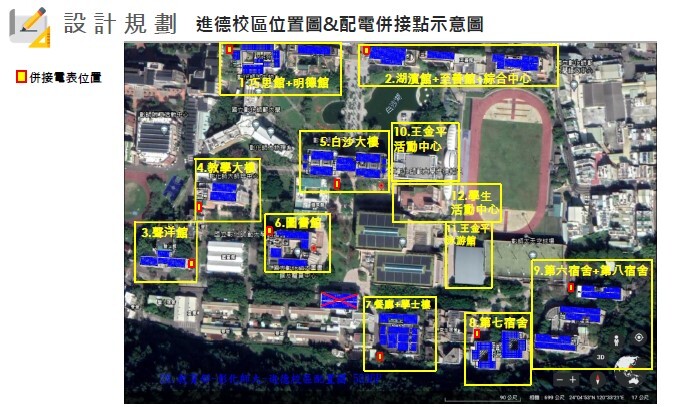
Figure 3. Planning and Design of Solar Photovoltaic Roofs of Buildings on the Jinde Campus
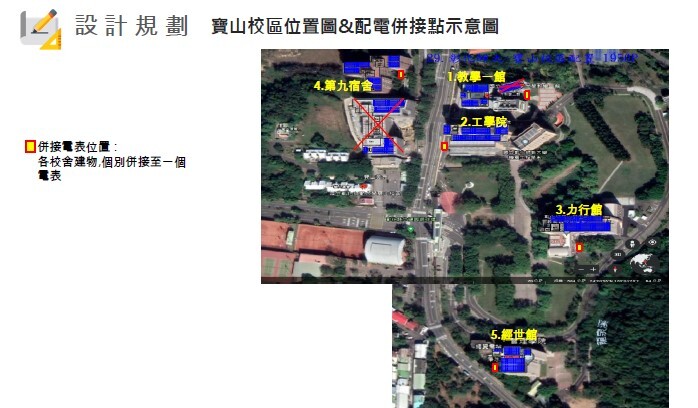
Figure 4. Planning and Design of Solar Photovoltaic Roofs of Buildings on the Baoshan Campus
4. NCUE held second-hand markets. Donated goods in 2022 exceeded 200 items, and proceeds exceeded NTD$5,000 from sales. In 2023, the number of donated items reached nearly 100, with sales proceeds exceeding NTD$7,000 from sales. In 2024, over 300 items were donated, generating sales revenue of more than NT$23,000.
Please refer to Annex 12.4.1C(PDF)–Second-Hand Markets.
5. NCUE organized the adoption of abandoned bicycles. Altogether, 30 bikes in 2020, and 31 bikes in 2021. Since the installation of YouBike stations at NCUE’s school gate in 2022, the number of students riding their own bicycles has been decreasing. There are very few abandoned bicycles, so we have not conducted a reclaiming process. In 2023, the program resumed, and 46 bicycles were adopted. The abandoned bicycle adoption program is currently held once every two years, with the next event scheduled for October 2025.
Please refer to Annex 12.4.1D(PDF)–Adoption of Abandoned Bicycles.
6. NCUE library runs a second-hand book donation platform. 316 books were donated in the 2022-2023 academic year, and 627 books were donated in the 2023-2024 academic year. 827 books were donated during the 2024-2025 academic year.
Please refer to Annex 12.4.1E(PDF)–Claiming Second-hand Books.
7. NCUE’s declaration of sustainability development. The president of NCUE signed a 'National Changhua University of Education Sustainable Development Commitment' in September 2022 and a 'Carbon Neutrality Declaration of National Changhua University of Education' in September 2025.
Please refer to Annex 12.4.1F(PDF)–Carbon Neutrality Declaration & Commitment to Sustainability Development.
Appendices (including supporting documents):
Annex 12.4.1A(PDF)–Protection and Occupational Safety and Health Policy (latest version)
Annex 12.4.1B(PDF)–Rooftop Solar Photovoltaic Building Panels Planning and Drawings in Jin-De and Bao-Shan.
Annex 12.4.1C(PDF)–Second-Hand Markets
Annex 12.4.1D(PDF)–Adoption of Abandoned Bicycles
Annex 12.4.1E(PDF)–Claiming Library Second-Hand Books
Annex 12.4.1F(PDF)–Carbon Neutrality Declaration & Commitment to Sustainability Development