

|
|

|

|

|
|
|

|
|

|

|
|

|
|
|

|

|
SDG 7.2.2 Upgrade buildings to higher energy efficiency
1. NCUE holds an annual energy-saving and carbon-reduction evaluation meeting to formulate plans for replacing existing equipment with energy-saving equivalents the following year. At least NT$5 million is invested annually to replace energy-consuming equipment, which is forecasted to achieve the goal of increasing total energy efficiency by at least 1% per year (the goal is to save 150,000 kWh(540GJ) or more annually).
2. NCUE has implemented a range of major energy conservation and carbon reduction measures from 2019 to 2024. (see Table 1)
Table 1. Major Energy Conservation & Carbon Reduction Measures Implemented by NCUE between 2019-2024
|
Year |
Major Measures |
|
2024 |
(1) Campus-wide replacement of over 350 units of T5 fluorescent lamps with LED lights, achieving annual electricity savings of 21,021 kWh. (2) Routine replacement of air conditioning units, totaling over 236 units, achieving annual electricity savings of 526,668 kWh. (3) A total of 147 air conditioning units in NCUE's Baisha Building have been upgraded with temperature monitoring, load shedding, and shutdown control functions. These functions work in coordination with demand control mechanisms to regulate peak electricity usage and avoid exceeding the contracted peak load. The Baisha Building’s air conditioning energy-saving control system has also been integrated with an intelligent energy management system with load shedding control and shutdown scheduling functions, achieving annual electricity savings of 93,786 kWh. (4) To reduce electricity consumption from water dispensers, only those located on the ground floor were set to provide cold water. (5) The temperature settings for heating systems used in campus dormitory areas have been adjusted by reducing the hot water temperature of boiler or heat pump heating systems to 45°C during the summer period from June to October, reducing school energy consumption and achieving annual cost savings of NT$53,416. (6) A total of 70 smart meters in the Jinde Campus were replaced to better monitor electricity usage. |
|
2023 |
(1) The air conditioning peak load shedding system were installed across all campus areas in phases. Upon completion, this system is expected to achieve annual electricity savings of over 100,000 kWh. (2) The second phase of solar photovoltaic installation was planned for both NCUE campuses, with an expected increase of 510.04 kWp in the Jinde Campus and 473.14 kWp in the Baoshan Campus. |
|
2022 |
(1) The air conditioning peak load shedding system were installed across all campus areas in phases. Upon completion, this system is expected to achieve annual electricity savings of over 100,000 kWh. (2) Replaced at least 500 T5 fluorescent lamps with LED lights across all campus buildings, expecting to save over 50,000 kWh annually. (3) Routinely replaced over 70 air conditioning units, expecting to save 100,000 kWh annually. |
|
2021 |
(1) Replaced the 300RT water-cooled chiller and ancillary equipment in the gymnasium of the Jinde campus, which was expected to save 227,603 kWh of power annually (2) Replaced the T5 lights of all buildings with LED lights, which involved at least 500 light replacements. This measure was expected to save 50,000 kWh of power annually. (3) Implemented the routine replacement of all air-conditioning units with more energy-efficient units, which involved more than 50 replacements and is expected to save 75,000 kWh of power annually. |
|
2020 |
(1) Replaced the water-cooled chiller and ancillary equipment in the Library and Information Center Building of the Jinde campus, which is expected to save 327,603 kWh of power annually. (2) Replaced the T5 lights in the classrooms on the first floor of the gymnasium with LED lights, to save 25,028 kWh of power annually. (3) Replaced 64 air-conditioning units, saving approximately 1,500 x 64 = 96,000 kWh of power |
|
2019 |
(1) Replaced the T5 lights on the first and second floors of the library with LED lights to save 27,430 kWh of power annually. (2) Replaced 65 air-conditioning units, saving approximately 97,500 kWh of power (3) Calibrated the equipment in the machine room of the swimming pool to sleep during closed periods to reduce annual power consumption by up to 40,000 kWh. |
3. The installation of solar panels on building rooftops not only reduces the net electricity load of buildings but, in certain scenarios such as during off-peak months, can even fully meet their electricity demand. By decreasing the power flow through distribution lines, line losses can be reduced by approximately 3%, thereby improving overall energy efficiency. Furthermore, solar panels provide shading that blocks direct sunlight on rooftops. Research indicates that, this can reduce rooftop solar radiation by 38% and lower roof surface temperatures by 2.8°C, improving the overall thermal environment of buildings and further reducing air conditioning usage to enhance energy efficiency.
(1) In response to the renewable energy policies, NCUE officially launched the solar power system installed on the roof of the Jinde Campus gymnasium in 2017 (as shown in Figure 1). The installation capacity is 467.28 kWp, with an expected annual power generation of 2,253.402 GJ. This initiative was featured as a highlight news story in the Changhua area. For related reports and details, please visit:
https://www.cna.com.tw/news/aloc/201706290290.aspx
NCUE Gymnasium Solar Power Real-time Monitoring System:
https://tatungsolarweb.azurewebsites.net/tv/5000011/
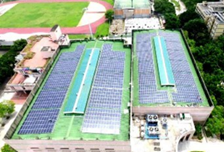
Figure 1. The picture shows the gymnasium’s roof with installed solar cells.
(2) In response to relevant government policies, NCUE completed the installation of photovoltaic solar systems on the rooftops of various campus buildings by the end of 2022. The solar power generation device installation table (as shown in Table 2) indicates installed capacity of 2091.375kWp at the Jinde Campus and 571.5kWp at the Baoshan Campus.
(a) For the complete layout plan of photovoltaic solar systems installed on building rooftops, please refer to Annex 7.2.2A(PDF):2021-2022 Layout Plan of Photovoltaic Solar Systems on Buildings at Jinde and Baoshan Campuses.
(b) Through real-time monitoring systems, NCUE can instantly access power generation data, historical statistical information, and system operating status of photovoltaic equipment at all campuses to effectively manage and track solar power generation efficiency.
i. Solar Power Monitoring System in Other Campus Buildings. URL to the website:
http://solarsystem.cyberpower.com/solarV4/id_login.aspx
ii. The system monitors the major building solar power generation equipment at NCUE's Jinde and Baoshan campuses, providing daily, monthly, and annual power generation data. Queries and statistical report are also available. Figures 2-3 show the annual power generation data query screenshots.
Please refer to Annex: 7.2.2B(PDF) Query interface demonstration of NCUE’s Solar Power Monitoring System in Other Campus Building’
Table 2. Solar Power Generation Device Installation Table for NCUE's Jinde and Baoshan Campuses in 2022
|
Campus |
Building |
Estimated capacity (kWp) |
Estimated power generation (kwh/year) |
|
Jinde Campus |
Qiao-Si Building |
69 |
94,687 |
|
Baisha Building |
191.625 |
239,531 |
|
|
Zhi-Shan Hall |
48 |
60,000 |
|
|
Ming-De Hall |
85.125 |
80,156 |
|
|
Academic Main Hall (Teaching Building) |
92.25 |
115,312 |
|
|
Student Dorm 8 |
189 |
236,250 |
|
|
Student Dorm 7 |
181.5 |
226,875 |
|
|
Student Dorm 6 |
88.5 |
110,625 |
|
|
Hu-Bin Building |
123 |
153,750 |
|
|
Main Library |
133.5 |
183,281 |
|
|
Multipurpose Center |
103.875 |
129,843 |
|
|
Cafeteria |
146.625 |
183,281 |
|
|
Sheng-Yang Hall |
99.375 |
124,218 |
|
|
Xue-Si Building |
36 |
45,000 |
|
|
Wang Jin-Ping Activity Center |
160.65 |
192,187 |
|
|
Wang Jin-Ping Natatorium |
239.4 |
302,812 |
|
|
Old Activity Center |
103.5 |
129,375 |
|
|
Jinde Campus Total |
2091.375 |
2,607,183 |
|
|
Baoshan Campus |
Student Dorm 9 |
99.75 |
125,625 |
|
Teaching Building 1 |
69.75 |
126,563 |
|
|
College of Engineering |
139.5 |
174,375 |
|
|
Jing-Shi Hall |
114.375 |
142,969 |
|
|
Li-Xing Hall |
148.125 |
185,156 |
|
|
Baoshan Campus Total |
571.5 |
714,375 |
|

Figure 2. Baisha Building at Jinde Campus: 2024 Annual Power Generation Data Query Screenshot
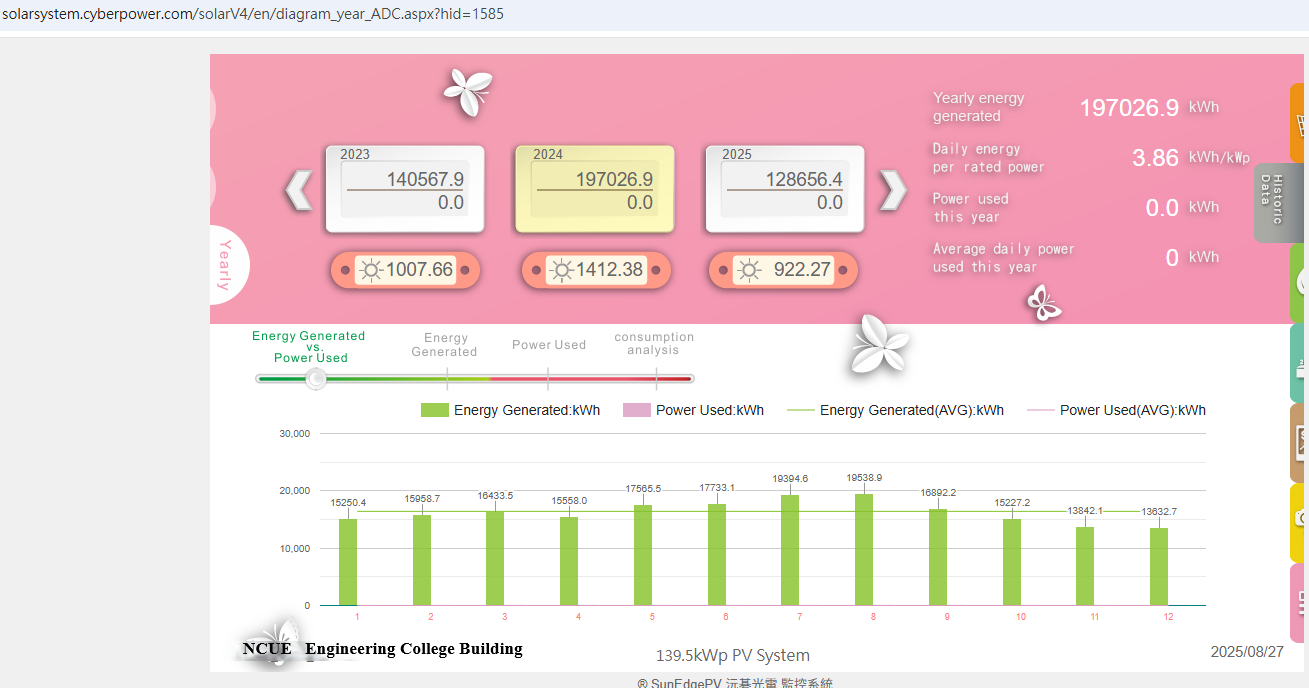
Figure 3. College of Engineering Baoshan Campus: 2024 Annual Power Generation Data Query Screenshot
(3) NCUE is currently planning to install new rooftop and ground-mounted photovoltaic solar devices from 2026 to2030. Jinde Campus is expected to add 230kWp, and Baoshan Campus is expected to add 738kWp. The scheduled timetable for solar power generation device installation years 2026-2030 is shown in Table 3. For the complete planning and design diagram of NCUE's 2026-2030 solar power installation, please refer to Annex 7.2.2C(PDF) - 2026-2030 Planned Expansion of Photovoltaic Solar Device Capacity.
Table 3. NCUE's 2026-2030 Scheduled timetable for Planned Solar Power Generation Device Installation
|
Campus |
New Location |
Estimated Capacity (kWp) |
Estimated Power (kWh/year) |
|
Jinde Campus |
Science Buildings 1 & 2 |
230 |
287,500 |
|
Baoshan Campus |
Basketball Court |
306 |
382,500 |
|
Volleyball Court |
204 |
255,000 |
|
|
Tennis Court |
228 |
285,000 |
|
|
Campus-wide (Total) |
968 |
1,210,000 |
|
(4) NCUE's recent installation project schedule is shown in Table 4.
Table 4. Schedule of NCUE Photovoltaic Solar Device Installation Project in Recent Years
|
Campus |
Year |
Newly Added Capacity (kWp) |
Accumulated Capacity (kWp) |
Estimated Annual Power Generation (kWh) |
|
Jinde Campus |
Before 2020 |
467 |
467 |
583,750 |
|
2021~2022 |
2091.375 |
2558.375 |
3,197,968 |
|
|
2026~2030 |
230 |
2788.375 |
3,478,433 |
|
|
Baoshan Campus |
Before 2020 |
0 |
0 |
0 |
|
2021-2022 |
571.5 |
571.5 |
714,375 |
|
|
2026~2030 |
738 |
1309.5 |
1,636,875 |