

|
|
|
|
|
|
|
|
|
|
|
|
|
|
|
|
|
SDG 16.2.4 Participatory bodies for stakeholder engagement
Each unit in NCUE provides various services in its area to local residents, local governments, local private enterprises, and local civil and social representatives.
1. Professional counseling services provided by the Community Counseling and Human Development Service Center.
In 2024, NCUE’s Community Counseling and Human Development Service Center organized 3 lectures and workshops. The topics included:
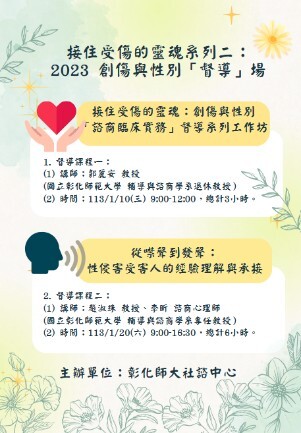
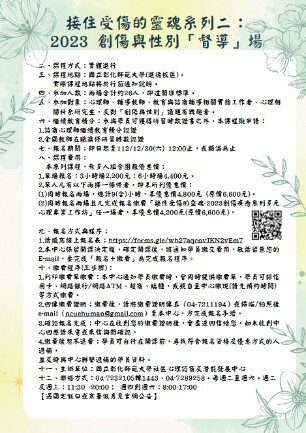
In 2024, "Catching Wounded Souls: Trauma 'Supervision' Workshop Series" (Figures 1-2), "Grief and Loss Psychology x Artisan Handicraft Series: Lectures and Workshops" (Figure 3), and "Image Embodiment®: Body-Oriented Immersive Dream Experience Workshop" (Figure 4) were conducted, with a total participation of 111 attendees.
For more information, please refer to: https://humanweb.ncue.edu.tw/p/426-1021-11.php?Lang=zh-tw
|
|
|
|
Figure 1. Catching Wounded Souls: Trauma "Supervision" Workshop Series |
Figure 2. Catching Wounded Souls: Trauma "Supervision" Workshop Series |
|
|
|
|
Figure 3. Grief and Loss Psychology x Artisan Handicraft Series: Lectures and Workshops |
Figure 4. Image Embodiment®: Body-Oriented Immersive Dream Experience Workshop |


2. The Housing Service Section of the Office of Student Affairs provides students with off-campus rental services, facilitating interactions between the supply (residents) and demand (students) to improve their quality of life.
(1) In the 2024 academic year, the class tutors visited the off-campus residences rented by students. There were 150 cases sent to Military Training Office for recording, and Military Training Office carried out spot checks on building safety in 51 of the cases.
(2) There were 50 landlords cooperating with NCUE for a total of 510 rooms in 51 buildings.
(3) In mid-March of 2024, NCUE sent ‘Notices for Off-Campus Rental Matters’ to the parents of 659 second-year students from 132 classes who had begun renting off-campus residences.
(4) On April 23, 2024, NCUE held a Seminar titled “Legal Literacy for Off-Campus Tenancy”, where experts and scholars discussed rental safety. The seminar aimed to raise students’ awareness of off-campus housing safety and improve their understanding of legal compliance, with the goal of preventing rights infringements and potentially hazardous situations. (Annex 16.2.4A(PDF)).
(5) In February 2024, the accommodation team inspected and certified 43 rented residences. (See Annex 16.2.4B(PDF)).
(6) NCUE established a group on the Line communication app that provides instant communication between students and landlords. (See Annex 16.2.4C(PDF))
(7) NCUE helped settle 4 off-campus rental disputes involving students in the 2024 academic year.
3. The College of Extension Education, NCUE, provides continuous learning courses, and the Language Centre offers Chinese language courses.
The College of Extension Education at our university, in accordance with its training and development policy, collaborates annually with government agencies, corporate organizations, and institutions to organize educational training courses after assessing the training needs of stakeholders. Additionally, it independently plans and implements community education activities. These initiatives enable community members and the general public to participate based on their individual continuing education and learning requirements. The following courses were offered
(1) Language Learning Classes: The College offers various language courses enabling community residents to develop their foreign language skills. In 2023, the College offered 31 language classes, including English, Japanese, Korean, French, Vietnamese, German, Spanish, Thai, and Indonesian. teaching a total of 867 class hours; 347 students completed the courses. 2024, the College offered 39 language classes, teaching a total of 1,398 class hours; 482 students completed the courses.
(2) Quarterly Mandarin Classes: As an MoE-authorized institution for international students to learn Mandarin language, NCUE offers Mandarin courses every year. These courses provide global learners with an opportunity to study Mandarin either in person or online. In 2024, the Mandarin language courses were divided in Spring, Summer, Autumn, and Winter terms, along with online group and individual classes. A total of 186 students completed the courses. For more information about the courses, please visit our official website: https://lcch.ncue.edu.tw/curriculum_season?lang=zh-TW1
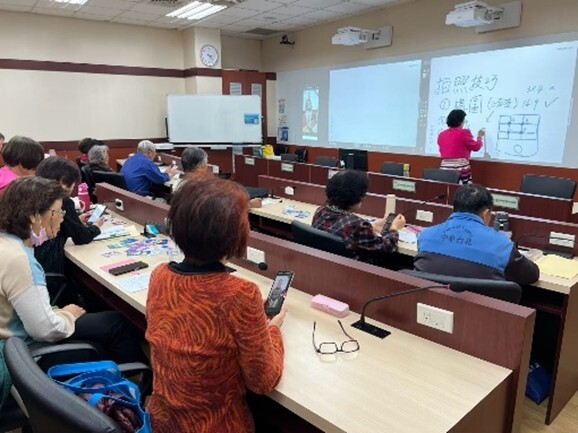
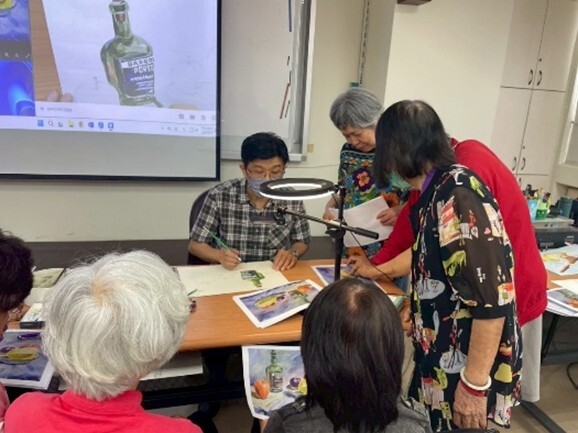
(3) Community Senior University: NCUE allowed senior members in the community to continue learning, NCUE has been operating the Changhua County Senior University since 1995 and encouraged Changhua County residents who aged above 55 to return to campus for learning. In 2024, the university held two 16-week terms, and offered a total of 28 courses, with 882 students who completed the courses they signed up for. NCUE offering diverse course types including Japanese, English, calligraphy, Chinese painting, arts, and mobile phone application classes. (As shown in Figure 5, Figure6)
|
|
|
|
Figure 5. Community Senior University - Mobile Travel Application Class |
Figure 6. Community Senior University - Arts Class |
(4) Secondary School Teacher Professional Development: NCUE annually coordinated with the Ministry of Education and the continuing education needs of secondary school teachers. We offer second specialty and professional development courses for teachers to assist in-service educators in enhancing their teaching competencies. In 2024, we conducted a total of 70 courses, providing 2,922 hours of training. A total of 1,384 participants engaged in these professional development opportunities. (As shown in Figure 7)
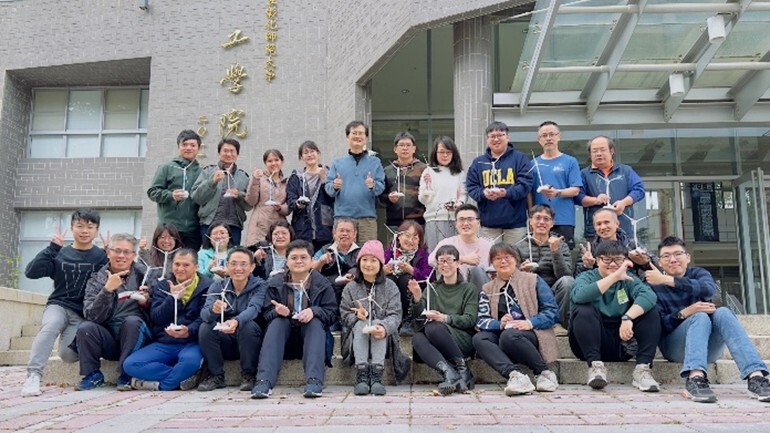
Figure 7. Secondary School Teacher Professional Development Course - Living Technology Subject Teacher Training
(5) Elementary and Secondary School Principal and Director Management Competency Training Program: As the only secondary teacher training institution in central Taiwan, NCUE has been organizing an annual "Elementary and Secondary School Principal and Director School Management Competency Training Program" since 2020 to fulfill its university social responsibility. Each course lasts 4 months, and to date, 83 senior administrative leaders have been trained. (Figure 8)
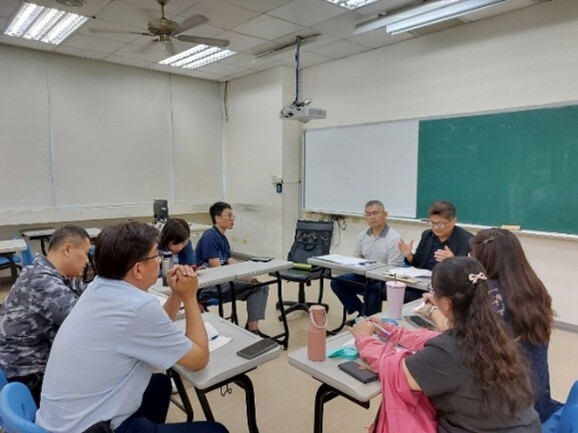
Figure 8. Principal and Director Program - Group Discussion
(6) Industrial and Commercial Talent Development in Changhua County: NCUE is located in Changhua County. To support local businesses to nurture talent and ensure they can adapt to modern challenges and operate sustainably, the university has collaborated with the Changhua County Government and private enterprises. Since 2016, the university has held annual training camps for second-generation successors and female leaders in small and medium-sized enterprises (SMEs). These camps are to equip participants with management skills, innovative operation, digital marketing, communication and negotiation. In 2024, we focused on Environmental, Social, and Governance (ESG) corporate sustainability as the main theme, designing a series of courses to assist SMEs in implementing ESG practices. Since its inception, this training initiative has successfully graduated 419 participants. (As shown in Figure 9)
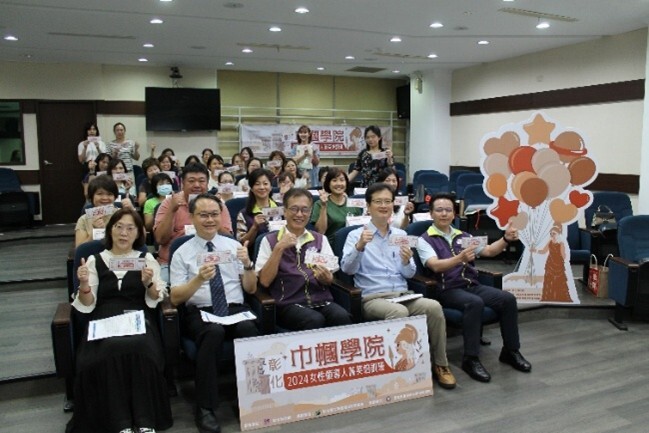
Figure 9. Industrial and Commercial Talent Development in Changhua County-2024 Women's Academy: Elite Training Program for Female Leaders
(7) To assist enterprises in Changhua County in addressing climate change issues and preparing for the Carbon Border Adjustment Mechanism (CBAM) to be implemented by the European Commission starting in 2030, NCUE launched the "ESG Sustainability Planning Training Program" in 2024. The program offered four sessions each of the "ISO 14064-1 Organizational Greenhouse Gas Internal Verifier Training Course and Certificate Program" and the "ISO 14067 Carbon Footprint Management and Calculation Foundation Course and Certificate Program." Delivered by professional instructors from SGS International Certification Company, the program trained a total of 192 corporate participants, deepening their understanding of carbon emission calculation and verification (Figure 10).

Figure 10. Industrial and Commercial Talent Development in Changhua County - 2024 ESG Sustainability Planning Training Course
(8) To support working professionals in continuing their education and enhancing their workplace competencies, the university designs vocational training courses based on the needs of community residents and local industries. In 2023, the university offered 102 courses, providing over 2,552 hours of training, benefiting 2,012 participants in enhancing their knowledge and skills. In 2024, the university offered a total of 127courses, providing over 4,077 hours of training and helping 2,451 trainees improve their knowledge and abilities. (As shown in Figure 11)

Figure 11: Workplace Enhancement Course - After-School Talent and Childcare Training for Teacher’s Certification Test
(9) On December 11, 2024, NCUE co-organized the "Carbon Neutrality, Carbon Fees, Carbon Credits and Corporate Sustainable Development and Reporting" Corporate Sustainability Forum with the Changhua County Business Management Research Association and Changhua County Industry-Academia Advancement Association. This responded to Taiwan's plan to implement carbon fees starting in 2026, with the first phase targeting 287 major carbon emitters, gradually expanding to other carbon emitters and SMEs. The forum explored low-carbon transformation strategies and practices for SMEs, which account for over 90% of Taiwan's enterprises. (Figure 12)
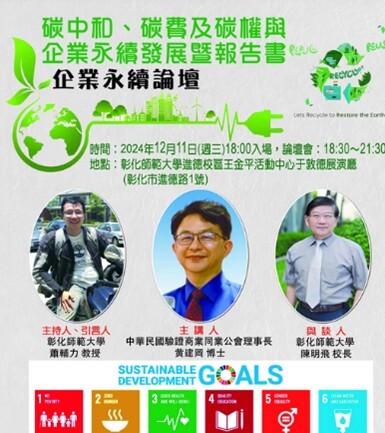
Figure 12. "Carbon Neutrality, Carbon Fees, Carbon Credits and Corporate Sustainable Development and Reporting" Corporate Sustainability Forum Poster
(10) NCUE also offers various continuing education courses on business operations, information technology, business management, marketing, and handicrafts enabling community residents to pursue self-growth in their areas of interest. In 2024, NCUE offered 60 courses for a total of 1,369 training hours, and 1,213 people participated. (As shown in Figure 13)
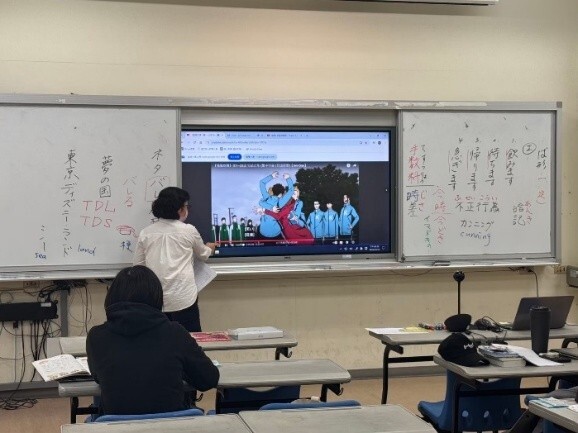
Figure 13. Continuing Education Course - Learning Japanese Through Drama
4. NCUE Provides Services to Local Small and Medium Enterprises (SMEs) and Promotes Industry-Academia Collaboration:
(1) In 2024, NCUE’s Innovation and Incubation Centre of the Research and Development Department implemented the “Science and Technology Care Project to Support Small and Medium-sized Enterprises” and the “Industry Guidance for Innovation in Industrial Parks Project” to guide local small and medium-sized enterprises in industrial upgrading and help them obtain subsidies from the government. The results of the guidance are as follows (Figure 14- 15):
(a)Industrial Park Smart Technology Value-added Innovation Cross-domain Promotion Program
i. Company needs assessment visits: 67 companies
ii. On-site park services: 75 times
iii. Technical and talent training courses: 10 sessions (30 hours in total)
iv. Student industry-academia project internships: 37 students across 12 companies
v. Talent demand matching: 2 sessions
vi. Technical guidance: 14 cases
vii. Government subsidy applications: 6 submitted
(b)Industrial Park Cross-regional Low-carbon Transformation Integration Promotion Program
i. Carbon emission source data review: 10 companies
ii. Low-carbon guidance: 10 cases
iii. Technical and talent training courses: 3 sessions, 87 participants
iv. Government subsidy applications: 4 applications (1 approved)
v. Assistance for park companies in obtaining ISO 14064-1 or ISO 50001 auditor certification: 84 people
|
|
|
|
Figure 14. Guidance case – Innova Rubber Co., Ltd. |
Figure 15. Guidance case –Camel Precision CO., LTD. |


(2) Faculty members from various colleges of NCUE apply their expertise to assist local enterprises in various research and development applications. These include special research projects, material exchange, testing and inspection, technical services, consultancy, patent applications, technology transfer, innovation incubation, and talent development.
In 2024, the university completed 92 industry-academia collaboration projects with businesses and legal entities, totaling NTD$23,003,746. In 2023, the total project value rose significantly to NTD$26,490,841 with 92 collaborative projects. This substantial increase demonstrates the university's continued dedication to fostering industry partnerships and driving innovation.
For more details on the results: https://rndweb.ncue.edu.tw/p/426-1005-23.php
(3) We provide financial support to students for conducting thematic explorations through special projects. This initiative aims to closely integrate Industry dynamics into the teaching and learning process, effectively bridging the gap between theory and practice. Through interdisciplinary and inter-college collaboration, we foster strong team-based relationships. The program is divided into five categories: Industry-Academia Collaboration, Interdisciplinary Integration, Competitions, Themed Special Projects and Undergraduate Research Projects. In the 2024 academic year, we supported 80 project teams, involving 215 students, with a total of NTD$384,155 in financial support. Please refer to: https://sites.google.com/gm.ncue.edu.tw/mentorship
5. NCUE Bilingual Research Center-Related Courses and Activities
To provide pre-service teachers and in-service teachers with professional growth in bilingual teaching, NCUE's Bilingual Teaching Research Center organized multiple bilingual teaching-related lectures and workshop activities in 2024, including the [Bilingual Teaching Knowledge and Teaching Practice Symposium] on October 26, 2024, which invited bilingual teachers to share teaching experiences and how to apply AI software to assist bilingual teaching, training pre-service teachers and teachers to effectively utilize technology software to enhance course design skills.
Additionally, we regularly organize bilingual class observations, bilingual experimental teaching demonstrations, allowing pre-service teachers to understand real-life situations and helping them understand how to prepare during their current study phase, building bilingual teaching competency for future bilingual teachers. NCUE will continue to collaborate with Ministry of Education’s plans, continuously working toward the 2030 bilingual policy implementation and enhancing teachers' English proficiency (Figure 16). Related website link: https://clil.ncue.edu.tw/news.php?2
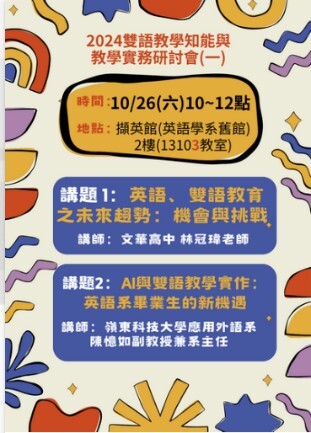
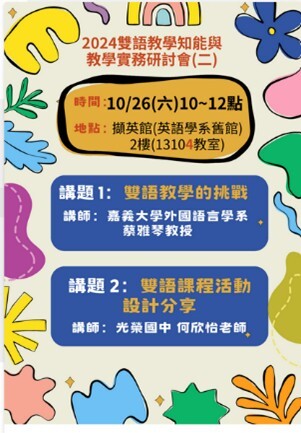
Figure 16. Bilingual Teaching Knowledge and Teaching Practice Symposium Poster