
|
|
|
|
|
|
|
|
|
|
|
|
|
|
|
|
|
SDG 14.3.4 Technologies towards aquatic ecosystem damage prevention (direct work)
NCUE has ongoing projects and activities, which include the “Beautiful and Treasured Clams in Fangyuan and Dacheng: Sustainable Industry and Environment Project of Changhua’s Two Cities Amid Climate Change”, Department of Biology’s “Changhua Coastal Hard Clam Habitat Survey and Conservation Education Promotion Project,” and Department of Geography’s “Monitoring of Agro–Fishing Socio-Ecological Systems in the Coastal Wetlands of Western Taiwan (3/3)” as shown in Table 1. The following is a brief description.
Table 1. Related activities and projects
|
Project Name |
Funding Agency |
|
Beautiful and Treasured Clams in Fangyuan and Dacheng: Sustainable Industry and Environment Project of Changhua’s Two Cities Amid Climate Change |
Ministry of Education |
|
Changhua Coastal Hard Clam Habitat Survey and Conservation Education Promotion Project |
Wanggong Community Development Association, Fangyuan Township, Changhua County |
|
Monitoring of Agro–Fishing Socio-Ecological Systems in the Coastal Wetlands of Western Taiwan (3/3) |
National Science and Technology Council |
1. “Beautiful and Treasured Clams in Fangyuan and Dacheng: Sustainable Industry and Environment Project of Changhua’s Two Cities Amid Climate Change” and “Changhua Coastal Hard Clam Habitat Survey and Conservation Education Promotion Project” :
These projects combined theories and practices, including coastal biodiversity, eco-friendly aquaculture techniques, water and sediment quality testing, fish consumption culture, and the promotion of low-carbon aquaculture. In collaboration with local communities, the courses also advanced marine conservation and sustainable fisheries. In the same year, NCUE carried out the industry–academia collaboration project “Changhua Coastal Hard Clam Habitat Survey and Conservation Education Promotion Project,” conducting a series of marine citizen science courses at Xinbao Wetland and Wanggong Fishing Harbor. Activities included:
(1) Habitat surveys of Hard clams (winter, spring, summer, and autumn; four sessions in total, including sediment improvement trials)
(2) Volunteer training for habitat surveys (4 sessions, 41 participants)
(3) “Seed Teacher Training” (3 sessions, 91 participants)
(4) “Little Clam Detectives” educational activities (4 sessions, 185 participants)
The training and practical sessions encompassed water quality testing, biodiversity surveys, bivalve classification, coastal tourism, and conservation education promotion. NCUE also collapsed with Cao-Hu Junior High School, Hanbao Elementary School, and Lukang Elementary School to integrate scientific investigation with local education. Project results show that sediment improvement effectively promotes the growth of coarse-sediment indicator species such as hard clams and corbicula, suppresses the dominance of ring clams, and enhances carbon sequestration potential and benthic biodiversity. In addition, the participation of citizen scientist also effectively increases survey data and strengthens community water resource safety and conservation awareness, successfully establishing a demonstration model that combines scientific research with educational promotion. Relevant photographs are shown in Figure 1.
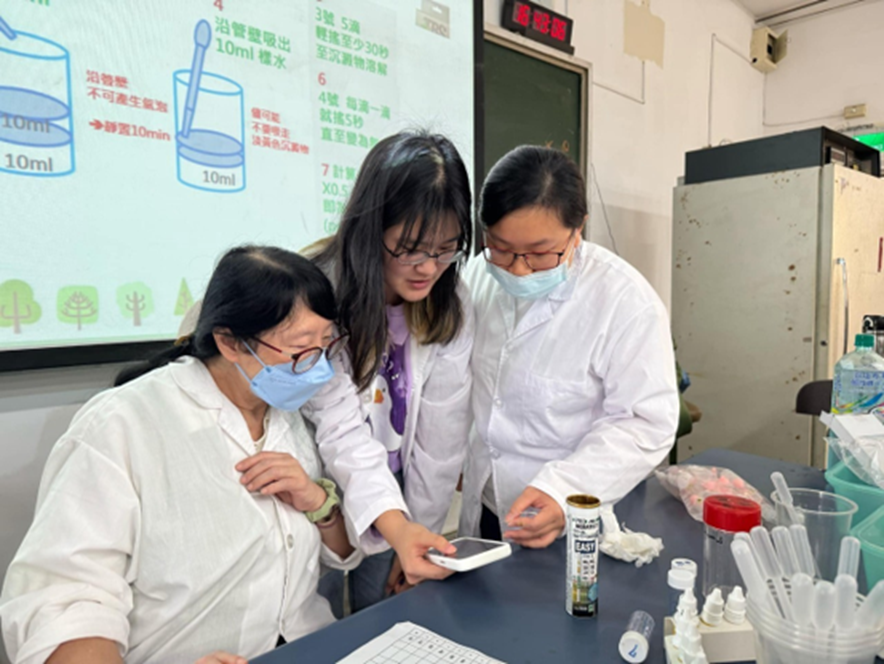
Figure 1. Teachers and students are conducting water and sediment quality assessment in Changhua Waters
Project FB Page Link: https://www.facebook.com/NCUEUSR/
2. Monitoring of Agro–Fishing Socio-Ecological Systems in the Coastal Wetlands of Western Taiwan (3/3)
NCUE’s Department of Geography is undertaking the National Science and Technology Council (NSTC) project “Monitoring of Agro–Fishing Socio-Ecological Systems in the Coastal Wetlands of Western Taiwan (3/3).” Fangyuan was designated as the core observation site to establish a place-based demonstrative observation program. This project implements long-term, fundamental, and critical monitoring of core socio-ecological system components, serving as the Changhua Station within the Long-Term Socio-Ecological Research (LTSER) network. Field research at the station encompasses water quality assessments, ecological surveys, and geomorphological monitoring in the Fangyuan, Hanbao, and Wanggong wetlands. A complete year of baseline surveys was accomplished in 2024, and continuous monitoring will be maintained in subsequent years. In-depth interviews with key local stakeholders constitute a vital element of the station’s social research and provided the LTSER platform’s local engagement network. These interviews systematically document and analyze stakeholder roles, functions, and relationships, as well as their experiences and observations of socio-ecological transformations, thus providing a robust social–ecological data foundation for the platform. Drawing upon insights from these interviews and local documentary sources, the station developed questionnaires to further assess residents’ perceptions of environmental and renewable energy issues. Station staff also actively participate in local events to identify emerging concerns and explore collaborative opportunities with community partners. The long-term monitoring program aims not only to advance scientific understanding but also to address locally relevant needs. The activity photos are shown in the Figure 2.
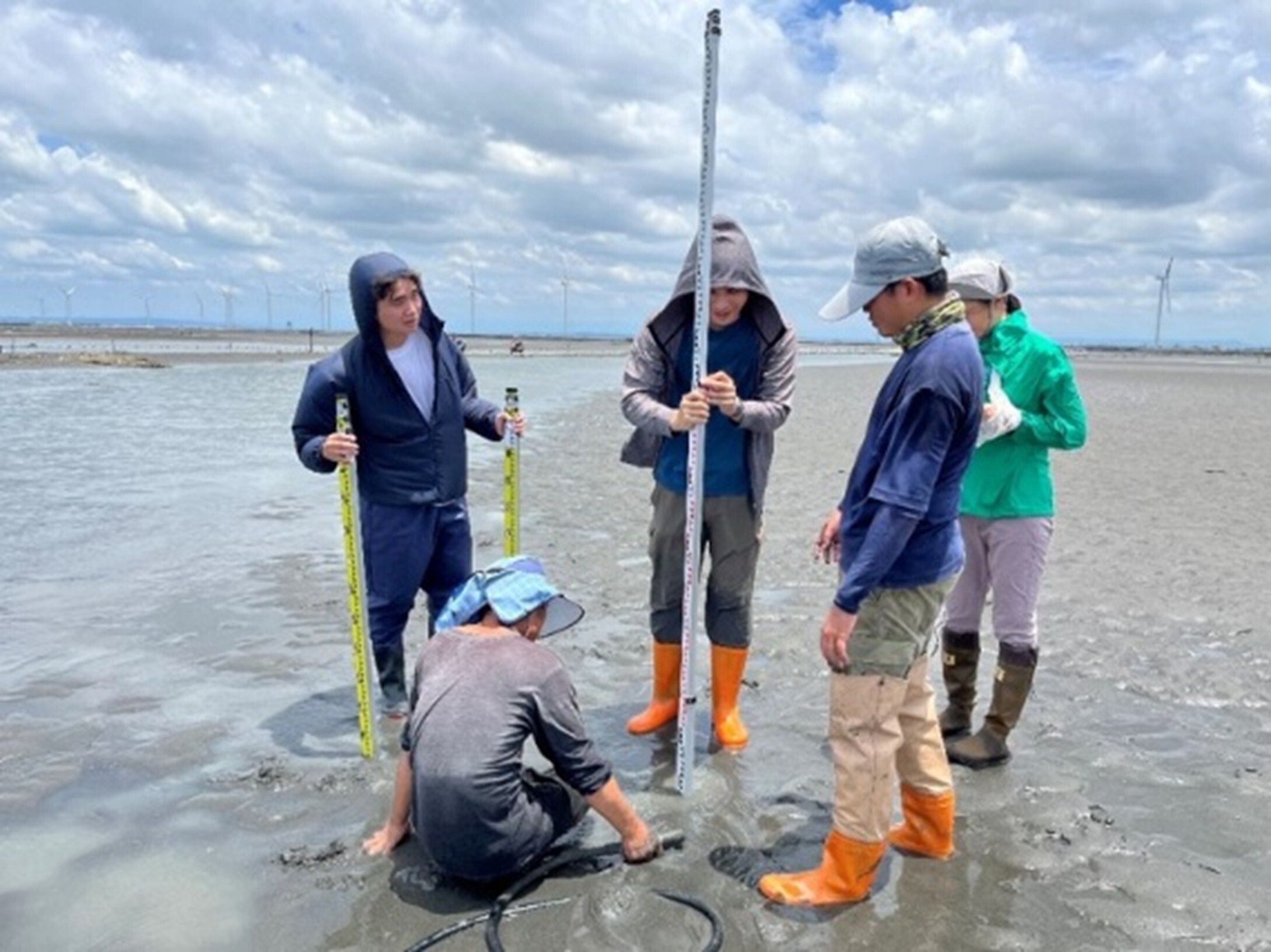
Figure 2. The team was monitoring geomorphology in Hanbao Wetland