
|
|
|
|
|
|
|
|
|
|
|
|
|
|
|
|
|
SDG 14.2.3 Overfishing (community outreach)
NCUE offered local community residents and students courses related to coastal biological resources, fishing operations, and fisheries conservation, including the " Beautiful and Treasured Clams in Fangyuan and Dacheng: Sustainable Industry and Environment Project of Changhua’s Two Cities Amid Climate Change” and “Changhua Coastal Hard Clam Habitat Survey and Conservation Education Promotion Project”, which is offered by the Department of Biology, College of Science.
Under these projects, the University offered the courses “Coastal Biological Resources” and “Sustainable Development and Practices of Coastal Biological Resources,” which integrate theories and practices. The curricula covered coastal biodiversity, eco-friendly aquaculture techniques, water and sediment quality testing, fish consumption culture, and the promotion of low-carbon aquaculture. In collaboration with local communities, the courses also advanced marine conservation and sustainable fisheries. In the same year, NCUE carried out the industry–academia collaboration project “Changhua Coastal Hard Clam Habitat Survey and Conservation Education Promotion Project,” conducting a series of marine citizen science courses at Xinbao Wetland and Wanggong Fishing Harbor. Activities included:
(1) Habitat surveys of hard clams (winter, spring, summer, and autumn; four sessions in total, including sediment improvement trials)
(2) Volunteer training for habitat surveys (4 sessions, 41 participants)
(3) “Seed Teacher Training” (3 sessions, 91 participants)
(4) “Little Clam Detectives” educational activities (4 sessions, 185 participants)
The training and practical sessions encompassed water quality testing, biodiversity surveys, bivalve classification, coastal tourism, and conservation education promotion. NCUE also collapsed with Cao-Hu Junior High School, Hanbao Elementary School, and Lukang Elementary School to integrate scientific investigation with local education. Project results show that sediment improvement effectively promotes the growth of coarse-sediment indicator species such as hard clams and corbicula, suppresses the dominance of ring clams, and enhances carbon sequestration potential and benthic biodiversity. In addition, citizen scientist participation also effectively increases survey data and strengthens community water resource safety and conservation awareness, successfully establishing a demonstration model that combines scientific research with educational promotion. Activities photos are shown in Figure 1.
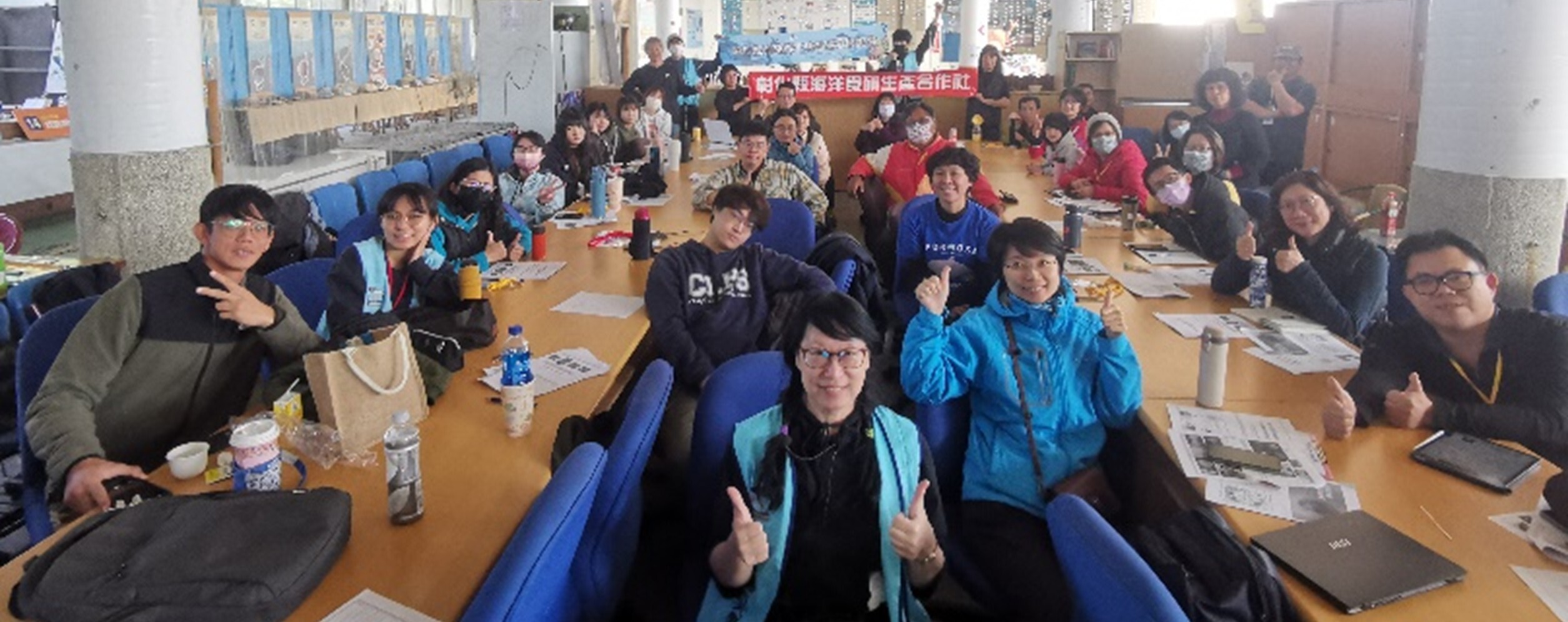
Figure 1. Seed Teacher Training Workshop on Marine Citizen Science for Quantitative Marine Ecological Surveys – Focused on identifying and enumerating common bivalve species in the coastal wetlands of Changhua.
Project FB Page Link: https://www.facebook.com/NCUEUSR/