

|
|
|
|
|
|
|
|
|
|
|
|
|
|
|

|
|
SDG 13.4.1 Commitment to carbon neutral university
1. NCUE's commitment to becoming a carbon neutral university is outlined as follows: National Changhua University of Education adheres to the Greenhouse Gas Protocol, implements management of various carbon emissions, and continuously promotes energy conservation and carbon reduction measures along with related curricula. The university is committed to achieving the concrete goal of carbon neutrality by 2045, with the aim of transforming our institution into a sustainable campus where faculty and students are equipped with the concepts and capacity for action in sustainable development, thereby becoming important advocates for Taiwan's sustainable development in the future. The Carbon Neutrality Declaration of NCUE is as shown in Figure 1.
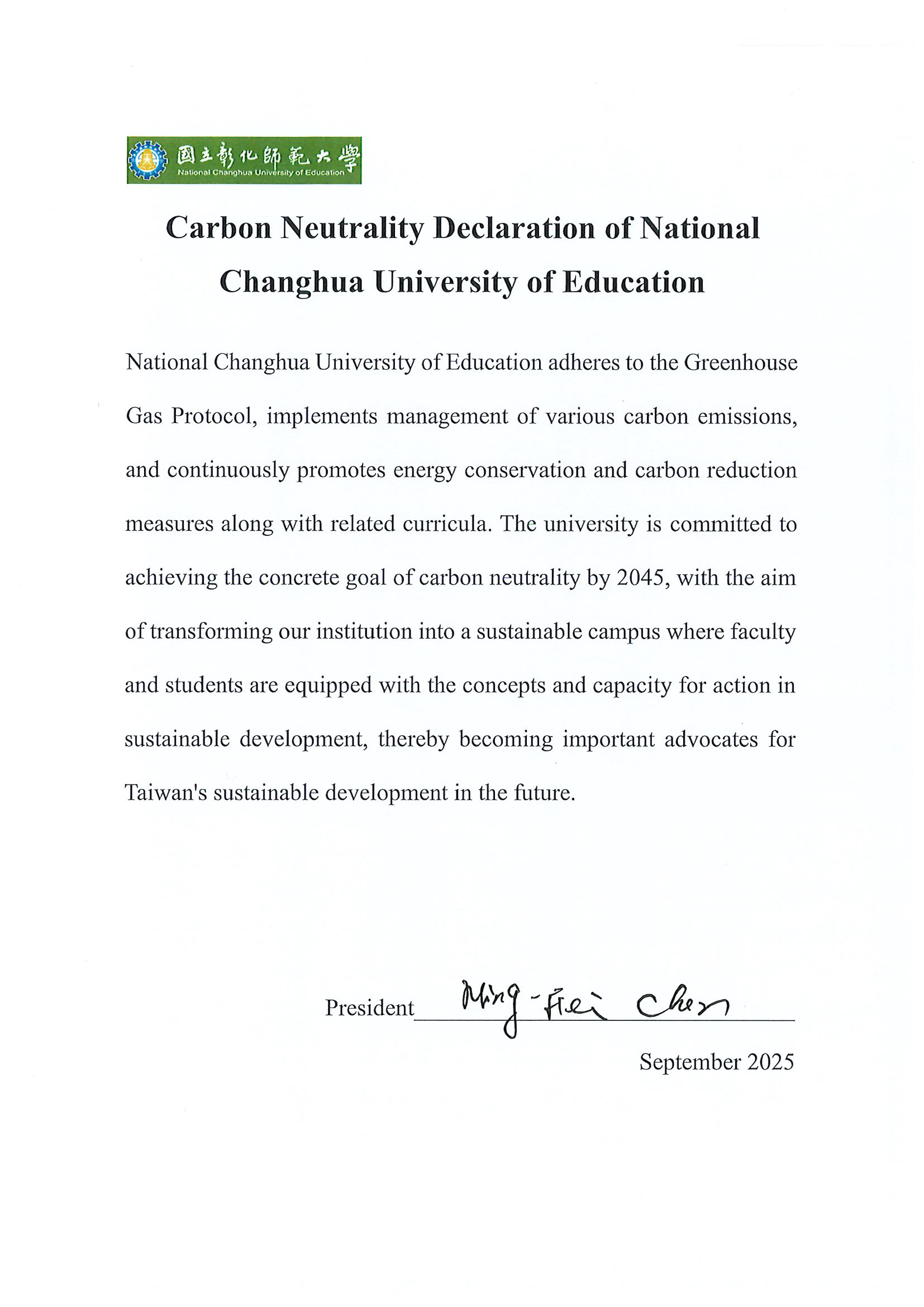
Figure 1. Carbon Neutrality Declaration of NCUE
2. NCUE has formulated the " Key implementation points for promoting energy saving and carbon reduction of National Changhua University of Education" that aims to implement management measures for electricity conservation, lighting energy conservation, air conditioning energy conservation, water conservation, and environmental education. The annual budget allocated for the replacement of high-energy-consuming equipment amounts to at least morn than NTD$5 million, with an expected annual target of achieving at least 1% improvement in total energy efficiency. It is estimated that by 2029, existing equipment will reduce total annual power consumption by at least 1.3 million kWh compared to 2022, progressively reducing carbon emissions.
Please refer to Annex 13.4.1A(PDF) Key implementation points for promoting energy saving and carbon reduction of National Changhua University of Education.
3. Additionally, NCUE has extensively installed solar power generation devices at Jinde and Baoshan campuses. Table 1 presents NCUE's 2021-2030 Total Planned New Solar Power Installation Capacity.
(1) Before 2020: Fundamental and Initial Stage
NCUE's Jinde Campus completed the installation of a 467 kWp solar power generation system, with peak generation accounting for approximately 15.57% of campus electricity consumption. Baoshan Campus had not yet installed solar power equipment, with a low-carbon energy usage ratio of 0%.
(2) 2021-2022: Major Expansion Stage
Jinde Campus solar power installation capacity expanded to 2558.375 kWp, with peak generation nearly equivalent to campus peak electricity consumption, achieving a low-carbon energy ratio of over 98%. Baoshan Campus newly installed a 571.5 kWp solar power system, raising the low-carbon energy ratio to 63.5%. Simultaneously, NCUE signed the Carbon Neutrality Declaration, clearly committing to achieving carbon neutrality by 2045.
(3) Around 2030: Comprehensive Renewable Energy Application Stage
The solar power installation capacity at Jinde and Baoshan campuses will expand to 4097.875 kWp, with annual power generation exceeding 5,115,308 kWh (18,415 GJ). By then, peak electricity consumption at both campuses can be completely supplied by solar power, with the low-carbon energy ratio exceeding 100%, achieving peak electricity carbon neutrality.
Table 1. NCUE's 2021-2030 Total Planned New Solar Power Installation Capacity
|
Campus |
Year |
Solar Energy Generated during Peak Hours (kW) |
Power Consumption during Peak Hours (kW) |
Proportion of Solar Power to Power Consumption |
|
Jinde |
Before 2020 |
467 |
3000 |
15.57% |
|
2021-2022 |
2558.375 |
2600 |
98.18% |
|
|
2026~2030 |
2788.375 |
2200 |
>100% |
|
|
Baoshan |
Before 2020 |
0 |
1000 |
0% |
|
2021-2022 |
571.5 |
900 |
63.5% |
|
|
2026~2030 |
1309.5 |
785 |
>100% |
4. Energy Storage and Low-Carbon Technology Applications
NCUE's Baoshan Campus has installed a 1 MW/1.26 MWh energy storage system, with two additional 100 kW/50 kWh energy storage units in operation. This energy storage system achieves load shifting by storing energy during off-peak nighttime hours and releasing it during daytime peak periods, reducing the output of coal-fired power plants during peak hours while lowering maximum line currents and reducing power transmission losses by approximately 3%. Additionally, campus contract capacity has been further reduced from 835 kW to 785 kW, decreasing external power purchases and continuously enhancing energy conservation and carbon reduction benefits.
5. In alignment with global net-zero greenhouse gas emission policies, NCUE assists industries in low-carbon transition by providing greenhouse gas inventory and reduction services to businesses. In 2024, NCUE executed 16 projects with a total budget of NTD$3,380,000, involving 13 faculty members, as shown in Table 2, demonstrating NCUE's role in social responsibility and net-zero promotion.
Table 2. 2024 Carbon Inventory Project Statistics
|
Number of Faculty Involved |
Number of Projects |
Project Budget (NTD) |
|
13 |
16 |
3,380,000 |
6. With the ultimate goal of achieving full carbon neutrality by 2045, NCUE progressively develops a sustainable campus model through energy conservation, renewable energy, energy storage, and industry-academia collaboration actions, continuing to contribute to Taiwan's sustainable development.