
|
|
|
|
|
|
|
|
|
|
|
|
|
|
|

|
|
SDG 12.2.1 Ethical sourcing policy
1. Green procurement requirements.
NCUE has been committed to promoting the procurement of green-designated items by government agencies. In 2024, NCUE procured a total of NTD$18,779,783 in green and eco-labeled products (with NTD$884.735 for bonus category items, as shown in Figure 1), meeting the targets for the year and each of the quarters. NCUE’s compliance performance with relevant regulations is 100% compliant for the procurement of green-designated items, as shown in Table 1.
Please refer to appendices 12.2.1A(PDF)– Scoring Method for Performance Evaluation of Annual Green Procurement in 2024 and 12.2.1B(PDF)– Annual Statistical Form for Amounts of Green Procurement in 2024.
For more details, please refer to the following sites.
Green Lifestyle Information Platform: https://greenlifestyle.moenv.gov.tw/en_Main
The Green Procurement Portal of the Center of Protection and Occupational Safety and Health: https://saftyweb.ncue.edu.tw/p/412-1010-3555.php?Lang=zh-tw
Table 1. Achievements of the “Government Agency Green Procurement Designated Procurement Items” at NCUE in 2024
|
NCUE’s performance in the procurement of green-designated items by government agencies in 2024 |
|
|
First Quarter |
100% |
|
Second Quarter |
100% |
|
Third Quarter |
100% |
|
Fourth Quarter |
100% |
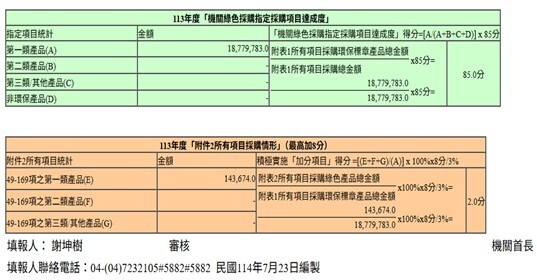
Figure 1. Statistics on the Green Procurement Expenditure for 2024
2. Food procurement requirements for two canteens in the Jinde Campus and Baoshan Campus:
(1) NCUE adheres to two basic principles for food procurement:
(a) Seasonal ingredients.
(b) Preference is given to seasonal foods and local foods to reduce the carbon footprint, shorten food miles, and reduce energy consumption.
(c) Mainly use domestically produced food ingredients compliant with "3 Labels 1 Q".
(2) According to the three-tiered management system for campus food safety and hygiene practices, NCUE cooperates with the Ministry of Education during the Ministry’s on-site guidance once every academic year; NCUE’s catering management committee is responsible for coordination across different departments; and a dedicated nurse inspects hygiene practices in catering spaces once every week. To ensure food safety, NCUE encourages the canteens to do the following:
(a) Give preference to labeled or traceable foods, such as "Traceable Agricultural Products", Taiwan Fresh Pork "TFP", Total Quality Food "TQF", products meeting "Certified Agricultural Standards", and produce livestock, and aquaculture products with traceable QR codes; as shown in Figure 2 and Figure 3.
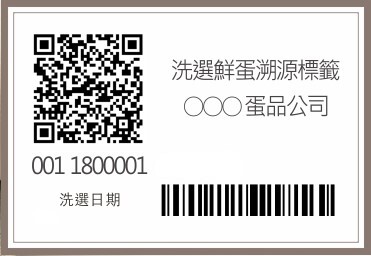
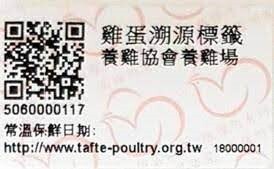
Figure 2. Label used on egg products
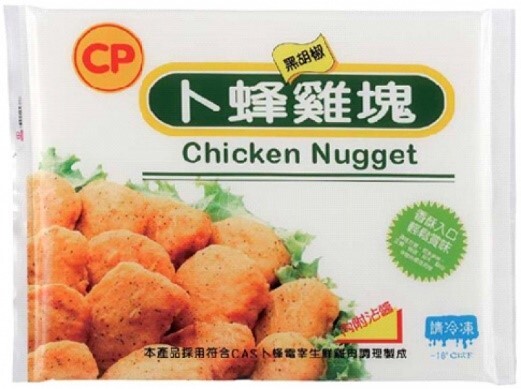
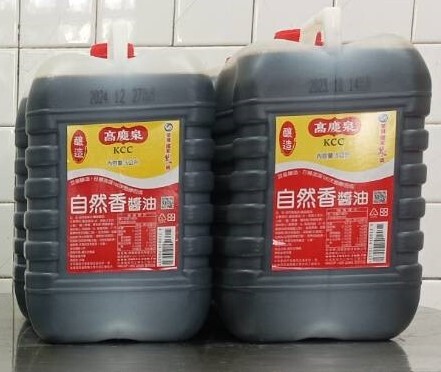
Figure 3. Picture caption: Labelled and traceable foods are preferred
(b) to ensure food safety within NCUE’s canteens by examining fresh vegetables and fruits according to the ‘Criteria for Monitoring Pesticide Residue in Agricultural Products’ issued by the Taiwan Food and Drug Administration, Ministry of Health and Welfare (as below): https://www.fda.gov.tw/TC/site.aspx?sid=2428&r=1485767145
(c) to make sure vendors log in to the Ministry of Education’s ‘Filing Platform 2.0 for School Foods’ every day to fully disclose relevant food information.
https://fatraceschool.k12ea.gov.tw/frontend/
3. Preference is given to products and services from disability welfare institutions, organizations, or sheltered workshops.
In compliance with the ‘Persons with Disabilities Rights Protection Act’ and the ‘Regulation for Obliged Purchasing Units / Institutions to Purchase the Products and Services Provided by Disabled Welfare Institutions, Organizations, or Sheltered Workshops’, particularly promoting the employment of people with disabilities and the protection of vulnerable groups, NCUE has developed an ‘Implementation Plan for Preferential Procurement of Products and Services from Disability Welfare Institutions, Organizations, or Sheltered Workshops’. The target is that for designated product and service items, those contracted or subcontracted by such institutions, organizations, or sheltered workshops should account for more than 5% of total annual procurements made by NCUE for the product and service items.
Given regional characteristics, the products and services (excluding plan development) currently covered are bento, meal boxes (single purchase of 20 or more boxes), and printing services (business cards, posters, books, and magazines) with fees of NTD$10,000 or more in a single transaction. They should be listed on the preferential procurement platform. Only when no disability welfare institutions, organizations, or sheltered workshops are willing to contract, or their products or services are disqualified could NCUE contact general vendors.
Please refer to Annex 12.2.1C(PDF)–Regulations for Priority Procurement of Eco-Products. The annual achievement rates of priority procurement at NCUE are shown in Table 2. For the 2024 priority achievement rate of procurement, please see Attachment 12.2.1D(PDF) - 2024 2024 Priority Procurement Performance Statistics Summary.
Table 2. The annual achievement rate of priority procurement at NCUE
|
Year of implementation |
Ratio of preferential procurement (%) |
|
2022 |
8.42 |
|
2023 |
9.53 |
|
2024 |
14.39 |
Appendices (including supporting documents):
No.: 12.2.1A(PDF)–Scoring Method for Performance Evaluation of Annual Green Procurement in 2024
12.2.1B(PDF)–Annual Statistical Form for Amounts of Green Procurement in 2024
12.2.1C(PDF)–Regulations for Priority Procurement of Eco-Products
12.2.1D(PDF) - 2024 Priority Procurement Performance Statistics Summary