
|
|
|
|
|
|
|
|
|
|
|
|
|
|
|
|
|
SDG 11.4.8 Planning development - new build standards
1. Green buildings refer to construction technology that minimizes the consumption of resources and energy as well as waste production throughout the building’s life cycle—from the production of building materials, planning, and design to construction, use, management, and demolition. Green buildings are assessed on nine indicators: greenery, water resources, soil water retention, biodiversity, daily energy saving, CO2 reduction, construction waste reduction, sewage and garbage improvement, and an indoor environment.
2. In 2001, the Executive Yuan launched the “Green Building Promotion Plan” which required that starting from January 1, 2002, all new public buildings funded—or at least half-funded—by the Central government and with a construction cost of more than NTD$50 million should first obtain a Green Building Candidate Certificate before applying for a construction license. Moreover, the buildings must meet the requirements for daily energy saving and water resources. According to the comprehensive design of urban planning, new buildings should meet the indicators of greenery and soil water retention. Given school buildings’ higher user traffic, they should additionally meet the indicators of sewage and waste improvement. The aforementioned five indicators formed the recommended requirements for new school buildings, and other indicators are also considered where feasible.
3. NCUE has actively abided by the government’s green building policy, and all new buildings constructed since 2003 have been planned and designed according to the government’s green building requirements. For example, the Teaching Building of the Jinde Campus obtained a Green Building Candidate Certificate in 2006. Thereafter, other new buildings also obtained Green Building Labels, including the Teaching Building of the Baoshan Campus, Wang Jin-pyng Activity Center, and Dormitory No. 10 of the Baoshan Campus, and the College of Science Building Phase 1, which is scheduled for completion in 2025. All of the aforementioned construction projects have obtained Green Building Certificate licenses, as detailed in Table 1. Each green building and certificate are shown in Figures 1-10.
Table 1. List of certified green buildings in NCUE
|
No. |
Information on Green Building |
Green Building Certification number |
|
|
1 |
Building Name |
Main Teaching Building, Jinde Campus |
Candidate Green Building Certificate No. (93) CGB355 (Figure 1) |
|
Official Opening |
Around 2006 |
||
|
2 |
Building Name |
College of Engineering Building, Baoshan Campus |
Green Building Certificate No. GB0100602 (Figure 3) |
|
Official Opening |
Around 2012 |
||
|
3 |
Building Name |
Wang Jin-pyng Activity Center, Jinde Campus |
Green Building Certificate No. GB-BC-01-00773 (Figure 5) |
|
Official Opening |
Around 2019 |
||
|
4 |
Building Name |
Construction of new student dormitory, Baoshan Campus |
Green Building Certificate No. GB-RS-01-00317 (Figure 7) |
|
Official Opening |
Around 2021 |
||
|
5 |
Building Name |
College of Science Building (phase 1) |
Candidate Green Building Certificate No. CGB-BC-01-02148 (Figure 9) |
|
Official Opening |
Completed in 2025 |
||
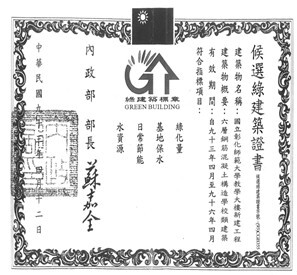
Figure 1: Green Building Candidate Certificate for NCUE Jinde Campus Teaching Building
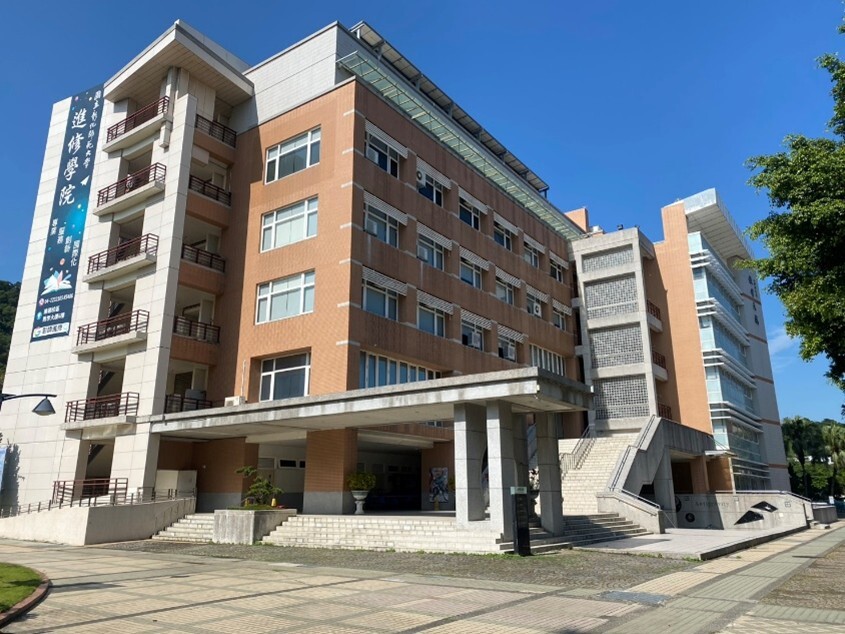
Figure 2. NCUE Teaching Building, Jinde Campus
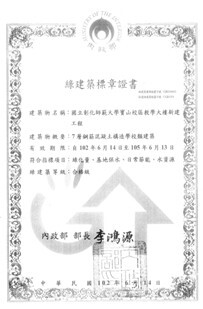
Figure 3. Green Building Candidate Certificate for NCUE Baoshan Campus College of Engineering Building
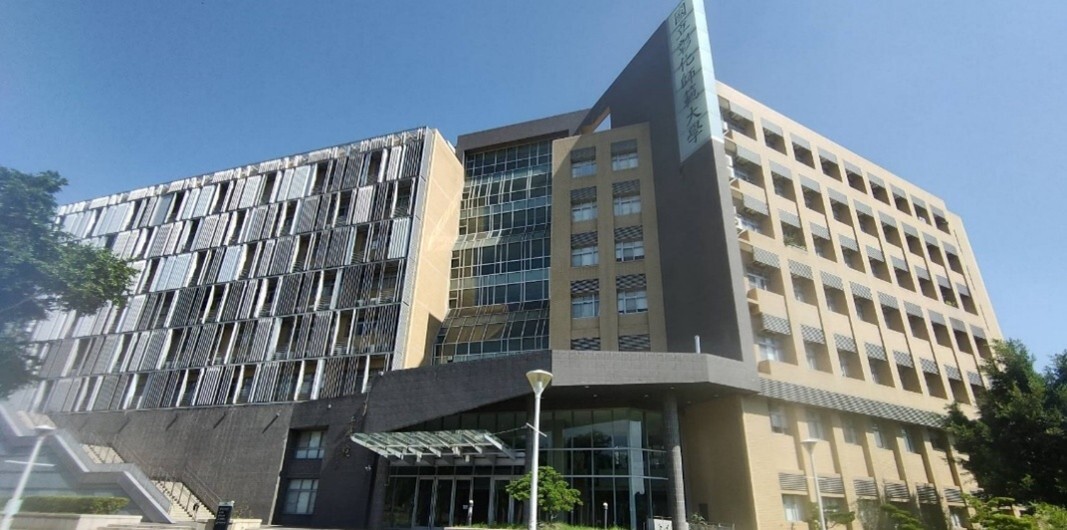
Figure 4. NCUE College of Engineering, Baoshan Campus
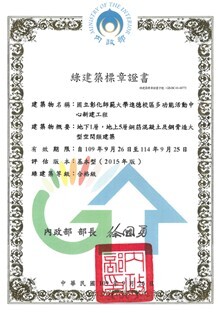
Figure 5. Green Building Candidate Certificate for NCUE Wang Jin-Ping Activity Center
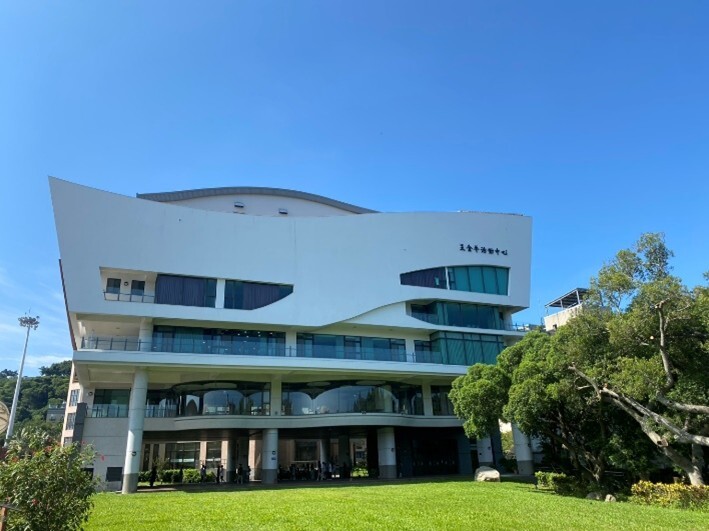
Figure 6. NCUE’s Wang Jin-Ping Activity Center
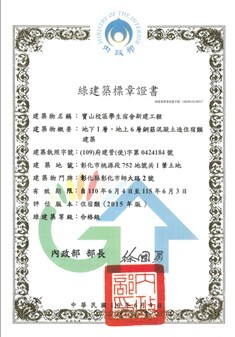
Figure 7. Green Building Certificate for NCUE Baoshan Campus Student Dormitory’s New Construction Project
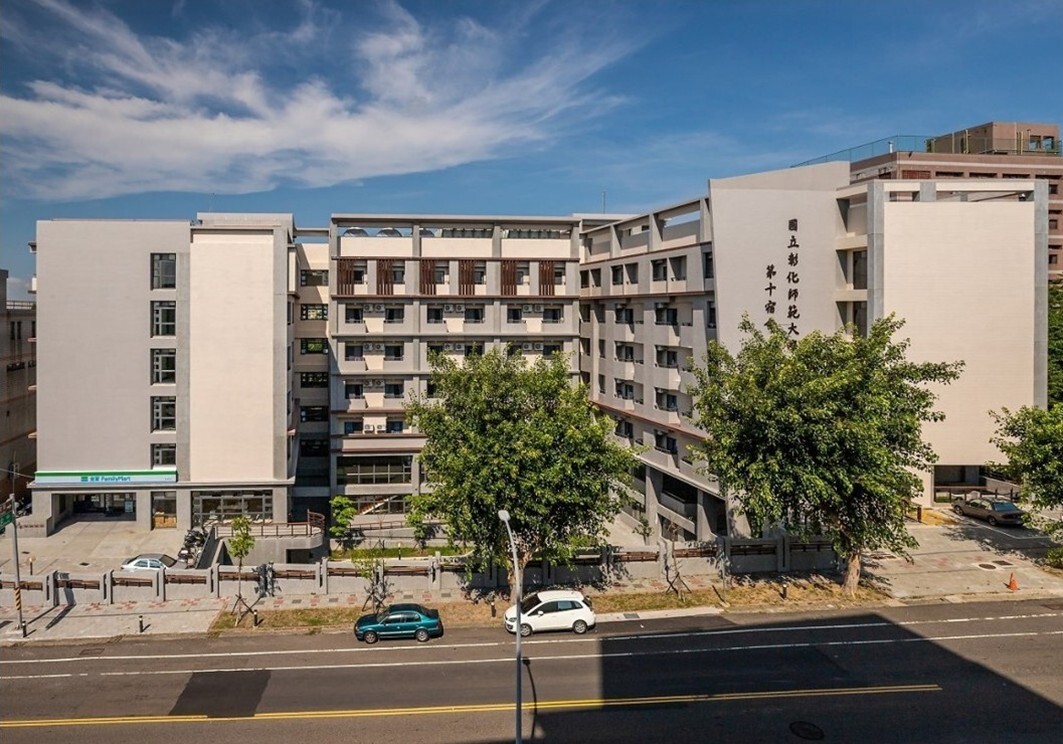
Figure 8. NCUE Student Dormitory No. 10, Baoshan Campus
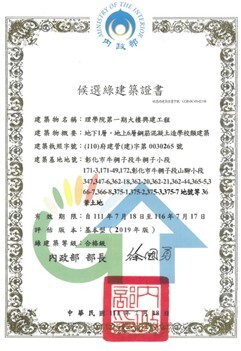
Figure 9. Green Building Candidate Certificate for the College of Science Building Phase 1
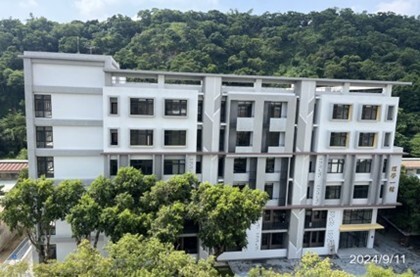
Figure 10. College of Science Building, Phase 1