

|
|

|

|

|

|
|

|
|
|
|
|
|
|
|

|
|
SDG 7.2.4 Plan to reduce energy consumption
1. NCUE has planned the regular replacement of old, energy-consuming, and low energy-efficient equipment based on the requirements of each building to achieve the goal of saving 1% of total energy annually. From 2007 to 2024, NCUE has reduced its annual power consumption by more than 15%. The power-saving plans for 2019-2025 are presented in the table below. See Table 1.
Table 1. Power - saving plan for 2019-2025
|
Year |
Measures |
|
2025 |
(1) Replace the 100RT chiller and ancillary equipment in the library of the Jinde Campus, expecting to save 426,580 kWh annually. (2) Reduce and replace transformer capacity for the library, outdoor courts, Student Dorm 3, and Student Dorm 7, improving single transformer load rates to over 50%, expecting to save 28,000 kWh annually. (3) NCUE is currently installing smart metes and adding a new EMS system, scheduled for completion across the entire campus by the end of 2025 to enhance energy management effectiveness. (4) Campus-wide replacement of at least 300 units of T5 fluorescent lamps with LED light, expecting to save 17,444 kWh annually. (5) Routinely replace over 200 air conditioning units, expecting to save 431,964 kWh annually. |
|
2024 |
(1) Replace at least 350 units T5 fluorescent lamps with LED lights across all campus buildings during renovations, expecting to save 21,021 kWh annually. (2) Routinely replace over 236 air conditioning units, expecting to save526,668 kWh annually. (3) A total of 147 air conditioning units in NCUE's Baisha Building have been upgraded with temperature monitoring, load shedding, and shutdown control functions. These functions work in coordination with demand control mechanisms to regulate peak electricity usage and avoid exceeding the contracted peak load. The Baisha Building’s air conditioning energy-saving control system has also been integrated with an intelligent energy management system with load shedding control and shutdown scheduling functions, achieving annual electricity savings of 93,786 kWh. (4) To reduce electricity consumption by water dispensers, only water dispensers on the first floor in each building are set to provide cold water. (5) The temperature settings for heating systems used in campus dormitory areas have been adjusted by reducing the hot water temperature of boiler or heat pump heating systems to 45°C during the summer period from June to October, reducing school energy consumption and achieving annual cost savings of NT$53,416. |
|
2023 |
(1) Implementing a campus-wide air conditioning peak offload system in phases over several years, expecting to achieve annual energy savings of over 100,000 kWh upon its completion. (2) Installation of Phase 2 photovoltaic solar cells.Capacity at Jinde and Baoshan Campuses were expected to increase by 510.04KWp and 473.14KWp respectively. |
|
2022 |
(1) Implementing a campus-wide air conditioning peak offload system in phases over several years, expecting to achieve annual energy savings of over 100,000 kWh upon its completion. (2) Replace the T5 lights of all buildings with LED lights, which involves at least 500 units. (3) This measure is expected to save more than 50,000 kWh of power annually. (4) Routinely replace over 70 air conditioning units, expecting to save100,000 kWh annually. |
|
2021 |
(1) Replace the 300RT water-cooled chiller and ancillary equipment in the gymnasium of the Jinde campus, which is expected to save 227,603 kWh of power annually. (2) Replace the T5 lights of all buildings with LED lights, which involves at least 500 replacements and is expected to save more than 50,000 kWh of power annually. (3) Routinely replace over 50 air conditioning units, expecting to save 75,000 kWh annually. |
|
2020 |
(1) Replace the water-cooled chiller and ancillary equipment in the Library and Information Center Building of the Jinde campus, which is expected to save 327,603 kWh of power annually. (2) Replace the T5 lights in the classrooms on the first floor of the gymnasium with LED lights, to save 25,028 kWh of power annually. (3) Replace 64 air-conditioning units, saving approximately 1,500 x 64 = 96,000 kWh of power annually. |
|
2019 |
(1) Replace the T5 lights on the first and second floors of the library with LED lights to save 27,430 kWh of power annually. (2) Replace 64 air-conditioning units to save approximately 97,500 kWh of power annually. (3) Calibrate the equipment in the machine room of the swimming pool to sleep during closed periods to reduce annual power consumption by up to 40,000 kWh. |
2. Electrical equipment is managed through automatic activation using timers or sensors to conserve energy, as shown in Figures 1-2.
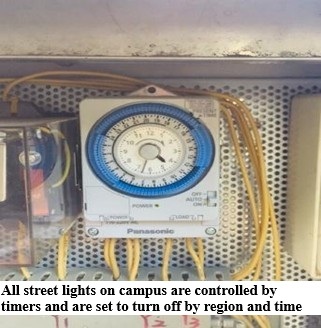
Figure 1. Street Lights Controlled by Timers and Are Set to Turn Off by Areas and Certain Hours
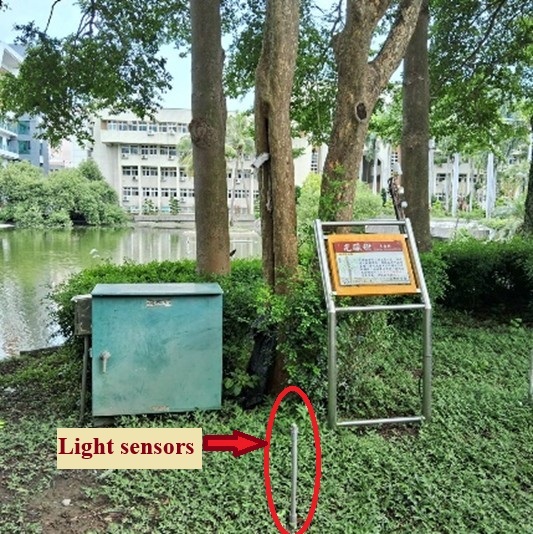
Figure 2. All Street Lights on Campus Are Equipped with Sensors to Preserve Energy
3. At the Baoshan Campus, NCUE has constructed an energy management system (Figure 3) and smart meters (Figure 4) that seamlessly integrates photovoltaic solar power and energy storage system to enable efficient scheduling and dispatching, thus delivering substantial benefits in peak load reduction by shifting load to off-peak periods. The highest peak load reduction achieved in 2023 came to approximately 36%, and our capability to shift loads not only minimized losses in high-voltage lines but also improved energy transmission efficiency. Through this approach, the school can harness solar power to cover a significant portion of our peak load while employing energy storage systems to further reduce peak demand, thus enhancing our overall energy efficiency.
4. Air conditioning accounts for a high proportion of NCUE's summer electricity consumption. The upgraded air conditioning monitoring systems help with conserving energy. The Baisha Building at Jinde Campus has established a building energy management system that enables remote control of air conditioning modes, temperature settings, and on/off functions to facilitate load reduction and energy-saving controls (see Figures 5-6). Link to the monitoring system:
http://120.107.186.21/AppUpdate/iCAS
For relevant information on installing the air conditioning energy-saving system in Baisha Building, please refer to Annex 7.2.4A(PDF) - Jinde Campus Power Management and Baisha Building Small Air Conditioning Energy-Saving Control System Installation - Training Presentation
5. NCUE is currently installing comprehensive smart meter systems, in addition to a new EMS system to manage energy more efficiently. The campus-wide installation is scheduled to complete by the end of 2025 (as shown in Figures 7-8). Five buildings at the Jinde Campus are frequently used by faculty and student, namely the Science Building, Teaching Building, Student Activity Center, Qiao-Si Hall, and Gymnasium. 40 smart meters have been installed in the aforementioned buildings. These meters collect detailed electricity usage data including current, voltage, power, and electricity consumption at one-minute intervals. At the same time, an Energy Management System (EMS) is being set up, featuring core functions including electricity usage visualization, electricity management reports, and over-contract warnings. The campus-wide installation of EMS is expected to be completed by the end of 2025. Through installing smart meters and the Energy Management System (EMS), NCUE enhances campus energy usage efficiency and implements energy conservation and carbon reduction.
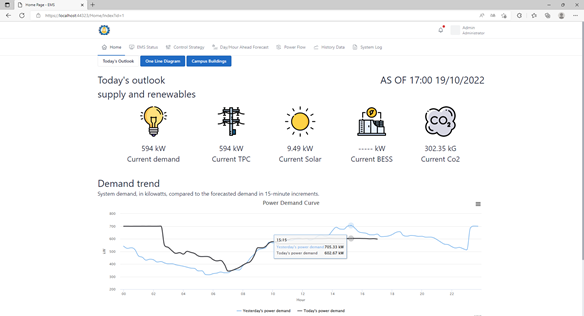
Figure 3. Energy Management System at the Baoshan Campus
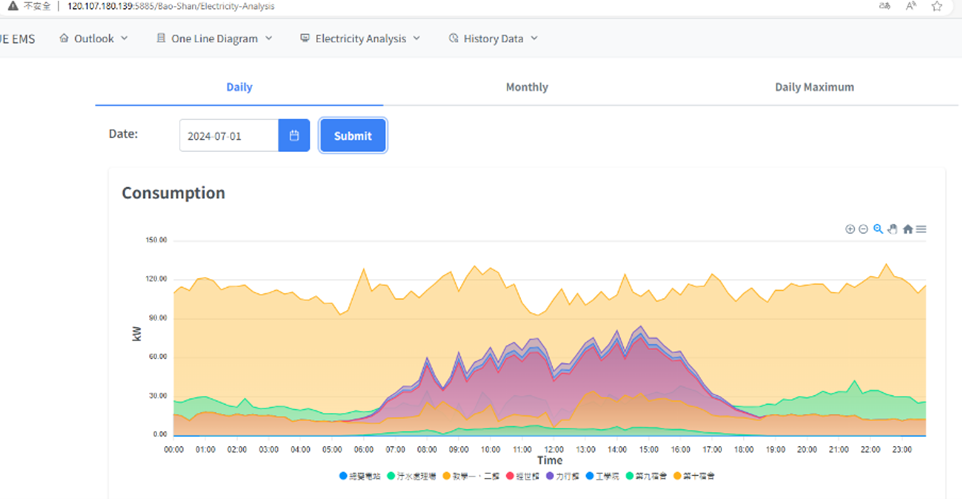
Figure 4. Screenshot from the Smart Meter Monitoring System
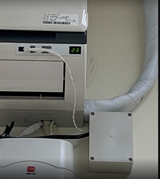
Figure 5. Controlling Air Conditioning Offloading with the Energy Management System
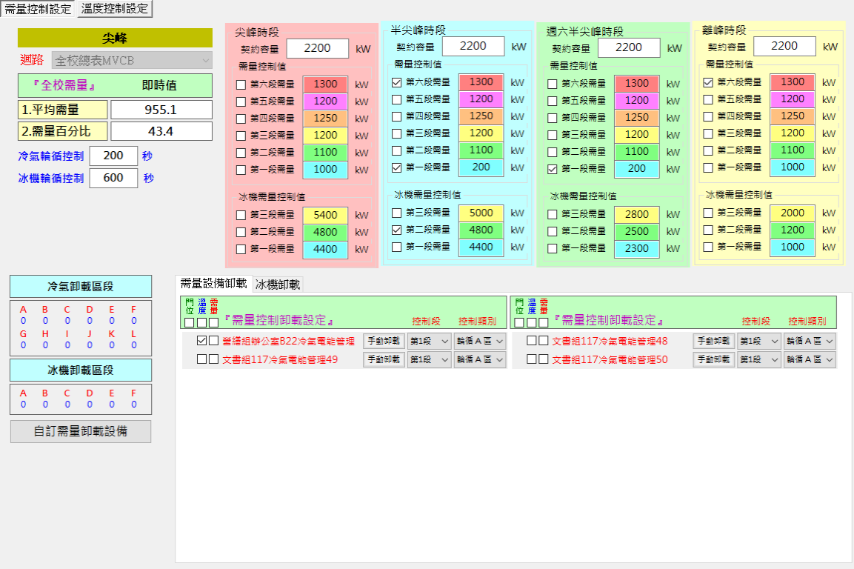
Figure 6. Controlling Air Conditioning Offloading with the Energy Management System
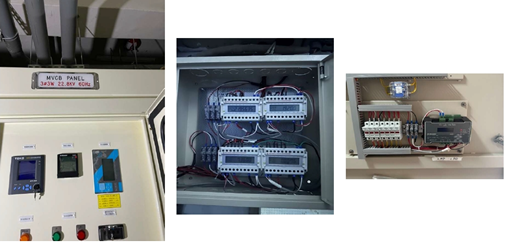
Figure 7. Campus-wide Smart Meter Installation (Schematic Diagram ofMeters of the Same Brand)
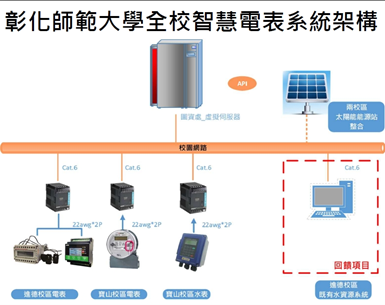
Figure 8. Campus-wide Smart Meter Architecture Diagram