

|
|
|

|

|
|
|

|
|

|

|
|

|
|
|

|
|
SDG 6.5.4 Sustainable water extraction on campus
Regarding technologies for sustainable water extraction from aquifers, lakes, and rivers, NCUE focuses on the storage and utilization of rainwater and the use of abundant local underground aquifers to meet the water needs of our staff and students. We ensure that they can access and understand the concepts of sustainable development and water resources management, thereby facilitating the protection and restoration of water-related ecosystems.
1. Constructed a detention basin:
The artificial Baisha Lake, with an area of approximately 9,000 m3, functions as a detention basin when it rains. It collects rainwater and absorbs water discharged from the surrounding buildings and green spaces. The collected water is used in sprinkler irrigations for the lawns and flowerbeds on campus (Figures 1-3).

Figure 1: NCUE’s Baisha Lake, a storage tank with landscape characteristics.
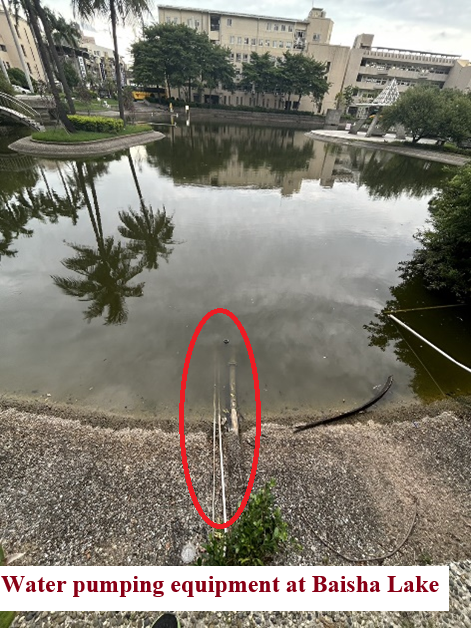
Figure 2. - Water Pumping Equipment at Baisha Lake
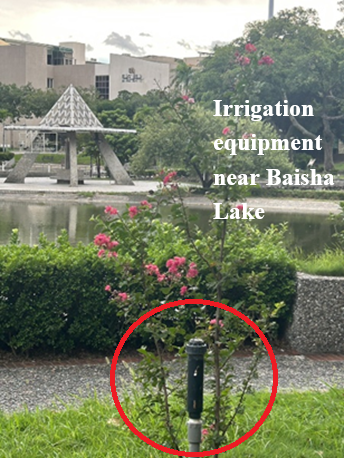
Figure 3. Irrigation Equipment near Baisha Lake
2. Installed devices for a sustainable water circulation system:
The rainwater storage and water supply system involves the intercepting and storing of rainwater by tapping on the natural terrain or using artificial methods. The rainwater is then reused as miscellaneous domestic water after a simple purification treatment. The reutilization of rainwater serves as an alternative and supplementary source of domestic water and a source of water storage for firefighting (Figure 4).
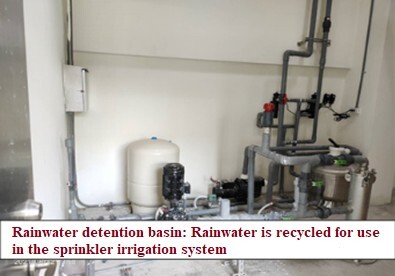
Figure 4: Rainwater detention basin: Rainwater is recycled for use in the sprinkler irrigation system
3. In 2024, NCUE consumed a total of 499,186 m3 of water, comprising 153,517 m3 of tap water and 345,669 m3 of groundwater, respectively. Tap water and groundwater accounted for 30.75% and 69.25% of total water consumption, respectively as shown in Table 1.
Table 1. Total water consumption of tap water and groundwater in 2024
|
Water consumption (2024) |
Tap water (m3) |
Groundwater (m3) |
Total (m3) |
|
Jinde Campus |
77,774 |
317,464 |
395,238 |
|
Baoshan Campus |
75,743 |
28,205 |
103,948 |
|
Entire University |
153,517 |
345,669 |
499,186 |
4. Smart Water Meter Installation and Enhanced Water Management
NCUE plans to install 7 ultrasonic smart water meters at the Jinde Campus and add 23 new ones at the Baoshan Campus by the end of 2025 (schematic diagram shown in Figure 5). At the Baoshan Campus, each building will be equipped with groundwater and tap water meters to monitor water usage data for each building. The university can evaluate the water usage patterns by analyzing the water consumption and event data wirelessly transmitted from smart water meters. The flow trend charts automatically generated by the management system can be used to detect abnormal water usage. Real-time data obtained from smart water meters enables effective management of on-campus water usage and provides instant water resource monitoring information. By installing smart water meters across the campus, NCUE can consolidate various water resource data throughout the campus to serve as a basis for water resource balancing, allocation, leak detection, and management.
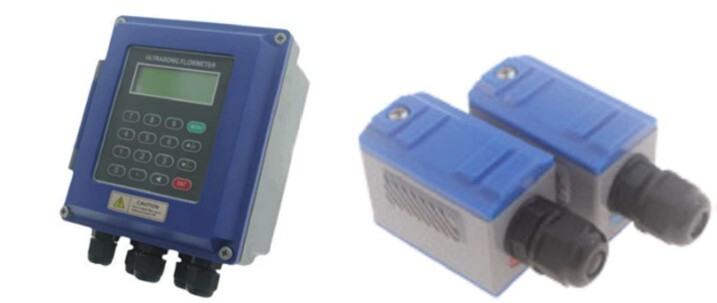
Figure 5. Smart water meter diagram