

|
|
|
|
|
|
|
|
|
|
|
|
|
|
|
|
|
SDG 6.5.3 Off-campus water conservation support
NCUE has established a designated organization to assist in guiding industries, local residents, and relevant stakeholders in Central Taiwan on strategies and methods for water conservation. This ensures that our students, staff, and local residents obtain knowledge related to sustainable water resources management and that local industries improve their water utilization efficiency, which fosters a sustainable supply and the recycling of fresh water.
1. Administrative organization:
(1) Established the Research Center for GIS and Disaster Prevention (Figure 1):
Natural disasters are frequent in Taiwan. To minimize their impacts, NCUE plans to improve the effectiveness of disaster management and governance through geographic knowledge and the data provided by geographic information science, technologies, and knowledge management. The goals of water saving and conservation are further achieved through the planning and implementation of disaster prevention, mitigation, and relief. Website: https://geo3w.ncue.edu.tw/rcgdp/
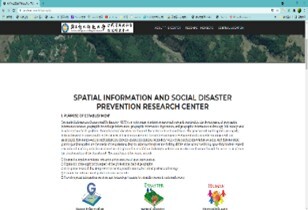
Figure 1: Research Center for GIS and Disaster Prevention
(2) Established the Innovation Incubation Center (Figure 2):
NCUE has established the Innovation and Incubation Centre to effectively connect with local industries and to advise and improve the local plumbing hardware and other traditional industries, thereby achieving the goals of water saving and conservation. These goals are also realized through active contacts with local industries and by counselling and participating in the SBIR plan. Website: https://iic.ncue.edu.tw/
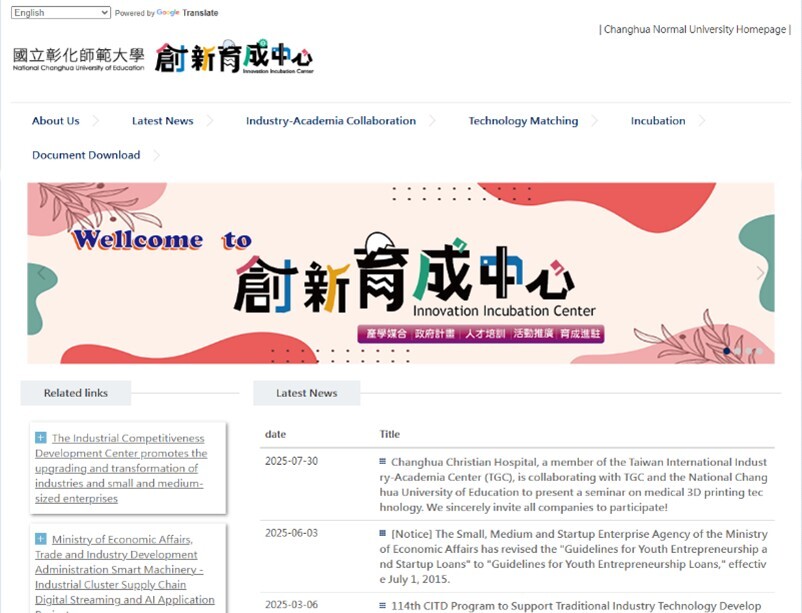
Figure 2: Innovation Incubation Center
2. Research:
(1) Faculty appointment:
NCUE's Department of Geography hires faculty members who are experts in environmental and ecological conservation and who specialize in hydrology. These faculty start from hydrology and ecological education to achieves the goals of disaster prevention, mitigation, water saving, and conservation.
(2) National level
(a) NCUE actively encourages faculty members to utilize their research to assist in national-level disaster prevention and mitigation goals, ultimately achieving water conservation objectives and supporting Taiwan's sustainable water resource management and development.
(b) NCUE encourages relevant departments to undertake projects from the National Science and Technology Council. For example, the Department of Geography is executing the project "Impacts of Large-scale Circulation Changes on Precipitation in the Asian Monsoon Region under Global Warming (II)," and the Graduate Institute of History is executing "Tamsui River Water Culture Research - Water Environment Change and Disaster Adaptation Project." Through the research, NCUE aims to encourage industries conserve water, enabling better utilization of water resources.
For related information, please refer to following webpages:
i. https://www.grb.gov.tw/search/planDetail?id=16551737
ii. https://www.wra.gov.tw/wrap/cp.aspx?n=39953
iii. https://web.wra.gov.tw/wralib/WraLib/wSite/books_96414
(c) NCUE's Department of Geography undertakes the National Science and Technology Council project "Taiwan Western Coastal Wetland Agricultural and Fisheries Social-Ecological System Monitoring". The project selects Fangyuan as the observation core to establish locally-based demonstration observation research and conduct long-term fundamental and critical observation of social-ecological system core components. The observation station conducts water quality, ecological, and topographic surveys at Fangyuan Wetland, Hanbao Wetland, and Wanggong Wetland. The complete annual survey was completed in 2024and will be monitoring in the future.
Through in-depth interviews with key local stakeholders, the project systematically collects experiences and observations of local social and ecological complex changes, establishing important social-ecological data foundations for the LTSER platform. The observation station designs questionnaires through in-depth interviews and local literature to further understand local residents' perceptions of environmental and water resource issues, actively participates in local activities to identify related issues, and collaborates with localities to respond to local water conservation needs. Activities are shown in Figures 3-4.
Taiwan Long-term Social-ecological Research Changhua Station LTSER Changhua related webpages:
https://www.facebook.com/profile.php?id=100083565782372#
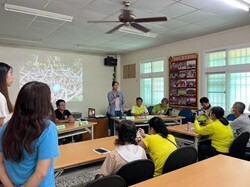
Figure 3. Changhua Coastal Wetland Conservation Wetland Seminar
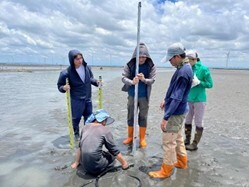
Figure 4. Hanbao Wetland Topographic Monitoring
3. Industry Collaboration
NCUE's Innovation Incubation Center actively collaborates with local industries. In 2024, it organized “low-carbon net-zero talent training courses,” working with Yunlin County Labor Union, Changhua County Industrial Association, and workers to provide basic concepts of net-zero carbon emissions. This aligns with the international community's main purpose of promoting low-carbon net-zero initiatives, which is to create a "leave no one behind" net-zero future (Figure 5).
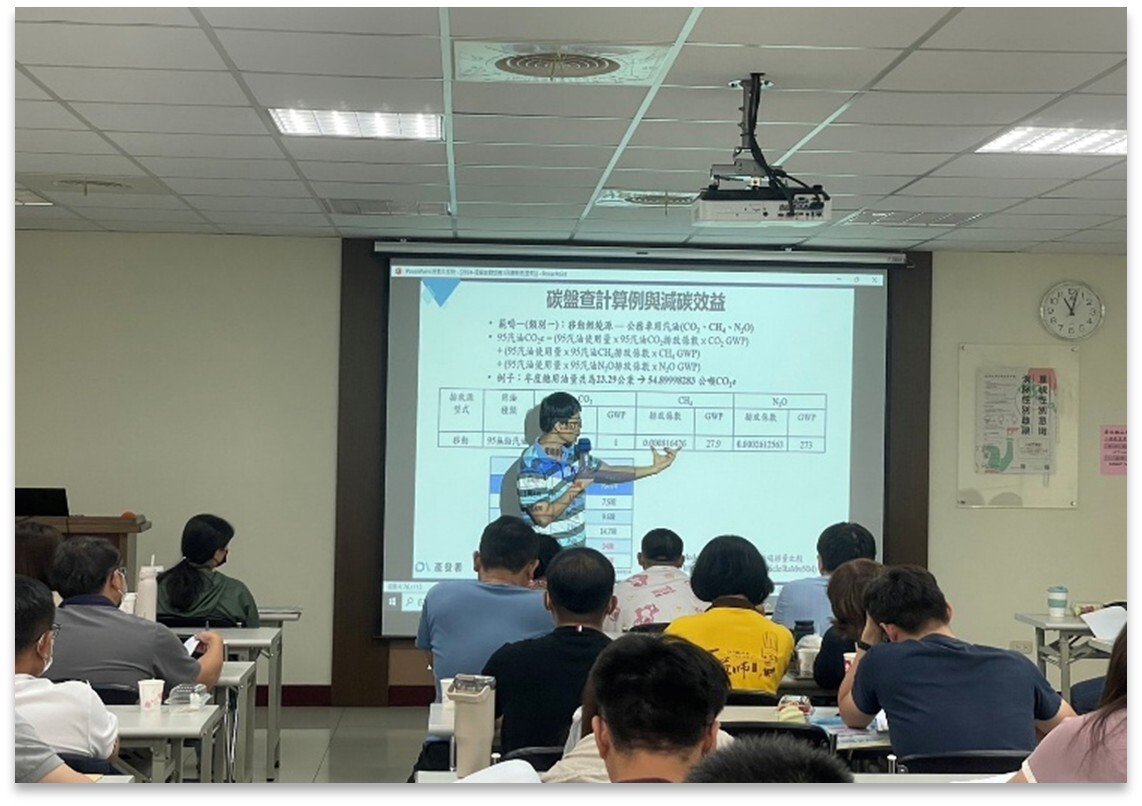
Figure 5. 2024 Low-carbon Net-zero Talent Training Course Co-organized with Yunlin Labor Union
In summary, through a comprehensive administrative organization, in-depth academic research, and close industry-academia cooperation relationships, NCUE comprehensively supports off-campus water conservation work. From basic research to applied promotion, from technology development to talent training, NCUE establishes a complete water resource sustainable management support system, effectively assisting industries and residents in central Taiwan to enhance water conservation and achieve the goal of sustainable water resource utilization.