

|

|

|

|

|

|

|

|

|

|

|

|

|
|

|

|

|
SDG 6.4.2 Water reuse measurement
1. NCUE has an artificial lake called "Baisha Lake" with an area of approximately 9,000 m2. It serves as a retention pond during rainy weather, collecting rainwater and runoff from the surrounding buildings and green spaces. The collected rainwater is then utilized for irrigation of the lawns and gardens (Figure 1).

Figure 1. NCUE's Bai-Sha Lake, a storage tank with cultural characteristics
2. In addition, since 2003, all newly constructed buildings on campus have rainwater recovery ponds built in accordance with the requirements of the green buildings policy. The recovered rainwater is used for toilet flushing or the irrigation of landscape plants. The total capacity of the rainwater recovery ponds in the four completed main buildings is 400.5 m3, which saves a lot of tap water and raw water from the campus’ wells from being used as domestic or irrigation water each year, as shown in Table 1.
Table 1. Campus, building names, and rainwater recovery pond capacities
|
No. |
Campus |
Name of building |
Capacity of rainwater recovery tank |
|
1 |
Jin-De |
Wang Jinping Activity Center |
35 m3 |
|
2 |
Jin-De |
Main Teaching Building |
89.78 m3 |
|
3 |
Bao-Shan |
College of Engineering Building |
203 m3 |
|
4 |
Bao-Shan |
10th Student Dormitory |
72.72 m3 |
|
5 |
Jin-De |
College of Science Building (phase 1) (under construction) |
23.4 m3 |
3. Since 2005, all buildings have been equipped with rainwater recovery ponds, in accordance with the regulation, as shown in Figures 2-3.
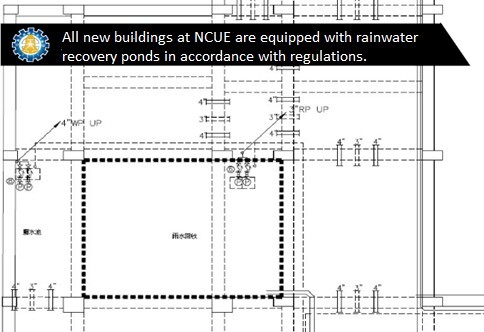
Figure 2. Rainwater recovery pond at 10th Dormitory at the Baoshan Campus
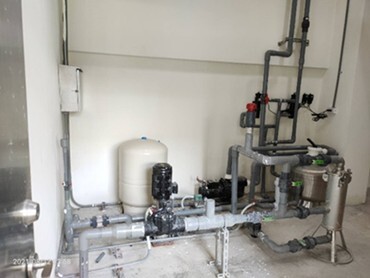
Figure 3. Irrigation system at 10th Dormitory at the Baoshan Campus
4. All buildings on campus have been retrofitted with water-saving appliances. These include new types of taps and water-saving faucets, water-saving and dual-stage flushing toilet bowls, water-saving shower heads, and sensing systems for automatic flushing. These reduce the consumption of domestic water by students and staff.
5. NCUE plans to install 7 ultrasonic smart water meters at the Jinde Campus and add 23 new ones at the Baoshan Campus by the end of 2025 (schematic diagram shown in Figure 4). At the Baoshan Campus, each building will be equipped with groundwater and tap water meters to monitor water usage data for each building. The university can evaluate the water usage patterns by analyzing the water consumption and event data wirelessly transmitted from smart water meters. The flow trend charts automatically generated by the management system can be used to detect abnormal water usage. Real-time data obtained from smart water meters enables effective management of on-campus water usage and provides instant water resource monitoring information. By installing smart water meters across the campus, NCUE can consolidate various water resource data throughout the campus to serve as a basis for water resource balancing, allocation, leak detection, and management.
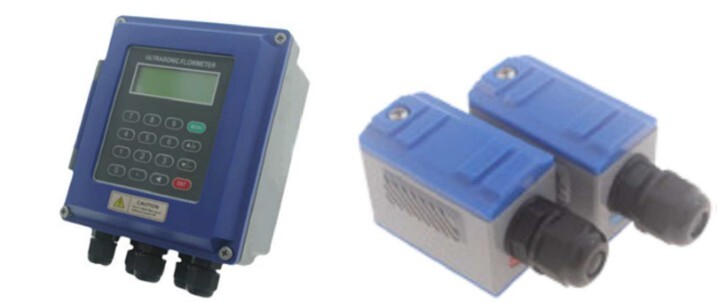
Figure 4. Smart water meter diagram