

|
|
|

|

|
|
|

|

|

|

|

|

|
|
|

|

|
SDG 6.3.4 Water-conscious building standards
1. In accordance with Taiwan's Building ACT and related regulations, all new buildings on our campus costing NT$50 million or more must be awarded the green building certification. Under Taiwan's current Green Building certification system, if a building is intended to obtain the "Green Building Certificate" or "Candidate Green Building Certificate," it must meet at least two key indicators: "Daily Energy Saving” and “Water Resources," and at least two out of seven optional indicators. Since 2003, NCUE has four completed buildings and one building that is still under construction. All these buildings meet related regulations and are awarded the Green Building Certificate. Related information about green building and certifications are shown in Table 1, buildings’ names and their certifications shown in Figures 1-10.
Table 1. List of green buildings at NCUE and related information
|
No. |
Information on green building |
Green Building Certification number |
|
|
1 |
Building name |
Main Teaching Building, Jinde Campus |
Candidate green building certificate number (Figure 1) (93)CGB355 |
|
Official opening |
Approximately 2006 |
||
|
2 |
Building name |
College of Engineering Building, Baoshan Campus |
Green building certificate number (Figure 3) GB0100602 |
|
Official opening |
Approximately 2012 |
||
|
3 |
Building name |
Wang Jin-pyng Activity Centre, Jinde Campus |
Green building certificate number (Figure 5) GB-BC-01-00773 |
|
Official opening |
Approximately 2019 |
||
|
4 |
Building name |
Construction of new student dormitory, Baoshan Campus |
Green building certificate number (Figure 7) GB-RS-01-00317 |
|
Official opening |
Approximately 2021 |
||
|
5 |
Building name |
College of Science Building (phase 1) |
Candidate green building certificate number (Figure 9) CGB-BC-01-02148 |
|
Official opening |
It is completed in 2025 |
||
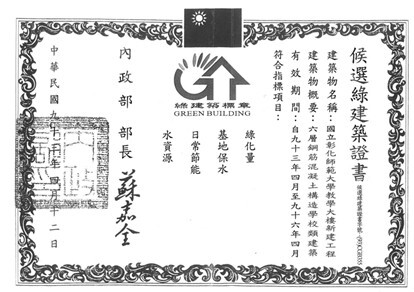
Figure 1: Green Building Candidate Certificate for Jinde campus teaching building, NCUE
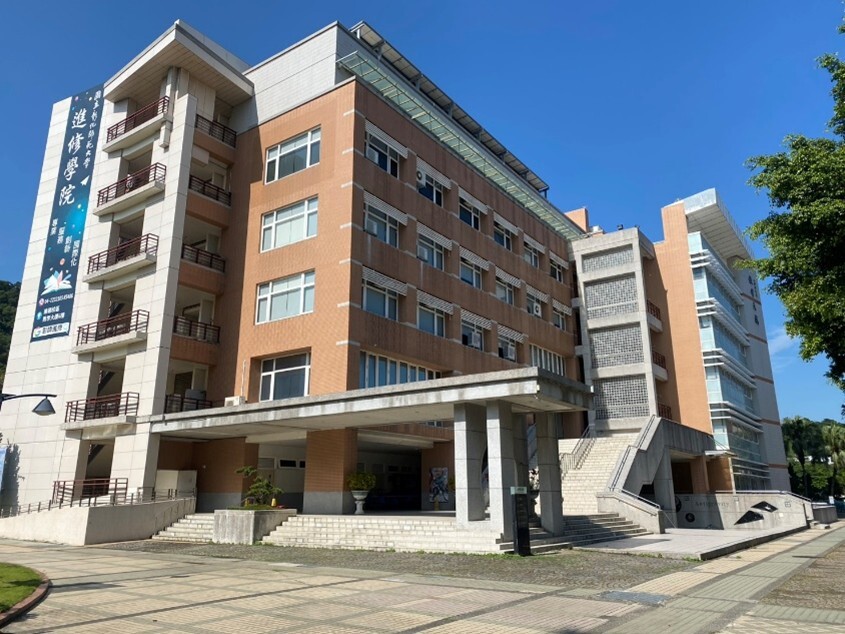
Figure 2.the Teaching Building at Jinde Campus
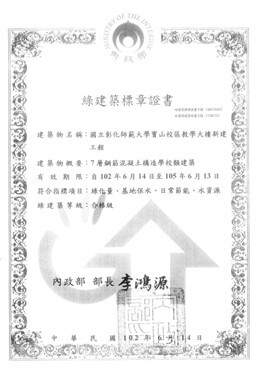
Figure 3. Green Building Candidate Certificate for the College of Engineering Building at Baoshan Campus, NCUE
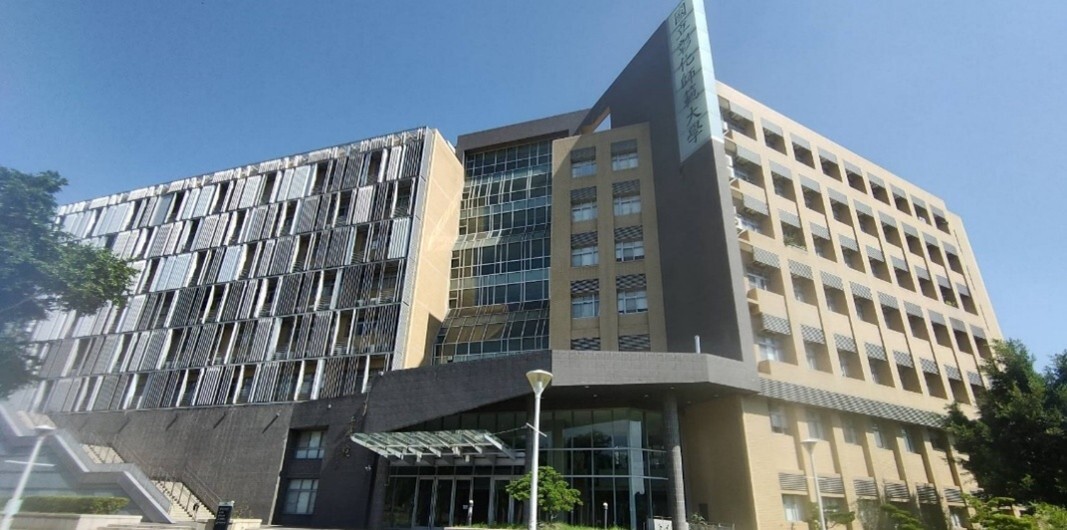
Figure 4. The College of Engineering at Baoshan Campus, NCUE
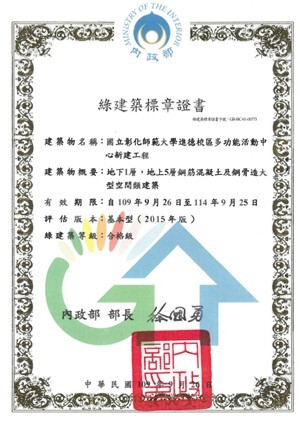
Figure 5: Green Building Candidate Certificate for NCUE Wang Jin-pyng Activity Center
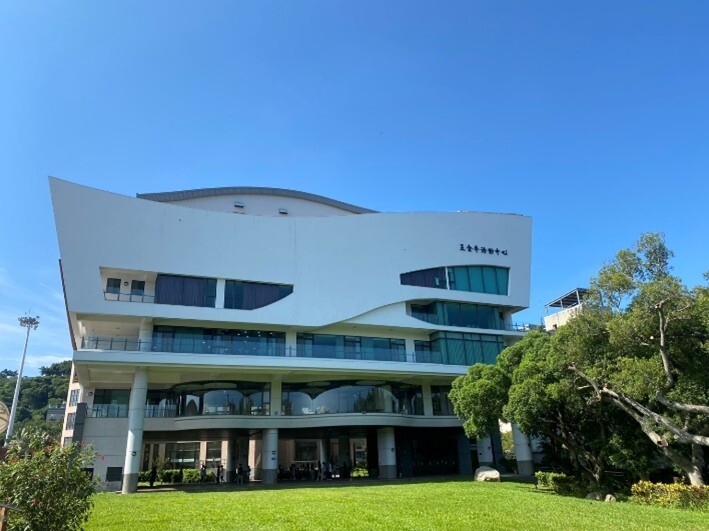
Figure 6. Wang Jinping Activity Center
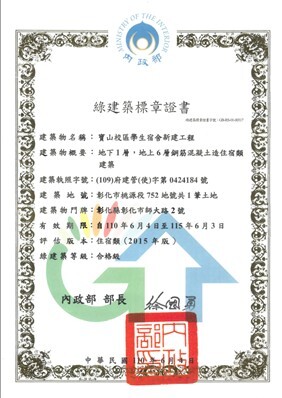
Figure 7: Green Building Certificate for Student Dormitory New Construction Project at Baoshan Campus
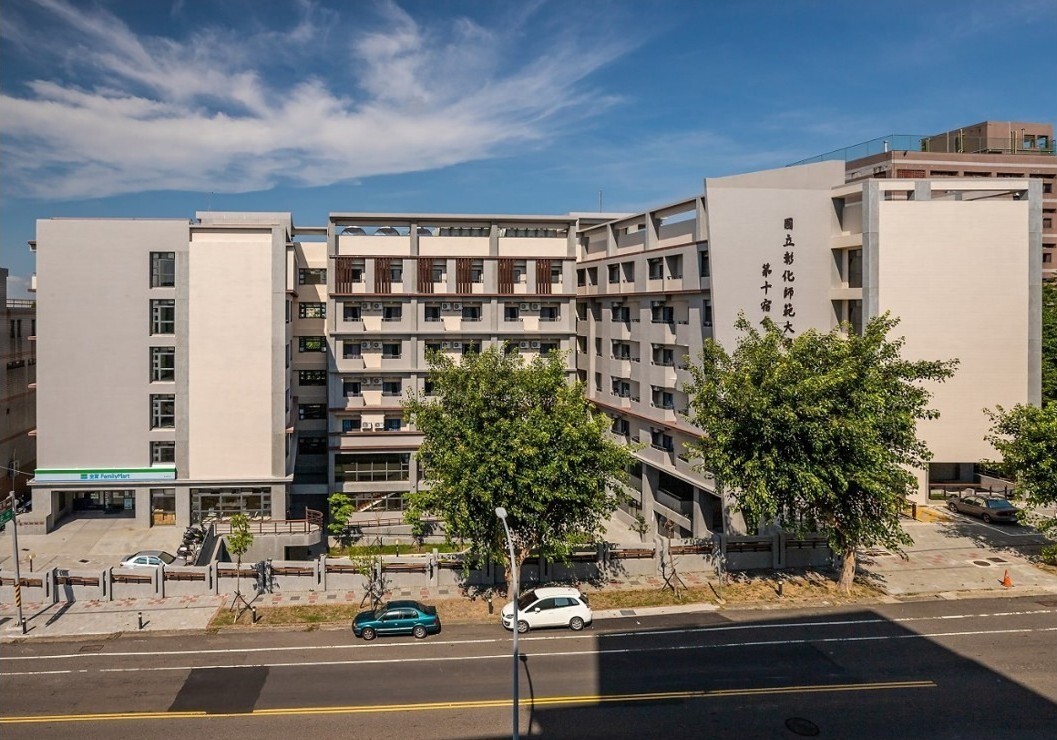
Figure 8. NCUS’s10th Student Dormitory
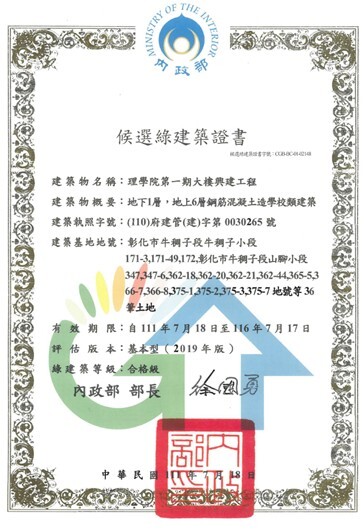
Figure 9: Green Building Candidate Certificate for the first phase of the Building of College of Science construction project
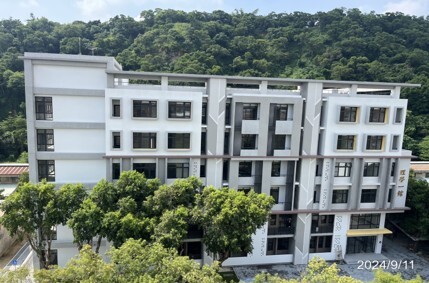
Figure 10. The first phase of the Building of College of Science construction project
2. The following are the water conservation indicators for the nine Green Building Labels, all of which have been fully implemented in new buildings on campus. Existing buildings are being retrofitted with water-saving fixtures to achieve water conservation goals.
(1) Adopting water-saving appliances: new types of taps and water-saving faucets, water-saving and dual-stage flushing toilet bowls, water-saving shower heads, and sensing systems for automatic flushing.
(2) Installation of rainwater-storage and rainwater-supply system: rainwater is intercepted and stored by making use of the natural terrain or artificial methods, before being subjected to simple purification treatments and reused as miscellaneous domestic water. The reutilization of rainwater serves as an alternative supplementary water source for domestic water, a water storage source for firefighting, and a way to help reduce peak loads during urban floods.
(3) All the above projects have been implemented in NCUE’s new buildings.
3. Smart Water Meter Installation and Enhanced Water Management
NCUE plans to install 7 ultrasonic smart water meters on the Jinde Campus and add 23 new ones on the Baoshan Campus by the end of 2025 (schematic diagram shown in Figure 11). On the Baoshan Campus, each building will be equipped with groundwater and tap water meters to monitor water usage data for each building. The university can evaluate the water usage patterns by analyzing the water consumption and event data wirelessly transmitted from smart water meters. The flow trend charts automatically generated by the management system can be used to detect abnormal water usage. Real-time data obtained from smart water meters enables effective management of on-campus water usage and provides instant water resource monitoring information. By installing smart water meters across the campus, NCUE can consolidate various water resource data throughout the campus to serve as a basis for water resource balancing, allocation, leak detection, and management.
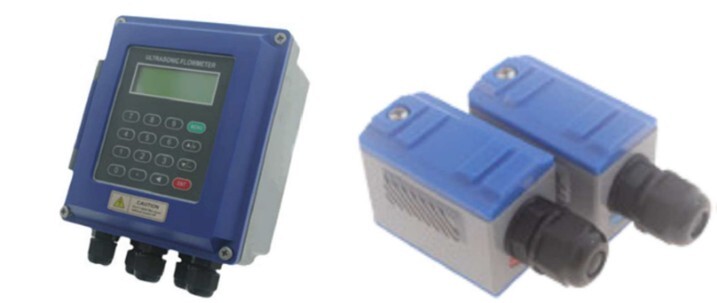
Figure 11. Smart water meter diagram