|
|
|
|
|
|
|
|
|
|
|
|
|
|
|
|
|
SDG 4.3.3 Vocational training events (lifelong learning)
NCUE is one of the three normal universities in Taiwan and serves as a key institution for continuing education of secondary school teachers in the central region. We offer annual in-service teacher training courses to help junior high and elementary school teachers enhance their professional knowledge and skills.
Furthermore, to fulfill NCUE’s social responsibility and assist in cultivating high-quality talents in Changhua County, we have designed numerous vocational training-related extension education courses. We also collaborate with local governments and corporate organizations to conduct in-service talents training programs for businesses.
We provide detailed explanations along with relevant links, photographs, and numerical data as supporting evidence.
1. Regular Vocational Training Courses:
NCUE regularly organizes professional development courses, including second specialty professional courses for elementary and junior high school teachers, professional training in science education, and advanced leadership training for principals and directors. These programs aim to enhance the teaching capabilities of elementary and junior high school teachers and the professional skills of school leaders. Furthermore, NCUE pioneered the establishment of a “Community Counseling & Human Development Service Center” in Taiwan, which serves the local community. We conduct annual professional training workshops for psychological counselors. In terms of business talent cultivation, we have long-standing collaborations with local governments and corporate organizations. We offer training programs for second-generation business leaders and elite female executives in enterprises.
(1) Vocational Training for Secondary School Teachers:
In alignment with the Ministry of Education’s policies and the professional development needs of secondary school teachers, NCUE regularly offers various second specialty courses and professional enhancement programs for in-service teachers across different disciplines. These programs are designed to support the professional growth of in-service teachers and provide them with new teaching insights, and enhance their instructional capabilities.
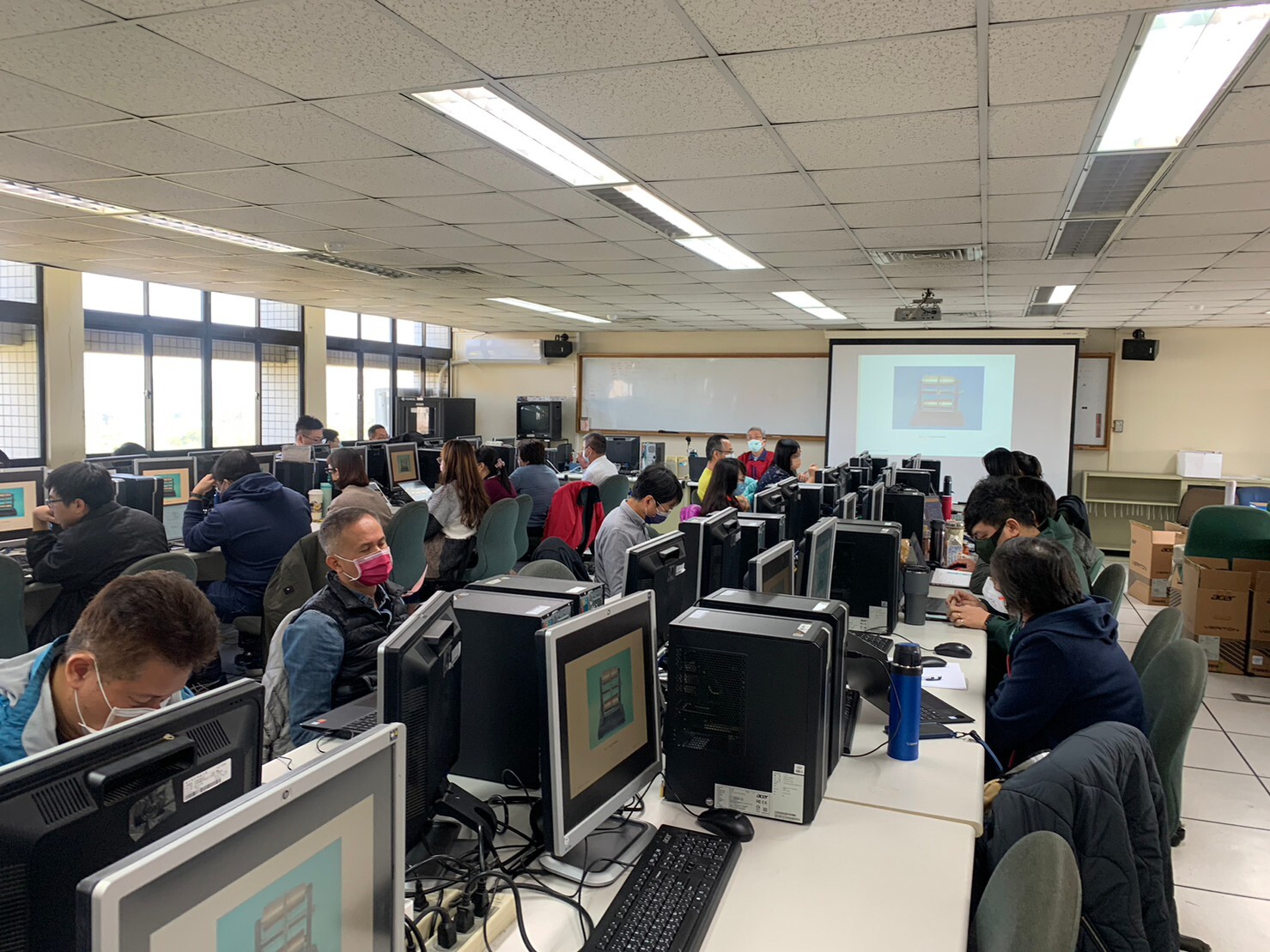
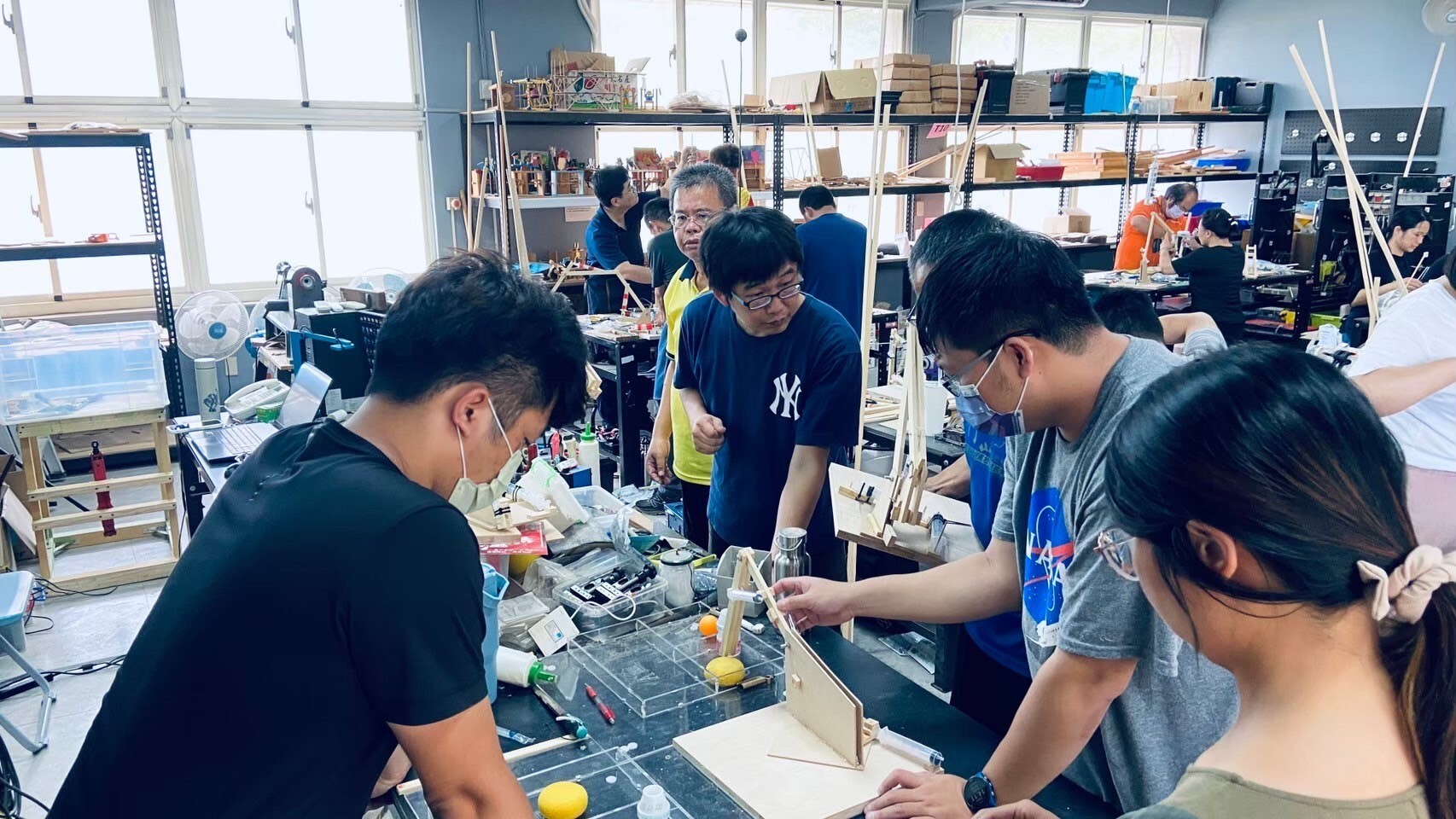
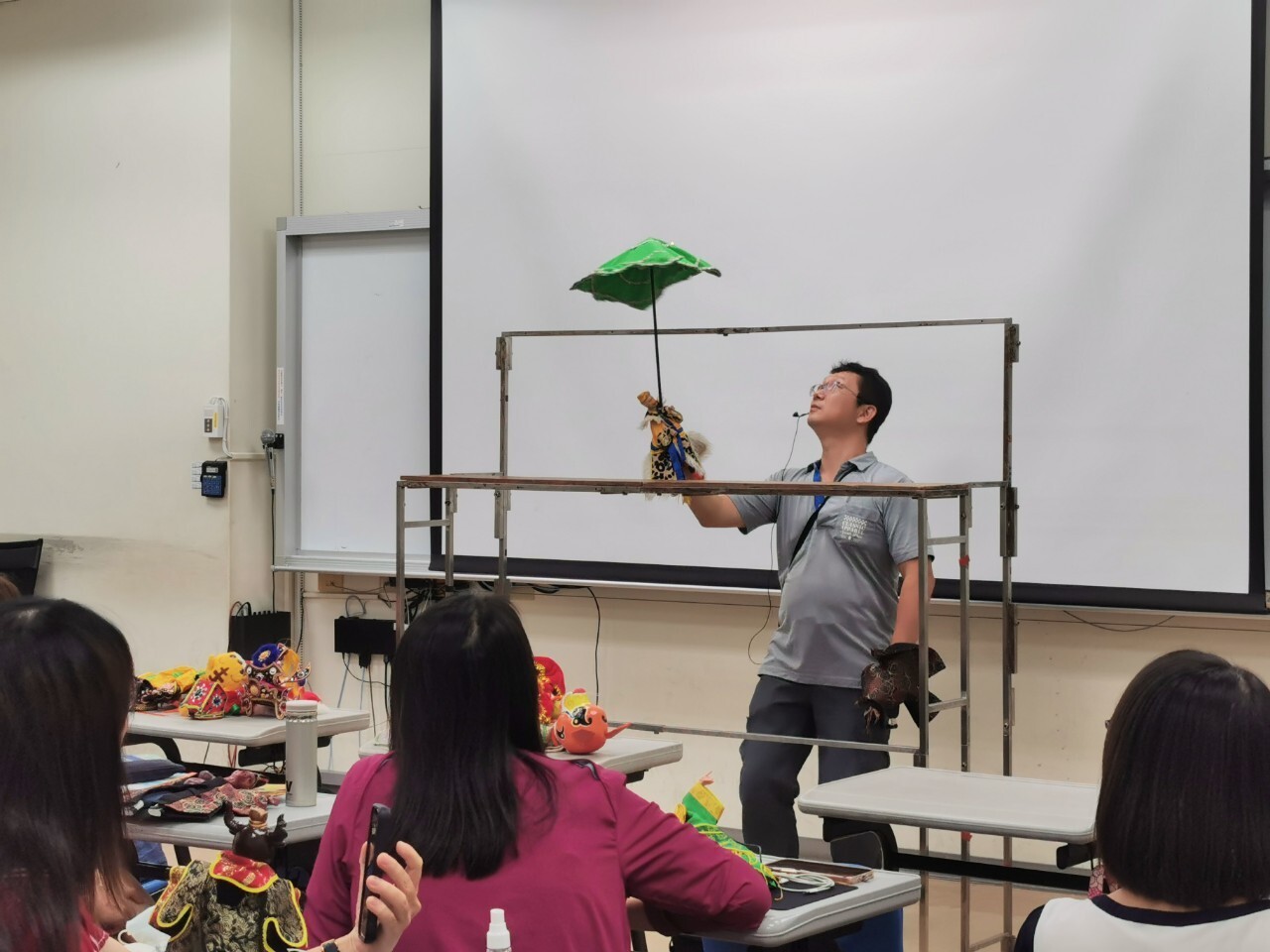
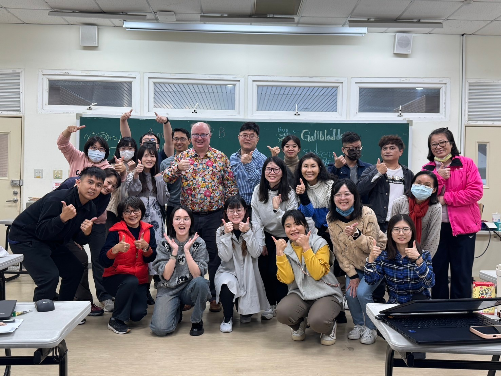
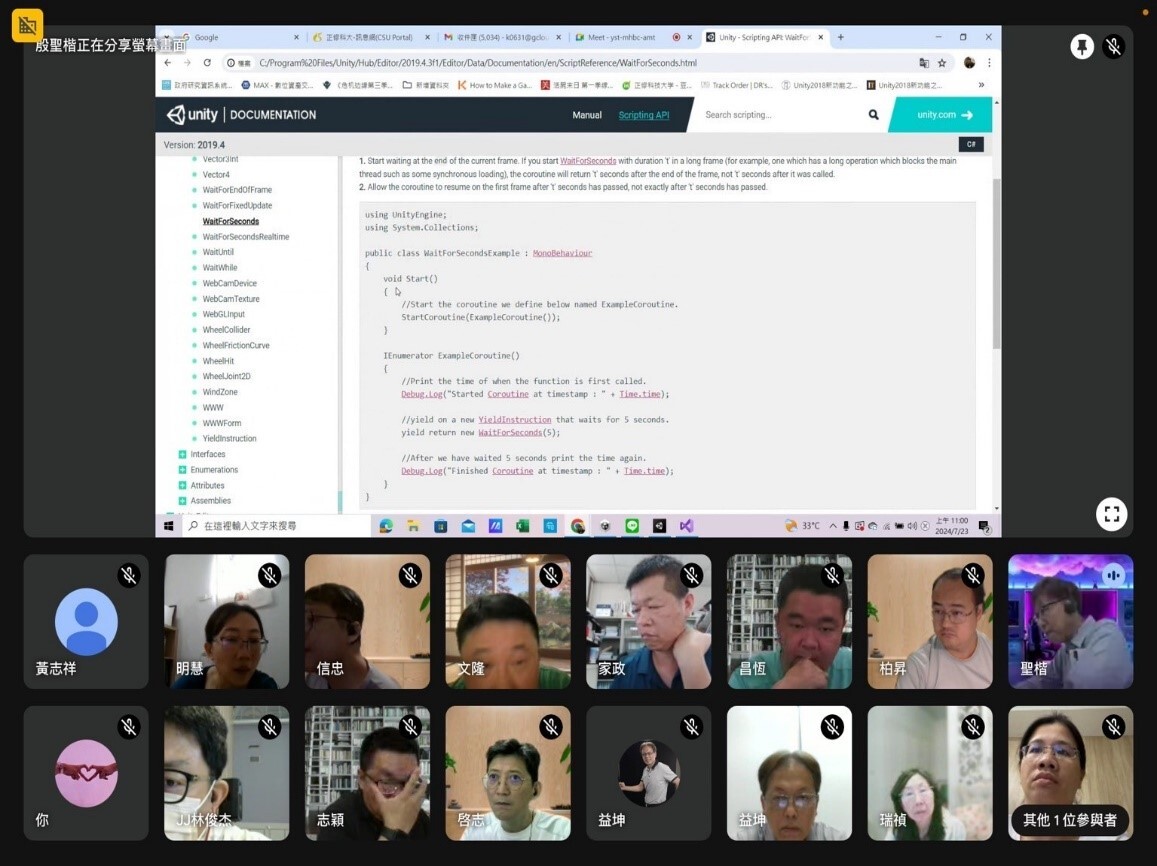
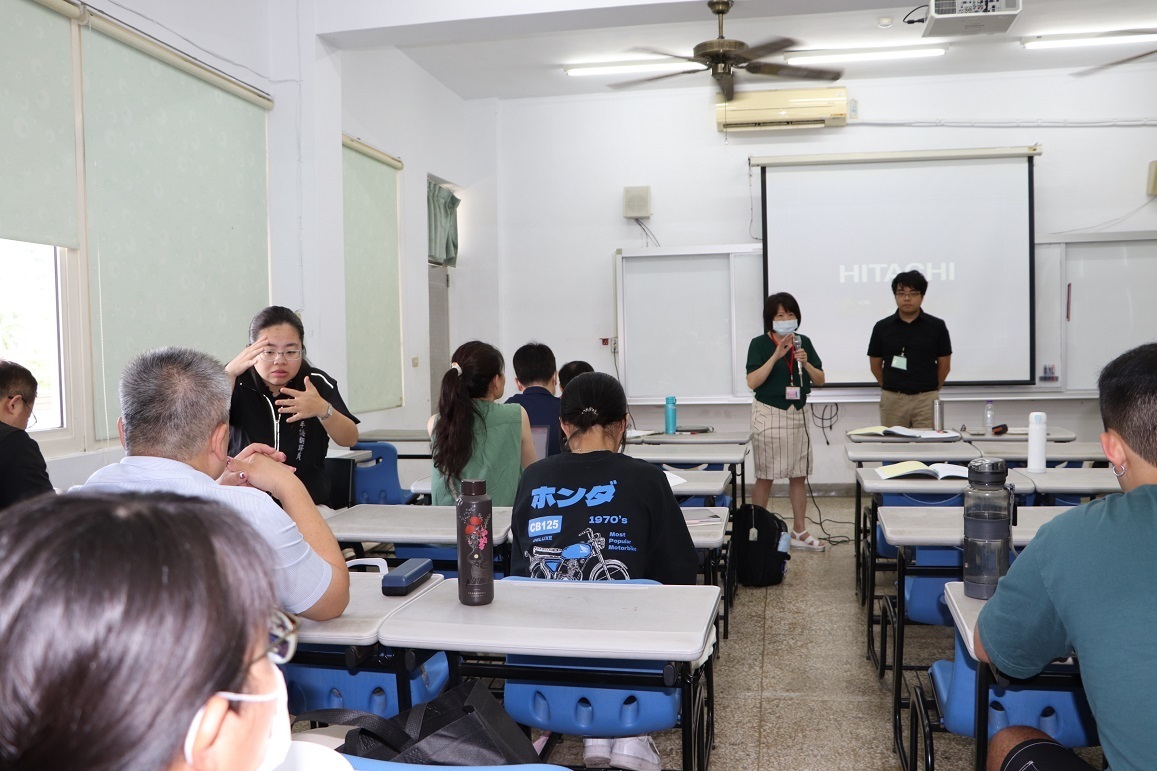
In 2024, NCUE offered a total of 70 courses across various fields, including the Taiwanese Hokkien language, Information Technology, Living Technology, Bilingual Education, Scouting Education, and Special Education. The training amounted to 2,922 hours, with a total participation of 1,384 attendees (Figures 1-6).
Please refer to the attachment for the course list: 4.3.3A- List of executive education programs and vocational training (on a programmed basis)
|
|
|
|
Figure 1. Vocational Training for Teachers – In-Service Training Course in a Second Specialty for Teachers in the Living Technology Field |
Figure 2. Vocational Training for Teachers – In-Service Training Course in a Second Specialty for Teachers in the Living Technology Field |
|
|
|
|
Figure 3. Vocational Training for Teachers – In-Service Training Course in a Second Specialty for Taiwanese Hokkien Teachers – Integration of Traditional Puppetry into Instructional Design |
Figure 4. Vocational Training for Teachers – Enhancement Course in Bilingual Education |
|
|
|
|
Figure 5. Vocational Training for Teachers – Enhancement Credit Course for Teachers in the Information Technology Field |
Figure 6. Vocational Training for Teachers – In-Service Training Course in Second Specialty for Teachers in the Scouting Field |
(2) Training Program for Principals and Directors of Elementary and Junior High Schools on School Management Competencies:
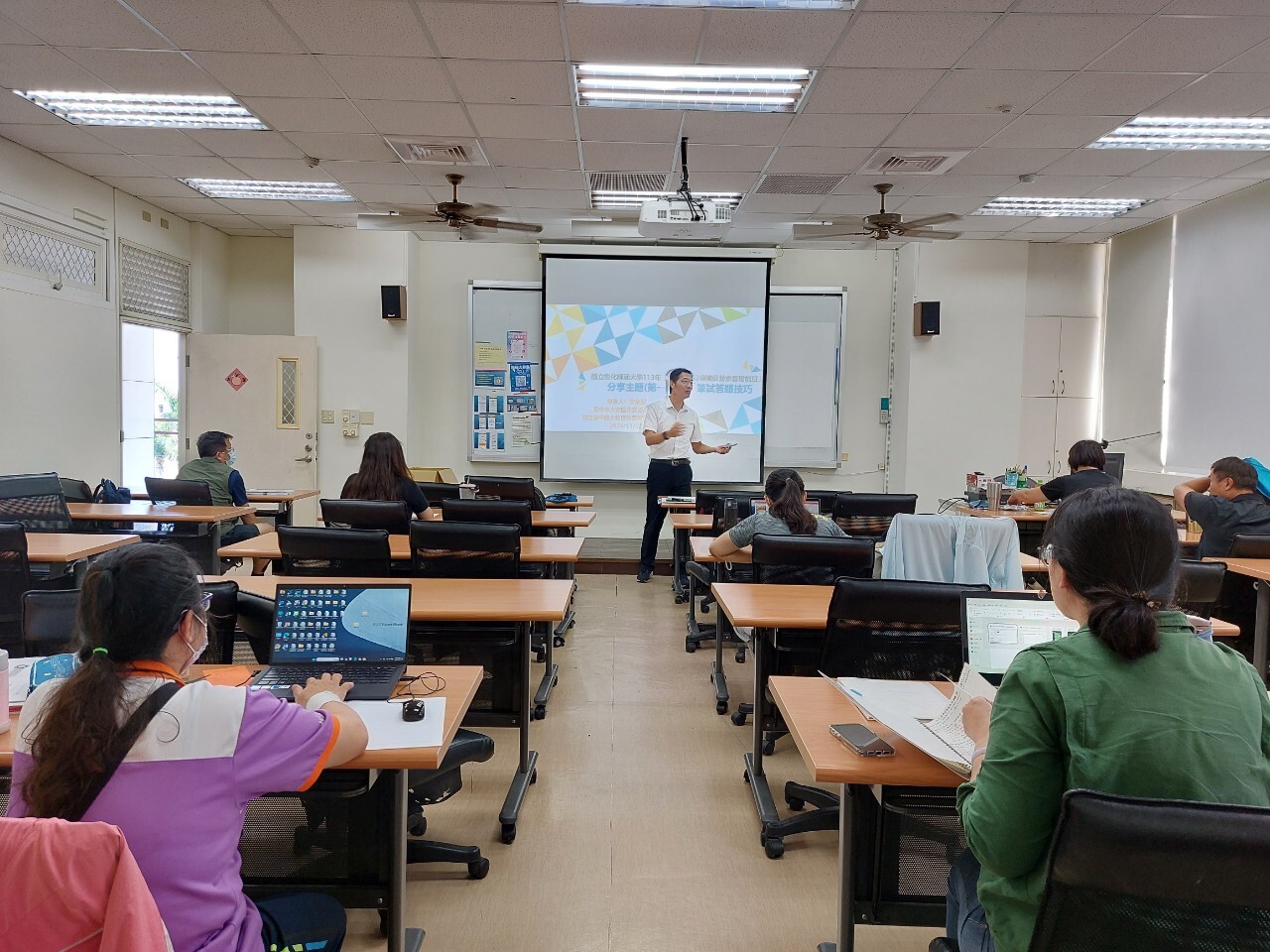
As the only secondary school teacher training institution in central Taiwan, NCUE has been committed to fulfilling its social responsibility. Since 2020, we have been organizing an annual “Training Program for Principals and Directors of Elementary and Junior High Schools on School Management Competencies.” Each program lasts for four months.
The course invites renowned scholars from Taiwan’s education sector, university and elementary/junior high school principals, and heads of educational institutions as lecturers. It provides a comprehensive platform for elementary and junior high school administrative leaders to understand current educational development trends and engage in mutual exchanges.
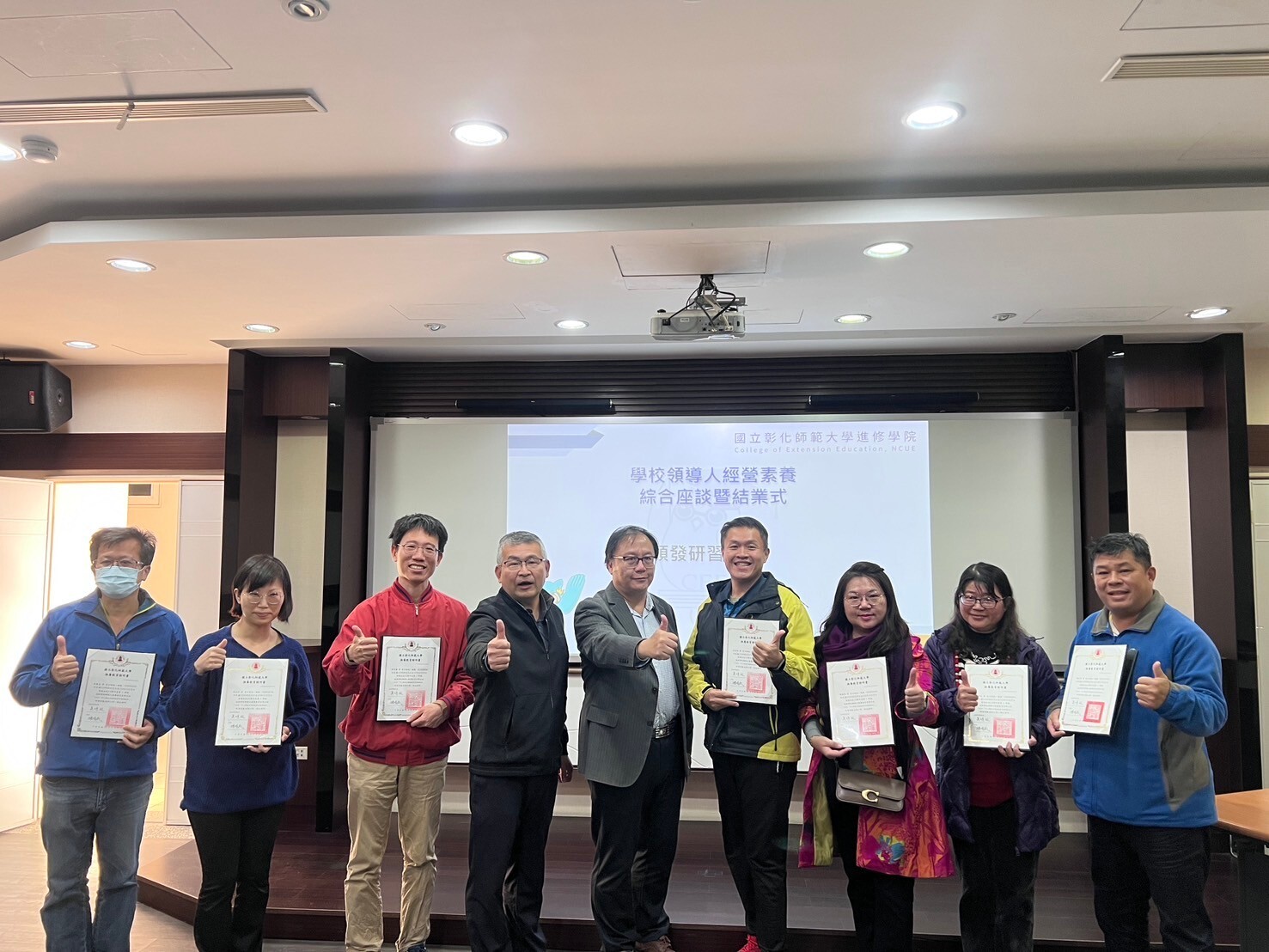
To date, NCUE has trained 83 high-level administrative leaders from elementary and junior high schools (Figures 7-10). 2024 Course Brochure: https://aps.ncue.edu.tw/cee/guidedoc/8649-1.pdf
|
|
|
|
Figure 7. Inviting Renowned Scholars from the Education Sector to Deliver Courses |
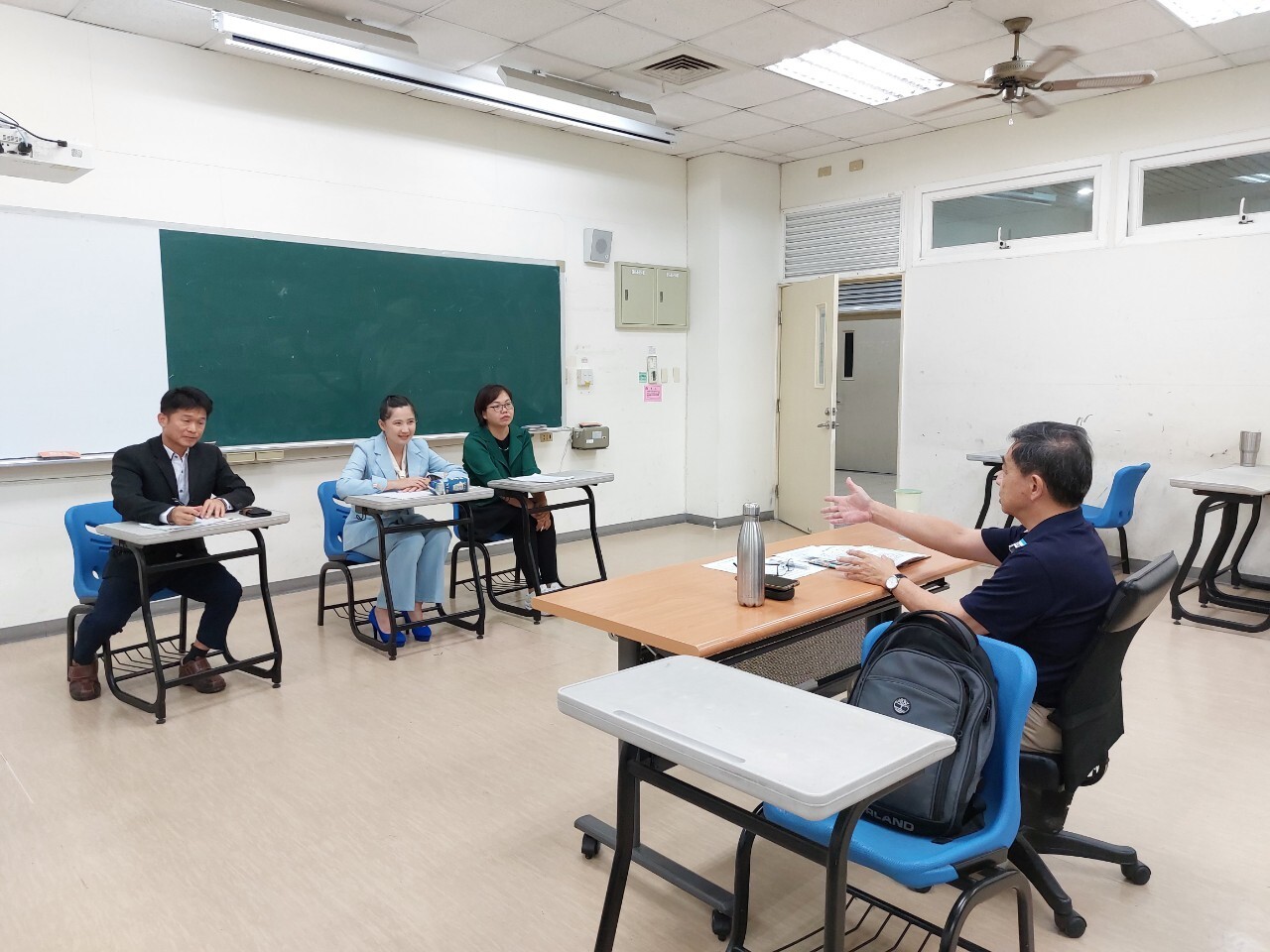
Figure 8. Simulated Interview Scenarios - Assisting Participants in Mastering Interview Flow and Techniques |
|
|
|
|
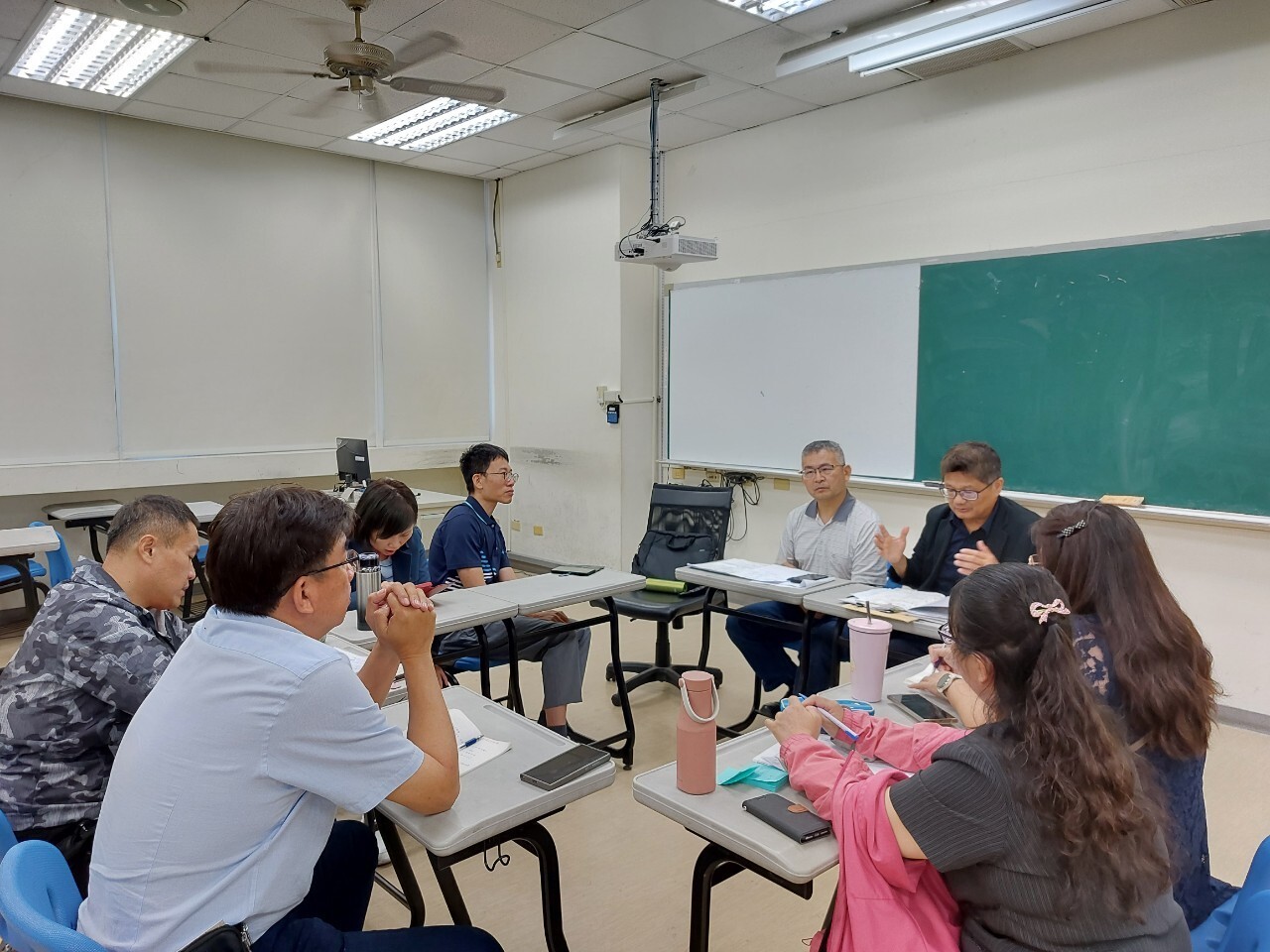
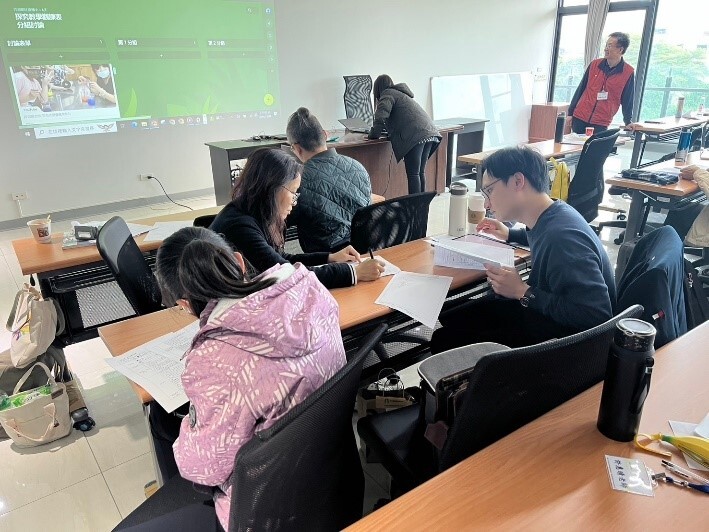
Figure 9. Group Discussion of Simulated Scenarios |
Figure10. Certificate Awarding at Closing Ceremony |
(3) Professional Development in Science Education for Primary and Secondary School Teachers:
Professor Hsiao-Lin Tuan from the NCUE Institute of Science and Education is leading a project by the K-12 Education Administration of the Ministry of Education. This initiative focuses on training primary and secondary school natural science teachers in inquiry-based teaching and interdisciplinary inquiry (STEM) curriculum design for professional competency development. The project has five main objectives: (a) Through a model of coaching teachers guiding seed teachers’ professional growth, cultivate seed teachers with inquiry-based teaching competencies; (b) Train beginning-level seed teachers with inquiry-based teaching skills, train intermediate seed teachers with inquiry teaching skills that integrate learning motivation, and train teachers at advanced and coaching level with interdisciplinary (STEM) inquiry teaching competencies that incorporate motivation; (c) Connect seed inquiry teachers and coaching teachers nationwide to establish an inquiry teacher community network; (d) Promote award-winning lesson plans, professional achievements, and inquiry curricula from previous years to counties and cities across the nation; (e) Develop inquiry curriculum designs that enhance motivation.
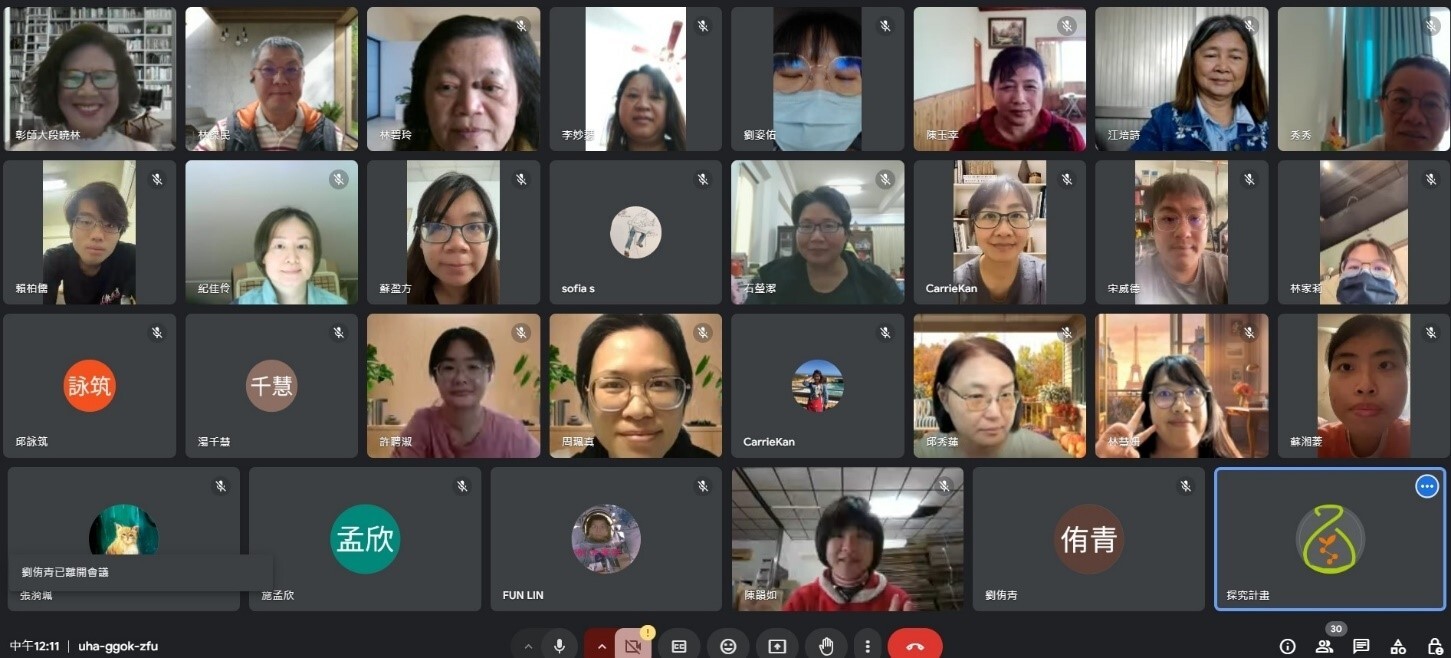
(a) In line with the Ministry of Education’s guidelines and to improve the design, implementation, and reflection abilities of science teachers in primary and secondary schools, our university regularly organizes training activities for these teachers. These activities include introductions to inquiry-based practices in the new curriculum guidelines, inquiry-based curriculum design, and implementation workshops. The aim is to enhance the professional knowledge and skills of primary and secondary school teachers in inquiry-based teaching. In 2024, we conducted 8 training sessions, totaling 78 hours of training, with 333 participants (Figures 11-13).
|
|
|
|
Figure 11. 2024.11.30 Phase II Workshop on Inquiry Curriculum Implementation (online) |
|
|
|
|
|
Figure 12. 2024.10.02 Phase II Workshop on Inquiry Curriculum Implementation (Central Region) |
Figure 13. 2024.12.14 Phase III Workshop on Inquiry Curriculum Implementation (Central Region) |
(b) Self-Organized Groups: As participants engage in this project, their willingness to form self-organized groups based on inquiry into teaching needs has been growing increasingly. In addition to the three-phase workshop mode, NCUE provides more opportunities for these self-organized activities. Teachers who attained advanced and coaching levels through this project can serve as speakers to fulfill the goal of cultivating teacher leaders. In 2024, NCUE held 11 self-organized group sessions, each typically lasting half a day. The total training hours reached 33 hours, with 383 participants in total (Table 1 & Figures 14-16).
|
|
|
|
Figure 14. 2024.01.14 Self-Organized Group Organized by Participants (Online) |
Figure 15. 2024.06.23 Self-Organized Group Organized by Participants (Online) |
|
|
|
|
Figure 16. 2023.07.09 Self-Organized Group (Held at NCUE) |
|
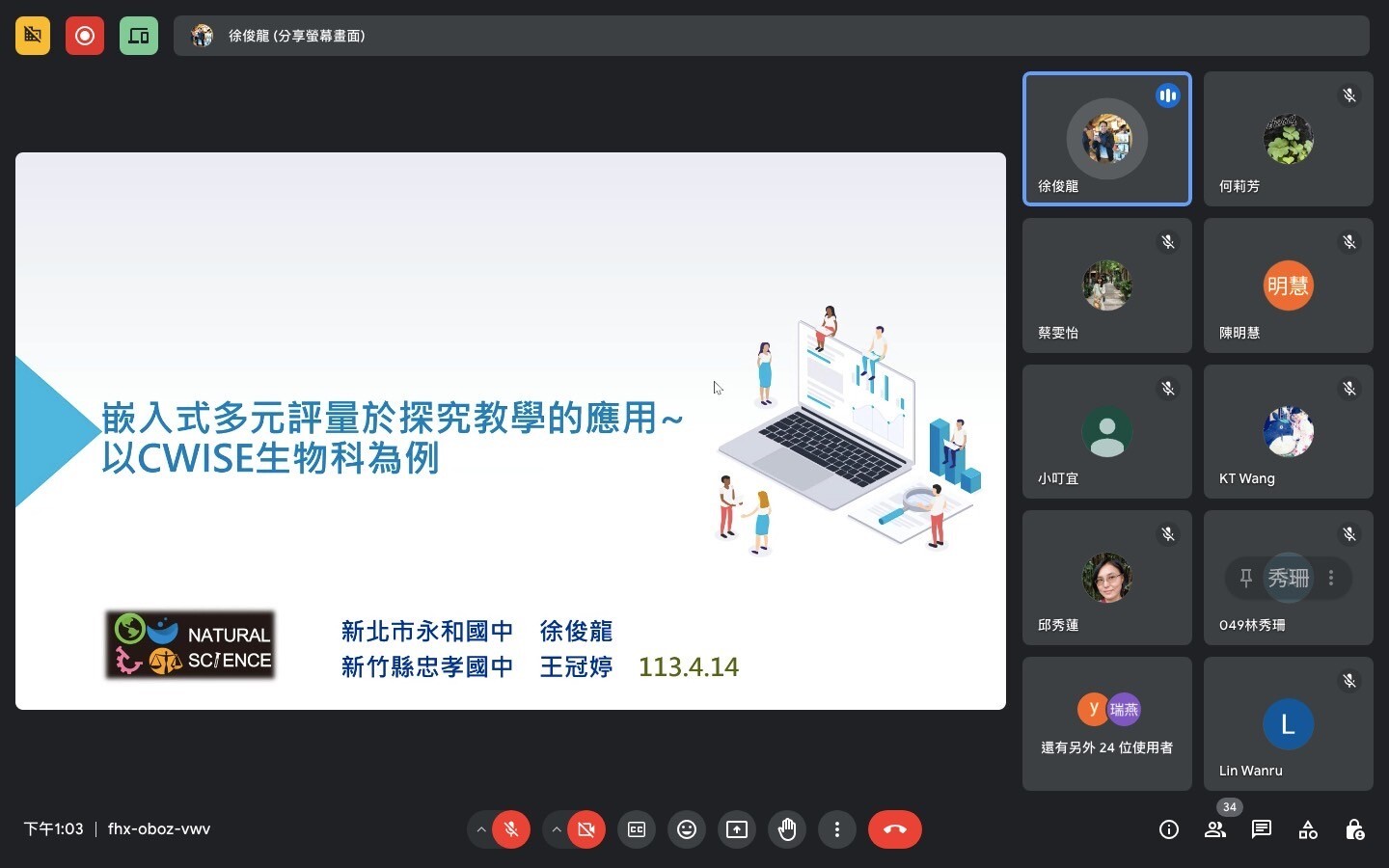
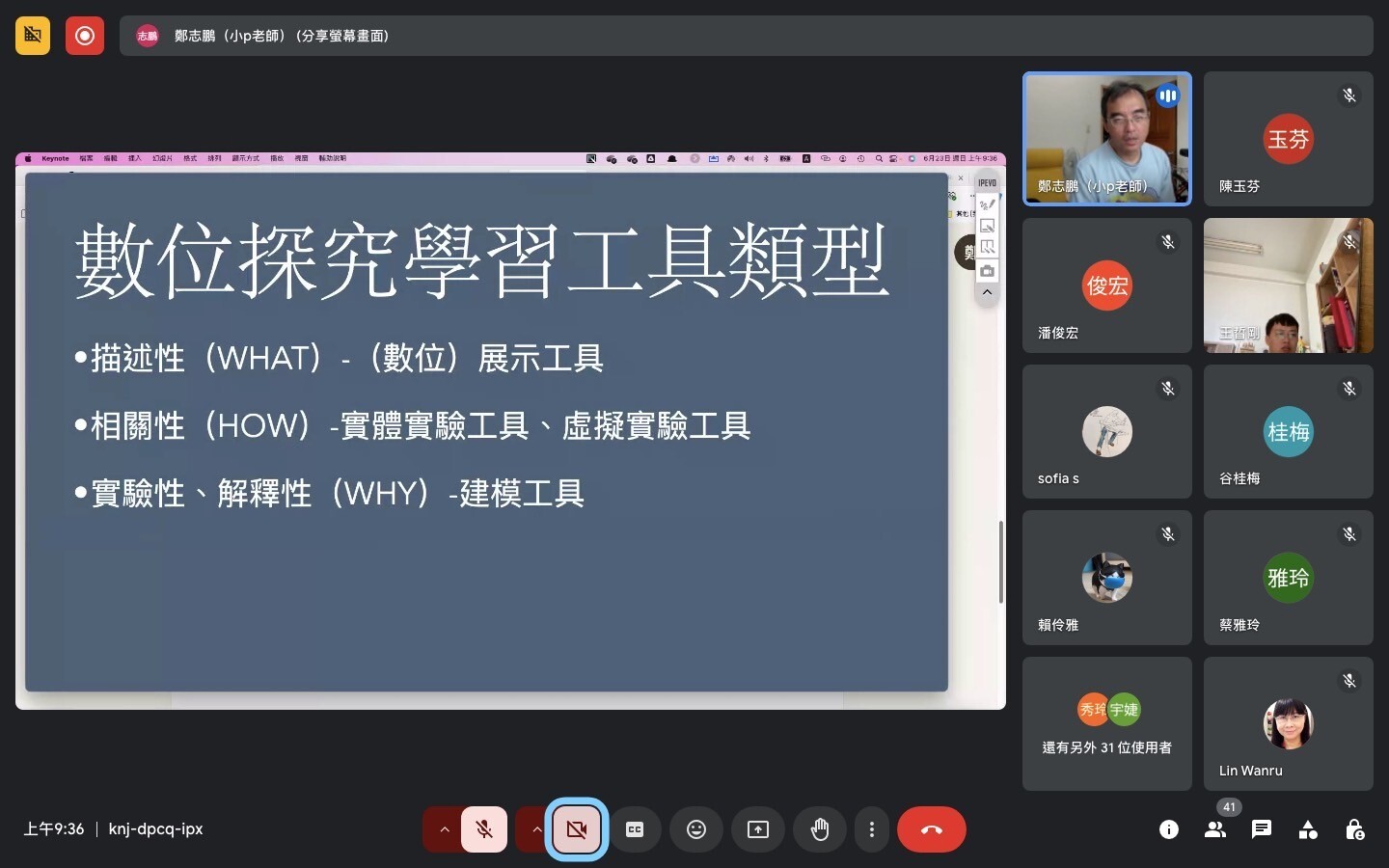
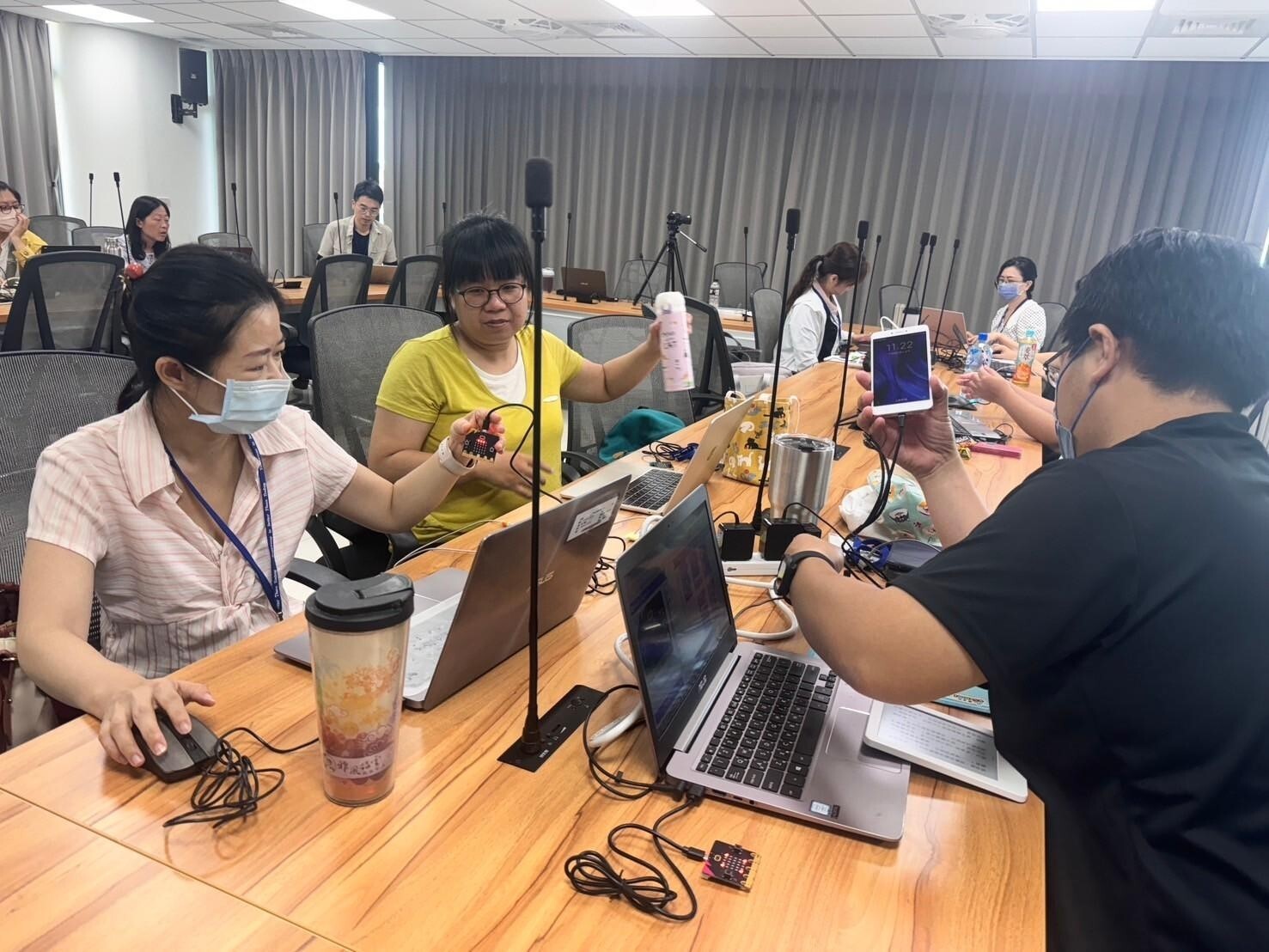
Table 1. Overview of Self-Organized Groups in 2024
|
Date |
Location |
Activity name |
Number of Participants |
|
2024/03/31 |
Online |
Application of Embedded Multiple Assessment in Inquiry-Based Teaching–Using Physics and Chemistry Courses on CWISE as an Example – Self-Organized Group 1 |
40 |
|
2024/04/14 |
Online |
Application of Embedded Multiple Assessment in Inquiry-Based Teaching – Using Biology Course on CWISE as an Example – Self-Organized Group 2 |
25 |
|
2024/05/04 |
Online |
International Scientific Literacy Assessment and the Application of Interdisciplinary Inquiry Teaching – Self-Organized Group 3 |
22 |
|
2024/05/26 |
Online |
Scientific Literacy-Oriented Assessment: Driving Inquiry-Based Changes in Teaching and Learning through Mid-term Exam Question Design – Self-Organized Group 4, Morning Session |
59 |
|
2024/05/26 |
Online |
Scientific Literacy-Oriented Assessment – Driving Changes in Inquiry-Based Teaching and Learning through Mid-term Exam Question Design – Self-Organized Group 5, Afternoon Session |
59 |
|
2024/06/15 |
Online |
Case Sharing of Curriculum Design for Interdisciplinary Inquiry-Based Curriculum – Using Campus Dining and Student Uniforms as Examples – Self-Organized Group 6 |
12 |
|
2024/06/23 |
Online |
Principles of Curriculum Design for Digital Scientific Inquiry-Based Courses – Self-Organized Group 7 |
39 |
|
2024/07/09 |
NCUE |
Curriculum Design for Digital Scientific Inquiry-Based Courses – Using micro:bit Tools as an Example – Self-Organized Group 8 Morning Session |
17 |
|
2024/07/09 |
NCUE |
Curriculum Design for Digital Scientific Inquiry-Based Courses -– Using micro:bit Tools as an Example – Self-Organized Group 9 Afternoon Session |
17 |
|
2024/07/23 |
Online |
Cooperative Learning in Natural Science Inquiry-Based Teaching at Elementary Schools – Self-Organized Group 11 |
29 |
|
2024/07/27 |
Online |
Teaching Experiences in Inquiry-Based Curriculum at Junior High Schools |
64 |
|
Total |
383 |
||
(4) Community Psychological Counseling Professional Training Courses:
In 1994, NCUE integrated the resources of the Department of Guidance and Counseling to establish the Community Psychological Counseling and Human Development Service Center, pioneering a university-based service for community members in Taiwan. Initially, the center built its reputation through promotional activities, gradually developing referral and collaborative relationships with community entities (including hospitals, courts, and social welfare organizations).
The center is established to implement guidance and counseling work and to promote the functions of community service. It provides psychological counseling services to community members and offers practical training and supervision for professional psychological counselors.
In addition to offering psychological counseling services to the community, the center organizes annual professional seminars and training sessions, providing practical training and supervision for professional psychological counselors. In 2024, NCUE conducted 8 workshops and training courses, with a total of 222 participants (Table 2).
Website: https://humanweb.ncue.edu.tw/p/426-1021-11.php?Lang=zh-tw
Course Brochure: https://humanweb.ncue.edu.tw/p/406-1021-23939,r506.php?Lang=zh-tw
Table 2. 2024 Community Psychological Counseling Professional Training Course
|
Date |
Program |
Hours |
Participants |
|
2023/11/04-2024/01/16 |
Catching Wounded Souls: 2023 Trauma Healing Series – Multi-Disciplinary Psychology Professional Workshops |
81 |
157 |
|
2024/01/10-2024/01/20 |
Catching Wounded Souls Series II: 2023 Trauma Healing “Supervision” Session |
9 |
20 |
|
2024/05/23-2024/07/11 |
2023 academic year Let’s Find “Together” Again – Let’s Together!: Lectures Series and Workshops on Grief and Loss Psychology x Artisan Handcrafting (6 sessions total) |
33 |
45 |
|
Total |
- |
123 |
222 |
(5) Cultivating Industrial and Commercial Talents in Changhua County:
Located in Changhua County, NCUE collaborates with the Changhua County Government and private enterprises to assist local businesses in talent development, enabling them to keep pace with the times and achieve sustainable operations. In 2016, 2019, 2020, 2021, 2022, 2023, and 2024, we organized various training programs, including the “Young Entrepreneur Academy – Training for Second-Generation Elite Entrepreneurs,” “Women’s Academy - Female Leadership Training Program,” and “E-commerce Academy - E-commerce Talent Training Program.”
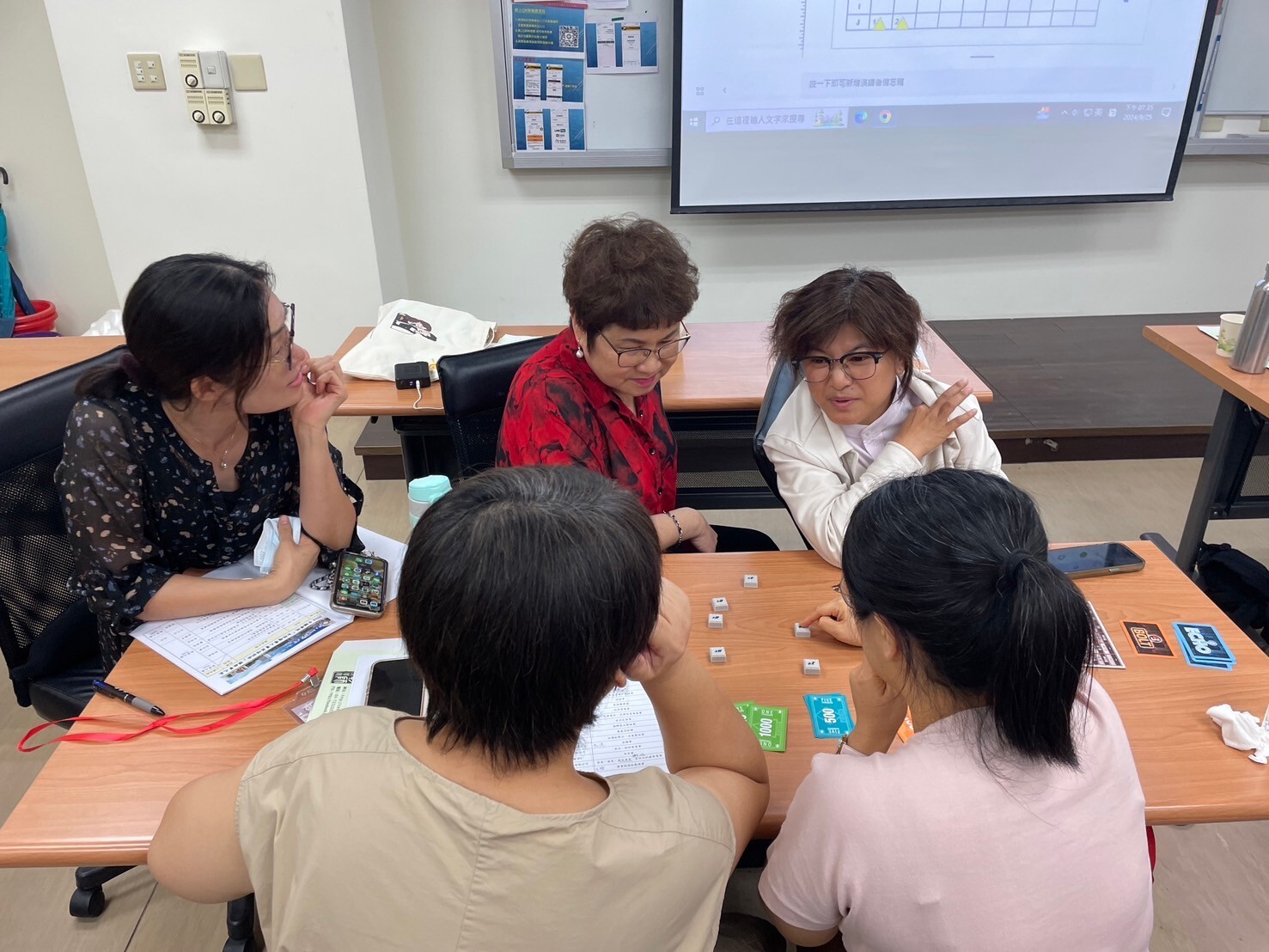
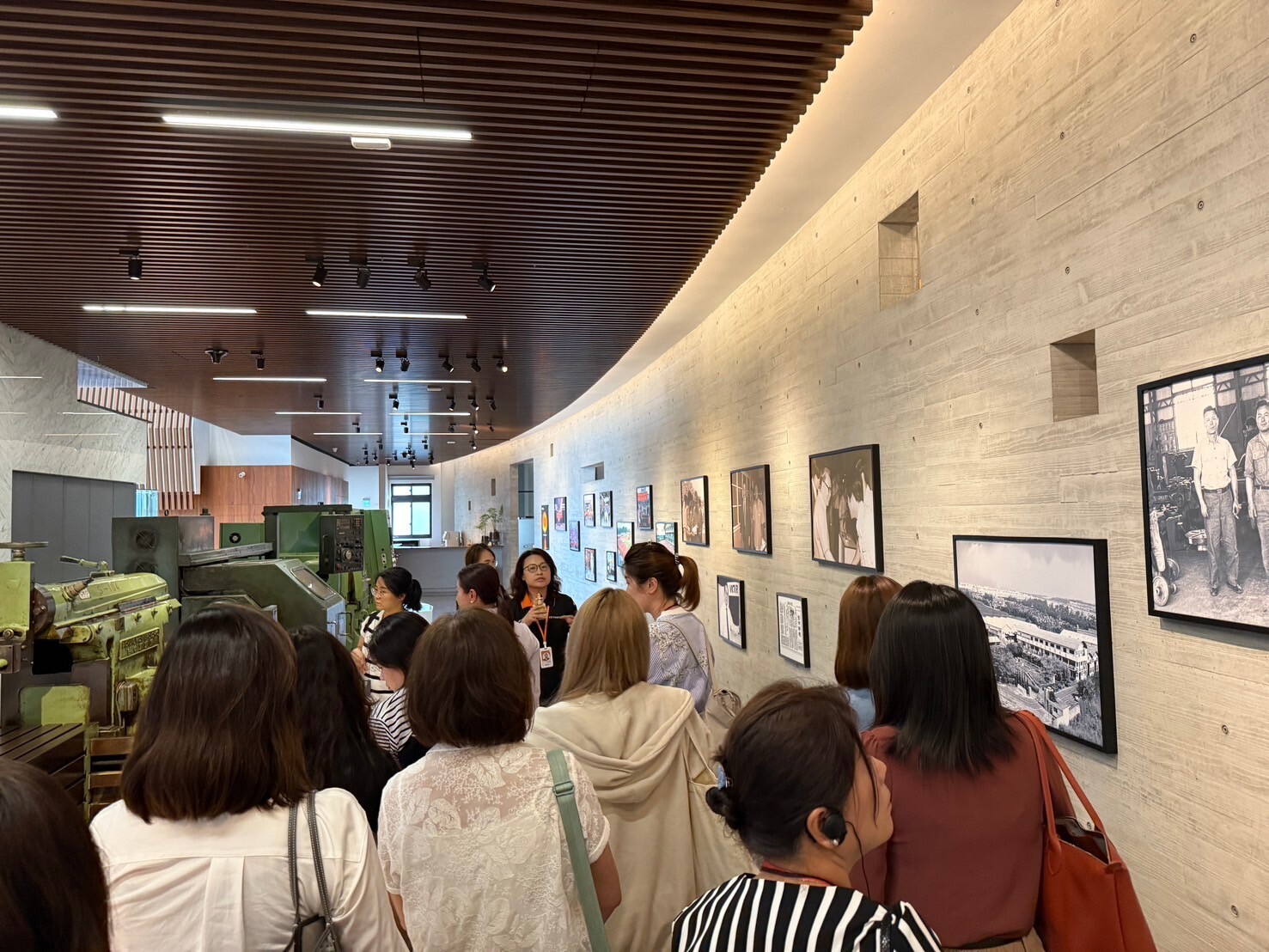
Each program consists of 54 hours of curriculum, designed to cultivate second-generation successors and female leaders for Changhua County’s small and medium-sized enterprises (SMEs). These programs aim to equip participants with management skills, innovative business practices, digital marketing, and negotiation abilities.
In response to the demands of the information age, the curriculum also incorporates specialized topics such as AI innovative applications, big data analysis, and applications.
To date, 419 participants have successfully completed these training programs (Figures 17-20). 2024 NCUE campus headlines of Women’s Academy:
https://www.ncue.edu.tw/p/406-1000-28692,r93.php?Lang=zh-tw
|
|
|
|
Figure 17. Executive Education Programs – 2024 Women’s Academy -Women Leaders Training Course - Class Status |
Figure 18. Executive Education Programs- 2024 Women’s Academy –Women Leaders Training Course – Group Discussion |
|
|
|
|
Figure 19. Executive Education Programs – 2024 Women’s Academy -Women Leaders Training Course – Enterprise Visit |
Figure 20. Executive Education Programs - 2024 Women’s Academy –Women Leaders Training Course – Group Photo at Closing Ceremony |

(6) Training for Novice Teachers:
Since 2017, NCUE has annually organized training courses on career orientation and introduction to practical teaching for novice teachers. These courses target newly-appointed teachers as full-time teachers in public schools at the secondary level and below. The training aims to enhance their classroom management and innovative teaching competencies, thereby facilitating their adaptation to and equipping themselves for teaching positions.
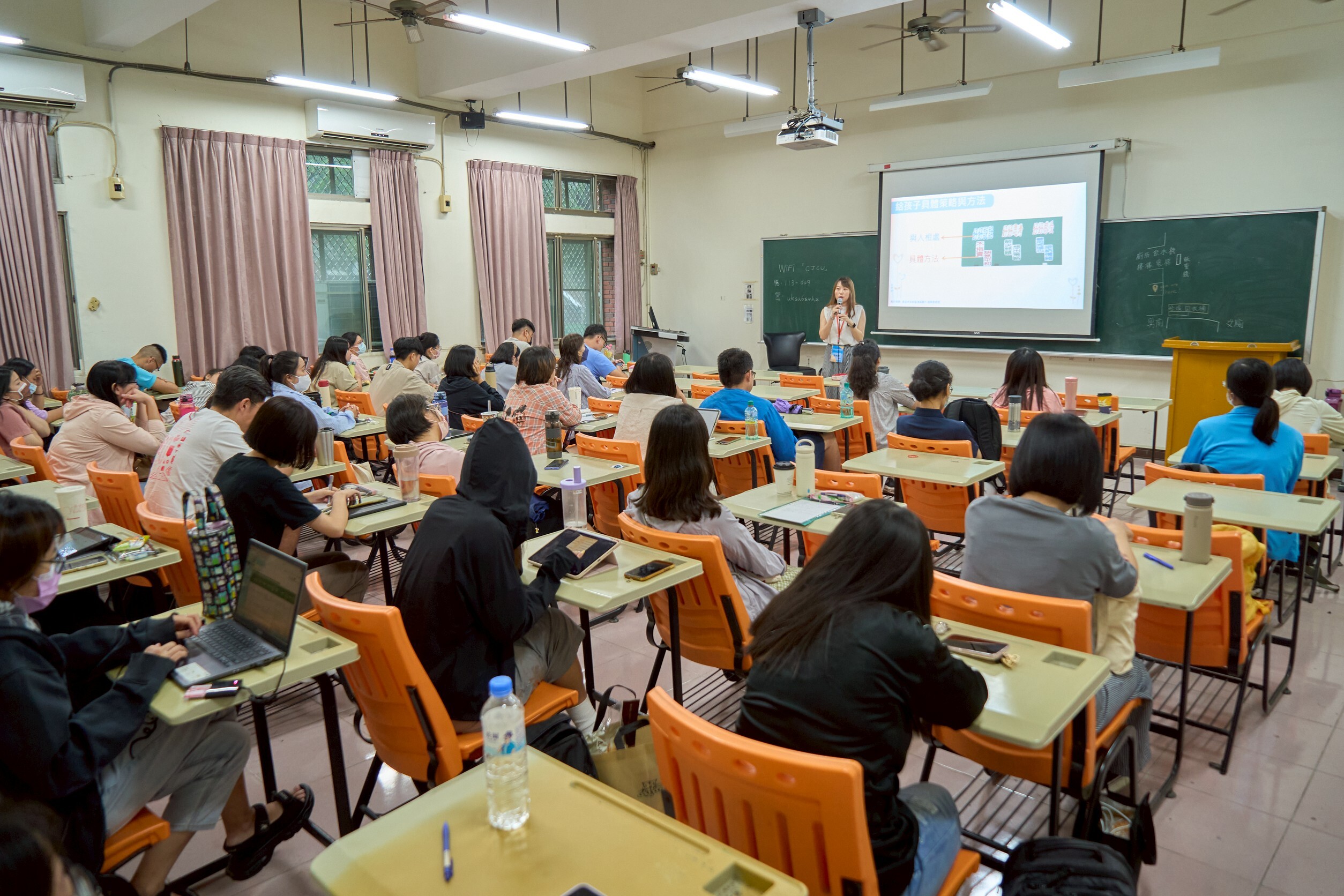
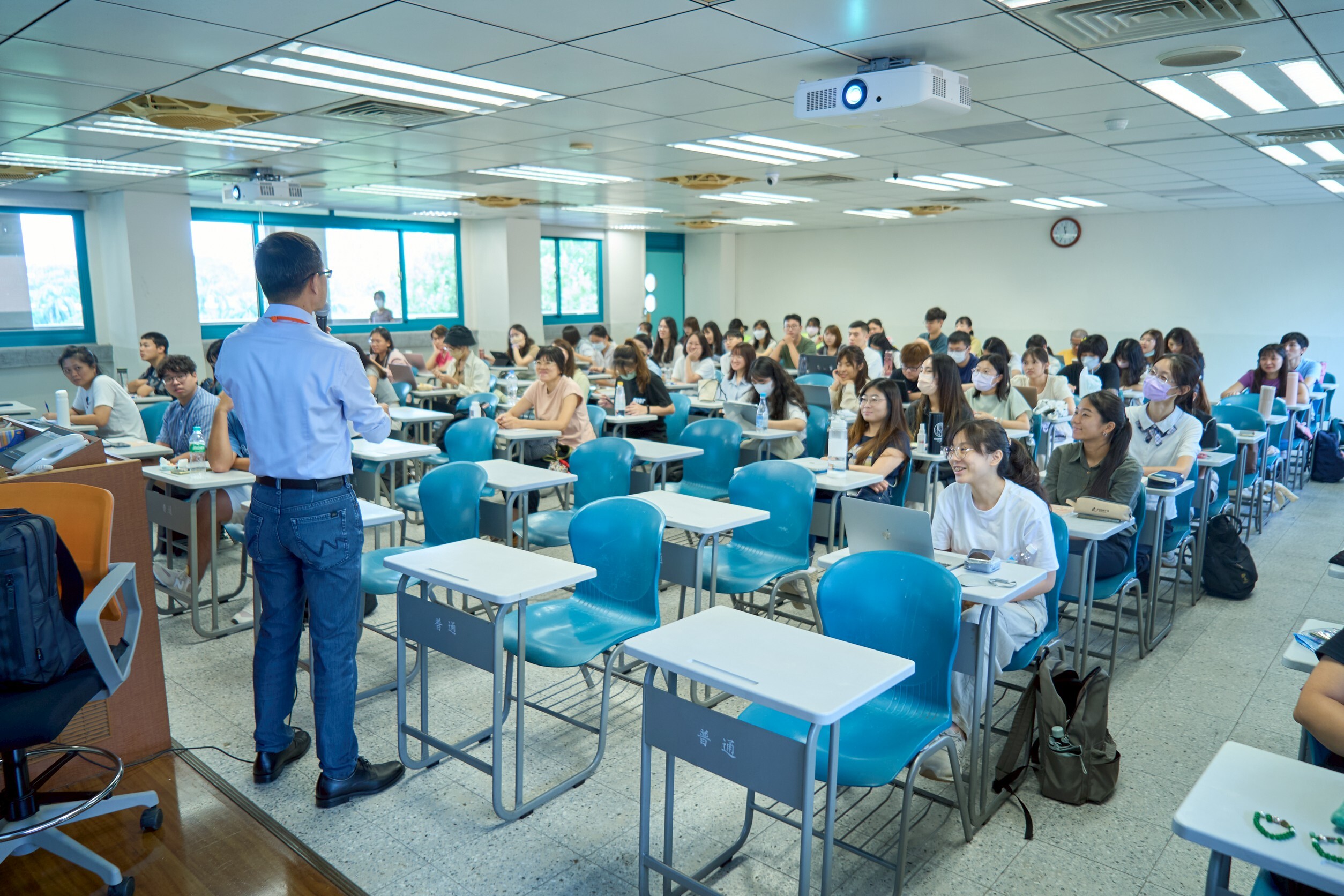
In 2024, the program adopted a hybrid mode combining one-day synchronous online courses and two-day face-to-face workshops. The training was conducted from August 5 to August 16 across northern, central, and southern Taiwan. Participation from different educational levels included 430 kindergarten teachers, 2,320 elementary school teachers, 585 junior high school teachers, and 341 senior high school teachers, totaling 3,676 participants (Figures 21-22).
|
|
|
|
Figure 21. Teaching Session on “Teaching Power × Leadership” – Case Studies in Effective Teaching Strategies and Classroom Management |
Figure 22. Teaching Session on “Character Power” – Social Emotional Learning (SEL) and the Practice of Character Education |
2. Vocational Training Events on an Irregular Basis:
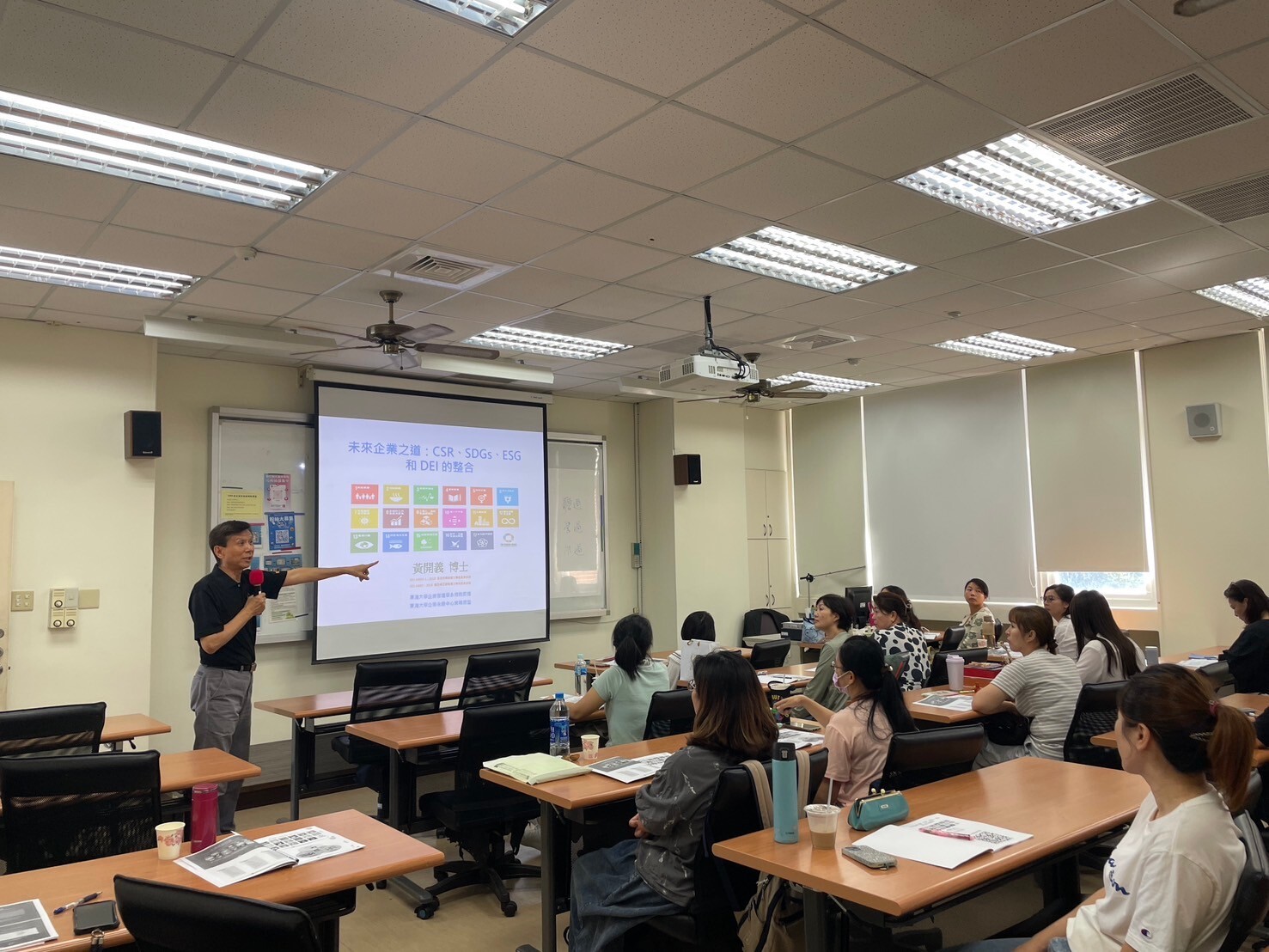
NCUE organizes various vocational training courses in each academic year on an irregular basis. These courses cover management training, specialized education courses, and second-language proficiency enhancement courses. We also conduct ESG sustainability planning training programs, general education lectures on green energy, and international scientific literacy forums. These initiatives aim to equip seed teachers from elementary and junior high schools with professional knowledge and competencies in specialized fields through the integration of ESG-related topics.
(1) Vocational Training Events for the Public:
To promote lifelong learning and enable the general public to continuously enhance their skills applied in workplaces, NCUE designs vocational training courses tailored to the needs of community residents and local industries. These courses cater to various working groups, including corporate leaders, employees, and professionals in specialized technical fields.
The training programs cover a wide range of vocational skills education activities, including management training, specialized educational courses, and second-language enhancement courses.
In 2024, NCUE conducted a total of 127 classes, with over 4,077 hours of total training time. These programs helped 2,451 participants improve their knowledge and skills (Figures 23-24).
Please refer to the attachment for the course list: 4.3.3B- List of executive education programs and vocational training (Ad hoc)
|
|
|
|
Figure 23. Vocational Training for People who are not Attending the University – Training Program for ESG Sustainability Report and Carbon Management Manager Certificate |
Figure 24. Vocational Training for People who are not Attending the University – Basic Course in Taiwanese Hokkien Language Proficiency Test |
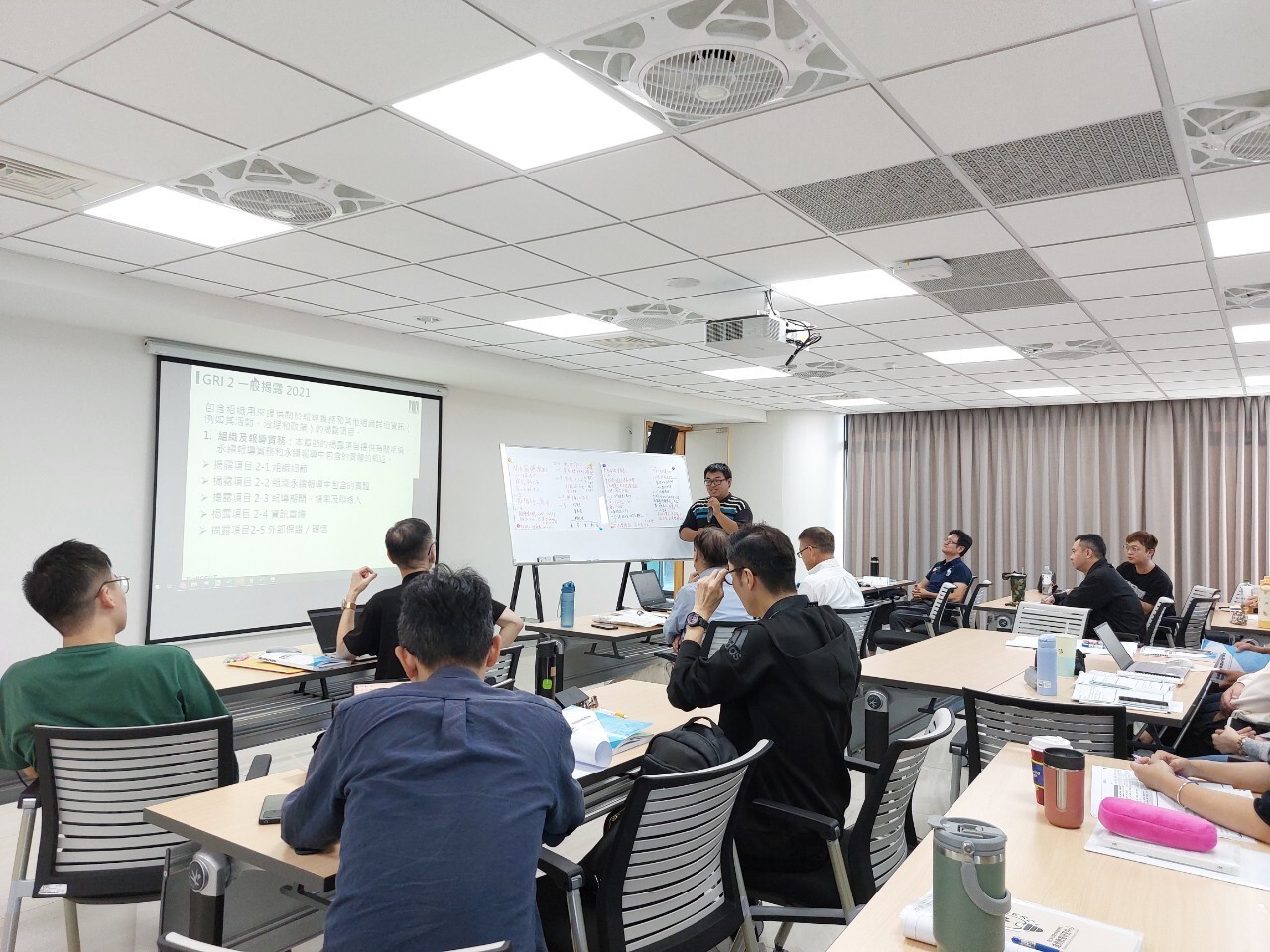
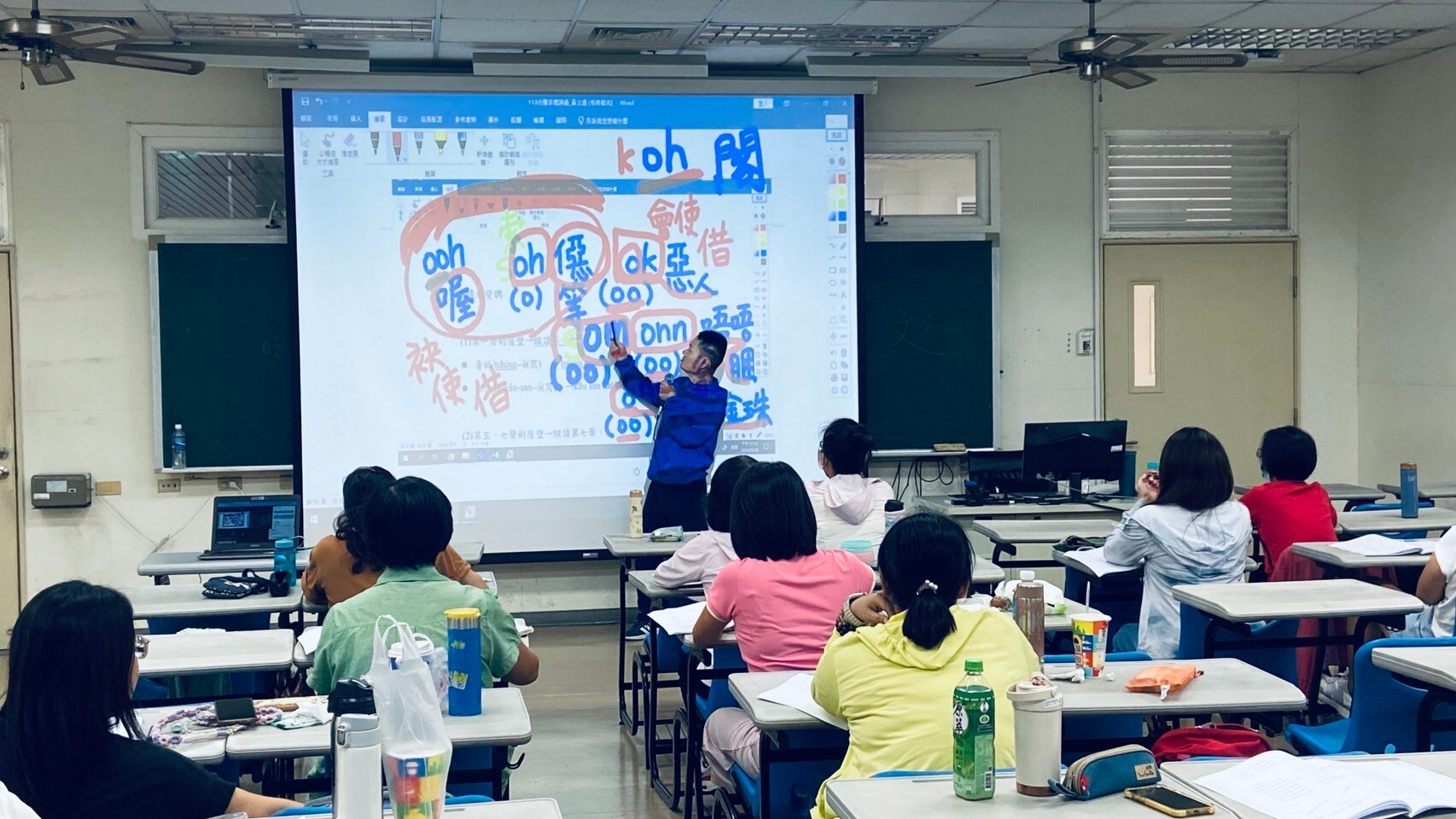
(2) 2024 ESG Sustainability Planning Training Program:
In response to the intensifying global climate change and the Carbon Border Adjustment Mechanism (CBAM), which the European Commission planned to implement in 2030, Taiwan set a vision of Net-Zero Emission by 2050 and incorporated the greenhouse gas emissions into carbon fee collection mechanisms. To equip corporate talents in Changhua County with relevant information and knowledge, NCUE organized the “ESG Sustainability Planning Training Program” in 2024.
The program offered four sessions each of “ISO 14064-1 Greenhouse Gas Internal Verifier Training Course and Certification Program” and “ISO 14067 Carbon Footprint Management and Calculation Basic Course and Certification Program.” Courses were delivered by professional instructors from SGS International Verification Company. A total of 192 participants from different corporations gained a deeper understanding of carbon emission calculation and verification (Figures 25-26).
|
|
|
|
Figure 25. 2024 ESG Sustainability Planning Training Program – Opening Ceremony |
Figure 26. 2024 ESG Sustainability Planning Training Program – Participants Listening Attentively |
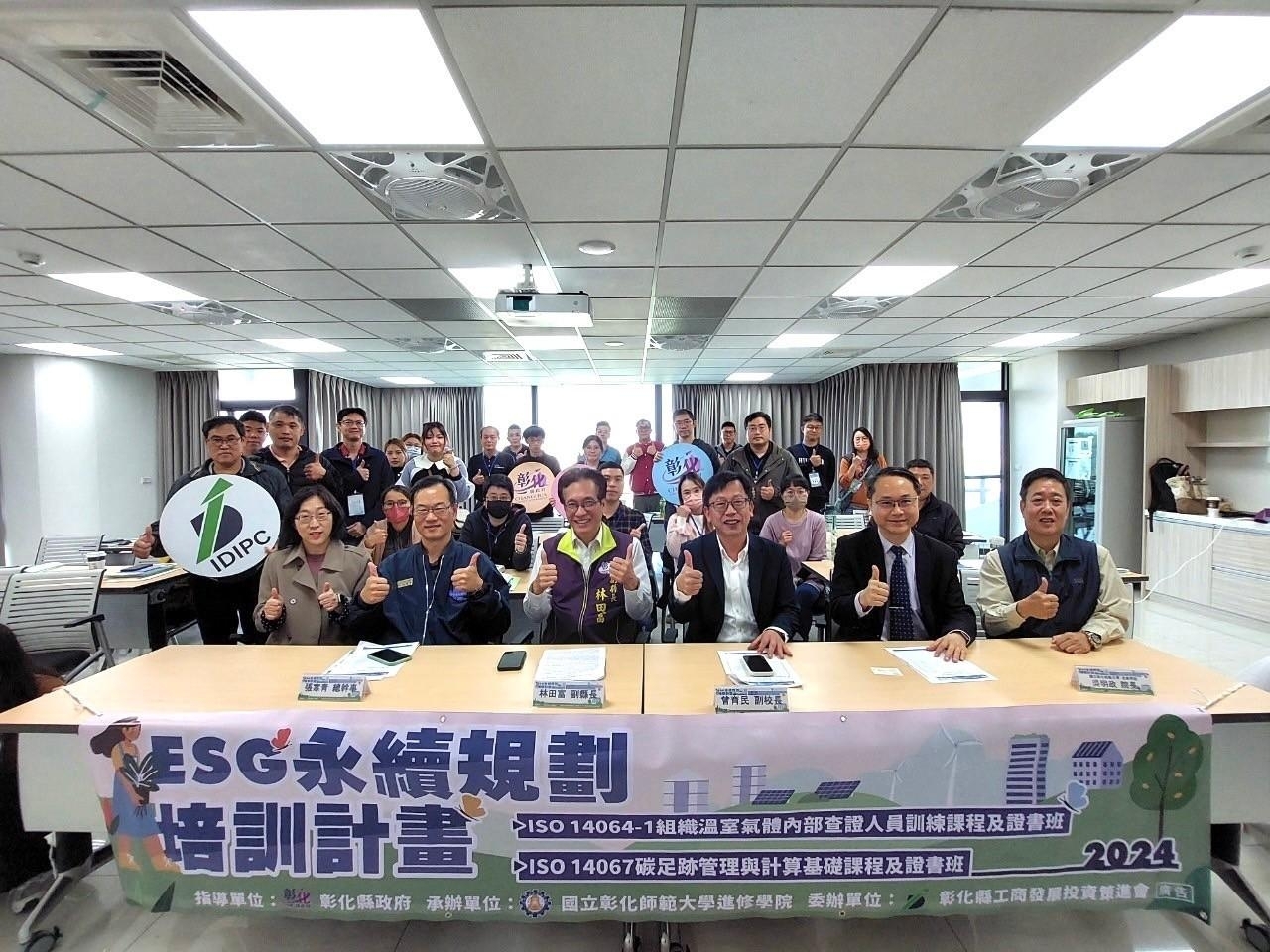
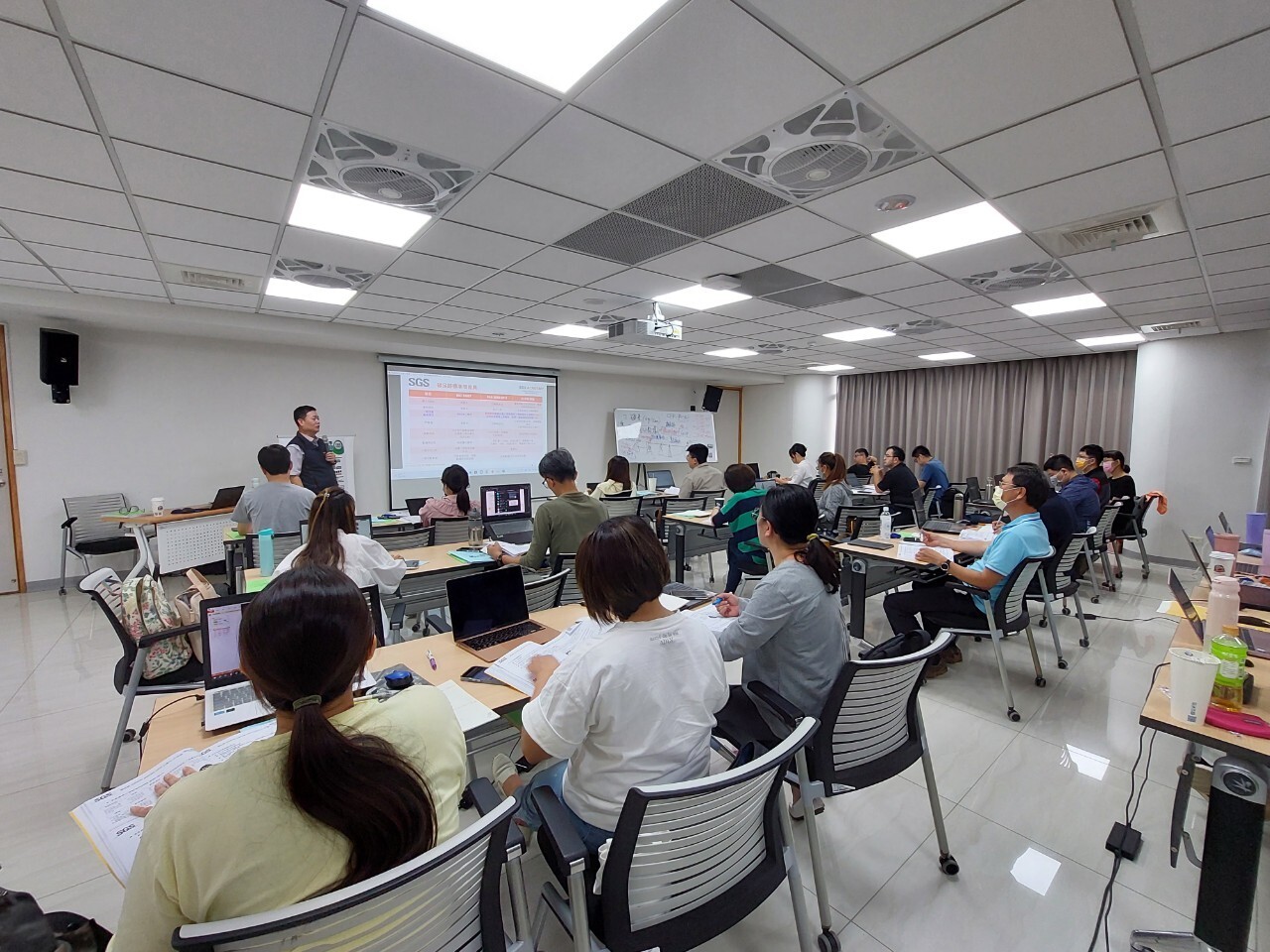
(3) General Education Lectures on Green Energy and Faculty Community Activities:
Through energy education programs in NCUE, the Ministry of Education’s undertaking of the Phase Three University Social Responsibility Project (2023-2024), and its approval for NCUE’s project “Splendor of Changhua: Developing Wind and Solar Energy Resources (USR Hub) ,” NCUE organizes general education lectures on green energy. These sessions help participants understand foundational knowledge of energy transition, as well as the current development and future challenges of green energy technology both globally and in Taiwan.
Additionally, NCUE established the Faculty Professional Community, which focuses on the Smart Grid and Electrical Energy. Community members hold meetings, discuss the topics, and organize various lectures and symposiums to explore knowledge and integrated applications of smart grids, renewable energy, energy storage technology, and the Internet of Things (IoT). These efforts promote relevant technologies and contribute to establishing more stable, reliable, and environmentally friendly power systems and to advancing sustainable energy development.
In 2024, NCUE conducted 11 general education lectures on green energy and faculty community activities with at least 332 participants (Table 3).
Table 3. Overview of General Education Lectures on Green Energy and Faculty Community Activities in 2024
|
No. |
Date |
Activity Name |
Number of Participants |
|
1 |
2024/05/06 |
Corporate Green Energy Market Demand Challenges |
12 |
|
2 |
2024/09/13 |
ESG Sustainability Planning – Internal Greenhouse Gas Inventory Concepts and Practice |
25 |
|
3 |
2024/09/26 |
Dancing with Smart Risks: Unveiling New Applications and Security Challenges of AI Popularization |
50 |
|
4 |
2024/10/17 |
Self-Built Solar Photovoltaic Power Generation Systems and Application Sharing |
(Not recorded) |
|
5 |
2024/10/08 |
Solar Photovoltaic Installation Experience and Green Energy Education Promotion Workshop |
30 |
|
6 |
2024/10/15 |
Case Studies on Microgrid Technology Development Trends and Distributed Microgrid |
15 |
|
7 |
2024/11/14 |
Collaboration between the SDGs Indicators of the United Nations and Green Energy Technology |
50 |
|
8 |
2024/11/19 |
Distributed Power Grid and Long-duration Energy Storage Systems |
(Not recorded) |
|
9 |
2024/11/28 |
New Trends You Must Know in the Digital Age |
50 |
|
10 |
2024/12/12 |
Current Development and the Future of Renewable Energy in Changhua |
50 |
|
11 |
2024/12/26 |
Green Energy Impact and Response Strategies for Taiwan’s Industrial Demand Side |
50 |
(4) 2024 International Conference of Scientific Literacy in Taiwan:
NCUE implements the Science Education Working Group Project for Schools from Senior High Schools and Below, aiming to assist the existing 14 science education centers in advancing their missions. The project seeks to achieve the goals of science (mathematics) education and facilitate mutual support and cooperation among science education centers, and link them with projects commissioned by the Ministry of Education.
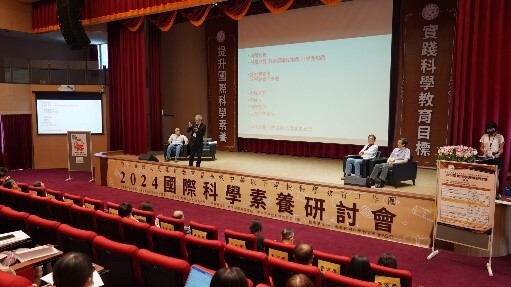
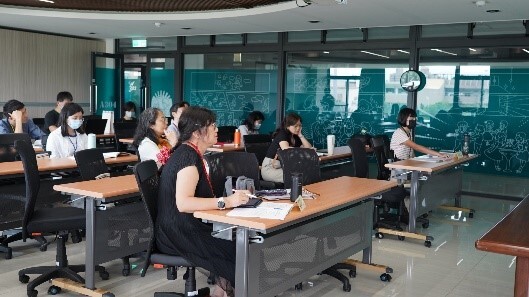
To enhance the understanding of OECD scientific literacy, sustainable environmental education, and short-term goals of science education among all participants in the Medium-Term Project on Science Education, NCUE organized the “2024 International Conference of Scientific Literacy in Taiwan” on May 25, 2024 (Figures 27-28). The event gathered science education scholars, experts, and researchers, representatives from all 14 national science education centers, the Ministry of Education officials, representatives from the advisory group of science education, science teachers from elementary and junior high schools, and committee members from the working group.
Through exchanges between academic research and teaching practices, the event promoted participants’ attention to international scientific literacy and encouraged the development of future research and teaching practices. The event totaled 4.5 hours with 101 participants.
NCUE Campus Headlines: https://www.ncue.edu.tw/p/406-1000-26129,r93.php?Lang=zh-tw
|
|
|
|
Figure 27. 2024.05.25 2024 International Conference of Scientific Literacy in Taiwan |
Figure 28. 2024.05.25 2024 International Conference of Scientific Literacy in Taiwan |
(5) International Scientific Literacy vs Forum on Promoting Short-term Goals in Science Education:
NCUE organized two International Scientific Literacy Forums on September 6 and October 18, 2024. The forums invited representatives from 14 science education centers and 4 experienced project participants who conducted science education-related projects in the Ministry of Education to serve as panelists. These project participants shared their experiences when they implemented the projects.
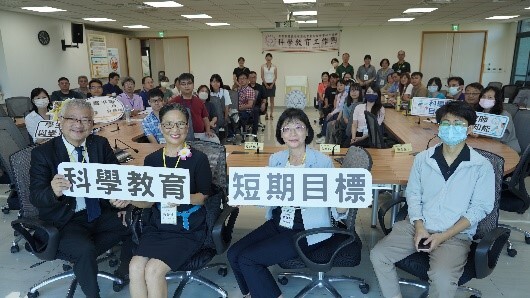
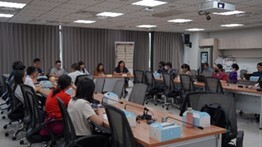
Through academic and practical teaching exchanges, the forums enhanced both lateral and vertical connections in the national science education network and effectively built consensus on international scientific literacy and short-term goals of science education. A total of 118 participants attended two sessions (Figures 29-30).
NCUE Campus Headlines: https://www.ncue.edu.tw/p/406-1000-28051,r93.php?Lang=zh-tw
|
|
|
|
Figure 29. 2024.09.06 2024 International Scientific Literacy vs Forum on Promoting Short-Term Goals in Science Education |
Figure 30. 2024.10.18 2024 International Scientific Literacy vs Forum on Promoting Short-Term Goals in Science Education: Assessment and Application |
(6) Building an Ecological Home and Sustainable Communities: The Changhua Ecological Arts Initiative
NCUE has been actively fulfilling its University Social Responsibility (USR) commitments. The Department of Fine Arts in NCUE focuses on building an Ecological Home and Sustainable Communities as its main theme, planning a series of interdisciplinary courses such as “Art and Auxiliary Therapy,” “Horticultural Therapy,” and “Curatorial Theory and Practice.” These professional courses have cultivated the professional capabilities of 37 students through in-depth practices in communities.
The initiative has trained 10 seed teaching assistants, and its audio-visual team produced 22 documentary films. This accumulates students’ professional and career readiness, creating a virtuous cycle connecting curriculum, community, and career development. Additionally, through collaboration with the Changhua Senior Learning Center, 8 workshops were organized, successfully attracting 208 elderly participants. The “Green Elf” workshop series was further expanded to 5 sessions, providing students with off-campus internship opportunities and hourly subsidies (Figure 31-32).
|
|
|
|
Figure 31. Faculty Community Workshop – Horticultural Therapy Workshop |
Figure 32. Senior Learning Center – Wind Chime Handicraft Workshop for Seniors |


(7) ASROC 2024 Annual Meeting:
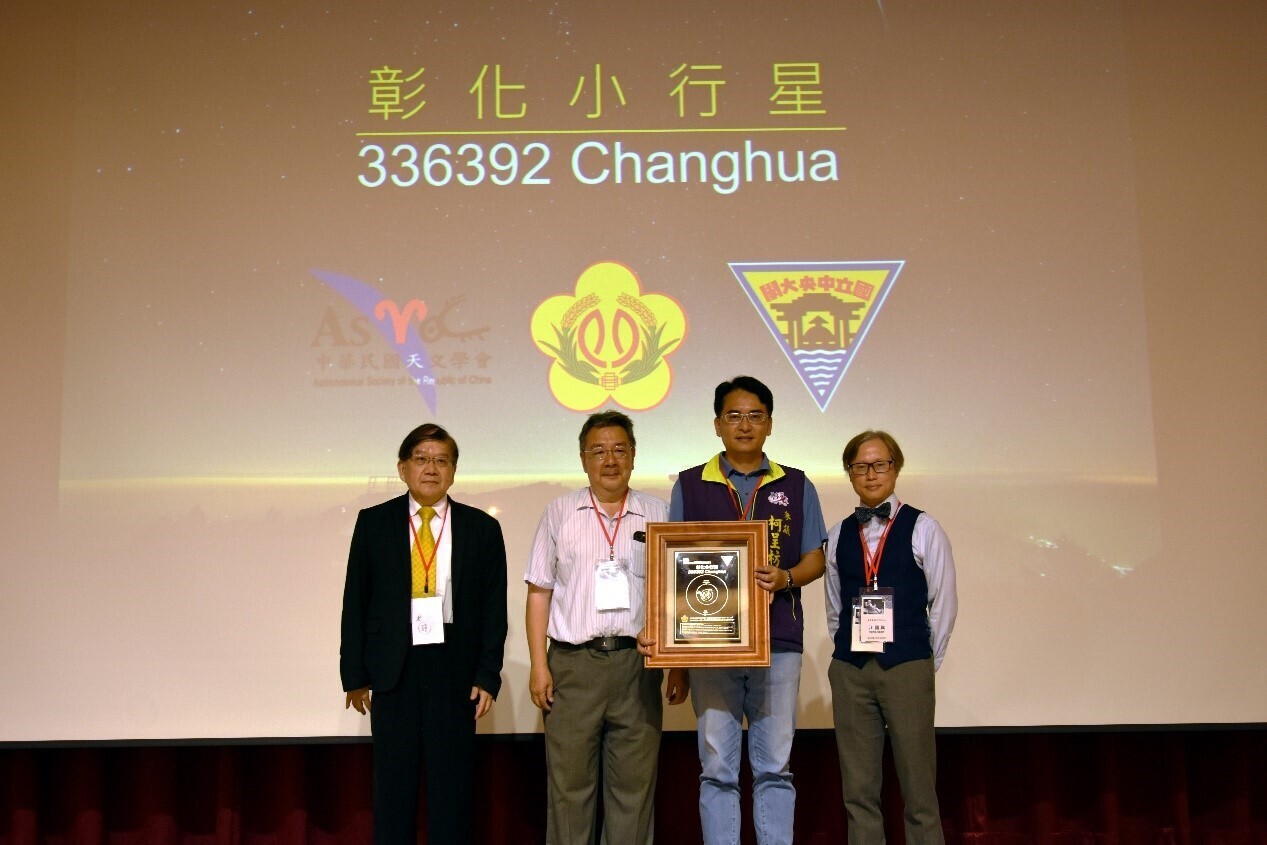
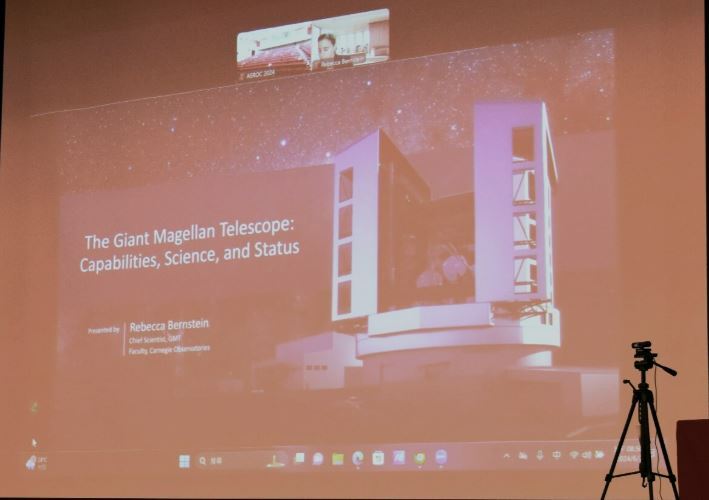
NCUE co-hosted the ASROC 2024 Annual Meeting with the Astronomical Society of the Republic of China and National Tsing Hua University from May 31 to June 2, 2024. The conference brought together astronomers from across Taiwan, astronomy educators at all education levels (including elementary, junior high, senior high schools, and universities), and astronomy outreach workers to discuss astronomical issues and exchange experiences in science popularization efforts. Highlights of the event included two plenary talks by internationally renowned scholars sharing their research findings, as well as general education lectures and a space policy forum (Figures 33-34).
NCUE Campus Headlines: https://www.ncue.edu.tw/p/406-1000-26421,r93.php?Lang=zh-tw
|
|
|
|
Figure 33. ASROC 2024 Annual Meeting |
Figure 34. ASROC 2024 Annual Meeting – Online Lecture Given by an International Scholar |
(8) TSPMA 2024 Strategy and Performance Management Conference:
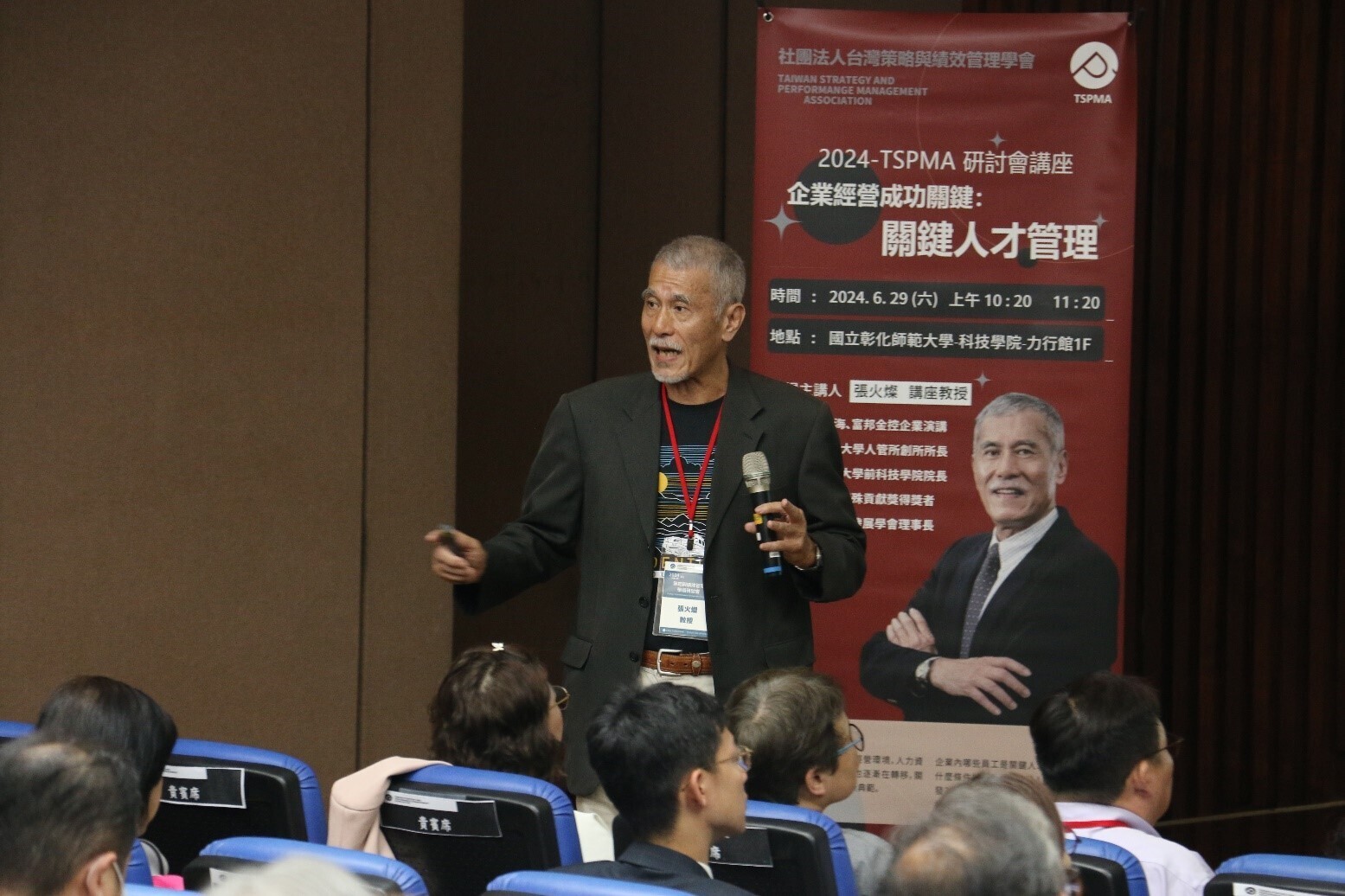
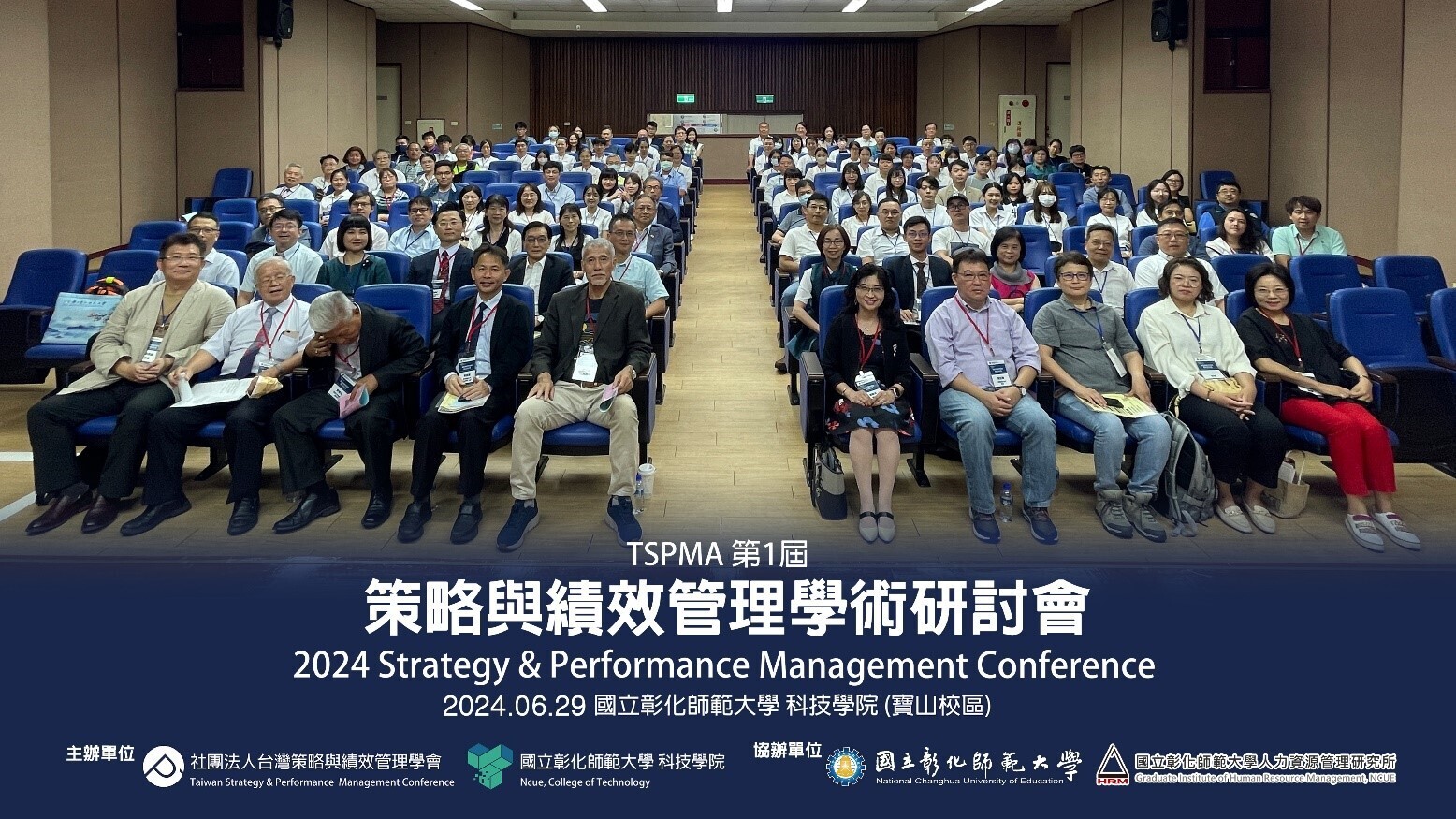
The College of Technology and Graduate Institute of Human Resource Management at NCUE jointly organized the “TSPMA 2024 Strategy and Performance Management Conference” on June 29, 2024. The event attracted nearly 300 scholars and industry professionals from Taiwan and abroad, featuring 41 paper presentations covering six major management topics, including human resources, strategy, ESG, production, marketing, and finance. The conference emphasized the integration of theory and practice, focusing on sustainable development issues such as carbon emissions and key talent management. The event specially invited representatives from over 30 enterprises to discuss critical topics, including key talent management and global carbon emissions, collectively promoting ESG and environmental sustainability (Figures 35-36).
NCUE Campus Headlines: https://www.ncue.edu.tw/p/406-1000-26570,r93.php?Lang=zh-tw
|
|
|
|
Figure 35. 2024.05.29 Group Photo of Participants |
Figure 36. TSPMA 2024 Strategy and Performance Management Conference – Keynote Speech |
(9) 2024 Special Education Conference:
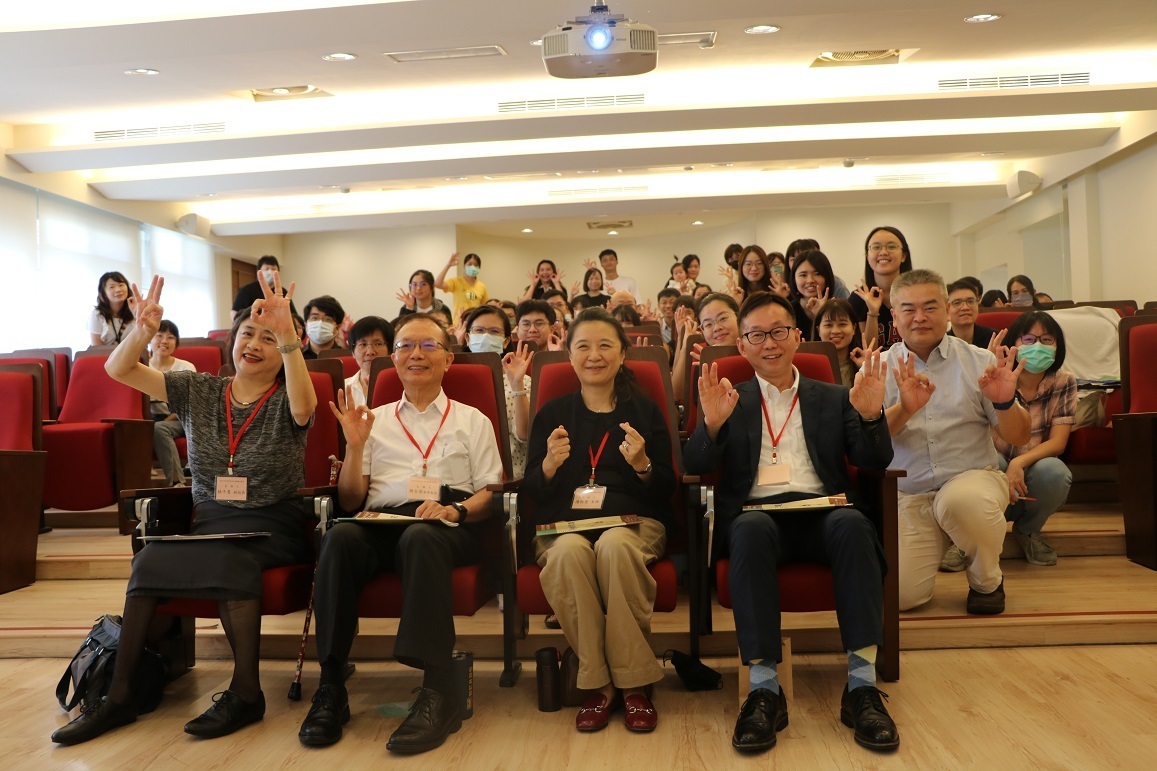
The Department of Special Education and Special Education Center at NCUE organized a special education conference on June 22, 2024, under the theme “Inclusive Education: Integration and Practice.” The keynote speech in the morning focused on trends in inclusive education, and the challenges and response strategies regarding the newly revised Special Education Act. The paper presentation in the afternoon session featured 6 outstanding research papers covering topics including resource room counseling, novice special education teachers’ core competencies readiness and knowledge needs for gender equality education, curriculum adjustments in inclusive classrooms, and support for remote rural school children. Professional moderators and reviewers provided constructive feedback and suggestions (Figures 37-38).
NCUE Campus Headlines: https://www.ncue.edu.tw/p/406-1000-26718,r93.php?Lang=zh-tw
|
|
|
|
Figure 37. 2024.06.22 Group Photo of Keynote Speech at the Conference |
Figure 38. 2024.06.22 Paper Presentation at Conference |
(10) 2024 Embodied·Imagination®: Emergence, International Conference of Dialogue with Embodied·Imagination® Among Multiple Professionals
Organized by the International Society for Embodied Imagination® (ISEI), the international conference was co-hosted by the Department of Guidance and Counseling, College of Education in NCUE, from August 31 to August 4, 2024, marking Robert Bosnak’s “first in-person visit to Taiwan for teaching the Embodied Present Process® (EPP) method.” Following nearly 20-30 years of EPP practice in other Asian countries (Japan and China), this conference represented the first in-depth physical dialogue in Taiwan of its diverse interdisciplinary applications of embodied present process in “artificial intelligence, psychotherapy and arts, and healthcare.”
The conference was organized into two parts: (a) Pre-conference workshops (July 31 and August 1): A two-day workshop on Jungian archetypal psychology and alchemical psychology; (b) International conference of interdisciplinary dialogue (August 2-4): Focused on cross-interdisciplinary dialogue and application in Embodied Present Process®. Over three days, the conference included 3 thematic forums, 6 experiential Embodied Present Process® (EPP) groups daily (18 sessions total), conducted both in-person and online and led by 8 internationally certified senior Embodied Present Process® practitioners, and 6 interdisciplinary thematic dialogue lectures.
Website: https://2024-emergence-taiwan.my.canva.site/
(11) TSTP2024 Taiwan Symposium on Technology of Plasticity:
The College of Technology at NCUE jointly organized the “TSTP2024 Taiwan Symposium on Technology of Plasticity” with the Taiwan Society for Technology of Plasticity on December 6, 2024. The symposium focused on the latest developments in plastic processing technology and the integration of intelligent manufacturing, enabling participants to collectively discuss innovations and challenges in the field of plastic processing. Through the sharing of knowledge and experiences from various sectors, the symposium aimed to further advance the development of the plastic processing field. This symposium not only helped enhance the application of plastic processing technology but also served as a platform for in-depth dialogue between academia and industry, facilitating effective application of academic research into actual production. It further promoted the advancement of Taiwan’s plastic processing technology and strengthened research and development collaboration between academia and small and medium enterprises.
NCUE Campus Headlines: https://www.ncue.edu.tw/p/406-1000-28898,r93.php?Lang=zh-tw
(12) Splendor of Changhua: Developing Wind and Solar Energy Resources (USR Hub) Project:
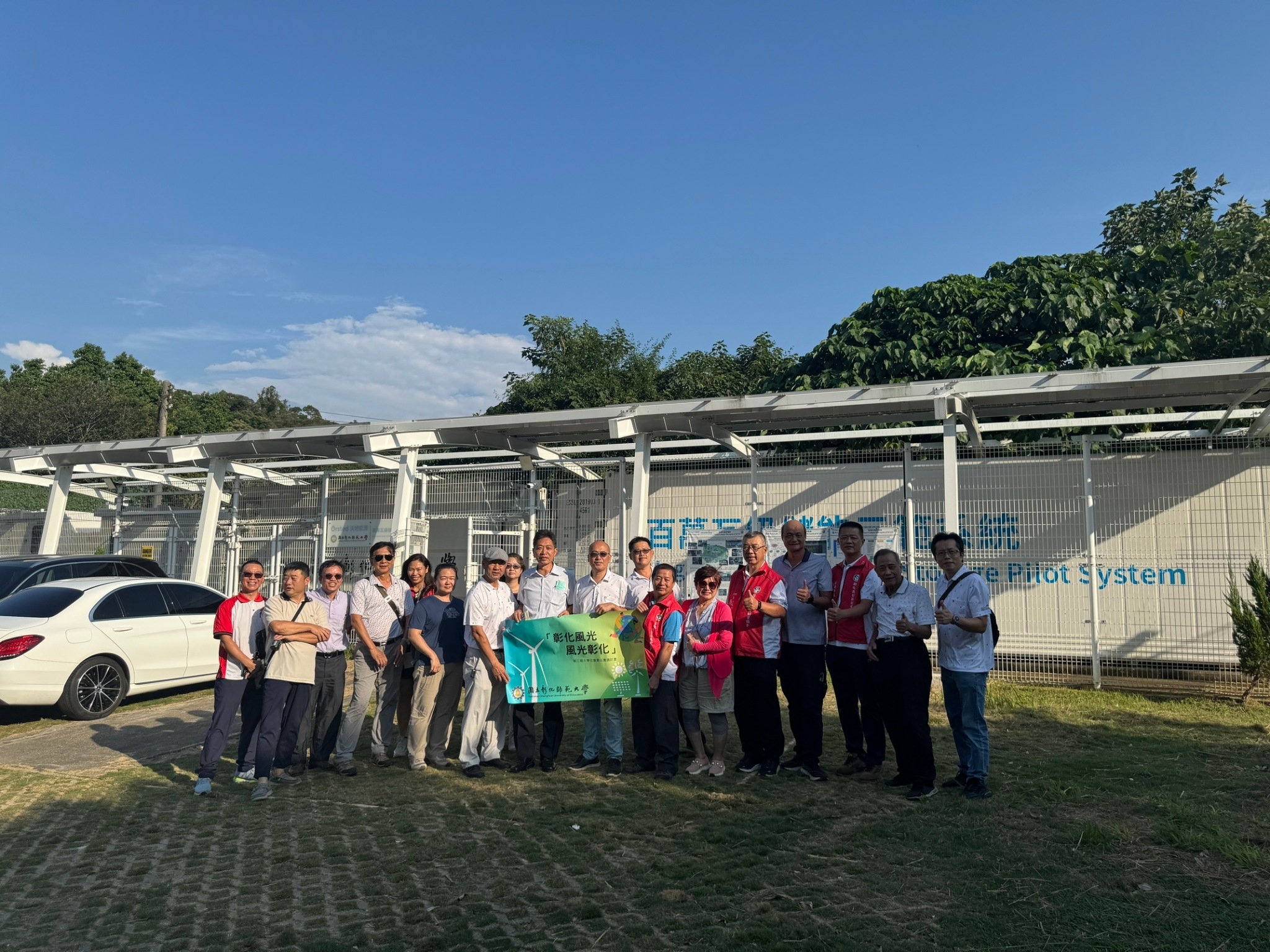
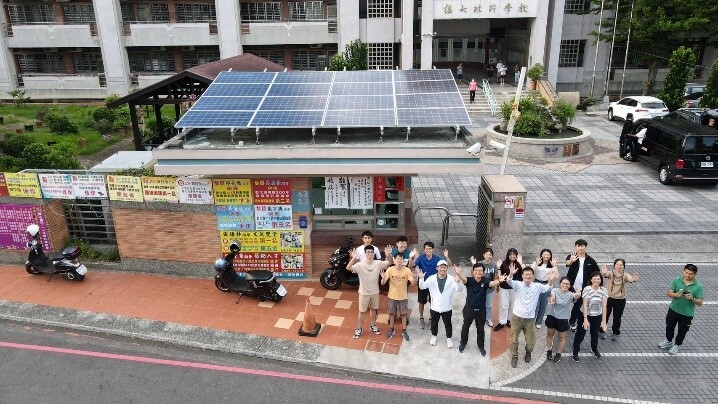
Through NCUE’s energy education programs, the Ministry of Education’s undertaking of Phase Three University Social Responsibility Project (2023-2024), and its approval for NCUE’s project – Splendor of Changhua: Developing Wind and Solar Energy Resources (USR Hub) Project, NCUE utilizes the abundant energy facilities of its Baoshan Campus to organize smart microgrid visits and experiential learning courses at NCUE, enabling the general public and teachers and students from other schools to gain direct understanding and experience with green energy an to explore innovative technologies in smart microgrids. On campus, professors and professional engineers led students in acquiring hands-on skills and knowledge in solar power system installation, guiding students in actually installing solar power generation systems (Figures 39-40).
In 2024, six microgrid field visits focusing on energy storage systems were organized, with a total of 163 participants.
|
|
|
|
Figure 39. External Visitors’ Tour – Participants Conducting an On-Site Visit of Microgrid Field at NCUE |
Figure 40. Student-Initiated Activity – Installation of Solar Power Generation System |